
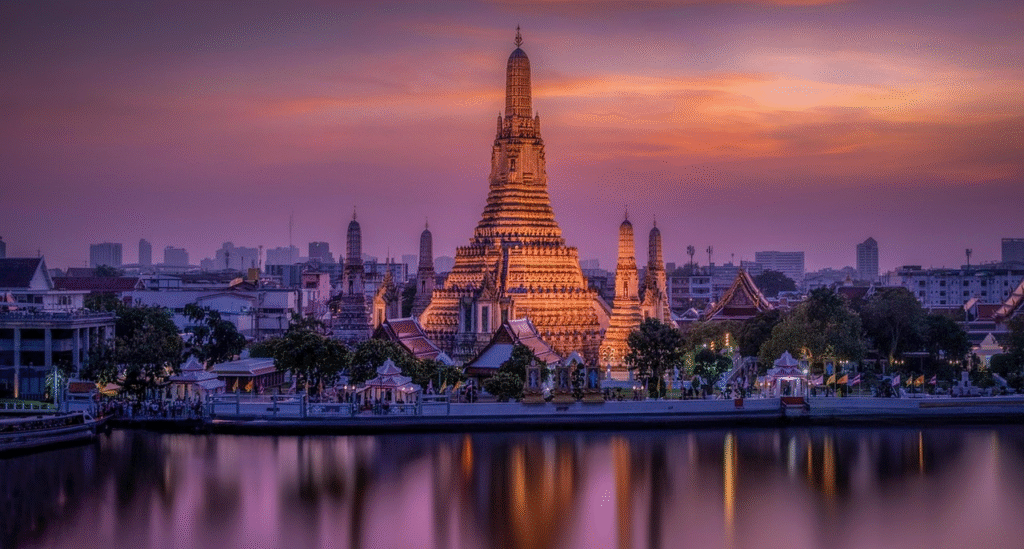
Bangkok is the loudest city in Southeast Asia, in the best possible sense. Officially called Krung Thep Maha Nakhon, the Thai capital packs ten million people, four hundred temples, the world’s busiest international airport for tourists, and one of the planet’s great street-food cultures into a single sprawl along the Chao Phraya River. The contrast is the point: the morning incense at a 200-year-old wat gives way to a glass-tower lunch crowd by noon, a tuk-tuk swerve through Yaowarat at dusk, and a rooftop bar overlooking the river by midnight. This guide covers what works on the ground — which districts to base yourself in, the temples that justify the queue and the ones you can skip, the food worth chasing past the tourist menus, and how to navigate a city built on canals and now stitched together by Skytrain.
Bangkok at a Glance: Essential Facts for Travelers
Bangkok: Key Facts & Tourism Statistics
| International arrivals | 30.3 million (2025, international arrivals) — Euromonitor International, Top 100 City Destinations Index 2025 (as reported by Bangkok Post) |
|---|---|
| Population | 5.45 million (2023, Bangkok Metropolitan Administration civil registration) |
| Best time to visit | November, December, January and February |
| Airport to city centre | Airport Rail Link (from Suvarnabhumi): ~26 min, ~US$1.3 |
| Currency | Thai baht (THB) |
| Time zone | UTC+7 (ICT) |
| Visa | Most Western nationalities enter Thailand visa-free for up to 60 days (check thaievisa.go.th). |
How many tourists visit Bangkok per year?
Bangkok recorded 30.3 million international arrivals (city) in 2025, according to Euromonitor International, Top 100 City Destinations Index 2025 (as reported by Bangkok Post).
What is the best time to visit Bangkok?
The most comfortable months to visit Bangkok are typically November, December, January and February, based on 1991–2020 climate normals for temperature and rainfall.
How do I get from the airport to central Bangkok?
The Airport Rail Link (from Suvarnabhumi) takes about 26 minutes to the city centre for about US$1.3 (THB 45 to Phaya Thai).
What currency is used in Bangkok?
Bangkok uses the Thai baht (THB); the local time zone is UTC+7 (ICT).
Do I need a visa to visit Bangkok?
Most Western nationalities enter Thailand visa-free for up to 60 days (check thaievisa.go.th).
How many people live in Bangkok?
Bangkok has a population of about 5.45 million (registered residents, city proper; metro area ~11M), per Bangkok Metropolitan Administration civil registration (2023).
Bangkok climate: monthly averages (1991–2020)
| Month | Avg high | Avg low | Rain |
|---|---|---|---|
| Jan | 31 °C | 21.5 °C | 15 mm |
| Feb | 32.3 °C | 23.2 °C | 14 mm |
| Mar | 33.6 °C | 25.3 °C | 40 mm |
| Apr | 34.6 °C | 26.6 °C | 71 mm |
| May | 33.3 °C | 26.5 °C | 135 mm |
| Jun | 32.3 °C | 26 °C | 131 mm |
| Jul | 31.7 °C | 25.5 °C | 138 mm |
| Aug | 31.4 °C | 25.3 °C | 147 mm |
| Sep | 30.9 °C | 24.9 °C | 241 mm |
| Oct | 30.5 °C | 24 °C | 194 mm |
| Nov | 31 °C | 22.9 °C | 41 mm |
| Dec | 30.6 °C | 21.3 °C | 9 mm |
Data last verified: 2026-09-01 · Climate: Open-Meteo ERA5 reanalysis, monthly normals computed from daily data 1991–2020 · Sources: Euromonitor via Bangkok Post (arrivals) · BMA (population) · Airport Rail Link (transfer) (primary source) · World’s most visited cities · Methodology
Upcoming Events in Bangkok
| Date | Title | Details |
|---|---|---|
| 2026-08-08 to 2026-10-04 | 47th Bualuang Painting Contest Exhibition | The Queen’s Gallery on Ratchadamnoen Klang Avenue hosts the exhibition of the 47th Bualuang Painting Contest, running from 8 August to 4 October 2026. On display are the ten award-winning works together with 77 further selected paintings from one of Thailand’s longest-running art competitions, spanning traditional Thai, semi-abstract and contemporary categories. The show offers a concentrated overview of the country’s emerging and established painters in a single venue on the edge of the Rattanakosin old town. Entry details are modest and posted by the gallery; art students and museum-goers should allow about an hour. [Source] |
| 2026-09-13 to 2026-09-27 | Bangkok International Film Festival 2026 | Revived after a sixteen-year hiatus, the Bangkok International Film Festival screens 155 features and shorts across the city from 13 to 27 September 2026, with the opening event staged at ICONSIAM on the Chao Phraya riverfront. The programme mixes Thai premieres, international arthouse titles and industry activities under the theme Connecting Stories, Creating Opportunities, and many screenings are free to attend. Cinephiles can catch world cinema alongside showcases designed to push Thai filmmaking onto the global stage; seats for popular sessions fill quickly, so reserving early is recommended. [Source] |
| 2026-09-14 to 2026-09-17 | Gastech 2026 | The world’s largest exhibition and conference for natural gas, LNG, hydrogen and energy technology takes over the Bangkok International Trade and Exhibition Centre (BITEC) from 14 to 17 September 2026. The 54th edition gathers about 1,000 exhibiting companies and tens of thousands of energy professionals from more than 150 countries, with ministerial keynotes, technical sessions and national pavilions; Thailand’s Gulf Development takes part as a National Consortium Partner. Aimed at trade visitors rather than tourists, entry requires registration, with free exhibition passes and paid conference packages. Expect heavy traffic around Bang Na on show days. [Source] |
| 2026-10-03 to 2026-10-04 | Awakening Lion – Dance Drama at Muangthai Rachadalai Theatre | The acclaimed Chinese dance drama Awakening Lion plays Muangthai Rachadalai Theatre, on the fourth floor of the Esplanade complex on Ratchadaphisek Road, on 3 and 4 October 2026. Built around the southern Chinese lion-dance tradition, the wordless production combines athletic choreography, thunderous drumming and martial-arts-inflected movement, making it accessible to audiences of any language background and suitable for families as well as dance enthusiasts. Tickets are sold in several price tiers through the theatre’s regular box-office channels, and the same stage hosts the dance drama Odes to Heroes the following weekend. [Source] |
| 2026-10-11 to 2026-10-19 | Bangkok Vegetarian Festival (Tesagan Gin Je) | Each year the Vegetarian Festival, or Tesagan Gin Je, transforms Bangkok’s Chinatown along Yaowarat Road into a sea of yellow flags, as devotees of Chinese-Thai heritage abstain from meat for nine days of merit-making. Streets and stalls overflow with inventive plant-based versions of Thai and Chinese dishes, while temples host ceremonies and rituals. The atmosphere is festive and aromatic, drawing food lovers and the curious alike. Dates follow the lunar calendar and usually fall in October, so check listings for the confirmed 2026 schedule before planning a visit. [Source] |
| 2026-11-29 | Khalid – It’s Always Summer Somewhere Tour | American R&B star Khalid brings his It’s Always Summer Somewhere Tour to UOB Live, the arena on the sixth floor of the Emsphere mall on Sukhumvit Road, on Sunday 29 November 2026. The Grammy-nominated singer behind Young Dumb and Broke and Location performs a full headline show promoted by Live Nation Tero. Standard tickets run roughly 2,800 to 3,300 baht, with a VIP merchandise package and a meet-and-greet upgrade also offered; all sales are digital e-tickets through the official ticketing platform, and demand from his large Thai fanbase is expected to be strong. [Source] |
City News in Bangkok – last 14 days
| Date | Category | Headline | Details |
|---|---|---|---|
| 2026-09-14 | Local government | Election Commission sends Senate collusion case against 77 people to Supreme Court | Meeting with all seven commissioners present on Monday morning, the Election Commission resolved to ask the Supreme Court to hear a case accusing 77 people, among them 26 sitting senators, of collusion in the 2024 Senate election process. Around 200 police officers were deployed near the commission’s offices as the decision came down, a day after demonstrators rallied at the Bangkok Art and Culture Centre to demand mass prosecutions. The move marks the most significant step yet in the long-running probe into how the current Senate was selected. [Source] |
| 2026-09-14 | Business | GULF opens Gastech 2026 push as world’s biggest gas show lands in Bangkok | Gulf Development Public Company Limited began its role as a National Consortium Partner on the opening day of Gastech 2026, the 54th edition of the world’s largest exhibition and conference for natural gas, LNG, low-carbon technologies, power generation and AI for the energy sector, hosted this year in Bangkok. The company is presenting its Integrated Infrastructure, Powering Tomorrow theme, positioning energy security alongside digital growth. The four-day event draws energy ministers, executives and engineers from around the world to the Thai capital. [Source] |
| 2026-09-14 | Local government | No issues found during inspections of Bangkok data centres, governor says | Bangkok Governor Chadchart Sittipunt said on Monday that inspections of data centres in the capital had uncovered no problems, adding that officials also used the visits to explain the city’s monitoring measures to operators. The checks come as Bangkok tightens oversight of a fast-growing data-centre sector, driven by surging demand for artificial-intelligence computing capacity. City Hall has signalled it wants growth in the industry to proceed without compromising safety standards, power supply planning or the surrounding neighbourhoods. [Source] |
| 2026-09-14 | Local affairs | Appeal Court upholds class action tilapia damages suit against CPF | The Appeal Court has affirmed last year’s decision by the Bangkok South Civil Court to accept a class action lawsuit against Charoen Pokphand Foods seeking 2.4 billion baht in compensation. The claim covers damage to farmers’ livelihoods and to the environment attributed to the spread of the invasive blackchin tilapia, a fish that has infested waterways across numerous provinces. The ruling clears the way for one of Thailand’s most closely watched environmental liability cases to proceed on behalf of affected communities. [Source] |
| 2026-09-14 | Culture | Bangkok International Film Festival opens with 155 films and free screenings | The revived festival is under way in the capital, presenting 155 features and shorts from 13 to 27 September, with its opening event held at ICONSIAM on the Chao Phraya riverfront. Organisers are offering numerous free screenings alongside industry activities under the theme Connecting Stories, Creating Opportunities, aiming to reconnect Thai cinema with international buyers and audiences after a sixteen-year absence from the calendar. Venues across the city are taking part over the two-week run, with popular sessions expected to fill quickly. [Source] |
| 2026-09-13 | Business | Revenue Department steps up drive to make online traders pay tax | The Revenue Department is intensifying efforts to bring online sellers into the tax system after adding more than 56,000 e-commerce operators to its rolls last year. Officials see the booming digital marketplace, from social-media shops to platform vendors, as a significant source of uncollected revenue, and the department is expanding data-driven checks to identify traders who have yet to register. The push forms part of a broader campaign to widen Thailand’s narrow tax base as the government looks for funds to support spending programmes. [Source] |
| 2026-09-13 | Local government | PM instructs finance minister to consider extending Thais Help Thais Plus relief | Prime Minister Anutin Charnvirakul has told Deputy Prime Minister and Finance Minister Ekniti Nitithanprapas to look at prolonging the Thais Help Thais Plus economic relief scheme by one to two months. The programme, a centrepiece of the government’s cost-of-living support, subsidises everyday spending for millions of participants, and an extension would keep the assistance flowing while officials weigh longer-term stimulus. The instruction comes as the Bhumjaithai-led administration faces pressure to shore up consumption amid an uneven economic recovery. [Source] |
| 2026-09-13 | Business | Government wellness push merges tradition and technology | The government is launching an ambitious plan to turn Thailand’s medical and wellness sector into a national revenue driver and engine of economic growth. The strategy pairs the country’s long-standing strengths, from traditional Thai massage and herbal medicine to established hospital tourism, with new investment in medical technology and digital health services. Bangkok’s private hospitals already draw large numbers of international patients, and policymakers hope an integrated wellness economy can lift the sector’s contribution to GDP while creating skilled jobs. [Source] |
| 2026-09-13 | Public safety | Parliament canteen ceiling collapse prompts safety checks | A ceiling collapse in the canteen of Thailand’s parliament complex has prompted officials to order safety inspections of the building. The incident adds to long-standing scrutiny of the vast riverside legislature in the Kiak Kai area, which has faced repeated complaints about construction quality and maintenance since opening. Authorities are reviewing the affected area and checking other sections of the complex to reassure lawmakers, staff and visitors that the premises are safe while the cause of the failure is investigated. [Source] |
| 2026-09-11 | Business | Tsutaya Bookstore sets October 20 opening for first Thai branch at One Bangkok | Japanese lifestyle bookstore chain Tsutaya will open its first branch in Thailand on 20 October at One Bangkok, the huge mixed-use district on Rama IV Road. Known at home for blending books with cafes, stationery and curated design goods, the brand is betting that Bangkok’s growing appetite for Japanese retail concepts will support its regional expansion. The arrival adds another anchor tenant to One Bangkok’s retail line-up as the development continues to build out its shopping and cultural offer. [Source] |
| 2026-09-13 | Culture | Khalid returns to Bangkok this November for UOB Live show | American R&B singer Khalid will perform at UOB Live in the Emsphere mall on Sukhumvit Road on 29 November as part of his It’s Always Summer Somewhere Tour. Standard tickets are priced at roughly 2,800 to 3,300 baht, with a VIP merchandise package and a meet-and-greet option for bigger spenders, and all sales are handled digitally as e-tickets. The stop is one of several Southeast Asian dates on the tour, underscoring Bangkok’s growing status on the regional arena-concert circuit. [Source] |
Bangkok Events & City News Archive
Sources: Bangkok Art City, Khaosod English, Gastech, Khaosod English, Big Live, Muangthai Rachadalai Theatre, Tourism Authority of Thailand, Live Nation Tero
Weather Forecast for the Next 14 Days in Bangkok
| Date | Weather | Max °F | Min °F | Rain mm |
|---|---|---|---|---|
| 2026-09-14 | 🌧️ | 86.0 °F | 76.6 °F | 4.2 mm |
| 2026-09-15 | ⛈️ | 87.1 °F | 78.4 °F | 19.7 mm |
| 2026-09-16 | ⛈️ | 88.7 °F | 77.8 °F | 13.0 mm |
| 2026-09-17 | ⛈️ | 88.5 °F | 76.8 °F | 4.3 mm |
| 2026-09-18 | ⛈️ | 89.3 °F | 76.8 °F | 7.0 mm |
| 2026-09-19 | ⛈️ | 87.4 °F | 76.2 °F | 11.4 mm |
| 2026-09-20 | 🌧️ | 86.5 °F | 74.8 °F | 37.5 mm |
| 2026-09-21 | ⛈️ | 78.0 °F | 76.3 °F | 107.8 mm |
| 2026-09-22 | ⛈️ | 78.4 °F | 74.8 °F | 74.0 mm |
| 2026-09-23 | ⛈️ | 79.2 °F | 76.4 °F | 62.4 mm |
| 2026-09-24 | 🌧️ | 80.2 °F | 76.4 °F | 24.8 mm |
| 2026-09-25 | 🌧️ | 86.3 °F | 76.4 °F | 7.4 mm |
| 2026-09-26 | ⛈️ | 86.8 °F | 76.6 °F | 10.4 mm |
| 2026-09-27 | 🌧️ | 82.4 °F | 77.5 °F | 5.6 mm |
Bangkok’s History
Bangkok started as a riverside fishing village called Bang Kok, first noted on Portuguese maps in 1511. The name probably comes from “bang” (a village on a waterway) and “kok” (the wild olive plums that once grew here). The settlement spent two centuries as a backwater — the action was upstream at Ayutthaya. Then 1767 happened, the capital fell to a Burmese invasion, and the kingdom needed a new center. What grew on this stretch of the river over the next 250 years is one of the most ambitious urban transformations in Asian history.
The Ayutthaya Period
During the Ayutthaya Kingdom (1351–1767), the area slowly grew into a trading post. By the late 1600s European powers had set up footholds — the Dutch built Fort Amsterdam and a customs house here, the French held nearby Pak Nam — though everything was overshadowed by the magnificent capital of Ayutthaya, eighty kilometers upriver and at the time one of the largest cities in the world.
The Birth of Modern Bangkok
1767 changed everything. Burmese forces sacked Ayutthaya, ending four centuries of dynasty. General Taksin established a new capital across the river at Thonburi in 1768. But the real founding moment came in 1782, when King Rama I — founder of the Chakri dynasty that still rules today — moved the royal seat eastward to the Bang Kok village site. Rama I imagined a capital that would rival the lost glory of Ayutthaya. He named it Rattanakosin (“Jewel of Indra”), though locals preferred the shorter Krung Thep, “City of Angels.” The Grand Palace and Wat Phra Kaew went up over the next decades, along with a network of canals that earned the city its second nickname: Venice of the East.
Modernization Under the Chakri Kings
The 19th century brought real change under Kings Rama IV (Mongkut) and Rama V (Chulalongkorn). These two are the reason Thailand was never colonized — they modernized the country fast enough to neutralize British and French ambitions, often by playing the two empires against each other. Charoen Krung, “New Road,” replaced elephant trails in the 1860s as Bangkok’s first paved street. Railways, tramlines, and Memorial Bridge (the first span across the Chao Phraya, 1932) reshaped the urban geography. By the early 20th century Bangkok was a recognizably modern Asian capital with European-trained engineers and a postal system.
20th Century Growth and Challenges
Bangkok crossed one million residents in 1947 and doubled to 2.1 million by 1960. Post-WWII reconstruction money poured in, the canals that had defined the city for 150 years were filled in to make roads, and the skyline started growing vertically. The 1980s brought skyscrapers and shopping malls, the 1990s brought the BTS Skytrain and MRT Metro, and the 2000s pushed the metropolitan population past ten million. Political turbulence has been the city’s constant companion — student protests in 1973, the Black May crackdown of 1992, the 2006 and 2014 coups, the long-running Red Shirt and Yellow Shirt rivalries — but Bangkok has kept growing through all of it. Today it’s Southeast Asia’s largest tourist gateway and the regional headquarters address of choice.
Geography, Climate & Best Time to Visit Bangkok
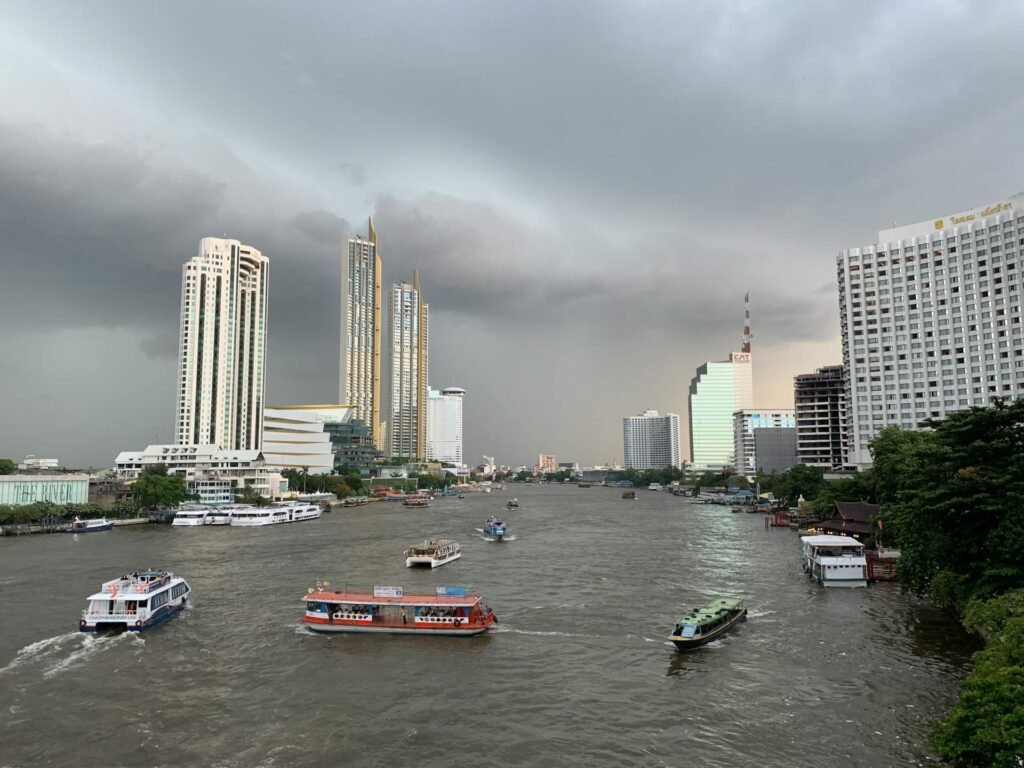
Bangkok’s geography is the reason for both its glory and its problems. The city sits five meters above sea level on the silty Chao Phraya delta — fertile, watery, and very flat. The river is wide enough (400 meters) to be a working highway through the heart of downtown, and the underlying clay soil keeps the city sinking by about a centimeter a year. The good news for visitors: the flat terrain makes everything walkable when the heat allows. The bad news: rainy-season flooding is a real planning consideration.
Climate
Bangkok runs on three seasons. Cool season (November–February) is the sweet spot — daytime temperatures of 23–33°C, near-zero humidity, almost no rain (December averages 12mm). Hot season (March–May) is brutal — April is the worst month, with daily highs of 36°C and humidity that makes everything feel ten degrees warmer. Rainy season (June–October) brings afternoon thunderstorms and high humidity, with September the wettest month at 336mm of rainfall and occasional street flooding in the lower districts.
| Month | High (°C) | Low (°C) | Rainfall (mm) |
|---|---|---|---|
| January | 32 | 23 | 24 |
| April | 36 | 27 | 93 |
| September | 33 | 25 | 336 |
| December | 32 | 23 | 12 |
Best Time to Visit
The cool season (November–February) is when Bangkok is genuinely comfortable for full-day sightseeing — but it’s also peak tourist season, prices are at their highest, and the temple complexes feel crowded. The shoulder months of March (before the heat peaks) and October (as the rains taper) offer good weather with thinner crowds and 20–30% lower hotel rates. Rainy season is the contrarian’s choice: storms are dramatic but short, the rain breaks the heat, and the city looks photogenic with wet streets and reflected neon.
Bangkok’s Districts & Neighborhoods
Bangkok comprises 50 districts (khet), each with its own character. For a visitor, only six or seven of them really matter — and choosing where to base yourself is the single biggest decision affecting how the trip feels.
Historic Core — Rattanakosin Island
Phra Nakhon is the historic heart of Bangkok — the Grand Palace, Wat Pho, Wat Arun, Sanam Luang, and the highest concentration of Buddhist temples in the city. Best for first-time visitors who want to anchor their stay around culture and architecture. The trade-off: it’s quieter at night, BTS access is limited (no Skytrain serves Rattanakosin directly — you ferry, taxi, or take a klong boat), and food options skew touristy.
Chinatown
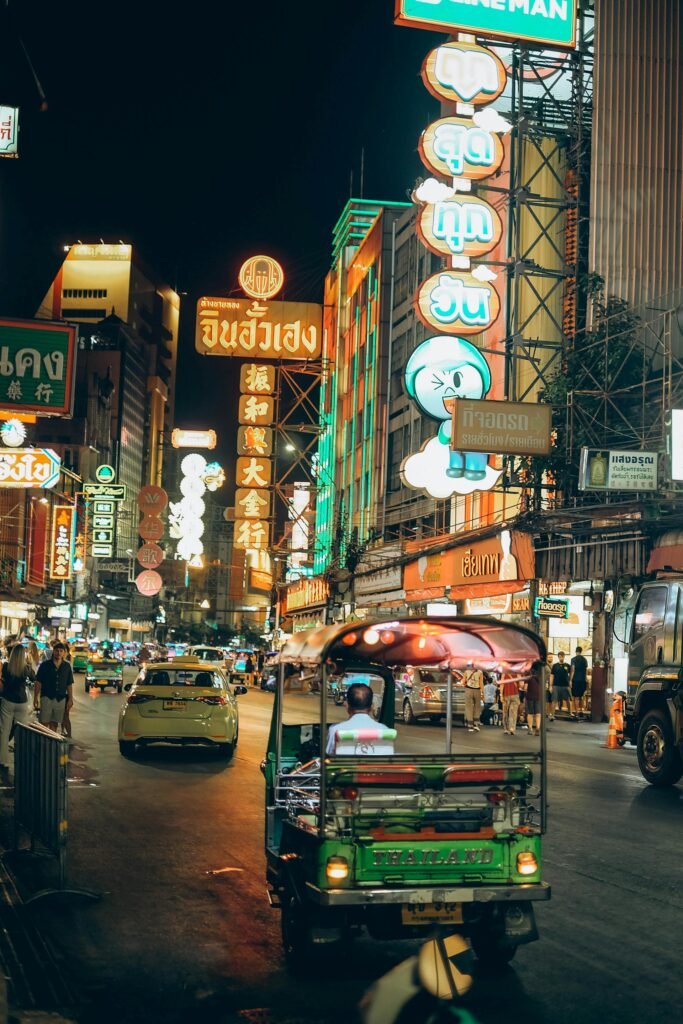
Samphanthawong district contains Bangkok’s Chinatown, organized along Yaowarat Road and a tangle of side streets. The food here is some of the best in the city, especially after dark when the street stalls take over. Gold shops, herbalists, traditional Chinese temples, and the city’s most photogenic chaos. Worth at least one full evening of wandering and eating; not necessarily where to base yourself unless you want to be in the middle of the noise.
Modern Business Districts
Bang Rak includes Silom, the financial district, plus rooftop bars (Vertigo at the Banyan Tree, Sky Bar at Lebua) and a long-running nightlife scene around Patpong. Upscale hotels along Sathorn Road give easy access to both BTS and MRT. Pathum Wan is the shopping heart — Siam Square, MBK, Siam Paragon, CentralWorld, EmQuartier — connected by elevated walkways so you can mall-hop without ever stepping on a sidewalk. Khlong Toei stretches along Sukhumvit Road, the city’s longest commercial spine. Sukhumvit covers everything from backpacker hostels (lower numbers) to family hotels (Sukhumvit 11–24) to luxury (Sukhumvit 31–55).
Where to Stay
For temples and culture: stay near Rattanakosin or just across the river in Thonburi. Limited hotel selection, but you wake up next to the sights. For shopping and nightlife: Silom or Sukhumvit between BTS Asok and BTS Phrom Phong — the densest cluster of restaurants, malls, and Skytrain access in the city. For budget travelers: Khao San Road remains the backpacker hub with hostels from 200 baht a night, though Sukhumvit’s lower numbers (Soi 1–11) offer better value mid-range. For business: Sathorn or lower Silom, near the financial center and the airport rail.
Top Things to Do in Bangkok
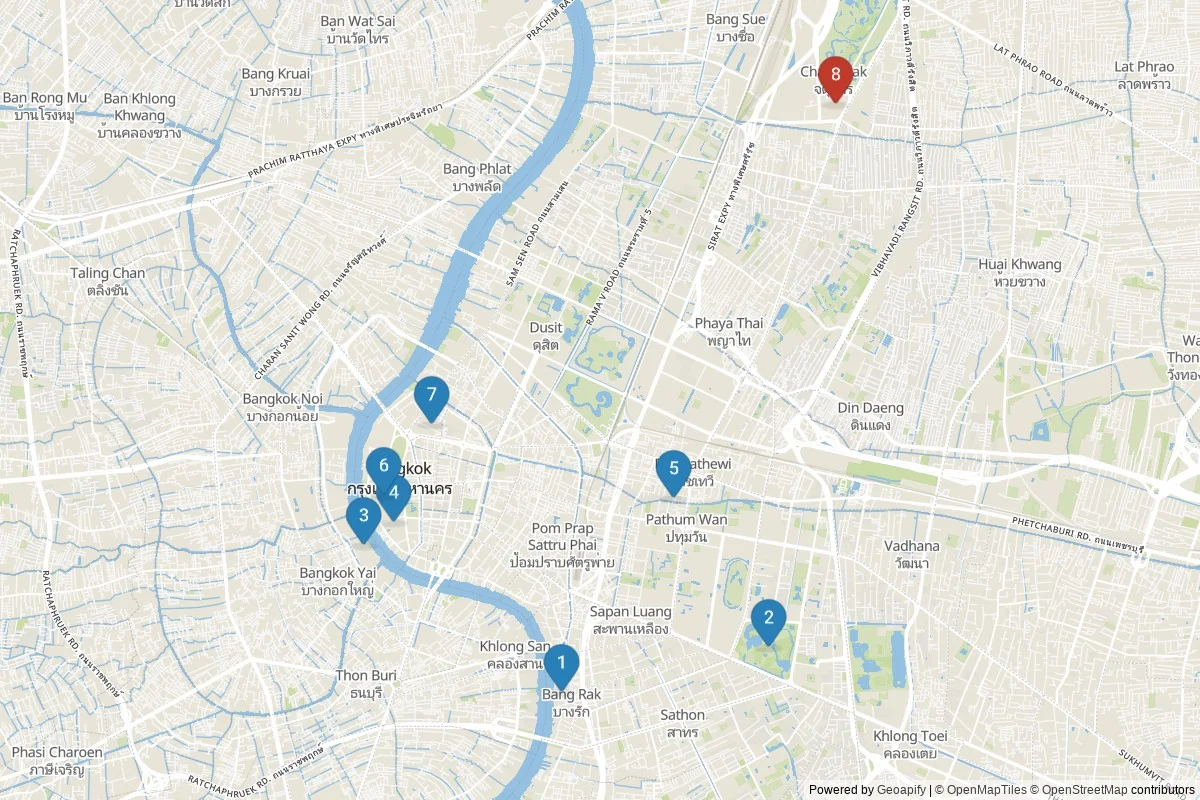
| # | Sight | Cluster | Type | Time | Entry | Best |
|---|---|---|---|---|---|---|
| 1 | Chao Phraya Express Boat | Central | River boat | ~1 hr | ฿16 | Sunset |
| 2 | Lumphini Park | Central | Urban park | ~1 hr | Free | Early morning |
| 3 | Wat Arun (Temple of Dawn) | Central | Buddhist temple | ~1 hr | ฿200 | Sunset |
| 4 | Wat Pho (Reclining Buddha) | Central | Buddhist temple | ~1.5 hrs | ฿300 | Morning |
| 5 | Jim Thompson House | Central | House museum | ~1 hr | ฿200 | Morning |
| 6 | Grand Palace & Wat Phra Kaew | Central | Royal palace | ~3 hrs | ฿500 | Morning |
| 7 | Khao San Road | Central | Backpacker street | ~1.5 hrs | Free | Night |
| 8 | Chatuchak Weekend Market | Outer | Market | ½ day | Free | Weekend |
| 🚗 | Day Trip: Ayutthaya (UNESCO) | Day trip | Day trip | Full day | ฿220 | Morning |
The Bangkok checklist is long, but a four-day trip handles the headline sights without rushing. Pair temple-heavy mornings with mall-or-museum afternoons (the heat makes 1pm to 4pm difficult anywhere outdoors), and save river or rooftop activities for sunset.
Temples & Palaces
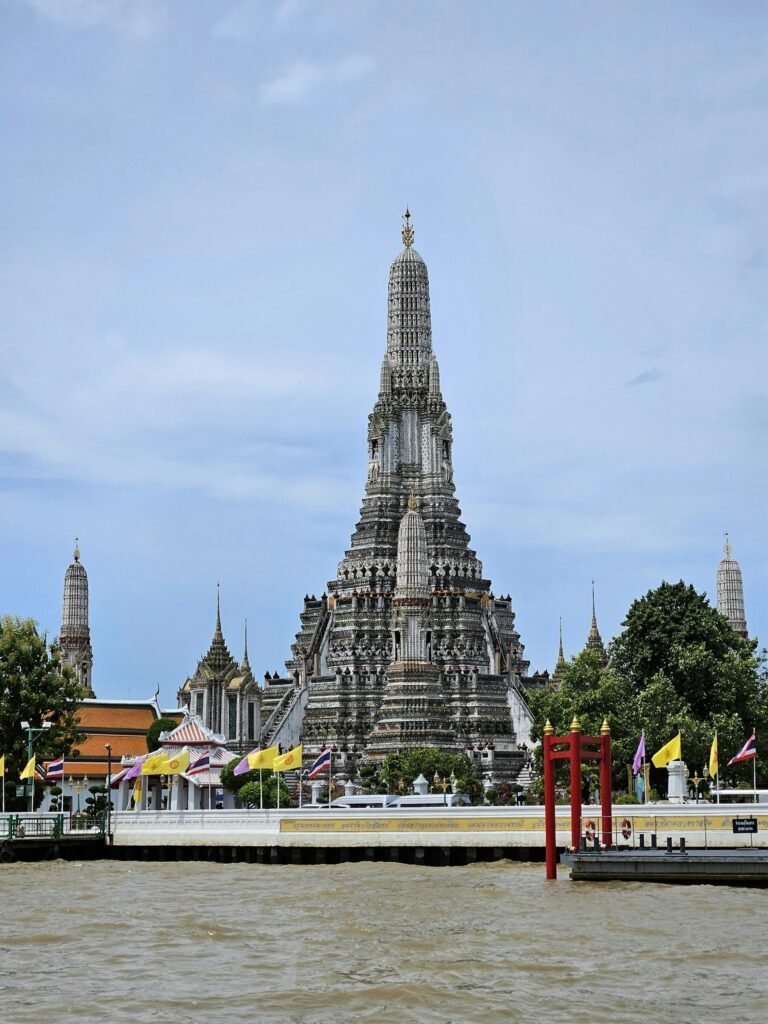
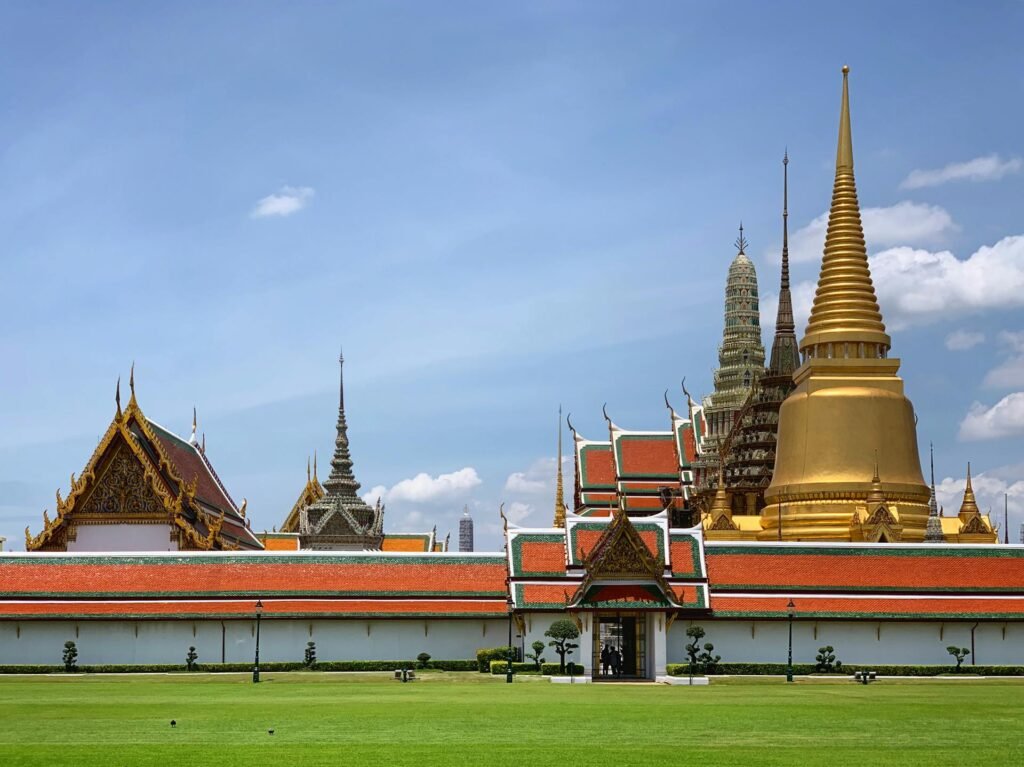
Grand Palace & Wat Phra Kaew — Bangkok’s headline act. The complex houses the Emerald Buddha, the country’s most sacred Buddhist image, and showcases two centuries of evolving Thai architecture. Allow a half-day. Strict dress code: covered shoulders and knees for everyone; sarongs are rented at the entrance for visitors who turn up unprepared. Wat Pho — home to the 46-meter reclining Buddha and the birthplace of traditional Thai massage. The on-site massage school still gives one-hour treatments by graduating students at modest prices. Wat Arun — the “Temple of Dawn” across the river, with a 75-meter prang covered in Chinese porcelain shards. Climb the central tower for one of the best views in the city. Wat Benchamabophit — the “Marble Temple,” 1899-vintage, blending Thai and European architecture in Carrara marble. Wat Saket — the Golden Mount, an 87-meter artificial hill with 360-degree city views from the top.
Markets & Shopping
Chatuchak Weekend Market — over 15,000 stalls covering everything from vintage clothes to plants to tropical fish. The world’s largest weekend market by volume; budget at least three hours. Floating Markets — most of the genuine ones now operate outside the city. Damnoen Saduak and Amphawa, both about 100km from Bangkok, are the standard day-trip options. Damnoen Saduak is the touristy one; Amphawa is the more local-feeling alternative, particularly its evening market. MBK Center & Siam Paragon — modern malls covering the full range from luxury to local handicraft, plus excellent food courts and entertainment.
Cultural Experiences
Jim Thompson House — six traditional teakwood houses on a klong-side compound, displaying Southeast Asian art and the unsolved mystery of the American silk-revival entrepreneur who disappeared in Malaysia in 1967. National Museum — Thailand’s largest museum, in former royal buildings on Sanam Luang, covering everything from prehistory to contemporary regalia. The English-language Friday tours (free, run by the Friends of the National Museum) are excellent. Traditional Performances — classical Thai dance at the National Theatre or puppet shows at the Joe Louis Theatre on Bangkok’s khlongs.
River & Canal Tours
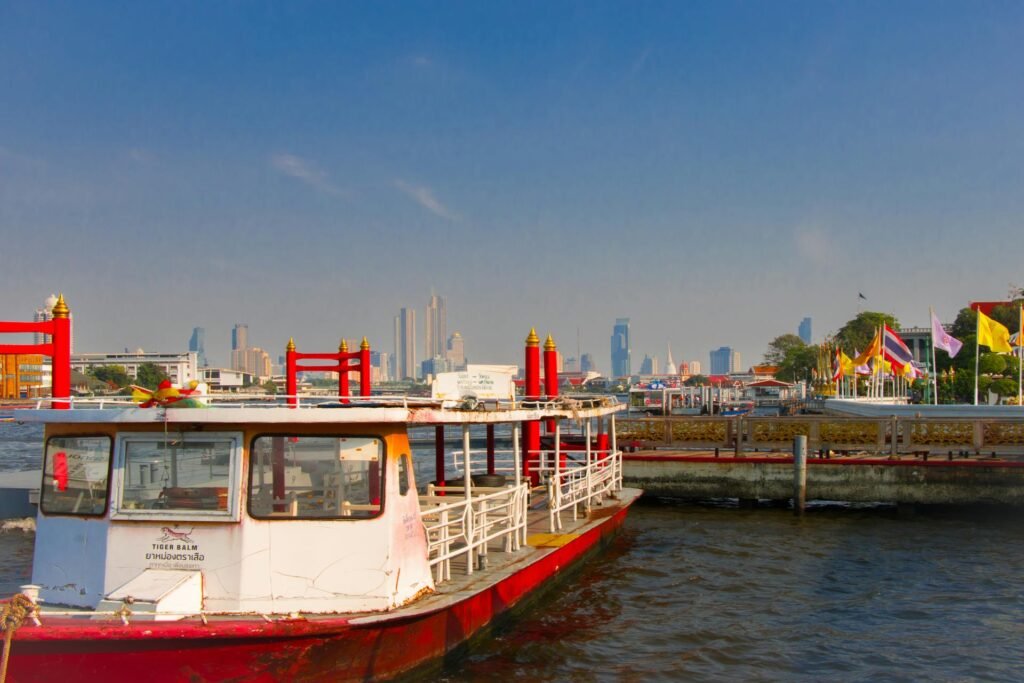
Chao Phraya River Cruises — the simplest version is the public Chao Phraya Express Boat (orange flag, 16 baht per ride), which runs north-to-south past most of the major temples. For a slower experience, dinner cruises depart nightly from the River City pier. Canal Tours — the Thonburi side of the river retains many of the original khlongs lined with stilt houses and small temples. Longtail-boat charters from Tha Chang or Tha Maharaj piers cover the main canal loop in about 90 minutes.
Parks & Recreation
Lumphini Park — Bangkok’s central green space, with jogging paths, paddle boats, and morning tai chi sessions. The resident water monitors (giant lizards up to two meters) sunbathing by the lake are one of the city’s underrated wildlife sights. King Rama IX Park — a botanical garden in the eastern suburbs with themed gardens (Japanese, Chinese, English) and the city’s best sunset photography spots from the central pavilion.
How to Get to Bangkok
Bangkok is the most-visited city on earth by international tourist arrivals — Thailand has invested heavily in the connecting infrastructure. Choosing how to arrive depends on where you’re coming from and how much time you want to spend on the road.
By Air
Suvarnabhumi Airport (BKK) — Bangkok’s main international gateway, 30km east of downtown. Modern, well-signposted, with three terminals. The Airport Rail Link (ARL) connects to downtown Phaya Thai station in about 30 minutes for 45 baht; taxis cost 300–400 baht and take 45–90 minutes depending on traffic. Don Mueang Airport (DMK) — primarily a low-cost-carrier hub (AirAsia, Nok Air, Thai Lion), 25km north. No direct rail connection; airport buses, the A1 to BTS Mo Chit, and taxis are the standard options.
By Train
Bang Sue Grand Station (now Krung Thep Aphiwat Central Terminal) — Bangkok’s main railway hub since 2021, with connections throughout Thailand and international routes south to Malaysia and east toward Laos. Hua Lamphong Station — the historic 1916 terminal, partly converted to a museum but still handling some regional services.
By Bus
Three main long-distance terminals serve different regions: Mo Chit (Northern Terminal) for routes to northern and northeastern Thailand; Ekamai (Eastern Terminal) for the eastern provinces and Cambodia; Sai Tai Mai (Southern Terminal) for southern Thailand and Malaysia. Modern coach services from Nakhonchai Air, Sombat Tour, and others are reliable and cheaper than rail.
By Road
Bangkok sits at the center of Thailand’s expressway network, with major routes connecting to all regions. Driving in from neighboring countries (Cambodia via Aranyaprathet, Laos via Vientiane) is possible but rarely faster than flying or taking the bus.
Getting Around Bangkok
Bangkok traffic is among the worst on earth — but it doesn’t have to wreck your trip. The Skytrain and Metro now cover most places visitors actually go, and ride-hailing apps have eliminated the worst of the taxi negotiations. The combination of these two will handle 90% of your journeys.
BTS Skytrain
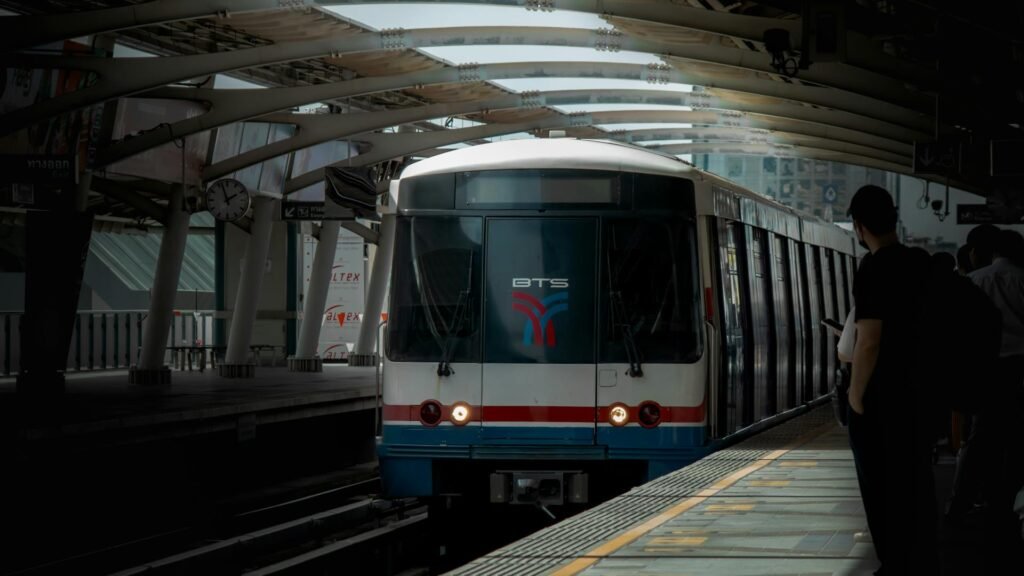
The elevated BTS system covers two main lines (Sukhumvit and Silom) totaling 32km, connecting all the major shopping areas, hotels, and tourist neighborhoods on the eastern bank. Trains run every 2–5 minutes during peak hours, fares are 17–62 baht per trip, and the Rabbit Card (the stored-value card) makes transfers seamless. The single biggest weakness: the Skytrain doesn’t reach Rattanakosin or the Grand Palace — you finish the journey by ferry or taxi.
MRT Metro
The underground MRT complements the BTS, hitting different areas including Chatuchak Market, Chinatown, and the rail hub at Hua Lamphong. The Blue Line forms a partial loop; the Purple Line and Yellow Line extend further into the suburbs. Both BTS and MRT now accept the Rabbit Card and contactless cards from major credit-card networks.
Buses
Bangkok’s bus network covers every corner of the city — air-conditioned coaches, fan-cooled local buses, and the BRT (Bus Rapid Transit) on dedicated lanes. The system rewards regular users; for visitors, route confusion and slow speeds make buses a backup option rather than a default.
Taxis & Ride-Hailing
Metered taxis are abundant and cheap, but the meter is non-negotiable — drivers may try to quote a flat fare, especially from tourist spots. If they refuse the meter, walk away and find another. Grab (and to a lesser extent Bolt) is the easier option: upfront pricing in the app, no negotiation, English-language interface, and you can rate the driver afterward.
Tuk-Tuks
Bangkok’s iconic three-wheelers are best treated as a one-time experience, not a regular transport mode. Drivers will often quote prices well above what a metered taxi would charge for the same route, and the gem-shop and tailor-shop scams (“just one stop on the way”) still circulate. Always negotiate the fare before climbing in — and know that 80–120 baht for a short hop is fair.
Motorcycle Taxis
For trips through gridlocked traffic, motorcycle taxis (the drivers in orange vests) are the fastest option in the city. Stand on the curb at any major intersection or BTS station and you’ll find a stand. Fares are negotiated; helmets are usually offered but rarely well-fitting. Riskier than other modes — choose your driver and your speed.
Boats
Chao Phraya Express Boats — regular ferry service along the river, stopping at major piers serving the Grand Palace, Wat Arun, Wat Pho, and the eastern banks. The orange-flag boat is the cheapest at 16 baht per ride; the blue-flag tourist boat costs more but with English commentary. Klong Saen Saep Express Boats — runs east-west through the eastern khlongs, useful for skipping rush-hour traffic between the Pratunam shopping area and Sukhumvit. Longtail Boats — traditional narrow boats for canal tours and chartered cross-river journeys.
Food & Drink in Bangkok
Bangkok eats better, more cheaply, and at any hour better than almost any city on earth. The street food alone has earned UNESCO recognition as part of Thai culinary heritage, and a 50-baht plate of pad krapow at a sidewalk cart can reach the same level of cooking as the Michelin-starred restaurants nearby.
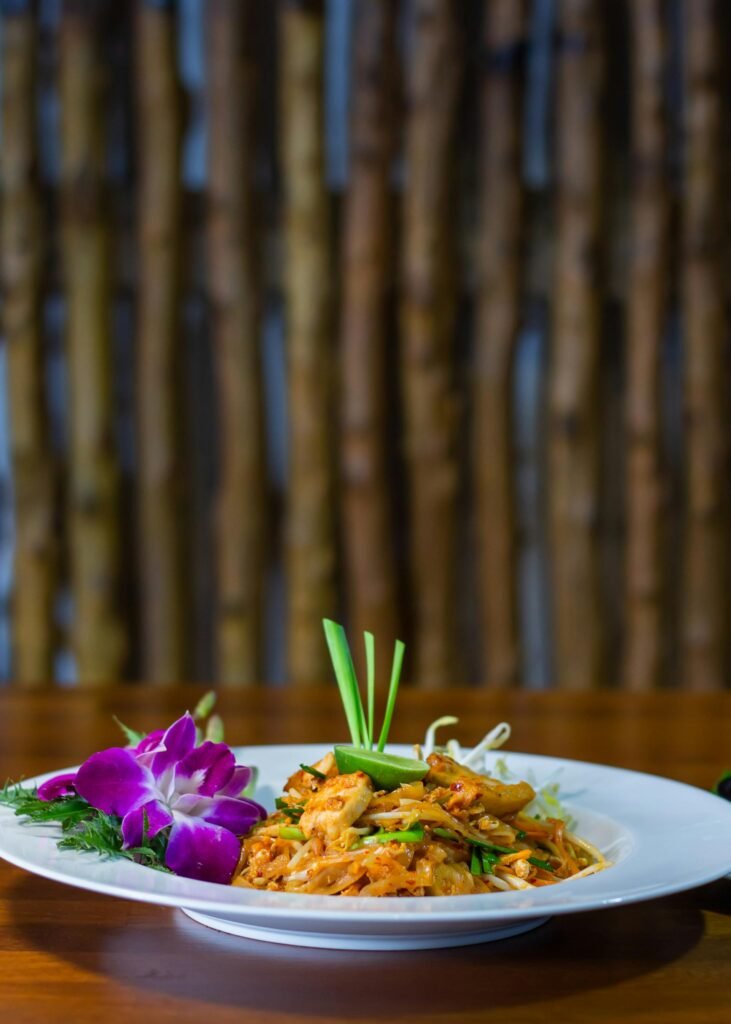
Street Food
The streets of Bangkok come alive at meal times with vendors serving pad thai, som tam (green papaya salad), khao mun gai (Hainanese chicken rice), boat noodles, mango sticky rice, and dozens of regional specialties. Top areas: Yaowarat in Chinatown after dark for street stalls; Soi Convent off Silom for office-worker lunch crowds; Or Tor Kor Market next to Chatuchak for top-tier fresh ingredients and prepared food. The 50-baht plates here are some of the best meals you’ll find on the trip.
Food Courts
Shopping mall food courts offer air-conditioned comfort and excellent diversity. The top-floor courts at MBK, Siam Paragon, EmQuartier, and Terminal 21 (where each floor’s bathrooms are themed after a different world city) are reliably good and affordable. The system uses prepaid cards — load value at the entrance, hand it to vendors, get the unused balance back when you leave.
Fine Dining
Bangkok has 32 Michelin stars across its restaurant scene as of the 2024 guide, including two restaurants — Sorn (southern Thai) and Le Du (modern Thai) — that have made the World’s 50 Best Restaurants list. Most are concentrated along Sathorn, Sukhumvit, and Charoenkrung. Many luxury hotels feature renowned restaurants with Chao Phraya views — Le Normandie at the Mandarin Oriental has held a Michelin star continuously since the guide arrived in Thailand.
Traditional Markets
Fresh markets throughout the city offer tropical fruit (rambutan, mangosteen, durian when in season), Thai herbs, just-caught seafood, and prepared foods. Or Tor Kor next to Chatuchak is the gourmet end; Klong Toei Market is the working wholesale market — louder, dirtier, and where the city’s restaurants actually shop.
Floating Restaurants
Riverside dining venues built on stilts over the Chao Phraya offer evening settings for traditional Thai cuisine while boats pass by below. Supatra River House and Krua Khun Kung Restaurant are two well-regarded options. The Loy Nava dinner-cruise rice barge takes the same idea mobile.
Culture & Arts
Bangkok is Thailand’s cultural capital — most of the country’s museums, theaters, and contemporary art scene radiates from here. The arts calendar runs hot, and even the casual visitor can usually find a worthwhile performance or exhibition during a four-day stay.
Museums
The National Museum on Sanam Luang houses Thailand’s most comprehensive collection of art and artifacts, in buildings that were themselves part of the original royal compound. The Bangkok Art and Culture Centre (BACC) at Pathum Wan handles the contemporary scene with rotating exhibitions across multiple floors. Museum Siam takes a more interactive, conceptual approach to Thai identity. The Erawan Museum in Samut Prakan, with its giant three-headed elephant sculpture, is the most photographed of the lot.
Performing Arts
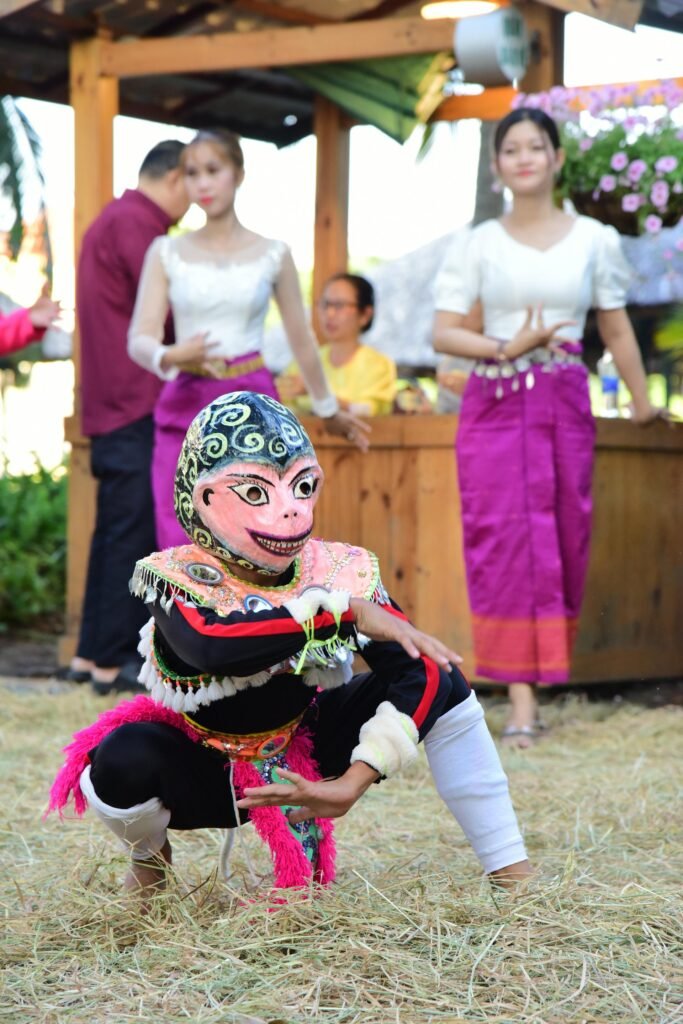
The National Theatre hosts classical Thai dance and music. The Sala Chalermkrung Royal Theatre, an Art Deco gem from 1933, stages traditional Khon — masked dance dramas based on the Ramakien epic, the Thai version of the Ramayana. Khon was added to UNESCO’s Intangible Cultural Heritage list in 2018, and watching it once gives you the visual vocabulary for a lot of Thai religious and royal art.
Contemporary Arts Scene
Galleries throughout the city — particularly along Silom, in Thonglor (especially the Thonglor Soi 13 cluster), and around the BACC — show work by emerging Thai artists alongside international exhibitions. The annual Bangkok Art Biennale, started in 2018, takes over multiple venues across the city every other year.
Bangkok by District: The 21 เขต
Bangkok is divided into 21 districts (khet). The map below shows their official OSM boundaries, colour-coded to match the table — a quick way to orient yourself before zooming in on individual sights.
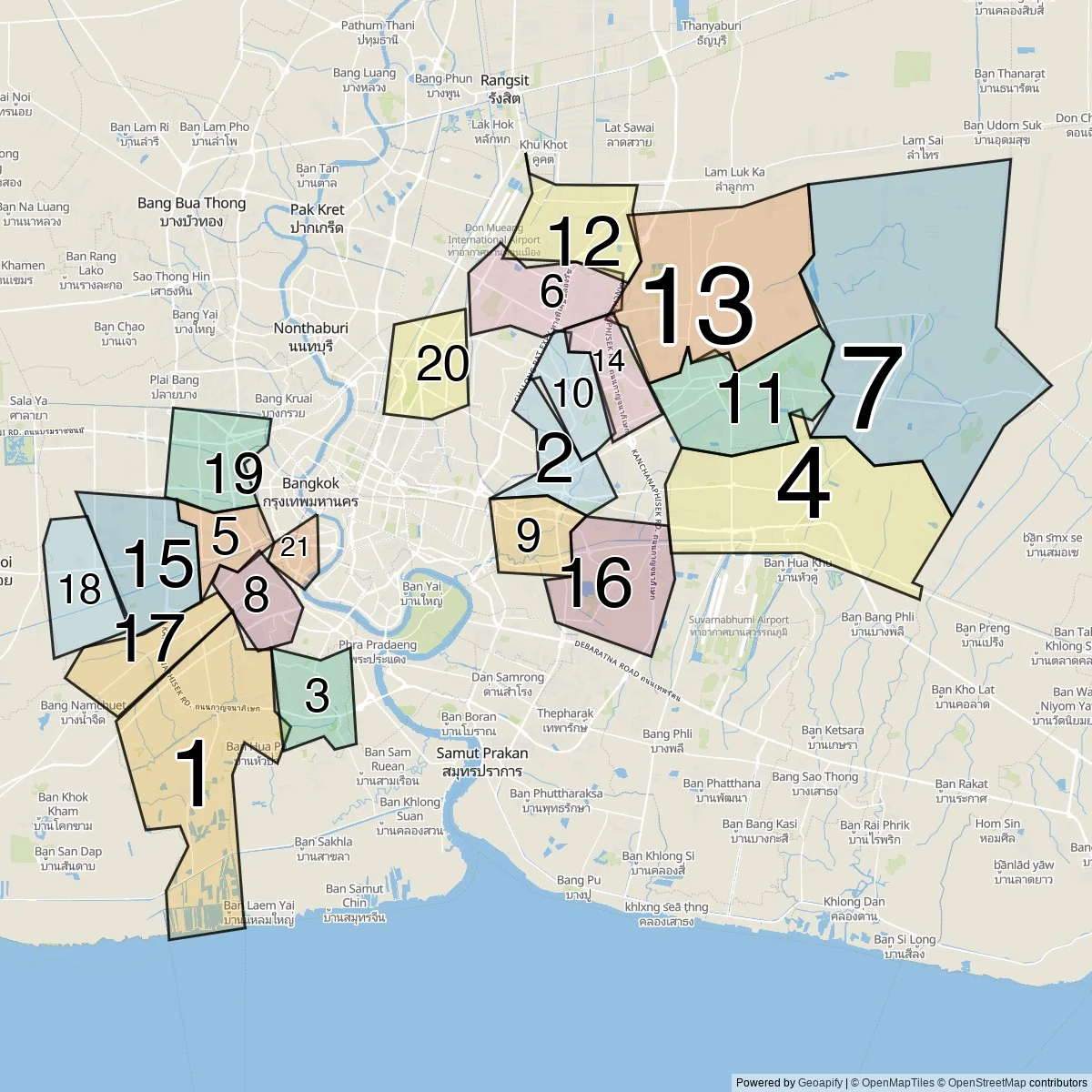
| # | เขต |
|---|---|
| 1 | เขตบางขุนเทียน · Bang Khun Thian District |
| 2 | เขตบางกะปิ · Bang Kapi District |
| 3 | เขตทุ่งครุ · Thung Khru District |
| 4 | เขตลาดกระบัง · Lat Krabang District |
| 5 | เขตภาษีเจริญ · Phasi Charoen District |
| 6 | เขตบางเขน · Bang Khen District |
| 7 | เขตหนองจอก · Nong Chok District |
| 8 | เขตจอมทอง · Chom Thong District |
| 9 | เขตสวนหลวง · Suan Luang District |
| 10 | เขตบึงกุ่ม · Bueng Kum District |
| 11 | เขตมีนบุรี · Min Buri District |
| 12 | เขตสายไหม · Sai Mai District |
| 13 | เขตคลองสามวา · Khlong Sam Wa District |
| 14 | เขตคันนายาว · Khan Na Yao District |
| 15 | เขตบางแค · Bang Khae District |
| 16 | เขตประเวศ · Prawet District |
| 17 | เขตบางบอน · Bang Bon District |
| 18 | เขตหนองแขม · Nong Khaem District |
| 19 | เขตตลิ่งชัน · Taling Chan District |
| 20 | เขตจตุจักร · Chatuchak District |
| 21 | เขตธนบุรี · Thon Buri District |
Frequently Asked Questions About Visiting Bangkok
Do I need a visa to visit Thailand?
Many travelers don’t need one for short stays. Thailand grants visa exemptions of 60 days to passport holders from over 90 countries — including the US, UK, EU member states, Canada, Australia, and most other developed nations — under the program expanded by the Thai government in 2024. For longer stays or specific purposes (work, study, retirement), the standard route is the e-Visa application at thaievisa.go.th (the official Thai government portal). The Tourism Authority of Thailand maintains updated guidance at tourismthailand.org. Always confirm current eligibility at the Royal Thai Embassy in your country before booking — the visa-exemption list and validity periods have shifted twice since 2023.
Is Bangkok safe for tourists?
Yes — Bangkok is one of the safer megacities in the world for visitors. Violent crime against tourists is rare, and the everyday risks are scams rather than threats. The persistent ones to know: gem-shop scams (a stranger or tuk-tuk driver “happens” to know an exclusive shop), tuk-tuk fare disputes (always agree the price before getting in, or just take a Grab), the closed-Grand-Palace scam (a “helpful local” tells you the palace is closed and offers a tour elsewhere — it’s almost never closed). The US State Department rates Thailand at “exercise normal precautions” — its lowest advisory level. Watch your bag in the BTS at rush hour, avoid late-night Khao San Road if you’ve been drinking, and you’ll be fine.
How many days do I need in Bangkok?
Three full days handles the headline sights without rushing; four to five is comfortable. A solid three-day plan: Day 1 the Grand Palace, Wat Phra Kaew, and Wat Pho, finishing with sunset at Wat Arun across the river; Day 2 Chinatown lunch, an afternoon at Jim Thompson House, and a Chao Phraya river-boat ride; Day 3 Chatuchak Weekend Market (if Saturday/Sunday), or a day trip to Damnoen Saduak and Amphawa floating markets, with a Muay Thai evening at Lumpinee or Ratchadamnoen Stadium. Longer stays let you add the Ayutthaya day trip, more food exploration in Or Tor Kor and Klong Toei, and the Erawan Museum out in Samut Prakan.
What’s the best area to stay in Bangkok?
Depends on your priorities. Sukhumvit between Asok and Phrom Phong is the easy default: dense BTS access, great restaurants, all hotel tiers, and easy ride-hail anywhere in the city. Silom/Sathorn is the business district — upscale hotels, rooftop bars, BTS and MRT both available. Riverside (Charoenkrung) puts you on the Chao Phraya near the Mandarin Oriental and Shangri-La with skyline views; downside, BTS access requires a hotel shuttle or ferry. Rattanakosin/Old Town wakes you up next to the temples but has limited hotel options and no Skytrain. Khao San Road remains the backpacker hub with cheap dorms; nearby Phra Athit Road has nicer mid-range options without the noise.
How much does it cost to visit the Grand Palace?
The Grand Palace and Wat Phra Kaew (Temple of the Emerald Buddha) charge a single entry ticket priced for foreign visitors — current pricing is published at the official portal royalgrandpalace.th. The ticket includes Wat Phra Kaew and most of the Grand Palace complex; it does not include the (separate, smaller) admission to Vimanmek Mansion. Wat Pho and Wat Arun charge their own modest entrance fees. The dress code is strict: covered shoulders, covered knees for everyone, no see-through fabric, no torn jeans; rental sarongs and shirts are available at the gate for visitors who turn up unprepared. Allow at least three hours for the full Grand Palace circuit.
Should I drink the tap water in Bangkok?
No. Bangkok’s tap water is treated and meets Thai government standards but is not advised for drinking by visitors — the water passes through old distribution pipes that can pick up taste and minor contamination at the tap. The CDC’s Thailand travel health page recommends bottled or treated water for drinking and tooth-brushing. Bottled water is sold everywhere — Singha, Chang, Crystal, and Nestlé Pure Life are the common brands at 7–15 baht per liter. In good restaurants and hotels, the ice and the water served at the table are made from filtered water; at street stalls and small vendors, ice is generally fine in Bangkok proper (made from distributed filtered water in standard cylindrical blocks), but skip it if you’re at all uncertain.
What’s the dress code for temples in Bangkok?
The dress code is taken seriously and enforced at the headline sites — the Grand Palace especially. For all major temples: cover shoulders and knees, no see-through fabric, no ripped or distressed jeans. Inside the temple buildings: remove your shoes (provided racks); never point your feet toward the Buddha image (sit with feet tucked back); women should not touch monks or hand items directly to a monk. The Grand Palace specifically rejects: tank tops, leggings as pants, capris, ripped jeans, see-through clothing, and anything above the knee. Sarongs and shirts are available for rent at the entrance for a deposit. Footwear matters less since you’ll remove it anyway, but slip-on shoes save time at every temple.
Is tipping expected in Bangkok?
Less than in many Western or Middle-Eastern cities — tipping is appreciated but not the social obligation it is in Egypt or the United States. Restaurants: leave 20–50 baht for casual meals, 10% for sit-down service if the bill doesn’t already include the standard 10% service charge (check first; many restaurants add it). Taxis: round up the meter or add 20 baht; not strictly expected. Hotel porters: 20–50 baht per bag at upscale hotels, less elsewhere. Massage: 50–100 baht is generous for a one-hour session; not required. Tour guides and drivers: 200–500 baht per day for full-service guides. Carry small bills (20s and 50s) — they’re easier to use here than 1,000-baht notes, which many small vendors can’t break.
Economy & Business
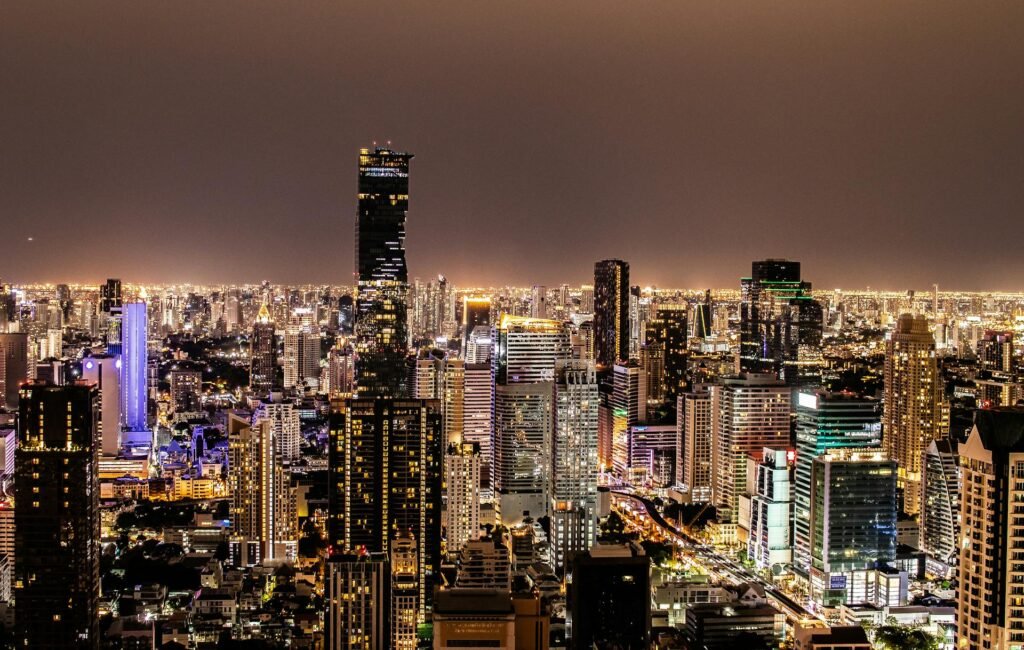
Bangkok is Southeast Asia’s economic engine. Greater Bangkok generates a metropolitan GDP of around USD 307 billion, contributing roughly 28 percent of Thailand’s total output. The city handles approximately 90 percent of the country’s international trade and serves as the regional headquarters for many multinational corporations operating in mainland Southeast Asia. Key industries include finance, manufacturing, tourism, and a fast-growing tech sector. The Stock Exchange of Thailand, the major Thai banks, and most international companies’ Thailand operations are based here. Tourism remains a vital economic pillar — over 36 million annual international visitors before the 2020 disruption, with arrivals now back near pre-pandemic levels — supporting employment across hospitality, retail, and service sectors.
Sports & Recreation
Muay Thai
Thailand’s national sport is on display nightly at Lumpinee Stadium (now in the Don Mueang area after the 2014 relocation) and the historic Ratchadamnoen Stadium downtown, where traditional pi phat music accompanies every fight. Tickets range from around 1,800 to 2,500 baht for tourists; the experience is one of the more authentic things you can do in Bangkok and the venues remain properly working stadiums, not exhibition shows.
Traditional Sports
Sepak takraw — kick volleyball played with a rattan ball — is Thailand’s most distinctive contribution to global sport and shows up at the National Stadium and in informal streetside games across the city. During March and April, kite battles over Sanam Luang continue centuries of tradition, with teams competing to cut each other’s strings.
Modern Sports
The 65,000-seat Rajamangala Stadium hosts Thai Premier League football and the occasional international fixture. The Royal Bangkok Sports Club in Pathum Wan, founded in 1901, runs horse racing on weekends in an elegant in-city setting that doubles as a green oasis.
Bangkok’s transformation from a riverside trading post to one of the world’s most-visited cities is reflected in every neighborhood — the layered temple of the morning, the malls and Skytrain of the afternoon, the street food and rooftop bars of the evening. Whether the draw is the temples, the food, the shopping, or just the singular sensory density of the place, the city rewards visitors who lean into its contradictions rather than try to resolve them.
AFRIKA
Cairo Hurghada Johannesburg Marrakech
ASIA
Abu Dhabi Agra Antalya Bangkok Batam Beijing Bengaluru Cebu City Chiang Mai Chiba Chennai Da Nang Dammam Delhi Denpasar Dubai Fukuoka Guangzhou Guilin Ha Long Hanoi Ho Chi Minh City Jakarta Jaipur Johor Bahru Kolkata Krabi Kuala Lumpur Kyoto Macau Mecca Medina Mugla Mumbai Osaka Pattaya Penang Phuket Riyadh Seoul Shanghai Shenzhen Singapore Taipei Tokyo Zhuhai
EUROPE
Amsterdam Athens Barcelona Berlin Brussels Budapest Copenhagen Dublin Florence Frankfurt am Main Heraklion Krakow Lisbon London Madrid Milan Munich Nice Paris Porto Prague Rhodes Rome Stockholm Venice Vienna Warsaw
NORTH AMERICA
Cancun Las Vegas Los Angeles Miami New York City Orlando San Francisco Toronto Vancouver
SOUTH AMERICA
Buenos Aires Lima Rio De Janeiro
OCEANIA
Auckland Honolulu Melbourne Sydney