
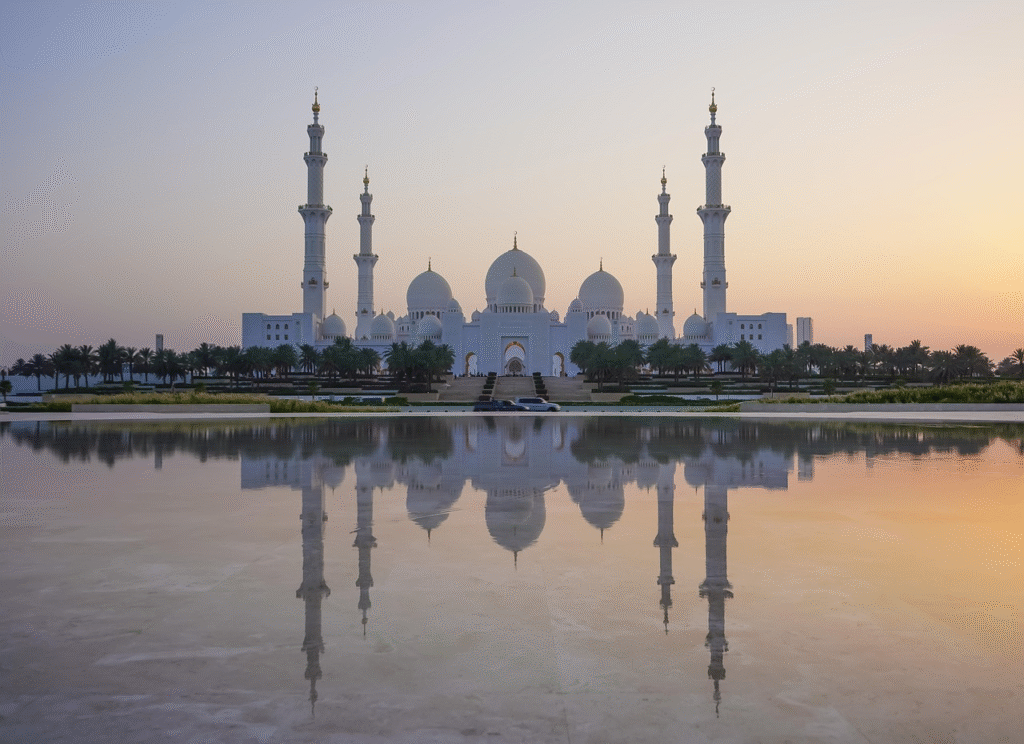
Photo credit: The Sheikh Zayed Grand Mosque, Abu Dhabi’s defining landmark
Abu Dhabi is the federal capital of the United Arab Emirates, the largest of the seven emirates by area and economic muscle, and increasingly one of the world’s most ambitious cultural-and-leisure destinations. The sandstone-pearl-divers’ village that Sheikh Shakhbut bin Sultan governed in the 1950s — a settlement of a few thousand people — has been transformed in two generations by oil wealth, urban planning, and the ruling Al Nahyan family’s deliberate investment in long-term soft power. Today’s Abu Dhabi includes the Sheikh Zayed Grand Mosque (one of the world’s largest, with a 7,000 m² hand-knotted Iranian carpet and 1,096 columns); the Louvre Abu Dhabi (the first universal-museum partnership outside France, opened 2017); the Yas Island complex with Ferrari World, the F1 Yas Marina Circuit, Warner Bros World, and SeaWorld Abu Dhabi; the planned Guggenheim Abu Dhabi and Zayed National Museum on Saadiyat Cultural District; and a coastline of luxury resorts, mangrove kayaking, and the largest desert-and-dune access in the Gulf. Yet beyond the headline attractions, Abu Dhabi remains a calmer, less brash counterpoint to Dubai 140 km north — a city that takes its diplomatic and cultural-capital status seriously.
Abu Dhabi by District: The 7 Areas
Abu Dhabi is divided into 7 main districts. The map below shows their official OSM boundaries, colour-coded to match the table — a quick way to orient yourself before zooming in on individual sights.
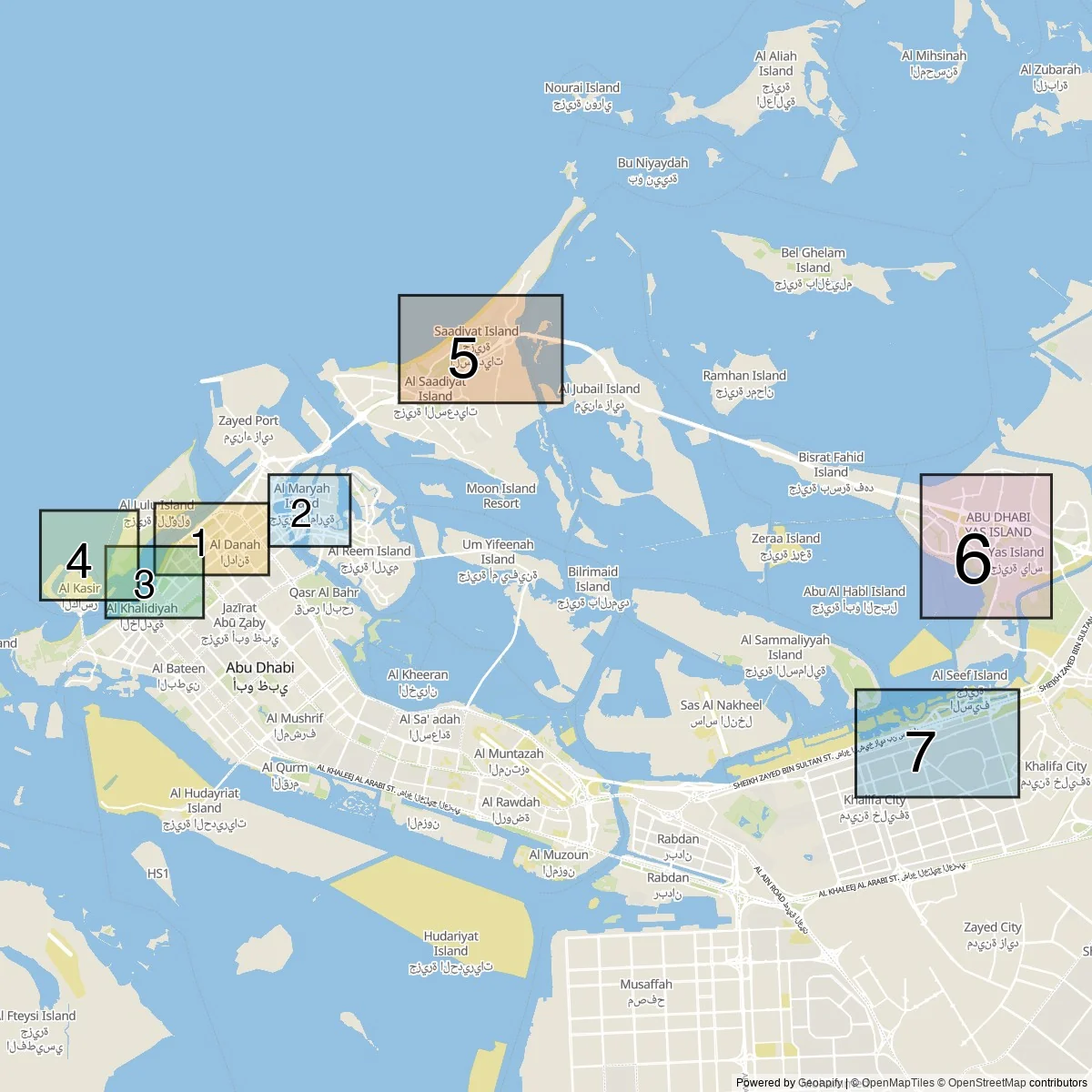
| # | Areas |
|---|---|
| 1 | Al Markaziyah · Corniche & Downtown |
| 2 | Al Zahiyah · Tourist Club Area |
| 3 | Al Khalidiyah · Khalidiyah |
| 4 | Al Marina · Marina & Breakwater |
| 5 | Jazirat Al-Saadiyat · Saadiyat Island |
| 6 | Jazirat Yas · Yas Island |
| 7 | Madinat Khalifa · Khalifa City |
Abu Dhabi at a Glance: Essential Facts for Travelers
| Location | Emirate of Abu Dhabi, southwestern United Arab Emirates (Persian Gulf coast) |
|---|---|
| Coordinates | 24.4539°N, 54.3773°E |
| Population | ~1.5 million (2024 city); Emirate ~3.78 million |
| Area | City 972 km²; Emirate 67,340 km² (87% of UAE total) |
| Elevation | Sea level (city); inland to ~1,910 m (Jebel Hafit) |
| Time Zone | Gulf Standard Time (GST, UTC+4 — no daylight saving) |
| Calling Code | +971 (emirate code 02) |
| Currency | UAE Dirham (AED د.إ) |
| Languages | Arabic (official); English universally understood and used in business and tourism |
| Religion | Predominantly Sunni Muslim; significant Christian, Hindu, Buddhist, and other communities among expatriates |
| Climate | Hot desert — very hot humid summers (often 45 °C+), mild sunny winters |
| Founded | 1761 (Bani Yas tribal settlement at the fresh-water well) |
| Famous For | Sheikh Zayed Grand Mosque, Louvre Abu Dhabi, Yas Island (F1 / Ferrari World / Warner Bros World), Saadiyat Cultural District, Etihad Towers, Empty Quarter access |
Upcoming Events in Abu Dhabi
| Date | Title | Details |
|---|---|---|
| 2026-07-18 | A Board Game Adventure at Louvre Abu Dhabi | Louvre Abu Dhabi’s family-friendly exhibition traces the journeys of iconic board games such as chess, carrom, ludo and mancala across cultures and centuries. Around 30 objects from the museum’s collection are shown alongside regional and international loans, including early examples from ancient Egypt and Mesopotamia. Running through April 2027 at the Saadiyat Island museum, it invites visitors of all ages to discover how play has connected civilisations. Museum admission applies, with ticket prices varying by category, and interactive elements make it especially engaging for children. [Source] |
| 2026-09-27 | The Corrs live at Etihad Arena | The Irish family band behind hits such as Breathless and Runaway brings its melodic pop-rock and Celtic folk influences to Etihad Arena on Yas Island for a one-night show. Siblings Andrea, Sharon, Caroline and Jim Corr remain one of Ireland’s most successful groups, and their Abu Dhabi date is part of the venue’s autumn international line-up. Ticket prices vary by seating category and are sold through official channels. Expect a nostalgic evening appealing to fans of 1990s and 2000s pop as well as newcomers. [Source] |
| 2026-10-10 to 2026-12-19 | Abu Dhabi Festival 2026 (23rd edition) | The 23rd edition of the emirate’s flagship arts festival runs from 10 October to 19 December across venues in the capital, presenting music, dance and visual arts from regional and international artists. A headline addition this year is the Children’s Biennale, described as the Arab world’s first outdoor children’s art biennale, bringing free, family-oriented installations and workshops into public spaces. Programme details and ticketing vary by performance, with some events free and others ticketed. The long-running festival is organised by the Abu Dhabi Music and Arts Foundation. [Source] |
| 2026-10-14 to 2026-10-16 | Air Expo Abu Dhabi 2026 | This aviation trade exhibition returns to ADNEC Centre Abu Dhabi for three days, showcasing aircraft, avionics and services for the general and business aviation sectors, and it runs alongside a dedicated Advanced Air Mobility Expo covering electric air taxis, drones and next-generation flight technology. Exhibitors, buyers and aviation professionals from across the region attend, and the event forms part of a busy second half of 2026 in which ADNEC venues host almost 300 events. Attendance terms vary, with registration typically required for trade visitors. [Source] |
| 2026-10-14 to 2027-02-14 | Spices and Wonders: Sailing the Indian Ocean | Opening on 14 October and running until 14 February 2027, this Louvre Abu Dhabi exhibition carries visitors along the ancient maritime trade routes of the Indian Ocean, exploring how spices, goods and ideas moved between Asia, Arabia, Africa and Europe. It is organised in partnership with the Guimet National Museum of Asian Arts in France, and is one of several major shows in the museum’s 2026-27 season. Standard museum admission applies, with prices varying by ticket type. Well suited to history lovers and curious travellers alike. [Source] |
| 2026-10-18 to 2026-10-20 | NAJAH Abu Dhabi 2026 higher education fair | NAJAH, the region’s long-established higher-education fair, takes over ADNEC Centre Abu Dhabi for three days, bringing together universities and colleges from around the world to meet prospective students. School leavers and their parents can compare programmes, ask about scholarships and admissions requirements, and speak directly with representatives from institutions at home and abroad. Seminars offer guidance on study options and future careers. Entry is typically free for students who register in advance, making it a key date for anyone planning university applications in the Emirates. [Source] |
| 2026-10-25 | Russell Peters at Etihad Arena | The Canadian stand-up star, known worldwide for sharp observational comedy about culture, family and accents, performs at Etihad Arena on Yas Island at 8pm. Peters has sold out arenas from Toronto to Sydney and has a devoted following in the Gulf, where his multicultural material lands especially well. The show is recommended for adult audiences, and ticket prices vary by seating category through the venue’s official channels. Arrive early to enjoy the pre-show atmosphere along the Yas Bay waterfront before the evening begins. [Source] |
| 2026-10-31 | Riverdance at Etihad Arena | The world-famous Irish dance spectacular arrives at Etihad Arena on Yas Island for Halloween-day performances at 3pm and 8pm, blending thunderous precision dancing, traditional music and theatrical staging. Three decades after it first electrified audiences, the production continues to tour with a new generation of champion dancers. The matinee makes an easy option for families with children, while the evening show suits a night out. Tickets are sold in several price categories through the venue and its official ticketing partners. [Source] |
City News in Abu Dhabi – last 14 days
| Date | Category | Headline | Details |
|---|---|---|---|
| 2026-09-14 | Culture | Abdullah bin Zayed opens the 35th Abu Dhabi International Book Fair | Sheikh Abdullah bin Zayed inaugurated the 35th edition of the capital’s flagship literary gathering, held under the patronage of the UAE President. Coverage describes the fair as opening its gates to the cultures of the world, with publishers, authors and signing sessions presenting new releases throughout the week. An educational programme places children and young adults at the heart of the experience, with dedicated activities designed to nurture reading. One of the region’s most important publishing gatherings, it drew official delegations and literary figures on its opening day. [Source] |
| 2026-09-14 | Business | Law firm Sullivan & Cromwell opens Abu Dhabi office to tap Gulf deals | The New York-based law firm has opened an office in the UAE capital, described in regional coverage as its regional headquarters, seeking a share of the Gulf’s growing deal-making activity. Bloomberg reports the move reflects a broader influx of international law firms, banks and asset managers establishing bases in Abu Dhabi, drawn by sovereign wealth funds and rising volumes of mergers, acquisitions and capital-markets work. The opening underlines the emirate’s push to position itself as a leading global financial and legal hub. [Source] |
| 2026-09-14 | Public safety | UAE warns of jail terms for academic certificate forgery | Authorities have cautioned residents that forging or using falsified academic certificates is a criminal offence that can carry prison sentences, according to Emirates 24|7. The warning targets people who might submit fake degrees or diplomas for jobs or official procedures, and it underlines that verification checks are applied to credentials presented to employers and government bodies. Officials urged individuals to obtain qualifications only through recognised institutions and accredited channels, stressing that offenders face legal accountability under UAE law. [Source] |
| 2026-09-14 | Public transport | UAE airlines report delays and cancellations amid ongoing regional tension | Travellers using UAE carriers are being advised to check their bookings as Emirates, Etihad, Air Arabia and flydubai report delays and cancellations linked to regional tension, Gulf News writes in a travellers’ guide. Conde Nast Traveller Middle East similarly notes disruption affecting services through Dubai and the wider Middle East. Passengers are urged to monitor airline notifications, allow extra time at airports and confirm the status of connecting flights, as schedules remain subject to change while the situation develops. [Source] |
| 2026-09-14 | Local government | Abu Dhabi Judicial Department reports 79% growth in one-day court cases in first half of 2026 | The emirate’s judiciary recorded 79 percent growth in cases handled through its one-day court system during the first six months of 2026, according to Al Khaleej. The one-day litigation model is designed to settle straightforward disputes within a single session, speeding up access to justice and reducing the burden on conventional courts. Officials present the figures as evidence of the continuing drive to modernise judicial services and improve efficiency for residents and businesses that rely on the courts. [Source] |
| 2026-09-14 | Culture | IIFA Awards tease return to Abu Dhabi after two years | Organisers of the International Indian Film Academy Awards have hinted that the Bollywood ceremony will come back to the UAE capital after a two-year absence, The National reports. Abu Dhabi hosted celebrated editions of the awards in recent years, drawing major Indian film stars and thousands of fans to Yas Island. A confirmed return would be a significant win for the emirate’s events calendar, reinforcing its strategy of attracting global entertainment properties and serving the large South Asian community across the Emirates. [Source] |
| 2026-09-14 | Public safety | Ministry of Defence mourns two personnel killed during training mission | The UAE Ministry of Defence announced the deaths of two service members who lost their lives in the course of a training mission, Emirates 24|7 reports. The ministry mourned the personnel and extended condolences to their families, in line with its practice of publicly honouring those who die in the line of duty. No further operational details were disclosed in the report. The announcement drew expressions of sympathy across the country, where the armed forces hold a respected place in public life. [Source] |
| 2026-09-13 | Business | ROX begins production of ROX Adamas vehicles in Abu Dhabi | Vehicle maker ROX has started producing its Adamas model at a facility in the UAE capital, Al Watan reports. The move brings automotive assembly activity to the emirate, aligning with an industrial strategy of attracting advanced manufacturing and diversifying the economy beyond oil. Local production is expected to serve regional demand for the brand’s vehicles. The launch adds to a series of recent industrial investments in Abu Dhabi, where authorities have been courting manufacturers with incentives and modern infrastructure. [Source] |
| 2026-09-13 | Public transport | Direct flights launched from Abu Dhabi to Aqaba to boost tourism with Jordan | New direct air services connecting the UAE capital with the Jordanian Red Sea city of Aqaba have been launched, a step intended to strengthen tourism flows between the Emirates and Jordan, according to Akhbar Ajman. The route gives travellers a straightforward link to Aqaba’s diving sites and to nearby attractions such as Petra and Wadi Rum, while making Abu Dhabi easier to reach for Jordanian visitors. The connection reflects continuing expansion of regional point-to-point routes from the emirate’s airports. [Source] |
| 2026-09-12 | Local affairs | Crown Prince and Iranian president discuss de-escalation at BRICS summit | On the sidelines of the BRICS leaders’ summit in New Delhi, Crown Prince Sheikh Khaled bin Mohamed bin Zayed met Iranian President Masoud Pezeshkian for talks on reducing tension in the region, the South China Morning Post reports. Pezeshkian later said the two sides had held a good conversation and agreed to put the past behind them. UAE officials described the meeting as consistent with a policy combining deterrence and diplomacy, amid market concern over oil supplies during the regional crisis. [Source] |
| 2026-09-11 | Business | ADNOC signs partnerships with German energy and industry groups | The state oil company has signed partnership agreements with German energy and industrial groups, The Wall Street Journal reports, as part of a wider UAE programme of investment in Germany valued at 46.5 billion dollars. The accords deepen commercial ties between the Gulf state and Europe’s largest economy, spanning energy supply and industrial cooperation. The deals come as Abu Dhabi continues to leverage its hydrocarbon wealth to build long-term strategic and technology partnerships with major industrial economies around the world. [Source] |
| 2026-09-11 | Sports | Decision on Qatar and Abu Dhabi F1 rounds could slip as Imola expected to host finale | A decision on the scheduling of the Qatar and Abu Dhabi Formula One rounds could be delayed, Reuters reports, while Imola in Italy is expected to host the season finale. The report raises questions over the traditional closing role of the Yas Marina Circuit, which has staged the championship’s final race for many seasons. Organisers and Formula One management are still working through calendar arrangements, so fans awaiting confirmation of the emirate’s race dates will need to wait a little longer. [Source] |
| 2026-09-11 | Public transport | Emirates gets green light for Berlin services after 22 years | German authorities have cleared Emirates to operate services to Berlin, Aviation Week reports, ending a 22-year wait for the Dubai-based carrier to add the German capital to its network. The approval expands air links between the UAE and Germany and gives passengers a new direct option into Berlin alongside existing German gateways. The decision is significant for travellers across the Emirates, including those in Abu Dhabi, and follows years of bilateral negotiation over traffic rights between the two countries. [Source] |
| 2026-09-10 | Local affairs | Algeria severs diplomatic ties with the United Arab Emirates | Algeria has cut diplomatic relations with the UAE, citing what state media described as provocative and hostile actions, the Los Angeles Times reports. Abu Dhabi responded by saying it remains committed to joint interests between the two countries, according to Asharq Al-Awsat, while separate reports say Algiers has also closed its airspace to UAE aircraft. The rupture marks a serious deterioration in ties between the two Arab states, with potential consequences for trade, travel and regional diplomacy. [Source] |
Abu Dhabi Events & City News Archive
Sources: Louvre Abu Dhabi, Platinumlist Guide, Destination2, Etihad Arena, Gulf Buzz, Experience Abu Dhabi, ADNEC, EventsEye
Weather Forecast for the Next 14 Days in Abu Dhabi
| Date | Weather | Max °F | Min °F | Rain mm |
|---|---|---|---|---|
| 2026-09-14 | ☁️ | 103.9 °F | 87.0 °F | 0.0 mm |
| 2026-09-15 | ☀️ | 103.3 °F | 86.5 °F | 0.0 mm |
| 2026-09-16 | ☁️ | 102.0 °F | 82.6 °F | 0.0 mm |
| 2026-09-17 | ☀️ | 101.1 °F | 87.9 °F | 0.0 mm |
| 2026-09-18 | ☀️ | 99.7 °F | 85.0 °F | 0.0 mm |
| 2026-09-19 | ☀️ | 98.4 °F | 83.6 °F | 0.0 mm |
| 2026-09-20 | ☀️ | 95.6 °F | 80.2 °F | 0.0 mm |
| 2026-09-21 | ☀️ | 97.6 °F | 84.7 °F | 0.0 mm |
| 2026-09-22 | ☀️ | 100.3 °F | 88.3 °F | 0.0 mm |
| 2026-09-23 | ☀️ | 97.5 °F | 86.4 °F | 0.0 mm |
| 2026-09-24 | ☀️ | 95.8 °F | 85.8 °F | 0.0 mm |
| 2026-09-25 | ☀️ | 98.5 °F | 85.6 °F | 0.0 mm |
| 2026-09-26 | ☀️ | 97.8 °F | 87.1 °F | 0.0 mm |
| 2026-09-27 | ☀️ | 94.7 °F | 86.2 °F | 0.0 mm |
Abu Dhabi’s History
Abu Dhabi’s modern settlement is traditionally dated to 1761, when hunters of the Bani Yas tribal confederation tracked a gazelle to a previously unknown fresh-water well on what was then an arid coastal island. The name Abu Dhabi means “Father of the Gazelle.” The original Bani Yas branch that settled the well — the Al Bu Falah — built a fortified watchtower (the Qasr al-Hosn, the city’s oldest surviving structure, restored as a public museum) and established the ruling family branch Al Nahyan that still rules the emirate today.
For most of the 18th and 19th centuries, Abu Dhabi remained a small pearl-fishing and date-trading settlement under the broader regional umbrella of the Trucial States — a loose grouping of British-protected sheikhdoms that emerged from the Maritime Truce of 1853. The British presence focused on suppressing piracy in the Persian Gulf and securing the sea route to India; the local sheikhs retained internal autonomy in exchange for accepting British control of external relations. Pearl diving was the dominant economic activity until the 1930s, when the global pearl market collapsed due to Japanese cultured pearls. The decades following the pearl-market crash were among the harshest in Abu Dhabi’s history.
Everything changed with the discovery of oil. Offshore exploration began in 1953; the first commercial well at Umm Shaif came online in 1962, and the first export shipment left in July 1962. Sheikh Zayed bin Sultan Al Nahyan deposed his older brother Sheikh Shakhbut in 1966 and took the emirate’s nascent oil revenues and immediately reinvested them in infrastructure, schools, hospitals, and housing — transforming Abu Dhabi from a village of mud-brick houses to a modern city within a single decade. His reputation as “Father of the Nation” (Walid al-Watan) is the central legitimating narrative of UAE political life.
The United Arab Emirates federation was formed on December 2, 1971 with the British withdrawal from the region, uniting Abu Dhabi, Dubai, Sharjah, Ajman, Umm Al-Quwain, and Fujairah; Ras Al Khaimah joined in February 1972. Sheikh Zayed served as the federation’s first President from 1971 until his death in 2004; he was succeeded by his son Sheikh Khalifa (2004–2022) and then by Sheikh Mohamed bin Zayed Al Nahyan (2022–present).
Post-2000 Abu Dhabi has pursued a deliberate economic diversification away from oil dependency, with major investments in renewable energy (Masdar City, 2008), aerospace (Strata Manufacturing, Mubadala), cultural infrastructure (Saadiyat Cultural District, opened from 2017), and Formula 1 (Yas Marina Circuit, 2009). The city hosted Expo 2020 Dubai at its neighbor emirate (delayed to 2021–2022) and the COP28 climate summit in November–December 2023.
Geography, Climate & Best Time to Visit Abu Dhabi
Geographic Setting
Abu Dhabi city sits on a T-shaped island just offshore the southern Persian Gulf coast of the Arabian Peninsula, connected to the mainland by the Maqta, Mussafah, and Sheikh Zayed bridges. The broader emirate stretches inland and south to cover most of the country’s land area — including the Liwa Oasis at the edge of the Empty Quarter (Rub al-Khali) desert and the Al Ain oasis city near the Omani border. The geography produces three distinct sub-regions: the capital city archipelago with its outer barrier islands (Yas, Saadiyat, Lulu) and adjacent Reem Island and Mariya Island development; the Western Region (now Al Dhafra) with the Liwa dunes and the Empty Quarter; the Eastern Region with Al Ain, the Hajar mountain foothills, and Jebel Hafit.
Climate Overview
Abu Dhabi has a hot desert climate (Köppen BWh). Summer (June–September): daytime highs of 40–45 °C, sometimes 50 °C+; humidity adds heat-index brutality, with overnight lows in the high 20s and overnight humidity often above 70%. Winter (December–February): daytime highs of 22–28 °C, overnight lows 12–18 °C, mostly sunny with occasional brief rain. Annual rainfall just 70 mm. Dust and sand storms (shamal winds) can dramatically reduce visibility during late spring and early summer.
Best Time to Visit
November to March is the only realistic window for most international travelers — pleasant temperatures, clear skies, low humidity, and the full programming calendar including the Abu Dhabi Grand Prix (typically early December at Yas Marina Circuit), the Abu Dhabi Festival, and the Liwa Date Festival (July, but worth knowing about). April and October are shoulder seasons — warm but tolerable, often with the year’s best hotel rates. May to September: brutal outdoor conditions; most travel is mall-to-air-conditioning-to-mall; serious outdoor activities require sunrise/sunset timing and significant heat preparation. Ramadan (dates shift earlier each year): restaurants close during daylight hours; some attractions reduce hours; tourist-area hotels usually still serve meals at private dining rooms. Eid al-Fitr and Eid al-Adha brings unusually busy domestic-tourist traffic.
Abu Dhabi’s Districts & Neighborhoods
Downtown Abu Dhabi / Khalifa Park / Corniche
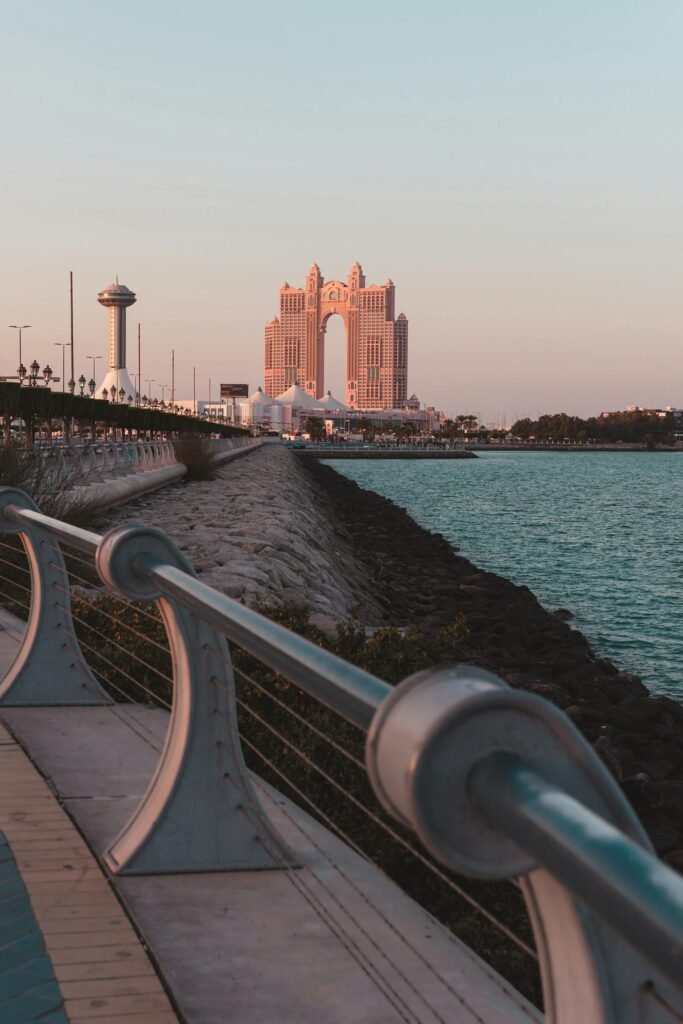
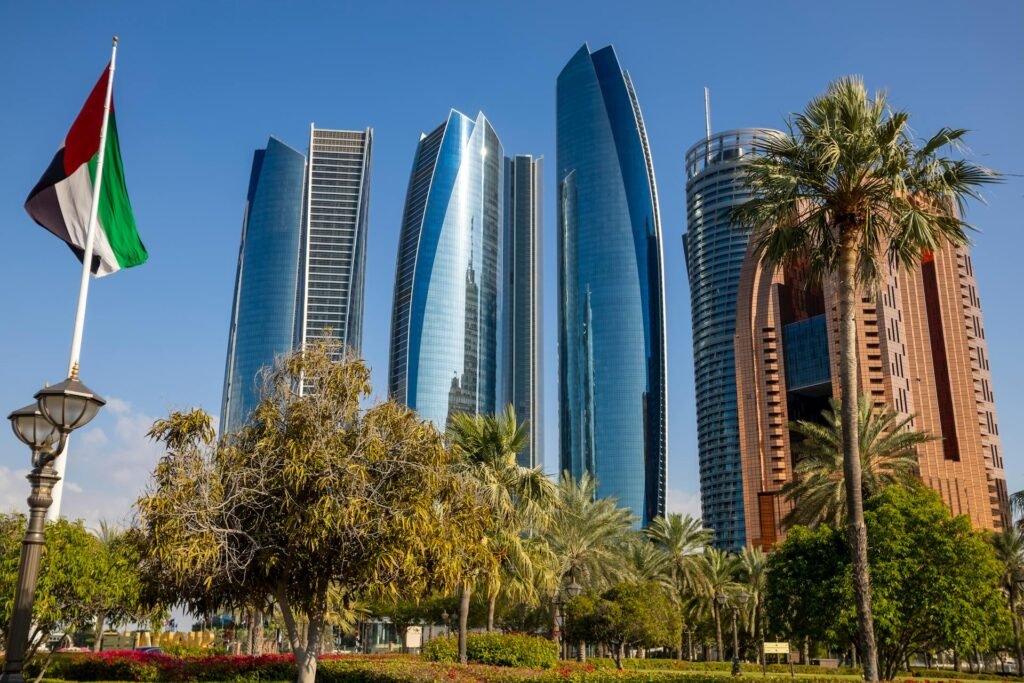
The central city area on the main Abu Dhabi island. The 8 km Corniche seafront promenade with its parks, cycling paths, and beach access; the financial-district skyscrapers including Etihad Towers (five 270-meter+ towers, observation deck at Observation 300); the Marina Mall; and the historical Qasr al-Hosn fort and adjacent House of Artisans. The closest district to the Sheikh Zayed Grand Mosque and good for first-time visitors wanting the city-center experience.
Yas Island
The purpose-built leisure-and-entertainment island 30 km from downtown, connected by causeway. Yas Marina Circuit (Formula 1 since 2009); Ferrari World Abu Dhabi (the world’s fastest roller coaster, Formula Rossa, hits 240 km/h); Yas Waterworld; Warner Bros World Abu Dhabi; SeaWorld Abu Dhabi (the world’s largest aquarium since 2023, controversially built without orcas); CLYMB Abu Dhabi (the tallest indoor climbing wall); and resort hotels including W Abu Dhabi Yas Island (the F1-paddock-bridge hotel), Yas Hotel, and the Crowne Plaza chain.
Saadiyat Cultural District
The cultural-museum complex on Saadiyat Island (Arabic for “Happiness Island”), 15 km north of downtown. Louvre Abu Dhabi (opened 2017, with Jean Nouvel’s iconic perforated dome); Guggenheim Abu Dhabi (under construction, expected 2025); Zayed National Museum (planned), Abrahamic Family House (interfaith complex opened 2023 with mosque, church, and synagogue); the broad Saadiyat Beach with three luxury resorts (Park Hyatt, Saadiyat Rotana, Jumeirah at Saadiyat Beach Resort).
Al Maryah Island & Reem Island
The two business-district islands east of downtown. Al Maryah Island contains the Abu Dhabi Global Market (financial free zone) with international banks, the Galleria luxury mall, and Cleveland Clinic Abu Dhabi. Reem Island has rapidly developed as a residential high-rise district with the Galleria Reem Mall and the new Reem Mall complex.
Khalifa City / Mohammed Bin Zayed City
The suburban residential districts on the mainland just southeast of the airport. Family-friendly compounds, schools, and the New York University Abu Dhabi campus on Saadiyat. Less of a tourist destination.
Al Ain (Garden City)
140 km inland near the Omani border — the UAE’s largest inland city and the second-most-populous in Abu Dhabi Emirate. Al Ain Oasis (UNESCO-listed since 2011), Jebel Hafit mountain (1,910 m, with the road climbing to a panoramic summit), Al Ain National Museum, and the Al Jahili Fort. A 90-minute drive from Abu Dhabi city, worth at least a day trip for the cooler temperatures and the green oasis landscape.
Top Things to Do in Abu Dhabi
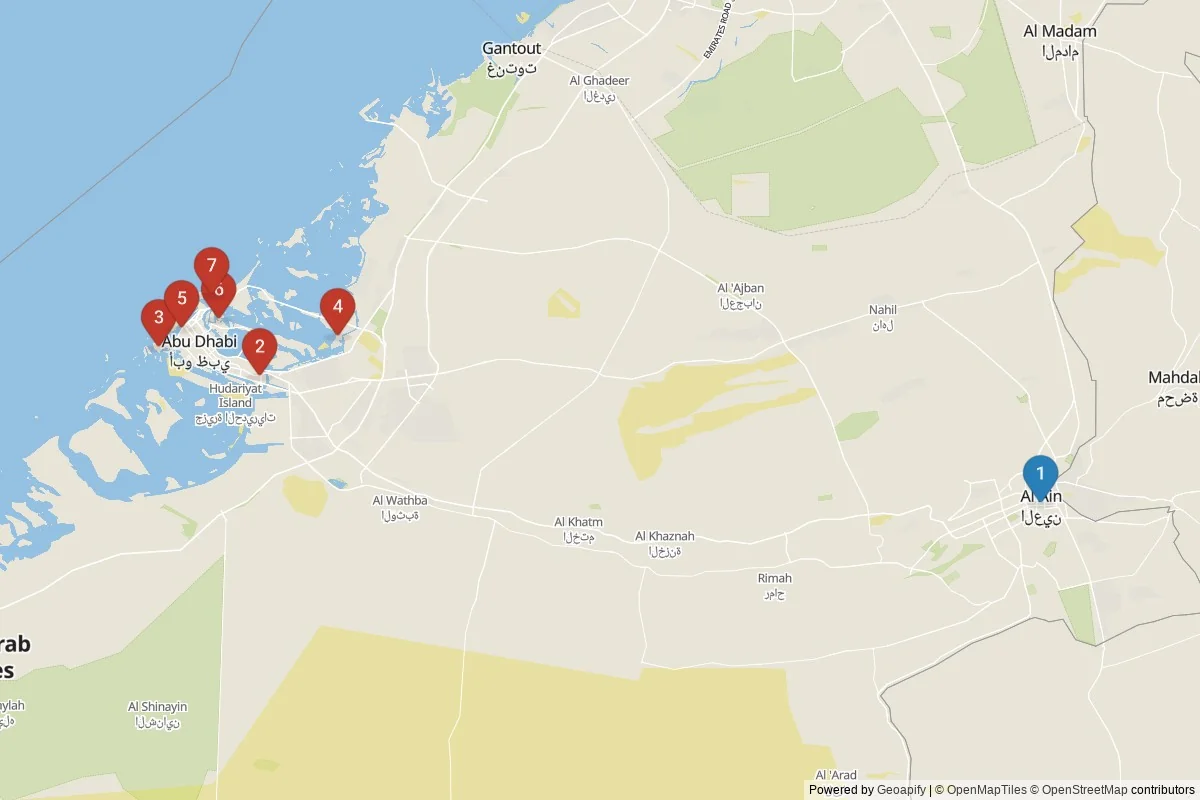
| # | Sight | Cluster | Type | Time | Entry | Best |
|---|---|---|---|---|---|---|
| 1 | Day Trip to Al Ain | Cluster A | Museum | — | free | — |
| 2 | the Sheikh Zayed Grand Mosque | Cluster B | Mosque | 90 minutes | $545 | Sunset |
| 3 | Qasr al-Watan (Presidential Palace) | Cluster B | Museum | — | — | — |
| 4 | Ferrari World & Yas Marina Circuit | Cluster B | Museum | — | $94 | — |
| 5 | Walk the Corniche & Visit Etihad Towers Observation | Cluster B | Park | — | free | — |
| 6 | Mangrove Kayaking | Cluster B | Park | — | — | Sunrise |
| 7 | Louvre Abu Dhabi | Cluster B | — | 4 hours | $18 | — |
1. Visit the Sheikh Zayed Grand Mosque
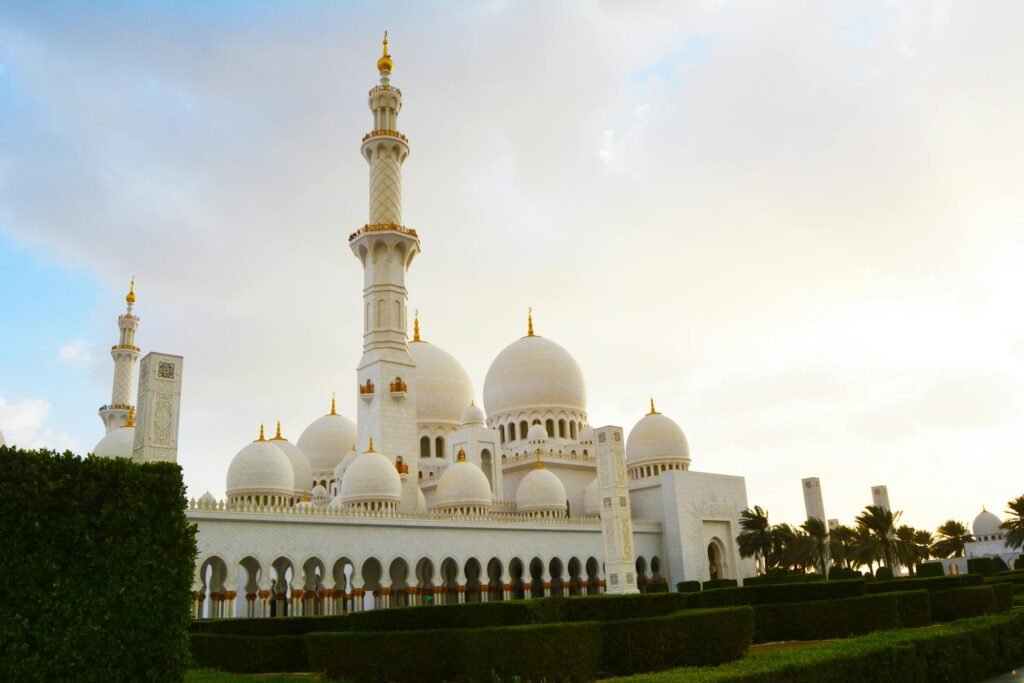
The defining Abu Dhabi landmark and one of the largest mosques in the world. Completed in 2007 at a reported cost of $545 million, the white-marble complex features 82 domes, 1,096 columns inlaid with semi-precious stones, the world’s largest hand-knotted Iranian carpet (7,000 m², 35 tons), and seven gold-plated chandeliers from Germany. Free entry for visitors of all faiths. Dress code is strict: long sleeves, ankle-length trousers or skirts for women, head covering for women (loaner abayas available free); shorts not permitted for men. Open daily except Friday mornings. Plan 90 minutes minimum; arrive at sunset for the most spectacular lighting.
2. Louvre Abu Dhabi
Jean Nouvel’s architectural masterwork on Saadiyat Island — the world-first French-managed Louvre outside Paris. The 9,200 m² building sits under a perforated double-dome that produces a “rain of light” effect on the galleries below. The collection presents human civilizational history through artifacts loaned from the Louvre Paris, Musée d’Orsay, Centre Pompidou, Quai Branly, and other French institutions, supplemented by Abu Dhabi’s own acquisitions including a Leonardo da Vinci attribution. Entry AED 65 (~US$18); audioguide AED 25; closed Mondays. Plan 3–4 hours.
3. Ferrari World & Yas Marina Circuit
The Yas Island entertainment complex offers the most concentrated dose of Gulf-state spectacle. Ferrari World day passes AED 345 (~US$94) include the Formula Rossa coaster (the world’s fastest, 240 km/h, 0–100 in 1.9 seconds), the F1-themed simulator rides, and the Ferrari museum-collection. Yas Marina Circuit public tours during non-race weeks (AED 200), F1 grand prix tickets late November / early December AED 2,500–10,000+. Yas Waterworld (AED 280–340), Warner Bros World (AED 345 — entirely indoor air-conditioned, useful in summer), SeaWorld Abu Dhabi (AED 375 — the world’s largest aquarium since 2023). Bundled multi-park tickets significantly reduce per-park costs.
4. Walk the Corniche & Visit Etihad Towers Observation
The 8 km Corniche seafront promenade is the city’s free outdoor amenity — cycling paths (bike rentals from beach kiosks), shaded picnic areas, public beach segments (Family Beach, Open Beach), and the city’s signature parks. The Observation Deck at 300 on the 74th floor of Etihad Towers offers the best high-altitude city view (AED 95 entry including beverage). Combine with the Heritage Village at the Corniche’s western end (free) for a recreated Bedouin pre-oil settlement.
5. Sand-Dune Desert Safari to the Empty Quarter
The Liwa Oasis and the surrounding Rub al-Khali (Empty Quarter) dunes are among the world’s most spectacular desert landscapes. Day trips from Abu Dhabi: dune-bashing 4×4 + camel ride + falcon demonstration + Bedouin-camp dinner; AED 200–500 per person depending on operator. Overnight desert camps at Qasr Al Sarab (luxury) or Tilal Liwa (mid-range) put you among the dunes for sunrise/sunset; from AED 800–4,000+ per person per night. Sandboarding and quad-biking add to the experience.
6. Visit Qasr al-Watan (Presidential Palace)
The “Palace of the Nation,” a working ceremonial palace opened to the public in 2019. The vast great hall, the presidential gift collection, the calligraphy library, and the formal gardens give a sense of UAE official ceremony. Entry AED 60; combine with the Saadiyat museums for a half-day cultural circuit.
7. Day Trip to Al Ain
The “Garden City” 140 km inland — the country’s most authentically Emirati city, traditionally cooler and greener than the coast. Al Ain Oasis (UNESCO 2011) — a 1,200-hectare working palm grove with traditional falaj irrigation; free entry. Jebel Hafit summit drive (1,910 m) with panoramic views; free. Al Ain National Museum + Al Jahili Fort. Plan a full day; rent a car or take the AED 25 InterEmirates bus from Abu Dhabi.
8. Mangrove Kayaking
The protected Eastern Mangroves National Park covers 19 km² of tidal mangrove forest with kayaking trails through the channels. Two-hour guided sunrise tours AED 200–300 per person; some operators offer night-paddle tours with bioluminescent water effects. A quiet, surprising natural counterpoint to the city’s hyper-modernity.
How to Get to Abu Dhabi
By Air
Abu Dhabi International Airport (AUH), 30 km southeast of downtown — the home base of Etihad Airways and a major Gulf hub. Direct nonstop routes to all major Gulf cities, most of Europe, North America (New York, Washington, Chicago, Boston, Los Angeles, Toronto, Montreal), most major Asian destinations, and Australasia. The Terminal A (opened November 2023) is one of the world’s largest airport terminals. Carriers: Etihad, Emirates (via Dubai), Qatar Airways (via Doha), British Airways, Lufthansa, Air France, Air India, Singapore Airlines, Cathay Pacific, and many more.
From the airport: Taxi AED 80–120 to downtown (40 minutes); Uber/Careem similar or slightly higher; Airport bus A1 AED 4 to central bus station; chauffeur car arranged through hotels AED 200–400. Dubai International Airport (DXB) is the alternative for some travelers — 90 minutes by car from Abu Dhabi via the Sheikh Zayed Highway (E11), often with better flight choices.
By Car from Dubai or Sharjah
The Sheikh Zayed Road (E11) highway connects Abu Dhabi to Dubai (1.5 hours), Sharjah (2 hours), and the northern emirates. The road is fast, well-maintained, and frequently driven by commuters; speed cameras are abundant and strictly enforced; toll gates (Salik in Dubai) charge approximately AED 5 per crossing. Most international visitors arrange airport pickups rather than self-drive.
By Long-Distance Bus
The Etihad Bus / Department of Transport operates frequent connections to Dubai (AED 25–35), Al Ain (AED 25), and other Gulf points from the Abu Dhabi Central Bus Station at Madinat Zayed. Comfortable air-conditioned coaches every 30–60 minutes.
By Sea
Cruise ships dock at the Zayed Port Cruise Terminal, opened 2015 within Mina Zayed; the terminal is 10 minutes by taxi from downtown. Limited regular passenger services; primarily a cargo and cruise port.
Visa Notes
The UAE offers visa-free entry for up to 30 or 90 days for citizens of over 60 countries — including the US, UK, all EU member states, Canada, Australia, New Zealand, Japan, South Korea, Singapore, Malaysia (up to 90 days for many; 30 days for others). Indian passport holders need a visa-on-arrival if they hold a US or UK visa, or an e-Visa otherwise. Chinese passport holders receive 30 days visa-free. Always verify current rules with the UAE Government Portal. Passport must have at least 6 months remaining validity. UAE has strict laws against drugs, public intoxication, public displays of affection, and offensive language toward officials.
Getting Around Abu Dhabi
Taxis & Ride-Hailing
TransAD silver taxis with their distinctive silver-white color scheme are the dominant taxi service — metered, abundant, reasonably priced (AED 25–40 across the city center). Uber and Careem operate alongside, with comparable pricing. Most drivers speak some English. Female travelers can specifically request a female-driver taxi.
Buses
The Abu Dhabi public bus network is modern, air-conditioned, clean, and remarkably inexpensive (AED 2 single fare). Bus 8 serves the Corniche and Marina Mall; Bus 32 connects to Yas Island; Bus 94 to the airport. Hafilat smart card rechargeable cards work across the network and bus-route maps are available at central stations. Less useful for tourists than for residents.
Self-Drive Car Rentals
Car rental is practical and inexpensive in the UAE — Hertz, Avis, Europcar, Budget, and many local operators rent from AED 80–200/day for an economy car. Important: speed cameras are extremely abundant and strictly enforced; even 10 km/h over the speed limit triggers automated fines that show up on your rental car account; AED 10 Salik tolls per Dubai crossing. Self-drive is genuinely useful for Yas Island, Al Ain day trips, and desert excursions; less useful within the central city where parking is metered.
Public Bicycles & Walking
The Corniche bike path is excellent — flat, separated from traffic, with rental kiosks (AED 20/hour). The city is otherwise designed around cars; long-distance walking is impractical in summer due to heat and the distances between attractions.
Hop-On Hop-Off Bus
The Big Bus Abu Dhabi tour covers all major sights — Corniche, Heritage Village, Etihad Towers, Sheikh Zayed Grand Mosque, Saadiyat, Yas — with bilingual audio commentary. Day pass AED 200; useful for first-time visitors wanting a structured overview.
Food & Drink in Abu Dhabi
Emirati cuisine combines Bedouin, Persian, Indian, and broader Arab traditions. While the city’s restaurant scene is dominated by international brands and global cuisine catering to the expatriate population (which makes up ~88% of Abu Dhabi’s residents), traditional Emirati food is increasingly visible through restaurants like Al Fanar, Mezlai (at Emirates Palace), and the working-class Iftar and breakfast spots.
What to Try
- Machboos — slow-cooked spiced rice with lamb, chicken, or fish — the national dish of the UAE, similar to Persian polo but with regional spice blends including dried lime (loomi).
- Harees — wheat-and-meat porridge, often served during Ramadan; a centuries-old Bedouin dish.
- Luqaimat — small fried dough balls in date syrup; the iconic Emirati sweet, especially associated with iftar.
- Camel meat & camel milk — culturally significant; camel kebabs and camel-milk ice cream at Camelicious shops.
- Hummus, mutabal, tabouleh, fattoush — the standard Levantine mezze available everywhere.
- Shawarma — vertical-roasted meat in flatbread wrap; the universal Gulf street food.
- Fresh dates and date syrup — the Liwa-region date varieties are among the world’s best; Khalas, Khenaizi, Lulu, and Bateel dates each have distinct character.
- Karak chai — strong sweet milky tea with cardamom; the universal afternoon drink.
- Persian and Indian cuisine — reflecting the city’s largest expatriate communities; biryani, kebabs, and traditional Persian dishes are widely available.
Where to Eat
Al Fanar Restaurant & Cafe — traditional Emirati in a 1960s-decor setting (multiple locations). Mezlai at Emirates Palace — fine-dining Emirati. Li Beirut at Jumeirah at Etihad Towers — Lebanese. Marakesh at Millennium — Moroccan. Hakkasan at Emirates Palace — Cantonese. BAR du PORT at Yas Marina — Mediterranean. COYA at Four Seasons Al Maryah Island — Peruvian. Café Arabia in Khalidiya — pan-Arab. Madinat Zayed and Khalifa Park for affordable local Pakistani, Indian, and Sri Lankan restaurants. Al Mina Fruit and Vegetable Market for street-side fresh fish grilling.
Drinks
Alcohol is legal in Abu Dhabi for non-Muslim residents and tourists, but only served at licensed hotel restaurants, bars, and clubs (and rare designated venues outside hotels). Drinking in public outside licensed venues remains illegal; sober driving is enforced very strictly with zero tolerance. Karak chai at any local café — AED 1–3 per cup. Arabic coffee (gahwa) — bitter, cardamom-flavored, served at almost every traditional gathering with dates. Fresh juices — sugarcane, pomegranate, mango — at street-side juice stands. Camel milk at the airport’s Camelicious shop and Carrefour supermarkets.
A Note on Tap Water
Tap water in Abu Dhabi is technically safe to drink — produced by desalination at the largest reverse-osmosis plants in the world and treated to high standards. However, the supply runs through some older building plumbing where it can pick up taste/odor issues, and most residents drink bottled or filtered water. Practical default for visitors: bottled water (AED 1–4 per liter at supermarkets; major brands Masafi, Al Ain Water, Mai Dubai, Aquafina). Ice in any reputable hotel or restaurant is safe. The CDC traveler health page for the UAE rates food and water safety as low-risk — among the safest destinations in the broader Middle East/North Africa region. Foodborne illness is uncommon; the bigger risk is heat exhaustion and dehydration during summer outdoor activities.
Frequently Asked Questions About Visiting Abu Dhabi
Do I need a visa to visit Abu Dhabi?
For most foreign passport holders, no — the UAE offers visa-free entry to citizens of over 60 countries. 30-day visa-free: US, Canada, Australia, New Zealand, Japan, South Korea, Singapore, Malaysia, Hong Kong (SAR passport), and several others; many of these can be extended for another 30 days in-country. 90-day visa-free within 180 days: all EU member states, UK, Switzerland, Norway, Iceland, and most western European countries. Chinese passport holders get 30 days visa-free. Indian passport holders get visa-on-arrival if they hold a valid US visa or US/UK/EU permanent residence (14 days, extendable). Other Indian and most other passport holders need an e-Visa applied for in advance via the UAE Government Portal or via Etihad Airways/Emirates if flying their airlines. Passport must have at least 6 months remaining validity. Always check current rules; the UAE has periodically expanded visa-free coverage. UAE residency-visa holders can sponsor visiting family members for tourist visas with simplified procedures.
Is Abu Dhabi safe for tourists?
Abu Dhabi is one of the world’s safest cities for tourists — the UAE consistently ranks in the top 10 globally for low crime rates, and Abu Dhabi specifically benefits from active surveillance, strict rule of law, and substantial police presence. The US State Department rates the UAE at “exercise increased caution” — primarily for terrorism-risk advisories rather than street crime. Real risks in Abu Dhabi: heat exposure in summer (40–50 °C is genuinely dangerous; stay hydrated, plan outdoor activities at sunrise/sunset, avoid mid-day exertion); strict legal environment — UAE laws differ significantly from Western norms; public displays of affection beyond hand-holding can attract police attention; offensive language toward officials or institutions (including online) carries criminal penalties; cohabitation of unmarried couples is technically illegal (rarely enforced for short-term tourists at hotels but worth knowing); alcohol consumption outside licensed venues is illegal and DUI is enforced with zero tolerance (DUI = mandatory jail time + deportation + ban from re-entry); drug laws are extremely strict — possession of trace residues on luggage or clothing has triggered prosecutions of foreign visitors; do not bring prescription opioids without proper documentation. Photographing military, government buildings, royal palaces, and individuals without permission can attract police attention. Female travelers: street harassment is rare; dress modestly at religious sites and traditional areas; the public mosque visit dress code is strictly enforced.
How many days do I need in Abu Dhabi?
Three to four days handles Abu Dhabi well; combined with Dubai (90 minutes by car), 7–10 days makes a satisfying UAE trip. A solid 4-day Abu Dhabi plan: Day 1 — Sheikh Zayed Grand Mosque (sunset visit) + Corniche evening walk + Heritage Village. Day 2 — Saadiyat Cultural District (Louvre Abu Dhabi morning + Abrahamic Family House + Saadiyat Beach afternoon) + dinner at Emirates Palace. Day 3 — Yas Island full day (Ferrari World or Warner Bros World; SeaWorld for animal-attraction interest) + Yas Marina evening. Day 4 — Desert safari (Liwa or Empty Quarter) — sunrise start, dune-bashing, falconry, camel ride, Bedouin-camp dinner. Add Day 5 for an Al Ain day trip (oasis + Jebel Hafit + Al Jahili Fort). Add Day 6+ for Dubai — easily reached as a day trip or as a separate base. 7-day UAE classic: 4 days Abu Dhabi + 3 days Dubai with the cross-emirate drive between. Day-trip Abu Dhabi from Dubai: feasible for the Sheikh Zayed Grand Mosque + Louvre + maybe Yas Island but feels rushed.
What’s the best area to stay in Abu Dhabi?
Depends on trip style. Corniche / Downtown — central beach-and-promenade location, ocean views, walking distance to museums and Heritage Village; international hotel chains (St. Regis Abu Dhabi, Sofitel, Park Rotana, InterContinental); AED 600–2,500/night (US$165–680). Saadiyat Island — luxury beach resorts on the cultural district; Park Hyatt Saadiyat, Jumeirah at Saadiyat, Saadiyat Rotana; AED 900–4,000/night; ideal for travelers wanting culture + beach combination. Yas Island — purpose-built leisure island; W Abu Dhabi Yas Island (over the F1 paddock — iconic), Yas Hotel, Crowne Plaza Yas; AED 700–4,000/night; best for families and theme-park-focused trips. Eastern Mangroves / Al Maryah Island — business-district modern luxury; Anantara Eastern Mangroves, Four Seasons Al Maryah; AED 1,200–5,000/night. Emirates Palace area — the legendary Mandarin Oriental-managed Emirates Palace itself, or the Royal Rose Suites and Abu Dhabi Edition nearby; AED 2,500–25,000+/night. Al Ain — for the inland heritage experience; Anantara Qasr Al Sarab Resort (in the desert dunes 90 minutes from Al Ain) is one of the country’s most spectacular hotels. Skip: cheap chains far from any tourist concentration — Abu Dhabi’s car-dependent geography makes them inconvenient.
How much does it cost to visit Abu Dhabi’s major sights?
Abu Dhabi is moderately expensive but offers excellent value for the quality of experience. Sheikh Zayed Grand Mosque: free. Louvre Abu Dhabi: AED 65 (~US$18) + audio guide AED 25. Qasr al-Watan (Presidential Palace): AED 60. Qasr al-Hosn: AED 30 (combined with House of Artisans). Etihad Towers Observation Deck: AED 95 including beverage. Ferrari World Abu Dhabi: AED 345 (~US$94) full-day pass. Yas Waterworld: AED 280–340. Warner Bros World: AED 345. SeaWorld Abu Dhabi: AED 375. Multi-park combo 2-park AED 525, 3-park AED 695, 4-park AED 805 — significantly cheaper per park. Heritage Village: free. Abrahamic Family House: free. Desert safari: AED 200–500 standard half-day; AED 800–2,500 for premium overnight. Mangrove kayaking: AED 200–300 per person. Local meals: shawarma AED 12–25; mid-range Lebanese AED 80–150 per person; hotel buffet AED 200–400; fine-dining AED 400–1,500 per person; afternoon tea at Emirates Palace AED 350–600. Taxi across the city: AED 25–50. Hotel-to-Yas Island: AED 50–80 by taxi. Overall daily budget: AED 500 (frugal, mostly free attractions + basic meals), AED 1,500 (mid-range with one paid attraction), AED 5,000+ (luxury with theme park or desert overnight).
Should I drink the tap water in Abu Dhabi?
Tap water in Abu Dhabi is technically safe to drink — produced almost entirely by desalination at the world’s largest reverse-osmosis plants and treated to high municipal standards. However, the water can pick up taste/odor issues passing through old building plumbing and storage tanks, and the vast majority of residents drink bottled or filtered water from preference. Practical default for visitors: bottled water (AED 1–4 per 1.5-liter bottle at any Carrefour, Lulu, or local grocery; major brands Masafi, Al Ain Water, Mai Dubai, Aquafina). Many hotels supply free bottled water in rooms. Reusable filter bottles work well; some boutique hotels and the Louvre Abu Dhabi provide refill stations. Ice is universally safe at any reputable establishment. The CDC traveler health page for the UAE rates food and water safety as low-risk. The real summer health risk is heat exhaustion and dehydration, not waterborne illness — drink 3+ liters of water daily during summer travel; symptoms of heat stroke (confusion, cessation of sweating, body temperature 40 °C+) require immediate medical attention.
What payment methods work in Abu Dhabi — credit cards or cash?
Heavily card- and digital-payment-oriented. Cash is rarely needed except for small tips. Credit/debit cards (Visa, Mastercard, AmEx, Discover, UnionPay): accepted virtually everywhere — hotels, restaurants, taxis, malls, museums, theme parks, supermarkets, and most independent shops; contactless tap-to-pay is universal. UAE dirham (AED): useful for tipping, small purchases at souks (e.g., Madinat Zayed Gold Souk), and the rare cash-only establishment. ATMs: extremely abundant in malls and at hotels; Emirates NBD, Abu Dhabi Commercial Bank (ADCB), First Abu Dhabi Bank (FAB) all accept foreign cards with reasonable daily limits (AED 5,000–10,000) and modest fees. Currency exchange: rates at the airport are competitive; Al Ansari Exchange, UAE Exchange, and Lulu Exchange offer the best in-city rates; bring USD, EUR, or GBP in clean bills. Digital wallets: Apple Pay, Google Pay, Samsung Pay all work everywhere accepting cards; the UAE has aggressively pursued cashless economy. Tips: not strictly required but appreciated — 10% at restaurants if no service charge is included (check the bill; many add 10% “service” then a 5% VAT); AED 5–20 per bag to hotel porters; AED 20–50 per day for housekeeping; round up taxi fares; AED 50–150 to spa therapists and tour guides for half-day; AED 200–400 per day for private drivers on multi-day desert trips. Tip in AED for local staff; small bills appreciated. VAT (Value Added Tax): 5% added at most retail purchases; tourists can claim tax-free refunds at the airport for purchases over AED 250 from VAT-refund-eligible retailers — register at the dedicated airport kiosks before check-in.
What’s the deal with cultural and religious etiquette — what should I know?
The UAE is a Muslim country and Abu Dhabi specifically takes its capital-city dignity seriously, though it’s significantly more tolerant of foreign cultural practice than its neighbors. Dress code: at the Sheikh Zayed Grand Mosque and other mosques, strict modesty is enforced — long sleeves, ankle-length pants/skirts; women must cover hair (loaner abayas free at the mosque); shorts and tank tops not permitted; the mosque turns away inappropriately dressed visitors. In malls, hotels, restaurants, and the Corniche: Western dress is acceptable; shorts and t-shirts fine; bikinis acceptable at beach clubs and hotel pools. Beach behavior: at public beaches (Open Beach, Corniche Beach), modest swimwear is recommended; topless or thong swimwear at hotel pools is sometimes tolerated but not at public beaches. Ramadan (varies by year, currently in spring): eating, drinking, smoking, or chewing gum in public during daylight hours is illegal even for non-Muslims; many restaurants close until iftar (sunset); hotel rooms and designated areas serve food during the day; the post-sunset iftar atmosphere is uniquely festive but plan around the daytime restrictions. Public conduct: no public displays of affection beyond hand-holding; loud arguments and obscenity in public can result in arrest; the middle finger and similar gestures are taken as serious assaults. Photography: never photograph local women without explicit permission; never photograph military, police, or government installations; mosque photography is generally fine in the public exterior but restricted in some interior sections. Alcohol: served only at licensed venues (mostly hotels); cannot legally drink in public outside such venues; cannot drive with any measurable alcohol in your system. Same-sex relationships: technically criminalized though enforcement against tourists is rare; visible same-sex public affection can attract attention. Honest tip: the UAE is significantly more diverse and welcoming than its strict legal framework suggests — millions of foreign tourists visit each year without incident. Common sense, respectful behavior, and a basic understanding of the conservative legal environment are sufficient.
Education & Notable People
Abu Dhabi has invested heavily in higher education as part of its post-oil diversification strategy, hosting branch campuses of several world-leading universities alongside its national institutions.
Major Universities
- NYU Abu Dhabi (NYUAD) — full-degree-granting campus of New York University on Saadiyat Island since 2010; ~2,200 students from 110+ countries; among the world’s most selective undergraduate institutions.
- Sorbonne Abu Dhabi — branch of Paris-Sorbonne University on Reem Island since 2006.
- Khalifa University — Emirati public research university with engineering, science, and medicine focus.
- Mohammed bin Zayed University of Artificial Intelligence (MBZUAI) — the world’s first graduate-level AI-only university, opened 2019 in Masdar City.
- Zayed University Abu Dhabi campus — national co-educational university with strong professional and humanities programs.
- UAE University in Al Ain — the country’s oldest and most established public university, founded 1976.
Notable People
Sheikh Zayed bin Sultan Al Nahyan (1918–2004) — founding President of the UAE, “Father of the Nation” — Abu Dhabi’s Sheikh from 1966 and the visionary who transformed the country through oil-driven infrastructure investment. His mausoleum is at the Sheikh Zayed Grand Mosque. Sheikh Khalifa bin Zayed Al Nahyan (1948–2022) — second President, named the Burj Khalifa in Dubai in his honor. Sheikh Mohamed bin Zayed Al Nahyan (MBZ) — current President since 2022, Crown Prince since 2004, the architect of post-2000 Abu Dhabi modernization. Sheikh Mansour bin Zayed Al Nahyan — Vice President since 2023, owner of Manchester City Football Club through City Football Group. Lewis Hamilton, Max Verstappen, Sebastian Vettel — multiple Formula 1 world championships effectively decided at the Yas Marina Circuit’s season-ending Grand Prix. Sultan Al Neyadi — the first Emirati astronaut to complete a long-duration mission (185 days on the ISS, 2023). Hessa Al Ossaily and a growing roster of contemporary Emirati artists in Saadiyat’s galleries.
Sister Cities & International Relations
Abu Dhabi’s sister-city network reflects the emirate’s identity as a global capital and a major investor in international cultural and economic partnerships. The relationships emphasize cultural exchange, economic cooperation, and the city’s growing soft-power footprint.
Abu Dhabi’s sister and friendship cities include (selection):
- Houston, Texas, USA — paired since 2001; oil-industry and aerospace cooperation.
- Cairo, Egypt — Arab-world cultural partnership.
- Astana (Nur-Sultan), Kazakhstan — capital-cities friendship.
- Casablanca, Morocco — Arab-world cooperation.
- Brasília, Brazil — federal-capital partnership.
- Ankara, Türkiye — friendship link.
- Algiers, Algeria — Arab cooperation.
- Manama, Bahrain — Gulf cooperation.
Abu Dhabi is the diplomatic and economic capital of the UAE federation and the seat of all foreign embassies to the country. The emirate plays a leading role in the Gulf Cooperation Council (GCC), the Arab League, and increasingly in the BRICS+ expanded grouping (UAE became a BRICS member January 2024). The Abu Dhabi Sovereign Wealth Fund portfolio — including ADIA, Mubadala, ADQ, and ADGM — is among the world’s largest, with significant investments in US tech (G42, OpenAI partnership), European real estate, African infrastructure, and Asian renewable energy. The COP28 climate summit in late 2023 brought 80,000+ delegates to the city and produced the COP28 UAE Consensus on energy-transition language. The Department of Culture and Tourism Abu Dhabi coordinates the emirate’s tourism strategy.
AFRIKA
Cairo Hurghada Johannesburg Marrakech
ASIA
Abu Dhabi Agra Antalya Bangkok Batam Beijing Bengaluru Cebu City Chiang Mai Chiba Chennai Da Nang Dammam Delhi Denpasar Dubai Fukuoka Guangzhou Guilin Ha Long Hanoi Ho Chi Minh City Jakarta Jaipur Johor Bahru Kolkata Krabi Kuala Lumpur Kyoto Macau Mecca Medina Mugla Mumbai Osaka Pattaya Penang Phuket Riyadh Seoul Shanghai Shenzhen Singapore Taipei Tokyo Zhuhai
EUROPE
Amsterdam Athens Barcelona Berlin Brussels Budapest Copenhagen Dublin Florence Frankfurt am Main Heraklion Krakow Lisbon London Madrid Milan Munich Nice Paris Porto Prague Rhodes Rome Stockholm Venice Vienna Warsaw
NORTH AMERICA
Cancun Las Vegas Los Angeles Miami New York City Orlando San Francisco Toronto Vancouver
SOUTH AMERICA
Buenos Aires Lima Rio De Janeiro
OCEANIA
Auckland Honolulu Melbourne Sydney