
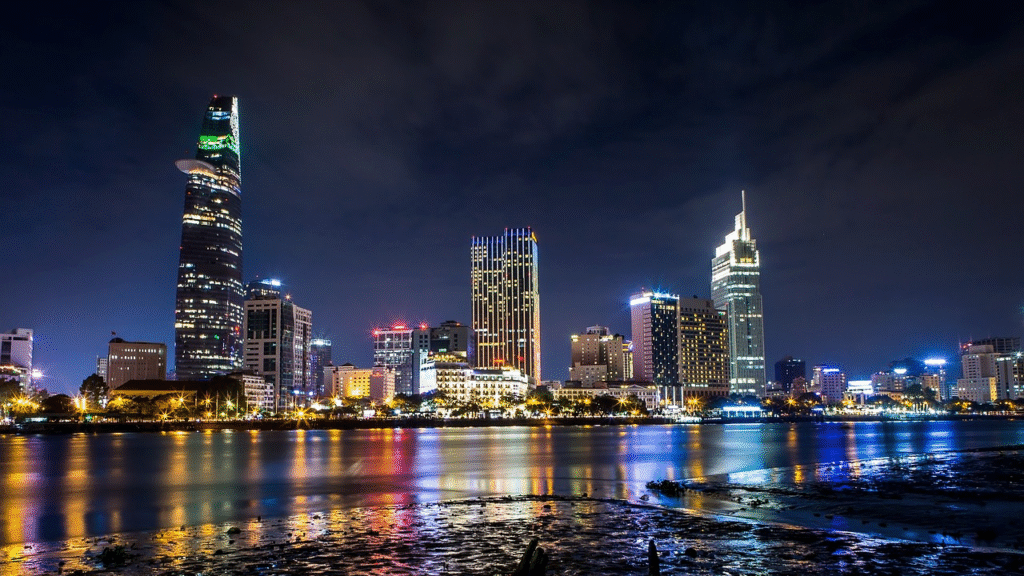
Photo credit: thuydungtcth0, pixabay
Ho Chi Minh City, Vietnam’s largest metropolis and economic powerhouse, pulses with an energy that seamlessly blends French colonial elegance with modern dynamism. Still affectionately called Saigon by locals, this vibrant city of nearly 9 million residents serves as the country’s commercial heart, generating 20% of Vietnam’s GDP while offering visitors an intoxicating mix of street food paradise, historical landmarks, and bustling markets. From the iconic motorbike symphony that fills its streets to the towering Landmark 81 piercing its skyline, Ho Chi Minh City represents Vietnam’s ambitious leap into the future while honoring its complex past.
Ho Chi Minh City at a Glance: Essential Facts for Travelers
| Location | Southern Vietnam, Southeast region |
|---|---|
| Coordinates | 10°45′N 106°40′E |
| Population | 8.9 million (2019) |
| Area | 2,095 km² |
| Elevation | 19 meters above sea level |
| Time Zone | UTC+7 (Indochina Time) |
| Calling Code | +84 (28) |
| Postal Codes | 700000-799999 |
| Known For | Economic hub, street food, French colonial architecture, Cu Chi Tunnels |
| Administrative Structure | 19 urban districts, 5 suburban counties |
| Official Website | hochiminhcity.gov.vn |
Upcoming Events in Ho Chi Minh City
| Date | Title | Details |
|---|---|---|
| 2026-06-17 to 2026-10-17 | We, the Rivers of Southern Vietnam at the HCMC History Museum | The final week to catch We, the Rivers of Southern Vietnam, on show at the HCMC History Museum at 2 Nguyen Binh Khiem until 17 October. Part of the Living with Rivers project initiated by the French Embassy and French Institute in Vietnam, and adapted from a Musee des Confluences show in Lyon, it gathers nearly 80 artefacts, paintings, photographs and archive pieces from four city museums to trace life along the Mekong Delta’s waterways and the city’s changing riverbanks. Open 10:00-17:00; standard museum admission applies. Ideal for families and history lovers. [Source] |
| 2026-10-16 to 2027-02-28 | Exhibition: left on read at Dogma Collection | Dogma Collection at 27A Nguyen Cu opens left on read (bong chu) with a reception at 6:00 PM on Friday 16 October; the show then runs Thursday to Sunday, 11:00-18:00, until 28 February 2027. Curated by Linh Le and Minh Nguyen, it is part exhibition, part library and pop-up bookshop, exploring printed matter as a tool for self-education, community-building and nation-building. Works by Lesley-Anne Cao, Ha Ninh Pham, Phan Thao Nguyen and Shubigi Rao sit beside collection pieces by Duong Anh, Minh Phuong and Vo An Khanh and archival material. Its Vietnamese title comes from a poem by Le Dat. [Source] |
| 2026-10-18 | Disney Music Concert: A Time For Us 6 | The Ho Chi Minh City Conservatory of Music hosts the sixth edition of A Time For Us, a Disney music concert, on Sunday 18 October from 6:00 PM. Young musicians and vocalists perform beloved themes from Disney films in orchestral and ensemble arrangements, in the intimate concert hall of the conservatory on Nguyen Du Street in District 1. The family-friendly programme suits children and nostalgic adults alike, and earlier editions have filled quickly. Ticket prices vary by seating category and are sold through local ticketing platforms. [Source] |
| 2026-10-18 | Nhu Hac Dau Dinh: Southern Folk Performance and Cai Luong Workshop | On Sunday 18 October the Son Tra Communal House at 113A Nguyen Phi Khanh in Tan Dinh hosts Nhu Hac Dau Dinh, an evening of southern Vietnamese folk theatre developed by Cuoi Theater and performed by the Ban Don Ca Nam Thinh ensemble. From 6:30 PM a cai luong performance brings historical women such as the Trung queen, Princess Huyen Tran and poet Ho Xuan Huong to life as people rather than monuments, followed at 7:30 PM by a hands-on cai luong workshop. Tickets cost 400,000 VND per person; a good entry point to Vietnam’s reformed opera tradition. [Source] |
| 2026-10-24 | Vietnam Pro Wrestling: BRAWL Hallows’ Eve | Vietnam Pro Wrestling stages its annual Halloween show, BRAWL Hallows’ Eve, at VAIB Studio, 37 Be Van Cam Street in District 7, on Saturday 24 October. Doors open at 6:00 PM with a meet-and-greet, and the first bout starts at 7:00 PM, featuring the promotion’s top names alongside wrestlers from across Southeast Asia. Fans are encouraged to come in costume for a costume contest, with food and drinks from partner vendors. Tickets are sold online at varying prices; a loud, theatrical night out for sports-entertainment fans and expats alike. [Source] |
| 2026-10-29 to 2026-10-31 | Coffee Expo Vietnam 2026 | Coffee Expo Vietnam, the international coffee, tea and bakery show, runs from 29 to 31 October at the Saigon Exhibition and Convention Center. Roasters, equipment makers, cafe franchises and bakery suppliers from Vietnam and abroad fill the halls with tastings, barista demonstrations and new product launches, reflecting Vietnam’s position as one of the world’s largest coffee producers. The fair is aimed at industry buyers but also attracts cafe owners and coffee enthusiasts; entry policies vary, with free online pre-registration typically available for trade visitors. [Source] |
City News in Ho Chi Minh City – last 14 days
| Date | Category | Headline | Details |
|---|---|---|---|
| 2026-10-09 | Culture | Virtuoso Concertos music night coming to Ho Chi Minh City | Ho Chi Minh City is set to host a music night under the title Virtuoso Concertos, Nhan Dan Online reports. The event is presented as a dedicated concert evening built around the concerto repertoire named in its title. The available excerpt consists only of the headline and does not give the date or venue of the concert, the names of the soloists or ensemble taking part, the works on the programme or any details of ticket sales for the public. [Source] |
| 2026-10-09 | Culture | Book events in Ho Chi Minh City mark Vietnam Culture Day | Ho Chi Minh City is organising a series of book-related activities to mark Vietnam Culture Day, according to Vietnam.vn. The programme is part of the city’s response to the national cultural observance and centres on reading and books. The available excerpt consists only of the headline and does not specify which events are planned, where in the city they will take place, on which dates they will run or whether they are open to the public free of charge. [Source] |
| 2026-10-09 | Culture | HCMC takes nearly 100 English and bilingual titles to Frankfurt Book Fair | Ho Chi Minh City is bringing close to 100 English-language and bilingual titles to the Frankfurt Book Fair 2026, Nhan Dan Online reports. The choice of English and bilingual editions points to books aimed at readers beyond Vietnam. The available excerpt does not name the publishers or the individual books in the collection, nor does it describe the topics covered, the size of the city’s delegation or any rights deals being sought at the fair. [Source] |
| 2026-10-09 | Education | Ho Chi Minh City launches 2026 Lifelong Learning Week | Ho Chi Minh City has launched its 2026 Lifelong Learning Week, according to Vietnam.vn. The week is designed to promote learning for people of all ages beyond formal schooling. The available excerpt consists only of the headline and does not set out the activities planned during the week, the institutions or libraries taking part, the dates on which the programme runs or how residents can join the events organised across the city. [Source] |
| 2026-10-09 | Business | HCMC holds dialogue with businesses on operational hurdles | Ho Chi Minh City authorities have held a dialogue with businesses aimed at addressing the obstacles companies face in their operations, Vietnam Investment Review reports. The meeting gave firms a channel to raise difficulties directly with the city. The available excerpt consists only of the headline and does not list the specific problems raised by companies, which sectors were represented, or the commitments and solutions that city officials offered in response during the meeting. [Source] |
| 2026-10-09 | Business | HCMC proposes matching venture capital to boost AI startups | Ho Chi Minh City has proposed a matching venture capital scheme to drive the growth of startups working in artificial intelligence, VietNamNet reports. The proposal adds to the city’s efforts to support young technology companies through investment. The available excerpt consists only of the headline and does not give the size of the proposed fund, who would provide the matching capital, the criteria startups would need to meet or the timeline for putting the scheme into effect. [Source] |
| 2026-10-09 | Health | Nutifood and Traditional Medicine Hospital to develop herbal nutrition | Nutifood is working with the Ho Chi Minh City Traditional Medicine Hospital to develop nutritional solutions based on Vietnamese medicinal herbs, according to Vietnam.vn. The partnership links a food company with a hospital specialising in traditional medicine. The available excerpt consists only of the headline and does not describe which products are planned, which herbs will be used, when any results are expected to reach consumers or patients, or how the research will be carried out. [Source] |
| 2026-10-08 | Environment | Ageing infrastructure struggles as heavier rains and tides flood HCMC | Ho Chi Minh City has tackled flooding in many locations, but many areas still suffer from severe waterlogging, VnExpress International reports. The report points to the city’s fragmented infrastructure and delayed works as key weaknesses. At the same time, rainfall is intensifying and high tides are adding to the pressure. The combination means that progress made at individual flood spots has not been enough to keep many parts of the city free of water during heavy downpours. [Source] |
| 2026-10-08 | Local affairs | Cityland Park Hills basements still under water 12 hours after rain | Several basements at the upscale Cityland Park Hills complex in Ho Chi Minh City were still under more than a metre of water on Thursday morning, more than 12 hours after heavy overnight rain, VnExpress International reports. Motorbikes, medical equipment and machinery stored in the basements were severely damaged by the flooding. The report does not say how many residents were affected, how the water entered the basements or when pumping out the flooded areas was expected to be completed. [Source] |
| 2026-10-08 | Local government | HCMC maps out 100-year vision for growth and climate resilience | Ho Chi Minh City has drawn up a vision spanning 100 years that sets out how the city intends to grow while strengthening its resilience to climate impacts, VietNamNet reports. The long-term plan brings together economic development and climate adaptation goals in a single framework. The available excerpt consists only of the headline and does not detail the specific projects, investment figures or milestones included in the vision, or which authorities will be responsible for carrying it out. [Source] |
| 2026-10-07 | Public transport | Fallen bodhi tree causes three-hour gridlock in central HCMC | A 20-metre-tall bodhi tree collapsed across Dinh Tien Hoang Street in downtown Ho Chi Minh City during the morning rush hour on 7 October, VnExpress International reports. The fallen tree blocked the road and plunged many surrounding streets into traffic gridlock that lasted around three hours. The report excerpt does not mention whether anyone was injured or what caused the tree to topple, but it highlights how a single obstruction disrupted traffic across the city centre. [Source] |
| 2026-10-07 | Public transport | Long Thanh International Airport expected to open on 24 December | Vietnam’s mega Long Thanh International Airport is expected to begin commercial operations on 24 December, VnExpress International reports. When it opens, the airport is set to handle around 30 flights a day. Of these, four are expected to be on international routes, with the remainder serving domestic destinations. The excerpt does not list the airlines or routes involved, nor does it explain how ground transport connections to the new airport will operate once flights begin. [Source] |
| 2026-10-07 | Public safety | Police arrest 12 suspects over theft of 2,700 cats for meat | Police in Ho Chi Minh City have arrested 12 suspects accused of stealing 2,700 cats for meat, NDTV reports. The scale of the thefts, involving thousands of animals, makes it an unusually large case. The available excerpt consists only of the headline and does not explain how the group operated, over what period the thefts took place, where the animals ended up or which charges the suspects may face when the case comes to court. [Source] |
| 2026-10-06 | Business | VTG 2026 to showcase textile and footwear innovation | The VTG 2026 exhibition will showcase innovation in the textile and footwear industries in Ho Chi Minh City, Vietnam Investment Review reports. The event focuses on new developments in the two manufacturing sectors and brings them together under one roof. The available excerpt consists only of the headline and does not give the dates or venue of the exhibition, the number of exhibitors taking part or whether it is open to members of the general public. [Source] |
Ho Chi Minh City Events & City News Archive
Sources: Saigoneer, Saigoneer, AllEvents, Saigoneer, Saigoneer, Saigon Exhibition and Convention Center, Google News Ho Chi Minh City, Google News Ho Chi Minh City
Weather Forecast for the Next 14 Days in Ho Chi Minh City
| Date | Weather | Max °F | Min °F | Rain mm |
|---|---|---|---|---|
| 2026-10-10 | ⛈️ | 85.5 °F | 76.9 °F | 6.6 mm |
| 2026-10-11 | 🌧️ | 88.5 °F | 76.1 °F | 4.9 mm |
| 2026-10-12 | 🌧️ | 88.8 °F | 74.7 °F | 6.9 mm |
| 2026-10-13 | ⛈️ | 86.8 °F | 76.6 °F | 16.3 mm |
| 2026-10-14 | ⛈️ | 84.8 °F | 76.5 °F | 10.2 mm |
| 2026-10-15 | 🌧️ | 86.7 °F | 76.0 °F | 6.3 mm |
| 2026-10-16 | ⛈️ | 87.5 °F | 75.7 °F | 5.4 mm |
| 2026-10-17 | 🌧️ | 86.0 °F | 76.6 °F | 6.0 mm |
| 2026-10-18 | ⛈️ | 88.5 °F | 77.1 °F | 4.2 mm |
| 2026-10-19 | 🌧️ | 88.0 °F | 76.3 °F | 3.2 mm |
| 2026-10-20 | 🌧️ | 88.7 °F | 75.9 °F | 10.4 mm |
| 2026-10-21 | ⛈️ | 87.3 °F | 75.6 °F | 9.2 mm |
| 2026-10-22 | ⛈️ | 87.4 °F | 74.6 °F | 15.4 mm |
| 2026-10-23 | 🌧️ | 88.1 °F | 74.6 °F | 8.0 mm |
Ho Chi Minh City’s History
From Khmer Village to Vietnamese Port
Ho Chi Minh City — almost everyone, including most locals, still calls it Saigon — has the most complicated layered history of any major Southeast Asian city. Khmer fishing village, Vietnamese imperial outpost, French colonial showcase, war-era American hub, communist reunification capital, post-Đổi Mới boomtown: each era left infrastructure that’s still in use, and grievances that still inform politics.
The original settlement, between the 1st and 6th centuries CE, was a Khmer trading post called Prei Nokor (“Village in the Woods”), built where the Saigon River bends just before reaching the Mekong Delta. As the great Southeast Asian empires — Funan, Chenla, Angkor — rose and fell, Prei Nokor remained a backwater port for Khmer and Cham traders. By the 17th century, merchants from Malaysia, China, and India crowded its markets, while Khmer military garrisons protected the trade.
The Vietnamese chapter began with the southward expansion of the Nguyễn lords in the late 1600s. Refugees from the Tây Sơn Rebellion arrived in waves; Nguyễn Phúc Chu formally annexed the area in 1698. The settlement was renamed Saigon — likely from the Khmer Sài Côn, “kapok forest.” The winding streets of central Saigon’s District 1 still follow the layout of the original Vietnamese-era canals.
Royal Capital and Colonial Transformation
In 1771, when the Tây Sơn Rebellion shook Vietnam, Nguyễn Phúc Ánh fled Huế for Saigon, declaring it his temporary capital. He built the octagonal Gia Định Citadel, designed in the lotus-flower form to symbolize Buddhist purity. After reclaiming the throne as Emperor Gia Long in 1802 (founding the Nguyễn Dynasty that would rule Vietnam until 1945), Saigon remained his southern administrative hub.
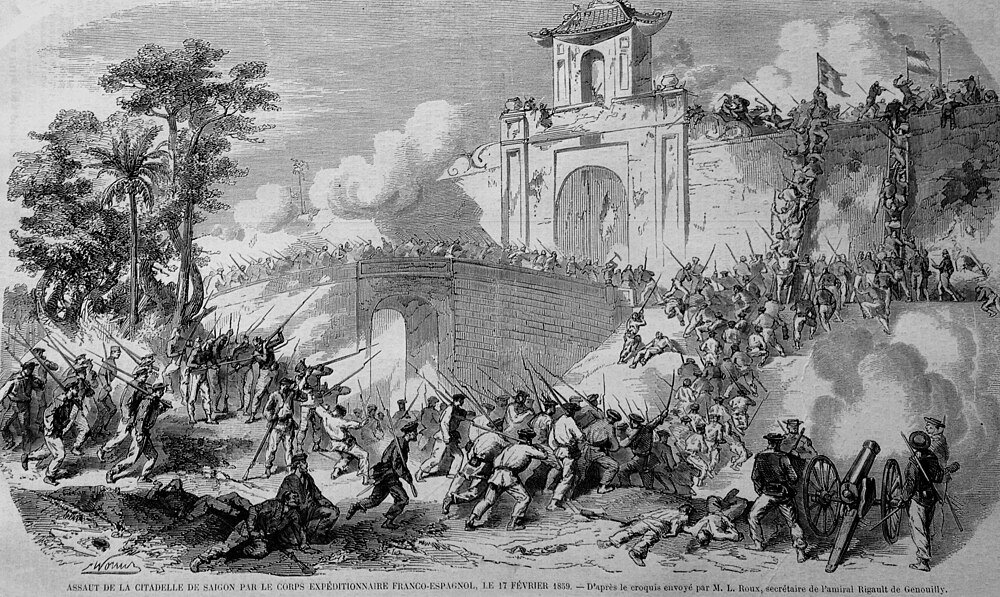
French colonial rule began dramatically in 1859 when French and Spanish troops seized the Citadel of Saigon, ostensibly to protect Catholic missionaries. The 1862 Treaty of Saigon ceded the city to France as the capital of Cochinchina. The colonial transformation was rapid and visible: canals were filled in to become tree-lined boulevards, swamps drained for European-style buildings, and the avenues — Catinat, La Grandière, Charner — gave Saigon a self-consciously Parisian character. Steam trams clattered between cafés and boutiques; Notre-Dame Cathedral (1880) and the Saigon Central Post Office (1891, with steel structure designed by Gustave Eiffel’s firm) anchored the colonial showpiece district.
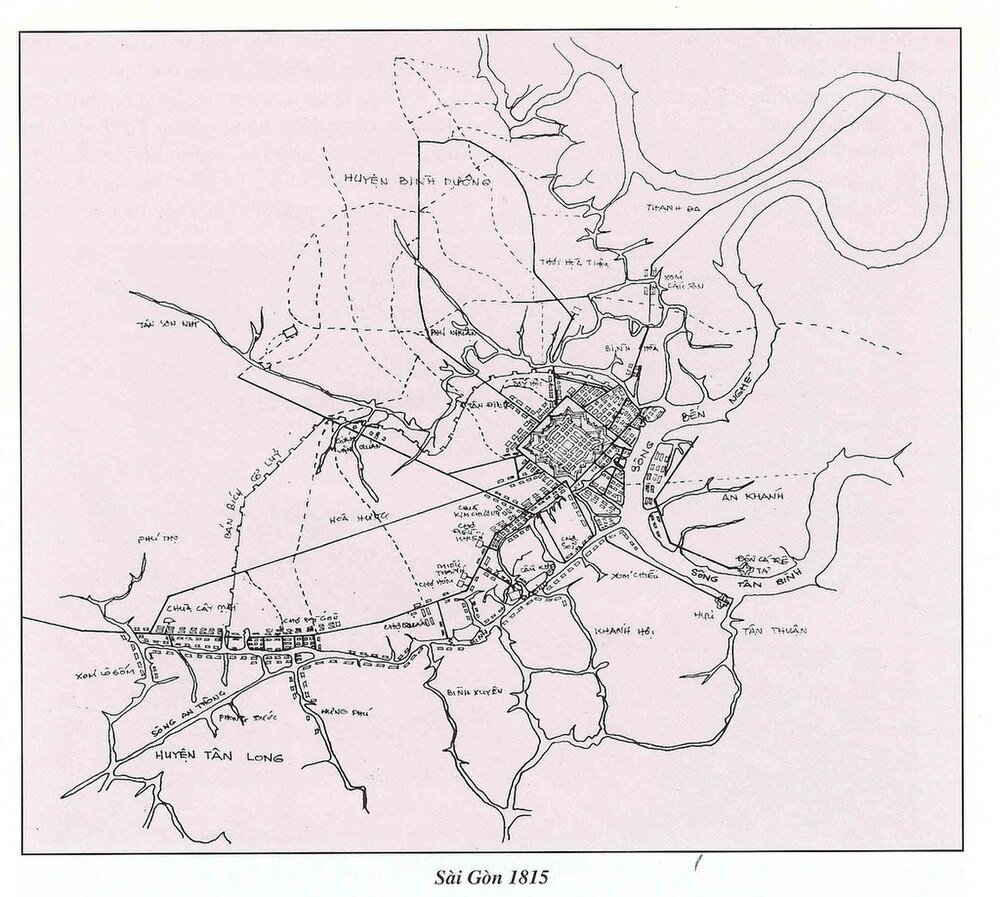
By the 1920s, Somerset Maugham compared Saigon to a “cheerful little town” in southern France. Behind the elegant façade, French colons profited enormously from rubber and rice exports while Vietnamese workers endured systemic colonial repression. Resistance simmered through strikes and uprisings in the 1920s–30s, foreshadowing the independence struggle to come.
World War II and the Path to Independence
World War II marked the turning point. Japan occupied Vietnam in 1941, leaving the French Vichy administration as nominal stewards. After Japan’s August 1945 surrender, Hồ Chí Minh declared Vietnamese independence in Hanoi on September 2; in Saigon, the August Revolution culminated in city-wide uprising on August 25.
The British 20th Indian Division arrived in Saigon on September 13, 1945, ostensibly to disarm Japanese forces but ultimately helping French colonial troops to retake control. This sparked a three-decade struggle. The First Indochina War (1946–1954) raged largely in rural areas; Saigon stayed politically tense but physically intact.
The Vietnam War Era
After the French defeat at Điện Biên Phủ in 1954, the Geneva Accords partitioned Vietnam at the 17th parallel. Saigon became the capital of the Republic of Vietnam (South Vietnam) under President Ngô Đình Diệm. The American war effort transformed the city: by 1965, US military and civilian personnel flooded in, fueling explosive economic growth and creating extraordinary social pressures. Two and a half million rural refugees crowded into wartime Saigon, pushing the population over four million.
The 1963 Buddhist Crisis — including the self-immolation of monk Thích Quảng Đức on a Saigon street corner, photographed in the iconic Malcolm Browne image — exposed the Diệm regime’s brutality and contributed to its November 1963 coup-d’état overthrow. The Tết Offensive (January 31, 1968) brought the war directly to the heart of Saigon: Việt Cộng commandos breached the US Embassy compound — a symbolic strike that failed militarily but destroyed remaining American confidence in the war.
The Fall of Saigon and Reunification
As US troops withdrew under the 1973 Paris Peace Accords, Saigon’s wartime economic boom collapsed. The end came on April 29–30, 1975 with Operation Frequent Wind — the largest helicopter evacuation in military history. For 18 hours, US Marine helicopters ferried 7,000+ Americans and at-risk Vietnamese from the embassy roof and CIA station rooftops to ships in the South China Sea. Ambassador Graham Martin clutched the American flag as the last to leave at dawn on April 30.
Hours later, North Vietnamese tanks crashed through the gates of the Independence Palace (now the Reunification Palace), formally ending the Vietnam War. Within a year, Vietnam was reunified as the Socialist Republic; Saigon was renamed Ho Chi Minh City in 1976, honoring the revolutionary leader who had died in 1969.
Modern Renaissance
The first decade after reunification was hard. Re-education camps held former South Vietnamese officials; the planned economy struggled; over a million southerners fled as boat people. The transformation came with the 1986 Đổi Mới reforms (“Renovation”), which liberalized markets and opened the country to foreign investment. Within a decade, Ho Chi Minh City was Vietnam’s economic engine; today, it generates roughly 20% of national GDP, hosts most of the country’s foreign-invested manufacturing, and is the de-facto financial capital. Vingroup, Vinfast, Masan, Vietjet Air, and dozens of regional giants are headquartered here. The skyline has filled in dramatically — the 461-metre Landmark 81 (completed 2018) is now Vietnam’s tallest building. Saigon, meanwhile, remains the everyday name; old Saigonese never gave up using it.
Geography, Climate & Best Time to Visit Ho Chi Minh City
Ho Chi Minh City sprawls across 2,095 km² just north of the Mekong Delta, hugging the west bank of the Saigon River at an average elevation of 19 metres above sea level. The city is 40 km from the South China Sea, stretches 120 km north-to-south and 46 km east-to-west, and ranks among Southeast Asia’s largest urban areas (~9 million population, ~12 million metro).
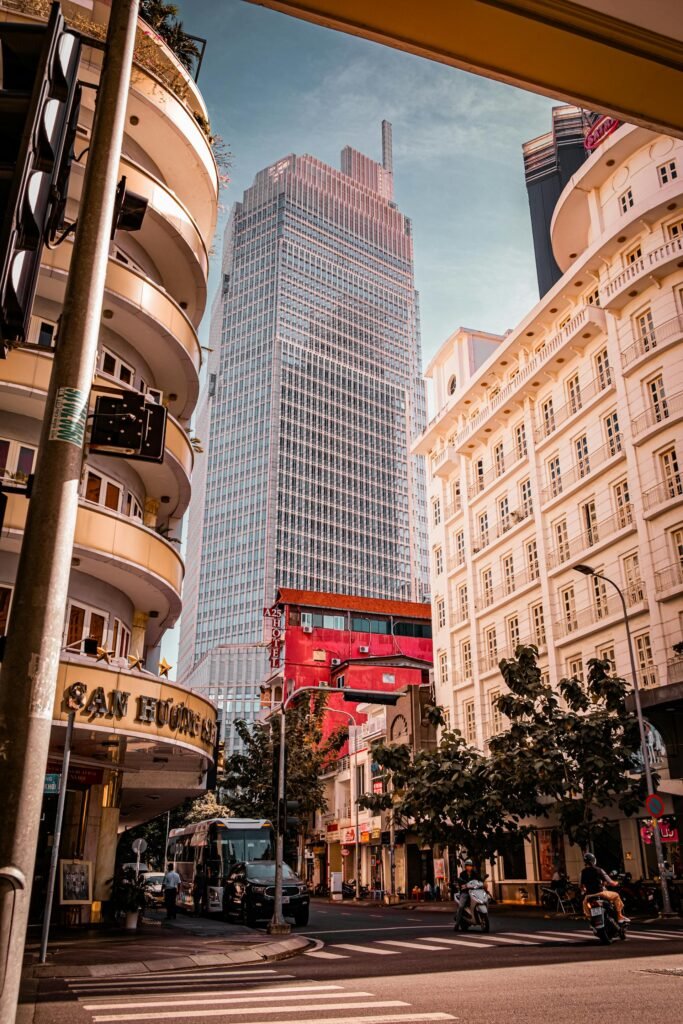
The climate is tropical wet-and-dry (Aw), with consistently warm temperatures averaging 27°C year-round. Daily highs typically reach 32°C while nighttime lows rarely drop below 24°C — the seasonal change in HCMC is between rainy and dry, not cool and warm.
Seasonal Weather Patterns
Two distinct seasons: the dry season (December–April) and the wet season (May–November). The dry season offers minimal rainfall and clear skies — ideal for temple-hopping and river cruises. April and May are the hottest months, with daily highs reaching 35°C; January is the most comfortable. The wet season brings dramatic afternoon downpours, particularly intense in September when monthly rainfall peaks at 327 mm. The good news: tropical showers usually arrive in short, intense bursts; the city is rarely washed out for full days.
| Month | High/Low (°C) | Rainfall (mm) | Sunshine Hours |
|---|---|---|---|
| January | 32/21 | 14 | 6.3 |
| February | 33/23 | 4 | 7.5 |
| March | 34/24 | 11 | 7.2 |
| April | 35/26 | 50 | 6.9 |
| May | 34/25 | 218 | 5.4 |
| September | 31/24 | 327 | 4.5 |
| December | 31/21 | 48 | 6.0 |
Best Time to Visit
December through March is the optimal window — minimal rainfall, comfortable temperatures (cool by HCMC standards), maximum sunshine. February coincides with Tết (Vietnamese Lunar New Year, the country’s biggest holiday) — a culturally extraordinary time to visit, but many businesses close for 3–7 days. April–May is the hot pre-monsoon window. June–November is the wet season; cheaper, lush, and atmospheric, but plan around afternoon downpours. Heat and humidity make morning sightseeing strongly preferable any time of year.
Ho Chi Minh City’s Districts & Neighborhoods
HCMC is organized into 22 administrative units — 16 urban districts (numbered or named), 5 suburban counties, and the recently consolidated Thủ Đức City. Visitors mostly experience Districts 1, 3, 5 (Cholon), and Bình Thạnh.
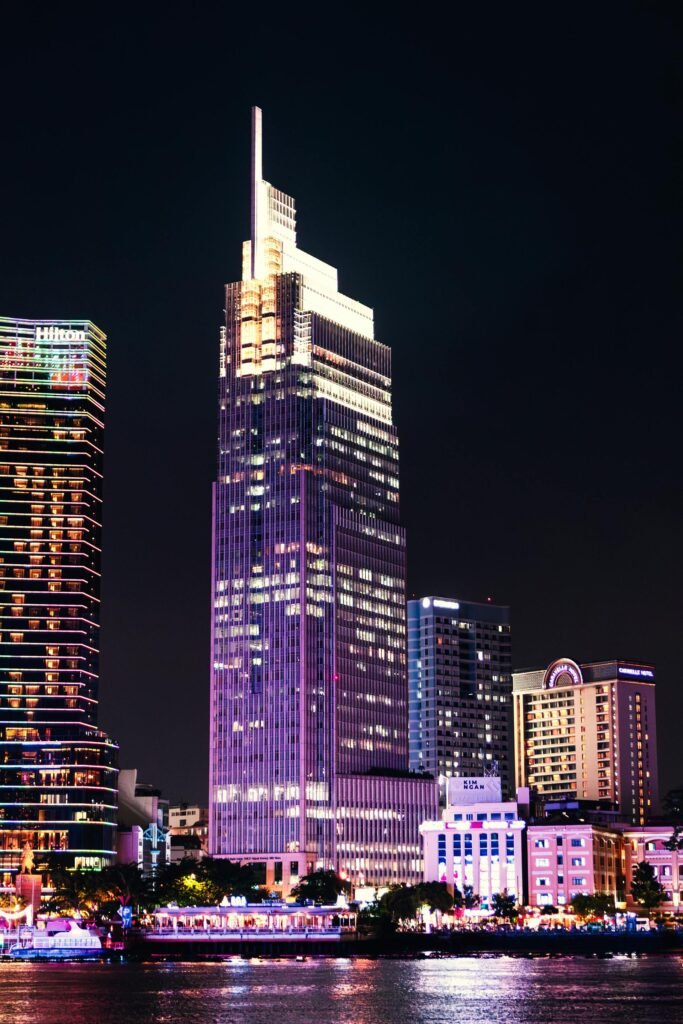
District 1: The Historic Core
HCMC’s tourist epicenter and the colonial heart, home to Notre-Dame Cathedral, the Central Post Office, the Reunification Palace, the Saigon Opera House, and Ben Thanh Market. Walking distance covers most of the must-see sights. The greatest concentration of hotels, restaurants, and rooftop bars; Đồng Khởi Street is the upscale shopping spine.
Where to Stay: Luxury at the Park Hyatt Saigon (Lam Sơn Square), Reverie Saigon, Sofitel Plaza Saigon. Mid-range at Liberty Central, Caravelle Hotel. Budget hostels along De Tham/Bui Vien for the backpacker scene.
District 3: Cultural Hub
One step inland from District 1 — slightly more local, slightly cheaper, with the same access to major sights. Home to the War Remnants Museum, Jade Emperor Pagoda, and a rich café and gallery scene along the parallel boulevards. Villas and shaded streets give District 3 the most “Saigon of the past” feel.
District 5: Cholon (Chinatown)
Saigon’s sprawling Chinatown — Cholon (“big market”) — is anchored by the half-million-strong ethnic Chinese community that has lived here since the Nguyễn period. Bình Tây Market, Thiên Hậu Pagoda, Quan Âm Pagoda, and dozens of clan halls give the district a distinct character — Hokkien, Cantonese, and Teochew Chinese signs alongside Vietnamese, golden temple roofs visible above the tangle of trade streets. Excellent value accommodations and authentic food.
Bình Thạnh District: Local Life
The residential transition zone between District 1 and Thủ Đức. The Landmark 81 tower (Vietnam’s tallest building, 461 m) is here, anchoring the Vinhomes Central Park development on the river. Affordable accommodations in modern serviced apartments. Bình Quới Cultural Village on a Saigon River island showcases traditional southern Vietnamese rural life.
Thủ Đức City: Modern Development
Once a separate district, Thủ Đức was consolidated in 2021 into a city-within-a-city — Vietnam’s first such administrative experiment. Houses the Suoi Tien theme park, National University HCMC, and the futuristic Thủ Thiêm New Urban Area across the river from District 1, connected by the recently opened first metro line.
Suburban Counties
The five outer counties offer day-trip opportunities — Củ Chi (the famous tunnels), Cần Giờ (mangrove biosphere reserve, 50 km southeast), and the agricultural fringe. These areas mix farmland with rapidly growing semi-urban pockets, providing insight into Vietnam’s relentless urban expansion.
Top Things to Do in Ho Chi Minh City
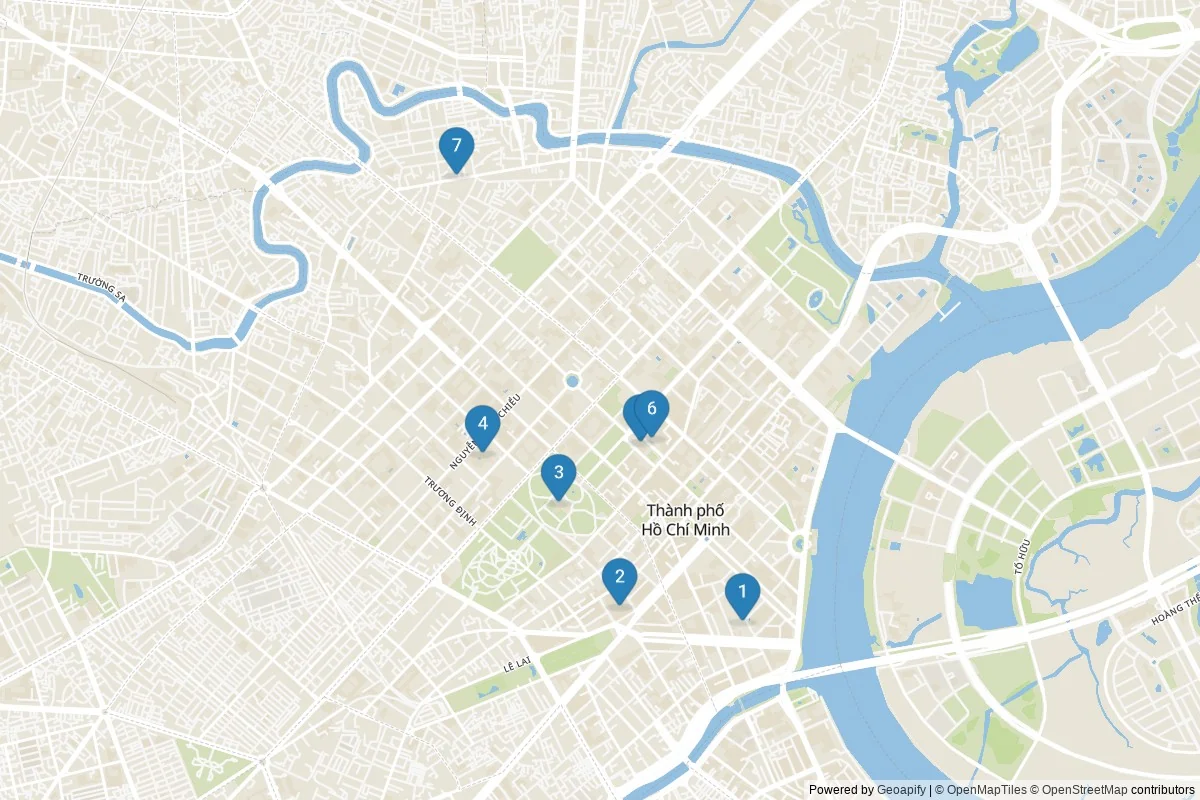
| # | Sight | Cluster | Type | Time | Entry | Best |
|---|---|---|---|---|---|---|
| 1 | Bitexco Financial Tower | Central | Observation deck | ~1 hr | 240,000 VND | Sunset |
| 2 | Ben Thanh Market | Central | Market | ~1 hr | Free | Anytime |
| 3 | Reunification Palace | Central | Historic palace | ~1.5 hrs | 40,000 VND | Morning |
| 4 | War Remnants Museum | Central | History museum | ~2 hrs | 40,000 VND | Morning |
| 5 | Notre-Dame Cathedral | Central | Cathedral | ~30 min | Free | Morning |
| 6 | Central Post Office | Central | Historic building | ~30 min | Free | Morning |
| 7 | Jade Emperor Pagoda | Central | Taoist temple | ~45 min | Free | Morning |
| 🚗 | Day Trip: Cu Chi Tunnels | Day trip | Day trip | ½ day | 125,000 VND | Morning |
| 🚗 | Day Trip: Mekong Delta (My Tho) | Day trip | Day trip | Full day | varies | Morning |
HCMC’s headline sights are dense and walkable in District 1 — three days handles the city itself, with day-trips to the Mekong Delta or Củ Chi Tunnels extending nicely.
Historic Landmarks
The Reunification Palace (Hội trường Thống Nhất) is the symbolic centerpiece of HCMC. Originally the French Norodom Palace, then rebuilt 1962–1966 after a Vietnamese Air Force pilot bombed the original to assassinate President Diệm, it served as the Presidential Palace of South Vietnam until April 30, 1975 — when North Vietnamese tank #843 crashed through the front gates (a replica is still on the lawn). The interior is preserved as a 1970s time capsule: moody movie room, circular sofa arrangements, barrel-shaped bar, presidential helicopter on the roof, communications bunker beneath. Tickets ~65,000 VND via dinhdoclap.gov.vn.
Notre-Dame Cathedral Basilica (1877–1883) — striking red bricks imported from Toulouse, twin 58-metre bell towers, and a marble Virgin Mary statue at the front (the centerpiece of intermittent “weeping Madonna” rumors). The cathedral has been closed for major renovation since 2017; reopening expected 2027.
The Saigon Central Post Office (1886–1891) is the photogenic colonial-era survivor. The vaulted ceilings, vintage telephone booths, original tile floors, and a massive portrait of Hồ Chí Minh make it one of the world’s most beautiful working post offices. The steel structure was designed by Gustave Eiffel’s firm (though not Eiffel personally). Free entry; bring a postcard to send.
Museums & Cultural Sites
The War Remnants Museum is the city’s most important museum and the most emotionally heavy experience in HCMC. Outdoor exhibits include captured American military hardware (UH-1 helicopter, F-5 fighter, M48 tank, M132A1 flamethrower); indoor galleries document the war’s effect on Vietnamese civilians, including the brutal Agent Orange and napalm photography. Allow 2–3 hours; the upper-floor international anti-war exhibit is unexpectedly moving. Tickets ~40,000 VND.
The Vietnam History Museum in District 1 covers Vietnamese history from prehistory through the Nguyễn Dynasty, with an outstanding Cham artifacts gallery. The pagoda-style colonial building is itself worth the visit. Daily water puppet shows in the museum theatre.
The Fine Arts Museum, in an ornate French colonial villa with stained glass and spiraling staircases, hosts a strong collection of Vietnamese 20th-century painting, war propaganda art, and golden Buddha statues. The ground-floor galleries sell genuinely excellent local art at fair prices.
Religious Sites
The Jade Emperor Pagoda (Chùa Ngọc Hoàng), built in 1909 by the Cantonese community, is the most atmospheric temple in HCMC — kaleidoscope of Taoist and Buddhist deities in lacquered wood, swirling clouds of incense, and a courtyard turtle pond. President Obama visited in 2016. Free entry.
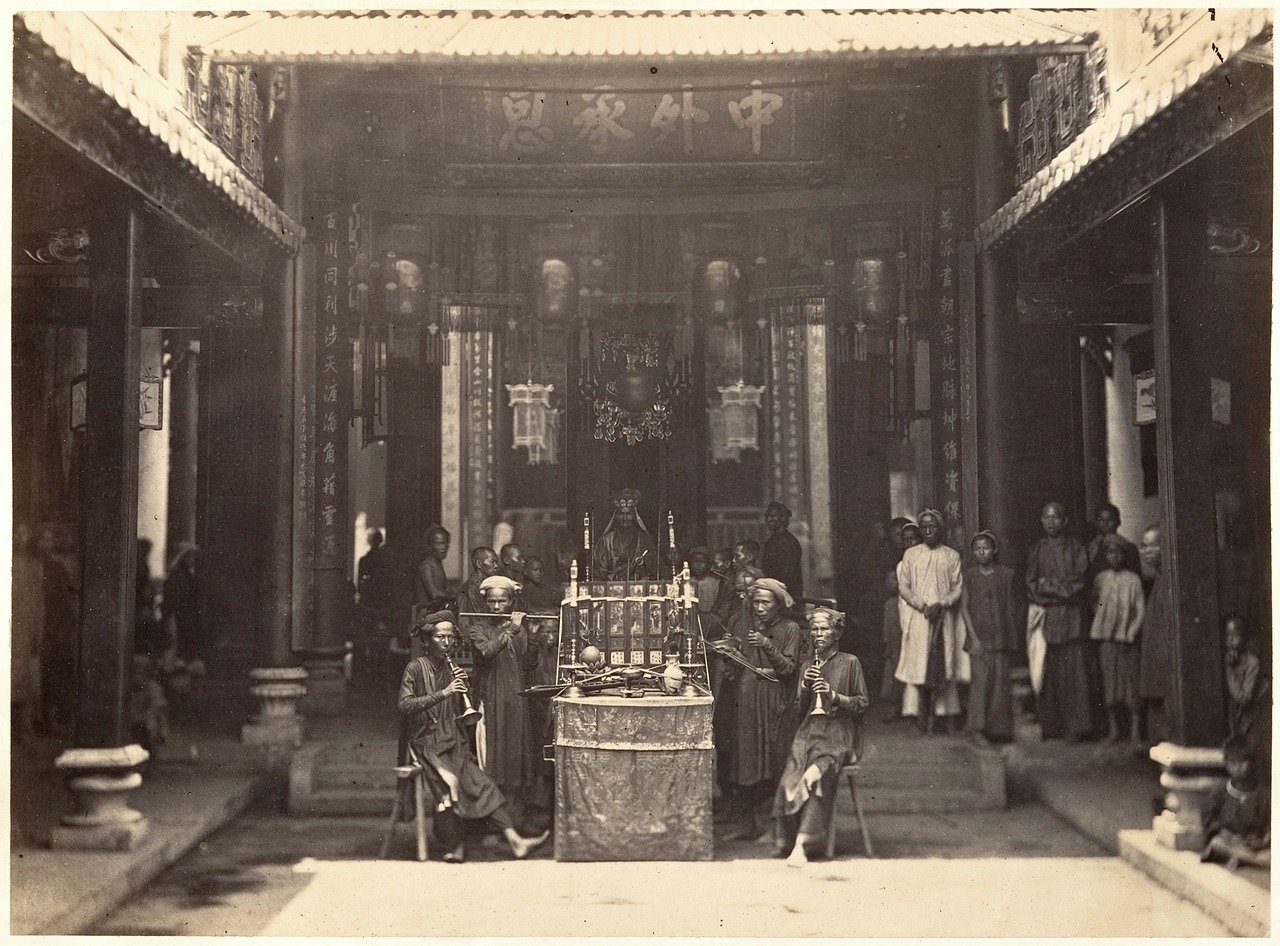
The Thiên Hậu Temple (1830s) on Nguyễn Trãi Street in Cholon is dedicated to the Chinese sea-goddess Mazu (Thiên Hậu in Vietnamese), protector of sailors. The intricate roof figurines depicting the goddess calming storm seas are the highlight; clouds of incense from spiral coils hang permanently in the courtyards.
Markets & Shopping
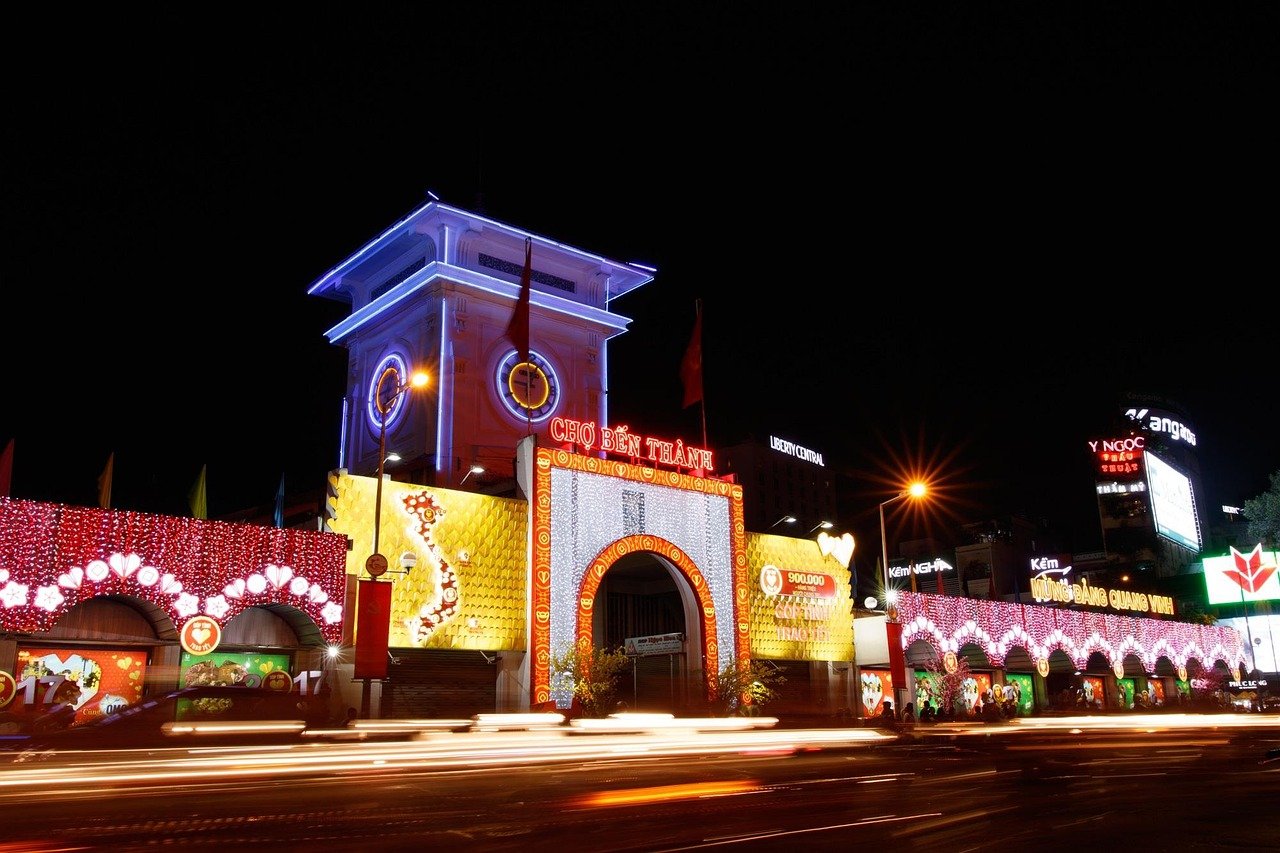
Bến Thành Market (since 1914) packs 1,500 stalls into 13,000 m² under the iconic clock tower entrance. Silk scarves, dragon fruit, conical hats, Vietnamese coffee — and a celebrated street-food court at the south end. Aggressive bargaining is expected; start at 30–40% of the opening price.
Cholon’s Bình Tây Market features golden Chinese-style roofs with twisting dragon ridges; a wholesale market for the city’s smaller retail markets, with dried fish, chili paste, handcrafted pottery, and the deepest immersion in old Saigon’s commercial culture.
Modern Attractions
The lotus-shaped Bitexco Financial Tower (262 m) was Saigon’s first iconic skyscraper; the Saigon Skydeck on the 49th floor offers excellent views, and the disc-shaped helipad protruding from the side is the building’s signature feature. Tickets ~200,000 VND.
Landmark 81 (461 m, opened 2018) is now Vietnam’s tallest building; the Skyview observation deck on the 79th–81st floors has panoramic city views with the Saigon River winding below. Tickets ~810,000 VND including drink.
Day Trips
The Cu Chi Tunnels, 40 km northwest of the city, are the most-visited Vietnam War site outside HCMC. The Bến Đình and Bến Dược sections of the 250-km tunnel network are open to tourists — visitors can crawl through widened sections of the original tunnels, see the trapdoor systems and concealed exits, watch a small American-tank diorama, and (controversially) fire AK-47s at the on-site shooting range. Half-day tours from HCMC ~$25–40.
The Mekong Delta, accessible via day or overnight trips from HCMC, offers floating markets (best at Cái Răng near Cần Thơ), traditional villages, fruit-orchard cruises, and the rice-bowl agricultural heartland of Vietnam. Bến Tre (90 min by car) makes the easiest day trip.
How to Get to Ho Chi Minh City
By Air
Tan Son Nhat International Airport (SGN) is Vietnam’s busiest airport, just 7 km north of District 1 — a 30–45 minute taxi or Grab ride. Direct flights from major Asian hubs (Bangkok, Singapore, Hong Kong, Tokyo, Seoul, Taipei, Manila), Australia (Sydney, Melbourne), and direct services to Paris, Frankfurt, London, and Moscow. Domestic flights to Hanoi (~2 hours), Da Nang (~75 min), and Phu Quoc (~1 hour) run almost hourly.
The new Long Thành International Airport, currently under construction 40 km northeast of the city, will become Vietnam’s largest. Phase one opens in 2025–2026, with full completion targeted for 2050. SGN will continue operating but transition primarily to domestic flights.
By Rail
Vietnam’s railway network connects Ho Chi Minh City to destinations nationwide via Saigon Railway Station in District 3. The iconic Hanoi-to-Saigon “Reunification Express” runs the entire length of Vietnam in 30–40 hours through dramatically varied landscape — the night-train sleeper version is a justly famous overland journey. Shorter trips from Da Nang (16h) or Nha Trang (8h) work well as scenic alternatives to flying.
By Bus
Multiple bus stations serve different regions. Miền Đông Bus Station (5 km northeast of central) covers Vũng Tàu, Central Highlands, and coastal cities like Nha Trang. Cholon Bus Station handles Mekong Delta destinations including Mỹ Tho, Bến Tre, and Cần Thơ. An Sương Bus Station (west) serves Tây Ninh and Củ Chi. International routes: direct buses to Phnom Penh, Cambodia (~6 hours, $10–25) depart from 145 Nguyễn Du near Notre-Dame Cathedral.
By Water
Daily hydrofoils connect HCMC to the coastal resort town of Vũng Tàu in under two hours, departing from Bạch Đằng Wharf along the Saigon River. Saigon Water Bus public ferry service connects District 1 (Bạch Đằng) to Bình Thạnh and Thủ Đức districts — a pleasant scenic alternative to traffic.
Getting Around Ho Chi Minh City
HCMC has the most chaotic traffic in any major Asian city — over 8 million motorbikes, near-perpetual gridlock during peak hours, and a recently opened metro that is just starting to relieve pressure.
Metro System
HCMC’s first metro line (Line 1, Bến Thành–Suối Tiên) opened in December 2024 — a 20-km elevated and tunneled system built with Japanese expertise. The line connects central Bến Thành Market to Suối Tiên Theme Park via 14 stations, dramatically reducing the journey time across the city. Air-conditioned, frequent, and refreshingly orderly compared to street-level options. More lines under construction.
Buses
The city’s modernized bus system features air-conditioned vehicles serving dense routes at budget-friendly prices (5,000–10,000 VND per ride). Bến Thành Market is the central bus hub, with routes extending to all districts. Routes can be confusing for first-timers; the BusMap Vietnam app gives English directions.
Taxis & Ride Services
Reliable metered taxi companies — Mai Linh (green) and Vinasun (white) — provide air-conditioned comfort and use the meter without argument. International ride-hailing apps Grab (the dominant choice), Be, and Gojek all operate; transparent pricing, English-friendly, accept international cards. Avoid unmarked freelance taxis.
Motorbikes & Cyclos
Over 8 million motorbikes dominate HCMC’s streets — the iconic traffic symphony you remember long after leaving. Xe ôm (motorbike taxis), increasingly booked through GrabBike or BeBike apps, offer the fastest way through gridlock for short distances. Traditional xích lô cyclos provide nostalgic pedicab rides through District 1 — cheaper than taxis at ~150,000 VND for a slow scenic loop, but bargain firmly.
Self-driven motorbike rentals (~150,000 VND/day) are popular among long-stay visitors but require an International Driving Permit and confidence in genuinely chaotic traffic.
Walking
Central District 1 is highly walkable — Reunification Palace, Notre-Dame, Central Post Office, Bến Thành Market, Bùi Viện all within a 1.5 km radius. Tree-lined boulevards provide shade, though tropical heat and humidity make early morning or late afternoon walks most comfortable. Crossing the street is a famous Vietnam learning curve — walk slowly, steadily, and predictably; the motorbike traffic flows around you.
Food & Drink in Ho Chi Minh City
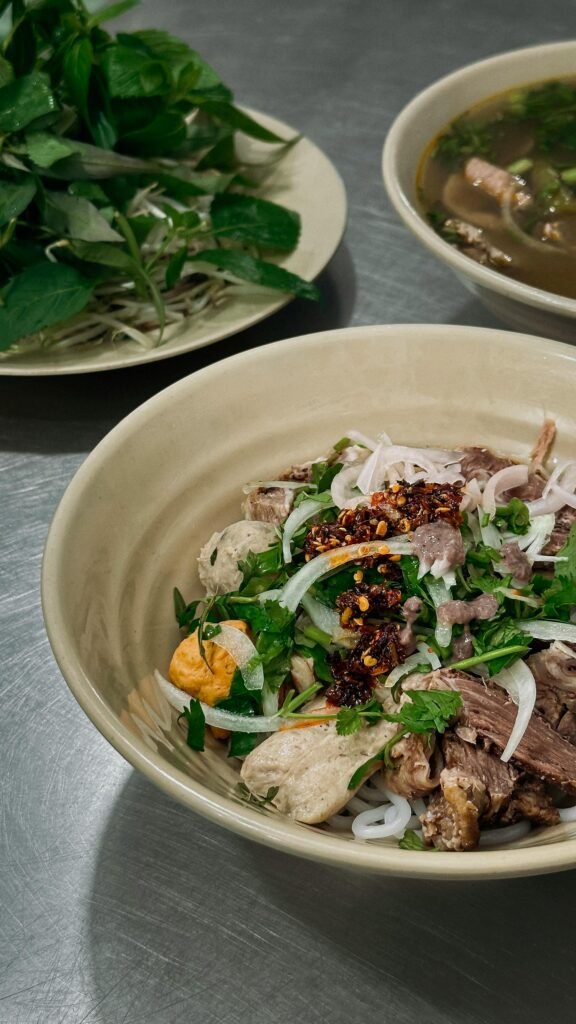
HCMC is Vietnam’s undisputed culinary capital — every meal is an adventure through the layered influences of Vietnamese tradition, French colonial legacy, and Chinese immigrant cuisine. Eating well in HCMC is the cheapest pleasure in the country: a serious bowl of phở from a sidewalk specialist costs ~50,000 VND ($2); a tasting-menu dinner at the Park Hyatt’s Square One runs $80.
Street Food Culture
Phở (Vietnamese rice-noodle soup) is the national dish — but specifically the southern phở Sài Gòn is sweeter, served with a heavier garnish of fresh herbs, bean sprouts, and lime than its northern cousin. Phở Hòa Pasteur (since 1968), Phở Lệ, and Phở Quỳnh are the institutional favorites.
Bánh mì — the iconic Vietnamese baguette sandwich, the world’s most popular French-Vietnamese fusion. Bánh Mì Huỳnh Hoa (District 1) and Bánh Mì Hồng Hoa consistently top the city’s rankings; expect queues. Cơm tấm (broken rice with grilled pork) is southern Vietnam’s signature lunch dish — Cơm Tấm Ba Ghiền is the cult favorite.
Street food specialties: bánh xèo (turmeric-yellow sizzling pancakes), gỏi cuốn (fresh shrimp summer rolls), bún bò Huế (spicy Central-Vietnamese noodle soup), bún chả (Hanoi-style grilled pork with cold noodles), chè (sweet dessert soups in dozens of varieties).
Market Dining
Bến Thành Market’s south-end food court offers a treasure trove of regional specialties under one roof — fresh tropical fruits, complex curries, chè desserts, and the kinds of dishes that are otherwise hard to source for visitors. Cholon’s wholesale markets serve authentic Chinese-Vietnamese fusion: hủ tiếu Nam Vang (Phnom Penh-style noodles), Cantonese roast meats, dim sum, and traditional Chinese soups adapted to Vietnamese palates.
Restaurant Scene
HCMC’s restaurant landscape is as diverse as the city. Local family-run cơm bình dân (everyday rice plate) restaurants serve hearty meals at 50,000–80,000 VND. Tourist-friendly cafés around De Tham and Bùi Viện serve Vietnamese-Western fusion at backpacker prices.
Upscale dining: Anan Saigon (chef Peter Cường Franklin’s modern Vietnamese, Asia’s 50 Best), The Reverence, Quince Saigon, Stoker Woodfired Grill & Bar, and the historic Ngon — set in a converted French colonial villa, serving every regional Vietnamese specialty under one roof. The colonial-era cafés around the Hôtel Continental and Caravelle Hotel preserve the European-Vietnamese atmosphere of the war-era Saigon press corps.
Coffee Culture
Vietnam is the world’s second-largest coffee producer, and HCMC is the country’s coffee capital. The signature drink is cà phê sữa đá — strong dark-roast filter coffee dripped slowly through a phin over sweetened condensed milk, served over ice. Egg coffee (cà phê trứng) — Hanoi’s invention, now equally beloved in HCMC — is dark coffee topped with whipped egg yolk and condensed milk. Cà phê dừa (coconut coffee) and cà phê muối (salt coffee, a Hue invention) round out the local repertoire. Cộng Cà Phê, The Workshop, 43 Factory, and the chain Trung Nguyên offer different takes on the coffee scene.
Nightlife & Bars
Bùi Viện Walking Street (District 1, near Phạm Ngũ Lão) transforms after dark into a neon-lit food-and-drink chaos — backpacker bars, street food vendors, late-night cocktails, and the inevitable bachelor parties. Loud and disorganized but quintessentially Saigon.
For more refined nightlife: Saigon Saigon Rooftop Bar at the historic Caravelle Hotel (the wartime press correspondents’ bar, with views unchanged in 50 years), Chill Skybar (AB Tower), Glow Skybar (Sheraton Saigon), EON51 Heli Bar at the Bitexco Tower, and Air 360 for cocktails with Saigon River views. Local Saigon Beer (the gentler 333 brand or the heavier Saigon Special) competes with imported craft beer at the city’s growing brewery scene (Heart of Darkness, Pasteur Street Brewing, Tê Tê Saigon).
Culture & Arts in Ho Chi Minh City
HCMC’s cultural landscape reflects its complex history — a melting pot where Vietnamese traditions blend with Chinese, French, and modern international influences. The city’s arts scene thrives in venues ranging from colonial-era theaters to contemporary galleries.
Performing Arts
The Saigon Opera House (Nhà hát Thành phố), built in 1899 on Lam Sơn Square, is the most beautiful French colonial building in Vietnam — belle époque facade, gilded interior, 800-seat main hall. Hosts both international performances (the Vietnam National Symphony, touring opera) and the “À Ố Show” — a Vietnamese cultural performance combining acrobatics, bamboo crafts, and traditional music; tickets via luneproduction.com.
Hòa Bình Theater on 3 Tháng 2 Street showcases Vietnamese cultural performances ranging from traditional water puppetry to modern theater. Bình Quới Cultural Village offers folk music and dance performances on the Saigon River, often paired with traditional southern Vietnamese rural-life experience tours run by Saigontourist.
Museums & Galleries
Beyond the major museums covered above, the Hồ Chí Minh Museum showcases ingenious wartime inventions — bicycles converted into weapons-transport, boats with hidden compartments, the smuggling logistics that fed the southern resistance. The Southern Women’s Museum documents the contributions of Vietnamese women through colonial and war eras. Contemporary art galleries cluster around Đồng Khởi Street and the Galerie Quynh in District 1.
Religious & Spiritual Culture
HCMC’s religious diversity reflects its multicultural heritage. Buddhist temples like the Jade Emperor Pagoda, Vinh Nghiêm Pagoda, and Giác Lâm Pagoda (the city’s oldest, 1744) are the visible Buddhist heart. The Catholic community (~12% of the population) centers on Notre-Dame Cathedral and the parish churches of Tân Định, the Sacred Heart of Jesus, and Cha Tam in Cholon (the church where President Diệm was discovered hiding before his 1963 assassination). Sri Mariamman Temple on Trương Định Street serves the South Indian community; the Saigon Central Mosque on Đông Du Street serves the Cham and South Asian Muslim communities. Cao Đài — Vietnam’s syncretic 1920s religion blending Buddhism, Christianity, Confucianism, Taoism, and Caodaism’s own additions — has its main temple in nearby Tây Ninh, accessible as a HCMC day trip.
Contemporary Arts Scene
Modern HCMC nurtures a growing contemporary arts movement. The Salon Saigon in Districts 3, Galerie Quỳnh, Vin Gallery, and the San Art independent collective lead the contemporary scene. Independent music, experimental theater, and street art reflect the energy of a city where 60% of the population is under 35.
Ho Chi Minh City by District: The 7 Phường
Ho Chi Minh City is divided into 7 central wards. The map below shows their official OSM boundaries, colour-coded to match the table — a quick way to orient yourself before zooming in on individual sights.
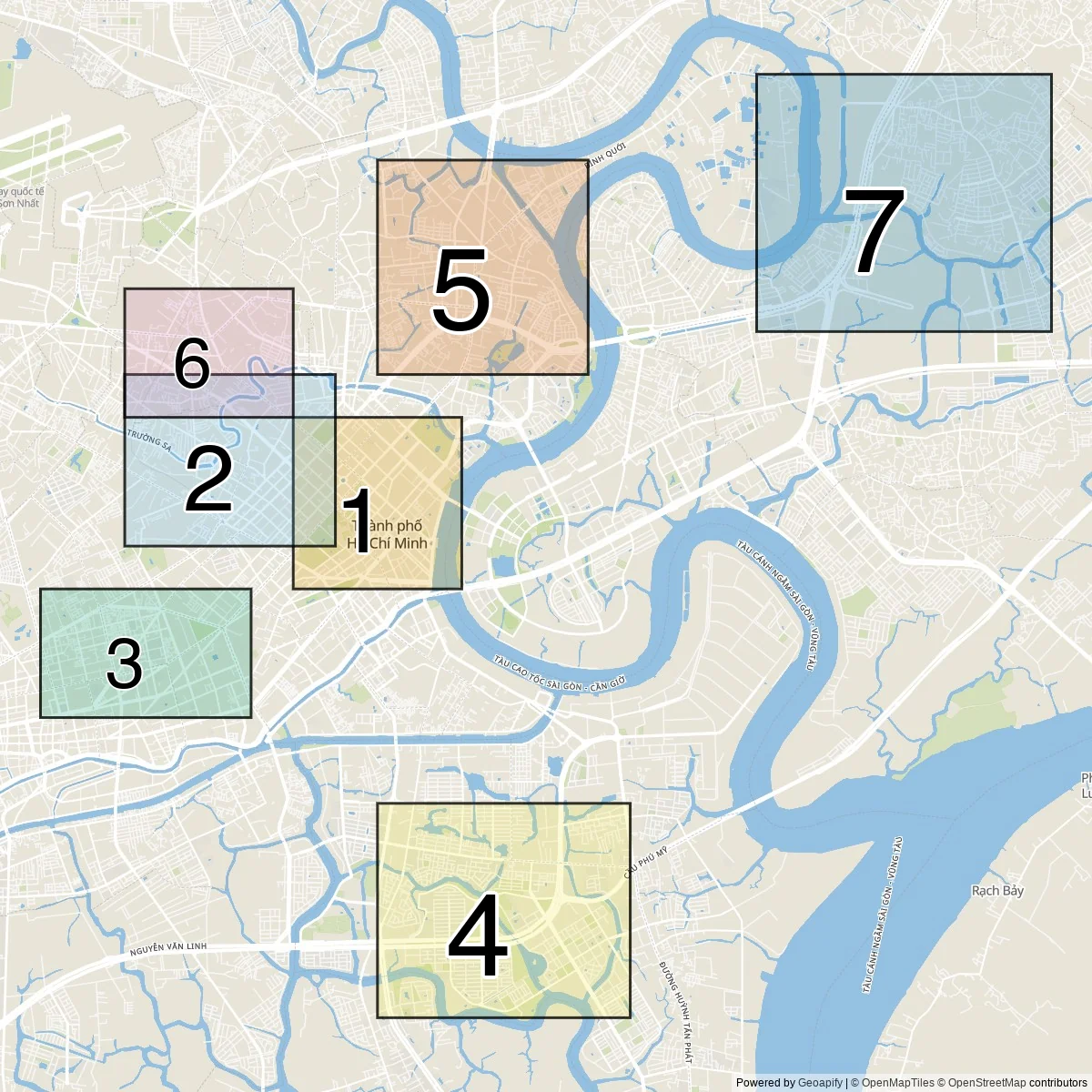
| # | Phường |
|---|---|
| 1 | Quận 1 · District 1 (Centre) |
| 2 | Quận 3 · District 3 |
| 3 | Quận 5 / Chợ Lớn · District 5 (Chinatown) |
| 4 | Quận 7 · District 7 (Phú Mỹ Hưng) |
| 5 | Bình Thạnh |
| 6 | Phú Nhuận |
| 7 | Thủ Đức · Thủ Đức (East) |
Frequently Asked Questions About Visiting Ho Chi Minh City
Do I need a visa to visit Ho Chi Minh City?
It depends on nationality. Citizens of around 25 countries — including the UK, France, Germany, Italy, Spain, Japan, South Korea, Singapore, Malaysia, Thailand, and the Philippines — enter Vietnam visa-free for 45 days as of 2024 (extended from the previous 15-day limit). Most other nationalities — including the US, Canada, Australia, and most of the Americas — need a visa, but the e-Visa system is straightforward: apply online at the official evisa.xuatnhapcanh.gov.vn portal for a 90-day single-entry or multiple-entry e-Visa ($25–50). Beware: numerous fake third-party sites charge inflated fees — only use the official .gov.vn portal. Processing typically takes 3–5 business days. Passport must have at least 6 months remaining validity. Visa-on-arrival is no longer the recommended option; the e-Visa is faster and cheaper.
Is Ho Chi Minh City safe for tourists?
HCMC is generally safe — Vietnam has very low violent crime against tourists, and the city is heavily policed. The US State Department rates Vietnam at “exercise normal precautions.” Real risks: motorbike-snatching of phones and bags by drive-by thieves on Bùi Viện and around District 1’s busy areas — keep phones inside bags, not in hands or back pockets; pickpocketing at Bến Thành Market and during peak-hour Grab pickup chaos; taxi scams with fake meters or unmarked cars (always use Mai Linh, Vinasun, or app-based Grab); aggressive cyclo drivers in District 1 demanding inflated post-ride fares. Traffic safety is the genuine danger — Vietnam has the world’s highest motorbike density, and pedestrian-vehicle accidents are common; cross slowly and predictably so motorbikes can flow around you. Walking around at night in central districts is generally fine, but avoid Bùi Viện after 2 am.
How many days do I need in Ho Chi Minh City?
Three full days handles the city; four to five lets you do day-trips. A solid 3-day plan: Day 1 — Reunification Palace + War Remnants Museum + Notre-Dame Cathedral + Central Post Office + Saigon Opera House + Bến Thành Market evening; Day 2 — Cholon (Bình Tây Market + Thiên Hậu Pagoda + dim sum lunch) + Jade Emperor Pagoda + sunset at Bitexco Skydeck or Landmark 81; Day 3 — Cu Chi Tunnels half-day tour + Tao Đàn Park or History Museum + dinner at Ngon or Anan Saigon. Day 4–5: Mekong Delta day-trip (Mỹ Tho + Bến Tre or overnight to Cần Thơ floating market) OR Vũng Tàu beach day OR Tây Ninh Cao Đài Holy See day-trip.
What’s the best area to stay in Ho Chi Minh City?
Three real options. District 1 — the obvious central choice; walking distance to all major sights, the strongest hotel concentration, the Bến Thành/Bùi Viện food and nightlife scenes; luxury (Park Hyatt, Reverie, Sofitel Plaza) at $250–600/night, mid-range (Caravelle, Liberty Central) at $80–180, budget hostels along De Tham at $15–40. District 3 — one step inland, slightly more local, slightly cheaper, walking distance to District 1 sights, with a stronger café and gallery scene; my pick for second-time visitors. Bình Thạnh / Vinhomes Central Park — modern serviced apartments with Saigon River views in the Landmark 81 development, $60–150/night for substantial 1–2 bedroom units; convenient if you want kitchenettes and laundry. Skip: anything outside District 1, 3, Bình Thạnh, or Cholon for short stays — the traffic makes everything else inconvenient.
How much does it cost to visit HCMC’s major sights?
HCMC’s sights are inexpensive even by Southeast Asian standards. Reunification Palace: 65,000 VND (~$2.50) via dinhdoclap.gov.vn. War Remnants Museum: 40,000 VND (~$1.60). Vietnam History Museum: 40,000 VND. Fine Arts Museum: 30,000 VND. Notre-Dame Cathedral: free (currently closed for renovation through 2027). Central Post Office: free. Jade Emperor Pagoda: free. Bitexco Skydeck: 200,000 VND (~$8). Landmark 81 Skyview: 810,000 VND (~$32, includes drink). Cu Chi Tunnels: 110,000 VND entry, plus ~$25–40 for a half-day organised tour with transport. Mekong Delta day-trip: $30–60 with reputable operators. Saigon Opera House cultural performance (À Ố Show): 700,000–1,500,000 VND. Water puppet show at Vietnam History Museum: 100,000 VND.
Should I drink the tap water in Ho Chi Minh City?
No — even though municipal water is treated, plumbing inconsistencies and rooftop water tanks make tap water unreliable. Always use bottled water (5,000–15,000 VND per liter at convenience stores like Circle K, FamilyMart, GS25) for drinking and brushing teeth. Major hotel restaurants and reputable establishments use filtered water and ice — generally safe. Reusable filter bottles (LifeStraw, Grayl) work well in Vietnam and reduce plastic waste. The CDC traveler health page recommends bottled or filtered water for Vietnam. Tap water is fine for showering. Ice in upscale restaurants and hotels: produced from filtered water, safe; street-stall ice: ask if it’s the cylindrical commercial ice (safe) or block ice (less reliable).
What about traffic and crossing the street?
HCMC has roughly 8 million motorbikes and the most chaotic-looking traffic of any major Asian city — but there’s a system. The fundamental rule: walk slowly, steadily, predictably. Don’t hesitate, don’t run, don’t make sudden moves. Traffic flows around you like water. Wait for a small gap, step into the street with a clear continuous pace, and let the motorbikes calculate around you. Pedestrian crossings exist but are not strictly observed; the flow rule still applies. Eye contact with the closest oncoming motorbike helps — they’ll see you and adjust. Crossing in groups is easier than crossing alone. The first-time learning curve is real but quick — by day 2, you’ll feel comfortable. Local helpful gesture: extending your arm slightly to signal direction. Avoid: rush hours (7–9 am, 5–7 pm) for non-essential walking near major intersections; the volume is genuinely overwhelming.
Is tipping expected in Ho Chi Minh City?
Increasingly yes in tourist-facing services, though tipping is not deeply rooted in Vietnamese culture. Restaurants: 5–10% in cash for sit-down service if no service charge (“phụ phí” or “service charge”) is added; round up at casual places. Some upscale restaurants automatically add 5% service + 10% VAT — check the bill carefully. Cafés: round up at the counter if pleased; not required. Taxis (Grab): round up to nearest 10,000 VND; not strictly required. Hotel porters: 20,000–50,000 VND per bag at upscale hotels. Hotel housekeeping: 20,000–40,000 VND per night at end of stay. Tour guides: $5–15 per person for half-day group tours, more for full private days; bus drivers $2–5. Cyclo drivers: agreed fare only; no tip expected. Spa, hair: 10% if pleased. Tip in Vietnamese đồng; small bills appreciated.
Economy & Business in Ho Chi Minh City
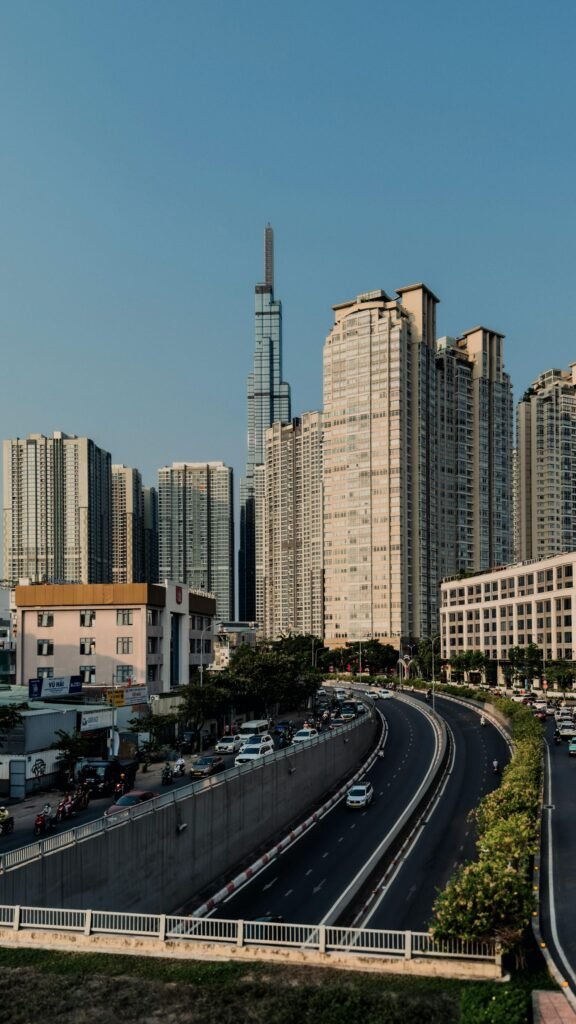
HCMC is Vietnam’s undisputed economic powerhouse — generating 20% of national GDP, handling 40% of national exports, and hosting most of the country’s foreign-invested manufacturing. The city consistently outpaces Vietnam’s national growth by 3–5% annually. Per-capita income for HCMC residents is roughly three times the Vietnamese national average.
Industrial Development
The industrial transformation since the 1986 Đổi Mới reforms has been radical. The city is now home to manufacturing operations for Samsung Electronics, Intel, Nike, Adidas, Foxconn, Bosch, LG Display, and dozens of other multinationals. Vingroup (Vietnam’s largest private conglomerate, real estate, Vinfast electric vehicles) and Masan Group are headquartered here. The post-2018 manufacturing exodus from China amid US-China trade tensions sent enormous volumes of new factory investment to the HCMC industrial belt; the city is now a critical node in global supply chains.
Financial Services
The Ho Chi Minh Stock Exchange (HOSE), established 2000, anchors Vietnam’s financial sector. Major banks (Vietcombank, Vietinbank, BIDV, ACB, Techcombank) and international financial institutions (HSBC, Standard Chartered, ANZ, Citibank) maintain regional offices in the Saigon Tower, Bitexco Financial Tower, and the new Vincom Center.
Port & Trade
The Saigon Port system (combining the original Saigon Port, the deepwater Cát Lái Port, and the newer Cái Mép-Thị Vải in nearby Vũng Tàu) handles massive container volumes. Cát Lái alone is among the top 30 container ports globally. The strategic position makes HCMC a crucial link in Southeast Asian supply chains.
Sports & Recreation in Ho Chi Minh City
HCMC’s sports culture centers on football, with local teams Hồ Chí Minh City FC and Sài Gòn FC competing in Vietnam’s top-tier V.League 1 at Thống Nhất Stadium (the historic 25,000-capacity stadium in District 10). Match-day atmospheres are passionate; the local football culture has grown enormously since national-team success at the 2018 AFC U-23 Championship and 2018 AFF Suzuki Cup.
Beyond football, martial arts thrive — Vietnamese Vovinam (the indigenous self-defense art), Taekwondo, Karate. Tennis and golf are growing among affluent residents; Tan Son Nhat Golf Course and Vietnam Golf & Country Club are the central HCMC options.
The Phú Thọ Racecourse in Cholon is one of Asia’s stranger institutions — Vietnam’s only legal horse-racing track, closed in 2011 but rumored to reopen periodically.
Parks & Recreation
The Botanical Gardens (Thảo Cầm Viên), established by the French in 1864 — among the oldest in Asia — provides a tropical-paradise refuge in central District 1. The complex includes Saigon Zoo with elephants, crocodiles, and Komodo dragons; an aquarium; and small amusement-park rides. Tickets ~60,000 VND.
Bình Quới Park on a Saigon River island offers traditional rural Vietnamese lifestyle exhibits, bamboo-pole fishing, riverside picnic areas. Đầm Sen Cultural Park in District 11 is a Vietnamese-style theme park with rides, sports facilities, and a waterpark — popular with Vietnamese families.
Education in Ho Chi Minh City
HCMC is Vietnam’s largest educational hub. The Vietnam National University, Ho Chi Minh City (VNU-HCM) is the country’s premier higher-education institution, comprising the University of Science (formerly Saigon College of Sciences), University of Social Sciences and Humanities (formerly Saigon College of Letters), University of Technology, International University, and other specialized member schools. The system enrolls ~60,000 students.
The RMIT University Vietnam (the local campus of Australia’s RMIT) and the Foreign Trade University are leading English-language and business-focused institutions. Technical colleges throughout the city train skilled workers for Vietnam’s growing industrial sector.
Notable People from Ho Chi Minh City
HCMC has produced a remarkable range of internationally recognized individuals across diverse fields. The city’s cultural diversity and educational opportunities have nurtured talents who represent Vietnam globally.
In sports: tennis player Lý Hoàng Nam, sprinter Lê Tú Chinh, chess grandmaster Lê Quang Liêm, footballers Huỳnh Quang Thanh and Trần Thị Thu Thảo.
In arts and entertainment: Vietnamese-French actress Linh Dan Pham (the lead in Indochine opposite Catherine Deneuve), Vietnamese-French visual artist Thu Vân Trần, fashion designer Nguyễn Công Trí (Vietnam’s leading couturier).
In science and business: Eugene Trinh (Trịnh Hữu Châu), the first Vietnamese-American to fly aboard a NASA Space Shuttle (STS-50, 1992); Phạm Nhật Vượng (Vingroup founder, Vietnam’s wealthiest entrepreneur, lives between Hanoi and HCMC); Nguyễn Thị Phương Thảo, founder of Vietjet Air and Vietnam’s first female billionaire.
HCMC continues to evolve as Southeast Asia’s most dynamic post-war success story. Three days for the headline District 1 sights, a fourth for the Củ Chi Tunnels and War Remnants Museum, a fifth for Mekong Delta or Tây Ninh — the layered city offers more than any visitor can fully absorb. Wear comfortable shoes, drink the coffee, accept that your shirt will be soaked by 10 am, and learn to cross the street.
AFRIKA
Cairo Hurghada Johannesburg Marrakech
ASIA
Abu Dhabi Agra Antalya Bangkok Batam Beijing Bengaluru Cebu City Chiang Mai Chiba Chennai Da Nang Dammam Delhi Denpasar Dubai Fukuoka Guangzhou Guilin Ha Long Hanoi Ho Chi Minh City Jakarta Jaipur Johor Bahru Kolkata Krabi Kuala Lumpur Kyoto Macau Mecca Medina Mugla Mumbai Osaka Pattaya Penang Phuket Riyadh Seoul Shanghai Shenzhen Singapore Taipei Tokyo Zhuhai
EUROPE
Amsterdam Athens Barcelona Berlin Brussels Budapest Copenhagen Dublin Florence Frankfurt am Main Heraklion Krakow Lisbon London Madrid Milan Munich Nice Paris Porto Prague Rhodes Rome Stockholm Venice Vienna Warsaw
NORTH AMERICA
Cancun Las Vegas Los Angeles Miami New York City Orlando San Francisco Toronto Vancouver
SOUTH AMERICA
Buenos Aires Lima Rio De Janeiro
OCEANIA
Auckland Honolulu Melbourne Sydney