
Michelle Pitzel, pixabay
Phuket, Thailand’s largest island, stands as the crown jewel of the Andaman Sea. This tropical paradise combines pristine beaches, rich cultural heritage, and vibrant nightlife to create an unforgettable destination. From the bustling streets of Patong to the serene coves of Freedom Beach, Phuket offers experiences that cater to every type of traveler. Whether you’re seeking adventure in the surrounding islands, exploring centuries-old architecture in Old Town, or simply relaxing on world-class beaches, this island province delivers an authentic taste of Thailand’s natural beauty and warm hospitality.
Phuket at a Glance: Essential Facts for Travelers
| Location | Southern Thailand, Andaman Sea |
|---|---|
| Coordinates | 7.8804° N, 98.3923° E |
| Population | Approximately 416,000 (2019) |
| Area | 576 square kilometers (island), 4,177 square kilometers (province) |
| Elevation | Highest point: 529 meters (Mai Thao Sip Song) |
| Time Zone | Indochina Time (ICT), UTC+7 |
| Calling Code | +66 76 |
| Postal Codes | 83000-83130 |
| Known For | Beaches, diving, nightlife, Thai cuisine, Big Buddha |
| Provincial Governor | Sophon Suwannarat (as of 2023) |
| Official Website | phuket.go.th |
| Best Time to Visit | November to April (dry season) |
Upcoming Events in Phuket
| Date | Title | Details |
|---|---|---|
| 2026-09-17 | Azur Festival at Barra Cuda Phuket | Beach club Barra Cuda in Patong hosts the Azur Festival on Thursday 17 September from 2:00 PM to 11:30 PM, a Mediterranean-themed day-to-night party inspired by St Tropez and Mykonos. Expect house music from resident and guest DJs, coastal styling and themed food and drinks by the sea. The format suits couples and groups looking for a stylish alternative to Patong’s usual nightlife, and dressing in white and azure is encouraged. Ticket and table prices vary, with advance booking recommended for daybeds and larger parties. [Source] |
| 2026-09-19 | Swap Connect Phuket | Swap Connect Phuket takes over N1 Cafe & Green on Saturday 19 September from 11:00 AM to 3:00 PM, inviting islanders to trade pre-loved clothes, books, toys and household items instead of buying new. The community swap market pairs sustainable shopping with cafe food and drinks, and is a relaxed way for residents, expats and curious visitors to meet. Participation is casual and browsing is free; bring good-condition items to exchange. The event reflects Phuket’s growing eco-minded community scene beyond the beach resorts. [Source] |
| 2026-10-10 to 2026-10-18 | Phuket Vegetarian Festival (Tesagan Gin Je) | Phuket’s most spectacular event, the Vegetarian Festival or Tesagan Gin Je, fills the streets each October during the first nine days of the ninth lunar month. Devotees at Chinese shrines such as Jui Tui and Bang Neow keep a strict vegan diet, dress in white and take part in dramatic processions featuring body-piercing, fire-walking and firecrackers amid clouds of incense. Roadside stalls marked with yellow flags serve meat-free food across the island. It is free to watch and utterly unique, though the piercing rituals can be intense for the squeamish. [Source] |
| 2026-11-14 to 2026-11-15 | Laguna Phuket Triathlon | The 32nd edition of the Laguna Phuket Triathlon takes place on 14 and 15 November at the Laguna resort complex in Bangtao. Known as Asia’s longest-running triathlon, the race sends athletes over a 1.8-kilometre swim in lagoon and sea, a 50-kilometre bike leg through plantations and villages, and a 12-kilometre run, with shorter supporting races and a charity fun run rounding out the weekend. Entry fees vary by race category, while spectating along the course and at the finish line is free and family-friendly. [Source] |
| 2026-11-23 to 2026-11-25 | Loy Krathong Festival Nights | Phuket celebrates Loy Krathong, Thailand’s festival of lights, around the full moon night of 24 November. Locals float candlelit krathong baskets on lakes, lagoons and calm shorelines to pay respect to the water spirits, with popular gathering spots including Patong, Karon and the island’s park lakes. A dedicated three-night programme, Phuket Nights and Loy Krathong Lights, runs from 23 to 25 November at the Boat Lagoon area with cultural performances and krathong making. Joining the public celebrations is free; krathongs are sold on site for a small sum. [Source] |
| 2026-12-18 to 2026-12-20 | EDC Thailand 2026 | Electric Daisy Carnival, one of the world’s biggest dance music brands, returns to Phuket for its third Thai edition from 18 to 20 December at Rhythm Park in Bangtao. Three days and nights Under the Electric Sky bring international headline DJs, spectacular stage production, fireworks and costumed performers to the island at the start of the high season. Ticket prices vary from single-day general admission to three-day VIP packages, and early tiers sell out quickly. Expect a global crowd and book accommodation in the Bangtao area well ahead. [Source] |
City News in Phuket – last 14 days
| Date | Category | Headline | Details |
|---|---|---|---|
| 2026-09-14 | Public transport | Kathu-Patong tunnel expressway heads to cabinet with 16.7 billion baht price tag | The Expressway Authority of Thailand is pushing the first phase of the Phuket expressway, the Kathu to Patong tunnel route, to the cabinet for approval with a budget of about 16.7 billion baht, aiming for a decision in December. The project would bore through the hills to bypass the accident-prone Patong Hill road, while a second phase is being redesigned with more elevated sections to cut ballooning costs. Officials also promote the Thailand Future Fund as a financing source and say Thai contractors will take the lead. [Source] |
| 2026-09-14 | Local government | Governor orders probe into Chabad Patong with results within seven days | Phuket’s governor has ordered an investigation into the Chabad centre in Patong, instructing agencies to report their findings within seven days. The inquiry follows public protests and questions about the centre’s activities and permits for large gatherings. Officials are examining building use, event authorisations and immigration compliance connected to the site. The governor said the province must apply the law even-handedly while maintaining order, as the dispute around the Jewish community centre has drawn national and international attention to the island. [Source] |
| 2026-09-14 | Local government | Minister pushes online permit approvals to cut bribery, piloting Phuket hotels | A government initiative to curb bribery is targeting the licence and permit process, moving approvals online to reduce discretionary contact between officials and applicants. Phuket’s hotel sector and the Eastern Economic Corridor will pilot the streamlined system, which shortens approval steps and creates digital audit trails. Officials argue that opaque permit queues have long been a corruption risk in tourism provinces, and hoteliers have welcomed faster, more predictable processing for licences covering construction, fire safety and operations. [Source] |
| 2026-09-14 | Business | Nominee crackdown in Phuket: 196 cases already sent for prosecution | A parliamentary commerce committee visited Phuket to follow up on the crackdown against nominee arrangements, in which Thai names are used to front businesses or land held by foreigners in violation of the law. Officials reported that evidence gathered so far has resulted in 196 cases being forwarded for prosecution, covering both nominee shareholding and illegal land holding. The committee urged agencies to keep tightening checks on company structures in the tourism and property sectors, where such practices are most common. [Source] |
| 2026-09-14 | Local affairs | Bangkok-Phuket Cancer Institute opens to strengthen cancer care on the island | The Bangkok Hospital Group has opened the Bangkok-Phuket Cancer Institute, expanding comprehensive cancer diagnosis and treatment capacity on the island. The institute links Phuket patients into the group’s wider cancer care network, offering screening, chemotherapy and multidisciplinary specialist consultation closer to home so fewer residents need to travel to Bangkok for treatment. The investment also targets the growing international patient market, positioning Phuket as a medical tourism destination that combines advanced oncology services with recovery in a resort setting. [Source] |
| 2026-09-14 | Sports | Phuket municipal school volleyball squad targets PMYC U15 title | The boys’ volleyball team of Phuket’s municipal school has set its sights firmly on the championship of the PMYC under-15 tournament, with coaches saying the goal for the campaign is clear. The young squad has been training intensively and carries local hopes in the youth competition, which showcases emerging talent from schools across the region. Strong showings in recent matches have raised expectations, and the municipality is backing the programme as part of its push to develop island sport from the grassroots. [Source] |
| 2026-09-13 | Education | Governor opens Phuket Hotelier Craft and Skill Exhibition | Phuket’s governor opened the Phuket Hotelier Craft and Skill Exhibition, an event dedicated to raising the skills of the island’s hotel workforce to international standards. The programme brings together hospitality schools, hotel associations and employers for demonstrations, competitions and workshops covering service, culinary arts and housekeeping craft. With tourism the backbone of the local economy and hotels competing globally for guests, officials say continuous upskilling of staff is essential to keep Phuket’s service quality ahead of rival destinations. [Source] |
| 2026-09-13 | Sports | Phuket futsal club condemns fan who slapped player during match | The Phuket futsal club has issued a condemnation after a supporter of the opposing side reached out and slapped one of its players on the head during a league fixture against Phetchaburi Rajabhat University. The club called the behaviour unacceptable and demanded action from the league and the host side. Officials are reviewing footage of the incident, which has stirred debate in Thai futsal about crowd control and player safety at university venues. [Source] |
| 2026-09-12 | Local affairs | Jewish New Year event cancelled on security grounds after protest | The Chabad House in Patong cancelled its planned Rosh Hashanah celebration after protests by local groups raised security concerns, with Israeli security officials also reportedly advising against holding the large gathering. Hundreds of demonstrators had rallied against the event, and organisers said the meal format was changed and the main event called off to avoid escalation. Authorities increased monitoring around the site as the cancellation drew international media attention and debate about tensions between local residents and the island’s Jewish visitors. [Source] |
| 2026-09-12 | Business | RIU makes its Thailand debut with the Riu Palace Phuket | Spanish hotel giant RIU has entered the Thai market with the opening of the Riu Palace Phuket, bringing its upscale Palace brand to the island. The property offers the chain’s signature all-inclusive style hospitality, with multiple restaurants, pools and entertainment aimed at European and long-haul leisure travellers. The arrival of another major international operator underlines Phuket’s continuing pull for global hotel investment, as brands compete for a share of the island’s record visitor arrivals and expanding premium beach resort segment. [Source] |
| 2026-09-11 | Business | CPN pours 7 billion baht into Central Phuket luxury expansion | Retail developer Central Pattana is investing seven billion baht to expand its Central Phuket complex, rolling out more luxury brand space and a new entertainment hub aimed at wealthy international visitors. The project positions the mall as a lifestyle destination for the global rich who increasingly winter on the island, combining flagship fashion stores with dining and family attractions. The expansion bets that Phuket’s tourism boom and growing residential expat community will sustain demand for high-end retail beyond the beach economy. [Source] |
| 2026-09-10 | Public safety | Airlines widen pilot drug testing after Air India Phuket incident | Drug testing for pilots is being expanded across airlines after an Air India pilot failed a test connected to a Phuket flight incident, a case that led to the pilot’s dismissal. Regulators ordered carriers to step up screening as part of tightened safety oversight, with random and post-incident tests covering more crew members. The episode has prompted broader discussion in the aviation industry about substance policies, rostering pressure and the safeguards that protect passengers on international tourist routes such as those serving Phuket. [Source] |
| 2026-09-10 | Culture | Nene Royal on her journey from Phuket to America’s Got Talent | Performer Nene Royal has spoken about her path from Phuket to the global stage of America’s Got Talent, describing the dream that carried her from the island to international television. In an interview she recounted early performances at home, the discipline behind her act and the pride of representing Thai artistry abroad. Her rise has made her a celebrity back home, where fans and local media, and even visiting Thai rock star Sek Loso, have celebrated the island’s newest star. [Source] |
Phuket Events & City News Archive
Sources: Phuket.Net Events, The Phuket News, Tourism Authority of Thailand, AllEvents, Phuket.Net Events, Thairath, Manager Online, Siamrath
Weather Forecast for the Next 14 Days in Phuket
| Date | Weather | Max °F | Min °F | Rain mm |
|---|---|---|---|---|
| 2026-09-14 | 🌧️ | 87.4 °F | 75.5 °F | 5.4 mm |
| 2026-09-15 | 🌧️ | 86.0 °F | 75.5 °F | 2.8 mm |
| 2026-09-16 | 🌧️ | 85.1 °F | 75.2 °F | 5.6 mm |
| 2026-09-17 | ⛈️ | 82.6 °F | 74.6 °F | 13.2 mm |
| 2026-09-18 | 🌧️ | 77.7 °F | 74.6 °F | 38.3 mm |
| 2026-09-19 | 🌧️ | 76.1 °F | 73.9 °F | 71.5 mm |
| 2026-09-20 | ⛈️ | 77.3 °F | 73.5 °F | 52.9 mm |
| 2026-09-21 | 🌧️ | 84.1 °F | 74.7 °F | 6.2 mm |
| 2026-09-22 | 🌧️ | 83.2 °F | 75.7 °F | 10.0 mm |
| 2026-09-23 | 🌧️ | 82.5 °F | 75.1 °F | 13.4 mm |
| 2026-09-24 | 🌧️ | 84.5 °F | 75.6 °F | 5.6 mm |
| 2026-09-25 | ⛈️ | 84.8 °F | 76.5 °F | 12.0 mm |
| 2026-09-26 | 🌧️ | 83.8 °F | 73.9 °F | 11.6 mm |
| 2026-09-27 | 🌧️ | 81.0 °F | 77.7 °F | 3.2 mm |
Phuket’s History
Phuket was a tin-mining island for two thousand years before it was a beach destination. The European powers that mattered here were Portuguese (16th century), Dutch (17th), British (briefly), and French — all chasing the same metal that locals had been digging out of the alluvial flats since the Bronze Age. The pivot from tin to tourism happened in the 1970s, and within fifty years, Phuket went from minor maritime backwater to Thailand’s most-visited destination outside Bangkok.
Early Settlement and Maritime Trade
Archaeological evidence suggests human settlement on Phuket dates back over a millennium. The island’s old European name, “Junk Ceylon” (a corruption of the Malay Ujung Salang, “Cape Salang”), reflects its position on the maritime trade routes between India, Persia, China, and the Malay Peninsula. Early inhabitants were primarily Chao Lay (sea nomads) and Malay-speaking fishermen who established small coastal communities. The island appears on Ptolemy’s 2nd-century world map as Jang Si Lang.
The island’s tin deposits were the long-term economic engine. By the 16th century, Portuguese traders were buying Phuket tin to ship to Europe and Japan; the Dutch followed in the 17th century, the French briefly negotiated mining rights in the 1680s. The trade laid the foundation for Phuket’s permanent multicultural character.
Tin Mining Boom and Chinese Immigration
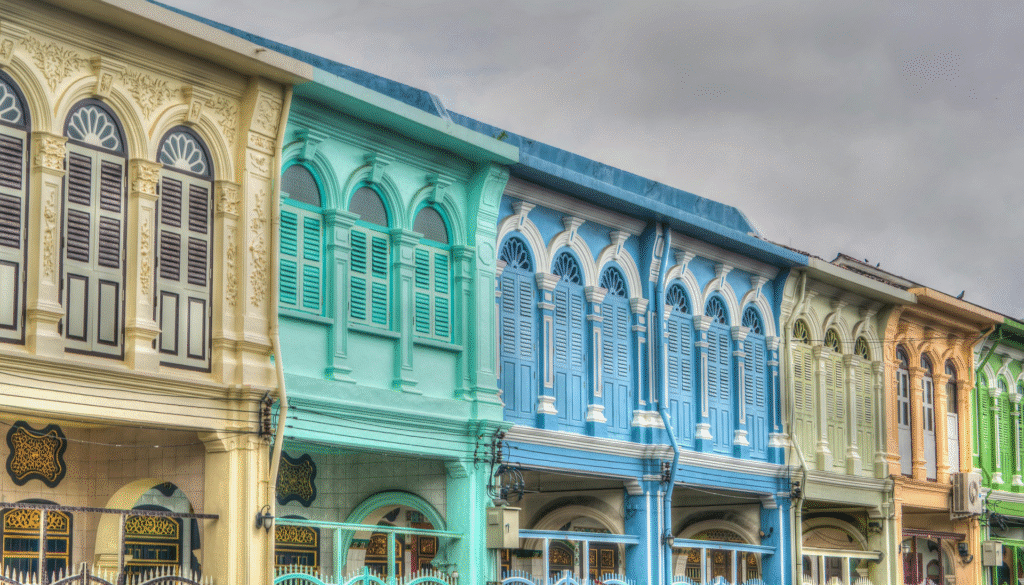
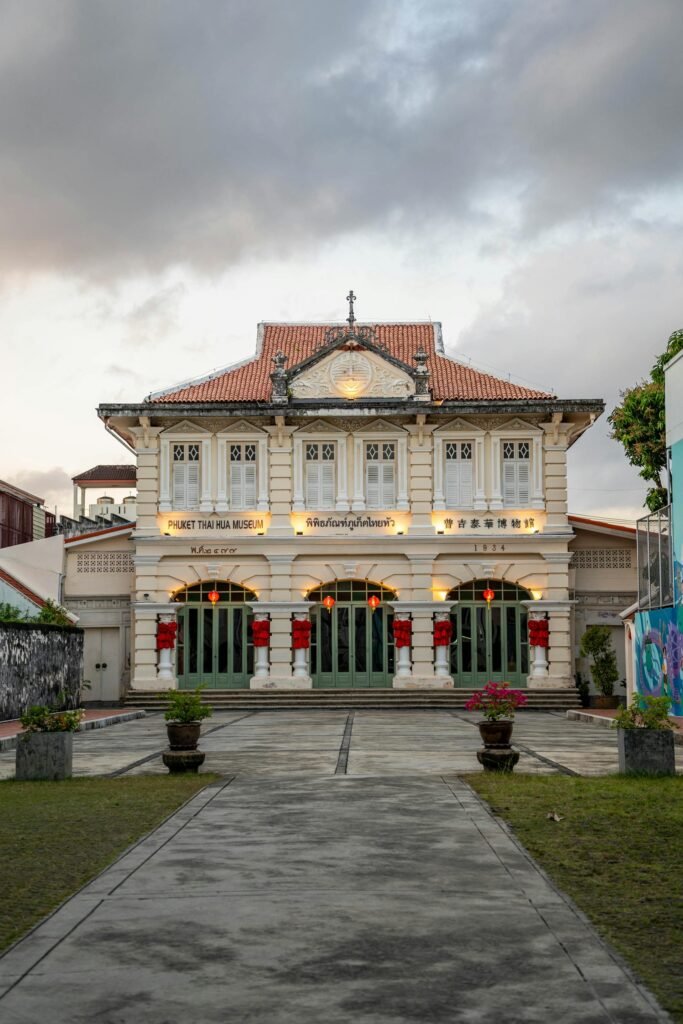
The 19th and early 20th centuries marked Phuket’s golden age. Hokkien Chinese immigrants from Fujian and Guangdong arrived in massive numbers to work the tin mines, transforming both the island’s economy and its visible architecture. The wealth generated funded the construction of elaborate Sino-Portuguese mansions that still grace Phuket Town’s streets — colonnaded shophouses, tiled courtyards, and the distinctive blend of Chinese internal layout with Portuguese-influenced facades. Old Phuket Town received UNESCO Asia-Pacific Heritage recognition for this preserved colonial-merchant architecture.
The Heroic Sisters and Burmese Invasions
In 1785, two local heroines — Thao Thep Krasattri and Thao Si Sunthon — successfully defended Phuket against a Burmese invasion when Thai military reinforcements were unavailable. Disguising local women as soldiers and using clever tactics to inflate the apparent garrison, they held off a 30-day siege until the Burmese withdrew. The two sisters’ bronze monument at the Tha Reua intersection (the main island roundabout) is the modern symbol of Phuket; their story is taught in every Thai school.
Modern Tourism Development
Phuket’s tin mines closed in the early 1990s after the global tin price collapsed in 1985. The transition to tourism had already begun: the island’s first international resort, Le Méridien Phuket, opened in 1986 at Karon Noi Beach; Phuket International Airport opened in 1976 (rebuilt 2014). The 2004 Boxing Day tsunami devastated the western beaches and killed 250+ on the island; rebuilding was rapid. By 2019, Phuket was hosting 14 million annual visitors. Tourism is now ~80% of the island’s economy.
Geography, Climate & Best Time to Visit Phuket
Phuket is Thailand’s largest island — 543 km², roughly the size of Singapore — connected to mainland Thailand only by the 660-metre Sarasin Bridge in the north. The island stretches 50 km north-to-south and 21 km at its widest point. The mountainous spine peaks at Mai Thao Sip Song (529 m); the coastline alternates between long western beaches (Patong, Karon, Kata, Kamala) and the sheltered eastern coast facing the mainland.
Topography and Natural Features
Phuket’s western coast — the famous Andaman Sea side — has the long sandy beaches that define the island’s tourist identity. The eastern coast is more sheltered, hosts the historic Phuket Town and the working ports, and faces the dramatic karst limestone seascapes of Phang Nga Bay. Surrounding Phuket are 32 smaller islands, including the popular Phi Phi Islands, the pristine Similan Islands (a national marine park, accessible by day boat), and Coral Island (Koh Hae) just offshore.
Climate Patterns
Phuket has a tropical monsoon climate with three distinct seasons. Temperatures stay 23–35°C year-round; the meaningful variation is rainfall. Dry season (November–April) brings calm seas, sunny skies, and minimal rain — peak tourist conditions. Hot season (March–May) sees temperatures rise to 35°C+ with high humidity but still relatively little rain. Monsoon season (May–October) brings the Southwest Monsoon — heavy afternoon rain, rough seas on the western beaches, restricted swimming on red-flag days. September and October are the wettest months.
Best Time to Visit
November–February is the ideal window — calm Andaman Sea, dry and sunny, water temperatures 27–28°C, all island-hopping operations running. This is also peak season — accommodation prices run 30–60% above shoulder rates and Christmas/New Year hits 2–3x. March–May is shoulder transition: still relatively dry, hotter, and with the seasonal burning of agricultural fields in northern Thailand causing occasional haze. June–October is the rainy season — beaches less crowded, prices 30–50% lower, but red-flag dangerous-swimming days are common, Maya Bay and several Phi Phi day-boat routes close periodically, and some days are genuinely washed out. November is the transition shoulder — already calmer seas, less rain, but discounted prices linger from the rainy season.
Phuket’s Districts and Neighborhoods
Phuket is divided into three administrative districts, but the visitor’s working map is by beach. The western coast hosts the famous tourist beaches; Phuket Town on the southeast holds the cultural heritage; the north has the airport and the quieter luxury resorts.
Mueang Phuket District
Encompasses Phuket Town (the historic Sino-Portuguese center) and the major southern beaches. Phuket Town itself — the only meaningful urban core on the island — has the colonial heritage architecture, the indoor day market, the night-only walking-street market on Sundays, and the airport-adjacent administrative offices. Patong Beach is the entertainment hub: 3 km of sandy beach with the notorious Bangla Road nightlife strip; loud, busy, divisive. Karon and Kata beaches are quieter family-friendly alternatives 10 minutes south.
Where to Stay: Patong for first-time visitors prioritizing nightlife and food variety; Kata or Karon for families and quieter beach atmosphere; Phuket Town for cultural immersion and boutique heritage hotels at half the beach prices.
Kathu District
Inland from Patong, mostly residential and commercial, with golf courses (Loch Palm Golf Club) and the mountain road that connects Patong to the eastern coast. Less interesting for sightseeing.
Where to Stay: Mid-range hotels for travelers who want easier access to both Patong and the cultural sites without the beach-strip noise.
Thalang District
The northern third of the island — quieter, greener, and home to the airport plus the upscale beach resorts. Bang Tao Beach hosts the Laguna Phuket integrated resort complex (Banyan Tree, Angsana, Dusit Thani). Mai Khao Beach next to the airport is the longest on the island; Sirinat National Park protects the dunes. Surin Beach is a smaller cove favored by the residential expat community. The famous Heroines’ Monument roundabout is here.
Where to Stay: Thalang is perfect for luxury travelers seeking exclusive resorts, golf courses, and sophisticated dining. The area also offers convenient airport access for short stays — but you’ll need taxis to reach Patong nightlife.
Top Things to Do in Phuket
| # | Sight | Cluster | Type | Time | Entry | Best |
|---|---|---|---|---|---|---|
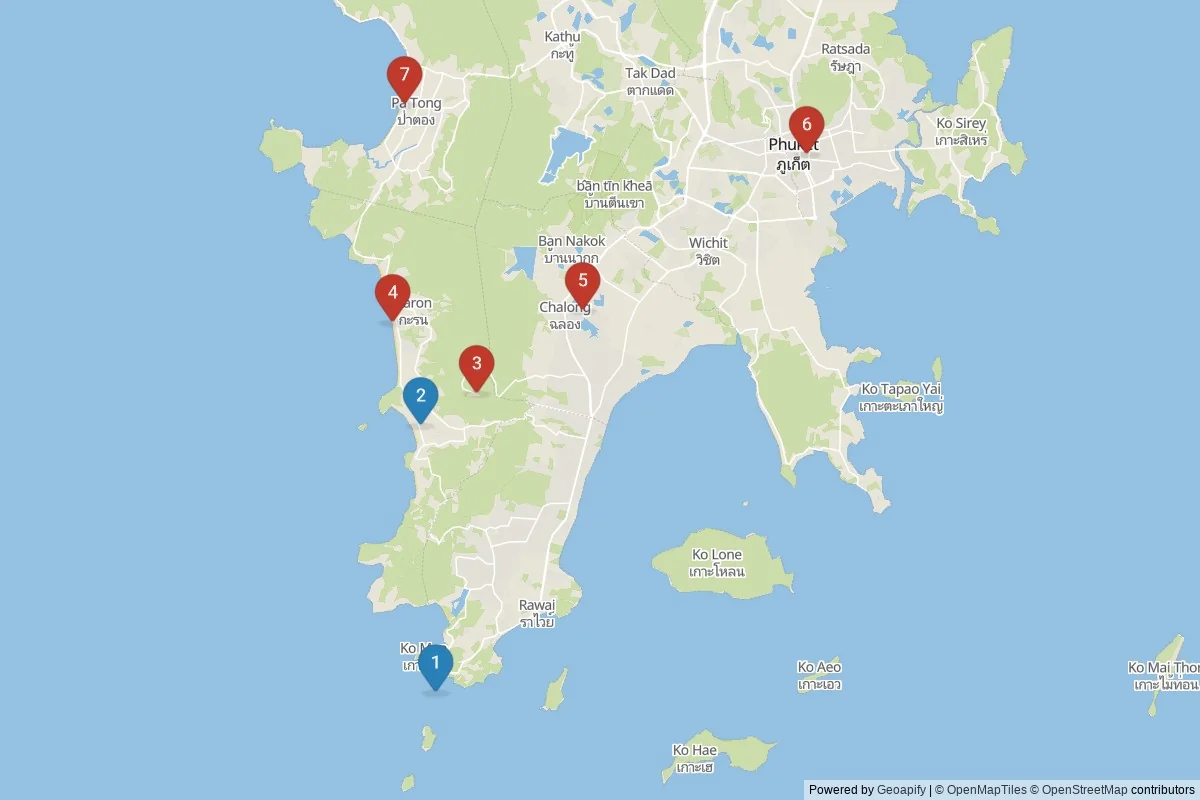
| 1 | Promthep Cape | Central | Viewpoint | ~45 min | Free | Sunset |
| 2 | Kata Beach | Central | Beach | ½ day | Free | Afternoon |
| 3 | Big Buddha of Phuket | Outer | Buddha statue | ~1 hr | Free | Sunset |
| 4 | Karon Beach | Outer | Beach | ½ day | Free | Afternoon |
| 5 | Wat Chalong | Outer | Buddhist temple | ~45 min | Free | Morning |
| 6 | Phuket Old Town | Outer | Old quarter | ~2 hrs | Free | Morning |
| 7 | Patong Beach | Outer | Beach | ½ day | Free | Afternoon |
| 🚗 | Day Trip: Phi Phi Islands | Day trip | Day trip | Full day | ฿1,500 | Morning |
| 🚗 | Day Trip: James Bond Island | Day trip | Day trip | Full day | ฿1,200 | Morning |
Phuket isn’t a single destination so much as a base for the surrounding Andaman Sea. The headline attractions split into three categories: the island’s own beaches and cultural sights, the day-trip island-hopping circuit, and the diving/snorkeling at the surrounding marine parks.
Iconic Beaches and Coastal Activities
Phuket’s beaches are the obvious starting point — and each has a clear personality. Patong Beach is 3 km of busy sand backed by Bangla Road; the entertainment hub, with all the water-sports and beach-club rentals you could want, plus the inevitable jet-ski scams. Kata Beach and Karon Beach are calmer, family-friendly, with gentler swimming conditions and a noticeably less rowdy atmosphere. Surin, Bang Tao, and Mai Khao in the north are quieter, more upscale, and longer.
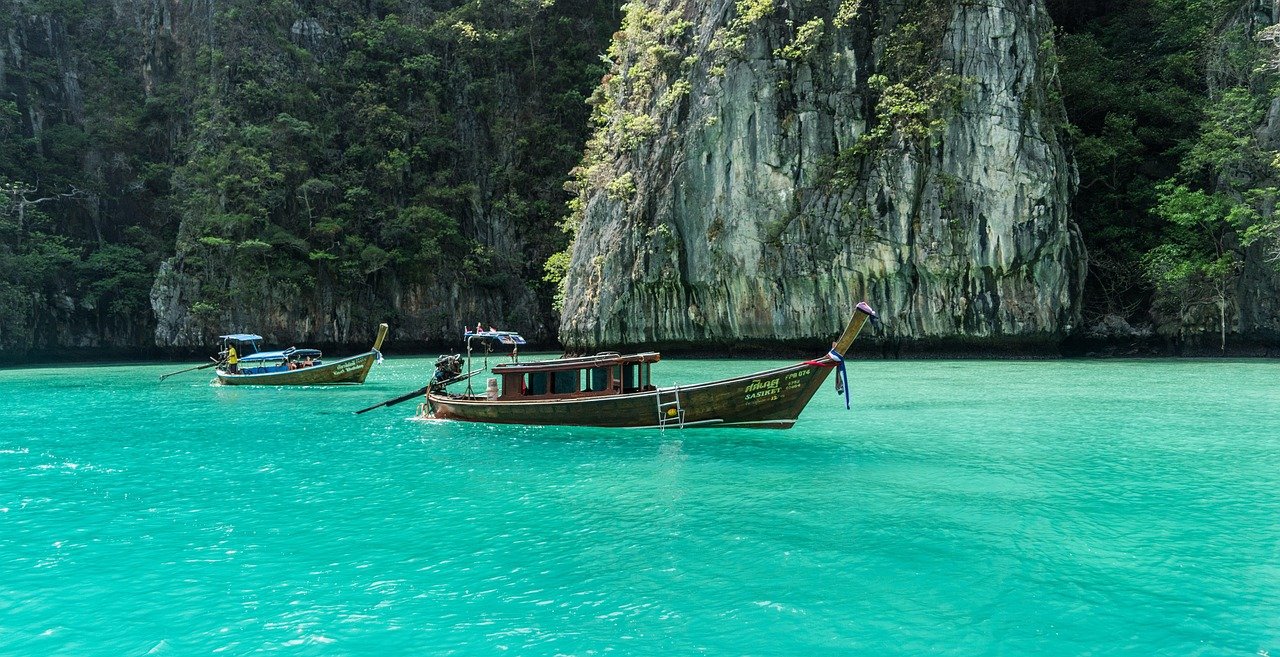
Freedom Beach is the much-photographed white-sand cove south of Patong, accessible only by longtail boat (~500 baht round trip) or a steep jungle hike. Swimming here is genuinely lovely — pristine sand, clear water, no resort developments.
Cultural and Historical Landmarks
The Big Buddha — the 45-metre marble Phra Phutta Ming Mongkol Eaknakkiri statue atop Nakkerd Hill — is Phuket’s largest landmark and the island’s defining viewpoint. Free entry; donations appreciated. Modest dress required (no shorts above the knee, shoulders covered).
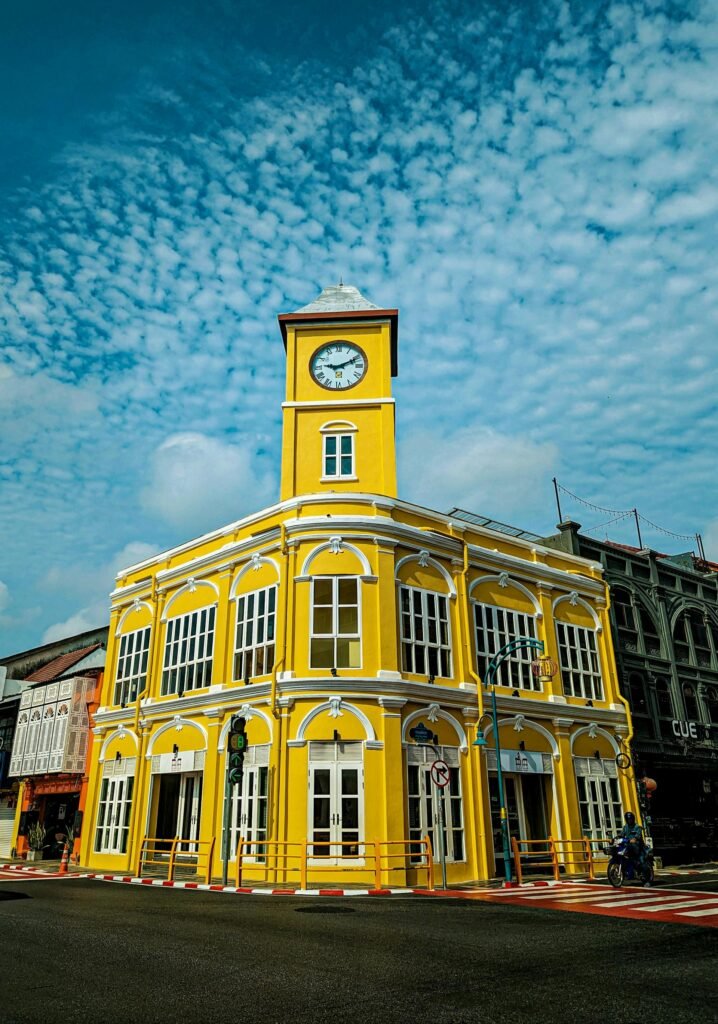
Old Phuket Town showcases the island’s Sino-Portuguese architectural heritage. Walk the streets of Thalang Road, Dibuk Road, and Krabi Road for colorful shophouses, traditional kopi shops, vibrant street art, and small museums in heritage homes (Thavorn Hotel Museum, Baan Chinpracha). The Sunday Walking Street Market (4–10 pm on Thalang Road) is the cultural high point of any Phuket Town visit — local crafts, street food, performances. Lazy weekend visit territory.
Wat Chalong — Phuket’s most important Buddhist temple, dedicated to two revered abbots who helped quell a 19th-century Chinese-immigrant rebellion. The ornate chedi (pagoda) and intricate temple architecture are textbook southern Thai. Free entry; modest dress required.
Adventure and Nature Experiences
Island hopping is the headline Phuket experience. Day trips run by speedboat to:
- Phi Phi Islands (45 min by speedboat) — limestone-and-turquoise paradise; Maya Bay (the famous “The Beach” location) reopened in 2022 with strict daily visitor limits; book entry-controlled tours.
- James Bond Island and Phang Nga Bay (90 min by boat) — towering karst pillars rising from emerald water, sea caves, and the floating Muslim village of Koh Panyee.
- Similan Islands National Park (overnight or long day) — Thailand’s premier dive destination, accessible only November–April when the park is open.
- Racha Yai and Racha Noi Islands — under-developed and excellent for snorkeling.
- Coral Island (Koh Hae) — closest to Phuket, half-day trips, banana boats and parasailing.
Diving and snorkeling in the Andaman Sea ranks among Asia’s best. The Similan Islands offer world-class wall and pinnacle dives; Shark Point, Anemone Reef, and the wreck of King Cruiser are popular dive sites for intermediate divers. Operators like Sea Bees, Aussie Divers, and Phuket Scuba Club are PADI 5-star centers.
Land-based adventure: zip-line courses through the rainforest canopy (Hanuman World, Flying Hanuman), elephant sanctuaries (book ethical, no-riding ones — Phuket Elephant Sanctuary, Elephant Jungle Sanctuary), and the inland viewpoint hikes from the Big Buddha down to Karon.
Markets and Shopping
Naka Weekend Market (Phuket Town, Saturday and Sunday evenings) is the island’s largest market — handicrafts, clothing, fresh produce, and the legendary cheap street food. Banzaan Market in central Patong has a fresh-produce ground floor and a food-court second floor; cleaner and more tourist-oriented. Bangla Road in Patong transforms after sunset into the pedestrian-only entertainment district — bars, clubs, street performers, and late-night souvenir shops.
How to Get to Phuket
By Air
Phuket International Airport (HKT) handles 18+ million passengers annually, making it Thailand’s third-busiest airport after Bangkok’s two airports. Direct flights from major Asian hubs (Bangkok, Singapore, Kuala Lumpur, Hong Kong, Seoul, Tokyo), Australia, and seasonal long-haul services from Europe (London, Frankfurt, Stockholm, Moscow). Domestic flights to Bangkok run almost hourly, plus connections to Chiang Mai, Krabi, and Hat Yai. The airport is in the north of the island, 30 km from Phuket Town and 45 km from Patong; airport taxi to Patong ~800 baht (45–60 min). Live status at airportphuket.aot.or.th.
By Road
The drive from Bangkok to Phuket covers ~840 km and takes 10–12 hours by car. Long-distance VIP buses operate daily from Bangkok’s Southern Bus Terminal (~12 hours, ~900–1,300 baht). Private car rental gives flexibility for exploring the southern Thai peninsula — Krabi (3 hours via the Sarasin Bridge), Koh Lanta (5 hours), Khao Lak (90 min north).
By Sea
Ferry services connect Phuket primarily to Phi Phi (90 min by ferry, 30 min by speedboat) and to Krabi/Ao Nang (2 hours by ferry). The major piers are Rassada Pier in Phuket Town for Phi Phi/Lanta routes, and Bang Rong on the east coast for Yao Yai/Yao Noi routes.
Getting Around Phuket
Phuket has notoriously expensive local transport — partly the geography (the island is large and roads are not straight), partly the entrenched tuk-tuk and minibus mafia that has resisted ride-share apps for decades.
Tuk-tuks and Taxis
Phuket’s red tuk-tuks are non-metered and dramatically more expensive than tuk-tuks in Bangkok or Chiang Mai — expect 200–400 baht for short rides between Patong beach and town, 600–1,000 baht across the island. Always negotiate the fare before getting in. Metered taxis exist but in limited numbers; many drivers refuse to use the meter and quote inflated tourist prices instead.
Motorbike Rental
Renting a motorbike is the cheapest way to explore Phuket — 200–400 baht/day at most rental shops — but the trade-offs are real: Thai traffic is chaotic, accident rates among foreign visitors are high (many travel insurance policies do not cover motorbike accidents without an explicit motorcycle endorsement on your insurance), and Phuket police actively check for proper licenses. Required: International Driving Permit with motorcycle endorsement, valid Thai-issued license, or proper home-country motorcycle license. Always wear a helmet (it’s the law and the only thing standing between you and the asphalt).
Ride-Hailing Services
Grab and Bolt both operate in Phuket — vastly preferable to local tuk-tuks for fair pricing and English-language usability. Both apps work with international cards. There’s ongoing tension between ride-share drivers and local taxi associations; some pickup points (especially the airport) have driver-restriction zones — check the app for designated pickup spots.
Songthaews and Local Buses
Songthaews (shared pickup trucks) run on fixed routes between Phuket Town and the major beaches — 40–60 baht per ride, by far the cheapest option. The catch: routes are limited, schedules are loose, and the trucks stop running by ~6 pm.
Food and Drink in Phuket
Phuket’s cuisine reflects its multicultural heritage — distinctively southern Thai with strong Hokkien Chinese and Malay-Muslim influences. Several dishes here exist in no other part of Thailand. The Phuket food scene runs from 30-baht street stalls in Phuket Town to Michelin-rated upscale dining at the resort hotels.
Local Specialties
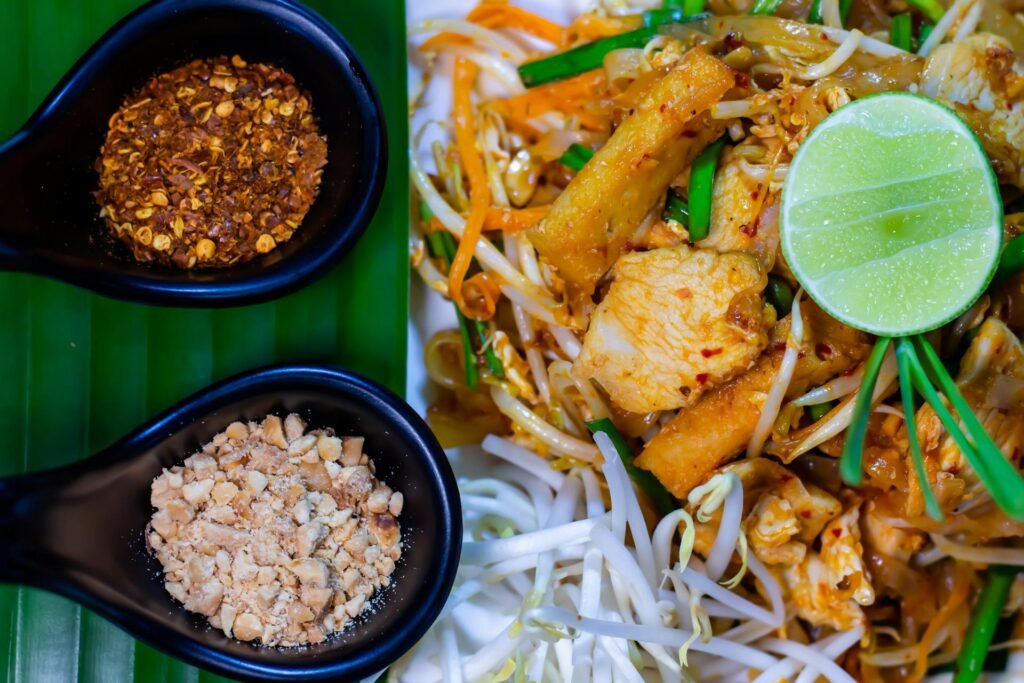
Mee Hokkien (Phuket’s most famous noodle dish) — thick yellow Hokkien noodles stir-fried with pork, squid, bean sprouts, and a rich dark sauce. The Hokkien-immigrant signature dish. Lo Bah — five-spice braised pork belly served with Chinese herbal broth. Khanom Jeen Phuket — fresh rice noodles with various spicy southern Thai curries. Roti — flaky Malay-Muslim flatbread, sweet (banana-condensed milk) or savory (curry dip).
Gaeng Som (sour orange curry) — distinctive southern Thai sour-spicy curry with fresh fish or prawns; the orange color comes from turmeric and the sourness from tamarind, not tomatoes. Surprisingly fiery.
Seafood and Coastal Cuisine
Fresh seafood dominates Phuket’s beachfront and harbour-side dining — the Andaman Sea waters yield grilled sea bass, red snapper, prawns, blue crab, and rock lobster (kung mangkorn). Many establishments display the day’s catch on ice for diners to choose. Rawai and Chalong Bay areas have the best seafood-restaurant clusters with locally-sourced fish.
Street Food Culture
Phuket’s night markets are the budget-traveler’s heaven. Naka Weekend Market (Saturday/Sunday evenings, Phuket Town) — biggest selection, including hard-to-find southern Thai dishes; entry from Chao Fa West Road. Banzaan Market in Patong is more tourist-oriented. Lock Tien food court (Phuket Town) has been serving Hokkien specialties at 30–80 baht/dish since the 1950s. Try satay, som tam (papaya salad), moo ping (grilled pork skewers), and the ubiquitous coconut ice cream in fresh coconut shells.
Nightlife and Entertainment
Phuket nightlife is global infamy and local annoyance in equal measure. Bangla Road in Patong is the centerpiece — a 400-metre pedestrian-only strip from sundown that becomes a wall of bars, clubs, ladyboy cabarets (Simon Cabaret, Aphrodite Cabaret are the polished venues), and live-music venues. Illuzion and White Room are the major clubs. The strip has cleaned up considerably since the 2014 military coup brought stricter enforcement, but it’s still not for everyone.
Beach clubs along the western coast offer more refined evening alternatives — Catch Beach Club (Bang Tao), Café del Mar (Kamala), HQ Beach Lounge (Patong) for sunset cocktails and DJ sets. Cultural shows: Phuket FantaSea in Kamala mixes Vegas-style dinner-show with Thai cultural performance — pricey but family-friendly.
Phuket by District: The 16 ตำบล
Phuket is divided into 16 subdistricts. The map below shows their official OSM boundaries, colour-coded to match the table — a quick way to orient yourself before zooming in on individual sights.
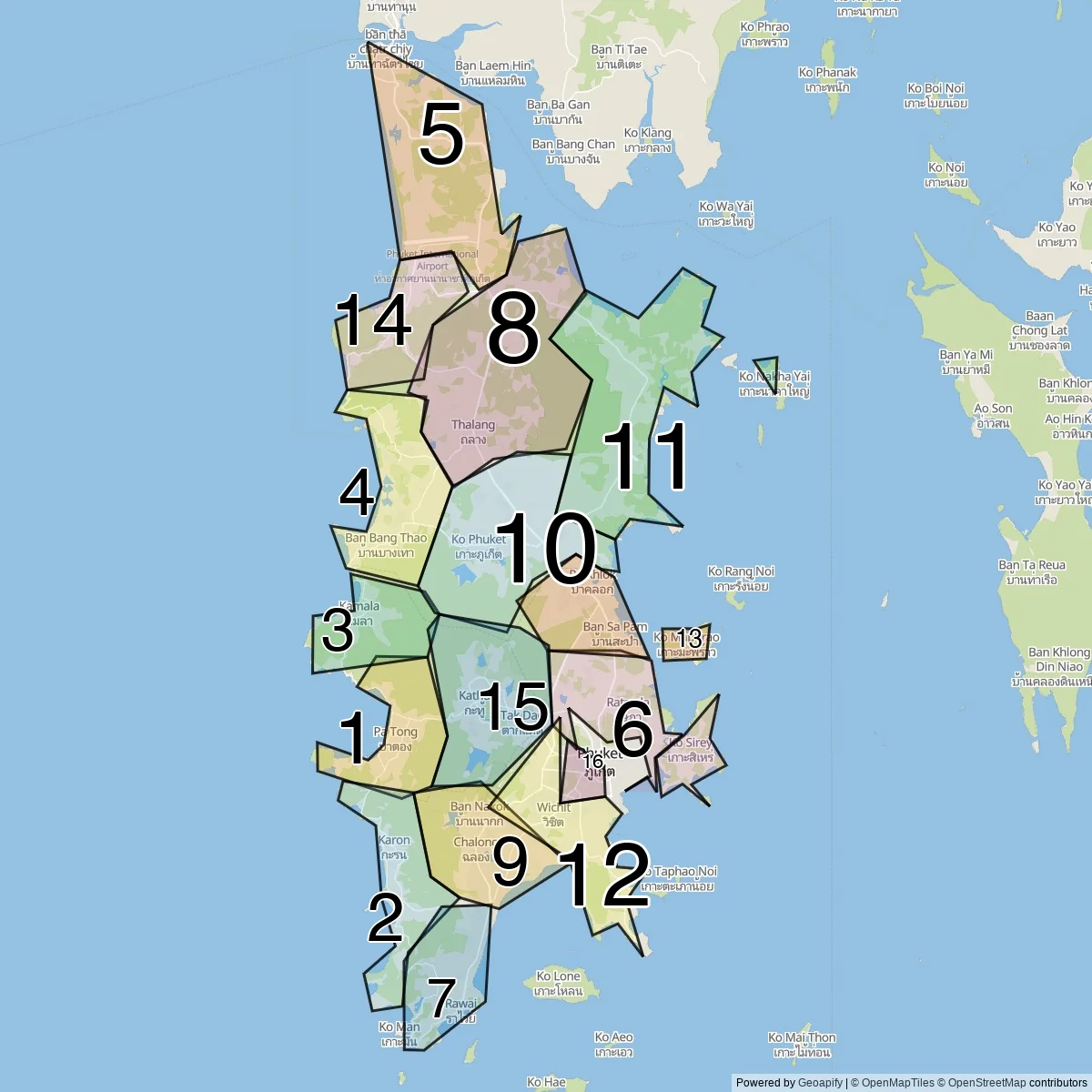
| # | ตำบล |
|---|---|
| 1 | ตำบลป่าตอง · Patong |
| 2 | ตำบลกะรน · Karon |
| 3 | ตำบลกมลา · Kamala |
| 4 | ตำบลเชิงทะเล · Choeng Thale |
| 5 | ตำบลไม้ขาว · Mai Khao |
| 6 | ตำบลรัษฎา · Ratsada |
| 7 | ตำบลราไวย์ · Rawai |
| 8 | ตำบลเทพกระษัตรี · Thep Krasatti |
| 9 | ตำบลฉลอง · Chalong |
| 10 | ตำบลศรีสุนทร · Si Sunthon |
| 11 | ตำบลป่าคลอก · Pa Khlok |
| 12 | ตำบลวิชิต · Wichit |
| 13 | ตำบลเกาะแก้ว · Ko Kaeo |
| 14 | ตำบลสาคู · Sakhu |
| 15 | ตำบลกะทู้ · Kathu |
| 16 | ตำบลตลาดเหนือ · Talat Nuea |
Frequently Asked Questions About Visiting Phuket
Do I need a visa to visit Phuket?
Probably not for short stays. Citizens of around 65 countries — including the US, UK, EU member states, Canada, Australia, New Zealand, Japan, South Korea, Singapore, Malaysia, and Russia — enter Thailand visa-free for 60 days as of 2024 (the limit was extended from 30 days under the post-pandemic tourism-recovery rules). Other nationalities can apply for an e-Visa on Arrival (eVOA) online at thaievisa.go.th, the official portal. Beware: numerous fake third-party sites charge inflated fees — always use only the .go.th official site. Passport must have at least 6 months remaining validity. Long stays: Thailand’s new Destination Thailand Visa (DTV), launched 2024, allows up to 5-year multiple-entry stays for digital nomads, retirees, and Thai-cultural-activity participants — application via Thai embassies abroad.
Is Phuket safe for tourists?
Phuket is generally safe for tourists exercising standard caution. The US State Department rates Thailand at “exercise normal precautions.” Real risks: jet-ski scams (rental operators claim damage and demand inflated repair fees) on Patong, Karon, and Kata beaches; tuk-tuk and taxi scams with inflated fares and the “your hotel is closed/full” diversion; motorbike accidents (Phuket has Thailand’s worst per-capita rate); jellyfish in beach waters during certain months (lifeguards post warnings). The red-flag warning system on western beaches is real — when red flags are flying during monsoon season, the rip currents are genuinely dangerous and people drown. Drug-related arrests: Thailand’s drug laws are severe and enforcement is real; do not trust anyone offering “party drugs” — entrapment scams are common. Walking around at night in tourist areas is generally fine, but avoid empty side streets in Patong after 2 am.
How many days do I need in Phuket?
Five to seven days is the practical minimum to do Phuket plus the surrounding islands without rushing. A solid 6-day plan: Day 1 — beach day at your home base (Patong/Karon/Kata) + Bangla Road evening; Day 2 — Phi Phi Islands day trip (Maya Bay + Bamboo Island + snorkeling); Day 3 — Phang Nga Bay day trip (James Bond Island + sea kayaking); Day 4 — Phuket Town heritage walk + Big Buddha + Wat Chalong + sunset at Promthep Cape; Day 5 — beach day or spa/diving; Day 6 — Similar Islands day trip (Nov–Apr only, otherwise Coral Island or Racha Yai). Add days for diving certification, longer Khao Lak overnight, or a Krabi/Railay extension.
What’s the best area to stay in Phuket?
The choice depends entirely on what you want from the trip. Patong Beach — the entertainment hub for nightlife seekers and first-time visitors who want the most variety in walking distance; loud, busy, lots of food and drink options; mid-range to luxury hotels at $50–250/night. Kata or Karon Beach — the family-friendly choice; calmer beaches, gentler waves, more restful evenings; 10 minutes south of Patong. Bang Tao or Surin (north) — luxury all-inclusive territory; Banyan Tree, Angsana, Anantara, JW Marriott; quieter, more upscale, more taxi-dependent for nightlife. Phuket Town — the cultural choice; boutique heritage hotels in Sino-Portuguese mansions for $30–80/night, walking distance to night markets and street food, beach access via 20-minute ride. Skip: anywhere on the eastern coast unless you have specific reasons (the swimming is poor and tourist infrastructure thinner).
How much does it cost to visit Phuket’s major sights?
The island sights themselves are inexpensive; the day-trip boats are the budget killer. Big Buddha: free entry, donations appreciated. Wat Chalong: free. Phuket Town heritage walk: free. Old Town museums: 100–200 baht each. Promthep Cape (sunset viewpoint): free. Phi Phi Islands speedboat day trip: 1,500–2,500 baht (~$45–75). Phang Nga Bay + James Bond Island: 1,800–3,000 baht. Similan Islands day trip (Nov–Apr only): 3,500–5,000 baht. Maya Bay entry permit: 400 baht national park fee. Snorkel gear rental: 200–400 baht; discover-scuba-diving day: ~3,500 baht with PADI 5-star operators. Spa massage: 350–500 baht/hour at standard shops; 1,500–4,000 baht/hour at resort spas. Phuket FantaSea show: 1,800 baht with dinner; Simon Cabaret: 800–1,000 baht.
Should I drink the tap water in Phuket?
No — even though municipal water is treated, plumbing inconsistency means most travelers get sick from it. Always use bottled water (10–20 baht per liter at 7-Eleven, FamilyMart, and Tesco Lotus stores) for drinking and brushing teeth. Major hotel restaurants and reputable establishments use filtered water and ice — generally safe. Reusable filter bottles (LifeStraw, Grayl) work well in Thailand and reduce plastic waste. The CDC traveler health page recommends bottled or filtered water for Thailand. Tap water is fine for showering and brushing teeth (most travelers brush with tap water without issues, but cautious travelers stick to bottled).
What about the monsoon season — is it really that bad?
It depends what you want. The southwest monsoon runs May through October with peak rainfall September–October. The reality: most days are not washed out — typical pattern is 1–3 hours of heavy afternoon rain, with sunshine before and after. The genuine downsides: rough seas on the western coast (Patong, Karon, Kata) with frequent red-flag swimming bans; restricted day-boat operations to Phi Phi and Phang Nga (some operators run, some don’t, depending on the day’s swell); the Similan Islands National Park is fully closed; jellyfish and sea urchins more common. The upsides: 30–50% lower accommodation prices; lush green landscapes; thinner crowds; better surfing on Kata and Kalim. Bottom line: November through April is genuinely better; May–June and late October are acceptable shoulder months with significant savings; July–September is for the budget-conscious or genuinely flexible travelers.
Is tipping expected in Phuket?
Yes — moderate tipping is standard in Phuket because of the heavy tourism economy, more than in non-tourist Thailand. Restaurants: 10% in cash for sit-down service if no service charge (“service charge”) is added; round up at casual places. Many resort restaurants automatically add 10% service + 7% VAT — check the bill carefully. Beach massage: 50–100 baht tip on top of the 300–500 baht price. Spa massage at upscale resorts: 10–20%. Taxis (Grab/Bolt): round up to nearest 10 baht; not strictly required. Hotel porters: 50–100 baht per bag at upscale hotels. Hotel housekeeping: 50–100 baht per night left at end of stay. Tour guides on day boats: 200–500 baht per person at end of tour. Spa, salon: 10% if pleased. Tuk-tuks: agreed fare only; no tip expected. Tip in Thai baht; small notes appreciated.
Day Trips and Island Hopping
Phuket’s true value as a destination is as a base for the Andaman Sea — three to five days at the resort, the rest spent on day-boats.
Phi Phi Islands
The Phi Phi archipelago lies 45 minutes by speedboat east of Phuket. Phi Phi Don (the inhabited island) hosts the Tonsai Village beach hub; Phi Phi Leh (uninhabited national park) is where Maya Bay sits. After environmental closures from 2018–2022, Maya Bay reopened with strict daily visitor caps and no swimming allowed in the bay itself (only at the back beach). Day-trip operators like Phi Phi Cruiser and Sea Eagle handle the logistics; book in advance during high season.
Phang Nga Bay
The dramatic karst seascape north of Phuket — James Bond Island (Khao Phing Kan), the towering limestone pinnacles, sea caves, and the Muslim stilted fishing village of Koh Panyee. Day trips typically combine motor-boat travel between islands with kayaking through the hidden lagoons (hongs). Visit the bay early — by 11 am the day-tour boats arrive in force.
Similan Islands
The Similan Islands National Park (Thai: Mu Ko Similan) is open November–April only; closed during the southwest monsoon. World-class diving with whale sharks, manta rays, and pristine coral. Day trips are exhausting (3-hour boat ride each way); 2-day, 3-day liveaboard trips are the diver’s preferred mode.
Phuket continues to evolve: less the wild-west island of the 1990s, more the polished international beach destination of the 2020s. The combination of natural beauty, cultural richness, and accessibility ensures that every visitor — beach-loungers, divers, foodies, party-seekers — can find their version of the island. Plan three days for the resort and beach; add three more for the surrounding marine parks; bring sunscreen and respect for the local Buddhism that runs quietly underneath all the tourism.
AFRIKA
Cairo Hurghada Johannesburg Marrakech
ASIA
Abu Dhabi Agra Antalya Bangkok Batam Beijing Bengaluru Cebu City Chiang Mai Chiba Chennai Da Nang Dammam Delhi Denpasar Dubai Fukuoka Guangzhou Guilin Ha Long Hanoi Ho Chi Minh City Jakarta Jaipur Johor Bahru Kolkata Krabi Kuala Lumpur Kyoto Macau Mecca Medina Mugla Mumbai Osaka Pattaya Penang Phuket Riyadh Seoul Shanghai Shenzhen Singapore Taipei Tokyo Zhuhai
EUROPE
Amsterdam Athens Barcelona Berlin Brussels Budapest Copenhagen Dublin Florence Frankfurt am Main Heraklion Krakow Lisbon London Madrid Milan Munich Nice Paris Porto Prague Rhodes Rome Stockholm Venice Vienna Warsaw
NORTH AMERICA
Cancun Las Vegas Los Angeles Miami New York City Orlando San Francisco Toronto Vancouver
SOUTH AMERICA
Buenos Aires Lima Rio De Janeiro
OCEANIA
Auckland Honolulu Melbourne Sydney