
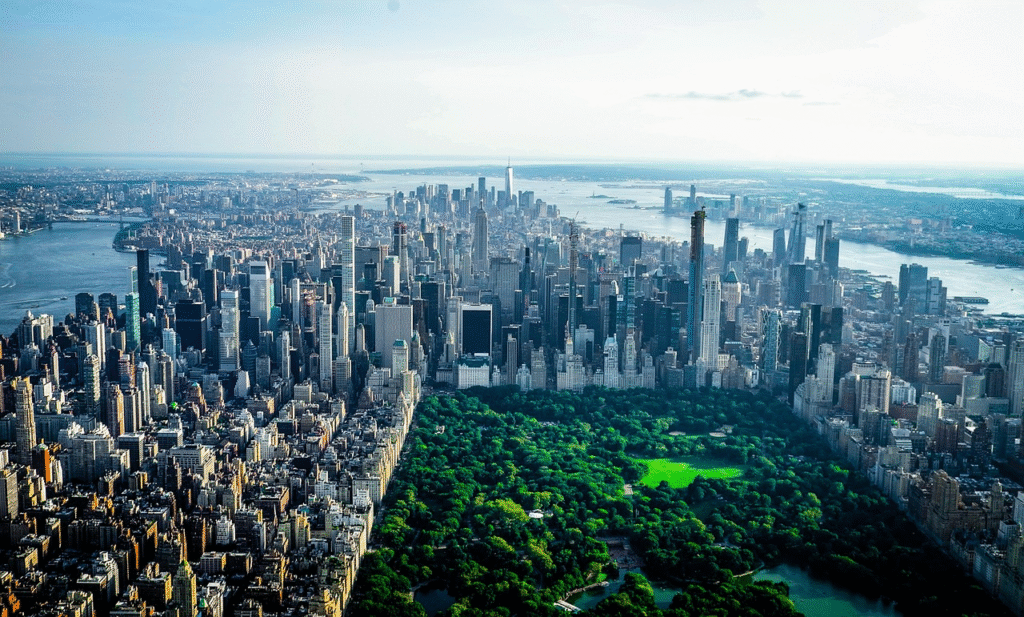
Photo credit: Leonhard_Niederwimmer, pixabay
New York City stands as one of the world’s most iconic urban destinations, where towering skyscrapers meet diverse neighborhoods and centuries of history unfold on every street corner. Known as the “Big Apple,” “The City That Never Sleeps,” and “Gotham,” this metropolis of 8.8 million residents serves as America’s cultural, financial, and artistic capital. From the bright lights of Times Square to the tranquil paths of Central Park, NYC offers an unparalleled urban experience that attracts over 60 million visitors annually.
New York City at a Glance: Essential Facts for Travelers
| Location | New York State, United States |
| Coordinates | 40°43′N, 74°0′W |
| Population | 8.8 million (city), 20.1 million (metro area) |
| Area | 1,214 km² (469 mi²) total, 789 km² (305 mi²) land |
| Elevation | 10 meters (33 feet) above sea level |
| Time Zone | Eastern Time (UTC−5/−4) |
| Area Codes | 212, 646 (Manhattan); 718, 917 (other boroughs) |
| ZIP Codes | 10001-10314 (varies by borough) |
| Known For | Finance, arts, culture, Broadway, Statue of Liberty |
| Current Mayor | Eric Adams (since 2022) |
| Official Website | www.nyc.gov |
| Founded | 1624 (as New Amsterdam) |
| Boroughs | Manhattan, Brooklyn, Queens, The Bronx, Staten Island |
Upcoming Events in New York City
| Date | Title | Details |
|---|---|---|
| 2026-09-10 to 2026-09-20 | Feast of San Gennaro | For eleven days each September, Mulberry Street in Little Italy becomes an open-air celebration of Italian-American heritage during the Feast of San Gennaro. Stalls sell sausage and peppers, zeppole, cannoli and countless other treats, while a religious procession honours the patron saint of Naples and live music fills the evenings. The cannoli-eating contest and the grand procession are highlights. Admission is free; you pay only for food and games. It is one of New York’s most atmospheric and long-running street festivals, dating back to 1926. [Source] |
| 2026-09-21 to 2026-10-31 | Metropolitan Opera Fall Season | The Metropolitan Opera opens its grand new season each autumn at Lincoln Center, presenting lavish productions of beloved classics and contemporary works in one of the world’s largest opera houses. Star singers, a renowned orchestra and spectacular staging make for unforgettable evenings beneath the auditorium’s famous starburst chandeliers. Tickets span a wide range, from budget upper-balcony seats to premium orchestra places, and same-day rush tickets offer a bargain. It is a cornerstone of New York’s cultural life and a bucket-list experience for many visitors to the city. [Source] |
| 2026-09-25 to 2026-10-11 | New York Film Festival | Presented by Film at Lincoln Center, the New York Film Festival is one of the most prestigious dates on the cinema calendar, showcasing acclaimed new work from around the world across several weeks each autumn. The programme features major premieres, restorations and talks with directors at venues including Alice Tully Hall on the Upper West Side. It is a magnet for film lovers and often a launchpad for awards-season contenders. Tickets vary by screening and sell quickly for red-carpet galas. Advance booking is strongly recommended. [Source] |
| 2026-10-08 to 2026-10-11 | New York Comic Con | New York Comic Con fills the Javits Center on the West Side each October with one of the largest pop-culture gatherings in the country. Fans in elaborate costumes pack the halls for panels, celebrity appearances, comics, gaming, anime and exclusive merchandise, while studios and publishers reveal what is coming next. The show floor is a spectacle in itself, buzzing with artists and cosplayers. Tickets are sold by day and often sell out well in advance, so plan ahead. It is a must for anyone into comics, film and fandom. [Source] |
| 2026-10-15 to 2026-10-18 | New York City Wine and Food Festival | The New York City Wine and Food Festival brings together celebrity chefs, restaurateurs and food lovers for a long weekend of tastings, dinners, demonstrations and parties across Manhattan each October. Signature events include grand tasting tents on the Hudson, late-night bites and intimate seminars, with proceeds supporting hunger-relief charities. It is a highlight for anyone passionate about food and drink, though popular events are ticketed and can be pricey. Book early, as marquee dinners with big-name chefs frequently sell out ahead of the festival. [Source] |
| 2026-10-31 | Village Halloween Parade | On Halloween night, Sixth Avenue in Greenwich Village erupts into one of the world’s most exuberant public spectacles as the Village Halloween Parade winds uptown. Tens of thousands of costumed marchers, giant puppets, bands and dancers take part, and anyone in costume can join in rather than just watch. Now more than fifty years old, it is a beloved, anarchic celebration of creativity and community. Watching from the sidewalks is free; arrive early for a good spot along the route. It steps off in the evening and runs for hours. [Source] |
City News in New York City – last 14 days
| Date | Category | Headline | Details |
|---|---|---|---|
| 2026-09-14 | Public safety | Legionella found in Yankee Stadium cooling tower amid Bronx cluster | A Legionnaires’ disease outbreak in the Bronx has killed one person and infected nine, and city health officials say a cooling tower at Yankee Stadium is among ten South Bronx installations, including one at Lincoln Hospital, ordered disinfected after testing positive for Legionella bacteria. A Yankees spokesman said the stadium’s towers were cleaned on Sunday, and the city has not asked for games to be postponed. Officials stress the disease spreads through mist, not person to person. [Source] |
| 2026-09-14 | Local government | Mamdani still without federal security clearance after 8 months | Mayor Zohran Mamdani is still waiting on a federal security clearance eight months into his term, despite saying in January that his application was under way. Former officials, including ex-Mayor Bill de Blasio, called the clearance crucially important for a mayor who must receive classified briefings on threats to the city. The delay has fed questions about the relationship between City Hall and federal agencies, and about how sensitive information reaches the administration in the meantime. [Source] |
| 2026-09-14 | Local affairs | Energy rebate checks of up to $200 head to New York homes | Governor Kathy Hochul announced the state will begin mailing energy rebate checks of up to 200 dollars to 8.2 million households starting 21 September, with payments continuing through December. The checks are part of the one-billion-dollar Protecting Our Wallets Energy Rebate program included in the 2026-27 state budget, aimed at offsetting rising utility bills. Millions of New York City households are among the recipients, with no application required for eligible ratepayers. [Source] |
| 2026-09-14 | Public safety | Nearly half of NYPD’s 98,000 quality-of-life tickets tossed | As the NYPD cracked down on quality-of-life violations, nearly half of the roughly 98,000 civil tickets its officers wrote were dismissed, according to new reporting. Unlike other city ticket-writing agencies, the department still writes all of its civil summonses by hand, contributing to errors that get cases thrown out. The findings raise questions about the effectiveness of the enforcement push and the administrative burden it places on officers, hearing officers and the New Yorkers ticketed. [Source] |
| 2026-09-14 | Business | Business leaders join Mamdani in push on affordable child care | A new group of business leaders has found common cause with Mayor Zohran Mamdani on making child care more affordable, agreeing the cost burden is driving families out of the city and keeping parents out of the workforce. The alliance is notable given earlier tensions between the mayor and parts of the corporate world, though funding the solution through city taxes remains a sticking point. Both sides see child care as central to New York’s economic competitiveness. [Source] |
| 2026-09-14 | Local affairs | COVID hospitalizations climbing again across the five boroughs | COVID-19 hospitalizations are rising in New York City, with more than 500 admissions recorded across the five boroughs in the week ending 5 September. Health officials are urging residents, particularly older adults and those with underlying conditions, to stay current on vaccines, test when symptomatic and consider masks in crowded indoor settings as the fall respiratory season begins. Pharmacies across the city are advertising updated shots alongside flu vaccination as demand ticks up. [Source] |
| 2026-09-13 | Culture | Whitney reframes Roy Lichtenstein for a new generation | The Whitney Museum of American Art has opened a major Roy Lichtenstein survey that looks well beyond the Pop label, with artist Alex Da Corte and curator Meg Onli bringing fresh eyes to work bridging high art and mass culture. The show tests whether the comic-strip dots and appropriated imagery that made Lichtenstein famous still resonate with young audiences. Critics call the rehang a new and improved reading of an artist often reduced to his most familiar canvases. [Source] |
| 2026-09-13 | Culture | Martha Graham Dance Company moves into Times Square landmark | The Martha Graham Dance Company, which turned 100 this year, is moving into a dazzling new home in a Times Square landmark building, taking over 21,000 square feet for studios and performance space. The relocation gives the storied modern dance troupe a prominent Midtown base and anchors another cultural institution in the theater district. Company leaders say the space will support training, rehearsals and public programming as the company begins its second century. [Source] |
| 2026-09-13 | Public transport | Two killed by train at Spring Street subway station | A man and a woman were struck and killed by a southbound 4 train at Manhattan’s Spring Street station early Sunday, after police sources said the pair were spotted sitting on the roadbed at around 3.14am. The train operator attempted to brake as the train entered the station but could not stop in time. Authorities are still investigating the circumstances, and the deaths have renewed attention on track safety and intrusion incidents across the subway system. [Source] |
| 2026-09-13 | Sports | Schlittler shines as Yankees blank Mets to take Subway Series | Cam Schlittler was superb once again as the Yankees beat the Mets 2-0 at Yankee Stadium to clinch the rubber game of the weekend’s Subway Series, going six strong innings in a pitcher’s duel with Christian Scott. The right-hander’s late-season run is strengthening his case in Cy Young and MVP conversations as the Bronx club pushes toward the postseason. The Mets, meanwhile, promoted top prospect Jefferson Rojas to Triple-A Syracuse as their young core develops. [Source] |
| 2026-09-13 | Education | Council members renew push on specialized high school diversity | City Council members are making a new push to improve diversity at New York City’s specialized high schools, after only three Black students were admitted to the current freshman class at Stuyvesant High School. The members argue that reforms to admissions outreach and screening could be implemented immediately without state legislation. The debate over the single-test admissions system has run for years, pitting concerns about representation against defenders of the exam-based process. [Source] |
| 2026-09-12 | Public transport | 34th Street busway plan stuck months after revival | Months after Mayor Zohran Mamdani said the city would proceed with a redesign of 34th Street that had been halted by the Trump administration, the crosstown busway plan is no closer to completion. The project would prioritize buses along one of Manhattan’s most congested corridors, promising faster trips for tens of thousands of daily riders. Transit advocates are pressing City Hall to break the gridlock between local ambitions and federal roadblocks before another riding season passes. [Source] |
New York City Events & City News Archive
Sources: Feast of San Gennaro, Metropolitan Opera, Film at Lincoln Center, New York Comic Con, NYC Wine and Food Festival, Village Halloween Parade, New York Times, Gothamist
Weather Forecast for the Next 14 Days in New York City
| Date | Weather | Max °F | Min °F | Rain mm |
|---|---|---|---|---|
| 2026-09-14 | ☁️ | 73.6 °F | 59.4 °F | 0.0 mm |
| 2026-09-15 | ☀️ | 72.3 °F | 52.1 °F | 0.0 mm |
| 2026-09-16 | ☁️ | 77.9 °F | 61.5 °F | 0.0 mm |
| 2026-09-17 | ☁️ | 79.4 °F | 68.9 °F | 0.0 mm |
| 2026-09-18 | 🌧️ | 85.1 °F | 71.5 °F | 0.7 mm |
| 2026-09-19 | ☁️ | 76.0 °F | 69.3 °F | 0.0 mm |
| 2026-09-20 | 🌧️ | 77.6 °F | 70.2 °F | 3.6 mm |
| 2026-09-21 | 🌧️ | 69.7 °F | 66.6 °F | 0.3 mm |
| 2026-09-22 | ☁️ | 68.8 °F | 65.6 °F | 0.0 mm |
| 2026-09-23 | 🌧️ | 69.8 °F | 61.7 °F | 27.6 mm |
| 2026-09-24 | 🌧️ | 71.1 °F | 70.2 °F | 13.5 mm |
| 2026-09-25 | 🌧️ | 76.1 °F | 68.9 °F | 11.1 mm |
| 2026-09-26 | 🌧️ | 72.9 °F | 69.8 °F | 19.8 mm |
| 2026-09-27 | ☁️ | 75.3 °F | 64.4 °F | 0.0 mm |
New York City’s History
New York is the world city by definition. Eight and a half million people, 200 languages spoken, the financial capital of the planet, the cultural touchstone for film and music and literature for a century — and a city that has been continuously reinventing itself for four hundred years. Every era has been the most-photographed of its time; every neighborhood is at least third or fourth iteration; every story has been told before, often by people more famous than you.
Indigenous Roots and Early Settlement
The land that became New York City was home to the Lenape (Lenni Lenape) people, part of the Algonquian language family. The Lenape lived across what is now Manhattan, Staten Island, the Bronx, and the Hudson Valley, with seasonal villages and trade networks reaching the Great Lakes. Their place names persist: Manhattan (“hilly island”), Brooklyn (Dutch corruption of Lenape), Hoboken, Canarsie.
European settlement began in 1609 with Henry Hudson’s arrival. In 1624, Dutch trader Peter Minuit famously “purchased” Manhattan from local Lenape representatives for goods worth 60 guilders (roughly $1,200 in modern terms — though the Lenape understood the transaction differently than the Dutch). The settlement of New Amsterdam was founded the same year. The defensive wooden wall built in 1652 along the northern boundary is still commemorated by the street it stood on: Wall Street.
British Rule and Colonial Development
British forces captured the colony in 1664 and renamed it New York in honor of the Duke of York (the future King James II). The Dutch briefly reclaimed it in 1673 during the Third Anglo-Dutch War, but the 1674 Treaty of Westminster permanently ceded the territory to England.
The 18th century brought rapid commercial growth — and the dark legacy of slavery. By 1703, 42% of New York households enslaved Africans, the highest concentration in the northern colonies; the city’s economy was deeply tied to slave labor and the trans-Atlantic slave trade. Cultural development continued alongside: King’s College (now Columbia University) was founded in 1754.
Revolutionary War and Early Republic
New York played a pivotal role in the American Revolution. The 1776 Battle of Long Island was the largest engagement of the war by troop count; British forces occupied the city until 1783. After independence, New York served as the first capital of the United States from 1789 to 1790; George Washington was inaugurated at Federal Hall on Wall Street. The Buttonwood Agreement of 1792, signed under a buttonwood tree at 68 Wall Street, founded the New York Stock Exchange.
19th Century Transformation
The 1811 Commissioners’ Plan imposed Manhattan’s iconic grid system on the still-mostly-rural island. The Erie Canal’s completion in 1825 transformed New York into the United States’ premier trading port — connecting the Great Lakes and Midwest agriculture to Atlantic shipping via the Hudson. Massive immigration waves followed: Irish (post-1846 famine), Germans (1848 revolution refugees), Eastern European Jews (1880s–1920s), Italians (1880s–1920s).
Central Park construction began 1858, the country’s first major landscaped urban park. The five formerly-independent boroughs (Manhattan, Brooklyn, Queens, the Bronx, Staten Island) were consolidated into Greater New York in 1898 — creating the modern five-borough city of 3.4 million people overnight.
20th Century Challenges and Triumphs
The early 1900s produced the architectural icons that still define the skyline: Flatiron Building (1902), Woolworth Building (1913), Chrysler Building (1930), Empire State Building (1931), Rockefeller Center (1939). The 1929 stock market crash and Great Depression hit New York hard. World War II brought industrial expansion and the post-war boom; the United Nations headquarters was sited in Manhattan in 1952.
Post-war suburbanization, “white flight,” and economic decline plagued NYC from the 1960s through 1980s. Crime rates peaked in 1990 with 2,245 murders that year. The 1977 blackout exposed urban infrastructure decay; the early-1990s fiscal crisis nearly bankrupted the city. But the same era birthed hip-hop in the Bronx (1973), the punk scene at CBGB, the Studio 54 disco era, and the SoHo art world.
Modern Renaissance and Resilience
The 1990s under Mayor Rudy Giuliani and continuing under Michael Bloomberg (2002–2013) saw dramatic urban renaissance — crime fell 77% from 1990 to 2007; tourism, finance, and technology drove explosive economic growth. The September 11, 2001 attacks destroyed the World Trade Center and killed 2,977 people. New York’s response defined the city for a generation. One World Trade Center opened in 2014 at a symbolic 1,776 feet. Hurricane Sandy (2012) flooded lower Manhattan and outer borough coasts; resilience infrastructure projects continue. The 2020 COVID pandemic devastated the city’s restaurant and entertainment economies; recovery has been complete in tourism but uneven in office occupancy. Current mayor Eric Adams (2022–) faces familiar New York challenges around housing, transit, and migration.
Geography, Climate & Best Time to Visit New York City
Geographic Setting
New York City sits at the mouth of the Hudson River where it meets the Atlantic Ocean, creating one of the world’s finest natural harbors. The city covers 1,214 km² across five boroughs: Manhattan (the dense central island), Brooklyn (the largest by population at 2.7 million), Queens (the most ethnically diverse borough by language), The Bronx (the only mainland borough), and Staten Island (the southern, most suburban borough connected by ferry).
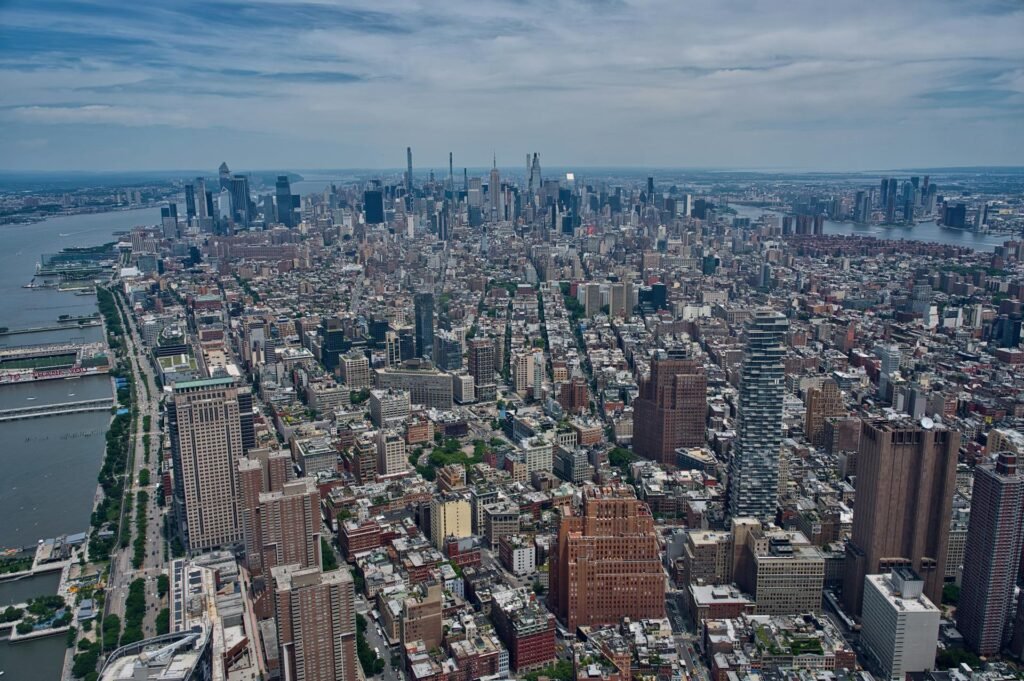
The geography was shaped by the Wisconsin Glacier 20,000 years ago, leaving the schist and gneiss bedrock that supports Manhattan’s skyscrapers (the bedrock is closest to the surface in Midtown and Lower Manhattan, which is why the tall buildings cluster there). Staten Island’s Todt Hill at 125 metres is the highest point.
Climate Patterns
NYC has a humid continental climate with four sharply distinct seasons. Summers are hot and humid (July–August daily highs 28–32°C, occasional heat waves into the high 30s). Winters are cold (January average around 0°C, occasional snow events with serious 30+ cm “Nor’easter” storms). Spring and fall are the most pleasant. The urban heat island effect keeps Manhattan ~3–5°C warmer than surrounding suburbs.
Seasonal Highlights and Best Times to Visit
| Season | Temperature Range | Highlights | What to Pack |
|---|---|---|---|
| Spring (Mar-May) | 9-20°C (48-68°F) | Cherry blossoms, mild weather, outdoor dining | Light layers, rain jacket |
| Summer (Jun-Aug) | 20-28°C (68-82°F) | Rooftop bars, outdoor concerts, long days | Light clothing, sunscreen |
| Fall (Sep-Nov) | 10-24°C (50-75°F) | Golden foliage, perfect walking weather | Layers, light jacket |
| Winter (Dec-Feb) | -1-6°C (30-43°F) | Holiday markets, ice skating, fewer crowds | Heavy coat, warm layers |
The optimal travel windows: April–early June and September–early November — temperate weather, less rain, good light, fewer crowds than peak summer. Late November through early January is magical for the Christmas markets, ice skating rinks, and Rockefeller Center tree, but expect cold. Avoid mid-July to mid-August for serious sightseeing — heat plus humidity makes outdoor walking uncomfortable.
New York City’s Districts & Neighborhoods
Manhattan: The Iconic Heart
Manhattan packs extraordinary diversity into 59 km². Midtown is the central tourist hub: Times Square, Broadway, Empire State Building, Rockefeller Center, the Theater District, the major museums on the eastern side. Upper East Side: Museum Mile (the Met, Guggenheim, Whitney’s old location), elegant brownstones, old money. Upper West Side: Central Park, Lincoln Center, Columbia University, the Beacon Theatre — slightly more relaxed than the East Side. Downtown: the Financial District (Wall Street, One World Trade Center, the 9/11 Memorial), SoHo (cast-iron architecture, designer boutiques), Greenwich Village (jazz history, Washington Square Park, NYU), East Village & Lower East Side (counterculture history, Jewish heritage, nightlife), Chelsea (galleries, the High Line), Tribeca (luxury lofts, fine dining).
Where to stay: Midtown for first-time visitors prioritizing convenience; SoHo or Greenwich Village for boutique hotels and atmosphere; Financial District for harbor views and weekend value (less business demand on weekends).
Brooklyn: Creative and Diverse
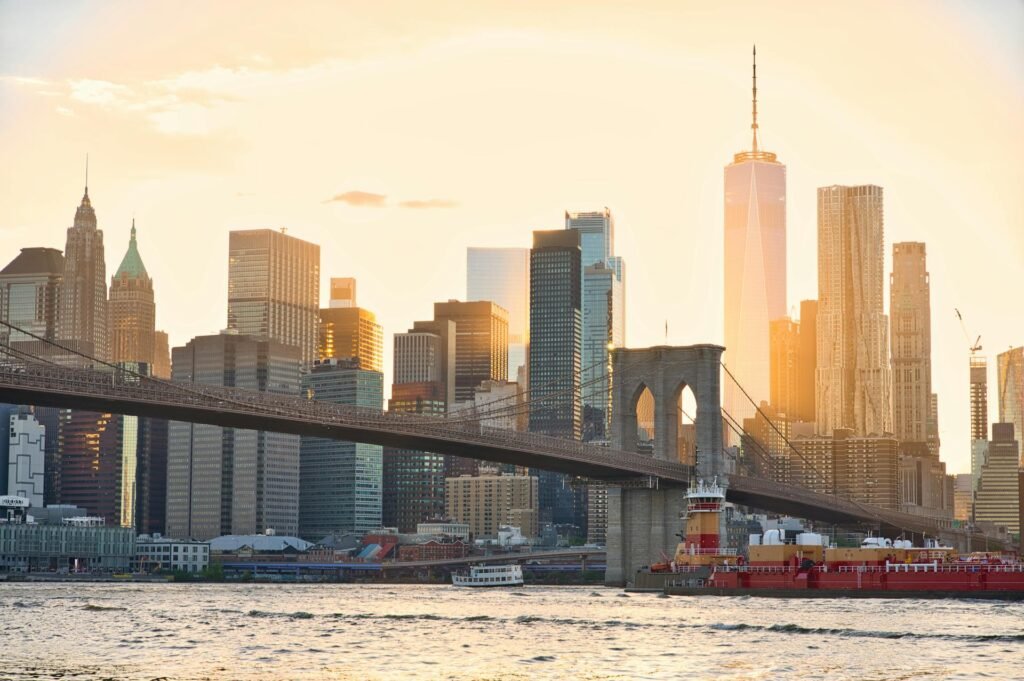
Brooklyn would be the third-largest US city if it were independent. Williamsburg: hipster-turned-yuppie waterfront, East River views, artisanal food. DUMBO: boutique luxury under the Brooklyn Bridge, the iconic photo spot. Park Slope: Victorian brownstones, families, Prospect Park. Brooklyn Heights: 19th-century streets, the Promenade with Manhattan skyline views. Bushwick: street art, dive bars, the new artist frontier. Coney Island: the historic boardwalk, Nathan’s hot dogs, Luna Park rides, beach.
Where to stay: Williamsburg or DUMBO for trendy hotels with skyline views; Park Slope for family-friendly options near Prospect Park.
Queens: The World’s Borough
Queens at 283 km² is the largest by area and the world’s most ethnically diverse urban county — over 138 languages spoken. Long Island City (LIC): modern high-rises, MoMA PS1, gallery scene. Astoria: historic Greek-American community, now a hipster food destination. Flushing: one of America’s largest Chinatowns, plus authentic Korean and Indian neighborhoods. Jackson Heights: Latin American, South Asian, and gay community heart — extraordinary food. Houses both JFK and LaGuardia airports.
Where to stay: Long Island City for modern hotels with Manhattan skyline views and easy subway access.
The Bronx: Culture and History
1.4 million residents. Home to Yankee Stadium (Bronx Bombers since 1923), the Bronx Zoo (the largest US urban zoo), the New York Botanical Garden, and the South Bronx — the birthplace of hip-hop at 1520 Sedgwick Avenue in 1973. Riverdale offers leafy suburban tranquility within city limits.
Staten Island: Suburban Serenity
Often called the “forgotten borough.” The free Staten Island Ferry from Whitehall Terminal to St. George provides 25 minutes of spectacular Statue of Liberty and Manhattan views — the cheapest scenic Manhattan tour ever. The borough itself is mostly suburban; the Snug Harbor Cultural Center and the Tibetan Museum are the unexpected gems.
Top Things to Do in New York City
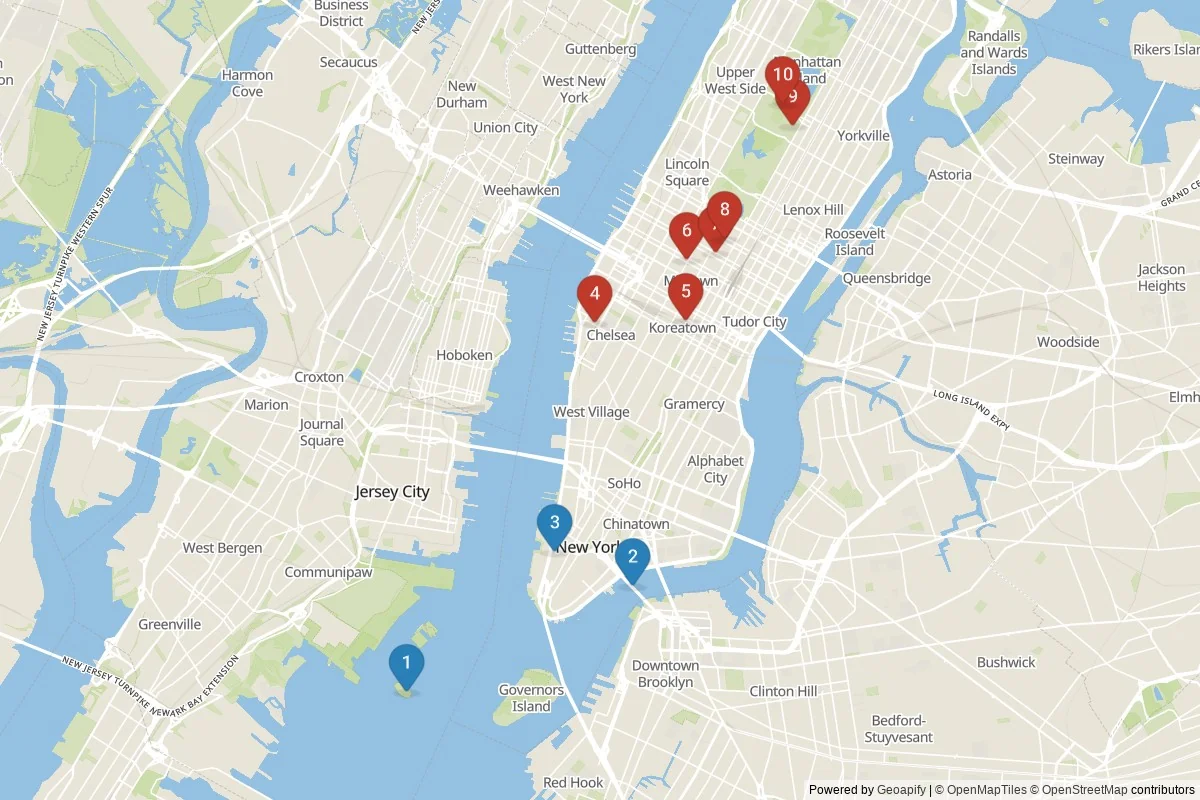
| # | Sight | Cluster | Type | Time | Entry | Best |
|---|---|---|---|---|---|---|
| 1 | Statue of Liberty & Ellis Is. | Central | Iconic monument | ½ day | $24.50 | Morning |
| 2 | Brooklyn Bridge | Central | Historic bridge | ~1 hr | Free | Sunset |
| 3 | 9/11 Memorial & Museum | Central | Memorial | ~2 hrs | $33 | Morning |
| 4 | The High Line | Outer | Elevated park | ~1.5 hrs | Free | Afternoon |
| 5 | Empire State Building | Outer | Iconic skyscraper | ~1.5 hrs | $44 deck | Sunset |
| 6 | Times Square | Outer | Iconic square | ~1 hr | Free | Night |
| 7 | Top of the Rock | Outer | Observation deck | ~1.5 hrs | $40 | Sunset |
| 8 | MoMA | Outer | Art museum | ~2.5 hrs | $30 | Morning |
| 9 | Metropolitan Museum (MET) | Outer | Art museum | ~3 hrs | $30 | Morning |
| 10 | Central Park | Outer | Urban park | ~2 hrs | Free | Afternoon |
Iconic Landmarks and Observation Decks
Statue of Liberty & Ellis Island — ferry from Battery Park (Statue Cruises). The Statue of Liberty (1886) was France’s gift to the United States; the Crown access requires advance booking 4–6 months ahead. Ellis Island processed 12 million immigrants between 1892 and 1954; the museum is genuinely moving. Tickets ~$24.50 with both islands.
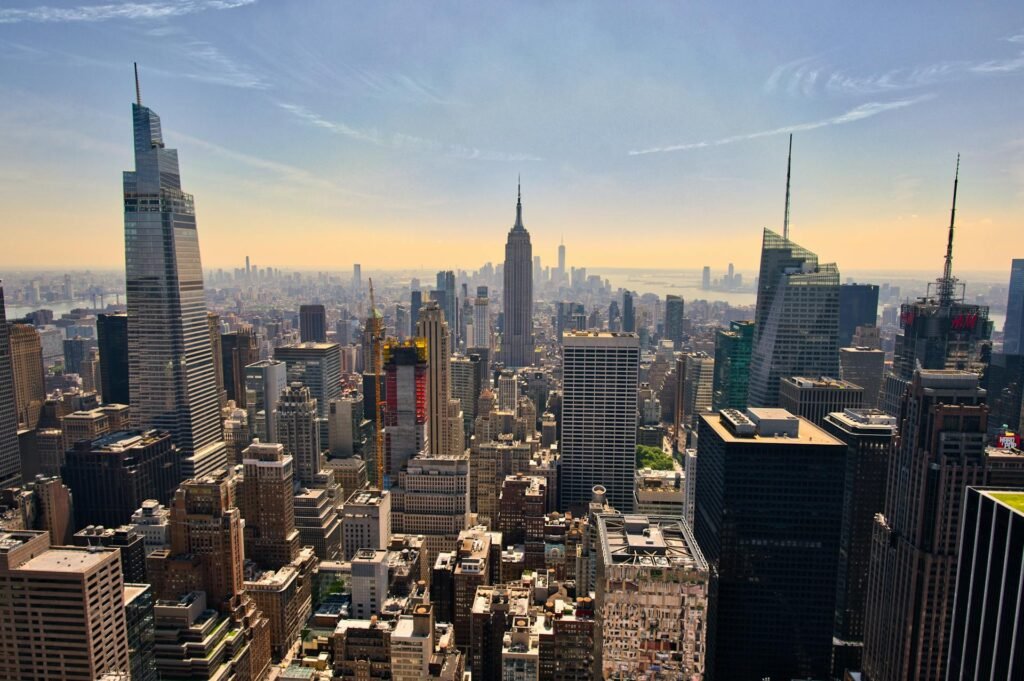
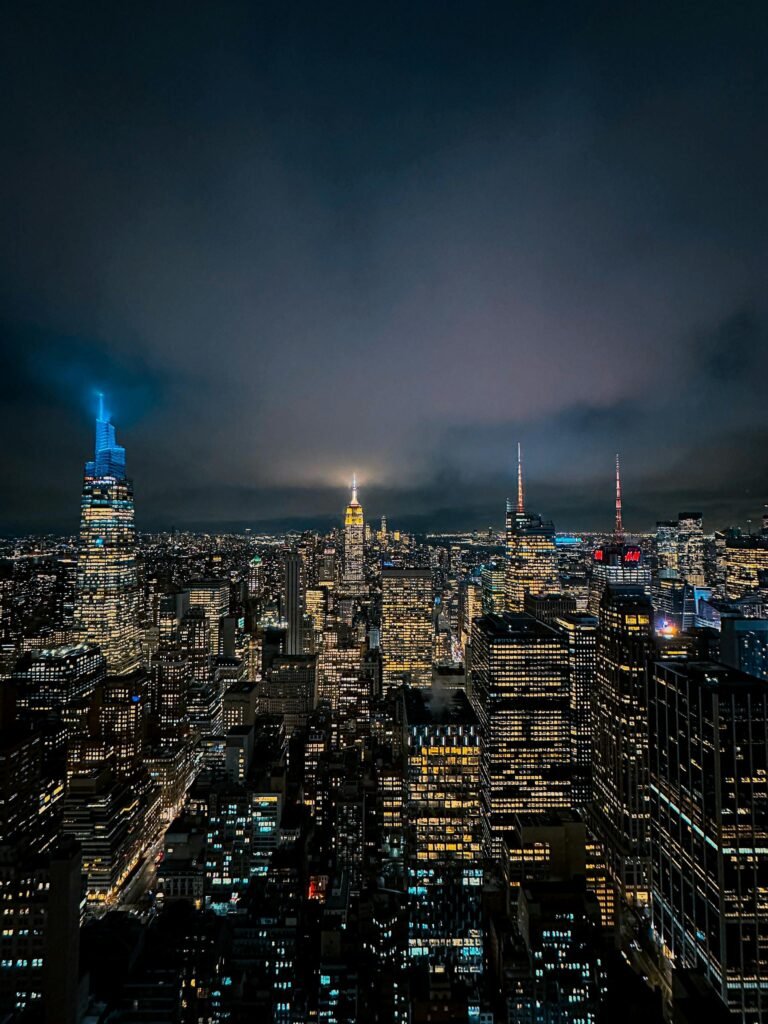
Empire State Building (102nd floor observatory): the classic NYC view, since 1931. Top of the Rock at Rockefeller Center: the better view of the Empire State Building (you’re actually photographing the iconic skyscraper). One World Observatory at 1WTC: the highest observation deck in the Western Hemisphere. The Edge at Hudson Yards: the highest outdoor observation deck. Summit One Vanderbilt: the newest, most photogenic, mirror-room-and-glass-ledge experience above Grand Central. Tickets $36–58 each.
Parks and Green Spaces
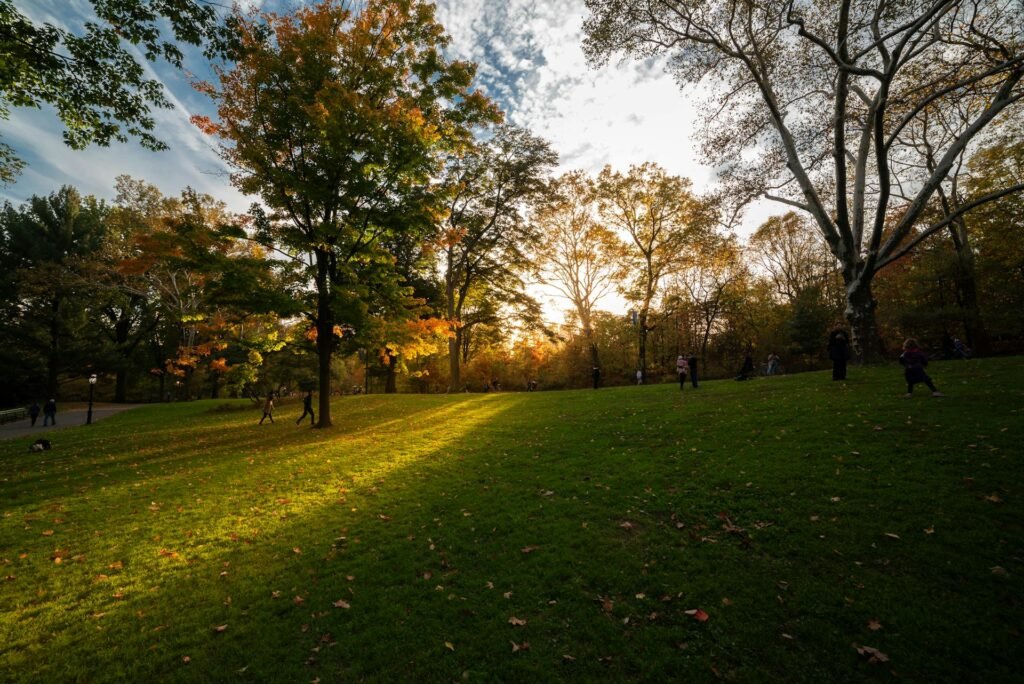
Central Park at 843 acres remains Manhattan’s defining green space. The Mall and Bethesda Terrace, Belvedere Castle, Strawberry Fields (the John Lennon memorial), the rowboat pond, and the Conservatory Garden are the highlights. Free Shakespeare in the Park performances at the Delacorte Theater run summer evenings.
The High Line — a 2.4 km elevated park built on a disused freight railway, with art installations and Hudson views — is one of the great urban-design success stories of the 21st century. Free entry. Brooklyn Bridge Park offers waterfront views of the Manhattan skyline; Prospect Park in Brooklyn (designed by the same Olmsted-Vaux team as Central Park) is the local-favorite alternative.
Museums and Cultural Attractions
NYC has 200+ museums. The headline trio: The Metropolitan Museum of Art (“the Met”) — 5,000 years of art across 2 million objects, suggested admission $30 for non-NY residents. Museum of Modern Art (MoMA) — the canonical 20th-century art collection plus changing exhibitions, $30. Solomon R. Guggenheim Museum — Frank Lloyd Wright’s spiraling 1959 building, $30.
The American Museum of Natural History (the dinosaur fossils, the Hayden Planetarium, the blue whale) is the family favorite. The 9/11 Memorial & Museum is essential and emotionally heavy. The Whitney Museum of American Art in the Meatpacking District anchors the High Line. The Tenement Museum on the Lower East Side recreates immigrant family apartments. The Brooklyn Museum, Frick Collection, and Cooper Hewitt round out the second tier.
Broadway and Entertainment
Broadway — 41 theatres in the Theater District around Times Square. Long-running megahits (The Lion King, Wicked, Hamilton, Chicago) and rotating new productions. Tickets via telecharge.com and ticketmaster.com; same-day discounted tickets via TKTS booth at Times Square (typically 20–50% off).
Lincoln Center — the Metropolitan Opera, New York Philharmonic, New York City Ballet, Jazz at Lincoln Center. Carnegie Hall — the legendary classical concert hall. Madison Square Garden — the largest indoor arena (Knicks, Rangers, major concerts). Off-Broadway and indie venues throughout the city.
Neighborhoods to Explore
Beyond the headline sights, the city’s neighborhoods are themselves the attraction. Greenwich Village for jazz clubs and Washington Square. SoHo for cast-iron buildings and shopping. Chinatown and Little Italy for food. DUMBO and Brooklyn Heights for the bridge views. Williamsburg for the hipster food halls. Harlem for jazz heritage (Apollo Theater, Cotton Club legacy) and soul food. Astoria for Greek and Egyptian and Brazilian food.
Markets and Shopping
Chelsea Market in a converted Nabisco factory — gourmet vendors and shops. Smorgasburg in Williamsburg (weekends, April–October) — innovative food vendors. Union Square Greenmarket on Mondays, Wednesdays, Fridays, and Saturdays. Brooklyn Flea markets in DUMBO and Fort Greene for vintage finds.
How to Get to New York City
By Air
Three major airports serve the NYC metro area, handling 130+ million passengers annually combined:
John F. Kennedy International (JFK) in Queens — the primary international gateway with 90+ airlines. AirTrain to Jamaica or Howard Beach connects to subway/LIRR; taxi flat rate to Manhattan $70 + tolls + tip; ride-shares; LIRR Express to Penn Station via Jamaica.
LaGuardia Airport (LGA) in Queens — primarily domestic, closest to Manhattan (15–30 min by taxi). Recently rebuilt; the new Terminal B was widely acclaimed. No direct subway; LaGuardia Link bus to subway stations; ride-share or taxi.
Newark Liberty International (EWR) in New Jersey — international and domestic. AirTrain connects to NJ Transit and Amtrak at Newark Airport Station; 30 minutes to Penn Station Manhattan. Ride-shares face additional New Jersey-NY toll surcharges.
By Train
Penn Station (in Midtown West) — Amtrak’s Northeast Corridor hub. The premium Acela Express reaches Boston in 3h 40min, Washington DC in 3h. The new Moynihan Train Hall (opened 2021) provides much-needed terminal expansion. Booking via amtrak.com.
Grand Central Terminal — Metro-North commuter trains from Connecticut and Westchester County. The new Grand Central Madison (opened 2023) added LIRR service from Long Island.
By Bus
The Port Authority Bus Terminal at 42nd and 8th — the world’s busiest bus terminal. Greyhound, Megabus, Bolt Bus, Peter Pan, and dozens of regional carriers. Megabus and Bolt offer cheap inter-city service from Boston, Philadelphia, Washington DC.
By Car
I-95 (north-south), I-78 (Pennsylvania), I-80 (PA-to-NJ), and I-495 (Long Island) connect NYC to the broader region. Driving into Manhattan is genuinely a bad idea for visitors — heavy traffic, complex parking restrictions, expensive garage parking ($30–50/day), and the new Congestion Pricing charge ($9 weekday peak) for entering Manhattan south of 60th Street. Park-and-ride at outer boroughs or NJ commuter stations is the practical strategy.
Getting Around New York City
Subway System
The NYC Subway is the largest rapid transit system in the Americas — 472 stations, 27 lines, 24/7/365 operation, 4 million weekday riders. Express trains skip local stops; local trains stop everywhere. Single fare $2.90; pay via OMNY contactless (tap your iPhone, Apple Watch, Android Pay, or contactless credit card) — 7-day OMNY caps at $34, then unlimited. Old MetroCards are being phased out by end of 2025. Routes and live status at mta.info.
Maps at every station; the Citymapper and Google Maps apps both work for trip planning. Late-night service is reduced but never stops.
Buses
4,400+ buses on 235 routes. Slower than subways for most trips but better for east-west travel in Manhattan (the subway grid mostly runs north-south). Same OMNY tap or MetroCard. Select Bus Service (SBS) express routes use off-board fare collection for faster boarding.
Taxis and Ride-Sharing
NYC’s iconic yellow taxis can be hailed on Manhattan streets; green “boro” taxis serve the outer boroughs. Both metered. Uber, Lyft, and Curb (the official taxi app) all work; surge pricing during peak hours and rain can be brutal.
Ferries
The free Staten Island Ferry (every 30 min daytime, hourly overnight) provides spectacular Statue of Liberty and Manhattan skyline views during its 25-minute crossing. NYC Ferry (paid, $4) operates six routes connecting Manhattan, Brooklyn, Queens, and the Bronx.
Walking and Cycling
Manhattan above 14th Street follows a strict grid — uptown/downtown are easy; addresses are predictable. Below 14th Street, the older streets meander unpredictably. Citi Bike stations everywhere — single rides $4.79, day pass $19, annual $216. Dedicated bike lanes on most major avenues.
Food & Drink in New York City
Iconic NYC Foods
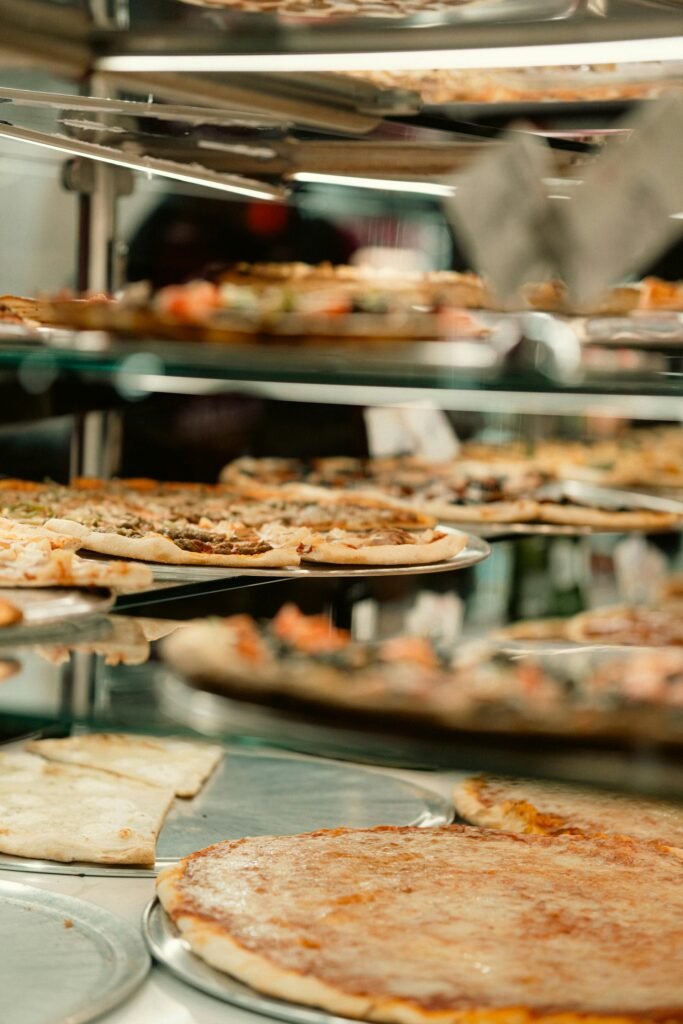
New York-style pizza — thin, foldable, a single slice the canonical street meal. Joe’s Pizza (Greenwich Village), Prince Street Pizza (Nolita), Di Fara (Brooklyn), Roberta’s (Bushwick) are the institutional names. Bagels reach perfection here — Russ & Daughters (Lower East Side), Ess-a-Bagel (Murray Hill), Tompkins Square Bagels, and the legendary H&H.
Deli culture: Katz’s Delicatessen (Lower East Side, 1888) for the canonical pastrami sandwich and Meg Ryan’s “I’ll have what she’s having” scene. Russ & Daughters for appetizing (lox, smoked fish, herring). 2nd Ave Deli in Midtown for the kosher tradition.
New York cheesecake originated at Junior’s in Brooklyn (since 1950) — cream-cheese-rich, dense. Black-and-white cookies, egg creams (no eggs, no cream — just chocolate syrup, milk, and seltzer), street vendor halal carts (chicken-and-rice with white-and-red sauces), street pretzels, and the canonical street hot dog round out the local lexicon.
Global Cuisine
NYC has 17,000+ restaurants — every major world cuisine is genuinely represented. Chinatown: dim sum at Joe’s Shanghai or Nom Wah Tea Parlor (since 1920); Flushing’s Chinatown (Queens) is the locals’ choice. Koreatown (32nd Street): 24-hour Korean BBQ. Jackson Heights, Queens: Indian, Thai, Colombian, Tibetan, Bangladeshi within four blocks. Brighton Beach: Russian and Ukrainian. Astoria: Greek institutions and the new Egyptian wave.
Fine Dining
NYC has more Michelin stars than any US city. Le Bernardin (Eric Ripert, French seafood, 3 stars), Eleven Madison Park (Daniel Humm, plant-based fine dining, 3 stars), Per Se (Thomas Keller, French-American, 3 stars), Atomix (Korean tasting, 2 stars), Atera, The Modern at MoMA. Peter Luger in Williamsburg for the iconic 1887 steakhouse. Reservations 1–3 months ahead via Resy or OpenTable.
Food Markets and Street Food
Chelsea Market, Smorgasburg, Union Square Greenmarket, Time Out Market New York in DUMBO. Halal carts on every Midtown corner. Mr. Softee ice cream trucks in summer.
Craft Beverages
Brooklyn craft brewery scene: Brooklyn Brewery, Threes Brewing, Other Half. Speakeasy cocktail culture: Please Don’t Tell (PDT), Death & Co, Attaboy. Rooftop bars: 230 Fifth, The Crown, Westlight.
Arts & Culture in New York City
NYC is America’s undisputed cultural capital — 500+ galleries, 200+ museums, 150+ theatres. The city sets cultural trends globally.
Visual Arts Scene
Chelsea (West 20s) hosts hundreds of contemporary commercial galleries — the David Zwirner, Gagosian, Hauser & Wirth, and Pace flagships. The Lower East Side features younger, emerging artists. Brooklyn’s Bushwick hosts the alternative scene. The major art fairs: The Armory Show (September), Frieze New York (May), Independent Art Fair.
Music Heritage
NYC’s musical legacy is immense. Harlem birthed jazz during the 1920s Renaissance — Duke Ellington at the Cotton Club, Billie Holiday at Café Society. The Apollo Theater on 125th Street (since 1934) launched countless careers. The Bronx birthed hip-hop in 1973. CBGB on Bowery (1973–2006) launched punk (Ramones, Talking Heads, Blondie, Patti Smith). Current jazz: Village Vanguard, Blue Note, Smalls. Rock and indie: Bowery Ballroom, Brooklyn Steel, Music Hall of Williamsburg.
Literary Culture
The Strand Bookstore on Broadway claims “18 miles of books.” McNally Jackson and Housing Works Bookstore Cafe represent the indie scene. The New York Public Library‘s Stephen A. Schwarzman Building (the iconic lions Patience and Fortitude on Fifth Avenue) is itself a literary destination. The 92nd Street Y hosts the country’s best author readings series.
Fashion and Design
New York Fashion Week (February and September) — the world’s first major fashion week. The Garment District still operates at reduced scale. SoHo and Nolita showcase emerging designers. The Met’s Costume Institute hosts the legendary annual Met Gala in May.
New York City by District: The 5 Boroughs
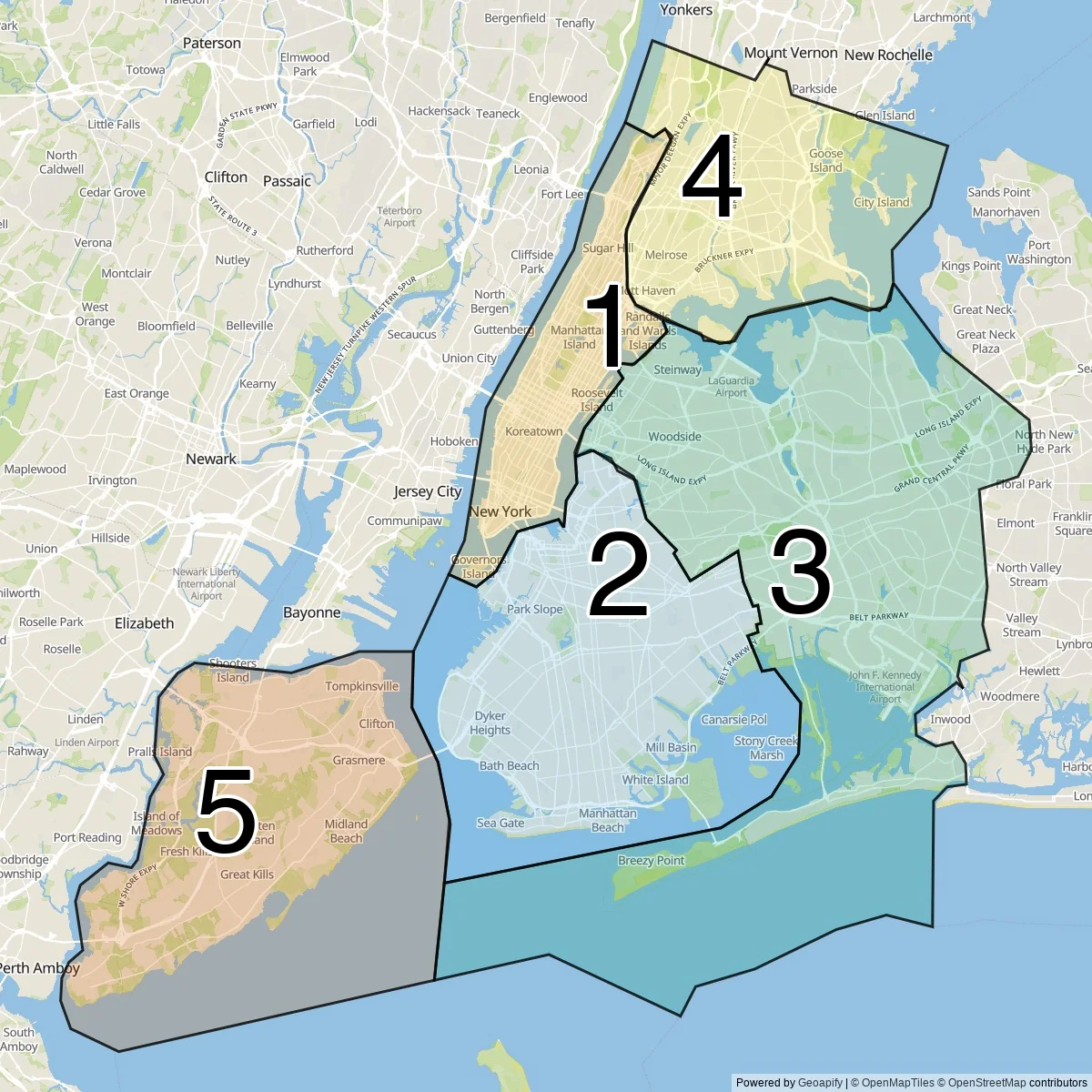
New York City is divided into 5 boroughs. The map below shows their official OSM boundaries, colour-coded to match the table — a quick way to orient yourself before zooming in on individual sights.
| # | Boroughs |
|---|---|
| 1 | Manhattan |
| 2 | Brooklyn |
| 3 | Queens |
| 4 | The Bronx |
| 5 | Staten Island |
Frequently Asked Questions About Visiting New York City
Do I need a visa to visit New York City?
It depends on nationality. Citizens of 40 Visa Waiver Program (VWP) countries — including the UK, EU member states, Australia, New Zealand, Japan, South Korea, Singapore, and Taiwan — can enter the United States visa-free for up to 90 days for tourism, but must obtain an ESTA (Electronic System for Travel Authorization) online before travel through the official portal at esta.cbp.dhs.gov. Cost $21, valid 2 years or until passport expiry. Beware: numerous fake third-party sites charge inflated fees — only use the .dhs.gov official site. Other nationalities (including Mexico, India, China, Brazil, most of Africa) need a B-2 tourist visa applied for at a US embassy — the process can take months and requires an in-person interview. Always check the latest at travel.state.gov. Passport must have at least 6 months remaining validity beyond intended departure.
Is New York City safe for tourists?
NYC is much safer than its old reputation suggests. Violent crime against tourists is rare; the city’s overall crime rate is lower than most major US cities. The US State Department obviously doesn’t issue advisories for the US. Real risks: pickpocketing on the subway, in Times Square, and at major tourist spots; tourist scams at Times Square and around the Statue of Liberty (costumed character photo demands, “free CD” handouts that demand payment, fake monks asking for donations); aggressive panhandling in some areas; e-bike traffic (faster and harder to predict than cars in some Manhattan crosswalks). Subway safety: generally safe but stay aware of surroundings late at night; the city is investing heavily in subway safety after a 2022–2024 increase in incidents. Avoid: empty subway cars (move to a populated car); Tompkins Square Park, Penn Station area, and the Bronx Hub late at night unless you have specific reasons. For solo women: NYC is genuinely safe for solo female travelers; standard urban awareness applies.
How many days do I need in New York City?
Five days is the practical minimum to experience the city beyond just sprinting through landmarks. A solid 5-day plan: Day 1 — Statue of Liberty + Ellis Island + 9/11 Memorial + Wall Street + Brooklyn Bridge walk; Day 2 — Central Park + Met Museum + Upper East Side + Times Square evening + Broadway show; Day 3 — High Line + Chelsea Market + Whitney Museum + Greenwich Village + Washington Square Park + dinner in SoHo; Day 4 — MoMA + Rockefeller Center (Top of the Rock) + Fifth Avenue shopping + Empire State Building at sunset; Day 5 — Brooklyn (DUMBO + Williamsburg + Brooklyn Museum or Prospect Park) + dinner at Peter Luger or Smorgasburg. Day 6–7: Harlem (Apollo Theater, soul food brunch), Queens (Flushing Chinatown, Astoria Greek dinner, MoMA PS1), Bronx (Yankee game, NY Botanical Garden), or day-trip to Coney Island. Three days only handles the headline sights; you’ll feel the city is rushed.
What’s the best area to stay in New York City?
Three solid options. Midtown Manhattan — the obvious central choice; walking distance to Times Square, Broadway, Empire State, Rockefeller, MoMA; mid-range to luxury hotels (the iconic Plaza, Peninsula, St. Regis, Park Hyatt) at $250–800/night, mid-range chains (Marriott, Sheraton, Hilton) at $200–400/night. SoHo / Greenwich Village / Lower Manhattan — the boutique-and-atmosphere choice; restored historic hotels (The Greenwich, Crosby Street, The Beekman, NoMo SoHo), walking distance to downtown attractions, easier access to good local restaurants; $250–600/night. Brooklyn (Williamsburg, DUMBO, Brooklyn Heights) — the trendy alternative with stunning Manhattan skyline views; The William Vale, 1 Hotel Brooklyn Bridge, Wythe Hotel; 20-min subway to central Manhattan; $200–500/night. Skip: anywhere in New Jersey for sleeping (the commute kills any savings); Hell’s Kitchen for first-time visitors (it’s fine but loud); Times Square hotels (overpriced and crowded all night).
How much does it cost to visit New York City’s major sights?
NYC is one of the world’s most expensive cities to visit. Sights add up fast. Statue of Liberty + Ellis Island ferry: $24.50 (Crown access requires advance booking). Empire State Building 102F: $79; 86F: $44. Top of the Rock: $40. One World Observatory: $43. The Edge at Hudson Yards: $43. Summit One Vanderbilt: $58. Metropolitan Museum of Art: $30 suggested for non-NY residents (free for NY residents and students from NY/NJ/CT). MoMA: $30. Guggenheim: $30. Whitney Museum: $30. 9/11 Memorial Museum: $33. American Museum of Natural History: $28 suggested. Broadway show: $80–500 depending on production and seat; TKTS booth same-day discount tickets typically 20–50% off. Bargain passes: New York CityPASS ($146 adult) bundles 5 sights and saves ~40%; Go City Pass covers up to 100 attractions at variable savings; Sightseeing Pass similar; consider only if you’ll visit 4+ paid attractions.
Should I drink the tap water in New York City?
Yes, absolutely. NYC tap water is famous for its quality — sourced from the protected Catskill Mountain reservoirs, gravity-fed without filtration, and consistently tested by the city. The water is so good that NYC pizza and bagels are unmatched precisely because of the water. Drink freely from any tap, fill water bottles at fountains, and don’t pay for bottled water unless you want to. The NYC Department of Environmental Protection publishes annual water quality reports. Most New Yorkers will tell you with mild pride that NYC tap water is among the best in the world.
How do I navigate the subway?
The NYC Subway can be intimidating but is genuinely the best way to get around. Practical advice: download the Citymapper app or use Google Maps — both work seamlessly with NYC transit. Pay using OMNY contactless by tapping your phone (Apple Pay/Google Pay), Apple Watch, or contactless credit card at the turnstile reader; OMNY auto-caps at $34/week (then unlimited). Single ride $2.90. Express vs local: lines like the 4/5/6 (Lexington Ave) have express trains skipping local stops — check the train number against your destination’s stop. Uptown vs downtown: signs at every entrance specify direction; some stations only have entrances for one direction. Subway etiquette: stand right on escalators, let passengers exit before boarding, no eating or littering, don’t pole-dance or sleep across multiple seats. Late-night safety: ride in the conductor’s car (middle of train, marked with a striped pole on the platform). Maps at every station; the standard NYC Subway Map is the best tool. Lines never stop running; service is reduced 11pm–6am with longer waits.
Is tipping expected in New York City?
Yes — and at significantly higher rates than most of the world. The US tipping culture is most aggressive in NYC. Restaurants: 20% is now the standard expected tip on the pre-tax bill for sit-down service; 18% acceptable for adequate service; 25% for exceptional. Many restaurants now offer 18%/20%/25% suggested options on the receipt. Counter service / takeout: $1–3 or 10–15% depending on complexity. Bars: $1–2 per drink at standard bars; 20% on the tab at cocktail bars. Hotel porters: $2–5 per bag. Hotel housekeeping: $3–5 per night left at end of stay. Hotel concierge: $5–20 for special arrangements. Taxi/Uber/Lyft: 15–20% standard; the in-app prompt makes 18% the new default. Tour guides: $5–20 per person depending on tour length. Spa/salon: 18–20%. Coat check: $1–2. Skip-tipping: at counter-service places where you do the work yourself (Starbucks, etc.) tipping is optional. The system creates uncomfortable feedback loops — the tipping baseline keeps rising — but accept it as part of the NYC experience.
Sports in New York City
Baseball Legacy
The New York Yankees — baseball’s most successful franchise with 27 World Series championships. Yankee Stadium (the new one opened 2009) in the Bronx. The New York Mets at Citi Field in Queens — the cross-town rivalry “Subway Series” is the city’s highest-stakes sports moment.
Basketball and Hockey
Madison Square Garden (between Penn Station and the Javits Center) hosts both the New York Knicks (NBA) and New York Rangers (NHL) — “the World’s Most Famous Arena.” The Brooklyn Nets play at Barclays Center. The New York Islanders play at UBS Arena on Long Island.
Football
Both the New York Giants and New York Jets play at MetLife Stadium in East Rutherford, New Jersey — both are NYC teams in branding and fan base.
Soccer and Other Sports
New York City FC (MLS) plays at Yankee Stadium; the New York Red Bulls (MLS) play in New Jersey. The US Open Tennis Championships at Flushing Meadows in Queens (late August–early September). The NYC Marathon in November draws 50,000+ runners. The Belmont Stakes (third leg of the Triple Crown) at Belmont Park in June.
Annual Events & Festivals
Signature Parades and Celebrations
Macy’s Thanksgiving Day Parade down Broadway since 1924 — the iconic giant balloons watched by 50+ million on TV. New Year’s Eve in Times Square — the ball drop seen worldwide; arrive by 3 pm to be in the crowd, dress for cold, no alcohol or large bags allowed.
St. Patrick’s Day Parade on Fifth Avenue (March 17) — the world’s largest, since 1762. NYC Pride March (last Sunday of June) — the world’s largest LGBTQ+ pride event, commemorating Stonewall. Chinese New Year in Chinatown — lion dances, fireworks, 10 days of celebration.
Cultural and Arts Festivals
Shakespeare in the Park at the Delacorte Theater (Central Park, June–August) — free Shakespeare; tickets via day-of lottery or virtual queue. Tribeca Film Festival (April/June) — Robert De Niro’s downtown indie film festival. SummerStage — free outdoor concerts in parks throughout summer.
Fleet Week (May) — Navy ships dock, sailors fill the city, Blue Angels air shows. Village Halloween Parade (October 31) — the world’s largest public Halloween parade, in Greenwich Village.
Seasonal Events
Summer: outdoor movies in Bryant Park and across the boroughs, free SummerStage concerts, beach weekends on the Rockaways and Coney Island. Winter: Rockefeller Center tree (early December–early January), Bryant Park Winter Village, ice skating at Wollman Rink. Spring: cherry blossoms at Brooklyn Botanic Garden’s Sakura Matsuri (late April), Central Park awakening. Fall: Central Park foliage, Halloween parades, Marathon Sunday.
Shopping in New York City
Iconic Shopping Districts
Fifth Avenue (49th–60th Streets) — luxury flagship stores: Tiffany & Co., Bergdorf Goodman, Saks Fifth Avenue, the Apple Store glass cube, FAO Schwarz toy store. SoHo — high-end boutiques in cast-iron buildings, plus emerging designers in Nolita just east. Madison Avenue (60s–80s) — luxury and art galleries. Hudson Yards — the new luxury-shopping district at the western High Line terminus.
Department Stores and Markets
Macy’s Herald Square — claimed world’s largest store, occupies a full city block. Bloomingdale’s at 59th and Lexington. Nordstrom NYC at Columbus Circle. The discount option: Century 21 (Financial District, recently reopened after a brief closure) — designer items at 40–70% off.
Neighborhood Shopping
Williamsburg, Brooklyn for vintage and emerging local designers. East Village for record stores and alternative fashion. Chinatown for ingredients, herbal medicines, Asian cosmetics. Diamond District on West 47th Street for jewelry. Mott Street in Nolita for indie boutiques. Little Italy and Bleecker Street in the Village for the surviving traditional retailers.
New York rewards travelers who set realistic expectations. Three days for the headline sights (Statue of Liberty, Central Park, Times Square + Broadway show, Empire State Building, MoMA, the Met). Four to seven days lets you actually enjoy a neighborhood beyond just sprinting through it. The city is too big to “see” in any meaningful sense — but tasting it across boroughs, eating widely, walking neighborhoods, and just absorbing the density of it all is the genuine pleasure of a New York visit.
AFRIKA
Cairo Hurghada Johannesburg Marrakech
ASIA
Abu Dhabi Agra Antalya Bangkok Batam Beijing Bengaluru Cebu City Chiang Mai Chiba Chennai Da Nang Dammam Delhi Denpasar Dubai Fukuoka Guangzhou Guilin Ha Long Hanoi Ho Chi Minh City Jakarta Jaipur Johor Bahru Kolkata Krabi Kuala Lumpur Kyoto Macau Mecca Medina Mugla Mumbai Osaka Pattaya Penang Phuket Riyadh Seoul Shanghai Shenzhen Singapore Taipei Tokyo Zhuhai
EUROPE
Amsterdam Athens Barcelona Berlin Brussels Budapest Copenhagen Dublin Florence Frankfurt am Main Heraklion Krakow Lisbon London Madrid Milan Munich Nice Paris Porto Prague Rhodes Rome Stockholm Venice Vienna Warsaw
NORTH AMERICA
Cancun Las Vegas Los Angeles Miami New York City Orlando San Francisco Toronto Vancouver
SOUTH AMERICA
Buenos Aires Lima Rio De Janeiro
OCEANIA
Auckland Honolulu Melbourne Sydney