
Photo credit: dimitrisvetsikas1969, pixabay
Welcome to Krakow, Poland’s cultural crown jewel where medieval charm dances with vibrant modern energy. Nestled in southern Poland along the winding Vistula River, this UNESCO World Heritage city captivates visitors with its cobblestone streets, Gothic spires, and living history. As Poland’s former royal capital and home to Europe’s second-oldest university, Krakow offers an intoxicating blend of architectural marvels, rich traditions, and contemporary dynamism that makes it one of Europe’s most compelling destinations.
Krakow at a Glance: Essential Facts for Travelers
| Category | Details |
|---|---|
| Location | Southern Poland, Lesser Poland Voivodeship |
| Coordinates | 50°N, 20°E (unique intersection point in Poland) |
| Population | 780,000 (2020) |
| Area | 326.85 km² |
| Elevation | 188–393 meters above sea level |
| Time Zone | Central European Time (CET/CEST) |
| Calling Code | (+48) 12 |
| Postal Codes | 30-001 to 32-020 |
| Known For | UNESCO World Heritage Old Town, Wawel Castle, former royal capital |
| Current Mayor | Aleksander Miszalski (PO, elected 2024) |
| Official Website | www.krakow.pl |
Upcoming Events in Kraków
| Date | Title | Details |
|---|---|---|
| 2026-06-12 to 2026-10-18 | Roots and Sky: Polish Art from the Kyiv National Art Gallery | The Gallery of 19th-Century Polish Art in the Sukiennice, the National Museum’s branch above the Cloth Hall market stalls, presents Polish works from the collection of the Kyiv National Art Gallery. Safeguarded in wartime Ukraine and brought to Kraków, the paintings form a moving chapter of shared heritage, shown alongside the gallery’s own masterpieces on the Main Square. The exhibition closes on 18 October, making the coming weeks the last chance to see it. Museum admission applies, and the Sukiennice terrace rewards a visit with rooftop views of the square. [Source] |
| 2026-09-11 to 2027-02-07 | Picasso and the Pikasiaks: Modern Ceramics | The National Museum’s Szolayski House opens a playful exploration of modern ceramics, pairing Pablo Picasso’s celebrated ceramic works with the Polish artists nicknamed Pikasiaks who absorbed his influence during the mid-century craze for modern design. Expect vases, plates and figures full of wit and bold pattern, tracing how Picasso mania filtered into Polish factories and studios of the 1950s and 1960s. Located steps from the Main Square, the show runs deep into winter. Standard museum tickets apply, and the compact venue makes it an easy addition to an old town day. [Source] |
| 2026-09-25 to 2026-10-04 | Sacrum Profanum Festival 2026 | Sacrum Profanum is Kraków’s adventurous festival of contemporary and 20th-century classical music, staged each autumn in striking venues from post-industrial halls to concert stages. Curated by the city’s cultural agency KBF, it pairs new commissions and minimalist landmarks with cutting-edge ensembles and sound art, drawing an audience keen on the experimental edge of classical music. Concerts are ticketed, with some free events, and the programme changes each year around a chosen theme. It is one of the highlights of the city’s rich musical calendar. [Source] |
| 2026-10-04 to 2026-10-11 | Unsound Festival Kraków 2026 | Unsound is one of the world’s most respected festivals of experimental and electronic music, taking over clubs, concert halls and unusual spaces across Kraków each October. Alongside club nights and live performances it hosts talks, installations and daytime programmes, drawing an international crowd of artists and fans to the city. Each edition is built around a provocative theme. Passes and single tickets vary in price, and events range from cerebral daytime concerts to late-night dancefloors, making it a landmark of the city’s autumn cultural scene. [Source] |
| 2026-10-07 to 2026-10-08 | Drone Security Expo and Kompozyt-Expo 2026 | EXPO Kraków hosts the international trade fair for drones and anti-drone systems, staged alongside the fourteenth Kompozyt-Expo fair for composite materials and technologies. Exhibitors present unmanned aerial systems, detection equipment and security solutions for critical infrastructure, a sector in sharp focus across Central Europe. The two-day event is aimed at industry professionals, public authorities and defence-sector buyers, with conference sessions accompanying the exhibition floor. Registration is required and ticket arrangements vary for trade visitors. The venue lies a short tram ride east of the city centre. [Source] |
| 2026-10-22 to 2026-10-25 | 29th Krakow Book Fair | The twenty-ninth Kraków Book Fair fills EXPO Kraków with hundreds of publishers, author meetings and signing sessions in one of Poland’s biggest literary gatherings, held in a UNESCO City of Literature. This year’s edition carries the theme Caution: Another Human, inspired by the work of poet and songwriter Agnieszka Osiecka, and the programme ranges from bestselling novelists to children’s authors and debate stages. Tens of thousands of readers attend over four days, with weekend sessions the busiest. Tickets are sold online and at the door, and queues for star authors form early. [Source] |
City News in Kraków – last 14 days
| Date | Category | Headline | Details |
|---|---|---|---|
| 2026-09-14 | Culture | Wawel Cathedral’s Holy Nail relic back in the spotlight | One of Wawel Cathedral’s least-known treasures, a nail venerated as a relic of Christ’s crucifixion, is drawing fresh attention. The relic arrived in Poland on 30 June 1425 as a gift from Pope Martin V to King Wladyslaw Jagiello and Queen Zofia, and it has remained on the royal hill for six centuries. The story is a reminder of the extraordinary depth of the cathedral’s collections, which range from royal tombs to coronation regalia, rewarding visitors who look past the best-known sights. [Source] |
| 2026-09-13 | Sports | ADCC World Championship crowns champions at Tauron Arena | The ADCC World Championship, the most prestigious event in submission grappling, concluded at Tauron Arena with champions crowned across the men’s and women’s weight divisions after two days of competition. Held every two years, the tournament brought the world’s best grapplers, including well-known UFC fighters, to Kraków, along with thousands of international fans. Full brackets and medal winners were finalised on Sunday, capping an event that placed the city at the centre of the grappling world and filled hotels for the weekend. [Source] |
| 2026-09-11 | Local government | Election commissioner rejects all four candidate appeals | The electoral commissioner in Kraków has rejected all four appeals lodged by would-be candidates for city mayor who failed to gather the required number of valid signatures. Among those whose exclusion was upheld are the Confederation party’s Bartosz Bochenczak and former state auditor Marian Banas. The decision finalises the field for the early mayoral election, ending days of wrangling over signature checks. The vote will decide who leads Poland’s second city, and the campaign now moves into its decisive phase. [Source] |
| 2026-09-10 | Public transport | Five-car pile-up on the A4 ring road causes major jam | Five cars collided on the A4 motorway ring road around Kraków in the early morning, between the Tyniec and Skawina junctions, triggering a long tailback at the start of the commuter rush. Police reported that the situation was brought under control and lanes were reopened, though delays rippled across the western approaches to the city. The crash renews attention on congestion along the heavily used southern bypass, where traffic volumes have grown far faster than capacity in recent years. [Source] |
| 2026-09-09 | Education | Polish pupils rank second in EU for mathematics | Polish school pupils have been ranked second best in the European Union at mathematics in the latest PISA international assessment, with the country also placing third in reading and fifth in science. The strong showing confirms Poland’s position among Europe’s leading education systems, a standing built on decades of reform. For Kraków, home to one of the country’s densest concentrations of universities and academic schools, the results reinforce the region’s reputation for producing talent that feeds its technology and services sectors. [Source] |
| 2026-09-08 | Local government | Far-right candidate excluded from mayoral race after signature blunder | The Confederation party’s candidate has been excluded from Kraków’s early mayoral election after more than 2,000 of the signatures submitted in his support were ruled invalid, leaving the far-right grouping without a contender in the race. The blunder caused embarrassment at national level, with party leaders reacting angrily and the candidate admitting he had failed. Signature verification has proven decisive in shaping the ballot, and the episode has dominated local political coverage in the run-up to the vote. [Source] |
| 2026-09-05 | Local government | Gibala officially registered as mayoral candidate | Lukasz Gibala has been officially registered as a candidate in Kraków’s early mayoral election, with his name appearing on the National Electoral Commission’s list. The long-time opposition councillor and civic activist, who has run for the office before, thanked supporters after completing registration. His entry adds a prominent name to the contest for city hall, and his campaign is expected to focus on themes he has long championed, including green space, transparency and opposition to large-scale development projects in the city. [Source] |
| 2026-09-03 | Public safety | Ultras drive people from Nowa Huta park after fan’s death | A group of football hooligans stormed into a park in the Nowa Huta district, driving out small children and elderly residents before lighting flares, in an action connected to the death of a fan known as Yankes. The incident was filmed, with participants sending greetings to one of the men detained over the fatal beating. The footage has sparked outrage among residents and renewed debate about hooligan influence in parts of the city, as police continue investigating the death and its aftermath. [Source] |
Kraków Events & City News Archive
Sources: National Museum in Krakow, Sacrum Profanum, Unsound, Targi w Krakowie / EXPO Krakow, Krakow Book Fair, Onet Krakow, FloGrappling, Onet Krakow
Weather Forecast for the Next 14 Days in Kraków
| Date | Weather | Max °F | Min °F | Rain mm |
|---|---|---|---|---|
| 2026-09-14 | 🌧️ | 66.3 °F | 57.2 °F | 2.1 mm |
| 2026-09-15 | 🌧️ | 69.8 °F | 58.9 °F | 0.1 mm |
| 2026-09-16 | ☁️ | 79.2 °F | 52.5 °F | 0.0 mm |
| 2026-09-17 | 🌧️ | 73.4 °F | 56.4 °F | 2.2 mm |
| 2026-09-18 | 🌧️ | 68.1 °F | 55.4 °F | 3.0 mm |
| 2026-09-19 | 🌧️ | 68.3 °F | 57.7 °F | 1.8 mm |
| 2026-09-20 | 🌧️ | 70.6 °F | 51.9 °F | 0.3 mm |
| 2026-09-21 | 🌧️ | 62.2 °F | 52.0 °F | 0.3 mm |
| 2026-09-22 | 🌧️ | 62.0 °F | 49.9 °F | 0.9 mm |
| 2026-09-23 | 🌧️ | 58.1 °F | 48.4 °F | 2.4 mm |
| 2026-09-24 | 🌧️ | 55.7 °F | 46.5 °F | 0.3 mm |
| 2026-09-25 | 🌧️ | 56.7 °F | 49.9 °F | 53.7 mm |
| 2026-09-26 | 🌧️ | 72.4 °F | 56.8 °F | 15.0 mm |
| 2026-09-27 | 🌧️ | 64.1 °F | 52.6 °F | 2.1 mm |
Krakow’s History
Krakow is the rare European capital that survived the 20th century mostly intact. Warsaw was levelled. Dresden burned. Krakow’s medieval core — the world’s largest medieval market square, the Wawel cathedral, an Old Town that still uses the 13th-century street grid — escaped both Nazi destruction and Allied bombing. The city’s UNESCO listing came in 1978 (with the first batch of 12 sites worldwide), and the survivor’s intactness is genuinely remarkable.
Ancient Origins and Dragon Legends
Wawel Hill has been inhabited continuously for at least 50,000 years — palaeolithic remains have been found in the limestone caves below. The founding myth places Prince Krak, mythical ruler of the Vistulan tribe, as the slayer of a dragon (Smok Wawelski) that lived in a riverside cave. The fire-breathing bronze dragon statue at the cave mouth, sponsored by Bronisław Chromy in 1972, still breathes flame for tourists every few minutes. By the 9th century, the Slavic Vistulans had a major settlement here; Krakow was first mentioned in writing in 965 by the Andalusian-Jewish merchant Ibrahim ibn Yaqub, who described it as a thriving trade hub at the crossroads of European routes.
Medieval Rise to Power
Krakow joined the emerging Polish state under Mieszko I in the late 10th century. In 1000, Bolesław I established the Krakow bishopric, founding the cathedral on Wawel Hill and the first Romanesque churches. The 13th-century Mongol invasions (1241, 1259, 1287) devastated the city — the Hejnał Mariacki, the trumpet call still played hourly from St. Mary’s Basilica, ends mid-note in commemoration of the trumpeter killed by a Mongol arrow. After 1257, Duke Bolesław the Chaste granted Krakow the Magdeburg Law, and the city was rebuilt on the gridded plan that still defines the Old Town — anchored by the 200×200-metre Rynek Główny, the largest medieval town square in Europe.
The Golden Age of the Jagiellonians
Krakow’s golden age ran from 1320 (when Władysław I “the Elbow-high” reunified the Polish kingdom and was crowned at Wawel) through the 16th century. Casimir III the Great (r. 1333–1370) founded the Jagiellonian University in 1364 — Central Europe’s second-oldest university after Prague, and Copernicus’s alma mater 130 years later. The Jagiellonian dynasty itself began in 1386 when 12-year-old Polish queen Jadwiga (formally crowned King, since Polish law had no provision for a queen regnant) married Lithuanian Grand Duke Jogaila — uniting Poland and Lithuania into the largest state in 15th-century Europe.
Wawel Castle burned in 1499; King Sigismund I the Old hired Italian architects to rebuild it, producing the Sigismund Chapel (1517–1533) — widely considered the finest Renaissance building outside Italy. Master sculptor Veit Stoss (Wit Stwosz in Polish) carved the stupendous wooden altarpiece for St. Mary’s Basilica between 1477 and 1489 — Europe’s largest Gothic altarpiece, still in situ.
From Royal Capital to Austrian Outpost
In 1596, King Sigismund III Vasa moved the Polish capital to Warsaw, formalising what had already been happening as the Polish-Lithuanian center of gravity shifted east. Krakow stayed culturally important but politically diminished. The Swedish Deluge (1655–60) saw the city sacked twice. After the three Polish Partitions (1772, 1793, 1795), Krakow fell first to Austria, then briefly served as the Free City of Krakow (1815–1846) — a tiny independent republic protected by all three partitioning powers — before being annexed back into Habsburg-ruled Galicia after the failed 1846 uprising.
Austrian rule (1846–1918) was relatively benign by partition-era standards, and Krakow flourished culturally. The Młoda Polska (“Young Poland”) movement (1890s–1918) made the city the artistic capital of partitioned Poland, with painters like Jan Matejko and Stanisław Wyspiański turning the Old Town into an Art Nouveau workshop.
20th Century Trials and Triumphs
Poland reclaimed independence in 1918. The interwar period was a renaissance — until September 6, 1939, when the Wehrmacht entered Krakow. The Nazis made the city the capital of the General Government — the occupied-Polish administrative entity — and Hans Frank ruled from Wawel Castle. The Krakow Ghetto in Podgórze imprisoned 17,000 Jews from March 1941; the ghetto was liquidated in March 1943. The vast majority of Krakow’s pre-war Jewish population (60,000 people, a quarter of the city) were murdered at Bełżec, Auschwitz-Birkenau (60 km west of Krakow), and Płaszów. The story of Oskar Schindler, who saved roughly 1,200 Jews by employing them at his Krakow enamel factory in Podgórze, was made world-famous by Spielberg’s 1993 film. The factory is now a powerful Holocaust museum.
Krakow’s medieval core somehow survived intact. The Soviet Red Army entered in January 1945; reconstruction across Poland would lean heavily on Krakow’s preserved architecture as a national reference.
Modern Renaissance
The communist period saw Nowa Huta (“New Steelworks”) built east of the Old Town from 1949 — a vast Stalinist model city built around the Lenin Steelworks, intended both as industrial showcase and as a working-class counterweight to Krakow’s bourgeois Catholicism. The plan failed politically; Nowa Huta became a center of Solidarity-era resistance in the 1980s. In 1978, the Archbishop of Krakow, Karol Wojtyła, became Pope John Paul II — a moment that electrified Polish dissident culture and contributed directly to the eventual fall of communism in 1989. The same year, Krakow’s Old Town joined the inaugural UNESCO World Heritage List.
Post-1989 Krakow has been one of Europe’s success stories: heritage carefully preserved, tourism booming (over 14 million visitors in 2019, recovering from 2020’s collapse), tech and outsourcing companies bringing thousands of jobs, the universities consistently in central Europe’s top tier. Smog from coal heating remains a winter problem; mass tourism the perennial summer one.
Geography, Climate & Best Time to Visit Krakow
Geographic Setting
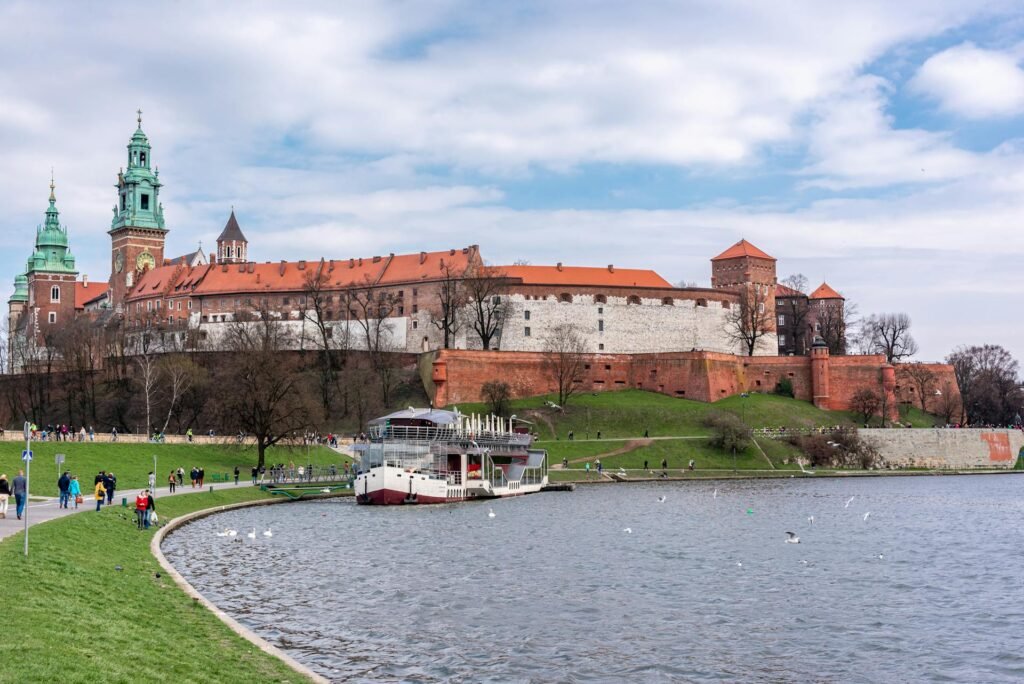
Krakow sits in the Lesser Poland (Małopolska) region of southern Poland, where the Vistula River winds through gently rolling country between the Carpathian foothills and the Polish Jura uplands. The city itself spreads across both banks of the Vistula at elevations of 188–393 metres, with the Old Town on a slight rise above the river’s medieval ford. The Tatra Mountains — the Polish Alps — rise 100 km south, with Zakopane as the gateway. Auschwitz-Birkenau is 60 km west; the Wieliczka Salt Mine 14 km southeast.
Climate Overview
Krakow’s climate is humid continental — four sharply distinct seasons, with cold winters and warm summers. The city’s basin location traps cold air in winter (and pollution from coal heating), while summer brings genuine heat that surprises first-time visitors expecting “Eastern European cool.”
| Season | Temperature Range | Rainfall | Highlights |
|---|---|---|---|
| Spring (Mar-May) | 7°C to 19°C | 33-76mm | Blooming parks, mild weather |
| Summer (Jun-Aug) | 22°C to 24°C | 87-95mm | Festival season, outdoor dining |
| Autumn (Sep-Nov) | 6°C to 20°C | 44-50mm | Golden foliage, crisp air |
| Winter (Dec-Feb) | -6°C to 2°C | 34-38mm | Christmas markets, snow-dusted squares |
Best Time to Visit
May–June and September–early October are the optimal windows: warm but not hot, lush, festival season in full swing, and crowds slightly thinner than peak July–August. July–August is the peak tourist season — hot (up to 32°C), packed with cruise-day-trippers, and accommodation prices 30–50% above shoulder season; great for festivals and long evenings. December is magical — the Rynek Christmas Market (Targi Bożonarodzeniowe) runs late November through December 26, snow-dusted Gothic spires, mulled wine; bring serious winter gear and prepare for short daylight (sunset ~3:30 pm). Late January–February is the cheapest, quietest, and smoggiest period — winter air pollution from household coal heating regularly pushes Krakow’s air quality into “very poor” (check airly.org live readings). Best avoided if you have asthma.
Krakow’s Districts & Neighborhoods
Krakow is administratively divided into 18 districts (dzielnice) numbered I to XVIII — but the visitor’s working map fits on a postage stamp. The Old Town (District I), Kazimierz, Podgórze, and the area between them is where 95% of meaningful sightseeing happens. The other 14 districts are mostly residential.
Stare Miasto (Old Town) – District I
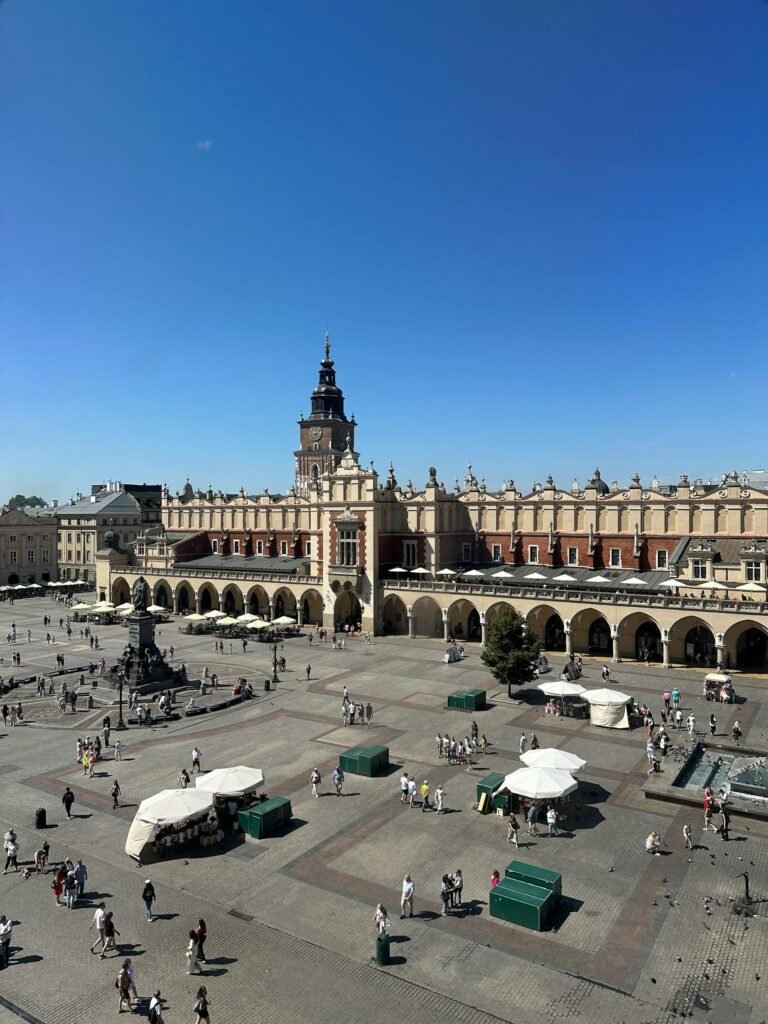
The UNESCO-listed medieval core, encircled by the Planty (the green ring planted on top of the demolished medieval walls). The Rynek Główny — Europe’s largest medieval market square — anchors everything; the Sukiennice (Cloth Hall) stands in the middle, with St. Mary’s Basilica, the Town Hall Tower, and a hundred Renaissance and Baroque townhouses ringing the square. Stay in this district for maximum convenience; expect peak prices (€100–250/night) and constant crowds.
Kazimierz
The historic Jewish quarter, founded as a separate town by Casimir the Great in 1335 and absorbed into Krakow in 1791. Six remaining synagogues (the Old Synagogue, 1407, is the oldest in Poland) cluster around Szeroka Street; the Remuh Cemetery contains gravestones back to 1550. After the Holocaust devastated the community, Kazimierz spent decades neglected — then revived as Krakow’s bohemian quarter from the 1990s onward, now packed with milk-bar style cheap eats, craft cocktail bars, vintage shops, and converted-synagogue museums. A 15-minute walk south of the Old Town.
Podgórze – District XIII
Across the Vistula River from Kazimierz. The wartime Krakow Ghetto was located here from 1941–1943; the surviving ghetto wall fragment on Lwowska Street, the Eagle Pharmacy, and Schindler’s Factory Museum form a powerful Holocaust circuit. The neighborhood has been gentrifying steadily — modern hotels, riverside cafés, and the MOCAK contemporary art museum next to Schindler’s factory.
Nowa Huta – District XVIII
The Stalinist model town, 10 km east of the Old Town, built from 1949. The colossal central plaza (Plac Centralny, renamed after Ronald Reagan in 2004) is a textbook of socialist-realist urbanism. A guided “Communism tour” (often by Trabant car) is one of Krakow’s stranger tourist offerings — and surprisingly worth doing if you’ve already covered the Old Town.
Where to Stay Recommendations
First-time visitors / luxury: Hotel Stary, Hotel Copernicus, Hotel Pod Różą, or any of the small boutiques on the Rynek itself. Priceless atmosphere; €180–500/night. Mid-range: Kazimierz boutique hotels (Hotel Eden, Klezmer-Hois) at €70–120/night; equally walkable, cheaper, more atmospheric. Budget: hostels in the Old Town and Kazimierz at €25–45/night (Greg & Tom, Atlantis, Mosquito) — Krakow has Europe’s best hostel scene. Business: modern hotels near the main station (Holiday Inn, Andel’s, Best Western) at €80–130/night. Avoid: places more than 2 km from the Old Town — they’re cheaper but the tram ride defeats the point.
Top Things to Do in Krakow
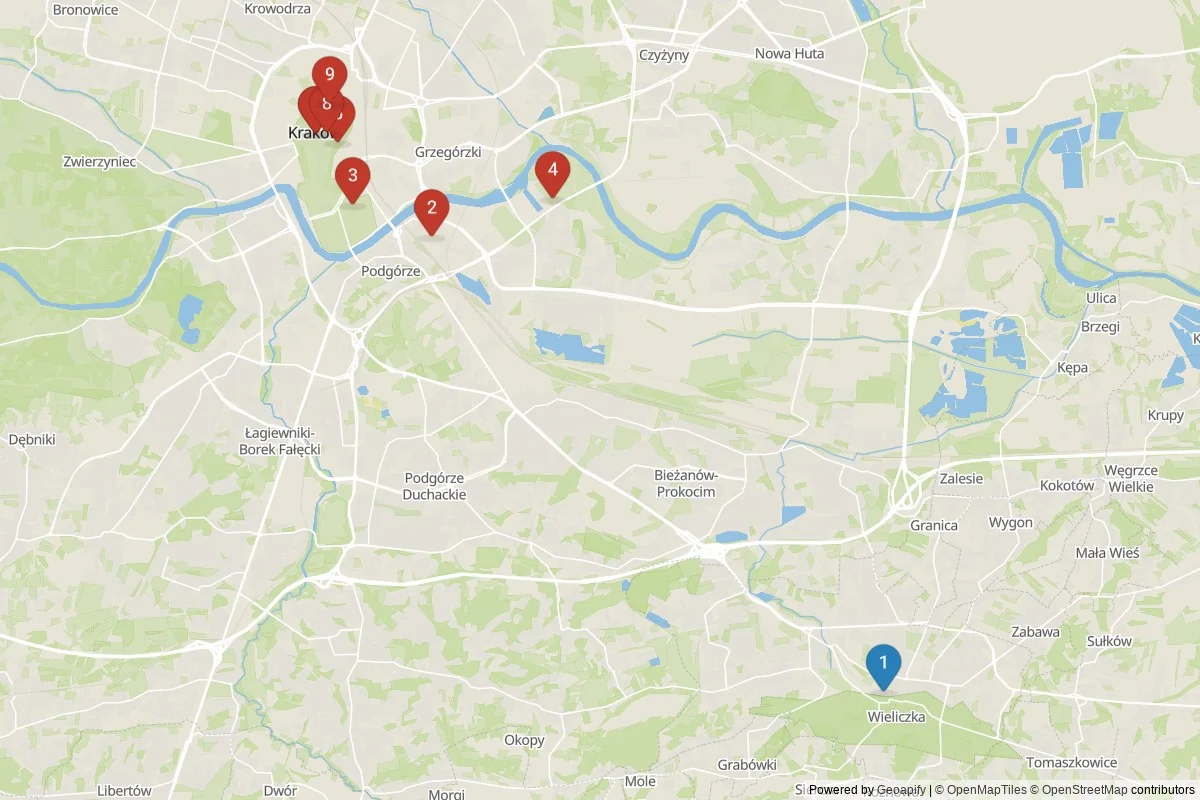
| # | Sight | Cluster | Type | Time | Entry | Best |
|---|---|---|---|---|---|---|
| 1 | Wieliczka Salt Mine | Cluster A | Cathedral | — | — | — |
| 2 | Schindler’s Factory Museum | Cluster B | Museum | 3 hours | — | — |
| 3 | Kazimierz Jewish Quarter | Cluster B | Museum | — | — | — |
| 4 | Auschwitz-Birkenau (Day Trip) | Cluster B | — | — | free | — |
| 5 | Planty Park | Cluster B | Park | — | — | — |
| 6 | Main Market Square (Rynek Główny) | Cluster B | Market | — | — | — |
| 7 | Underground Museum (Rynek Underground) | Cluster B | Museum | — | — | — |
| 8 | St. Mary’s Basilica | Cluster B | — | — | — | — |
| 9 | Barbican and City Walls | Cluster B | — | — | — | — |
Krakow’s headline sights are concentrated within a 1.5 km radius — most of the Old Town can be walked in an afternoon. The trade-off: queues at peak season (July–August) for the major sights are real. Pre-book online for Wawel, Schindler’s Factory, the Underground Museum, and Auschwitz day-trips.
Wawel Royal Castle and Cathedral
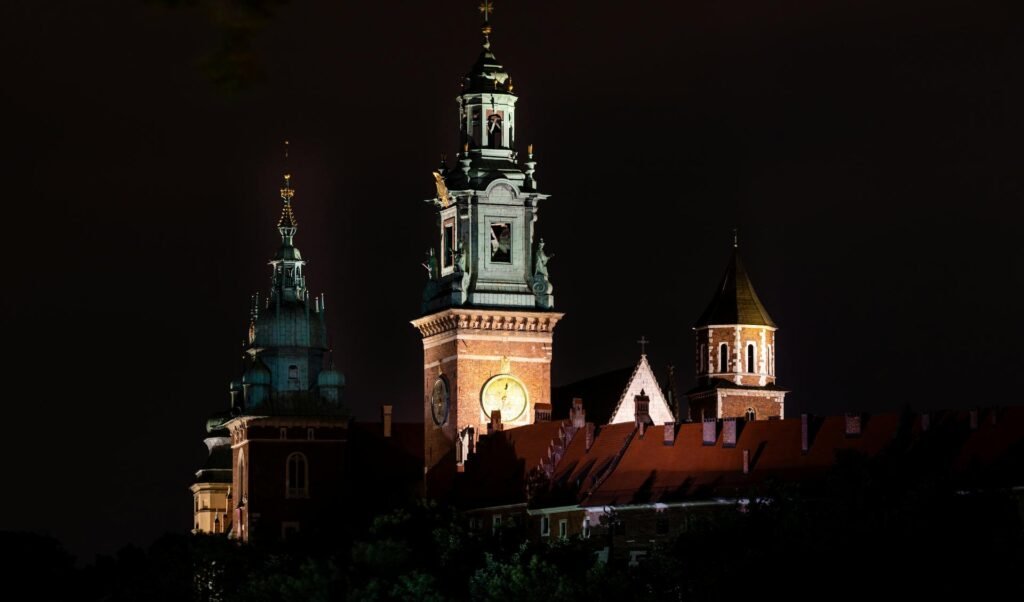
Wawel — the citadel hill that has been the seat of Polish power since the 11th century. The Renaissance castle complex includes the State Rooms, Royal Private Apartments, Crown Treasury and Armoury, and Lost Wawel archaeological exhibition; tickets are sold separately for each. Wawel Cathedral — Poland’s national church, where 41 of the 45 Polish kings were crowned and most are buried in the crypt; the Sigismund Bell in the bell tower is rung only on national holidays. The mythical dragon’s cave below the hill exits onto the Vistula riverbank — open May–October. Tickets via wawel.krakow.pl; book ahead in summer.
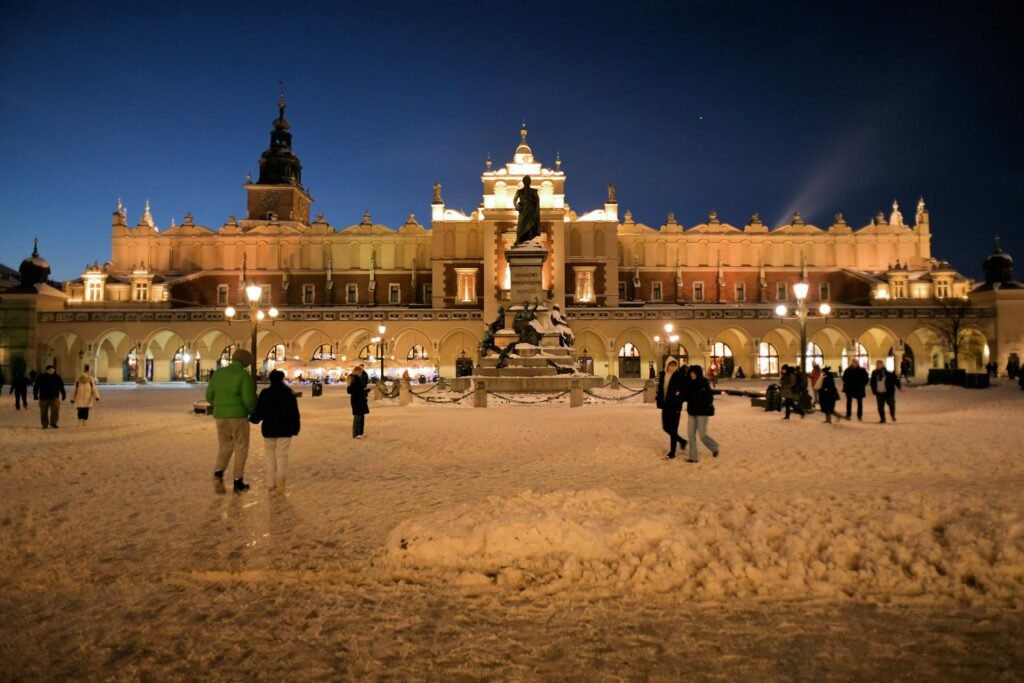
Main Market Square (Rynek Główny)
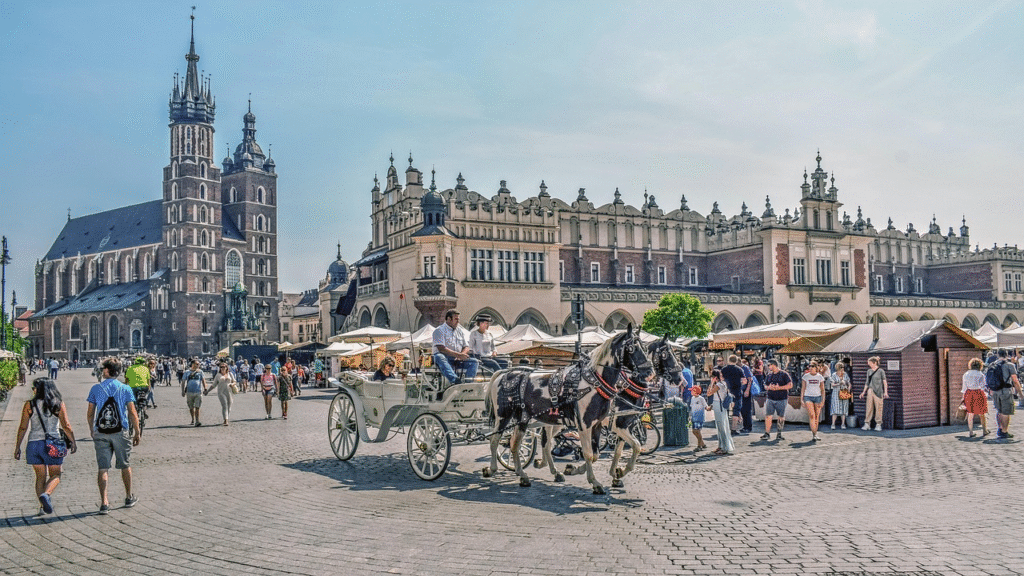
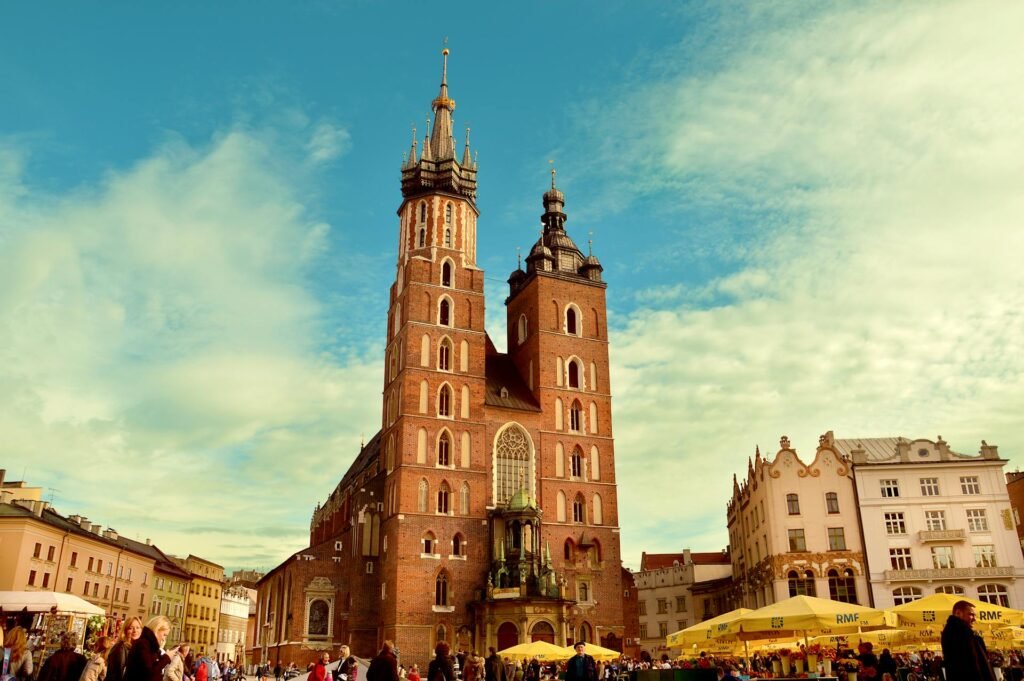
The largest medieval town square in Europe (200×200 metres) — and still the city’s living heart, with cafés, horse-drawn carriages, the Sukiennice (Cloth Hall) running through the middle, and St. Mary’s Basilica on the northeast corner. The hourly Hejnał Mariacki trumpet call from the basilica’s taller tower has been performed continuously since the 14th century — and the deliberate mid-note cutoff commemorates the medieval trumpeter killed by a Mongol arrow.
St. Mary’s Basilica
The Gothic icon of the Old Town. The interior is covered in 19th-century polychrome decoration by Jan Matejko and Stanisław Wyspiański; the centerpiece is Veit Stoss’s wooden altarpiece (1477–1489), 13 metres high and Europe’s largest Gothic altarpiece, opened ceremonially each day at 11:50 am. Entry 15 PLN.
Kazimierz Jewish Quarter
Walk the Seven Synagogues Trail: Old Synagogue (1407, Poland’s oldest, now a museum), Remuh Synagogue (1553, still active) with its ancient cemetery, Tempel Synagogue (the most ornate), and four others. The Galicia Jewish Museum on Dajwór Street is the best contemporary museum on Polish-Jewish heritage. Combine with dinner at Klezmer-Hois (live klezmer music), Plac Nowy (the round food market with the best zapiekanka kebab-pizzas in Poland), or any of Kazimierz’s craft cocktail bars.
Underground Museum (Rynek Underground)
Beneath the Sukiennice, the Rynek Underground museum is built into the actual archaeological excavation of medieval Krakow’s foundations — paved roads, merchant cellars, a 12th-century burial. Entry through the entrance on the north side of the Cloth Hall; tickets often sell out — book via muzeumkrakowa.pl at least a day ahead.
Schindler’s Factory Museum
The former enamel factory in Podgórze where Oskar Schindler employed (and saved) ~1,200 Jews. Now a sobering, multimedia-heavy museum about Krakow under Nazi occupation 1939–1945. Allow 2.5–3 hours; emotionally intense. Entry ~28 PLN; tickets via muzeumkrakowa.pl. The adjacent MOCAK contemporary art museum is a useful palate cleanser afterwards.
Wieliczka Salt Mine
20 km southeast of Krakow, this UNESCO World Heritage salt mine has been worked continuously since the 13th century. The tourist route descends 135 metres through 3 km of corridors past underground chambers, salt-carved sculptures, an underground saltwater lake, and the Chapel of St. Kinga — a full-sized cathedral entirely carved out of salt. Tickets ~109 PLN via wieliczka-saltmine.com; book at least a week ahead in summer. Reachable by frequent buses from Krakow MPK or train to Wieliczka Rynek-Kopalnia.
Auschwitz-Birkenau (Day Trip)
The former Nazi concentration and extermination camp at Oświęcim, 65 km west of Krakow. Where 1.1 million people were murdered, mostly Jews. Entry to the Auschwitz I and Birkenau (Auschwitz II) sites is free with timed tickets, but a guided tour is mandatory between 10 am and 4 pm in the high season — book via visit.auschwitz.org 2–4 weeks ahead. Multiple Krakow operators run organised tours with transport (~€35–50). Allow a full day; bring water and food (no commercial services on site).
Planty Park
The 4 km green ring encircling the Old Town, planted in the early 19th century where the medieval city walls once stood. A 45-minute leisurely walk circumnavigates the entire historic core; benches, monuments, and tree-shade make it a pleasant break between sights.
Barbican and City Walls
The Barbican (1498) — a circular Gothic fortified outpost guarding the medieval Floriańska Gate — is one of the best-preserved medieval defensive structures in Europe. Together with the surviving stretch of city walls and the Floriańska Gate, it forms the historic ceremonial entrance to the Old Town along the Royal Route down to Wawel.
How to Get to Krakow
Krakow has surprisingly good European connectivity, especially since Poland’s 2004 EU accession opened the country to budget airlines.
By Air
John Paul II International Airport Krakow-Balice (KRK) — Poland’s second-busiest airport after Warsaw, 15 km west of the Old Town. Direct flights from most European hubs; budget airlines (Ryanair, Wizz Air, easyJet) dominate. Long-haul: connect via Warsaw or major European hubs. Train to Krakow Główny in 18 minutes (PLN 17, every 30 min); taxi 30–50 minutes (~PLN 90 fixed-rate). Schedules at krakowairport.pl.
By Train
Krakow Główny — the main station, beautifully renovated 2008–2014, integrated into the Galeria Krakowska shopping mall. Direct trains to Warsaw (2h 15min by Pendolino EIP), Gdańsk (5h 30min), Wrocław (3h), and Berlin (8h via overnight). International services to Prague (~7h), Vienna (~6h), Budapest (~9h), and Bratislava. Booking via intercity.pl or bahn.de for international.
By Road
The A4 motorway connects Krakow to Wrocław, Berlin, and Western Europe. The S7 expressway runs to Warsaw and Gdańsk. International coach services (FlixBus, Eurolines) connect to dozens of European cities cheaply but slowly. Driving from Berlin: ~6 hours; Vienna: ~5 hours; Prague: ~6 hours.
Getting Around Krakow
The Old Town is small enough to walk; the rest of the city is well served by trams.
Public Transportation
MPK Krakow runs an excellent network of trams (24 lines) and buses. Trams are the workhorse — modern, frequent, fast in the dedicated lanes through the city center. Tickets are time-based: 20-minute (PLN 4), 60-minute (PLN 6), 24-hour (PLN 17), 72-hour (PLN 35) — buy at vending machines, ticket offices, or via the Jakdojade app. Validate immediately on boarding; controllers do check, with 200 PLN fines. Routes at mpk.krakow.pl.
Walking
The Old Town is fully pedestrianised. The Royal Route (Floriańska Gate → Rynek → Grodzka → Wawel) is 1.2 km of mostly cobblestone streets, walkable in 15–20 minutes. Kazimierz is a 15-minute walk south of the Old Town; Schindler’s Factory another 20 minutes. Comfortable walking shoes are non-negotiable — the cobblestones are unforgiving.
Cycling
Wavelo bike-share was discontinued in 2019; the city is currently building out a replacement public scheme but in the meantime private bike rentals dominate (KrakRent, Cool Tour Company, ~PLN 50/day). Riverside paths along the Vistula are well-developed; Old Town cobblestones are not bike-friendly.
Taxis and Ride-Sharing
Bolt and FreeNow dominate (Uber operates but is smaller); both apps work in English with international cards. Street taxis exist but stick to clearly marked corporate cabs (Radio Taxi 919, Wawel Taxi). Airport transfers from PLN 90 fixed; central Old Town to airport ~PLN 100–120.
Horse-Drawn Carriages
The white-and-gold horse-drawn dorożki on Rynek Główny offer Old Town tours for ~PLN 250 (15 min) to PLN 600 (30 min full circuit including Wawel). Touristy but quintessentially Krakow.
Food & Drink in Krakow
Polish food has reinvented itself in the post-2000 era — the milk bars and pierogi-houses are still here, but they now share streets with modernist Polish bistros, craft beer halls, and one Michelin-starred restaurant (Bottiglieria 1881 in Kazimierz). Eating out in Krakow is one of Europe’s best value-to-quality ratios: a serious mid-range dinner costs €15–25 per person.
Traditional Polish Cuisine
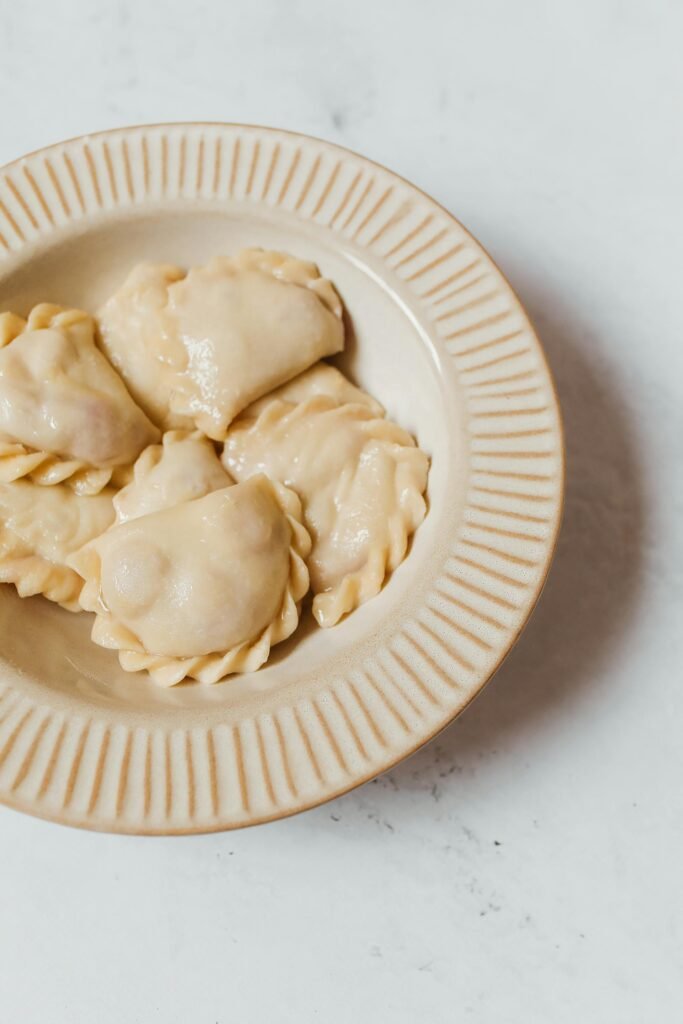
Pierogi — the iconic Polish dumplings, with classic fillings of ruskie (potato + cheese), meat, sauerkraut + mushroom, sweet cherry, or cottage cheese with onion. The pierogi specialist Pierogarnia Krakowiacy on Floriańska is the locals’ choice. Żurek — sour rye soup with sausage and egg, served in a hollowed bread bowl. Bigos — slow-cooked hunter’s stew of cabbage, sauerkraut, and several meats. Kotlet schabowy — breaded pork cutlet, the Polish answer to Wiener Schnitzel. Oscypek — smoked sheep’s-milk cheese from the Tatra Mountains, sold grilled with cranberry sauce by street vendors all over the Rynek.
Street Food and Snacks
Obwarzanek krakowski — the ring-shaped Krakow bagel, sold from blue street carts everywhere. Plain or with sesame, poppy seed, salt; PLN 3–4 each. Has EU PGI status. Zapiekanka — the open-faced toasted “Polish pizza” baguette, traditionally sold at Plac Nowy in Kazimierz from converted butcher’s-shop windows. The Endzior stall is the most famous; its zapiekanki run PLN 12–18 with toppings ranging from classic mushroom-cheese to gorgonzola-pear.
Dining Districts
Kazimierz — Krakow’s dominant food neighborhood; everything from milk-bar cheap eats (Bar Mleczny Tomasza) to modernist Polish (Pod Norenami, Ed Red Steakhouse) to Israeli fusion (Hamsa). Old Town — institutional Polish in vaulted Renaissance cellars (Pod Aniolami, Wierzynek, the latter the supposed oldest restaurant in Europe with 13th-century origins). Podgórze — emerging dining scene around Rynek Podgórski (Bottiglieria 1881 for the Michelin star, Hippiez Bistro for casual). Milk bars (bary mleczne) — Communist-era cafeteria-style canteens that survived the transition; serve hearty Polish classics for PLN 15–25 a meal. Bar Mleczny Pod Temidą and Bar Vega are old-school.
Beverages
Polish vodka is the obvious cultural anchor: try Żubrówka (bison-grass vodka, traditionally with apple juice — the “tatanka“), Wyborowa, Belvedere, and the craft micro-distillery Polish vodkas. Vodka tasting bars: Cocktail Bar Max, Wódka Cafe Bar Mleczarnia, Wesoła Cafe. The craft beer revolution arrived later but enthusiastically — Multi Qlti Tap Bar (Kazimierz) and House of Beer (Old Town) pour 30+ Polish craft taps. Mulled wine (grzaniec galicyjski) dominates Christmas-market season.
Markets and Food Halls
Stary Kleparz — Krakow’s traditional market, operating since the 14th century; fresh produce, charcuterie, regional cheeses. Hala Targowa — the larger covered market near the train station; everything from food stalls to flea-market goods. Hevre in Kazimierz — a converted synagogue now used as a brunch-and-cocktail bar with a beautiful Hebrew-painted ceiling.
Culture & Arts
Krakow is Poland’s cultural capital — the UNESCO City of Literature (2013), home to two Nobel Prize winners (Wisława Szymborska and Czesław Miłosz both lived in or near the city), and the country’s densest concentration of museums, galleries, and theaters.
Museums and Galleries
Krakow hosts 28+ museums. The National Museum (Muzeum Narodowe) spans multiple branches: the Cloth Hall Gallery in the Sukiennice (19th-century Polish painting, including Matejko and Wyspiański), the Czartoryski Museum (housing Leonardo da Vinci’s Lady with an Ermine — the only Leonardo in Poland and one of his most important portraits), and the Bishops’ Palace. MOCAK (Museum of Contemporary Art) — converted Schindler factory annex, strong international and Polish contemporary collections. Manggha — Japanese art and technology center on the Vistula bank, designed by Arata Isozaki.
Performing Arts
The Juliusz Słowacki Theatre (1893) — the city’s grand neo-Baroque opera house, hosting opera, ballet, and drama; tickets via slowacki.krakow.pl. The Stary Teatr (Old Theatre) — the historic prose theatre, Andrzej Wajda’s longtime base, the most famous in Poland. Bagatela Theatre for lighter comedy and contemporary plays. The Krakow Philharmonic in its 1931 concert hall is one of Poland’s leading classical orchestras.
Literary Heritage
As UNESCO City of Literature, Krakow celebrates a literary culture stretching from medieval Latin scholars at the Jagiellonian University through Wisława Szymborska’s quietly devastating poetry. The Conrad Festival (October) is the city’s flagship literary event. Historic literary cabarets — Piwnica pod Baranami on Rynek Główny (legendary since 1956) and Jama Michalika on Floriańska (Young Poland-era 1895) — still host satirical performances and poetry. The bookshop scene is exceptional: De Revolutionibus, Lokator (Kazimierz), and dozens of antiquarian dealers around the Old Town.
Festivals and Events
Jewish Culture Festival (late June–early July) — the world’s largest celebration of Jewish heritage, week-long concerts and lectures across Kazimierz. Sacrum Profanum (September) — contemporary classical and experimental music festival. Krakow Christmas Crib Competition (Szopki) (first Thursday of December) — the medieval tradition of elaborate, multi-storey nativity scenes built around miniaturized versions of Krakow landmarks; the winners are displayed in the Town Hall Tower museum. Juwenalia (May) — week-long Jagiellonian University student festival; the Old Town is overrun. Krakow Film Festival (May/June) — Poland’s leading documentary and short-film festival.
Krakow rewards visitors who slow down. Three days for the headlines is the practical minimum; four lets you do Auschwitz and Wieliczka without rushing; five gives you breathing room for the milk bars, the side-street cafés, and the slow walks along the Vistula at sunset that are the city’s quiet gifts.
Krakow by District: The 18 Dzielnice
Krakow is divided into 18 districts. The map below shows their official OSM boundaries, colour-coded to match the table — a quick way to orient yourself before zooming in on individual sights.
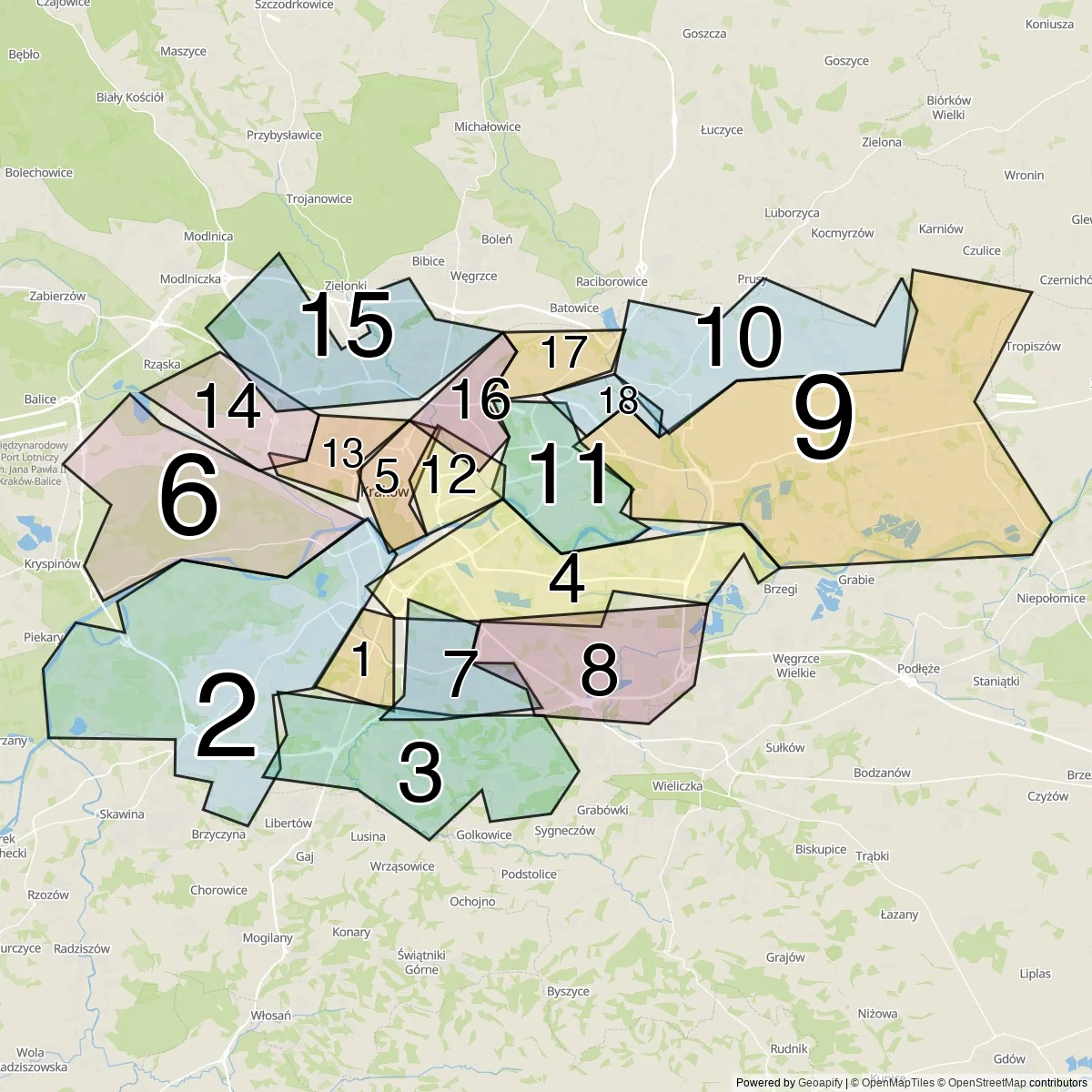
| # | Dzielnice |
|---|---|
| 1 | Łagiewniki-Borek Fałęcki |
| 2 | Dębniki |
| 3 | Swoszowice |
| 4 | Podgórze |
| 5 | Stare Miasto · Old Town |
| 6 | Zwierzyniec |
| 7 | Podgórze Duchackie |
| 8 | Bieżanów-Prokocim |
| 9 | Nowa Huta |
| 10 | Wzgórza Krzesławickie |
| 11 | Czyżyny |
| 12 | Grzegórzki |
| 13 | Krowodrza |
| 14 | Bronowice |
| 15 | Prądnik Biały |
| 16 | Prądnik Czerwony |
| 17 | Mistrzejowice |
| 18 | Bieńczyce |
Frequently Asked Questions About Visiting Krakow
Do I need a visa to visit Krakow?
Krakow is in Poland, an EU and Schengen Area member, so visa rules follow Schengen norms. EU/EEA/Swiss citizens enter freely with a national ID card. Citizens of the US, UK, Canada, Australia, Japan, and roughly 60 other countries enter visa-free for stays up to 90 days within any 180-day period — but starting in 2026 those visitors will need to register with the new ETIAS travel authorization system (about €7, valid 3 years). Other nationalities need a Schengen visa applied for at the Polish consulate before travel; the official portal is gov.pl/web/diplomacy (Polish Ministry of Foreign Affairs).
Is Krakow safe for tourists?
Krakow is one of Europe’s safer cities — violent crime against tourists is rare, and the Old Town is well-policed. The US State Department rates Poland at “exercise normal precautions.” Standard urban risks: pickpockets work the Rynek Główny, the Sukiennice, the trams (especially line 4 and 24), and the area around the main train station; aggressive panhandlers and the occasional fake-petition scam near major sights. Common scams: taxi overcharging (always use Bolt/FreeNow apps; avoid unlicensed cabs at the airport and station); fake tour-guide touts at Wawel Castle; the “rose-seller scam” near the Rynek where someone hands you a flower then demands payment. Generally safe to walk in central districts at night. The Russia-Ukraine war hasn’t directly affected Krakow’s safety; the city has hosted hundreds of thousands of Ukrainian refugees since 2022.
How many days do I need in Krakow?
Three full days is the practical minimum — two for Krakow itself and one for either Auschwitz or Wieliczka. A solid 3-day plan: Day 1 — Wawel Castle complex + Wawel Cathedral + Old Town walking tour (Rynek, St. Mary’s Basilica, Sukiennice, Underground Museum) + dinner on the Rynek; Day 2 — Kazimierz Jewish Quarter (synagogues + Galicia Museum) + Schindler’s Factory + Podgórze ghetto remnants + dinner at Plac Nowy; Day 3 — day trip to Auschwitz-Birkenau OR Wieliczka Salt Mine. Add a 4th day for the other day-trip plus Nowa Huta communism tour; a 5th day for Tatra Mountains/Zakopane (2 hours by bus) or Częstochowa.
What’s the best area to stay in Krakow?
Three solid options. Old Town (Stare Miasto) — the obvious central choice, walking distance to all major sights, atmospheric historic hotels in restored townhouses; pricey (€100–250/night) but irreplaceable for first-time visitors. Kazimierz — the local-cool choice; boutique hotels and design hostels at €60–120/night, Krakow’s best dining and bar scene, and a 15-minute walk to the Old Town; my pick for second-time visitors. Podgórze — modern hotels with riverside views at the lowest mid-range prices in central Krakow (€55–95/night), 20 minutes by foot to Old Town via the Bernatka footbridge. Avoid: the area immediately around Krakow Główny train station (cheap, anonymous, drunk-tourist territory at night) and any hotel more than 2 km from the Old Town.
How much does it cost to visit Krakow’s major sights?
Krakow’s headline sights are inexpensive by Western European standards. Wawel Royal Castle: tickets sold separately for each section, around 35–45 PLN per section (State Rooms, Royal Apartments, Crown Treasury, Lost Wawel) via wawel.krakow.pl. Wawel Cathedral: 21 PLN combined ticket including bell tower + crypts. St. Mary’s Basilica interior: 15 PLN. Underground Museum (Rynek Underground): 32 PLN via muzeumkrakowa.pl. Schindler’s Factory Museum: 32 PLN. Wieliczka Salt Mine: 109 PLN tourist route via wieliczka-saltmine.com. Auschwitz-Birkenau: free general entry but mandatory guided tour 90 PLN in high season — book via visit.auschwitz.org 2–4 weeks ahead.
Should I drink the tap water in Krakow?
Yes. Krakow’s tap water meets EU drinking-water standards and is genuinely good — sourced from the Raba River reservoir and filtered to high quality. The MPWiK Krakow utility publishes water quality reports. The water is mineral-light and pleasant. Restaurants often default to bottled water but will serve tap water (woda z kranu) on request — slightly less common than in Western Europe but improving. Bottled water is cheap (PLN 2–4 at supermarkets, PLN 6–12 in restaurants). The Tap Water Friendly Krakow initiative has installed dozens of public drinking fountains across the Planty park ring and Old Town.
Should I visit Auschwitz-Birkenau, and how do I prepare?
Most travelers do — and most find it the most moving experience of their visit. The Auschwitz-Birkenau State Museum at auschwitz.org handles 2+ million visitors per year. Practical advice: book free general-admission tickets via visit.auschwitz.org 2–4 weeks ahead — they sell out fast in summer. Between 10 am and 4 pm in high season (April–October), entry is only allowed with an authorized guide (additional ~90 PLN). Allow a full day with travel; the site is 65 km west of Krakow. Multiple Krakow operators run organised day tours with transport (~€35–50). Children: not recommended for children under 14. Photography: permitted in most areas but explicitly forbidden in the gas chamber and Block 11. Practical: bring water, food, and weather-appropriate clothing — Birkenau is huge and exposed; minimal commercial services on site. Dress respectfully — this is a memorial site, not a tourist attraction.
Is tipping expected in Krakow?
Yes — moderate tipping is standard in Krakow. Restaurants: 10% in cash for sit-down service if no service charge is added; round up at casual places. The Polish phrase “dziękuję” (“thank you”) when handing the server money signals you don’t want change back, which is occasionally misread by tourists who expect change — be explicit if you want change. Pubs and bars: round up to nearest PLN, or 10% for table service. Taxis (Bolt/FreeNow): rounding up to nearest PLN 5 is standard; not required. Hotel porters: PLN 5–10 per bag at upscale hotels. Tour guides: PLN 50–100 per person for half-day group tours, more for private. Spa, hair: 10% if pleased. Pay tips in cash — most card readers don’t allow tip add-on. Polish tipping culture is more conservative than American but more generous than German or Scandinavian.
AFRIKA
Cairo Hurghada Johannesburg Marrakech
ASIA
Abu Dhabi Agra Antalya Bangkok Batam Beijing Bengaluru Cebu City Chiang Mai Chiba Chennai Da Nang Dammam Delhi Denpasar Dubai Fukuoka Guangzhou Guilin Ha Long Hanoi Ho Chi Minh City Jakarta Jaipur Johor Bahru Kolkata Krabi Kuala Lumpur Kyoto Macau Mecca Medina Mugla Mumbai Osaka Pattaya Penang Phuket Riyadh Seoul Shanghai Shenzhen Singapore Taipei Tokyo Zhuhai
EUROPE
Amsterdam Athens Barcelona Berlin Brussels Budapest Copenhagen Dublin Florence Frankfurt am Main Heraklion Krakow Lisbon London Madrid Milan Munich Nice Paris Porto Prague Rhodes Rome Stockholm Venice Vienna Warsaw
NORTH AMERICA
Cancun Las Vegas Los Angeles Miami New York City Orlando San Francisco Toronto Vancouver
SOUTH AMERICA
Buenos Aires Lima Rio De Janeiro
OCEANIA
Auckland Honolulu Melbourne Sydney