
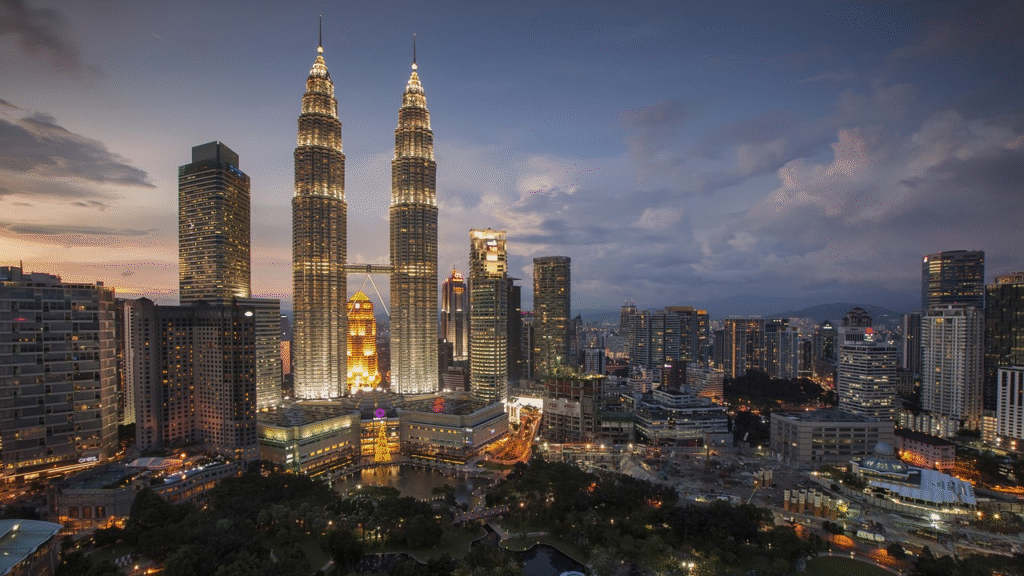
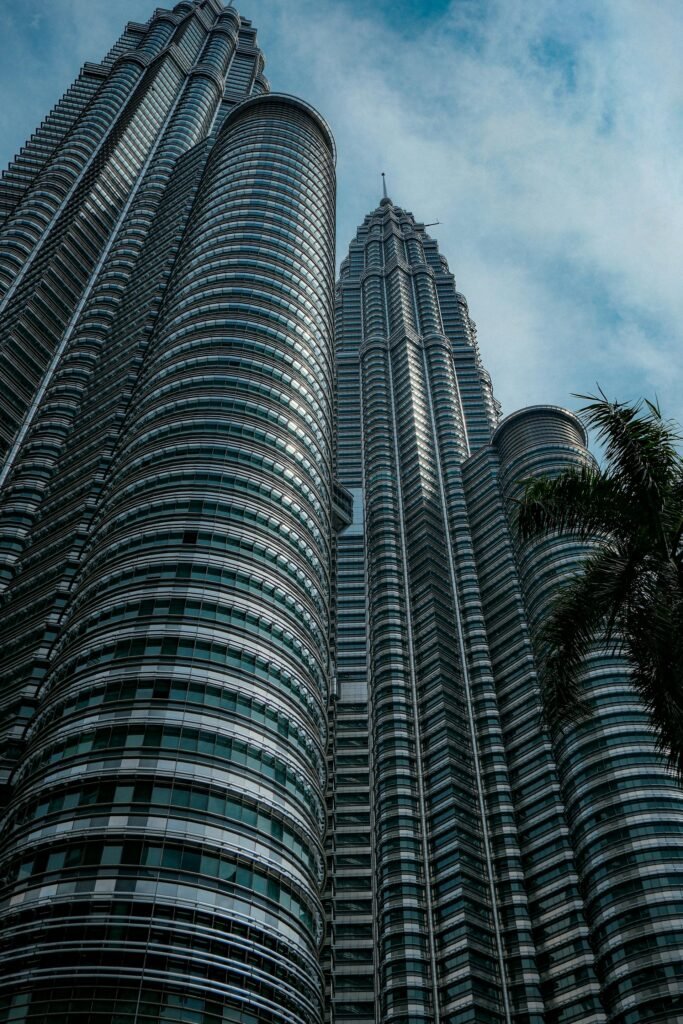
Kuala Lumpur is what happens when a tin-mining outpost grows into a 21st-century capital in 165 years flat. The city sits at the muddy confluence of the Gombak and Klang rivers — its name literally means “muddy confluence” in Malay — and stitches together a Malay political core, the largest Chinatown in Southeast Asia, an Indian enclave around Brickfields, and the gleaming KLCC business district under one consistently humid sky. The Petronas Twin Towers (452 m) and the newer Merdeka 118 (the world’s second-tallest building) anchor the modern skyline; the Sultan Abdul Samad Building’s Moorish clocktower anchors the colonial-era one. This guide covers what works on the ground today: which districts to base yourself in, the temples and towers worth the heat, the food worth chasing past the tourist menus, and how to navigate a city built around a fragmented but workable rail network.
Kuala Lumpur at a Glance: Essential Facts for Travelers
| Location | Federal Territory of Malaysia, 35 km from west coast |
|---|---|
| Coordinates | 3°8′N, 101°42′E |
| Population | 1.98 million (city), 7.5+ million (metro area) |
| Area | 243.7 km² |
| Population Density | 8,135 people per km² |
| Elevation | 22 meters above sea level |
| Time Zone | Malaysia Standard Time (MST, UTC+8) |
| Calling Code | +60 (0)3 |
| Postal Codes | 50000–60000 |
| Known For | Petronas Twin Towers, street food, multicultural harmony, economic hub |
| Current Mayor | Maimunah Mohd Sharif (since October 2024) |
| Official Website | www.dbkl.gov.my |
Upcoming Events in Kuala Lumpur
| Date | Title | Details |
|---|---|---|
| 2026-09-16 | Malaysia Day celebrations | Malaysia Day on 16 September commemorates the formation of Malaysia in 1963, when Malaya, Sabah, Sarawak and Singapore came together, and it is a nationwide public holiday. In Kuala Lumpur the day is marked with official ceremonies, flag-flying, cultural performances and family activities, while landmarks join in with themed programmes. Many museums and attractions run holiday promotions, and Merdeka Square is a natural focal point for visitors. Festivities are generally free to enjoy, and the patriotic mood offers travellers a glimpse of the country’s multicultural identity. [Source] |
| 2026-09-23 to 2026-09-26 | MIHAS – Malaysia International Halal Showcase at MITEC | The Malaysia International Halal Showcase, MIHAS, one of the world’s largest halal trade fairs, returns to the Malaysia International Trade and Exhibition Centre for four days from 23 September. Exhibitors from dozens of countries present halal-certified food and beverages, cosmetics, pharmaceuticals, finance and lifestyle services, while buyers and industry professionals network and source products. The fair is primarily a trade event with registration required, and it underlines Kuala Lumpur’s position as a global hub of the halal economy. Later days typically welcome broader visitor groups. [Source] |
| 2026-09-24 to 2026-09-27 | From Broadway to Disney: Lea Salonga with the MPO | Broadway and Disney legend Lea Salonga, the singing voice of Jasmine and Mulan and a Tony Award winner for Miss Saigon, joins the Malaysian Philharmonic Orchestra under conductor Gerard Salonga at the Dewan Filharmonik Petronas. Performances run on 24, 26 and 27 September, with a programme of show tunes and Disney favourites lasting about 80 minutes plus intermission. Ticket prices vary by seating category at the hall beneath the Petronas Twin Towers. An ideal night out for musical-theatre fans and families alike. [Source] |
| 2026-09-25 | Mid-Autumn (Mooncake) Festival at Thean Hou Temple | Kuala Lumpur’s Chinese community marks the Mid-Autumn (Mooncake) Festival with lantern processions, cultural shows and mooncakes shared among family and friends. The city’s Thean Hou Temple, a spectacular six-tiered Chinese temple, becomes a focal point, glowing with hundreds of red lanterns, while Petaling Street in Chinatown bustles with festive stalls. Falling on the 15th night of the eighth lunar month, the celebration draws visitors of all backgrounds. Entry to the temple and the street festivities is free, with food and lanterns for sale. [Source] |
| 2026-10-24 | A Regal Evening with Stephen Hough and the MPO | Celebrated British pianist Stephen Hough joins the Malaysian Philharmonic Orchestra and conductor Junichi Hirokami for A Regal Evening at the Dewan Filharmonik Petronas on Saturday 24 October at 8pm. The classical programme runs about 70 minutes plus a 20-minute intermission, showcasing one of today’s most admired concert pianists in the acoustically renowned hall at the foot of the Petronas Twin Towers. Tickets are sold through the MPO box office with prices varying by seat. A highlight of the orchestra’s 2026 season for serious music lovers. [Source] |
| 2026-10-29 to 2026-11-01 | HOMEDEC home decoration fair at KLCC | HOMEDEC, Malaysia’s long-running home decoration and renovation exhibition, takes over the Kuala Lumpur Convention Centre for four days from 29 October. Unlike most trade fairs it is open to the general public, letting homeowners meet interior designers, compare kitchens, furniture, smart-home systems and renovation packages, and pick up show-only deals under one roof. Entry is typically free with registration. Whether you are furnishing a first apartment or planning a full renovation, the fair gathers hundreds of brands conveniently in the city centre. [Source] |
| 2026-11-08 | Deepavali – Festival of Lights in Kuala Lumpur | Kuala Lumpur glows for Deepavali, the Hindu Festival of Lights, on 8 November, a public holiday in Malaysia. The heart of the celebration is Brickfields’ Little India, where festive bazaars selling saris, garlands, lamps and sweets fill the streets in the weeks beforehand, and colourful kolam rice-flour art decorates shopping malls across the city. Families share open houses, oil lamps are lit, and temples hold prayers. Visiting the bazaar and public displays is free, and the season offers a warm, sensory introduction to Malaysia’s Indian heritage. [Source] |
City News in Kuala Lumpur – last 14 days
| Date | Category | Headline | Details |
|---|---|---|---|
| 2026-09-14 | Public safety | Suspicious object in Sri Petaling destroyed by bomb squad, found to contain toy blocks | A suspicious object left in Sri Petaling prompted a full bomb-squad response, with police cordoning off a shoplot area while the unit carried out a controlled destruction of the package. When officers examined the remains, the mysterious parcel turned out to contain nothing more dangerous than toy building blocks. Video of the operation circulated widely online. Police nonetheless defended the precautionary response, noting that unattended packages must be treated as potential threats until cleared, and urged the public to report suspicious items rather than handle them. [Source] |
| 2026-09-14 | Local affairs | Former minister Jamil Khir appears in KL court over Tabung Haji RCI charges | Former minister in the Prime Minister’s Department Datuk Seri Jamil Khir appeared in a Kuala Lumpur court to face three charges arising from the royal commission of inquiry into the Tabung Haji pilgrimage fund. The case stems from findings about the management of the fund during his tenure overseeing religious affairs. The proceedings drew significant media attention as another high-profile accountability case involving a former federal minister. The charges were set out before the court, and the matter will continue through the judicial process. [Source] |
| 2026-09-14 | Culture | Malcolm Todd to make Kuala Lumpur debut with Do That Again Tour this December | American singer-songwriter Malcolm Todd will make his Kuala Lumpur debut this December as part of his Do That Again Tour, promoters have announced. The rising star, known for a blend of indie pop and R&B that has won a devoted young following on streaming platforms, adds Malaysia to an Asian itinerary that reflects the region’s growing pull for international acts. Ticketing details were reported alongside the announcement, and strong demand is expected from the city’s live-music fans when sales open. [Source] |
| 2026-09-14 | Business | Your Bourse opens Kuala Lumpur office for operations and support staff | Fintech firm Your Bourse has opened an office in Kuala Lumpur to house operations and support staff, expanding the trading-technology provider’s global footprint. The company, which supplies liquidity management and execution technology to brokers, joins a growing list of international financial technology businesses choosing the Malaysian capital as a regional base. The move reflects the city’s competitive costs, skilled workforce and position within Southeast Asia’s fast-growing financial services market, and it is expected to add specialist technology jobs locally. [Source] |
| 2026-09-14 | Business | Kuala Lumpur Kepong names Lee Jia Zhang as chief executive officer | Plantation and industrial group Kuala Lumpur Kepong has named Lee Jia Zhang as its chief executive officer, putting new leadership at the helm of one of Malaysia’s most prominent listed companies. The appointment marks a leadership transition for the group, whose interests span oleochemicals, plantations and property across several countries. Investors and industry observers will be watching closely to see how the new chief executive steers the company through commodity cycles and the sustainability expectations facing the palm oil sector. [Source] |
| 2026-09-14 | Local affairs | Former Singapore para-athlete now sells art on the streets of Kuala Lumpur | A former Singapore para-athlete now earns his living selling art on the streets of Kuala Lumpur, and a profile traces his journey from competitive sport to sidewalk galleries. Known as Dasuki, he speaks candidly about lost dreams, loneliness and regrets, admitting he would be lying if he said he was happy, while describing how drawing sustains him day to day. The story has resonated with readers across the Causeway, prompting reflection on the support available to athletes after their sporting careers end. [Source] |
| 2026-09-13 | Public safety | 472 foreigners detained in Lebuh Pudu operation as illegal clinics uncovered | Immigration and police officers detained 472 foreigners in a large-scale enforcement operation around Lebuh Pudu in central Kuala Lumpur, with footage showing some detainees scrambling and struggling with authorities during the crackdown. The sweep also uncovered suspected illegal clinics and pharmacies serving foreign communities, and the health ministry says four premises run by foreigners selling illegal medicines have been identified. Those detained were screened for immigration offences. The operation is part of a wider campaign targeting undocumented migrants and unlicensed businesses in the capital’s older commercial quarters. [Source] |
| 2026-09-13 | Local government | KL night market lots offered for RM1 a day | Kuala Lumpur City Hall is offering night market trading lots for just one ringgit a day, a move intended to lower barriers for small traders and revive street commerce across the capital. The scheme makes pitches affordable for hawkers and micro-entrepreneurs testing new products, and it is expected to add life to neighbourhood night markets. Traders must still register through the city’s licensing process. The initiative reflects City Hall’s push to support informal businesses that form a beloved part of Kuala Lumpur’s everyday food and retail culture. [Source] |
| 2026-09-13 | Sports | KL railway station hosts inaugural urban relay run | The historic Kuala Lumpur railway station hosted an inaugural urban relay run, bringing teams of runners to race through a course woven around one of the city’s most recognisable Moorish-style landmarks. The event combined sport with heritage, giving participants an unusual view of the century-old station and its surroundings. Organisers hope to make the relay a regular fixture on the city’s running calendar, adding to a growing scene of urban races in the capital. Participants and spectators praised the novel setting for the competition. [Source] |
| 2026-09-13 | Local affairs | Parliament Open Day draws record 13,368 visitors | The two-day Parliament Open Day attracted a record 13,368 visitors, giving members of the public a rare look inside the Malaysian legislature. Families and school groups toured the chambers and grounds, viewed exhibitions on parliamentary history and met officials during the open house. The record turnout was hailed as a sign of growing civic interest in how laws are made. Organisers said the event supports transparency and public engagement with democratic institutions, and similar open days are expected to continue in future years. [Source] |
| 2026-09-13 | Public safety | Man hospitalised after stabbing at KL Wholesale Market | A man in his thirties was taken to hospital after being stabbed in the back with a sharp metal object by an unknown assailant at the Kuala Lumpur Wholesale Market. The victim received treatment for his injuries while police opened an investigation to identify and trace the attacker. The market, a major hub supplying fresh produce to the capital’s retailers, operates around the clock and draws large crowds of workers. Authorities appealed for witnesses among the traders and workers present at the time. [Source] |
| 2026-09-12 | Public transport | Jalan Syed Putra-Jalan Istana intersection to close in stages from 14 September | The busy intersection of Jalan Syed Putra and Jalan Istana will be closed in stages beginning 14 September, with motorists advised to plan alternative routes and expect delays during the works. The phased closure affects a key artery linking the city centre with the southern suburbs. Traffic management measures, signage and diversions are being put in place to reduce congestion during peak hours. Drivers are urged to follow official updates as each stage of the closure takes effect over the coming weeks. [Source] |
| 2026-09-12 | Public transport | MAHB expects three more international airlines for KL by year-end alongside Lufthansa return | Malaysia Airports Holdings expects three more international airlines to begin serving Kuala Lumpur by the end of the year, alongside the previously announced return of Lufthansa. The new connections would strengthen KL International Airport’s network and support the country’s tourism push. The operator has been courting carriers with incentives as it works to rebuild and expand connectivity. Additional routes are expected to boost inbound travel and business links, giving passengers more direct options between Kuala Lumpur and major global hubs. [Source] |
| 2026-09-12 | Local government | Walkway dining welcomed in KL, but operators say safety must come first | Operators of eateries in Kuala Lumpur have welcomed moves to allow dining on pedestrian walkways but say safety must come first, responding to debate sparked by footage of chairs and tables crowding public five-foot ways. Business owners argue outdoor seating adds vibrancy and revenue, while critics counter that blocked walkways force pedestrians into traffic. City authorities are weighing rules on where and when tables may be placed. The discussion reflects a broader balancing act between street life and accessibility in the capital. [Source] |
Kuala Lumpur Events & City News Archive
Sources: Tourism Malaysia, EventsEye, Malaysian Philharmonic Orchestra, Malay Mail, Malay Mail, BusinessToday, Finance Magnates, Human Resources Online
Weather Forecast for the Next 14 Days in Kuala Lumpur
| Date | Weather | Max °F | Min °F | Rain mm |
|---|---|---|---|---|
| 2026-09-14 | 🌧️ | 92.0 °F | 78.3 °F | 0.9 mm |
| 2026-09-15 | 🌧️ | 92.4 °F | 76.3 °F | 1.3 mm |
| 2026-09-16 | 🌧️ | 89.1 °F | 74.5 °F | 13.5 mm |
| 2026-09-17 | 🌧️ | 91.7 °F | 75.7 °F | 3.3 mm |
| 2026-09-18 | 🌧️ | 90.3 °F | 75.3 °F | 5.2 mm |
| 2026-09-19 | ⛈️ | 88.1 °F | 73.9 °F | 20.1 mm |
| 2026-09-20 | 🌧️ | 90.4 °F | 76.2 °F | 0.3 mm |
| 2026-09-21 | ⛈️ | 89.5 °F | 75.1 °F | 9.6 mm |
| 2026-09-22 | 🌧️ | 87.2 °F | 77.3 °F | 4.2 mm |
| 2026-09-23 | ⛈️ | 90.6 °F | 75.4 °F | 4.2 mm |
| 2026-09-24 | 🌧️ | 93.2 °F | 75.7 °F | 0.6 mm |
| 2026-09-25 | 🌧️ | 90.8 °F | 76.0 °F | 2.1 mm |
| 2026-09-26 | 🌧️ | 91.4 °F | 74.1 °F | 13.5 mm |
| 2026-09-27 | 🌧️ | 89.7 °F | 74.8 °F | 8.1 mm |
Kuala Lumpur’s History
Kuala Lumpur’s transformation from a malaria-prone jungle clearing into a 21st-century capital city is one of the fastest urban biographies in modern Southeast Asia. Founded in 1857 by Chinese tin miners working at the muddy confluence of the Gombak and Klang rivers, KL spent its first three decades as a brawling mining town before British colonial administrators decided to make it the regional capital. The trajectory since then — colonial development, independence, the Petronas Towers, Merdeka 118 — is what you see in today’s skyline.
The Tin Rush Era (1857–1880s)
Tin deposits transformed a remote jungle clearing into a bustling mining town. Chinese immigrants — primarily from southern Chinese provinces — arrived in waves to work the mines, while Malay communities under leader Raja Abdullah provided local knowledge, leadership, and political authority. The early settlement faced tropical diseases, regular flooding, and violent conflicts between rival mining factions, but the promise of tin wealth kept drawing settlers. By the 1870s the town had a recognizable street grid and a population large enough to require formal administration.
Colonial Development (1880s–1957)
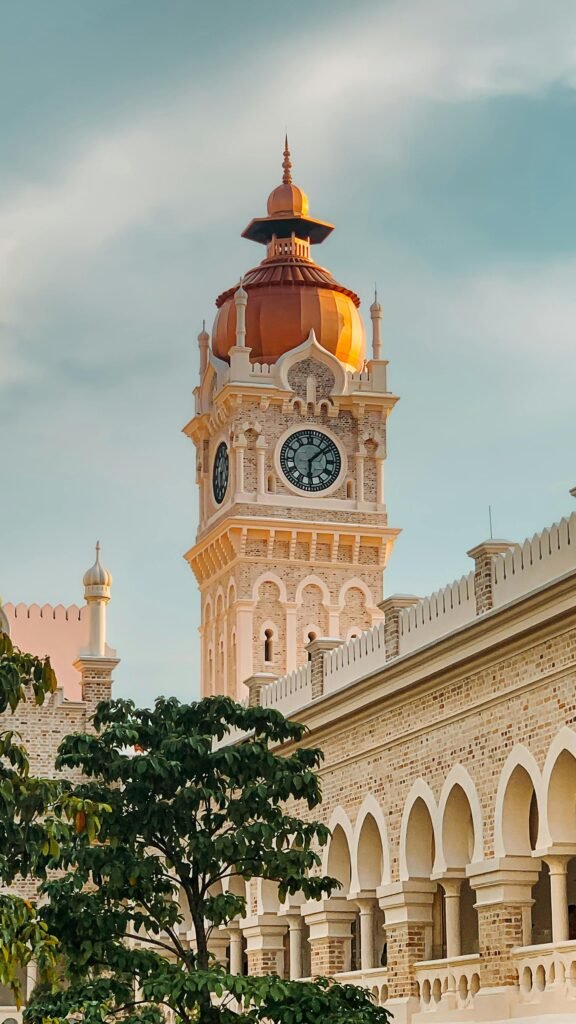
British colonial administrators recognized KL’s strategic position and developed it as an administrative center. In 1896, Kuala Lumpur was named capital of the newly formed Federated Malay States, cementing its political role. The colonial period produced KL’s most distinctive heritage architecture: the Sultan Abdul Samad Building (1897, with its Moorish copper-domed clocktower) on Merdeka Square, the Kuala Lumpur Railway Station (completed 1911, a Victorian-Moorish masterpiece), and the network of government buildings around the historic core that still anchors the city’s old town.
Path to Independence (1957–1974)
On August 31, 1957, the Malaysian flag was raised for the first time at Merdeka Square, marking independence from British rule. Kuala Lumpur served as capital of the newly independent Malaya, and from 1963 of Malaysia. The city achieved official city status in 1972, and just two years later in 1974 was declared a federal territory — separated administratively from Selangor state and given its current unique constitutional position as the federal capital.
Modern Transformation (1980s–Present)
The late 20th and early 21st centuries saw KL’s dramatic vertical expansion. The construction of the Petronas Twin Towers (completed 1998, briefly the world’s tallest buildings) symbolized Malaysia’s economic ambitions. The city’s metro infrastructure expanded with the LRT, KL Monorail, and most recently the MRT system. Merdeka 118 opened in 2024 at 678 meters — currently the world’s second-tallest building. Today, Kuala Lumpur consistently ranks among Southeast Asia’s most-livable cities and welcomes over 11 million visitors annually.
Geography, Climate & Best Time to Visit Kuala Lumpur
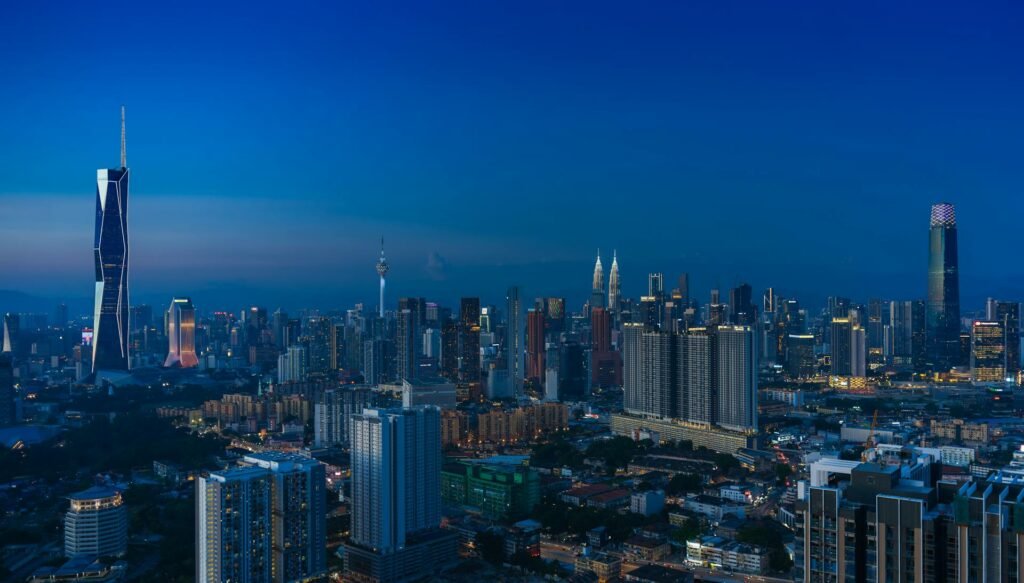
Kuala Lumpur sits in peninsular Malaysia, just 35 kilometers from the west coast. The city occupies 243.7 square kilometers at a relatively low elevation of 22 meters above sea level, where the Gombak and Klang rivers converge in the Klang Valley. Mountains to the east and south rim the valley, which has shaped the city’s growth pattern and contributes to occasional flooding during heavy monsoon rains.
Tropical Climate
KL has a tropical rainforest climate — consistently warm, consistently humid, no real “seasons” in the temperate sense. Daytime highs sit in the 31.5–33.2°C (89–92°F) range year-round; nighttime drops to 22.5–23.9°C (73–75°F). Humidity in the mid-80s percent is the constant backdrop. Rainfall happens throughout the year, with the wettest periods March–April and October–November (November typically the heaviest at 288 mm); June and July are slightly drier at around 125–127 mm. Even during the rainy months, KL averages 6 hours of daily sunshine — the rain typically arrives in dramatic afternoon thunderstorms rather than all-day downpours.
| Month | High (°C) | Low (°C) | Rainfall (mm) | Sunshine (hrs/day) |
|---|---|---|---|---|
| January | 32 | 23 | 170 | 6.0 |
| February | 33 | 23 | 165 | 6.8 |
| March | 33 | 23 | 241 | 6.7 |
| April | 33 | 24 | 259 | 6.6 |
| May | 33 | 24 | 204 | 6.7 |
| June | 33 | 24 | 125 | 6.5 |
| July | 32 | 23 | 127 | 6.5 |
| August | 32 | 23 | 156 | 6.1 |
| September | 32 | 23 | 193 | 5.5 |
| October | 32 | 23 | 253 | 5.5 |
| November | 32 | 23 | 288 | 5.1 |
| December | 32 | 23 | 246 | 5.2 |
Best Time to Visit
KL is technically a year-round destination given the consistent climate, but the drier months of June through August offer slightly less rain and more sunshine — best for outdoor sightseeing. Even during wetter months, the rain typically comes in short intense bursts rather than prolonged downpours, so plan flexibly: an afternoon thunderstorm rarely lasts more than 1–2 hours, and the post-storm air is some of the most pleasant the city offers. Be prepared for occasional haze during dry seasons (typically June–September), when forest fires in neighboring Sumatra can affect KL’s air quality. The city’s infrastructure handles tropical weather well — covered walkways, air-conditioned malls, efficient drainage.
Kuala Lumpur’s Districts & Neighborhoods
KL’s districts are well-defined by KL standards — the city has a Chinatown, a Little India, a colonial old town, and a modern business district that all sit within a 15-minute taxi or rail ride of each other. Choosing where to stay shapes the trip’s character.
Golden Triangle
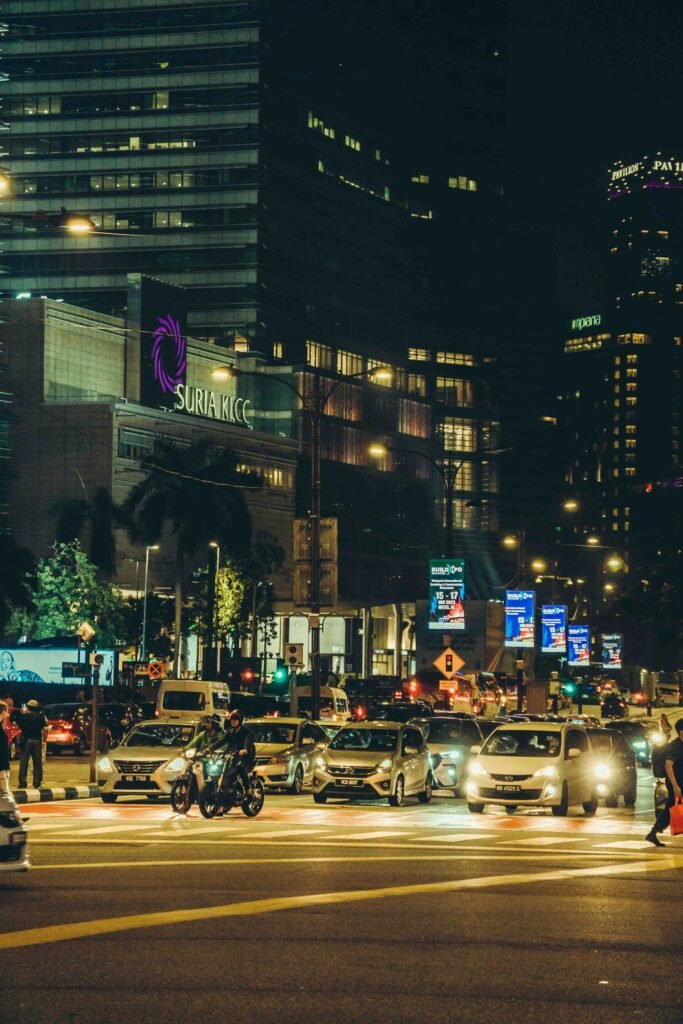
The heart of modern KL, encompassing the area around the Petronas Towers and the upscale KLCC district. Luxury hotels (Mandarin Oriental, Grand Hyatt, Four Seasons), high-end shopping at Suria KLCC, and the city’s most prestigious addresses. The district buzzes with nightlife and offers easy access to KLCC Park. Stay here if you want proximity to major attractions and the broadest restaurant options, with prices to match.
Bukit Bintang
KL’s premier shopping and entertainment district. The area around Jalan Bukit Bintang covers mega-malls (Pavilion KL, Lot 10, Sungei Wang Plaza, Berjaya Times Square), the Jalan Alor food street, and an enormous range of accommodations from backpacker hostels to luxury hotels. Best for first-time visitors who want to be in the thick of things; pair with the Bukit Bintang–KLCC pedestrian bridge to walk between the two districts in 15 minutes.
Chinatown (Petaling Street)
The famous Petaling Street night market is the headline draw, but the surrounding Chinatown extends across several blocks with traditional shophouses, family-run dim sum restaurants, Chinese temples, and some of the city’s best street food. Budget travelers find numerous affordable guesthouses and hostels here. Easy transit access via the Pasar Seni LRT and MRT stations.
Little India (Brickfields)
Brickfields showcases Malaysian Indian culture through Hindu temples, textile shops, banana-leaf restaurants, and South Indian sweet shops. Significant development around KL Sentral means modern hotels with excellent transit connections, while the surrounding Brickfields streets retain their character. A more affordable alternative to Golden Triangle staying with arguably better transport links — KL Sentral is the city’s main rail hub.
Lake Gardens Area
The Perdana Botanical Garden (still commonly called Lake Gardens) covers 92 hectares near Parliament House. The area houses the National Monument, the National Museum, and three specialized parks: KL Bird Park, Butterfly Park, and Deer Park. A peaceful retreat from the city center with hotels for travelers prioritizing tranquility over walking-distance to malls.
Mont Kiara & Sri Hartamas
Upscale residential areas popular with expatriates — international restaurants, trendy cafés, gated condominium developments, and shopping centers. Boutique hotels and serviced apartments are ideal for longer stays. Less central than the Golden Triangle but quieter and more residential-feeling.
Top Things to Do in Kuala Lumpur
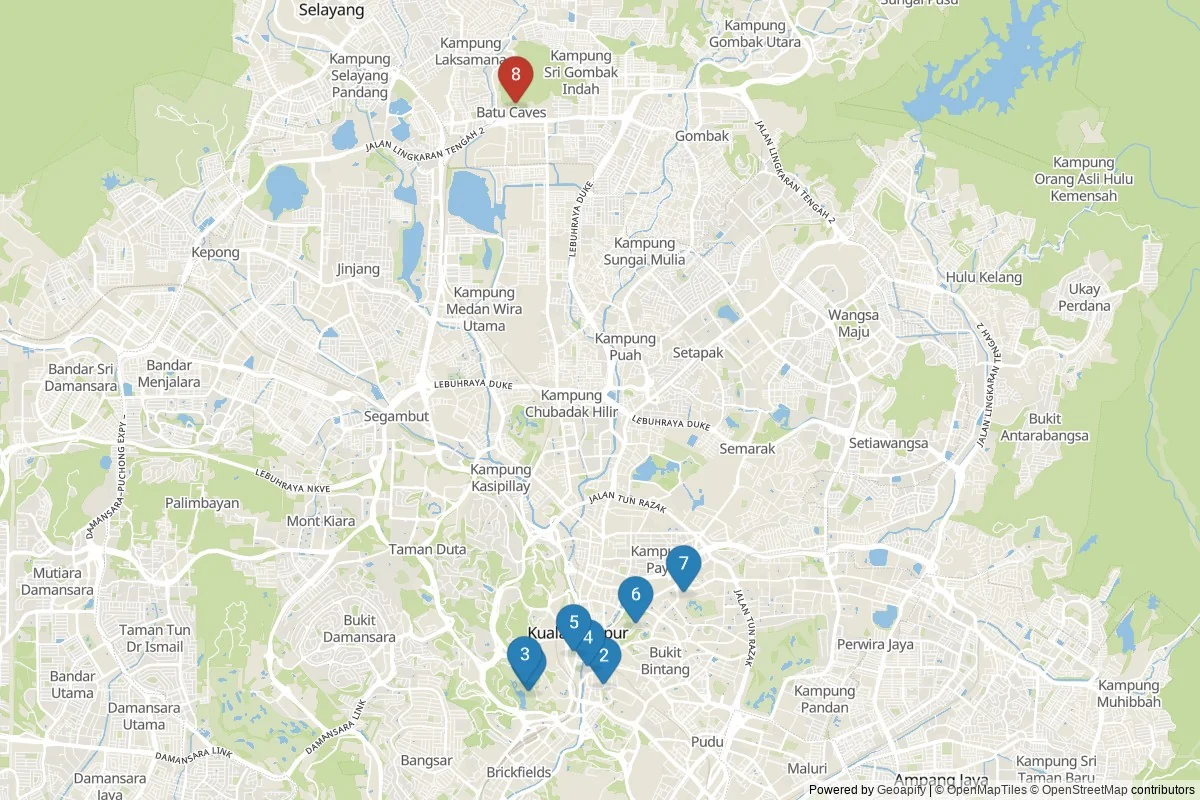
| # | Sight | Cluster | Type | Time | Entry | Best |
|---|---|---|---|---|---|---|
| 1 | Islamic Arts Museum | Central | Museum | ~2 hrs | RM 20 | Morning |
| 2 | Petaling Street (Chinatown) | Central | Market street | ~1.5 hrs | Free | Evening |
| 3 | KL Bird Park | Central | Aviary | ~2 hrs | RM 75 | Morning |
| 4 | Central Market | Central | Craft market | ~1 hr | Free | Afternoon |
| 5 | Merdeka Square | Central | Historic square | ~30 min | Free | Morning |
| 6 | KL Tower | Central | Observation tower | ~1 hr | RM 49 | Sunset |
| 7 | Petronas Twin Towers | Central | Iconic towers | ~2 hrs | RM 98 deck | Sunset |
| 8 | Batu Caves | Outer | Hindu shrine | ~2 hrs | Free | Early morning |
| 🚗 | Day Trip: Putrajaya | Day trip | Day trip | ½ day | Free | Morning |
| 🚗 | Day Trip: Genting Highlands | Day trip | Day trip | Full day | varies | Morning |
Iconic Landmarks
Petronas Twin Towers remain KL’s most recognizable symbol. The 452-meter twin giants were the world’s tallest buildings (1998–2004) and continue to dominate the skyline. Visitors can access the skybridge connecting the towers (level 41) or the observation deck on level 86; tickets sell out for sunset slots, book online at the official portal. The towers anchor the Suria KLCC shopping complex, one of Southeast Asia’s premier retail destinations.
Menara Kuala Lumpur (KL Tower), the 421-meter telecommunications tower, offers the highest public observation deck in the city — actually higher than the Petronas Towers’ deck because of the tower’s elevated hilltop position. The Sky Box (a glass-floored observation cube) is the adrenaline option.
Merdeka 118, opened in 2024 at 678 meters, is the world’s second-tallest building. The Merdeka 118 observation deck (top floors) provides 360-degree views with the Petronas Towers visible to the north — a contrast that captures KL’s modernization arc.
Merdeka Square is where Malaysia’s flag was first raised in 1957. The square features a 100-meter flagpole that held the world record for decades, surrounded by colonial-era buildings including the Moorish Sultan Abdul Samad Building with its distinctive copper-domed clocktower.
Religious & Cultural Sites
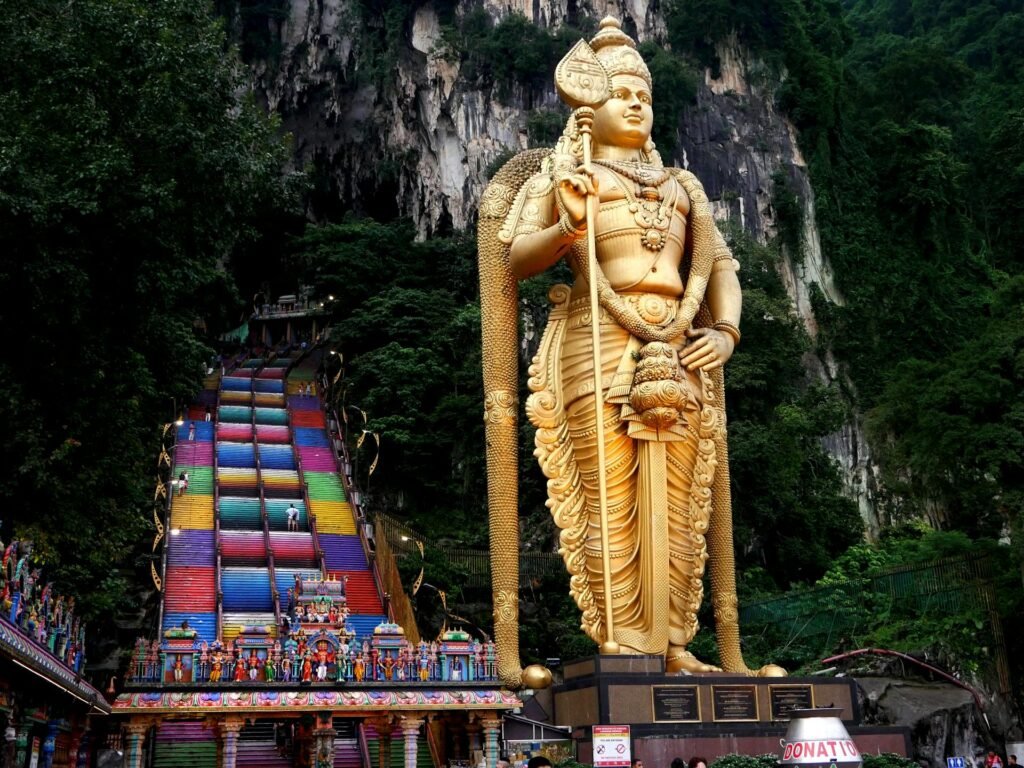
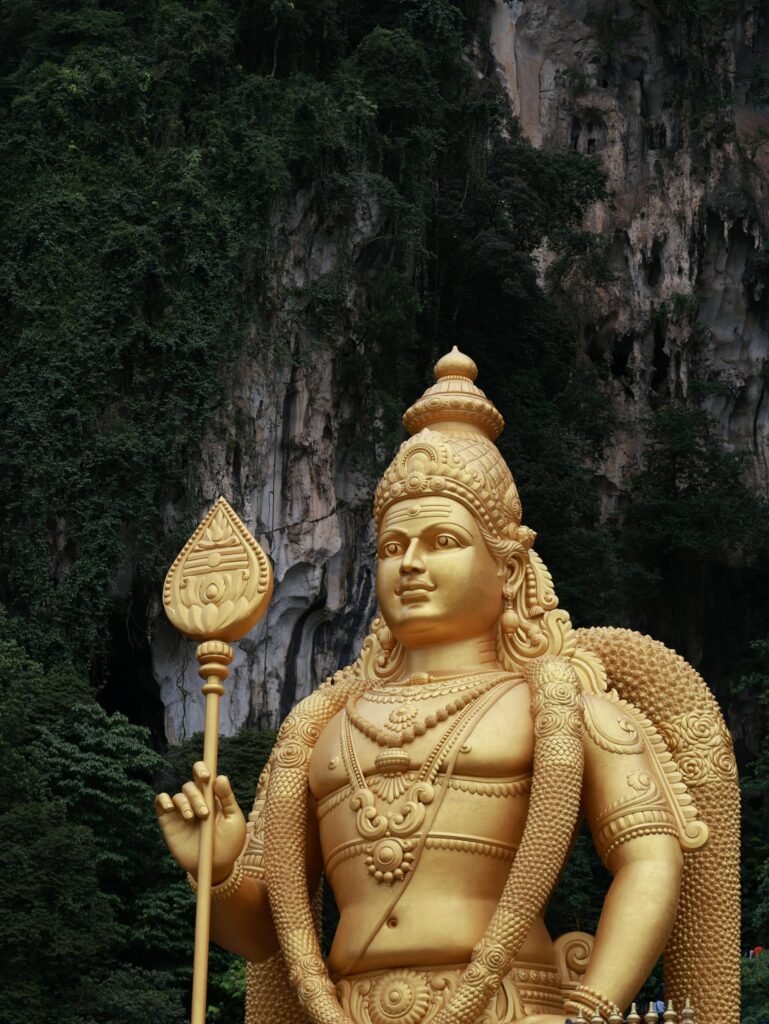
Batu Caves ranks among KL’s most popular attractions: limestone caves housing Hindu temples, accessed via a dramatic rainbow-colored staircase of 272 steps and the towering 42.7-meter golden statue of Lord Murugan at the entrance. The site combines natural wonder with active religious practice (especially during the Thaipusam festival in January/February). Be prepared for the resident macaque monkeys — they will steal anything edible left unattended.
Thean Hou Temple on Robson Hill showcases vibrant Chinese architecture and hosts Chinese New Year celebrations and traditional weddings — the temple offers excellent city views from its elevated position.
Masjid Negara (the National Mosque), built in 1965, impresses with modernist geometric design and serene reflecting pools. The mosque welcomes non-Muslim visitors outside prayer times; loaner robes are provided at the entrance.
Masjid Jamek sits at the historic confluence of the Gombak and Klang rivers — the literal birthplace of Kuala Lumpur. Recently renovated and reopened with restored Indo-Saracenic architecture from 1909.
Sri Mahamariamman Temple in Chinatown dazzles with colorful Hindu architecture and intricate gopuram (entrance tower) decorations — one of the oldest and most ornate Hindu temples in Malaysia.
Museums & Cultural Attractions
Muzium Negara (National Museum) provides comprehensive insight into Malaysia’s history through artifacts and exhibits spanning prehistory through independence. Islamic Arts Museum Malaysia houses one of Southeast Asia’s finest collections of Islamic art — calligraphy, textiles, jewelry, architectural models — in a beautifully designed building near Lake Gardens. The Textile Museum celebrates Malaysia’s fabric traditions, from traditional batik and songket to contemporary designs, with hands-on workshops for visitors.
Parks & Green Spaces
The 92-hectare Lake Gardens (Perdana Botanical Garden) near Parliament House includes the KL Bird Park (over 3,000 birds from 200 species in Southeast Asia’s largest walk-in aviary), the Butterfly Park (over 6,000 butterflies from 120 species), and the Deer Park. KLCC Park at the base of the Petronas Towers offers an urban oasis with jogging paths, a children’s playground, and the lake fountain shows that run nightly with the towers as backdrop.
Shopping & Markets
Central Market occupies a beautifully restored Art Deco building (1888 origins, 1937 current building) and serves as a curated cultural marketplace for local handicrafts, artwork, and traditional goods from Malaysia’s diverse communities. Petaling Street transforms into a vibrant night market each evening — souvenirs, electronics, copies, and some of the best street food in the city. Pavilion KL in Bukit Bintang is the upscale-shopping anchor, with international brands and the famous crystal-fountain photo spot.
Historical Architecture
Kuala Lumpur Railway Station (completed 1911) is one of the most ornate railway stations in Southeast Asia — Victorian-Moorish architecture by British architect Arthur Benison Hubback. While no longer the city’s primary terminus (KL Sentral took that role in 2001), it still serves commuter trains and stands as one of the great works of colonial-era public architecture in the region. Stadium Merdeka, built for Malaysia’s 1957 independence celebrations, remains an important venue and hosted the 1998 Commonwealth Games.
How to Get to Kuala Lumpur
By Air
Kuala Lumpur International Airport (KLIA) is the main gateway, located 45 km south of the city center. The airport handles both international and domestic flights; the KLIA2 terminal serves low-cost carriers (AirAsia is the dominant operator). The KLIA Ekspres train provides the fastest connection to downtown — KL Sentral in 28 minutes, with departures every 15–20 minutes; tickets RM 55 one-way. Taxis to Bukit Bintang/KLCC run RM 90–120 and 45–60 minutes depending on traffic. Grab is available and typically cheaper than metered taxis. Sultan Abdul Aziz Shah Airport in Subang primarily handles domestic flights and a few regional routes.
By Rail
KL Sentral serves as the main railway hub, connecting to KTM Intercity domestic services, the KLIA Ekspres, and city rail systems. KTM operates daytime trains to Singapore (about 7 hours via the Shuttle Tebrau bridge transfer) and to several Thai destinations.
By Road
Several major highways connect Kuala Lumpur to other Malaysian cities and neighboring countries. The North-South Expressway is the primary long-distance route, with regular bus services from major operators. Long-distance buses arrive at TBS (Terminal Bersepadu Selatan) for southern routes or Pudu Sentral for some northern routes.
By Ferry
While KL itself is inland, nearby Port Klang provides ferry connections to Indonesian destinations including Sumatra, with bus connections back to the city center.
Getting Around Kuala Lumpur
Rail Transit Systems
KL’s rail network is fragmented but functional. The LRT, KL Monorail, MRT, and KTM Komuter all converge near downtown, though transfers between lines sometimes require 5–10 minute walks between stations (Pasar Seni and Masjid Jamek being the worst offenders). The MRT, with the Kajang Line and Putrajaya Line, has expanded coverage substantially since 2017. Rapid KL operates much of the urban rail using mid-sized Bombardier trains. KL Sentral is the primary transportation hub linking nearly every major transit option — by far the most convenient transfer point.
The unified Touch ‘n Go card and the MyRapid app handle payment across most lines and many bus services.
Buses
The bus network covers extensive urban and suburban areas. Local buses (Rapid KL, Go KL — the free-of-charge city center routes) complement the rail system, though traffic congestion can significantly impact journey times during peak hours.
Taxis & Ride-Hailing
Traditional metered taxis remain plentiful, though rush-hour traffic can test patience. Grab dominates the ride-hailing market and is the easier option for visitors — upfront pricing in the app, no fare negotiation, English-language interface.
Walking
Many attractions in the Golden Triangle and KLCC are walkable from each other, especially via the elevated covered walkways and the Bukit Bintang–KLCC pedestrian bridge. The tropical climate makes covered walkways and air-conditioned mall connections particularly valuable. Outside the central districts, walking distances expand quickly and the heat-and-humidity combo makes longer walks unpleasant.
Food & Drink in Kuala Lumpur
Kuala Lumpur eats spectacularly. The Malay-Chinese-Indian culinary triangle, plus the city’s “mamak” tradition of 24-hour Indian-Muslim cafés, plus a serious Cantonese fine-dining scene, plus an emerging contemporary-Malaysian movement — KL is one of the cheapest world-class food cities you can visit, with the best street meals running RM 8–15 (USD 2–4).
Must-Try Local Dishes
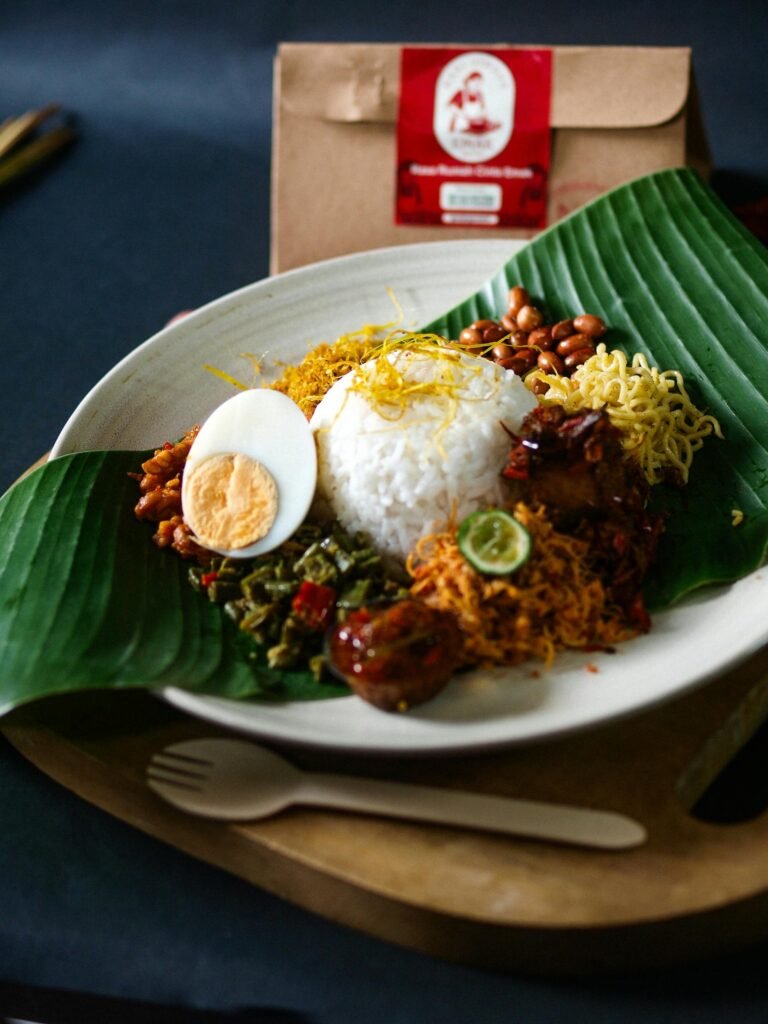
Nasi Lemak is Malaysia’s national dish — coconut-cooked rice served with sambal, anchovies, peanuts, boiled egg, and cucumber, often supplemented with fried chicken or rendang. Best at morning markets and traditional kopitiams (try Village Park Restaurant in Damansara Uptown). Char Kway Teow showcases the Chinese influence — stir-fried flat rice noodles with prawns, Chinese sausage, and bean sprouts cooked over high heat for the distinctive “wok hei” smoky flavor. Rendang is the pinnacle of Malay cuisine — slow-cooked beef or chicken in a rich coconut-and-spice paste simmered for hours. Roti Canai demonstrates Indian-Malay fusion: flaky, buttery flatbread served with curry dipping sauces, available at mamak stalls 24 hours a day. Hainanese Chicken Rice and Bak Kut Teh (peppery pork-rib soup) round out the canon.
Street Food & Night Markets
Petaling Street’s night market in Chinatown offers an authentic street food experience — satay skewers, durian pancakes, shaved ice, and fresh fruit. Jalan Alor in Bukit Bintang transforms each evening into a bustling food street where locals and tourists eat outdoors at plastic tables — Chinese-style seafood, barbecued meats, frog porridge, tropical fruit desserts. Lot 10 Hutong is a curated food court featuring some of KL’s most legendary hawker stalls in air-conditioned comfort.
Beverages
Teh Tarik (“pulled tea”) is Malaysia’s signature drink — strong black tea with condensed milk, dramatically poured between containers to create a frothy top. The preparation is half performance, half beverage service, and you’ll see it at every mamak stall. Kopi (coffee) culture thrives in traditional kopitiams, where beans are roasted with butter and sugar to create a distinctively rich, sweet brew served with condensed milk. Cendol — the Southeast Asian dessert drink with green rice-flour jelly, coconut milk, and palm sugar — provides cooling relief from the humidity.
Dining Districts
Bukit Bintang spans street food to fine dining with everything in between — a versatile base for food-focused trips. Bangsar and Sri Hartamas feature trendy restaurants and international cuisine, popular with expatriates and young professionals. Chinatown for authentic Cantonese in traditional settings. Brickfields for the city’s best banana-leaf rice and South Indian vegetarian options.
Culture & Arts in Kuala Lumpur
KL’s cultural landscape reflects its position as a Malay-Chinese-Indian-international melting pot. Festivals run almost continuously through the calendar, and the public-holiday system officially recognizes the religious festivals of all four major communities — meaning a year in KL includes Hari Raya, Chinese New Year, Deepavali, and Christmas as full national observances.
Festivals & Celebrations
Chinese New Year celebrations transform Chinatown with lion dances, dragon parades, and lantern displays. Deepavali (Diwali) festivities light up Brickfields and Little India with oil lamps and rangoli art. Hari Raya Aidilfitri marks the end of Ramadan with mosque visits and home-open-houses. Thaipusam at Batu Caves (January/February) is one of the most visually striking religious festivals in the world — devotees carry kavadi (decorated burdens) up the 272 steps. The annual Malaysia Day (September 16) and Merdeka Day (August 31) celebrations at Merdeka Square include parades, cultural shows, and fireworks.
Arts & Performance Venues
The Kuala Lumpur Performing Arts Centre (klpac) in Sentul Park is the city’s premier venue for theater, dance, and musical performances by both local and international companies. Istana Budaya (Palace of Culture) serves as the national theater and hosts traditional Malaysian performances alongside contemporary work. Petronas Philharmonic Hall in the Petronas Towers’ Twin Office complex is home to the Malaysian Philharmonic Orchestra.
Traditional Crafts
Central Market functions as a hub for traditional Malaysian crafts — batik textile artisans, pewter workshops (Royal Selangor’s flagship), wood carvers, and rattan weavers all keep stalls or studios here. Hands-on workshops are available for visitors interested in learning traditional techniques. KL’s diverse communities maintain their craft traditions — Chinese calligraphy and paper cutting, Indian rangoli art, Malay songket weaving — all visible in the city’s cultural-heritage events.
Kuala Lumpur by District: The 7 Zones
Kuala Lumpur is divided into 7 main zones. The map below shows their official OSM boundaries, colour-coded to match the table — a quick way to orient yourself before zooming in on individual sights.

| # | Zones |
|---|---|
| 1 | Pusat KL · KLCC |
| 2 | Bukit Bintang |
| 3 | Petaling Street · Chinatown |
| 4 | Brickfields · Lake Gardens / Brickfields |
| 5 | Bangsar |
| 6 | Mont Kiara · Mont Kiara / N |
| 7 | Cheras · Cheras / SE |
Frequently Asked Questions About Visiting Kuala Lumpur
Do I need a visa to visit Malaysia?
Many travelers don’t. Malaysia grants visa-free entry for 90 days to passport holders from over 60 countries — including the US, UK, EU member states, Canada, Australia, Japan, and most of South America. ASEAN-country citizens enter visa-free for 30 days. For other nationalities or longer stays, the standard route is the e-Visa applied for via the official portal at imi.gov.my (Malaysian Immigration Department) or via the dedicated e-Visa portal at evisa.imi.gov.my. Always verify current eligibility — the Malaysian government has shifted entry rules multiple times since 2020.
Is Kuala Lumpur safe for tourists?
Yes, generally — KL is one of Southeast Asia’s safer capital cities for visitors. Violent crime against tourists is rare. The everyday risks are pickpocketing in crowded tourist areas (Petaling Street night market, Bukit Bintang, KLCC during peak hours), motorcycle-borne snatch theft (keep bags away from the road-facing side when walking), and tourist scams around the major sights (taxi drivers refusing the meter, “free temple tour” leading to a shop, fake monks asking for donations). The US State Department rates Malaysia at “exercise increased caution” — driven primarily by the eastern Sabah maritime advisory, not KL specifically. Use Grab rather than hailed taxis, and you’ll avoid most of the scam vectors.
How many days do I need in Kuala Lumpur?
Three full days handles the headline sights without rushing; four to five is comfortable and lets you add Batu Caves and a Putrajaya half-day. A solid 3-day plan: Day 1 the Petronas Towers + KLCC Park + dinner in Bukit Bintang or Jalan Alor; Day 2 the colonial heritage area (Merdeka Square, Sultan Abdul Samad Building, Masjid Jamek) + Chinatown for lunch and Petaling Street at night; Day 3 Batu Caves in the morning + Lake Gardens (Bird Park, Butterfly Park, Islamic Arts Museum) in the afternoon. Stretch to 4–5 days for Putrajaya, Genting Highlands, Melaka day trip, or relaxed pace. Many visitors use KL as a 2-day stopover on a longer Southeast Asia trip — that’s enough to taste the city but not enough to really see it.
What’s the best area to stay in Kuala Lumpur?
Three solid options. Bukit Bintang is the all-rounder — the densest restaurant scene, multiple BTS-equivalent connections, all hotel tiers from hostels to Grand Hyatt. KLCC / Golden Triangle is the upscale option around the Petronas Towers — Mandarin Oriental, Four Seasons, premium hotels with skyline views; pricier but iconic. KL Sentral / Brickfields wins on transport — direct KLIA Ekspres connection (28 minutes from the airport) and the rail hub for everything in Greater KL — at lower price points than the Golden Triangle. Skip Chinatown as a base unless you’re price-conscious and don’t mind older budget hotels. Skip the airport-area hotels entirely unless you have an extremely early flight.
How much does it cost to visit the Petronas Towers?
Adult tickets to the Petronas Twin Towers Skybridge and Observation Deck are RM 80–98 for international visitors (lower for Malaysian residents and children) — current pricing is published at the official petronastwintowers.com.my portal, where you can book online to avoid the on-site queue. Sunset slots book out weeks in advance during peak season; try the morning’s first slot if you want to skip the wait. The KLCC Park fountain shows around the towers’ base are free, run nightly, and are arguably more photogenic than the deck view itself. Menara KL Tower (RM 49 standard, RM 105 with Sky Box) is the alternative — a higher observation deck because of the elevated location and includes the photogenic glass-floored Sky Box.
Should I drink the tap water in Kuala Lumpur?
Technically Malaysia treats tap water to drinking standards, but the local norm is bottled water — partly for taste, partly because old building plumbing can affect quality at the tap. The CDC’s Malaysia travel health page recommends bottled or treated water for visitors. Bottled water (Spritzer, Cactus, Bleu) is sold everywhere at RM 2–4 per liter. Hotels almost universally provide complimentary bottled water in rooms. In quality restaurants, tap water served as drinking water is usually filtered; in hawker stalls, ice is generally fine but skip if you’re traveling with sensitive stomachs.
What language is spoken in Kuala Lumpur?
Bahasa Malaysia (Malay) is the official national language, but English is extraordinarily widely spoken — Malaysia ranks among the highest non-native-English-speaking countries in the world for English proficiency. You’ll get by perfectly in English at any tourist-facing business: hotels, restaurants, taxis, attractions, even most government services. Many Malaysians use a code-switching mix of Malay, English, Chinese (Mandarin or Cantonese), and Tamil depending on the conversation — the famous “Manglish” — but Standard English is universally understood. Knowing a few Malay courtesy words (“terima kasih” = thank you, “selamat pagi” = good morning) is appreciated but not necessary.
Is tipping expected in Kuala Lumpur?
Less than in the US, similar to Hong Kong or Singapore. Most mid-to-upscale restaurants automatically add a 10% service charge plus 8% SST (Sales and Service Tax) — check the bill (often shown as “+10% S/C and +8% SST”). When the service charge is included, additional tipping is optional — leave the small change or round up if pleased. Restaurants without service charge: 10% in cash for sit-down meals; nothing required at hawker stalls or food courts. Taxis: not expected; round up to the nearest RM. Grab: in-app tipping is available but not the default expectation. Hotel porters: RM 5–10 per bag at upscale hotels. Spa, salon, hair: 10% if pleased. Tour guides: RM 50–100 per day for a full-service guide. Carry small notes (RM 10s and 20s) — they’re easier to use across the spectrum from hawker meals to hotel tips.
Economy & Business in Kuala Lumpur
KL is Malaysia’s economic engine. Greater Kuala Lumpur generates a metropolitan GDP of around USD 172 billion (2014 baseline; current figures higher), ranking the city among the top 70 metropolitan economies globally. The city houses the headquarters of major Malaysian corporations and the Malaysian operations of most multinational firms operating in Southeast Asia.
Key Industries
The technology sector concentrates around the Multimedia Super Corridor (MSC) — the federal government initiative that has attracted electronics giants and IT companies since the late 1990s. Cyberjaya, located south of the city, hosts pharmaceutical and biotechnology companies. Financial services anchor in the KLCC and KL Sentral districts, with major Malaysian banks (Maybank, CIMB, Public Bank) and the Malaysian operations of regional and global financial firms. The Bursa Malaysia (Kuala Lumpur Stock Exchange) is one of Southeast Asia’s significant financial markets. Manufacturing remains substantial in the metro area, particularly automobile assembly, electronics, and food processing. Tourism contributes meaningfully — over 13 million annual international visitors before 2020, with arrivals now back near pre-pandemic levels.
Business Environment
Kuala Lumpur ranked Southeast Asia’s second-most livable city after Singapore in the 2018 EIU index, and the city continues to attract international businesses and expatriate workers with modern infrastructure, reliable utilities, and one of the region’s strongest English-language working environments. The Malaysian government actively promotes foreign investment through MIDA (the Malaysian Investment Development Authority) incentive programs and has established special economic zones — Iskandar Malaysia in Johor and the Digital Economy Corridor — to attract specific industries.
Education in Kuala Lumpur
Kuala Lumpur hosts several prestigious institutions that serve both Malaysian and international students. Universiti Malaya (UM) is the country’s oldest and most prestigious university, consistently ranking among Southeast Asia’s top institutions and among the global QS top 100 in recent years; founded 1949 (with predecessor institutions back to 1905). Universiti Kuala Lumpur (UniKL) specializes in engineering and technology programs, with industry-aligned curricula. HELP University, Sunway University (in nearby Sunway), and Taylor’s University (Subang Jaya) are among the leading private institutions, many with twinning programs with British and Australian universities. KL also hosts numerous international schools and branch campuses of foreign universities — Monash University Malaysia, the University of Nottingham Malaysia, and Heriot-Watt University Malaysia among them — making the city attractive for expatriate families and international students.
Kuala Lumpur is the kind of city that improves the longer you stay. The headline sights — Petronas Towers, Batu Caves, the Sultan Abdul Samad Building — are genuinely worth the time, but the deeper rewards are in the food culture, the casual cross-cultural fluency that defines daily life, and the city’s surprising amount of green space. Whether the draw is the architecture, the cuisine, or the easy access to the rest of Southeast Asia, KL rewards visitors who give it more than the standard 48-hour stop on the Singapore-Bangkok circuit.
AFRIKA
Cairo Hurghada Johannesburg Marrakech
ASIA
Abu Dhabi Agra Antalya Bangkok Batam Beijing Bengaluru Cebu City Chiang Mai Chiba Chennai Da Nang Dammam Delhi Denpasar Dubai Fukuoka Guangzhou Guilin Ha Long Hanoi Ho Chi Minh City Jakarta Jaipur Johor Bahru Kolkata Krabi Kuala Lumpur Kyoto Macau Mecca Medina Mugla Mumbai Osaka Pattaya Penang Phuket Riyadh Seoul Shanghai Shenzhen Singapore Taipei Tokyo Zhuhai
EUROPE
Amsterdam Athens Barcelona Berlin Brussels Budapest Copenhagen Dublin Florence Frankfurt am Main Heraklion Krakow Lisbon London Madrid Milan Munich Nice Paris Porto Prague Rhodes Rome Stockholm Venice Vienna Warsaw
NORTH AMERICA
Cancun Las Vegas Los Angeles Miami New York City Orlando San Francisco Toronto Vancouver
SOUTH AMERICA
Buenos Aires Lima Rio De Janeiro
OCEANIA
Auckland Honolulu Melbourne Sydney