
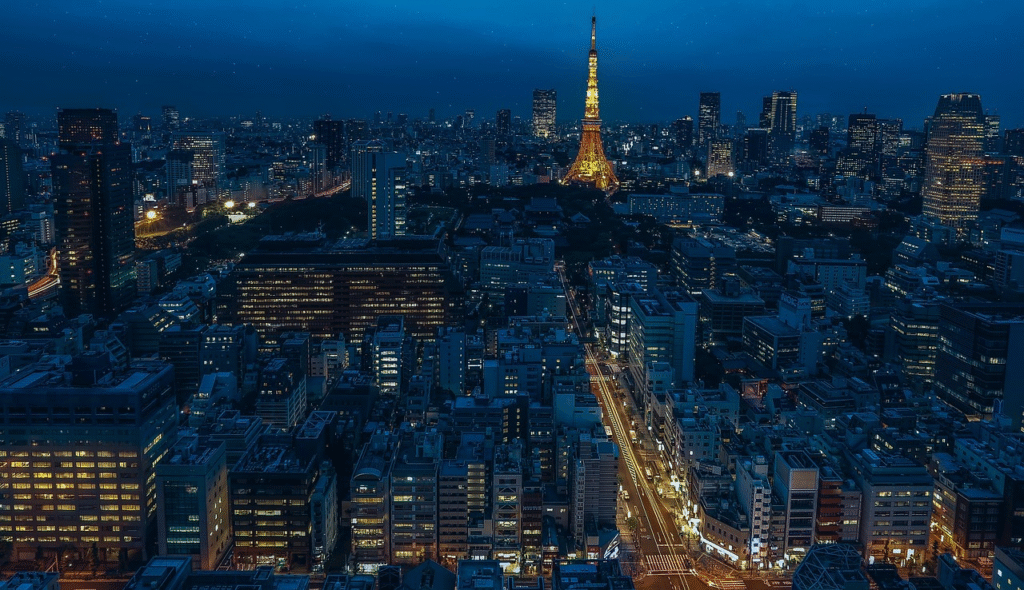
Walkerssk, pixabay
Tokyo stands as Japan’s electrifying capital and the world’s most populous urban area, where ancient traditions seamlessly blend with cutting-edge innovation. This remarkable metropolis comprises 23 special wards that function as independent cities, creating a unique urban tapestry across 622 square kilometers. From the neon-lit streets of Shibuya to the serene gardens of the Imperial Palace, Tokyo offers an unparalleled experience where samurai history meets robot cafes, and every corner reveals new adventures.
Tokyo at a Glance: Essential Facts for Travelers
Tokyo: Key Facts & Tourism Statistics
| International arrivals | 24.79 million (2024, foreign travelers visiting Tokyo) — Tokyo Metropolitan Government tourism statistics |
|---|---|
| Population | 14.1 million (2024, Tokyo Metropolitan Government population estimate) |
| Best time to visit | March, April, May, October and November |
| Airport to city centre | Narita Express (from NRT): ~55 min, ~US$20 |
| Currency | Japanese yen (JPY) |
| Time zone | UTC+9 (JST) |
| Visa | Visa-free short stays (up to 90 days) for ~70 nationalities (MOFA). |
How many tourists visit Tokyo per year?
Tokyo recorded 24.79 million foreign travelers visiting Tokyo in 2024, according to Tokyo Metropolitan Government tourism statistics.
What is the best time to visit Tokyo?
The most comfortable months to visit Tokyo are typically March, April, May, October and November, based on 1991–2020 climate normals for temperature and rainfall.
How do I get from the airport to central Tokyo?
The Narita Express (from NRT) takes about 55 minutes to the city centre for about US$20 (~JPY 3,070 to Tokyo Station).
What currency is used in Tokyo?
Tokyo uses the Japanese yen (JPY); the local time zone is UTC+9 (JST).
Do I need a visa to visit Tokyo?
Visa-free short stays (up to 90 days) for ~70 nationalities (MOFA).
How many people live in Tokyo?
Tokyo has a population of about 14.1 million (Tokyo Metropolis), per Tokyo Metropolitan Government population estimate (2024).
Tokyo climate: monthly averages (1991–2020)
| Month | Avg high | Avg low | Rain |
|---|---|---|---|
| Jan | 8.2 °C | 0.2 °C | 68 mm |
| Feb | 9.1 °C | 0.9 °C | 66 mm |
| Mar | 12.3 °C | 4.3 °C | 111 mm |
| Apr | 17.2 °C | 9.5 °C | 113 mm |
| May | 21.6 °C | 14.5 °C | 131 mm |
| Jun | 24.5 °C | 18.5 °C | 164 mm |
| Jul | 28.1 °C | 22.3 °C | 147 mm |
| Aug | 29.6 °C | 23.6 °C | 114 mm |
| Sep | 26.1 °C | 20.3 °C | 187 mm |
| Oct | 20.7 °C | 14.5 °C | 206 mm |
| Nov | 15.6 °C | 8.5 °C | 90 mm |
| Dec | 10.7 °C | 3 °C | 59 mm |
Data last verified: 2026-09-01 · Climate: Open-Meteo ERA5 reanalysis, monthly normals computed from daily data 1991–2020 · Sources: TMG tourism statistics (arrivals) · TMG (population) · JR East / Tokyo Monorail (transfer) (primary source) · World’s most visited cities · Methodology
Upcoming Events in Tokyo
| Date | Title | Details |
|---|---|---|
| 2026-04-29 to 2026-09-23 | Ron Mueck at Mori Art Museum – Final Days | The Mori Art Museum’s acclaimed Ron Mueck exhibition enters its final days, closing on 23 September after a run that began in late April. The Australian-born sculptor’s hyperrealistic human figures, from the monumental to the unsettlingly intimate, reward close viewing of every pore and hair. Staged on the 53rd floor of Roppongi Hills Mori Tower, the show pairs naturally with the Tokyo City View observation deck. Timed tickets are sold online at varying prices, and the last week is expected to be busy, so weekday morning visits are the safest bet. [Source] |
| 2026-09-13 to 2026-09-27 | Grand Sumo September Tournament (Aki Basho) | Tokyo’s autumn sumo tournament fills the Ryogoku Kokugikan for 15 days each September, as the sport’s top wrestlers battle daily for the Emperor’s Cup. Doors open in the morning for the lower ranks, building to the thunderous top-division bouts in the late afternoon amid rituals of salt-throwing and ceremony. Tickets range from affordable arena seats to prized ringside box cushions, and the atmosphere is electric on the final weekend. A quintessential Tokyo experience for sports and culture lovers alike. [Source] |
| 2026-10-11 to 2026-10-13 | Oeshiki Festival at Ikegami Honmon-ji | Each October the temple of Ikegami Honmon-ji in Ota ward marks the anniversary of the death of the Buddhist monk Nichiren with Oeshiki, one of Tokyo’s most atmospheric traditional festivals. On the main evening, tens of thousands join a night procession carrying towering illuminated mando lanterns decorated with paper cherry blossoms, accompanied by drums and flutes as they wind toward the temple. The event is free to attend, with lively food stalls lining the approach. A moving, uniquely local spectacle. [Source] |
| 2026-10-26 to 2026-11-04 | Tokyo International Film Festival 2026 | One of Asia’s leading film festivals returns to the Hibiya, Yurakucho and Ginza area in late October, screening a competition line-up of international premieres alongside Japanese cinema, retrospectives and industry events. Red-carpet appearances by directors and stars draw crowds, while the public can buy tickets to a broad programme of features and shorts. Ticket prices are reasonable for individual screenings. A highlight for film buffs and a chance to catch new work before wider release. [Source] |
| 2026-10-31 to 2026-11-01 | Roppongi Art Night 2026 | Roppongi Art Night transforms the district into an all-night art adventure from the evening of 31 October into 1 November, with more than 60 artworks, installations and performances spread across Roppongi Hills, Tokyo Midtown, the Mori Art Museum area and surrounding streets. The dusk-to-dawn format lets night owls wander between glowing sculptures, video works and live happenings, with the biggest crowds around midnight. Much of the outdoor programme can be enjoyed as you stroll, while some venues and special programmes are ticketed; check the official listings for access details. [Source] |
| 2026-10-31 to 2027-03-28 | Mariko Mori: All That Shines at Mori Art Museum | The Mori Art Museum opens a major exhibition by Japanese artist Mariko Mori on 31 October, running until 28 March 2027. All That Shines surveys the internationally celebrated artist’s luminous practice, which fuses technology, spirituality and cosmic imagery in immersive installations and sleek sculptural forms. Staged in the museum’s galleries atop Roppongi Hills Mori Tower, it is the marquee show of Tokyo’s winter art season. Timed tickets are sold at varying prices through the museum’s online portal, and the opening weekend coincides with Roppongi Art Night for a full art-filled visit. [Source] |
City News in Tokyo – last 14 days
| Date | Category | Headline | Details |
|---|---|---|---|
| 2026-09-14 | Business | BOJ expected to lift key rate to 1.25% this week | The Bank of Japan’s policy board meets this week in Tokyo and is widely expected to raise the uncollateralized overnight call rate to 1.25 percent, a move markets see as effectively baked in. Attention has shifted to the central bank’s outlook and the tone of its communication, which will shape expectations for further tightening. The decision matters for mortgage holders, businesses and the yen, as Japan continues its gradual departure from decades of ultra-loose policy. [Source] |
| 2026-09-14 | Local government | Murai tipped for key post in LDP executive reshuffle | Hideki Murai is likely to be named parliamentary affairs chief in a reshuffle of the Liberal Democratic Party’s executive line-up, a notable break from custom since the post is traditionally held by a former cabinet minister. The changes come as the administration reorganises its top team in Nagatacho, Tokyo’s political district, with a cabinet reshuffle also in motion. Opposition figures are watching how the new appointments will affect the handling of Diet business this autumn. [Source] |
| 2026-09-14 | Public safety | Gold bar scam losses hit 8.13 billion yen in half a year | Losses from scams involving gold bars reached 8.13 billion yen across Japan in the first half of 2026, already surpassing the 6.02 billion yen lost in all of last year. Fraudsters increasingly instruct victims to convert savings into gold before handing it over, exploiting the metal’s soaring price and the difficulty of tracing physical bullion. Police are urging residents, particularly older people in urban areas like Tokyo, to be wary of any instruction to buy gold. [Source] |
| 2026-09-14 | Local affairs | Takaichi hosts IEA chief for energy security talks | Prime Minister Sanae Takaichi met International Energy Agency Executive Director Fatih Birol in Tokyo, saying she hopes to make the global supply-demand structure more resilient through closer cooperation with the agency. The talks focused on energy security at a time of elevated global prices and supply concerns, issues that weigh directly on electricity costs for households and industry in the capital. Japan is positioning itself as an active partner in stabilising international energy markets. [Source] |
| 2026-09-14 | Sports | X League rocked by ghost pro scandal as Minerva boycotts game | Japan’s top American football competition, the X League, has been shaken by a so-called ghost pro scandal, with the Minerva side boycotting its game against Obic amid a dispute over contract violations tied to the league’s new licensing system. The league had hoped the licensing reform would bring greater exposure to the sport, and it has, though not in the manner intended. Possible sanctions against the boycotting team are now under discussion. [Source] |
| 2026-09-14 | Public safety | Yamanashi to charge for offseason Mount Fuji helicopter rescues | Yamanashi Prefecture will begin charging climbers who require rescue by disaster-response helicopter on Mount Fuji during the closed season if they failed to submit a climbing plan beforehand. The measure targets reckless offseason ascents of the mountain, a popular excursion for Tokyo residents and visitors, which have strained emergency services. Officials hope the fee will deter ill-prepared climbers from attempting the peak outside the official season, when weather conditions turn dangerous quickly. [Source] |
| 2026-09-14 | Culture | Thriller star Asako Yuzuki pivots to children’s books | Asako Yuzuki, the Tokyo-based novelist internationally famous for thrillers such as Butter, has turned to children’s literature with her new book Mari the Unwonderful Witch. The surprise pivot from dark, food-obsessed crime fiction to storytelling for young readers has intrigued Japan’s literary world, where Yuzuki ranks among the most translated contemporary voices. The release adds to a busy season for Japanese publishing as authors experiment across genres and reach new audiences at home and abroad. [Source] |
Tokyo Events & City News Archive
Sources: Mori Art Museum, Japan Sumo Association, Ikegami Honmon-ji, Tokyo International Film Festival, Time Out Tokyo, Japan Times, Japan Times, Japan Times
Weather Forecast for the Next 14 Days in Tokyo
| Date | Weather | Max °F | Min °F | Rain mm |
|---|---|---|---|---|
| 2026-09-14 | ☁️ | 88.8 °F | 74.4 °F | 0.0 mm |
| 2026-09-15 | 🌧️ | 80.0 °F | 73.5 °F | 25.0 mm |
| 2026-09-16 | 🌧️ | 77.7 °F | 68.1 °F | 56.6 mm |
| 2026-09-17 | 🌧️ | 75.0 °F | 67.1 °F | 3.9 mm |
| 2026-09-18 | ☁️ | 74.1 °F | 65.8 °F | 0.0 mm |
| 2026-09-19 | 🌧️ | 76.9 °F | 68.6 °F | 1.5 mm |
| 2026-09-20 | 🌧️ | 79.5 °F | 71.4 °F | 10.6 mm |
| 2026-09-21 | 🌧️ | 79.4 °F | 73.0 °F | 2.8 mm |
| 2026-09-22 | ⛈️ | 80.5 °F | 71.2 °F | 29.0 mm |
| 2026-09-23 | ⛈️ | 85.7 °F | 68.5 °F | 113.6 mm |
| 2026-09-24 | ⛅ | 76.8 °F | 64.9 °F | 0.0 mm |
| 2026-09-25 | ⛅ | 79.3 °F | 66.3 °F | 0.0 mm |
| 2026-09-26 | ☁️ | 79.8 °F | 70.3 °F | 0.0 mm |
| 2026-09-27 | 🌧️ | 77.6 °F | 64.8 °F | 1.2 mm |
Tokyo’s History
Tokyo is the world’s largest metropolis — 37 million people in the Greater Tokyo Area — and one of the most fully realized urban experiments in human history. The city has been completely destroyed twice in living memory (the 1923 Kantō earthquake, the 1944–45 American firebombing) and rebuilt itself each time. The current city is the third generation since the start of the 20th century; the next reconstruction is presumably already in the planning stages.
From Edo Village to Imperial Capital (1446–1868)
Tokyo’s story begins in 1446 when warrior Ōta Dōkan built Edo Castle in the swampy delta near Tokyo Bay. The fishing village remained obscure until 1590, when Tokugawa Ieyasu claimed the castle as his power base. The Tokugawa shogunate (1603–1868) ruled Japan from Edo for 260 years; under the Edo Period, the city exploded into one of the largest cities in the world (population over 1 million by 1720, exceeding contemporaneous London or Paris).
The shogunate’s Sankin-kōtai system required all 270 daimyō (feudal lords) to maintain residences in Edo while keeping their families in the capital as effective hostages — creating a constant flow of samurai, merchants, and craftsmen, plus the urban infrastructure to support them. After the devastating Great Fire of Meireki (1657) killed an estimated 100,000 people, the city was rebuilt with wider streets, firebreaks, and the now-iconic gridded layout.
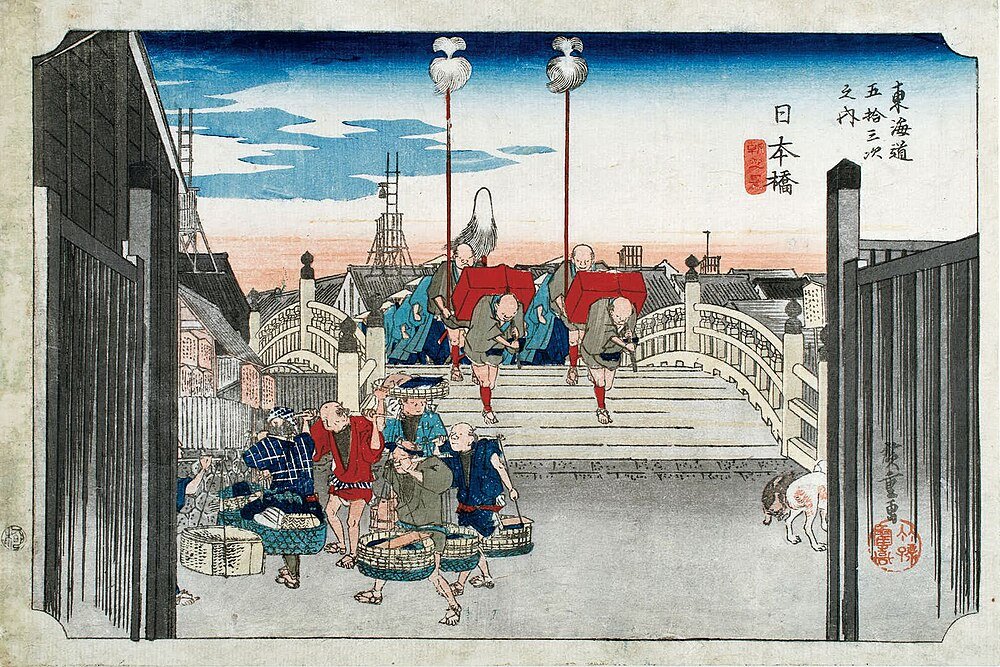
Nihonbashi Bridge in Edo, 1832 woodblock print by Hiroshige
The Meiji Transformation (1868–1912)
The Meiji Restoration of 1868 ended the shogunate. Emperor Meiji moved the imperial court from Kyoto to Edo, renaming the city Tōkyō (“Eastern Capital”). What followed was one of history’s most rapid modernizations. After the 1872 Ginza fire destroyed the central commercial district, English architect Thomas Waters and the Meiji government rebuilt with European-style brick buildings, wide gas-lit boulevards, and tram lines. The first railway in Japan opened the same year, connecting Tokyo to Yokohama. By the 1890s, Tokyo’s population exceeded 1.5 million; the country’s first university, parliament, and modern banking system were all established here.
Disaster and Rebirth (1923–1945)
The Great Kantō Earthquake of 1 September 1923 (M 7.9) struck at lunchtime when many wooden houses had cooking fires lit. The resulting fires killed 105,000–143,000 and destroyed 60% of the city; the human toll remains the worst earthquake catastrophe in modern Japanese history. Reconstruction was rapid; by 1930, Tokyo had over 200,000 new buildings, including modernist concrete bridges spanning the Sumida River and the famous Marunouchi business district.
WWII brought even worse destruction. The 1944–45 American firebombing campaign targeted Tokyo’s wooden working-class neighborhoods; the 10 March 1945 bombing alone killed roughly 100,000 people in a single night — the deadliest air raid in human history before the atomic bombings. By war’s end, central Tokyo was almost entirely destroyed.
Olympic Dreams and Economic Miracles (1945–Present)
The American occupation (1945–1952) saw Tokyo begin its second 20th-century rebirth. The Korean War (1950–53) brought a manufacturing boom; the post-war Japanese economic miracle turned Tokyo into one of the world’s wealthiest cities by 1970. The 1964 Summer Olympics announced Tokyo’s return — architect Kenzō Tange’s Yoyogi National Gymnasium remains an architectural icon. The 1980s “bubble economy” drove real estate prices to absurd levels (the Imperial Palace grounds were briefly worth more than all of California). The bubble burst in 1990; the “Lost Decade” of stagnation that followed lasted closer to thirty years.
Despite the 1995 Aum Shinrikyo subway sarin attack, the 1997 Asian financial crisis, the 2011 Fukushima earthquake and tsunami (which damaged peripheral northeastern cities but spared Tokyo), and the COVID-postponed but eventually-completed 2020 Olympics held in 2021, Tokyo has remained one of the world’s most consequential cities. Mayor (Governor) Yuriko Koike has led the metropolitan government since 2016; the city is currently planning major infrastructure expansion including the Linear Chuo Shinkansen maglev line set to open in stages from 2027.
Geography, Climate & Best Time to Visit Tokyo
Geographic Setting
Tokyo sits on the western shore of Tokyo Bay, on the largest island Honshū, within the fertile Kantō Plain. The plain owes its rich soil to centuries of Mount Fuji volcanic ash deposition; Fuji-san itself is visible from many high-rise observation decks on clear winter mornings, 100 km southwest of central Tokyo. The bay provides a deep natural harbor; ambitious land reclamation has created the artificial islands of Odaiba and the Toyosu Market complex.
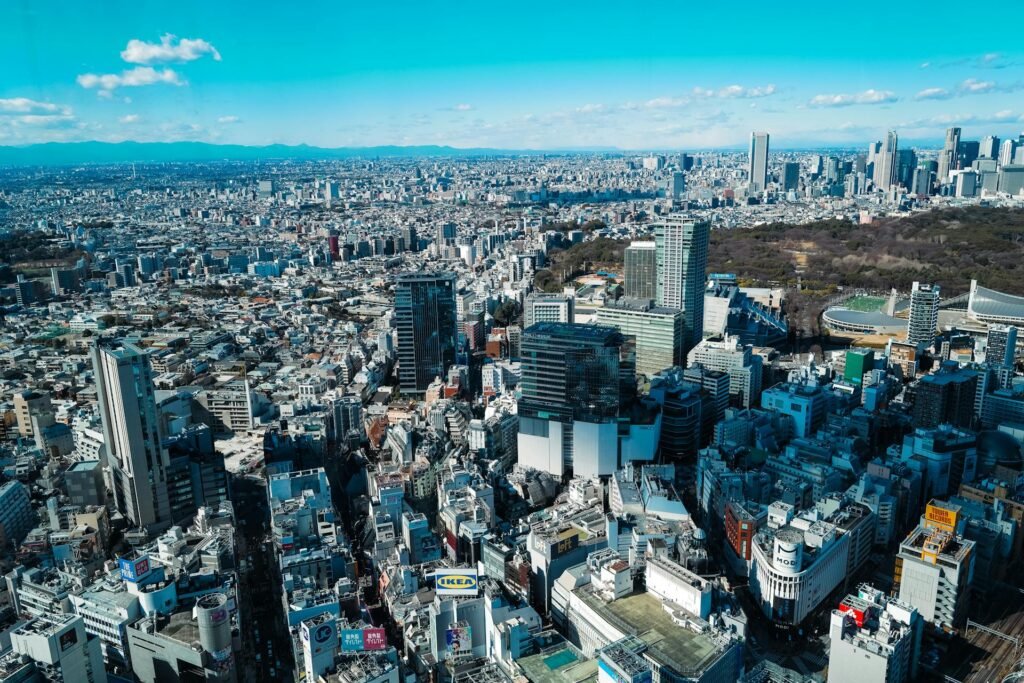
The Greater Tokyo Area extends up to 70 km from central Tokyo, encompassing Yokohama (3.8M, Japan’s second-largest city), Saitama (1.3M), Kawasaki (1.5M), and Chiba (1M) — together forming the world’s largest metropolitan region by population (37+ million).
Climate Overview
Tokyo has a humid subtropical climate with four sharply distinct seasons. Annual average 15.6°C; rainfall 1,467 mm. Summers are hot, humid, typhoon-prone (June–October); winters are dry and clear with occasional snow.
| Season | Temperature Range | Characteristics |
|---|---|---|
| Spring (March-May) | 5°C-20°C | Cherry blossoms, mild weather |
| Summer (June-August) | 20°C-30°C | Hot, humid, rainy season in June-July |
| Autumn (September-November) | 13°C-23°C | Crisp air, beautiful foliage, typhoon season |
| Winter (December-February) | 0°C-10°C | Cool, dry, occasional snow |
Best Time to Visit
Late March to mid-April brings the iconic cherry blossom (sakura) peak — the dates shift annually; check forecasts at jnto.go.jp. The two-week blossom window draws massive domestic and international tourism. Late October to late November is the second great window — autumn foliage (kōyō) at the Imperial Palace gardens, Shinjuku Gyoen, and the temples of Kamakura. July–August is brutal: 35°C+, 80% humidity, daily rain in early summer (the tsuyu rainy season), peak typhoon risk in August. December–February is dry and clear (best Mt. Fuji visibility) with mild cold; January–February attracts winter sports tourism north to Hokkaido.
Tokyo’s Districts & Neighborhoods
Tokyo is administratively split into 23 special wards (each with its own elected mayor and full city services), plus 26 cities, 5 towns, and 8 villages in the Tokyo Metropolis. Visitors mostly experience 6–8 of the 23 wards.
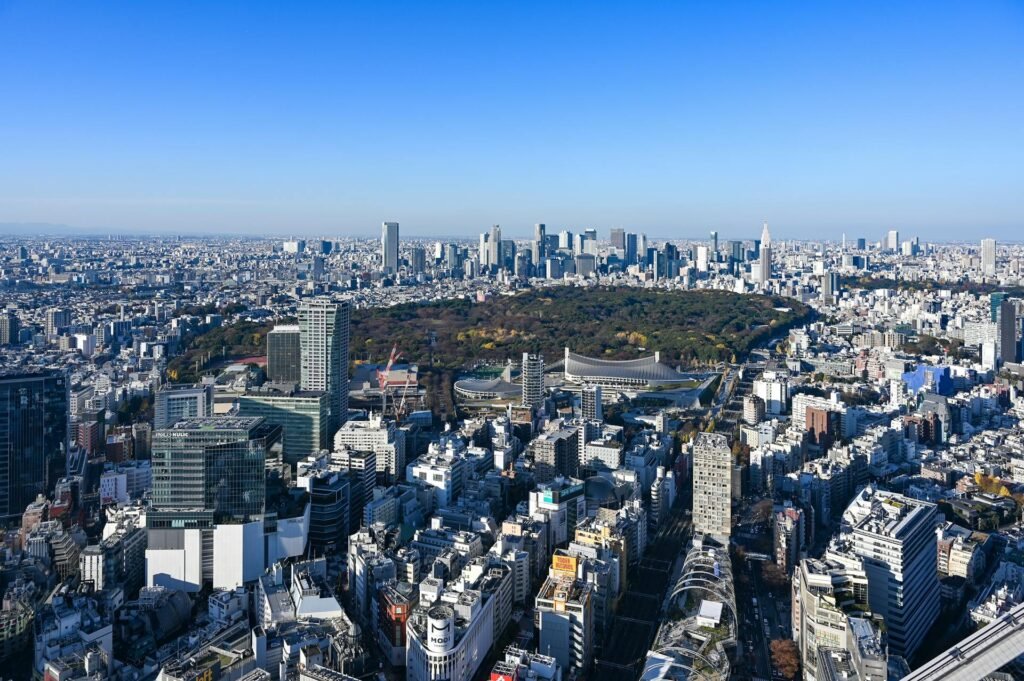
Central Tokyo
Chiyoda: the political and historical core — Imperial Palace, government quarter (Kasumigaseki), business district (Marunouchi), Tokyo Station, the Akihabara electronics quarter. Chūō: the upscale Ginza shopping district, Tsukiji and the new Toyosu fish market, Nihonbashi (the original “zero kilometer” mark of all Japanese roads). Minato: Tokyo Tower, the Roppongi nightlife and contemporary art quarter, the artificial Odaiba island, foreign embassies.
Western Districts
Shinjuku: the new center of gravity — Shinjuku Station (the world’s busiest train station, 3.6M daily passengers), the skyscraper Nishi-Shinjuku district, the Kabukichō entertainment quarter, the serene Shinjuku Gyoen national garden. Shibuya: the famous scramble crossing, Shibuya Sky observation deck, the Hachiko statue, the youth fashion mecca. Harajuku (within Shibuya ward): Takeshita Street’s youth subculture, Omotesandō’s high-fashion boulevard, Meiji Shrine in the adjacent forest.
Eastern Areas
Asakusa (Taitō ward): Old Tokyo character — Sensō-ji Temple (the city’s oldest, founded 645 CE), Nakamise traditional shopping street, the historic working-class Shitamachi district. Sumida: the Tokyo Skytree (634 m, the world’s second-tallest tower) and the Sumida Hokusai Museum. Ueno (also Taitō): Ueno Park’s museum cluster (Tokyo National Museum, Western Art, Science Museum) plus Ameya-Yokochō market and Ueno Zoo.
Where to Stay
- Shinjuku: best for first-time visitors and business travelers; the transport hub plus dense restaurants and nightlife.
- Shibuya: ideal for fashion and youth culture; lots of food and shopping.
- Asakusa: cultural immersion in old-Tokyo atmosphere; cheaper hotels in restored ryokans and modern boutique conversions.
- Ginza: luxury travelers (Aman Tokyo, Mandarin Oriental, Peninsula); upscale restaurants and shopping at hand.
- Roppongi: international visitors, expat-friendly hotels (Grand Hyatt, Ritz-Carlton, Andaz), nightlife.
Top Things to Do in Tokyo
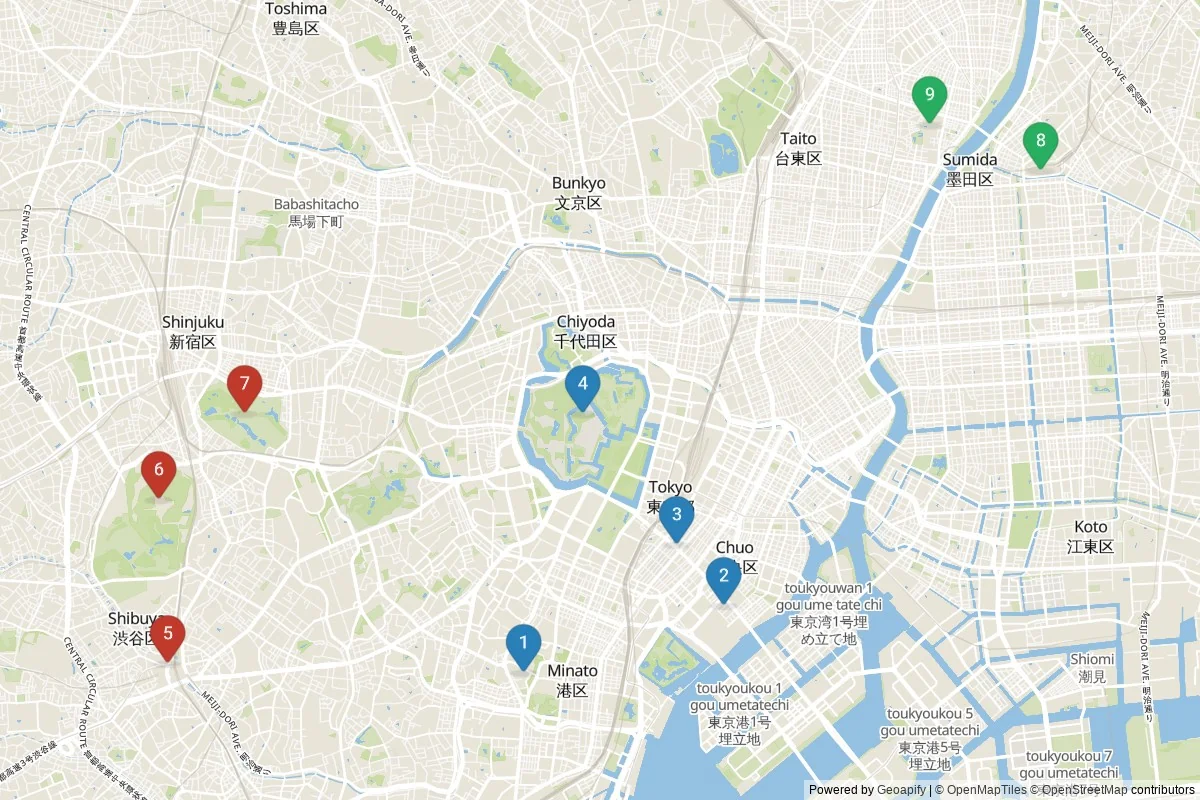
| # | Sight | Cluster | Type | Time | Entry | Best |
|---|---|---|---|---|---|---|
| 1 | Tokyo Tower | Central | Iconic tower | ~1 hr | ¥1,200 | Sunset |
| 2 | Tsukiji Outer Market | Central | Food market | ~1.5 hrs | Free | Early morning |
| 3 | Ginza | Central | Shopping district | ~2 hrs | Free | Afternoon |
| 4 | Imperial Palace | Central | Royal palace | ~1.5 hrs | Free | Morning |
| 5 | Shibuya Crossing | Outer | Iconic crossing | ~30 min | Free | Evening |
| 6 | Meiji Shrine | Outer | Shinto shrine | ~1 hr | Free | Morning |
| 7 | Shinjuku Gyoen | Outer | Park | ~1.5 hrs | ¥500 | Afternoon |
| 8 | Tokyo Skytree | Far | Observation tower | ~1.5 hrs | ¥2,100 | Sunset |
| 9 | Senso-ji & Asakusa | Far | Buddhist temple | ~2 hrs | Free | Early morning |
| 🚗 | Day Trip: Kamakura | Day trip | Day trip | Full day | ¥920 | Morning |
| 🚗 | Day Trip: Mount Fuji | Day trip | Day trip | Full day | varies | Morning |
Iconic Landmarks
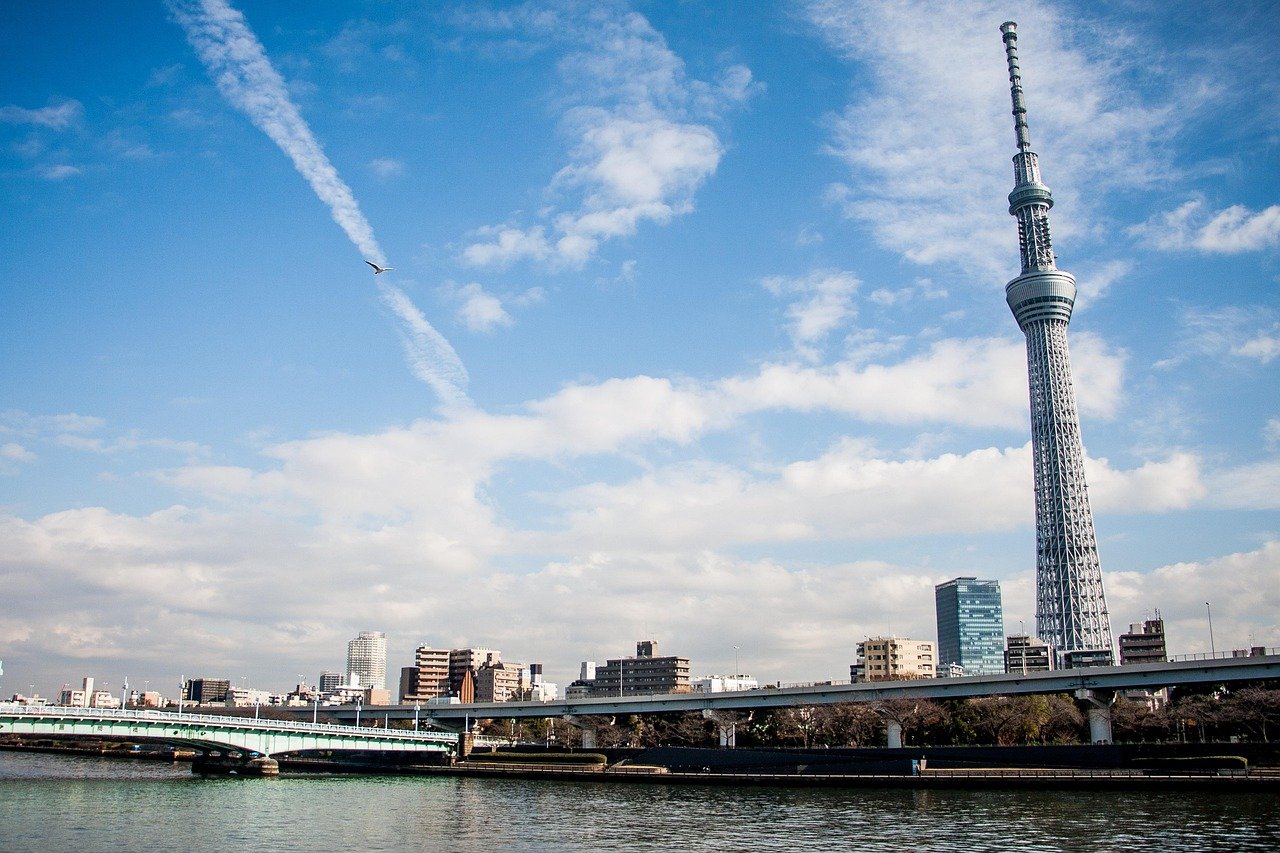
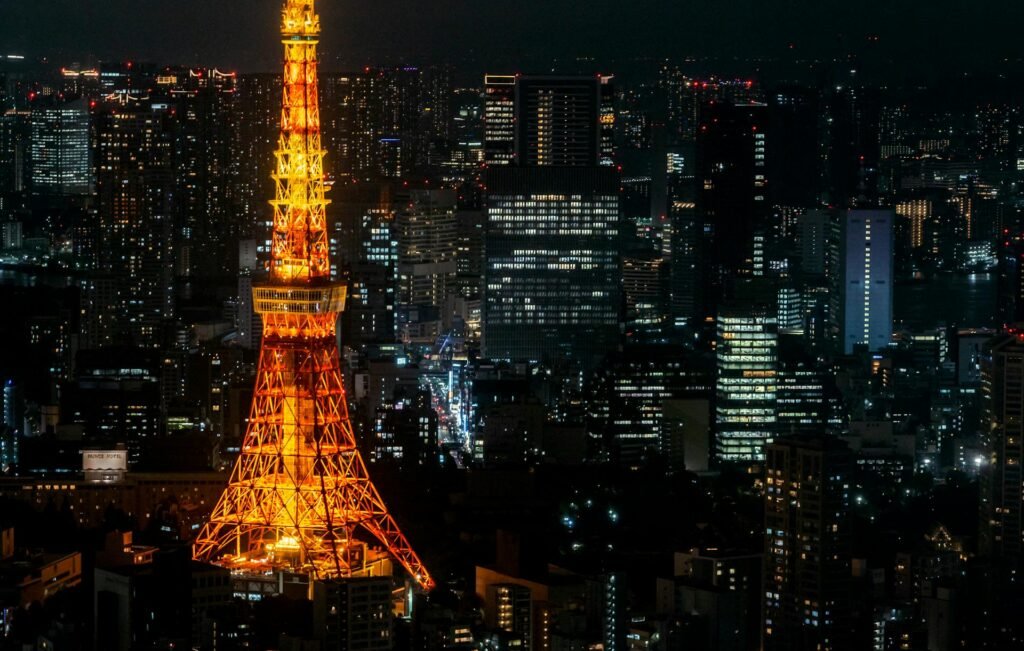
Tokyo Skytree — 634 metres, opened 2012, the world’s second-tallest tower (after Burj Khalifa). The Tembo Deck at 350 m and Tembo Galleria at 450 m offer panoramic views including Mt. Fuji on clear winter days. Tickets ¥3,400. Tokyo Tower (333 m, opened 1958) — the retro-orange Eiffel Tower-inspired icon; tickets ¥1,200. Rainbow Bridge (Odaiba) at sunset — the suspension bridge spanning Tokyo Bay, illuminated nightly.
Historic Sites & Temples
Imperial Palace and East Gardens — the residence of the Japanese Imperial family, on the site of the original Edo Castle. The East Gardens are open to the public free of charge daily except Mondays, Fridays, and Imperial events. Sensō-ji Temple in Asakusa — Tokyo’s oldest Buddhist temple, founded 645 CE; the iconic red Kaminarimon thunder gate, the Nakamise approach lined with traditional shops, and the towering five-story pagoda. Free entry. Meiji Shrine (Meiji Jingū) in Yoyogi — built 1920 to honor Emperor Meiji and Empress Shōken, set in a 70-hectare forest of 100,000 trees donated from across Japan; deeply atmospheric Shintō shrine. Free.
Modern Attractions
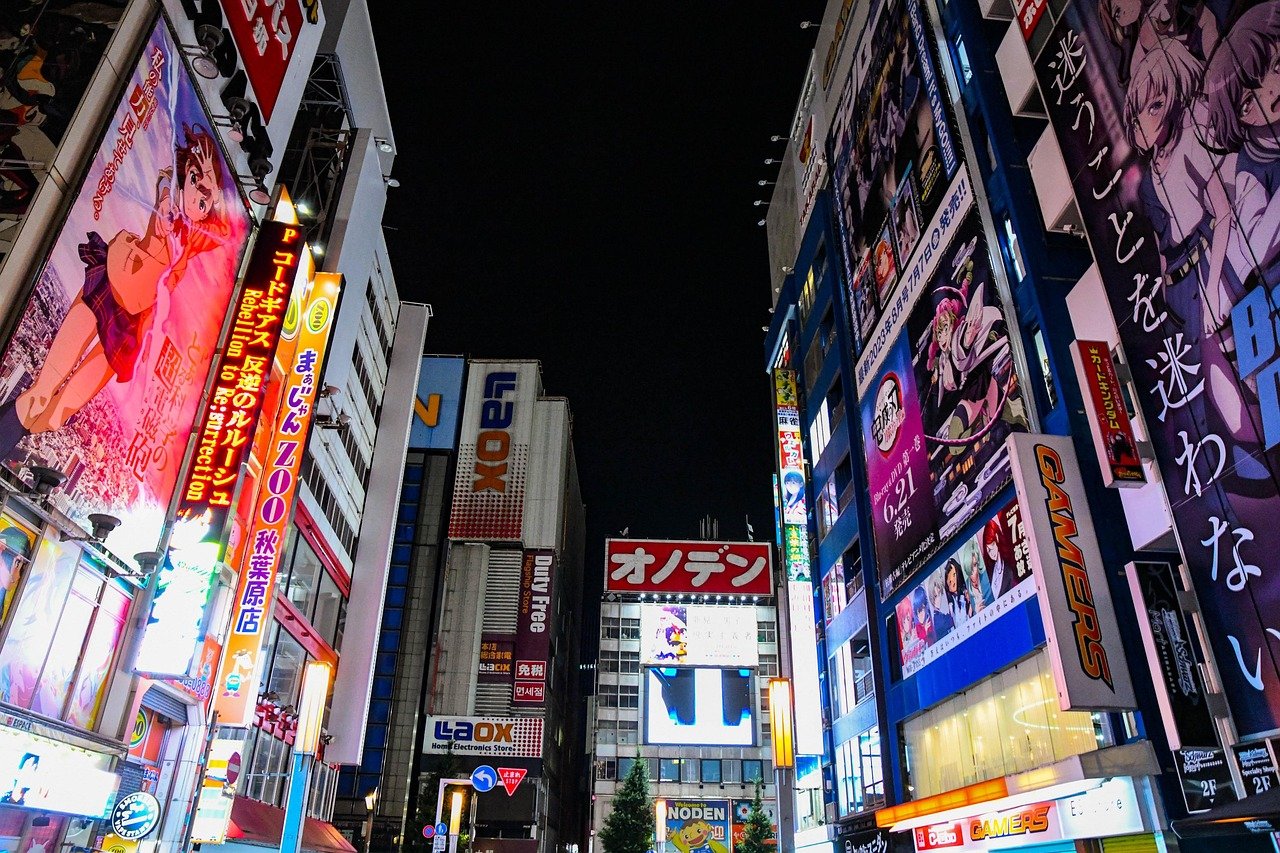
Shibuya Crossing — the world’s busiest pedestrian intersection (up to 3,000 people per cycle). Best photographed from the Starbucks at the QFront building or the Shibuya Sky observation deck. Akihabara — the electronics-and-otaku culture quarter; anime, manga, gaming arcades, maid cafes. Tsukiji Outer Market remains a working food market for sushi, knives, kitchen tools (the inner wholesale fish market relocated to Toyosu in 2018). teamLab Borderless (Azabudai Hills, reopened 2024) — the immersive digital art collective.
Museums & Culture
Tokyo National Museum in Ueno Park houses 110,000+ artifacts of Japanese, Korean, Chinese, and Central Asian art across six buildings — the largest collection of Japanese cultural treasures anywhere. The National Museum of Western Art (Le Corbusier’s only Japanese building, UNESCO World Heritage) features Rodin sculptures and European masters. Edo-Tokyo Museum (currently closed for renovations through 2026) traces the city’s transformation; the Mori Art Museum at Roppongi Hills handles contemporary art with Tokyo skyline views.
Parks & Gardens
Ueno Park — Japan’s first public park (1873), cherry blossoms in spring, home to Ueno Zoo (with giant pandas). Shinjuku Gyoen — Imperial garden with three styles (Japanese, English, French) in 58 hectares; ¥500 entry. Yoyogi Park — Tokyo’s “Central Park” energy with weekend musicians and joggers. Inokashira Park in Kichijōji — romantic boat rides on the pond, Studio Ghibli Museum nearby.
How to Get to Tokyo
By Air
Haneda Airport (HND) — closer to central Tokyo (15 km south), handles a growing share of international flights since 2010 plus all major domestic. Tokyo Monorail to Hamamatsuchō (15 min, ¥520) or Keikyū Line to Shinagawa. Narita International Airport (NRT) — Japan’s major international gateway, 60 km east of central Tokyo. Narita Express (N’EX) JR train to Tokyo, Shinagawa, Shinjuku, Ikebukuro stations (60–90 min, ¥3,070); Keisei Skyliner from Ueno (40 min, ¥2,520); cheaper Keisei Main Line and limousine bus options. The Japan Rail Pass covers the N’EX. Live status at narita-airport.jp.
By Rail
Tokyo is the eastern terminus of Japan’s Shinkansen bullet train network. Tokyo Station serves the Tōkaidō Shinkansen south to Nagoya, Kyoto, Osaka (2h 22min), Hiroshima, Hakata; the Tōhoku Shinkansen north to Sendai, Aomori, Hokkaido; the Hokuriku Shinkansen to Kanazawa. Shinagawa Station also serves the Tōkaidō line for southern travelers. Ueno Station serves the northeast Shinkansen routes. The Japan Rail Pass (foreigners only, sold at japanrailpass.net) covers most of these trains except Nozomi/Mizuho premium services.
By Road
The Shuto Expressway ring roads encircle central Tokyo with toll-road connections to all of eastern Japan. Driving in central Tokyo is genuinely impractical for visitors — narrow streets, limited parking (¥2,000–6,000 per day), heavy traffic. Use the trains.
Getting Around Tokyo
Subway & Metro System
Tokyo has the world’s most extensive urban rail network — 13 subway lines (Tokyo Metro and Toei) plus many JR and private rail lines. 9 million daily riders on the subway alone. Trains every 2–3 minutes peak hours; almost punctuality-perfect. Pay via IC card (Suica or PASMO, rechargeable, ¥500 deposit refundable) — tap in, tap out — or contactless mobile via Apple Pay (Suica works in iPhone Wallet since 2016). Routes at tokyometro.jp/en. Trains run ~5 am to midnight; no all-night service. Stations have English signage; major announcements in English. Etiquette: no eating, no loud phone calls, no eye contact.
JR Lines & Commuter Trains
The Yamanote Line (green) loops around central Tokyo connecting Shinjuku, Shibuya, Tokyo Station, Ueno, Akihabara — the single most useful line for tourists. The Chūō Line (orange) runs east-west through central Tokyo. Pre-paid IC card works on JR; Japan Rail Pass covers JR lines including Yamanote.
Buses & Streetcars
City buses fill the gaps trains don’t reach. The nostalgic Toden Arakawa Streetcar (Tokyo Sakura Tram) runs through traditional neighborhoods. Less foreigner-friendly than trains; usually unnecessary for typical tourist itineraries.
Taxis & Ride-sharing
Tokyo taxis are clean, automated-door, polite, and expensive (~¥600 starting fare; longer rides quickly become ¥3,000–5,000). Drivers rarely speak English; show destinations on phone screens or written cards. GO Taxi and Uber Taxi apps both work and accept international cards. Real Uber (private cars) is restricted in Japan.
Food & Drink in Tokyo
Culinary Capital
Tokyo has more Michelin stars than any other city on earth — the 2024 Tokyo guide listed 195 starred restaurants, including 12 with three stars. The total includes celebrated sushi temples, kaiseki institutions, modernist French and Italian, and a substantial number of single-dish specialists at all price levels. With 80,000+ restaurants in greater Tokyo, the breadth is unmatched globally.
Must-Try Tokyo Specialties
Sushi — Tokyo invented modern Edomae-style nigiri sushi in the early 19th century. Top-tier counters: Sukiyabashi Jiro (the Jiro of Jiro Dreams of Sushi, 3 stars, near-impossible reservation), Sushi Saito (3 stars), Sushi Yoshitake (3 stars). Mid-range: any neighborhood kaiten (conveyor-belt) sushi place, plus the institutional tachi-gui standing-sushi counters at Tsukiji.
Ramen — Tokyo-style ramen features shoyu (soy sauce) or shio (salt) broth with thin straight noodles. Try Ichiran (the international chain, originating Hakata-style), Ippudo, Afuri (yuzu-shio specialist), or any of the dozens of single-counter ramen-yas the locals queue for.
Tempura, tonkatsu, soba, udon, kaiseki all reach their pinnacle in Tokyo. Monjayaki is the local Tokyo savory pancake, served on Tsukishima’s “Monja Street.” Conbini food (7-Eleven, Lawson, FamilyMart convenience stores) is genuinely excellent — the onigiri rice balls, sandwiches, and bentō at Japanese conbinis would shame most Western restaurants.
Diverse Dining Scene
Beyond Japanese cuisine, Tokyo excels at international: French (the Robuchon chain, plus dozens of stand-alone Michelin-starred), Italian (the city has more Italian restaurants per capita than most Italian cities), Korean BBQ in Shin-Ōkubo, Chinese dim sum and Sichuan, Indian curry houses, Thai markets. The conbini food deserves its own essay.
Drinking Culture
Izakaya (Japanese pubs) are the heart of Tokyo’s social dining — tapas-style small plates plus drinks, the after-work standard. Sake bars showcase the regional rice-wine traditions; the modern nihonshu craft scene rivals Burgundy in complexity. The craft beer scene exploded after 2010; Yona Yona, Hitachino Nest, and dozens of micro-brewers are everywhere. Whisky — Japan’s global whisky reputation is firmly grounded; Yamazaki, Hakushu, Hibiki are the icons; the Whisky Library at Park Hyatt Tokyo serves them all. Karaoke boxes are the canonical Tokyo nightlife — private rooms with friends, drinks, and song.
Culture & Arts in Tokyo
Traditional Performing Arts
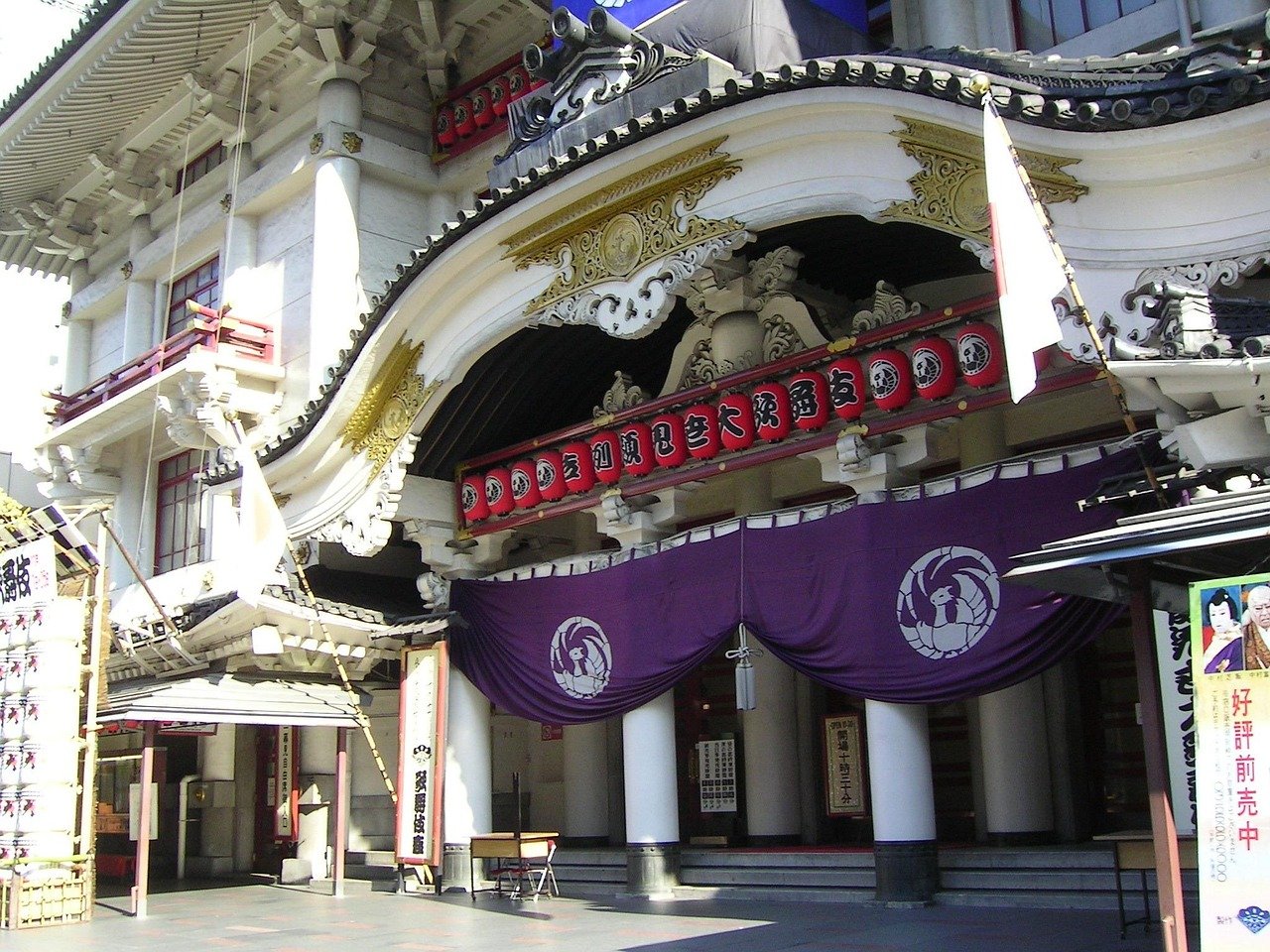
The Kabuki-za Theatre in Ginza is the canonical Kabuki performance venue; full performances run 4–5 hours but single-act tickets (¥1,000–2,500) are available at the box office. Noh theatre at the National Noh Theatre. Bunraku puppet theatre at the National Theatre. The annual Sumo tournaments (January, May, September) at Ryōgoku Kokugikan.
Modern Performance Venues
The New National Theatre houses opera, ballet, and contemporary dance. Tokyo International Forum hosts large-scale concerts. Suntory Hall for symphonic music. Takarazuka Tokyo Theatre presents the all-female musical revues of the legendary Takarazuka Revue.
Contemporary Art Scene
Galleries cluster in Roppongi (Mori Art Museum, National Art Center), Ginza (Shiseido Gallery, Maison Hermès), and the Tennōzu Isle creative district. teamLab digital art experiences (the new Borderless venue at Azabudai Hills, the original Planets at Toyosu). The annual Art Fair Tokyo (March) is the major commercial event.
Tokyo by District: The 10 特別区
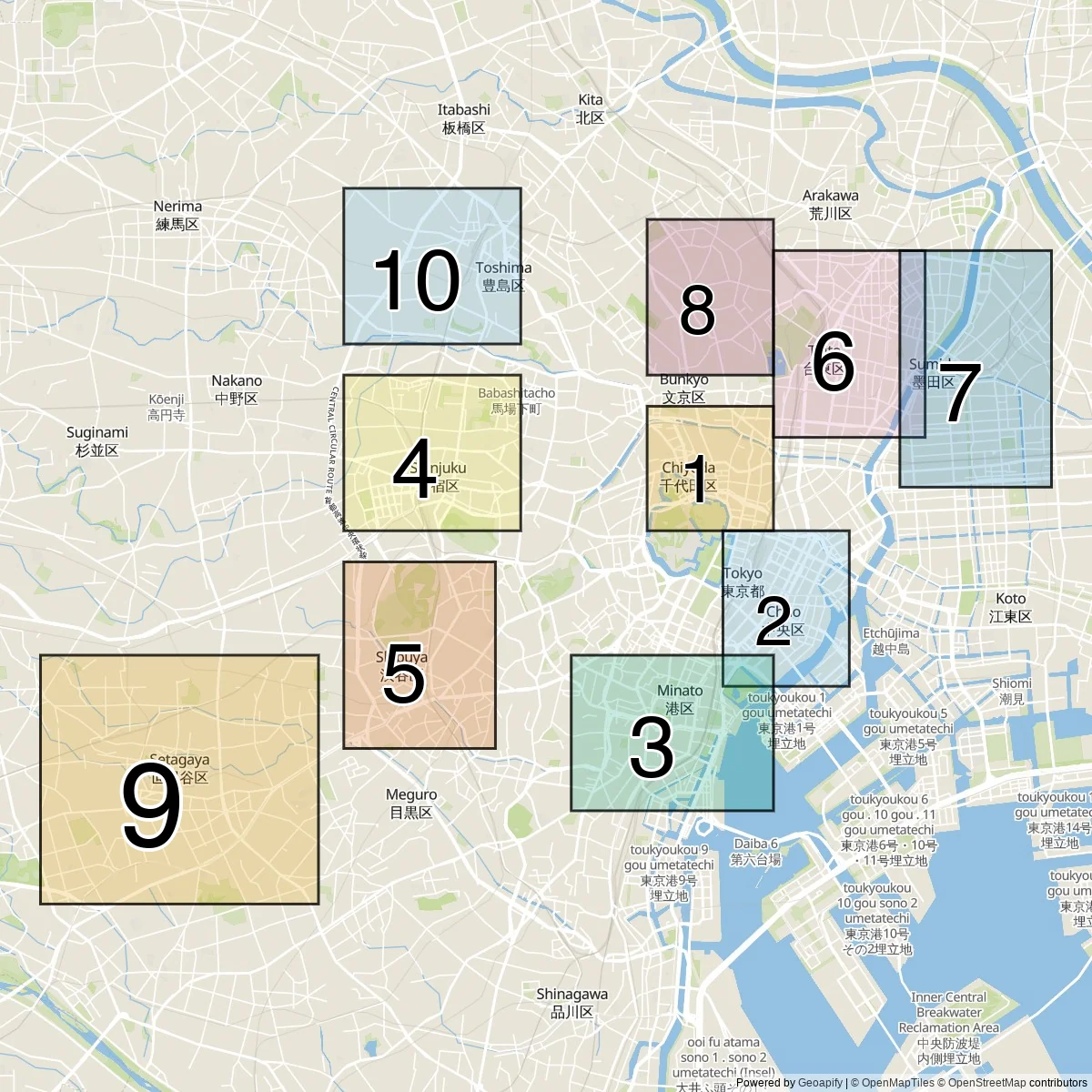
Tokyo is divided into 10 special wards. The map below shows their official OSM boundaries, colour-coded to match the table — a quick way to orient yourself before zooming in on individual sights.
| # | 特別区 |
|---|---|
| 1 | 千代田区 · Chiyoda (Imperial) |
| 2 | 中央区 · Chuo (Ginza) |
| 3 | 港区 · Minato (Roppongi) |
| 4 | 新宿区 · Shinjuku |
| 5 | 渋谷区 · Shibuya |
| 6 | 台東区 · Taito (Asakusa) |
| 7 | 墨田区 · Sumida (Skytree) |
| 8 | 文京区 · Bunkyo |
| 9 | 世田谷区 · Setagaya |
| 10 | 豊島区 · Toshima (Ikebukuro) |
Frequently Asked Questions About Visiting Tokyo
Do I need a visa to visit Tokyo?
Most likely no — Japan is generous with short-stay tourist entry. Citizens of 71 countries and territories — including the US, UK, EU member states, Canada, Australia, New Zealand, South Korea, Singapore, Taiwan, Hong Kong, and most of Latin America — enter visa-free for stays of up to 90 days; the official list at mofa.go.jp. Other nationalities (including India, China, Vietnam, Philippines, Russia) need a tourist visa applied for at the Japanese embassy before travel. Japan introduced an electronic JESTA pre-travel screening for visa-free visitors in 2025–2026; check the latest at mofa.go.jp a few weeks before flying. A passport with at least 6 months remaining validity is required.
Is Tokyo safe for tourists?
Tokyo is genuinely one of the world’s safest major cities — Japan as a whole has one of the lowest violent crime rates of any developed country. The US State Department rates Japan at “exercise normal precautions.” Walking around at any hour in central districts is fine even for solo travelers. Real risks: earthquakes — Japan is on the Pacific Ring of Fire; check jma.go.jp for live JMA warnings. The April 2024 Hualien-region earthquake didn’t directly affect Tokyo, but the next big Tokyo earthquake is statistically overdue. Typhoons (peak August–October) — typhoons can shut transport networks for 1–2 days. Pickpocketing at crowded tourist sites is rare but not zero. Touts in Kabukichō (Shinjuku’s red-light district) — never follow strangers into bars; the “shoplifting” entrapment scams are real and expensive.
How many days do I need in Tokyo?
Five days is the practical minimum to enjoy Tokyo without rushing. A solid 5-day plan: Day 1 — Asakusa (Sensō-ji + Nakamise + Tokyo Skytree) + Ueno Park museums + dinner at Ginza; Day 2 — Imperial Palace + Marunouchi + Tokyo Station + Akihabara + Yanaka old neighborhood; Day 3 — Shinjuku (Shinjuku Gyoen + Robot Restaurant area + Omoide Yokochō at night) + Shinjuku skyscraper observation; Day 4 — Shibuya (Crossing + Shibuya Sky + Hachiko + Cat Street + Harajuku Takeshita-dōri + Meiji Shrine) + Roppongi night view; Day 5 — Odaiba OR Tsukiji Outer Market + teamLab Borderless. Day 6–7: Hakone day trip (90 min by Shinkansen, Mt. Fuji views and onsen), Nikkō day trip (UNESCO temples, 2 hours), Kamakura (the Great Buddha, 1 hour), or Kyoto via Shinkansen (2h 22min each way, doable but rushed in one day).
What’s the best area to stay in Tokyo?
Five solid options. Shinjuku — the central transport hub; modern luxury (Park Hyatt, Hilton, Hyatt Regency, Keio Plaza), walking distance to nightlife, dense restaurant scene; ¥20,000–60,000/night. Ginza — luxury and refinement (Aman Tokyo, Mandarin Oriental, Peninsula); upscale shopping and dining; ¥40,000–150,000/night. Asakusa — old-Tokyo charm with traditional ryokan-style accommodations and modern boutique hotels at lower prices; ¥10,000–25,000/night; quieter but less central. Roppongi — international/expat-friendly (Grand Hyatt, Ritz-Carlton, Andaz); strong nightlife and contemporary art; ¥30,000–80,000/night. Shibuya — youth culture, fashion, restaurants; trendy boutique hotels; ¥15,000–40,000/night. Skip: Narita-area hotels for sleep (only useful for early flights from NRT — Haneda’s much closer).
How much does it cost to visit Tokyo’s major sights?
Tokyo sights are reasonably priced; the Shinkansen day trips are the budget killer. Tokyo Skytree: ¥3,400 Tembo Deck combo (~$22). Tokyo Tower: ¥1,200 main observatory. Shibuya Sky observation deck: ¥3,000. Imperial Palace East Gardens: free. Sensō-ji Temple: free. Meiji Shrine: free. Tokyo National Museum (Ueno): ¥1,000. National Museum of Western Art: ¥500. Edo-Tokyo Museum: closed for renovation. Ueno Zoo: ¥600. Shinjuku Gyoen: ¥500. teamLab Borderless (Azabudai Hills): ¥3,800. Tokyo Disneyland 1-day ticket: ¥7,900–10,900 by date. Kabuki single-act: ¥1,000–2,500. Sumo tournament tickets: ¥3,500–14,000. Hakone Free Pass (2-day round-trip including Romance Car train, lake cruise, ropeway): ¥6,100. Japan Rail Pass (foreigners only, 7 days): ¥50,000 — pays off only if you’re doing 2+ Shinkansen long-distance trips.
Should I drink the tap water in Tokyo?
Yes, absolutely. Tokyo’s tap water meets some of the strictest quality standards on earth and is rigorously tested. The water is genuinely good — Tokyo Waterworks Bureau publishes regular quality reports. Drink it freely, brush your teeth with it, and use ice without concern. The city has even branded its tap water as “Tokyo Suidō” — sold in bottles as a premium product. Restaurants serve free chilled water (ohiya) without asking. Public drinking fountains are common in parks and stations. Bottled water is widely available (¥110–150 per liter at any 7-Eleven or FamilyMart) but completely unnecessary.
How do I navigate Tokyo’s train system?
Tokyo’s subway-and-train system is the world’s most extensive — and surprisingly easy for foreigners. Practical advice: get a Suica or PASMO IC card (rechargeable, ¥500 deposit refundable, available at any major station vending machine) — tap in at the gate, tap out at your destination, system auto-calculates fares. Or use Suica integrated into Apple Pay on iPhone (works since 2016) — top up directly on phone. Single rides ¥150–320 by distance. Use Google Maps or Citymapper apps — both work seamlessly with Tokyo’s transit. Yamanote Line (green) is the loop circling central Tokyo; the single most useful tourist line. Etiquette: no eating, no loud phone calls, no eye contact, give priority seating to elderly/pregnant/disabled, women-only carriages on some lines during late-night hours. Trains stop ~midnight — no all-night service; if you miss the last train, taxi home or use a karaoke box / capsule hotel until morning.
Is tipping expected in Tokyo?
No — and tipping can occasionally cause genuine confusion. Tipping is not part of Japanese service culture, and excellent service is the baseline expectation, not something to be rewarded. Restaurants: never tip; if you leave money on the table, the staff may chase you down the street to return it. Some Western-style or hotel restaurants add a 10% service charge (sābisuryō) to the bill — that’s the closest thing to a tip and is the only one. Taxis: pay the meter exactly; no tip. Hotel porters at luxury hotels: occasionally a small tip in a sealed envelope is accepted but never expected. Tour guides: a small wrapped gift (omiyage) from your home country is more appropriate than cash. Where Western-style services target international clients (some private guides, high-end concierges), tipping has crept in — but it remains the exception, not the rule.
Economy & Business in Tokyo
Tokyo’s metropolitan economy generates approximately $2.0 trillion in GDP — historically rivaling New York and Los Angeles, though the strong dollar of recent years has shifted comparisons. The city is headquarters for Toyota Motor (technically Aichi-based but Tokyo-anchored), Sony Group, SoftBank Group, Mitsubishi UFJ Financial Group, Sumitomo Mitsui Financial Group, Nippon Telegraph and Telephone (NTT), Hitachi, Panasonic, and dozens of other Japanese corporate giants.
The Tokyo Stock Exchange is the third-largest stock market by market capitalization (after NYSE and Nasdaq). Tokyo Bay industrial zone handles 360 million tons of cargo annually. High-tech manufacturing, precision instruments, financial services, and the broader service economy define the city’s modern industrial mix. The Greater Tokyo Area produces ~25% of Japan’s GDP with about 30% of the population.
Education & Universities in Tokyo
Tokyo houses approximately 25% of Japan’s universities — the densest concentration in the country. The University of Tokyo (Tōdai), founded 1877 as Japan’s oldest national university, is consistently ranked Asia’s top university; main campus in Hongō. Keio University (founded 1858 by Yukichi Fukuzawa, on the 10,000-yen note) and Waseda University (1882) are the leading private universities.
Other major institutions: Tokyo Institute of Technology (engineering), Hitotsubashi University (economics and business), Tokyo University of the Arts (Geidai), Sophia University (international and English-language programs), International Christian University (ICU). The National Diet Library at the Imperial Palace area is Japan’s national library.
Tokyo rewards travelers who visit multiple times. Five days handles the headlines (Asakusa + Shibuya + Shinjuku + Akihabara + Imperial Palace + a Shinkansen day-trip to Kyoto or Hakone). A week lets you slow down; a fortnight starts to reveal the neighborhood texture beyond the tourist core. The world’s largest metropolis is somehow also the world’s most orderly — and the food alone justifies repeat visits.
AFRIKA
Cairo Hurghada Johannesburg Marrakech
ASIA
Abu Dhabi Agra Antalya Bangkok Batam Beijing Bengaluru Cebu City Chiang Mai Chiba Chennai Da Nang Dammam Delhi Denpasar Dubai Fukuoka Guangzhou Guilin Ha Long Hanoi Ho Chi Minh City Jakarta Jaipur Johor Bahru Kolkata Krabi Kuala Lumpur Kyoto Macau Mecca Medina Mugla Mumbai Osaka Pattaya Penang Phuket Riyadh Seoul Shanghai Shenzhen Singapore Taipei Tokyo Zhuhai
EUROPE
Amsterdam Athens Barcelona Berlin Brussels Budapest Copenhagen Dublin Florence Frankfurt am Main Heraklion Krakow Lisbon London Madrid Milan Munich Nice Paris Porto Prague Rhodes Rome Stockholm Venice Vienna Warsaw
NORTH AMERICA
Cancun Las Vegas Los Angeles Miami New York City Orlando San Francisco Toronto Vancouver
SOUTH AMERICA
Buenos Aires Lima Rio De Janeiro
OCEANIA
Auckland Honolulu Melbourne Sydney