
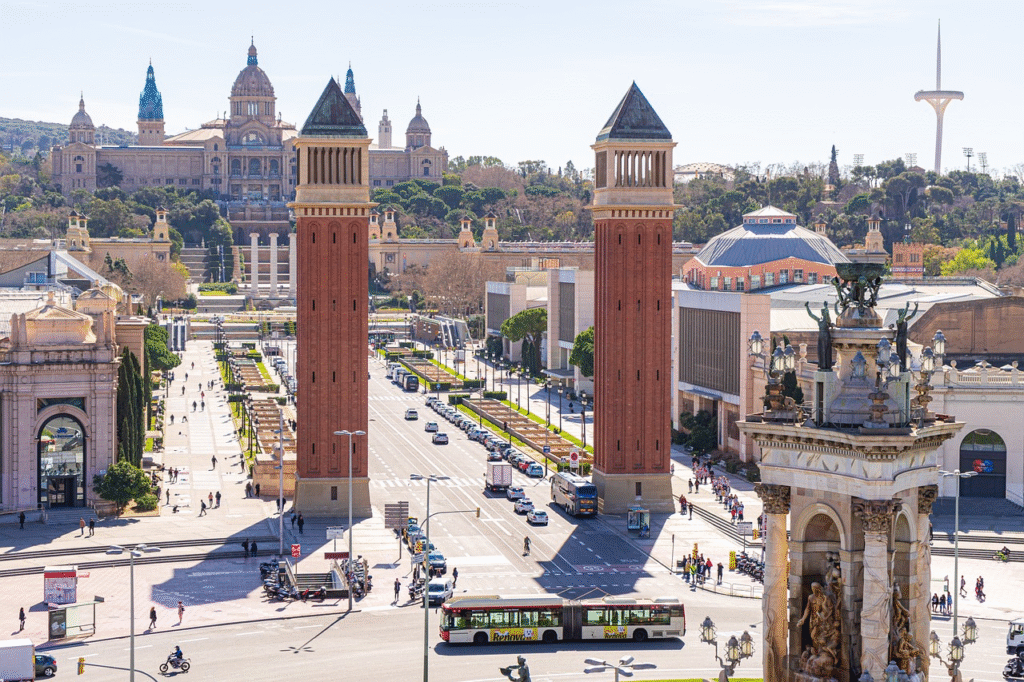
dominickvietor, pixabay
Barcelona, the vibrant capital of Catalonia, stands as Spain’s second-largest city and one of Europe’s most captivating destinations. Nestled between the Mediterranean Sea and the rolling hills of the Serra de Collserola, this cosmopolitan metropolis seamlessly blends Gothic charm with modernist innovation, ancient Roman ruins with cutting-edge architecture, and traditional Catalan culture with international flair. Home to over 1.7 million residents within the city limits and nearly 5 million in the greater metropolitan area, Barcelona pulses with an energy that has made it one of the world’s most visited cities.
Barcelona at a Glance: Essential Facts for Travelers
| Location | Northeastern Spain, Catalonia |
| Coordinates | 41°23′N, 2°11′E |
| Population | 1,636,762 (city), 4,840,000 (metro area) |
| Area | 101.4 km² (39.2 sq mi) |
| Elevation | 13 meters (43 ft) above sea level |
| Time Zone | CET (UTC+1), CEST (UTC+2) in summer |
| Calling Code | +34 93 |
| Postal Codes | 08001–08042 |
| Known For | Gaudí architecture, Gothic Quarter, beaches, FC Barcelona, Sagrada Família |
| Current Mayor | Jaume Collboni (PSC, since 2023) |
| Official Website | www.barcelona.cat |
| Languages | Catalan, Spanish (Castilian) |
| Currency | Euro (€) |
Upcoming Events in Barcelona
| Date | Title | Details |
|---|---|---|
| 2026-09-18 to 2026-09-24 | La Merce Festival 2026 | La Merce is Barcelona’s biggest street festival, celebrating the city’s patron saint around 24 September with a packed, mostly free programme. Highlights include castells (human towers), the correfoc fire-run with fire-breathing dragons and devils, giant parades, concerts, and the spectacular piromusical fireworks-and-light show. For several days the whole city becomes a stage, with events in squares, streets and parks. It is the perfect time to experience Catalan traditions at their most vivid; check the official programme for the confirmed 2026 dates and the full line-up of activities across the city. [Source] |
| 2026-09-23 to 2026-10-15 | Aida opens the Liceu 2026-27 opera season | Verdi’s Aida opens the Gran Teatre del Liceu’s 2026-27 season, running from 23 September to 15 October on La Rambla. The new production is directed by visual artist Shirin Neshat and conducted by Antonello Manacorda and Josep Gil, launching a season themed around ritual and its contemporary re-examination. Expect monumental choral scenes and Verdi’s great arias in one of Europe’s storied opera houses. Tickets vary widely by seating; evening performances suit opera lovers and curious newcomers alike. [Source] |
| 2026-09-24 to 2026-10-11 | Oktoberfest Barcelona 2026 | Barcelona’s Oktoberfest celebrates its thirteenth edition in a new home, Hall 4 of Fira Barcelona Gran Via in L’Hospitalet, after twelve years on Montjuic. Across more than 15,000 square metres, the indoor beer festival serves Bavarian brews and traditional dishes with live bands, DJs and long communal tables. It opens Thursday to Sunday from 24 September to 11 October. Entry is free, with table reservations and VIP packages sold separately; a lively pick for groups and beer fans. [Source] |
| 2026-10-08 to 2026-10-18 | Sitges Film Festival 2026 | The Sitges Film Festival, held each October in the seaside town of Sitges near Barcelona, is one of the world’s leading festivals for fantasy and horror cinema. It premieres genre films from around the globe, hosting directors, stars and legions of fans, with screenings, awards and a famously enthusiastic atmosphere. An easy train ride from Barcelona, it makes a memorable day or evening trip for film lovers during its run. Programmes and tickets are released ahead of the festival; check the official site for the confirmed 2026 dates and line-up of premieres and guests. [Source] |
| 2026-10-08 to 2027-02-28 | Charlotte Perriand. The Freedom to Rethink the World | The Fundació Joan Miró on Montjuic presents the first major Spanish retrospective of Charlotte Perriand, the pioneering French architect, designer and photographer. Opening 8 October 2026 and running to 28 February 2027, it traces her career up to 1955, including French government commissions and never-before-shown pieces from her personal archive that document collaborations with Josep Lluis Sert and Joan Miró. Curated by Martina Milla, the show carries standard museum admission and will delight design and architecture lovers. [Source] |
| 2026-10-14 to 2026-10-18 | Barcelona International Boat Show at Port Vell | The Barcelona International Boat Show returns to Port Vell from 14 to 18 October with more than 130 vessels afloat, from sailing yachts and catamarans to motorboats from leading global brands. The 2026 edition adds a Diving and Water Sports Area plus on-water product trials, alongside the Blaumari music festival and a new seafront restaurant village. Open daily 10:00 to 20:00, with a late Nit Nautica evening on Friday. Tickets from about 10 euros; ideal for sailing enthusiasts and families. [Source] |
| 2026-10-24 to 2026-10-25 | 48H Open House Barcelona architecture festival | Barcelona’s biggest architecture festival opens the doors of more than 200 buildings, itineraries and activities across the metropolitan area on the weekend of 24 and 25 October. From private homes and modernist landmarks to offices, infrastructure and studios, volunteers and architects guide visitors through spaces normally closed to the public, spanning seven municipalities including Badalona, L’Hospitalet and Sitges. Participation is free and most venues need no booking, making it a superb weekend for curious locals, families and design fans. [Source] |
City News in Barcelona – last 14 days
| Date | Category | Headline | Details |
|---|---|---|---|
| 2026-09-14 | Public transport | Trambesos T4 returns to its full coastal route with double track at Glories | From Monday 14 September the tram again runs its complete habitual route between Verdaguer and Sant Adria de Besos, passing Placa de les Glories, after months of temporary diversions. The change follows track-doubling works that are part of the wider project to unite the city’s two tram networks along the Diagonal corridor. Passengers travelling between the city centre and the seafront recover a direct connection as normal service resumes across the affected stretch. [Source] |
| 2026-09-14 | Public safety | City police to carry knife detectors in every patrol car after violent weekend | Mayor Jaume Collboni announced that the Guardia Urbana will equip all its vehicles with metal detectors to combat the rise of bladed weapons, saying the city will not normalise knife-carrying, especially among young people. The budget for the devices is already secured, according to the council. The move responds to a weekend in which five people were stabbed in separate incidents, prompting opposition groups, led by Junts, to denounce what they called the degradation of the city. [Source] |
| 2026-09-14 | Local government | City hall and unions agree deal for 1,500 public flats over the next decade | Mayor Jaume Collboni presented what he described as a pioneering agreement with trade unions CCOO and UGT to promote 1,500 publicly protected homes in the city over ten years. The flats will be granted through surface-right cessions and allocated by lottery among all applicants registered in Barcelona’s official register of protected-housing seekers. The scheme adds a new channel for affordable housing at a moment of intense pressure on the rental market and record demand for subsidised homes. [Source] |
| 2026-09-14 | Local government | BComu ready to negotiate tax ordinances in exchange for higher tourist surcharges | The Comuns announced they are willing to sit down with Jaume Collboni’s government to negotiate the new municipal tax ordinances after the Socialists committed to raising the municipal tourist-tax surcharge for cruise passengers on stopovers. The group is also demanding that the surcharge for five-star hotels jump from four to eight euros per person per night in one step, a condition set by spokesman Marc Serra for approving the fiscal package in the council. [Source] |
| 2026-09-14 | Public transport | Red carpet painted onto Balmes bus lane to speed up sluggish services | A pilot starting Friday will paint red markings across junctions on Balmes between Diagonal and Gran Via, where lines V15, 7 and 67 currently average under eight kilometres per hour, well below the citywide bus average of 11.4. The reserved lane will be kept exclusively for TMB vehicles, with private cars allowed to turn right only at four designated crossings from the second lane. If results are positive, the city plans to extend the scheme to other corridors. [Source] |
| 2026-09-14 | Local affairs | Vall d’Hebron finally gets a site for its long-demanded public library | After more than fifteen years of neighbourhood campaigning, the city council has chosen the plot where the future public library will be built, at Avinguda del Cardenal Vidal i Barraquer 37-43. The council discarded an earlier plan to place 125 protected homes on the same site, clearing the way for the cultural facility. Residents’ associations had long argued the district lacked a library of its own, and the decision marks a concrete step toward closing that gap. [Source] |
| 2026-09-14 | Local affairs | Permanent assistance office promised for residents hit by L9 metro sinkhole | More than two months after a sinkhole on the L9 metro works forced the evacuation of around 300 residents and shopkeepers in Sant Gervasi – la Bonanova, the Generalitat says it will open a permanently staffed office to assist those affected. Eighteen families remain out of their homes and the causes of the collapse are still unexplained, a combination that has fuelled growing frustration in the neighbourhood. The office is intended to centralise information, claims and support while investigations continue. [Source] |
| 2026-09-14 | Culture | Sagrada Familia raffles 20,000 free tickets for open-door days during La Merce | To mark the city’s festival week, the basilica will hold open-door days from 24 to 27 September and is giving away 20,000 tickets to the public by draw. Registration is already open, and the visits will let residents see the current state of construction work on Antoni Gaudi’s temple. The gesture repeats a popular Merce tradition that routinely attracts far more applicants than available places, so early sign-up is recommended for anyone hoping to secure one of the free slots. [Source] |
| 2026-09-14 | Business | Used-car fair Salo Ocasio moves to Gran Via site amid surging demand | The next edition of the second-hand vehicle fair will relocate from the Montjuic exhibition grounds to the Gran Via venue in L’Hospitalet de Llobregat, a switch prompted by growing demand for used cars and by construction works at Montjuic. The event is scheduled for 22 to 25 October and will again be organised by Fira de Barcelona. The move gives the show more space as interest in used vehicles keeps climbing among buyers looking for alternatives to new models. [Source] |
| 2026-09-14 | Sports | Women’s clasico set for 4 October at Camp Nou as Lliga F fixture confirmed | The first meeting of the season between Barca Femeni and Real Madrid now has a confirmed date, time and venue: Sunday 4 October at 17:00, on matchday six of Lliga F. The fixture returns the women’s team to Camp Nou, giving supporters the chance to watch the championship’s biggest rivalry at the club’s main stadium. Barca have dominated recent editions of the clasico, and a large crowd is expected for the occasion. [Source] |
| 2026-09-13 | Public safety | Weekend brawls leave five injured by bladed weapons and two under arrest | Police recorded several fights across the city over the weekend, some involving minors, that left five people wounded by knives. In the most serious episode, a mass brawl involving around ten people on Carrer de la Llacuna in Sant Marti on Saturday night ended with one man injured and two arrests by the Mossos d’Esquadra. Another man was wounded in Nou Barris shortly before 23:00 the same evening. Emergency medical crews took the victims to hospital and investigations continue. [Source] |
| 2026-09-13 | Culture | Oktoberfest leaves Montjuic for a bigger indoor home at Fira Gran Via | After several editions beside Placa d’Espanya, the Bavarian-style beer festival moves its thirteenth edition to Hall 4 of Fira Barcelona Gran Via in L’Hospitalet de Llobregat, running from 24 September to 11 October. Organisers justify the change with the larger, more comfortable space available and note that, unlike previous editions, the new venue will be fully enclosed. Entry does not strictly require a reservation, though tables can be booked in advance for a fee. [Source] |
| 2026-09-13 | Local government | Works resume on public flats for seniors in La Salut after two-year halt | The council has restarted construction of the Espai Quiron complex on the site of the former Quiron clinic on Avinguda de la Mare de Deu de Montserrat, which will provide 83 public homes for older people alongside community facilities. The project, first announced more than a decade ago, had been stalled for two years after the building contractor went bankrupt. The restart comes with the budget raised by five million euros to get the long-delayed development finished. [Source] |
| 2026-09-13 | Education | More than 3,000 pupils begin the year at municipal music schools | The city’s five municipal music schools and the Conservatori Municipal opened the new academic year on Monday with over 3,000 students in continuous musical education. The schools enrolled more than 2,500 pupils in their long-track itineraries, while the conservatory adds another 512 students pursuing professional-grade studies, according to figures released by the council. The network offers sustained training from childhood onwards, underlining steady demand for public music education across the city’s districts. [Source] |
Barcelona Events & City News Archive
Sources: Barcelona City Council, Gran Teatre del Liceu, Oktoberfest Barcelona, Sitges Film Festival, Fundació Joan Miró, Salon Nautico de Barcelona, 48H Open House Barcelona, Barcelona Secreta
Weather Forecast for the Next 14 Days in Barcelona
| Date | Weather | Max °F | Min °F | Rain mm |
|---|---|---|---|---|
| 2026-09-14 | ⛅ | 89.0 °F | 68.4 °F | 0.0 mm |
| 2026-09-15 | ☁️ | 83.9 °F | 69.9 °F | 0.0 mm |
| 2026-09-16 | ⛈️ | 79.5 °F | 69.6 °F | 20.9 mm |
| 2026-09-17 | ⛈️ | 75.4 °F | 67.4 °F | 20.5 mm |
| 2026-09-18 | ☁️ | 75.5 °F | 65.3 °F | 0.0 mm |
| 2026-09-19 | ⛅ | 81.6 °F | 64.0 °F | 0.0 mm |
| 2026-09-20 | ⛅ | 85.2 °F | 61.2 °F | 0.0 mm |
| 2026-09-21 | ⛅ | 83.4 °F | 63.6 °F | 0.0 mm |
| 2026-09-22 | ☀️ | 84.4 °F | 65.3 °F | 0.0 mm |
| 2026-09-23 | ☀️ | 79.6 °F | 63.9 °F | 0.0 mm |
| 2026-09-24 | ☁️ | 80.7 °F | 63.2 °F | 0.0 mm |
| 2026-09-25 | ☁️ | 81.2 °F | 66.3 °F | 0.0 mm |
| 2026-09-26 | 🌧️ | 77.0 °F | 68.3 °F | 1.8 mm |
| 2026-09-27 | ☁️ | 82.4 °F | 65.0 °F | 0.0 mm |
Barcelona’s History
Barcelona has been continuously inhabited for over 2,000 years and capital of one Mediterranean polity or another for nearly half of that. The current city is the third Barcelona built on the same coastal plateau — and the layers of Iberian, Roman, medieval, modernista, and post-Olympic Barcelona are all still readable in the streets.
Ancient Origins and Roman Foundations
Long before Roman legions arrived, Barcelona’s plains were inhabited by Neolithic and Copper Age communities. By the 3rd century BCE, the Laietani — an Iberian people — had established settlements on Tàber Hill (now part of Ciutat Vella) and Montjuïc, even minting their own coins. The city’s founding legends are equally fascinating: one tale credits Hamilcar Barca, the Carthaginian general and father of Hannibal, with establishing a settlement called Barkenon around 230 BCE; another mythical account attributes the city’s origins to Hercules around 1153 BCE during his travels with the Argonauts. In 218 BCE, Carthaginian forces under Hannibal seized the area during the Second Punic War. Roman control was established by 19 BCE with the founding of Barcino (Colonia Faventia Iulia Augusta Pia Barcino), initially a modest settlement for retired soldiers; its position on the Via Augusta helped it flourish.
Medieval Glory and the Crown of Aragon
After the fall of Rome, Barcelona experienced successive waves of conquest. The Visigoths ruled from the 5th century until the Moorish invasion of 711 AD. The Moors controlled Barcelona for less than a century before Louis the Pious, son of Charlemagne, captured it in 801 AD, making it the southernmost stronghold of the Spanish March. The pivotal moment came in 1137 with the marriage of Ramon Berenguer IV, Count of Barcelona, to Petronilla, heir to the Kingdom of Aragon. This union created the Crown of Aragon, transforming Barcelona into the capital of a Mediterranean empire that would dominate trade routes and cultural exchange for centuries. During this golden age, Catalan merchants established trading posts across the Mediterranean; the city’s wealth funded the construction of magnificent Gothic buildings — the Barcelona Cathedral and the Palau de la Generalitat among them — many of which still define the city’s skyline today.
Decline and Spanish Unification
Barcelona’s fortunes changed dramatically in 1469 when Ferdinand of Aragon married Isabella of Castile, shifting Spain’s political center to Madrid. The situation worsened after Columbus’s 1492 voyage redirected trade toward Atlantic ports, leaving Mediterranean cities like Barcelona economically marginalized. The city’s rebellious spirit emerged during the 17th and 18th centuries: Barcelona supported France against Spain in the 1640s, losing northern Catalan territories in the 1659 Treaty of the Pyrenees. During the War of Spanish Succession, the city backed the losing Habsburg claimant, resulting in a brutal siege by French troops in 1714 — a defining trauma for Catalan identity. Catalan institutions were suppressed and a massive citadel built to control the population.
Industrial Revolution and Modern Transformation
The 19th century brought Barcelona’s dramatic revival. Industrialization transformed the city into Spain’s economic powerhouse, though prosperity came with social tensions that fueled the rise of anarchism. The 1890s saw violent attacks, including the 1893 bombing of the Liceu opera house that killed 22 people. Urban transformation accelerated in 1854 when Barcelona demolished its medieval walls to create the Eixample district. Urban planner Ildefons Cerdà designed the iconic grid layout — chamfered corners, generous octagonal intersections — that still defines much of the city. The 1888 World’s Fair sparked a building boom; the 1929 International Exposition transformed Montjuïc and produced the magnificent Palau Nacional.
Civil War and Franco Era
The Spanish Civil War (1936–1939) brought tragedy to Barcelona. As a Republican stronghold, the city endured relentless bombing by Italian and German forces, with over 4,000 civilian casualties. Franco’s victory in 1939 brought harsh repression: Catalan autonomy was abolished, the language banned in public life, and the region’s cultural identity systematically suppressed for nearly four decades. Despite political oppression, Barcelona continued growing through immigration from poorer Spanish regions — Andalusia and Galicia especially — leading to rapid urbanization and the expansion of metro lines and suburbs.
Democratic Rebirth and Olympic Glory
Franco’s death in 1975 sparked Spain’s democratic transition. In 1977, over a million Catalans demonstrated for autonomy, leading to the return of exiled leader Josep Tarradellas and the restoration of Catalan self-governance. The 1992 Summer Olympics marked Barcelona’s triumphant return to the world stage, transforming the city’s coastline (the now-iconic Barceloneta Beach was created from scratch for the Games) and infrastructure while showcasing its cultural renaissance to a global audience. Today, Barcelona stands as a global symbol of successful urban transformation, balancing respect for historical heritage with bold architectural innovation.
Geography, Climate & Best Time to Visit Barcelona
Barcelona enjoys a privileged location on Spain’s Mediterranean coast, on a 5-kilometer plateau between the Llobregat and Besòs rivers. The city is framed by the Mediterranean Sea to the southeast and the Serra de Collserola mountain range to the northwest, with the Pyrenees Mountains visible just 120 km to the north on a clear day.
Topography and Landmarks
The city’s landscape is punctuated by several distinctive hills:
- Tibidabo (512m) — The highest peak, crowned by the Sagrat Cor church and a vintage amusement park
- Montjuïc (173m) — Home to museums, gardens, and the 1992 Olympic facilities
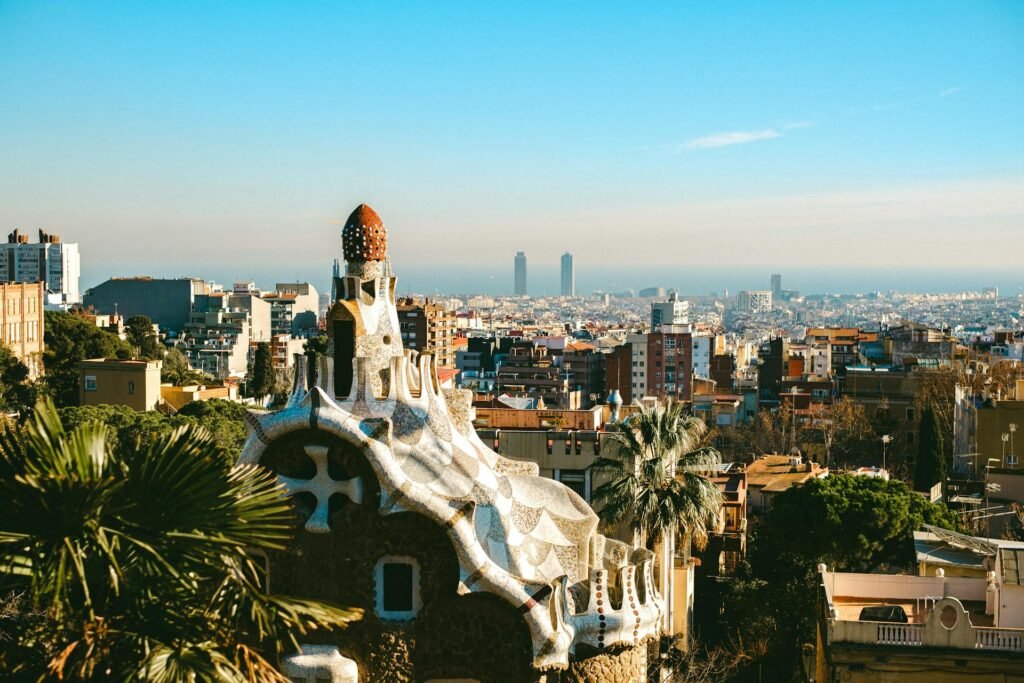
- Carmel (267m) — Site of Gaudí’s whimsical Park Güell
- Mont Tàber (16.9m) — The historic heart where Barcelona Cathedral stands
Mediterranean Climate
Barcelona’s Mediterranean climate provides year-round appeal — hot, dry summers and mild winters, with over 300 days of sunshine annually.
| Month | Avg High (°C) | Avg Low (°C) | Rainfall (mm) | Sea Temp (°C) |
|---|---|---|---|---|
| January | 13.4 | 8.1 | 37 | 13 |
| February | 14.3 | 8.7 | 35 | 13 |
| March | 16.1 | 10.5 | 36 | 13 |
| April | 18.0 | 12.4 | 40 | 14 |
| May | 21.1 | 15.4 | 47 | 17 |
| June | 24.7 | 19.1 | 30 | 21 |
| July | 27.7 | 22.0 | 21 | 24 |
| August | 28.2 | 22.5 | 62 | 25 |
| September | 25.7 | 19.6 | 81 | 23 |
| October | 22.5 | 16.2 | 91 | 21 |
| November | 17.3 | 11.9 | 59 | 17 |
| December | 14.3 | 8.8 | 40 | 15 |
Best Time to Visit
Late spring to early autumn (May–September) is the sweet spot for warm weather and long daylight hours. September is arguably the best month — warm sea temperatures (23°C), thinning crowds after August’s peak, and the La Mercè festival on September 24. July–August are hot and crowded — and many Catalans leave the city for vacation, so favorite local restaurants close. Winter remains pleasant for sightseeing (13–17°C); some beach activities are limited but the Mediterranean light is spectacular. October–November see the highest rainfall.
Barcelona’s Districts & Neighborhoods
Barcelona is divided into 10 administrative districts, further subdivided into 73 unique neighborhoods (barris), each with distinct character.
Ciutat Vella (Old City)
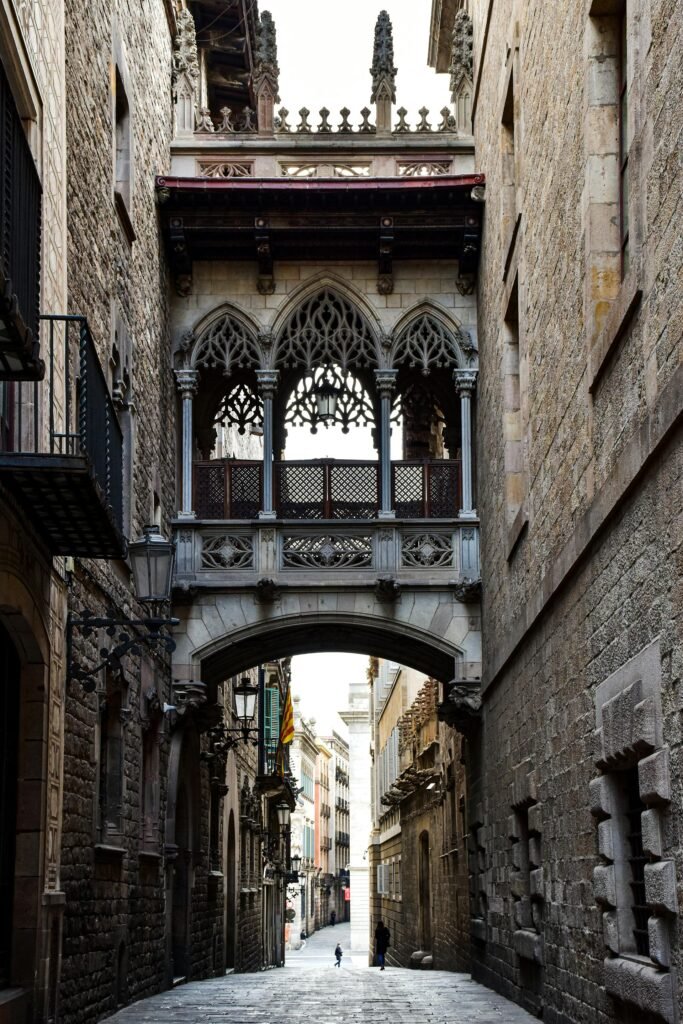
The historic heart of Barcelona encompasses four neighborhoods: Barri Gòtic (Gothic Quarter), El Raval, La Ribera, and Barceloneta. This densely populated district (25,202 people per km²) contains the city’s most important historical sites, including the Barcelona Cathedral, Roman ruins, and the famous La Rambla boulevard. Where to stay: choose Gothic Quarter hotels for historical immersion, or Barceloneta for beach proximity.
Eixample
The modernist showcase of Barcelona, designed by Ildefons Cerdà in the 19th century. This grid-planned district houses Gaudí’s masterpieces — the Sagrada Família, Casa Batlló, and Casa Milà. The elegant Passeig de Gràcia serves as the city’s premier shopping street. Where to stay: ideal for first-time visitors wanting easy access to major attractions and excellent transport links.
Gràcia
Once an independent village, Gràcia maintains its bohemian character with tree-lined squares, independent boutiques, and a vibrant nightlife scene. The district includes the upper reaches of Park Güell and offers a more local, residential atmosphere — favored by visitors who want to experience neighborhood Barcelona rather than tourist Barcelona.
Sant Martí
This beachside district encompasses the Olympic Village, Poblenou’s “22@” tech quarter, and several beaches. The area transformed dramatically from industrial to residential after 2000, offering modern amenities and coastal access.
Sants-Montjuïc
Home to the city’s main train station and Montjuïc hill with its museums, gardens, and Olympic facilities. Diverse range from transportation hubs to cultural attractions and green spaces.
Top Things to Do in Barcelona
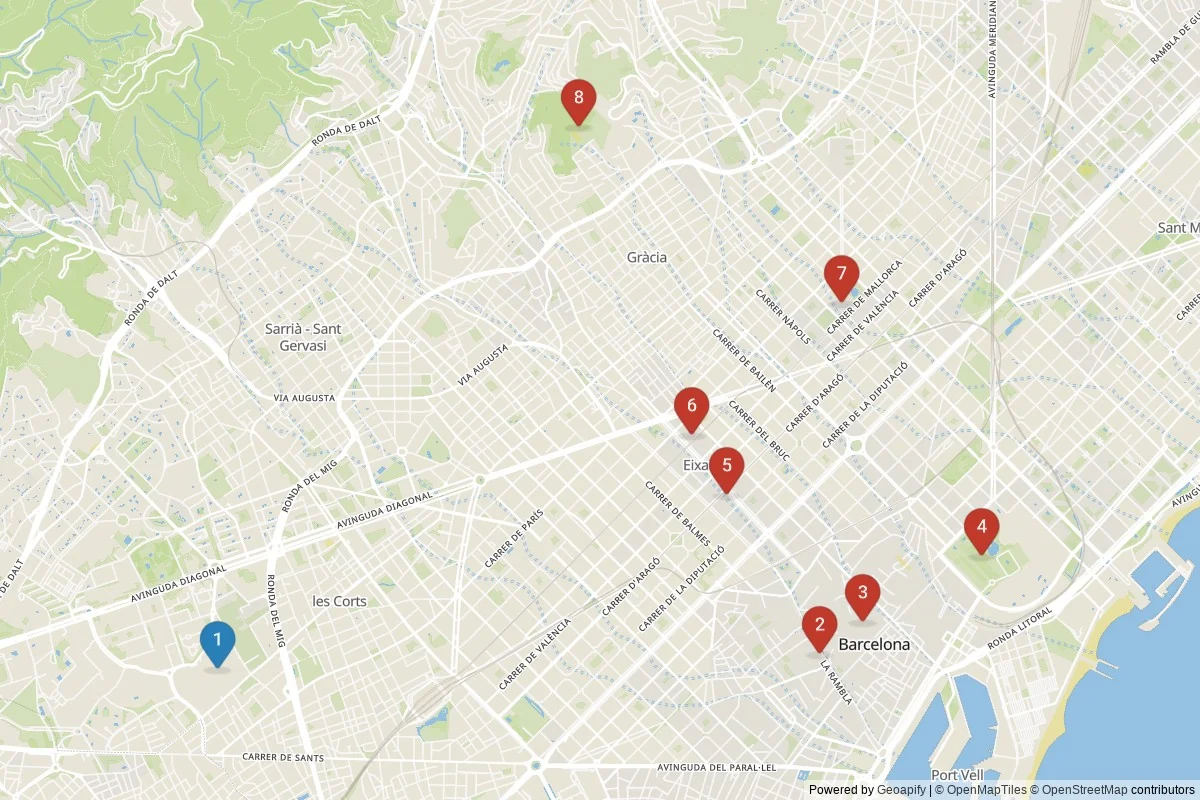
| # | Sight | Cluster | Type | Time | Entry | Best |
|---|---|---|---|---|---|---|
| 1 | Camp Nou (FC Barcelona) | Central | Stadium | ~2 hrs | €28 | Morning |
| 2 | La Rambla & Boqueria | Outer | Boulevard | ~1.5 hrs | Free | Afternoon |
| 3 | Gothic Quarter & Cathedral | Outer | Old quarter | ~2 hrs | Free | Evening |
| 4 | Park de la Ciutadella | Outer | Urban park | ~1 hr | Free | Afternoon |
| 5 | Casa Batlló | Outer | Gaudí house | ~1.5 hrs | €35 | Morning |
| 6 | La Pedrera (Casa Milà) | Outer | Gaudí house | ~1.5 hrs | €28 | Afternoon |
| 7 | Sagrada Família | Outer | Basilica | ~2 hrs | €26 | Morning |
| 8 | Park Güell | Outer | Park & art | ~1.5 hrs | €10 | Morning |
| 🚗 | Day Trip: Montserrat | Day trip | Day trip | Full day | €20 cable | Morning |
| 🚗 | Day Trip: Sitges Beach | Day trip | Day trip | ½ day | Free | Afternoon |
Gaudí’s Architectural Marvels
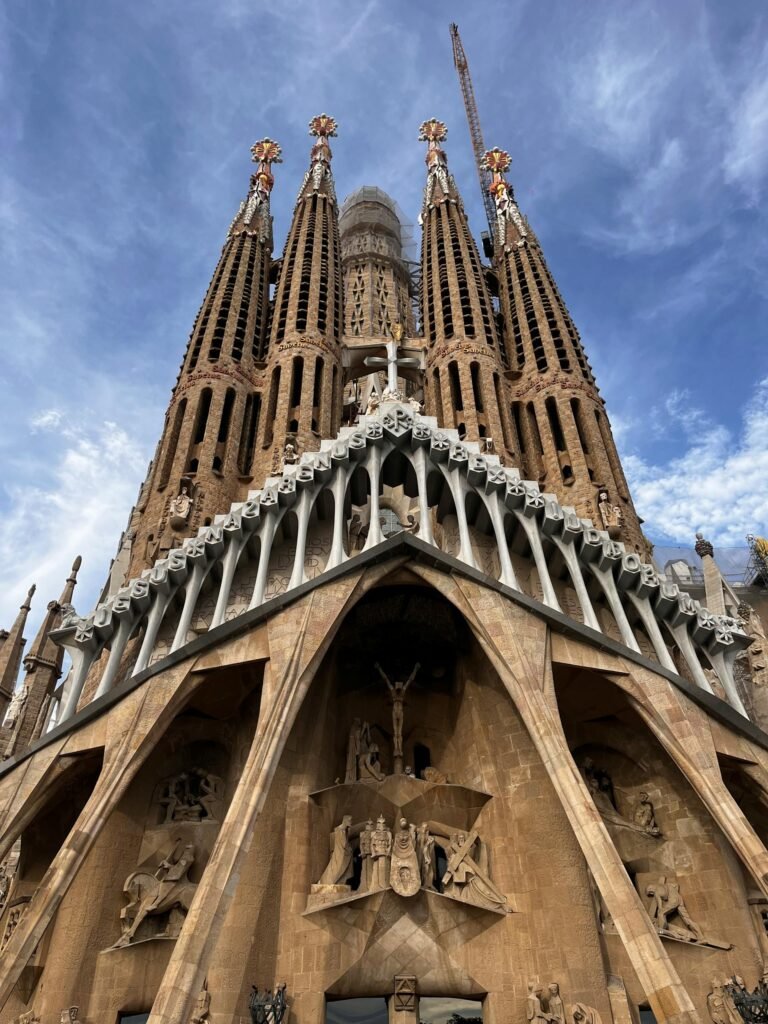
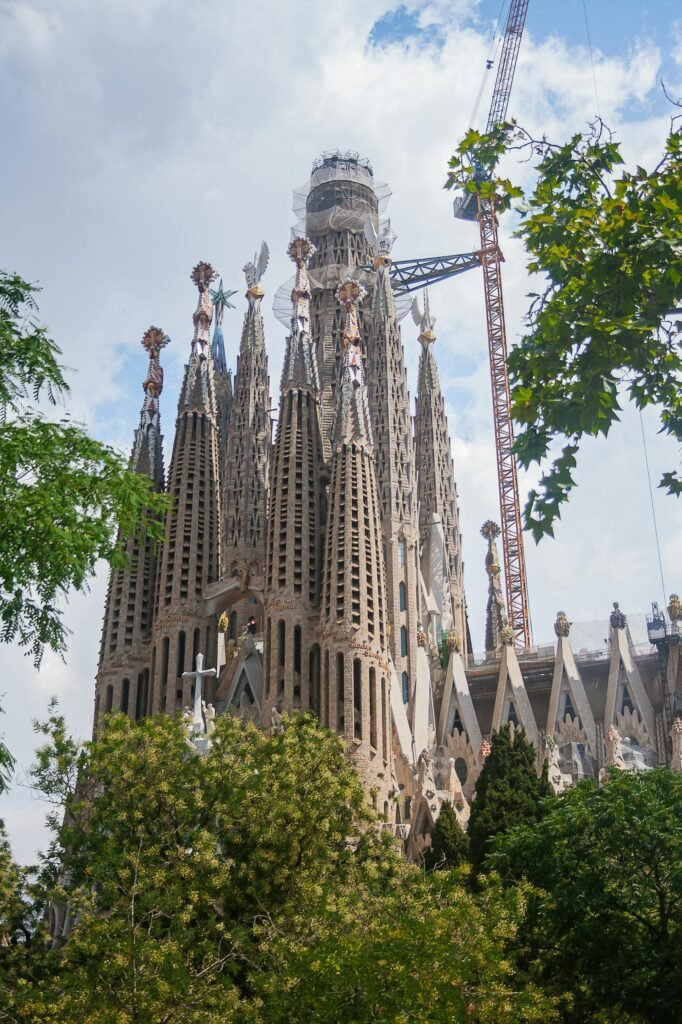
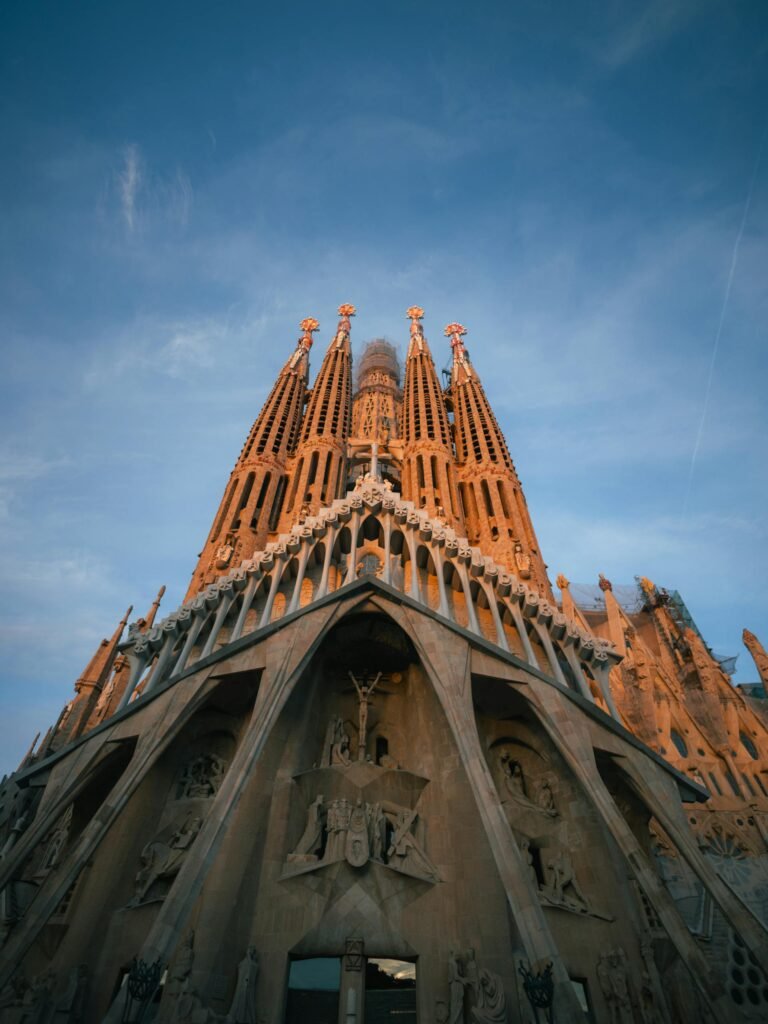
Sagrada Família stands as Barcelona’s most iconic landmark. This extraordinary basilica, under construction since 1882, combines Gothic and Art Nouveau forms in Gaudí’s unique vision — completion is projected for 2026, the centenary of Gaudí’s death. Book entry tickets online weeks ahead via the official portal — walk-up tickets are routinely unavailable. Seven of Gaudí’s works are UNESCO World Heritage Sites:
- Park Güell — A whimsical mosaic-covered park offering panoramic city views; the monumental zone requires timed-entry tickets
- Casa Batlló — A dragon-inspired facade on Passeig de Gràcia
- Casa Milà (La Pedrera) — A stone wave with an otherworldly rooftop
- Palau Güell — An early masterpiece showcasing Gaudí’s developing style
Historic Gothic Quarter
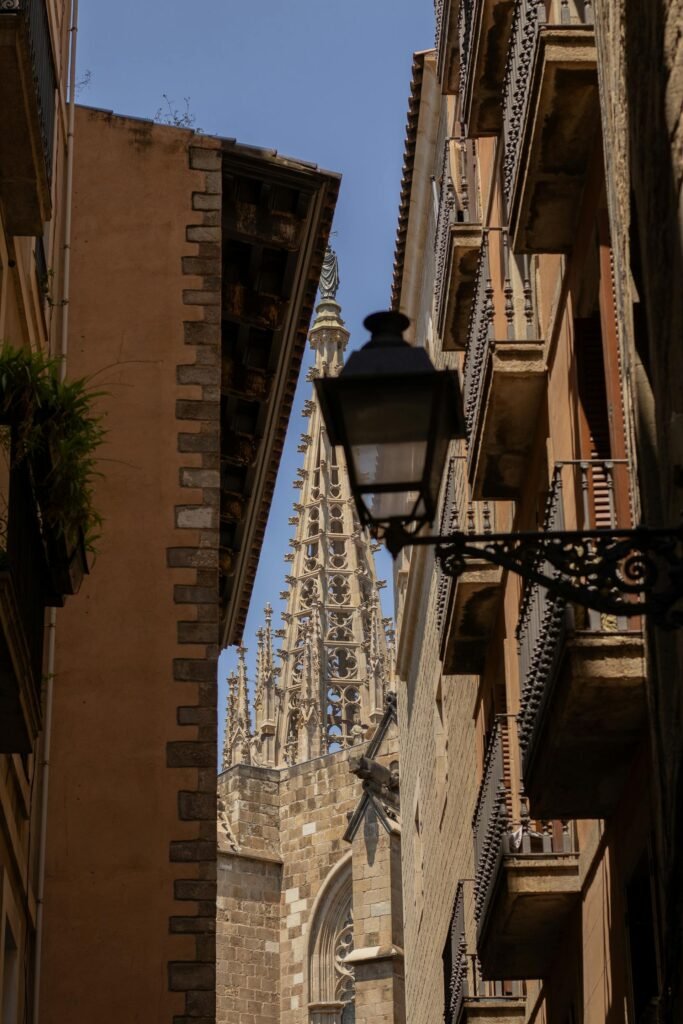
Wander the medieval streets of the Barri Gòtic, where Roman walls still stand beneath Gothic palaces. Key sites: Barcelona Cathedral (a magnificent Gothic structure with a peaceful cloister), Plaça del Rei (a medieval square surrounded by historic buildings), the Roman Temple of Augustus (ancient columns hidden within a courtyard in the city center), and Plaça Sant Jaume (the political heart housing the Generalitat and City Hall).
Museums and Cultural Sites
- Museu Picasso — The world’s most comprehensive collection of the artist’s early works
- Fundació Joan Miró — Modern art in a stunning hilltop setting on Montjuïc
- Museu Nacional d’Art de Catalunya (MNAC) — Medieval Catalan masterpieces in the Palau Nacional
- Palau de la Música Catalana — A modernist concert hall with breathtaking interiors (UNESCO World Heritage Site)
Parks and Outdoor Spaces
- Parc de la Ciutadella — The city’s green lung with a zoo, parliament, and boating lake
- Montjuïc — Museums, gardens, cable cars, and the Magic Fountain (free choreographed shows on weekends)
- Tibidabo — Amusement park and panoramic views from the city’s highest point
- Bunkers del Carmel — Former anti-aircraft positions offering spectacular sunset views (free, but the climb is real)
Beaches and Waterfront
Barcelona’s 4.5 km of beaches were transformed for the 1992 Olympics — they are entirely artificial, built for the Games:
- Barceloneta Beach — The most central and popular beach
- Port Olímpic — Marina with restaurants and nightlife
- Bogatell and Mar Bella — Quieter beaches popular with locals
- Port Vell — Historic harbor with the Maremagnum shopping center
How to Get to Barcelona
By Air
Barcelona-El Prat Airport (BCN) serves as the main gateway, located 12 km southwest of the city center. The airport connects to downtown via Metro Line 9 (35 min to city center), RENFE train (20 min to Sants station), Aerobús (35 min to Plaça Catalunya), or taxi (20–30 min depending on traffic, fixed €40 fare to Plaça Catalunya). Alternative airports: Girona (100 km north) and Reus (100 km south), both connected by bus services to Barcelona — primarily used by budget airlines.
By Train
Barcelona Sants station is the main railway hub with high-speed AVE connections to Madrid (2.5–3 hours), Paris (6.5 hours), Lyon and Marseille (direct TGV services). Regional trains connect Barcelona to other Catalan cities and the French border.
By Road
Major highways: AP-7/A-7 Mediterranean coastal route, AP-2 direct to Madrid and Zaragoza, A-2 alternative route to Madrid via Lleida.
By Sea
Barcelona’s port welcomes cruise ships and ferries from the Balearic Islands, Italy, and North Africa. The port is divided into three areas: historic Port Vell, commercial Port Franc, and modern Port Olímpic. Barcelona is one of the busiest cruise ports in Europe.
Getting Around Barcelona
Public Transportation
Barcelona’s integrated transport system (ATM) includes metro, buses, trams, and trains with unified ticketing. Metro (TMB): Eight lines covering the entire city with trains every 2–5 minutes during peak hours. The system operates from 5:00 AM to midnight (2:00 AM Fridays, continuous service Saturdays). Buses (TMB): Extensive network including night buses (Nitbus) and tourist routes; the Bus Turístic hop-on-hop-off service covers major attractions. Trams: Modern Trambaix and Trambesòs lines connect outer neighborhoods to metro stations. Regional Trains: RENFE Rodalies and FGC services connect Barcelona to surrounding towns and attractions.
Cycling
Barcelona ranks 13th globally for bike-friendliness with over 200 km of bike lanes. The Bicing bike-share system requires local registration, but numerous rental shops near major attractions serve tourists.
Taxis and Ride-Sharing
Licensed taxis are readily available, identifiable by their black-and-yellow colors. Taxi fares are regulated and metered. Uber and Cabify operate in the city alongside traditional taxi services.
Walking
Many attractions lie within walking distance in the compact city center. The innovative “Superblocks” (Superilles) program has created car-free zones in Eixample and Poblenou, making pedestrian exploration more pleasant.
Food & Drink in Barcelona
Barcelona’s culinary scene reflects its position as a Mediterranean port city with strong Catalan traditions and international influences. Catalan cuisine is distinctly different from “Spanish” cuisine — local pride is real.
Traditional Catalan Cuisine
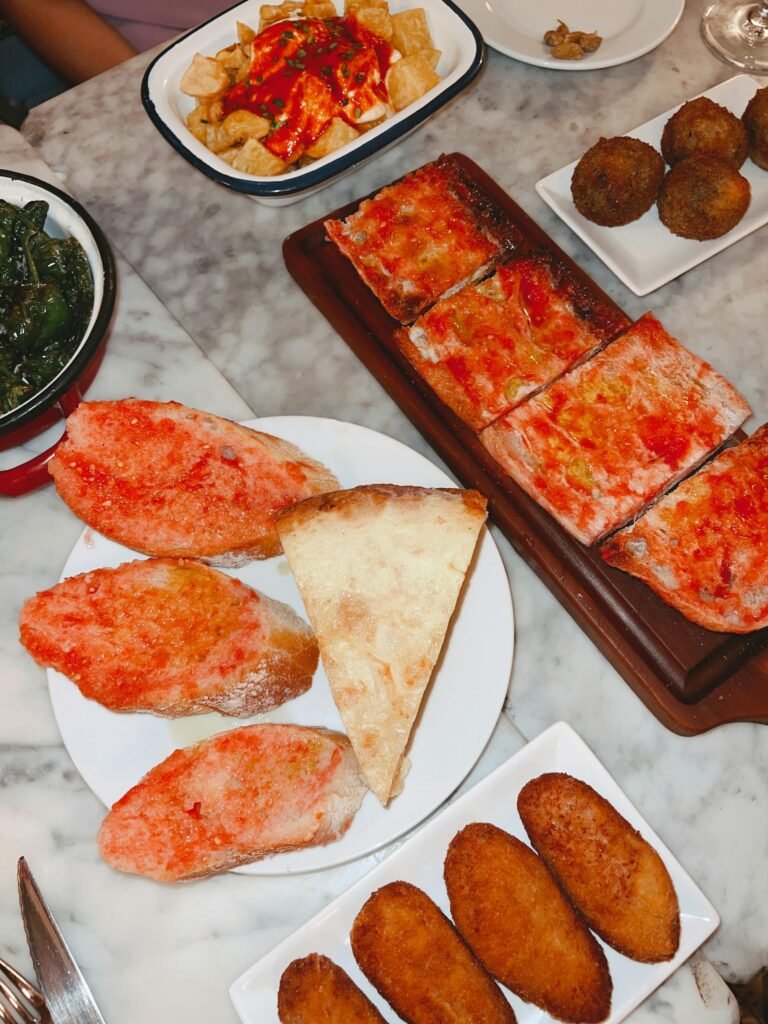
- Pa amb tomàquet — Bread rubbed with tomato, garlic, and olive oil; the foundational Catalan staple
- Escalivada — Roasted vegetables (eggplant, peppers, onions) with olive oil
- Botifarra amb mongetes — Catalan sausage with white beans
- Crema catalana — The region’s answer to crème brûlée (predates the French version)
- Fideuà — Paella made with noodles instead of rice; a coastal Catalan specialty
Tapas and Pintxos
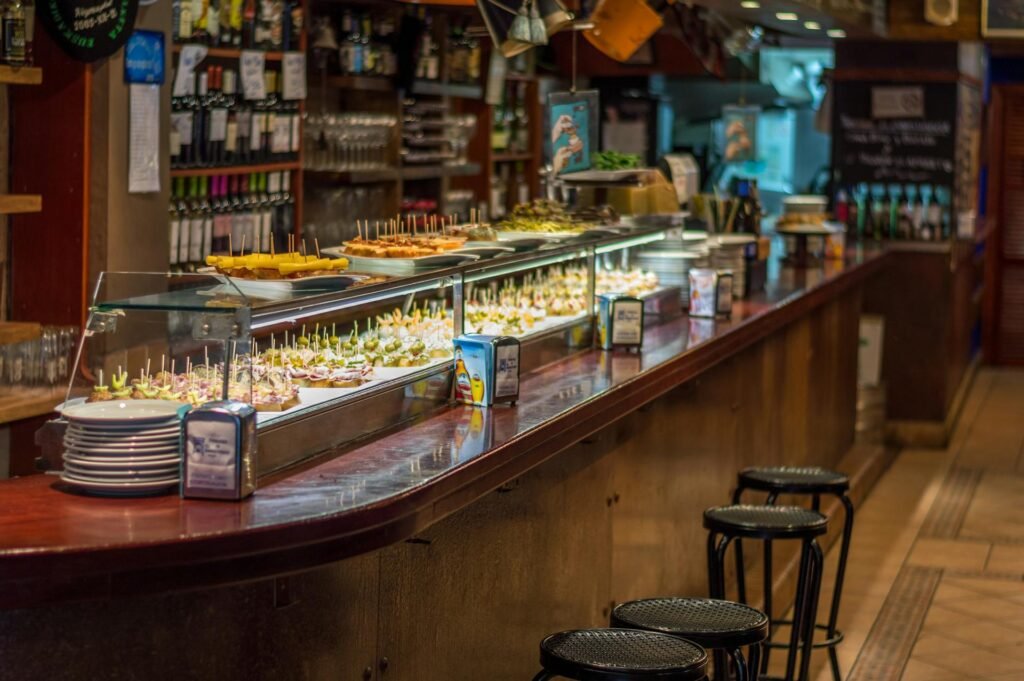
Barcelona’s tapas culture thrives in neighborhood bars and markets. Essential experiences: Mercat de la Boqueria (historic market with fresh produce and prepared foods), Cal Pep (legendary tapas bar in La Ribera), Quimet & Quimet (standing-room-only bar in Poble-sec famous for montaditos), El Xampanyet (atmospheric old-school cava bar near the Picasso Museum).
Markets and Food Halls
- Mercat de Sant Josep (La Boqueria) — The city’s most famous market on La Rambla; touristic but worth one visit
- Mercat de Santa Caterina — Modernized market with a colorful mosaic roof, less crowded than Boqueria
- Mercat del Born — Trendy food hall in a converted 19th-century market
Wine and Cava
Catalonia produces excellent wines, particularly from the Penedès region. Cava, Spain’s sparkling wine, originated here and pairs perfectly with local seafood and tapas — try Codorníu or Freixenet for the canonical versions, or smaller producers like Recaredo for more interesting examples.
Culture & Arts
Barcelona’s cultural landscape encompasses everything from medieval architecture to cutting-edge contemporary art, reflecting the city’s role as Catalonia’s creative capital.
Language and Identity
Catalan serves as the co-official language alongside Spanish, with most locals bilingual. Street signs, menus, and cultural events often appear in Catalan first, reflecting the strong regional identity that survived decades of suppression under Franco. Trying a few Catalan phrases (bon dia, gràcies) is appreciated; defaulting to Spanish is fine but Catalan is preferred.
Festivals and Traditions
- La Mercè (September) — The city’s biggest festival honoring the patron saint, with castellers, fireworks, and street performances
- Sant Jordi (April 23) — Catalonia’s version of Valentine’s Day; men give roses, women give books
- Festa Major de Gràcia (August) — Neighborhood festival with elaborate street decorations
- Castells — Human tower building, a UNESCO-recognized Catalan tradition
Music and Performance
The Palau de la Música Catalana and Gran Teatre del Liceu anchor Barcelona’s classical music scene; venues like Razzmatazz and Sala Apolo showcase contemporary acts. The city’s jazz scene thrives in intimate clubs throughout the Gothic Quarter and Gràcia. Primavera Sound in late May/early June is one of Europe’s largest indie music festivals.
Contemporary Art Scene
Beyond world-famous museums, Barcelona nurtures a vibrant contemporary art scene in galleries throughout El Raval and Poblenou. The Fundació Antoni Tàpies and Centre de Cultura Contemporània de Barcelona (CCCB) present cutting-edge exhibitions and cultural programming.
Barcelona by District: The 10 Districtes
Barcelona is divided into 10 districts. The map below shows their official OSM boundaries, colour-coded to match the table — a quick way to orient yourself before zooming in on individual sights.
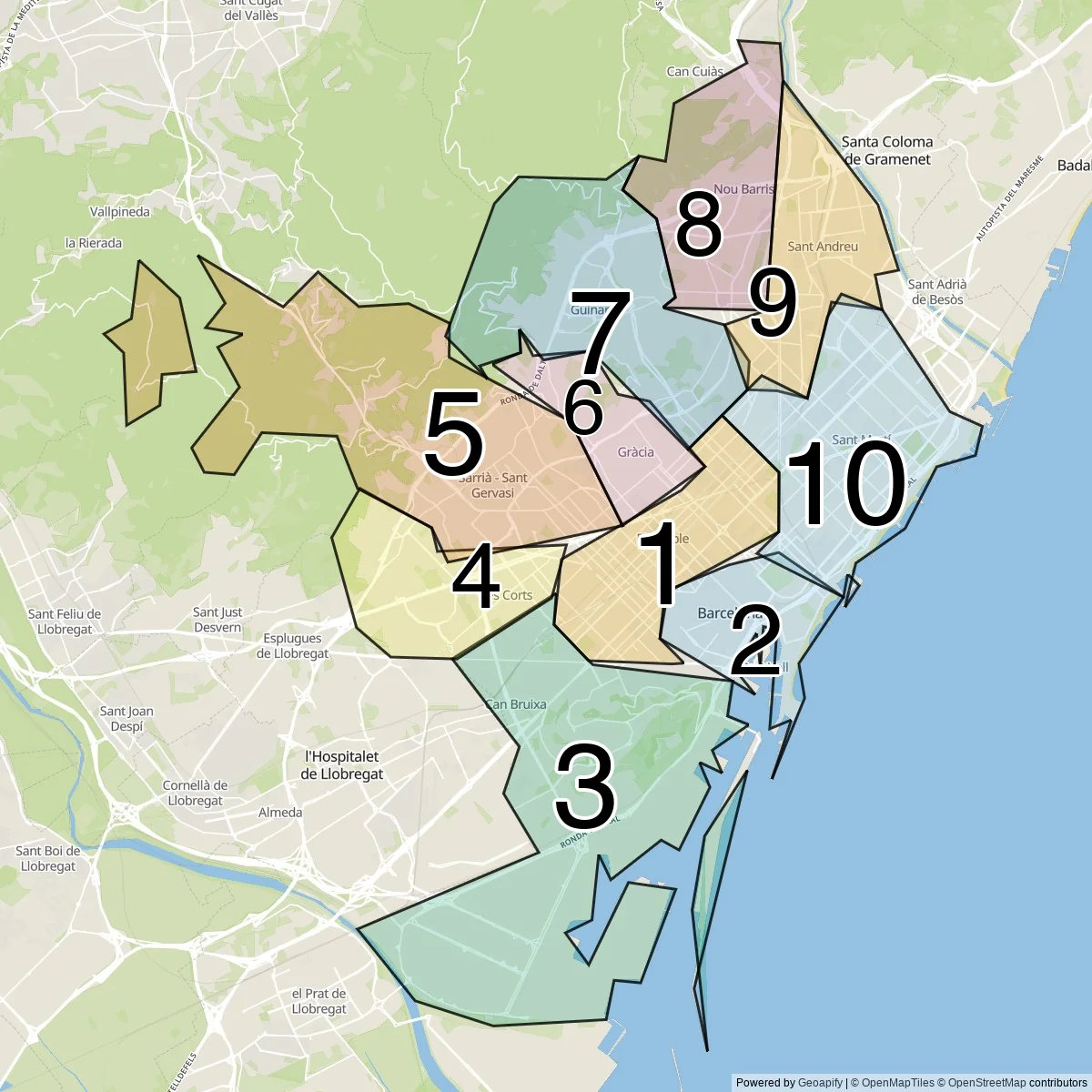
| # | Districtes |
|---|---|
| 1 | l’Eixample |
| 2 | Ciutat Vella |
| 3 | Sants-Montjuïc |
| 4 | les Corts |
| 5 | Sarrià – Sant Gervasi |
| 6 | Gràcia |
| 7 | Horta-Guinardó |
| 8 | Nou Barris |
| 9 | Sant Andreu |
| 10 | Sant Martí |
Frequently Asked Questions About Visiting Barcelona
Do I need a visa to visit Barcelona?
Barcelona falls under Schengen Area visa rules. EU/EEA/Swiss citizens enter freely with a national ID card. Citizens of the US, UK, Canada, Australia, Japan, and roughly 60 other countries enter visa-free for stays up to 90 days within any 180-day period — but starting in 2026 those visitors will need to register with the new ETIAS travel authorization system (about €7, valid 3 years). All other nationalities need a Schengen visa applied for at the Spanish consulate before travel — see exteriores.gob.es.
Is Barcelona safe for tourists?
Generally safe in mainstream tourist areas, but Barcelona has a real pickpocket problem — among the highest in Europe, particularly around La Rambla, the Gothic Quarter, the metro (especially Line 3), and around Sagrada Família. Violent crime is rare. The US State Department rates Spain at “exercise increased caution” — driven by petty theft. Common scams: distraction-thefts on the metro, the “spilled drink” maneuver in Las Ramblas restaurants, fake police asking for ID checks. Use crossbody bags with zips, keep phones in front pockets, and don’t leave anything visible at outdoor café tables. After dark, stick to well-lit central streets; the El Raval area can feel rougher at 2 AM.
How many days do I need in Barcelona?
Three full days handles the headline sights without rushing; four to five gives breathing room for beach time and a Montserrat day trip. A solid 3-day plan: Day 1 the Eixample Gaudí circuit — Sagrada Família + Casa Batlló + Casa Milà + Passeig de Gràcia (book Sagrada timed entry weeks ahead); Day 2 Park Güell in the morning, Gothic Quarter in the afternoon, La Rambla and the Boqueria market; Day 3 Montjuïc — Magic Fountain, Montjuïc Castle, MNAC, Olympic facilities + Barceloneta beach evening. Add a 4th day for the Picasso Museum + Born neighborhood + Bunkers del Carmel sunset; 5th day for Montserrat or Sitges day trip.
What’s the best area to stay in Barcelona?
Three solid options. Eixample (especially Eixample Dret around Passeig de Gràcia) is the all-rounder — Gaudí walks at your doorstep, modernista architecture, good restaurants, easy metro to everywhere. Gothic Quarter / Born for atmosphere — medieval streets, small hotels in restored buildings, walking distance to La Rambla and Picasso Museum, but loud at night and peak tourist density. Gràcia for the local-Barcelona vibe — neighborhood squares, less tourist density, indie boutiques, slightly cheaper. Skip El Raval as a base unless you specifically want the gritty-bohemian feel. Skip Barceloneta in summer — packed.
How much does it cost to visit Sagrada Família and the major sites?
Major Gaudí sites in Barcelona require advance booking — walk-up tickets are routinely unavailable during peak season. Sagrada Família: €26 for basic entry, €36 with tower access, via the official sagradafamilia.org portal — book 2+ weeks ahead. Park Güell monumental zone: €13 via parkguell.barcelona. Casa Batlló: from €29; Casa Milà (La Pedrera): from €28. Many free options too: Gothic Cathedral cloister, Park Güell forest area, Bunkers del Carmel, the beaches, Magic Fountain shows on Montjuïc. The Barcelona Card covers most major attractions plus public transit and pays off if you visit four+ headline sites.
Should I drink the tap water in Barcelona?
Technically safe, but most locals drink bottled water due to taste. Barcelona’s tap water is treated to EU standards by Aigües de Barcelona, but the high mineral content (especially chlorine and salts) gives it a notable taste that even Catalans find off-putting. Restaurants will serve free tap water if you ask (agua del grifo in Spanish or aigua de l’aixeta in Catalan), though many automatically serve bottled. The CDC’s Spain travel health page rates the water as safe. Bottled water is widely available at €0.50–1.50 per liter at supermarkets, more in restaurants.
Should I learn Catalan or just Spanish for Barcelona?
Spanish (Castilian) is universally spoken — you’ll get by without any Catalan. But Catalan is the regional language and a real source of local pride. Most signage is in Catalan first; menus often have both. Learning a few Catalan phrases is genuinely appreciated: bon dia (good morning/hello), gràcies (thank you), si us plau (please), adéu (goodbye). English is widely spoken in tourist-facing businesses, and improving rapidly outside them. Avoid the awkward error of insisting on Spanish when speaking with someone who switched to Catalan to greet you — just respond with whatever you have.
Is tipping expected in Barcelona?
Less than in the US — closer to Italian or French norms. Service is officially included in restaurant prices. Restaurants: 5–10% in cash for good sit-down service if no service charge is added; round up at casual places. Tapas bars: leave the small change. Cafés: round up to nearest euro. Taxis: round up to nearest euro, or 5–10% for longer rides. Hotel porters: €1–2 per bag at upscale hotels. Tour guides: €5–10 for half-day group tours, more for private. Don’t tip on US percentages — it’s seen as flashy. The post-2020 trend toward US-style tipping has been resisted by Catalan locals.
Economy & Business
As the capital of Catalonia, Barcelona drives one of Europe’s most dynamic regional economies. The metropolitan area’s GDP reached €171 billion in 2014, ranking as the world’s 72nd largest urban economy.
Key Industries
- Tourism — Over 8 million annual visitors generate significant employment
- Manufacturing — Automotive (SEAT in nearby Martorell), pharmaceuticals, food processing
- Technology — Growing startup ecosystem in the Poblenou “22@” district
- Logistics — Major Mediterranean port and transportation hub
- Finance — Regional banking and insurance center
Innovation and Startups
The 22@ Barcelona innovation district has transformed the former industrial Poblenou neighborhood into a technology hub. The area hosts the annual Mobile World Congress, one of the world’s largest technology conferences (each February/March), drawing 100,000+ attendees and reshaping the city’s calendar around it.
Sports
Barcelona’s sporting culture centers around football but encompasses diverse athletic pursuits and world-class facilities.
Football
FC Barcelona plays at Camp Nou, Europe’s largest stadium with 99,354 seats (currently undergoing renovation through 2026, with the team playing temporarily at Estadi Olímpic Lluís Companys on Montjuïc). The club’s motto “Més que un club” (More than a club) reflects its role in Catalan identity. City rivals RCD Espanyol compete at the modern Estadi Cornellà-El Prat.
Other Sports
- Formula 1 — Circuit de Barcelona-Catalunya hosts the Spanish Grand Prix each May
- Handball — FC Barcelona’s team holds nine Champions League titles
- Basketball — FC Barcelona Bàsquet competes in European competitions
- Tennis — Barcelona Open attracts top players to the Real Club de Tennis Barcelona each April
Olympic Legacy
The 1992 Summer Olympics transformed Barcelona’s infrastructure and international profile. Olympic facilities on Montjuïc continue serving the city — including the Estadi Olímpic Lluís Companys (currently FC Barcelona’s temporary home) and the Palau Sant Jordi.
Barcelona continues to captivate visitors with its unique blend of historical depth, architectural innovation, and Mediterranean lifestyle. Whether the draw is Gaudí’s fantastical creations, the medieval streets of the Gothic Quarter, the urban beaches, or the food, the city offers experiences that linger long after departure. This Catalan capital stands as a testament to successful urban evolution — preserving its rich heritage while taking bold steps toward a sustainable and culturally vibrant future.
AFRIKA
Cairo Hurghada Johannesburg Marrakech
ASIA
Abu Dhabi Agra Antalya Bangkok Batam Beijing Bengaluru Cebu City Chiang Mai Chiba Chennai Da Nang Dammam Delhi Denpasar Dubai Fukuoka Guangzhou Guilin Ha Long Hanoi Ho Chi Minh City Jakarta Jaipur Johor Bahru Kolkata Krabi Kuala Lumpur Kyoto Macau Mecca Medina Mugla Mumbai Osaka Pattaya Penang Phuket Riyadh Seoul Shanghai Shenzhen Singapore Taipei Tokyo Zhuhai
EUROPE
Amsterdam Athens Barcelona Berlin Brussels Budapest Copenhagen Dublin Florence Frankfurt am Main Heraklion Krakow Lisbon London Madrid Milan Munich Nice Paris Porto Prague Rhodes Rome Stockholm Venice Vienna Warsaw
NORTH AMERICA
Cancun Las Vegas Los Angeles Miami New York City Orlando San Francisco Toronto Vancouver
SOUTH AMERICA
Buenos Aires Lima Rio De Janeiro
OCEANIA
Auckland Honolulu Melbourne Sydney