
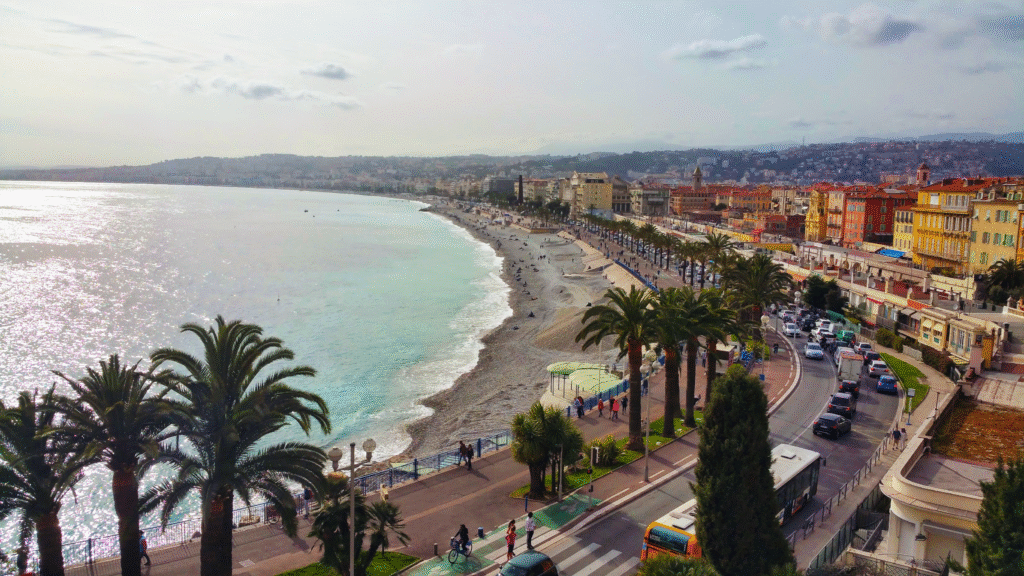
Photo credit: The Promenade des Anglais, Nice
Nice is the unofficial capital of the French Riviera (Côte d’Azur) — a Mediterranean city that has been the winter retreat of European royalty, the birthplace of Henri Matisse, and one of France’s most stylish urban destinations for nearly two centuries. Founded by the Greeks around 350 BCE as Nikaia, ruled in turn by Romans, Counts of Provence, the House of Savoy, and finally France (annexation in 1860), Nice’s complicated cross-border history produced a distinctive culture that combines Mediterranean Italian and Provençal French in equal parts — and a regional dialect (Niçard) and cuisine (socca, pissaladière, the salade niçoise) that locals still defend fiercely. The 7-kilometer Promenade des Anglais — originally funded by the English wintering colony in the 1820s — was added to UNESCO World Heritage in 2021 as the “Winter Resort Town of the Riviera,” recognizing Nice as the original prototype of European seaside tourism. Today the city offers the Old Town (Vieux Nice)‘s narrow medieval streets and ochre Italianate buildings, the Castle Hill viewpoint, the Matisse Museum and Chagall Museum, the famous flower-and-vegetable Cours Saleya market, and easy access to Monaco, Cannes, Antibes, Èze, Saint-Paul-de-Vence, and the rest of the French Riviera.
Nice by District: The 5 Quartiers
Nice is divided into 5 neighbourhoods. The map below shows their official OSM boundaries, colour-coded to match the table — a quick way to orient yourself before zooming in on individual sights.
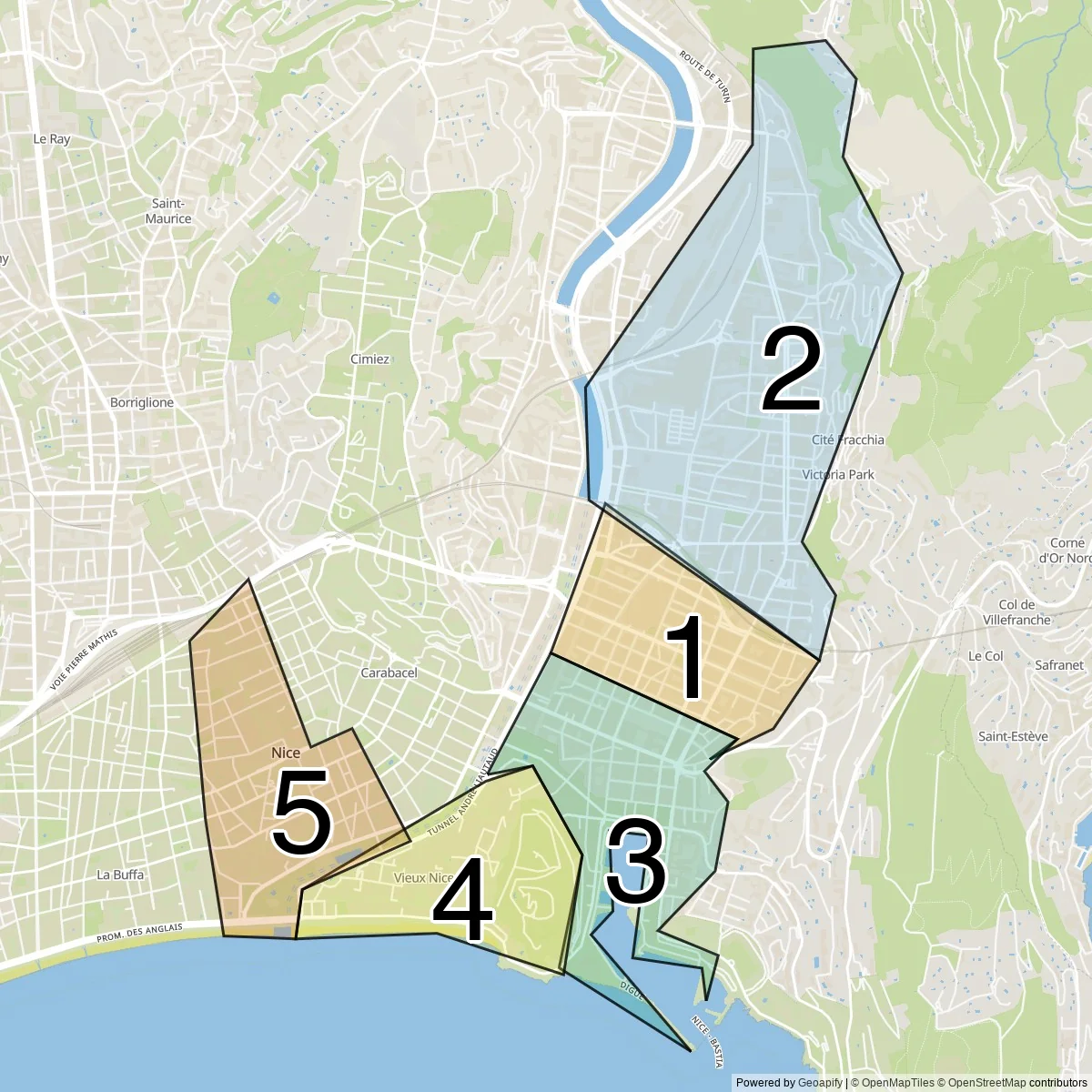
| # | Quartiers |
|---|---|
| 1 | Riquier |
| 2 | Saint-Roch |
| 3 | Le Port |
| 4 | Vieux Nice |
| 5 | Quartier Jean-Médecin |
Nice at a Glance: Essential Facts for Travelers
| Location | Alpes-Maritimes department, Provence-Alpes-Côte d’Azur region, Southeastern France |
|---|---|
| Coordinates | 43.7102°N, 7.2620°E |
| Population | ~342,000 (city, 2024); metro area ~1.01 million |
| Area | 72 km² (city proper) |
| Elevation | Sea level to ~512 m (Mont Boron hills) |
| Time Zone | Central European Time (CET, UTC+1) / Central European Summer Time (CEST, UTC+2) |
| Calling Code | +33 (city code 04) |
| Currency | Euro (EUR €) |
| Languages | French (official); Niçard (regional Occitan dialect, preserved by locals); English widely spoken in tourism |
| Climate | Mediterranean — hot dry summers, mild rainy winters; sunny ~300 days/year |
| Founded | ~350 BCE (Greek colony of Nikaia); annexed by France 1860 |
| Famous For | Promenade des Anglais (UNESCO 2021), Vieux Nice old town, Castle Hill, Cours Saleya market, French Riviera gateway, Matisse Museum, Chagall Museum, Nice Carnival |
Upcoming Events in Nice
| Date | Title | Details |
|---|---|---|
| 2026-06-17 to 2026-09-28 | Henri Matisse – Yves Saint Laurent: Beauty, Fashion and Happiness | The Musee Matisse in the Cimiez district pairs two masters of colour in Henri Matisse – Yves Saint Laurent: Beauty, Fashion and Happiness, on view until 28 September 2026. Opened on 17 June, the exhibition sets the painter’s canvases and cut-outs alongside couture by Yves Saint Laurent, tracing how Matisse’s palette and forms shaped some of the designer’s most celebrated creations. Tickets are sold online through the city museums’ booking platform, and the closing fortnight is the last chance to catch it; combine the visit with the adjacent Cimiez gardens and monastery. [Source] |
| 2026-09-15 to 2026-10-31 | Autumn Season at the Opera de Nice | Housed in a sumptuous 19th-century building near the old town, the Opera de Nice opens its new season each autumn with a programme of opera, symphonic concerts and ballet performed by its resident orchestra, chorus and company. Grand productions of well-loved works share the calendar with recitals and family matinees under the gilded, chandelier-lit auditorium. Tickets span a wide range, from budget upper seats to prime stalls, making a night at the opera accessible. Check the schedule in advance, as popular performances sell out. It is a jewel of Nice’s cultural life. [Source] |
| 2026-09-15 to 2026-10-31 | Theatre National de Nice Autumn Season | The Theatre National de Nice, the city’s flagship drama company, launches its autumn season with a varied programme of contemporary plays, classics and visiting productions. Performances range from bold new writing to fresh reinterpretations of the canon, drawing audiences from across the Cote d’Azur. It is a cornerstone of the region’s theatre scene and a good place to catch French-language drama, sometimes with international guest artists. Tickets are reasonably priced, with reductions for young people and students. Programmes and exact dates are published on the theatre’s website ahead of each show. [Source] |
| 2026-09-19 to 2026-09-20 | European Heritage Days in Nice | Nice throws open its doors for the European Heritage Days on 19 and 20 September 2026, when monuments, museums, villas and institutions across the city offer free access, guided tours and exceptional openings. This year’s national themes are the heritage of photography and heritage in peril, promising unusual encounters alongside classics such as Belle Epoque palaces, churches and civic buildings. Most visits are free, though some require advance booking, and queues form early at the most popular addresses. It is a perfect weekend for curious locals and visitors to see spaces normally closed to the public. [Source] |
| 2026-09-23 to 2026-09-26 | Monaco Yacht Show | A short hop along the coast from Nice, the Monaco Yacht Show fills Port Hercule each late September with the world’s most spectacular superyachts, drawing owners, brokers and the merely curious. Hundreds of exhibitors showcase yachts, tenders and luxury goods, and the quaysides buzz with the glamour for which the principality is famous. It is the flagship event of the global superyachting calendar. Entry is by ticket and prices are high, reflecting the exclusive clientele, but the sight of the assembled fleet from the harbourside is a spectacle in itself. [Source] |
| 2026-11-08 | Marathon des Alpes-Maritimes Nice-Cannes 2026 | The Marathon des Alpes-Maritimes sends runners from Nice to Cannes on Sunday 8 November 2026, following one of Europe’s most scenic road-race courses along the Mediterranean shore. The programme includes the full 42.195-kilometre point-to-point marathon, relay formats and a 20-kilometre run from Nice to Villeneuve-Loubet, drawing thousands of participants of all levels. Spectating along the Promenade des Anglais and through the coastal towns is free and festive, while runners must register and pay an entry fee, with places selling steadily in the final weeks; public transport is the easiest way to reach the start. [Source] |
City News in Nice – last 14 days
| Date | Category | Headline | Details |
|---|---|---|---|
| 2026-09-14 | Public safety | Man in critical condition after drowning off the Promenade des Anglais | A 68-year-old man was pulled from the sea in a serious condition after a drowning on Monday 14 September at Lenval beach, along Nice’s Promenade des Anglais. Emergency services resuscitated the swimmer at the scene before he was taken to hospital, where he was placed in intensive care. The incident is a reminder that the Mediterranean can remain hazardous even in the gentler conditions of late summer, and lifeguard coverage on the city’s beaches winds down as the high season ends. [Source] |
| 2026-09-14 | Public safety | Young motorcyclist seriously injured in collision outside Lenval hospital | An 18-year-old motorcyclist was gravely injured in a collision in front of the Lenval hospital in Nice, in an accident that investigators say involved high speed. The crash happened on the busy seafront corridor where traffic streams past the children’s hospital, and emergency crews treated the rider at the scene before he was rushed into care. Police are examining the circumstances, and the case adds to persistent concern in the city over speeding two-wheelers on the coastal boulevards. [Source] |
| 2026-09-14 | Public transport | Truck crash on the A8 disrupts traffic toward Nice | Firefighters in the Var intervened at midday on Monday after an accident on the A8 motorway at Roquebrune-sur-Argens involving two heavy goods vehicles, one of them carrying liquid plant-protection products. The crash left traffic heavily disrupted in the direction of Nice, with long queues building on the coastal motorway that links the Riviera to Provence. Crews worked to secure the cargo and clear the carriageway, and drivers were advised to allow extra time or delay journeys along the corridor. [Source] |
| 2026-09-14 | Culture | Reopening date announced for Menton’s Cocteau museum | The Jean Cocteau museum in Menton, closed since storm Adrian partially flooded its collections in 2018, finally has a reopening date. The waterfront building dedicated to the poet and artist has undergone a long recovery, and curators have confirmed that no works will be displayed in the flood-prone lower levels once visitors return. The announcement ends years of uncertainty over one of the Riviera’s signature single-artist museums, whose collection had been moved to safety while the future of the damaged building was resolved. [Source] |
| 2026-09-14 | Culture | Record season start for Antibes’ Anthea theatre with 17,000 subscribers | The Anthea theatre in Antibes raised the curtain on its fourteenth season over the weekend of 12 September with a record 17,000 subscribers, consolidating its standing as France’s second theatre by audience loyalty. The success is remarkable for a venue outside Paris, and it reflects a programme that mixes major touring productions, dance and star performers with accessible pricing. For theatregoers across the Cote d’Azur, including Nice, the Antibes stage has become a fixture of the cultural calendar, and popular productions now sell out quickly. [Source] |
| 2026-09-14 | Local government | Cannes wins national award for use of AI in public services | Cannes City Council has received the 2026 Citizen Relations Award for its use of artificial intelligence to improve municipal services and make administrative work more efficient. The recognition rewards the city’s efforts to streamline responses to residents’ queries and speed up back-office processes, positioning Cannes among the French municipalities most advanced in practical AI adoption. Officials on the Riviera have been watching such experiments closely, as councils across the region look for ways to improve service quality without expanding budgets. [Source] |
| 2026-09-14 | Business | Mediterranean fishers mobilise against rising fuel prices | Fishing organisations across the French Mediterranean are mounting a joint protest movement against rising fuel prices, uniting the regional fisheries committees of Occitanie, Provence-Alpes-Cote d’Azur and Corsica, the three producer organisations and seafarers’ unions on both the employers’ and employees’ sides. Describing a general exasperation in the industry, the groups say soaring diesel costs are squeezing margins that were already thin for small coastal fleets, including those supplying Nice’s markets and restaurants. The coordinated action signals rare unity across the sector as it presses for relief. [Source] |
| 2026-09-14 | Business | Cannes’ Majestic hotel turns 100 and prepares a total renovation | The Majestic, the flagship hotel of the Barriere group on the Croisette in Cannes, is marking a century since it opened its doors on 1 February 1926 and is preparing for a complete renovation. Management describes the works as the kind of undertaking possible only every fifty years, aimed at keeping the palace hotel competitive amid intensifying rivalry at the top of the Riviera’s luxury market. The centenary underlines the hotel’s place in the mythology of Cannes, from film-festival glamour to grand seafront hospitality. [Source] |
| 2026-09-14 | Sports | Menton Basket Club opens its new season with dramatic win over Frejus | Menton Basket Club launched its season in dramatic style, edging Frejus in a suspense-filled finish in the club’s first match at its new level. Relegated after a demanding final campaign in the division above, the Mentonnais made a successful debut in their new championship in front of home supporters. The hard-fought victory offers early encouragement that the club can bounce back quickly, and it gives basketball followers along the eastern Riviera a positive storyline to track through the autumn. [Source] |
| 2026-09-14 | Local affairs | Forget Me Not walk brings Monaco together for Alzheimer’s awareness | Monaco hosted its first Forget Me Not charity walk on Saturday 12 September, bringing residents together to raise awareness of Alzheimer’s disease and support for affected families. Participants walked through the principality to highlight the needs of people living with dementia and their carers, with organisers hoping to make the solidarity event an annual fixture. The initiative adds to a busy season of charitable gatherings on the Riviera, where community causes regularly draw strong turnouts from locals and the international community alike. [Source] |
Nice Events & City News Archive
Sources: Musee Matisse Nice, Opera de Nice, Theatre National de Nice, Journees europeennes du patrimoine, Monaco Yacht Show, Marathon des Alpes-Maritimes, Finishers, Nice-Matin
Weather Forecast for the Next 14 Days in Nice
| Date | Weather | Max °F | Min °F | Rain mm |
|---|---|---|---|---|
| 2026-09-14 | ⛅ | 79.4 °F | 67.7 °F | 0.0 mm |
| 2026-09-15 | ⛅ | 80.7 °F | 71.2 °F | 0.0 mm |
| 2026-09-16 | ☁️ | 78.9 °F | 69.3 °F | 0.2 mm |
| 2026-09-17 | ⛈️ | 77.3 °F | 70.1 °F | 1.8 mm |
| 2026-09-18 | ☁️ | 76.2 °F | 67.6 °F | 0.0 mm |
| 2026-09-19 | ⛅ | 77.7 °F | 68.7 °F | 0.0 mm |
| 2026-09-20 | ☁️ | 77.4 °F | 67.9 °F | 0.0 mm |
| 2026-09-21 | ☁️ | 82.4 °F | 68.1 °F | 0.0 mm |
| 2026-09-22 | ⛅ | 81.0 °F | 68.5 °F | 0.0 mm |
| 2026-09-23 | ☁️ | 76.7 °F | 69.7 °F | 0.0 mm |
| 2026-09-24 | ⛅ | 76.0 °F | 66.3 °F | 0.0 mm |
| 2026-09-25 | 🌧️ | 73.3 °F | 68.3 °F | 0.6 mm |
| 2026-09-26 | 🌧️ | 74.4 °F | 65.9 °F | 4.8 mm |
| 2026-09-27 | ☁️ | 75.4 °F | 61.6 °F | 0.0 mm |
Nice’s History
Nice’s recorded history begins around 350 BCE, when Greek colonists from Massalia (Marseille) founded the coastal trading post of Nikaia (“Victory”) — named after a Greek victory over a Ligurian tribal force in the area. The Romans later established the rival hilltop town of Cemenelum (now the modern district of Cimiez) as the regional administrative capital from the 1st century BCE; the surviving Roman amphitheater, baths, and an excellent archaeological museum are visible in Cimiez today. The two settlements — Nikaia at the harbor, Cemenelum on the hill — coexisted as separate towns for several centuries.
The medieval period brought a complicated political history that defines Nice’s distinctive cultural identity. Held in turn by the Lombard kingdoms, the County of Provence, and the Republic of Genoa, the city formally joined the County of Savoy in 1388 after voluntarily transferring allegiance from the unstable French-Provençal regime — the so-called Dédition de Nice. For the next 472 years, Nice was an Italian-cultural city under the House of Savoy (later the Kingdom of Sardinia-Piedmont). The Old Town’s Italianate architecture, the regional Niçard dialect (closer to Italian Ligurian than to French Provençal), and the city’s distinctive cuisine all date from this Savoyard period.
The English winter colony arrived in the 1740s — wealthy British aristocrats discovered that Nice’s mild Mediterranean climate made it an ideal alternative to the cold London winters. The colony built the first version of what became the Promenade des Anglais as a sea-facing private walking path in 1822 (after the harsh winter of 1820–1821 left many Niçards unemployed; English residents funded the project as relief work). The phrase “Promenade des Anglais” — “Promenade of the English” — preserves this founding moment.
The decisive political shift came on March 24, 1860, when the Treaty of Turin transferred Nice (and Savoy) from the Kingdom of Sardinia-Piedmont to France in exchange for French support of Italian unification. The transfer was confirmed by a controversial plebiscite (the vote was 25,743 for France, 160 against, in a population of 30,000 — likely manipulated). The transfer triggered the Niçard Exile — thousands of Italian-loyalist Niçards left for Italy, including the celebrated revolutionary Giuseppe Garibaldi, who was born in Nice in 1807 and bitterly opposed the French annexation. The city has remained French since 1860, though local identity preservation movements continue to this day.
Twentieth-century Nice flourished as a Belle Époque resort, hosting Queen Victoria’s winter visits, becoming the favored Mediterranean retreat of European aristocracy, and attracting artists including Henri Matisse (resident 1917–1954) and Marc Chagall (resident from 1949 until his 1985 death). World War II saw Italian occupation (1940–1943) followed by German occupation (1943–1944); the Allied landings on the Côte d’Azur in August 1944 liberated the city. The post-war decades brought mass tourism, the construction of Nice Côte d’Azur Airport (1955), and the development of the modern Sophia Antipolis technology park inland (1969).
Two recent events defined the modern city’s identity. On July 14, 2016 — Bastille Day evening — a truck attack on the Promenade des Anglais killed 86 people and injured over 400. The terrorist attack remains the deadliest in modern French history outside Paris; the Promenade’s central monument now commemorates the victims. UNESCO World Heritage inscription on July 27, 2021, recognized Nice’s “Winter Resort Town of the Riviera” status, formally protecting the city’s distinctive 19th-century resort architecture.
Geography, Climate & Best Time to Visit Nice
Geographic Setting
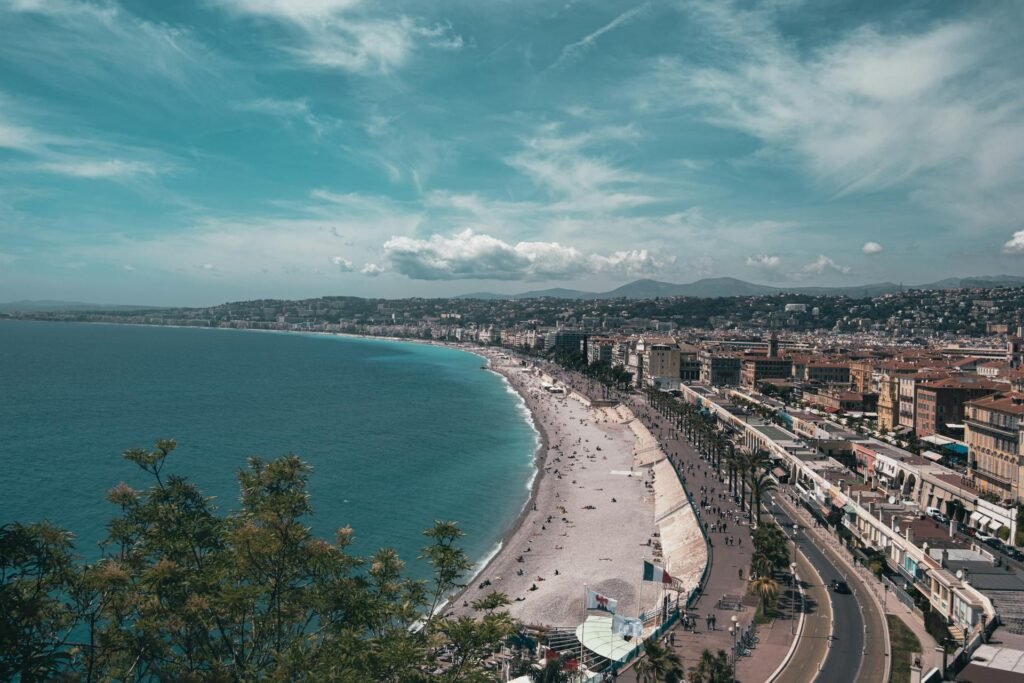
Nice sits on the Baie des Anges (Bay of Angels) — a wide crescent of Mediterranean coast in the southeastern corner of France, just 30 kilometers west of the Italian border. The city is framed dramatically by the Maritime Alps rising sharply behind to over 3,000 m at their highest peaks; the contrast between snowcapped mountains and warm Mediterranean sea is one of the city’s defining visual signatures. The Paillon River (now largely covered over and channeled) runs through the city’s western half; the historic Castle Hill rises 92 m at the eastern end of the Promenade, separating the city from the working harbor of Lympia.
Central Nice divides into distinct quarters: Promenade des Anglais (the 7-km seafront from the airport east to Castle Hill); Vieux Nice (Old Town) at the eastern end with narrow medieval streets and the Cours Saleya market; Place Masséna and Jean-Médecin as the modern shopping-and-administrative center; Cimiez (northeast) with Roman ruins and the Matisse Museum; Mont Boron (east) with the panoramic hilltop residences; Port Lympia with the working harbor and ferry terminal; Le Vieux Port with restaurants and the cruise port.
Climate Overview
Nice has a Mediterranean climate (Köppen Csa) with the longest sun hours of any major French city — approximately 300 days of sunshine annually. Summer (June–September): warm dry days (highs 27–32 °C), nights pleasantly cool (18–22 °C), low humidity. Winter (December–February): mild (highs 13–17 °C), occasional rain especially November and March, very rare snow on the coast (one or two days a decade). Spring (March–May) and autumn (October–November) are the best windows — warm enough for shirtsleeves, dramatically less crowded than summer.
Best Time to Visit
May to June and September to October are the unambiguous best windows — warm enough for swimming, dramatically less crowded than summer, comfortable for exploration, hotel prices significantly lower than peak July–August. July–August is high season — hot, busy with European holiday tourists, the Mediterranean at its warmest swimming temperature; book accommodation 4–6 months ahead. February hosts the famous Nice Carnival (one of the world’s largest, 15 days of parades and flower battles); April brings the Monaco Grand Prix nearby; September the Cannes-or-Marseille international art events. November–March: mild winter, atmospheric but quieter; perfect for cultural tourists wanting fewer crowds.
Nice’s Districts & Neighborhoods
Vieux Nice (Old Town)
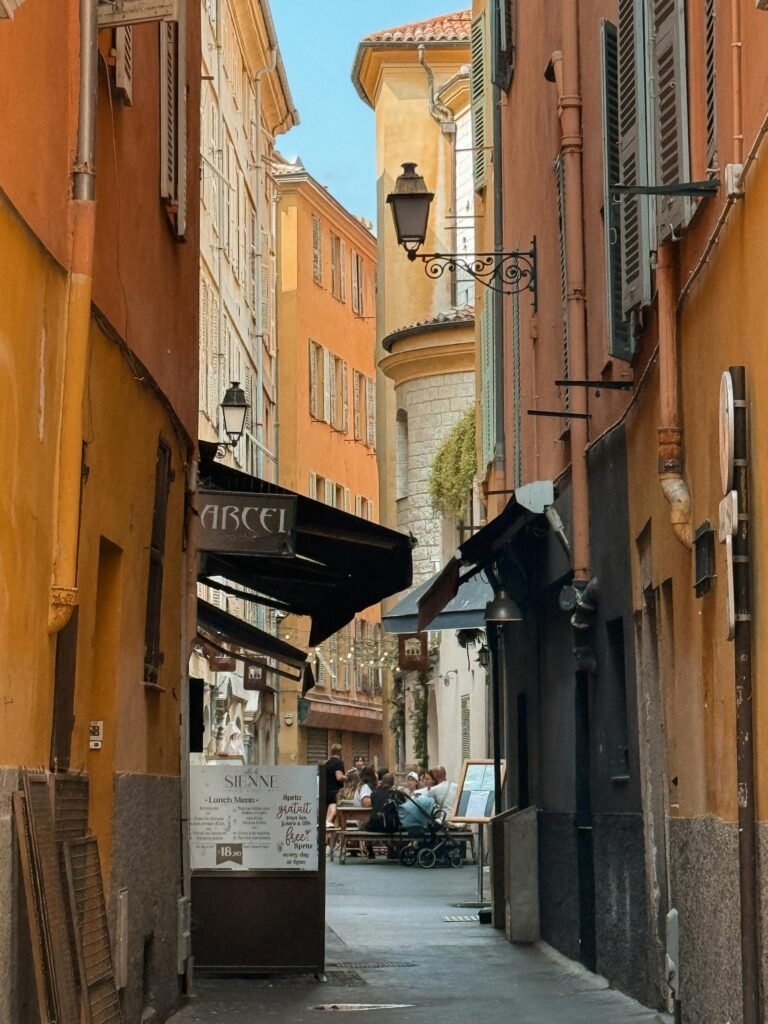
The eastern medieval core — the most-visited district. Narrow ochre alleys, the Cathedral of Sainte-Réparate (1685, baroque), the Palais Lascaris (17th-century baroque palace with instrument museum), and the famous Cours Saleya market (flowers Mondays-Saturdays, food and vegetables daily). Densest concentration of restaurants, bars, ice-cream shops, and the city’s most atmospheric evening dining.
Promenade des Anglais & the Baie des Anges Beachfront
The 7-kilometer seafront walking-and-cycling promenade — the city’s defining linear space and UNESCO-listed (2021) feature. Belle Époque hotels line the inland side: Hôtel Negresco (1913, the iconic pink-and-white domed palace), Le Royal Hôtel, Hôtel West End. The beach is famously pebbly (smooth stones, not sand — bring sandals); a mix of free public sections and paid private “beach clubs.”
Place Masséna & Jean-Médecin
The modern commercial center — the imposing pink-and-yellow Place Masséna with the seven Bouddhas-on-poles sculptures (Yan Pei-Ming’s “Conversation à Nice”); Avenue Jean-Médecin as the main shopping street; the Tramway Line 1 connecting the area to most major sites; the Galeries Lafayette department store. The transition zone between Old Town and the modern districts.
Cimiez (the Old Roman Hill)
The hillside Roman district 3 km northeast — the city’s wealthier residential area. Cimiez Roman site (the original Cemenelum with amphitheater, baths ruins, and Archaeological Museum); Matisse Museum (in a restored 17th-century villa); Marc Chagall National Museum (housing the Biblical Message series Chagall donated to France); Notre-Dame de Cimiez Franciscan monastery and gardens; Queen Victoria’s villa (now apartments). 20 minutes from central Nice by bus.
Mont Boron & the Eastern Hills
The 191-meter hill at the eastern end of the city — wooded residential area with hiking paths to the summit (free panoramic views over Nice and Cap-Ferrat). The Astérix de Mont Boron coastal hiking path connects to Villefranche-sur-Mer and Cap-Ferrat. Less touristy than central Nice; ideal for a half-day escape.
Port Lympia (Old Port)
The working harbor at the eastern end, separating central Nice from Mont Boron. Ferry departures to Corsica (Bastia, Ajaccio, Calvi), Sardinia (Olbia), and the Balearic Islands. The surrounding restaurant streets and the Place Garibaldi square are quieter than the Old Town but high-quality.
The Wider Riviera
Nice anchors a Riviera region that’s easily accessible by train: Villefranche-sur-Mer (10 min east, perfect bay), Èze (perched medieval village), Monaco-Monte Carlo (20 min east, micro-state with casino), Menton (the last French town before Italy), Cannes (40 min west, film festival), Antibes (25 min west, Picasso museum), Saint-Paul-de-Vence (20 min inland, hilltop art village).
Top Things to Do in Nice
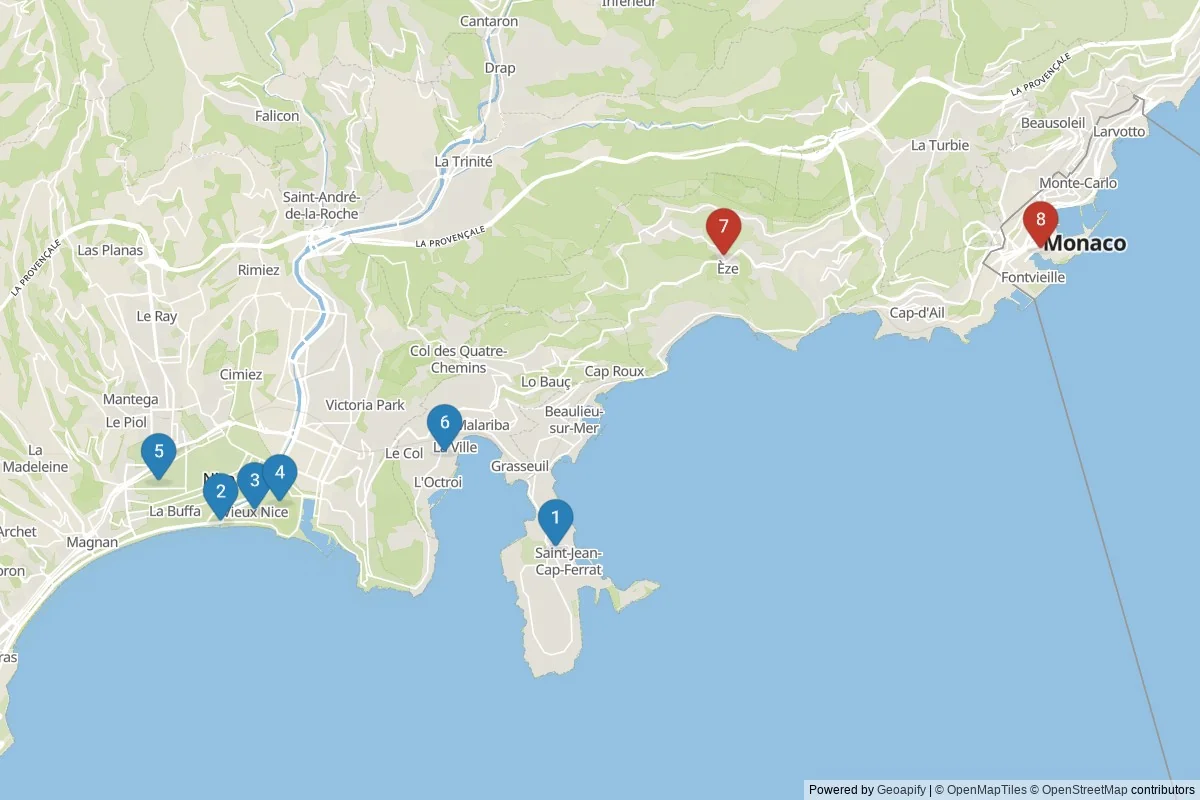
| # | Sight | Cluster | Type | Time | Entry | Best |
|---|---|---|---|---|---|---|
| 1 | Day Trip to Antibes & Cap d’Antibes | Cluster A | Museum | 25 minutes | — | — |
| 2 | Walk the Promenade des Anglais | Cluster A | Beach | 2 hours | €15–25/ | Sunrise |
| 3 | Vieux Nice & Cours Saleya Market | Cluster A | Cathedral | 4 hours | — | Morning |
| 4 | Castle Hill (Colline du Château) | Cluster A | Castle | — | Free | Sunset |
| 5 | the Matisse Museum & Marc Chagall Museum | Cluster A | Museum | — | €15 | — |
| 6 | Beach Day at Plage Beau Rivage or Villefranche-sur-Mer | Cluster A | Beach | — | €30–80 | — |
| 7 | Day Trip to Èze Village | Cluster B | Garden | — | — | — |
| 8 | Day Trip to Monaco & Monte Carlo | Cluster B | Museum | 20 minutes | €5 | — |
1. Walk the Promenade des Anglais
The defining Nice experience. The 7-kilometer seafront promenade runs from the airport east to Castle Hill — separated walking and cycling lanes, palm trees, blue chairs facing the sea, the famous Hôtel Negresco mid-promenade. Best at sunrise (the locals doing tai chi) and sunset (the warm light on the Belle Époque hotels). Bike rental from any beachside kiosk €15–25/day. Allow 2 hours for the full length one-way; combine with sunset cocktails at a beachside club.
2. Explore Vieux Nice & Cours Saleya Market
The medieval Old Town’s narrow streets reward a slow morning. Start at Place Rossetti (the small square with the Cathedral of Sainte-Réparate and the famous Fenocchio ice cream shop’s 90+ flavors); continue through the labyrinthine streets to Place Saint-François (the historic fish market); arrive at Cours Saleya before 13:00 for the famous flower-and-vegetable market (closed Mondays for flowers; Mondays only the antique market runs). Plan 3–4 hours; eat socca at Chez Pipo or Lou Pilha Leva.
3. Climb Castle Hill (Colline du Château)
The 92-meter promontory at the eastern end of the Old Town — the original Greek settlement site, with the ruins of the medieval castle (demolished by Louis XIV in 1706), a Jewish cemetery, and dramatic 360° views over the city, the Bay of Angels, and the working harbor. Free; reach the top via the panoramic elevator (free, in the Tour Bellanda) or the cliff staircase. Best at sunset for the orange-glow Old Town below.
4. Visit the Matisse Museum & Marc Chagall Museum
Two of France’s most important single-artist museums, both in Cimiez. Musée Matisse (housed in a 17th-century Genoese-style villa) covers Matisse’s full career — paintings, cut-paper works (the late “Blue Nudes”), and sculptures. Musée National Marc Chagall houses the Biblical Message series (17 large canvases on Old Testament themes) that Chagall donated to France in 1973. Both within 1 km of each other; combine for a half-day Cimiez visit. Matisse €15; Chagall €10.
5. Day Trip to Monaco & Monte Carlo
20 minutes east by train (€5 return) or by the panoramic Bus 100 along the coastal corniche road. The micro-state offers the Casino de Monte-Carlo (the Belle Époque casino interior alone worth the visit), the Palais Princier with daily 11:55 am changing-of-the-guard, the Oceanographic Museum founded by Jacques Cousteau, and the Monte Carlo Harbor with its absurd yacht concentration. The Monaco Grand Prix circuit is the public streets; F1 attendees can walk the actual track in non-race weeks.
6. Day Trip to Èze Village
The perched medieval village 12 km east of Nice — 430 meters above the sea, accessible by Bus 82 or a steep walking path. The narrow medieval streets, the Jardin Exotique d’Èze (cactus garden with the bay view), and the Friedrich Nietzsche path (the philosopher walked here daily during his Nice residence). The Château Eza hotel-and-restaurant offers spectacular sea-view dining; the village is touristy in summer but genuinely beautiful.
7. Beach Day at Plage Beau Rivage or Villefranche-sur-Mer
Nice’s beaches are pebbly, not sandy — locals bring sandals and beach towels rather than expecting silky sand. Beau Rivage and Castel Plage are the canonical paid private clubs along the Promenade (€30–80 day pass including lounger and umbrella). For a sandy alternative, the 10-minute train ride to Villefranche-sur-Mer reaches the Plage des Marinières — a perfect crescent of sandy beach with one of the Riviera’s most beautiful village views.
8. Day Trip to Antibes & Cap d’Antibes
25 minutes west by train. The Picasso Museum at Château Grimaldi (the seaside fortress where Picasso lived and worked during 1946); the Marché Provençal covered market; the white-sand beach at the Plage de la Garoupe; the Hôtel du Cap-Eden-Roc on the cape’s tip. Combine with neighboring Cannes for a longer Riviera-art-and-celebrity day.
How to Get to Nice
By Air
Nice Côte d’Azur Airport (NCE), 7 km west of central Nice — France’s third-busiest airport. Direct nonstop routes from most major European cities (London 2 hours, Paris 1 hour 20 min, Frankfurt 90 min, Munich 90 min, Brussels 90 min, Amsterdam 2 hours, Madrid 2 hours, Rome 90 min, Milan 60 min, Vienna 2 hours, Zurich 75 min, Athens 2.5 hours) and direct seasonal long-haul to Doha, Dubai, New York (Delta), Montreal, and several Middle East cities. Carriers: Air France, easyJet (large base), British Airways, Lufthansa, KLM, Swiss, ITA Airways, Vueling, Ryanair, and many more.
From the airport: Tramway Line 2 €1.70 (35 minutes to central Nice including connections); Bus 99 Express €6 to central Nice; taxi €35–55 to central Nice (fixed-tariff scheme operates day/night); Uber €25–45; helicopter to Monaco €175 (7 minutes — the dramatic option).
By Train
The TGV high-speed train from Paris Gare de Lyon takes 5h 45min direct (€60–150 depending on class and advance booking). The regional TER train service is the Riviera workhorse — Nice connects every 15–30 minutes to Cannes (€7, 40 min), Antibes (€5, 25 min), Villefranche-sur-Mer (€2, 10 min), Monaco-Monte Carlo (€5, 20 min), Menton (€7, 35 min), and Ventimiglia (Italy, €11, 50 min). Book via the SNCF Connect official site.
By Long-Distance Bus
FlixBus and BlaBlaBus connect Nice to most major European cities — Paris 14 hours overnight (€30–70), Marseille 4 hours (€15–25), Barcelona 12 hours, Rome 14 hours. The Nice bus station is in central Nice near the train station.
By Ferry from Corsica
Direct overnight and daytime ferries from Nice’s Port Lympia to Bastia, Ajaccio, Calvi, and Ile-Rousse on Corsica via Corsica Ferries and La Méridionale; 5–7 hours crossing; €40–120 one-way per person.
Visa Notes
Nice is in France, a Schengen Area member. EU/EEA citizens: no documentation required beyond a valid national ID card or passport. Citizens of 60+ countries with Schengen visa-free agreements — including US, UK, Canada, Australia, New Zealand, Japan, South Korea, Singapore, most Latin American countries — can enter visa-free for up to 90 days within any 180-day period. Important upcoming change: the ETIAS (European Travel Information and Authorization System) launches in late 2025 — €7 pre-travel authorization required for all visa-exempt visitors, valid 3 years. Other nationalities apply for a Schengen visa at French embassies. Passport must have at least 6 months remaining validity.
Getting Around Nice
Tramway
The clean, modern Nice Tram network (three lines, recently expanded) is the city’s transit backbone. Line 1 connects northern suburbs to the Old Town via Place Masséna; Line 2 connects the airport east to Port Lympia (the most useful for visitors); Line 3 serves the western residential areas. Single ticket €1.70; 24-hour pass €5; 10-trip carnet €14. Children under 4 free.
Buses
The Lignes d’Azur bus network covers areas not served by tram, including Cimiez (the Matisse and Chagall museums) and the wider Riviera coastline. Same €1.70 ticket as the tram. Bus 100 along the corniche to Monaco is the famous scenic route. Bus 82 reaches the village of Èze.
Walking
Central Nice is genuinely walkable — Old Town, Promenade, and Place Masséna are all within easy walking distance. The Promenade itself runs 7 km; bike rental (Vélo Bleu city-bike system or private rental shops) makes longer stretches easier.
Taxis & Ride-Hailing
Taxis run €1.20 flagfall + €1.50/km. Uber operates in Nice with fares typically 20–30% lower than taxis. Heetch is the local French ride-hailing alternative. Most drivers speak some English.
Train Day Trips
Nice’s central train station Nice-Ville (Thiers) is 10 minutes walk from Place Masséna; the regional TER train connects all major Riviera destinations in 10–60 minutes. Day-trip ticket prices are very reasonable — Nice to Cannes return €14, Nice to Monaco return €10, Nice to Villefranche €4.
Food & Drink in Nice
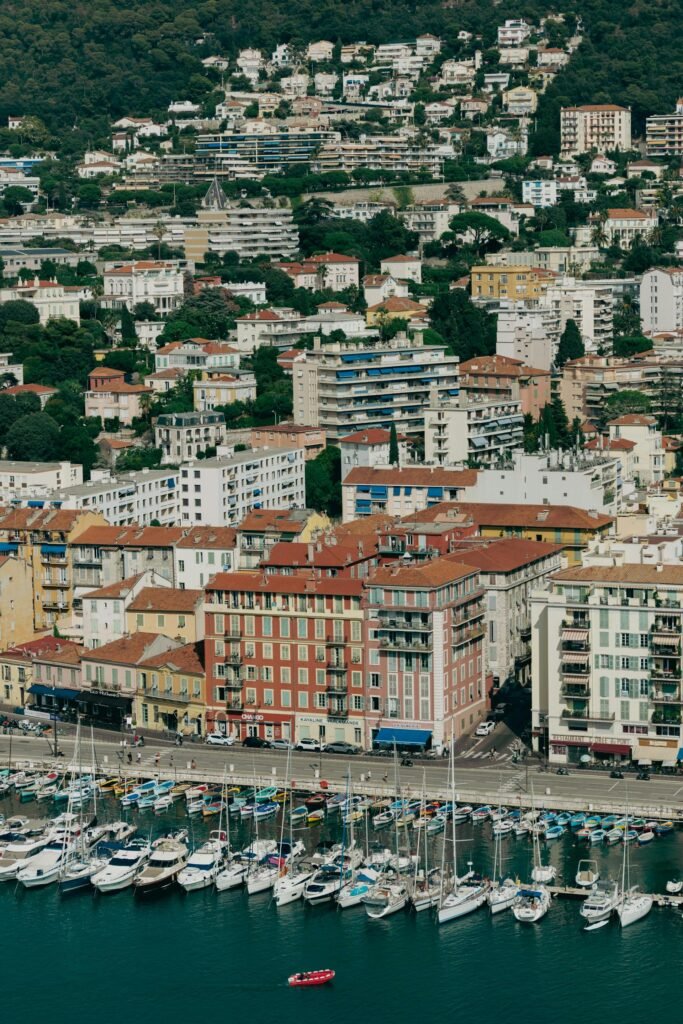
Niçard cuisine combines Provençal French and Ligurian Italian in unique ways shaped by the city’s centuries as a Savoyard then French city, with strong emphasis on vegetables, olive oil, anchovies, and fresh Mediterranean seafood. Most Niçard specialties remain difficult or impossible to find elsewhere in France.
What to Try
- Socca — the city’s most iconic dish: a thin chickpea-flour pancake baked in wood-fired ovens, served hot with cracked black pepper. Chez Pipo (since 1923) on Rue Bavastro and Lou Pilha Leva on Rue du Collet in the Old Town are the canonical addresses.
- Salade Niçoise — the original (with proper anchovies, hard-boiled eggs, raw vegetables, olives, and tuna; NEVER with cooked potatoes or boiled green beans, despite global versions). Order at any traditional restaurant for the authentic version.
- Pissaladière — Niçard onion-and-anchovy pizza-like flatbread; sold at bakeries and at the Cours Saleya market.
- Daube Niçoise — slow-cooked beef stew with red wine, tomato, and herbs; the traditional Sunday family meal.
- Pan Bagnat — Niçard sandwich version of salade niçoise; round bread soaked with olive oil, filled with tuna, anchovies, vegetables, hard-boiled egg. The original Niçard street-food lunch.
- Ratatouille — Provençal vegetable stew (zucchini, eggplant, tomato, bell pepper, onion); Nice’s version is more refined than rustic.
- Stockfish (estocaficada) — dried cod with potatoes, olive oil, and tomato; the working-class Niçard winter dish.
- Petits Farcis — small stuffed vegetables (zucchini, tomato, onion, bell pepper) with herbed pork or beef.
- Tourte de Blettes — Niçard sweet pie made with chard, pine nuts, raisins, sugar, and rum.
- Glaces from Fenocchio — the Cours Saleya/Place Rossetti ice cream institution with 90+ rotating flavors including the wild ones (lavender, rose, basil, beer, foie gras).
Where to Eat
Old Town traditional: La Merenda (the Michelin-starred classic, no phone, queue from 18:30); Chez Acchiardo (Niçard family-style traditional); L’Ane Rouge (Old Town Italian-Niçard). Socca specialists: Chez Pipo, Lou Pilha Leva. Fine-dining Niçard: JAN (Michelin-starred); Le Chantecler at the Negresco. Place Garibaldi: bistros and seafood. Cours Saleya morning market: pissaladière, fresh fruit, regional produce. Beach-club lunch at Plage Beau Rivage or Castel Plage. Day-trip dining: Villefranche-sur-Mer harbor restaurants, Èze hilltop restaurants, Saint-Paul-de-Vence’s Colombe d’Or.
Drinks
Côtes de Provence rosé — the local light pink wine; drink it cold in summer with seafood. Bandol — the stronger Provence red. Pastis (Pernod, Ricard) — the aniseed-flavored aperitif diluted with cold water; the southern French ritual. Limoncello and Limonè — Nice’s proximity to Italy means citrus liqueurs are widely available. Vermouth at the Old Town bars (Noilly Prat is made just along the coast in Marseillan). Espresso at the Italian-style cafés along Cours Saleya. Hot chocolate at Auer — the famed Niçard pâtisserie. Craft beer: the post-2015 French craft-beer movement has produced excellent local breweries; La Mauvaise Réputation in Vieux Nice has rotating taps.
A Note on Tap Water
Tap water in Nice is completely safe to drink — the municipal water supply comes from the Vésubie mountain valley, naturally filtered and treated to high French standards. Restaurants will serve free tap water (une carafe d’eau) on request; tipping for tap water is not expected. The CDC traveler health page for France rates Nice’s food and water as the lowest risk; standard hygiene precautions apply. Bottled water is widely available but unnecessary.
Frequently Asked Questions About Visiting Nice
Do I need a visa to visit Nice?
It depends on your passport. Nice is in France, a Schengen Area member. EU/EEA/Swiss citizens: no documentation required beyond a valid national ID card or passport. Citizens of 60+ countries with Schengen visa-free agreements — including the US, UK, Canada, Australia, New Zealand, Japan, South Korea, Singapore, Malaysia, Brazil, Mexico, Argentina, Chile, Hong Kong (SAR), Taiwan — enter visa-free for up to 90 days within any 180-day period in the entire Schengen Area combined. Important upcoming change: the ETIAS (European Travel Information and Authorization System) launches in late 2025 — a €7 pre-travel electronic authorization required for all visa-exempt visitors, valid 3 years; mandatory before boarding flights to Schengen countries. Other nationalities: apply for a Schengen visa at French embassies and consulates worldwide (€90 fee, requires biometric data, processing 2–4 weeks). Passport must have at least 6 months remaining validity beyond planned departure. Common mistakes: assuming the 90-day Schengen quota resets at French border (it doesn’t — it’s a rolling 180-day window covering the entire Schengen area); booking visa-on-arrival through third-party sites (no such option exists for France); arriving with damaged or expired passports.
Is Nice safe for tourists?
Nice is broadly safe for tourists — among the safer major French destinations, with lower violent-crime rates than Paris or Marseille. The US State Department rates France at “exercise increased caution” — primarily due to terrorism risk and occasional civil unrest in larger cities. Real risks in Nice: petty theft and pickpocketing in tourist areas (Promenade des Anglais, Place Masséna, Cours Saleya market, the tramway, around the Negresco) — keep wallets and phones secure; scams at the train station and around Place Masséna — petition scams (“sign this for a deaf charity”), string-bracelet scams (someone ties a colorful string to your wrist then demands payment), fake gold ring drop scams; beach theft — never leave valuables unattended on the pebble beach when swimming; traffic — Nice drivers are aggressive, especially around the Promenade; cross with care; scooter/motorcycle accidents from rental scooters — bike paths exist on the Promenade but are constantly violated by scooters and cars; tap-water-from-the-Riviera-region is safe; the 2016 Bastille Day terrorist attack on the Promenade des Anglais led to substantially increased security; the city is now genuinely safer than before that incident. The Promenade des Anglais memorial to the 86 victims provides context. Female travelers: Nice is among the safer Mediterranean tourist destinations for solo female travel; standard precautions apply. LGBTQ+ travelers: France is broadly welcoming; same-sex marriage legal since 2013; openly LGBTQ+ travelers face no specific concerns in Nice.
How many days do I need in Nice?
Three to four days handles Nice and the immediate surrounding Riviera; combined with the broader Côte d’Azur (Cannes, Monaco, Saint-Paul-de-Vence, Antibes, Èze), 7–10 days makes a satisfying French Riviera trip. A solid 4-day Nice plan: Day 1 — arrive, Promenade des Anglais walk + Vieux Nice late-afternoon exploration + dinner in the Old Town. Day 2 — Cimiez day (Matisse Museum + Chagall Museum + Roman ruins) + Cours Saleya market afternoon + Castle Hill sunset. Day 3 — Monaco day trip (Casino + Palais Princier + Oceanographic Museum + lunch at La Marée) + return to Nice for dinner. Day 4 — Èze + Villefranche-sur-Mer day trip (bus 82 to Èze, walk down to Cap-Ferrat, lunch at Villefranche harbor). Add Day 5 for Antibes + Cannes (Picasso Museum + Croisette + Marché Provençal). Add Days 6–7 for Saint-Paul-de-Vence + the wider Var-region villages + Maeght Foundation contemporary art museum. 14-day Provence + Riviera classic: 4 days Nice + 3 days Cannes/Antibes + 3 days Aix-en-Provence + 4 days Avignon-Arles-Marseille. Day-trip Nice from Cannes or Monaco: feasible for the Old Town + Promenade but feels rushed for the museums; overnight is the right pace.
What’s the best area to stay in Nice?
For most visitors, Vieux Nice (Old Town) is the obvious default — atmospheric medieval streets, dense food and bar options, walkable to most attractions. Pricing: budget hostels and small hotels €60–150/night; boutique hotels (Hotel Aria, Hotel Suisse, Le Petit Palais Hôtel) €150–350/night; luxury (Hôtel La Pérouse) €400–800/night. Promenade des Anglais (especially around Hôtel Negresco) — Belle Époque palace hotels and modern luxury (Negresco, Le Royal Hôtel, Hôtel West End, Le Méridien Nice) €250–1,500/night; sea views, beach club access, formal hotel restaurants. Place Masséna / Jean-Médecin area — modern shopping district; mid-range chain and boutique hotels (NH Nice, Aston La Scala, Le Saint-Paul); €120–300/night; close to the tramway. Carré d’Or (the rectangular zone between Place Masséna and the Promenade) — the most upscale shopping district; mix of luxury chains and boutiques; €200–600/night. Mont Boron (eastern hill) — quieter residential area; Boscolo Hotel Plaza, La Pérouse; €150–400/night; better for travelers wanting calm. Cimiez — quiet residential, near the museums; small hotels €100–200/night. Skip: budget hotels in the western suburbs without specific recommendations; the airport-area Mercure or Novotel hotels are useful only for early flights.
How much does it cost to visit Nice’s major sights?
Nice is moderately expensive by Mediterranean standards. Promenade des Anglais: free. Vieux Nice walking: free. Cours Saleya market: free entry. Castle Hill (Colline du Château): free entry; free panoramic elevator. Matisse Museum: €15. Marc Chagall National Museum: €10. Massena Museum: €10. Modern and Contemporary Art Museum (MAMAC): €10. Cathedral of Sainte-Réparate: free. Palais Lascaris: €10. Russian Orthodox Cathedral: €4. Asian Art Museum: €10. French Riviera Pass (24/48/72 hours, €28/€41/€56): covers most major museums plus the Petit Train tour and several Riviera-region attractions. Day trips: Train Nice–Monaco round-trip €10; Nice–Cannes €14; Nice–Èze €6; Nice–Antibes €10. Monaco Oceanographic Museum: €19. Monaco Casino de Monte-Carlo visit: €17. Beach club day-pass: €30–80 at private clubs along the Promenade. Local meals: socca €4–7; pan bagnat €7–12; sit-down Niçard restaurant lunch €15–30 per person; mid-range dinner €30–60 per person; fine-dining €80–250 per person; beach-club lunch €40–80 per person. Coffee at a café: €1.50–3 espresso; €5–8 cappuccino at upmarket spots. Tramway: €1.70 single. Bike rental: €15–25/day. Carnival February tickets: €15–35 for grandstand seats. Overall daily budget: €120 (frugal hostel + market food + free walking), €250 (mid-range hotel + restaurant meals + 1 museum + day trip), €600+ (luxury hotel + fine dining + multiple day trips).
Should I drink the tap water in Nice?
Yes — tap water in Nice is completely safe to drink and arguably better than most bottled brands. The municipal supply comes from the Vésubie River valley in the Maritime Alps, naturally filtered through limestone strata, and treated to strict French national drinking-water standards. Restaurants will serve free tap water (une carafe d’eau) on request — there is no charge and no expectation of tipping for tap water; bottled water (Évian, Vittel, San Pellegrino) is available at €3–6 per bottle if you prefer. Reusable filter bottles are unnecessary; refilling at any tap is fine. Ice is universally safe. The CDC traveler health page for France rates Nice’s food and water as the lowest risk; standard hygiene precautions apply. French Riviera tap water often has a slightly chalky taste due to the limestone source — completely safe but some travelers prefer bottled for taste. Hot summer hydration: drink more than you would at home; the Mediterranean sun is intense even with mild temperatures.
What payment methods work in Nice — credit cards or cash?
France is heavily card-and-contactless, with cash useful for small transactions. Credit/debit cards (Visa, Mastercard, AmEx, JCB): accepted virtually everywhere — hotels, restaurants, taxis, supermarkets, museums, public transit, even market stalls; contactless tap-to-pay is universal. Cash (Euro): useful for small purchases, tipping, beach huts, market stalls without card readers, and emergencies. ATMs: extremely abundant; BNP Paribas, Société Générale, Crédit Agricole, Crédit Mutuel, Caisse d’Epargne all accept foreign cards with reasonable daily limits (€500–1,500) and small fees. Currency exchange: airport rates are reasonable; in-city exchange counters and bank-branches offer comparable rates; bring USD or GBP in clean bills if you must exchange. Digital wallets: Apple Pay, Google Pay, Samsung Pay all work; the local Lyf Pay mobile wallet is widely accepted. Tips: French restaurants by law include 15% service charge in the bill (“service compris“); additional tipping is not mandatory but appreciated for good service — round up the bill or leave €1–5 per person; €1–2 per drink at bars; €1–5 per bag to hotel porters; €1–5 per night for housekeeping; €5–10 for taxi/Uber drivers on longer trips; 10–15% for spa therapists and tour guides. VAT (Value Added Tax): 20% standard rate, 10% for restaurants, included in displayed prices; non-EU tourists can claim refunds at the airport for purchases over €100 from a single retailer in the same day — register at airport tax-refund kiosks before check-in. French restaurant culture: lunch typically 12:00–14:00 and dinner 19:30–22:30; many restaurants close between lunch and dinner; budget accordingly.
What’s the deal with the French Riviera pace and dining culture?
Nice and the French Riviera have a distinct rhythm worth understanding. Pace: significantly slower than Paris; meals are extended affairs, sidewalk cafés are a way of life, and the Mediterranean approach to time is real. Plan for 1.5–2 hour lunches at sit-down restaurants; dinner expectations are 2.5–3+ hours. Restaurant hours: many restaurants close 14:00–19:00 between lunch and dinner — plan your eating windows. Most kitchens close at 22:30; service continues to 23:30 or midnight. Café culture: an espresso at the counter is €1.50–2.50; the same espresso sitting outside on a terrace is €4–6 — pay for the seat and the view, not just the coffee. Reservations: essential for popular restaurants (La Merenda, Le Chantecler, JAN, La Petite Maison) — book 2–4 weeks ahead; less critical for casual Old Town spots. Dress code: smart casual is the default; jackets at upscale restaurants in the evening; beachwear is for the beach only. Tipping after meal: round up the bill, leave €1–5 per person, or 5% of the bill total — the service charge is already included. Beach clubs: a substantial part of Riviera summer culture — reserve loungers in advance for July–August; €30–80 day rate buys lounger, umbrella, and (usually) a beverage. Apero (aperitif culture): 18:00–20:00 is the universal pre-dinner drink hour — Pastis, kir, rosé, or vermouth-based cocktails at sidewalk cafés; light snacks (olives, tapenade, nuts) accompany. August closures: many family-owned restaurants close for 2–3 weeks of staff vacation in August (paradoxically the high tourist season) — check before counting on a specific restaurant. Sunday closings: most non-tourist-specific restaurants close Sundays; tourist-area restaurants stay open.
Education & Notable People
Nice’s primary educational institution is the Université Côte d’Azur, the country’s leading southern-French research university, formed by the 2020 merger of older institutions. The nearby Sophia Antipolis technology park is one of Europe’s most concentrated research clusters.
Major Universities
- Université Côte d’Azur — public research university, founded 2020 from the merger of the University of Nice Sophia Antipolis with several specialized institutions; ~35,000 students; particularly strong in computer science, applied mathematics, and biological sciences.
- EDHEC Business School Nice campus — leading French business school.
- SKEMA Business School Sophia Antipolis — international business school in the nearby tech park.
- International School of Nice and Mougins School — for international families.
Notable People
Giuseppe Garibaldi — Italian revolutionary hero, born in Nice (1807) when the city was Italian; bitterly opposed the 1860 transfer to France; his statue stands in Place Garibaldi. Henri Matisse — celebrated painter, longtime Nice resident (1917–1954), worked extensively in Vieux Nice and Cimiez. Marc Chagall — Belarusian-French painter, longtime Nice and Saint-Paul-de-Vence resident from 1949 to his 1985 death. Jacques Cousteau — although born in southwest France, the celebrated oceanographer was long associated with the Côte d’Azur and the Monaco Oceanographic Institute. Roger Vadim — French filmmaker. Marc Antoine Gourdault-Montagne — diplomat. Friedrich Nietzsche — German philosopher, spent winter 1882–1888 in Nice; the famous “Nietzsche path” from Èze to the village is named for his daily walk. Mike Maignan — French national football team goalkeeper, born in Cayenne but grew up in Nice. Multiple international film stars maintain villas in the broader Riviera region.
Sister Cities & International Relations
Nice’s sister-city network reflects the city’s identity as a Mediterranean cultural-and-tourism capital with strong ties across the broader European, Russian, and Asian markets.
Nice’s sister and partnership cities include (selection):
- Cuneo, Italy — paired since 1959; the closest Italian neighbor; long-running cross-border friendship.
- Edinburgh, Scotland, UK — sister city since 1958; cultural-and-arts partnership.
- Yalta, Crimea — paired since 1959 (now disputed status).
- Nuremberg, Germany — friendship city since 1954.
- Antalya, Türkiye — Mediterranean coastal-city friendship.
- Cape Town, South Africa — sister city since 1974.
- Houston, Texas, USA — paired since 1970s.
- Jeju, South Korea — partnership since 2014.
- Sochi, Russia — Black Sea coastal-city partnership.
Nice is the regional capital of the Métropole Nice Côte d’Azur agglomeration and hosts the headquarters of the European Centre for Disease Prevention and Control’s regional office and numerous European-Mediterranean cooperation organizations. The city benefits from extensive cross-border cooperation with Italian Liguria (Genoa, Sanremo, Imperia) through the EU Interreg Italy-France Alcotra programme. The Atout France national tourism office and the Côte d’Azur Tourism Office coordinate Nice’s international promotion.
AFRIKA
Cairo Hurghada Johannesburg Marrakech
ASIA
Abu Dhabi Agra Antalya Bangkok Batam Beijing Bengaluru Cebu City Chiang Mai Chiba Chennai Da Nang Dammam Delhi Denpasar Dubai Fukuoka Guangzhou Guilin Ha Long Hanoi Ho Chi Minh City Jakarta Jaipur Johor Bahru Kolkata Krabi Kuala Lumpur Kyoto Macau Mecca Medina Mugla Mumbai Osaka Pattaya Penang Phuket Riyadh Seoul Shanghai Shenzhen Singapore Taipei Tokyo Zhuhai
EUROPE
Amsterdam Athens Barcelona Berlin Brussels Budapest Copenhagen Dublin Florence Frankfurt am Main Heraklion Krakow Lisbon London Madrid Milan Munich Nice Paris Porto Prague Rhodes Rome Stockholm Venice Vienna Warsaw
NORTH AMERICA
Cancun Las Vegas Los Angeles Miami New York City Orlando San Francisco Toronto Vancouver
SOUTH AMERICA
Buenos Aires Lima Rio De Janeiro
OCEANIA
Auckland Honolulu Melbourne Sydney