
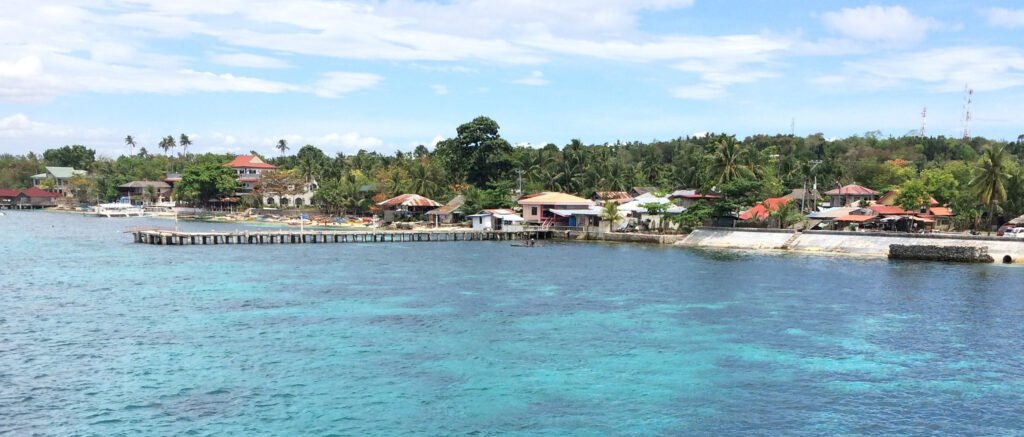
Photo credit: Cebu City harbor and skyline, gateway to the Visayas
Cebu City wears its title — “the Queen City of the South” — with quiet conviction. As the Philippines’ oldest city, founded by Spanish conquistadors in 1565, it carries five centuries of layered history: Ferdinand Magellan’s wooden cross still sits inside a chapel near the harbor; the Basilica del Santo Niño houses the country’s oldest religious icon; and the Sinulog Festival in January draws more than a million pilgrims dancing through streets that have hosted the same ritual for generations. Yet Cebu City is no museum piece. It’s a modern metropolis of nearly a million people anchoring the Central Visayas region, the international gateway to some of Southeast Asia’s best diving, the heart of a Cebuano-speaking culture that prizes its distinct identity from Manila, and home to the regional Filipino specialty — lechon — that Anthony Bourdain once declared “the best pig ever.”
Cebu City by District: The 9 Barangays
Cebu City is divided into 9 central barangays. The map below shows their official OSM boundaries, colour-coded to match the table — a quick way to orient yourself before zooming in on individual sights.
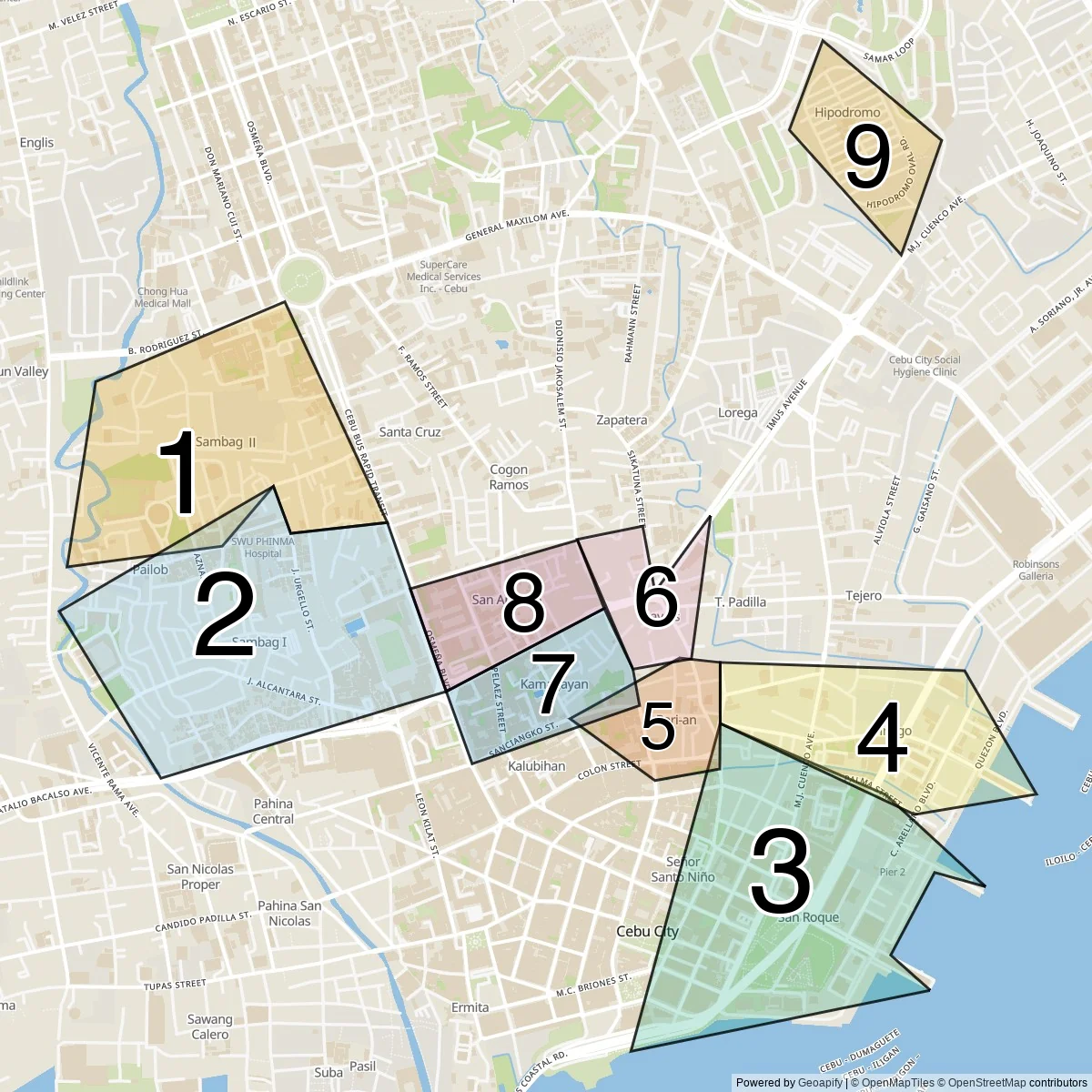
| # | Barangays |
|---|---|
| 1 | Sambag II |
| 2 | Sambag I |
| 3 | San Roque |
| 4 | Tinago |
| 5 | Pari-an |
| 6 | Day-as |
| 7 | Kamagayan |
| 8 | San Antonio |
| 9 | Hipodromo |
Cebu City at a Glance: Essential Facts for Travelers
| Location | Cebu Province, Central Visayas region, Philippines |
|---|---|
| Coordinates | 10.3157°N, 123.8854°E |
| Population | ~964,000 (2020 census; metro area ~3.2 million) |
| Area | 315 km² (city proper) |
| Elevation | Sea level to ~600 m (Beverly Hills district) |
| Time Zone | Philippine Standard Time (PST, UTC+8) |
| Calling Code | +63 (city code 032) |
| Currency | Philippine peso (PHP ₱) |
| Languages | Cebuano (Bisaya) primary; English and Filipino widely spoken |
| Climate | Tropical rainforest — hot, humid year-round; typhoon season June–December |
| Founded | 1565 (oldest Spanish settlement in the Philippines) |
| Famous For | Magellan’s Cross, Basilica del Santo Niño, Sinulog Festival, Cebu lechon, Mactan diving |
Upcoming Events in Cebu City
| Date | Title | Details |
|---|---|---|
| 2026-09-20 | Yeng Constantino Live at SM Seaside Cebu Arena | Filipino pop-rock hitmaker Yeng Constantino performs at the SM Seaside Cebu Arena on 20 September at 7pm, bringing nearly two decades of OPM anthems to the city’s newest large concert venue. Fans can expect singalong favourites spanning her career from talent-show breakthrough to established singer-songwriter. Tickets range from about 1,350 to 8,400 pesos depending on section, sold through official ticketing outlets. The arena at SM Seaside City in the South Road Properties is easily reached by taxi or ride-hailing, and shows there typically draw crowds of all ages. [Source] |
| 2026-10-02 | VisMin Expo at Waterfront Cebu City Hotel | The VisMin Expo opens on 2 October at the Waterfront Cebu City Hotel and Casino in Lahug, gathering businesses and exhibitors from across the Visayas and Mindanao under one roof. The trade event showcases regional products, services and franchise opportunities, giving entrepreneurs, buyers and curious visitors a chance to network and discover what the southern Philippines has to offer. Waterfront’s convention facilities host booths and presentations through the day. Entry arrangements vary by visitor type, so checking the organisers’ listings before attending is advisable for anyone interested in regional business. [Source] |
| 2026-10-11 | Midnight Run Asia – Cebu by HOKA | Midnight Run Asia brings its night-racing format to Cebu on 11 October, sending runners through the city’s main urban roads and business districts after dark. Backed by running brand HOKA, the event trades daytime heat for cooler evening conditions and a distinctive city-lights atmosphere, appealing to both serious road racers and casual runners looking for something different. Race-kit collection and category details are published by the organisers, with entry fees varying by distance. Spectators can cheer along the well-lit downtown course, making it a lively late-night spectacle. [Source] |
| 2026-10-16 to 2026-10-17 | a1 in Concert at Waterfront Cebu City Hotel | British-Norwegian boy band a1, beloved in the Philippines for turn-of-the-millennium hits, plays two nights at the Waterfront Cebu City Hotel and Casino on 16 and 17 October. The pop nostalgia show draws devoted Filipino fans who have followed the group since their chart heyday, with ballads and upbeat singles alike sung word for word by the crowd. Tickets run from about 3,710 to 7,155 pesos through TicketNet. The hotel ballroom setting in Lahug offers a more intimate concert experience than an arena, so seats sell quickly. [Source] |
| 2026-10-23 to 2026-10-25 | World’s Best Island Travel and Trade Expo 2026 | The World’s Best Island Travel and Trade Expo runs from 23 to 25 October at Ayala Center Cebu, under the theme Beyond Paradise: Connecting Islands, Creating Opportunities. The showcase marks the first time Palawan brings its flagship tourism exhibition to Cebu rather than Metro Manila, connecting resorts, tour operators and island destinations with travel buyers and holiday planners. Visitors can browse destination booths, travel deals and cultural presentations in the mall’s exhibition spaces. The event targets both industry professionals and ordinary travellers plotting their next island escape; general admission is typically free in the mall setting. [Source] |
| 2026-10-26 | IBP Cebu Tricity Marathon 2026 | The Integrated Bar of the Philippines Cebu chapter revives one of the city’s iconic footraces on 26 October, with the Tricity Marathon starting and finishing at Robinsons Galleria Cebu. The course spans three cities, Cebu, Mandaue and Talisay, and organisers expect 3,000 to 5,000 runners across several distance categories. Veteran race director Joel Baring oversees the technical side, and proceeds support legal-aid programs and charity beneficiaries including the Pink Box Project. Runners get upgraded finisher merchandise, while spectators can line the tri-city route from the early hours. [Source] |
City News in Cebu City – last 14 days
| Date | Category | Headline | Details |
|---|---|---|---|
| 2026-09-14 | Public safety | Police revitalize school security program across the city | The Cebu City Police Office has launched a strengthened security coverage program in schools across the city, combining police foot patrols, mobile patrols and motorcycle units with regular school visits and closer coordination with school authorities. Deputy city director for operations Police Lieutenant Colonel Gerard Ace Pelare outlined the scheme, which aims to give students, teachers and parents a visible police presence around campuses throughout the school week and to speed up response times to any incidents near school grounds. [Source] |
| 2026-09-14 | Local government | City eyes another P100 million for garbage disposal | Cebu City may seek an additional 100 million pesos in supplemental funding for garbage disposal after its latest 99.3-million-peso procurement for the services of a licensed solid waste facility drew no bidders. The failed bid leaves the city dependent on the town of Aloguinsan for waste disposal while officials pursue other options. The city government is under pressure to find a durable solution to a persistent garbage crisis that has strained budgets and tested residents’ patience for months. [Source] |
| 2026-09-14 | Local affairs | Cebu and Japan study integrated waste hub for the province | Cebu province and Japan have begun a feasibility study on a proposed Green Transformation Park that could consolidate waste processing, recycling and resource recovery facilities in one integrated hub. The initiative responds to the wider Cebu waste crisis, which has left local governments scrambling for disposal capacity. If the study proves viable, the park would modernise how the province handles its garbage, moving beyond overstretched landfills toward processing and recycling at scale with Japanese technical support. [Source] |
| 2026-09-14 | Local affairs | Red alert on Visayas grid as rotational brownouts continue | A six-hour red alert was raised for the Visayas power grid on Monday from 3pm to 9pm, driven by the continued unavailability of several major coal-fired power plants. The tight supply has meant rotational brownouts across parts of Cebu, prompting the Mandaue City Council to invite Visayan Electric and the National Grid Corporation of the Philippines to its next session for clarification. Households and businesses in Metro Cebu are being urged to conserve electricity during peak evening hours. [Source] |
| 2026-09-14 | Business | VAT removed from power system loss charges, easing bills | The Bureau of Internal Revenue has issued a memorandum circular removing value-added tax from the allowable system loss charge on electricity bills, within the cap approved by the Energy Regulatory Commission. Senators welcomed the move as relief for consumers and pressed for further reductions in power costs. For Cebu households already coping with rotational brownouts and tight supply, the tax change should modestly trim monthly electricity bills once distribution utilities implement the new rules. [Source] |
| 2026-09-14 | Local affairs | Over 2,300 Lapu-Lapu City residents receive UPLIFT aid | A total of 2,365 beneficiaries in neighbouring Lapu-Lapu City received a second tranche of financial assistance under the Department of Social Welfare and Development’s UPLIFT program on Monday. Public workers distributed the funds at City Auditorium Court 1 in Barangay Poblacion. UPLIFT stands for the Unified Package for Livelihood, Industry, Food, and Transport, and the payouts form part of a broader push to cushion low-income families across Metro Cebu against rising living costs. [Source] |
Cebu City Events & City News Archive
Sources: Billboard Philippines, AllEvents Cebu, World's Marathons, NomadLawyer, Cebu Daily News, Cebu Daily News, Cebu Daily News, Cebu Daily News
Weather Forecast for the Next 14 Days in Cebu City
| Date | Weather | Max °F | Min °F | Rain mm |
|---|---|---|---|---|
| 2026-09-14 | 🌧️ | 91.7 °F | 77.6 °F | 2.1 mm |
| 2026-09-15 | 🌧️ | 88.3 °F | 78.3 °F | 2.1 mm |
| 2026-09-16 | ⛈️ | 86.3 °F | 77.2 °F | 15.4 mm |
| 2026-09-17 | ⛈️ | 86.7 °F | 76.2 °F | 13.2 mm |
| 2026-09-18 | ⛈️ | 85.2 °F | 76.6 °F | 6.1 mm |
| 2026-09-19 | ⛈️ | 88.0 °F | 76.6 °F | 5.1 mm |
| 2026-09-20 | ⛈️ | 87.5 °F | 76.6 °F | 8.1 mm |
| 2026-09-21 | ⛈️ | 87.1 °F | 78.0 °F | 5.4 mm |
| 2026-09-22 | ⛈️ | 87.9 °F | 77.1 °F | 4.2 mm |
| 2026-09-23 | 🌧️ | 87.7 °F | 76.5 °F | 1.2 mm |
| 2026-09-24 | 🌧️ | 88.4 °F | 76.9 °F | 7.2 mm |
| 2026-09-25 | ⛈️ | 85.1 °F | 76.5 °F | 16.5 mm |
| 2026-09-26 | 🌧️ | 85.0 °F | 77.2 °F | 7.8 mm |
| 2026-09-27 | ⛈️ | 86.5 °F | 76.7 °F | 5.7 mm |
Cebu City’s History
Cebu City’s claim as the Philippines’ oldest city rests on a specific date: April 27, 1521, when Portuguese-Spanish explorer Ferdinand Magellan landed on the nearby island of Mactan and planted a wooden cross on what is now downtown Cebu. Magellan died days later in the Battle of Mactan at the hands of Lapu-Lapu, a local chieftain whose statue today dominates the bridge between Cebu and Mactan, but the Spanish presence had been established. In 1565, Miguel López de Legazpi returned and founded the formal settlement of San Miguel — later renamed Villa del Santísimo Nombre de Jesús — the first European city in the Philippines and the original capital of the Spanish East Indies.
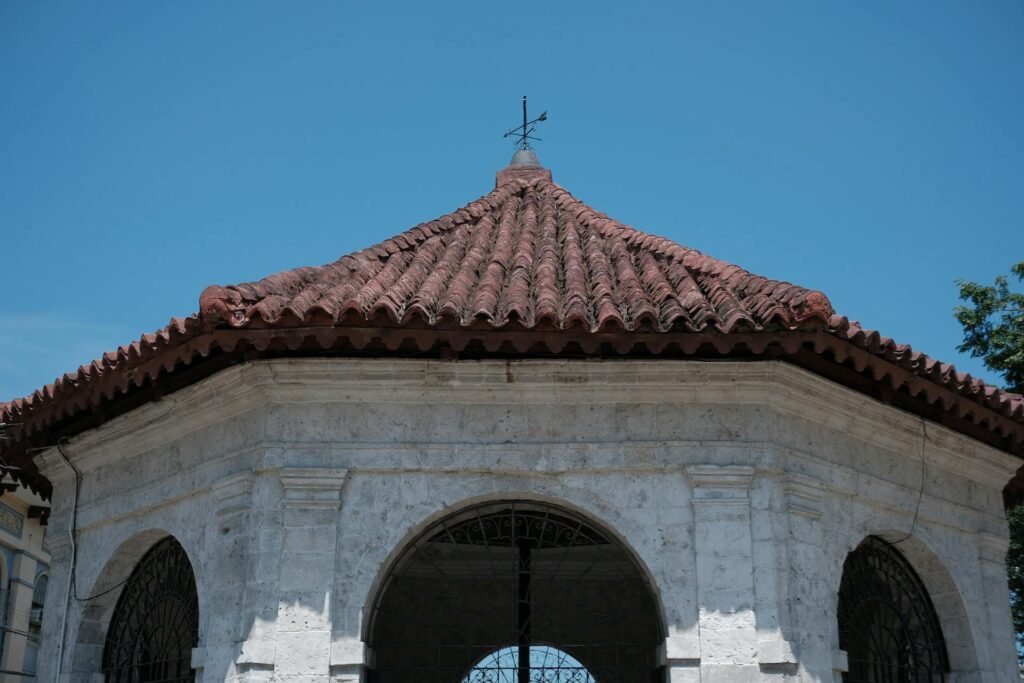
The city’s defining religious moment came when Legazpi’s soldiers found, in a burnt hut on the harbor, the small wooden statue of the Santo Niño de Cebú — a Flemish-carved Christ-child figure that Magellan had given to Queen Juana of Cebu in 1521. The icon, untouched by the fire, became the Philippines’ oldest religious relic and the focus of the city’s identity. The Basilica Minore del Santo Niño, built around the discovery site, remains the country’s most important Catholic shrine and the spiritual center of the Sinulog devotion.
Cebu lost its capital status to Manila in 1595 but retained a parallel commercial importance through three centuries of Spanish rule. The city was briefly the seat of the short-lived Federal Republic of the Visayas during the Philippine Revolution (1898–1899) before falling under American administration from 1901, and then Japanese occupation during World War II (1942–1945). Heavy fighting and bombing devastated much of the old colonial core; Carbon Market, the Cebu Cathedral, and several heritage houses survived. The post-war decades saw Cebu rebuild as a regional manufacturing hub, and the 1990s-onward boom in BPO/IT outsourcing and tourism turned it into the Philippines’ second-largest economic center.
Geography, Climate & Best Time to Visit Cebu City
Geographic Setting
Cebu City sits on the narrow eastern coastal plain of Cebu Island — a long, thin island in the central Philippines, just 5 km across at the city’s location and rising steeply into limestone hills west of downtown. The city is part of the Metro Cebu conurbation, which stretches along 60 km of coast and includes Mandaue City, Lapu-Lapu City (on Mactan Island), Talisay City, and seven adjacent municipalities. The Mactan-Mandaue Bridge and the newer Cebu-Cordova Link Expressway (CCLEX, opened April 2022) connect the mainland to Mactan Island, where the international airport sits.
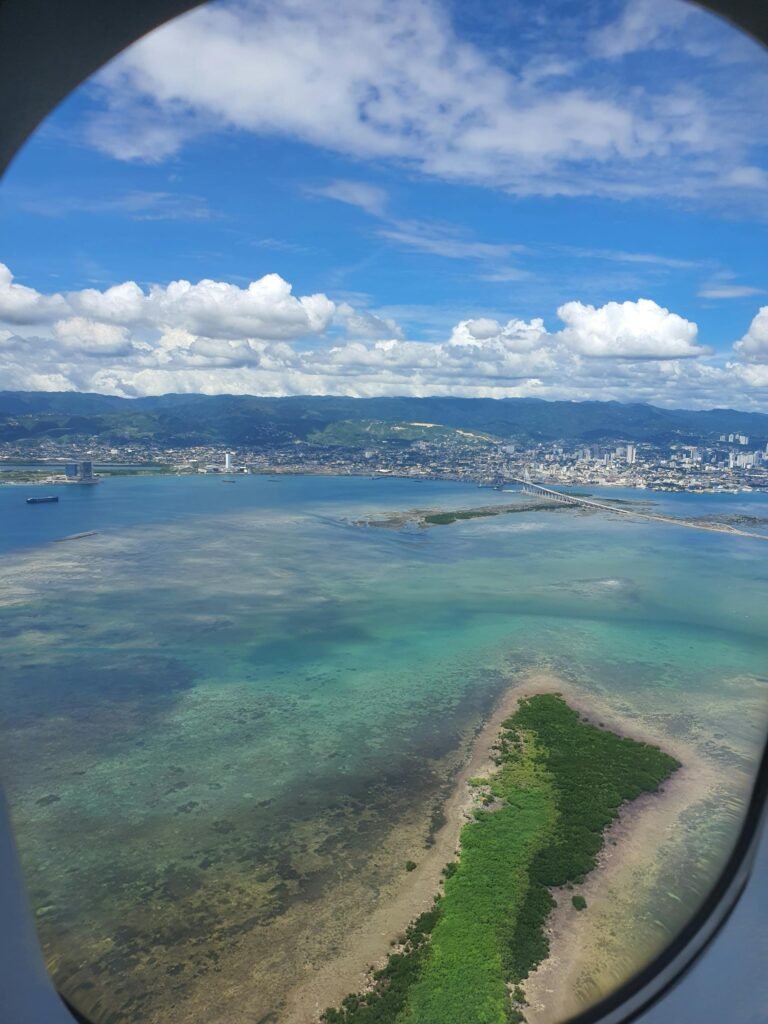
The city itself splits naturally between the flatland districts — the colonial-era harbor, the central business district around Fuente Osmeña, and the Cebu IT Park — and the uphill barangays climbing toward Tops Lookout and Busay, where temperatures are 4–5 °C cooler and the views run all the way to Bohol on clear days.
Climate Overview
Cebu City has a tropical rainforest climate (Köppen Af) without true dry/wet seasons but with distinct wetter and drier months. Average temperatures range 25–32 °C year-round; humidity hovers at 70–85%. The sun is intense — UV index 11+ for most of the year — and sunburn happens fast even on overcast days.
Typhoon Season & Weather Hazards
Cebu sits in the central Philippines typhoon belt but is partially sheltered compared to Tacloban or Eastern Samar. Typhoon season runs June through December, peaking September–November. Most years bring 2–3 named storms passing within 200 km. The catastrophic Super Typhoon Odette (Rai) in December 2021 caused massive damage to Cebu and northern Cebu Island; recovery continues. Check current advisories from the Philippine Atmospheric, Geophysical and Astronomical Services Administration (PAGASA) before and during travel.
Best Time to Visit
January to May is Cebu’s reliable dry season — sunny, less humid, ideal for diving on Mactan and Moalboal. Mid-January brings the Sinulog Festival (third Sunday) — the country’s largest religious-cultural festival, with street dancing, parades, and a million-plus pilgrims; book accommodation 6+ months ahead. April–May is the hottest stretch (highs 33–35 °C, humidity climbing) but still dry. June–November is wetter and storm-prone; October–November typhoon risk peaks. December reverts to drier weather but with Christmas-season price spikes.
Cebu City’s Districts & Neighborhoods
Cebu City is divided into 80 barangays (the smallest Philippine administrative unit), but for travelers the working geography is simpler — six recognizable zones.
Downtown / Colon Street & Pier Area
The historic core, home to Magellan’s Cross, the Basilica del Santo Niño, Fort San Pedro (the country’s oldest and smallest Spanish-era fort), the Cebu Metropolitan Cathedral, and the chaotic Carbon Market — the city’s main public market and a sensory immersion in Cebuano daily life. The harborfront Pier 1 serves ferries to Bohol and the other Visayas islands. Best explored mid-morning; later in the day the heat and traffic become heavy.
Fuente Osmeña & the Old CBD
The mid-20th-century commercial center radiating from Fuente Osmeña Circle, a roundabout with a fountain that locals use as the city’s symbolic center. Older malls (Robinsons Fuente, Crown Regency), the Capitol Building, and the upmarket Cebu Provincial Library. Walkable and quieter than Colon.
Cebu IT Park / Lahug
The modern business and dining hub, north of downtown. High-rise condos, BPO call centers, and the densest concentration of restaurants, cafés, and craft-cocktail bars in the city. The Cebu IT Park precinct turns into an open-air weekend market with food trucks. The adjacent Crossroads and Country Mall areas extend the same character.
Banilad / Cebu Business Park
The newer luxury district built around the Ayala Center Cebu mall and the Cebu Business Park. International hotel chains (Marco Polo, Radisson Blu, Seda Ayala), wide leafy streets, and the highest concentration of fine-dining and upscale boutiques. The city’s most comfortable base for a first visit.
Mabolo & the Reclamation Area
Coastal northern district built on reclaimed land, containing the SM City Cebu mall (one of the country’s largest), the SM Seaside in the south, and the cruise-ship terminal at Pier 4. Less character but useful for shopping and ferry connections.
Mactan Island (Lapu-Lapu City)
Technically a separate city, but functionally Cebu’s airport-and-beach-resort zone. Mactan-Cebu International Airport, the Lapu-Lapu Shrine and Magellan’s death-site, and the beach-resort belt of Punta Engaño with Shangri-La, Movenpick, and Crimson resorts. 30–60 minutes from downtown depending on traffic; the CCLEX bridge has dramatically improved access since 2022.
Top Things to Do in Cebu City
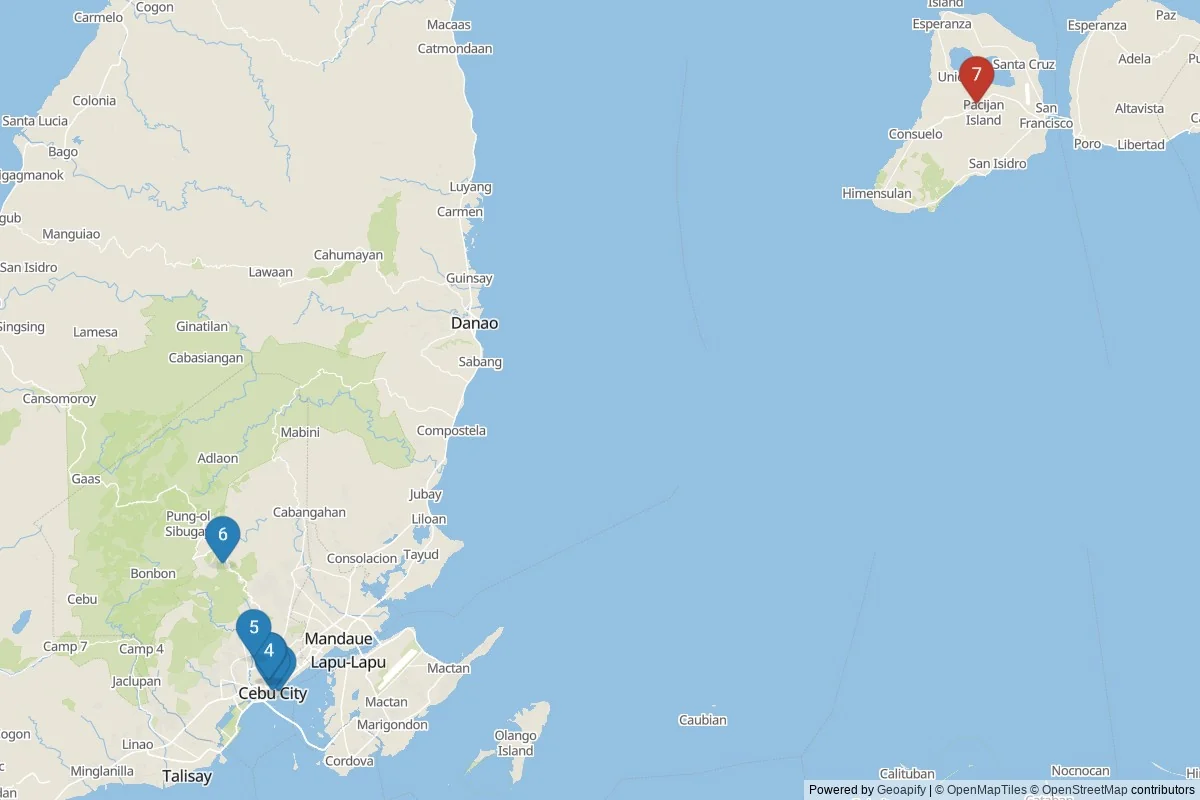
| # | Sight | Cluster | Type | Time | Entry | Best |
|---|---|---|---|---|---|---|
| 1 | Walk Through Fort San Pedro | Cluster A | Museum | 45 minutes | $0.55 | — |
| 2 | Magellan’s Cross & Basilica del Santo Niño | Cluster A | — | — | free | — |
| 3 | Day Trip: Kawasan Falls & Canyoneering (Badian / Moalboal) | Cluster A | Beach | — | — | — |
| 4 | Mactan Island Resort & Diving | Cluster A | Park | — | — | — |
| 5 | Eat Lechon | Cluster A | — | — | — | — |
| 6 | to Tops Lookout (Busay) | Cluster A | Viewpoint | — | — | Sunset |
| 7 | Time a Trip Around Sinulog Festival (Third Sunday of January) | Cluster B | — | — | — | Weekend |
1. Visit Magellan’s Cross & Basilica del Santo Niño
Two adjacent landmarks at the colonial heart of the city. Magellan’s Cross — a wooden Christian cross encased in a tindalo-wood replica inside a small open-sided chapel, planted in 1521 — marks the symbolic birth of Philippine Catholicism. Directly behind it, the Basilica Minore del Santo Niño houses the 16th-century wooden statue of the Christ-child venerated as the country’s patron of devotion. Both are free; busiest on Fridays (the weekly Santo Niño novena) and during Sinulog.
2. Walk Through Fort San Pedro
The Philippines’ smallest and oldest Spanish-era fort, completed in 1738 in triangular bastion form. The interior houses a museum of colonial-era artifacts and a small garden; the walls offer harbor views. Entry ₱30 (~US$0.55). Plan 45 minutes.
3. Climb to Tops Lookout (Busay)
The city’s signature viewpoint, 600 m up the limestone hills west of downtown. The 360° view sweeps Cebu City, Mactan, and on a clear day Bohol Island in the distance. Best at sunset, when the city lights begin to switch on. ₱100 entry; a taxi from downtown costs ₱200–300 each way (negotiate; the road is steep and meters often aren’t used). Bring a light jacket — the temperature drops 4–5 °C.
4. Time a Trip Around Sinulog Festival (Third Sunday of January)
The country’s grandest religious festival and one of Southeast Asia’s biggest street celebrations. The Saturday Grand Parade winds through the city with thousands of costumed dancers performing the Sinulog ritual dance (two steps forward, one back — the wave motion that gave the festival its name). The Sunday Grand Procession returns the Santo Niño image to the Basilica. Hotel rates triple, and roads close for most of the city — book accommodation 6+ months in advance, and don’t drive on festival weekend.
5. Day Trip: Whale Sharks at Oslob
3 hours south of Cebu City by van, the village of Oslob offers controversial-but-iconic snorkeling with provisioned whale sharks. The animals are fed daily to maintain the encounter; conservation groups including WWF Philippines have criticized the practice on welfare and habituation grounds. Travelers wanting an ethics-compatible alternative should head north to Donsol (Sorsogon) on Luzon, where whale-shark encounters are wild and seasonal (December–May). Oslob day trip ₱2,500–4,000 per person including transport, fees, and gear.
6. Day Trip: Kawasan Falls & Canyoneering (Badian / Moalboal)
Two-and-a-half hours southwest of Cebu City, the multi-tiered Kawasan Falls and Matutinao canyoneering route are the headliners of central Cebu’s adventure tourism. The canyoneering route involves jumps, swims, and a hike ending at the falls — moderately strenuous, includes wetsuit and helmet rental, ₱1,500–2,500 per person. The nearby Moalboal beach has a famous sardine run accessible from shore — bring snorkel gear.
7. Eat Lechon
Cebu lechon — slow-roasted spit-roasted whole pig — has a legitimate claim to being the best in the Philippines. The local seasoning (lemongrass, garlic, scallion, salt) and lower-and-slower cooking produce a crisp golden skin and richly perfumed flesh. Zubuchon (Anthony Bourdain’s pick), Rico’s Lechon, CnT, and House of Lechon are the canonical addresses. ₱400–700 per kilo at lechon-only shops; ₱200–350 per person at sit-down lechon restaurants.
8. Mactan Island Resort & Diving
A 30-minute taxi from downtown puts you on Mactan’s beach-resort belt. Day passes at Shangri-La Mactan, Movenpick, or J Park Island Resort run ₱1,500–4,000 and include beach + pool access plus a food/drink credit. The diving off Mactan is good and the certification courses (PADI Open Water ~₱18,000–22,000) reliable for first-timers. For more dramatic dives, Moalboal (west coast) and Malapascua Island (north tip) are the better picks — both day-trippable from Mactan but worth multi-day stays.
How to Get to Cebu City
By Air
Mactan-Cebu International Airport (CEB) on Mactan Island is the country’s second-busiest airport and the gateway to the Visayas. International nonstop routes include Singapore, Hong Kong, Tokyo, Seoul, Taipei, Bangkok, Kuala Lumpur, Doha, Dubai, and Los Angeles (via Manila for most US connections). Domestic flights connect to Manila (45 min, 30+ daily flights), Davao, Cagayan de Oro, Iloilo, Puerto Princesa, Tagbilaran (Bohol), and Boracay (Caticlan). Carriers: Philippine Airlines, Cebu Pacific (headquartered locally, hence the name), AirAsia Philippines.
From the airport: Grab ride-hail ₱350–600 to downtown (45–75 min depending on traffic and route); MyBus ₱70 to SM City Cebu with onward connection; metered taxi ₱300–500 (some drivers won’t run meters from the airport — insist or walk to the public taxi line).
By Ferry
Cebu is the Visayas’ main ferry hub. 2GO Travel operates overnight passenger-and-cargo ferries from Manila (~22 hours, ₱1,500–6,000 depending on cabin class) and links to Iloilo, Cagayan de Oro, and other regional ports. OceanJet and SuperCat run fast craft to Tagbilaran (Bohol) in 2 hours (₱500–800), Tubigon (Bohol) in 90 minutes, and Ormoc (Leyte) in 2.5 hours.
By Land & Sea (from Bohol or Negros)
Direct buses run from Negros via the Toledo–San Carlos ferry (3.5 hours), and from Bohol via fast craft to Pier 1 in downtown Cebu. The RORO (roll-on/roll-off) ferries from Bohol allow rental cars and motorbikes to cross.
Visa Notes
Citizens of 157 countries — including all EU states, US, UK, Canada, Australia, New Zealand, Japan, South Korea, Singapore, Malaysia, and most of ASEAN — enter the Philippines visa-free for stays up to 30 days, extendable in-country. Passport must have at least 6 months remaining validity, and an onward/return ticket is technically required (sporadically checked at check-in). Check current rules with the Philippine Bureau of Immigration before travel. The country also has special-visa schemes for retirees (SRRV) and remote workers.
Getting Around Cebu City
Ride-Hailing & Taxis
Grab is the default and easiest option for visitors. Fares are transparent in-app and credit cards accepted. Metered taxis are everywhere and theoretically run on the meter (flag-down ₱40, then ₱13.50/km); in practice some drivers, especially at the airport and tourist areas, refuse to use the meter — insist, or use Grab. MaximTaxi and InDrive are alternative ride-hail apps that sometimes beat Grab prices.
Jeepneys
The country’s defining mass-transit icon — colorful, customized, open-side mini-buses running fixed routes for a flat fare. Cebu’s jeepneys cost ₱13–20 per ride (cash, exact change preferred). Useful for tourists once you know route codes (06H goes from Carbon Market to IT Park, for example); most visitors find them more atmospheric than efficient.
Buses & PUVs
The new MyBus air-conditioned routes connect SM City Cebu, Ayala Center, the airport, and SM Seaside (₱30–80 per ride). Longer-distance buses to Bohol-bound ferry ports, Moalboal, Bantayan, and Mactan leave from the Cebu South Bus Terminal (south, southwest, west routes) and the North Bus Terminal (north and east routes).
Bus Rapid Transit & Metro
The Cebu Bus Rapid Transit (CBRT) project remains in long-running delayed construction; the first phase is partially operational on a limited corridor. No metro system currently. For most visitors, Grab + occasional jeepney is the practical combination.
Driving & Renting
Self-drive car rental is possible (₱2,000–3,500/day for an automatic compact) but Cebu City traffic is genuinely intense — congestion, motorcycles weaving, jeepneys stopping anywhere, narrow downtown streets. Most visitors are better off with Grab in the city and a chartered van (₱4,000–8,000/day with driver) for day trips. International Driving Permit (IDP) is required for short-term tourists.
Food & Drink in Cebu City
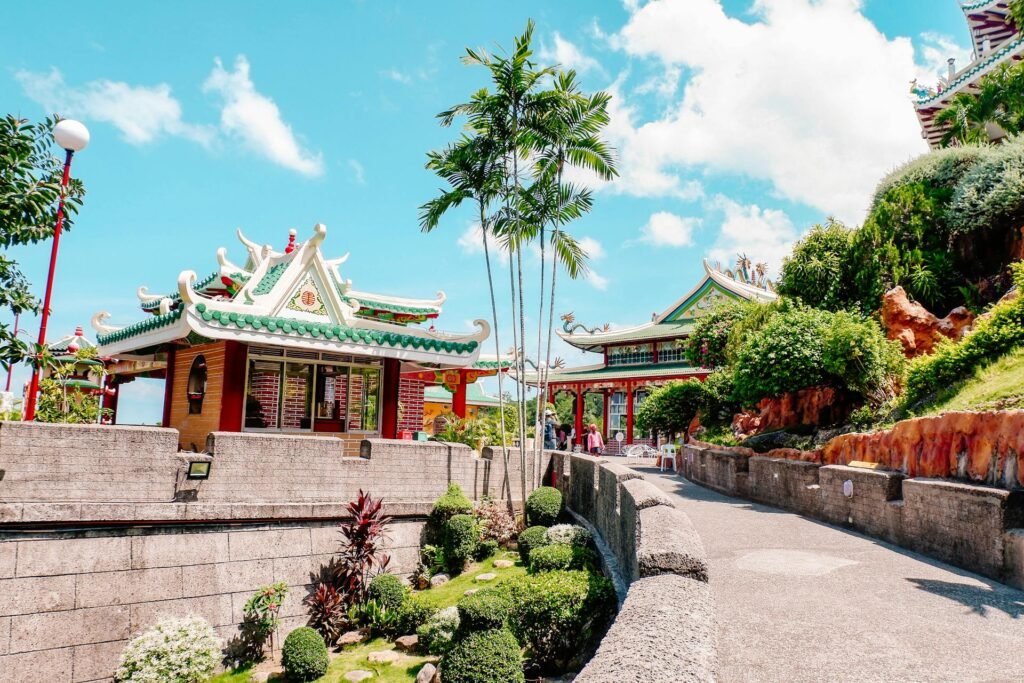
Cebuano cuisine is the regional cousin of Filipino food, with a distinct emphasis on seafood, roasted meats, and the singular Cebu identity dish, lechon. The Visayas archipelago provides the daily catch; the limestone hills produce the lemongrass and herbs; and the Spanish-Chinese-American culinary heritage layers complex flavors on top of indigenous bases.
What to Try
- Lechon Cebu — spit-roasted whole pig stuffed with lemongrass, garlic, scallions, and salt. Eaten without sauce (Cebuanos consider Manila’s liver-sauce lechon a culinary error). Best at Zubuchon, Rico’s, CnT, or House of Lechon.
- Sutukil — a Mactan-coast tradition: sugba (grilled fish), tula (clear fish soup), kilaw (ceviche-style raw fish in vinegar and chili). Order all three at the Mactan Island shoreline restaurants.
- Puso — rice cooked inside woven coconut-leaf pouches; the local accompaniment to grilled-meat meals.
- Larsian BBQ — the open-air grill cluster near Fuente Osmeña; skewers of pork belly, chicken intestines, isaw (chicken intestine), liver, and chorizo, ₱15–30 each. The local late-night tradition.
- Ngohiong — Cebu’s Chinese-influenced five-spice spring roll, similar to Manila’s lumpia but with thicker filling and a distinct sweet dipping sauce.
- Danggit — sun-dried salty rabbitfish, fried crispy for breakfast with garlic rice and eggs. The classic Cebuano morning meal.
- Mango shake & calamansi juice — Cebu mangoes (the famous yellow variety) are arguably the world’s best; pair with calamansi (small Philippine citrus) shakes.
- Dried mangoes — the iconic Cebu souvenir, made by 7D and Profood, sold at every airport and supermarket.
Where to Eat
Larsian / Fuente Osmeña for grill-stall street food; IT Park for café and craft-cocktail culture; Banilad & Cebu Business Park for fine dining and international cuisine; Mactan Island shoreline for sutukil; Carbon Market for breakfast and local snacks. Reservations rarely needed except at the most popular weekend dinners at IT Park.
A Note on Tap Water
Tap water in Cebu City is not safe to drink for foreign visitors. Use sealed bottled water (₱15–25 per liter at convenience stores; major brands include Wilkins, Absolute, Nature’s Spring) for drinking and brushing teeth. Reputable hotel and restaurant ice is generally safe; avoid ice from street stalls. The CDC traveler health page for the Philippines recommends bottled or boiled water and standard food precautions. Traveler’s diarrhea is the most common health complaint — eat at busy, established restaurants where food turnover is high.
Frequently Asked Questions About Visiting Cebu City
Do I need a visa to visit Cebu City?
For most foreign passport holders, no — the Philippines is one of Asia’s most generous visa-free destinations. Citizens of 157 countries — including the United States, United Kingdom, all EU member states, Canada, Australia, New Zealand, Japan, South Korea, Singapore, Malaysia, Indonesia, Thailand, and most of ASEAN — enter visa-free for 30 days. Some neighbors get less — Chinese passport holders need a visa or e-Visa in advance; Indian passport holders get 14 days visa-free or up to 30 days with a US/UK/Schengen visa stamp. Passport must have at least 6 months remaining validity, and travelers technically need proof of onward/return travel (sporadically checked at airline check-in). Extensions beyond 30 days are processed in-country at any Bureau of Immigration office — first extension to 59 days costs ₱3,030 (~US$55) and takes 1 working day. For longer stays, consider the Special Resident Retiree’s Visa (SRRV) for 35+ year-olds with a deposit, or special working/student visas. Always verify current rules with the Philippine Bureau of Immigration 4–6 weeks before travel.
Is Cebu City safe for tourists?
Cebu City is generally safe for tourists and considerably safer than its reputation suggests. The US State Department rates the Philippines at “exercise increased caution” — with a more elevated advisory for Mindanao and the Sulu Archipelago, but standard precautions for the Visayas including Cebu. Real risks in Cebu City: scooter and motorcycle traffic — fatal road accidents are the leading cause of foreign traveler deaths in the Philippines (many travel insurance policies exclude unlicensed motorbike riding); petty theft — bag snatchings by motorbike riders in Carbon Market and crowded downtown areas, phone-grab incidents on jeepneys; credit-card skimming at low-rent ATMs (use bank-branch ATMs at Ayala, SM, or Cebu IT Park); taxi scams at the airport (insist on the meter or use Grab); tap-water and unfamiliar-street-food stomach upset; typhoons June–December. Drug enforcement: the Philippines has extremely harsh drug penalties — possession of even small amounts can result in long prison sentences; trafficking carries life imprisonment or worse. Cebu City itself has very low violent-crime rates compared to many Southeast Asian capitals.
How many days do I need in Cebu City?
Two days handles Cebu City proper; combined with day-trips and Mactan beach time, 5–7 days is the practical sweet spot. A solid 5-day Cebu plan: Day 1 — Downtown heritage walk (Magellan’s Cross + Basilica del Santo Niño + Fort San Pedro + Carbon Market) + Tops Lookout sunset + Larsian dinner. Day 2 — Cebu IT Park café morning + Ayala Center shopping + Mactan Island afternoon resort/spa + sutukil dinner on the Mactan shoreline. Day 3 — Whale-shark consideration (Oslob day trip, 3 hours each way) or Bohol day trip (ferry to Tagbilaran + Chocolate Hills + tarsier sanctuary + Loboc River cruise — long day). Day 4 — Moalboal/Kawasan Falls combo (2.5 hours south; sardine run snorkel + canyoneering). Day 5 — Beach day on Mactan or northern Bantayan/Malapascua extension. Add days for diving certification, the Camotes Islands, or Negros side trips. For Sinulog Festival (third Sunday of January), budget 4 extra days and book accommodations 6+ months in advance.
What’s the best area to stay in Cebu City?
Cebu Business Park / Banilad (around Ayala Center Cebu) — the comfortable default for first-timers; international hotel chains (Marco Polo, Radisson Blu, Seda Ayala), upscale dining, walkable; ₱3,000–10,000/night (US$55–180). Cebu IT Park (Lahug) — younger, restaurant-and-café dense, modern condos and serviced apartments; popular with digital nomads; ₱2,500–6,000/night. Mactan Island (resort belt at Punta Engaño) — beach-resort hotels (Shangri-La, Movenpick, J Park, Crimson, Plantation Bay); ideal if airport proximity and beach time are priorities, weak if you want to explore Cebu City proper; ₱5,000–25,000/night. Downtown / Colon — budget-friendly heritage neighborhood; useful for hardcore history fans willing to put up with noise and crowds; ₱1,000–2,500/night. Fuente Osmeña — older mid-range hotels, central location, near Larsian street food; ₱1,500–4,000/night. Skip: unbranded budget hotels near the airport with no online presence — most lack basic security and aircon reliability.
How much does it cost to visit Cebu City’s major sights?
Cebu City is one of Asia’s more affordable major destinations. Magellan’s Cross: free. Basilica del Santo Niño: free (donations welcome). Fort San Pedro: ₱30. Tops Lookout: ₱100 + taxi ₱200–300 each way. Cebu Metropolitan Cathedral: free. Casa Gorordo Museum (heritage house): ₱150. Yap-Sandiego Ancestral House: ₱100. Cebu Heritage Monument: free. Day trips: Oslob whale sharks ₱2,500–4,000 per person; Kawasan Falls canyoneering ₱1,500–2,500 per person; Moalboal snorkel ₱1,500–3,000 per person; Bohol day-trip package ₱2,500–4,500 per person. Diving: PADI Open Water certification ₱18,000–22,000; fun dives ₱1,800–2,500 per dive. Local meals: lechon-by-the-kilo ₱400–700; Larsian street-grill dinner ₱150–300 per person; mall-food-court lunch ₱150–250; mid-range restaurant dinner ₱400–800 per person; fine-dining ₱1,500–3,500 per person. Grab across the city: ₱150–400. Overall daily budget: ₱2,500 (backpacker), ₱5,000 (mid-range comfortable), ₱12,000+ (luxury, excluding resort stays).
Should I drink the tap water in Cebu City?
No — tap water in Cebu City is not safe to drink for foreign visitors. The municipal supply (Metropolitan Cebu Water District) treats water but distribution-network contamination is common; locals routinely boil or filter. Always use sealed bottled water (₱15–25 per liter at 7-Eleven and convenience stores; major brands include Wilkins, Absolute, Nature’s Spring, and Crystal Clear) for drinking and brushing teeth. Reusable filter bottles (LifeStraw, Grayl, Sawyer with 0.1-micron filter) work well in Cebu and dramatically reduce plastic waste. Ice in mid-range and upmarket restaurants is generally safe; avoid ice from street stalls without obvious bottled-water sources. The CDC traveler health page for the Philippines recommends bottled or boiled water plus standard food precautions and a hepatitis A and typhoid vaccination check before travel. Tap water is fine for showering. Traveler’s diarrhea (“LBM” — loose bowel movement, the local English term) is the most common visitor complaint; eat at busy, established restaurants and skip street-food meat dishes on hot days.
What payment methods work in Cebu City — can I use credit cards?
Cebu City has gone significantly cashless over the past five years, but bring some pesos for smaller transactions. GCash and Maya are the dominant local mobile-payment apps, but require a Philippine phone number to activate — most visitors won’t bother. Credit/debit cards (Visa, Mastercard, AmEx, JCB): accepted at hotels, malls, restaurants in IT Park / Ayala / SM, mid-range and upmarket establishments, and Grab. Smaller restaurants, jeepneys, sari-sari stores, market vendors, and most street food are cash only. ATMs: Use bank-branch machines (BPI, BDO, Metrobank, Union Bank) at Ayala Center, SM City Cebu, SM Seaside, Cebu IT Park, and the airport for security against skimming; daily withdrawal limit typically ₱10,000–20,000 per transaction with a ₱250 (~US$4.50) international fee. Currency exchange: official money changers at malls and the airport offer good rates; avoid street-corner exchange shops. USD acceptance: not widespread except at higher-end hotels (which usually convert at unfavorable rates). Carry small bills in pesos for tips, jeepneys, and tricycles.
What about tipping in Cebu City?
Tipping is appreciated but not deeply ingrained in Filipino culture — service charges have largely substituted for it in tourist-facing businesses. Restaurants: most mid-range and upmarket restaurants automatically add a 10% service charge to the bill (look for “SC” or “service charge”); if so, additional tipping is not expected, though 50–100 pesos in cash to the actual server is appreciated. If no service charge is added, leave 10% in cash. Hotels: ₱50–100 per bag to porters at upscale hotels; ₱50–200 per night for housekeeping left at end-of-stay; ₱100–200 for concierge help with restaurant or tour bookings. Spa/massage: 10–15% (₱100–500 depending on service price), in cash directly to the therapist. Tour guides and drivers: ₱200–500 per person for a half-day; ₱500–1,000 per person for full-day private; more for multi-day chartered drivers. Grab: rounding up to the nearest ₱10 is appreciated; not required. Taxis: round up to the nearest ₱10–20; ₱20–50 extra if the driver helps with luggage. Hairdressers: 10–15%. Bar staff: ₱20–50 per round in cash if drinking at a bar. Tip in Philippine pesos — small notes preferred — and tip the actual person providing the service, not just into the bill total.
Education & Notable People
Cebu City has a long educational history dating to Spanish colonial schools and is the regional university center of the Visayas. The University of San Carlos — tracing its roots to a 1595 Jesuit seminary — is one of the oldest educational institutions in Asia and the city’s flagship university.
Major Universities
- University of San Carlos (USC) — Catholic university with five campuses across Metro Cebu, ~25,000 students; strong sciences, engineering, and business programs.
- University of the Philippines Cebu — branch of the country’s flagship public university; selective admission, strong fine arts and social sciences.
- Cebu Institute of Technology – University (CIT-U) — large private university focused on engineering, IT, and architecture.
- University of Cebu (UC) — large multi-campus private university with maritime engineering as a particular regional strength.
- Cebu Normal University — state university with strong teacher education and nursing programs.
Notable People
Lapu-Lapu — the 16th-century Mactan chieftain who defeated Magellan in 1521 and is now considered the first Filipino national hero; his statue dominates the Lapu-Lapu Shrine. Sergio Osmeña — fourth President of the Philippines (1944–1946), born in Cebu City; Fuente Osmeña and Cebu Business Park’s Osmeña Boulevard bear his name. Cesar Montano — actor and filmmaker. Cebu Pacific founders — Tony Tan Caktiong’s family and the Gokongwei conglomerate are Cebuano-Chinese in origin, anchoring much of the country’s airline and food-industry leadership. Manny Pacquiao — although born in Mindanao, the boxing legend’s professional career began in Cebu City’s local boxing clubs.
Sister Cities & International Relations
Cebu City’s sister-city network reflects its identity as a maritime trading port and Catholic religious center. The relationships emphasize commerce, education, and Filipino diaspora connections.
Cebu City’s sister and friendship cities include (selection):
- Haarlemmermeer, Netherlands — sister city since 2007; reflects Dutch-Filipino business links and the famous tulip-and-flower exchange.
- San Francisco, California, USA — paired since 1961; one of the world’s largest Filipino-American communities lives in the Bay Area.
- Honolulu, Hawaii, USA — significant Cebuano-Filipino diaspora population.
- Yeosu, South Korea — coastal port-city sister relationship since 2008.
- Yantai, China — paired since 1985; one of Cebu’s older Asian links.
- Maribor, Slovenia — friendship city.
- Yokohama, Japan — port-city friendship link.
- Hartford, Connecticut, USA — sister-city friendship.
Cebu City is also a node in the ASEAN regional cooperation framework and hosted the 2017 ASEAN Summit working sessions. It is the seat of the regional government of Central Visayas (Region VII) and the headquarters of the Provincial Government of Cebu, making it the political and administrative anchor of an island province of over three million people.
AFRIKA
Cairo Hurghada Johannesburg Marrakech
ASIA
Abu Dhabi Agra Antalya Bangkok Batam Beijing Bengaluru Cebu City Chiang Mai Chiba Chennai Da Nang Dammam Delhi Denpasar Dubai Fukuoka Guangzhou Guilin Ha Long Hanoi Ho Chi Minh City Jakarta Jaipur Johor Bahru Kolkata Krabi Kuala Lumpur Kyoto Macau Mecca Medina Mugla Mumbai Osaka Pattaya Penang Phuket Riyadh Seoul Shanghai Shenzhen Singapore Taipei Tokyo Zhuhai
EUROPE
Amsterdam Athens Barcelona Berlin Brussels Budapest Copenhagen Dublin Florence Frankfurt am Main Heraklion Krakow Lisbon London Madrid Milan Munich Nice Paris Porto Prague Rhodes Rome Stockholm Venice Vienna Warsaw
NORTH AMERICA
Cancun Las Vegas Los Angeles Miami New York City Orlando San Francisco Toronto Vancouver
SOUTH AMERICA
Buenos Aires Lima Rio De Janeiro
OCEANIA
Auckland Honolulu Melbourne Sydney