
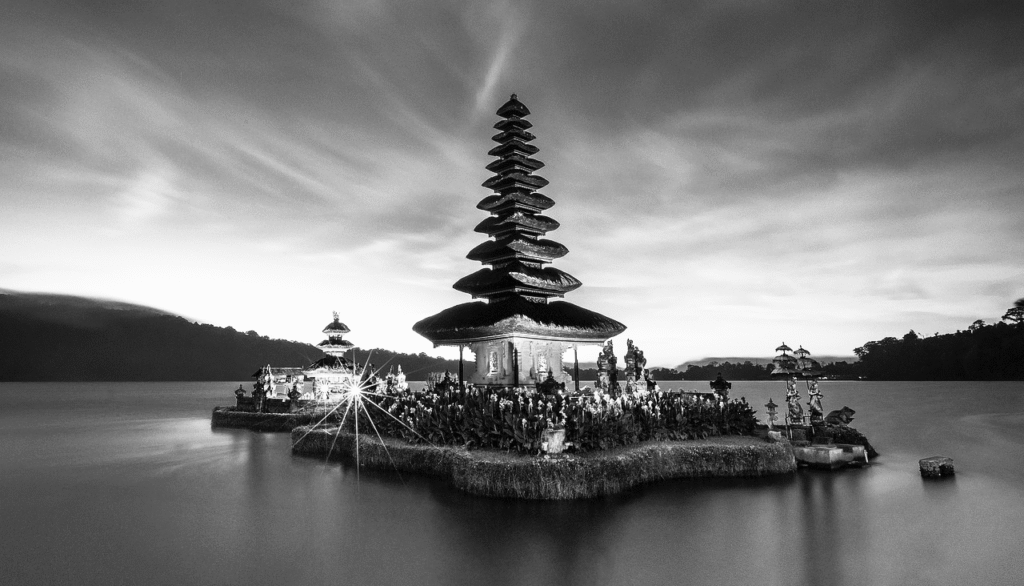
Photo credit: Denpasar cityscape showcasing the blend of traditional and modern architecture
Denpasar, the bustling capital of Bali, is far more than just a gateway to Indonesia’s most famous island. This vibrant city of over 673,000 residents serves as Bali’s administrative, cultural, and economic heart, where ancient Hindu traditions seamlessly blend with modern urban energy. Founded in 1788, Denpasar has evolved from a historic royal trading center into Indonesia’s 28th largest city, offering visitors an authentic taste of Balinese life beyond the resort beaches.
Denpasar at a Glance: Essential Facts for Travelers
| Location | 8°40′S, 115°14′E |
|---|---|
| Population | 673,270 (2024) |
| Area | 126 km² |
| Elevation | 4 meters above sea level |
| Time Zone | WITA (UTC+8) |
| Calling Code | +62 361 |
| Postal Codes | 80111 – 80237 |
| Known For | Balinese culture, traditional markets, Hindu temples, administrative capital |
| Current Mayor | I.G.N. Jaya Negara (PDI-P) |
| Official Website | denpasarkota.go.id |
| Local Name | Kota Denpasar |
| Motto | Pūrṇadhivā bhāra bhāvana (Sanskrit: “the capital supports the land”) |
Upcoming Events in Denpasar
| Date | Title | Details |
|---|---|---|
| 2026-06-28 to 2026-11-01 | Makepung Buffalo Race Season in Jembrana | West Bali’s traditional water-buffalo racing season, which opened on 28 June, continues with races every few Sundays at village circuits around Negara in Jembrana, about three hours’ drive from Denpasar. Remaining autumn race days include 20 September, 4 October, 18 October and 1 November, with the prestigious Governor’s Cup crowning October and championship finals following in November. Pairs of decorated buffalo pull chariots at surprising speed while jockeys balance behind. Attendance is free, but arrive by 7:30 AM as racing starts early; the spectacle draws big local crowds and photographers. [Source] |
| 2026-09-24 to 2026-09-27 | Bali International Airshow | Ngurah Rai International Airport, just south of Denpasar, hosts the Bali International Airshow from 24 to 27 September. The four-day event combines flying demonstrations and static aircraft displays with aerospace industry conferences and trade exhibitions, drawing tens of thousands of visitors as well as airline, defence and aviation professionals from across the region. Trade days focus on business delegations, while aerial displays over the coast can be seen more widely. Ticket arrangements vary by visitor category, so aviation fans should check admission details before travelling. [Source] |
| 2026-10-05 to 2026-10-07 | Nusa Penida Festival | The island of Nusa Penida, reached by fast boat from Sanur near Denpasar, holds its annual festival from 5 to 7 October. The three-day programme showcases the island’s distinct culture and growing tourism scene with traditional music and dance performances, local crafts and food stalls, and community events spread around the main harbour area. The festival is free to attend and offers a good reason to combine the crossing with visits to the island’s famous clifftop viewpoints such as Kelingking. Early boats fill quickly during the festival period. [Source] |
| 2026-10-10 to 2026-10-11 | Klungkung Heritage Festival | The former royal capital of Klungkung, an easy day trip east of Denpasar, celebrates its history with a heritage festival on 10 and 11 October. Centred on the old town of Semarapura, home to the famous Kerta Gosa pavilion with its painted ceilings, the weekend features traditional performances, cultural exhibitions and local food in and around the historic royal sites. The festival is free and family-friendly, and it pairs naturally with a visit to the town’s traditional market, one of the best places on the island for textiles. [Source] |
| 2026-10-10 to 2026-10-12 | Gebug Seraya Festival | In the far-east village of Seraya in Karangasem regency, the Gebug Seraya rattan-duel ritual takes place from 10 to 12 October. Pairs of men face off with rattan sticks and woven shields in a centuries-old contest traditionally held at the end of the dry season to call for rain. The bouts are fierce but governed by strict adat rules and accompanied by gamelan music and blessings. Watching is free; the event offers one of Bali’s most raw and authentic ritual spectacles, far from the southern resort crowds. [Source] |
| 2026-10-21 to 2026-10-25 | Ubud Writers & Readers Festival | Southeast Asia’s leading literary festival returns to Ubud for its 23rd edition from 21 to 25 October under the theme Samarasa: Awareness, Empathy, Action. International and Indonesian authors gather for five days of panel discussions, readings, workshops, book launches and evening cultural events at venues across the town, about an hour north of Denpasar. Drawing on Sanskrit philosophy, this year’s programme explores harmony between mind, heart and action. Ticket prices vary, from festival passes to individual sessions, and headline events regularly sell out in advance. [Source] |
City News in Denpasar – last 14 days
| Date | Category | Headline | Details |
|---|---|---|---|
| 2026-09-14 | Public safety | Denpasar police investigate deaths of Australian man and two children in Legian | Denpasar city police are investigating the deaths of an Australian man and his two young children, who were found in accommodation in the Legian area near Kuta. Investigators suspect the father killed the children before taking his own life, and forensic examinations are under way to confirm the sequence of events. The children’s mother, who was not in Indonesia at the time, has been informed and is reported to be in deep shock. Australian consular officials are assisting the family. [Source] |
| 2026-09-14 | Public safety | Minibus carrying 18 tourists catches fire in Baturiti, Tabanan | A minibus transporting 18 tourists caught fire in the Baturiti area of Tabanan regency, on the main road that links southern Bali with the Bedugul lake district. Passengers were evacuated as the vehicle burned, and the incident caused delays on the busy mountain route popular with visitors heading to the Ulun Danu Beratan temple. Authorities are examining the cause of the blaze, which adds to recent concerns about the safety of tourist transport vehicles operating on Bali’s steep inland roads. [Source] |
| 2026-09-14 | Local government | Bali legislature questions rising deficit in revised 2026 budget | Members of Bali’s provincial parliament questioned the growing deficit in the draft revision of the 2026 regional budget, pressing the administration over locally generated revenue, infrastructure spending and unspent balances from previous years. Factions also queried the basis for the new foreign tourist levy target and a planned loan of about 873 billion rupiah. The governor thanked the factions for their input and said the government is ready to collaborate on refining the budget revision before it is finalised. [Source] |
| 2026-09-14 | Local affairs | Some 320,000 vehicles in Bali have not paid road tax | Around 320,000 vehicles registered in Bali have outstanding road-tax obligations, according to figures highlighted by the provincial revenue authorities. The backlog represents significant lost income for the province at a time when the government is looking for funds to finance infrastructure and public services. Officials have been running amnesty and reminder programmes to encourage owners to settle arrears, and enforcement measures ranging from roadside checks to data matching with the police vehicle registry are being stepped up. [Source] |
| 2026-09-14 | Local affairs | Two Bali villages with many foreign residents placed under special monitoring | Two villages in Bali that have become home to large numbers of foreign nationals have been placed under special monitoring by the authorities. The move reflects growing official attention to the impact of long-stay foreigners on housing, local business and social life in popular districts, and to compliance with visa and residence rules. Officials say the monitoring is intended to ensure orderly coexistence between international residents and local communities rather than to discourage foreigners from living on the island. [Source] |
| 2026-09-14 | Business | Customary sea ceremony planned ahead of Agung I and II seismic survey | Balinese authorities are preparing a customary sea ceremony before seismic survey work begins in the Agung I and Agung II offshore exploration areas. The ritual, rooted in Balinese Hindu tradition, is meant to seek blessing and safety for the energy survey activities in the waters around the island. The plan illustrates how large infrastructure and resource projects in Bali are routinely paired with adat ceremonies, balancing economic development initiatives with the island’s deeply held religious customs and its communities’ relationship with the sea. [Source] |
| 2026-09-14 | Public safety | Bali police finalise preparations to secure world police forum | The Bali regional police are finalising personnel readiness to secure a major international police forum being hosted on the island. Officers are being briefed on venue security, traffic management and escort arrangements for visiting delegations, continuing Bali’s long record of staging high-profile international gatherings. The deployment will cover the airport, hotels and meeting venues in the southern tourism corridor. Authorities say normal tourist activity will not be disrupted, though travellers should expect occasional motorcades and tightened checks around conference locations. [Source] |
| 2026-09-14 | Business | BCA Expo comes to Bali with special mortgage and loan rates | Bank Central Asia is staging its BCA Expo 2026 for Bali residents, offering promotional financing rates that include home loans from 1.23 percent, vehicle financing from 1.80 percent and multipurpose loans starting at 5.69 percent. The exhibition format brings together property developers, car dealers and bank services in one venue, letting visitors compare offers and apply on the spot. The roadshow reflects strong competition among Indonesian banks for consumer lending in Bali’s recovering property and automotive markets. [Source] |
| 2026-09-14 | Culture | Mayor attends Pitra Yadnya ceremonies in Serangan traditional village | Denpasar Mayor I Gusti Ngurah Jaya Negara attended the Ngajum Karya Pitra Yadnya and Atma Wedana rites in the traditional village of Serangan, joining residents for one of the most significant ceremonies in Balinese Hindu life. The collective rituals honour ancestors and accompany the purification of departed souls, and are organised jointly by the village’s customary institutions. The mayor’s presence underlines the city government’s support for adat communities in preserving religious traditions amid Denpasar’s rapid urban development. [Source] |
| 2026-09-14 | Local affairs | Climate change hitting Bali through floods and water shortages | Climate change is increasingly affecting Bali in two seemingly contradictory ways, bringing more frequent flooding during intense rain events while deepening water shortages in other parts of the island. Analysts point to rapid land conversion, heavy tourism demand on aquifers and shifting rainfall patterns as compounding factors. The trends have consequences for agriculture, including the island’s iconic rice terraces, as well as for urban drainage in the Denpasar area, and are feeding calls for stricter water management and development controls. [Source] |
| 2026-09-10 | Public transport | Anak Krakatau eruption disrupts flights, with knock-on effects for Bali | The eruption of Mount Anak Krakatau, one of the world’s most volatile volcanoes, has caused major travel disruption across Indonesia, with ash activity affecting flight operations including services to and from Bali. The volcano sits in the Sunda Strait within Lampung Province, far west of the island, but airline routings and schedules have been affected as carriers adjust to the ash risk. Travellers are advised to monitor their airline’s updates closely, as conditions can change quickly during eruption phases. [Source] |
| 2026-09-09 | Public transport | New long-haul routes to improve access to Bali | Long-haul travellers to Bali are set to gain more options as new flight routes open up connections to the island. Visitors from Europe and other distant markets have typically transited through Kuala Lumpur, Singapore or Dubai to reach Denpasar’s Ngurah Rai International Airport, and the additional services are expected to shorten journeys and increase seat capacity. The expansion supports Bali’s tourism recovery strategy, which aims to diversify source markets and spread arrivals more evenly across the year. [Source] |
Denpasar Events & City News Archive
Sources: Bali Travel Hub, How to Bali, Bali International Airshow, How to Bali, Asia Exchange, Ubud Writers & Readers Festival, ANTARA News Bali, Kompas.com
Weather Forecast for the Next 14 Days in Denpasar
| Date | Weather | Max °F | Min °F | Rain mm |
|---|---|---|---|---|
| 2026-09-14 | 🌧️ | 83.2 °F | 72.7 °F | 0.7 mm |
| 2026-09-15 | 🌧️ | 82.7 °F | 72.1 °F | 1.0 mm |
| 2026-09-16 | 🌧️ | 84.7 °F | 71.1 °F | 0.7 mm |
| 2026-09-17 | 🌧️ | 84.7 °F | 72.1 °F | 0.5 mm |
| 2026-09-18 | 🌧️ | 84.6 °F | 72.9 °F | 0.2 mm |
| 2026-09-19 | 🌧️ | 83.7 °F | 72.9 °F | 0.6 mm |
| 2026-09-20 | ⛅ | 85.5 °F | 70.2 °F | 0.0 mm |
| 2026-09-21 | ⛅ | 84.7 °F | 73.9 °F | 0.0 mm |
| 2026-09-22 | ☁️ | 84.7 °F | 73.1 °F | 0.0 mm |
| 2026-09-23 | 🌧️ | 83.8 °F | 74.3 °F | 0.6 mm |
| 2026-09-24 | 🌧️ | 83.8 °F | 75.1 °F | 1.2 mm |
| 2026-09-25 | ⛅ | 84.9 °F | 75.4 °F | 0.0 mm |
| 2026-09-26 | ☁️ | 84.6 °F | 74.4 °F | 0.0 mm |
| 2026-09-27 | 🌧️ | 84.7 °F | 75.3 °F | 0.6 mm |
Denpasar’s History
Denpasar — the administrative capital of Bali and the island’s largest city — has the curious dual identity of “Bali’s overlooked half.” Most international visitors fly into Denpasar’s airport and immediately leave for Ubud, Seminyak, or the southern beach resorts, never pausing to explore the actual capital. The Balinese themselves know better: this is where the island’s living culture, education, government, and traditional markets concentrate. The name itself translates as “north of the market” — a clue to the city’s commercial origins as the trading hub of southern Bali.
The Puputan: A Defining Moment
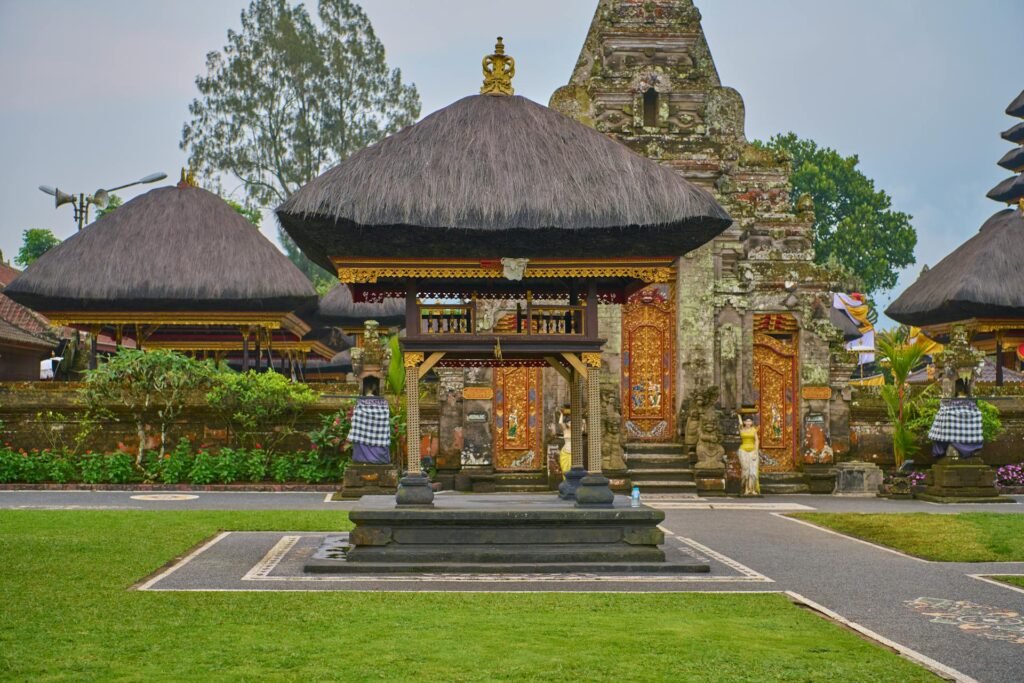
The most pivotal moment in Denpasar’s history occurred on 20 September 1906, during the Puputan Badung (the “fight to the end” of Badung). When Dutch colonial forces advanced on the royal palace, King I Gusti Ngurah Made Agung and his court chose ritualistic death over surrender — armed only with traditional kris daggers, the royal family and hundreds of followers in white ceremonial dress marched directly into Dutch artillery. The mass suicide killed an estimated 1,000 Balinese and shocked European public opinion. Today, the event is commemorated at Puputan Square (Lapangan Puputan) in the city center; the moment is one of the foundational stories of modern Balinese-Indonesian identity.
Colonial Period and Reconstruction
Following the Dutch victory, Denpasar was rebuilt under colonial administration. The sacred Pura Jagatnatha Temple, originally dating to 1432, was reconstructed in 1908 after being damaged during the conflict. The Dutch developed Denpasar as the southern administrative center while the cooler highlands of Buleleng (with its capital Singaraja) remained the political center until World War II. Indonesia’s independence in 1945 — and the gradual centralization of Balinese administration in Denpasar — formally elevated the city in 1958.
Modern Development
After Bali was promoted to provincial status in 1958, Denpasar’s growth accelerated dramatically — population from just over 260,000 in 1980 to over 673,000 today (with the larger Sarbagita metropolitan region exceeding 2 million). The city became Bali’s primary administrative, educational, and cultural center; home to Udayana University, the Indonesian Arts Institute (ISI Denpasar), and the Bali Provincial Government. The traditional Balinese Hindu cultural infrastructure — temples, dance schools, gamelan orchestras, traditional craftsmen — remains genuinely active in the residential banjar (community) neighborhoods that visitors rarely see.
Geography, Climate & Best Time to Visit Denpasar
Geographic Setting
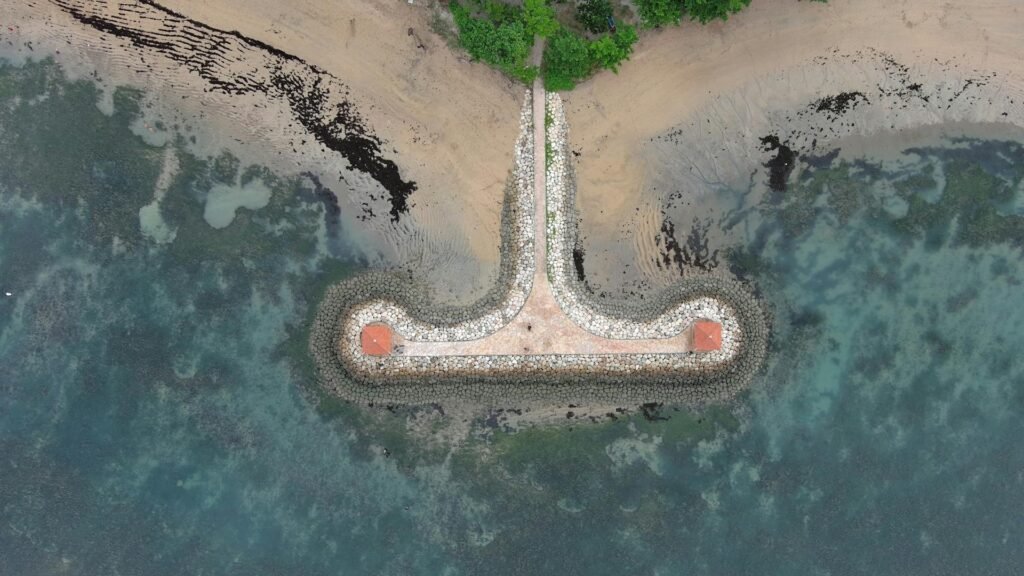
Denpasar sits in southern Bali — bordered by Badung Regency to the west and north (which contains the famous beach resorts of Kuta, Seminyak, and Canggu), and Gianyar Regency to the northeast (which contains Ubud and the cultural heartland). The city is dramatically carved by rivers, particularly the Badung River, creating valleys spanned by tall bridges. The southern coastline forms part of the distinctive Kuta Selatan peninsula; offshore lie three small islands (Nusa Penida, Nusa Lembongan, Nusa Ceningan) accessible by ferry from Sanur and Padangbai.
Climate
Denpasar has a tropical wet-and-dry climate with consistent year-round temperatures: average highs around 30.9°C, lows of 23.5°C, and ocean temperatures of 27–29°C. The dry season (April–October) brings minimal rainfall, ideal for outdoor exploration; the wet season (November–March) brings heavy afternoon downpours but the showers are typically brief and intense rather than prolonged. Humidity stays at 76–80% year-round; sunshine ranges from 5.1 hours daily in February to 7.4 hours in August.
Best Time to Visit
April through October is the optimal travel window — dry, sunny, lower humidity. Within this window, July–August is high season with peak crowds and hotel prices (especially around Indonesia’s school holidays); April–June and September–October are the shoulder sweet spots with similar weather and 20–30% lower prices. November–March is the wet season — cheaper, lush, atmospheric, but plan around afternoon downpours. The Bali Arts Festival (Pesta Kesenian Bali) in mid-June at Taman Werdhi Budaya Art Center is the cultural high point — month-long celebrations of traditional dance, music, and visual arts.
Denpasar’s Districts & Neighborhoods
Denpasar splits into four administrative districts. For travelers, the working geography is between the historic central core (around Puputan Square), the coastal Sanur area in the south, and the cultural Kesiman area in the east.
Denpasar Selatan (South Denpasar)
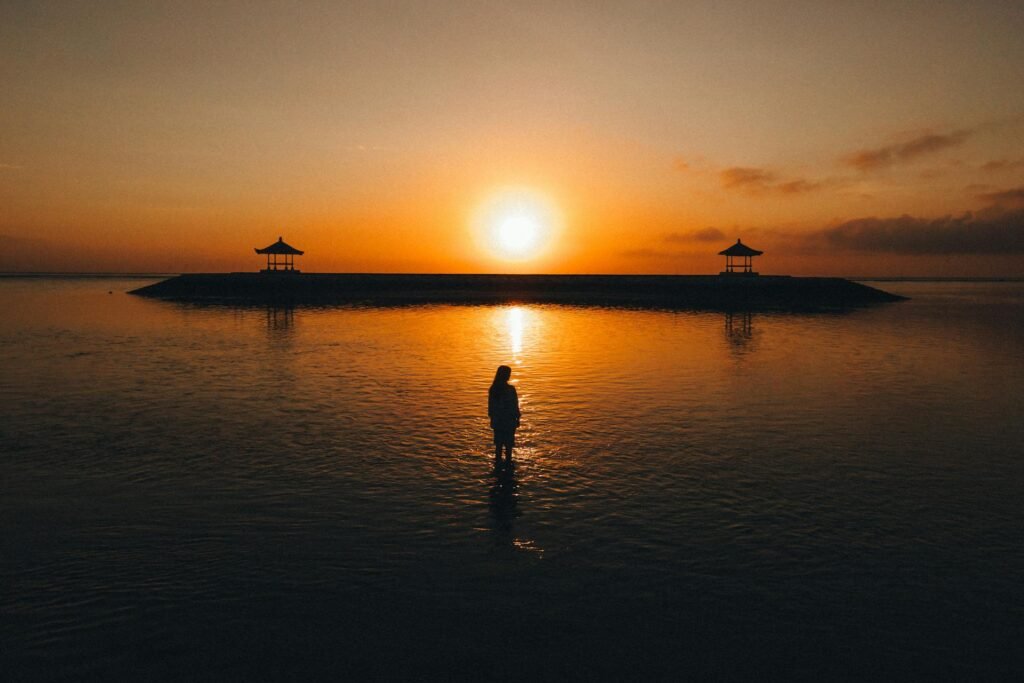
The largest district at 49.99 km² with 217,100 residents. Encompasses the famous Sanur area — Bali’s quieter, family-oriented beach resort town with calm sunrise-facing beaches, traditional Balinese-style hotels, and a much more relaxed atmosphere than Kuta or Seminyak. Pura Baruna (sea god temple) and Serangan Island (Turtle Island, a sea-turtle conservation site) are the natural and cultural highlights. Best base for travelers wanting beaches plus cultural access.
Denpasar Timur (East Denpasar)
22.31 km² with 128,276 residents — the cultural heartbeat. The Kesiman area is renowned for traditional dance and crafts, with multiple respected dance schools and active banjar community centers. Pura Maospahit (a 14th-century temple complex) and the Pura Petitenget are the major cultural sites. Mid-range accommodation, ideal for travelers seeking authentic Balinese cultural experiences.
Denpasar Barat (West Denpasar)
24.06 km² with 206,958 residents. Features the historic Pemecutan area — site of the former royal palace — and the artsy Padang Sambian neighborhood. Vibrant traditional markets (Pasar Badung is here) and authentic local dining. Budget-conscious travelers find excellent value here.
Denpasar Utara (North Denpasar)
The administrative center covering 31.42 km² with 172,980 residents. Government offices, modern conveniences, and the Ubung bus terminal — Bali’s main hub for intercity transportation including buses to Ubud, Singaraja, and Java-bound ferries. Less interesting for sightseeing.
Top Things to Do in Denpasar
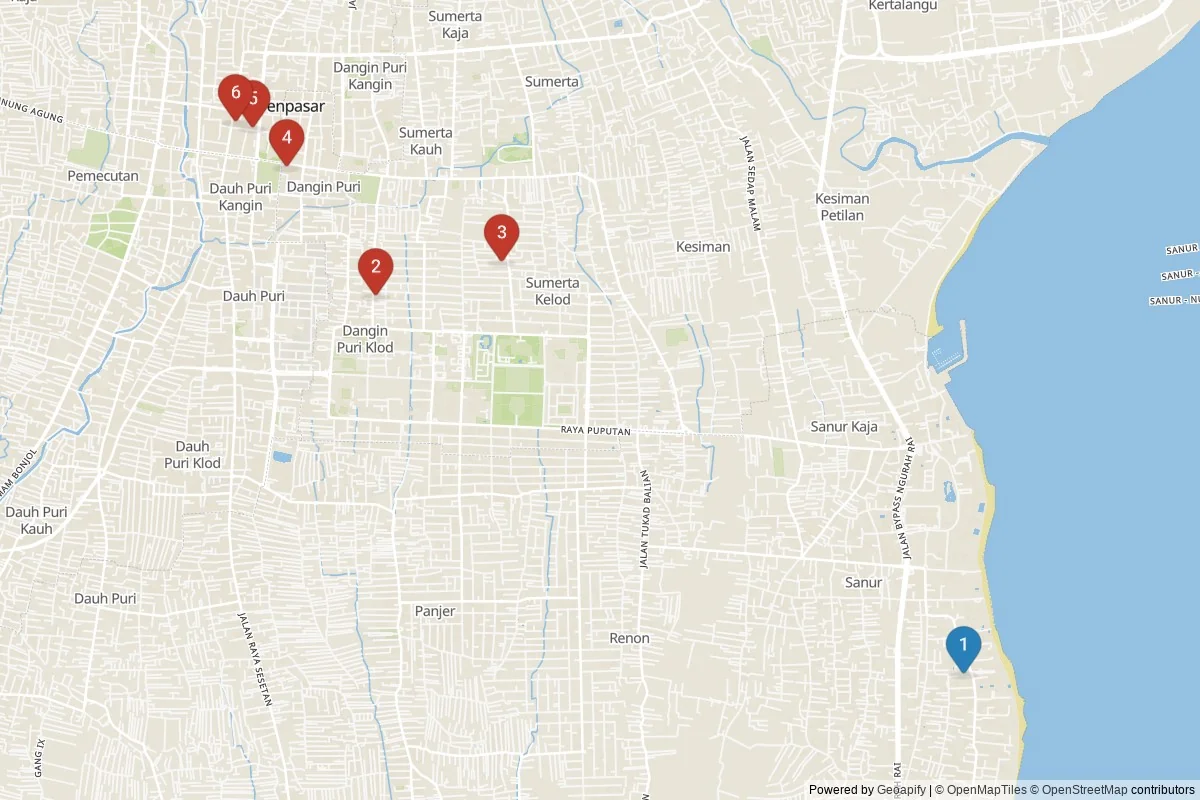
| # | Sight | Cluster | Type | Time | Entry | Best |
|---|---|---|---|---|---|---|
| 1 | Sanur Beach | Central | Beach | ½ day | Free | Sunrise |
| 2 | Bajra Sandhi Monument | Outer | Monument | ~1 hr | 50,000 Rp | Morning |
| 3 | Renon (Civic Square) | Outer | Civic centre | ~30 min | Free | Anytime |
| 4 | Bali Museum | Outer | Museum | ~1 hr | 50,000 Rp | Morning |
| 5 | Pasar Badung (Main Market) | Outer | Market | ~1.5 hrs | Free | Morning |
| 6 | Pura Maospahit Temple | Outer | Hindu temple | ~30 min | Donation | Morning |
| 🚗 | Day Trip: Ubud | Day trip | Day trip | Full day | varies | Morning |
| 🚗 | Day Trip: Tanah Lot | Day trip | Day trip | ½ day | 60,000 Rp | Sunset |
| 🚗 | Day Trip: Uluwatu Temple | Day trip | Day trip | ½ day | 50,000 Rp | Sunset |
Denpasar’s headlines are concentrated within a short walking radius of Puputan Square. Two days handles the city; combined with Sanur beach time and a day-trip to Ubud (45 minutes northeast), three to four days cover the area.
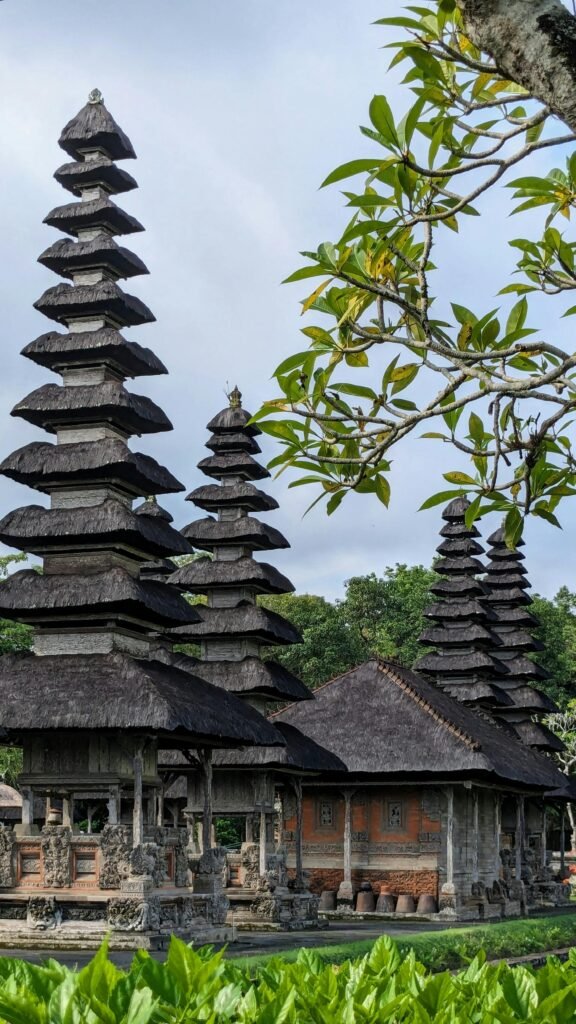
Historical and Cultural Sites
Puputan Square (Lapangan Puputan) — the emotional heart of Denpasar, commemorating the 1906 Balinese resistance. The leafy square hosts a striking monument; the surrounding streets contain colonial-era buildings and the Bali Museum.
Bali Museum (Museum Bali) — just east of Puputan Square, this comprehensive cultural museum was founded by Dutch authorities in 1932 in traditional Balinese-pavilion style. Exhibits include carvings from the Mahabharata and Ramayana epics, traditional textiles, dance masks, and archaeological artifacts spanning Bali’s pre-Hindu and Hindu-Buddhist eras. Tickets ~50,000 IDR.
Pura Jagatnatha Temple — the city’s most prominent active Hindu temple, with distinctive coral-white architecture and a turtle-shaped base referencing ancient Hindu creation myths. Dedicated to Sanghyang Widi (Bali’s supreme deity); the towering structure dominates the central skyline.
Monumen Perjuangan Rakyat Bali (Bali Struggle Monument) — in the southeast, this multi-story modern monument honors Bali’s broader independence struggle. Excellent panoramic city views from the upper levels.
Pura Maospahit — a 14th-century temple complex bearing historical scars from the 1917 Bali earthquake; restored shrines feature towering statues of Garuda and Batara Bayu.
Markets and Shopping
Living up to its etymology, Denpasar’s markets are exceptional. Pasar Badung (the largest traditional market, 24 hours), Pasar Sanglah, and Pasar Kreneng provide sensory overloads of local produce, spices, textiles, and handicrafts. Pasar Kumbasari across the river from Pasar Badung specializes in handicrafts and traditional clothing. For modern shopping, the Level 21 Mall, Plaza Renon, and Bali Galeria offer international brands.
Arts and Culture
Taman Werdhi Budaya Art Center serves as Bali’s premier cultural venue — galleries, an open-air stage for traditional dance performances, and the centerpiece of the month-long Bali Arts Festival in mid-June. Performances feature legong, barong, kecak, and topeng dance forms. The Indonesian Arts Institute (ISI Denpasar) within the cultural park hosts student and faculty performances year-round.
Religious Diversity
Beyond Hindu temples, Denpasar showcases Indonesia’s religious diversity. St. Joseph’s Catholic Church on Jalan Kepundung features unique Hindu-influenced architecture — a Catholic church topped with traditional Balinese-style carvings and a gleaming white cross — representing the city’s multicultural harmony. The official 2020 census counted 441 Hindu temples, 183 Christian churches, and 29 mosques in the city.
How to Get to Denpasar
By Air
Ngurah Rai International Airport (DPS) — Bali’s primary gateway, located in the southern Bukit peninsula 13 km south of Denpasar (and within the same metro region). The airport handles 25+ million passengers annually with direct flights from major Asian, Australian, European, and Russian cities. Taxi to Denpasar ~150,000–250,000 IDR; Grab/Gojek ~80,000–150,000 IDR. Live status at bali-airport.com.
By Land
Denpasar is Bali’s primary land-transport hub. Three major bus terminals serve the city: Ubung (north of the city, the main intercity hub for buses to Java via the Gilimanuk ferry port), Batubulan (east, for Ubud and the eastern half of Bali), and Tegal (southwest, for Kuta and the southern peninsula). Express buses arrive from major Javanese cities including Surabaya (10 hours including ferry), Yogyakarta (16 hours), and Jakarta (24 hours).
By Sea
Bali is connected to neighboring islands by ferry. Denpasar is not itself a ferry port, but the closest options are Padang Bai (1 hour east, ferries to Lombok and the Gili Islands) and Gilimanuk (3 hours west, vehicle ferry to Java). The Sanur jetty in southern Denpasar runs fast boats to Nusa Penida, Nusa Lembongan, and Lombok.
Getting Around Denpasar
Denpasar’s traffic is genuinely difficult — narrow streets, persistent congestion, and an underdeveloped public transit network make navigation challenging.
Public Transportation
Bemos (shared minivans, locally called angkot) form the backbone of public transport — colorful vehicles following set routes, accepting passengers anywhere along their paths for 5,000–10,000 IDR. The Trans Sarbagita bus system, launched in 2011, provides more comfortable air-conditioned service connecting the airport to southeastern areas. Drivers sell tickets onboard; keep small bills handy.
Taxis and Ride-Hailing
Grab and Gojek are the dominant ride-hailing apps and the strongly-preferred option for visitors — transparent pricing, English-friendly interfaces, accept international cards. Both operate GrabBike/GoRide motorbike-taxi services for 10,000–25,000 IDR for short rides — fastest way to navigate Denpasar’s congested streets. Traditional metered taxis (Bluebird) work but are less common than ride-shares; always insist on the meter.
Future Transportation
Construction has begun on the Bali Sarbagita Metro system since September 2024 — the first metro in Indonesia outside Jakarta. Initial phases planned to connect the city to the airport and surrounding areas by 2028, with full network completion targeted 2031. Will significantly improve city accessibility.
Driving and Parking
Denpasar’s street layout follows a central grid intersected by river valleys requiring high bridges. Four-lane one-way streets with raised medians dominate the downtown. Only ~40% of neighborhoods connect directly to main roads; the remaining areas are accessible through narrow gang lanes — some just 2 metres wide — creating an intimate urban maze suitable only for walking, scootering, or motorbike taxis.
Food & Drink in Denpasar
Denpasar’s food scene is the most authentic of any Balinese city — the warungs here serve genuinely local cuisine, while the touristy beach areas around Kuta lean heavily Western. Eating well in Denpasar is the cheapest pleasure in Bali: a serious traditional nasi campur meal costs ~25,000–50,000 IDR ($1.50–3).
Balinese Specialties
Nasi campur Bali is the daily lunch — a scoop of rice with various small portions of vegetables, meats (often pork or chicken), eggs, and sambal, all on one plate. Babi guling (Balinese roast suckling pig) is the celebratory dish — try at Warung Babi Guling Ibu Oka in Ubud or the famous Babi Guling Pak Malen in Seminyak. Bebek betutu (slow-cooked spiced duck) is the elaborate festival dish. Sate lilit (minced fish or chicken satay shaped around a lemongrass stick) and lawar (a complex spiced vegetable-and-meat salad) round out the canonical Balinese spread.
Markets and Street Food
The traditional markets — Pasar Badung, Pasar Kumbasari, Pasar Sanglah — have food courts inside or adjacent to them. The Pasar Malam Kereneng (night market) operates from late afternoon, serving the full range of Balinese street snacks, fried bananas, satay skewers, and freshly-prepared nasi jinggo (small rice packets in banana leaf, the canonical Balinese breakfast).
Modern Dining and Cafés
Denpasar’s modern café scene is concentrated in the Renon and Sanur neighborhoods. Sanur has the most international-friendly dining at the more relaxed end — beachfront warungs, Italian, Mediterranean, and modern Indonesian. The Plaza Renon and surrounding streets host the city’s mid-range modern Indonesian and Asian-fusion restaurants.
Denpasar by District: The 4 Kecamatan
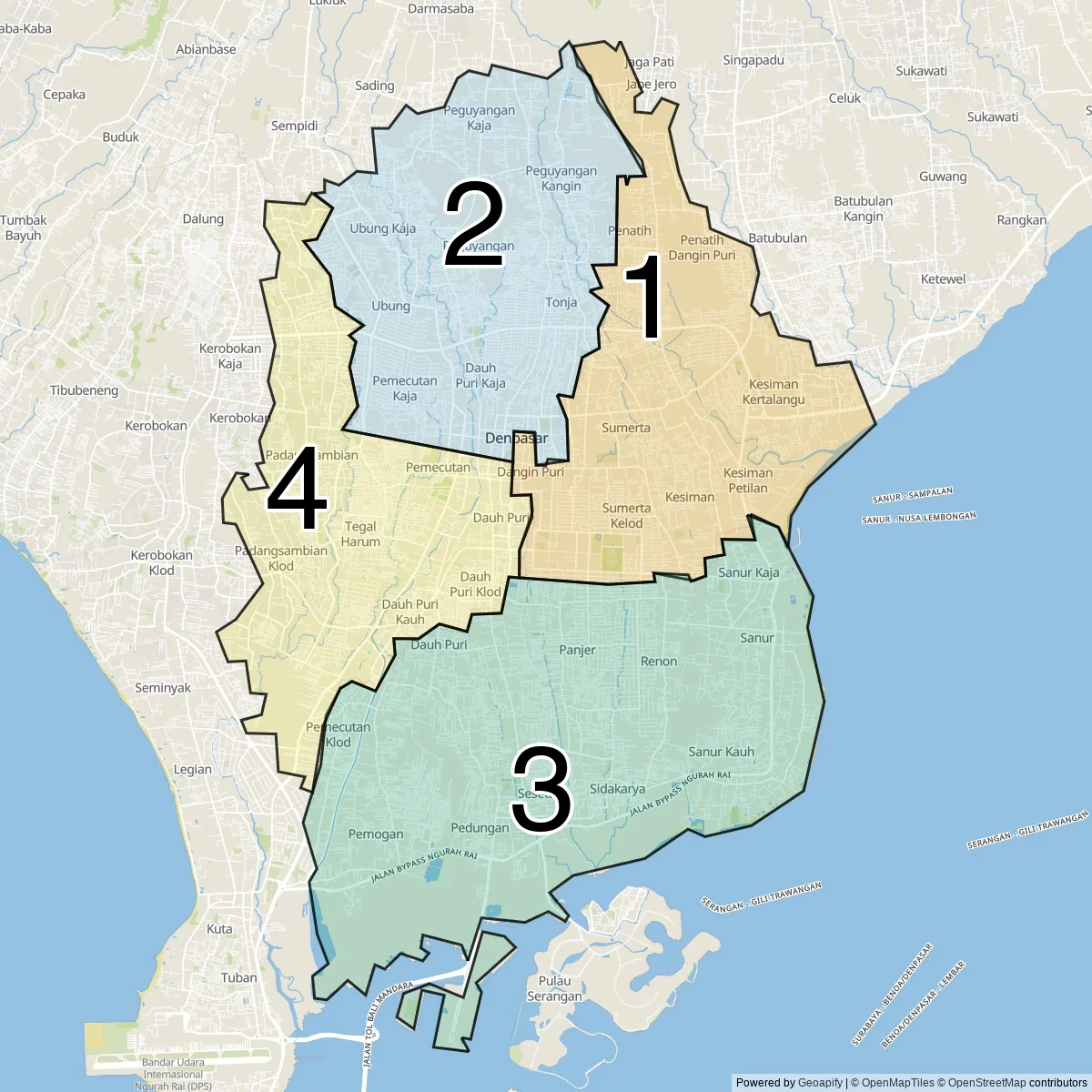
Denpasar is divided into 4 subdistricts. The map below shows their official OSM boundaries, colour-coded to match the table — a quick way to orient yourself before zooming in on individual sights.
| # | Kecamatan |
|---|---|
| 1 | Denpasar Timur · East Denpasar |
| 2 | Denpasar Utara · North Denpasar |
| 3 | Denpasar Selatan · South Denpasar |
| 4 | Denpasar Barat |
Frequently Asked Questions About Visiting Denpasar
Do I need a visa to visit Denpasar?
Probably not for short stays. Citizens of around 90 countries — including the US, UK, EU member states, Canada, Australia, Japan, South Korea, Singapore, Malaysia, and most of ASEAN — can apply for a Visa on Arrival (VoA) at Bali’s Ngurah Rai International Airport for stays up to 30 days, extendable once for another 30 days. The fee is 500,000 IDR (~$35) and can also be applied for online in advance via the official e-VoA portal at molina.imigrasi.go.id. Citizens of 9 ASEAN nations enter visa-free for 30 days. Long stays: Indonesia’s new “Second Home” visa (5–10 years) and the Bali-targeted Investor KITAS serve digital nomads and retirees. Always check current rules at the Indonesian Directorate General of Immigration 4–6 weeks before travel. Passport must have at least 6 months remaining validity.
Is Denpasar safe for tourists?
Denpasar is generally safe for tourists. The US State Department rates Indonesia at “exercise increased caution” — primarily for general regional concerns rather than Bali-specific risks. Real risks in Bali: scooter accidents (Bali has Indonesia’s highest tourist motorbike-accident rate; many travel insurance policies don’t cover unlicensed motorbike riding); petty theft from beach bags and motorbike-snatching of phones in Kuta and central Denpasar; monkey theft at temple sites with monkey forests; the rare arak (local rice spirit) methanol poisoning at unlicensed bars (drink only sealed bottled spirits at reputable venues). Earthquake and volcanic risk: Bali is on the Pacific Ring of Fire; Mount Agung and Mount Batur are active; the 2017 Mount Agung eruption closed the airport for several days. Drug laws: Indonesia’s drug penalties are extreme — possession of small amounts can result in prison sentences; never trust offers from strangers.
How many days do I need in Denpasar (and Bali)?
Two days handles Denpasar itself; combined with Bali’s broader sights, 7–10 days is the practical minimum to do the island justice. A solid 7-day Bali plan with Denpasar base: Day 1 — Denpasar city center (Puputan Square + Bali Museum + traditional markets); Day 2 — Sanur Beach + Pura Sakenan + sunrise photography; Day 3 — Ubud day trip (Sacred Monkey Forest + Tegalalang rice terraces + Goa Gajah elephant cave); Day 4 — Mount Batur sunrise hike + hot springs; Day 5 — eastern Bali (Tirta Empul + Pura Besakih); Day 6 — Nusa Penida day trip (Kelingking Beach + Angel’s Billabong); Day 7 — Tanah Lot temple sunset + farewell dinner. Add days for surfing, the Gilis, or Lombok extension trips.
What’s the best area to stay in Denpasar / Bali?
Most international visitors don’t actually stay in Denpasar proper — Bali’s tourist accommodation is concentrated in surrounding areas. Sanur (in southern Denpasar) — the calm, family-oriented beach choice; sunrise-facing beaches, traditional Balinese-style hotels, lower prices than Kuta; $50–250/night. Ubud (45 min northeast in Gianyar) — the cultural-and-nature heart; rice terraces, yoga retreats, art galleries, vegetarian dining; the Eat Pray Love crowd; $40–500+/night. Seminyak/Canggu (in Badung Regency) — the trendy beach-and-nightlife choice; surf spots, beach clubs, designer boutiques; popular with digital nomads; $80–1,000+/night. Nusa Dua — the upscale all-inclusive resort enclave; private beach, golf, family resorts; $200–2,000/night. Skip: Kuta itself for first-time visitors unless surfing or partying is the priority.
How much does it cost to visit Denpasar’s major sights?
Denpasar and Bali sights are genuinely inexpensive. Bali Museum: ~50,000 IDR. Pura Jagatnatha Temple: free (donations expected). Pura Maospahit: free with sarong rental ~10,000 IDR. Monumen Perjuangan Rakyat Bali: ~10,000 IDR. Puputan Square: free. Bali Arts Festival (June): mostly free events at Taman Werdhi Budaya. Beyond Denpasar: Sacred Monkey Forest Ubud: 80,000 IDR; Tegalalang Rice Terraces: ~25,000 IDR plus optional photo-spot tips; Pura Besakih (Mother Temple): 60,000 IDR; Tanah Lot: 75,000 IDR; Nusa Penida day trip: 800,000–1,500,000 IDR with private driver and boat. Mount Batur sunrise hike: 500,000–800,000 IDR per person guided. Spa massage: 100,000–250,000 IDR for 60-minute traditional Balinese massage.
Should I drink the tap water in Denpasar?
No — tap water across Bali is not safe for foreign visitors. Always use sealed bottled water (3,000–10,000 IDR per liter at convenience stores; major brands include Aqua, Le Minerale, Pristine) for drinking and brushing teeth. Major hotel restaurants and reputable establishments use filtered water and ice — generally safe. Reusable filter bottles (LifeStraw, Grayl) work well in Bali and reduce plastic waste — and the “Refill Bali” initiative provides free filtered-water refill stations across central Denpasar, Ubud, and Sanur. The CDC traveler health page recommends bottled or filtered water for Indonesia. Tap water is fine for showering. Bali Belly — traveler’s diarrhea — is genuinely common; eat at busy, established restaurants where turnover keeps food fresh.
What about Balinese culture and respectful temple visits?
Bali is the only Hindu-majority province in the world’s largest Muslim country, and the local culture is deeply religious. Temple visits require specific etiquette. Dress code: a sarong and sash (selendang) are mandatory at all temple entries — most major temples provide loaner sarongs at the entrance, often included in the entry fee or for a small additional rental (10,000 IDR). Cover shoulders and knees. Menstruating women: traditionally not allowed inside the inner sanctum (some temples post signs; respect this even if not enforced). Photography: generally permitted in outer courtyards but not during ceremonies; ask before photographing worshippers. Don’t step on offerings (canang sari) placed on sidewalks throughout the day — these small bamboo trays of flowers and food are religious offerings and stepping on them is genuinely offensive. Climbing on temple structures: forbidden, including statues — multiple tourist incidents have triggered local outrage. Nyepi (Balinese New Year, March): the entire island shuts down for 24 hours of silence — flights, restaurants, and even hotel pool service stop; visitors must remain inside their accommodations. Plan accordingly if visiting in March.
Is tipping expected in Denpasar / Bali?
Tipping is not deeply rooted in Indonesian culture but has become increasingly common in tourist-facing areas. Restaurants: 10% in cash for sit-down service if no service charge (“service charge” or “+/+”) is added; many tourist restaurants automatically add 10% service + 10% PB1 government tax — check the bill carefully. Hotel porters: 10,000–20,000 IDR per bag at upscale hotels. Hotel housekeeping: 10,000–20,000 IDR per night left at end of stay. Spa/massage: 20,000–50,000 IDR for traditional 60-minute massage; 50,000–100,000 IDR for upscale resort spa. Tour guides and drivers: 50,000–150,000 IDR per person per day for half-day; more for full private day. Taxi/Grab: round up to nearest 5,000 IDR; not strictly required. Beach hawkers: agreed price only; no tip expected. Temple priests: small donations (10,000–50,000 IDR) appropriate for guidance or special blessings; never required. Tip in Indonesian rupiah; small notes appreciated.
Education & Notable People
Denpasar is Bali’s education center, hosting major institutions: Udayana University (the largest university in Eastern Indonesia, with the main campus 8 km south in Jimbaran), Indonesian Arts Institute (ISI Denpasar), Universitas Mahasaraswati, and Universitas Pendidikan Nasional (UNDIKNAS). These universities serve approximately 60,000 students.
Notable figures from Denpasar include Maria Natalia Londa (b. 1990), an Olympic long-jump champion; Joey Alexander (b. 2003), a Grammy-nominated jazz piano prodigy who began performing internationally at age 11; and the late I Ketut Mario (1897–1968), the legendary Balinese dancer who developed the kebyar duduk dance form.
Sister Cities & International Relations
Denpasar maintains sister-city relationships with Palembang (Indonesia), Veracruz (Mexico), Las Palmas de Gran Canaria (Spain), Phuket (Thailand), and Haikou (China). These relationships facilitate cultural exchange and tourism cooperation. In 2017, Denpasar (combined with greater Bali) welcomed 6.2 million international visitors — ranking 32nd among the world’s most-visited cities.
Denpasar rewards travelers who treat Bali as more than its beach resorts. Two days for the city center (Puputan Square + Bali Museum + Pura Jagatnatha + traditional markets), two days for Sanur and the surrounding southern beaches, three to four days for the Ubud and Sidemen highlands. The city’s authentic Balinese culture beats stronger here than in any of the more famous tourist neighborhoods — and the food alone is worth the visit.
AFRIKA
Cairo Hurghada Johannesburg Marrakech
ASIA
Abu Dhabi Agra Antalya Bangkok Batam Beijing Bengaluru Cebu City Chiang Mai Chiba Chennai Da Nang Dammam Delhi Denpasar Dubai Fukuoka Guangzhou Guilin Ha Long Hanoi Ho Chi Minh City Jakarta Jaipur Johor Bahru Kolkata Krabi Kuala Lumpur Kyoto Macau Mecca Medina Mugla Mumbai Osaka Pattaya Penang Phuket Riyadh Seoul Shanghai Shenzhen Singapore Taipei Tokyo Zhuhai
EUROPE
Amsterdam Athens Barcelona Berlin Brussels Budapest Copenhagen Dublin Florence Frankfurt am Main Heraklion Krakow Lisbon London Madrid Milan Munich Nice Paris Porto Prague Rhodes Rome Stockholm Venice Vienna Warsaw
NORTH AMERICA
Cancun Las Vegas Los Angeles Miami New York City Orlando San Francisco Toronto Vancouver
SOUTH AMERICA
Buenos Aires Lima Rio De Janeiro
OCEANIA
Auckland Honolulu Melbourne Sydney