
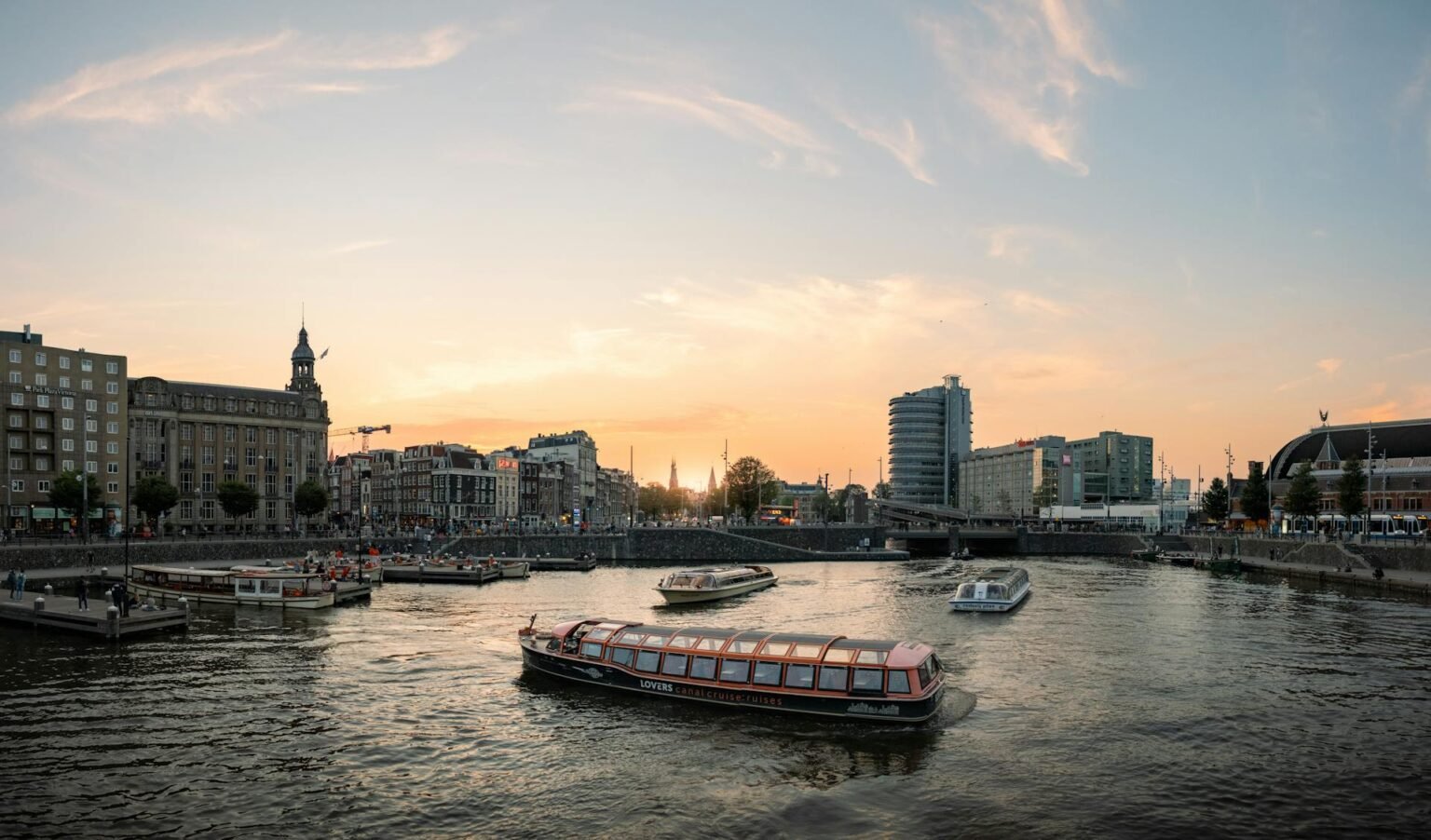
fab_photos, pixabay
Amsterdam, the vibrant capital of the Netherlands, is a city where historic charm seamlessly blends with modern energy. Built around a network of UNESCO-listed canals and home to world-class museums, this enchanting destination welcomes nearly 21 million visitors annually with its unique mix of 17th-century architecture, progressive culture, and that distinctly Dutch spirit of gezelligheid. From cycling along cobblestone streets to exploring the masterpieces of Rembrandt and Van Gogh, Amsterdam offers an unforgettable experience in one of Europe’s most captivating capitals.
Amsterdam at a Glance: Essential Facts for Travelers
| Location | North Holland Province, Netherlands |
|---|---|
| Coordinates | 52°22′N, 4°53′E |
| Population | 935,793 (January 2025) |
| Metro Area | Over 1.4 million |
| Area | 243.65 km² (including 55+ km² of waterways) |
| Elevation | Approximately 40cm below sea level |
| Time Zone | Central European Time (CET) |
| Calling Codes | 020 (main city), 0294 (Waterland region) |
| Postal Codes | 1011-1109 (central), 1381-1384 (southeast) |
| Known For | Canals, museums, cycling culture, liberal policies |
| Current Mayor | Femke Halsema (GroenLinks, since 2018) |
| Official Website | amsterdam.nl |
| Canals | 165 waterways with over 1,500 bridges |
| UNESCO Status | Canal Belt (Grachtengordel) listed since 2010 |
Upcoming Events in Amsterdam
| Date | Title | Details |
|---|---|---|
| 2026-09-11 to 2027-01-17 | Yayoi Kusama Retrospective at the Stedelijk Museum | The Stedelijk Museum stages a landmark Yayoi Kusama retrospective, drawing on more than seven decades of the Japanese artist’s work, from early paintings and collages to polka-dot environments, mirrored infinity rooms and monumental installations. Running through 17 January 2027, it is the season’s biggest contemporary-art draw on Museumplein. The museum is open daily; ticket prices vary and timed entry is strongly advised, as busy weekends sell out. Expect queues for the immersive mirror rooms, the show’s most photographed highlight. [Source] |
| 2026-09-19 to 2026-09-20 | Dam tot Damloop | The Dam tot Damloop is one of the Netherlands’ biggest running events, held annually in mid-September over a scenic ten English miles from Amsterdam to Zaandam, passing through the IJ tunnel. Tens of thousands of participants, from elite athletes to amateurs, take part across the main race and accompanying events, watched by huge crowds lining the route. A Saturday-evening city run precedes the Sunday main race. Spectating is free; entry requires prior registration, which sells out quickly. It is a festive celebration of running in and around the capital. [Source] |
| 2026-10-09 to 2027-01-17 | Willem de Kooning at the Rijksmuseum | The Rijksmuseum devotes a major retrospective to Willem de Kooning, the Rotterdam-born painter who became a defining figure of American Abstract Expressionism. Around 120 works on loan from leading international collections span his whole career, from early figurative work to the celebrated Women paintings and later abstractions. It is the museum’s blockbuster of the autumn season and pairs naturally with the Stedelijk’s Kusama show nearby. Open daily; ticket prices vary, and booking a timed slot is recommended for weekends and school holidays. [Source] |
| 2026-10-10 to 2026-10-25 | Cinekid Festival 2026 | Cinekid, the Netherlands’ big film and media festival for young audiences, fills the autumn school holidays with premieres, children’s films, series and hands-on workshops. The main hub is Pathe Amsterdam Noord, with dozens of additional locations across the country. Programming targets children from toddlers to teens and their families, and includes an interactive MediaLab where kids experiment with games and new technology. Ticket prices vary by screening and activity, and some workshops are free. Book popular premieres early, as family showings fill up fast. [Source] |
| 2026-10-21 to 2026-10-25 | Amsterdam Dance Event (ADE) 2026 | Amsterdam Dance Event is the world’s leading electronic music festival and conference, taking over the city for five days in October. Hundreds of thousands of visitors attend club nights, concerts and daytime events at venues across Amsterdam, while a professional programme brings together artists, DJs, labels and industry figures for talks and networking. From underground clubs to major halls, it turns the whole city into a hub of dance music. Tickets range from single events to full passes; check the official site for confirmed 2026 dates and line-up. [Source] |
| 2026-11-01 to 2026-11-08 | PAN Amsterdam 2026 | PAN Amsterdam, the national fair for art, antiques and design, holds its 39th edition in the RAI convention centre. Vetted dealers and galleries offer everything from Old Master paintings and antique silver to modern design and contemporary art, with every object checked by independent experts before the doors open. After an invitation-only preview on 31 October, the fair is open to the public daily through 8 November. Ticket prices vary; collectors, casual browsers and interior lovers all find pieces at widely different price levels. [Source] |
| 2026-11-07 | Museumnacht Amsterdam 2026 | For one night, more than 70 Amsterdam museums stay open from 19:00 until 02:00 with performances, DJ sets, tours and parties among the collections. A single ticket gives entry to every participating venue, from the Rijksmuseum and the Van Gogh Museum to tiny hidden gems, and the late-night programme is aimed squarely at a young crowd. This is the 26th edition, and tickets traditionally sell out well in advance. Prices vary; plan a route beforehand, because queues build at the most popular locations. [Source] |
City News in Amsterdam – last 14 days
| Date | Category | Headline | Details |
|---|---|---|---|
| 2026-09-14 | Business | Energy network charges to rise 19 percent next year | Dutch households will pay an average of about 141 euros more next year for their electricity and gas network connections, an increase of roughly 19 percent, the regulator has announced. For Amsterdam households the extra network costs come to around 140 euros on average, Het Parool reports. The charges cover maintaining and expanding the grid, which operators are reinforcing as demand for electricity keeps growing. The rise lands on top of energy bills that remain a sore point for many households. [Source] |
| 2026-09-14 | Business | Hospitality chief says Amsterdam is chasing away its best visitors | Pim Evers, the outspoken chairman of Amsterdam’s hospitality trade association, argues that the city’s tourism policy is driving away precisely the visitors who spend the most and cause the least nuisance. According to Evers, measures meant to curb overtourism end up hurting the hotels, restaurants and cultural venues that depend on higher-spending guests, while doing little about the actual troublemakers. His criticism feeds a running debate about how Amsterdam should balance liveability for residents with its visitor economy. [Source] |
| 2026-09-13 | Culture | ADE party cancelled after uproar over DJ accused of rape | A party that was due to take place during Amsterdam Dance Event has been cancelled following public outcry over the planned appearance of a DJ who has been accused of rape. Organisers pulled the event after criticism swelled. The cancellation comes as the city prepares for ADE from 21 to 25 October, when hundreds of club nights and industry sessions take over venues across Amsterdam, and it sharpens the debate about safety and accountability in the dance music scene. [Source] |
| 2026-09-13 | Culture | Theo d’Or awards honour the best of Dutch theatre | At the annual Gala of Dutch Theatre on Sunday evening, the VSCD stage awards were presented, including the three Theo d’Or acting prizes regarded as the Dutch equivalent of the Oscars for stage actors. Keja Klaasje Kwestro took the award for most impressive leading role for her performance in F*CK LOLITA, a production praised for sending the audience into every corner of the theatre hall. The gala traditionally marks the festive opening of the new Dutch theatre season. [Source] |
| 2026-09-13 | Public safety | Car ends up in the water at Oosterdokskade | A car went into the water at the Oosterdokskade, the quay along the Oosterdok basin a short walk from Amsterdam Central Station and the OBA public library. Emergency services responded and the driver was taken to hospital. The circumstances were unclear in early reporting. The quay is a busy spot for pedestrians and cyclists moving between the station and the eastern city centre, and incidents involving vehicles and open water remain a recurring hazard along Amsterdam’s quaysides. [Source] |
| 2026-09-12 | Local affairs | Tens of thousands march for the climate ahead of budget day | Tens of thousands of people marched through Amsterdam on Saturday to call on the government to end its reliance on fossil fuels. The demonstration was deliberately timed, coming just days before the cabinet presents next year’s budget on Prinsjesdag, the formal opening of the parliamentary year. Campaigners want a faster move away from oil and gas reflected in the government’s spending plans, and the march underlined how climate policy will shadow the coming budget debates in The Hague. [Source] |
| 2026-09-12 | Local affairs | Wolf seen in ‘t Gooi as Waternet prepares the dunes | After a wolf sighting in the ‘t Gooi region east of Amsterdam, water company Waternet says it is preparing for the animal’s possible arrival in the Amsterdamse Waterleidingduinen. The dune reserve south-west of the city, where much of Amsterdam’s drinking water is produced, is home to a famously large population of fallow deer, an obvious food source that could attract a wolf. Wolves have been re-establishing themselves in the Netherlands for several years, gradually moving into new regions. [Source] |
| 2026-09-10 | Public safety | Drug lab found in Amsterdam-Noord home after stench complaint | A report about a persistent foul smell led to the discovery of a drug laboratory inside a home in Amsterdam-Noord. Following the find, the property has been ordered closed for three months, a measure the city regularly uses to break the link between an address and drug crime and to reassure neighbours. Residential drug labs pose serious fire and chemical hazards for surrounding homes, which is why odour reports of this kind are treated with urgency. [Source] |
| 2026-09-09 | Public transport | Transport strike: Noord restaurants launch their own ferry across the IJ | During the nationwide public transport strike, restaurants in Amsterdam-Noord chartered their own boat across the IJ, serving oysters on board and picking up stranded travellers along the way. With the regular ferries out of action, many cyclists instead took the long detour over the Schellingwouderbrug, reviving calls for at least one extra fixed link across the water. The strike disrupted journeys across the country, but in Amsterdam it also produced this burst of hospitality-driven improvisation. [Source] |
| 2026-09-07 | Public safety | Woman injured in street stabbing in Amsterdam-Noord | A woman was wounded in a stabbing on a street in Amsterdam-Noord. Police found a suspect nearby with serious injuries and made an arrest; the suspect was taken away for treatment. The exact sequence of events and the relationship between those involved were not clear from initial reporting. It was one of two stabbing incidents reported in the city within days, after another person was injured in the city centre a day earlier and two suspects were detained there. [Source] |
| 2026-09-06 | Local affairs | Boil-water advisory for 113 addresses in Amsterdam-Noord | Tap water at and around the Elzenhagensingel in Amsterdam-Noord may be contaminated, and residents at 113 addresses have been advised to boil their tap water before drinking it or using it to prepare food. Such precautionary boil advisories are issued while the water company investigates and flushes the affected mains, and they typically stay in force until repeated samples come back clean. The Elzenhagensingel lies in the Elzenhagen district near Noord metro station. [Source] |
Amsterdam Events & City News Archive
Sources: Stedelijk Museum, Dam tot Damloop, art'otel Amsterdam art calendar, AmsterdamTips, Cinekid Festival, Amsterdam Dance Event, PAN Amsterdam, RAI Amsterdam
Weather Forecast for the Next 14 Days in Amsterdam
| Date | Weather | Max °F | Min °F | Rain mm |
|---|---|---|---|---|
| 2026-09-14 | 🌧️ | 69.8 °F | 58.5 °F | 0.4 mm |
| 2026-09-15 | 🌧️ | 72.3 °F | 62.1 °F | 0.1 mm |
| 2026-09-16 | 🌧️ | 64.9 °F | 58.2 °F | 8.3 mm |
| 2026-09-17 | 🌧️ | 62.6 °F | 53.3 °F | 3.3 mm |
| 2026-09-18 | 🌧️ | 63.3 °F | 54.1 °F | 2.7 mm |
| 2026-09-19 | 🌧️ | 68.1 °F | 57.9 °F | 3.9 mm |
| 2026-09-20 | ☁️ | 64.3 °F | 56.0 °F | 0.0 mm |
| 2026-09-21 | ☁️ | 65.3 °F | 55.9 °F | 0.0 mm |
| 2026-09-22 | 🌧️ | 67.9 °F | 60.7 °F | 2.4 mm |
| 2026-09-23 | 🌧️ | 70.4 °F | 60.4 °F | 1.8 mm |
| 2026-09-24 | ⛅ | 68.7 °F | 55.0 °F | 0.0 mm |
| 2026-09-25 | ☁️ | 67.2 °F | 52.9 °F | 0.0 mm |
| 2026-09-26 | 🌧️ | 61.7 °F | 50.2 °F | 12.6 mm |
| 2026-09-27 | 🌧️ | 62.6 °F | 50.3 °F | 10.5 mm |
Amsterdam’s History
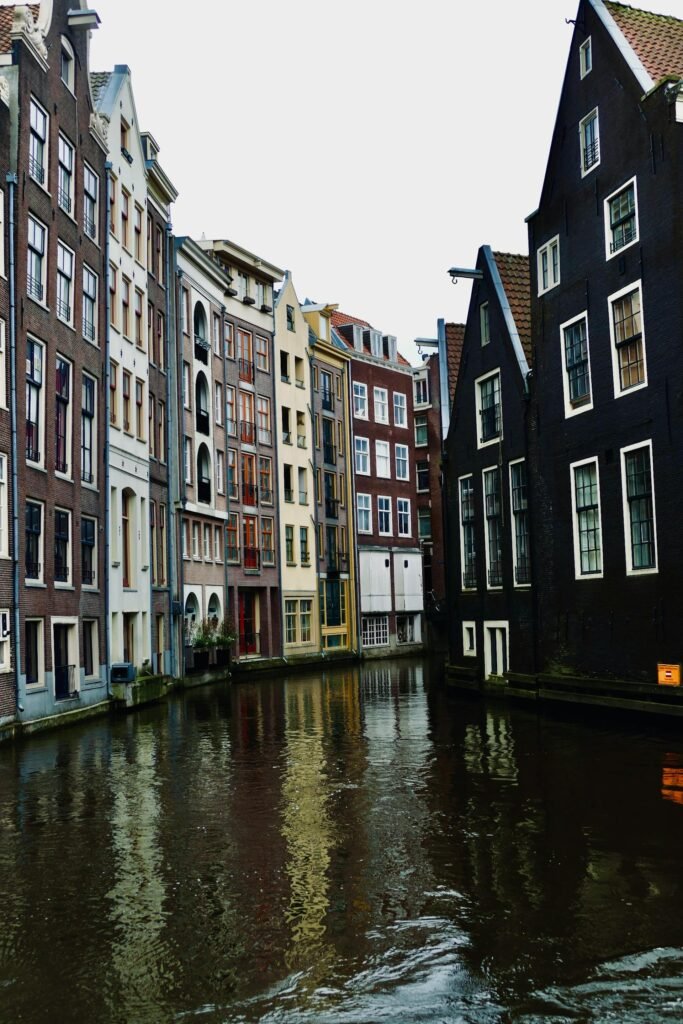
Amsterdam’s defining trick is that it built itself, literally, on top of marshland — millions of wooden pilings driven 18 meters into soggy ground keep the entire historic city floating above sea level. The architectural and political consequences of that fact have shaped the city for 800 years, from medieval fishing village to Dutch Golden Age superpower to the modern liberal capital you walk through today.
Medieval Origins: From Dam to Destiny
Amsterdam’s story begins in the 13th century as Amstelredam, a fishing village around a dam on the Amstel River. By 1230 about 500 fishermen had settled along this tidal inlet. The van Amstel family, medieval lords of the region, built their fortress Kasteel van Amstel after their original castle was destroyed by rebellious farmers in 1204. The crucial dam, built around 1270, transformed the Amstel’s widening bay into a thriving commercial hub — what would become Dam Square, still the city’s beating heart.
The city literally stands on engineering. Millions of wooden pilings, some driven 18 meters deep into the marshy ground, keep Amsterdam afloat. The Royal Palace alone rests on 13,659 wooden posts; Central Station sits on 8,600 concrete piles. The Dutch children’s song captures it: “Amsterdam, die grote stad, is gebouwd op palen” — Amsterdam, that great city, is built on piles.
Medieval Growth and Trade Dominance
By 1317, Amsterdam had secured its place in Holland’s county, gaining trading rights and city privileges. Strategic location made it a natural hub — particularly for salted herring from Sweden and beer from Hamburg, thanks to a 1323 monopoly that made Amsterdam the regional beer capital. The introduction of canal locks in 1347 was a quiet revolution: ships could now glide through with lowered masts instead of being dragged across the dam. Amsterdam weathered the Hooks and Cods War (1350–1490), a century-long power struggle where ambitious merchants allied with the Burgundian dukes. In 1433, Philip the Good brought the city under Burgundian rule, but the city’s merchant spirit remained intact.
Religious Upheaval and the Dutch Revolt
The 16th century brought drama. After 1492, Sephardic Jewish communities expelled from Spain found refuge in Amsterdam, later joined by Ashkenazi Jews from Poland — together creating the vibrant Jodenbuurt (Jewish Quarter) that defined a section of the city for the next 400 years. The Protestant Reformation sparked tensions that exploded into the Eighty Years’ War with Spain in 1566. Initially supporting Spain, Amsterdam dramatically switched sides in 1578 during the Alteratie — a political upheaval that saw pro-Spanish leaders literally pushed out on barges. Under William of Orange’s rebellion, the Oude Kerk became a Calvinist center while the city quietly maintained an unusual level of religious tolerance — Catholics worshipped in hidden chapels like Ons’ Lieve Heer op Solder, English refugees formed the first Baptist congregation in a Bakkerstraat bakery in 1609.
The Golden Age: Global Superpower
The 1648 Peace of Westphalia officially recognized the Dutch Republic, launching Amsterdam’s Golden Age. When Spain absorbed Portugal in 1580, Amsterdam launched its own spice expeditions; the legendary Dutch East India Company (VOC) formed in 1602, with over half its startup capital coming from Amsterdam residents (bakers to bankers). The Dutch West India Company established New Amsterdam in 1626 — the city later renamed Manhattan. By the mid-1600s, Amsterdam exploded from 40,000 residents in 1600 to over 210,000 by 1662. The Paleis op de Dam went up between 1648 and 1665 as a symbol of the era. Canals snaked through new neighborhoods, warehouses overflowed with Asian treasures, Dutch masters like Rembrandt and Vermeer redefined European art, and the world’s first modern stock exchange opened in Amsterdam.
Decline and Reinvention
Success bred envy, sparking three Anglo-Dutch naval wars (1652–1674). The “Disaster Year” of 1672 saw France and England attack simultaneously, while shipworms damaged dikes and cattle plague devastated exports. Amsterdam lost its global trade supremacy but reinvented itself as the world’s financial nerve center — Dutch bankers funded European royal courts through innovative loan systems. The merchant economy that had built the city pivoted to financial services, a transition that defines the city’s economic DNA to this day.
Modern Transformation
The late 18th century brought Enlightenment ideas and political upheaval. The Batavian Republic (1795) and Louis Bonaparte’s Kingdom of Holland (1806) briefly made Amsterdam the Dutch capital, though poverty persisted until 1813 when citizens expelled French troops. The city’s industrial-era revival began in 1876 with the Noordzeekanaal, providing direct access to the North Sea. World War II tested Amsterdam — the February Strike of 1941 was a brave protest against Nazi deportations of the city’s Jewish population. Queen Wilhelmina honored that courage in 1947 by adding the motto “Heldhaftig, Vastberaden, Barmhartig” (Heroic, Determined, Merciful) to the city’s coat of arms. Today Amsterdam is a working European capital that has remained both globally influential and stubbornly itself — a city of 880,000 within a metro of 2.5 million, still defined by the canals dug in the 17th century.
Geography, Climate & Best Time to Visit Amsterdam
Geographic Setting
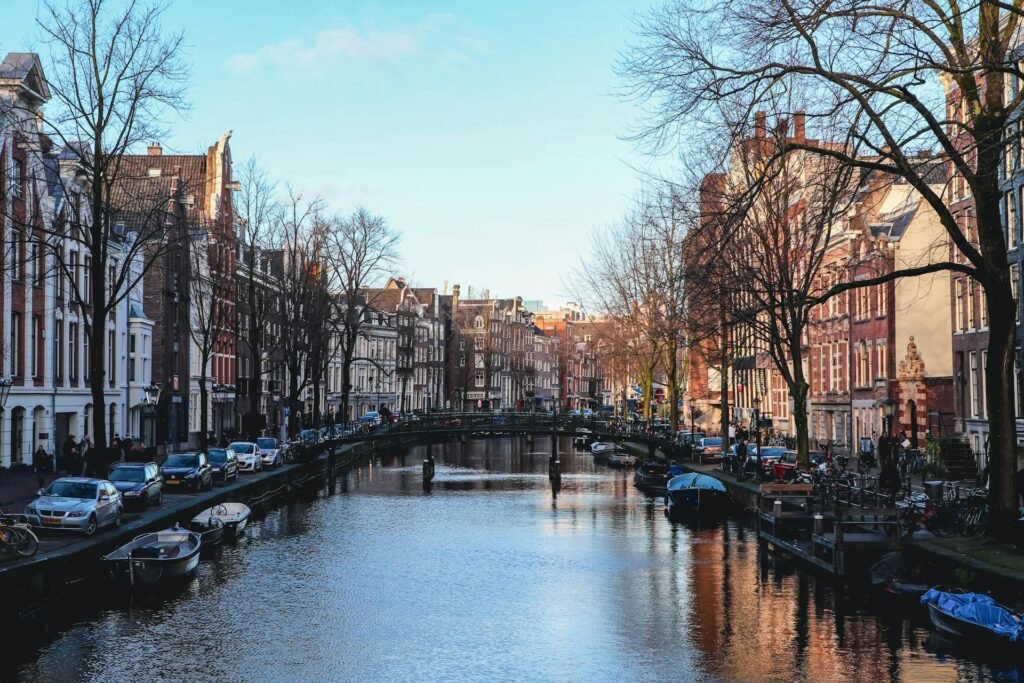
Amsterdam sits in North Holland province where the Amstel River meets the IJ waterway, approximately 40 centimeters below sea level. The port connects to the North Sea via the 21-kilometer Noordzeekanaal; the Amsterdam-Rhine Canal links the city to Europe’s inland waterways. The historic center follows a distinctive concentric canal-ring pattern, with the UNESCO-listed Grachtengordel (Canal Belt) forming the heart of the urban landscape. The city covers 243.65 square kilometers, with over 55 km² consisting of waterways. The signature look — 165 canals crossed by more than 1,500 bridges, lined with 7,000 historic merchant houses dating from the 16th–18th centuries — is what makes Amsterdam Amsterdam.
Climate Overview
Amsterdam has a temperate oceanic climate with mild summers and cool winters. Year-round humidity averages 81.5%, creating the lush greenery and characteristic misty mornings. Summer (June–August) sits at 74–78% humidity; winter pushes 88%. Rainfall is distributed across the year — there is no dry season — but the rain typically arrives in short bursts rather than all-day downpours.
| Month | High (°C) | Low (°C) | Rainfall (mm) |
|---|---|---|---|
| January | 6.9 | 1.9 | 62 |
| February | 8.6 | 4.5 | 55 |
| March | 11.3 | 7.7 | 48 |
| April | 14.7 | 11.0 | 40 |
| May | 19.2 | 13.4 | 58 |
| June | 20.3 | 11.3 | 65 |
| July | 22.5 | 13.5 | 73 |
| August | 22.4 | 13.4 | 99 |
| September | 19.2 | 11.0 | 78 |
| October | 14.7 | 7.7 | 85 |
| November | 10.0 | 4.5 | 81 |
| December | 6.9 | 1.9 | 71 |
Best Time to Visit
Spring (March–May): mild temperatures (10–19°C), light crowds. April is the driest month at just 40 mm rainfall — and the tulip fields outside the city peak then. Summer (June–August): warmest weather with July at 22.5°C; perfect for canal cruises and outdoor cafés. August is the rainiest month (99 mm) but also brings Pride Amsterdam. Summer nights stay bright until nearly 11 PM thanks to the northern latitude. Autumn (September–November): crisp air and golden light; great for photography. Winter (December–February): cool but cozy (6–9°C) and ideal for museum visits and warming up in traditional brown cafés. Light snow occasionally adds magical charm to the canals.
Amsterdam’s Districts & Neighborhoods
Since 2010, Amsterdam has been organized into eight main districts; the charming town of Weesp joined as the ninth in 2022. For visitors, six or seven districts really matter, and where you stay shapes the trip’s character.
Amsterdam-Centrum: The Historic Heart
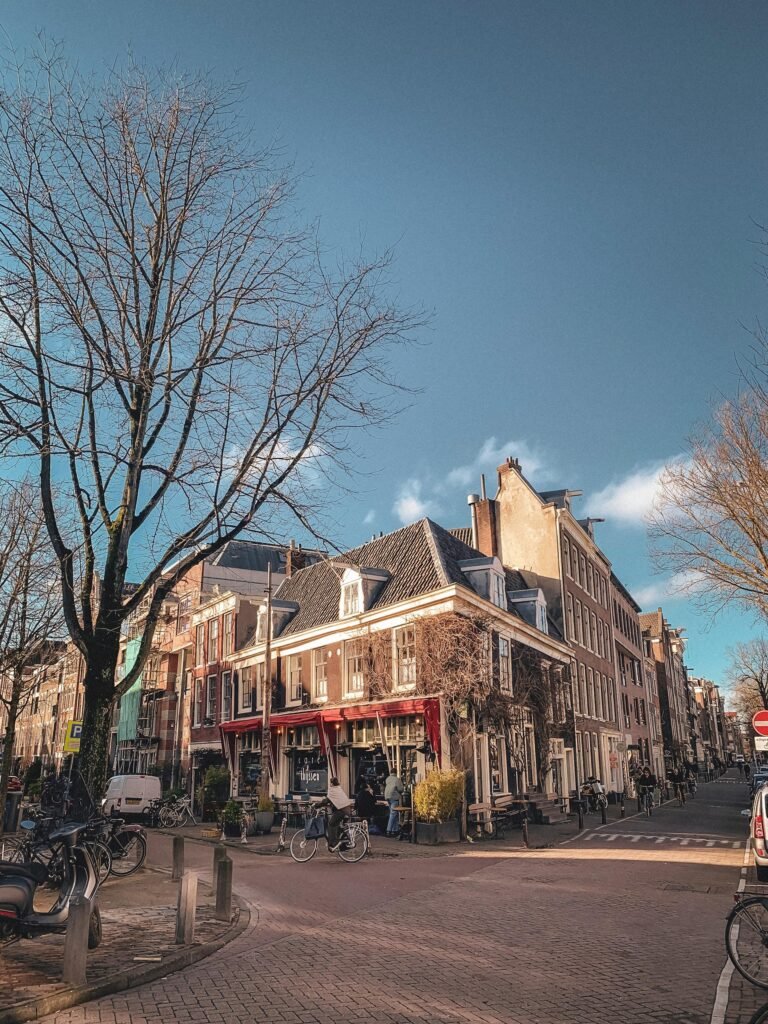
The tourist epicenter — cobblestone streets, iconic canals, world-famous attractions. Key neighborhoods include the trendy Jordaan, the elegant Grachtengordel-West (Canal Ring), and the bustling Haarlemmerbuurt. This is where you’ll find the Anne Frank House, Royal Palace, Dam Square, and countless cozy brown cafés. Where to stay: perfect for first-time visitors prioritizing walking access to major sights; expect higher prices and tourist crowds.
Amsterdam-Noord: Industrial Chic & Waterfront Vibes
Once industrial shipyards, now increasingly hip with art spaces, waterfront dining, and the striking EYE Film Institute. Includes Oostzanerwerf, IJplein/Vogelbuurt, and the peaceful Waterland region for nature lovers. Free ferries from Centraal Station make this 4-minute hop a delightful short trip. Where to stay: modern accommodations with easy ferry access and stunning IJ River views.
Amsterdam-Oost: Trendy and Eclectic
The creative quarter — vibrant Dappermarkt, hip Oostelijk Havengebied waterfront, modern IJburg island living. Diverse communities and excellent restaurants representing cuisines from across the world. Where to stay: ideal for culture enthusiasts and foodies wanting authentic local life with good central connections.
Amsterdam-Zuid: Elegant and Lively
The sophisticated district housing the Museumkwartier (Van Gogh Museum, Rijksmuseum, Stedelijk Museum), the foodie paradise of De Pijp, and the modern business hub of Zuidas. Vondelpark provides green space. Where to stay: museum lovers and travelers who prefer upscale accommodations near cultural attractions.
Amsterdam-West: Quirky and Creative
Features the innovative Houthavens architecture, the charming Frederik Hendrikbuurt, and Westerpark with its cultural venues. A great mix of residential charm and creative energy. Where to stay: travelers wanting a local neighborhood feel with easy access to both the center and green spaces.
Amsterdam Nieuw-West: Modern Meets Green
Includes Slotermeer, Osdorp with its parks and lakes, and Geuzenveld. More residential and affordable, with good public transport connections and plenty of green space. Where to stay: budget-conscious travelers seeking authentic neighborhood atmosphere.
Amsterdam-Zuidoost: Culture & Green Spaces
Home to Bijlmer Centrum, Driemond village, Amstel III/Bullewijk. Multicultural communities, the Johan Cruyff Arena, and beautiful Gaasperpark. Where to stay: sports fans and travelers seeking diverse cultural experiences away from tourist crowds.
Amsterdam-Weesp: A Charming Newcomer
The newest district — Weesp’s historic town center, Bloemendalerpolder, and notable architecture in Hogewey. A quieter alternative with easy train connections to Amsterdam. Where to stay: travelers wanting small-town charm with big-city access.
Top Things to Do in Amsterdam
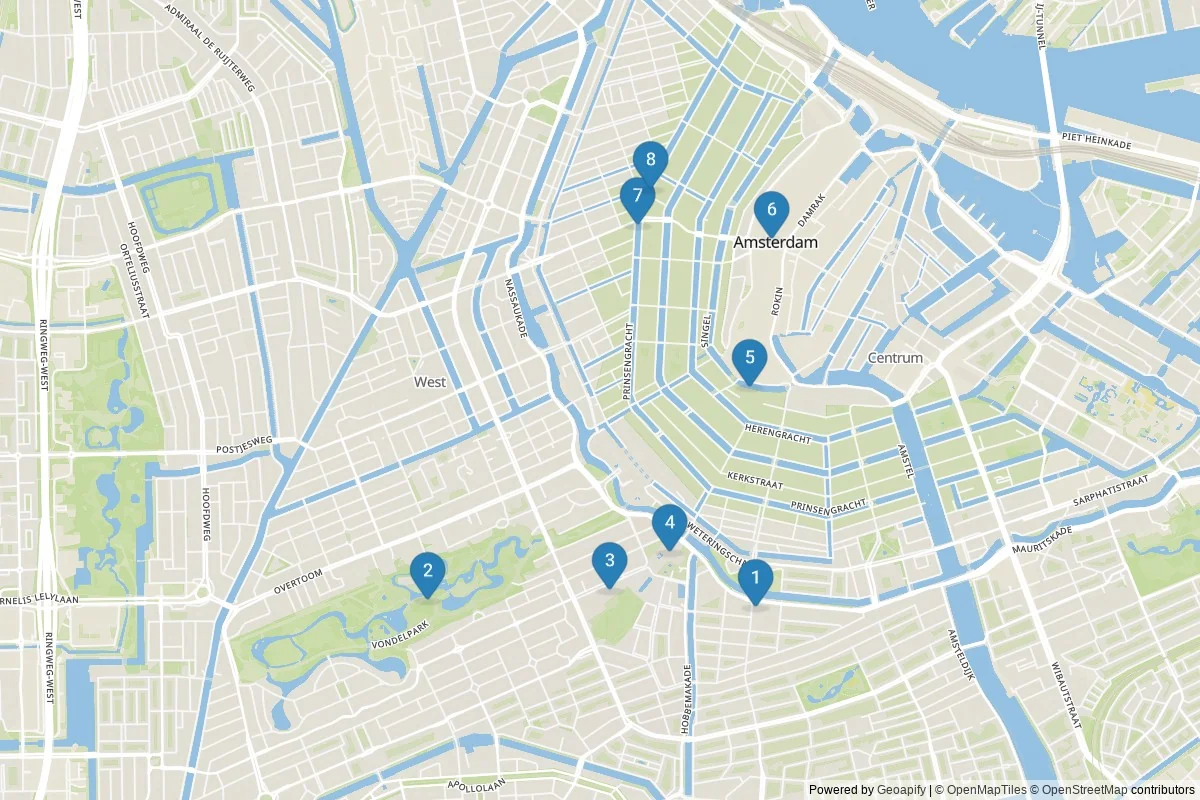
| # | Sight | Cluster | Type | Time | Entry | Best |
|---|---|---|---|---|---|---|
| 1 | Heineken Experience | Central | Brewery tour | ~1.5 hrs | €23 | Afternoon |
| 2 | Vondelpark | Central | Urban park | ~1 hr | Free | Afternoon |
| 3 | Van Gogh Museum | Central | Art museum | ~2 hrs | €20 | Morning |
| 4 | Rijksmuseum | Central | Art museum | ~3 hrs | €22.50 | Morning |
| 5 | Bloemenmarkt (Flower Mkt.) | Central | Market | ~30 min | Free | Afternoon |
| 6 | Dam Square & Royal Palace | Central | Square & palace | ~1 hr | €12.50 | Morning |
| 7 | Canal Cruise (Jordaan) | Central | Boat tour | ~1 hr | €18 | Sunset |
| 8 | Anne Frank House | Central | Historic site | ~1.5 hrs | €16 | Morning |
| 🚗 | Day Trip: Zaanse Schans | Day trip | Day trip | ½ day | €13 combi | Morning |
| 🚗 | Day Trip: Keukenhof (Mar–May) | Day trip | Day trip | ½ day | €19.50 | Morning |
World-Class Museums
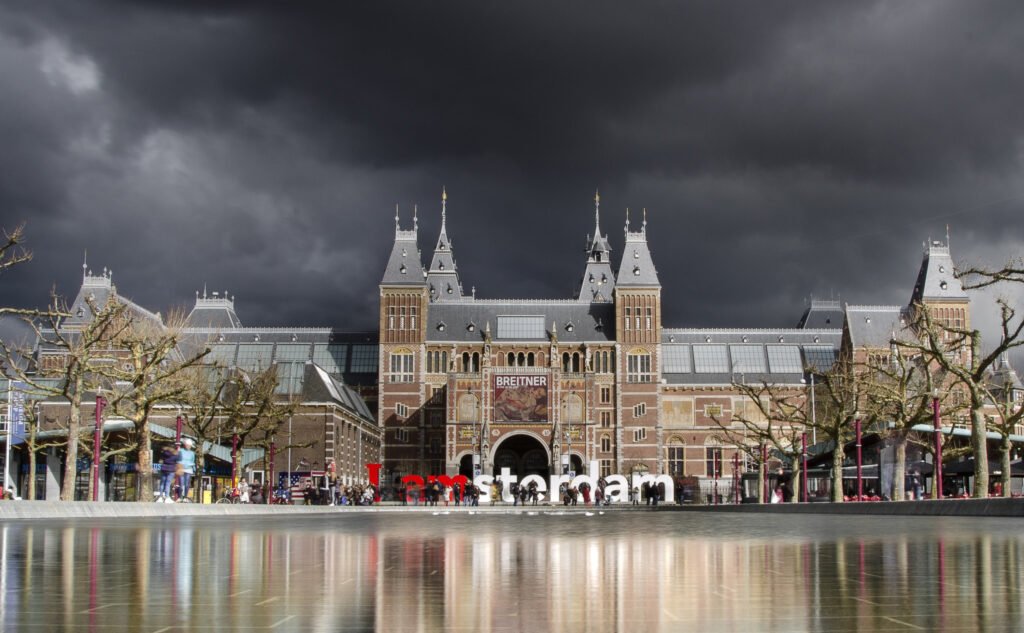
The Rijksmuseum (ClickerHappy, pixabay)
Rijksmuseum: the crown jewel of Dutch art, housing Rembrandt’s Night Watch and an unparalleled collection of Golden Age masterpieces in a stunning Gothic Revival building (book online to skip the queue). Van Gogh Museum: the world’s largest collection of Vincent van Gogh’s works, including The Starry Night and Sunflowers, plus works by his contemporaries. Anne Frank House: a deeply moving experience in the actual secret annex where Anne Frank wrote her famous diary; tickets sell out 6 weeks ahead — book the moment your dates are firm. Stedelijk Museum: Amsterdam’s premier modern art museum with works by Mondrian, Warhol, and contemporary artists. Museum Het Rembrandthuis: explore Rembrandt’s former home and studio, complete with period furnishings and his etching workshop. Het Scheepvaartmuseum: Amsterdam’s maritime heritage aboard a replica 17th-century ship and interactive Dutch naval history exhibits. NEMO Science Museum: hands-on science exhibits perfect for families, in a striking green building with panoramic city views from the rooftop.
Historic Landmarks & Architecture
Dam Square: the city’s central plaza featuring the Royal Palace (Paleis op de Dam), the National Monument commemorating WWII, and the historic Nieuwe Kerk. Begijnhof: a hidden 14th-century courtyard housing Amsterdam’s oldest wooden house (No. 34, dating to 1530) and a secret Catholic church. Westerkerk: climb the tower of this Protestant church (where Rembrandt is buried) for spectacular city views. Oude Kerk: Amsterdam’s oldest building (1306), strikingly situated in the heart of the Red Light District. Magere Brug: the iconic “Skinny Bridge” from 1670, beautifully illuminated at night. Munttoren: a historic mint tower along the Singel canal, famous for its carillon bells that chime every 15 minutes.
Canal Experiences
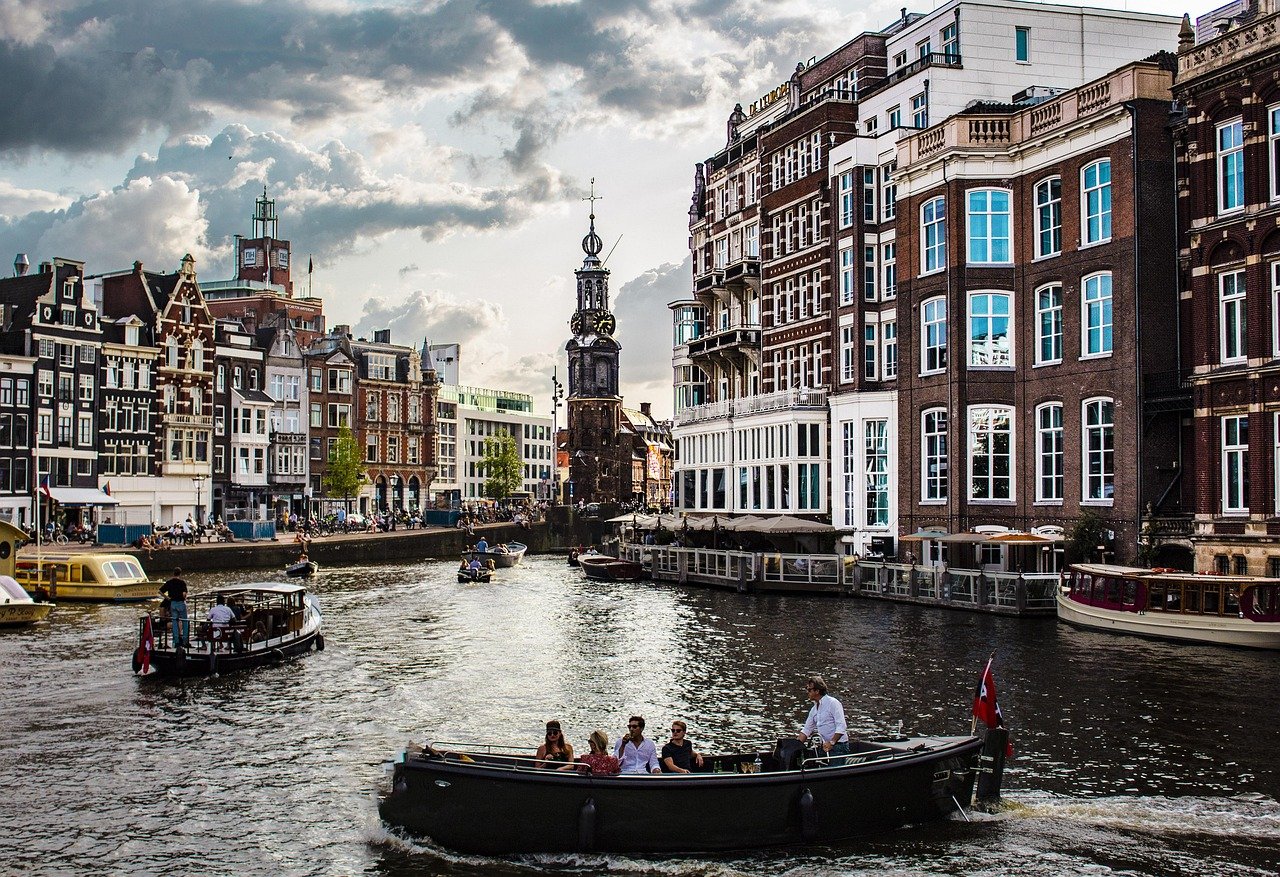
Amsterdam’s historic city center (monlaw, pixabay)
Canal Cruises: glide through the UNESCO-listed Grachtengordel on glass-topped boats — options range from one-hour sightseeing tours to romantic dinner cruises and small-electric-boat private rentals. Canal Ring Walking Tour: stroll along the Herengracht, Prinsengracht, and Keizersgracht to admire 17th-century merchant houses with their distinctive gabled facades. Houseboat Museum: experience life on Amsterdam’s waterways aboard a converted canal barge.
Parks & Green Spaces
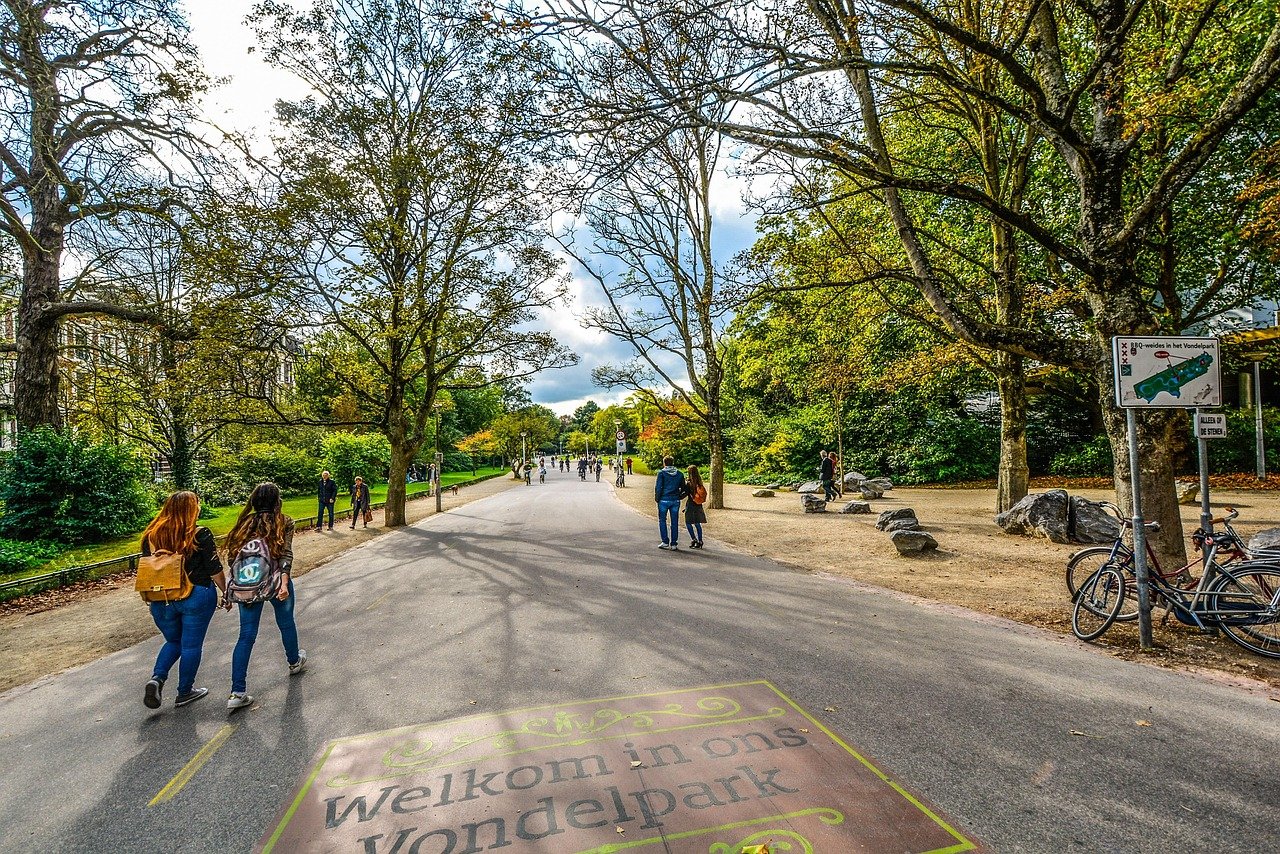
Vondelpark (user32212, pixabay)
Vondelpark: Amsterdam’s most famous park, perfect for picnics, open-air concerts in summer, and people-watching. Don’t miss the rose garden and the charming pavilions. Hortus Botanicus: one of the world’s oldest botanical gardens (1638), featuring tropical greenhouses and peaceful walking paths. Amstelpark: a flower lover’s paradise with seasonal blooms, a mini-golf course, and the historic Rieker Windmill. Westerpark: a trendy park with cultural venues, weekend markets, and excellent cafés.
Markets & Shopping
Albert Cuyp Market: Amsterdam’s most famous street market in De Pijp — fresh stroopwafels, vintage clothing, world-food stalls. Floating Flower Market (Bloemenmarkt): the world’s only floating flower market on the Singel canal — perfect for tulip bulbs and Dutch souvenirs. Waterlooplein Flea Market: vintage treasures, antiques, and unique finds in this historic market square. The Nine Streets (De Negen Straatjes): boutique shopping district with independent stores, vintage shops, and cozy cafés in historic canal houses.
Cultural Venues
Concertgebouw: world-renowned concert hall with exceptional acoustics, home to the Royal Concertgebouw Orchestra. Paradiso: legendary music venue in a converted church, hosting everyone from emerging artists to international stars. EYE Film Institute: striking modern cinema in Amsterdam-Noord showcasing international films and Dutch cinema history. Nationale Opera & Ballet: modern venue at Waterlooplein presenting world-class opera and ballet.
Unique Experiences
Red Light District: explore Amsterdam’s famous De Wallen area with its historic buildings, museums, and vibrant nightlife. ARTIS Zoo: historic zoo combining animal exhibits with botanical gardens and a planetarium. Cycling Tours: experience Amsterdam like a local on guided bike tours through the city and surrounding countryside. Brown Cafés (Bruine Kroegen): sample local beers and jenever in traditional Amsterdam pubs with centuries of history.
How to Get to Amsterdam
By Air
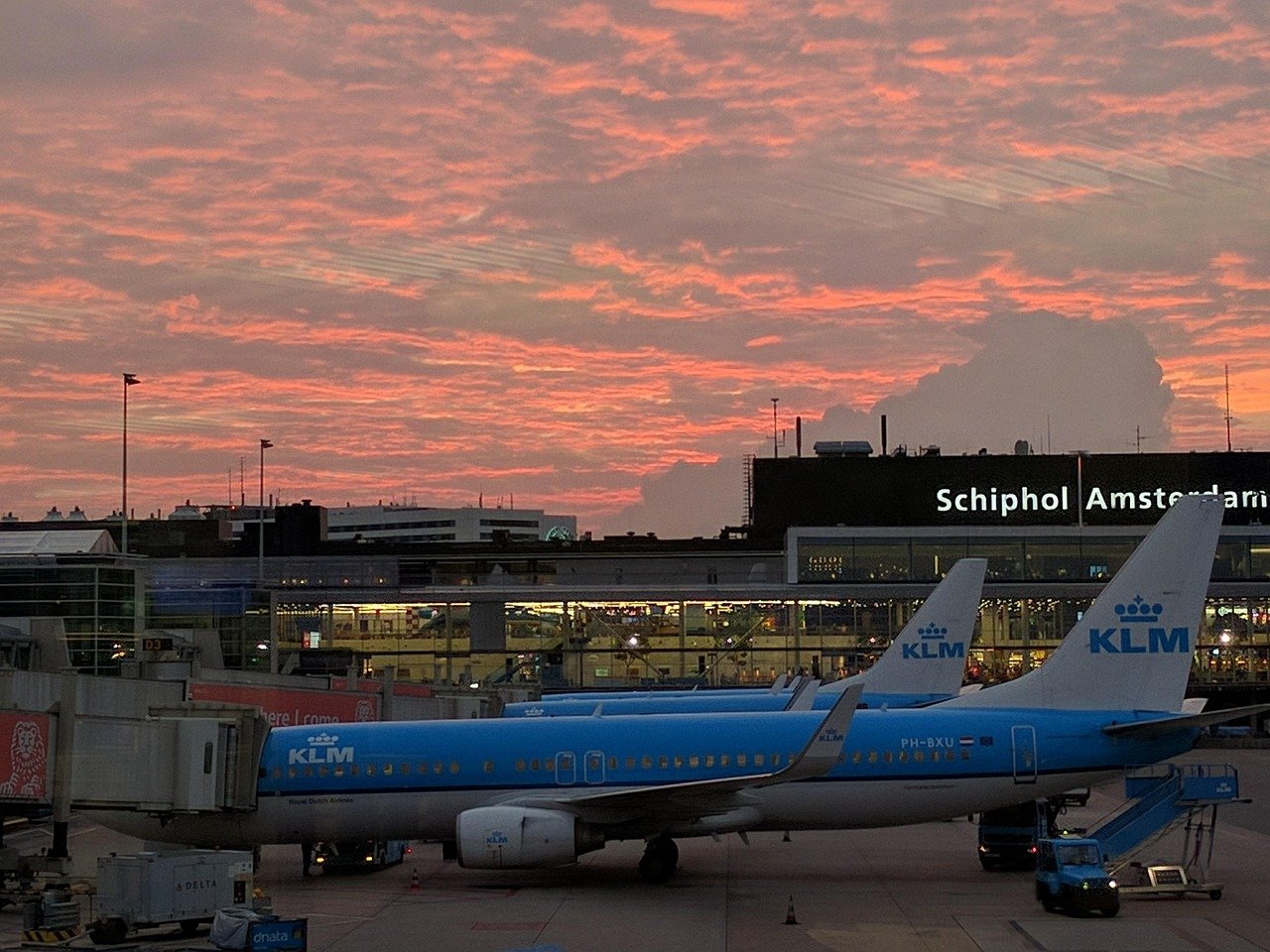
KLM planes at Schiphol Airport (csupordezso, pixabay)
Amsterdam Airport Schiphol (AMS) is the Netherlands’ largest airport and a major European hub, just 15 km southwest of the city center. KLM’s home base, with direct flights to over 300 destinations worldwide. The airport has duty-free shopping, a wide range of restaurants, and even a small branch of the Rijksmuseum at the gate area. From Schiphol to the city center: take the direct train to Amsterdam Centraal Station (15 minutes, around €4.20) or use the Airport Express bus 397 (35 minutes, around €6.50). Taxis cost approximately €35–45 and take 20–30 minutes depending on traffic.
By Train
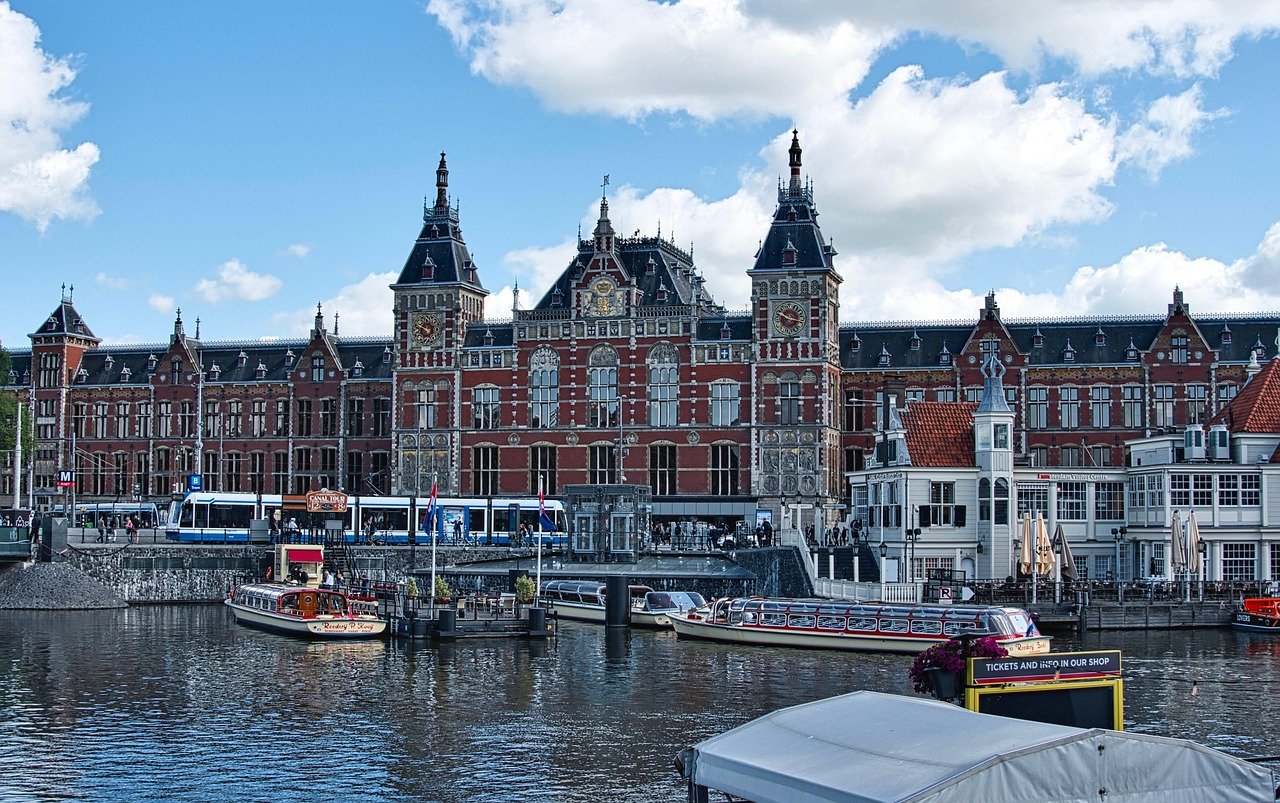
Amsterdam Centraal Station sits on a man-made island at the city’s northern edge, serving as the crown jewel of Dutch Railways (NS). The station connects Amsterdam to every corner of the Netherlands with frequent, punctual service.
International connections include:
- Eurostar: direct service to London (4 hours), Paris (3.5 hours), and Brussels (2 hours)
- ICE International: high-speed trains to Cologne (3 hours) and Frankfurt (4 hours)
- Intercity: regular service to Berlin (6 hours)
- Nightjet: overnight sleeper trains to Vienna, Innsbruck, and Zürich
By Road
Amsterdam is encircled by the A10 Ring Highway, connecting to major European routes:
- A4: to The Hague and Belgium
- A2: to Utrecht and southern Netherlands
- A1: to Almere and eastern Netherlands
The city marks the start of the scenic Oranier-Route, linking Dutch and German historic sites. Driving in Amsterdam city center is genuinely impractical — limited parking, extensive pedestrian zones, hostile cyclist density. Park outside the A10 ring and take public transit in.
By Ferry
Amsterdam’s port is the second-largest in the Netherlands and welcomes cruise ships from across Europe. In 2018, nearly 190 sea passenger vessels docked here. The city has proposed relocating the downtown Passenger Terminal Amsterdam in coming years to balance tourism with local quality-of-life.
Getting Around Amsterdam
Cycling: The Amsterdam Way
Amsterdam is one of the world’s most bike-friendly cities, with nearly 400 km of dedicated cycle paths (fietspaden). Cycling is the fastest and most authentic way to explore the city. The Centraal Station area has an underwater bike parking facility storing up to 11,000 bicycles. Bike rental shops are everywhere, with prices starting around €10–15 per day. Always use bike lanes, watch for tram tracks (they catch wheels — a real hazard), and lock your bike securely — Amsterdam has a notorious bike theft problem.
Public Transport
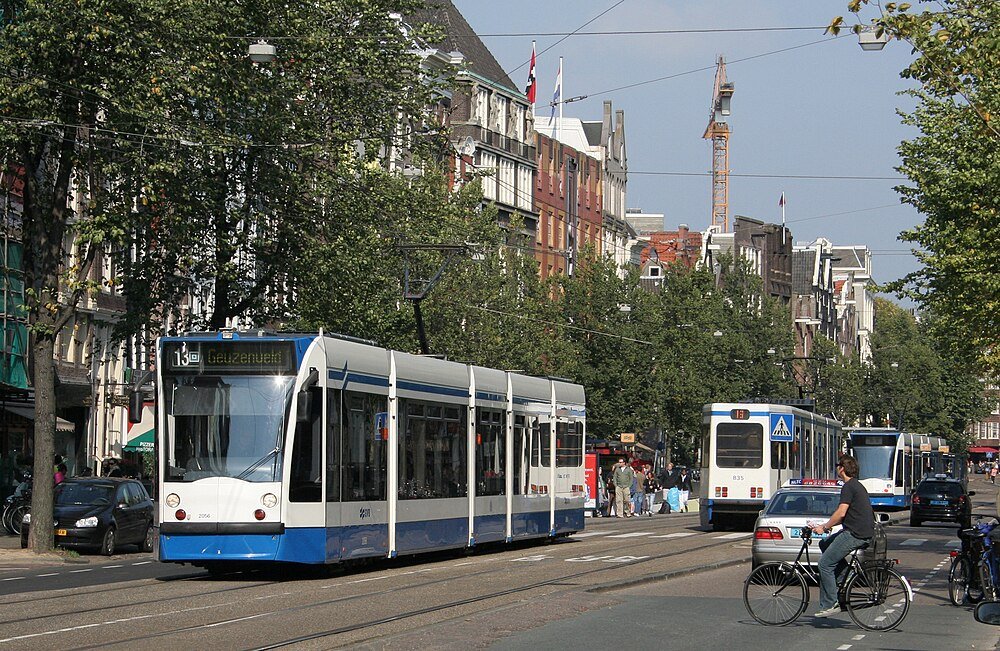
Colorful trams gliding through Amsterdam’s streets
Amsterdam’s public transport system, operated by GVB, includes:
Trams: 15 lines covering all major attractions and neighborhoods — the spine of urban transport. Metro: 5 lines including the North–South line connecting Amsterdam-Noord to the city center and Amsterdam Zuid (opened 2018 after a 22-year construction saga). Buses: comprehensive network filling gaps in tram and metro coverage. Ferries: free ferries across the IJ River connect the city center to Amsterdam-Noord — a genuinely scenic 4-minute ride. Use the OV-chipkaart for all public transport, or contactless bank-card payment which now works system-wide. Day passes (€8.50) and multi-day options offer good value for tourists.
Tunnels
Three major tunnels facilitate car and bike traffic:
- IJtunnel (1,682 m): links city center to Amsterdam-Noord since 1968
- Coentunnel (1,283 m): western route since 1966
- Zeeburgertunnel (946 m): eastern neighborhoods connection
Taxis and Ride-Sharing
Official taxis are regulated and metered, available at taxi stands or by phone. Uber operates in Amsterdam alongside local alternatives like Bolt. Expect higher prices than public transport, especially during peak hours and weekends.
Walking
Amsterdam’s compact city center is highly walkable, with most major attractions within 2–3 km of each other. The flat terrain and pedestrian-friendly streets make walking pleasant — but watch for cyclists (right-of-way is universal, you must yield) and trams (tracks are always slippery in rain).
Food & Drink in Amsterdam
Traditional Dutch Cuisine
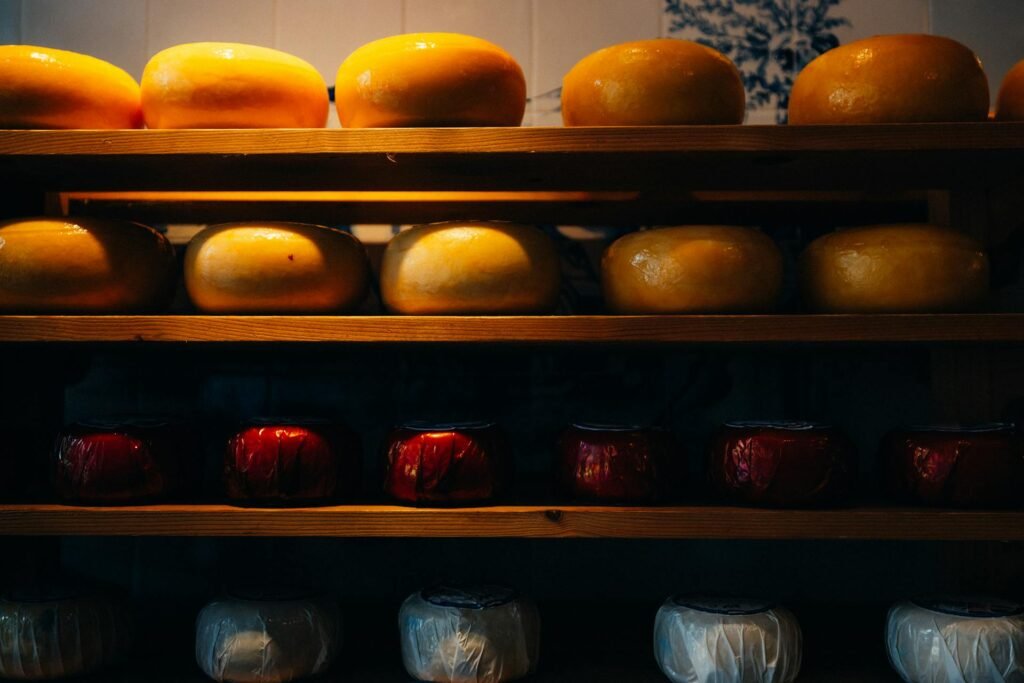
Stroopwafels: thin waffle cookies filled with caramel syrup, best enjoyed warm from street vendors or markets — Original Stroopwafels at Albert Cuyp is the standout. Bitterballen: deep-fried beef-based meatballs served with mustard, the perfect bar snack with Dutch beer. Herring: fresh raw haring served with onions and pickles, traditionally eaten by holding the fish by the tail and lowering it whole into your mouth. Dutch Cheese: sample aged Gouda, Edam, and other varieties at specialty cheese shops or the Saturday farmers market — Henri Willig stores are everywhere but commercial; Reypenaer or Kaaskamer give the more authentic experience. Poffertjes: small, fluffy pancakes dusted with powdered sugar, served at street stalls and cafés.
International Flavors
Amsterdam’s multicultural population has created an exceptional international food scene. Indonesian: try rijsttafel (rice table) — multiple small dishes served as a feast, a legacy of Dutch colonial history; Restaurant Blauw and Tempo Doeloe are the canonical addresses. Surinamese: flavorful Caribbean-influenced cuisine including roti and pom — Brickfields-style budget restaurants in De Pijp do this exceptionally. Turkish and Moroccan: excellent kebabs, tagines, and Middle Eastern specialties throughout the city. Asian Fusion: high-quality Chinese, Thai, and Vietnamese restaurants particularly clustered in the Nieuwmarkt area.
Drinking Culture
Brown Cafés (Bruine Kroegen): traditional Amsterdam pubs with dark wood interiors, centuries of history, and local atmosphere — Café Hoppe (1670), Café ‘t Smalle, and In de Wildeman are the canonical brown cafés. Try jenever (Dutch gin, the predecessor of London Dry) or local beers like Heineken and Amstel. Craft Beer Scene: Amsterdam has embraced craft brewing — Brouwerij ‘t IJ (in a former windmill at the eastern edge) and De Prael (in the Red Light District) are the must-visits. Coffee Culture: beyond the famous coffeeshops (which sell cannabis, not coffee), Amsterdam has excellent traditional coffee houses serving quality espresso and local pastries.
Food Markets
Albert Cuyp Market: street food from around the world, fresh produce, and local specialties — open Monday through Saturday. Noordermarkt: Saturday farmers market with organic produce, artisanal foods, and local delicacies. Nieuwmarkt Saturday Market: smaller market with high-quality organic and local products.
Culture & Arts in Amsterdam
Artistic Heritage
Amsterdam’s Golden Age (17th century) produced some of history’s greatest artists. Rembrandt van Rijn lived and worked here, creating masterpieces like The Night Watch. Johannes Vermeer, though based in nearby Delft, is celebrated throughout the Netherlands. The city’s museums house the world’s finest collections of Dutch Golden Age painting.
Modern Cultural Scene
Contemporary Amsterdam embraces cutting-edge art, design, and performance. The Stedelijk Museum showcases modern and contemporary art; smaller galleries in the Jordaan and De Pijp neighborhoods feature emerging artists. The city’s street art scene — which exploded in the 1980s — continues to transform urban spaces into open-air galleries, particularly along the NDSM Wharf in Amsterdam-Noord.
Music and Performance
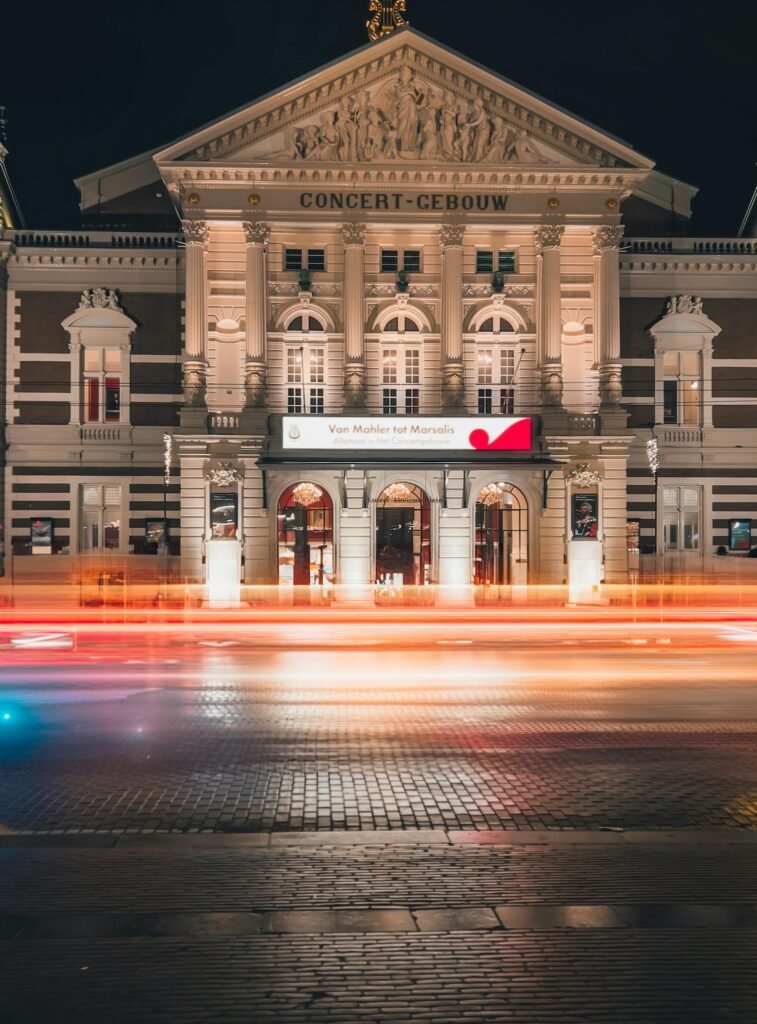
From classical concerts at the world-renowned Concertgebouw to electronic-music festivals, Amsterdam’s music scene is diverse and globally influential. The annual Amsterdam Dance Event (ADE) in October is one of the world’s largest electronic music conferences, with hundreds of venues hosting events across five days. Traditional venues like Paradiso and Melkweg, both converted churches, present everything from indie rock to world music.
Literary Tradition
Amsterdam has a rich literary heritage — from Golden Age poets like Joost van den Vondel to modern writers like Cees Nooteboom. The city hosts literary festivals and maintains strong connections to international literature through translation and publishing. Anne Frank’s Diary of a Young Girl has become the city’s most-read literary export.
Amsterdam by District: The 1 Stadsdelen
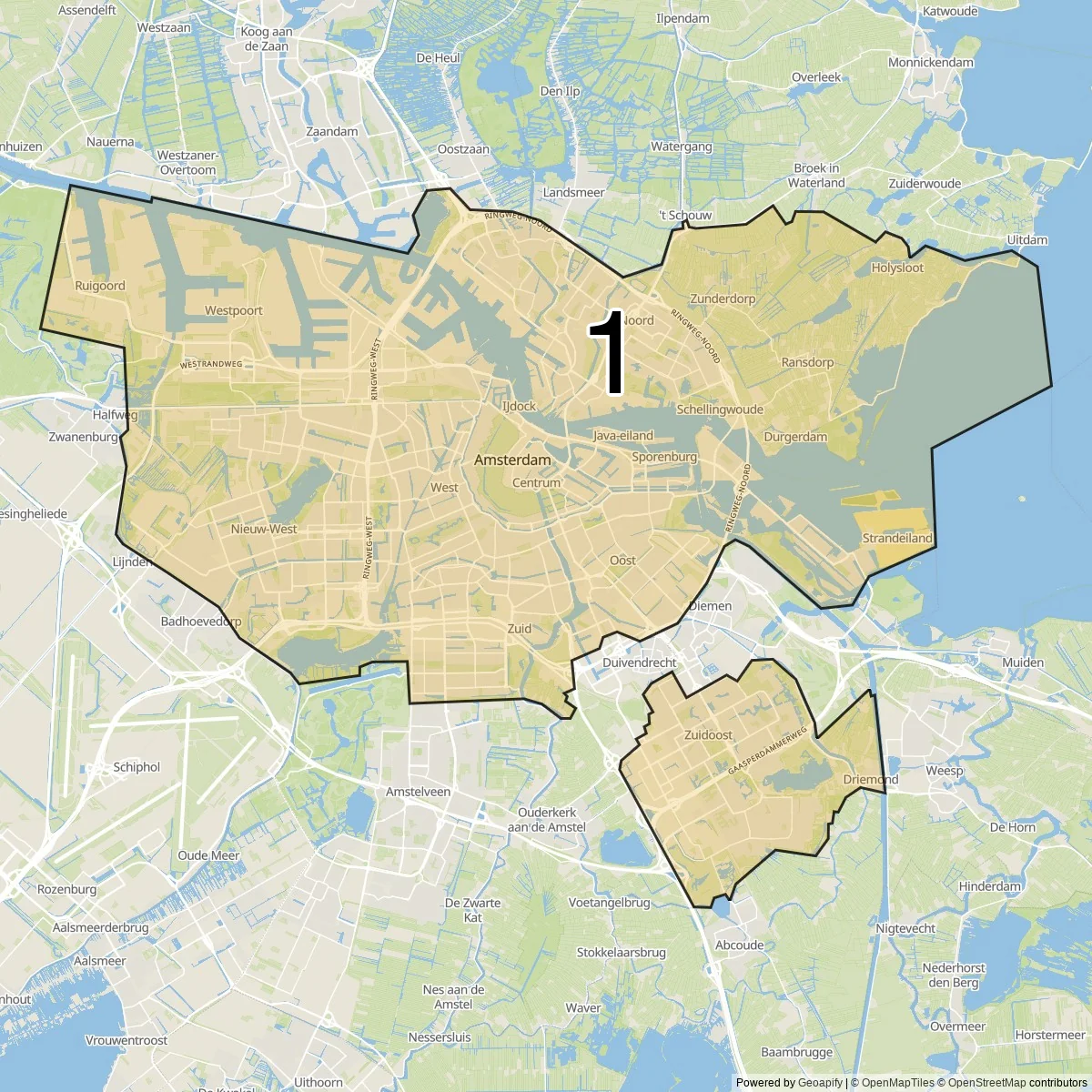
Amsterdam is divided into 1 districts. The map below shows their official OSM boundaries, colour-coded to match the table — a quick way to orient yourself before zooming in on individual sights.
| # | Stadsdelen |
|---|---|
| 1 | Amsterdam |
Frequently Asked Questions About Visiting Amsterdam
Do I need a visa to visit Amsterdam?
For most travelers, Amsterdam falls under Schengen Area visa rules. EU/EEA/Swiss citizens enter freely with a national ID card. Citizens of the US, UK, Canada, Australia, Japan, and roughly 60 other countries enter visa-free for stays up to 90 days within any 180-day period — but starting in 2026 those visitors will need to register with the new ETIAS travel authorization system (about €7, valid 3 years). Other nationalities need a Schengen visa applied for at the Dutch consulate before travel; the official portal is netherlandsworldwide.nl.
Is Amsterdam safe for tourists?
Amsterdam is one of the safer European capitals for visitors — violent crime against tourists is rare. The everyday risks are pickpocketing (especially around Centraal Station, the trams, the Anne Frank House queue) and bike theft (your rented bike will be a target — always use a heavy chain lock through the frame AND wheel). The US State Department rates the Netherlands at “exercise normal precautions” — its lowest advisory level. The Red Light District is generally safe but watch for inebriated stag parties; the streets near it have a higher concentration of pickpockets and aggressive drug touts.
How many days do I need in Amsterdam?
Three full days is comfortable; four lets you add a Keukenhof or Zaanse Schans day trip. A solid 3-day plan: Day 1 the Anne Frank House (book weeks ahead), the Westerkerk and Jordaan, evening canal cruise; Day 2 the Museumplein — Rijksmuseum + Van Gogh Museum (book ahead) — and Vondelpark; Day 3 Dam Square + Begijnhof + a brown café crawl through the canal ring, plus dinner in De Pijp. Add a fourth day for Amsterdam-Noord (EYE Film Institute via free ferry) and a Saturday Albert Cuyp Market run. The city’s compact size means you can cover ground efficiently — but Amsterdam rewards an unhurried pace.
What’s the best area to stay in Amsterdam?
Three solid options. Centrum / Jordaan is the classic choice — walking distance to most major sights, atmospheric narrow streets, hotels in restored canal houses. Pricey but worth it for a 3-night trip. De Pijp / Amsterdam-Zuid offers great food and the Museumplein nearby, with hotel prices 20–30% below Centrum and excellent tram connections. Amsterdam-Noord is the trendy emerging area — modern hotels with IJ River views, free ferries to Centraal Station, dramatically cheaper than the center. Skip De Wallen (Red Light District) as a base unless you specifically want that vibe at night.
How much does it cost to visit the Anne Frank House and Rijksmuseum?
The Anne Frank House charges €16 for adults, but tickets sell out 6 weeks in advance — you must book online via the official annefrank.org portal. There’s no walk-up option during peak season. Rijksmuseum tickets are €25 via rijksmuseum.nl; Van Gogh Museum €22 via vangoghmuseum.nl. The I Amsterdam City Card includes most major museums plus public transit and a canal cruise — pays off if you’re hitting more than three of the headline sites in a 24-72 hour window. Vondelpark, the canals themselves, and most public spaces are free.
Should I drink the tap water in Amsterdam?
Yes — Amsterdam’s tap water is among the best in Europe and ranks higher than most bottled water by lab tests. It’s sourced from the dunes near the coast and treated naturally, with extremely low mineral content. The Waternet utility publishes water quality reports continuously. Restaurants will serve free tap water if you ask (kraanwater in Dutch), though many will quietly pour bottled if you don’t specify. Bringing a refillable bottle saves money and matches local sustainability norms — the city has installed public drinking-water taps in major parks and squares.
Can I really cycle everywhere in Amsterdam?
Almost. Amsterdam has 400+ km of dedicated cycle paths and a flat terrain that makes cycling the most efficient way to navigate the city. However: the locals cycle at speed, follow specific traffic rules, and have zero patience for tourist hesitation. Rent a bike only if you’re a confident cyclist comfortable with traffic. Key rules: stay right, signal turns with extended arm, never stop in the middle of a bike lane, and always lock your bike with the chain through both wheel and frame to a fixed object. Tram tracks catch wheels — cross them at a 90-degree angle. If you’re not comfortable, walking + tram is a perfectly good Plan B. Bike rental runs €10–15/day; helmets are not standard in Dutch cycling culture but are available on request.
Is tipping expected in Amsterdam?
Less than in the US, more than in most European countries. Service is included in restaurant prices in the Netherlands by law, but it’s customary to leave a small additional tip in cash — typically 5–10% at sit-down restaurants for good service, or rounding up to the nearest €5 or €10. Cafés and bars: leave the small change, or round up. Taxis: round up to the nearest euro, or 5–10% for longer rides. Hotel porters: €1–2 per bag at upscale hotels. Hairdressers, spa, hotel housekeeping: small tips appreciated but not socially required. Don’t tip on the percentage scale Americans use back home — it can come across as showy. Cash is preferred for tips even when you pay the bill by card; many card machines don’t have a tip-line option.
Nightlife & Entertainment
Historic Entertainment Districts
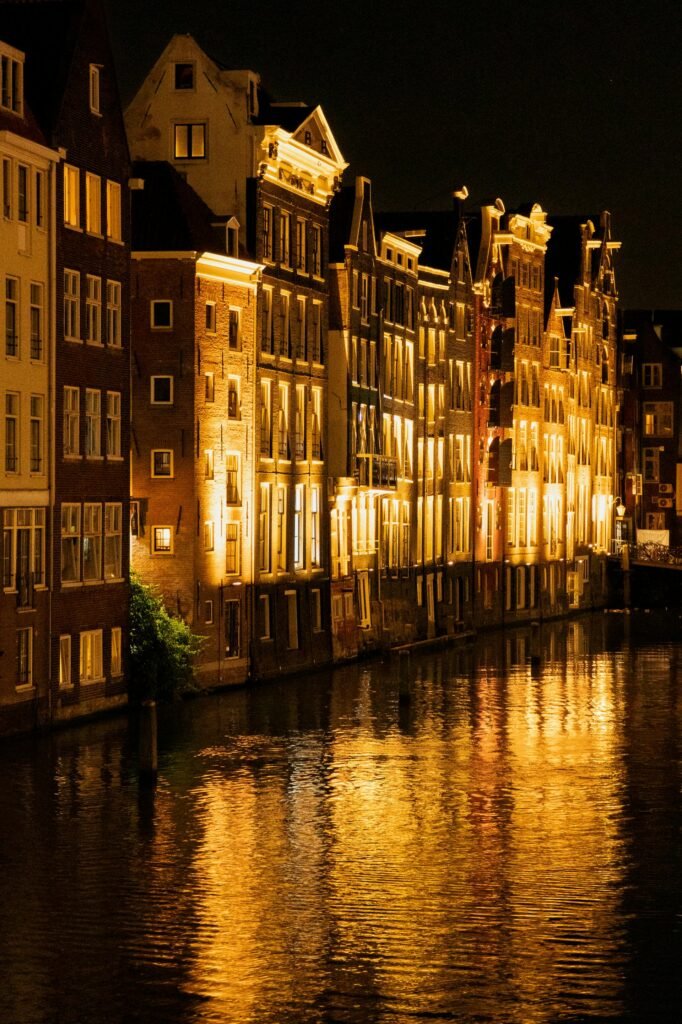
Leidseplein: the heart of Amsterdam nightlife — theaters, cinemas, restaurants, and clubs. The square buzzes with street performers and late-night energy. Rembrandtplein: another major nightlife hub featuring a mix of traditional brown cafés, modern bars, and dance clubs. Red Light District (De Wallen): beyond the famous windows, the area offers historic bars, live music venues, and late-night eateries in atmospheric medieval buildings.
Club Scene
Amsterdam’s electronic music scene is world-renowned. Clubs like Warehouse Elementenstraat, De School, and Radion host international DJs, with after-hours sessions running well past dawn. The city’s liberal atmosphere and late licensing hours create a vibrant nightclub culture; weekend bookings often sell out weeks ahead.
LGBTQ+ Scene
Amsterdam has been Europe’s “gay capital” since the 1960s, with a welcoming atmosphere year-round. The annual Pride Amsterdam in early August features the spectacular Canal Parade — boats decked out in feathers and disco lights threading through the historic canals. Venues like Café ‘t Mandje (operating since 1927, the oldest continuously running gay bar in Europe) and Club NYX maintain the city’s inclusive nightlife tradition.
Amsterdam continues to captivate visitors with its unique blend of historic charm and modern vibrancy. Whether cycling along canal-lined streets, exploring world-class museums, or simply enjoying a coffee while watching the world go by, this remarkable city offers experiences that linger long after the visit ends.
AFRIKA
Cairo Hurghada Johannesburg Marrakech
ASIA
Abu Dhabi Agra Antalya Bangkok Batam Beijing Bengaluru Cebu City Chiang Mai Chiba Chennai Da Nang Dammam Delhi Denpasar Dubai Fukuoka Guangzhou Guilin Ha Long Hanoi Ho Chi Minh City Jakarta Jaipur Johor Bahru Kolkata Krabi Kuala Lumpur Kyoto Macau Mecca Medina Mugla Mumbai Osaka Pattaya Penang Phuket Riyadh Seoul Shanghai Shenzhen Singapore Taipei Tokyo Zhuhai
EUROPE
Amsterdam Athens Barcelona Berlin Brussels Budapest Copenhagen Dublin Florence Frankfurt am Main Heraklion Krakow Lisbon London Madrid Milan Munich Nice Paris Porto Prague Rhodes Rome Stockholm Venice Vienna Warsaw
NORTH AMERICA
Cancun Las Vegas Los Angeles Miami New York City Orlando San Francisco Toronto Vancouver
SOUTH AMERICA
Buenos Aires Lima Rio De Janeiro
OCEANIA
Auckland Honolulu Melbourne Sydney