
GillsLens, pixabay
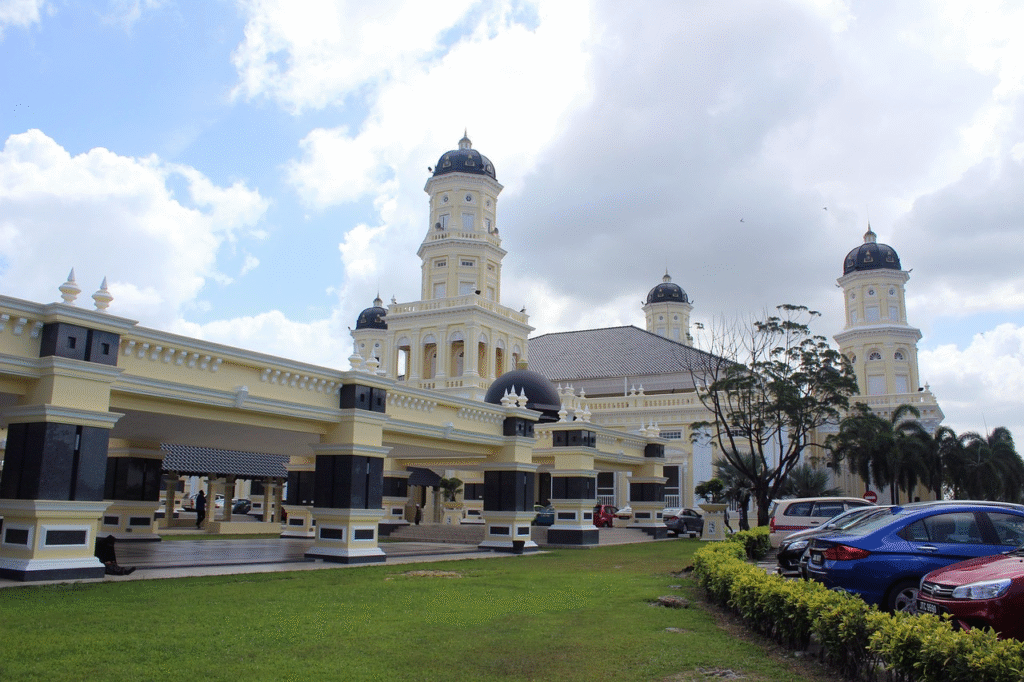
Welcome to Johor Bahru, Malaysia’s vibrant southern gateway where modern energy meets rich cultural heritage. Just across the causeway from Singapore, this bustling city of 1.7 million people offers an authentic Malaysian experience with world-class attractions, incredible street food, and fascinating historical sites. From the majestic Sultan Abu Bakar Mosque to the thrills of Legoland Malaysia, JB delivers unforgettable adventures at every turn.
Johor Bahru at a Glance: Essential Facts for Travelers
| Location | Southern tip of Peninsular Malaysia, Johor state |
| Coordinates | 1°29′N, 103°45′E |
| Population | 1,711,191 (2020) |
| Area | 185 km² |
| Elevation | 37 meters above sea level |
| Time Zone | Malaysia Standard Time (MST), UTC+8 |
| Calling Code | +60-7 |
| Postal Codes | 80000 – 81800 |
| Known For | Gateway to Singapore, Legoland Malaysia, street food, Sultan Abu Bakar Mosque |
| Current Leadership | Mayor under Johor Bahru City Council |
| Official Website | www.johordt.gov.my |
Upcoming Events in Johor Bahru
| Date | Title | Details |
|---|---|---|
| 2026-09-15 | JDT vs Buriram United – AFC Champions League Elite | Reigning Malaysian champions Johor Darul Ta’zim host Thailand’s Buriram United at the 40,000-capacity Sultan Ibrahim Stadium in Iskandar Puteri on 15 September, an East Zone league-stage tie in the AFC Champions League Elite 2026-27. The Southern Tigers’ fixtures against big regional rivals draw passionate crowds, and a free shuttle bus service runs to the stadium on matchday. Tickets are sold through the club’s official channels and typically vary by seating zone; an electric night out for football fans. [Source] |
| 2026-09-16 | Malaysia Day Celebrations | Malaysia Day, on 16 September, commemorates the 1963 formation of the Malaysian federation uniting Malaya, Sabah, Sarawak and Singapore. In Johor Bahru the public holiday brings ceremonies, cultural performances and community events celebrating the country’s diversity. Coming just after Merdeka, it extends the season of national pride, with flags, food and festivities around the city. It is a free, family-friendly occasion and a good window onto Malaysia’s multicultural identity. Public offices close for the holiday, and some venues host special programmes. [Source] |
| 2026-09-25 | Mid-Autumn Festival Celebrations | Johor Bahru’s Chinese community marks the Mid-Autumn Festival on 25 September 2026, when families gather to admire the full moon, light lanterns and share mooncakes. The historic streets around Jalan Tan Hiok Nee and the Johor Ancient Temple in the old city centre are focal points for festive shopping, lantern displays and community activities in the days around the festival. Bakeries across the city sell traditional and modern mooncakes, and celebrations are free to enjoy, offering visitors an atmospheric taste of local Chinese heritage. [Source] |
| 2026-10-01 | Brick or Treat at LEGOLAND Malaysia | LEGOLAND Malaysia Resort in Iskandar Puteri launches its Brick or Treat Halloween season on 1 October 2026 under the motto Make Mischief Together. The family-friendly celebration fills the theme park with Halloween decor, trick-or-treat trails, seasonal shows and LEGO-themed spooky fun aimed at children rather than scares. The event runs on park operating days through the Halloween period and is included with standard park admission, with annual pass holders also welcome. Costumes are encouraged, making it a favourite outing for families in the region. [Source] |
| 2026-10-17 to 2026-10-24 | Sultan of Johor Cup 2026 | The Sultan of Johor Cup returns from 17 to 24 October 2026, bringing the world’s best under-21 men’s field hockey teams to Johor Bahru for a week of international competition. National junior sides, including Canada’s U21 squad, contest round-robin matches followed by finals, with the tournament long serving as a proving ground for future senior stars. Traditionally staged at the Taman Daya Hockey Stadium, the event offers affordable tickets and a friendly atmosphere, making it a great watch for families and sports fans. [Source] |
| 2026-11-08 to 2026-11-09 | Deepavali Festival of Lights | Deepavali, the Hindu festival of lights, falls on Sunday 8 November 2026 and is a public holiday across Johor, with a replacement holiday the following day. In Johor Bahru the celebrations centre on the city’s Little India area around Jalan Ungku Puan, which glows with lights, kolam floor art and bazaar stalls selling sweets, garlands and festive clothing in the weeks beforehand. Families share open houses, and temples hold prayers from before dawn. The street festivities are free and welcoming to visitors of every background. [Source] |
City News in Johor Bahru – last 14 days
| Date | Category | Headline | Details |
|---|---|---|---|
| 2026-09-14 | Business | Bitdeer AI secures 65-megawatt facility at Johor data-centre campus | Bitdeer AI has secured a 65.1-megawatt facility, designated A202, at its existing data-centre campus in Johor, expanding capacity for its artificial intelligence cloud business. The company says its estimated active AI cloud pipeline now surpasses seven billion US dollars, underlining how fast demand for GPU computing is growing in the region. The deal strengthens Johor’s position as Southeast Asia’s hottest data-centre corridor, driven by abundant land, power projects and proximity to Singapore’s constrained market. [Source] |
| 2026-09-14 | Business | Johor princess resigns from Techna-X board five days after appointment | A member of the Johor royal family has resigned from the board of Techna-X just five days after her appointment, the New Straits Times reports. The listed technology company had announced the princess’s directorship only days earlier, and no detailed reason for the swift departure was given in the initial reporting. Board changes at publicly traded companies draw scrutiny from investors, and the episode attracted attention given the high profile of Johor’s royal household in business affairs. [Source] |
| 2026-09-14 | Public safety | Tanjung Pelepas Port hit by cyberattack, launches system clean-up | The Port of Tanjung Pelepas, Johor’s giant container hub west of Johor Bahru, has come under cyberattack and launched a clean-up of its systems, according to reporting by the New Straits Times. Port operations of this scale are critical infrastructure for Malaysia’s trade, and the incident highlights rising digital threats against logistics facilities across the region. Authorities and the port’s technology teams are working to restore affected systems and investigate the source of the intrusion. [Source] |
| 2026-09-14 | Local affairs | Three dogs still loose after attack on toddler | Three dogs involved in an attack on a toddler in Johor have yet to be caught, the New Straits Times reports, as authorities continue efforts to track the animals. The case has renewed debate about stray dog management and public safety in residential areas, with local councils under pressure to respond quickly. Residents have been advised to be cautious and report sightings to the authorities so that catching teams can be dispatched to the area. [Source] |
| 2026-09-14 | Local affairs | Haze pushes Pasir Gudang air quality index to unhealthy 152 | Air quality deteriorated in parts of Johor as haze blanketed the state, with the Air Pollutant Index in Pasir Gudang, the industrial town east of Johor Bahru, hitting an unhealthy reading of 152. Readings above 100 are classified unhealthy, prompting advice for sensitive groups to limit outdoor activity. Haze episodes in the region are often linked to regional fires and shifting monsoon winds, and authorities monitor stations closely to decide whether school outdoor activities should be curtailed. [Source] |
| 2026-09-14 | Education | Kelantan quadruplets begin university life together at UTHM | Quadruplet siblings from Kelantan have left home together to begin their studies at Universiti Tun Hussein Onn Malaysia, the state-run technical university in Batu Pahat, Johor. Their story of enrolling side by side drew warm attention in the national press as the new academic intake got under way. The university, one of Johor’s main higher-education institutions, welcomes thousands of new students this month from across Malaysia, with orientation programmes helping first-years settle into campus life. [Source] |
| 2026-09-14 | Public safety | Bomb threat at Mid Valley Southkey declared a hoax after police sweep | Police swept the Mid Valley Southkey mall after an emailed bomb threat, ultimately declaring the premises safe and the threat a hoax. Officers conducted checks through the popular shopping centre, which sits close to the Causeway and draws heavy weekend crowds including visitors from Singapore. Johor police confirmed no explosive device was found and said investigations into the source of the email are ongoing, while normal mall operations resumed for shoppers. [Source] |
| 2026-09-13 | Culture | State pledges RM150,000 a year to preserve the 24 Festive Drums | The Johor state government will allocate RM150,000 every year to preserve the 24 Festive Drums, the ensemble drumming art form created in Johor Bahru in 1988 that has since spread worldwide. The funding supports training, equipment and performances so that new generations can keep the tradition alive. The 24 Festive Drums combine Chinese drumming with calligraphy representing the agricultural solar terms, and the art form is recognised as a national heritage item that originated in the city. [Source] |
| 2026-09-13 | Business | CapitaLand Malaysia Trust’s Johor expansion set to drive growth | CapitaLand Malaysia Trust’s expansion in Johor is set to drive the property trust’s growth, according to The Star’s business coverage. The trust has been adding exposure in the state as the Johor-Singapore Special Economic Zone and the coming RTS rail link lift retail and industrial demand across the causeway economy. Analysts see southern Malaysia as one of the country’s strongest real-estate stories, with rising footfall and rents supporting earnings at malls and logistics properties. [Source] |
| 2026-09-13 | Business | TP opens Johor Bahru operations centre as nearshore hub for Singapore | Global outsourcing group TP, formerly known as Teleperformance, has opened a new operations centre in Johor Bahru, positioning the site as a nearshore hub serving Singapore and the wider Southeast Asian market. The centre adds services jobs to a local economy better known for manufacturing and data centres, and reflects how companies are using the city’s cost advantage and proximity to Singapore. The investment underscores the momentum generated by the Johor-Singapore Special Economic Zone framework. [Source] |
| 2026-09-12 | Public safety | 47 foreigners detained in immigration raid on JB housing area | Immigration officers detained 47 foreigners during a raid on a housing area in Johor Bahru, The Star reports. The operation was part of continuing enforcement against undocumented migrants in the state, with those held to be processed for offences under immigration law. Authorities regularly conduct such raids in residential neighbourhoods and workplaces across Johor, and community leaders have urged employers and landlords to verify documentation to avoid penalties. [Source] |
| 2026-09-11 | Local affairs | Six new ambulances boost emergency coverage across Johor | Johor has taken delivery of six new ambulances to strengthen emergency medical coverage across the state, The Star reports. The additional vehicles are intended to cut response times and replace ageing units in high-demand districts. Health officials say reliable ambulance services are a priority as Johor’s population and industrial base grow rapidly, and the new units will be distributed to facilities where call volumes are heaviest. [Source] |
| 2026-09-06 | Public transport | Woodlands North RTS station finished four months before cross-border launch | Singapore has completed the Woodlands North station for the Johor Bahru-Singapore Rapid Transit System four months ahead of the link’s launch, putting the cross-border rail project firmly on track. When services begin, the RTS Link will carry up to 10,000 passengers per hour in each direction between Bukit Chagar in Johor Bahru and Woodlands, cutting the crossing to about five minutes and easing chronic Causeway congestion. The milestone raises anticipation on both sides of the border ahead of opening. [Source] |
Johor Bahru Events & City News Archive
Sources: Johor Southern Tigers, Johor State Government, Wikipedia, LEGOLAND Malaysia, Field Hockey Canada, PublicHolidays.com.my, The Manila Times, NST Online
Weather Forecast for the Next 14 Days in Johor Bahru
| Date | Weather | Max °F | Min °F | Rain mm |
|---|---|---|---|---|
| 2026-09-14 | 🌧️ | 89.9 °F | 76.4 °F | 2.8 mm |
| 2026-09-15 | 🌧️ | 89.2 °F | 77.0 °F | 1.5 mm |
| 2026-09-16 | ☁️ | 90.3 °F | 74.7 °F | 0.0 mm |
| 2026-09-17 | 🌧️ | 90.1 °F | 76.3 °F | 1.6 mm |
| 2026-09-18 | 🌧️ | 87.3 °F | 76.0 °F | 9.3 mm |
| 2026-09-19 | 🌧️ | 86.0 °F | 73.7 °F | 11.4 mm |
| 2026-09-20 | 🌧️ | 87.3 °F | 75.9 °F | 3.9 mm |
| 2026-09-21 | 🌧️ | 88.0 °F | 77.1 °F | 4.8 mm |
| 2026-09-22 | 🌧️ | 84.1 °F | 78.3 °F | 7.8 mm |
| 2026-09-23 | 🌧️ | 86.2 °F | 77.0 °F | 7.8 mm |
| 2026-09-24 | 🌧️ | 90.4 °F | 76.6 °F | 1.2 mm |
| 2026-09-25 | 🌧️ | 80.7 °F | 78.4 °F | 21.6 mm |
| 2026-09-26 | 🌧️ | 80.4 °F | 77.3 °F | 9.0 mm |
| 2026-09-27 | 🌧️ | 79.1 °F | 76.3 °F | 23.4 mm |
Johor Bahru’s History
Johor Bahru — almost universally called “JB” by both Malaysians and Singaporeans — is one of those border cities defined entirely by its richer neighbor. The Causeway connects JB directly to Singapore over a 1.05 km road-and-rail bridge that handles roughly 350,000 daily crossings (in normal times), making it one of the world’s busiest land borders. The cross-border economy — Malaysians working in Singapore, Singaporeans shopping and dining in JB — has shaped the city’s character for over a century.
The Abu Bakar Era: Foundation of Modern JB
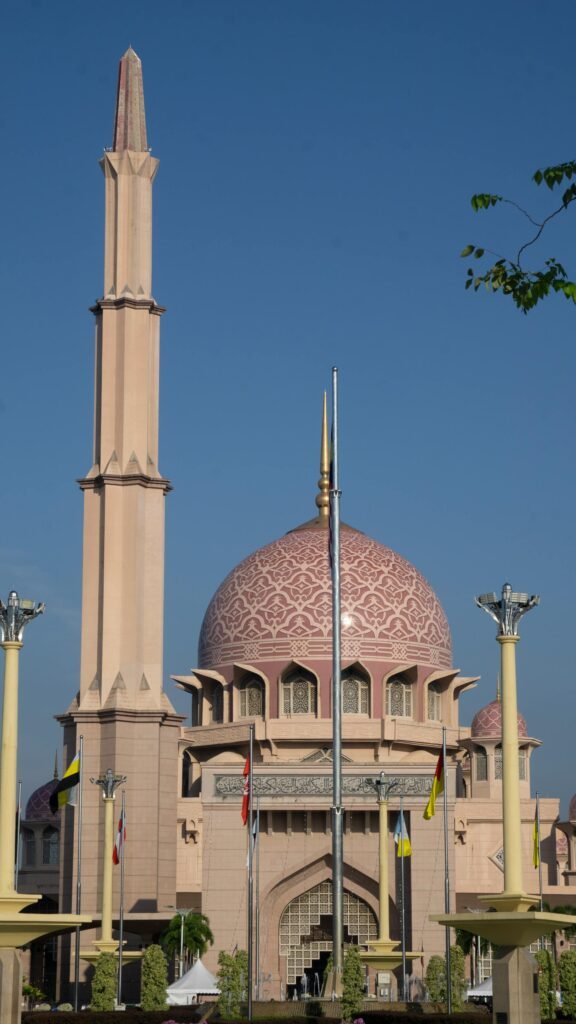
Johor Bahru was founded in 1855 as a humble fishing village called Tanjung Puteri (“Princess Cape”). The transformation began under Sultan Abu Bakar (r. 1862–1895), often called the “Father of Modern Johor” — and the most cosmopolitan Malay ruler of his era, fluent in English, having visited Queen Victoria multiple times. Abu Bakar formally established Johor Bahru as the state capital in 1866 and embarked on an ambitious modernization program: he built the magnificent Istana Besar (Grand Palace, 1866) and the stunning Sultan Abu Bakar Mosque (completed 1900), both of which remain iconic landmarks today. His distinctive Victorian-Malay architectural fusion defined the city’s historic core and influenced public buildings throughout British Malaya.
Colonial Period and Early Development
Under increasing British influence in the late 19th and early 20th centuries, Johor Bahru developed its modern infrastructure — the railway connection to Singapore (the original wooden Johor-Singapore Causeway opened in 1924, replaced by the current concrete structure in 1942), the colonial administrative buildings, and the institutional foundation of a regional capital. Sultan Sir Ibrahim (r. 1895–1959) continued the development; the imposing Sultan Ibrahim Building (Bangunan Sultan Ibrahim) on Bukit Timbalan, completed 1940, served as the British colonial administrative headquarters and remains a striking landmark.
Post-Independence Growth
Following Malaysian independence in 1957 (and the formation of Malaysia in 1963), Johor Bahru experienced significant growth driven by Singapore’s economic miracle next door. The 1970s–1990s saw industrial expansion in the surrounding Iskandar region, particularly manufacturing and electronics. The 1990s economic boom and Singapore’s role as financial hub created the cross-border commuting pattern that still defines JB.
Modern City Status
In 1994, Johor Bahru was officially elevated to city status. The 2006 launch of Iskandar Malaysia — a massive Special Economic Zone covering 2,217 km² — accelerated the city’s transformation into a modern metropolis with shopping malls, theme parks (Legoland Malaysia opened 2012), and a thriving Central Business District around Jalan Wong Ah Fook and the Causeway. The forthcoming Johor Bahru–Singapore Rapid Transit System (RTS) — a 4-km cross-border MRT scheduled to open in 2027 — is set to dramatically transform commuting and tourism between JB and Singapore.
Geography, Climate & Best Time to Visit Johor Bahru
Johor Bahru sits at the southernmost tip of Peninsular Malaysia, at the southern end of Asia’s mainland. The city is separated from Singapore by the Tebrau Strait (Selat Johor) — just 1 km wide at the Causeway. The greater JB metropolitan region (Iskandar Puteri to the west, Pasir Gudang to the east) covers ~2,200 km² and houses ~1.6 million residents.
Climate Overview
JB has a tropical rainforest climate (Köppen Af) with consistent warm temperatures and regular rainfall throughout the year — there’s no real dry season, just slightly drier months. Average daily highs range 30.6–32.8°C; evening lows around 22–23°C. Humidity stays at 80%+ year-round; brief intense afternoon thunderstorms are routine. The wettest period is November–December (monsoon influence from the South China Sea).
| Month | High (°C) | Low (°C) | Rainfall (mm) | Rainy Days |
|---|---|---|---|---|
| January | 31.0 | 21.9 | 163 | 11 |
| February | 32.0 | 22.0 | 140 | 9 |
| March | 32.5 | 22.4 | 203 | 13 |
| April | 32.8 | 22.9 | 233 | 15 |
| May | 32.5 | 23.1 | 215 | 15 |
| June | 32.1 | 22.9 | 148 | 12 |
| July | 31.5 | 22.4 | 177 | 13 |
| August | 31.5 | 22.4 | 186 | 13 |
| September | 31.5 | 22.4 | 191 | 13 |
| October | 31.8 | 22.6 | 218 | 16 |
| November | 31.3 | 22.7 | 238 | 17 |
| December | 30.6 | 22.4 | 245 | 15 |
Source: Malaysia Meteorological Department
Best Time to Visit
JB is genuinely a year-round destination — there’s no peak winter or hot summer to worry about. February and June have the slightly fewer rainy days; April–May and October–December see more rain but the showers are usually brief afternoon downpours rather than full-day washouts. Pack lightweight breathable clothing, a compact umbrella, and reef-safe sunscreen. Avoid Singapore-side public-holiday weekends if you want to drive across the Causeway — traffic queues can stretch 4+ hours.
Johor Bahru’s Districts & Neighborhoods
City Centre
The heart of Johor Bahru, centered around Jalan Wong Ah Fook and the Causeway. The bustling district contains the Central Business District, major shopping centers (City Square, Komtar JBCC, Galleria@Kotaraya), most historic landmarks, and many of the better hotels. Stay here for easy access to attractions, public transport, and the cross-border bus to Singapore.
Johor Bahru Sentral
The modern transportation hub area immediately south of the Causeway. Houses contemporary hotels (DoubleTree by Hilton, Berjaya Waterfront), the JB Sentral railway station, and major shopping at KSL City Mall. Particularly convenient for travelers arriving by bus or planning day trips to Singapore — the cross-border bus stops here. Walking distance to immigration.
Taman Molek
Originally a residential area that has evolved into a substantial dining-and-entertainment district 10 km east of the city center. Mid-range accommodation, with the city’s densest concentration of local restaurants and Malaysian-Chinese cafés. Quieter and more authentic than the Causeway-adjacent tourist zone.
Iskandar Puteri (Nusajaya)
The newest planned-city district 30 km west of central JB. Houses Legoland Malaysia, the Forest City development (controversial Chinese-backed mega-project), and the Educity educational hub with international university campuses. Best base for families visiting Legoland or business travelers in the Iskandar Puteri Free Zone.
Permas Jaya
Near the Second Link bridge to Singapore (the alternative crossing west of the main Causeway), this area provides a quieter alternative to the city center while still offering good Singapore connectivity. Family-friendly modern developments.
Where to Stay
First-time visitors: City Centre or JB Sentral for the balance of attractions, dining, and transport. Families with Legoland focus: Iskandar Puteri for the shorter commute. Budget travelers: guesthouses around Jalan Wong Ah Fook at MYR 80–150/night. Luxury seekers: Mövenpick Hotel & Convention Centre, DoubleTree by Hilton, Berjaya Waterfront, or the Renaissance Johor Bahru Hotel at MYR 250–600/night.
Top Things to Do in Johor Bahru
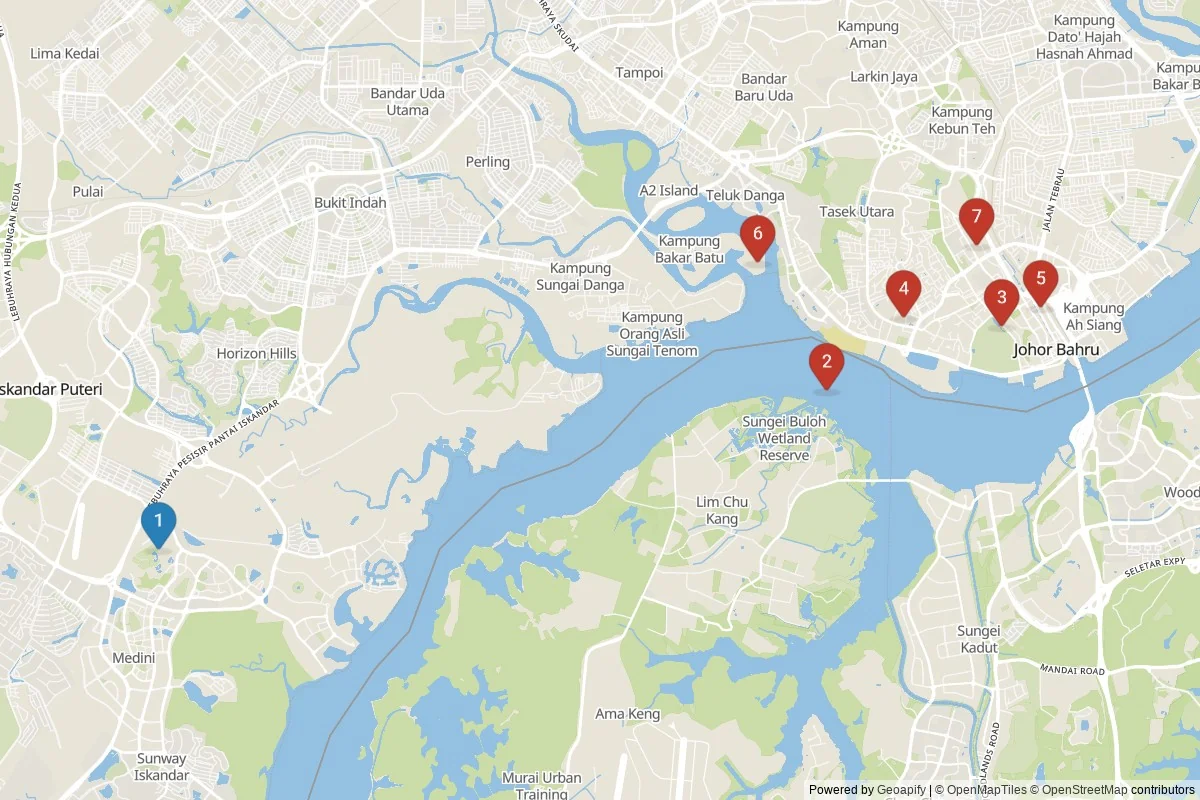
| # | Sight | Cluster | Type | Time | Entry | Best |
|---|---|---|---|---|---|---|
| 1 | Legoland Malaysia | Central | Theme park | Full day | RM 219 | Morning |
| 2 | Istana Bukit Serene | Outer | Royal palace | ~30 min | Free outside | Morning |
| 3 | Johor Old Chinese Temple | Outer | Chinese temple | ~30 min | Free | Morning |
| 4 | Sultan Abu Bakar Mosque | Outer | Mosque | ~45 min | Free | Morning |
| 5 | JB City Square | Outer | Shopping mall | ~1.5 hrs | Free | Afternoon |
| 6 | Danga Bay | Outer | Waterfront park | ~1 hr | Free | Sunset |
| 7 | KSL City Mall | Outer | Shopping mall | ~1 hr | Free | Afternoon |
| 🚗 | Day Trip: Desaru Beach | Day trip | Day trip | Full day | varies | Morning |
JB’s headlines split between historic landmarks (Sultan Abu Bakar’s legacy), modern theme-park attractions (Legoland), and the cross-border economic experience (mall shopping, food). Two days handles the headlines comfortably; combined with day-trips, three days covers the city.
Historic Landmarks
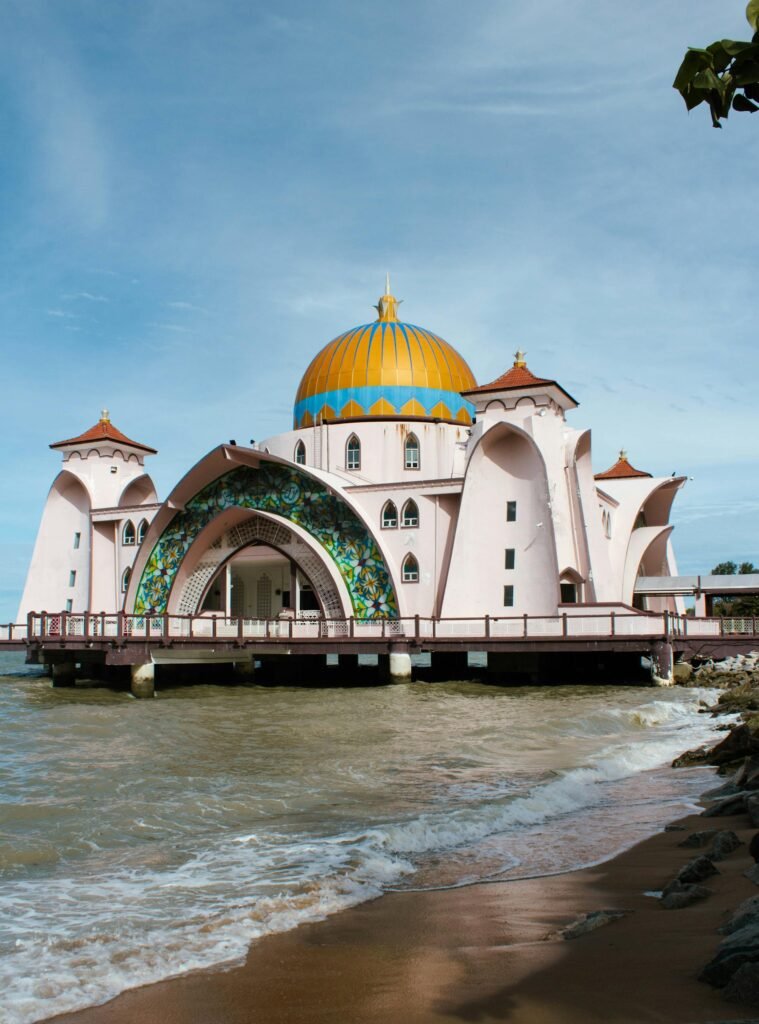
The magnificent Sultan Abu Bakar Mosque (Masjid Sultan Abu Bakar) — completed 1900 — is JB’s most iconic landmark. The Victorian-Moorish-Malay architectural fusion combines an English clock tower-style minaret with traditional Malay decorative elements; the elevated hilltop site provides panoramic views over the Tebrau Strait to Singapore. Active mosque; modest dress required (loaner robes available); non-Muslims welcome outside prayer times. Free entry.
The nearby Istana Besar (Grand Palace, 1866) — the former royal residence — exemplifies Sultan Abu Bakar’s distinctive architectural fusion. The palace grounds are now the Royal Abu Bakar Museum (Muzium Diraja Abu Bakar), displaying royal regalia, ceremonial weapons, and historic photographs. Tickets ~MYR 10.
The imposing Sultan Ibrahim Building (Bangunan Sultan Ibrahim) on Bukit Timbalan is a 1940 colonial-era former government headquarters — now an iconic JB skyline landmark, particularly beautiful illuminated at night.
The Church of the Immaculate Conception (1883) offers insight into JB’s diverse religious landscape; the Sri Mariamman Temple represents the city’s Tamil Hindu community; multiple Chinese clan temples cluster in the historic core.
Museums and Cultural Sites
The KTM Railway Museum, housed in JB’s beautifully preserved old railway station, provides fascinating insights into Malaysia’s railway history through interactive exhibits and vintage displays. The original station is itself an architectural gem worth visiting; the building was vacated when JB Sentral opened in 2010. Free admission.
Johor Bahru Heritage Walk — the city has been actively restoring its historic shophouses, particularly along Jalan Tan Hiok Nee and the surrounding streets, where Chinese-Peranakan-style buildings now host cafés, art galleries, and craft shops. The area is JB’s emerging hipster heritage quarter.
Parks and Nature
The Johor Bahru City Rainforest (Taman Hutan Bandar JB) — a 25-hectare green sanctuary in the heart of the city — offers walking trails through tropical forest with the surprise of spotting macaques and tropical birds without leaving the urban core. Free entry.
The Istana Besar Garden provides peaceful royal-palace grounds for morning walks and photography. Kota Iskandar Garden in the planned Iskandar Puteri district offers contemporary landscape design.
Family Attractions
Legoland Malaysia, in Iskandar Puteri, opened in 2012 as Asia’s first Legoland. The park features 70+ rides, the Miniland with LEGO recreations of Asian landmarks (Singapore Marina Bay, Kuala Lumpur Petronas Towers, Beijing Forbidden City), the Legoland Water Park, and the adjacent Sea Life Malaysia aquarium. Tickets MYR 240+; multi-day passes available. Booking via legoland.com.my.
The Hello Kitty Town & Thomas Town at Puteri Harbour serves the younger family demographic; Angry Birds Activity Park at Komtar JBCC is the indoor option for rainy days.
Modern Attractions
The sleek Johor Public Library serves as more than a book repository — its modern Norman Foster-style architecture and panoramic upper-floor views make it a popular spot for both locals and visitors seeking a quiet retreat. Free entry.
City Square Mall and JB City Square — the dense retail zone walking distance from the Causeway — host the largest concentration of shops, boutiques, restaurants, and entertainment in southern Malaysia.
How to Get to Johor Bahru
By Air
Senai International Airport (JHB) — JB’s primary airport, located ~32 km north of the city center. Connections to major Asian destinations: Kuala Lumpur (almost hourly), Jakarta, Penang, Sabah, Sarawak, Bangkok, and several Chinese cities. Airport buses (Causeway Link) and taxis provide convenient transfers to the city center (~MYR 50–80, 45 minutes). Many travelers fly into Singapore Changi instead and cross by bus/train.
By Road
The famous Johor-Singapore Causeway connects JB directly to Singapore at Woodlands — one of the busiest land borders on earth, handling 350,000+ daily crossings in normal times. Journey by car under normal traffic: 30 minutes; during peak hours/weekends: 2–4 hours at the immigration queues. The Second Link (Tuas Checkpoint, west of the main Causeway) provides an alternative route, particularly useful for travelers heading to western JB or Iskandar Puteri.
Express buses connect JB to major Malaysian cities — Kuala Lumpur (4–5 hours via Plus Highway), Malacca (2 hours), Kuantan (3 hours via the East Coast). The modern Larkin Sentral bus terminal (5 km north of the city center) is the main intercity hub.
By Rail
JB Sentral railway station connects to Malaysia’s KTM rail network — services to Gemas (4 hours, then connections to Kuala Lumpur and the East Coast Line). The much-anticipated Johor Bahru–Singapore Rapid Transit System (RTS), expected by 2027, will provide rapid 4-km cross-border transit between JB Sentral and Singapore’s Woodlands North MRT station — a transformational change for cross-border commuters and tourism. The Kuala Lumpur–Singapore High-Speed Rail project, originally cancelled in 2021, is now under renewed bilateral discussion.
Getting Around Johor Bahru
Public Transportation
Local buses operated by Causeway Link, Maju, and S&S provide affordable transportation throughout the city, connecting major attractions, shopping centers, and residential areas. The bus network is particularly useful for reaching City Square mall and the historic district. Fares MYR 2–5 per ride. The cross-border Causeway Link CW1, CW2, CW3 buses connect JB Sentral directly to Singapore Woodlands and Queen Street terminals.
Taxis and Ride-Hailing
Grab dominates the JB ride-hailing market — transparent pricing, English-friendly, accepts international cards. Vastly preferable to traditional metered taxis (which often refuse meters in tourist areas). Airport transfers from MYR 60–80 fixed; central JB to Legoland ~MYR 35–50.
Walking and Cycling
The city center’s compact layout makes walking viable for the historic district and main shopping areas; the heritage walk through Jalan Tan Hiok Nee is genuinely pleasant. Tropical climate makes early-morning or evening walks most comfortable. Some areas now offer bicycle rental services for eco-friendly exploration.
Private Transportation
Car rental is available for travelers planning to explore beyond the city center or visit Legoland, Desaru beaches, or other parts of Johor state. Driving provides flexibility for day trips, though traffic congestion near the Singapore border can be significant during peak hours and weekends. Note that Singapore-registered cars cannot enter Malaysia without going through proper border procedures.
Food & Drink in Johor Bahru
JB’s culinary scene is a microcosm of Malaysia’s incredible food diversity — every regional Malaysian tradition is represented, alongside Chinese (especially Hokkien and Teochew), Indian, and increasingly international dining. Singaporean food critics frequently cross the Causeway specifically to eat in JB, where prices are 30–50% lower than equivalent Singapore venues.
Must-Try Local Dishes
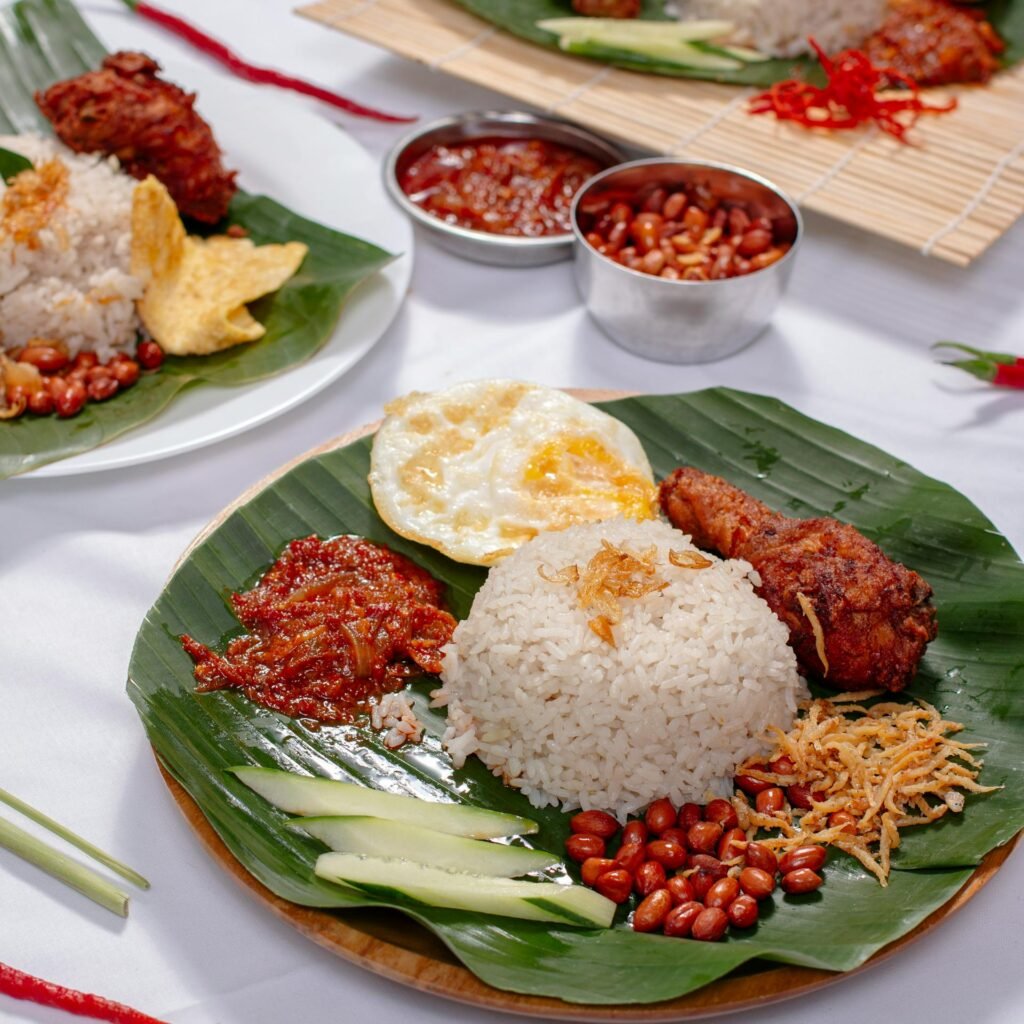
Nasi Lemak reaches perfection in JB’s morning food stalls and night markets — fragrant coconut rice with spicy sambal, crispy anchovies, peanuts, hard-boiled egg, and various accompaniments (chicken rendang, sotong sambal, beef rendang). Laksa Johor is the regional specialty distinct from Penang or Sarawak laksa — thick rice noodles in a rich spicy coconut-based broth with mackerel and herbs (different from the tamarind-sour Penang asam laksa).
Mee Rebus represents another JB specialty — yellow noodles in a sweet-spicy sweet-potato gravy topped with hard-boiled eggs, bean sprouts, fried shallots, and fresh lime. For dessert, the Cendol at Tepi Sungai and the ABC (ais batu campur) shaved-ice towers are classics.
Night Markets and Street Food
JB’s night markets (pasar malam) rotate through different neighborhoods throughout the week, providing authentic Malaysian eating experiences. The Pasar Karat (Friday evenings, near JB Sentral) is the most accessible for visitors. Larkin Bazaar hosts daily evening food vendors. The streets around the historic core offer the small kopitiam Chinese coffee shops serving traditional Hainanese-style breakfast (kaya butter toast, soft-boiled eggs, kopi).
Restaurant Districts
Taman Molek has evolved into a serious dining destination known for diverse Malaysian and international restaurants — from traditional kopitiam to contemporary cafés. The city center around Jalan Wong Ah Fook offers numerous dining options ranging from street stalls to air-conditioned restaurants. City Square Mall and KSL City Mall host the major chain restaurants and food courts.
Beverages
Traditional Teh Tarik (pulled tea — black tea with sweetened condensed milk, “pulled” between two metal cups for foam) and Kopi O (black coffee with sugar) remain the daily beverage anchors. Fresh fruit juices and coconut water provide refreshing relief from tropical heat. Local Tiger Beer and Carlsberg are widely available; imported wines at restaurants and bars. Note that JB has slightly more conservative alcohol availability than Kuala Lumpur — many restaurants are halal and don’t serve alcohol; non-halal Chinese restaurants and hotels do.
Johor Bahru by District: The 6 Zones
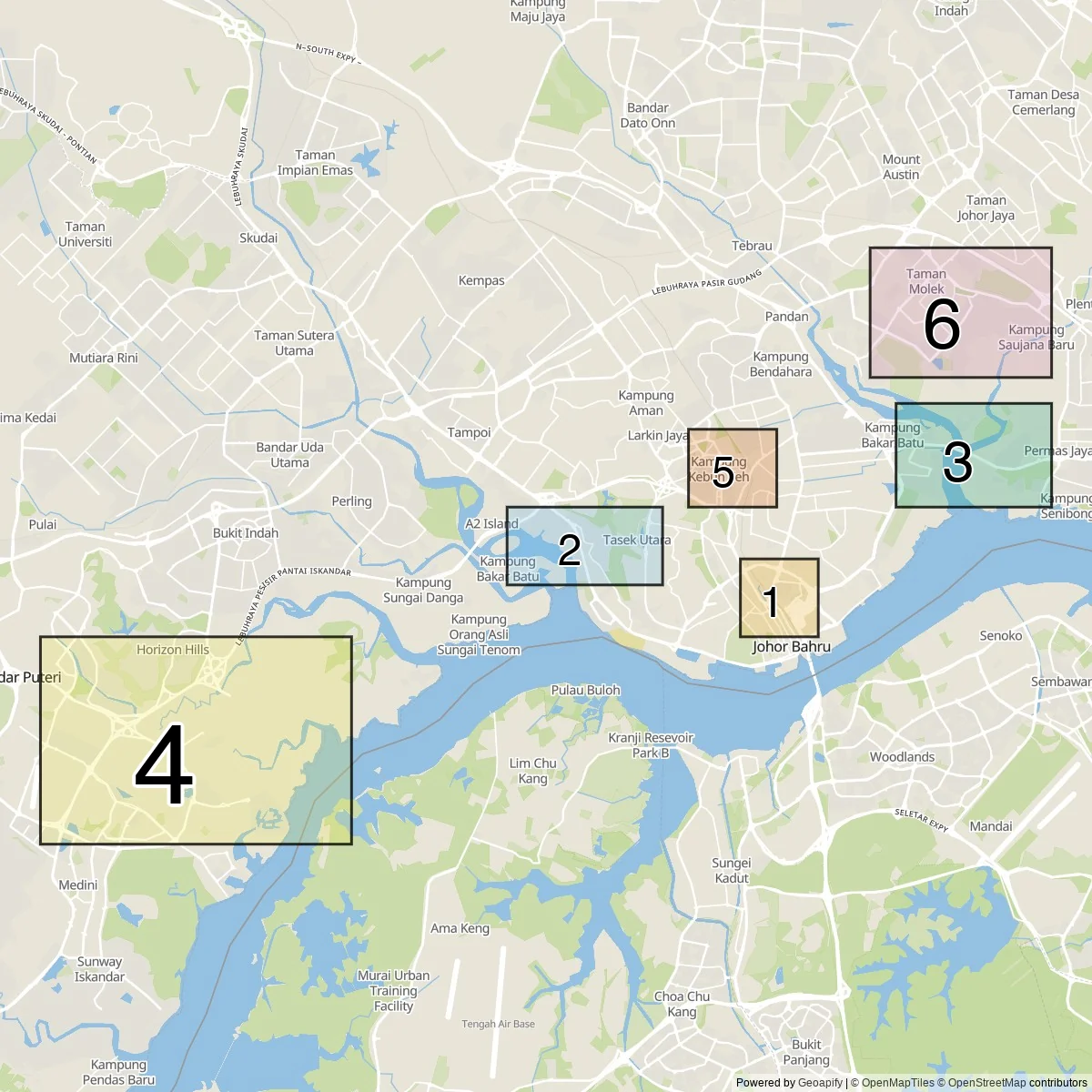
Johor Bahru is divided into 6 zones. The map below shows their official OSM boundaries, colour-coded to match the table — a quick way to orient yourself before zooming in on individual sights.
| # | Zones |
|---|---|
| 1 | Bandar JB · CBD (City Square) |
| 2 | Danga Bay |
| 3 | Permas Jaya · Permas Jaya / E |
| 4 | Iskandar Puteri · Iskandar Puteri (W) |
| 5 | Larkin |
| 6 | Tebrau · Tebrau / NE |
Frequently Asked Questions About Visiting Johor Bahru
Do I need a visa to visit Johor Bahru?
Probably not for short stays. Citizens of around 80 countries — including the US, UK, EU member states, Canada, Australia, New Zealand, Japan, South Korea, Singapore, and ASEAN nations — enter Malaysia visa-free for 90 days. As of 2024, citizens of India and China also enter visa-free for 30 days under the new policy. Other nationalities can apply for an e-Visa online at the official Malaysian portal at imi.gov.my (Immigration Department of Malaysia). All international travelers must complete the Malaysia Digital Arrival Card (MDAC) online within 3 days before arrival — this replaced the paper arrival card in 2024 and is required at imigresen-online.imi.gov.my/mdac. Passport must have at least 6 months remaining validity.
Is Johor Bahru safe for tourists?
JB is generally safe for tourists exercising standard precautions. The US State Department rates Malaysia at “exercise increased caution” — primarily for general regional concerns rather than JB-specific risks. Real risks: petty theft at the Causeway and JB Sentral (busy crossing points attract pickpockets); aggressive touts targeting Singaporean tourists in the historic core; scooter accidents in heavy traffic; the rare drink-spiking at unlicensed bars. Cross-border scams: be cautious of anyone offering to “help” with immigration paperwork at the Causeway. Solo women travelers: JB is generally fine but stick to well-lit areas at night and prefer Grab over street taxis. Drug laws: Malaysia has the death penalty for drug trafficking; even small amounts of cannabis result in serious sentences. Be aware: the Causeway crossing during peak hours (Friday evenings, weekends, public holidays) can be genuinely chaotic and slow; plan accordingly.
How many days do I need in Johor Bahru?
Two days handles JB’s headlines comfortably; three to four days lets you do day-trips. A solid 3-day plan: Day 1 — Sultan Abu Bakar Mosque + Royal Abu Bakar Museum (Istana Besar) + KTM Railway Museum + Sultan Ibrahim Building + dinner at Taman Molek; Day 2 — Legoland Malaysia full day + Sea Life Malaysia; Day 3 — heritage walk through Jalan Tan Hiok Nee + JB City Rainforest + City Square Mall shopping + cross-border dinner in Singapore via the Causeway. Day 4–5: Desaru Beach day-trip (90 min east, beach resorts and Desaru Coast theme parks), Tanjung Piai (the southernmost point of mainland Asia, 90 min west), or Endau-Rompin National Park (3 hours northeast, primary rainforest with elephants and tigers). Many travelers do JB as a Singapore day-trip — workable for shopping and lunch but rushed; an overnight dramatically improves the experience.
What’s the best area to stay in Johor Bahru?
Three solid options. City Centre / JB Sentral — the obvious choice for first-time visitors and Singapore day-trippers; walking distance to the Causeway, City Square Mall, and historic landmarks; mid-range to luxury hotels (DoubleTree, Mövenpick, Renaissance, Berjaya Waterfront) at MYR 200–600/night; budget hostels at MYR 60–150/night. Iskandar Puteri / Puteri Harbour — best for families visiting Legoland (15 min away vs 45 min from city center); modern resort hotels (Somerset Puteri Harbour, Holiday Villa). Taman Molek — quieter residential-and-dining neighborhood 10 km east; mid-range hotels and serviced apartments at MYR 150–280/night, walking distance to the city’s best local restaurants. Skip: hotels far from the Causeway or Iskandar if your trip is short.
How much does it cost to visit Johor Bahru’s major sights?
JB’s headline sights are inexpensive. Sultan Abu Bakar Mosque: free (donations expected), modest dress required. Royal Abu Bakar Museum (Istana Besar): ~MYR 10. Sultan Ibrahim Building: external viewing only, free. KTM Railway Museum: free. JB City Rainforest: free. Sri Mariamman Temple, Church of the Immaculate Conception: free. Heritage walk Jalan Tan Hiok Nee: free. Legoland Malaysia day ticket: ~MYR 240 adult, ~MYR 200 child via legoland.com.my; combined Theme Park + Water Park ticket ~MYR 320; multi-day passes available. Sea Life Malaysia: ~MYR 80. Hello Kitty Town & Thomas Town: ~MYR 80. Causeway crossing by car: MYR 7.5 toll one-way; by bus: ~MYR 4.50 (Causeway Link CW1).
Should I drink the tap water in Johor Bahru?
The official Malaysian government position is that tap water meets WHO drinking-water standards, but in practice locals universally boil tap water before drinking due to plumbing variation in older buildings. Tourist advice: use bottled water (~MYR 1–3 per liter at 7-Eleven and supermarkets) for drinking and brushing teeth. Major hotels and reputable restaurants use filtered water and ice — generally safe. The CDC traveler health page recommends bottled or boiled water for Malaysia. Tap water is fine for showering. Reusable filter bottles (LifeStraw, Grayl) work well in Malaysia.
Should I cross the Causeway to Singapore — and how does that work?
If you’re already in JB, a Singapore day-trip is genuinely worthwhile and surprisingly straightforward. Practical advice: bring your passport (essential — both immigration controls require physical passport scanning); complete the Singapore Arrival Card (SGAC) online before crossing at eservices.ica.gov.sg; complete the Malaysia Digital Arrival Card (MDAC) at imigresen-online.imi.gov.my/mdac for the return trip. Cross-border bus options: Causeway Link CW1 (JB Sentral to Singapore Queen Street, ~30 min in non-peak), CW2 (JB Sentral to Singapore Kranji MRT), CW3 (JB Sentral to Singapore Newton Circus). Cost ~MYR 4.50–6. Peak hours (Friday evening, weekends, Singapore public holidays) can stretch the crossing to 2–4 hours; avoid if possible. The forthcoming JB-Singapore RTS (opening 2027) will dramatically simplify cross-border transit.
Is tipping expected in Johor Bahru?
Tipping is not deeply rooted in Malaysian culture but is increasingly common in tourist-facing service. Restaurants: 10% service charge automatically added at most mid-range and upscale restaurants (look for “+10%” on the menu) plus 6% SST government tax — that’s the standard “tip”; round up if pleased beyond that. At hawker centres and small kopitiams: no tip expected. Hotel porters: MYR 5–10 per bag at upscale hotels. Hotel housekeeping: MYR 5–10 per night left at end of stay. Spa/massage: 10–15% if pleased; not added automatically. Tour guides: MYR 50–100 per person for half-day, MYR 100–200 for full private day; bus drivers MYR 20–50 for a full-day trip. Grab/Taxi: round up to nearest MYR; not strictly required. Beach hawkers and street vendors: agreed price only, no tip. Tip in Malaysian Ringgit; small notes appreciated.
Notable People from Johor Bahru
Johor Bahru has produced several prominent Malaysians:
- Sultan Mahmud Iskandar Al-Haj (1932–2010) — the eighth Yang di-Pertuan Agong (King) of Malaysia (r. 1984–1989) and Sultan of Johor (r. 1981–2010). Beloved figure throughout the state.
- Sultan Ibrahim Iskandar (b. 1958) — current Sultan of Johor and the 17th Yang di-Pertuan Agong of Malaysia (since January 2024). One of the wealthiest royals in Asia.
- Zeti Akhtar Aziz (b. 1947) — distinguished economist; Malaysia’s first female central bank governor (Bank Negara Malaysia, 2000–2016), internationally respected for steering the country through the Asian Financial Crisis.
- Nauraj Singh Randhawa (b. 1992) — Malaysian record-holder in high jump, Commonwealth Games silver medalist (2018).
- Haziq Kamaruddin (1993–2021) — Olympic archer who represented Malaysia at the 2012 London and 2016 Rio Games.
Whether you’re crossing from Singapore for a day trip — JB makes the perfect Singapore-shopping-and-eating extension, especially with the Singapore Dollar’s strength against the Malaysian Ringgit — or planning an extended Malaysian adventure, JB offers an authentic taste of southern Malaysia’s warmth and diversity. From the historic Sultan Abu Bakar Mosque to modern Legoland, bustling night markets to the upcoming RTS-connected future, the city is undergoing genuine transformation. Three to four days handles the headlines; combined with Desaru beaches and the Endau-Rompin rainforest, a full Johor week is genuinely rewarding.
AFRIKA
Cairo Hurghada Johannesburg Marrakech
ASIA
Abu Dhabi Agra Antalya Bangkok Batam Beijing Bengaluru Cebu City Chiang Mai Chiba Chennai Da Nang Dammam Delhi Denpasar Dubai Fukuoka Guangzhou Guilin Ha Long Hanoi Ho Chi Minh City Jakarta Jaipur Johor Bahru Kolkata Krabi Kuala Lumpur Kyoto Macau Mecca Medina Mugla Mumbai Osaka Pattaya Penang Phuket Riyadh Seoul Shanghai Shenzhen Singapore Taipei Tokyo Zhuhai
EUROPE
Amsterdam Athens Barcelona Berlin Brussels Budapest Copenhagen Dublin Florence Frankfurt am Main Heraklion Krakow Lisbon London Madrid Milan Munich Nice Paris Porto Prague Rhodes Rome Stockholm Venice Vienna Warsaw
NORTH AMERICA
Cancun Las Vegas Los Angeles Miami New York City Orlando San Francisco Toronto Vancouver
SOUTH AMERICA
Buenos Aires Lima Rio De Janeiro
OCEANIA
Auckland Honolulu Melbourne Sydney