
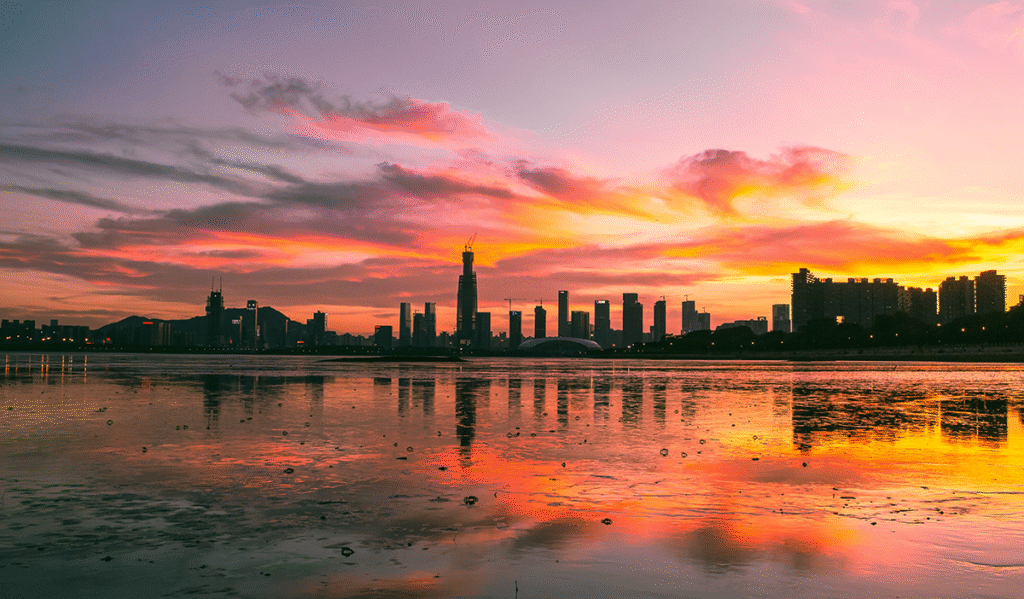
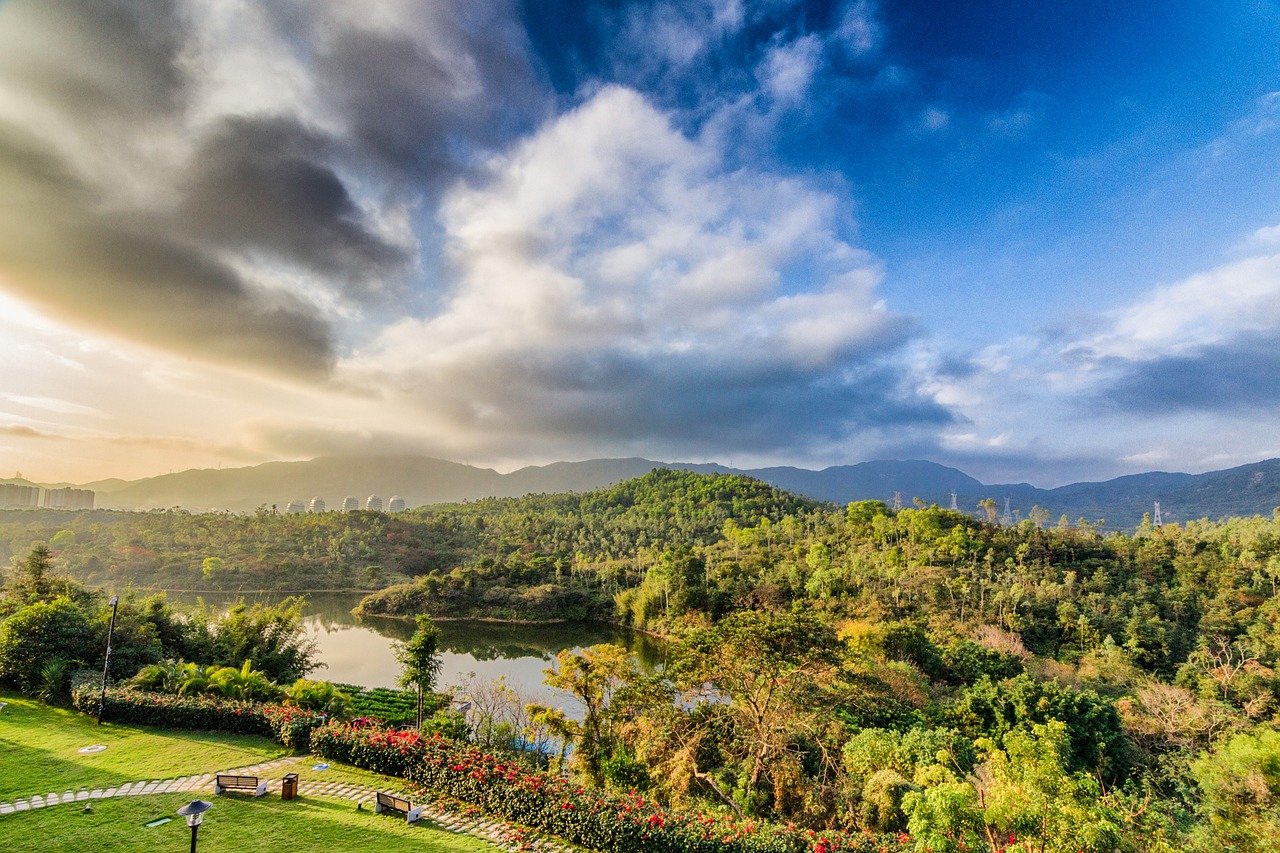
sun jib, pixabay
Shenzhen is one of the most remarkable cities on Earth. In just four decades, this former fishing village in southern China’s Pearl River Delta transformed into a 17-million-resident megacity that rivals Silicon Valley for tech innovation and Hong Kong for skyline drama. Whether you’re drawn to cutting-edge gadget markets, world-class theme parks, subtropical beaches, or Cantonese dim sum, this Shenzhen travel guide covers everything you need to plan your trip.
Shenzhen at a Glance: Essential Facts for Travelers
Before you start planning, here are the key facts about Shenzhen (深圳, pronounced Shēnzhèn in Mandarin, Samzan in Cantonese):
| Detail | Info |
|---|---|
| Location | Guangdong Province, southern China — bordering Hong Kong |
| Coordinates | 22° 37′ N, 114° 4′ E |
| Population | 17.56 million (2020 census) |
| Area | 1,991 km² across 10 districts |
| Elevation | 2 meters above sea level |
| Timezone | UTC+8 (China Standard Time) |
| Calling Code | +86 755 |
| Zip Codes | Starting with 518000 |
| Known For | Tech headquarters (Huawei, Tencent, DJI), theme parks, 260 km coastline |
| UNESCO Status | City of Design (since 2008) |
| Official Website | english.sz.gov.cn |
Shenzhen sits just 100 km southeast of Guangzhou, 60 km south of Dongguan, and 65 km northeast of Macau. Its border with Hong Kong makes it one of the most accessible mainland Chinese cities for international travelers.
Upcoming Events in Shenzhen
| Date | Title | Details |
|---|---|---|
| 2026-09-16 to 2026-09-18 | CPHI China Shenzhen pharmaceutical expo | CPHI China’s Shenzhen edition runs for three days from 16 September at the Shenzhen International Convention and Exhibition Center, gathering the pharmaceutical supply chain from ingredients and machinery to packaging and contract services. Manufacturers, distributors and procurement teams from across Asia use the fair to source products and partners in one of the world’s most important pharma manufacturing markets. The event is for trade visitors, with free or paid registration options depending on package. It anchors a busy exhibition season in the city’s convention venues. [Source] |
| 2026-09-25 to 2026-09-27 | Mid-Autumn Festival in Shenzhen | The Mid-Autumn Festival, falling in late September in 2026, is one of China’s most beloved holidays, and Shenzhen celebrates with lantern displays, mooncakes and family gatherings under the full moon. Parks, the OCT districts and waterfront promenades host seasonal lights, performances and markets, while shopping malls and theme parks lay on special programmes. It is a warm, family-friendly time to experience local traditions, though popular spots grow crowded. Sampling regional mooncakes and admiring the illuminations along Shenzhen Bay make for a memorable evening during this cherished autumn celebration. [Source] |
| 2026-10-01 to 2026-10-07 | National Day Golden Week in Shenzhen | China’s National Day holiday brings a week of festivity to Shenzhen from 1 October, with the Golden Week break running through 7 October. Expect flag-raising ceremonies, themed light shows on the skyscrapers around the Civic Center and Shenzhen Bay, flower displays in major parks, and special programmes at attractions such as the OCT theme parks and Splendid China. Public celebrations are free, while attraction tickets vary, and crowds peak in the first days of the holiday. It is a spectacular, if busy, time to experience the city in celebratory mode. [Source] |
| 2026-10-13 to 2026-10-15 | HOTELEX Shenzhen hospitality and coffee show | HOTELEX Shenzhen, the China International Hotel Equipment and Supplies exhibition, takes over the Shenzhen World Exhibition and Convention Center for three days from 13 October, alongside the CONNEXION lifestyle show covering coffee, tea and furniture. Hoteliers, restaurateurs, cafe owners and baristas browse kitchen equipment, tableware and interiors, with competitions and demonstrations livening the halls. The fair is aimed at trade visitors with registration required, and it reflects the Greater Bay Area’s enormous hospitality market. Coffee culture fans will find an especially rich programme. [Source] |
| 2026-10-20 to 2026-10-23 | Shenzhen International Gift and Home Fair (Autumn) | The autumn edition of the Shenzhen International Gift and Home Fair opens for four days from 20 October at the Shenzhen World Exhibition and Convention Center. One of China’s largest sourcing platforms for gifts, handicrafts, watches, household items and seasonal merchandise, it draws buyers, wholesalers and retailers stocking up ahead of the year-end shopping season. Registration is required and the fair is primarily aimed at trade visitors. The sheer breadth of products on show offers a window into the consumer-goods engine of the Pearl River Delta. [Source] |
| 2026-11-26 to 2026-11-28 | China Hi-Tech Fair 2026 | The China Hi-Tech Fair, often called China’s most important technology exhibition, returns to the Shenzhen World Exhibition and Convention Center for three days from 26 November. National pavilions, provincial delegations and thousands of companies present advances in information technology, robotics, smart manufacturing and new materials, while forums bring together investors, researchers and entrepreneurs. Registration is required, with free and paid options typically available. For anyone interested in where Chinese innovation is heading, the fair is the season’s essential date in the city’s calendar. [Source] |
City News in Shenzhen – last 14 days
| Date | Category | Headline | Details |
|---|---|---|---|
| 2026-09-14 | Public safety | Shenzhen government announces citywide air defence siren test | The Shenzhen municipal government has issued a public notice announcing a citywide test of air defence sirens, part of the annual routine conducted around National Defence Education Day. The notice tells residents that sirens will sound at scheduled times and that no protective action is required, urging the public to stay calm and continue normal activities. Schools and communities often use the occasion for civil defence education. Authorities publish the arrangements in advance to prevent confusion when the alarms are heard across the city’s districts. [Source] |
| 2026-09-14 | Business | Bay Chip Expo to open in Shenzhen in October with global semiconductor line-up | The 2026 Bay Chip Expo is set to open in Shenzhen in October, promising a one-stop view of global semiconductor forces. The trade event gathers chip designers, manufacturers, equipment makers and supply-chain companies from the Greater Bay Area and beyond, with launches and forums spanning design, packaging and computing hardware. The expo underlines Shenzhen’s ambition to strengthen its role in China’s semiconductor ecosystem amid a national push for chip self-sufficiency. Registration details and the exhibitor line-up were publicised ahead of the opening. [Source] |
| 2026-09-14 | Local government | Shenzhen district assigns 36 leaders to 69 communities and 344 urban villages | A Shenzhen district has assigned 36 district-level leaders to oversee 69 communities and 344 urban villages, sending its entire leadership corps down to the grassroots. The deployment is designed to strengthen frontline governance, with officials expected to coordinate services, resolve residents’ problems and oversee safety in the dense urban villages that house much of the city’s migrant workforce. The move reflects a governance style that pairs senior cadres with specific neighbourhoods, and other districts will be watching its results closely. [Source] |
| 2026-09-14 | Business | Optoelectronics expo in Shenzhen sees computing-power boom with full order books | Reports from the China International Optoelectronic Exposition in Shenzhen describe a booming computing-power business, with new optical products launched in clusters, order books full and production capacity accelerating. Suppliers of optical modules and components serving data centres and artificial intelligence infrastructure reported particularly strong demand. The fair, held at the Shenzhen World venue, underscored how the AI boom is flowing through the city’s photonics and hardware supply chain. Companies signalled continued capacity expansion to meet orders stretching into next year. [Source] |
| 2026-09-14 | Public safety | Shenzhen kennels caught smuggling banned fighting dogs into Hong Kong | Kennels in Shenzhen have been caught smuggling banned fighting dogs into Hong Kong, prompting concern from authorities and animal welfare groups on both sides of the border. The report describes cross-border channels used to move prohibited breeds into the city, where they are banned under dangerous dogs regulations. Investigators are examining the operators involved, and campaigners are calling for tighter checks. The case highlights persistent smuggling of animals through Shenzhen’s border crossings despite ongoing enforcement efforts. [Source] |
| 2026-09-14 | Culture | Tech-meets-tradition carnival to land in Shenzhen as Trip.com seeks creative proposals | A Splendid Technology Chinese Carnival blending technology with tradition is set to land in Shenzhen, and travel platform Trip.com has launched an open call for creative proposals from across the internet. The project aims to fuse cutting-edge staging with Chinese cultural themes, promising an event where heritage meets innovation. Organisers hope crowdsourced ideas will shape the carnival’s attractions and programming. The initiative adds to Shenzhen’s growing slate of large-scale cultural entertainment products aimed at residents and tourists alike. [Source] |
| 2026-09-14 | Local affairs | Shenzhen parks roll out 21 categories of AI applications citywide | Shenzhen’s parks have now deployed 21 categories of artificial intelligence application scenarios citywide, ranging from smart services for visitors to intelligent management of green spaces. The rollout reflects the city’s strategy of using its technology industry to upgrade everyday public services, turning parks into showcases for robots, smart guides and automated operations. Officials say the applications improve visitor experience and maintenance efficiency. The programme is expected to expand as more scenarios are piloted across the park network in the coming months. [Source] |
| 2026-09-14 | Business | HIT alumni build robot joints in Shenzhen, raising tens of millions of yuan | A startup founded by Harbin Institute of Technology alumni is building robot joints in Shenzhen and has raised tens of millions of yuan in funding. Joint modules are core components for humanoid and industrial robots, and the company’s backers are betting on soaring demand as China’s robotics industry scales up. The financing will support research and expanded production capacity. The deal underlines Shenzhen’s position as a magnet for hardware entrepreneurs and for investment across the robotics supply chain. [Source] |
| 2026-09-14 | Local government | Shenzhen party secretary leads delegation to Hong Kong and Macau to deepen cooperation | Shenzhen party secretary Jin Lei led a delegation to Hong Kong and Macau to deepen practical cooperation with the two special administrative regions. During the visit he met senior officials, including Macau’s chief executive, to discuss collaboration across innovation, finance, trade and the Greater Bay Area agenda. The trip signals continuity in cross-border coordination at the top level of the three cities. Officials framed the exchanges as building concrete projects that link Shenzhen’s economy more closely with its neighbours. [Source] |
| 2026-09-14 | Culture | Shenzhen-produced dance drama Return from Dunhuang makes Hong Kong debut | Return from Dunhuang, an original dance drama produced in Shenzhen’s Guangming district, has made its Hong Kong debut. The production draws on the art and history of the Dunhuang caves, translating Silk Road heritage into contemporary choreography. Its staging in Hong Kong showcases Shenzhen’s growing cultural production capacity and the increasing two-way flow of performing arts across the border. Audiences and commentators noted the symbolism of a young city exporting a work rooted in ancient tradition. [Source] |
| 2026-09-14 | Education | Shenzhen youths who paid 20,000 yuan for AI training courses say job guarantees never came | Young people in Shenzhen who paid around 20,000 yuan for artificial intelligence training courses say the promised guaranteed employment never materialised. The report describes graduates lured by advertisements pledging job placements in the booming AI sector, only to find the guarantees hollow once courses ended. The cases highlight a grey zone in the adult education market as AI hype fuels demand for retraining. Consumer advocates advise scrutinising contracts and institutions carefully before paying for career-transformation programmes. [Source] |
| 2026-09-14 | Sports | Shenzhen Energy pickleball team tournament concludes successfully | The 2026 Shenzhen Energy Environmental Protection Cup pickleball team tournament has concluded, bringing amateur teams together for spirited competition. The event, organised under the banner of unity and shared progress, reflects the rapid rise of pickleball as a recreational sport in Chinese cities, with Shenzhen companies and communities fielding teams. Organisers used the tournament to combine sport with environmental-protection publicity. Participants praised the atmosphere and called for the competition to become a regular fixture on the city’s amateur sports calendar. [Source] |
| 2026-09-14 | Sports | Guangdong Super League matchday in Shenzhen becomes a fan carnival | A Guangdong Super League football matchday in Shenzhen turned into a full fan carnival backed by CITIC Bank’s home-letter campaign, with supporters treated to interactive zones, giveaways and festivities around the ground. The provincial league has become a phenomenon drawing large crowds across Guangdong’s cities, and Shenzhen’s home fixtures are among its liveliest. The sponsorship activities added entertainment for families beyond the ninety minutes. The scenes underline the league’s role in boosting grassroots football culture across the region. [Source] |
| 2026-09-13 | Business | UBS to end fund sales at Shenzhen unit behind WE.UBS platform | UBS is to end fund sales at its Shenzhen unit behind the WE.UBS digital wealth platform, marking a retreat from a high-profile mainland digital wealth experiment. The move reflects a strategic reassessment of the Swiss bank’s onshore digital distribution ambitions in China. Clients are expected to be guided through transition arrangements as the business winds down its fund distribution activity. The decision is being read as a sign of the challenges foreign institutions face in China’s competitive retail wealth market. [Source] |
Shenzhen Events & City News Archive
Sources: EventsEye, Visit Shenzhen, Sina Finance, EE Times China, Sina Finance, Sina Finance, The Standard, National Business Daily
Weather Forecast for the Next 14 Days in Shenzhen
| Date | Weather | Max °F | Min °F | Rain mm |
|---|---|---|---|---|
| 2026-09-14 | ⛈️ | 85.4 °F | 74.7 °F | 7.6 mm |
| 2026-09-15 | 🌧️ | 87.8 °F | 74.5 °F | 3.5 mm |
| 2026-09-16 | ☁️ | 86.9 °F | 75.9 °F | 0.0 mm |
| 2026-09-17 | ⛅ | 86.3 °F | 74.9 °F | 0.0 mm |
| 2026-09-18 | ☀️ | 87.8 °F | 74.8 °F | 0.0 mm |
| 2026-09-19 | 🌧️ | 89.5 °F | 74.8 °F | 0.9 mm |
| 2026-09-20 | 🌧️ | 89.8 °F | 75.3 °F | 3.6 mm |
| 2026-09-21 | 🌧️ | 88.3 °F | 75.9 °F | 10.2 mm |
| 2026-09-22 | ⛈️ | 89.4 °F | 75.1 °F | 18.6 mm |
| 2026-09-23 | 🌧️ | 86.4 °F | 75.4 °F | 1.8 mm |
| 2026-09-24 | ⛅ | 85.9 °F | 74.8 °F | 0.0 mm |
| 2026-09-25 | ☁️ | 83.8 °F | 74.8 °F | 0.0 mm |
| 2026-09-26 | ☁️ | 87.9 °F | 74.2 °F | 0.0 mm |
| 2026-09-27 | ☁️ | 87.4 °F | 74.8 °F | 0.0 mm |
Shenzhen’s History: From Fishing Village to Global Tech Capital
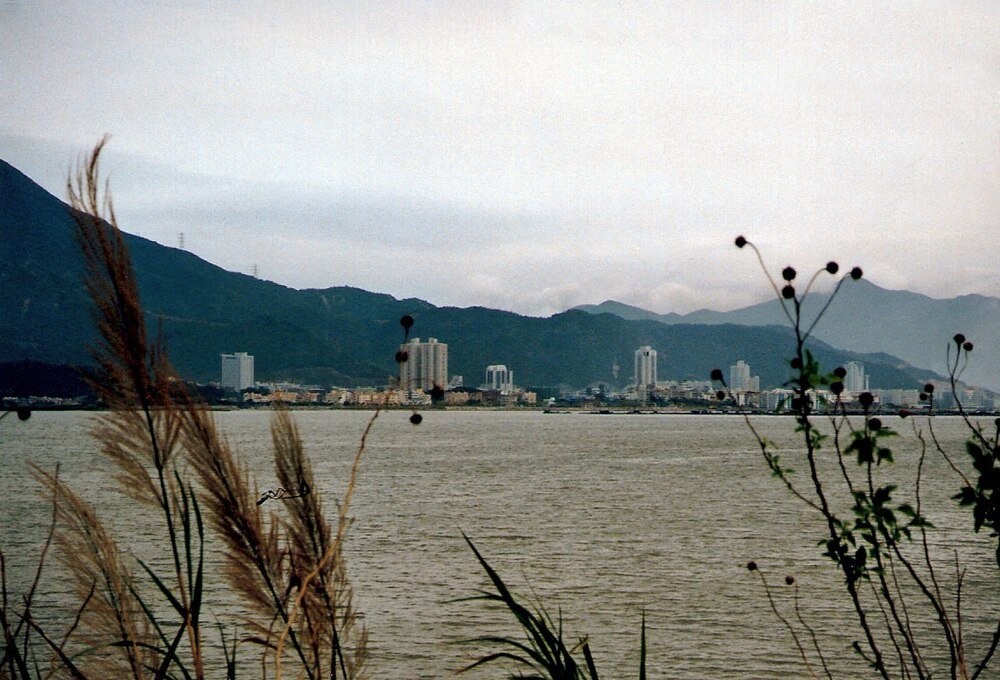
Shenzhen has the strangest history of any megacity on earth. In 1979, it had 30,000 people and a single dirt road. Forty-five years later, it has 17.5 million residents, China’s third-largest economy, the world’s fourth-busiest container port, the headquarters of Huawei, Tencent, DJI, and BYD, and the second-most skyscrapers above 150 metres of any city anywhere. The United Nations officially called it the fastest-growing city in human history.
The name itself means “deep trenches” — a reference to the irrigation channels (zhèn) that farmers dug in the local rice paddies as far back as 1410. For centuries Bao’an County was a quiet agricultural area opposite British Hong Kong. Then in 1979, the settlement was elevated to city status, and in 1980, Deng Xiaoping designated it China’s first Special Economic Zone (SEZ) — a controlled experiment in market-oriented reforms inside the otherwise planned Chinese economy.
| Year | Population | GDP |
|---|---|---|
| 1979 | 30,000 | $2.87 million |
| 1980 | 59,000 | $40 million |
| 1990 | 845,000 | — |
| 2000 | 6,550,000 | — |
| 2008 | — | $114.47 billion |
| 2010 | 10,223,000 | — |
| 2020 | 17,560,000 | — |
Between 1980 and 2008, Shenzhen averaged 26.9% annual GDP growth — the fastest sustained economic growth ever recorded by a major city. Per capita income rose from $122 in 1980 to over $13,000 by 2008. The SEZ initially covered just 396 km², but expanded dramatically to 1,953 km² in 2010 when the entire city came under the SEZ umbrella. Today, Shenzhen’s GDP rivals entire nations like Norway, and its per-capita output is comparable to South Korea’s. In 2023, Shenzhen overtook Guangzhou to become China’s third-largest urban economy behind only Shanghai and Beijing.
Geography, Climate & Best Time to Visit Shenzhen
Shenzhen sprawls across 1,991 km² along the Pearl River Delta, sharing a 30 km border with Hong Kong to the south (separated by the Sham Chun and Sha-Tau-Kok rivers) and looking out at the South China Sea to the west. The city’s 260 km coastline includes sandy beaches like Dameisha and Xichong, while inland the terrain rises to Mount Wutong (943 m), the city’s highest point. Lotus Hill and Mount Bijia provide accessible green escapes inside the urban core.
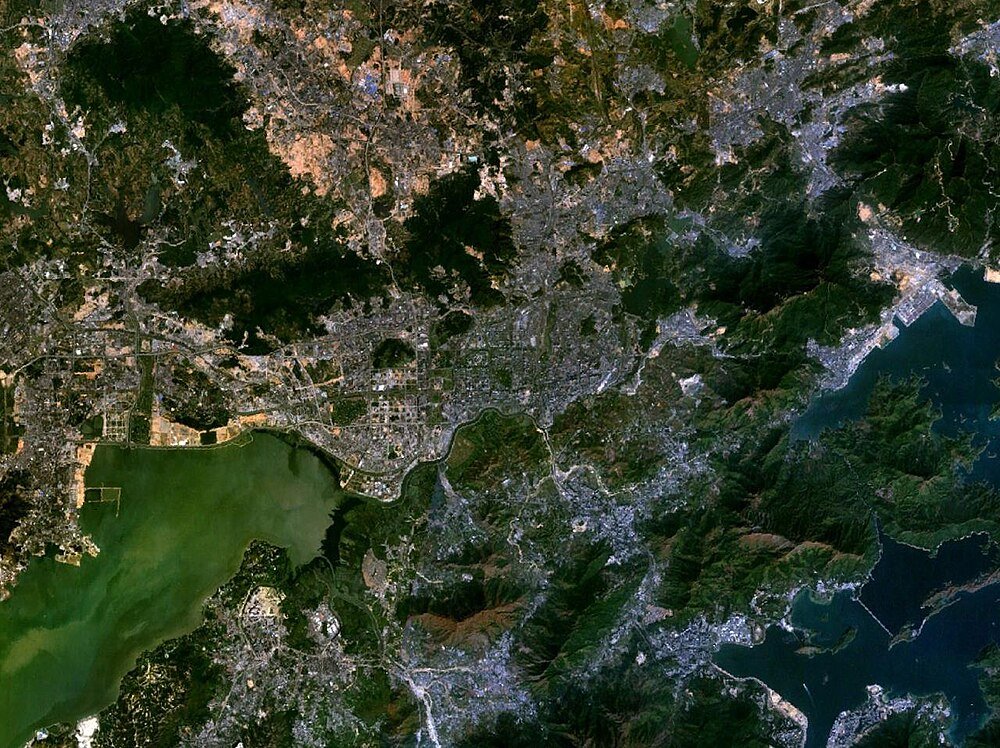
Satellite image of Shenzhen (north of the bay) and Hong Kong (south)
Climate
Shenzhen has a humid subtropical climate (Köppen Cfa) with warm, wet summers and mild, dry winters:
- Average annual temperature: 22.4°C (72.3°F)
- Annual rainfall: 1,933 mm, concentrated in the May–September monsoon season
- Typhoon season: June through October — pack a serious rain jacket, not just an umbrella
When to Visit
The most comfortable months are October through December — temperatures of 18–26°C, low humidity, minimal rain, and the best air quality of the year. March and April are the secondary window, though spring fog is common. Summers (June–September) are brutally hot, humid, and rain-prone, but hotel prices drop 20–30%. Air quality varies seasonally; check live readings at aqistudy.cn before outdoor sightseeing.
Shenzhen’s 10 Districts: Where to Stay and Explore
Shenzhen is divided into 10 districts — six established districts with full local governments and four newer functional districts focused on specific economic and development goals. The visitor’s working map: Futian for business and central sights, Nanshan for tech HQs and the expat district, Luohu for the Hong Kong border crossing.
Central and Established Districts
| District | Area | Population | Best For |
|---|---|---|---|
| Futian (福田) | 78.65 km² | 1.5 million | CBD, government quarter, Convention & Exhibition Center, shopping malls, Shenzhen Central Park |
| Luohu (罗湖) | 78.75 km² | 1.1 million | Hong Kong border crossings, Dongmen shopping district, traditional markets, railway station |
| Nanshan (南山) | 185.5 km² | 1.7 million | Tech company headquarters, Window of the World, Shekou expat district, Sea World, Shenzhen Bay Park |
| Bao’an (宝安) | 398.4 km² | 4.4 million | International airport, Bao’an Stadium, local life, manufacturing areas |
| Longgang (龙岗) | 387.8 km² | 3.9 million | Universiade Sports Centre, Dafen Oil Painting Village, more affordable accommodation |
| Yantian (盐田) | 74.63 km² | 214,000 | Dameisha Beach, OCT East resort, hiking trails, container port, fresh seafood |
Newer Functional Districts
| District | Area | Population | Best For |
|---|---|---|---|
| Longhua (龙华) | 175.58 km² | 2.5 million | Foxconn campus, Guanlan Print Village, local festivals |
| Guangming (光明) | 155.4 km² | 1.1 million | Science City development, farm-fresh food, emerging tech zone |
| Pingshan (坪山) | 167 km² | 551,000 | Hakka traditional houses, parks, universities, quieter atmosphere |
| Dapeng (大鹏) | 295.1 km² | 156,000 | Pristine beaches (Xichong, Nan’ao), Dapeng Fortress, snorkeling, hiking |
Where to stay: First-time visitors should base themselves in Futian (central, well-connected, walking distance to the CBD and main metro lines) or Nanshan (near theme parks and the expat-friendly Shekou waterfront). Budget travelers will find better deals in Longgang or Longhua. Beach seekers should head straight to Yantian or Dapeng.
Top Things to Do in Shenzhen
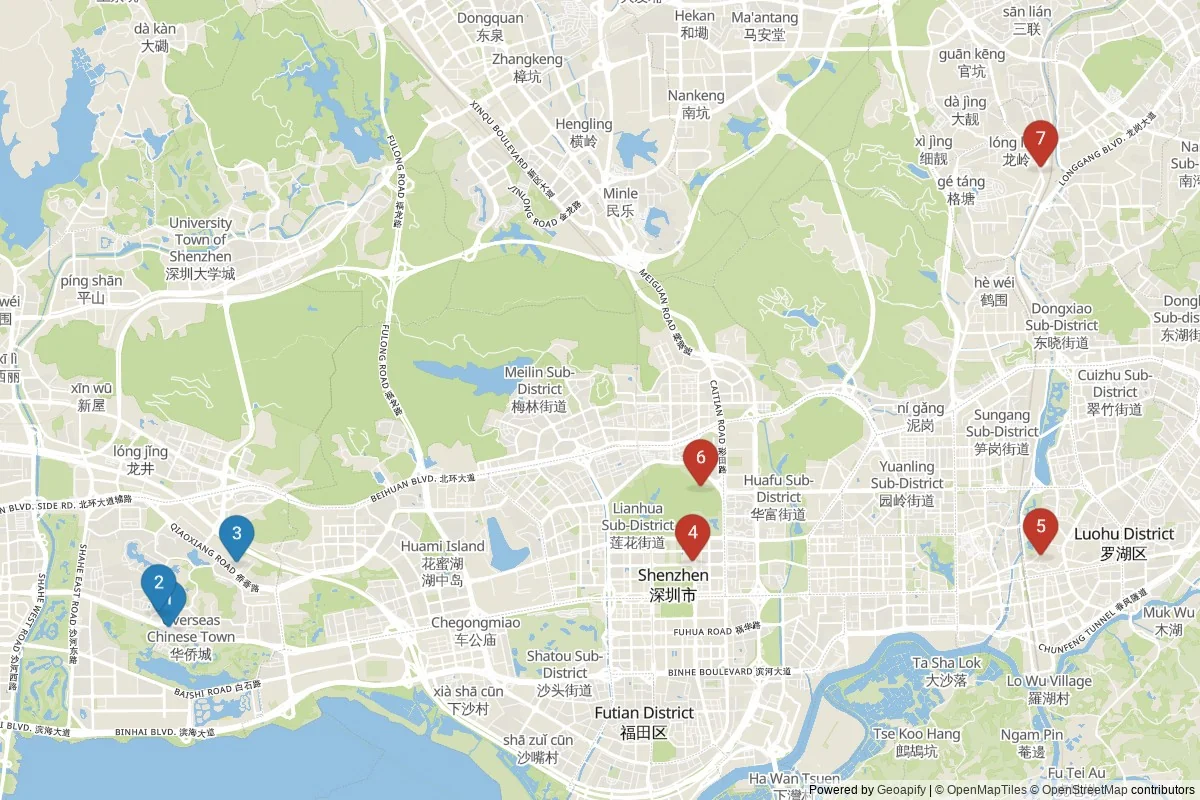
| # | Sight | Cluster | Type | Time | Entry | Best |
|---|---|---|---|---|---|---|
| 1 | Splendid China | Central | Theme park | ½ day | ¥180 | Morning |
| 2 | Window of the World | Central | Theme park | ½ day | ¥220 | Morning |
| 3 | OCT-LOFT | Central | Arts district | ~2 hrs | Free | Afternoon |
| 4 | Shenzhen Civic Center | Outer | Modern landmark | ~1 hr | Free | Anytime |
| 5 | Dongmen Pedestrian Street | Outer | Shopping street | ~1.5 hrs | Free | Evening |
| 6 | Lianhuashan Park | Outer | Urban park | ~1.5 hrs | Free | Morning |
| 7 | Dafen Oil Painting Village | Outer | Arts village | ~2 hrs | Free | Afternoon |
| 🚗 | Day Trip: Hong Kong | Day trip | Day trip | Full day | HK$ 50 ferry | Morning |
Theme Parks and Family Attractions
- Window of the World (世界之窗) — Over 130 miniature replicas of global landmarks including the Eiffel Tower, Taj Mahal, and Sydney Opera House. Located in Nanshan District next to the metro station of the same name. Tickets via en.szwwco.com.
- Happy Valley (欢乐谷) — Major amusement park with roller coasters, water rides, and seasonal shows. Adjacent to Window of the World.
- Splendid China Folk Village (锦绣中华民俗文化村) — Scale models of China’s most iconic landmarks alongside live cultural performances from the country’s 56 ethnic groups.
- OCT East (东部华侨城) — A 9 km² resort complex in Yantian District featuring European-style villages, cable cars, a tea-themed theater show, and golf courses.
Culture and Art
- Dafen Oil Painting Village — In Longgang District, a unique neighborhood home to hundreds of artists producing everything from masterwork reproductions to original paintings. You can commission custom portraits on the spot.
- OCT-LOFT Creative Culture Park — A converted factory complex in Nanshan filled with independent galleries, design studios, bookshops, and specialty coffee shops. Shenzhen’s creative heartbeat.
- Shenzhen Museum of Contemporary Art & Urban Planning (MOCAUP) — Designed by Austrian firm Coop Himmelb(l)au, this Futian landmark hosts rotating exhibitions on modern art and the city’s own urban evolution.
- Guan Shanyue Art Museum — Named after the famous Lingnan-school painter, featuring traditional Chinese and contemporary art exhibitions year-round.
Nature and Beaches
- Dameisha Beach Park (大梅沙海滨公园) — Shenzhen’s most popular free public beach, stretching 1.8 km along the South China Sea in Yantian District. Open since 1999, with swimming, volleyball, and palm-lined promenades.
- Mount Wutong (梧桐山) — At 943 metres, the highest peak in Shenzhen offers challenging hiking trails with panoramic views over the city, Hong Kong, and the coast.
- Nei Lingding Island — A nature reserve in the Pearl River Delta featuring tropical rainforest and wild macaque monkeys. Accessible by boat from Shekou.
- Shenzhen Bay Park — A 13 km waterfront promenade stretching along the coast with views across to Hong Kong. Ideal for sunset walks and cycling.
Architecture and City Sights
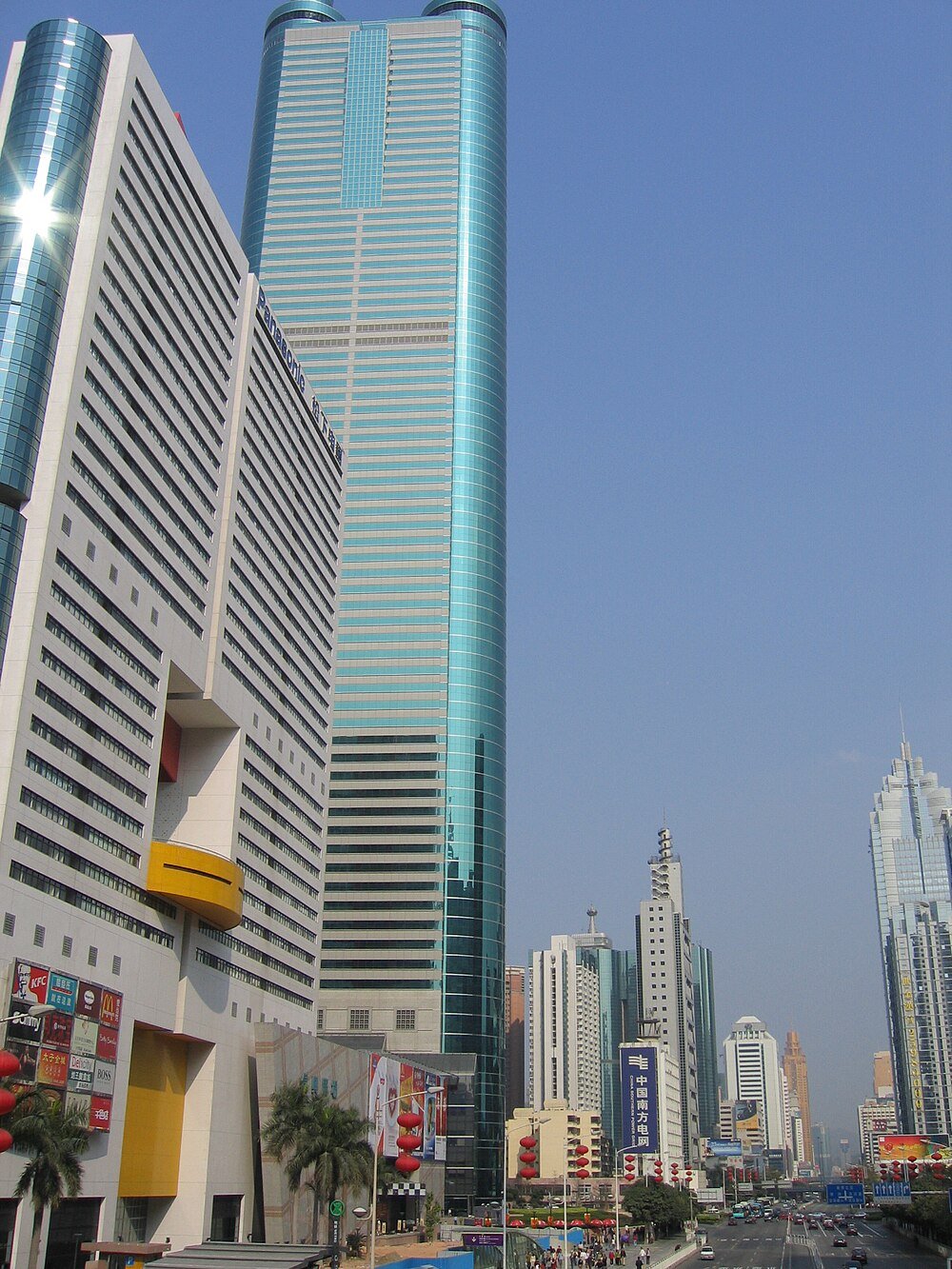
- Ping An Finance Center — At 599 metres, China’s second-tallest skyscraper and the world’s fifth-tallest. The observation deck on the 116th floor offers extraordinary city views; tickets ~180 RMB.
- Shun Hing Square — A 384-metre tower in Luohu with a 360° observation deck at 300 metres. One of the best viewpoints for photographing the city.
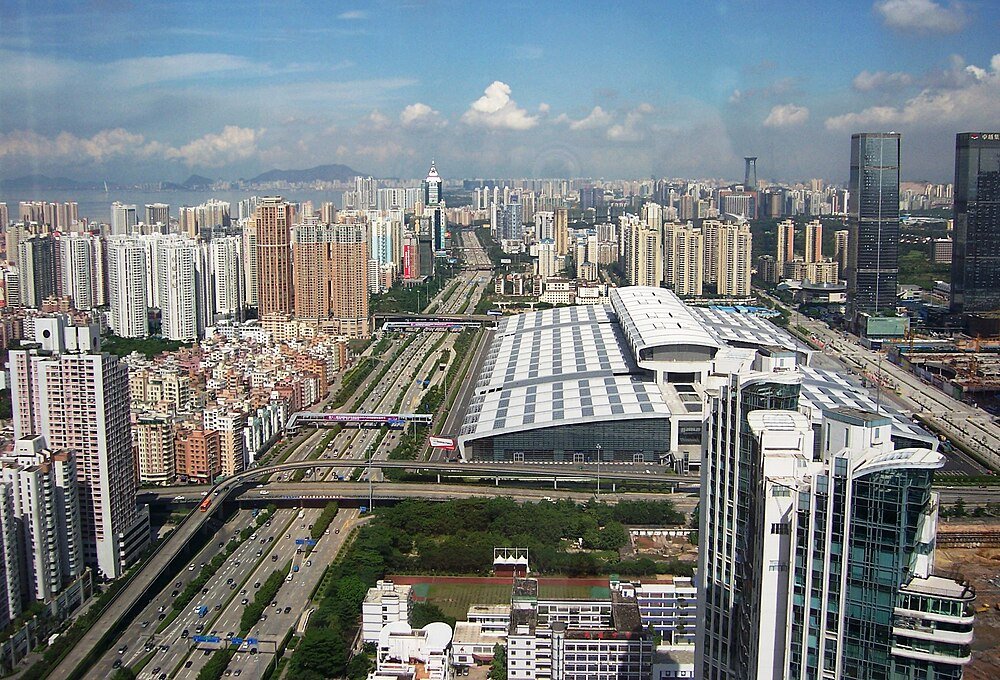
- Shenzhen Convention & Exhibition Center — Futian’s massive exhibition complex hosts major trade fairs including the Canton Fair satellite events.
- Shenzhen City Hall — A striking piece of modern civic architecture in the Civic Center area of Futian, flanked by the Shenzhen Library and Concert Hall.
Shopping
- Huaqiangbei Electronics Market — The world’s largest electronics market district. Multi-story buildings packed with components, gadgets, drones, and phones at wholesale prices. The hardware-engineer pilgrimage site.
- Dongmen Shopping District — Luohu’s pedestrianized shopping area, one of the oldest commercial streets in Shenzhen, mixing traditional market stalls with modern retail.
- Sea World (海上世界) — Shekou’s waterfront entertainment district, anchored by the Minghua, a 180-metre retired French cruise ship turned restaurant. The surrounding streets feature international restaurants, bars, and boutiques in a relaxed expat-friendly atmosphere.
Sports and Recreation
- Mission Hills Golf Club — The world’s largest golf complex, with 12 championship courses designed by legends like Jack Nicklaus and Ernie Els.
- Shenzhen Bay Gymnasium — A striking modern sports venue in Nanshan, hosting national and international competitions.
- Bao’an Stadium — The city’s main football venue, regularly hosting Chinese Super League matches.
How to Get to Shenzhen
By Air: Shenzhen Bao’an International Airport
Located 35 km northwest of downtown in Bao’an District, Shenzhen Bao’an International Airport (SZX) is China’s fourth-busiest airport, handling over 50 million passengers annually. The terminal — redesigned in 2013 with a distinctive wave-shaped roof by Italian architect Massimiliano Fuksas — serves as the home base for Shenzhen Airlines and offers extensive domestic connections plus growing international routes.
Travel tip: Flights through Shenzhen are frequently cheaper than Hong Kong International Airport, making SZX an excellent gateway for budget-conscious travelers exploring southern China.
From Hong Kong
Getting from Hong Kong to Shenzhen is fast and straightforward — there are six border crossings, and most run nearly 24/7:
- MTR East Rail Line to Lo Wu or Lok Ma Chau — the most popular route, taking about 45 minutes from Tsim Sha Tsui
- High-speed rail from West Kowloon Station to Futian Station — just 14 minutes
- Jet ferries departing hourly from Hong Kong Island, Kowloon’s China Ferry Terminal, or Hong Kong Airport directly to Shekou or Fuyong (near Shenzhen Airport)
- Hong Kong-Zhuhai-Macao Bridge (opened 2018, 55 km) and the new Shenzhen-Zhongshan Link (opened June 2024) for road crossings
By Train from Mainland China
Shenzhen Railway Station at Lo Wu connects to Beijing (18 hours), Shanghai, and most major Chinese cities via conventional rail. Shenzhen North Station serves the high-speed rail network with frequent connections to Guangzhou (30 minutes), Wuhan, Changsha, and beyond. Booking via 12306.cn (the official Chinese rail portal) — but be aware most foreigners find the booking process easier via Trip.com or 12go.
Getting Around Shenzhen: Metro, Buses & Electric Transport
Shenzhen’s public transport system is modern, affordable, and increasingly sustainable.
Metro
The Shenzhen Metro, operational since 2004, is the fastest way to navigate the city. The network covers all major districts and tourist attractions, with English signage and announcements throughout. Fares range from 2–14 RMB depending on distance. A single-day unlimited pass costs 25 RMB. Routes at eng.szmc.net.
Buses
Shenzhen made global headlines in 2017 when it became the world’s first major city to electrify its entire bus fleet — all 16,359 buses run on electric power. Over 62.5% of taxis are also electric. Bus fares are typically 1–3 RMB, payable via transit card or mobile payment (WeChat Pay, Alipay).
Long-Distance Connections
Long-distance buses connect Shenzhen to Guangzhou, Dongguan, Xiamen, and other regional destinations from multiple bus terminals across the city.
Shenzhen’s Seaports: A Global Shipping Hub
Beyond its role as a travel destination, Shenzhen is the world’s fourth-busiest container port and China’s second-busiest after Shanghai. The Yantian International Container Terminal is the flagship facility, with capacity for 11 ships simultaneously (expanding to 15). Together with Chiwan, Shekou, and Mawan terminals, Shenzhen now handles significantly more container traffic than neighboring Hong Kong:
| Port | 2004 | 2021 |
|---|---|---|
| Hong Kong | 21.98M TEU | 17.80M TEU |
| Shenzhen | 13.66M TEU | 28.79M TEU |
Shenzhen’s Economy: China’s Silicon Valley
In 2023, Shenzhen overtook Guangzhou to become China’s third-largest urban economy, behind only Shanghai and Beijing. The city’s GDP rivals that of entire nations — comparable to Norway — with per-capita output on par with South Korea.
Tech Companies Headquartered in Shenzhen
Shenzhen is the operational headquarters for some of the world’s most influential technology companies:
- Huawei — Telecommunications and smartphone giant; the central campus in Bantian (Longgang District) is open for guided visits.
- Tencent — Parent company of WeChat and one of Asia’s largest tech conglomerates, headquartered in the Tencent Binhai Towers in Nanshan.
- DJI — World leader in consumer and commercial drones; flagship store in Sea World, Shekou.
- BYD — Global electric vehicle and battery manufacturer; the Pingshan campus is the manufacturing heart.
- Foxconn — The world’s largest electronics contract manufacturer, with its massive Longhua campus employing over 300,000 workers.
The Shenzhen Stock Exchange, one of Asia’s major financial markets, further cements the city’s status as a financial powerhouse. In 2018, Shenzhen ranked 18th among the world’s top financial centers; current ranking is 11th globally per the Global Financial Centres Index.
Skyline Statistics
Shenzhen’s ambition is visible in its skyline: the city has 238 towers over 150 metres tall (with 56 more under construction), making it the second-most vertical city on the planet. The Ping An Finance Center at 599 metres is the undisputed crown jewel.
Shenzhen by District: The 10 区
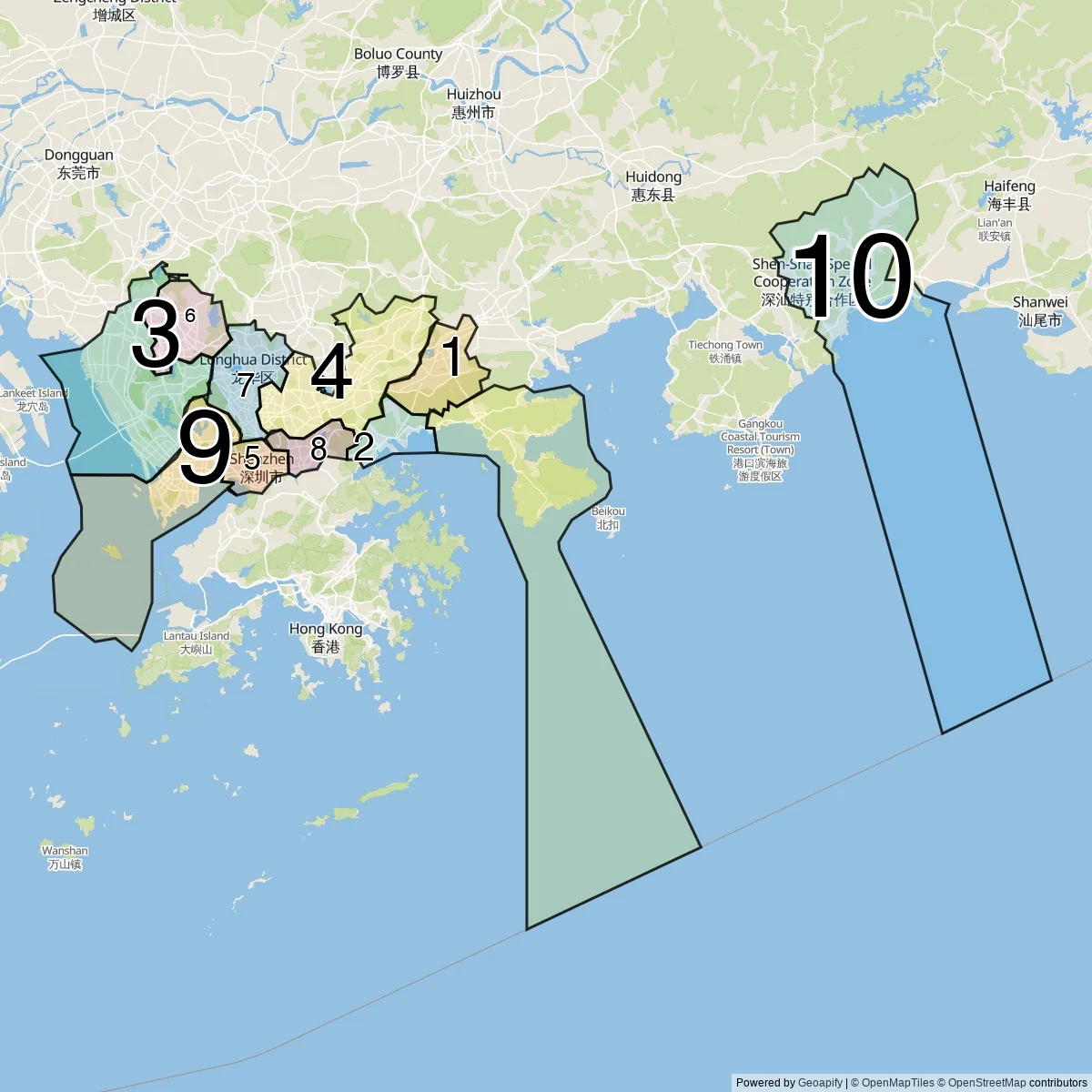
Shenzhen is divided into 10 districts. The map below shows their official OSM boundaries, colour-coded to match the table — a quick way to orient yourself before zooming in on individual sights.
| # | 区 |
|---|---|
| 1 | 坪山区 · Pingshan District |
| 2 | 盐田区 · Yantian District |
| 3 | 宝安区 · Bao’an District |
| 4 | 龙岗区 · Longgang District |
| 5 | 福田区 · Futian District |
| 6 | 光明区 · Guangming District |
| 7 | 龙华区 · Longhua District |
| 8 | 罗湖区 · Luohu District |
| 9 | 南山区 · Nanshan District |
| 10 | 深汕特别合作区 · Shenshan Special Cooperation Zone |
Frequently Asked Questions About Visiting Shenzhen
Do I need a visa to visit Shenzhen?
Probably yes — and rules have shifted dramatically in 2024–2025. Visa-free transit was significantly expanded in late 2024: most US, EU, UK, Australian, Canadian, Japanese, and ASEAN passport-holders can now use the 240-hour transit visa-free policy if entering and exiting through different cities or ports — Shenzhen qualifies. Citizens of around 38 countries (most EU members, Australia, New Zealand, Japan, South Korea, Malaysia, Thailand) can also enter visa-free for tourist stays up to 30 days under the bilateral agreements signed since November 2024. Most other nationalities still need a tourist visa applied for at the Chinese embassy before travel; the official portal is visaforchina.cn. Hong Kong-Shenzhen border crossing: travelers entering Shenzhen from Hong Kong receive a 5-day Shenzhen Special Economic Zone visa-on-arrival for many nationalities — convenient for short trips. Always check the latest at the Chinese Ministry of Foreign Affairs 4–6 weeks before travel.
Is Shenzhen safe for tourists?
Shenzhen is genuinely safe — China overall has very low violent crime rates by international standards, and Shenzhen in particular is heavily policed and tourist-friendly. The US State Department rates China at “exercise increased caution” — primarily for the legal and political risks of arbitrary detention rather than street crime concerns. Real risks: pickpocketing in crowded markets (Huaqiangbei, Dongmen) and metro stations during peak hours; rare overcharging at Lo Wu Commercial City; counterfeit electronics if you’re not careful at Huaqiangbei. Air quality: Shenzhen’s air is significantly better than northern Chinese cities but still occasionally poor — check live readings at aqicn.org/city/shenzhen. Apps and connectivity: Google, Facebook, WhatsApp, Instagram, and most Western news sites are blocked behind the Great Firewall; install a reputable VPN before arrival if you need them.
How many days do I need in Shenzhen?
Two to three full days handles the city comfortably; four if you include a day-trip to Hong Kong or Guangzhou. A solid 3-day plan: Day 1 — Futian CBD (Shenzhen Convention & Exhibition Center, Central Park, Ping An Finance Center observatory, Civic Center) + dinner in Coco Park; Day 2 — Nanshan (Window of the World + OCT-LOFT Creative Park + Shekou Sea World + Shenzhen Bay Park sunset); Day 3 — Dameisha Beach (Yantian) OR Dafen Oil Painting Village + Splendid China Folk Village + Huaqiangbei electronics market. Day 4: day-trip to Guangzhou (30 min by HSR) or Hong Kong (14 min by HSR from Futian Station to West Kowloon).
What’s the best area to stay in Shenzhen?
Three solid options. Futian — the obvious central choice; modern luxury hotels (Grand Hyatt, Mandarin Oriental, Four Seasons, Marriott Marquis), walking distance to the CBD, Central Park, and the convention center; multiple metro lines including the Hong Kong-bound Futian Station. Nanshan / Shekou — the expat-friendly waterfront option; international-feel hotels around Sea World (Hilton, Le Méridien, Wyndham), DJI flagship store nearby, easy ferry to Hong Kong. Luohu — the budget option for travelers crossing from Hong Kong; cheaper hotels (~$60–120/night), walking distance to Lo Wu border crossing and Dongmen shopping district. Skip: the Bao’an airport area unless you only need an airport-hotel transit stop.
How much does it cost to visit Shenzhen’s major sights?
Shenzhen’s headline sights are reasonably priced by international standards. Window of the World: ~190 RMB via en.szwwco.com. Happy Valley: ~250 RMB. Splendid China Folk Village: ~180 RMB. OCT East: ~190 RMB (single-park) to ~280 RMB (combo). Ping An Finance Center observation deck: ~180 RMB. Shun Hing Square observation deck: ~80 RMB. Shenzhen Museum, MOCAUP, Guan Shanyue Art Museum: free but require advance reservation via WeChat mini-programs. Dameisha Beach: free public access. Mount Wutong hiking: free. Mission Hills Golf Club: green fees from ~700 RMB depending on course and time. Metro day pass: 25 RMB unlimited.
Should I drink the tap water in Shenzhen?
No — Shenzhen tap water meets Chinese drinking-water standards at the treatment plant, but locals universally drink bottled or boiled water due to inconsistent distribution-system quality. Always use bottled water (2–5 RMB per liter at convenience stores) for drinking and brushing teeth. Hotels typically provide complimentary bottled water and electric kettles for boiling water. Restaurants serve tea or hot water (free) and bottled water; ice in major hotel restaurants is generally safe. Tap water is fine for showering. The CDC traveler health page recommends bottled or boiled water for China.
Can I use Western payment methods in Shenzhen?
This is the practical question that surprises most first-time visitors. Cash and Western cards are increasingly difficult to use; Shenzhen is one of the most cashless cities on earth, with everything from street food to taxi rides paid via WeChat Pay or Alipay mobile QR codes. Good news (since 2023–2024): WeChat Pay and Alipay both now allow international visitors to link foreign credit cards directly inside the apps, making them usable for most transactions. Practical advice: download WeChat and Alipay before arrival, link a Visa or Mastercard inside each, and have ~500 RMB cash as backup. International credit cards (Visa, Mastercard, Amex) work at most major hotels, large restaurants, department stores, and some metro stations — but not at small restaurants, street vendors, or many local shops. ATMs at Bank of China, ICBC, and HSBC accept foreign cards (~3,000 RMB withdrawal limit).
Is tipping expected in Shenzhen?
No — and tipping can occasionally cause confusion. Tipping is not part of Chinese service culture, and excellent service is the baseline expectation. Restaurants: never tip; some upscale Western-style restaurants and luxury hotel restaurants add a 10% service charge (服务费 fúwùfèi) to the bill — that’s the closest equivalent. Taxis: pay the meter exactly; no tip, though some drivers will round up. Hotel porters: 5–20 RMB per bag at luxury Western-brand hotels is appreciated; not expected at standard or budget hotels. Tour guides: 100–300 RMB per person for half-day group tours, more for full private day. Spa, hair: not customary. The single exception: high-end Western-targeted resorts may have a tip culture; otherwise, your money stays in your pocket.
Hong Kong & Shenzhen: The Pearl River Delta Connection
Together, Hong Kong and Shenzhen form one of the world’s most powerful urban pairings — a combined population of 19 million across 3,300 km². Their relationship is deeply symbiotic:
- Hong Kong provides world-class financial services, logistics networks, and international market access
- Shenzhen contributes manufacturing capacity, tech innovation, agricultural products, and even electricity supply
- Under the CEPA partnership, 75% of Shenzhen’s foreign-funded businesses (about 9,000 companies) have Hong Kong connections
- Over 50,000 Shenzhen apartments are owned by Hong Kong residents seeking more affordable housing
For travelers, this connection is a major advantage. A trip combining both cities is easy to arrange, and the contrast between Hong Kong’s established cosmopolitan character and Shenzhen’s raw, fast-forward energy makes for a compelling dual-city itinerary.
Universities and Education in Shenzhen
Shenzhen has rapidly developed into a major academic hub, attracting satellite campuses from China’s most prestigious institutions alongside its own growing universities:
- Shenzhen University (深圳大学) — Founded in 1983, the city’s flagship comprehensive university with a reputation for entrepreneurial graduates (Tencent founder Pony Ma is an alumnus).
- SUSTech (南方科技大学) — Founded in 2010, a research-intensive STEM university modeled on international standards.
- Chinese University of Hong Kong, Shenzhen — Joint campus bringing Hong Kong’s academic traditions to the mainland.
- Harbin Institute of Technology, Shenzhen — Southern campus of one of China’s elite engineering universities.
- Shenzhen Technology University (深圳技术大学) — Focused on applied sciences and industry collaboration.
- Shenzhen MSU-BIT University (深圳北理莫斯科大学) — A collaboration between Moscow State University and Beijing Institute of Technology.
- Peking University and Tsinghua University satellite campuses in the Shenzhen University Town.
Notable People from Shenzhen
Shenzhen has produced and attracted a diverse range of notable figures across fields:
- Zheng Yuxiu (1891–1959) — China’s first female lawyer and judge.
- Sun Caiyun (b. 1973) — Olympic pole vaulter.
- Steven He (b. 1996) — Irish-Chinese comedian and actor, known for his viral “emotional damage” sketches.
- Cheng Xiao (b. 1998) — K-pop singer (former WJSN member) and actress.
- Wang Xinyu (b. 2001) — Professional tennis player competing on the WTA Tour.
Iconic Photo Spots in Shenzhen
- Shennan Road — Shenzhen’s central boulevard stretching 25 km through the city, lined with skyscrapers, government buildings, and commercial centers.
- Shenzhen Railway Station area — The Lo Wu crossing to Hong Kong, visible from Lo Wu Commercial City.
- Shenzhen Convention & Exhibition Center — Impressive futuristic architecture in Futian.
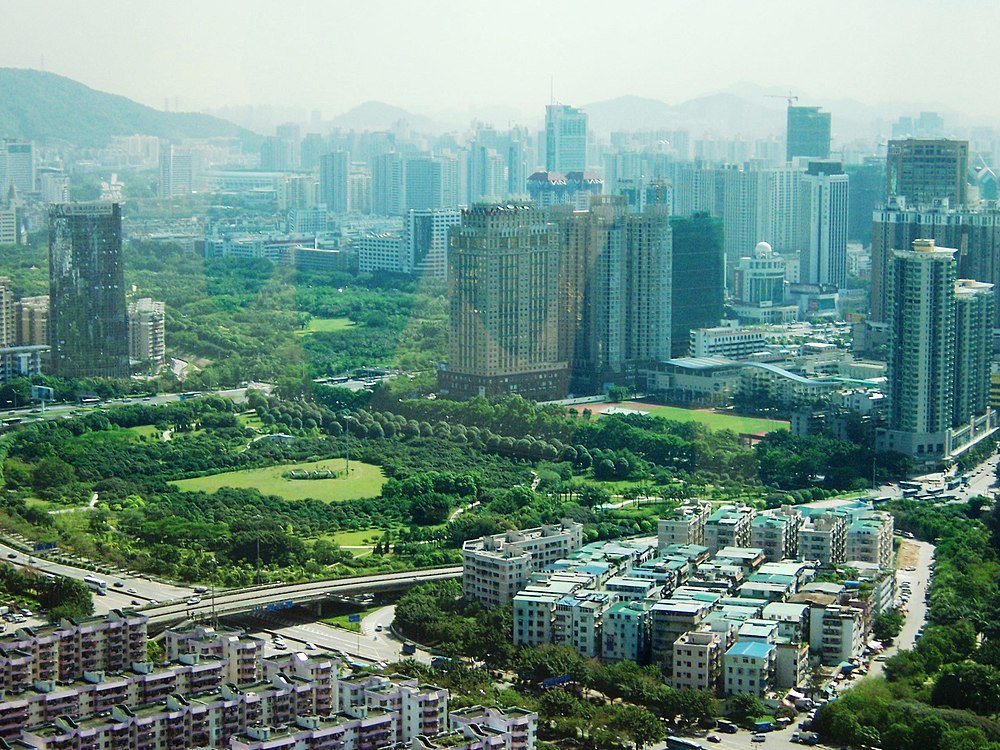
- Shenzhen Central Park (中心公园) — A green oasis surrounded by high-rises in Futian, perfect for morning tai chi sessions or afternoon walks.
- Dongmen Shopping District — Shenzhen’s liveliest pedestrian zone with traditional market atmosphere.
Discover Nanshan District: Shenzhen’s Innovation and Lifestyle Hub
If any single district captures the spirit of modern Shenzhen, it is Nanshan (南山). Home to the headquarters of Tencent, DJI, and dozens of other tech companies, Nanshan is often compared to San Francisco’s South Bay. But the district offers far more than office towers.
The Shekou area in western Nanshan is Shenzhen’s most international neighborhood, where the historic Sea World complex, restaurants from dozens of cuisines, and a ferry terminal to Hong Kong create a cosmopolitan waterfront district. To the east, Shenzhen Bay Park stretches 13 km along the coast with unobstructed views across to Hong Kong’s New Territories.
The Shenzhen Bay Gymnasium — a sculptural modern sports venue — anchors the eastern end of the district, while nearby, the China Resources Headquarters tower adds another architectural landmark to the skyline. For the best views, visit during golden hour when the glass facades of Nanshan’s towers glow in warm light. The vantage point from Shenzhen Bay Park looking back at the skyline is one of the city’s most photographed scenes.
Shenzhen continues its forward trajectory — investing in science museums, arts institutions, and new sports centers while maintaining its position as China’s most dynamic tech ecosystem. For travelers, that means a city that reinvents itself with every visit. Plan three to four days for the headlines: one for Futian and the CBD, one for Nanshan and the tech tour, one for Yantian or Dapeng beaches, and a fourth for the day-trip combination with Hong Kong.
AFRIKA
Cairo Hurghada Johannesburg Marrakech
ASIA
Abu Dhabi Agra Antalya Bangkok Batam Beijing Bengaluru Cebu City Chiang Mai Chiba Chennai Da Nang Dammam Delhi Denpasar Dubai Fukuoka Guangzhou Guilin Ha Long Hanoi Ho Chi Minh City Jakarta Jaipur Johor Bahru Kolkata Krabi Kuala Lumpur Kyoto Macau Mecca Medina Mugla Mumbai Osaka Pattaya Penang Phuket Riyadh Seoul Shanghai Shenzhen Singapore Taipei Tokyo Zhuhai
EUROPE
Amsterdam Athens Barcelona Berlin Brussels Budapest Copenhagen Dublin Florence Frankfurt am Main Heraklion Krakow Lisbon London Madrid Milan Munich Nice Paris Porto Prague Rhodes Rome Stockholm Venice Vienna Warsaw
NORTH AMERICA
Cancun Las Vegas Los Angeles Miami New York City Orlando San Francisco Toronto Vancouver
SOUTH AMERICA
Buenos Aires Lima Rio De Janeiro
OCEANIA
Auckland Honolulu Melbourne Sydney