
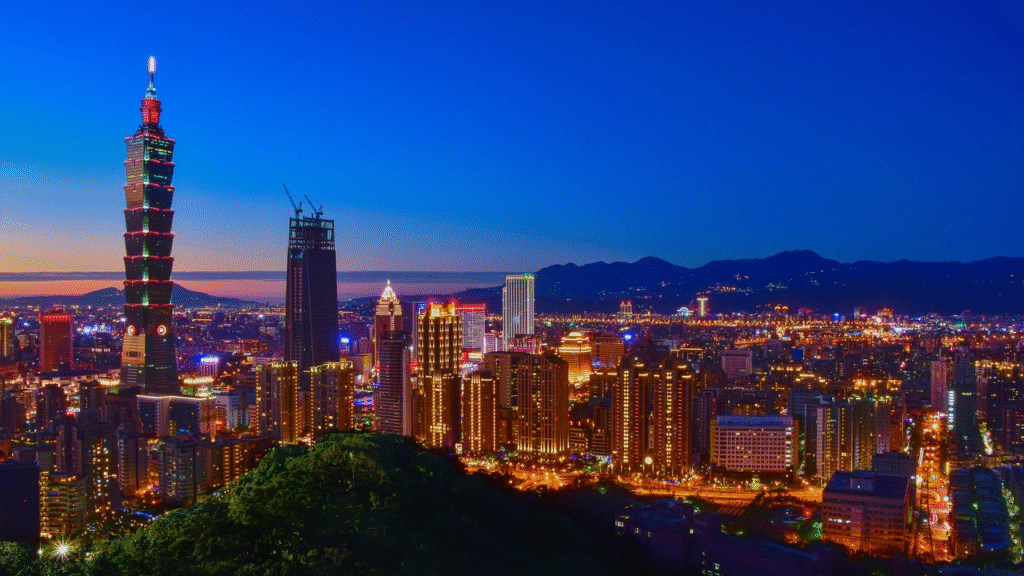
Photo credit: tingyaoh, pixabay
Taipei, Taiwan’s dynamic capital, seamlessly blends ancient traditions with cutting-edge innovation in one of Asia’s most captivating urban landscapes. Home to nearly 2.5 million residents, this subtropical metropolis offers everything from steaming night markets and ornate temples to soaring skyscrapers and world-class museums. Whether you’re savoring xiaolongbao dumplings, hiking mountain trails, or marveling at the iconic Taipei 101, this vibrant city delivers unforgettable experiences at every turn.
Taipei at a Glance: Essential Facts for Travelers
| Taipei City Essential Information | |
|---|---|
| Location | Northern Taiwan, Tamsui River basin |
| Coordinates | 25°2′N, 121°32′E |
| Population | 2.5 million (city proper) |
| Area | 271.8 km² |
| Elevation | 10 meters above sea level |
| Time Zone | UTC+8 (Chungyuan Standard Time) |
| Calling Code | +886 (0)2 |
| Postal Codes | 100-116 |
| Known For | Taipei 101, night markets, tech innovation, bubble tea |
| Current Mayor | Chiang Wan-an |
| Official Website | www.gov.taipei |
| City Bird | Taiwan Blue Magpie |
| City Flower | Azalea |
| City Tree | Banyan Fig |
Upcoming Events in Taipei
| Date | Title | Details |
|---|---|---|
| 2026-10-04 | Studio Ghibli Animation Music Symphonic Concert at Taipei Arena | A symphonic celebration of Studio Ghibli film music comes to the Taipei Arena on 4 October 2026, with original theme-song singers joining orchestral forces for beloved music from Castle in the Sky, Spirited Away and Princess Mononoke. The programme sweeps through the films’ soaring themes and tender ballads, conjuring the worlds of Miyazaki’s animation in concert form. Ticket prices vary by seating tier. The evening suits families, anime devotees and orchestral-music lovers alike, and Ghibli tribute concerts of this kind routinely fill arenas across Asia, so early booking is sensible. [Source] |
| 2026-10-10 | Double Tenth National Day Celebrations | Every 10 October, Taiwan marks its National Day (Double Tenth) with celebrations centred on the Presidential Office Building and Ketagalan Boulevard in central Taipei. The day features a flag-raising ceremony, an official ceremony with performances and parades, and, in the evening, a national-day concert and fireworks. Crowds gather along the boulevard for a free, family-friendly atmosphere of music and pageantry. It is one of the most significant public gatherings of the Taipei year. [Source] |
| 2026-10-10 to 2026-10-11 | PokeXciting! in Taipei – Pokemon 30th Anniversary Party | PokeXciting! in Taipei takes over the Xinyi District on 10 and 11 October 2026, bringing the Pokemon franchise’s 30th-anniversary celebrations to the capital. A daytime parade led by a Taipei-exclusive pink-afro Pikachu winds through the shopping district, joined by night-time performances that keep the party going after dark. The festivities are free to enjoy, layering perfectly onto the National Day holiday weekend crowds around Taipei 101. Expect photo opportunities, themed activities for Pokemon GO players and plenty of costumed characters, making it a magnet for families, collectors and fans of every age. [Source] |
| 2026-10-30 to 2026-11-02 | ART TAIPEI 2026 | ART TAIPEI, the flagship international art fair billed as a landmark of Asian art, runs from 30 October to 2 November 2026, gathering some 127 galleries from Taiwan and abroad. Traditionally staged at the Taipei World Trade Center, the fair connects collectors and the curious public with modern and contemporary works spanning painting, sculpture, photography and new media, alongside talks and special sections exploring global art trends. Admission is ticketed, with prices varying by pass type. For anyone wanting to feel the pulse of the Asian art market, this is the city’s essential autumn rendezvous. [Source] |
| 2026-11-06 | ITF Taiwan International Travel Fair 2026 Opens | Taiwan’s biggest travel exhibition opens on 6 November 2026, rebranded this year as the ITF Taiwan International Travel Fair to showcase the island’s tourism strength to the world. Traditionally staged at the Nangang Exhibition Center, the fair packs in airlines, tourism bureaus, hotels, cruise lines and agencies from dozens of destinations, and visitors hunt aggressively discounted packages, flight deals and hotel vouchers for the year ahead. Exhibitor registration has been open since summer. Admission is ticketed at modest cost, and weekend sessions get famously crowded, so early arrival pays. [Source] |
| 2026-11-21 | Taipei Wine Marathon 2026 at Meidi Riverside Park | The 2026 Taipei Wine Marathon takes place on 21 November at Meidi Riverside Park, promising to bring a French Riviera holiday mood to the banks of the Keelung River. Following the wine-run format popularised in France, participants combine riverside running with tasting stations and festive touches along the course, and many runners dress for the occasion. Distances cater to fun-runners rather than record-chasers, with wine tasting reserved for adults. Registration fees vary by category and package. It is one of the most sociable fixtures on the capital’s autumn running calendar. [Source] |
City News in Taipei – last 14 days
| Date | Category | Headline | Details |
|---|---|---|---|
| 2026-09-14 | Local government | Taipei’s First City-Administered Demolition Clears Way for Muzha Renewal Project | Taipei’s first use of city-administered demolition has helped an urban renewal project in Muzha move towards completion, with the development now in its final stages. Under the mechanism, the city government steps in to dismantle hold-out structures on behalf of an approved renewal project when private negotiations have run their course, a power designed to unblock stalled redevelopments. The case sets a precedent for the capital’s wider regeneration push, where ageing apartment blocks await rebuilding and hold-out disputes have long delayed progress. [Source] |
| 2026-09-14 | Education | Education Bureau Defends Free School Lunch Programme After Quality Complaints | Taipei’s free school lunch programme has come under fire over alleged poor food quality, prompting the city’s Education Bureau to insist the scheme was by no means hastily assembled. Officials defended the preparation behind the rollout, pointing to the planning that preceded it and pledging attention to meal standards. The exchange highlights the scrutiny facing one of the city’s most visible education policies, with parents watching closely whether cost-free meals can match the quality families expect for their children. [Source] |
| 2026-09-14 | Culture | Taipei Dome-Themed Float Debuts at Shanghai Tourism Festival Parade | A Taipei float has made its appearance at the Shanghai Tourism Festival, joining the grand parade staged for the Mid-Autumn and October holiday period. Designed around the Taipei Dome, the float carries the city’s imagery to audiences across the strait, lighting up the parade route as part of the festival’s international line-up. City representatives use the appearance to communicate Taipei’s character and attractions, an exercise in tourism promotion that continues despite the complicated backdrop of cross-strait relations. [Source] |
| 2026-09-14 | Sports | Taipei Wine Marathon Announced for 21 November at Meidi Riverside Park | Organisers have announced the 2026 Taipei Wine Marathon for 21 November at Meidi Riverside Park, promising to run the French Riviera into Taipei. The event transplants the convivial wine-run concept to the Keelung riverside, combining running with tastings and festive flourishes along the route. Registration details accompany the announcement, with categories aimed at recreational runners. The race adds a playful, food-and-drink-flavoured entry to the capital’s crowded autumn calendar of road events, and early sign-up interest is expected to be strong. [Source] |
| 2026-09-14 | Business | Regent Taipei Welcomes First Batch of 35 Indonesian Hospitality Workers | The Regent Taipei has become the first hotel to receive a group of 35 Indonesian technical workers, who have arrived in Taiwan to take up housekeeping and front-of-house support roles. The intake, described as ready-to-deploy reinforcement, responds to the acute labour shortage squeezing Taiwan’s hospitality industry as travel demand recovers and local recruitment lags. Industry watchers see the arrival as a test case for bringing trained migrant workers into hotel operations, with other properties expected to follow if the model proves successful. [Source] |
| 2026-09-14 | Local affairs | Archives Release Rare Footage of Taipei Zoo’s Great Animal Move | The National Archives Administration has unboxed precious footage of the great animal move, when a convoy of 20 special trucks carried Taipei Zoo’s animals through the city streets during the zoo’s celebrated relocation from Yuanshan to Muzha in the 1980s. The images revive one of the capital’s fondest collective memories, when crowds lined the roads to watch elephants and other residents parade to their new home. The release lets a new generation see a legendary day in the city’s history. [Source] |
| 2026-09-14 | Business | KidZania Taipei to Open by Year’s End as Taiwan’s Largest Children’s Park | KidZania is set to open in Taipei at the end of the year, billed as Taiwan’s largest children’s experience park. The venue will let children role-play some 50 professions across a space of roughly 2,000 ping, about 6,600 square metres, following the international franchise’s format of miniature city life where kids earn and spend play currency while trying out jobs. The opening adds a major family attraction to the capital and is expected to draw visitors from across the island. [Source] |
| 2026-09-14 | Local government | New Taipei Mayoral Poll Shows Front-Runner Above 60 Percent | A newly released poll on the Taipei mayoral race shows one contender commanding support above 60 percent, leading the nearest rival by close to 25 percentage points. The striking margin, echoed by a second survey published a day earlier, frames the early contours of the campaign for the capital’s top job as parties weigh their nominations. Commentators caution that polls this far out measure name recognition as much as voting intention, but the numbers set the narrative entering the race’s next phase. [Source] |
| 2026-09-14 | Culture | Pokemon GO Brings PokeXciting! Celebration to Taipei’s Xinyi District | Pokemon GO has announced that PokeXciting! in Taipei is coming to the Xinyi District, bringing the franchise’s 30th-anniversary festivities to the capital. Plans reported around the announcement include a parade fronted by a Taipei-exclusive Pikachu and evening performances in the shopping district during October, free for the public to enjoy. The event slots Taipei into the global calendar of Pokemon city celebrations, promising heavy foot traffic for Xinyi businesses and a weekend of spectacle for players and families. [Source] |
| 2026-09-13 | Local affairs | Taipei Arena Pulls ‘Chinese Taipei’ Display After Public Criticism | A display reading Chinese Taipei that appeared on the Taipei Arena’s screens, shown for three days at a rate of up to six times an hour, was hastily removed by the Taipei Rapid Transit Corporation’s recreation subsidiary after drawing public criticism. The wording, used for Taiwan’s teams in international sport, struck many as jarring on a city-owned venue at home, and the episode fed a wider debate about naming, identity and how public institutions present Taiwan on its own soil. [Source] |
| 2026-09-13 | Sports | Dwight Howard Headlines Charity Event in New Taipei | Former NBA star Dwight Howard headlined a charity event in New Taipei City, drawing crowds of basketball fans from across the metropolitan area. Howard, who built an enthusiastic Taiwanese following during his playing stint with the Taoyuan Leopards, lent his celebrity to the fundraising cause and mingled with supporters at the gathering. His continued visits underline basketball’s popularity in greater Taipei and the goodwill the American big man retains with local audiences years after his headline-grabbing season on the island. [Source] |
| 2026-09-12 | Public safety | Woman Arrested for Allegedly Shooting Lover’s Wife in Taipei | Police have arrested a woman who allegedly shot the wife of her lover in Taipei, closing a manhunt that began when the victim was wounded earlier in the week. Officers traced the suspected shooter in the days after the attack and took her into custody, handing the case to prosecutors. Gun crime remains rare in the capital, and the dramatic circumstances of the case, involving a love triangle, have drawn intense media attention while investigators piece together the events. [Source] |
| 2026-09-10 | Local affairs | Rats Return to Taipei’s Election Discourse After Dome Incident | Following an incident at the Taipei Dome, rats have scurried back into the city’s political conversation, the Taipei Times reports. Rodent sightings around high-profile venues have become a recurring talking point in municipal politics, pressed into service by critics as a symbol of sanitation and management questions ahead of the mayoral election. City agencies typically respond with stepped-up pest control and inspections, while the episode shows how quickly everyday urban nuisances can become campaign ammunition in the capital. [Source] |
Taipei Events & City News Archive
Sources: Google News Taiwan, Office of the President, NOWnews via Google News, ART TAIPEI, Google News Taiwan, don1don via Google News, China Daily News via Google News, Yahoo News via Google News
Weather Forecast for the Next 14 Days in Taipei
| Date | Weather | Max °F | Min °F | Rain mm |
|---|---|---|---|---|
| 2026-09-14 | 🌧️ | 87.8 °F | 76.2 °F | 2.1 mm |
| 2026-09-15 | 🌧️ | 82.5 °F | 75.5 °F | 4.0 mm |
| 2026-09-16 | 🌧️ | 84.1 °F | 72.8 °F | 0.2 mm |
| 2026-09-17 | ☁️ | 83.9 °F | 72.1 °F | 0.0 mm |
| 2026-09-18 | ☁️ | 83.2 °F | 74.4 °F | 0.0 mm |
| 2026-09-19 | ☁️ | 87.7 °F | 73.2 °F | 0.0 mm |
| 2026-09-20 | 🌧️ | 87.5 °F | 72.0 °F | 2.1 mm |
| 2026-09-21 | 🌧️ | 84.2 °F | 71.6 °F | 0.6 mm |
| 2026-09-22 | ☁️ | 84.8 °F | 69.4 °F | 0.0 mm |
| 2026-09-23 | ⛅ | 84.8 °F | 68.4 °F | 0.0 mm |
| 2026-09-24 | ☀️ | 85.9 °F | 68.9 °F | 0.0 mm |
| 2026-09-25 | ⛅ | 88.0 °F | 72.4 °F | 0.0 mm |
| 2026-09-26 | ☁️ | 88.4 °F | 71.6 °F | 0.0 mm |
| 2026-09-27 | ☁️ | 88.2 °F | 72.0 °F | 0.0 mm |
Taipei’s History
Taipei is a four-hundred-year-old city in a five-hundred-year-old basin — and the layers don’t blend gently. Indigenous, Spanish, Dutch, Han Chinese, Qing imperial, Japanese colonial, Republic of China: each era left infrastructure and grievances and architecture that still shape the city’s politics today. Walk a kilometer in any direction from the main station and you cross at least three of them.
Indigenous Roots and Early Settlement (Pre-1600s)
The Taipei Basin is the alluvial plain at the confluence of the Tamsui, Xindian, and Keelung rivers — fertile, sheltered, and inhabited for at least 6,000 years. The basin’s recorded indigenous inhabitants were the Ketagalan, a Plains Aboriginal people now mostly assimilated, whose names survive in dozens of Taipei place-names: Beitou (Patauw, “witch”), Guandu (Kantaw), Bangkah (now Wanhua). Indigenous Taiwan was not a unified entity but a mosaic of dozens of distinct peoples speaking Austronesian languages — the same family that links Taiwan to Polynesia and Madagascar.
Colonial Encounters (17th-18th Century)
The Spanish briefly held northern Taiwan from 1626 (founding Fort San Salvador in modern Keelung), pushed out by the Dutch in 1642, who in turn were ousted by the Ming loyalist Koxinga in 1662. None of these powers left much imprint on the Taipei Basin itself — the lasting wave was Han Chinese settlement from Fujian and Guangdong, accelerating in the 18th century. The Wanhua district (then called Báng-kah, Taiwanese-Hokkien for “canoe”) grew up around the river-port trade in tea and camphor; the magnificent Longshan Temple, completed in 1738, still anchors the neighborhood.
Qing Dynasty Development (Late 1800s)
Taipei was officially established as a walled administrative city in 1882, and from 1885 served as capital of Taiwan Province under the reformist Qing governor Liu Mingchuan. He built Taiwan’s first railway, electric lighting in central Taipei, and a postal service — turning a backwater port settlement into a modernizing East Asian capital almost overnight. Three of the original five city gates survive: the North Gate (Beimen) still stands at its original site, freshly restored after the demolition of an elevated highway that obscured it for 40 years.
Japanese Colonial Era (1895-1945)
Japan won Taiwan in the 1895 Treaty of Shimonoseki ending the First Sino-Japanese War, and held it for 50 years. Renamed Taihoku (“Northern Capital”), Taipei became a model colonial city — wide European-influenced boulevards, the Roman-revival Presidential Office Building (originally the Governor-General’s), the Imperial Taihoku University (now National Taiwan University), railway and electrical networks. The colonial legacy is divisive in Taiwan: the brutality of suppression remembered against the genuinely transformative infrastructure. The May 31, 1945 American bombing of Taihoku — the largest air raid on Taiwan — killed 3,000 and went deliberately undiscussed for decades, then memorialized only in the 21st century.
Republic of China Era (1945-Present)
Japan surrendered Taiwan in 1945, and the island came under Republic of China administration. Tensions between mainland Chinese officials and local Taiwanese erupted in the February 28 Incident (1947) — a violent uprising and savage Kuomintang military response that killed an estimated 18,000 to 28,000, including most of the educated Taiwanese elite. The 228 Memorial Park in central Taipei is the formal commemoration site. When the KMT lost the Chinese Civil War in 1949, Chiang Kai-shek retreated to Taiwan with two million followers — military, intellectuals, art treasures looted from Beijing’s Forbidden City — and made Taipei the de-facto capital of the Republic of China. Martial law lasted 38 years, until 1987. The democratic transition that followed turned Taipei into one of Asia’s most pluralist capitals; in 2024, Taipei is the centerpiece of the world’s most freedom-rated Chinese-speaking polity, and a quiet point of geopolitical anxiety as China’s territorial claims sharpen.
Geography, Climate & Best Time to Visit Taipei
Geographic Setting
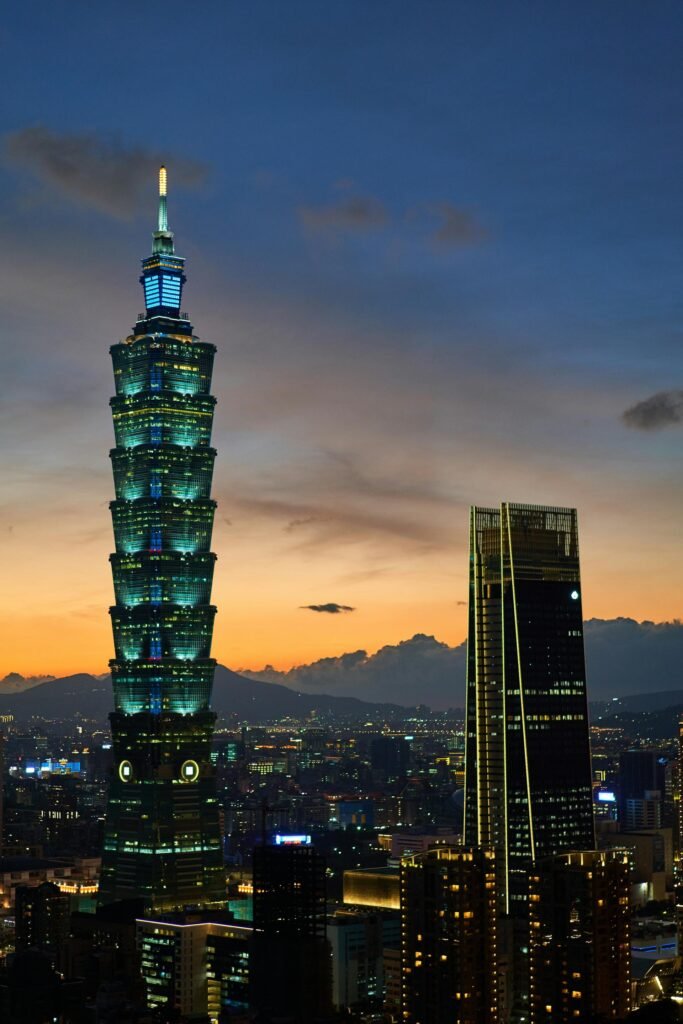
Taipei sits in a flat-bottomed basin ringed by mountains. To the north, the volcanic Datun Range (the eroded remains of a Pleistocene-era volcano) rises to 1,120 metres at Qixingshan, with active fumaroles, hot springs in Beitou, and the lush Yangmingshan National Park. To the south, the tea-growing slopes of Maokong (accessible by gondola from Taipei Zoo) climb into the ridgelines that separate Taipei from the wild east coast. The compact urban basin spans about 272 km² of mostly flat terrain — easy walking, easy cycling, easy metro coverage.
Subtropical Climate
Taipei’s climate is humid subtropical with a clear wet season. Summers are hot and rainy; winters are mild but persistently damp; sunshine is rare in the cool months. The Taipei Basin’s bowl shape traps humidity and keeps the city slightly warmer and stickier than the surrounding hills.
| Month | High (°C) | Low (°C) | Rainfall (mm) | Rainy Days |
|---|---|---|---|---|
| January | 19.0 | 13.1 | 91 | 10 |
| February | 19.3 | 13.4 | 139 | 11 |
| March | 21.6 | 15.0 | 174 | 13 |
| April | 25.8 | 18.5 | 164 | 11 |
| May | 28.6 | 21.8 | 224 | 12 |
| June | 31.6 | 24.2 | 298 | 13 |
| July | 34.0 | 25.7 | 242 | 11 |
| August | 33.4 | 25.6 | 281 | 12 |
| September | 31.4 | 24.2 | 255 | 11 |
| October | 27.9 | 21.8 | 119 | 9 |
| November | 23.7 | 18.4 | 73 | 9 |
| December | 20.6 | 14.8 | 74 | 10 |
Best Time to Visit
Late October to early December is the sweet spot — warm days, cool evenings, lower humidity, less rainfall. March–April is the second-best window before the summer heat builds. July–August is brutal: 33–35°C with 80% humidity, plus the active Pacific typhoon season (peak August–September) — typhoons typically shut Taipei down for 1–2 days at a time. December–February is mild but grey and persistently drizzly; bring a light jacket and accept that you won’t see clear sunshine for a week. Live forecasts and typhoon tracking at the Central Weather Administration.
Taipei’s Districts & Neighborhoods
Taipei’s 12 administrative districts each have a clear personality, and the MRT makes them all reachable in 20–30 minutes. The traveller’s working map: Xinyi for skyline, Wanhua for old town, Da’an for residential cool, Shilin for the famous night market, Beitou for hot springs.
| District | Character | Key Attractions | Best For |
|---|---|---|---|
| Xinyi | Modern business district | Taipei 101, luxury shopping | First-time visitors, shopping |
| Zhongzheng | Historic government center | Chiang Kai-shek Memorial, Presidential Building | History buffs, cultural sites |
| Da’an | Upscale residential | Da’an Park, trendy cafes | Quiet stays, local life |
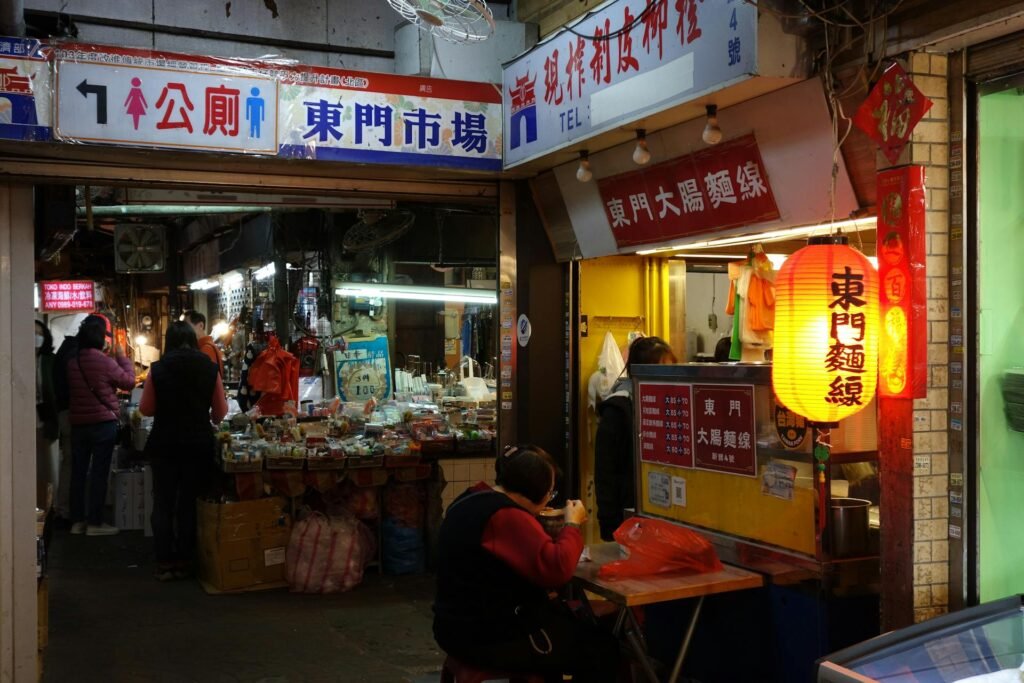
| Wanhua | Historic old town | Longshan Temple, night markets | Traditional culture, street food |
| Zhongshan | Arts and culture hub | Fine Arts Museum, Lin Sen Park | Art lovers, nightlife |
| Shilin | Tourist hotspot | National Palace Museum, Shilin Night Market | Families, night market fans |
| Beitou | Hot springs resort area | Hot springs, Yangmingshan | Relaxation, nature lovers |
| Songshan | Creative district | Songshan Cultural Park, Raohe Night Market | Design enthusiasts, young travelers |
Where to Stay
Xinyi District — premium hotels (W, Grand Hyatt, Shangri-La Far Eastern) at the Taipei 101 base; the obvious choice for first-timers prioritizing comfort and connectivity. Zhongshan District — solid mid-range options near MRT Zhongshan and Shuanglian, walkable to Ningxia Night Market. Ximending (Wanhua) — Taipei’s youth-culture neighborhood, with backpacker hostels (Star Hostel, Meander) and budget boutique hotels at $30–60/night, plus 24-hour eating and street performance. Da’an District — quieter residential pockets with excellent boutique guesthouses, cafés, and a walking distance to Da’an Forest Park. Beitou — hot-spring ryokan-style hotels for travelers who want the spa experience, 30 minutes by MRT to central Taipei.
Top Things to Do in Taipei
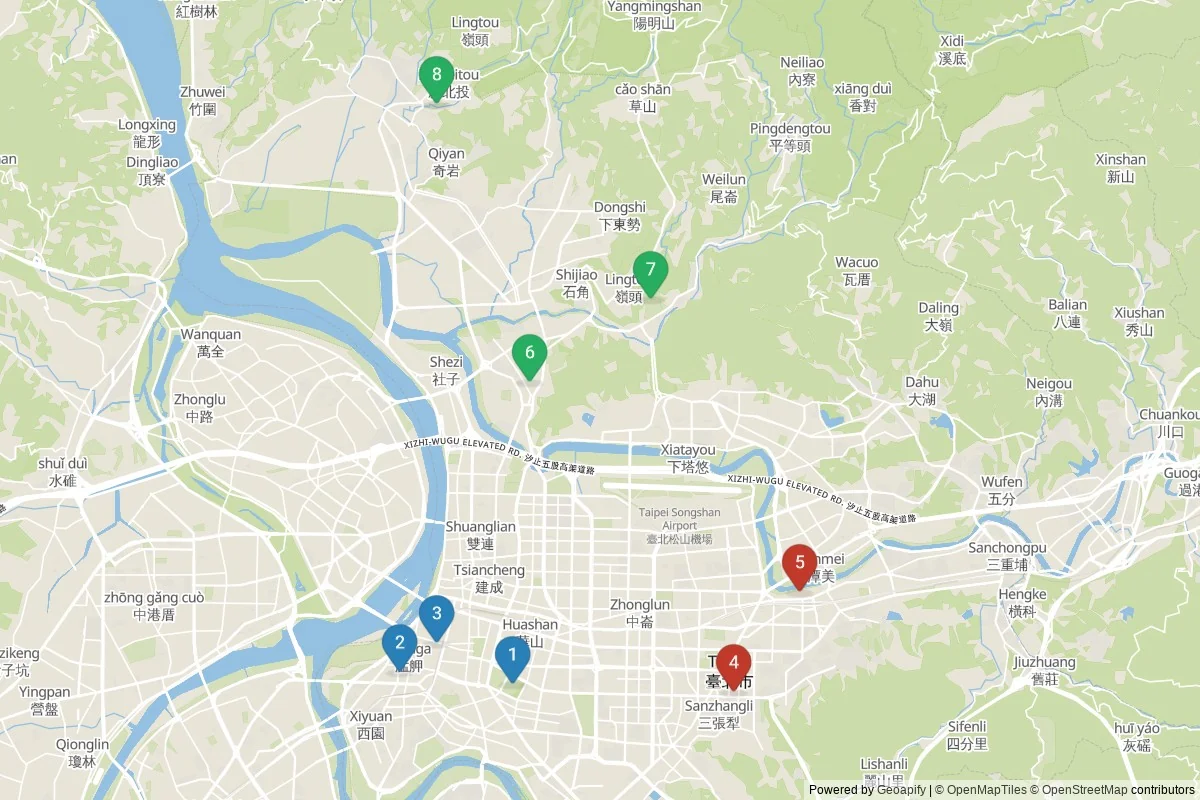
| # | Sight | Cluster | Type | Time | Entry | Best |
|---|---|---|---|---|---|---|
| 1 | Chiang Kai-shek Memorial | Central | Memorial hall | ~1 hr | Free | Morning |
| 2 | Longshan Temple | Central | Buddhist temple | ~45 min | Free | Morning |
| 3 | Ximending | Central | Youth quarter | ~2 hrs | Free | Evening |
| 4 | Taipei 101 | Outer | Skyscraper | ~1.5 hrs | NT$ 600 | Sunset |
| 5 | Raohe Night Market | Outer | Night market | ~2 hrs | Free | Night |
| 6 | Shilin Night Market | Far | Night market | ~2 hrs | Free | Night |
| 7 | National Palace Museum | Far | Museum | ~3 hrs | NT$ 350 | Morning |
| 8 | Beitou Hot Springs | Far | Onsen district | ~2 hrs | NT$ 40+ | Afternoon |
| 🚗 | Day Trip: Jiufen | Day trip | Day trip | ½ day | Free | Afternoon |
| 🚗 | Day Trip: Yangmingshan NP | Day trip | Day trip | ½ day | Free | Morning |
Taipei’s headline sights are dense and the metro is fast. A focused 2.5-day itinerary covers everything important; 3 days adds breathing room and one day-trip up the north coast or to Jiufen. Skip the half-day taxi tours that lump 8 sights together — most are 30 minutes apart and need real time.
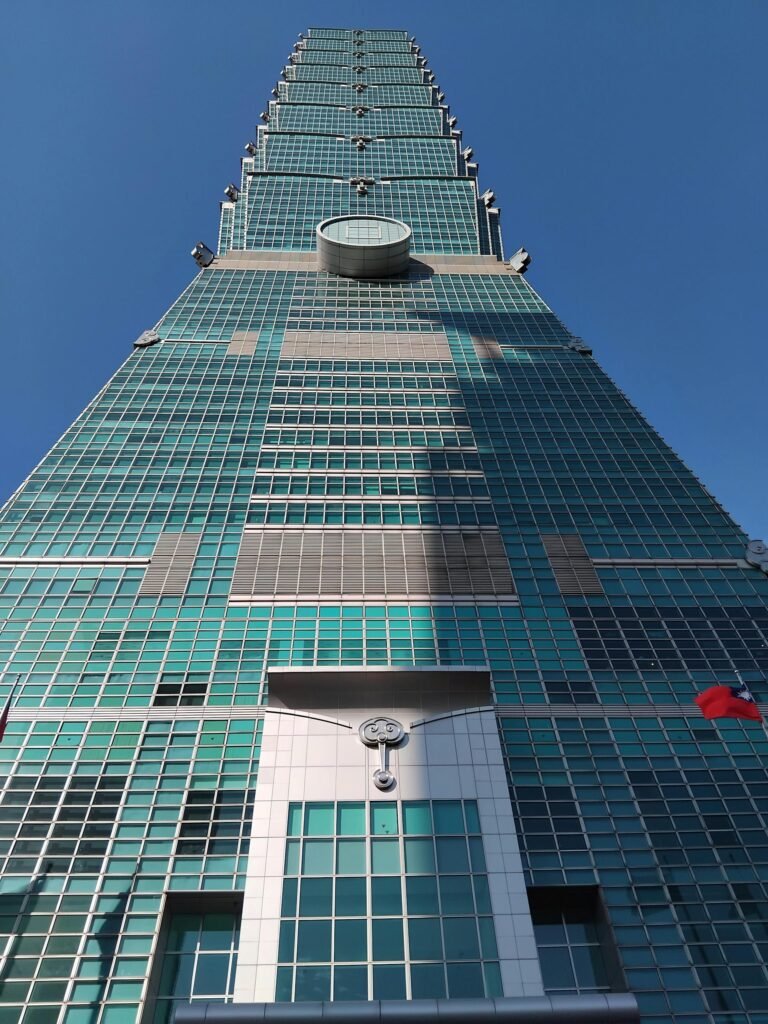
Iconic Landmarks
Taipei 101 — the bamboo-segmented spire that defined the city skyline from completion in 2004 until 2010 (when Burj Khalifa surpassed it). The high-speed elevators reach the 89th-floor observatory in 37 seconds. The headline engineering feature is the 660-tonne tuned mass damper — a giant golden ball suspended on the 87th floor that swings to counter typhoon winds and earthquake shocks. Tickets ~NT$600 via taipei-101.com.tw.
Chiang Kai-shek Memorial Hall — the white-and-blue 70-metre monument honoring the late KMT leader. Politically loaded (in 2024 there’s an active debate about whether to remove the bronze statue), but architecturally striking; the hourly changing of the guard ceremony at the bronze statue is a 15-minute precision drill. Liberty Square in front hosts cultural events year-round.
Sun Yat-sen Memorial Hall — built 1972 to honor the founding father of the Republic of China; another hourly changing of the guard. Free entry. The lawn outside is the city’s best photogenic angle on Taipei 101.
Temples and Spiritual Sites
Longshan Temple (Wanhua) — completed 1738, rebuilt after WWII bombing, the busiest active folk-religion temple in Taipei. Buddhist, Daoist, and Chinese folk gods coexist; the wooden roof carvings and stone pillars are extraordinarily intricate; the air is thick with incense and chanting. Free entry, but no photos in the inner halls during ceremonies.
Bao’an Temple (Datong District) — UNESCO Asia-Pacific Heritage Conservation Award winner. Devoted to Baosheng Dadi, the god of medicine; the architectural detail (especially the door-god paintings and dragon pillars) is the finest in Taipei.
Confucius Temple — adjacent to Bao’an, much quieter, with the classical austerity that Confucian temples favor. The early-September Confucius birthday ceremony is one of the city’s strangest dignified spectacles.
Museums and Culture
National Palace Museum — houses the imperial collection that the KMT shipped from Beijing’s Forbidden City to Taiwan in 1948–49: nearly 700,000 artifacts spanning 8,000 years of Chinese civilization. Most famous: the jadeite cabbage and the meat-shaped stone (literally a piece of jasper looking exactly like a slab of soy-braised pork belly). Tickets NT$350 via npm.gov.tw.
National Museum of Taiwan History (just outside Taipei in Tainan) and the Taipei Fine Arts Museum (TFAM, near Yuanshan station) — the latter, Taiwan’s first contemporary art museum, hosts the Taipei Biennial every two years.
Night Markets and Street Food
Shilin Night Market — the largest and most famous, packed with stalls selling stinky tofu, oyster omelets, fried chicken (try the giant Hot-Star fried chicken), bubble tea, and shaved ice. Touristy but undeniably essential.
Raohe Street Night Market (Songshan) — narrower, more compact, slightly less touristy. The Fuzhou black pepper buns at the entrance to Raohe are reason enough to come. The Ciyou Temple at the head of the street is impressively ornate.
Ningxia Night Market (Datong) — old-school local market beloved by Taipei foodies, more food than shopping. The oyster vermicelli at Liu Yu Zai is the city’s gold standard.
Tonghua Night Market (Da’an) — local-favorite working-class food market that tourists rarely find.
Parks and Nature
Yangmingshan National Park — 30 minutes north by bus, a 113 km² volcanic landscape. Hot springs in Xiaoyoukeng, sulfur fumaroles at Lengshuikeng, hiking on Qixingshan (1,120 m, the highest peak), and the spring cherry blossom and autumn flower seasons that draw millions of locals.
Elephant Mountain (Xiangshan) — the photographer’s lookout for Taipei 101. A 20-minute steep climb from MRT Xiangshan station to the famous boulder viewpoints. Best at sunset for the city light-up.
Da’an Forest Park — Taipei’s “Central Park” — 26 hectares in the middle of the city; jogging tracks, frog pond, weekend tai-chi groups, free outdoor concerts.
Unique Experiences
Maokong Gondola — the 4 km cable car from Taipei Zoo MRT up to the tea-growing slopes of Maokong. The crystal-floor cabins are NT$120 one-way. The teahouses at the top serve Taiwanese high-mountain oolong with the Taipei skyline below.
Beitou Hot Springs — the natural sulfuric thermal springs in northern Taipei, exploited as a spa destination since the Japanese colonial era. Public baths NT$40 (segregated, no swimsuits — Japanese style); private bath houses NT$1,500–4,000 per room. Beitou Hot Spring Museum in the restored 1913 Japanese-era bathhouse is free.
Jiufen day trip — the former 1890s gold-mining mountain town on Taiwan’s north coast, famously inspiration for the Spirited Away set design (Studio Ghibli denies it but the resemblance is uncanny). 90 minutes by bus from Taipei.
How to Get to Taipei
Taipei is the only major international entry point to Taiwan, and connections are excellent.
By Air
Taiwan Taoyuan International Airport (TPE) — Taiwan’s main international gateway, 40 km west of Taipei in Taoyuan. Two terminals (T1 international, T2 international + China Airlines). The Airport MRT (Taoyuan Airport Line) reaches Taipei Main Station in 35 minutes (Express) for NT$150 — fastest, cheapest, and most reliable option. Taxis run NT$1,200–1,400 and 50–70 minutes depending on traffic. Schedules at taoyuan-airport.com.
Taipei Songshan Airport (TSA) — small in-city airport in eastern Taipei, handles Taiwan’s domestic flights plus Tokyo Haneda, Seoul Gimpo, and Shanghai Hongqiao. Connected directly by MRT Brown Line (Wenhu Line).
By Rail
Taiwan High Speed Rail (THSR) — the bullet-train spine of western Taiwan. Taipei to Taichung in 1 hour, Tainan in 1h 45min, Kaohsiung Zuoying in 1h 55min. Tickets via thsrc.com.tw — book early-bird discounts up to 35% off.
Taiwan Railways (TRA) — the classical rail network. Slower but cheaper than HSR, and the only way to reach Taiwan’s east coast (Hualien, Taitung). The scenic Taroko Express from Taipei to Hualien takes 2 hours.
By Road
Long-distance buses (“national highway buses”) connect Taipei to every Taiwanese city. Operators (Kuo-Kuang, Ho-Hsin, Aloha) depart from Taipei Bus Station next to Taipei Main Station. Cheaper than HSR; about 30% slower.
Getting Around Taipei
Taipei has one of Asia’s best urban transit systems. Locals frequently say it’s the single best thing about the city.
Taipei Metro (MRT)
The Taipei MRT — six color-coded lines, 152 km of track, 24-hour cleanliness that puts London and New York to shame. Trains run every 2–4 minutes during peak hours, 6:00 am to midnight (1 am Fri/Sat). Fares NT$20–65 by distance. Standout features: no eating or drinking on platforms or trains (NT$1,500–7,500 fines, strictly enforced); women-only carriages during late-night hours; first-class designated seats reserved for elderly, pregnant, or disabled passengers — these are religiously respected and you should not sit in them. Routes at english.metro.taipei.
EasyCard (Yōuyóukǎ) — the rechargeable contactless card used for MRT, buses, taxis, YouBike, 7-Eleven, FamilyMart, and many shops. NT$100 deposit, fully refundable. Buy at any MRT station. The single most useful thing to acquire on day 1.
Buses
Taipei’s bus network covers what the MRT misses, particularly Yangmingshan and the Beitou hot-spring area. EasyCard accepted; route maps in Chinese only at most stops, but Google Maps live transit works perfectly.
Taxis and Ride-Hailing
Yellow taxis are abundant, metered, and cheap (~NT$70 base, NT$5/250m). Uber and the local LINE Taxi apps both work and accept international cards. Don’t tip; meter only.
Cycling
YouBike 2.0 — public bike-share with 1,200+ stations. NT$10 for the first 30 minutes, NT$10 every 30 min thereafter. Tap your EasyCard at the rack to unlock. The riverside bike paths along the Tamsui, Keelung, and Xindian rivers are exceptional — flat, dedicated, signage in English.
Walking
Most of central Taipei is genuinely walkable — covered arcades, pedestrian-friendly side streets, and the city’s signature qílóu (covered shop-fronts) provide shelter from rain and sun. The Xinyi shopping district and Ximending are pedestrianized.
Food & Drink in Taipei
Taipei is one of Asia’s great food cities. Three culinary traditions blend constantly: Hokkien Taiwanese (the original migration from Fujian), Mainland Chinese cuisine brought by 1949 KMT refugees from every Chinese region, and Japanese influence from the colonial era. The result is a city where you can eat genuinely excellent Sichuan, Cantonese, and Shanghainese alongside indigenous Taiwanese specialties — without leaving a single neighborhood.
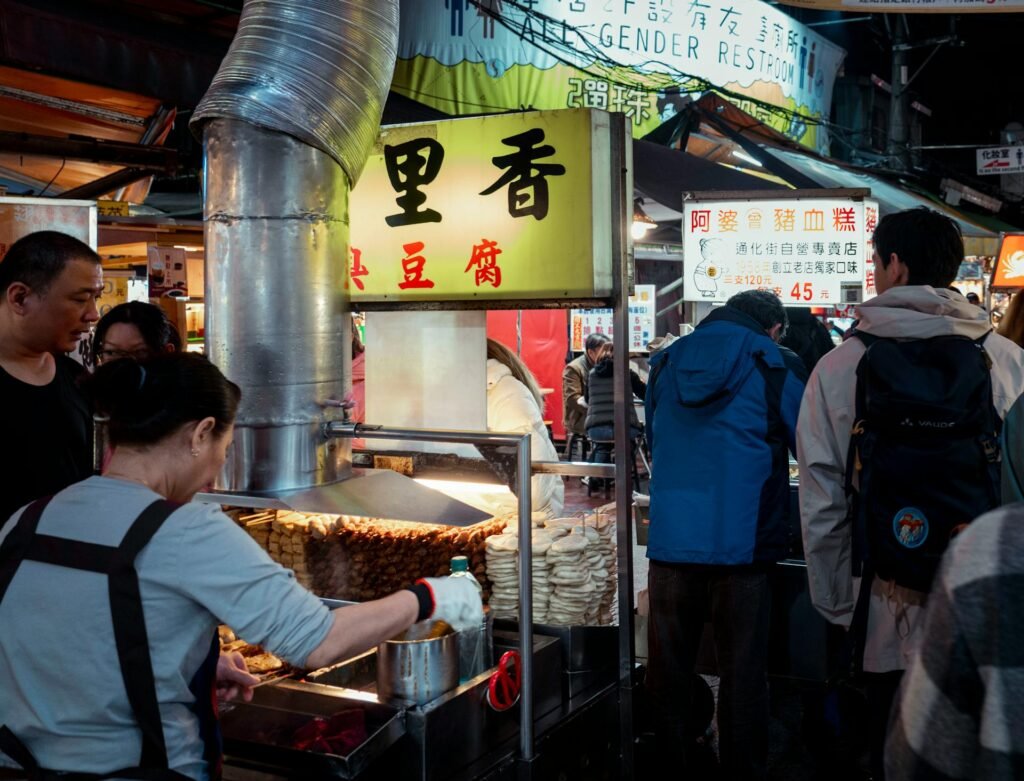
Signature Dishes
Xiaolongbao (soup dumplings) — Taipei’s most globally famous dish, even though it’s a Shanghainese import. Din Tai Fung opened in Xinyi in 1972 and is now a global chain — but the original Xinyi flagship still has the best execution; expect 30–60 min queues. Beef noodle soup (niúròu miàn) — Taiwan’s national dish, with hand-pulled noodles in 5-hour-simmered beef broth. The annual Taipei Beef Noodle Festival in November settles arguments about who’s best — current champions: Lin Dong Fang and Yongkang Beef Noodle.
Stinky tofu — fermented bean curd, deep-fried and served with pickled cabbage and chili sauce. The smell is genuinely strong; the taste is mild and savory. Ningxia Night Market and Shenkeng Old Street are the temples. Bubble tea (zhēnzhū nǎichá) — invented in Taichung in the 1980s, perfected in Taipei. Chun Shui Tang claims the original recipe; 50 Lan and Tiger Sugar represent the modern wave.
Night Market Specialties
Beyond the famous dishes, every Taipei night market has signature finds: oyster omelet (ô-á-chiān), scallion pancakes, Fuzhou black pepper buns (Raohe), shaved ice with mango (mángguǒ bīng), flame-torched beef cubes, cong you bing, iron-egg snacks. Bring small notes (NT$100s); most stalls don’t accept card.
Fine Dining
The Taipei Michelin Guide launched in 2018; the city now hosts a thriving fine-dining scene including RAW (chef André Chiang), Mume (Taiwanese-Nordic fusion), and Logy (modern Asian, Asia’s 50 Best). Reservations 1–2 months ahead for the headliners.
Tea Culture
Taiwan grows some of the world’s finest oolongs in the high-mountain plantations of Alishan, Lishan, and Pinglin. In Taipei, the Maokong teahouses serve high-mountain oolong with city-skyline views. Wisteria Tea House (Zǐténg Lú) near NTU has been the literati’s favorite since the 1980s. Tea ceremony classes available at Lin Hua Tai Tea Co. in Da’an.
Culture & Arts
Taipei is the cultural capital of Taiwan and increasingly a regional contender for Hong Kong’s lost role as the Chinese-speaking world’s cultural hub.
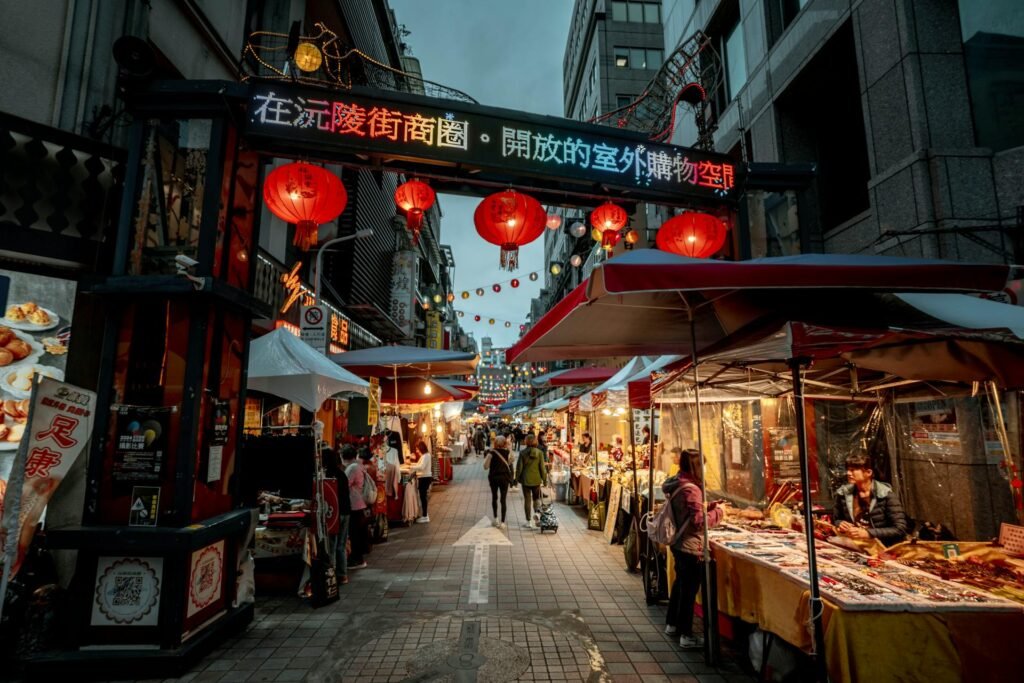
Traditional Arts
Traditional Taiwanese arts include Nanguan music (the elegant Fujianese chamber tradition), budaixi puppet theatre (literally “cloth bag drama”), and Taiwanese opera (gējǎixì). The National Theater and Concert Hall at Liberty Square hosts both classical Western and traditional Asian programming. Calendar at npac-ntch.org.
Contemporary Scene
Taiwan’s contemporary art scene punches well above its size. Huashan 1914 Creative Park and Songshan Cultural and Creative Park — both converted Japanese-era industrial complexes — host rotating exhibitions, indie shops, performance spaces, and design weeks. Taipei Contemporary Art Museum (MOCA Taipei) in Datong is the city’s leading contemporary venue. The Taipei Biennial at TFAM is one of Asia’s most respected biennials.
Festivals and Events
Lantern Festival (15th day of Lunar New Year, February or March) — week-long lantern displays at Liberty Square, Yuanshan, and Pingxi (the famous sky-lantern release). Dragon Boat Festival (May/June) — boat races on the Keelung River. Mid-Autumn Festival (September) — moon-cake exchanges and barbecues. Taipei was named World Design Capital in 2016 and the design-week/Taipei Pride/Golden Horse Awards (the “Chinese Oscars”) cement the city’s cultural calendar.
Taipei by District: The 12 區
Taipei is divided into 12 districts. The map below shows their official OSM boundaries, colour-coded to match the table — a quick way to orient yourself before zooming in on individual sights.
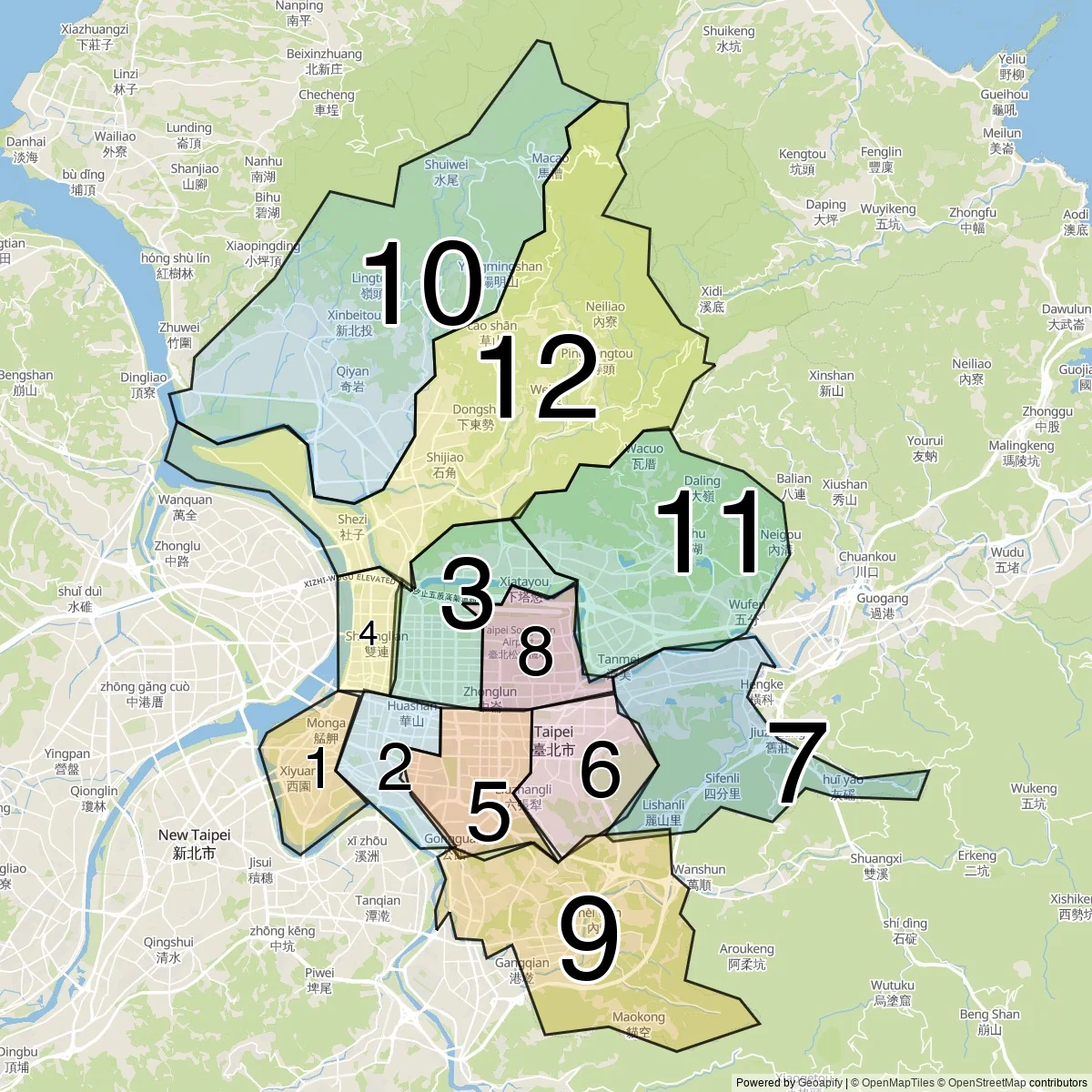
| # | 區 |
|---|---|
| 1 | 萬華區 · Wanhua District |
| 2 | 中正區 · Zhongzheng District |
| 3 | 中山區 · Zhongshan District |
| 4 | 大同區 · Datong District |
| 5 | 大安區 · Da’an District |
| 6 | 信義區 · Xinyi District |
| 7 | 南港區 · Nangang District |
| 8 | 松山區 · Songshan District |
| 9 | 文山區 · Wenshan District |
| 10 | 北投區 · Beitou |
| 11 | 內湖區 · Neihu District |
| 12 | 士林區 · Shilin District |
Frequently Asked Questions About Visiting Taipei
Do I need a visa to visit Taipei?
Probably not — Taiwan is generous with visa-free entry. Citizens of 66 countries and territories — including the US, UK, EU member states, Canada, Australia, New Zealand, Japan, South Korea, Singapore, and Malaysia — enter visa-free for stays of 90 days; current list at boca.gov.tw (Bureau of Consular Affairs). Hong Kong and Macao residents and Mainland Chinese passport-holders need pre-arranged authorisation. Filipino, Thai, Vietnamese, Bruneian, Indonesian, and Philippine nationals can apply for the e-Visa for tourism online. Other nationalities apply for a tourist visa at the Taipei Economic and Cultural Office (Taiwan does not have formal embassies in most countries). Always check requirements 4–6 weeks before travel; passport must have 6+ months remaining validity.
Is Taipei safe for tourists?
Genuinely yes — Taipei is one of the world’s safest major cities, comparable to Tokyo and Singapore. The US State Department rates Taiwan at “exercise normal precautions.” Violent crime against tourists is extremely rare; pickpocketing exists but at a much lower rate than European or Southeast Asian capitals. Walking around at 2 am in central districts is normal even for solo women. Real risks: typhoons (peak August–September — typhoons can shut the city down for 1–2 days; check cwa.gov.tw); earthquakes (Taiwan is on the Pacific Ring of Fire — the April 2024 Hualien earthquake was magnitude 7.4); heat exhaustion in July–August. Geopolitics: Taiwan-China military tensions are ongoing but tourism continues normally; check your government’s travel advisory before booking.
How many days do I need in Taipei?
Two and a half full days handles the headline sights; three to four days lets you take a breath. A solid 2.5-day plan: Day 1 — Longshan Temple + Bopiliao Old Street + Ximending + Chiang Kai-shek Memorial Hall + dinner at Ningxia Night Market; Day 2 — National Palace Museum (half day) + Taipei Fine Arts Museum + Lin An Tai Historical House + dinner in Da’an + Elephant Mountain at sunset; Day 3 (half) — Taipei 101 observatory + Xinyi shopping or Songshan Creative Park, then evening at Raohe Night Market. Day 4–5: day-trip to Jiufen + Shifen waterfall (90 min by bus), or Beitou hot springs + Yangmingshan National Park, or Tamsui (the historic riverside town reachable by MRT).
What’s the best area to stay in Taipei?
Three solid options. Xinyi District — the modern skyline base; luxury hotels (W, Grand Hyatt, Shangri-La, Mandarin Oriental, Le Méridien) walking distance to Taipei 101, premium shopping, and the Taipei City Hall MRT station. Best for first-time visitors prioritizing comfort. Zhongshan District — Taipei’s reliable mid-range neighbourhood; excellent boutique hotels and serviced apartments at $80–150/night, walking distance to the Ningxia Night Market and dual MRT lines. Ximending (Wanhua) — the youth-culture quarter; budget hostels (Star Hostel, Meander) and boutique hotels at $30–80/night, 24-hour eating, lively but loud. Skip: the immediate streets around the main station for serious sleep — it’s the city’s most chaotic transit zone.
How much does it cost to visit Taipei’s major sights?
Taipei’s headline sights are remarkably affordable by international standards. Taipei 101 observatory: NT$600 (~US$19) via taipei-101.com.tw. National Palace Museum: NT$350 (~US$11) via npm.gov.tw. Chiang Kai-shek Memorial Hall: free. Sun Yat-sen Memorial Hall: free. Longshan Temple, Bao’an Temple, Confucius Temple: all free. Taipei Fine Arts Museum: NT$30. Maokong Gondola: NT$120 one-way (NT$50 with EasyCard discount). Beitou public hot springs: NT$40 (segregated; bring towel). Yangmingshan National Park entry: free. Bargain pass: the Fun Pass at taipeifunpass.com bundles 12+ attractions plus unlimited MRT/bus from NT$1,200/day.
Should I drink the tap water in Taipei?
The official line is yes; the local custom is no. Taipei’s tap water meets EU and WHO drinking-water standards at the treatment plant — the Taipei Water Department publishes regular quality reports. But Taiwan’s older buildings often have rusty plumbing or rooftop water tanks of uncertain hygiene; locals universally boil tap water before drinking, or use bottled or filtered water. Hotels and restaurants will serve filtered water; ice in restaurants is generally safe. Practical advice: drink bottled or filtered (NT$15–25 per liter at any 7-Eleven or FamilyMart); free filtered water dispensers are everywhere — at MRT stations, parks, public buildings. Tap water is fine for showering, brushing teeth, and washing produce.
Do I need to tip in Taipei?
No — and tipping can occasionally cause confusion. Tipping is not part of Taiwanese service culture, and excellent service is the baseline expectation. Restaurants: never tip; some upscale Western-style or hotel restaurants add a 10% service charge (fúwùfèi) to the bill — that’s the closest equivalent. Taxis: pay the meter exactly; rounding up to the nearest NT$10 is fine but optional. Hotel porters: NT$50–100 per bag at 4–5 star hotels is appreciated but never expected; not at all at standard or budget hotels. Tour guides: NT$200–500 per person for half-day, NT$500–1,000 for full-day private guides. Spa, salon: not customary. The single exception: high-end Western-targeted resorts may have a tip culture; otherwise, your money stays in your pocket.
What’s the typhoon season and how does it affect travel?
Pacific typhoon season runs July through October, with peak activity August–September. Taiwan typically sees 4–6 direct typhoon hits per year. When a typhoon makes landfall, the city largely shuts down for 1–2 days: government offices, schools, and many businesses close (the official “typhoon day” announcement is at dgpa.gov.tw); the MRT continues running underground but surface buses and flights are cancelled; outdoor sights close. Practical impact for travelers: Travel insurance covering typhoon delays is strongly recommended for August–September visits. Check the Central Weather Administration 3–4 days before flights for typhoon track forecasts. Many hotels offer free rebooking if a typhoon directly hits; airlines almost always do. Book flexible-cancellation accommodation if visiting in this window. Once the typhoon passes — usually a single rough day — Taipei recovers immediately, and the post-typhoon air quality is the year’s best.
Economy & Business
Taipei is Taiwan’s economic command center. The Taipei metro region produces around two-thirds of Taiwan’s GDP — and Taiwan, despite its small size, produces about 92% of the world’s most advanced semiconductors, including the chips Apple and Nvidia depend on. The companies headquartered or co-headquartered in Taipei include Foxconn (Hon Hai) — the world’s largest electronics contract manufacturer; Acer; Asus; BenQ; HTC; Quanta; Pegatron; Cathay Financial Holdings; Fubon Financial Holdings; CTBC; Eva Air; China Airlines; Formosa Plastics Group; and the iconic TSMC (headquartered in Hsinchu but with massive Taipei operations).
The service sector — finance, telecommunications, tourism — is the bigger employment base. Taipei’s 2024 international visitor numbers are recovering toward pre-pandemic levels (8M+ visitors at peak in 2019; ~6.5M projected for 2024). The annual Computex Taipei in late May/early June is one of the world’s three largest IT trade shows, regularly attracting 40,000+ international attendees.
Notable People from Taipei
Taipei has produced disproportionately influential figures across technology, entertainment, and politics. Tech innovators include Steve Chen (YouTube co-founder), Cher Wang (HTC co-founder), Jerry Yang (Yahoo! co-founder), and Morris Chang (TSMC founder, born in Mainland China but Taipei-based for most of his career). The entertainment industry is anchored by music superstar Jay Chou, acclaimed actresses Shu Qi and Ariel Lin, and the late actor-model Godfrey Gao. Ang Lee (Brokeback Mountain, Life of Pi) is from Tainan but spent most of his Taiwanese career in Taipei.
In sports, Lee Yang and Wang Chi-lin won badminton doubles gold at Tokyo 2020 (the country’s first). Tennis stars include Hsieh Su-wei (a former world No. 1 doubles player) and the next-generation Tseng Chun-hsin. In politics, current president Lai Ching-te (William Lai) and his predecessor Tsai Ing-wen are both Taipei-based.
Taipei rewards thoughtful pacing: a city of 2.6 million in a metro region of 7 million, with 24-hour eating, world-class transit, mountains visible from downtown, and politics tense enough to make every visit feel slightly historic. Three days for the headlines, a fourth for Yangmingshan or Jiufen, and a fifth if you want to really learn the night markets.
AFRIKA
Cairo Hurghada Johannesburg Marrakech
ASIA
Abu Dhabi Agra Antalya Bangkok Batam Beijing Bengaluru Cebu City Chiang Mai Chiba Chennai Da Nang Dammam Delhi Denpasar Dubai Fukuoka Guangzhou Guilin Ha Long Hanoi Ho Chi Minh City Jakarta Jaipur Johor Bahru Kolkata Krabi Kuala Lumpur Kyoto Macau Mecca Medina Mugla Mumbai Osaka Pattaya Penang Phuket Riyadh Seoul Shanghai Shenzhen Singapore Taipei Tokyo Zhuhai
EUROPE
Amsterdam Athens Barcelona Berlin Brussels Budapest Copenhagen Dublin Florence Frankfurt am Main Heraklion Krakow Lisbon London Madrid Milan Munich Nice Paris Porto Prague Rhodes Rome Stockholm Venice Vienna Warsaw
NORTH AMERICA
Cancun Las Vegas Los Angeles Miami New York City Orlando San Francisco Toronto Vancouver
SOUTH AMERICA
Buenos Aires Lima Rio De Janeiro
OCEANIA
Auckland Honolulu Melbourne Sydney