
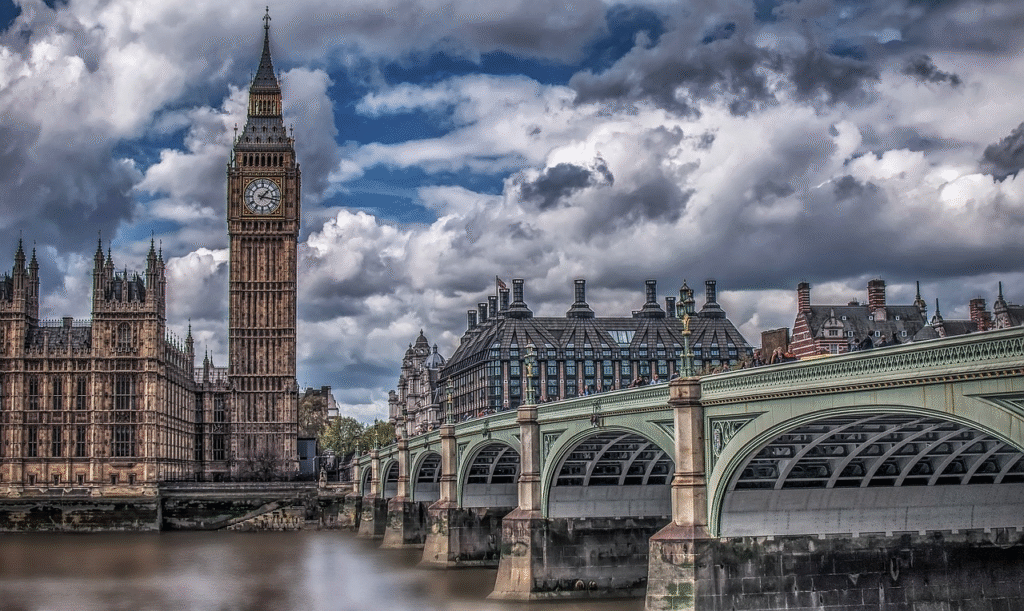
Photo credit: Walkerssk, pixabay
London stands as one of the world’s great capitals, a city where nearly 2,000 years of history blend seamlessly with cutting-edge innovation. From Roman Londinium to today’s global financial powerhouse, this Thames-side metropolis continues to captivate visitors with its royal palaces, world-class museums, and vibrant cultural tapestry. Whether you’re drawn by Big Ben’s chimes, the Crown Jewels’ sparkle, or the energy of its diverse neighborhoods, London offers an unforgettable urban adventure.
London at a Glance: Essential Facts for Travelers
London: Key Facts & Tourism Statistics
| International arrivals | 20.9 million (2024, inbound overseas visits) — VisitBritain / ONS International Passenger Survey, 2024 Nations & Regions Inbound Update |
|---|---|
| Population | 8.9 million (2023, ONS mid-year population estimate) |
| Best time to visit | May, June, July, August and September |
| Airport to city centre | Elizabeth Line (from Heathrow): ~30 min, ~US$19 |
| Currency | Pound sterling (GBP) |
| Time zone | UTC+0/+1 (GMT/BST) |
| Visa | Visa-free entry for many nationalities; most visa-exempt visitors now need an ETA (gov.uk). |
How many tourists visit London per year?
London recorded 20.9 million inbound overseas visits in 2024, according to VisitBritain / ONS International Passenger Survey, 2024 Nations & Regions Inbound Update.
What is the best time to visit London?
The most comfortable months to visit London are typically May, June, July, August and September, based on 1991–2020 climate normals for temperature and rainfall.
How do I get from the airport to central London?
The Elizabeth Line (from Heathrow) takes about 30 minutes to the city centre for about US$19 (GBP 14.60 to Paddington (from 2026-03)).
What currency is used in London?
London uses the Pound sterling (GBP); the local time zone is UTC+0/+1 (GMT/BST).
Do I need a visa to visit London?
Visa-free entry for many nationalities; most visa-exempt visitors now need an ETA (gov.uk).
How many people live in London?
London has a population of about 8.9 million (Greater London), per ONS mid-year population estimate (2023).
London climate: monthly averages (1991–2020)
| Month | Avg high | Avg low | Rain |
|---|---|---|---|
| Jan | 7.4 °C | 2.1 °C | 55 mm |
| Feb | 8 °C | 1.9 °C | 47 mm |
| Mar | 10.5 °C | 3.2 °C | 43 mm |
| Apr | 13.5 °C | 5 °C | 49 mm |
| May | 16.6 °C | 8.2 °C | 52 mm |
| Jun | 19.6 °C | 11.3 °C | 56 mm |
| Jul | 21.8 °C | 13.4 °C | 55 mm |
| Aug | 21.4 °C | 13.4 °C | 61 mm |
| Sep | 18.6 °C | 11.1 °C | 48 mm |
| Oct | 14.6 °C | 8.3 °C | 60 mm |
| Nov | 10.4 °C | 4.9 °C | 64 mm |
| Dec | 7.7 °C | 2.7 °C | 58 mm |
Data last verified: 2026-09-01 · Climate: Open-Meteo ERA5 reanalysis, monthly normals computed from daily data 1991–2020 · Sources: VisitBritain/ONS IPS (arrivals) · ONS (population) · TfL / Heathrow Express (transfer) (primary source) · World’s most visited cities · Methodology
Upcoming Events in London
| Date | Title | Details |
|---|---|---|
| 2026-10-08 to 2027-02-14 | Light and Magic: The Birth of Art Photography at Tate Modern | Tate Modern opens Light and Magic: The Birth of Art Photography on 8 October, a group exhibition tracing the international movement that first transformed the camera into an artistic tool. Vintage prints and experimental works show how early photographers fought to have their medium recognised as art, from painterly pictorialism to bold modern experiments. The show runs on Bankside alongside the gallery’s free collection displays through the winter. Timed tickets are sold at varying prices, with concessions and members’ access, and the riverside location pairs easily with a Thames-side walk. [Source] |
| 2026-11-13 to 2026-11-22 | EFG London Jazz Festival 2026 | The EFG London Jazz Festival takes over the capital from 13 to 22 November, spreading concerts across major halls and intimate clubs, from the Barbican Centre to Ronnie Scott’s and The Jazz Social at City Point. Headliners for 2026 include Melody Gardot, Robert Glasper, Samara Joy, Mariza, Caravan Palace, Kronos Quartet, and Branford Marsalis with Dianne Reeves, while Cécile McLorin Salvant performs with the BBC Concert Orchestra. Ticket prices vary by show, and a Free and Family strand adds no-cost events such as Tarana on 14 November and Homegrown on 22 November. [Source] |
| 2026-11-14 | Lord Mayor’s Show 2026 | The Lord Mayor’s Show, one of the City of London’s grandest traditions, takes place on Saturday 14 November 2026. The procession sets off from Mansion House at 11am and fills most of the Square Mile as it winds through the historic streets of the financial district. The organisers note that last year’s parade included more than 7,000 participants from all over the world. The show is naturally accessible and free to all, making it a great family day out in the heart of the capital; arrive early to secure a good spot along the route. [Source] |
| 2026-11-19 to 2027-01-03 | Hyde Park Winter Wonderland 2026 | Hyde Park Winter Wonderland opens for its 2026 season on 19 November and runs until 3 January 2027, open every day except Christmas Day. Highlights include the Magical Ice Kingdom presenting Neverland, Gandeys K-Pop Dragon Circus, Christmas by Candlelight, the Ice Rink, the Giant Wheel and Bar Ice, plus thrill rides such as the new-for-2026 Spinning Racer and the Munich Looping coaster. Off-peak entry costs £1 on Monday to Thursday sessions throughout November, and entry is free with qualifying spends or packages. Santa Land has more than 16 rides for younger children. [Source] |
| 2026-11-21 | England v New Zealand – Nations Championship at Allianz Stadium | England host New Zealand at Allianz Stadium, Twickenham, on Saturday 21 November 2026, with kick-off at 2.10pm GMT. It is the last of England’s three home fixtures in the Nations Championship this November, following matches against Australia on Sunday 8 November and Japan on Saturday 14 November. The same stadium then stages the tournament’s Grand Finals Weekend from 27 to 29 November, with fixtures still to be confirmed. A marquee date for rugby fans visiting London; ticket prices vary by seating category, so book through official channels. [Source] |
| 2026-11-21 to 2027-04-11 | Van Eyck: The Portraits at the National Gallery | The National Gallery on Trafalgar Square brings together nine known painted portraits by Jan van Eyck, half of his surviving works worldwide, in Van Eyck: The Portraits, running from 21 November 2026 to 11 April 2027 in the Ground Floor Galleries. Assembled from collections across Europe, the paintings are shown together for the first and only time. The focus is on the people the Flemish master actually knew, such as craftsmen, merchants and relatives, rather than kings. Standard admission is £18 including an audio guide, while under-18s go free. [Source] |
| 2026-12-17 to 2027-01-10 | English National Ballet: Nutcracker at the London Coliseum | English National Ballet brings its festive Nutcracker back to the London Coliseum from 17 December 2026 to 10 January 2027. Choreographed by Artistic Director Aaron S. Watkin and Olivier Award winner Arielle Smith, the production follows Clara on a Christmas Eve adventure through Edwardian London, from a sweet shop to a battle with the Rat King, an ice realm and the Land of Sweets and Delights. Tchaikovsky’s score is played live by the English National Ballet Philharmonic. The show runs about two hours with one interval; reduced children’s tickets are available. [Source] |
City News in London – last 14 days
| Date | Category | Headline | Details |
|---|---|---|---|
| 2026-10-30 | Public transport | No Piccadilly line service to Heathrow over Halloween weekend | There will be no Piccadilly line service to Heathrow over the Halloween weekend, MyLondon reported. The closure will affect travellers heading to Heathrow Airport as well as people travelling to the Emirates Stadium. Passengers planning to reach the airport by Underground during the weekend will need to make alternative arrangements. The summary does not specify the exact sections of the line affected, the hours of the closure or the replacement options available, so travellers should check the latest travel information before setting off. [Source] |
| 2026-10-30 | Public transport | City Thameslink station to close for seven months for escalator works | City Thameslink station is set to close for seven months while its escalators are replaced, MyLondon reported. Network Rail said that a full closure of the station is the safest, quickest and most efficient way to complete the escalator upgrade. Passengers who normally use the station will need to plan alternative routes during the works. The summary does not state the start date of the closure or which nearby stations are recommended as alternatives, so travellers should consult rail operator information. [Source] |
| 2026-10-30 | Public transport | London rail commuters face fare rise of up to 4.2 percent next spring | Rail commuters in London face fare increases of up to 4.2 percent next spring, the Evening Standard reported. The rise comes because the Chancellor has not allocated funds to allow the freeze on ticket prices to continue. The increase will affect passengers who rely on rail services to travel into and around the capital. The summary does not detail which tickets or operators will see the highest increases or the exact date in spring when the new fares are due to take effect. [Source] |
| 2026-10-30 | Public transport | Temporary toilets installed for drivers on six London bus routes | Temporary toilet facilities have been installed for drivers at the termini of six bus routes in London, BBC London reported. The facilities have been placed at the end points of the routes. The summary does not name the six routes concerned or say how long the temporary toilets will remain in place. It also does not state whether permanent facilities are planned for these locations or whether similar provisions are being considered for drivers on other bus routes across the capital in the future. [Source] |
| 2026-10-30 | Local affairs | Calls grow for fines on cyclists breaking Oxford Street rules | Shoppers on Oxford Street are calling for tougher enforcement against cyclists who break the rules on the street, the Evening Standard reported. The calls come after cyclists were seen riding through crowds just days after the pedestrianisation of Oxford Street came into force. Those raising concerns want the rules to be enforced now, before someone is hurt, and are urging that offenders be fined. The summary does not say how the authorities have responded or what penalties are currently in place. [Source] |
| 2026-10-30 | Local affairs | Homelessness rises in London as Prime Minister Burnham vows help | Homelessness numbers in London are rising, presenting what is described as a huge challenge for Prime Minister Andy Burnham, the Evening Standard reported. Burnham has vowed to offer help to every single person on the streets by Christmas. The report links the pledge to the growing number of people without a home in the capital. The summary does not provide the latest figures on homelessness in London or describe the specific measures through which the government intends to meet its target before Christmas. [Source] |
| 2026-10-30 | Environment | Met Office fog warning as London drivers urged to take care | The Met Office has issued a fog warning for Friday, and drivers in London are being urged to take care on the roads, the Evening Standard reported. Low cloud and reduced visibility are expected over the Halloween weekend. Motorists are advised to allow extra time for their journeys and to adapt their driving to the conditions. The summary does not specify the hours during which the warning applies or which parts of London are expected to be most affected by the fog. [Source] |
| 2026-10-30 | Public safety | Met Police warn of arrests at pro-Palestine Action protest at US Embassy | The Metropolitan Police have issued an arrest warning ahead of a mass protest in support of Palestine Action outside the US Embassy in London, the Evening Standard reported. The protest on Saturday has been organised by Defend Our Juries, which is calling on the government to lift the ban on the Palestine Action group. The summary does not state how many participants are expected or whether road closures are planned around the embassy. People in the area should follow official police updates on Saturday. [Source] |
| 2026-10-30 | Public safety | London Fire Brigade ‘limited’ in protecting heritage sites, City Hall told | The London Fire Brigade is not equipped to adequately assess and protect London’s heritage sites, City Hall has been told, BBC London reported. The warning concerns the brigade’s capacity to deal with historic buildings and locations across the capital. The summary does not specify which sites are considered most at risk, who raised the concerns at City Hall or what additional resources might be needed. It also does not include a response from the fire brigade to the criticism. [Source] |
| 2026-10-30 | Culture | Hackney’s Moth Club celebrates as council blocks second flats bid | Hackney’s independent music, comedy and ex-servicemen’s club, the Moth Club, is celebrating after the council rejected a second bid to build private flats nearby, MyLondon reported. The venue had feared that the development would lead to its closure. Following the decision, the club has promised to throw what it calls the biggest party the Moth has ever witnessed. The summary does not give a date for the celebration or say whether the developer intends to appeal against the decision. [Source] |
| 2026-10-30 | Culture | Fortnum and Mason unveils its Christmas window display | Fortnum and Mason has unveiled its Christmas window display, BBC London reported. The seven windows feature rooms decorated for Christmas, with designs inspired by festive traditions at home. The display marks the start of the festive season at the store for shoppers and passers-by. The summary does not provide further details on the designers involved, the individual themes of the windows or how long the display will remain on show at the store during the Christmas period. [Source] |
| 2026-10-30 | Business | Major Soho retail and office development gets green light | A major retail and office development in Soho has been given the green light, the Evening Standard reported. The scheme includes the former home of 20th Century Fox, adding a well-known film industry address to the redevelopment. The approval clears the way for the project to move ahead. The summary does not state who granted the permission, the size of the development, the name of the developer or when construction work is expected to begin and be completed in the central London district. [Source] |
| 2026-10-30 | Health | New design unveiled for £1.5bn West London hospital | Photos have been released showing the new design for a £1.5 billion hospital in West London, MyLondon reported. Work on the project is due to begin by 2030. The plans are part of the government’s new hospitals programme. The summary does not name the hospital concerned, describe the services it will offer or give a date for its completion. It also does not explain how the new building will affect existing healthcare facilities in the area during construction. [Source] |
| 2026-10-29 | Public safety | Three jailed for brazen smash-and-grab robberies in West End | Three people have been jailed for a series of brazen smash-and-grab robberies in London’s West End, the Evening Standard reported. The robberies were carried out over a period of three months between November 2025 and January 2026. The summary does not name those convicted, describe the businesses that were targeted or state the length of the prison sentences handed down by the court. Further details of how the offenders were identified and caught were not included in the summary. [Source] |
London Events & City News Archive
Sources: Tate, EFG London Jazz Festival, Lord Mayor's Show, Hyde Park Winter Wonderland, Rugby World, The National Gallery, The National Gallery – Exhibitions, English National Ballet
Weather Forecast for the Next 14 Days in London
| Date | Weather | Max °F | Min °F | Rain mm |
|---|---|---|---|---|
| 2026-10-30 | ☁️ | 61.1 °F | 49.3 °F | 0.0 mm |
| 2026-10-31 | ⛅ | 58.8 °F | 49.9 °F | 0.0 mm |
| 2026-11-01 | 🌧️ | 56.2 °F | 48.0 °F | 0.3 mm |
| 2026-11-02 | ☁️ | 53.3 °F | 46.5 °F | 0.0 mm |
| 2026-11-03 | 🌧️ | 54.7 °F | 48.1 °F | 0.3 mm |
| 2026-11-04 | ☁️ | 52.1 °F | 46.1 °F | 0.0 mm |
| 2026-11-05 | ☁️ | 48.6 °F | 45.1 °F | 0.0 mm |
| 2026-11-06 | ☁️ | 51.4 °F | 43.9 °F | 0.0 mm |
| 2026-11-07 | ⛅ | 51.3 °F | 39.7 °F | 0.0 mm |
| 2026-11-08 | ☁️ | 48.8 °F | 37.4 °F | 0.0 mm |
| 2026-11-09 | ☁️ | 51.1 °F | 39.5 °F | 0.0 mm |
| 2026-11-10 | 🌧️ | 57.7 °F | 49.0 °F | 4.6 mm |
| 2026-11-11 | 🌧️ | 57.0 °F | 41.6 °F | 6.8 mm |
| 2026-11-12 | ☁️ | 51.8 °F | 38.2 °F | 0.0 mm |
London’s History
London has been continuously inhabited for two thousand years and has been the capital of England for about 1,500 of them. Roman fortress; medieval royal city; Tudor commercial port; Georgian and Victorian global capital; Edwardian zenith; Blitz-era survivor; postwar austerity; Swinging Sixties; Thatcherite reinvention; Cool Britannia; post-Brexit Europe’s largest city. Each era has rebuilt parts of the city without ever quite erasing what came before.
Roman Foundation and Early Medieval London
London began as Londinium, founded around 43 CE by the Romans as a Thames-bridging settlement after the Claudian invasion of Britain. The original Roman city walls — fragments of which survive at Tower Hill — enclosed roughly the area now called the City of London (the financial district, “the Square Mile”). Boudicca’s Iceni revolt sacked Londinium in 60–61 CE, but the Romans rebuilt; by 100 CE it was the provincial capital. The Romans abandoned Britain around 410 CE.
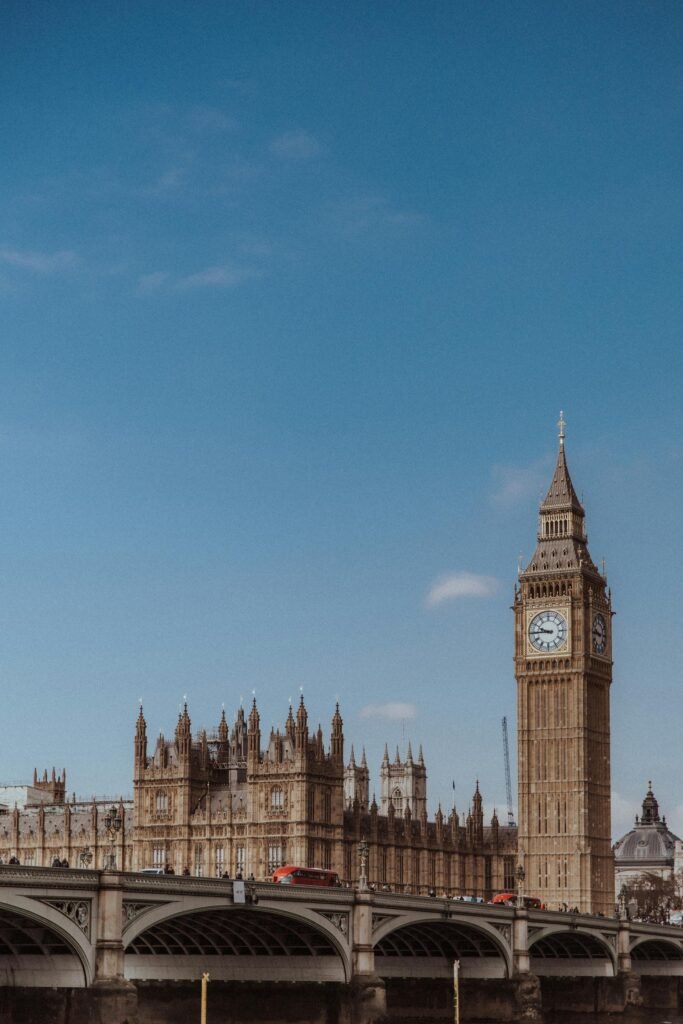
The early medieval period saw Lundenwic (Anglo-Saxon settlement, west of the Roman walls — the modern Covent Garden / Strand area) develop alongside the abandoned Roman Lundenburh. Viking raids prompted Alfred the Great to refortify the Roman walls in 886 CE. King Edward the Confessor built Westminster Abbey (consecrated 1065) and the original Westminster Palace, establishing the political center 3 km west of the commercial City — a separation that still defines London’s geography.
Norman Conquest and Medieval Growth
William the Conqueror was crowned at Westminster Abbey on 25 December 1066. He built the White Tower (the Tower of London’s keep, completed ~1078) to dominate and defend the City. The medieval city grew along the Thames: London Bridge (the original 1209 stone bridge with houses on it, replaced 1831), Smithfield meat market, the Inns of Court for legal training, livery companies for trade guilds. The Black Death (1348–1349) killed roughly half the city’s population.
Tudor and Stuart London
Henry VIII’s Dissolution of the Monasteries (1536–1541) restructured the city’s land ownership. Under Elizabeth I, London became a serious commercial port; the East India Company was founded in 1600. The Great Plague (1665) killed an estimated 100,000 — about a quarter of the population. The Great Fire of London (September 1665) destroyed roughly 80% of the medieval city; Christopher Wren designed the rebuild, including St. Paul’s Cathedral (completed 1710) and 51 parish churches.
Georgian and Victorian Imperial Capital
The Georgian era (1714–1837) saw London become the largest city in the world. The Industrial Revolution and the British Empire combined to make Victorian London (1837–1901) one of the most consequential cities in human history — financial capital of an empire covering a quarter of the planet. The London Underground opened in 1863 (the world’s first); the Metropolitan Police in 1829; the Houses of Parliament were rebuilt after the 1834 fire (the iconic Charles Barry / Augustus Pugin building, including the Big Ben clock tower, completed 1859); Tower Bridge opened in 1894.
20th Century: The Blitz and Postwar Era
World War II’s Blitz (September 1940 – May 1941) killed 30,000 Londoners and destroyed roughly a third of the City of London. The famous photograph of St. Paul’s Cathedral standing through the smoke is the era’s defining image. Postwar reconstruction was uneven; the 1952 Great Smog killed an estimated 12,000 and prompted the Clean Air Act. The 1960s brought “Swinging London,” Carnaby Street, the Beatles, and the cultural reinvention that returned London to global prominence.
Modern London
The 1980s Big Bang deregulation made the City a global financial center rivaling Wall Street. Canary Wharf in the former Docklands was redeveloped from 1988 onward. The 2012 Olympics regenerated East London. Brexit (2016 referendum, 2020 formal exit) changed London’s relationship with Europe — though the city itself voted strongly to remain. Mayor Sadiq Khan (since 2016) has driven the ULEZ (Ultra-Low Emission Zone) and Crossrail (the Elizabeth Line) megaprojects. The 2024 general election saw a Labour government take office under PM Keir Starmer; King Charles III succeeded Queen Elizabeth II in September 2022 and was crowned at Westminster Abbey in May 2023.
Geography, Climate & Best Time to Visit London
London sits on the River Thames in southeastern England, 80 km west of where the river meets the North Sea. The metro region (Greater London, the M25 motorway boundary) covers 1,572 km² and houses 9.7 million people; central London proper is much smaller. The Thames runs east-west through the city; “north of the river” and “south of the river” remain meaningful social and cultural divisions for Londoners.
Climate
London has a temperate oceanic climate (Köppen Cfb) — cool, cloudy, wet for much of the year, with sharp seasonal variation. Summers are mild (average July high 24°C, occasional 35°C heatwaves becoming more common). Winters are cool but not severe (January average 8°C high, 3°C low; snow infrequent and rarely settles). Annual rainfall ~600 mm, well distributed across the year. The famous London “weather” reputation overstates rain (London actually gets less annual rainfall than Rome or Sydney) but understates the persistent grey skies.
Best Time to Visit
May–early July and September are the optimal travel windows — mild temperatures, longer days, parks at peak green, fewer crowds than peak summer. Late June–August brings peak tourist season — long daylight (sunset at 9:30 pm in late June), warmest weather, but the most crowded sights. December is magical for Christmas markets, theatre, and the festive lights — but cold, dark by 4 pm, and rain-prone. February is the cheapest month with the worst weather; do this only for cultural-attractions-only trips.
London’s Districts & Neighborhoods
London is famously a “city of villages” — 32 boroughs plus the City of London, each with distinct character. The visitor’s working geography splits between Central London (within Zone 1 transport boundary), East London, North London, South London, and West London.
Central London — The Tourist Heart
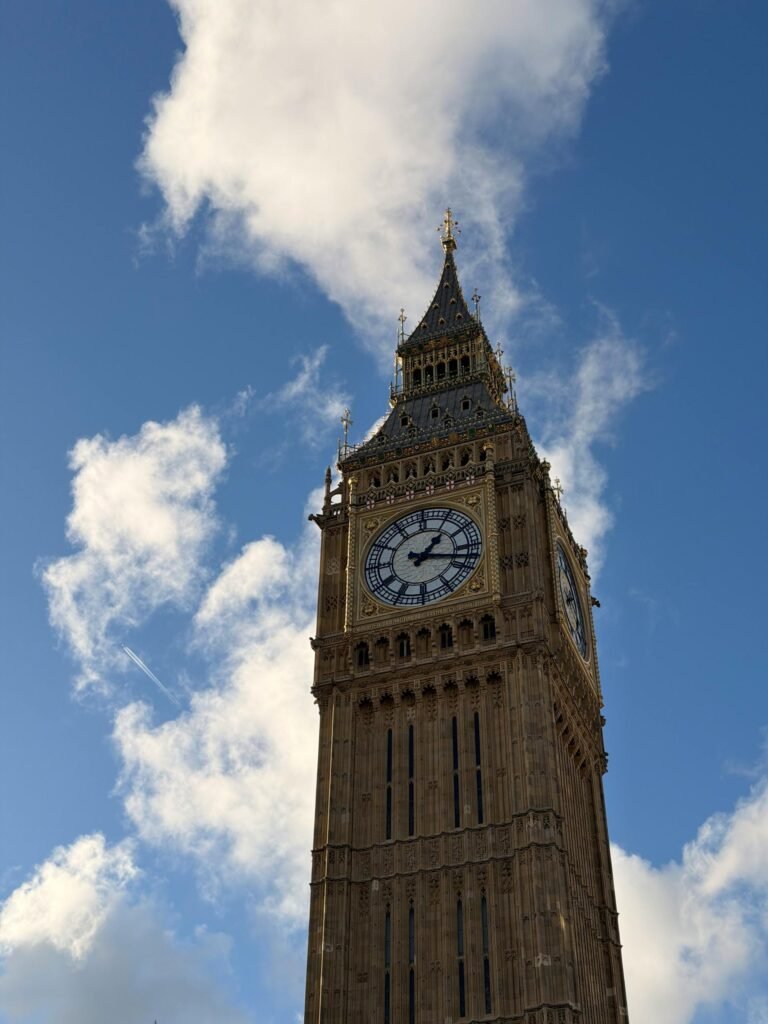
Westminster: the political center — Parliament, Big Ben, Westminster Abbey, Buckingham Palace, Trafalgar Square, the National Gallery. City of London: the financial Square Mile — St. Paul’s, the Bank of England, the Tower of London. Soho: Theatres, Chinatown, restaurants, nightlife. Covent Garden: tourist shopping, street performers, Royal Opera House. South Bank: the riverside cultural strip — Tate Modern, Shakespeare’s Globe, the London Eye, the National Theatre, the Borough Market. Mayfair: ultra-luxury, the Royal Academy, Bond Street shopping. Knightsbridge & South Kensington: Harrods, Hyde Park, the museum cluster (V&A, Natural History, Science).
East London — The Creative Frontier
Shoreditch & Hackney: the historic working-class east now redeveloped as London’s creative quarter — Brick Lane curry houses, Spitalfields Market, the Old Truman Brewery, design studios, street art. Canary Wharf: financial-services skyscraper district built on the former Docklands. Greenwich: Royal Observatory, Cutty Sark, the National Maritime Museum, the Prime Meridian.
North London — Residential Charm
Camden: Camden Market, alternative culture, the canalside lock. Islington: gentrified Georgian and Victorian streets, the political wonk crowd. Hampstead: a leafy hilltop village inside the city, with Hampstead Heath. Notting Hill (technically west but culturally similar): the Portobello Road market and the famous film backdrop streets.
South London
Brixton: the historic Caribbean-British community, the Brixton Market, vibrant nightlife. Clapham: a young-professional enclave around Clapham Common. Greenwich: the maritime-history district covered above. Peckham: the new Brooklyn-of-London creative neighborhood.
West London
Notting Hill: pastel townhouses, the August Carnival, Portobello Road. Holland Park and Kensington Gardens: the green-and-elegant residential west. Chelsea: the Kings Road, Sloane Square. Hammersmith and Fulham: more residential, riverside.
Where to Stay
First-time visitors: Westminster, Bloomsbury, or Marylebone for walking access to the major sights and theatre district. Atmosphere seekers: Shoreditch or Notting Hill for boutique hotels and neighborhood character. Budget: Bayswater, Earl’s Court, or King’s Cross — historically tourist-budget areas with good Tube connections. Skip: Heathrow-area hotels for sleep (only useful for early-morning flights).
Top Things to Do in London
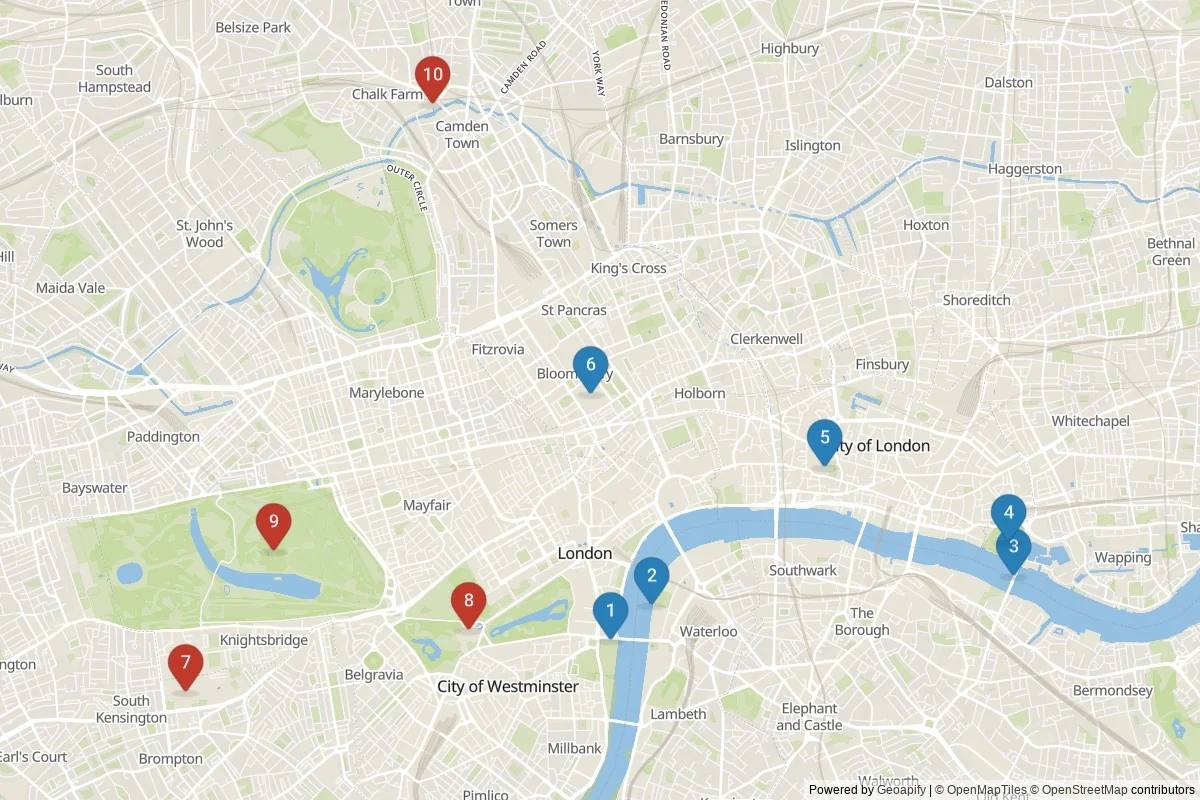
| # | Sight | Cluster | Type | Time | Entry | Best |
|---|---|---|---|---|---|---|
| 1 | Westminster Abbey & Big Ben | Central | Abbey | ~2 hrs | £29 | Morning |
| 2 | London Eye | Central | Observation wheel | ~30 min | £36 | Sunset |
| 3 | Tower Bridge | Central | Bridge | ~30 min | Free | Anytime |
| 4 | Tower of London | Central | Historic fortress | ~3 hrs | £35 | Morning |
| 5 | St Paul’s Cathedral | Central | Cathedral | ~1.5 hrs | £23 | Morning |
| 6 | British Museum | Central | Museum | ~3 hrs | Free | Morning |
| 7 | Natural History Museum | Outer | Museum | ~2 hrs | Free | Morning |
| 8 | Buckingham Palace | Outer | Royal palace | ~1 hr | Free outside | 11:00 (guard) |
| 9 | Hyde Park | Outer | Royal park | ~1 hr | Free | Afternoon |
| 10 | Camden Market | Outer | Market | ~2 hrs | Free | Afternoon |
Royal and Political London
Buckingham Palace — the King’s official London residence; the State Rooms open to visitors only July–September while the royal family is at Balmoral. The Changing of the Guard ceremony at 11 am (daily summer, alternate days winter) is the iconic free spectacle. Kensington Palace, St James’s Palace, and the recently-opened Royal Mews round out the official residences accessible to visitors.
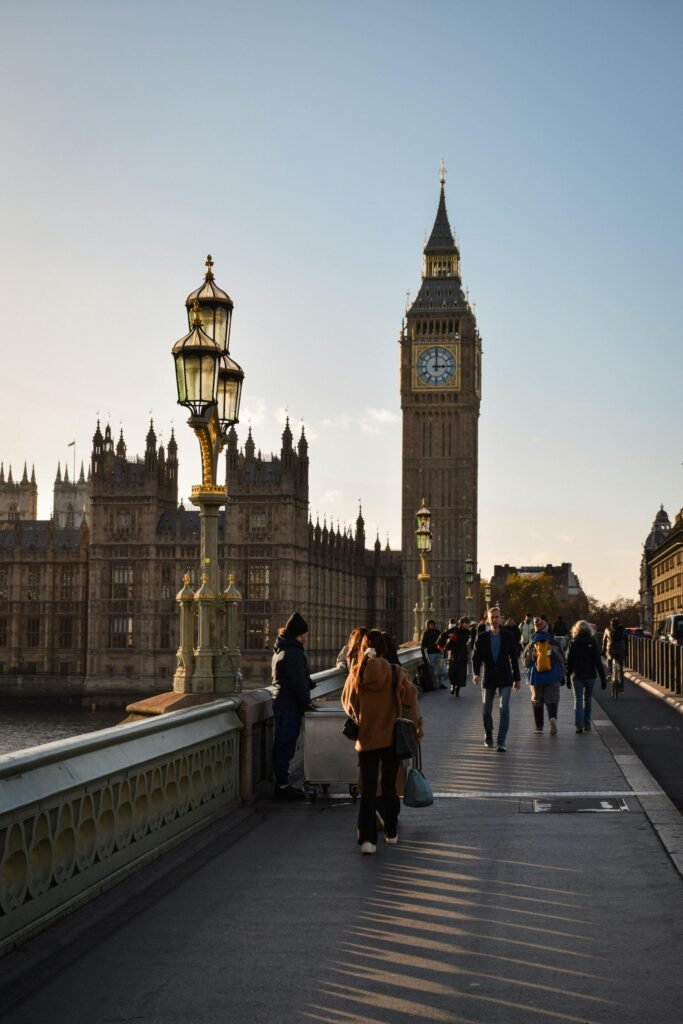
Houses of Parliament & Big Ben — the iconic Gothic Revival Parliament building (technically the Palace of Westminster, the original burned in 1834 and the current building was completed 1870). Westminster Abbey — coronation and burial site of British monarchs since 1066; tickets ~£27 via westminster-abbey.org. 10 Downing Street can be glimpsed from Whitehall.
Towers, Bridges, and the Thames
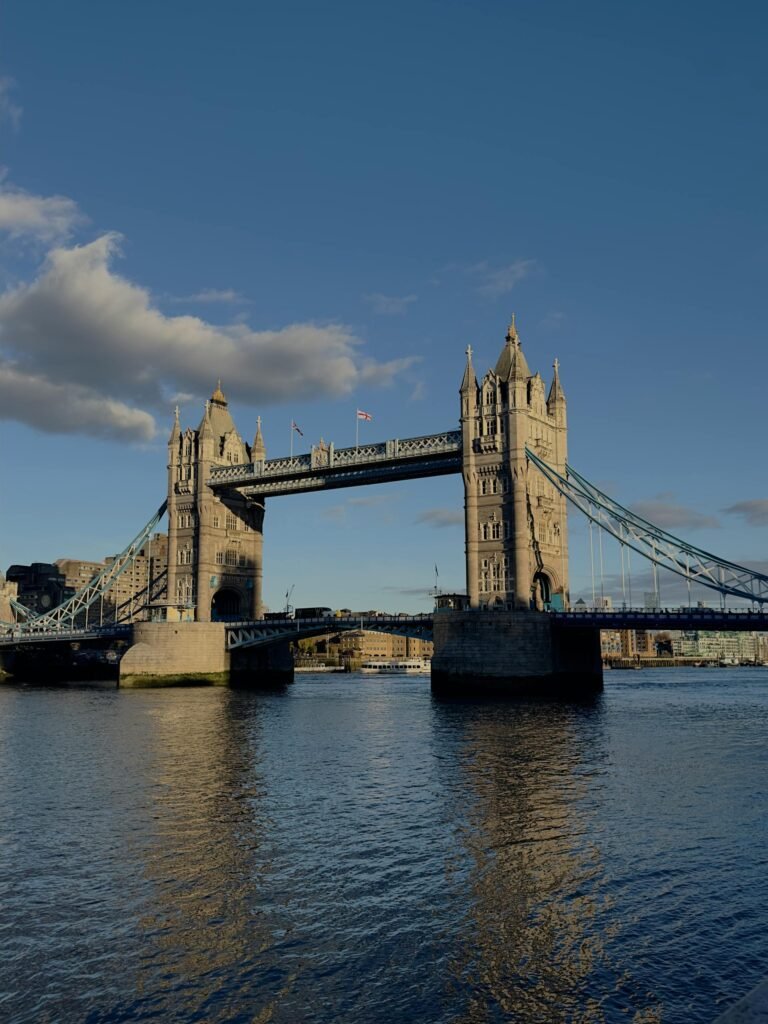
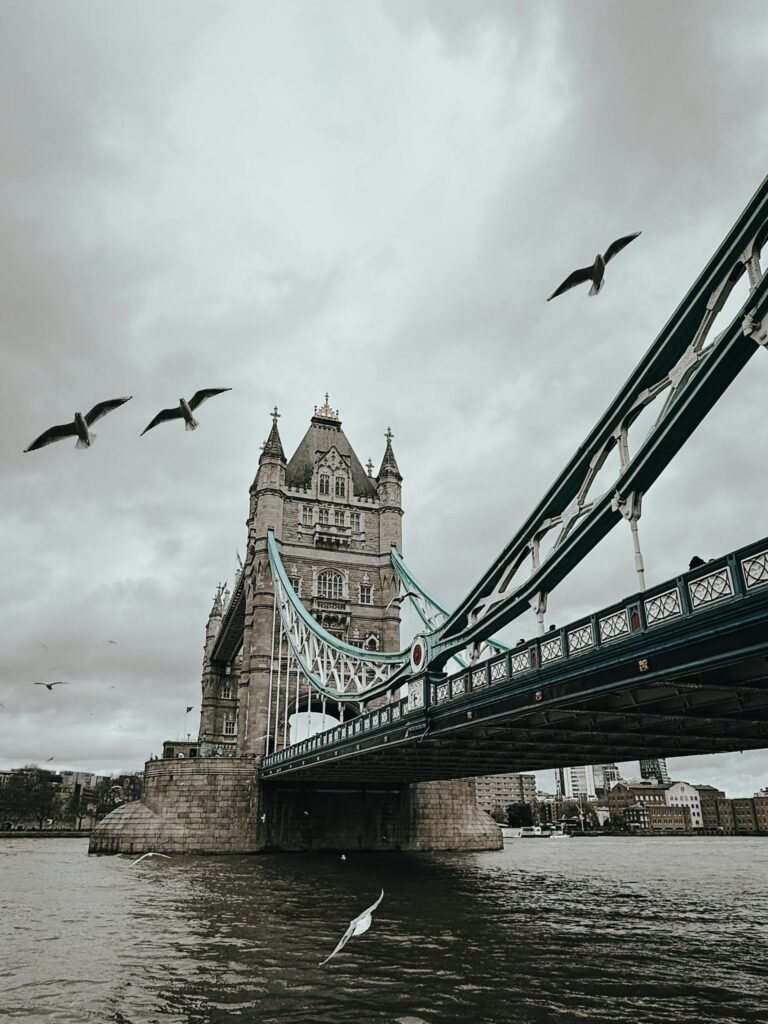
Tower of London — the medieval royal palace and prison, home to the Crown Jewels and the Beefeater Yeoman Warders. £35 adult; book via hrp.org.uk. Allow 3–4 hours. Tower Bridge (1894, the suspension-and-bascule bridge) is the iconic Thames bridge — Tower Bridge Exhibition with glass walkway £13.40.
Museums and Galleries
London’s museums are world-class — and the major national ones are FREE (a peculiar British tradition that delights tourists). The British Museum (Bloomsbury) — the Rosetta Stone, the Parthenon Marbles, 8 million objects across human history; free, donations welcome. The National Gallery (Trafalgar Square) — Western European painting from the 13th to 19th centuries; Van Eyck, Vermeer, Turner, Constable, Monet; free. The Tate Modern (Bankside, in the former Bankside Power Station) — modern and contemporary art; free for collection, paid for special exhibitions. Tate Britain for British art; free. Victoria and Albert Museum (V&A) — design and decorative arts; free. Natural History Museum — the dinosaur skeleton in the entrance hall, the iconic Romanesque building; free. Science Museum — free.
Parks and Green Spaces
London is one of the world’s greenest major cities. The Royal Parks: Hyde Park + Kensington Gardens (350 acres combined, central), Regent’s Park (with London Zoo), St. James’s Park (with Buckingham Palace views), Green Park, Richmond Park (deer-roaming, southwest London). Hampstead Heath in north London for swimming ponds and Parliament Hill panorama. Greenwich Park for the Royal Observatory.
Shopping and Markets
Borough Market at London Bridge — gourmet food market since the 13th century. Camden Market for alternative fashion. Portobello Road Market (Saturdays) for antiques. Spitalfields Market for emerging designers. Brick Lane Market on Sundays. Liberty on Regent Street for the iconic Tudor-revival luxury department store. Harrods in Knightsbridge.
Theatre
The West End rivals Broadway as the world’s premier commercial theatre district — 40+ theatres around Shaftesbury Avenue, Leicester Square, and the Strand. Long-running megahits (The Lion King, Phantom of the Opera, The Mousetrap running since 1952), plus rotating new productions. Tickets via officiallondontheatre.com or the TKTS booth at Leicester Square for same-day discounts. Shakespeare’s Globe on the South Bank — the reconstructed 1599 theatre — runs Shakespeare productions April–October.
How to Get to London
By Air
London has six airports — three major international, three smaller. Heathrow (LHR): the dominant international hub, west of central London. Heathrow Express to Paddington 15 min (£25); Elizabeth Line cheaper at 30 min (£12); Underground Piccadilly Line slowest (~1 hour, £6); taxi £55–80. Gatwick (LGW): south of London; Gatwick Express to Victoria 30 min (£20); Thameslink to St. Pancras (£11). Stansted (STN): east, primarily budget carriers; Stansted Express to Liverpool Street 47 min. Luton (LTN): north, budget carriers. City Airport (LCY): in Docklands, business travelers. Southend (SEN): small.
By Rail
London’s mainline stations — King’s Cross (north), St. Pancras (Eurostar to Paris/Brussels/Amsterdam, 2h 15min), Euston (Manchester, Liverpool, Glasgow), Paddington (Bristol, Cardiff, Heathrow), Liverpool Street (Stansted, East Anglia), Victoria (Brighton, Gatwick), Waterloo (southwest), Marylebone (Birmingham). Booking via nationalrail.co.uk.
By Road
The M25 motorway encircles Greater London. Driving into central London is genuinely a bad idea — congestion charge (£15/day weekday, 7am–6pm), ULEZ charge (£12.50/day for non-compliant vehicles), expensive parking, narrow streets. Use the Tube.
Getting Around London
Underground (the Tube)
The world’s first underground railway, since 1863. 11 lines + the new Elizabeth Line (opened 2022, central London’s east-west spine). Peak hours can be crowded; off-peak is comfortable. Pay via contactless credit card (Visa/Mastercard/Amex) or Apple/Google Pay tap-in/tap-out — auto-caps at daily and weekly limits. Single ride £2.80–6.30 by zone. The old Oyster Card still works but contactless is easier for visitors. The Underground runs ~5 am to midnight; selected lines run all night Friday-Saturday. Routes at tfl.gov.uk.
Buses
The iconic red double-decker buses reach every corner the Tube doesn’t. Bus fare flat £1.75 with daily cap £5.25 — much cheaper than Tube. Contactless or Oyster only (no cash since 2014). Top deck of the front of a #15 or #11 bus is a free London tour.
Taxis and Ride-Hailing
The iconic black-and-licensed-yellow black cab drivers must pass “The Knowledge” exam memorizing 25,000+ London streets. Hail on the street (yellow “for hire” light) or call a black cab. Uber and Bolt work throughout London with transparent pricing. FreeNow is a local taxi-app alternative.
Walking and Cycling
Central London is genuinely walkable — many of the major sights are within 30-minute walks of each other. Santander Cycles (London’s bike-share, the “Boris Bikes”) cost £1.65/30min. Dedicated cycle “Superhighways” connect across central London; the Embankment and Royal Parks routes are the most pleasant.
Food & Drink in London
London’s food scene has been transformed since the 1990s. The “British food is bad” stereotype has been comprehensively disproven — London now has more Michelin stars than New York and is genuinely one of the world’s leading food cities. The cuisine that defines London is neither traditional British nor any single ethnic tradition but the new global-fusion scene that emerged in the post-Empire age.
Traditional British Classics
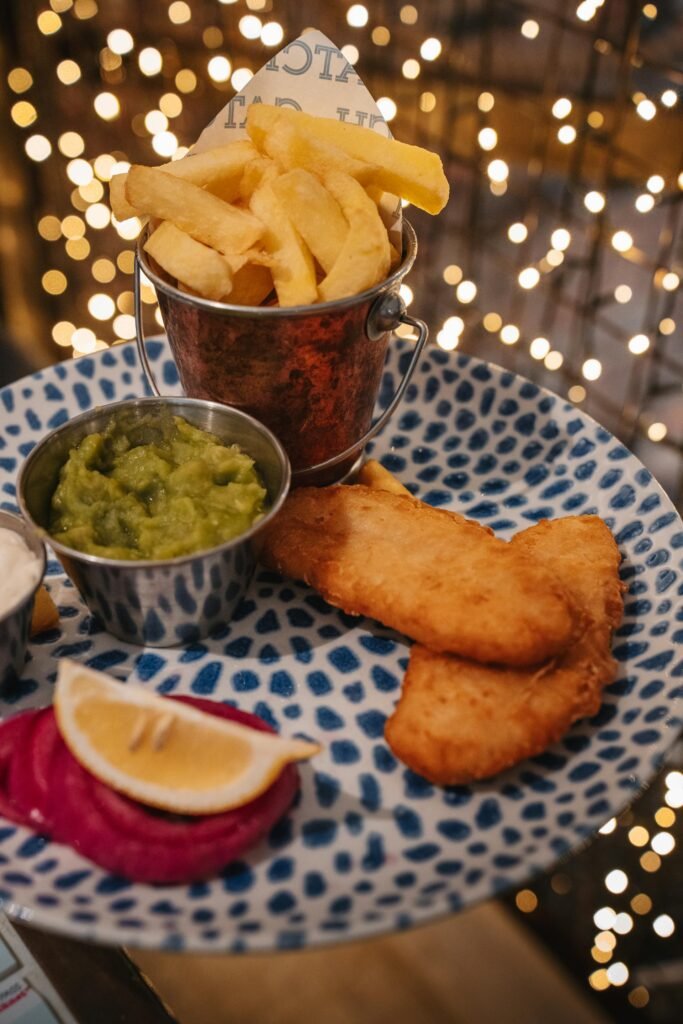
Fish and chips — the Friday national dish. The Golden Hind (Marylebone) and Poppies (Spitalfields) are the institutional names. Sunday roast — beef, pork, or chicken with potatoes, vegetables, and Yorkshire pudding; gastropubs across London serve excellent versions. Pie and mash — the working-class London tradition; F. Cooke in Hoxton has been serving since 1900. Full English breakfast — eggs, bacon, sausage, beans, mushrooms, tomatoes, toast.
Indian and Bangladeshi Cuisine
London is one of the world’s great Indian-food cities — the heritage of South Asian immigration since the 1950s. Brick Lane in Whitechapel was the historic curry hub (mostly Bangladeshi). Tayyabs (Whitechapel) for Punjabi grilled meats; Dishoom (multiple locations) for the polished Bombay-cafe modernization. Chicken tikka masala was reportedly invented in Glasgow in the 1970s and is now a British national dish.
The Modern Global Scene
London’s 14,000+ restaurants represent every world cuisine. The major institutional names: The Ledbury (Notting Hill, 3 Michelin stars), Core by Clare Smyth (Notting Hill, 3 stars), Restaurant Gordon Ramsay (Chelsea, 3 stars), The Ritz London for traditional grand dining, St. JOHN (Smithfield) for nose-to-tail British, Lyle’s (Shoreditch) for new British. Borough Market for casual food-hall dining. The Asian/Middle Eastern scene is exceptional: Chinatown (Soho), Lebanese in Edgware Road, Turkish in Stoke Newington, Vietnamese in Kingsland Road.
Pubs
The British pub is its own institution — order at the bar, no table service, beer comes in pints. Historic pubs to seek out: The Lamb & Flag (Covent Garden, since 1772), Ye Olde Cheshire Cheese (Fleet Street, since 1538), The George Inn (Borough, the only surviving galleried London inn), The Mayflower (Rotherhithe, where the Pilgrim Fathers’ ship was moored). Real ale (cask-conditioned bitter) is the British beer specialty; the global craft-beer wave has produced excellent London breweries (Beavertown, Camden Town, Brewdog).
Tea Culture
Afternoon tea — sandwiches, scones with clotted cream and jam, pastries, served with tea — is a London institution at the grand hotels: The Ritz, Claridge’s, The Savoy, Fortnum & Mason. £60–90 per person. Reservations 1–2 months ahead.
Culture & Arts in London
London is one of the world’s three most important cultural capitals (with NYC and Paris) — but uniquely, most of its top museums are free. The cultural calendar is dense year-round.
Museums and Galleries
The free national museums — British Museum, National Gallery, Tate Modern, Tate Britain, V&A, Natural History, Science Museum — are covered above. The National Portrait Gallery (recently reopened after refurbishment) houses portraits of British historical figures. The Wallace Collection (Marylebone) is an extraordinary 19th-century collection in a townhouse setting. The Imperial War Museum, Museum of London, and Geffrye Museum (Museum of the Home) handle British social history.
Performing Arts
The West End is covered above. The Royal Opera House (Covent Garden) hosts the Royal Opera and Royal Ballet. The National Theatre (South Bank) — three theatres under one Brutalist roof — is the canonical English-language theatre venue. The Royal Albert Hall hosts the BBC Proms (July–September, world-class classical music with the famous “Last Night of the Proms” patriotic finale). Wigmore Hall for chamber music; Barbican Centre for the London Symphony Orchestra.
Music Heritage
London birthed punk, mod, the British Invasion, glam rock, post-punk, and grime — and the music venues remain world-class. O2 Arena for major tours; Royal Albert Hall, Wembley Stadium, Wembley Arena for stadium-level shows; Brixton Academy, Hammersmith Apollo, Roundhouse, Shepherds Bush Empire for mid-size; The 100 Club, Ronnie Scott’s Jazz Club, The Jazz Cafe for the historic clubs.
Festivals and Events
Notting Hill Carnival (last weekend of August) — Europe’s largest street festival, the Caribbean-British community celebration. BBC Proms (July–September). London Fashion Week (February and September). Pride in London (early July). Trooping the Colour (King’s Birthday Parade, mid-June). Bonfire Night (5 November, fireworks across the city). Christmas in London — the West End lights, Hyde Park Winter Wonderland, the Coca-Cola Truck on Oxford Street.
London by District: The 21 Boroughs
London is divided into 21 boroughs. The map below shows their official OSM boundaries, colour-coded to match the table — a quick way to orient yourself before zooming in on individual sights.
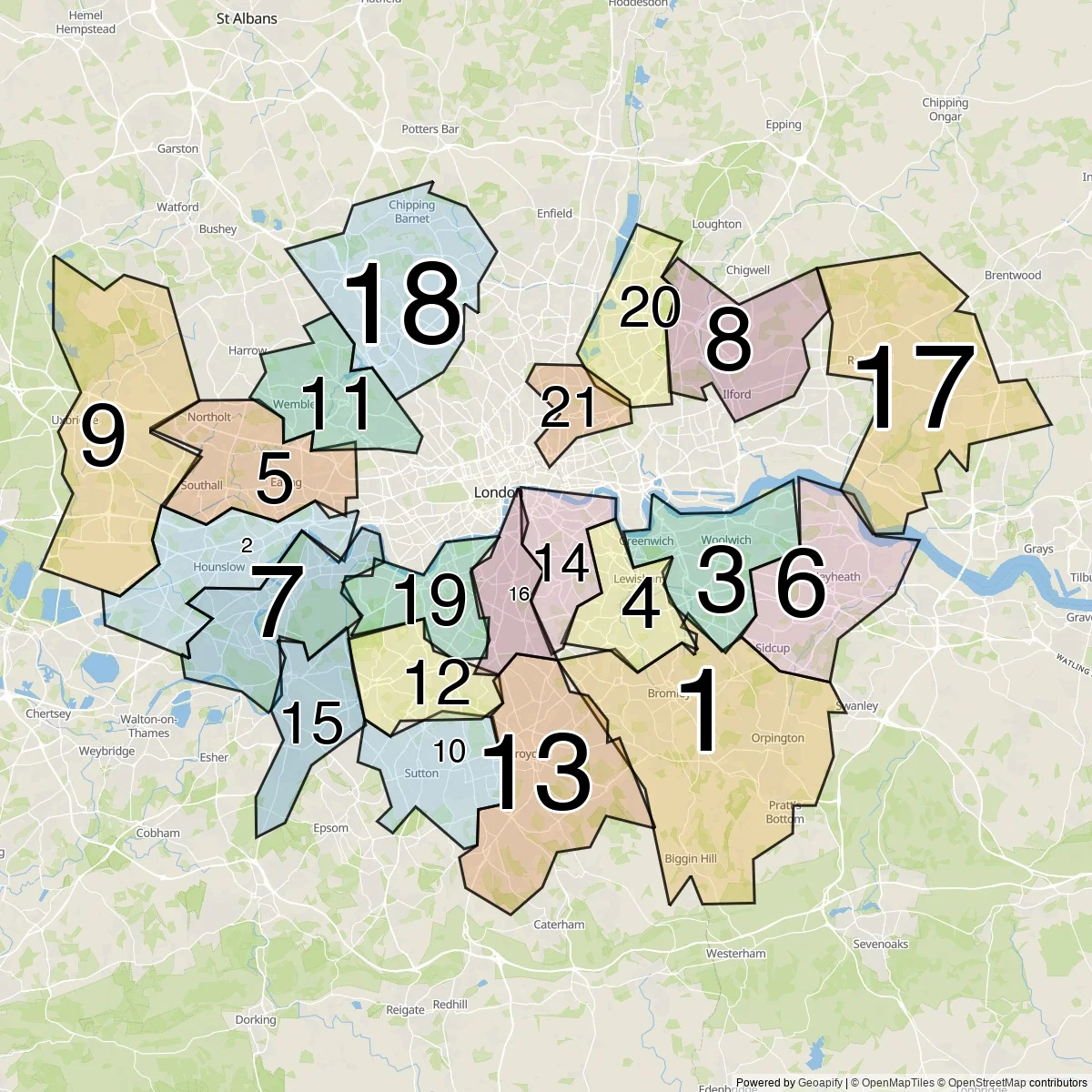
| # | Boroughs |
|---|---|
| 1 | London Borough of Bromley |
| 2 | London Borough of Hounslow |
| 3 | Royal Borough of Greenwich |
| 4 | London Borough of Lewisham |
| 5 | London Borough of Ealing |
| 6 | London Borough of Bexley |
| 7 | London Borough of Richmond upon Thames |
| 8 | London Borough of Redbridge |
| 9 | London Borough of Hillingdon |
| 10 | London Borough of Sutton |
| 11 | London Borough of Brent |
| 12 | London Borough of Merton |
| 13 | London Borough of Croydon |
| 14 | London Borough of Southwark |
| 15 | Royal Borough of Kingston upon Thames |
| 16 | London Borough of Lambeth |
| 17 | London Borough of Havering |
| 18 | London Borough of Barnet |
| 19 | London Borough of Wandsworth |
| 20 | London Borough of Waltham Forest |
| 21 | London Borough of Hackney |
Frequently Asked Questions About Visiting London
Do I need a visa to visit London?
It depends on nationality. Citizens of the EU/EEA, US, Canada, Australia, New Zealand, Japan, South Korea, Singapore, and around 80 other countries can enter the UK visa-free for tourist stays up to 6 months — but as of January 2025 must obtain an Electronic Travel Authorisation (ETA) before travel via the official portal at gov.uk/guidance/apply-for-an-electronic-travel-authorisation-eta. Cost £10, valid 2 years or until passport expiry. Other nationalities need a Standard Visitor Visa applied for at the British embassy. Always check the latest at gov.uk/check-uk-visa. Passport must have at least 6 months remaining validity.
Is London safe for tourists?
London is generally safe for tourists. The US State Department rates the UK at “exercise normal precautions.” Violent crime against tourists is rare; the city is heavily policed. Real risks: pickpocketing on the Tube, in Oxford Street/Regent Street shopping crowds, around major sights (Tower Hill, Westminster, Trafalgar Square); moped-snatching of phones and bags from pedestrians at street corners (riders grab and ride away — keep phones in pockets, not hands); fake police officers and charity scams at tourist sights; contactless card fraud at unattended payment points. Avoid certain estate areas of South and East London late at night unless you have specific reasons. Solo women travelers: London is genuinely fine; standard urban awareness applies. Terrorism threat level: the UK government rates it “substantial” but specific tourist incidents are extremely rare.
How many days do I need in London?
Five days is the practical minimum to enjoy London beyond just sprinting through landmarks. A solid 5-day plan: Day 1 — Westminster Abbey + Houses of Parliament + Buckingham Palace + Trafalgar Square + National Gallery + Covent Garden + West End show; Day 2 — Tower of London + Tower Bridge + St. Paul’s Cathedral + Borough Market + Tate Modern + South Bank evening walk; Day 3 — British Museum + Bloomsbury + Soho + Chinatown + dinner in Marylebone; Day 4 — V&A + Natural History Museum + Hyde Park + Notting Hill + Portobello Road; Day 5 — Greenwich (Royal Observatory + Cutty Sark + Maritime Museum + Prime Meridian) OR Hampstead (the Heath + Kenwood House) OR Shoreditch (Brick Lane + Old Spitalfields Market + street art tour). Day 6–7: day-trip to Oxford or Cambridge (1h by train), Bath (1h 20min), Windsor (40 min), or Stonehenge + Salisbury. Three days only handles the core sights; you’ll feel rushed.
What’s the best area to stay in London?
Three solid options. Westminster / Covent Garden / Bloomsbury (Zone 1 central) — the obvious central choice; walking distance to all major sights, theatre district at hand; mid-range to luxury hotels (The Savoy, The Ritz, Claridge’s, The Goring, The Ned, The Hoxton) at £200–800/night. Mayfair / Marylebone — quieter than Soho, polished restaurants and boutiques, the smart London choice; £250–700/night. South Bank / Bermondsey — across the river, modern hotels (Shangri-La The Shard, Sea Containers, Mondrian, the Shard’s Hotel) with riverside views, easy walk to Westminster and the City; £200–500/night. Budget: Bayswater, Earl’s Court, King’s Cross, or Bloomsbury budget hotels (Premier Inn, Travelodge, Yotel) at £80–180/night. Skip: Heathrow-area hotels for sleep (only useful for early flights); Camden and Brixton at the edges of Zone 2 for non-trendy pricing.
How much does it cost to visit London’s major sights?
London is famously expensive — but the headline museums are FREE. British Museum: free entry, special exhibitions £15–25. National Gallery: free. Tate Modern, Tate Britain, V&A, Natural History Museum, Science Museum, National Portrait Gallery: all free, donations welcome. Tower of London: £35 via hrp.org.uk. Westminster Abbey: £27 via westminster-abbey.org. Buckingham Palace State Rooms (July–September only): £33. St. Paul’s Cathedral: £25. The London Eye: £35–45. The Shard View From The Shard: £32. London Zoo: £33. Kew Gardens: £22. Hampton Court Palace: £29. Madame Tussauds: £42. The Tower Bridge Exhibition: £13.40. Bargain passes: The London Pass (1–10 days, £80–250) covers 90+ attractions; pays off if you visit 4+ paid attractions/day. West End show: £40–250 depending on production and seat; TKTS Leicester Square for same-day discounts.
Should I drink the tap water in London?
Yes, absolutely. London tap water meets EU drinking-water standards (which the UK retained post-Brexit) and is genuinely good — sourced from the Thames Valley reservoirs and chalk aquifers in the Thames Valley and Lea Valley. The water is “hard” (high mineral content, mostly chalk-derived calcium) which gives London tap water its slightly distinctive taste. The Thames Water utility publishes regular quality reports. Restaurants will serve free tap water on request — say “tap water” rather than “still water” to avoid being charged for bottled. Public drinking fountains are returning across central London via the Mayor’s “London Drinking Fountain” initiative.
How do I navigate the Tube?
The London Underground (Tube) is the world’s first underground railway and the easiest way to get around central London. Practical advice: pay using contactless credit card (Visa/Mastercard/Amex) or Apple Pay/Google Pay — tap in at the gate, tap out at your destination, system auto-calculates fare and applies daily/weekly caps. The old Oyster Card still works (£7 deposit, refundable, top up at machines). Single-ride fares £2.80–6.30 by zone; daily cap Zone 1 only £8.50, Zone 1–2 £8.50, all-zone £15.60; weekly cap Zone 1–2 £42.70. Mind the gap — actually heard, actually a real safety issue at curved platforms. Stand on the right on escalators (left for walking past). Service runs ~5 am to midnight; selected lines run all night Friday-Saturday. The Citymapper app or Google Maps both work seamlessly. Lifts/elevators only at some stations; check the TfL accessibility map for step-free access.
Is tipping expected in London?
Less than in the US, more than in continental Europe. Restaurants: 10–12.5% is standard; many restaurants automatically add a discretionary service charge of 12.5% to the bill — that’s the standard tip; you can ask to remove it if service was poor. Round up at casual places. Pubs: tipping not customary at the bar; round up for table service. Taxis (black cabs and Uber): round up to nearest £1 or 10%. Hotel porters: £1–2 per bag at upscale hotels. Hotel housekeeping: £2–5 per night left at end of stay at upscale hotels. Tour guides: £5–15 per person for half-day, more for full private day; bus drivers £2–5. Hairdressers and spa: 10% if pleased. Coffee shops and counter service: tip jar contributions optional, no expectation. The London standard is restrained relative to NYC — it’s a tip, not a salary supplement.
Economy & Business in London
London is one of the world’s two leading financial centers (alongside New York). The City of London (the Square Mile) houses the Bank of England, Lloyd’s of London (insurance), and the headquarters of major banks (HSBC, Barclays, Standard Chartered) plus international financial services giants. Canary Wharf in the Docklands hosts the second financial cluster — JP Morgan, Citi, Morgan Stanley, Barclays, HSBC’s global HQ tower.
Beyond finance, London is a global hub for law (the Inns of Court tradition), media (BBC, the major national newspapers, advertising agencies in Soho), tech (the East London “Silicon Roundabout” cluster), creative industries (fashion, design, film and TV production), tourism (30+ million annual visitors pre-COVID), and education (Imperial College, UCL, LSE, KCL all in the global top-50 universities). Post-Brexit, some financial-services jobs migrated to Amsterdam, Paris, and Frankfurt — but London remains dominant.
Demographics & Diversity in London
London is one of the world’s most ethnically diverse major cities. The 2021 UK Census recorded 36% of Londoners as White British, 13% as Asian, 13% as Black, 14% as Other White, plus mixed and other categories. Over 300 languages are spoken. About 35% of Londoners were born outside the UK — the highest rate of any major Western capital.
The major communities each have geographic centers: Bangladeshi-British in Tower Hamlets (Brick Lane); Indian-British in Southall (West London); African and Afro-Caribbean in Brixton, Peckham, Hackney; Polish across the metropolis after 2004 EU expansion; Russian, Iranian, Lebanese in Kensington and Chelsea; Chinese in Soho’s Chinatown and increasingly across all boroughs; Australian-British traditionally in Earl’s Court (less concentrated now). The diversity defines London’s food, music, and cultural scenes.
Notable People from London
Far too many to list — the partial list of London-born or London-defining figures spans every cultural era. Royalty & politics: the entire Royal Family lives in London; Winston Churchill (born in nearby Blenheim but London-rooted); modern PMs are London-based even when not London-born. Literature: William Shakespeare (worked in London), Charles Dickens (defining London novelist), Virginia Woolf (Bloomsbury), Salman Rushdie, Zadie Smith, Hilary Mantel. Music: Mick Jagger and Keith Richards (the Stones), David Bowie (Brixton-born), Adele (Tottenham), Amy Winehouse, the entire grime scene. Film & TV: Charlie Chaplin (Lambeth), Alfred Hitchcock (Leytonstone), Daniel Craig, Idris Elba, Helen Mirren. Science: Charles Darwin (lived in Down House just south), Tim Berners-Lee (CERN but London-based), Stephen Hawking (Cambridge but lived periodically in London). The Cockney working-class culture of East London produced its own legacy.
London rewards travelers who give it time. Five days minimum for the major sights (Tower of London + Westminster + British Museum + Tate Modern + Greenwich + a West End show + a Borough Market lunch); a week to start understanding the neighborhoods; a fortnight to actually enjoy it. The city rewards walking — the major sights are surprisingly close together — and the free national museums make even a budget visit culturally rich beyond what most cities offer.
AFRIKA
Cairo Hurghada Johannesburg Marrakech
ASIA
Abu Dhabi Agra Antalya Bangkok Batam Beijing Bengaluru Cebu City Chiang Mai Chiba Chennai Da Nang Dammam Delhi Denpasar Dubai Fukuoka Guangzhou Guilin Ha Long Hanoi Ho Chi Minh City Jakarta Jaipur Johor Bahru Kolkata Krabi Kuala Lumpur Kyoto Macau Mecca Medina Mugla Mumbai Osaka Pattaya Penang Phuket Riyadh Seoul Shanghai Shenzhen Singapore Taipei Tokyo Zhuhai
EUROPE
Amsterdam Athens Barcelona Berlin Brussels Budapest Copenhagen Dublin Florence Frankfurt am Main Heraklion Krakow Lisbon London Madrid Milan Munich Nice Paris Porto Prague Rhodes Rome Stockholm Venice Vienna Warsaw
NORTH AMERICA
Cancun Las Vegas Los Angeles Miami New York City Orlando San Francisco Toronto Vancouver
SOUTH AMERICA
Buenos Aires Lima Rio De Janeiro
OCEANIA
Auckland Honolulu Melbourne Sydney