
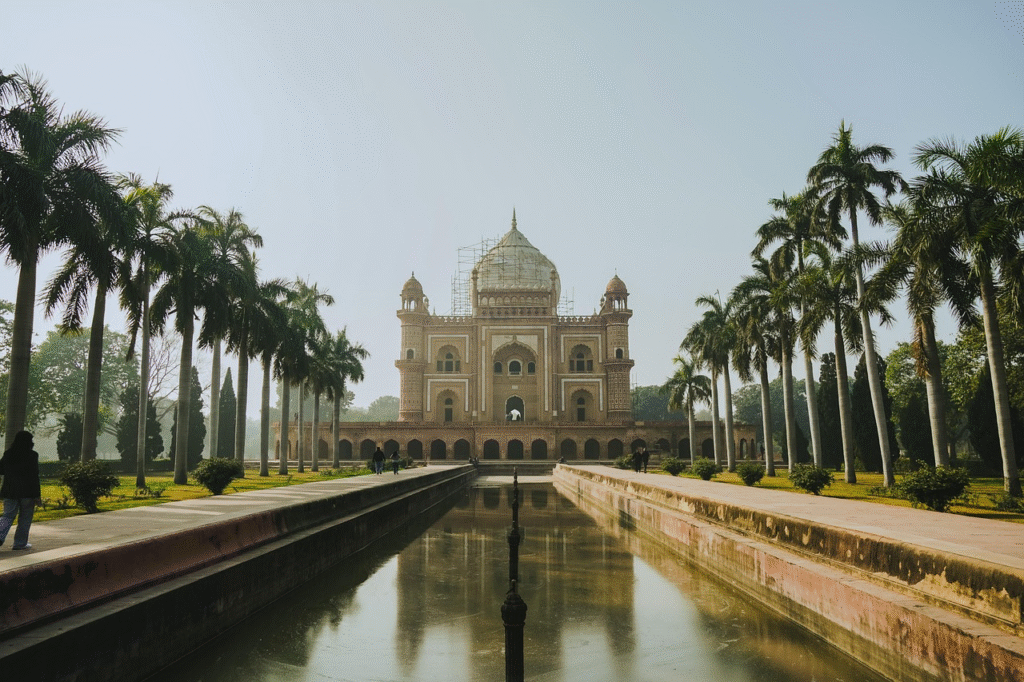
Photo by ranchauhan139, pixabay
Delhi, India’s vibrant capital territory, is a mesmerizing blend of ancient history and modern dynamism. With over 21 million residents calling this sprawling metropolis home, Delhi serves as both the political heart of India and a living museum spanning over 3,000 years of civilization. From the towering Qutub Minar to the bustling lanes of Chandni Chowk, every corner tells a story of empires, conquests, and cultural fusion.
Delhi at a Glance: Essential Facts for Travelers
| Location | Northern India, along the Yamuna River |
|---|---|
| Coordinates | 28.7041° N, 77.1025° E |
| Status | National Capital Territory (Union Territory) |
| Capital | New Delhi |
| Area | 1,483 km² (573 sq mi) |
| Population | Over 21 million (metro area: 31.87 million) |
| Population Density | 11,320 people per km² |
| Elevation | 216 meters (709 feet) above sea level |
| Time Zone | IST (UTC+5:30) |
| Calling Code | +91-11 |
| ISO Code | IN-DL |
| Official Languages | Hindi, Urdu, Punjabi (English widely used) |
| Known For | Red Fort, Qutub Minar, India Gate, Mughal architecture, street food |
| Lieutenant Governor | Vinai Kumar Saxena |
| Chief Minister | Atishi Marlena Singh (AAP) |
| Official Website | delhi.gov.in |
Upcoming Events in Delhi
| Date | Title | Details |
|---|---|---|
| 2026-09-09 to 2026-12-22 | Bice Lazzari and Nasreen Mohamedi: IN-RHYTHM at KNMA | The Kiran Nadar Museum of Art presents IN-RHYTHM, pairing Italian abstract pioneer Bice Lazzari with Indian modernist Nasreen Mohamedi, two artists whose spare lines and quiet geometries resonate across continents. Running from 9 September to 22 December alongside the group show Inheritors of Earth, the exhibition rewards viewers interested in abstraction and drawing. KNMA galleries are free to enter, making this an accessible outing for students and art lovers. The dialogue between the two bodies of work is a highlight of Delhi’s autumn art season. [Source] |
| 2026-09-22 to 2026-09-26 | 9th India Water Week at Bharat Mandapam | The ninth edition of India Water Week convenes at Bharat Mandapam in Pragati Maidan from 22 to 26 September, bringing together policymakers, engineers, researchers and industry to discuss water security, irrigation, river management and technology. Organised with the backing of the central government, the five-day event combines conference sessions with an exhibition of water-sector innovations. It is aimed primarily at professionals and delegates, with registration required to attend. The gathering underscores water’s place at the top of India’s development agenda. [Source] |
| 2026-09-26 to 2026-10-06 | Art Alive Gallery 25th anniversary exhibition at Bikaner House | Art Alive Gallery marks its 25th anniversary with a landmark exhibition at the Centre for Contemporary Art at Bikaner House, running from 26 September to 6 October. Curated by Kishore Singh, the show brings together seminal works by 30 artists, offering a sweep through modern and contemporary Indian art in one of Delhi’s most elegant exhibition spaces near India Gate. Entry to Bikaner House exhibitions is generally free, and the anniversary showing is suited to collectors, students and casual visitors alike. [Source] |
| 2026-09-27 to 2027-06-13 | Nilima Sheikh: Fractured Skies at KNMA | Fractured Skies, a major solo exhibition of celebrated painter Nilima Sheikh, opens at the Kiran Nadar Museum of Art on 27 September and continues until 13 June 2027. Known for luminous scroll-like works that weave together landscape, poetry and histories of displacement, Sheikh is one of India’s most admired senior artists. The long run gives visitors ample opportunity to see the exhibition, and museum admission is free. For anyone following Indian contemporary painting, this is among the most anticipated openings of the season. [Source] |
| 2026-10-11 to 2026-10-20 | Ramlila and Dussehra | Each autumn during Navaratri, Delhi comes alive with Ramlila, the traditional open-air dramatisation of the epic Ramayana, staged over successive nights at grounds across the city, most famously the Ramlila Maidan. The performances build to Dussehra, or Vijayadashami, when towering effigies of the demon king Ravana are set ablaze before huge crowds, symbolising the triumph of good over evil. The shows blend theatre, music and spectacle, and are free to watch. It is one of the capital’s most vivid and enduring cultural traditions, drawing families every year. [Source] |
| 2026-10-18 | Vedanta Delhi Half Marathon | India’s premier road race, the Vedanta Delhi Half Marathon, takes place on Sunday 18 October, starting and finishing at Jawaharlal Nehru Stadium. A World Athletics Gold Label event, it draws elite runners from around the world alongside tens of thousands of amateurs across the half marathon, shorter runs and charity categories. Registration fees vary by race category, while spectators can cheer for free along the route through Lutyens’ Delhi. Cool October mornings and the AIMS-certified course make it a favourite target for personal bests. [Source] |
| 2026-11-14 to 2026-11-27 | India International Trade Fair 2026 at Bharat Mandapam | The India International Trade Fair returns to Bharat Mandapam from 14 to 27 November, one of the country’s largest consumer and trade expositions. State pavilions, international exhibitors and thousands of stalls showcase handicrafts, textiles, food products, technology and industry, with initial days reserved for business visitors before the fair opens fully to the public. Ticket prices vary by day, with weekends busier and entry organised through selected gates and metro stations. For many Delhi families the November fair is an annual outing not to be missed. [Source] |
City News in Delhi – last 14 days
| Date | Category | Headline | Details |
|---|---|---|---|
| 2026-09-14 | Public safety | 2020 Delhi riots: court convicts five for rioting and assaulting police at Bhajanpura | A Delhi court has found five individuals guilty of rioting and assaulting police officers during the February 2020 violence in the north-east of the city, in a case centred on an attack at a petrol pump in Bhajanpura. The ruling is described as significant for the long-running prosecutions arising from the riots, many of which are still working through the courts years after the events. Sentencing arguments will follow. The verdict underlines the continuing judicial reckoning with one of the most violent episodes in the capital’s recent history. [Source] |
| 2026-09-14 | Public safety | Gym trainer shot dead in south Delhi’s Fatehpur Beri, rivalry suspected | A gym trainer was killed in broad daylight in the Fatehpur Beri area of south Delhi on Monday morning, with reports saying two bike-borne attackers opened fire and that between 12 and 15 rounds were discharged near Aya Nagar. Police suspect a longstanding personal rivalry lay behind the attack and have launched a hunt for the shooters. Forensic teams collected shell casings from the scene while investigators examined camera footage from surrounding streets. The brazen daytime shooting has heightened concern about gun violence on the capital’s outskirts. [Source] |
| 2026-09-14 | Local government | High Court asks MCD and NDMC to give street vendors seizure memos within 24 hours | The Delhi High Court has directed the Municipal Corporation of Delhi and the New Delhi Municipal Council to hand street vendors a seizure memo within 24 hours whenever their goods are confiscated. The order aims to curb arbitrary seizures and give vendors a documented basis to reclaim belongings or challenge enforcement action. Vendor associations have long complained that goods are taken without receipts, leaving them without recourse. The direction adds procedural safeguards for thousands of people who make their living on the city’s streets. [Source] |
| 2026-09-14 | Public safety | CISF foils gold smuggling attempt worth 2.4 crore rupees at Delhi Airport | Central Industrial Security Force personnel intercepted an attempt to smuggle gold valued at around 2.4 crore rupees through Indira Gandhi International Airport, according to the report. The seizure was made during security screening, and the matter was handed over to customs authorities for further action. Delhi’s airport regularly records interceptions of concealed gold arriving on international routes, and agencies say screening protocols have been tightened. The case adds to a series of recent smuggling attempts foiled by security staff at the airport. [Source] |
| 2026-09-14 | Local affairs | In Delhi’s Atal Canteens, a five-rupee meal fills thousands of stomachs | For thousands of people in the capital, subsidised Atal Canteens have become a daily stop for a hot meal costing just 5 rupees. The Delhi government opened the first canteen in December 2025, and The Hindu reports on how the scheme now serves labourers, students and homeless residents who might otherwise skip meals. The report looks at the kitchens’ daily operations and the people who depend on them, portraying the canteens as a modest but tangible support for the city’s poorest residents. [Source] |
| 2026-09-14 | Culture | Delhi pianist recalls playing for Malaysian PM Anwar Ibrahim | A Delhi pianist has described the moment Malaysian Prime Minister Anwar Ibrahim smiled and began singing along as he played a Hindi song on the piano during the leader’s visit to the city. Anwar later shared a clip of the impromptu duet on his X account, where it drew warm reactions from followers in both countries. The musician recalled the encounter as a highlight of his career. The lighthearted moment offered a personable glimpse of cultural diplomacy on the sidelines of a busy week in the capital. [Source] |
| 2026-09-14 | Sports | Vaas and Mishra set to join Delhi Capitals coaching staff ahead of IPL 2027 | Former Sri Lanka fast bowler Chaminda Vaas and veteran leg-spinner Amit Mishra are set to join the Delhi Capitals’ coaching staff ahead of IPL 2027 as bowling coaches within a revamped set-up. Reports say the franchise’s coaching group will be led by prominent names including Sourav Ganguly and Yuvraj Singh. Mishra, long one of the IPL’s most successful spinners, brings deep knowledge of Delhi conditions. The reshuffle signals ambitious planning by the franchise as it builds its support structure for the coming season. [Source] |
| 2026-09-13 | Local government | Survey after Satya Niketan collapse flags four dangerous PG buildings in Delhi | A court-ordered audit conducted after the deadly building collapse in Satya Niketan has led to a survey of paying-guest accommodation across the city, flagging 4 buildings as dangerous, 25 as majorly unsafe and 138 as minorly unsafe. Authorities are expected to act against the most hazardous structures, many of which house students and young workers. The findings have intensified scrutiny of the largely unregulated PG sector, where cramped conversions and poor maintenance are common, and have added urgency to calls for systematic structural checks. [Source] |
| 2026-09-13 | Education | ABVP manifesto for DUSU elections promises hostels and student safety measures | The Akhil Bharatiya Vidyarthi Parishad has released its manifesto for the Delhi University Students’ Union elections, promising new hostels, a student housing helpline, fire safety measures and improved campus facilities, with student housing and women’s safety presented as top priorities. The pledges respond to growing anger over scarce and unsafe accommodation for Delhi University students, an issue sharpened by recent building safety scandals in the city. Rival student organisations are expected to publish competing platforms as campaigning intensifies across campuses ahead of polling day. [Source] |
| 2026-09-13 | Local affairs | BRICS leaders’ spouses and delegates explore the best of Delhi | While leaders met at the BRICS Summit, delegates’ families and spouses explored the capital’s showpieces, from the celebrated Bukhara restaurant to Khan Market and the Akshardham temple complex. The programme required extensive security arrangements and careful traffic management as convoys moved between eateries, malls and heritage sites. Officials treated the visits as a chance to showcase Delhi’s cuisine, shopping and monuments to international guests, and the itineraries highlighted the city’s twin role as diplomatic stage and cultural destination during the summit week. [Source] |
| 2026-09-13 | Public transport | 500-metre underpass planned to ease Mayur Vihar traffic | A 500-metre underpass is planned near the Crowne Plaza traffic signal to relieve chronic congestion around Mayur Vihar in east Delhi. The structure is intended to smooth one of the area’s most clogged junctions, cutting delays for commuters travelling between east Delhi and the city centre. Design and approval processes are under way before construction can begin. Residents have long pressed for relief at the intersection, where peak-hour queues regularly stretch for hundreds of metres and spill into surrounding residential streets. [Source] |
| 2026-09-13 | Local affairs | Delhi Metro’s Arpan centres collect over 41,000 kilograms of old clothes | Delhi Metro’s Arpan centres have collected more than 41,000 kilograms of old clothes for reuse and recycling, with plans to open ten additional centres by January 2027. The donation points, located on metro premises, let commuters drop off garments that are then sorted for distribution or recycling. The initiative promotes circular use of textiles while supporting people in need. Officials say the strong response shows commuters’ willingness to take part in environmental schemes that are woven into their daily journeys through the network. [Source] |
| 2026-09-13 | Public safety | 725 FIRs and 730 arrests over illegal liquor trade in Delhi in 2025-26 | Delhi’s Excise Department registered 725 first information reports and made 730 arrests over the illegal liquor trade during a five-month period in 2025-26, seizing 197 vehicles and recovering around 220,000 bottles of illicit alcohol, officials said. The enforcement drive comes as the city’s new excise policy takes shape, with authorities seeking to squeeze bootlegging networks that thrive on price differences with neighbouring states. Officials say operations will continue against storage points and transport routes used by smugglers across the capital. [Source] |
| 2026-09-13 | Local government | Delhi government launches GIS-based digital database of road infrastructure | The Delhi government has launched a GIS-based digital database of road infrastructure known as the RAUS platform, which will let road-owning agencies upload, verify and update details of road stretches and associated assets. The system is intended to end confusion over which agency is responsible for particular roads, speeding up repairs and coordination on the capital’s sprawling network. Officials expect the mapping tool to support better planning of maintenance and utility works, reducing instances of freshly laid roads being dug up again. [Source] |
Delhi Events & City News Archive
Sources: KNMA, The Sunday Guardian, TradeIndia, ITPO, Art Alive Gallery, Delhi Tourism, Procam, Ahotu
Weather Forecast for the Next 14 Days in Delhi
| Date | Weather | Max °F | Min °F | Rain mm |
|---|---|---|---|---|
| 2026-09-14 | ⛈️ | 89.3 °F | 79.7 °F | 2.8 mm |
| 2026-09-15 | ⛈️ | 87.3 °F | 77.4 °F | 2.9 mm |
| 2026-09-16 | ⛈️ | 89.5 °F | 75.7 °F | 3.3 mm |
| 2026-09-17 | ⛅ | 89.4 °F | 73.9 °F | 0.0 mm |
| 2026-09-18 | 🌧️ | 89.2 °F | 75.2 °F | 0.2 mm |
| 2026-09-19 | ⛅ | 92.7 °F | 76.8 °F | 0.0 mm |
| 2026-09-20 | ☀️ | 92.6 °F | 77.1 °F | 0.0 mm |
| 2026-09-21 | ☀️ | 93.1 °F | 79.6 °F | 0.0 mm |
| 2026-09-22 | ☀️ | 94.5 °F | 77.8 °F | 0.0 mm |
| 2026-09-23 | ☀️ | 96.1 °F | 76.3 °F | 0.0 mm |
| 2026-09-24 | ☀️ | 97.3 °F | 78.6 °F | 0.0 mm |
| 2026-09-25 | ⛅ | 98.2 °F | 80.4 °F | 0.0 mm |
| 2026-09-26 | ☀️ | 96.2 °F | 79.5 °F | 0.0 mm |
| 2026-09-27 | ☀️ | 96.4 °F | 78.4 °F | 0.0 mm |
Delhi’s History
Delhi is less a city than a stack of cities — at least seven of them, founded and abandoned over three millennia by dynasties who each thought their version would last. Walk a kilometer in any direction from the modern center and you’ll cross at least one ruined fort, one forgotten capital, one tomb of a forgotten king. The current Delhi is the latest layer; the next one is probably already being built somewhere on the periphery.
Ancient Origins and Legendary Beginnings
Archaeology at Purana Qila has surfaced artifacts dating to roughly 1000 BCE, and the site sits on what may be the legendary Indraprastha mentioned in the Mahabharata — the Pandavas’ capital, in Hindu tradition. Hard evidence and myth fuse here: even academics who reject the Mahabharata identification accept that the area was continuously inhabited for at least three thousand years. During the Mauryan period (322–185 BCE), Delhi was already a junction of north-south and east-west trade arteries — a strategic role it has never lost.
The Rise of Islamic Dynasties
The medieval transformation began in 1192 when Muhammad of Ghor’s general defeated Rajput king Prithviraj Chauhan. The victors founded the Delhi Sultanate and erected the Qutub Minar as a triumphal monument — still the tallest brick minaret in the world. Over the next 320 years, five successive Muslim dynasties ruled from Delhi: the Mamluks, Khaljis, Tughlaqs, Sayyids, and Lodis. Each built its own capital city within the larger metropolis, hence the “Seven Cities of Delhi” — including Lal Kot (11th century), Siri (Khalji), Tughlaqabad, Jahanpanah, Firozabad, and Shahjahanabad (Mughal).
The Mughal Golden Age
When Babur defeated the Lodi Sultan at Panipat in 1526, the Mughal Empire was born — and Delhi entered its golden age. Akbar, Shah Jahan, and Aurangzeb each transformed the cityscape, but it was Shah Jahan (r. 1628–1658) who built the Delhi most visitors now experience: the walled city of Shahjahanabad (Old Delhi), the Red Fort (Lal Qila), and the Jama Masjid. The capital briefly moved to Agra and back. By 1648, when Shah Jahan moved the imperial court permanently from Agra, Delhi had become the largest city in the world by some estimates — with a population perhaps approaching half a million.
Invasions and Upheavals
Delhi’s wealth attracted catastrophic raids. Timur sacked the city in 1398, killing reportedly 100,000 inhabitants and carrying off everything portable. In 1739, Persian ruler Nader Shah looted the city for 57 days, hauling back the legendary Peacock Throne and the Koh-i-Noor diamond. The Afghan Ahmad Shah Durrani raided in 1757. Each sack accelerated Mughal decline; by 1803, when British East India Company forces took the city, the emperor was a pensioner of foreign power in his own palace.
Colonial Era and British Rule
The British East India Company ran Delhi as a backwater for half a century — until the 1857 Indian Rebellion, when sepoys captured the Red Fort and proclaimed the elderly Mughal Bahadur Shah Zafar emperor of Hindustan. The British siege and recapture that September was savage; the Crown formally took over from the Company afterward, and the last Mughal was exiled to Burma. Then in 1911, at the Delhi Durbar, King George V announced that the colonial capital would shift from Calcutta to Delhi. Architects Edwin Lutyens and Herbert Baker designed an entirely new imperial city — wide avenues, ceremonial axes, the Viceroy’s House (now Rashtrapati Bhavan) — formally inaugurated in 1931 as New Delhi.
Modern Delhi
The 1947 Partition reshaped Delhi within months. Roughly half a million Hindu and Sikh refugees fled into the city from Pakistan; a similar number of Muslims left in the opposite direction. The city’s population doubled, then doubled again. From 400,000 inhabitants in 1901, Delhi grew to 1.4 million in 1951, 9.4 million by 2001, and over 33 million in the metropolitan area today. The Delhi Metro opened in 2002; the city hosted the 2010 Commonwealth Games. Modern Delhi now stretches across 1,484 square kilometers — and the layers keep accumulating.
Geography, Climate & Best Time to Visit Delhi
Location and Landscape
Delhi sits on the western bank of the Yamuna River at 216 meters above sea level, in the fertile Indo-Gangetic plain of northern India. The terrain is mostly flat — punctuated only by the Aravalli Ridge, a low rocky spine running through the city’s center that hosts the Northern Ridge forest reserve and the parliament complex. The National Capital Region (NCR) sprawls across 55,000 square kilometers and four states (Delhi, Haryana, Uttar Pradesh, Rajasthan), with Gurugram and Noida acting as satellite business hubs.
Climate Patterns
Delhi’s climate is humid subtropical with sharply defined seasons. The year splits into three: brutal summer, monsoon, and a brief but pleasant winter. Temperature swings exceed 35°C between the hottest May days and coldest January nights — making timing critical for visitors.
| Month | Avg High (°C) | Avg Low (°C) | Rainfall (mm) | Sunshine Hours |
|---|---|---|---|---|
| January | 20.8 | 7.7 | 21 | 7.1 |
| February | 23.7 | 10.3 | 22 | 7.8 |
| March | 29.7 | 15.4 | 15 | 8.2 |
| April | 36.1 | 21.5 | 11 | 8.7 |
| May | 39.8 | 26.2 | 17 | 8.5 |
| June | 39.4 | 28.3 | 68 | 7.8 |
| July | 35.2 | 27.1 | 198 | 6.2 |
| August | 33.7 | 26.3 | 206 | 6.1 |
| September | 34.0 | 24.7 | 129 | 7.3 |
| October | 32.9 | 19.4 | 21 | 8.7 |
| November | 28.0 | 12.8 | 4 | 8.4 |
| December | 22.7 | 8.4 | 9 | 7.2 |
Seasonal Breakdown
Summer (April–June) is genuinely punishing — daily highs above 40°C with low humidity, and stretches above 45°C in May–June are routine. Outdoor sightseeing before 9 am or after 5 pm only. Air pollution and heat make this the worst season for visitors.
Monsoon (July–September) brings about 75% of the annual rainfall — usually as short, intense afternoon downpours rather than constant rain. Temperatures drop into the low 30s, the city looks washed and green, and tourist crowds thin out. The trade-off: humidity is brutal, traffic floods, and some monuments close after heavy rain.
Winter (November–March) is Delhi’s tourist season for good reason — pleasant 20–28°C days, cool 5–12°C nights, almost no rain. The catch: December–January smog regularly pushes air quality into “hazardous” categories (AQI 300+), enough to cause respiratory problems for sensitive visitors. Check forecasts at airquality.cpcb.gov.in before booking.
Best Time to Visit
October to early March is the visitor sweet spot, with the cleanest air typically in October and February–March. Plan for:
– Daytime temperatures of 20–30°C — comfortable for full-day sightseeing
– Cool evenings ideal for outdoor dining at Hauz Khas Village or Khan Market
– Festival season including Diwali (October/November) and Holi (March)
– Clearest skies for monument photography in late October and February
– Avoid late November to mid-January if you have asthma or respiratory issues
Delhi’s Districts & Neighborhoods
Delhi is administratively eleven districts, but visitors mostly experience the divide between Old Delhi (the Mughal walled city) and New Delhi (the British-planned colonial capital, now the seat of government), with South Delhi as the modern residential and commercial center. Each has a different rhythm.
New Delhi District
Lutyens’ planned imperial city — wide tree-lined boulevards, white government buildings, the diplomatic enclave (Chanakyapuri) full of embassies. Connaught Place (CP) is the colonial-era commercial heart, a circular Georgian-style hub of shops and restaurants now anchoring the metro system. Stay in this district for proximity to India Gate, Parliament House, the major museums, and upscale shopping at Khan Market.
Central Delhi (Old Delhi)
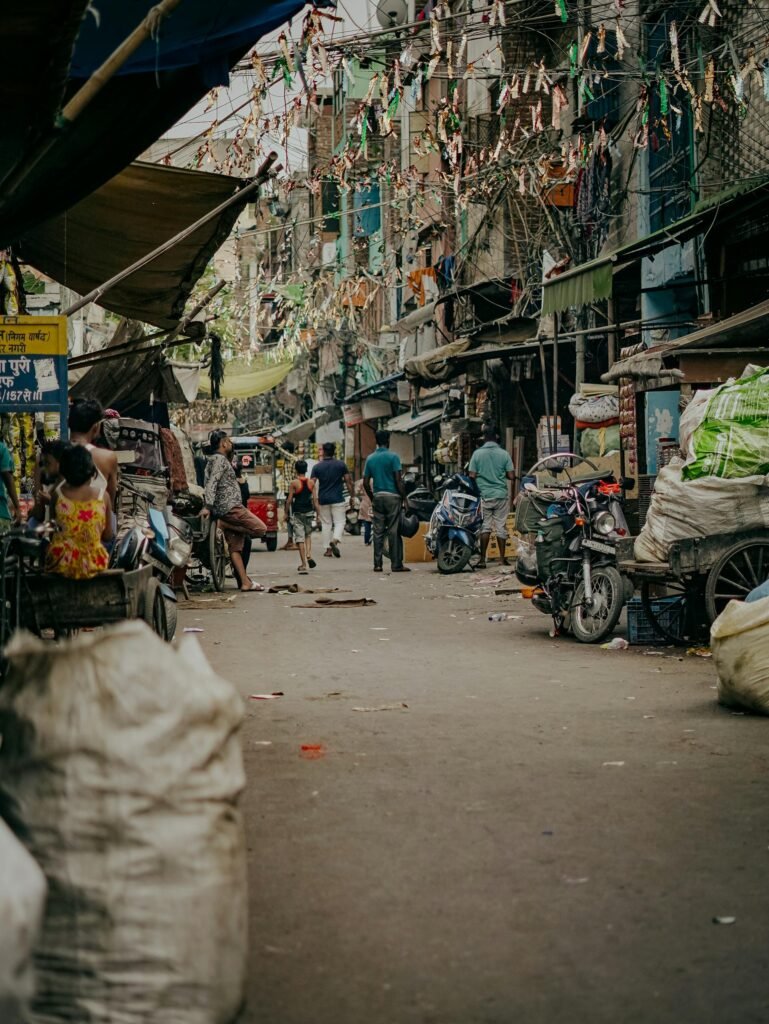
The original walled city of Shahjahanabad — and a sensory experience unlike any other in India. Chandni Chowk‘s lanes are barely wide enough for two people, packed with spice merchants, textile wholesalers, jewelry shops, and vendors of food that hasn’t changed recipes in 200 years. The Red Fort and Jama Masjid anchor the area. Old Delhi rewards patience — it’s loud, chaotic, frequently overwhelming, and absolutely essential.
South Delhi
The wealthy, modern Delhi most expats and middle-class Indians actually live in. Hauz Khas blends 14th-century Tughlaq-era ruins (medieval madrasa, royal tombs, lake) with trendy cafés and design boutiques in the surrounding Hauz Khas Village. Defense Colony, Greater Kailash (GK-1, GK-2), and Vasant Vihar are quiet residential pockets with excellent restaurants. Mehrauli houses the Qutub Minar Complex and a sprawling archaeological park of forgotten Sultanate-era ruins.
West Delhi
Predominantly Punjabi residential neighborhoods with strong Partition-era refugee roots. Rajouri Garden and Janakpuri markets are excellent for authentic North Indian dining and traditional shopping without tourist markup. Less interesting for sightseeing but worth a meal.
East Delhi
Across the Yamuna — middle-class neighborhoods, light industry, and the massive Akshardham Temple complex (the largest Hindu temple complex in the world). Budget hotels around Laxmi Nagar are cheap but less pleasant.
Where to Stay Recommendations
Luxury travelers: Chanakyapuri (The Lodhi, Imperial New Delhi, Taj Mahal) or South Delhi (The Leela, ITC Maurya). Mid-range: Karol Bagh and Paharganj near New Delhi station, or quieter B&Bs in Defense Colony. Budget: Paharganj backpacker district has dozens of options at $15–30 per night, but expect noise and basic amenities. Avoid: the immediate surroundings of New Delhi Railway Station after dark — pickpocketing and aggressive touts are common.
Top Things to Do in Delhi
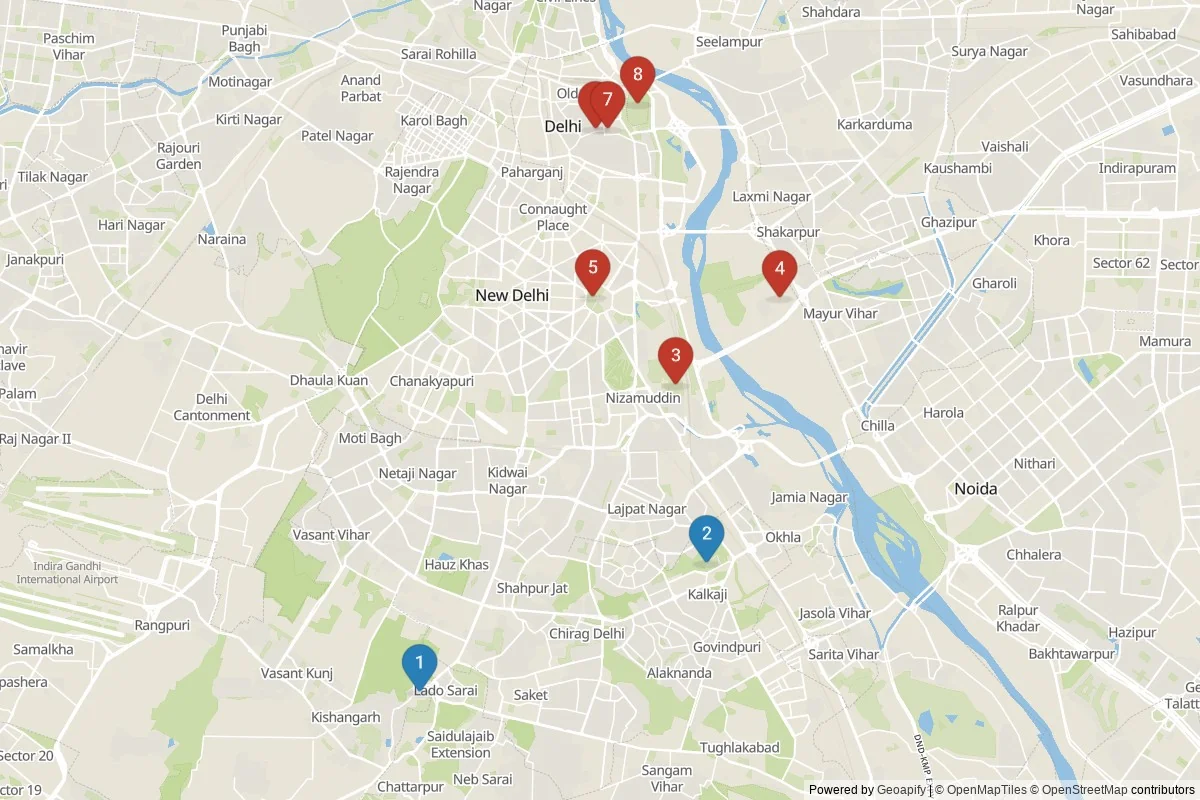
| # | Sight | Cluster | Type | Time | Entry | Best |
|---|---|---|---|---|---|---|
| 1 | Qutub Minar | Central | Mughal tower | ~1.5 hrs | ₹40 / ₹600 | Morning |
| 2 | Lotus Temple | Central | Bahá’í temple | ~1 hr | Free | Afternoon |
| 3 | Humayun’s Tomb | Outer | Mughal tomb | ~1.5 hrs | ₹40 / ₹600 | Sunset |
| 4 | Akshardham Temple | Outer | Hindu temple | ~3 hrs | Free / ₹220 | Morning |
| 5 | India Gate | Outer | War memorial | ~30 min | Free | Evening |
| 6 | Chandni Chowk | Outer | Market street | ~2 hrs | Free | Late afternoon |
| 7 | Jama Masjid | Outer | Mughal mosque | ~1 hr | ₹300 camera | Morning |
| 8 | Red Fort | Outer | Mughal fort | ~2 hrs | ₹50 / ₹600 | Morning |
| 🚗 | Day Trip: Taj Mahal (Agra) | Day trip | Day trip | Full day | ₹50 / ₹1,100 | Sunrise |
Delhi has more UNESCO-quality sites within 30 minutes of each other than most countries have in total. The challenge isn’t finding something to see — it’s pacing yourself in a city where heat, traffic, and sensory overload genuinely matter. Pick three sites a day, not seven.
Historic Monuments and Architecture
Red Fort (Lal Qila) — Shah Jahan’s massive sandstone fortress, built 1639–1648 as the Mughal imperial palace. Walk through the Lahore Gate, the covered Chatta Chowk bazaar, and the Diwan-i-Aam (hall of public audience) where the emperor heard petitions. The marble Diwan-i-Khas (private audience hall) once held the Peacock Throne, before Nader Shah took it. UNESCO World Heritage. Allow 2–3 hours; entry around ₹50 for Indians, ₹600 for foreigners. Tickets at asi.nic.in.
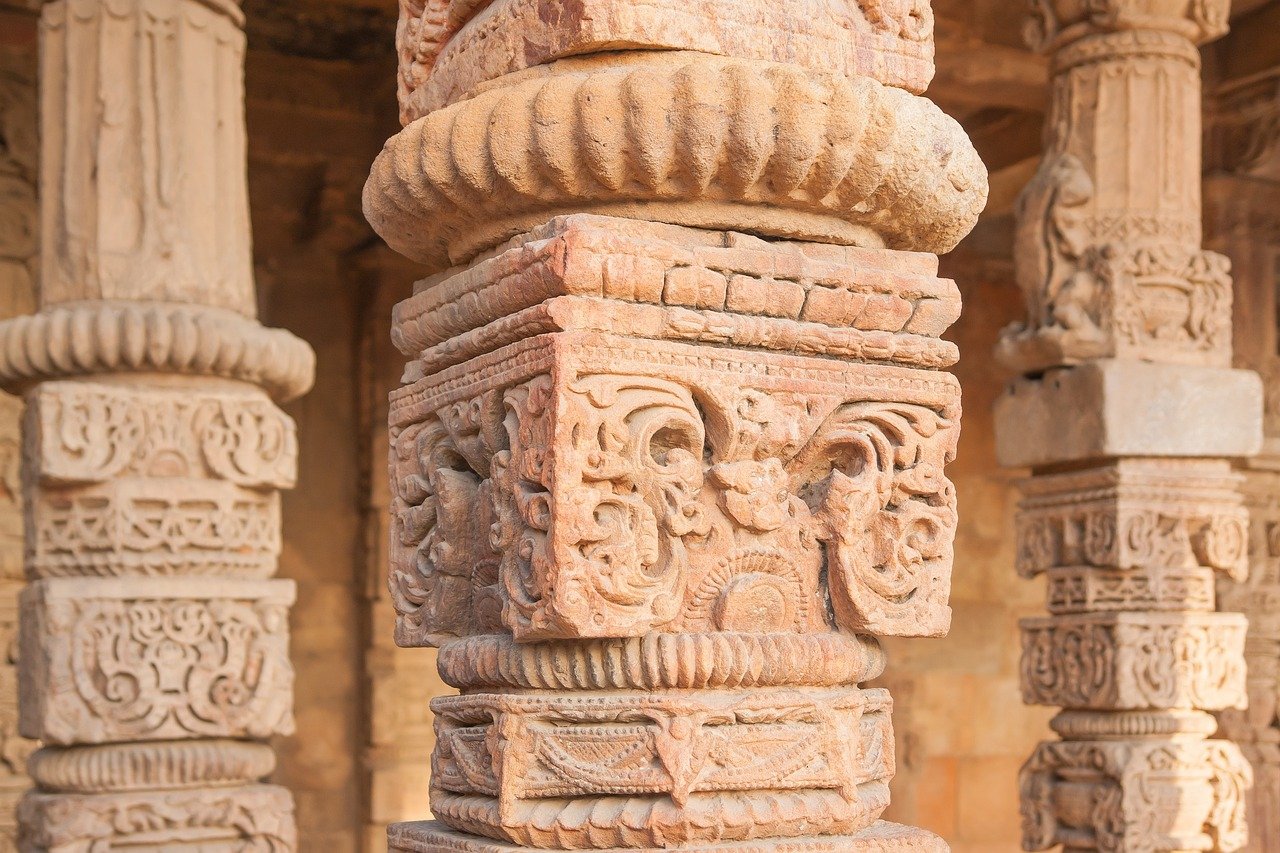
Qutub Minar Complex — the oldest surviving Islamic architecture in India and Delhi’s other essential UNESCO site. The 73-meter Qutub Minar (1199–1220) is the tallest brick minaret in the world, banded with intricate Quranic calligraphy. Don’t miss the Iron Pillar in the courtyard — a 7-meter, 1,600-year-old wrought-iron column that has barely rusted, a metallurgical mystery still studied today. The ruined Quwwat-ul-Islam Mosque recycled pillars from 27 demolished Hindu and Jain temples; the carved sandstone columns above are part of that complex.
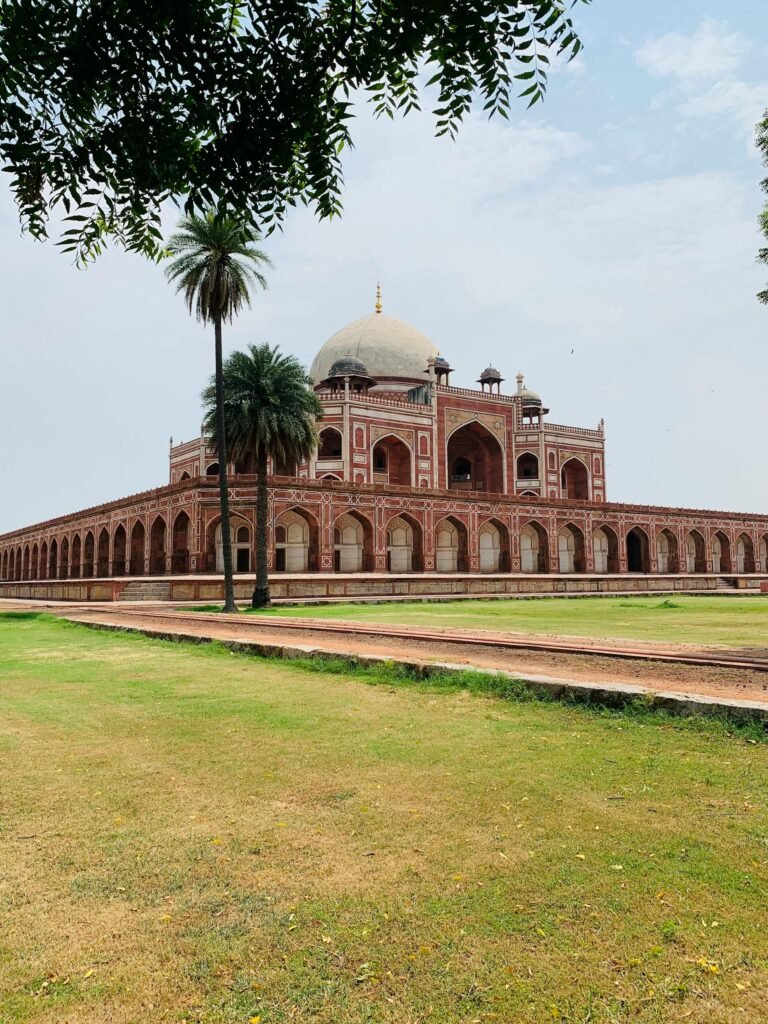
Humayun’s Tomb (1565) — the prototype that inspired the Taj Mahal a century later. Built by Empress Hamida Banu Begum for her husband, the mausoleum sits in a charbagh (four-quarter Persian garden) and represents the first mature Mughal funerary architecture. The morning light is particularly good here. Combine with a visit to nearby Hazrat Nizamuddin Dargah for Thursday-evening qawwali.
Religious Sites
Jama Masjid (1656) — India’s largest mosque, the final monumental project of Shah Jahan’s reign. The vast red-and-white striped courtyard fits 25,000 worshippers. Climb the southern minaret for panoramic views over Old Delhi’s tangle of rooftops down to the Red Fort. Modest dress required; women must cover hair. Closed during the five daily prayers.
Lotus Temple — the Bahai House of Worship, opened 1986. The 27 white marble petals form a stylized lotus visible from across South Delhi. The interior is silent and unadorned: meditation space for any faith or none. Free admission; arrive early or near sunset to avoid queues that can stretch for an hour at midday.
Akshardham Temple — the world’s largest Hindu temple complex, completed 2005. Pink sandstone carvings cover every surface, and the 90-minute evening light-and-water show (“Sahaj Anand”) is a serious production. Allow half a day. Strict no-photography, no-bags rule — leave phones and cameras at the cloakroom or you won’t get past security.
Markets and Shopping
Chandni Chowk — Old Delhi’s Mughal-era main artery, now a labyrinth of specialist lanes. Paranthe Wali Gali serves stuffed flatbreads from shops dating to the 1870s. Kinari Bazaar does wedding finery; Khari Baoli is Asia’s largest spice market. Take the metro to Chandni Chowk station; arrive before 11 am to avoid the worst crowds.
Khan Market — Delhi’s most expensive retail real estate, packed with bookstores (Bahrisons, Faqir Chand), boutiques, restaurants, and cafés. The intelligentsia’s hangout. Pricey but a calm break from Old Delhi.
Dilli Haat (INA) — government-run handicrafts market with rotating stalls representing every Indian state. Fixed prices, no aggressive haggling. Combine with regional cuisine from the food court — sample dishes from states you won’t have time to visit.
Museums and Cultural Sites
National Museum (Janpath) — five thousand years of Indian history in one building. Highlights: the Harappan civilization gallery (2500 BCE artifacts), the Buddhist relics including a sliver of bone said to be the Buddha’s, and the bronze gallery of South Indian Chola sculptures. Tickets via nationalmuseumindia.gov.in.
National Gallery of Modern Art (Jaipur House, near India Gate) — strong collection of Bengal School (Tagore family), Amrita Sher-Gil, and Raja Ravi Varma. Often overlooked by tourists.
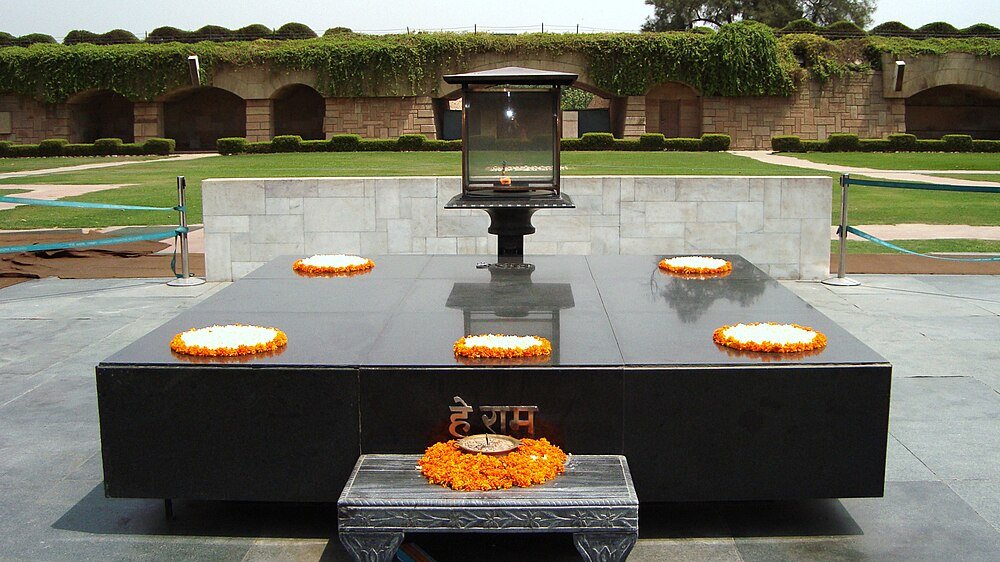
Raj Ghat — the simple black marble platform marking the spot where Mahatma Gandhi was cremated on 31 January 1948. An eternal flame burns; the inscription “Hey Ram” records his last words. Surrounding gardens are quiet enough for genuine reflection — rare in central Delhi.
Parks and Gardens
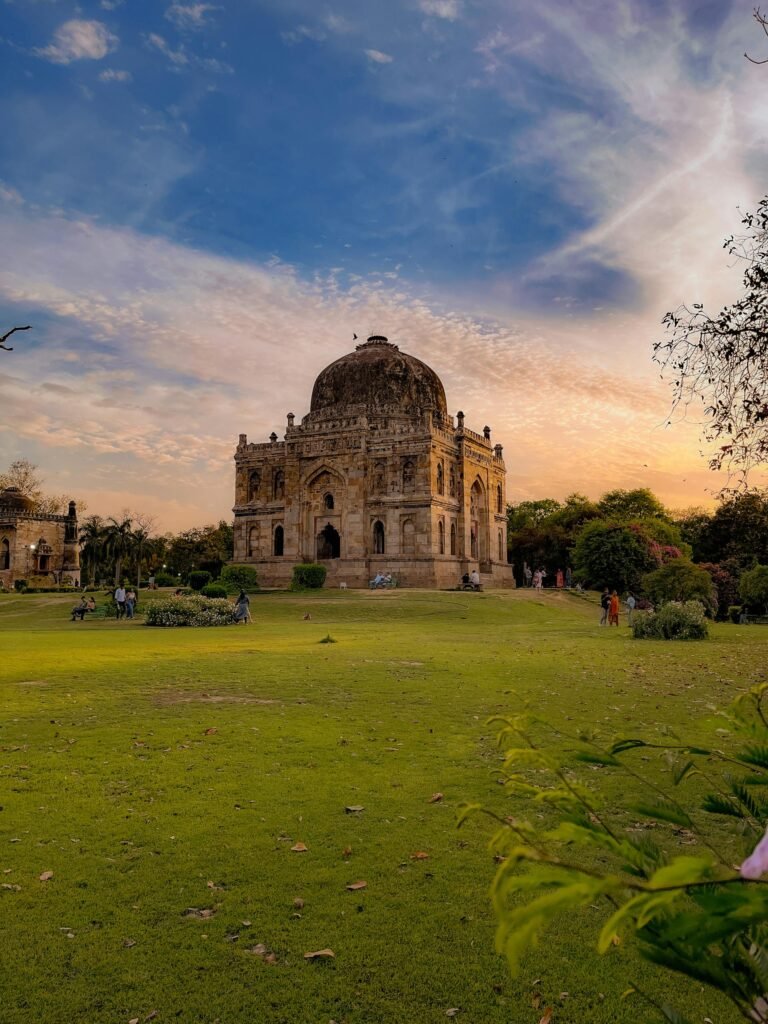
Lodhi Gardens — 90 acres of landscaped park studded with 15th-century Sayyid and Lodi-dynasty tombs. The Bara Gumbad, Sheesh Gumbad, and tomb of Mohammed Shah are the standouts. Delhi’s preferred morning-jog spot, and the loveliest place in central Delhi for an evening walk.
India Gate — the 42-meter war memorial honoring 84,000 Indian soldiers who died in WWI and the Third Anglo-Afghan War. The surrounding lawns of Rajpath (renamed Kartavya Path in 2022) host families with picnics and ice-cream vendors after sundown. Newly redeveloped in 2022 with a granite statue of Subhas Chandra Bose under the canopy where George V’s statue once stood.
How to Get to Delhi
Delhi is the unrivalled hub of north Indian transport — every flight, train, and highway from anywhere in northern India funnels through it.
By Air
Indira Gandhi International Airport (DEL) — South Asia’s busiest airport, 16 km southwest of central Delhi. Three terminals: T1 (low-cost domestic), T2 (additional domestic capacity), T3 (international and full-service domestic, including Air India and Vistara). Free shuttle buses link them. The Airport Express Metro reaches New Delhi station in 22 minutes for ₹60. Schedules and live status at newdelhiairport.in.
Noida International Airport (Jewar) — a second NCR airport opening in 2025–2026, will serve Delhi’s eastern satellite cities and reduce DEL congestion.
By Rail
Indian Railways operates from four main Delhi stations:
New Delhi Railway Station (NDLS) — the principal long-distance hub, with Rajdhani, Shatabdi, and Vande Bharat services to every metropolitan center. Connects to the Yellow Line and Airport Express Metro.
Old Delhi Railway Station (DLI) — older, more chaotic, mostly serving northern destinations including the Kalka–Shimla heritage route.
Hazrat Nizamuddin (NZM) — primary terminus for trains to southern and western India.
Delhi Anand Vihar (ANVT) — east-bound services to Uttar Pradesh, Bihar, and beyond.
Sample journey times: Mumbai (16 hours by Rajdhani), Kolkata (17 hours), Chennai (28 hours), Agra (under 2 hours by Vande Bharat). Book via irctc.co.in — foreigners may need OTP-validated registration; alternatively use cleartrip.com or 12go.
By Road
National highways converge on Delhi from every direction. Drive times: Agra 3–4 hours via the Yamuna Expressway, Jaipur 4–5 hours, Shimla 7–8 hours, Manali 12–14 hours. Inter-state buses operate from ISBT Kashmere Gate, ISBT Anand Vihar, and ISBT Sarai Kale Khan. Volvo AC services to nearby tourist towns are comfortable; standard state buses are cheap but spartan.
Getting Around Delhi
Surface traffic in Delhi is genuinely difficult — gridlock, lane-discipline indifference, peak-hour delays that can double a journey. The Metro changed everything.
Delhi Metro
The Delhi Metro is the largest metro network in India — 350+ kilometers across 12 color-coded lines, plus the Airport Express. Trains run every 2–4 minutes during peak hours, are air-conditioned, women-only car at the front, and cost ₹10–60 depending on distance. The smart card (₹150 deposit, refundable) avoids ticket queues. The Yellow Line connects Old Delhi (Chandni Chowk) to New Delhi to South Delhi (Hauz Khas, Qutub Minar). Routes and live updates at delhimetrorail.com.
Buses
Delhi Transport Corporation (DTC) runs CNG-powered low-floor buses across the city. Cheap (₹5–20) and extensive, but slow and crowded — locals use them, tourists usually skip them in favor of the metro.
Taxis and Ride-Hailing
Uber and Ola dominate the taxi market — both apps work in English, accept international cards, and show fares upfront. Vastly preferable to street taxis. Ola Auto books an auto-rickshaw at metered prices, eliminating haggling. Black-and-yellow city taxis exist but are not recommended unless you confirm meter use upfront.
Auto-Rickshaws
Three-wheeled green-and-yellow auto-rickshaws are the iconic Delhi short-distance ride. All run on CNG. Either book through Ola Auto/Uber Auto for fixed pricing, or insist on the meter from the start (most won’t agree at tourist hotspots). They go where cars can’t — handy for Old Delhi’s narrow lanes.
Cycle Rickshaws
Human-powered cycle rickshaws still operate in Old Delhi and some residential neighborhoods. ₹30–80 for short hops. Ethically tricky (the work is grueling) but locally normal — agree on the fare before you start moving.
Food & Drink in Delhi
Delhi’s food scene is the most diverse in India. The city absorbed waves of refugees, traders, and conquerors over centuries — Mughlai from the imperial kitchens, Punjabi from Partition refugees, Awadhi from Lucknow exiles, plus contemporary takes from every Indian regional tradition. Eating well here is the cheapest pleasure in the country.
Street Food Culture
Delhi’s street food is legendary — and in 2024, much of it has been formalized through licensed vendors and food courts that meet hygiene standards. Chandni Chowk remains the holy ground. Paranthe Wali Gali has been frying stuffed parathas since the 1870s — the potato (aloo) and radish (mooli) versions are classics. Karim’s near Jama Masjid (since 1913) does mutton korma and seekh kebab in the Mughal court tradition.
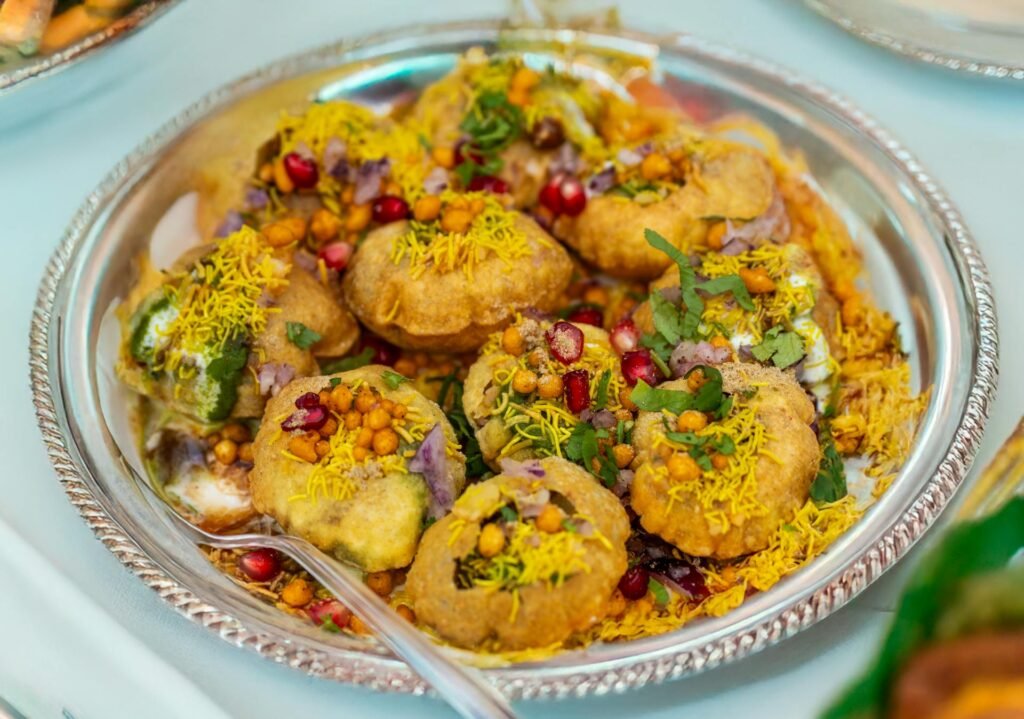
Chaat — Delhi’s signature savory snack family — is best at Bengali Sweet House in Bengali Market or Haldiram’s outlets. Try gol gappa (crisp shells filled with spiced tamarind water), aloo tikki chaat (potato patties with chutneys), and papdi chaat (crisp wafers with yogurt and chutneys).
Traditional Delhi Cuisine
Mughlai cuisine still anchors the traditional Delhi table — biryanis, korma, kebabs, naan from tandoor ovens. The richest, slowest-cooked versions come from Old Delhi institutions: Karim’s, Al Jawahar, Aslam Chicken Corner. Punjabi food has been the dominant home cooking style since Partition — butter chicken (invented at Moti Mahal in Daryaganj), dal makhani, paneer dishes, and fresh tandoori naan.
Modern Dining Scene
The contemporary restaurant scene is now world-class. Indian Accent (The Lodhi) does modernist Indian tasting menus and ranks in Asia’s 50 Best. Bukhara (ITC Maurya) is Delhi’s most famous tandoor restaurant — Bill Clinton ate here. Hauz Khas Village and Champa Gali (Saket) host the trendiest cafés, fusion bistros, and rooftop bars. Khan Market has the densest concentration of mid-range modern Indian restaurants.
Beverages
Masala chai is Delhi’s signature drink — boiled milk, black tea, cardamom, ginger, sugar; ₹10 from a roadside stall, ₹150 in a hotel. Lassi, the yogurt drink, comes sweet, salted, or with mango. The Lassiwala stalls on Janpath have been serving since 1954. Fresh fruit juices from licensed pavement vendors are excellent in winter — sugarcane, pomegranate, sweet lime.
Alcohol note: Delhi has roughly normal drinking laws — pubs and bars are common in central neighborhoods. Dry days (no alcohol sales) include 26 January (Republic Day), 15 August (Independence Day), 2 October (Gandhi’s birthday), and major elections. The legal drinking age in Delhi is 25 — uniquely high in India. Premium hotels are exempt and serve guests of any age over 18.
Culture & Arts in Delhi
As capital, Delhi houses the country’s flagship cultural institutions. Performances at the major venues are often heavily subsidized; world-class shows can be ₹200–500 a ticket.

Performing Arts
India Habitat Centre (Lodhi Road) — Delhi’s premier multi-disciplinary cultural campus. Theatre, classical music, contemporary dance, film festivals, art exhibitions — usually multiple events on any given evening. Calendar at indiahabitat.org.
Kamani Auditorium and Siri Fort Auditorium host the major Indian classical dance and music recitals — Bharatanatyam, Kathak, Hindustani classical concerts. National School of Drama (NSD) at Mandi House stages student and faculty productions in Hindi.
Qawwali at Hazrat Nizamuddin Dargah — the spiritual experience that no Delhi visit should skip. Thursday evenings around sunset, hereditary qawwals sing the devotional Sufi music that has been performed at this 14th-century shrine for centuries. Free, profoundly moving, and slightly intense — bring a small donation, dress modestly, women cover heads.
Festivals and Celebrations
Diwali (October–November) — the festival of lights transforms Delhi: oil lamps and string lights everywhere, fireworks (now legally restricted to “green” varieties), markets jammed with shoppers, sweets exchanged with everyone. Air quality typically tanks during and after.
Holi (March) — the spring festival of colors, riotous and joyful and absolutely not for white clothes. Color powder and water everywhere. Hotels host structured celebrations for tourists; otherwise stay close to your accommodation.
Republic Day Parade (26 January) — the country’s most theatrical state ceremony marches down Kartavya Path with floats from every state, military hardware, and an aerobatics finale. Tickets through state government channels in early January, or watch on TV.
Delhi International Arts Festival (winter) — multi-venue showcase of global and Indian performance, usually December–January.
Literary Culture
Delhi has the densest concentration of writers, journalists, and academics in India. Jawaharlal Nehru University (JNU) and University of Delhi shape national intellectual conversation. The World Book Fair at Pragati Maidan in February is South Asia’s largest. Daryaganj Sunday Book Market sprawls along Netaji Subhash Marg every Sunday — second-hand books at ₹50–500, including academic and rare titles.
Sports in Delhi
Delhi has hosted India’s largest international sporting events — and is currently bidding to host the 2036 Olympics.
Cricket
Arun Jaitley Stadium (formerly Feroz Shah Kotla Ground) — the home ground of the Delhi Capitals in the IPL, and a Test cricket venue since 1948. Hosted some of Indian cricket’s most famous moments, including Anil Kumble’s perfect 10-wicket innings against Pakistan in 1999.
Major Sporting Events
2010 Commonwealth Games — the 19th edition of the Games, controversial in execution but successful in showcasing Delhi’s renovated sporting infrastructure. The Jawaharlal Nehru Stadium (60,000 seats) was the main venue and remains in use for athletics and football.
2010 Hockey World Cup — the 12th edition, Delhi-hosted, won by Australia.
Running and Athletics
Vedanta Delhi Half Marathon (formerly Airtel) — held annually in October, attracting elite international runners. The route passes India Gate, Connaught Place, and Rajpath. Open to amateur entries via delhihalfmarathon.procam.in.
Delhi rewards visitors who plan thoughtfully: a city of 33 million can’t be done in a weekend, but three or four days of careful pacing — Old Delhi one day, New Delhi government quarter another, South Delhi monuments and gardens a third, with Akshardham or a day-trip to Agra (3 hours by Vande Bharat) — gives the layered city its honest due. Wear closed-toe shoes, drink only sealed bottled water, and take more breaks than you think you need.
Delhi by District: The 13 Zones
Delhi is divided into 13 districts. The map below shows their official OSM boundaries, colour-coded to match the table — a quick way to orient yourself before zooming in on individual sights.
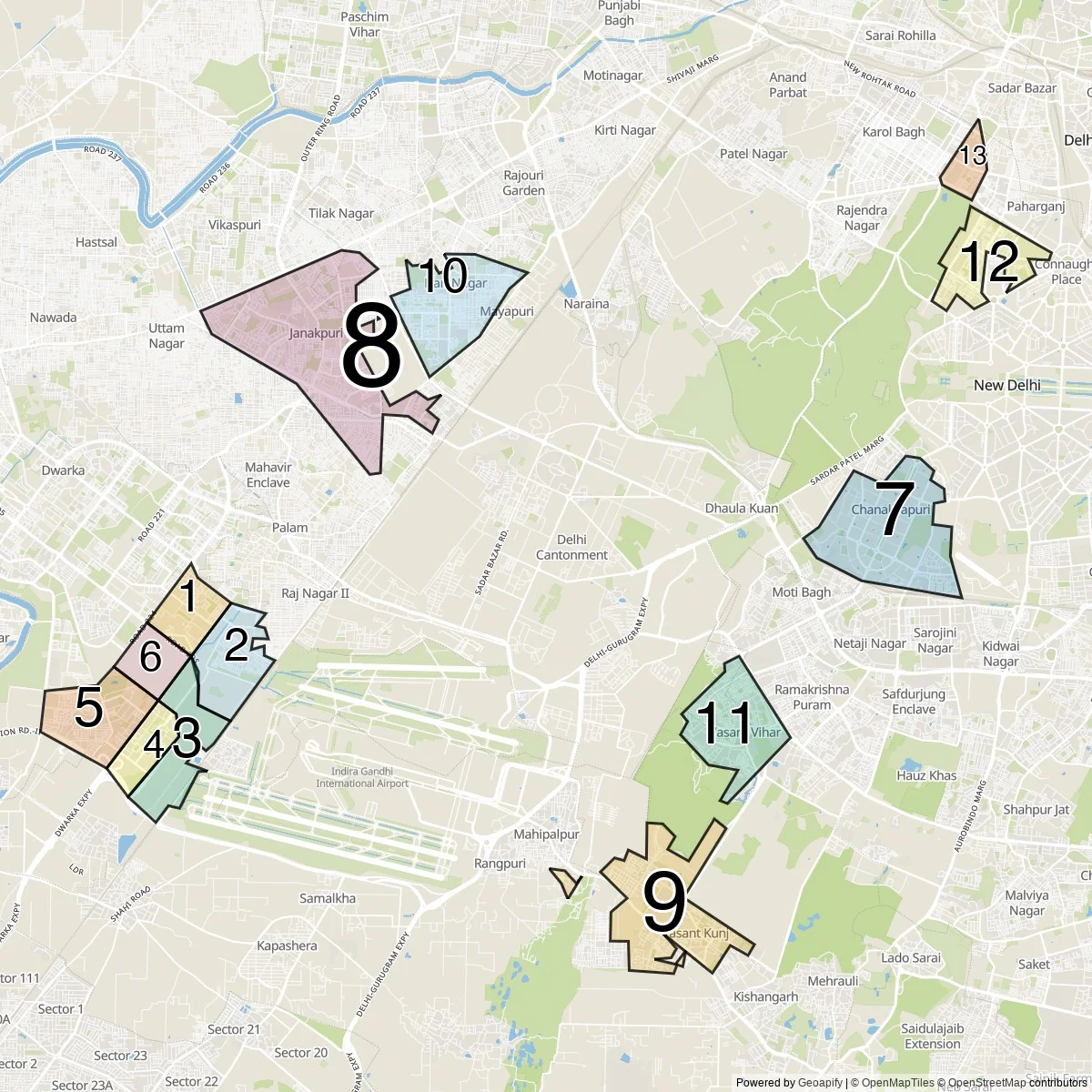
| # | Zones |
|---|---|
| 1 | Sector 9 |
| 2 | Sector 8 |
| 3 | Sector 21 |
| 4 | Sector 22 |
| 5 | Sector 23 |
| 6 | Sector 20 |
| 7 | Chanakyapuri |
| 8 | Janakpuri |
| 9 | Vasant Kunj |
| 10 | Hari Nagar |
| 11 | Vasant Vihar |
| 12 | DIZ Area |
| 13 | Jhandewalan |
Frequently Asked Questions About Visiting Delhi
Do I need a visa to visit Delhi?
Almost certainly yes. India does not have visa-free entry for most nationalities. Citizens of around 170 countries — including the US, UK, EU member states, Canada, Australia, Japan, and most of Asia — can apply for an e-Visa online before travel through the official portal at indianvisaonline.gov.in/evisa. The e-Tourist Visa is typically valid 30 days, 1 year, or 5 years with multiple entries; processing takes 2–4 working days. Cost ranges roughly $25–80 depending on nationality and validity. Apply at least a week before travel; never use third-party sites that charge inflated fees. Citizens of Nepal and Bhutan don’t need a visa; OCI/PIO cardholders enter freely. Always check the current rules on the Bureau of Immigration India site before booking.
Is Delhi safe for tourists?
Delhi is generally safe for tourists who exercise standard precautions, but it requires more situational awareness than most European or East Asian capitals. The US State Department rates India at “exercise increased caution”; the UK FCDO issues similar guidance. Common risks: pickpocketing on the Metro and at major sights, taxi/auto-rickshaw overcharging, the rare scam (fake “tourist office” near New Delhi station, fake “your hotel is closed” tactic). Women travelers should take extra care — avoid empty Metro cars after dark (use the women-only car), don’t walk alone in poorly lit areas, prefer Uber/Ola over street autos late at night. Avoid: the immediate surroundings of New Delhi Railway Station after dark, isolated areas of Old Delhi after 10 pm, and politically tense periods around major holidays.
How many days do I need in Delhi?
Three full days is the practical minimum to do Delhi without rushing; four to five gives the city the breathing room it deserves. A solid 3-day plan: Day 1 — Old Delhi (Red Fort, Jama Masjid, Chandni Chowk lunch at Karim’s, evening at Raj Ghat); Day 2 — New Delhi (Humayun’s Tomb, India Gate, Lodhi Gardens, National Museum, evening at Khan Market); Day 3 — South Delhi (Qutub Minar Complex, Lotus Temple, Hauz Khas Village, evening qawwali at Nizamuddin Dargah). Add a 4th day for Akshardham + Crafts Museum + the Mehrauli Archaeological Park, or a 5th for a day-trip to Agra (Taj Mahal) — three hours each way by Vande Bharat Express.
What’s the best area to stay in Delhi?
Three solid choices depending on budget and priorities. Connaught Place / Central New Delhi — the metro hub, walking distance to Khan Market, easy access to all major sights via Yellow Line; mid-range to luxury hotels (The Imperial, The Park, Le Meridien). South Delhi (Defense Colony / Greater Kailash) — the local-Delhi choice; quiet residential streets, excellent restaurants, prices 20–40% below central, but more taxi-dependent. Aerocity — the airport hotel cluster (JW Marriott, Andaz, Pullman); ideal if your trip involves multiple flights or transit, with a free shuttle to T3 and metro to central Delhi in 22 minutes. Skip: Paharganj backpacker district (cheap but chaotic), and the immediate surroundings of New Delhi Railway Station at night.
How much does it cost to visit Delhi’s major sights?
Delhi’s monuments are inexpensive by international standards but use dual pricing — Indians pay much less than foreigners. Red Fort: ₹50 (Indians) / ₹600 (foreigners) via asi.nic.in; sound-and-light show ₹80–250. Qutub Minar: ₹40 / ₹600. Humayun’s Tomb: ₹40 / ₹600. Jama Masjid: free entry; ₹300 camera fee. Lotus Temple: free. Akshardham: free entry to temple; ₹220 for the exhibition + show combo. National Museum: ₹20 / ₹650 via nationalmuseumindia.gov.in. The ASI Composite Pass (₹500 for foreigners) covers Red Fort + Qutub Minar + Humayun’s Tomb in one purchase and saves money if you visit all three.
Should I drink the tap water in Delhi?
No — even though municipal water is treated, the distribution network has issues, and most visitors will get sick from it. Always use sealed bottled water (₹20–30 per liter) for drinking and brushing teeth, and avoid ice in unlicensed restaurants. Major hotel restaurants and reputable establishments use filtered water and ice — generally safe. Reusable filter bottles (LifeStraw, Grayl) are a more sustainable option that work well in Delhi. The CDC traveler health page recommends bottled or boiled water for India. Tap water is fine for showering. Public taps and water dispensers (“piaus”) found at temples and tourist sites are not safe for foreigners; bring your own bottle.
Is the air quality really that bad?
In winter, yes — and you should plan for it. Delhi’s air pollution is among the worst of any major capital, especially from mid-October through January, when post-harvest stubble burning in Punjab combines with winter inversions and Diwali fireworks. AQI readings of 300–500 (“hazardous” range) are common during this window. The Central Pollution Control Board publishes live readings, and aqicn.org/city/delhi shows the international AQI standard. Practical advice: visit October or February–March if possible; bring N95/FFP2 masks for outdoor sightseeing on bad days; expect mild throat irritation; reschedule outdoor activities if you have asthma, COPD, or heart disease. Air quality dramatically improves March–September outside the monsoon downpours.
Is tipping expected in Delhi?
Yes — a moderate tip is expected in tourist-facing service. Restaurants: 10% is standard for sit-down service if no service charge is added (many restaurants now add 5–10% automatically — check the bill); round up at casual places. Hotel porters: ₹50–100 per bag at 4–5 star hotels. Hotel housekeeping: ₹100–200 per night left at end of stay. Taxi / Uber drivers: not expected, but ₹20–50 for a long ride or extra help with bags is appreciated. Auto-rickshaw drivers: round up to nearest ₹10. Tour guides: ₹500–1000 per person for half-day, ₹1500–3000 for a full private day. Spa, salon: 10% if pleased. Tipping in cash (small notes) is expected; card machines rarely allow tip add-on. Don’t over-tip — Western percentages are seen as careless rather than generous.
AFRIKA
Cairo Hurghada Johannesburg Marrakech
ASIA
Abu Dhabi Agra Antalya Bangkok Batam Beijing Bengaluru Cebu City Chiang Mai Chiba Chennai Da Nang Dammam Delhi Denpasar Dubai Fukuoka Guangzhou Guilin Ha Long Hanoi Ho Chi Minh City Jakarta Jaipur Johor Bahru Kolkata Krabi Kuala Lumpur Kyoto Macau Mecca Medina Mugla Mumbai Osaka Pattaya Penang Phuket Riyadh Seoul Shanghai Shenzhen Singapore Taipei Tokyo Zhuhai
EUROPE
Amsterdam Athens Barcelona Berlin Brussels Budapest Copenhagen Dublin Florence Frankfurt am Main Heraklion Krakow Lisbon London Madrid Milan Munich Nice Paris Porto Prague Rhodes Rome Stockholm Venice Vienna Warsaw
NORTH AMERICA
Cancun Las Vegas Los Angeles Miami New York City Orlando San Francisco Toronto Vancouver
SOUTH AMERICA
Buenos Aires Lima Rio De Janeiro
OCEANIA
Auckland Honolulu Melbourne Sydney