
Photo credit: TNCities
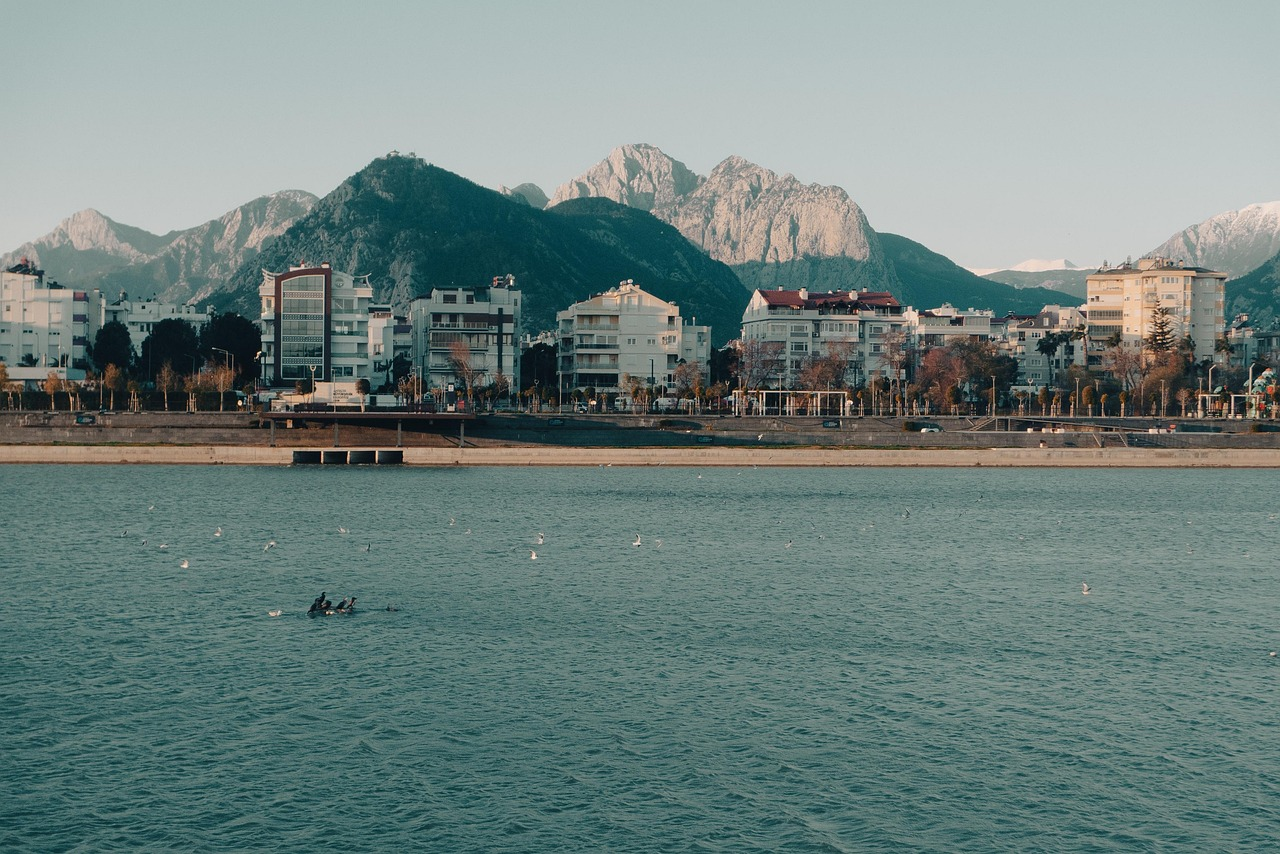
Antalya, Turkey’s sun-kissed Mediterranean jewel, captivates visitors with its dramatic blend of ancient history and modern coastal charm. Known as the gateway to the Turkish Riviera, this vibrant city of over 2.2 million residents offers pristine beaches, Roman ruins, and Ottoman architecture set against the stunning backdrop of the Taurus Mountains. From the cobblestone streets of Kaleiçi old town to the bustling marinas filled with luxury yachts, Antalya seamlessly weaves together millennia of civilization with contemporary Mediterranean lifestyle.
Antalya at a Glance: Essential Facts for Travelers
| Location | Mediterranean coast of Turkey, Antalya Province |
|---|---|
| Coordinates | 36°53′N, 30°42′E |
| Population | 2.2 million (metropolitan area), 1.2 million (urban core) |
| Area | 1,417 km² |
| Elevation | 30 meters above sea level |
| Time Zone | Turkey Time (TRT, UTC+3) |
| Calling Code | +90 242 |
| Postal Code | 07000 |
| License Plate | 07 |
| Known For | Turkish Riviera, ancient ruins, Mediterranean beaches, tourism hub |
| Current Mayor | Muhittin Böcek (since 2019) |
| Official Website | antalya.bel.tr |
Upcoming Events in Antalya
| Date | Title | Details |
|---|---|---|
| 2026-09-12 to 2026-09-26 | 33rd Aspendos International Opera and Ballet Festival | The 33rd edition of Turkey’s famous open-air opera festival fills the magnificently preserved Roman theatre of Aspendos, about 45 minutes east of Antalya, through late September. Antalya State Opera and Ballet opens the season with Attila and closes with the ballet Spartacus, with Anna Karenina and Carmina Burana among the highlights in between. Performances begin at 21:00 under the stars, and children under seven are not admitted. Tickets are sold per performance at varying prices, and the 2,000-year-old acoustics make this one of the world’s most atmospheric places to hear live opera. [Source] |
| 2026-10-04 to 2026-10-11 | Antalya Golden Orange Film Festival (Altin Portakal) | The Antalya Golden Orange Film Festival, known as Altin Portakal, is Turkey’s oldest and most prestigious film festival, held annually in early October. Screenings, competitions, red-carpet galas and awards celebrate Turkish and international cinema across venues in the city, with the coveted Golden Orange trophies presented to the best films and performers. The event draws directors, actors and cinephiles and gives audiences a chance to see new releases and classics. Programmes and ticketing are announced ahead of time; check official listings for the confirmed 2026 dates and schedule. [Source] |
| 2026-10-11 to 2026-10-12 | Mabel Matiz live at Antalya Acikhava Theatre | One of Turkey’s biggest contemporary pop stars, Mabel Matiz brings his poetic, folk-tinged hits to the open-air Antalya Acikhava stage for two consecutive autumn nights, 11 and 12 October, according to ticketing platforms. The singer, known for elaborate stage aesthetics and genre-blending albums, draws a devoted, mixed-age crowd. Concerts at the hillside venue typically start in the evening once the day cools, and the Mediterranean night air makes it a memorable setting. Tickets are sold per night at varying prices, and popular categories tend to sell out early, so booking ahead is advisable. [Source] |
| 2026-10-26 to 2026-10-28 | Antalya Tourism Fair (ATF) 2026 | The Antalya Tourism Fair brings hoteliers, travel agencies, destination marketers and tourism-technology suppliers to the Antalya Expo Center for a three-day trade gathering in the capital of Turkish tourism. Exhibitors present hotel concepts, booking platforms and destination stands, while accompanying sessions tackle the industry’s big questions, from sustainability to shifting European source markets. The fair is aimed primarily at professionals, who can usually register free of charge in advance. For anyone working in or around the Riviera’s dominant industry, it is a useful barometer of how the region is preparing for the coming season. [Source] |
| 2026-11-01 | IRONMAN 70.3 Turkey, Belek | Endurance athletes from dozens of countries descend on the resort of Belek, east of Antalya, for IRONMAN 70.3 Turkey on 1 November. The half-distance triathlon combines a 1.9 km swim in the warm, clear Mediterranean, a fast and flat 90 km bike leg on closed Riviera roads and a closing 21.1 km run. The November date usually brings ideal racing temperatures, and the flat profile makes the course popular with first-timers chasing a personal best. Race entry requires paid advance registration, while spectating along the course and at the finish line is free. [Source] |
| 2026-11-09 to 2026-11-20 | COP31 UN Climate Change Conference | Antalya steps onto the world stage as host of COP31, the United Nations Climate Change Conference, staged at the Antalya Expo Center over two weeks in November. Tens of thousands of delegates, negotiators, scientists, activists and journalists from nearly 200 countries are expected, making it the largest congress the city has ever held. Access to the negotiation zones requires accreditation, but climate summits typically bring public side events, exhibitions and civil-society programmes to the host city. Visitors in November should expect heightened security, busy hotels and traffic changes around the Aksu expo district. [Source] |
| 2026-11-24 to 2026-11-27 | Growtech Antalya 2026 | Growtech, the leading international trade fair for greenhouse technology, agricultural equipment and plant cultivation, returns to the ANFAS Antalya Expo Center for four days in late November. More than 600 exhibitors from over 50 countries present irrigation systems, seeds, biological crop protection and smart-farming technology to a professional audience drawn from Europe, the Middle East and Central Asia. Antalya is the heart of Turkey’s greenhouse industry, which makes the fair a genuine home game for the region. Entry is aimed at trade visitors, with free registration typically available online in advance. [Source] |
City News in Antalya – last 14 days
| Date | Category | Headline | Details |
|---|---|---|---|
| 2026-09-14 | Local government | Antalya to host COP31 climate summit amid Cyprus representation row | Antalya is preparing to host the COP31 United Nations climate summit this November, and Turkish media are already debating the diplomatic guest list. According to the report, the Turkish Republic of Northern Cyprus will not be represented at the negotiations, while the Greek Cypriot administration will sit at the table as a party to the UN climate convention. The issue is politically sensitive for Ankara as it stages one of the biggest international gatherings ever held in Turkey, expected to bring tens of thousands of delegates to the city’s expo district. [Source] |
| 2026-09-14 | Local government | City prepares Water Summit on the future of Antalya’s water supply | A Water Summit to be held in Antalya will take up the long-term future of the city’s water resources, according to local reporting. The gathering is expected to bring officials and experts together around questions of supply security for the fast-growing Mediterranean metropolis, where dry summers, a booming population and heavy demand from tourism and agriculture have pushed water management up the local agenda. The summit signals that the issue is now being treated as a strategic priority for the region rather than a seasonal concern. [Source] |
| 2026-09-14 | Public safety | Fourteen suspects detained in ‘Streets Safe’ police operation | Police in Antalya detained 14 suspects during the latest round of the nationwide Sokaklar Guvende, or Streets Safe, security operation, according to the report. The recurring sweeps target wanted persons and street crime, with simultaneous checks carried out across busy districts. For a province that hosts millions of visitors late into the autumn season, the operation underlines the authorities’ continued emphasis on visible policing in tourist areas and city-centre neighbourhoods alike, and follows similar coordinated actions carried out in provinces across the country in recent months. [Source] |
| 2026-09-14 | Culture | Ahilik Week opens with kaftan ceremony for ‘Ahi of the Year’ | Antalya has opened its celebrations of Ahilik Week, the annual commemoration of the centuries-old Ahi brotherhood, a guild tradition that honours craftsmanship, honest trade and solidarity among artisans. As part of the ceremonies, tradesman Mehmet Celik was named Ahi of the Year and donned the traditional kaftan, a symbolic highlight of the week reported by several local outlets. The observance ties the city’s modern shopkeepers and craftspeople to an Anatolian tradition of commercial ethics, with ceremonies bringing together chambers of tradesmen, officials and local communities. [Source] |
| 2026-09-14 | Education | More than 523,000 pupils in Antalya return to the classroom | The new academic year has begun across Antalya province, with 523,853 pupils returning to lessons according to figures reported by DHA. The first day of school brought the familiar rituals of opening ceremonies and flag-raising, along with heavier-than-usual morning traffic around school zones across the city and its districts. The figure underlines the scale of the education system in one of Turkey’s most populous provinces, where classrooms fill again each September as the long Mediterranean summer holiday comes to an end. [Source] |
| 2026-09-14 | Culture | Nine-day culture festival wraps up in Muratpasa district | A nine-day cultural celebration in Muratpasa, the central district of Antalya that covers much of the historic city centre, has come to a close, according to the report. The programme filled the district with cultural events over more than a week, part of a busy autumn calendar of municipally supported arts activities in the city. District municipalities in Antalya regularly stage free public festivals of this kind, and the season now continues toward the city’s major autumn fixtures, including the Golden Orange Film Festival in October. [Source] |
| 2026-09-14 | Business | Turkiye ranks among top non-EU destinations for European travellers | Turkiye ranked among the top three destinations for tourism trips made by EU residents outside the bloc in 2024, according to Eurostat data cited in the report, alongside the United Kingdom and Switzerland. The finding matters greatly for Antalya, the country’s biggest resort gateway, whose hotels, airport and tour operators depend heavily on European source markets. Strong standing among EU travellers supports the Riviera’s late-season business and bolsters expectations for the coming year, even as the industry debates pricing and competitiveness against rival Mediterranean destinations. [Source] |
| 2026-09-14 | Public safety | Injured tourist rescued after fall during nature hike | A tourist who fell and was injured during a nature walk in the Antalya region has been rescued, according to the report. Rescue teams reached the casualty and carried the injured visitor to safety for medical treatment. The incident is a reminder of how quickly conditions can turn on the region’s popular trails, canyons and mountain paths, where autumn hiking season draws many visitors. Authorities regularly advise walkers to use marked routes, carry sufficient water and check conditions before setting out into the Taurus foothills. [Source] |
Antalya Events & City News Archive
Sources: CarniFest, Kirman Premium, Antalya Metropolitan Municipality, Bubilet, 10times, Ahotu, Wikipedia, 10times – ANFAS events
Weather Forecast for the Next 14 Days in Antalya
| Date | Weather | Max °F | Min °F | Rain mm |
|---|---|---|---|---|
| 2026-09-14 | ⛅ | 84.7 °F | 74.2 °F | 0.0 mm |
| 2026-09-15 | ☁️ | 86.4 °F | 73.1 °F | 0.0 mm |
| 2026-09-16 | 🌧️ | 84.8 °F | 72.3 °F | 1.9 mm |
| 2026-09-17 | 🌧️ | 83.5 °F | 72.4 °F | 5.8 mm |
| 2026-09-18 | ☁️ | 86.2 °F | 72.9 °F | 0.1 mm |
| 2026-09-19 | ⛅ | 83.7 °F | 70.8 °F | 0.0 mm |
| 2026-09-20 | ☁️ | 82.8 °F | 75.0 °F | 0.0 mm |
| 2026-09-21 | ☁️ | 84.3 °F | 74.6 °F | 0.3 mm |
| 2026-09-22 | 🌧️ | 81.0 °F | 67.5 °F | 4.0 mm |
| 2026-09-23 | ⛈️ | 73.9 °F | 65.2 °F | 16.6 mm |
| 2026-09-24 | 🌧️ | 77.6 °F | 65.3 °F | 2.2 mm |
| 2026-09-25 | ☀️ | 80.3 °F | 65.0 °F | 0.0 mm |
| 2026-09-26 | ☁️ | 80.0 °F | 65.8 °F | 0.0 mm |
| 2026-09-27 | ☁️ | 81.1 °F | 63.8 °F | 0.0 mm |
Antalya’s History
Antalya is one of those Mediterranean cities where every era is buried, restored, or in active use. The Pamphylian Greeks founded it; Romans walled it; Hadrian visited in 130 AD and the gate built for him still stands; Byzantines, Seljuks, and Ottomans all held the harbour in turn. Walk through Kaleiçi today and you’ll cross all of them in a single afternoon.
Ancient Beginnings: From Attaleia to Roman Glory
Antalya was founded in 158 BC by King Attalos II of Pergamon, who established it as a regional naval base and named it Attaleia after himself. The city sat in the historic region of Pamphylia, ringed by the older Greek cities of Perge, Aspendos, and Side — all reachable on day trips today, and all preserving the world’s most spectacularly intact Greco-Roman ruins.
After the Pergamene kingdom was bequeathed to Rome in 133 BC, Attaleia became a Roman provincial harbour and a stop on Saint Paul’s first missionary journey (Acts 14:25). Emperor Hadrian visited in 130 AD, and the city built a triumphal arch — Hadrian’s Gate (Üçkapılar) — to mark the occasion. The three-arched marble gate, still standing as the formal entrance to Kaleiçi, is one of the best-preserved Roman triumphal arches anywhere.
Byzantine Fortress and Medieval Struggles
Under the Eastern Roman (Byzantine) Empire from the 4th century onward, Antalya developed as a fortified harbour and metropolitan see — its archbishop ranked among the highest in Anatolia. The 7th–10th century Arab raids battered the Anatolian coastline; Byzantine defenders rebuilt the walls repeatedly. The Hıdırlık Tower at the harbour entrance, originally a Roman lighthouse and later a defensive bastion, dates to this layered period.
Crusaders, Pirates, and Seljuk Conquests
The Crusades made Antalya a strategic chokepoint. King Louis VII of France stopped here in 1148 during the Second Crusade. After the Fourth Crusade (1204) shattered Byzantine authority in the eastern Mediterranean, the city changed hands repeatedly between Greek-Italian adventurers, Lusignan Cypriots, and the rising Anatolian Seljuks. In 1207, Sultan Kaykhusraw I took Antalya, integrating it into the Seljuk Sultanate of Rum and ushering in two centuries of Turkish-Islamic urban transformation. The iconic Yivli Minare (“Fluted Minaret”) mosque dates from this Seljuk period, completed under Sultan Alaeddin Keykubad in the 13th century.
Ottoman Era and Modern Transformation
After fragmenting into smaller Anatolian beyliks in the 14th century, Antalya was absorbed into the Ottoman Empire in 1391 by Beyazid I. Under Ottoman rule, the city’s importance gradually faded — the 1522 Ottoman conquest of Rhodes neutralised piracy and shifted Eastern Mediterranean trade away; for the next four centuries Antalya was a quiet provincial port.
After WWI, Italy briefly occupied the Antalya region (1919–1921) as part of the Treaty of Sèvres allocations, but Italian forces withdrew during the Turkish War of Independence and the city remained firmly within the new Republic of Turkey from 1923. The 20th-century transformation has been astonishing: from fewer than 30,000 residents in 1950 to today’s metro region of over 2.6 million, making Antalya Turkey’s fifth-largest city and the unrivalled tourist capital of the country, attracting 15+ million international visitors annually — second globally only to Istanbul among Turkish destinations.
Geography, Climate & Best Time to Visit Antalya
Antalya occupies the dramatic intersection where the Taurus Mountains plunge into the Mediterranean Sea — limestone cliffs above turquoise water, with the snow-capped peaks of Tahtalı Dağı (2,366 m) visible from city beaches. The geography genuinely is part of the appeal: the same day, you can swim in the sea and snowboard in the mountains an hour inland.
Climate Overview
Antalya has the textbook Mediterranean climate: hot, sunny, dry summers and mild, wet winters. Summer drought is real — June through September averages just 4–8 mm of rain per month. Winter brings the year’s only meaningful precipitation, with December’s rainfall (272 mm average) accounting for nearly a quarter of the annual total. Sea-water temperatures stay swimmable from May through October.
| Month | Avg High (°C) | Avg Low (°C) | Water Temp (°C) | Rainfall (mm) | Sunshine Hours |
|---|---|---|---|---|---|
| January | 16.7 | 6.1 | 17 | 152 | 5.1 |
| February | 17.8 | 6.8 | 16 | 118 | 6.1 |
| March | 20.2 | 8.9 | 17 | 89 | 7.2 |
| April | 23.2 | 12.1 | 19 | 46 | 8.4 |
| May | 27.8 | 16.3 | 22 | 28 | 10.2 |
| June | 32.7 | 21.0 | 25 | 8 | 11.8 |
| July | 35.9 | 24.1 | 28 | 4 | 12.1 |
| August | 35.4 | 24.3 | 28 | 6 | 11.2 |
| September | 31.8 | 20.3 | 26 | 18 | 9.4 |
| October | 26.6 | 15.4 | 23 | 54 | 7.6 |
| November | 21.2 | 10.8 | 20 | 103 | 6.2 |
| December | 17.5 | 7.3 | 18 | 272 | 4.8 |
Best Time to Visit
April–June and September–early November are the optimal windows — warm sunny days (23–32°C), comfortable for sightseeing, sea-water swimmable from late May, and tourist crowds noticeably thinner than peak July–August. July–August is brutal heat (35°C+ daily, occasional 40°C peaks) but the unbeatable sunshine-to-rain ratio for guaranteed beach holidays — book months ahead, expect 30–50% premium pricing. December–March is the off-season: mild (15–20°C days), wettest in December, but excellent for cultural sightseeing with no crowds and 50–70% accommodation discounts. Skiing at Saklıkent (50 km inland, 2,000 m elevation) operates December–April; the city is the only place on earth where you can ski in the morning and swim in the afternoon during late February and March.
Antalya’s Districts & Neighborhoods
Greater Antalya stretches over 100 km along the Mediterranean coast, with the urban core divided into five main districts. The visitor’s working map: Kaleiçi for history, Konyaaltı for the western beach, Lara for the eastern beach and luxury resorts, Muratpaşa for the modern city center.
Kaleiçi (Old Town)
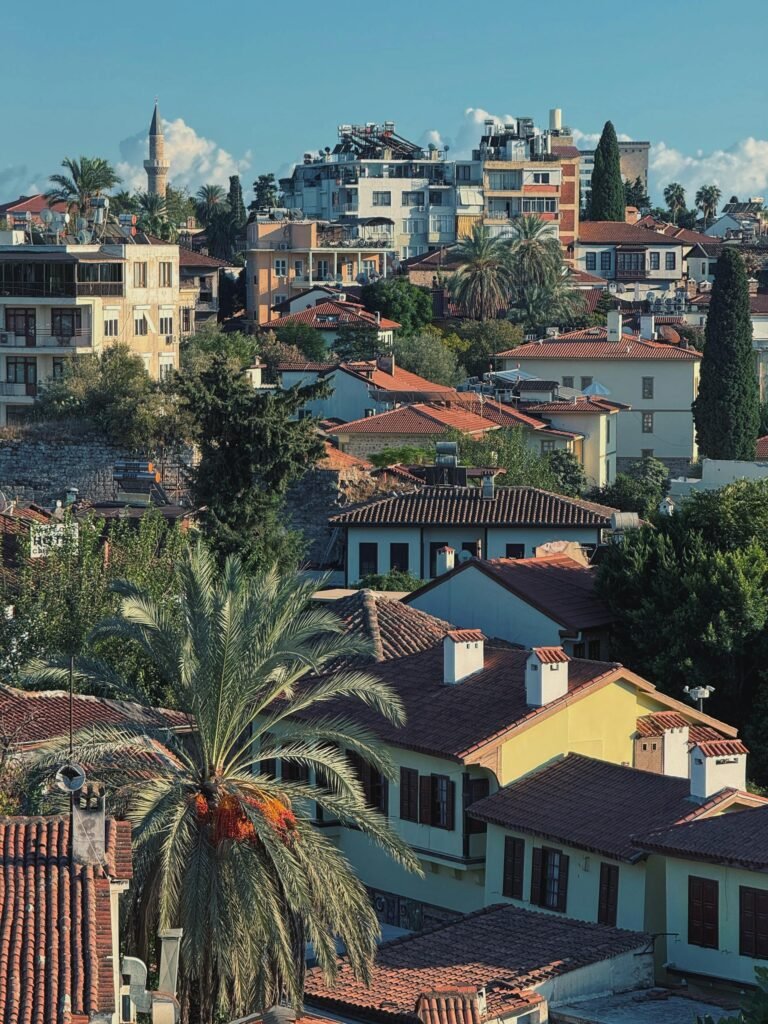
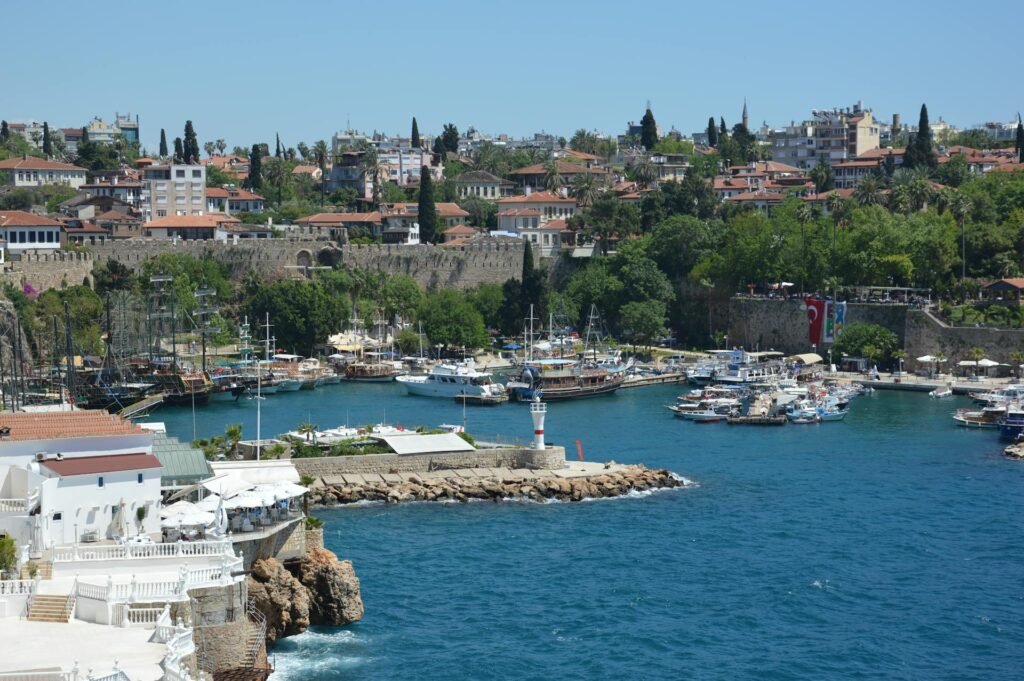
The historic heart — the Roman-Byzantine-Seljuk-Ottoman walled old city, with narrow cobbled streets winding down to the perfect ancient harbour. Ottoman wooden mansions (now boutique hotels), restored hammams, the Yivli Minare, Hadrian’s Gate, the Hıdırlık Tower, and dozens of small museums and cafés. UNESCO Tentative World Heritage. Stay here for maximum atmosphere — the area is fully pedestrianized and walkable to the marina and main beaches in 15 minutes.
Muratpaşa (Central District)
Antalya’s most populous district (~480,000 residents), encompassing the modern city center north and east of Kaleiçi. Konyaaltı Caddesi and Atatürk Caddesi are the main commercial streets; Karaalioğlu Park with its dramatic clifftop sea view and Antalya Archaeological Museum are the cultural anchors. Excellent mid-range hotels and the densest concentration of restaurants outside Kaleiçi.
Konyaaltı
The western beachfront district anchored by the long pebble beach of Konyaaltı Plajı, stretching 7 km from the Antalya marina to Beydağları National Park. The Tünektepe Cable Car rises from the western end up to a panoramic ridge restaurant. Resort hotels, beachfront apartments, the Antalya Aquarium (one of the world’s largest), and a beachfront promenade for evening strolls. Best base for visitors prioritizing beach access over old-town atmosphere.
Lara
The eastern beachfront, defined by the long sandy Lara Plajı and an extraordinary collection of themed five-star resorts — the famous Topkapı Palace, Kremlin Palace, and Titanic-replica resorts make Lara something between a hotel district and a kitsch architectural showcase. All-inclusive resort guests cluster here; independent travelers usually prefer Kaleiçi.
Kepez
Antalya’s largest district by population (~480,000), running inland from the city center. Mostly residential, with the dramatic Lower Düden Falls where the Düden River drops directly into the Mediterranean from a 40-metre cliff — best viewed from a sea cruise.
Belek and Beyond
Greater Antalya extends east through the resort towns of Belek (golf capital — 16 championship courses, hosting European Tour events), Side (Roman ruins on the beach, 70 km east), and Manavgat; west to Kemer (mountain-and-sea resort town, 40 km west) and the dramatic Lycian coast around Olimpos and Adrasan.
Top Things to Do in Antalya
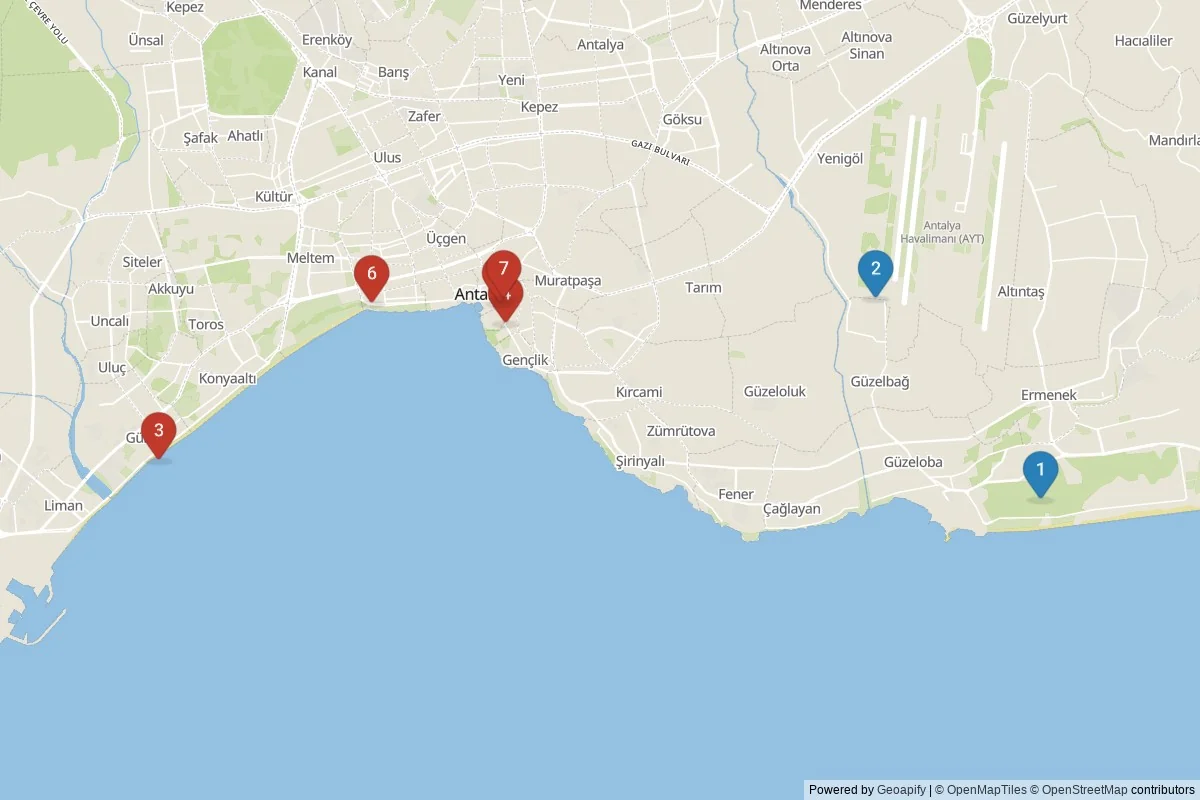
| # | Sight | Cluster | Type | Time | Entry | Best |
|---|---|---|---|---|---|---|
| 1 | Lara Beach | Central | Beach | ½ day | Free | Afternoon |
| 2 | Düden Waterfalls | Central | Waterfall | ~1 hr | ₺15 | Morning |
| 3 | Konyaaltı Beach | Outer | Beach | ½ day | Free | Afternoon |
| 4 | Hidirlik Tower | Outer | Roman tower | ~30 min | Free | Sunset |
| 5 | Kaleiçi Old Town | Outer | Old quarter | ~2 hrs | Free | Evening |
| 6 | Antalya Museum | Outer | Museum | ~2 hrs | ₺200 | Morning |
| 7 | Hadrian’s Gate | Outer | Roman gate | ~30 min | Free | Anytime |
| 🚗 | Day Trip: Perge ruins | Day trip | Day trip | ½ day | ₺200 | Morning |
| 🚗 | Day Trip: Aspendos amphitheatre | Day trip | Day trip | ½ day | ₺250 | Morning |
Antalya’s headline sights are split between the Old Town and outlying archaeological sites. Two days for the city itself, three to four days for serious archaeological day trips, a full week for the Lycian coast.
Historical Landmarks
Hadrian’s Gate (Üçkapılar) — the marble triumphal arch built in 130 AD to mark Emperor Hadrian’s visit; the city’s iconic gateway and one of the most complete Roman arches in the eastern Mediterranean. Free; the central gate is the formal entrance to Kaleiçi from Atatürk Caddesi.
Yivli Minare Mosque — the 13th-century fluted-brick minaret commissioned by Sultan Alaeddin Keykubad, now Antalya’s defining skyline marker. The minaret’s red-brick fluting and turquoise tile inlay are exemplars of Anatolian Seljuk architecture. The mosque complex below is still active.
Kaleiçi Old Town walking circuit — Hadrian’s Gate → Yivli Minare → Saat Kulesi (Clock Tower, 1901) → Karaalioğlu Park → Hıdırlık Tower → ancient harbour. The full loop takes about 90 minutes at a slow pace and covers the city’s complete historical layering.
Museums and Cultural Sites
The Antalya Archaeological Museum (Antalya Müzesi) on the western coast road is one of Turkey’s finest archaeological museums — and the surprise highlight of many visits. Roman sculpture rivaling Istanbul’s collections (largely from Perge excavations), Bronze Age artifacts, Byzantine icons, and the spectacular Hall of the Gods with full-scale Roman statues. Tickets ~120 TL via muze.gov.tr; allow 2.5 hours.
Natural Attractions
The Düden Waterfalls come in two parts: the Upper Düden Falls (Yukarı Düden Şelalesi) in a forested canyon 14 km north of the city, with picnic and walking trails; and the Lower Düden Falls, where the same river drops dramatically into the Mediterranean from a sea cliff at the Lara coast. Best viewed by boat from the ancient harbour (90-minute cruise, ~PKR 200).
Konyaaltı Beach — the 7 km pebble beach along the western coast, with the snow-capped Taurus Mountains rising directly behind. Public beach access is free; loungers/umbrellas at beach clubs ~150–300 TL/day. Lara Beach on the east is sandier and more resort-developed.
Karaalioğlu Park — the long clifftop park between Kaleiçi and Konyaaltı, with the city’s most dramatic sunset views over the Bay of Antalya and the Beydağları range across the water.
Day Trip Destinations
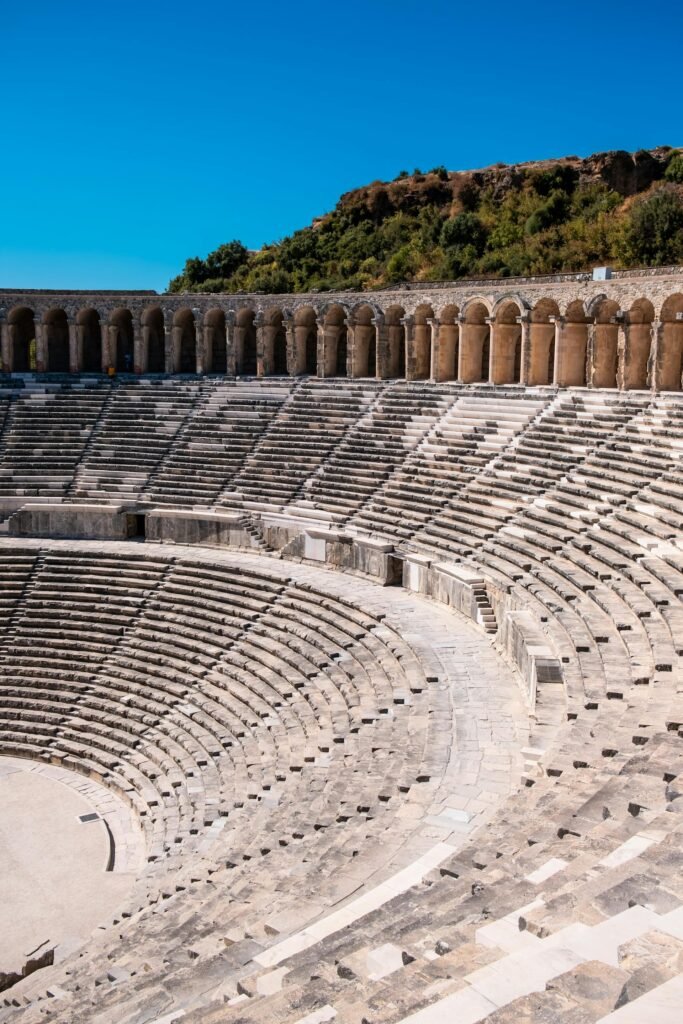
Aspendos (50 km east) — the world’s best-preserved Roman theatre, completed in 155 AD, still hosts the annual Aspendos Opera and Ballet Festival every June. Tickets ~120 TL.
Perge (15 km east) — sprawling Greco-Roman city with Hellenistic gates, Roman colonnaded street, and Roman baths. Easier access than Aspendos.
Side (70 km east) — Roman temples directly on the beach, plus Apollo’s Temple at sunset. Combine with the resort town for an overnight stay.
Köprülü Canyon National Park — whitewater rafting on the Köprüçay River in a Roman-era canyon, with the small Roman bridge at Oluk Köprü still in use.
Olympos and Chimaera (90 km west) — Lycian ruins overgrown with jungle, plus the famous Yanartaş mountain where natural methane vents have burned continuously for at least 2,500 years.
How to Get to Antalya
Antalya is one of the easiest Mediterranean coast cities to reach by air, and the only practical way to get here from outside Turkey.
By Air
Antalya Airport (AYT) — Turkey’s third-busiest airport (after Istanbul IST and SAW), 13 km northeast of the city center. Two terminals: T1 (international, mostly European charters and scheduled carriers) and T2 (domestic and additional international). Major carriers: Turkish Airlines, Pegasus, SunExpress, plus dozens of European carriers and seasonal charters from across Europe and Russia. From the airport: Antray tram to the city center (~30 min, 30 TL via Antalya Kart), HAVAŞ airport bus (~45 min, 100 TL), taxi (~20 min, ~400–500 TL fixed-rate). Live status at aytport.com.
By Road
The D400 coastal highway runs east-west along the Mediterranean, connecting Antalya to Alanya (~140 km east) and Fethiye (~200 km west). The D650 mountain route connects to Konya and central Anatolia via spectacular Taurus Mountain switchbacks. Drive times: Istanbul 8–10 hours (700+ km, mostly motorway); Ankara 5–6 hours; Cappadocia 7 hours. Long-distance buses operated by Turkey’s excellent Pamukkale, Metro Turizm, and Kamil Koç companies serve every major Turkish city overnight.
By Sea
The renovated Antalya Marina (Setur) in Kaleiçi welcomes private yachts and seasonal cruise ships. Ferry connections within Turkey are limited; Antalya is primarily a destination, not a transit hub.
Getting Around Antalya
Greater Antalya is large, but the tourist core is compact. Most visitors split their time between Kaleiçi (walkable) and the beaches (taxi/tram/bus).
Antray Tram System
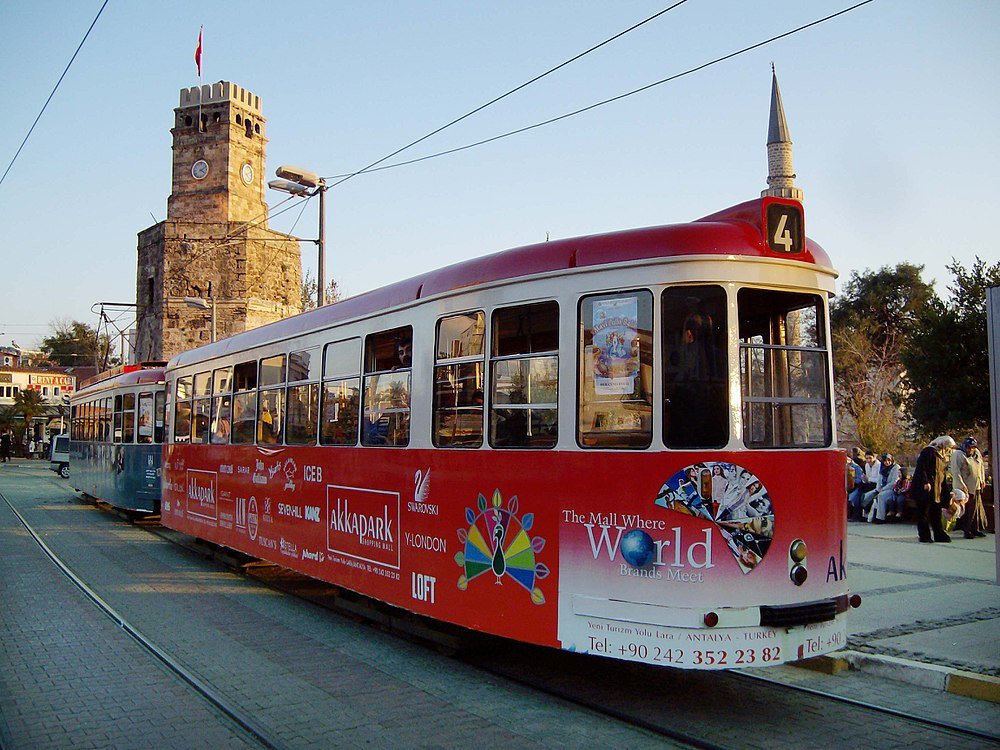
The Antray light-rail tram system connects the airport to the city center, with the central Line 1 running through Muratpaşa to the historic clock tower. The vintage German-built nostalgic Tram 4 (“Eski Tramvay”) loops the historic core from the clock tower past Hadrian’s Gate to Konyaaltı, primarily for tourists. Tickets via the Antalya Kart (refundable card, top up at vending machines), ~30 TL per ride. Live routes at antalyaulasim.com.tr.
Public Buses
Antalya’s bus network covers the entire metro area, including direct services to Konyaaltı, Lara, the airport, and beach destinations. Antalya Kart required for boarding; cash not accepted on most modern buses. Routes are extensive but can be slow during summer peak traffic.
Taxis and Ride-Hailing
Taxis are abundant and metered (insist on the meter — fixed-rate quotes from tourist-area taxi ranks are usually inflated). BiTaksi (the Turkish ride-hail app) operates in Antalya and works reliably; international Uber service is limited compared to Istanbul. Hotel concierges can pre-book reliable taxis.
Car Rental and Cycling
Renting a car is the obvious choice for exploring the surrounding archaeological sites and the Lycian coast — major international providers operate from the airport at €25–45/day for compact cars. Antalya itself has bike-share (Antbis) with stations along the coast and Kaleiçi periphery; the Konyaaltı promenade bicycle path is genuinely pleasant in the cool morning hours.
Food & Drink in Antalya
Antalya’s cuisine is firmly Mediterranean Turkish — fresh seafood, citrus from the surrounding plains (Antalya is Turkey’s biggest orange-growing region), olive oil, herbs, mezze. The Russian and Central Asian tourist boom has added a notable Caucasian and Russian food presence; the European package-tourism economy has unfortunately also brought a stratum of mediocre tourist-trap restaurants. Eating well requires knowing where to look.
Local Specialties
Piyaz — Antalya’s signature white bean salad, distinct from the Turkish national version because Antalya piyaz uses tahini in the dressing alongside vinegar and lemon. Tirmis (lupin beans), hibeş (tahini-and-cumin dip), and şiveydiz (yogurt-based meat-and-vegetable stew) are other regional specialties.
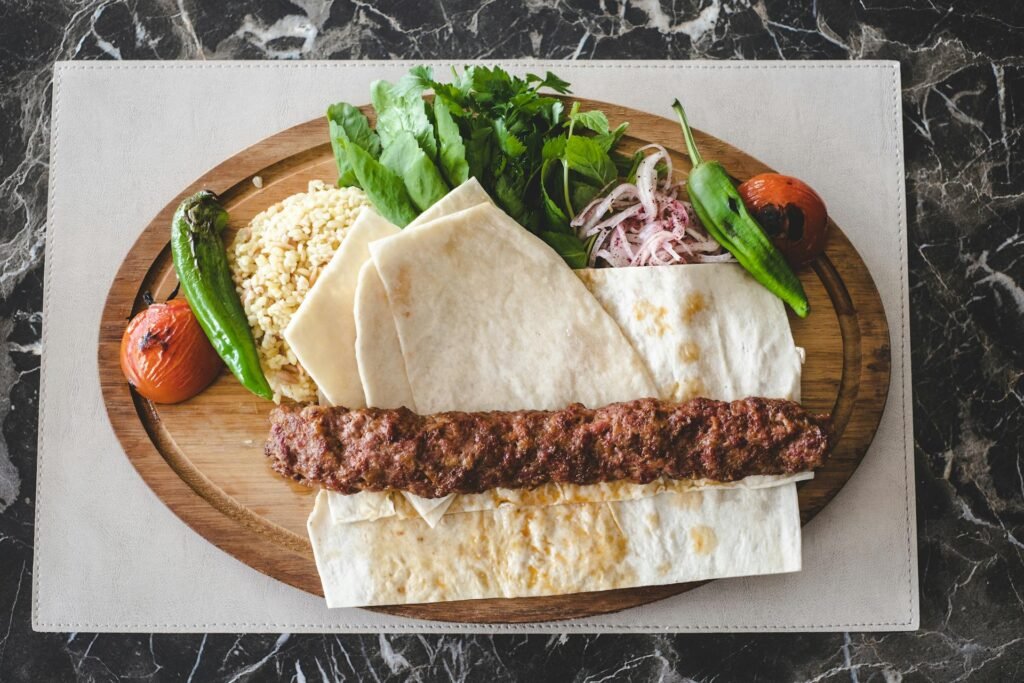
Fresh seafood — sea bass (levrek), sea bream (çipura), red mullet (barbun), and grilled octopus are the standards. Antalya Balık Halleri (fish market) in Muratpaşa is where locals shop and where the city’s serious fish restaurants source. Şiş kebab and döner in their authentic Turkish forms are excellent everywhere; the Adana and Urfa kebab traditions are well-represented too.
Dining Areas
Kaleiçi’s restored Ottoman houses host atmospheric restaurants serving Turkish classics in stone-walled courtyards: 7 Mehmet (clifftop, established 1925, the city’s most famous), Vanilla (modern Mediterranean), Seraser (fine dining in a restored Ottoman mansion). The marina (Yat Limanı) offers sunset dining with yacht views; Konyaaltı promenade has casual beachfront restaurants. Avoid the obvious tourist-trap restaurants on Hadrian’s Gate Street with English-only menus and aggressive doormen — quality drops sharply.
Beverages
Turkish çay (tea) served in tulip-shaped glasses is the constant; a cup follows every meal and most conversations. Türk kahvesi (Turkish coffee) — strong, unfiltered, usually with a piece of Turkish delight. Fresh-squeezed orange juice from local citrus groves is everywhere in winter for ~25 TL. Rakı — the anise-flavored Turkish national spirit, traditionally drunk diluted with water and ice (it turns cloudy white — “lion’s milk”) alongside seafood mezze. Local wines from Likya and Kavaklıdere are increasingly drinkable; Turkey’s wine industry has improved dramatically in the last decade.
Antalya by District: The 19 İlçeler
Antalya is divided into 19 districts. The map below shows their official OSM boundaries, colour-coded to match the table — a quick way to orient yourself before zooming in on individual sights.
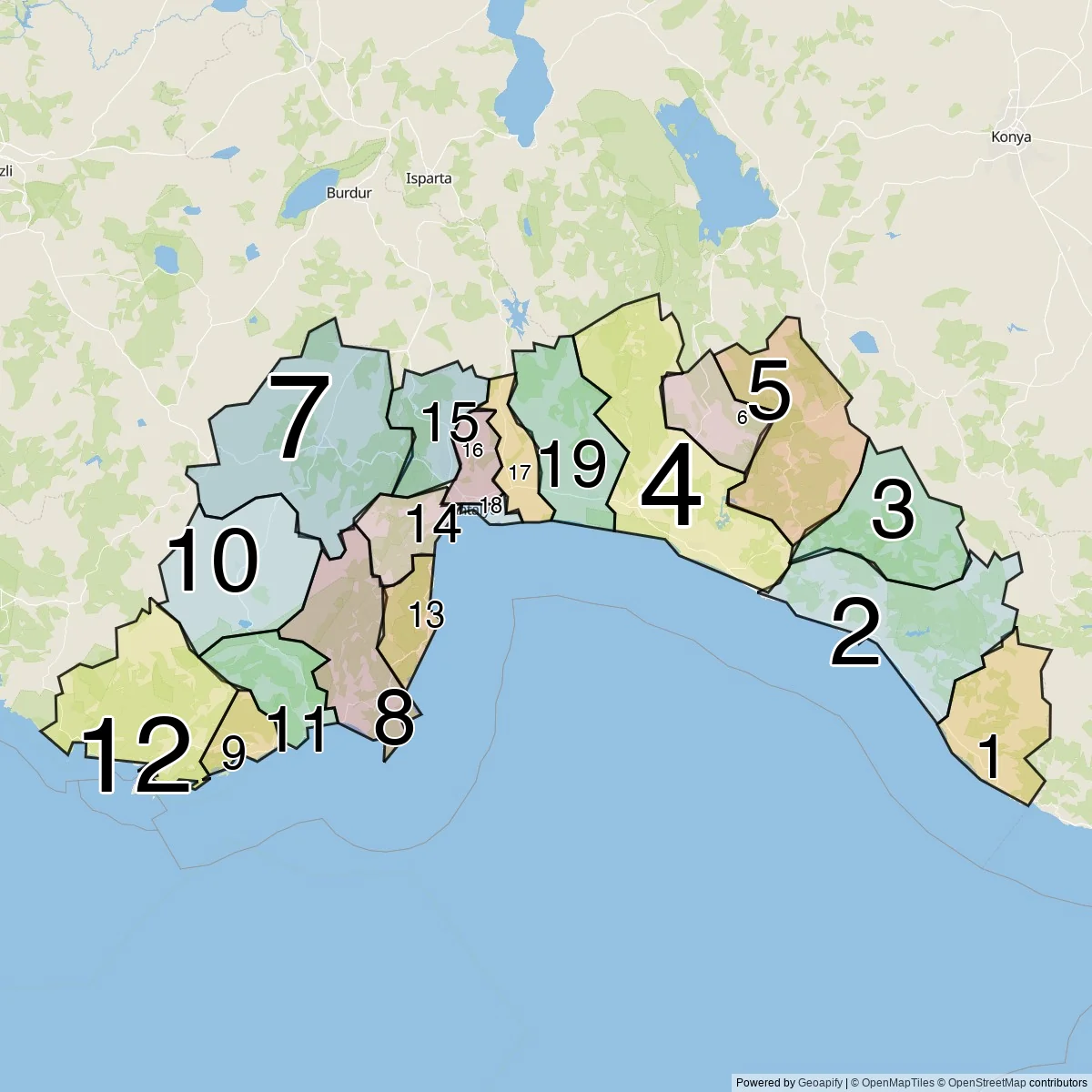
| # | İlçeler |
|---|---|
| 1 | Gazipaşa |
| 2 | Alanya |
| 3 | Gündoğmuş |
| 4 | Manavgat |
| 5 | Akseki |
| 6 | İbradı |
| 7 | Korkuteli |
| 8 | Kumluca |
| 9 | Demre |
| 10 | Elmalı |
| 11 | Finike |
| 12 | Kaş |
| 13 | Kemer |
| 14 | Konyaaltı |
| 15 | Döşemealtı |
| 16 | Kepez |
| 17 | Aksu |
| 18 | Muratpaşa |
| 19 | Serik |
Frequently Asked Questions About Visiting Antalya
Do I need a visa to visit Antalya?
It depends on nationality. Citizens of around 80 countries — including most EU member states, the UK, Germany, France, Spain, Italy, Japan, South Korea, Singapore, and Brazil — enter Turkey visa-free for stays of up to 90 days. Citizens of the US, Canada, India, China, Australia, and several other countries need an e-Visa, easily obtained online before travel via the official portal at evisa.gov.tr. The e-Visa costs typically $20–60 depending on nationality, processes in minutes, and is valid for 90 days within a 180-day period. Beware: only use the official .gov.tr site; numerous fake sites charge inflated fees. Passport must have at least 6 months remaining validity beyond your stay.
Is Antalya safe for tourists?
Antalya is genuinely safe — Turkey overall has lower violent crime rates than much of Europe, and Antalya in particular is heavily policed and tourist-friendly. The US State Department rates Turkey at “exercise increased caution” — primarily for risks in southeast Turkey and near the Syrian border, neither relevant to Antalya. Real risks in Antalya: petty pickpocketing in tourist-dense areas of Kaleiçi during peak season; carpet-shop and jewelry-shop scams (the friendly local who invites you “for tea” usually has a sales agenda); taxi overcharging — always insist on the meter or use BiTaksi app. Earthquake risk: Turkey sits on active fault lines; the February 2023 earthquakes affected the southeast (Adana, Hatay), not Antalya. Standard preparedness is fine. Solo women travelers: Antalya is genuinely fine, more relaxed than Istanbul; modest dress is appreciated outside resort zones but not required.
How many days do I need in Antalya?
Two days handles the city; four to five lets you do the surrounding archaeological sites; a week opens up the broader Lycian coast. A solid 4-day plan: Day 1 — Kaleiçi walking circuit (Hadrian’s Gate, Yivli Minare, Hıdırlık Tower, marina) + Antalya Archaeological Museum + sunset at Karaalioğlu Park; Day 2 — Konyaaltı Beach morning + Düden Waterfalls boat cruise + Lara Beach evening; Day 3 — day trip to Aspendos Roman theatre + Perge ancient city + Side Roman ruins; Day 4 — Köprülü Canyon rafting OR Olympos and Chimaera day trip. Day 5–7: drive west along the Lycian coast to Kaş, Kalkan, and Patara — Turkey’s loveliest coastal road, one of the Mediterranean’s great drives.
What’s the best area to stay in Antalya?
Three solid options for different priorities. Kaleiçi (Old Town) — the obvious choice for first-time visitors prioritizing atmosphere and walkability; restored Ottoman wooden mansions converted to boutique hotels (Hotel Tuvana, Alp Pasa, Mediterra Art) at €70–180/night. Walking distance to the harbour and a 15-minute walk to Konyaaltı beach. Konyaaltı — the Western beachfront for travelers prioritizing beach access; modern hotels and apartments, the long pebble beach, easier metro access; €60–150/night. Lara — the eastern beach with the famous themed five-star resorts (Topkapı Palace, Kremlin Palace, Titanic Beach Lara) at €120–500/night, all-inclusive packages standard. Beyond Antalya proper: Belek (golf), Kemer (mountain-and-sea), Side (Roman ruins on beach), and Olympos (boutique tree-house hotels) all within 1–2 hours.
How much does it cost to visit Antalya’s major sights?
Antalya’s headline sights are inexpensive by international standards, though prices have climbed with inflation. Hadrian’s Gate, Hıdırlık Tower, Karaalioğlu Park: free. Antalya Archaeological Museum: ~120 TL via muze.gov.tr (the official Turkish Ministry of Culture portal). Aspendos: ~120 TL. Perge: ~120 TL. Side ancient city: ~120 TL (museum + ruins). Düden Waterfalls boat cruise: ~200 TL. Konyaaltı Beach: free public access; loungers/umbrellas at beach clubs ~150–300 TL/day. Antalya Aquarium: ~600 TL adult ticket. Beydağları cable car (Tahtalı): ~1,200 TL adult round trip. Bargain pass: the Museum Pass Mediterranean Region at muze.gov.tr/museum-pass bundles the major archaeological sites for ~700 TL — worth it if you visit three or more.
Should I drink the tap water in Antalya?
Generally no, despite the official safety. Antalya’s tap water meets Turkish drinking-water standards at the treatment plant, but locals universally drink bottled or filtered water — partly because of mineral content (the limestone-heavy water is unpleasant to drink), partly because of older buildings’ plumbing. Bottled water is everywhere and cheap (10–25 TL per liter). All-inclusive resorts and major hotels use filtered systems for restaurant water and ice — generally safe. Tap water is fine for showering and brushing teeth; most travelers skip it for drinking. Reusable filter bottles (LifeStraw, Grayl) work well in Turkey and reduce plastic waste. The CDC traveler health page recommends bottled or filtered water for Turkey.
What’s the dress code in Antalya?
Antalya is one of the more relaxed parts of Turkey for dress — beach attire is normal at Konyaaltı and Lara, summer dresses and shorts are fine in Kaleiçi and tourist areas, swimwear is fine at hotel pools and beaches. The exceptions matter: Mosques require modest dress for everyone — covered shoulders and knees for men, plus headscarf and covered legs/arms for women. Most major mosques (Yivli Minare, Murat Pasha) provide loaner robes and headscarves at the entrance. Remove shoes before entering. Conservative neighborhoods: outside the tourist core in Kepez and inland districts, locals dress more conservatively — beach attire is out of place; smart-casual is the safe default. Beach clubs and resort restaurants: beach attire fine during day; smart-casual at dinner. Religious sites outside Antalya (the great Seljuk mosques in Konya, for example) require strict modest dress and headscarves for women. Photography of locals: ask before, especially women.
Is tipping expected in Antalya?
Yes — moderate tipping is standard in Antalya, slightly more generous than other parts of Turkey because of the heavy tourist economy. Restaurants: 10% in cash for sit-down service if no service charge (“servis ücreti”) is added; 15% at upscale restaurants if pleased; round up at casual places. Pubs and bars: round up to nearest 5 TL or 10% for table service. Taxis: round up to nearest 10 TL; not strictly required. Hotel porters: 50–100 TL per bag at upscale hotels. Hotel housekeeping: 50–100 TL per night left at end of stay at 4–5 star hotels. Tour guides: 200–500 TL per person for half-day group tours; 500–1,500 TL for full private day. All-inclusive resort staff: optional but appreciated — 50–100 TL per day to your housekeeper or favorite waiter at end of stay. Spa and hammam: 10–15% if pleased. Tipping in Turkish lira, euros, or US dollars all works; small notes appreciated.
Sports & Recreation in Antalya
Antalya is Turkey’s sports-tourism capital — and not just for visitors. Hundreds of European football clubs hold winter training camps here every January–February, when northern Europe is frozen and Antalya is reliably 17–20°C with excellent grass pitches.
Football Culture
Antalyaspor represents the city in the Turkish Süper Lig, playing at the 33,000-seat Antalya Stadyumu opened in 2015. The Antalya Cup (formerly Gazi Cup) and various preseason tournaments (Efes Pilsen Cup) have hosted Borussia Dortmund, Galatasaray, Hamburger SV, Manchester United, Arsenal, Real Madrid, Liverpool, and Bayern Munich for warm-weather mid-season training. The combination of city facilities and surrounding resort training camps in Belek handles 200+ professional clubs each off-season.
Marathon and Running
The Runatolia Antalya Marathon (March) is Turkey’s second-largest running event after the Istanbul Marathon — a scenic course along the coastal road that draws international elite and amateur fields each spring. The cool, dry March weather makes it a popular target race for early-season fitness.
Water Sports and Recreation
The Mediterranean coast offers excellent conditions for diving (the underwater archaeology along the Lycian coast is genuinely world-class — sunken Byzantine harbours, wrecks, and submerged classical ruins), sailing (the Antalya Marina is one of the eastern Mediterranean’s busiest), sea kayaking (especially in the calm bays of Kaş and Kalkan further west), and paragliding from Tahtalı Dağı (the 2,366 m peak west of Antalya, one of the world’s longest commercial tandem paraglider runs).
Golf in Belek
Belek, 30 km east of Antalya, is the eastern Mediterranean’s golf capital — 16 championship courses by designers including Nick Faldo, Colin Montgomerie, and Robert Trent Jones Jr. The European Tour holds events here annually. Resort packages bundle golf with luxury accommodations.
Notable People from Antalya
Antalya has produced disproportionately many sporting heroes:
- Rüştü Reçber (b. 1973) — legendary Turkish national team goalkeeper, played in the 2002 World Cup that took Turkey to third place. National hero.
- Burak Yılmaz (b. 1985) — striker for the Turkish national team, Galatasaray, and Lille; the 2020 Lille Ligue 1 champion.
- Fenerbahçe legend Volkan Demirel (b. 1981) — born in Istanbul but raised partly in Antalya — long-time Turkish international goalkeeper.
- Eda Tuğsuz (b. 1997) — Olympic javelin thrower; competed at Tokyo 2020.
- Levent Yüksel (b. 1964) — pop musician and singer-songwriter, one of Turkey’s most successful pop artists since the 1990s.
- Ekin Koç (b. 1992) — actor, rising star of Turkish film and television.
From ancient Attaleia to the modern Turkish Riviera, Antalya rewards visitors who treat it as both beach destination and cultural base. Three days for the city itself (Kaleiçi, Konyaaltı beach, the Archaeological Museum), four days more for the surrounding archaeological sites (Aspendos, Perge, Side) and natural wonders (Köprülü Canyon, Düden Falls). The mix of Mediterranean climate, Roman antiquity, Ottoman heritage, and Turkish hospitality is genuinely hard to beat — especially at Turkish off-season prices.
AFRIKA
Cairo Hurghada Johannesburg Marrakech
ASIA
Abu Dhabi Agra Antalya Bangkok Batam Beijing Bengaluru Cebu City Chiang Mai Chiba Chennai Da Nang Dammam Delhi Denpasar Dubai Fukuoka Guangzhou Guilin Ha Long Hanoi Ho Chi Minh City Jakarta Jaipur Johor Bahru Kolkata Krabi Kuala Lumpur Kyoto Macau Mecca Medina Mugla Mumbai Osaka Pattaya Penang Phuket Riyadh Seoul Shanghai Shenzhen Singapore Taipei Tokyo Zhuhai
EUROPE
Amsterdam Athens Barcelona Berlin Brussels Budapest Copenhagen Dublin Florence Frankfurt am Main Heraklion Krakow Lisbon London Madrid Milan Munich Nice Paris Porto Prague Rhodes Rome Stockholm Venice Vienna Warsaw
NORTH AMERICA
Cancun Las Vegas Los Angeles Miami New York City Orlando San Francisco Toronto Vancouver
SOUTH AMERICA
Buenos Aires Lima Rio De Janeiro
OCEANIA
Auckland Honolulu Melbourne Sydney