
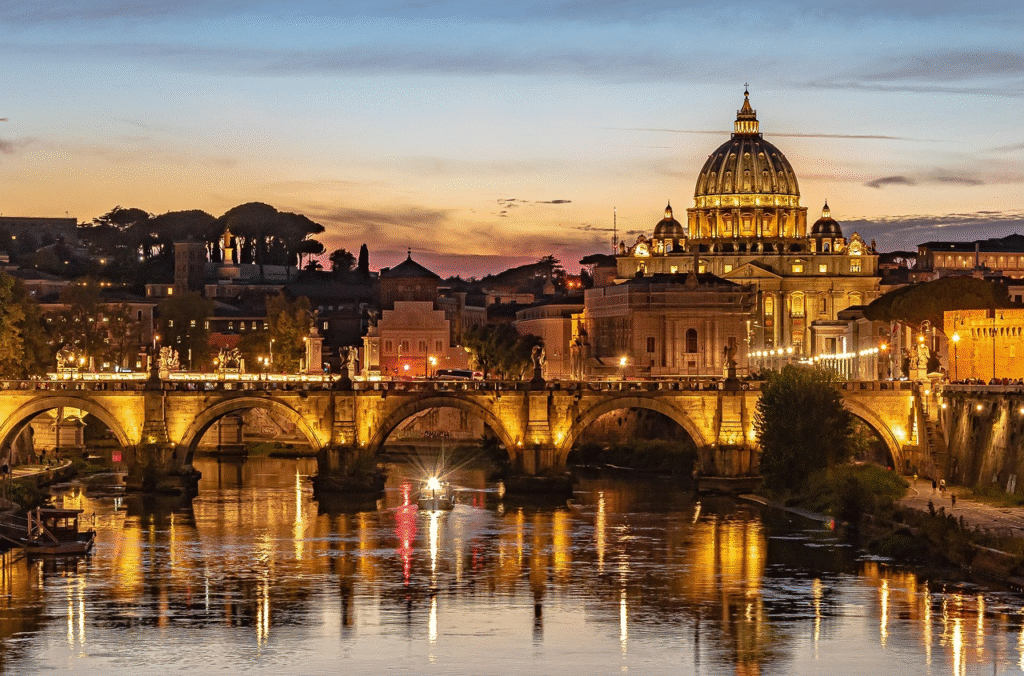
Photo credit: nimrodins, pixabay
Rome, the Eternal City, stands as one of the world’s most captivating destinations where ancient history seamlessly blends with vibrant modern life. Nestled along the Tiber River in central Italy’s Lazio region, this magnificent metropolis has been enchanting visitors for nearly three millennia. As Italy’s capital and largest city, Rome serves as both the political heart of the nation and the spiritual center of the Catholic world, housing Vatican City within its borders.
Rome at a Glance: Essential Facts for Travelers
| Location | Central Italy, Lazio region |
|---|---|
| Coordinates | 41°53′N, 12°29′E |
| Population | 2,872,800 (city), 4.3 million (metro area) |
| Area | 1,287 km² (497 sq mi) |
| Elevation | 37 meters (121 ft) above sea level |
| Time Zone | Central European Time (CET/CEST) |
| Calling Code | +39-06 |
| Postal Codes | 00100-00199 |
| Known For | Colosseum, Vatican City, Roman Forum, Trevi Fountain |
| Current Mayor | Roberto Gualtieri (Democratic Party) |
| Official Website | www.comune.roma.it |
| Patron Saints | St. Peter and St. Paul |
| Administrative Divisions | 15 municipalities, 155 zones |
Upcoming Events in Rome
| Date | Title | Details |
|---|---|---|
| 2026-06-01 to 2026-09-30 | Estate Romana 2026 | Estate Romana is the city’s sprawling summer festival, programmed by Roma Capitale, that fills piazzas, parks, riverbanks and courtyards with hundreds of events from June into the autumn. Expect open-air cinema, concerts, theatre, dance, book readings and neighbourhood markets spread right across the capital, many of them free or low-cost. It is the defining rhythm of a Roman summer, letting residents and visitors enjoy culture outdoors in the warm evenings. Programmes are updated regularly on the city’s culture portal, with something on almost every night. [Source] |
| 2026-09-02 to 2026-11-15 | Romaeuropa Festival (REF) 2026 | Romaeuropa Festival, known as REF, is Rome’s leading autumn showcase for contemporary performing arts, running from early September into November. Across venues including the Auditorium Parco della Musica and the Mattatoio, it presents international and Italian dance, theatre, music, digital art and performance, mixing established names with boundary-pushing new work. The festival is a highlight of the city’s cultural season and a magnet for audiences interested in innovative stagecraft. Tickets vary by show, with some free events; the full line-up is published on the festival website. [Source] |
| 2026-09-06 to 2026-10-04 | Domenica al Museo – Free First Sunday | On the first Sunday of every month, state museums and archaeological sites across Italy open free of charge, and in Rome that includes world-famous sites such as the Colosseum, the Roman Forum and Palatine, and the National Roman Museum. The Domenica al Museo initiative, run by the Ministry of Culture, draws big crowds keen to explore the capital’s heritage without paying admission. It is a superb, budget-friendly way to see major sites, though queues can be long. The next dates fall on September 6 and October 4, 2026. [Source] |
| 2026-10-08 to 2026-10-10 | Santa Cecilia Symphonic Season Opening | The Accademia Nazionale di Santa Cecilia, one of the world’s oldest musical institutions, opens its new symphonic season in October at the Auditorium Parco della Musica, home to its acclaimed orchestra and chorus. Autumn concerts bring celebrated conductors and soloists to Rome for a programme spanning the great symphonic and choral repertoire. The Sala Santa Cecilia’s superb acoustics make it a highlight for classical-music lovers. Ticket prices vary by concert and seating, and the season’s full calendar is published on the academy’s website. [Source] |
| 2026-10-15 to 2026-10-25 | Festa del Cinema di Roma 2026 | The Festa del Cinema di Roma, the capital’s international film festival, takes over the Auditorium Parco della Musica each October with premieres, retrospectives, red-carpet events and encounters with directors and stars. Alongside competition and gala screenings, it hosts talks, tributes and audience-friendly programming that has made it one of Italy’s most popular autumn cultural gatherings. Cinephiles can catch new international releases and restored classics, while public encounters bring big names face to face with fans. Tickets are sold per screening, with festival passes also available. [Source] |
| 2026-10-23 to 2026-10-25 | Maker Faire Rome – The European Edition | Maker Faire Rome, the European Edition, is one of the continent’s biggest innovation and technology fairs, held each October at the Fiera di Roma exhibition grounds. It gathers inventors, startups, universities, schools and companies to show off robotics, artificial intelligence, 3D printing, sustainability projects and hands-on science. Family-friendly and packed with interactive demonstrations, it appeals equally to curious children, students and industry professionals. Tickets are required, with reduced rates for schools and children. It is a rare chance to see cutting-edge making and digital fabrication up close in Rome. [Source] |
| 2026-10-26 to 2026-10-31 | Rome Art Week 2026 | Rome Art Week is a free, citywide contemporary-art event held each autumn, when galleries, artists’ studios, foundations and project spaces across the capital open their doors for a packed week of exhibitions, open studios and encounters. It offers an unusually intimate look at Rome’s living art scene, letting visitors meet artists and curators and explore neighbourhoods off the usual tourist track. Participation is free, with a searchable programme and map published online. It is ideal for anyone wanting to discover the city’s contemporary creativity beyond its ancient monuments. [Source] |
City News in Rome – last 14 days
| Date | Category | Headline | Details |
|---|---|---|---|
| 2026-09-14 | Education | School hit by fuel-depot blast reopens in time for new academic year | Mayor Roberto Gualtieri hailed a promise kept as the school damaged in the July 2025 explosion of an LPG depot reopened its doors for the new academic year. The blast, which shook the surrounding neighbourhood, forced extensive reconstruction of the institute. City officials presented the rebuilt school as a symbol of rebirth for the area, with pupils returning to modernised classrooms. The reopening coincides with the start of lessons across Lazio, giving the community a long-awaited return to normality. [Source] |
| 2026-09-14 | Public safety | City councillor reports spy drones flying over his home | Alessandro Onorato, Rome’s councillor for major events, sport and tourism, has filed a complaint after drones were repeatedly flown over his home in early July, episodes he describes as targeted surveillance. The Carabinieri are investigating who operated the devices and why. The case raises fresh concerns about the use of consumer drones for spying on public figures, and it lands amid growing scrutiny of drone regulation in Italian cities, where unauthorised flights over homes and sensitive sites are prohibited. [Source] |
| 2026-09-14 | Local government | State funeral for Emma Bonino to be held at the Campidoglio | Rome hosts a state funeral for Emma Bonino, the veteran champion of civil rights and former foreign minister, with a secular ceremony on the Campidoglio at 12:30 on Tuesday attended by President Sergio Mattarella and Prime Minister Giorgia Meloni. Mourners filed past her coffin during the lying-in-state at city hall over the weekend, where Mayor Gualtieri said Italy is a better country thanks in part to her battles. Tributes have poured in from across the political spectrum for the Radical leader. [Source] |
| 2026-09-14 | Culture | Oasis to play Rome, major-events councillor announces | Britpop giants Oasis will perform in Rome, according to an announcement by Alessandro Onorato, the city’s councillor for major events, who thanked the reunited band for choosing the capital and said the city awaits them. The date and venue details were not disclosed in the initial announcement, but landing the Gallagher brothers’ blockbuster reunion tour is a coup for Rome’s live-music ambitions, following a string of stadium-scale shows that have cemented the city’s status on international touring circuits. [Source] |
| 2026-09-14 | Education | New 173-bed student residence opens at the Seraphicum | A new university residence offering 173 places has been inaugurated at the Seraphicum complex in the south of the city, born of a collaboration between the Conventual Franciscan friars and the university ministry and financed through Italy’s post-pandemic recovery funds. The project converts part of the theological college’s premises into affordable student housing, addressing a chronic shortage that has driven up rents for young people studying in the capital. Officials presented it as a model for further accommodation projects. [Source] |
| 2026-09-14 | Public safety | Man wielding knife at officers barricades himself in Parioli flat | A 40-year-old man who lunged at Carabinieri officers with a knife before barricading himself inside his home in the Parioli district has been subdued and taken to hospital. Officers contained the situation and the man was transported for treatment and evaluation, ANSA reports. The episode follows a series of recent call-outs involving people in states of acute distress, and it ended without harm to residents in the normally quiet northern neighbourhood of the capital. [Source] |
| 2026-09-14 | Culture | Javier Bardem to receive lifetime achievement award at Festa del Cinema | Spanish star Javier Bardem will receive the Lifetime Achievement Award at this year’s Festa del Cinema di Roma, with director Paolo Sorrentino presenting the honour. The tribute will be accompanied by a screening of El ser querido, the new film by Rodrigo Sorogoyen featuring the Oscar winner. The recognition adds another marquee name to the October festival at the Auditorium Parco della Musica, which brings premieres, retrospectives and international guests to the capital each autumn. [Source] |
| 2026-09-14 | Culture | JR’s monumental wave unveiled on the Vatican Library facade | French street artist JR has created a monumental installation called Onda, a great wave sweeping across the facade of the Vatican Apostolic Library, as part of the exhibition Aqva. The Pope was expected to inaugurate the show, which explores the theme of water through the library’s treasures and contemporary art. The collaboration continues the Vatican’s recent opening toward contemporary artists, and the striking trompe-l’oeil image is drawing curious visitors to the surroundings of St Peter’s. [Source] |
| 2026-09-14 | Local affairs | Rome Future Week returns citywide with focus on the city’s raw material | Rome Future Week returns for its 2026 edition, a citywide festival of innovation with hundreds of events spread across offices, universities, museums and public spaces. This year’s theme, Materia Prima, puts the spotlight on the city’s own raw material, its people and ideas, as the starting point for Rome’s future. The format is deliberately diffuse: talks, workshops and demonstrations hosted by companies and institutions all over the city, most of them free, connecting technology, sustainability and culture. [Source] |
| 2026-09-13 | Culture | Jovanotti closes tour at Circo Massimo with surprise duet from the mayor | Italian star Jovanotti wrapped up his tour with a huge show at the Circo Massimo, where Mayor Roberto Gualtieri, an accomplished guitarist, joined him on stage for a surprise duet. Speaking around his sixtieth birthday, the singer joked that he does not dwell on age because partying is his job, and declared his love for romantic songs. The concert capped a summer of major live events in the ancient chariot-racing arena, Rome’s favourite venue for blockbuster shows. [Source] |
| 2026-09-13 | Public safety | Investigators seize Ariccia flat in Denise Cosco case | Prosecutors have sealed the apartment in Ariccia, in the Castelli Romani south of Rome, where Denise Cosco lived, and have acquired a second mobile phone belonging to her as investigations continue. Cosco is the daughter of Lea Garofalo, the ‘ndrangheta witness murdered in 2009, and her partner is due to be questioned. Authorities have not detailed what prompted the seizure, but the moves signal an intensifying inquiry that is drawing national attention given the family’s painful history. [Source] |
| 2026-09-13 | Local government | New budget adjustment channels additional funds to social services | Rome’s city council has approved a new budget adjustment that steers additional resources toward social programmes, according to reporting by The Parallel Vision. The measure reinforces spending on welfare services as the administration seeks to shore up support for vulnerable residents against rising living costs. Budget adjustments at this point of the year allow the Campidoglio to redirect unspent funds, and social policy has been a stated priority of the current administration ahead of the coming budget season. [Source] |
| 2026-09-12 | Sports | Lazio top the table after dramatic draw with Milan | Lazio sit at the top of Serie A after a dramatic match against Milan in which the biancocelesti dominated for long stretches before substitute Moreira struck twice to salvage a draw for the visitors. Coach Rino Gattuso welcomed the point but played down talk of European qualification as the club’s objective, praising his players’ spirit and admitting the atmosphere moved him even with parts of the stadium empty. The result keeps Lazio’s strong start to the season intact. [Source] |
| 2026-09-12 | Sports | Inclusive fencing takes over the Pantheon for World Fencing Day | The event A Fil di Spada brought inclusive fencing to the heart of Rome, with a large crowd gathering at the Pantheon to mark World Fencing Day 2026. Athletes with and without disabilities demonstrated the sport side by side in one of the city’s most spectacular settings, celebrating fencing’s accessibility and Italy’s deep tradition in the discipline. Organisers used the showcase to promote participation at all levels, from paralympic pathways to beginners’ courses across the capital’s clubs. [Source] |
Rome Events & City News Archive
Sources: Roma Capitale, Romaeuropa Festival, Ministero della Cultura, Accademia Nazionale di Santa Cecilia, Festa del Cinema di Roma, Maker Faire Rome, Rome Art Week, ANSA
Weather Forecast for the Next 14 Days in Rome
| Date | Weather | Max °F | Min °F | Rain mm |
|---|---|---|---|---|
| 2026-09-14 | ☁️ | 84.4 °F | 64.7 °F | 0.0 mm |
| 2026-09-15 | ⛅ | 87.4 °F | 63.9 °F | 0.0 mm |
| 2026-09-16 | ⛅ | 85.4 °F | 65.7 °F | 0.0 mm |
| 2026-09-17 | ☁️ | 85.1 °F | 65.4 °F | 0.0 mm |
| 2026-09-18 | ☁️ | 80.6 °F | 68.9 °F | 0.0 mm |
| 2026-09-19 | ☁️ | 82.7 °F | 64.9 °F | 0.0 mm |
| 2026-09-20 | ⛅ | 85.3 °F | 58.5 °F | 0.0 mm |
| 2026-09-21 | ☁️ | 82.2 °F | 58.3 °F | 0.0 mm |
| 2026-09-22 | 🌧️ | 82.4 °F | 62.3 °F | 0.6 mm |
| 2026-09-23 | ☀️ | 76.6 °F | 57.7 °F | 0.0 mm |
| 2026-09-24 | 🌧️ | 75.5 °F | 59.3 °F | 3.3 mm |
| 2026-09-25 | 🌧️ | 76.2 °F | 60.0 °F | 2.7 mm |
| 2026-09-26 | 🌧️ | 80.0 °F | 63.1 °F | 0.6 mm |
| 2026-09-27 | ⛈️ | 81.2 °F | 65.5 °F | 4.2 mm |
Rome’s History: From Legendary Beginnings to Modern Capital
Rome has been continuously inhabited for nearly three millennia. The trick to understanding it is recognizing the layers — Iron Age village, Republican capital, imperial superpower, medieval backwater, Renaissance city of popes, Mussolini’s neoclassical capital, and the modern European metropolis you walk through today. Every street has at least three of these layers visible at once.
Ancient Origins and the Birth of an Empire
Roman tradition dates the city’s founding to April 21, 753 BCE — the date the twin brothers Romulus and Remus, raised by a she-wolf, supposedly built the first walls on the Palatine Hill. The archaeology is more humble but no less interesting: human settlement on this stretch of the Tiber goes back over 250,000 years (Neanderthal fossils survive at Saccopastore), with continuous Latin habitation from around 1000 BCE. Etruscan influence consolidated the hilltop villages by 800 BCE. The famous seven hills — Palatine, Aventine, Capitoline, Quirinal, Viminal, Esquiline, and Caelian — remain the structural anchors of the historic city.
From Kingdom to Republic
The Romans overthrew their kings around 509 BCE, though true republican governance didn’t solidify until 470 BCE. The following two centuries were defined by the class struggle between patricians and plebeians, ending with the formation of a merged elite called the Nobilitas. Rome’s expansion began in earnest with engineering monuments like the Via Appia (begun 312 BCE) and the protective walls built after the Celtic sack. The Punic Wars against Carthage (264–146 BCE) marked Rome’s transformation from a regional power into the dominant Mediterranean state. By 146 BCE, the city ruled North Africa, Greece, and Spain.
Imperial Glory and Architectural Marvels
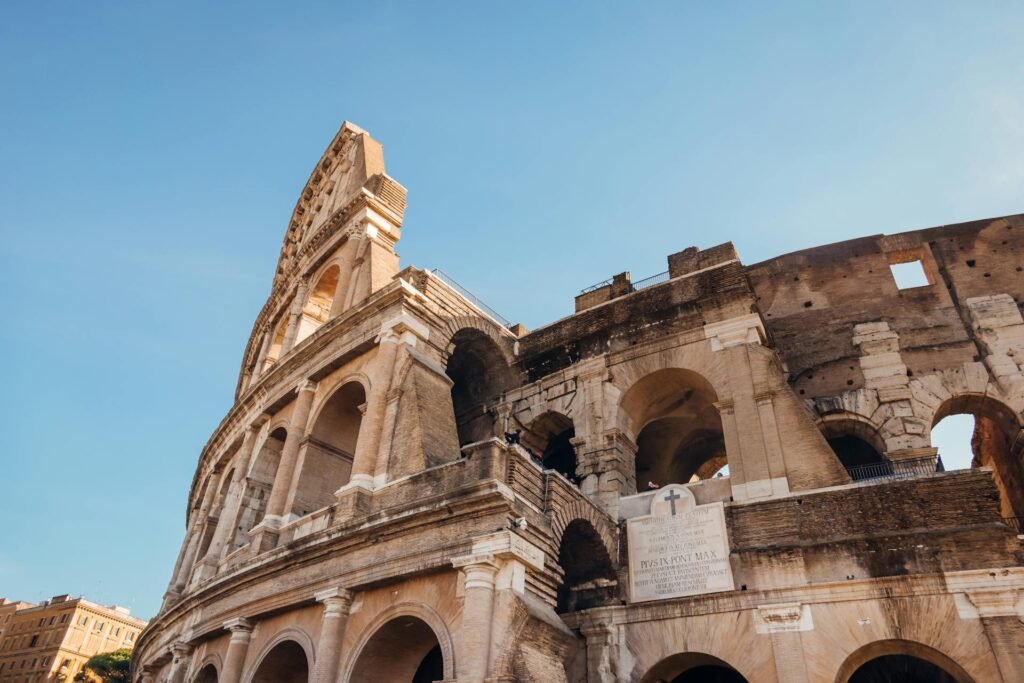
Julius Caesar’s assassination on March 15, 44 BCE, ended the Republic; his adopted son Augustus became the first emperor. Imperial Rome was the largest city in the world for centuries, peaking at over one million residents. The infrastructure was unprecedented for the ancient world — aqueducts running 70+ kilometers from the surrounding hills, fire brigades, public baths, and the network of forums that anchored civic life. The Flavian Dynasty (69–96 CE) gifted the world the Colosseum, completed in 80 CE with capacity for 50,000 spectators. Trajan completed the last of the Imperial Forums. The 3rd century brought the colossal Baths of Caracalla and Diocletian, and the defensive Aurelian Walls (started 271 CE) that still encircle much of the historic core.
Late Antiquity and Medieval Transformation
Rome’s medieval collapse was brutal in scale. The Sack of Rome by Visigoths under Alaric in 410 CE was the first time the city had been taken in 800 years. The Vandal sack of 455 CE followed, and the loss of North African grain supplies after the fall of the Western Empire pushed the population from over a million to perhaps 30,000–50,000 by 550 CE. The medieval city huddled in the bend of the Tiber while the vast areas inside the ancient walls reverted to fields. The rise of papal power transformed Rome into Christianity’s spiritual center; Pope Leo III’s crowning of Charlemagne as Holy Roman Emperor in 800 CE marked a partial political rebirth.
Renaissance Revival and Papal Grandeur
The Renaissance brought Rome back to architectural and artistic ambition. The first stones of the new St. Peter’s Basilica were laid in 1506 (Bramante, Michelangelo, Maderno, Bernini all contributed across 120 years of construction). The 1527 Sack of Rome by Charles V’s mutinous troops temporarily devastated the city, but the post-recovery period produced the Baroque magnificence — Bernini’s piazzas and fountains, Caravaggio’s church paintings, the urban geometry that still defines the historic core.
Modern Capital and Contemporary Challenges
Italian troops took Rome through Porta Pia on September 20, 1870, ending papal temporal power and integrating the city into a unified Italy. Rome became the capital in 1871 and expanded beyond the Aurelian Walls for the first time since antiquity. Mussolini’s regime (1922–1943) left visible architectural marks — the EUR district, the Vittoriano monument’s huge marble bulk, and sweeping boulevards cut through the medieval fabric. Post-WWII Rome experienced the explosive growth of Italy’s economic miracle, hosted the 1960 Summer Olympics, and continues today as a working European capital that also happens to contain one of humanity’s largest concentrations of preserved historical heritage.
Geography, Climate & Best Time to Visit Rome
Rome’s Spectacular Setting
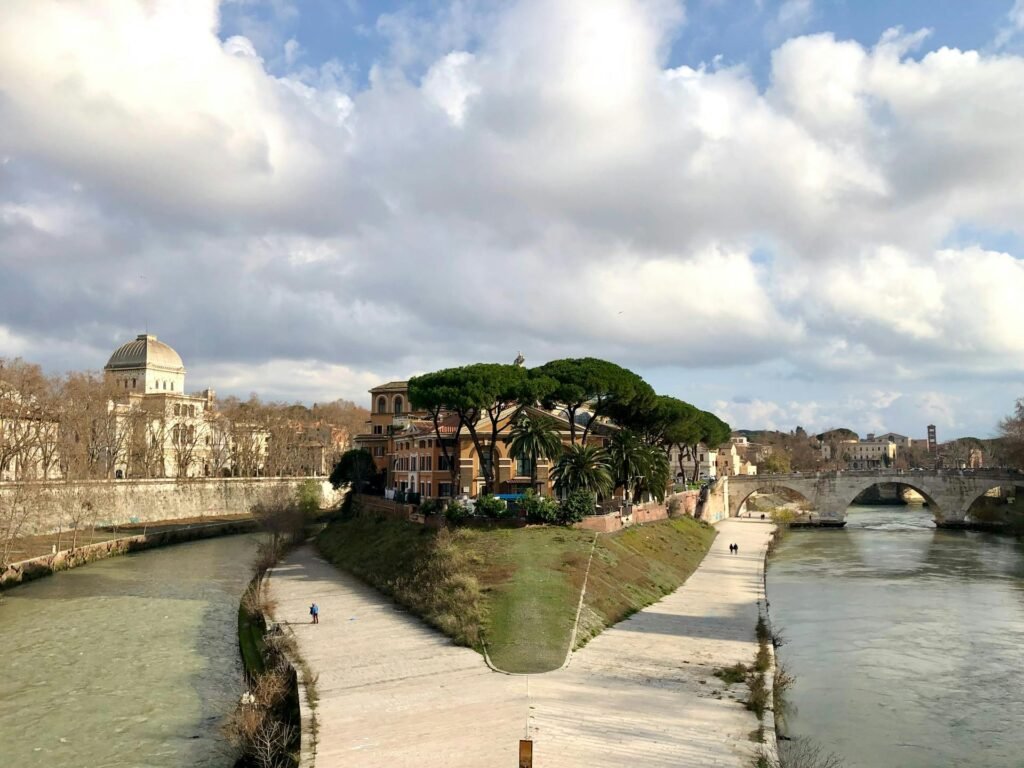
Rome sits along the Tiber River in central Italy, just 25 kilometers from the Tyrrhenian Sea coast. The city is at 37 meters elevation and is embraced by rolling hills — the Apennines to the east, the Sabine Hills to the northeast, and the volcanic Alban Hills to the southeast. The smaller Aniene River joins the Tiber in the northern Parioli district. The famous seven hills remain the historic heart, while modern Rome extends well beyond the ancient Aurelian Walls. The city is encircled by the Grande Raccordo Anulare (GRA) ring road (the A90), about six miles from the center.
Mediterranean Climate Perfection
Rome has a classic Mediterranean climate — hot, dry summers and mild, wet winters. Summer temperatures (June–August) average 27–30°C with abundant sunshine. Winters are mild at 11–13°C with most of the year’s rainfall arriving October through January. The city is genuinely a year-round destination, but the personality of a trip changes dramatically with the season.
| Month | Avg High (°C) | Avg Low (°C) | Rainfall (mm) | Sunshine (hrs/day) |
|---|---|---|---|---|
| January | 11.1 | 4.5 | 76 | 4.3 |
| February | 12.6 | 5.4 | 88 | 4.7 |
| March | 15.2 | 7.2 | 77 | 6.6 |
| April | 18.8 | 9.8 | 72 | 7.0 |
| May | 23.4 | 13.3 | 63 | 8.6 |
| June | 27.6 | 17.2 | 48 | 9.4 |
| July | 30.4 | 19.6 | 14 | 10.8 |
| August | 29.8 | 19.4 | 22 | 9.9 |
| September | 26.3 | 16.9 | 70 | 8.1 |
| October | 21.5 | 12.8 | 128 | 6.4 |
| November | 16.1 | 9.3 | 128 | 4.1 |
| December | 12.6 | 6.4 | 106 | 3.3 |
When to Visit Rome
Spring (April–May) and Fall (September–October) are the sweet spot — mild temperatures (18–26°C), manageable crowds at the major sites, and perfect weather for walking the cobblestoned streets. Summer (June–August) is hot but the long evenings are made for outdoor dining and gelato; the Romans themselves disappear in August (Ferragosto), leaving the city to tourists. Winter (November–March) brings cooler temperatures but the lowest hotel prices and the chance to experience the Colosseum or the Pantheon without queues — and the December Christmas market in Piazza Navona is a tradition worth catching.
Rome’s Districts & Neighborhoods: Where to Stay
Rome is divided into 15 administrative municipi, but the historic 22 rioni (traditional districts) within the Aurelian Walls are what visitors actually navigate. Choosing where to stay shapes the trip’s character — Trastevere is a different city from Parioli or EUR.
Historic Center (Municipio I)
The heart of ancient and papal Rome — Colosseum, Roman Forum, Pantheon, Vatican City all within walking distance. Stay here for the maximum walking-only access to major sites; the trade-off is higher prices and high tourist density. The 22 traditional rioni each have distinct character: Trastevere for the cobblestone evening atmosphere, Monti for the trendy small-restaurant scene, Campo de’ Fiori for the morning market and aperitivo crowds, Centro Storico proper around the Pantheon for the most atmospheric (and expensive) hotels.
Trastevere
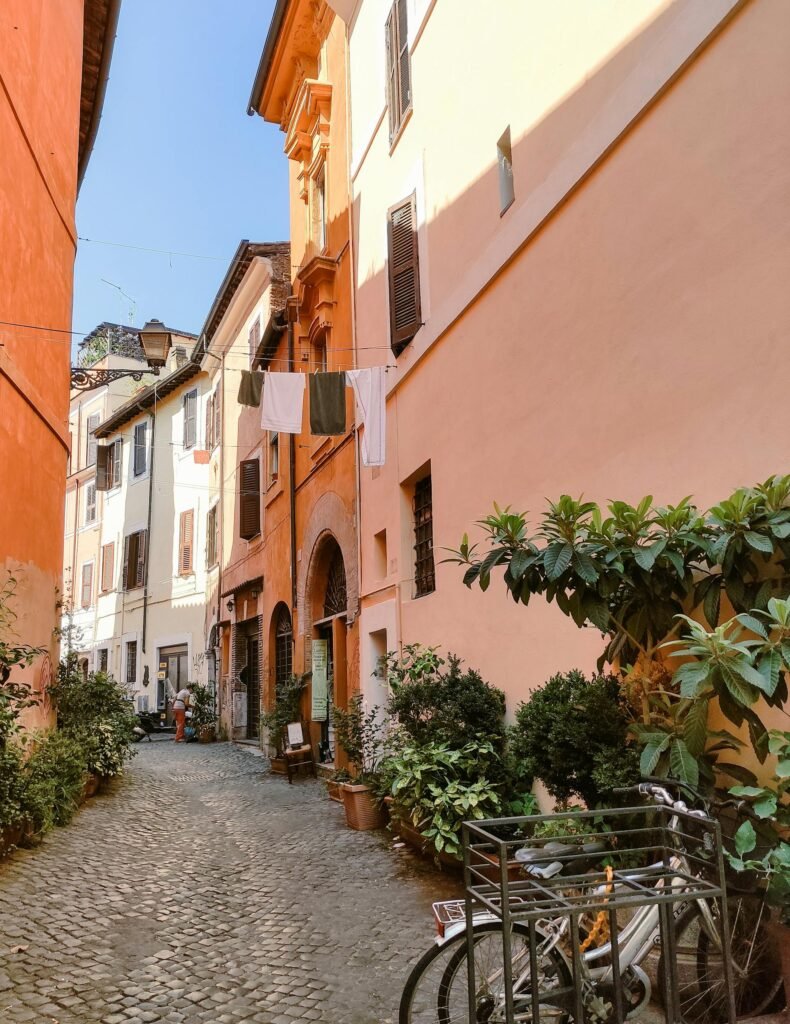
This formerly working-class neighborhood across the Tiber has become Rome’s evening favorite — cobblestone streets, ivy-covered buildings, dozens of trattorias, and authentic Roman nightlife. Excellent restaurants and bars make it perfect for evening exploration, and the location offers easy access to Vatican City via the Ponte Sisto. Slightly less mass-tourist than the Centro Storico, with hotels in restored 16th–18th century buildings.
Parioli & Northern Districts
Upscale residential areas near Villa Borghese — quiet, leafy, embassy-heavy, and elegant. Excellent metro access to the center via the Spagna and Flaminio stops. The area around La Sapienza University (San Lorenzo) provides student-driven energy and some of the best mid-range Roman restaurants the tour groups never reach.
EUR & Southern Rome
The EUR district showcases Mussolini-era Fascist neoclassical architecture (the Palazzo della Civiltà Italiana, the “Square Colosseum,” is the iconic photo) and is now a modern business center. San Giovanni offers proximity to the major basilicas (San Giovanni in Laterano, the pope’s own cathedral) and authentic Roman neighborhood life — and significantly cheaper hotels than the historic center.
Testaccio & Ostiense
Former working-class districts now favorite among locals for the food scene. Testaccio‘s daily market is one of the city’s best, the surrounding restaurants serve some of the most authentic Roman cuisine in town, and the nightclubs are where actual Romans go. Ostiense has emerged as the contemporary-art and street-art district, with Centrale Montemartini (a museum in a converted power station) as the standout cultural attraction.
Top Things to Do in Rome
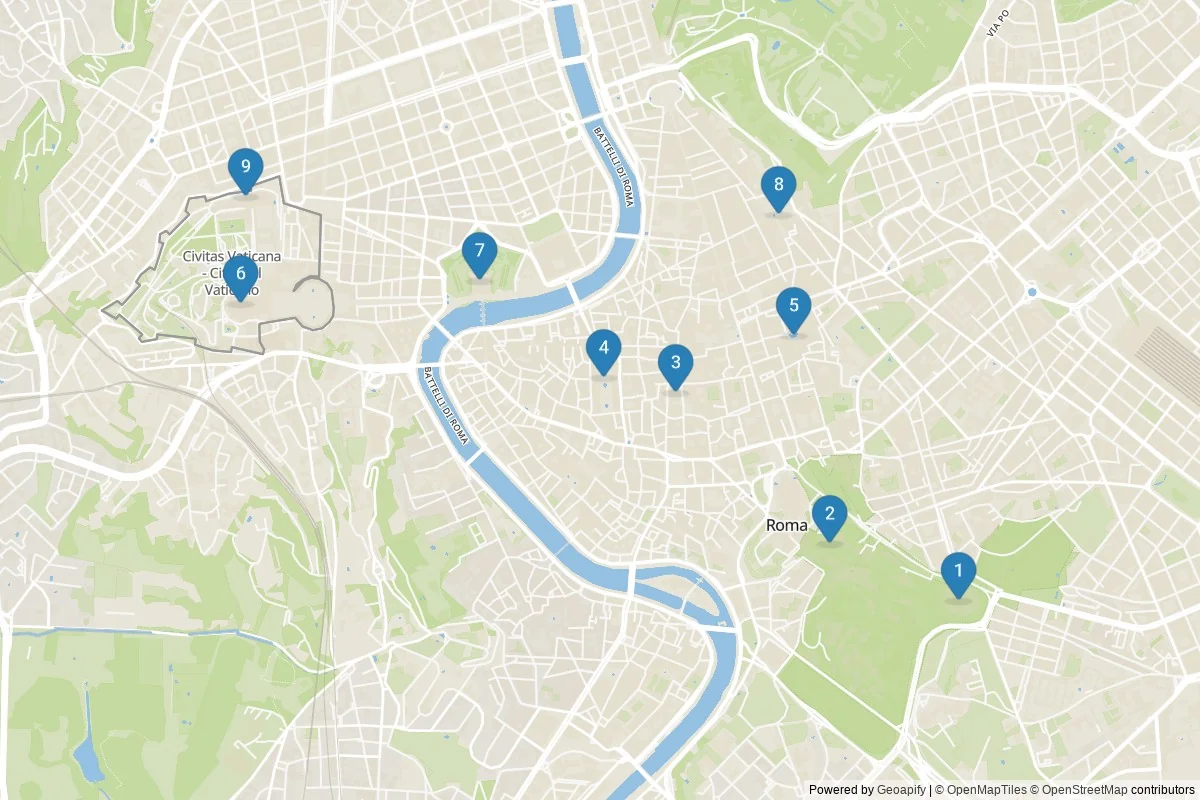
| # | Sight | Cluster | Type | Time | Entry | Best |
|---|---|---|---|---|---|---|
| 1 | Colosseum | Central | Ancient amphitheatre | ~2 hrs | €18 | Morning |
| 2 | Roman Forum & Palatine | Central | Ancient ruins | ~2 hrs | inc. Colosseum | Morning |
| 3 | Pantheon | Central | Ancient temple | ~45 min | €5 | Morning |
| 4 | Piazza Navona | Central | Square | ~30 min | Free | Evening |
| 5 | Trevi Fountain | Central | Fountain | ~30 min | Free | Early morning |
| 6 | Vatican — St Peter’s | Central | Basilica | ~2 hrs | Free | Morning |
| 7 | Castel Sant’Angelo | Central | Castle | ~1.5 hrs | €13 | Sunset |
| 8 | Spanish Steps | Central | Stairs | ~30 min | Free | Afternoon |
| 9 | Vatican Museums & Sistine | Central | Museum | ~3 hrs | €20 | Early morning |
| 🚗 | Day Trip: Tivoli (Villa d’Este) | Day trip | Day trip | ½ day | €13 | Morning |
The Rome checklist is famously long. The trick is sequencing: pair major archaeological sites with adjacent neighborhoods (Colosseum + Roman Forum + Palatine Hill + lunch in Monti is one good morning), reserve timed-entry tickets for everything (the Vatican Museums and Colosseum reward booking weeks ahead), and save evenings for walks across illuminated bridges.
Ancient Roman Landmarks
The Colosseum remains Rome’s most iconic symbol — completed in 80 CE under Emperor Titus, it once hosted gladiatorial contests, naval battle reenactments (the floor flooded), and public spectacles for 50,000 spectators. The combined Colosseum + Roman Forum + Palatine Hill ticket is the standard entry; book the timed slot online weeks ahead. The adjacent Roman Forum served as the empire’s political, commercial, and judicial center for centuries; the Palatine Hill showcases imperial palace ruins with panoramic views.
The Pantheon, built around 126 CE under Hadrian, astounds visitors with its perfectly preserved dome and 9-meter oculus — the world’s largest unreinforced concrete dome, still. Free admission until 2023, now ticketed (€5) but still mandatory. The interior houses the tombs of Italian kings Vittorio Emanuele II and Umberto I, plus the artist Raphael.
Vatican City Wonders
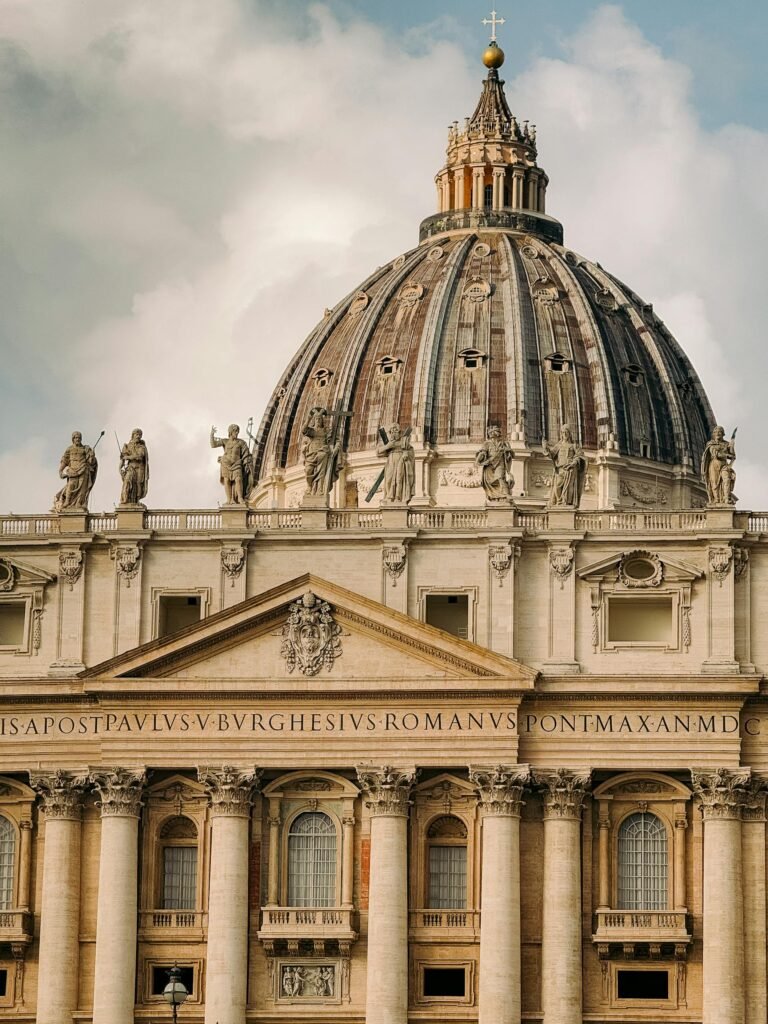
St. Peter’s Basilica dominates the Roman skyline with Michelangelo’s magnificent dome (climbing it via the 551 steps gives the best panoramic view in the city). The basilica itself is free to enter, but the security queue can run 60–90 minutes during peak season — early morning is the trick. The Vatican Museums house one of the world’s greatest art collections, culminating in the Sistine Chapel with Michelangelo’s ceiling frescoes (1508–1512) and “The Last Judgment” (1536–1541). Book the timed-entry ticket online; the Friday-evening slots are the least crowded. Castel Sant’Angelo, originally Hadrian’s Mausoleum (139 CE), now houses fascinating papal apartments, prison cells, and offers spectacular Tiber views.
Baroque Masterpieces and Fountains
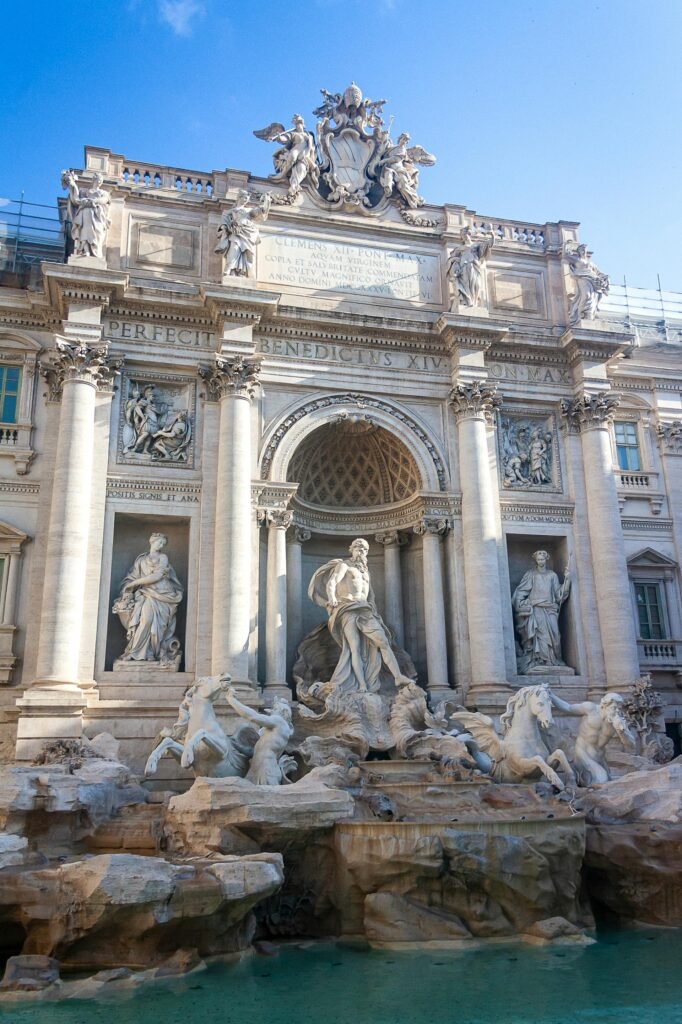
The Trevi Fountain, completed in 1762, is Rome’s most famous fountain — tradition demands tossing a coin over your shoulder to ensure your return. The fountain is best visited at dawn or after midnight, when the daytime crowd thins. Piazza Navona showcases Bernini’s Fountain of the Four Rivers (1651) alongside two more fountains, street artists, and outdoor cafés. Climb the Spanish Steps (a 1725 Baroque staircase) to the Trinità dei Monti church for sunset views, then explore the luxury shopping district below along Via dei Condotti.
Churches and Basilicas
Beyond St. Peter’s, Rome’s four papal basilicas include San Giovanni in Laterano (the Pope’s actual cathedral, not St. Peter’s), Santa Maria Maggiore with its 5th-century golden mosaics, and San Paolo fuori le Mura, rebuilt after the 1823 fire. San Pietro in Vincoli houses Michelangelo’s powerful Moses sculpture (originally part of Pope Julius II’s tomb). Hidden gems worth seeking out: Santa Prassede for its Byzantine mosaics, San Clemente for the three-level archaeology underneath (12th-century church above a 4th-century church above a 1st-century Roman house with an active Mithraic temple).
Museums and Galleries
The Capitoline Museums, the world’s oldest public museums (1734), display the bronze Capitoline Wolf, the original Marcus Aurelius equestrian statue, and Rome’s finest collection of ancient Roman portrait busts. Palazzo Altemps and Palazzo Massimo (both branches of the Museo Nazionale Romano) showcase exceptional Roman frescoes — the gardens of Livia frescoes at Palazzo Massimo are some of the most beautifully preserved in existence. For contemporary art, the striking MAXXI Museum by Zaha Hadid (opened 2010) presents cutting-edge exhibitions in an architecturally significant building.
Parks and Green Spaces
Villa Borghese offers lakes, gardens, museums, and the famous Galleria Borghese with Bernini sculptures (his “Apollo and Daphne” and “Rape of Proserpina” are the headline pieces) and major Caravaggio paintings — book ahead, capacity is strictly limited. Villa Doria Pamphilj provides Rome’s largest park for picnics and jogging. The Parco degli Acquedotti south of the city walls lets you walk among seven ancient Roman aqueducts. The Giardino degli Aranci on the Aventine Hill offers one of the most romantic sunset views over the city.
How to Get to Rome
By Air
Leonardo da Vinci–Fiumicino Airport (FCO), 30 km southwest of Rome, is the main international gateway and Italy’s busiest. The Leonardo Express direct train connects to Termini Station in 32 minutes (€14). Regional FL1 trains and the SIT/TAM/Terravision express buses provide cheaper alternatives at 45–60 minutes. Ciampino Airport (CIA), 15 km southeast, primarily serves budget airlines (Ryanair, Wizz Air); shuttle buses connect to Termini in about 45 minutes.
By Train
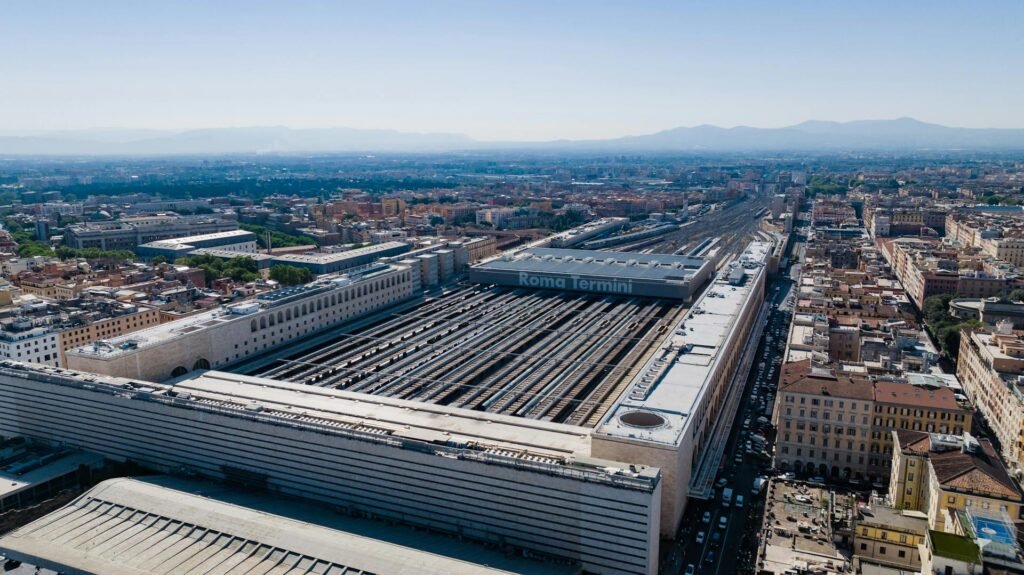
Roma Termini is Italy’s busiest railway station, handling about 400,000 passengers daily and connecting Rome to most major European cities via Trenitalia and Italo high-speed services. Roma Tiburtina is the secondary high-speed hub for routes to Naples (1 hour), Florence (1.5 hours), Milan (3 hours) and beyond. International overnight services run to Vienna, Munich, and Paris.
By Road
The Grande Raccordo Anulare (GRA) ring road encircles the city, connecting to major Italian autostrade in all directions. Driving in central Rome is its own challenge — most of the historic center is a ZTL (Zona a Traffico Limitato), with cameras enforcing entry restrictions, and parking is genuinely impossible. Visitors with cars are best served leaving them at peripheral garages and using public transport into the center.
Getting Around Rome
Metro System
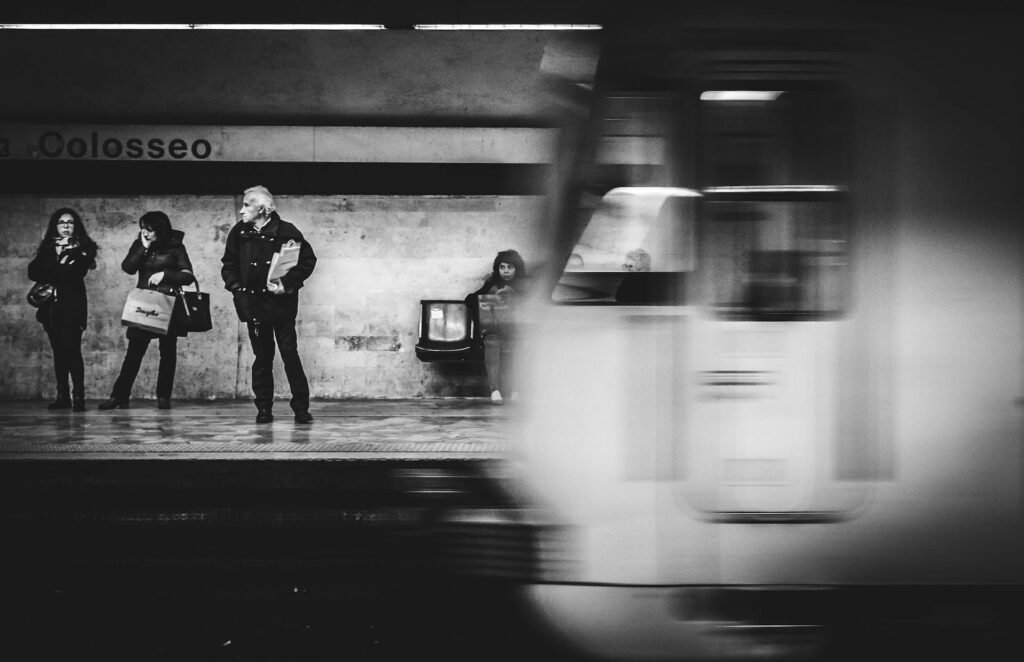
Rome’s metro is small by European-capital standards — three lines compared to Paris’s sixteen. The reason is archaeology: every metro extension has to navigate centuries of buried ruins, slowing construction to a crawl. Line A (orange) connects Vatican City via Termini to the southeastern suburbs; Line B (blue) runs from EUR through Termini to the Colosseum; Line C (green) with driverless trains expanded into the center in 2025 with the new San Giovanni–Colosseo segment. While limited, the metro efficiently connects most major tourist areas.
Buses and Trams
ATAC operates over 350 bus routes with 8,000+ stops citywide. The historic tram network, dating to 1877, covers about 51 km on six lines — the slow tram 8 from Trastevere into the center is itself a scenic experience. Electric trolleybuses complement the system on major routes. Bus and tram tickets are integrated with the metro at €1.50 per single trip.
Taxis and Ride-sharing
Official Rome taxis are white with the city seal and a roof “TAXI” sign. Use the meter (the tariff structure is regulated; airport runs are flat-fare €50 to/from FCO from anywhere inside the GRA). With only 21 taxis per 10,000 residents, expect 10–20 minute waits during peak times. Uber operates in Rome but only the premium “Uber Black” tier is available; FreeNow (the European Hailo successor) hails licensed taxis through an app and is the more practical option for visitors.
Walking and Cycling
Rome’s compact historic center rewards walking — most major sites within the Aurelian Walls are reachable on foot from the Centro Storico. Bring proper shoes; cobblestones and flat soles don’t mix. Bike-sharing programs exist but Roman traffic and uneven cobblestones make cycling a confident-rider activity. The Tiber riverside path (the lungotevere) is the safer cycling alternative.
Food & Drink in Rome
Roman Pasta Classics
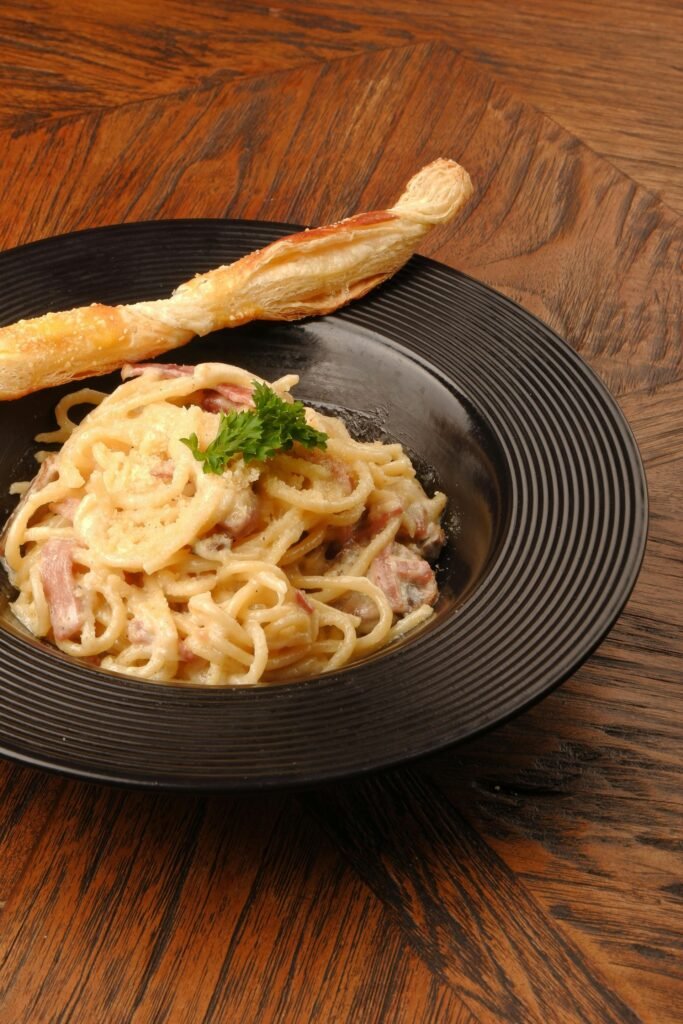
Rome’s pasta tradition centers on four iconic dishes, all built from a small palette of ingredients: pecorino cheese, guanciale (cured pork jowl), eggs, black pepper, and pasta water. Cacio e Pepe combines pecorino and black pepper emulsified with starchy pasta water — deceptively simple, technically demanding. Carbonara features eggs, pecorino, guanciale, and pepper; never cream, and “real” Roman places will refuse to add it. Amatriciana adds tomatoes to the guanciale-pecorino base. Gricia omits the tomato for the pure pork-and-cheese version. The four together are the Roman culinary canon.
Roman Specialties
Supplì are crispy fried risotto balls filled with mozzarella — perfect street food for a Trastevere walk. Coda alla Vaccinara showcases Roman nose-to-tail cooking with tender oxtail braised in wine, vegetables, and chocolate (yes, chocolate). The Quinto Quarto tradition of Testaccio butchers — the “fifth quarter” of the animal, including offal — has shaped Roman cuisine since the 1900s. Jewish-Roman cuisine contributes Carciofi alla Giudia (deep-fried whole artichokes — try these in the Jewish Ghetto neighborhood near Portico d’Ottavia) and Carciofi alla Romana (braised with garlic and mint). Baccalà (fried salt-cod fillets) remains a popular street snack at Largo dei Librari and similar fry shops.
Roman Pizza
Roman pizza differs sharply from Neapolitan style — thin, crispy crust, baked at higher temperatures for less time. Pizza al Taglio (pizza by the slice, sold by weight from rectangular trays) is the Roman fast-food default; Bonci Pizzarium near the Vatican and Antico Forno Roscioli near Campo de’ Fiori are the destination addresses. Pizza Bianca features olive oil and salt; Pizza Rossa adds tomato sauce. Both are sold by weight at bakeries throughout the city.
Wine and Aperitivo
The Lazio region produces excellent white wines, particularly Frascati and Marino, both fresh and minerally — perfect with Roman cuisine. Evening aperitivo culture thrives in neighborhoods like Trastevere, Campo de’ Fiori, and Monti, where locals gather around 6–8 PM for drinks and small plates. The Roman aperitivo is more subdued than Milan’s all-you-can-eat buffets — typically a small plate of olives, chips, and bruschetta with a Negroni or Aperol Spritz.
Culture & Arts in Rome
Theater and Opera
Rome has over 150 active theaters, led by the prestigious Teatro dell’Opera di Roma on Via Firenze. Summer performances move to the spectacular Baths of Caracalla, where ancient brick ruins provide an unforgettable backdrop for opera and ballet under the stars (the season runs roughly June through August). The Auditorium Parco della Musica by Renzo Piano hosts world-class concerts in three distinctive concert halls, while historic venues like Teatro Argentina (where Caesar was assassinated nearby in 44 BCE) continue centuries-old theatrical traditions.
Music Heritage
Rome has shaped Western music for centuries, from Renaissance master Palestrina (whose polyphonic compositions defined Catholic church music) through Baroque composers Scarlatti and Corelli, to the Roman folk-song tradition that still echoes in Trastevere on a quiet evening. The city’s musical legacy continues through conservatories, the venerable Accademia Nazionale di Santa Cecilia (founded 1585), and a fertile contemporary music scene around the Auditorium.
Contemporary Art Scene
The MAXXI Museum by Zaha Hadid (opened 2010) showcases 21st-century art and architecture in a stunning concrete building in the Flaminio district. The MAXXI’s permanent collection and the consistently strong rotating exhibitions make it the city’s most important contemporary venue. Smaller galleries throughout Rome — particularly clustered along Via Margutta near the Spanish Steps and around the MACRO museum in Via Nizza — display work by emerging and established artists. Street art has flourished in Ostiense and San Lorenzo over the past decade, with annual festivals and large-scale murals reshaping previously industrial neighborhoods.
Rome by District: The 15 Municipi
Rome is divided into 15 districts. The map below shows their official OSM boundaries, colour-coded to match the table — a quick way to orient yourself before zooming in on individual sights.
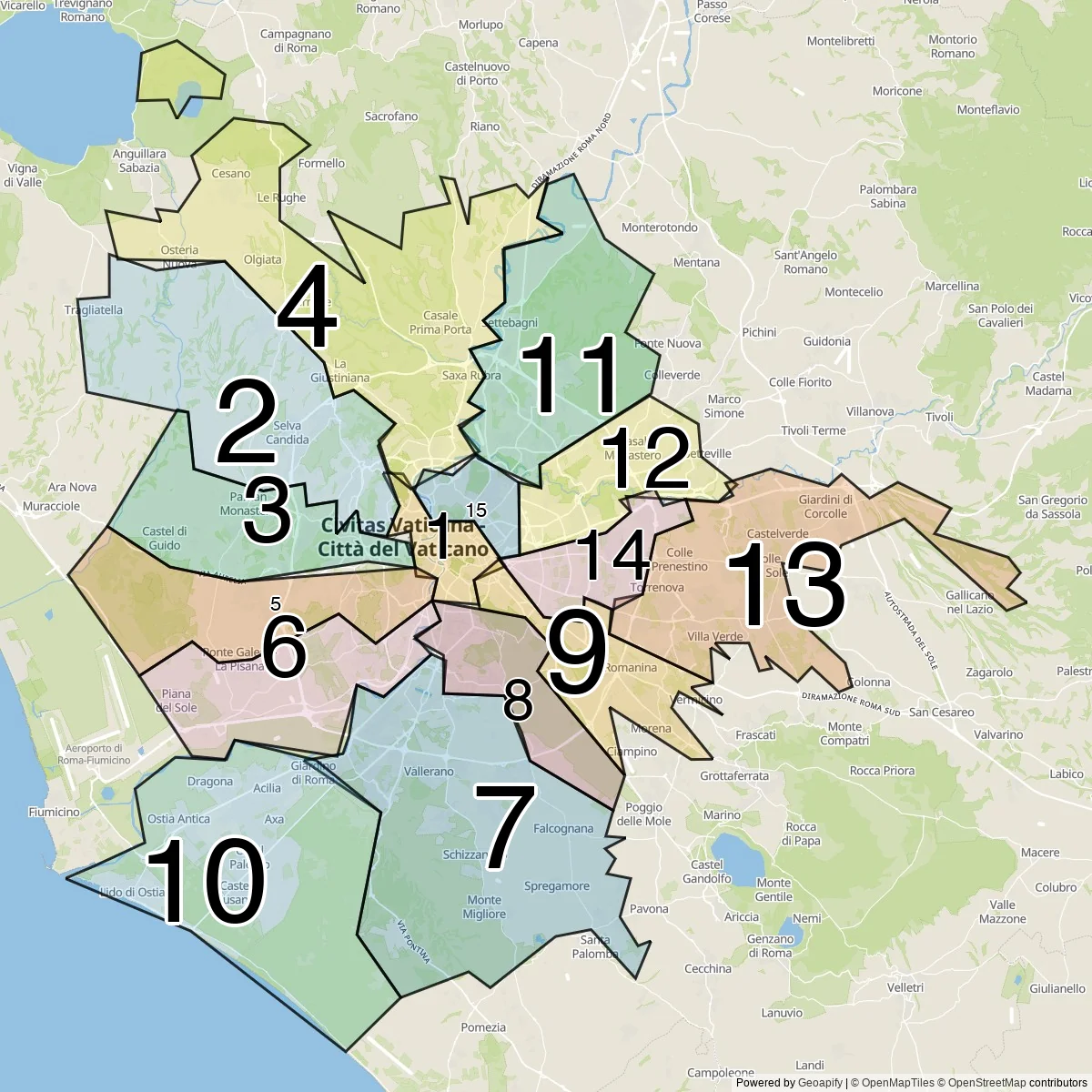
| # | Municipi |
|---|---|
| 1 | Municipio Roma I |
| 2 | Municipio Roma XIV |
| 3 | Municipio Roma XIII |
| 4 | Municipio Roma XV |
| 5 | Municipio Roma XII |
| 6 | Municipio Roma XI |
| 7 | Municipio Roma IX |
| 8 | Municipio Roma VIII |
| 9 | Municipio Roma VII |
| 10 | Municipio Roma X |
| 11 | Municipio Roma III |
| 12 | Municipio Roma IV |
| 13 | Municipio Roma VI |
| 14 | Municipio Roma V |
| 15 | Municipio Roma II |
Frequently Asked Questions About Visiting Rome
Do I need a visa to visit Rome?
For most travelers, Rome falls under Schengen Area visa rules. EU/EEA/Swiss citizens enter freely with a national ID card. Citizens of the US, UK, Canada, Australia, Japan, and roughly 60 other countries enter visa-free for stays up to 90 days within any 180-day period — but starting in 2026 those visitors will need to register with the new ETIAS travel authorization system (about €7, valid 3 years). All other nationalities need a Schengen visa applied for at the Italian consulate before travel; the official Italian government portal is vistoperitalia.esteri.it. Check current requirements before booking.
Is Rome safe for tourists?
Rome is generally safe — violent crime against tourists is rare. The everyday risks are pickpocketing and scams in tourist-heavy areas. The US State Department rates Italy at “exercise increased caution” primarily for the standard Western European terrorism baseline. Pickpockets work the metro especially around Termini, the Colosseum queues, the Vatican entrance lines, and crowded buses (the 64 from Termini to St. Peter’s is notorious). Watch for the rose-vendor and bracelet-tying scams near major fountains, the “free water” scam at the Trevi Fountain, and gypsy distraction-thefts on the metro. Use Uber or licensed taxis after dark, and you’ll avoid most issues.
How many days do I need in Rome?
Four full days handles the headline sights without rushing; five to seven is comfortable. A solid 4-day plan: Day 1 Colosseum + Roman Forum + Palatine Hill, evening dinner in Monti; Day 2 Vatican City (Vatican Museums + St. Peter’s) — book early-morning entry; Day 3 the Pantheon + Piazza Navona + Trevi Fountain + Spanish Steps walking circuit, evening in Trastevere; Day 4 Galleria Borghese (book ahead — strict capacity) + Villa Borghese gardens + the Capitoline Museums. Add a 5th-7th day for Castel Sant’Angelo, the Catacombs, EUR district, Ostia Antica day trip, or simply slowing down. Rome rewards an unhurried pace.
What’s the best area to stay in Rome?
Three solid options. Centro Storico (around the Pantheon and Piazza Navona) is the all-rounder — walking distance to most major sights, charming small streets, atmospheric small hotels in restored historic buildings; pricey. Trastevere trades the daytime tourist crush for the evening’s best food and bar scene — across the Tiber from the Centro Storico but still walkable to Vatican City. Monti (just north of the Colosseum) is the trendy small-restaurant district, well-connected by metro, with hotels at slightly lower prices than the Centro Storico. Skip the area immediately around Termini as a base unless price is your top priority — it’s transit-convenient but has the city’s sketchiest streets after dark.
How much does it cost to visit the Colosseum?
The combined ticket (Colosseum + Roman Forum + Palatine Hill) is €18 for adults, valid for a single entry to each site within 24 hours. Booking online via the official parcocolosseo.it portal is essentially mandatory — walk-up tickets sell out by mid-morning during peak season. The “Full Experience” ticket (€24) adds the Arena floor and Sotterranei (the underground tunnels). The Vatican Museums separately charge €20 (advance-booking via the official Vatican portal is the only sensible approach — third-party resellers add hefty markup). The Pantheon, free until 2023, now charges €5. The Trevi Fountain remains free (and always will be). Major basilicas — St. Peter’s, Santa Maria Maggiore, San Giovanni in Laterano — are free to enter.
Should I drink the tap water in Rome?
Yes, enthusiastically. Rome’s tap water is among the best in any major European capital — sourced from springs in the surrounding hills, treated minimally, tested constantly. The city has over 2,500 free public drinking fountains called nasoni (Italian for “big noses,” after their distinctive shape) — block the lower spout with your finger and water arches up from a hole on top, designed for drinking. The Acea ATO 2 water authority publishes quality reports continuously. Restaurants will serve free tap water if you ask for acqua del rubinetto — though the cultural default is bottled mineral water. Bringing a refillable bottle saves money and plastic.
What’s the dress code in Rome?
Looser than Italian-fashion reputation suggests, but stricter at religious sites. For sightseeing: comfortable walking shoes (the cobblestones are brutal on flat soles), normal casual clothing. For churches, especially the Vatican: shoulders and knees must be covered for both men and women — yes, this is enforced at St. Peter’s Basilica security. Bring a light scarf or shawl in summer. For restaurants: smart-casual is fine for most places; jacket required only at the very top establishments. For nightclubs: door selection happens at upscale venues — leave the sneakers and shorts. Rome is a working capital where actual Italians live; you’ll see plenty of well-dressed locals, but tourists are not expected to match the standard.
Is tipping expected in Rome?
Less than in the US, more than the “service compris” Italian myth suggests. Service is officially included in restaurant prices in Italy, and you’ll often see a small coperto (cover charge, €1–3 per person) on the bill — that’s not a tip, it’s a flat seating fee. Restaurants: leave 5–10% in cash for good service if no service charge is added, or simply round up the bill. Cafés: leave the small change at the bar (note: standing at the bar is significantly cheaper than table service in any Roman café — Italians always do this for morning espresso). Taxis: round up to the nearest euro. Hotel porters: €1–2 per bag. Tour guides: €5–10 for a half-day group tour; more for private guides. Don’t tip on the percentage scale Americans use back home — it’s seen as flashy, not generous.
Sports in Rome
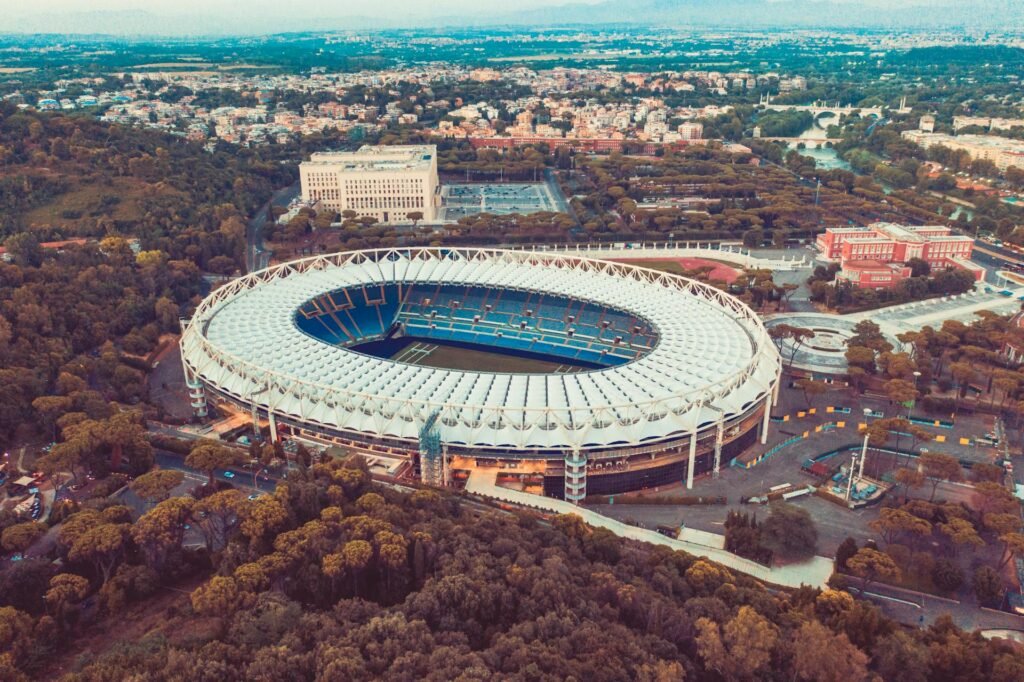
Football dominates Roman sports culture. Fierce rivals AS Roma and SS Lazio share the 73,000-seat Stadio Olimpico; the twice-yearly Derby della Capitale is one of European football’s most charged matches. AS Roma has won three Serie A titles and the 2022 UEFA Conference League under José Mourinho; Lazio holds two league championships and several Coppa Italia trophies. The Stadio Olimpico also hosts Italy’s rugby Six Nations matches and serves as the finish line for the annual Rome Marathon, one of Europe’s most scenic races (the route passes the Colosseum, the Vatican, and the Tiber bridges). Tennis fans visit the Italian Open at the Foro Italico each May, one of the ATP/WTA calendar’s marquee European clay-court events.
Religion & Spirituality in Rome
Rome is the spiritual capital of the global Catholic Church, with over 900 churches spanning nearly two millennia of Christian architecture. Roughly 82% of Romans identify as Catholic, but the city embraces religious diversity with significant Orthodox Christian (~114,000), Muslim (~101,000), and Jewish (~20,000) communities. The historic Jewish Ghetto, centered around the magnificent Tempio Maggiore synagogue (1904), represents Europe’s oldest continuously inhabited Jewish community outside Israel — Roman Jews have lived here since the 2nd century BCE. The Mosque of Rome in Parioli, completed in 1995 and designed by Paolo Portoghesi, is one of Europe’s largest and serves as a symbol of interfaith dialogue. Pilgrims visit Rome’s four papal basilicas and countless other sacred sites; Wednesday papal audiences in St. Peter’s Square are open to anyone with a (free) ticket.
Rome rewards visitors who give it more than the standard checklist. The headline sights — Colosseum, Vatican, Pantheon, Trevi — deserve every minute of their queue, but the deeper rewards are unplanned: a small piazza with no name on the map, a trattoria where the carbonara recipe hasn’t changed since 1962, a basilica with a 5th-century mosaic and exactly two other visitors. The Eternal City’s central trick is that it’s still, against all odds, a working modern capital — which means every layer of its three-thousand-year history is in continuous use, not preserved behind glass.
AFRIKA
Cairo Hurghada Johannesburg Marrakech
ASIA
Abu Dhabi Agra Antalya Bangkok Batam Beijing Bengaluru Cebu City Chiang Mai Chiba Chennai Da Nang Dammam Delhi Denpasar Dubai Fukuoka Guangzhou Guilin Ha Long Hanoi Ho Chi Minh City Jakarta Jaipur Johor Bahru Kolkata Krabi Kuala Lumpur Kyoto Macau Mecca Medina Mugla Mumbai Osaka Pattaya Penang Phuket Riyadh Seoul Shanghai Shenzhen Singapore Taipei Tokyo Zhuhai
EUROPE
Amsterdam Athens Barcelona Berlin Brussels Budapest Copenhagen Dublin Florence Frankfurt am Main Heraklion Krakow Lisbon London Madrid Milan Munich Nice Paris Porto Prague Rhodes Rome Stockholm Venice Vienna Warsaw
NORTH AMERICA
Cancun Las Vegas Los Angeles Miami New York City Orlando San Francisco Toronto Vancouver
SOUTH AMERICA
Buenos Aires Lima Rio De Janeiro
OCEANIA
Auckland Honolulu Melbourne Sydney