Photo credit: cskkkk, Pixabay
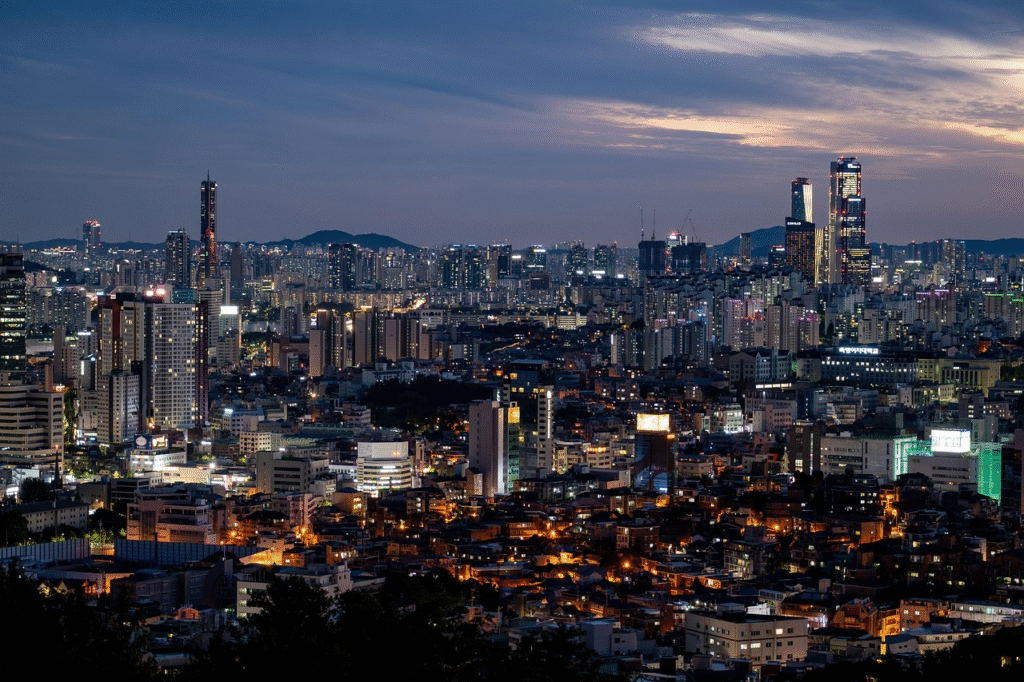
Seoul, South Korea’s electrifying capital, seamlessly blends 600-year-old palaces with glowing K-pop billboards and serene Buddhist temples with bustling street food markets. This dynamic metropolis of nearly 10 million residents serves as the nation’s political, financial, cultural, and educational hub, welcoming over 9.5 million international visitors annually. From ancient Joseon Dynasty architecture to cutting-edge technology districts, Seoul offers an unparalleled urban experience where tradition and innovation coexist in perfect harmony.
Seoul at a Glance: Essential Facts for Travelers
| Location | Northwest South Korea, Han River basin |
|---|---|
| Coordinates | 37°34′N, 126°59′E |
| Population | 9.8 million (city), 25.4 million (metro area) |
| Area | 605 km² (234 sq mi) |
| Elevation | 87 meters (285 ft) above sea level |
| Time Zone | Korea Standard Time (KST, UTC+9) |
| Calling Code | +82-2 |
| Postal Codes | 01000-08999 |
| Districts | 25 autonomous districts (Gu) |
| Known For | K-pop, Korean BBQ, palaces, technology, Hallyu wave |
| Current Mayor | Oh Se-hoon (since April 2021) |
| Official Website | seoul.go.kr |
Upcoming Events in Seoul
| Date | Title | Details |
|---|---|---|
| 2026-09-15 to 2026-11-29 | Gone Tomorrow – 10th Anniversary Production | Marking its tenth anniversary, the hit Korean musical Gone Tomorrow returns for an extended run at the Hongik University Daehangno Art Center Grand Theater from 15 September to 29 November. Set in 1884 Joseon, it follows reformist Kim Ok-gyun and the assassin sent to kill him, whose clashing visions of Korea’s future drive the drama, with six actors rotating the lead role across the run. Performances run Tuesday to Sunday and last 150 minutes including an interval. Tickets cost 60,000 to 130,000 won via NOL Interpark, recommended for ages 8 and up. [Source] |
| 2026-09-24 to 2026-09-26 | Chuseok Holiday at Seoul’s Royal Palaces | Chuseok, Korea’s autumn harvest thanksgiving, falls in late September in 2026 and is one of the country’s biggest holidays. During the Chuseok period, Seoul’s grand royal palaces, including Gyeongbokgung and Changdeokgung, traditionally open their gates free of charge and stage special cultural programmes such as folk games, performances and hanbok experiences. It is a wonderful, budget-friendly time for visitors to explore the city’s heritage, though many shops and restaurants close as residents travel to their hometowns. Expect a quieter Seoul with a festive, traditional atmosphere at its historic sites. [Source] |
| 2026-10-02 to 2026-10-25 | Seoul Performing Arts Festival (SPAF) 2026 | The Seoul Performing Arts Festival (SPAF) is the capital’s leading international festival of contemporary theatre, dance and interdisciplinary performance, staged across October at venues including the Daehangno arts district and major city theatres. It presents cutting-edge work by Korean and overseas companies, from experimental drama to boundary-crossing dance and multimedia pieces. A key date for performing-arts enthusiasts, the festival spotlights new directions in live performance. Ticket prices vary by production, with some talks and fringe events free. The programme is published in advance on the festival’s website. [Source] |
| 2026-10-03 | Seoul International Fireworks Festival | The Seoul International Fireworks Festival lights up the night sky over the Han River each autumn, drawing enormous crowds to Yeouido Hangang Park and the surrounding riverbanks. Teams from several countries compete with dazzling, choreographed pyrotechnic displays set to music, in one of the city’s most popular free public events. Spectators stake out spots along the river hours in advance to secure the best views. Held on a single evening in early October, it is a spectacular, family-friendly night out, though visitors should expect very large crowds and busy public transport. [Source] |
| 2026-10-06 | Smart Life Week at COEX | Seoul’s smart-city technology showcase opens at COEX on 6 October, taking over two exhibition halls with the latest in AI services, mobility, robotics and urban innovation. Smart Life Week gathers companies, startups and city delegations to demonstrate how technology is reshaping daily life in the Korean capital, with hands-on experience zones aimed at ordinary visitors as much as industry insiders. Alongside it, AI FESTA runs in a neighbouring hall the same week, doubling the appeal for tech-curious travellers. Admission arrangements and registration details are published by the organisers. [Source] |
| 2026-10-13 | KES 2026 – Korea Electronics Show | The Korea Electronics Show, the country’s flagship electronics exhibition, opens at COEX on 13 October, filling the main halls with the newest displays, chips, AI devices, robots and mobility technology from major Korean electronics makers alongside hundreds of smaller innovators. KES is where Korea’s consumer tech industry previews what is coming next, and the show traditionally features experience zones that make it rewarding for general visitors as well as trade buyers. It occupies Halls A and B, with SEDEX, the semiconductor exhibition, running nearby the same week. Entry requires registration, with fees varying. [Source] |
City News in Seoul – last 14 days
| Date | Category | Headline | Details |
|---|---|---|---|
| 2026-09-14 | Public transport | Power outage halts Seoul metro Line 2 trains for 20 minutes | A power outage brought trains on Seoul’s busiest subway loop, Line 2, to a standstill for around 20 minutes, according to Chosunbiz. The stoppage left passengers waiting in stationary trains and on crowded platforms during the interruption before power was restored and services gradually resumed. Line 2, which circles the city centre and links major hubs including City Hall, Gangnam and Hongdae, carries millions of passengers daily, so even short outages ripple quickly across the network and into connecting lines. [Source] |
| 2026-09-14 | Business | KOSPI plunges more than 3 percent to the 6,600 range | Seoul stocks tumbled on Monday, with the benchmark KOSPI falling 225.54 points, or 3.26 percent, to close at 6,684.37 amid geopolitical tensions in the Middle East and after prominent calls emerged for the pace of AI development to be slowed. The tech-heavy KOSDAQ lost 1.69 percent to close at 806.79, and the won retreated against the US dollar ahead of the Federal Reserve’s rate decision. The sell-off hit the market’s heavyweight technology names particularly hard as investors moved to reduce risk. [Source] |
| 2026-09-14 | Local affairs | Seoul hosts first Korea-Central Asia summit week, starting with Uzbekistan | A series of diplomatic events focused on Central Asia has opened in Seoul, beginning with a summit between President Lee Jae Myung and the leader of Uzbekistan. The meeting was the first in a sequence of bilateral talks with all five visiting Central Asian heads of state, ahead of a new multilateral format bringing the region together with South Korea. Lee said he hopes to deepen the strategic partnership with Uzbekistan, with cooperation on trade, minerals and investment on the agenda as the capital plays host. [Source] |
| 2026-09-14 | Public safety | President vows firm response to crimes against women on Sindang Station anniversary | Marking the fourth anniversary of the Sindang Station stalking murder, President Lee Jae Myung pledged an unwavering response to crimes targeting women and young people. In a post on social media, he promised that protection against such crimes would not weaken while the government separates the roles of investigators and prosecutors as part of its prosecution reform. The killing of a young subway worker by a stalker at the central Seoul station in 2022 shocked the country and continues to shape debate about women’s safety. [Source] |
| 2026-09-14 | Education | Relief process opens for applicants hit by admissions system error | The education ministry and the Korean Council for University Education have begun a relief process for college applicants who could not complete their early admission applications because of a system error on the day of the deadline. Affected students are being given a path to submit or finalise their applications despite the technical failure, which struck at the worst possible moment of the university entrance calendar. Officials said the corrective measures are intended to ensure that no applicant loses an admission opportunity because of the malfunction. [Source] |
| 2026-09-14 | Culture | Chuseok flavours bring Seoul’s seniors and foreign students to one table | With the Chuseok holiday approaching, a Seoul programme brought senior citizens and foreign students together to share the tastes and traditions of the Korean harvest festival, The Korea Herald reports. Elderly residents and international students prepared and enjoyed holiday food side by side, exchanging stories across generations and cultures. The gathering gave students far from home a first taste of Korea’s biggest family holiday while offering seniors welcome company, a small antidote to the loneliness that holidays can bring for those without family nearby. [Source] |
| 2026-09-14 | Culture | Regional flavours from Uiseong garlic to Yeosu kimchi arrive for Chuseok | Specialities from across the country are converging on Seoul for Chuseok, with regional producers bringing everything from Uiseong garlic to Yeosu kimchi to holiday shoppers in the capital, according to The Korea Herald. The seasonal showcase lets Seoulites stock up on provincial delicacies for festive tables and gift sets without leaving the city, while giving regional farmers and makers valuable exposure in their biggest sales window of the year. Gift-giving of quality food products remains one of the holiday’s central traditions. [Source] |
| 2026-09-14 | Local affairs | Seoul metro worker files defamation complaint against American influencer | A Seoul metro employee has filed a defamation complaint against an American influencer, The Korea Herald reports, escalating a dispute that grew out of the online personality’s conduct on the capital’s subway system into a formal legal case. The move reflects a harder line that Korean workers and authorities have been taking against provocative content filmed in public spaces, where streamers chasing views have repeatedly clashed with staff and passengers. The complaint puts the case in the hands of investigators. [Source] |
| 2026-09-14 | Culture | Lee Chang-dong’s Possible Love wins Silver Lion at Venice | Director Lee Chang-dong has won the Silver Lion grand jury prize, the second-highest honour at the Venice International Film Festival, for his film Possible Love. The acclaimed filmmaker collected the trophy at the closing ceremony of the festival’s 83rd edition, adding another major international award to Korean cinema’s growing haul. The recognition for one of the country’s most revered auteurs was celebrated warmly at home, where his patient, humanist dramas have long been a point of cultural pride. [Source] |
| 2026-09-14 | Sports | Korea’s U-18 baseball team beats Japan to win Asian title | South Korea’s under-18 national baseball team defeated Japan 2-0 at the Taipei Dome to win the Asian Baseball Championship for the first time in eight years. Ace pitcher Ha Hyun-seung led the way with a seven-inning shutout, silencing Japan’s bats in the final. The title caps a strong tournament for the young Koreans and was cheered by baseball fans back in Seoul, where the professional KBO League’s season is heading toward its climax and attention increasingly turns to the next generation of talent. [Source] |
Seoul Events & City News Archive
Sources: BroadwayWorld, Visit Seoul, Seoul Performing Arts Festival, COEX, Chosunbiz, KBS World, KBS World, KBS World
Weather Forecast for the Next 14 Days in Seoul
| Date | Weather | Max °F | Min °F | Rain mm |
|---|---|---|---|---|
| 2026-09-14 | ☁️ | 78.2 °F | 64.8 °F | 0.0 mm |
| 2026-09-15 | ☀️ | 77.2 °F | 58.1 °F | 0.0 mm |
| 2026-09-16 | ⛅ | 79.1 °F | 59.2 °F | 0.0 mm |
| 2026-09-17 | ☁️ | 81.8 °F | 63.1 °F | 0.0 mm |
| 2026-09-18 | ☁️ | 81.2 °F | 65.4 °F | 0.0 mm |
| 2026-09-19 | ☀️ | 82.9 °F | 63.6 °F | 0.0 mm |
| 2026-09-20 | ⛅ | 82.1 °F | 63.2 °F | 0.0 mm |
| 2026-09-21 | ⛅ | 88.2 °F | 66.5 °F | 0.0 mm |
| 2026-09-22 | ⛅ | 83.9 °F | 65.7 °F | 0.0 mm |
| 2026-09-23 | ☀️ | 84.6 °F | 63.5 °F | 0.0 mm |
| 2026-09-24 | ☀️ | 86.5 °F | 67.3 °F | 0.0 mm |
| 2026-09-25 | 🌧️ | 82.0 °F | 65.2 °F | 0.2 mm |
| 2026-09-26 | 🌧️ | 80.8 °F | 69.5 °F | 0.4 mm |
| 2026-09-27 | ☁️ | 82.0 °F | 66.7 °F | 0.0 mm |
Seoul’s History
Seoul has been continuously settled for over 2,000 years and capital of one Korean state or another for nearly 700. The current city is the third capital built on this site — and you can still walk through fragments of all three.
Ancient Foundations
Settlement along the Han River dates to around 4000 BCE. By 18 BCE, the area was the heart of the Baekje Kingdom’s capital, Wiryeseong. Throughout the Three Kingdoms period, this strategic location went by various names — Seorabeol, Seobeol, Seonabeol — all ancient Korean terms meaning “capital city.”
Goryeo Dynasty Development
During the Goryeo era, King Munjong built a summer palace here in 1068, dubbing the area Namgyeong (“Southern Capital”). Though Kaesong remained the main capital, Seoul became an important administrative hub. Through subsequent name changes (including Hanyang under Silla rule), the location’s strategic importance never faded.
Joseon Dynasty Glory
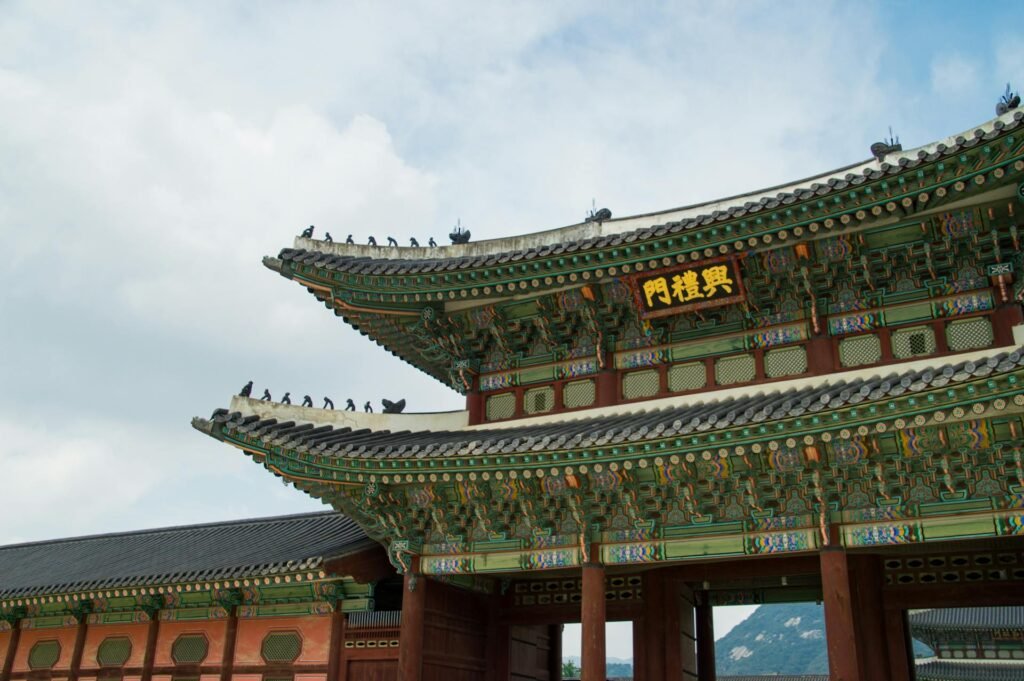
Seoul’s golden age began in 1394 when Yi Seong-gye moved Korea’s capital here after Feng Shui masters declared this valley between protective mountains and the Han River the ideal power spot. The new Joseon Dynasty built magnificent Gyeongbokgung Palace, numerous temples, and an 18-kilometer fortress wall connecting four guardian mountains. Additional palaces followed: Changdeokgung (1405–1412), Gyeonghuigung (1616). The city faced the Japanese invasions of 1592 (Imjin War) and the Manchurian takeover in 1635 but rebuilt repeatedly. Under King Yeongjo (1724–1776), the city thrived as a bustling Han River trade hub. By 1872, royalty returned to a rebuilt Gyeongbokgung after centuries of using Changdeokgung as the royal headquarters.
Modern Transformation
In 1876, Korea began opening to global influences, sparking rapid modernization. Foreign embassies appeared, telegraph lines hummed by 1888, the first railway to Incheon opened in 1899, and electric trams lit up the streets. The iconic Gyeongbu Line connected Seoul to Busan in 1905, and the population exploded from 200,000 to over 1.4 million by 1949. Under Japanese colonial rule (1910–1945), Seoul — then called Keijō — expanded with industrial zones and European-style architecture, but the era brought cultural suppression: families were forced to adopt Japanese names and schools taught in Japanese.
War and Recovery
After becoming South Korea’s official capital in 1948, Seoul endured the devastating Korean War (1950–1953). The city changed hands four times, suffering damage comparable to WWII-era Berlin. Despite the destruction, Seoul never lost its capital status. Post-war reconstruction transformed Seoul into a modern miracle — under President Park Chung-hee’s Five-Year Plans, the population exploded past 3 million by 1963. The city hosted the 1988 Summer Olympics and co-hosted the 2002 FIFA World Cup, cementing its status as a global metropolis and the birthplace of the Korean Wave (Hallyu).
Geography, Climate & Best Time to Visit Seoul
Geographic Setting
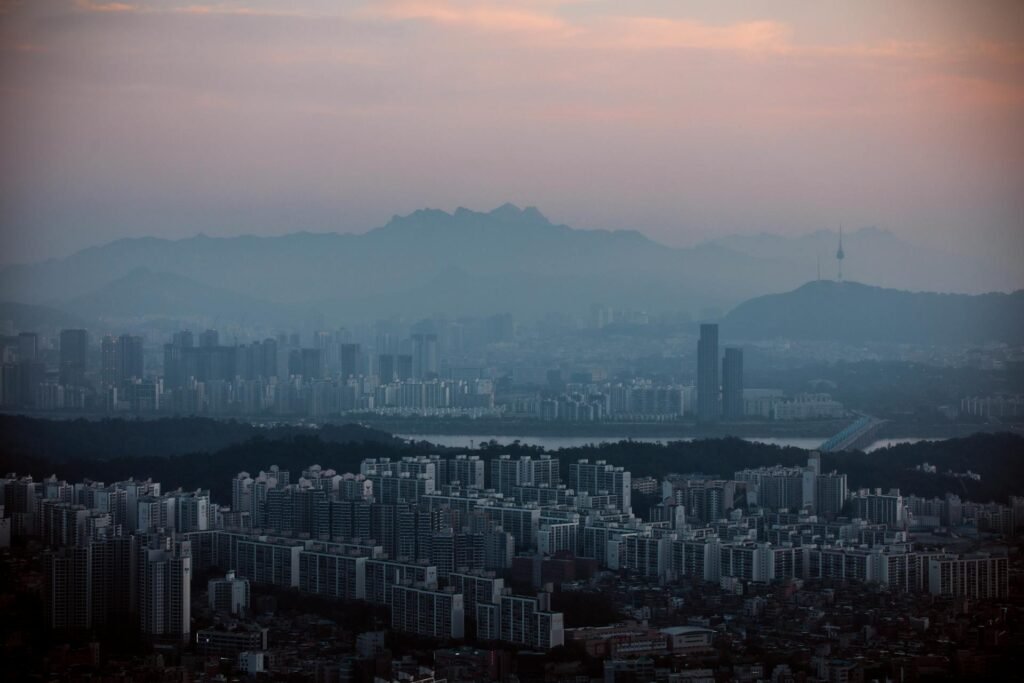
Seoul sits in a natural basin 87 meters above sea level, surrounded by protective mountains: Namsan (South Mountain), Bukhansan (North Han Mountain), Gwanaksan. The mighty Han River flows west through the city toward the Yellow Sea, creating a natural division between the historic north and modern south districts.
Climate Overview
Seoul has a temperate continental climate with four distinct seasons. The city averages 1,450 mm of annual rainfall, with 70% during the summer monsoon season (June–September). Winter is genuinely cold — January lows hit -6°C — and dry. Summer is hot and humid, with monsoon rains.
| Month | Avg High (°C) | Avg Low (°C) | Rainfall (mm) | Sunshine (hrs/day) |
|---|---|---|---|---|
| January | 1.5 | -5.9 | 20.8 | 5.2 |
| February | 4.7 | -3.4 | 25.0 | 5.8 |
| March | 10.4 | 1.6 | 47.2 | 6.1 |
| April | 17.8 | 7.8 | 64.5 | 6.8 |
| May | 23.0 | 13.2 | 105.9 | 6.9 |
| June | 27.1 | 18.2 | 133.2 | 6.1 |
| July | 28.6 | 21.9 | 394.7 | 3.9 |
| August | 29.6 | 22.4 | 364.2 | 4.9 |
| September | 25.8 | 17.2 | 169.3 | 5.9 |
| October | 19.8 | 10.3 | 51.8 | 6.4 |
| November | 11.6 | 3.2 | 52.5 | 5.1 |
| December | 4.3 | -3.2 | 21.5 | 4.9 |
Best Time to Visit
Spring (March–May) and autumn (September–November) are the sweet spots — mild temperatures, lower humidity, and the best seasonal colors. Spring brings cherry blossoms to parks and palaces (early April peak); autumn paints the surrounding mountains in brilliant reds and golds (mid-October to early November peak). Summer is hot, humid, and rainy; winter is dry but genuinely cold — great for indoor attractions and the Hwacheon ice festivals if you’re prepared for it.
Seoul’s Districts & Neighborhoods
Seoul is divided into 25 autonomous districts (gu), each with distinct character. For visitors, six districts really matter:
Jung-gu (Central District)
The historic heart of Seoul — major palaces (Deoksugung), Myeongdong shopping district, Namdaemun Market. Stay here for easy access to cultural sites and shopping; expect higher prices and crowds.
Jongno-gu
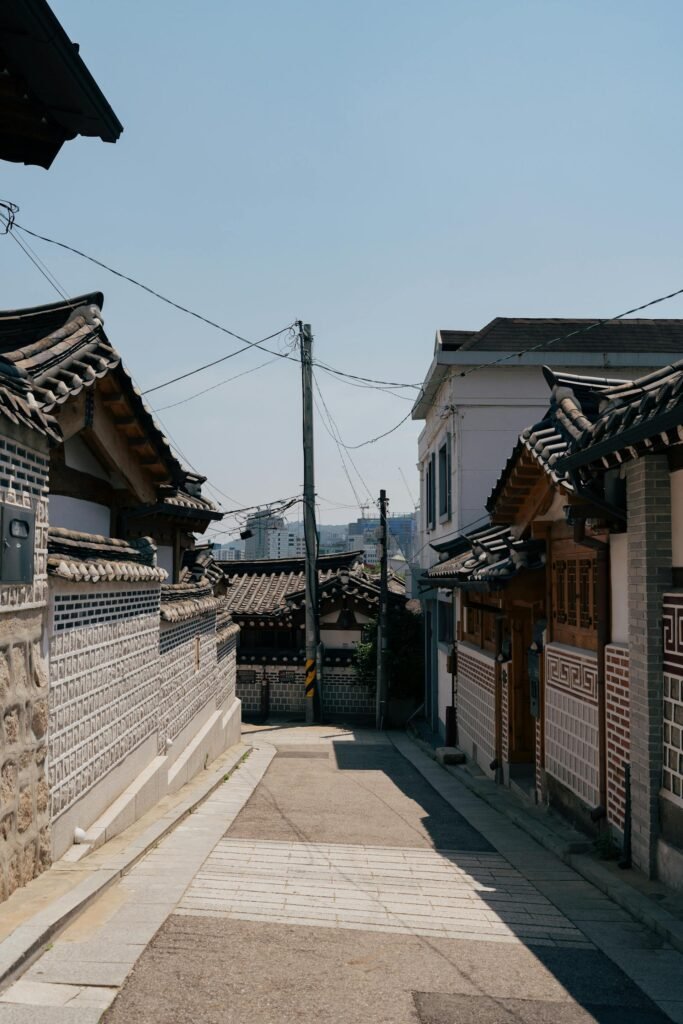
Home to Gyeongbokgung Palace, Bukchon Hanok Village, and Insadong‘s traditional arts district. Perfectly balances history with modern amenities; excellent guesthouse options including hanok stays in restored 19th-century homes.
Gangnam-gu
The affluent southern district famous for luxury shopping, high-end dining, and the COEX complex. Choose Gangnam for modern accommodations and proximity to business districts; pricier and less culturally authentic than the northern districts.
Mapo-gu
Encompasses trendy Hongdae (university nightlife), Itaewon (international district until recent administrative changes), and emerging neighborhoods. Perfect for younger travelers seeking nightlife and international cuisine.
Yongsan-gu
Features Itaewon‘s international community, Yongsan Electronics Market, and the National Museum of Korea. Good for families and travelers wanting diverse dining options.
Where to Stay Recommendations
- Budget travelers: Hongdae or Myeongdong for hostels and guesthouses
- Mid-range: Jung-gu or Jongno-gu for convenient location and reasonable prices
- Luxury: Gangnam-gu for high-end hotels and modern amenities
- Families: Areas near major subway stations with easy palace and park access
Top Things to Do in Seoul
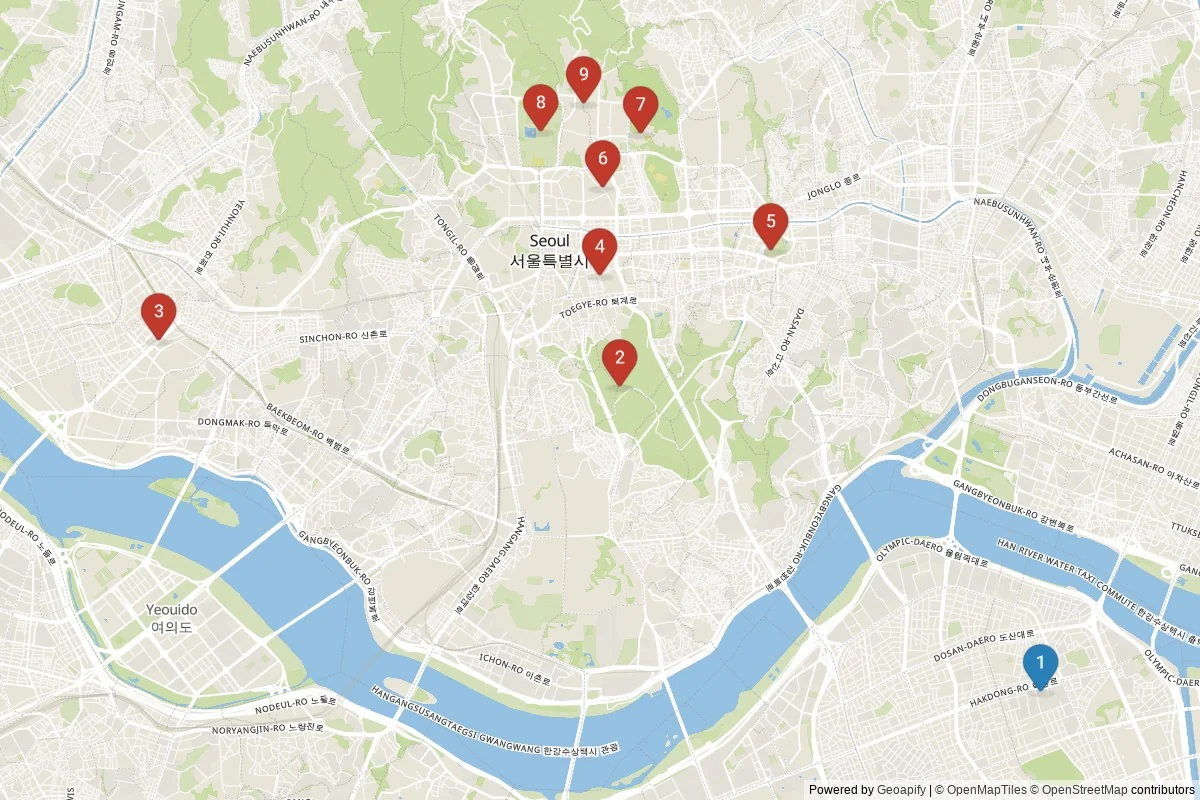
| # | Sight | Cluster | Type | Time | Entry | Best |
|---|---|---|---|---|---|---|
| 1 | Gangnam | Central | Modern district | ~2 hrs | Free | Evening |
| 2 | N Seoul Tower (Namsan) | Outer | Observation tower | ~1.5 hrs | ₩21,000 | Sunset |
| 3 | Hongdae | Outer | Youth quarter | ~2 hrs | Free | Evening |
| 4 | Myeong-dong | Outer | Shopping district | ~2 hrs | Free | Evening |
| 5 | Dongdaemun Design Plaza | Outer | Architecture | ~1 hr | Free | Night |
| 6 | Insadong | Outer | Art & antiques | ~1.5 hrs | Free | Afternoon |
| 7 | Changdeokgung Palace | Outer | Royal palace | ~2 hrs | ₩3,000 | Morning |
| 8 | Gyeongbokgung Palace | Outer | Royal palace | ~2 hrs | ₩3,000 | Morning |
| 9 | Bukchon Hanok Village | Outer | Old quarter | ~1.5 hrs | Free | Morning |
| 🚗 | Day Trip: DMZ Tour | Day trip | Day trip | ½ day | $60+ | Morning |
Historic Palaces and Sites
Gyeongbokgung Palace is Seoul’s crown jewel, built in 1394 when Seoul became Korea’s capital. Don’t miss the Royal Guard Changing Ceremony and the National Folk Museum within the grounds. Changdeokgung Palace, a UNESCO World Heritage Site, features the enchanting Secret Garden (Biwon) where Korean royalty once strolled — the back garden tour requires advance booking. Deoksugung Palace offers a unique blend of traditional Korean and early 20th-century Western architecture; Jongmyo Shrine hosts the colorful Jongmyo Daeje ritual every May honoring Joseon royalty.
Temples and Spiritual Sites
Jogyesa Temple serves as the heart of Korean Buddhism and erupts in spectacular lantern displays during Buddha’s Birthday celebrations in May. Bongeunsa Temple, founded in 794, offers tranquil respite near the World Trade Center; Bongwonsa Temple provides insight into the unique Taego Buddhist sect where monks can marry.
Modern Landmarks
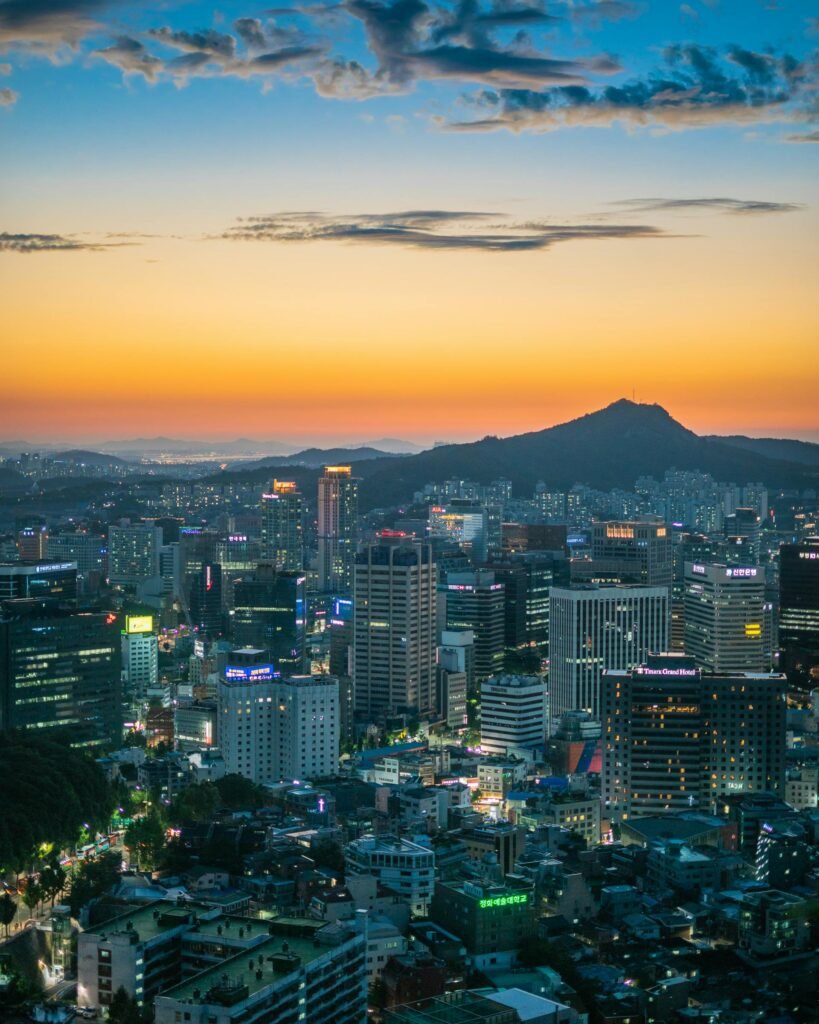
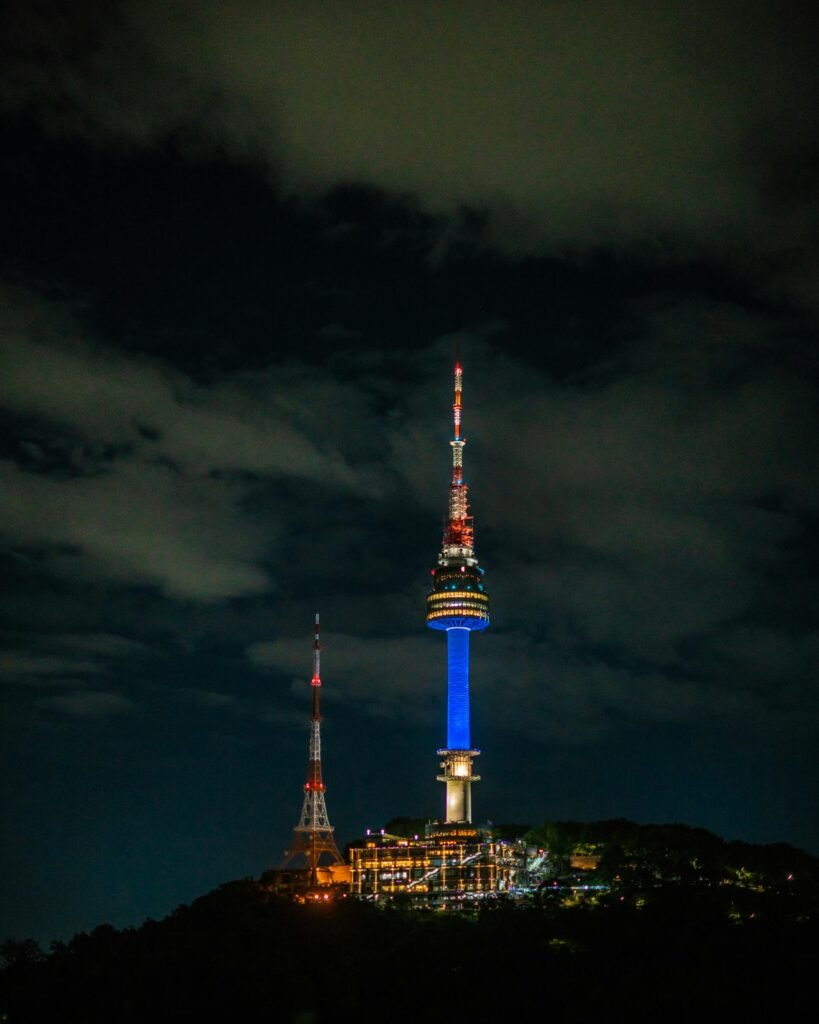
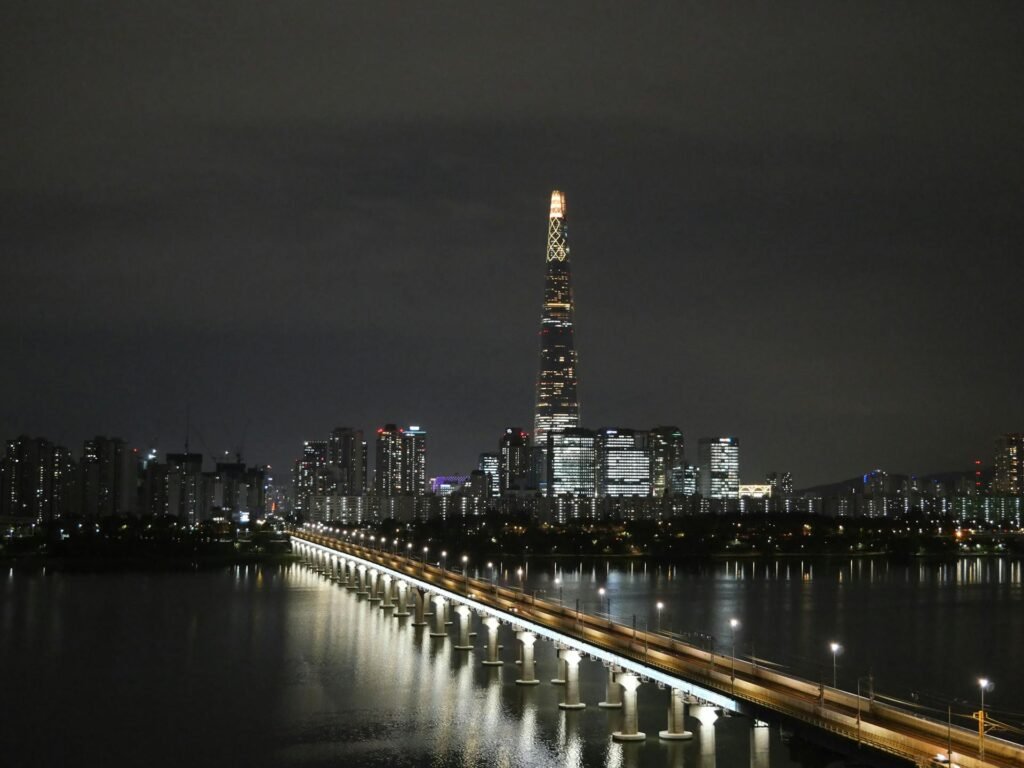
The Lotte World Tower in Songpa-gu, South Korea’s tallest building at 555 meters, offers breathtaking city views from its observation decks. N Seoul Tower on Namsan Mountain provides 360-degree panoramas and romantic sunset viewing. The futuristic Dongdaemun Design Plaza by Zaha Hadid showcases Seoul’s cutting-edge architecture and design culture.
Markets and Shopping
Myeongdong buzzes with K-beauty shops, street food, and fashion boutiques under dazzling neon lights. Dongdaemun Market operates 24 hours selling everything from electronics to textiles; Namdaemun Market offers traditional crafts and local delicacies. Insadong specializes in traditional arts, antiques, and handmade crafts in a charming hanok-lined setting.
Parks and Nature
Bukhansan National Park provides hiking trails, Buddhist temples, and stunning city views within Seoul’s borders — surprising for a megacity, but the trail to Baegundae peak (836m) takes ~3 hours and rewards with panoramic views. Namsan Park surrounds N Seoul Tower with botanical gardens. The restored Cheonggyecheon Stream offers a peaceful 3.6-km urban oasis perfect for evening strolls — built atop an old elevated highway during a controversial 2003–2005 restoration project.
Entertainment and Culture
Hongdae pulses with university nightlife, live music venues, and street performances. Gangnam offers upscale entertainment and the famous Garosu-gil shopping street. The National Theater of Korea and Sejong Cultural Center host world-class performances ranging from traditional Korean arts to international productions.
How to Get to Seoul
By Air
Incheon International Airport (ICN), located 50 km west of Seoul on Yeongjongdo Island, is Korea’s primary international gateway and consistently ranks among the world’s best airports for service quality. The airport connects to Seoul via the AREX express train (43 minutes to Seoul Station, around KRW 11,000), airport buses, and taxis. Gimpo Airport (GMP) handles domestic and regional flights to China and Japan.
By Rail
Seoul’s three main railway stations connect the city to destinations across South Korea and beyond. Seoul Station is the hub for KTX high-speed trains to Busan (2.5 hours) and other major cities. Yongsan Station handles additional KTX services; Cheongnyangni Station serves eastern routes.
By Bus
Express bus terminals in Gangnam (southern routes), Dong Seoul (eastern destinations), and Sangbong (northern routes) connect Seoul to over 70 destinations nationwide. Buses run every 10–20 minutes for popular routes from 6 AM to 9 PM, with night services until 2 AM.
Getting Around Seoul
Seoul Subway System
Seoul Metro operates one of the world’s largest subway systems — nine lines spanning 352 km, with stations and announcements in Korean and English. Trains run from 5:30 AM to 12:30 AM (later on weekends) with 3–6 minute intervals. Over 7 million passengers use the system daily; expect crowding during rush hours but generally clean, fast, and easy to navigate even with no Korean.
Bus Network
Seoul’s comprehensive bus system serves 7 million daily passengers across 400+ routes:
- Blue buses: main city lines with frequent service
- Green buses: neighborhood connections
- Red buses: express suburban routes with comfortable seating
- Yellow buses: downtown circulation routes
Taxis and Ride-Sharing
Regular taxis are abundant and affordable; deluxe black taxis offer premium service with English-speaking drivers. Kakao Taxi is the local ride-hailing standard — Uber operates only at the premium tier. Most non-deluxe drivers speak limited English; have your destination written in Korean or use Kakao Map’s address-export feature.
Cycling
Seoul Bike (Ttareungi) rental stations throughout the city provide convenient short-term bicycle access. The Han River offers scenic cycling paths along both banks; dedicated bike lanes connect major districts. The Han River bike loop is one of the world’s great urban cycling experiences.
Transportation Cards
T-money cards work on all public transportation and can be recharged at any convenience store or subway station. Smartphone NFC payments are also widely accepted via Samsung Pay or local apps.
Food & Drink in Seoul
Korean BBQ Culture
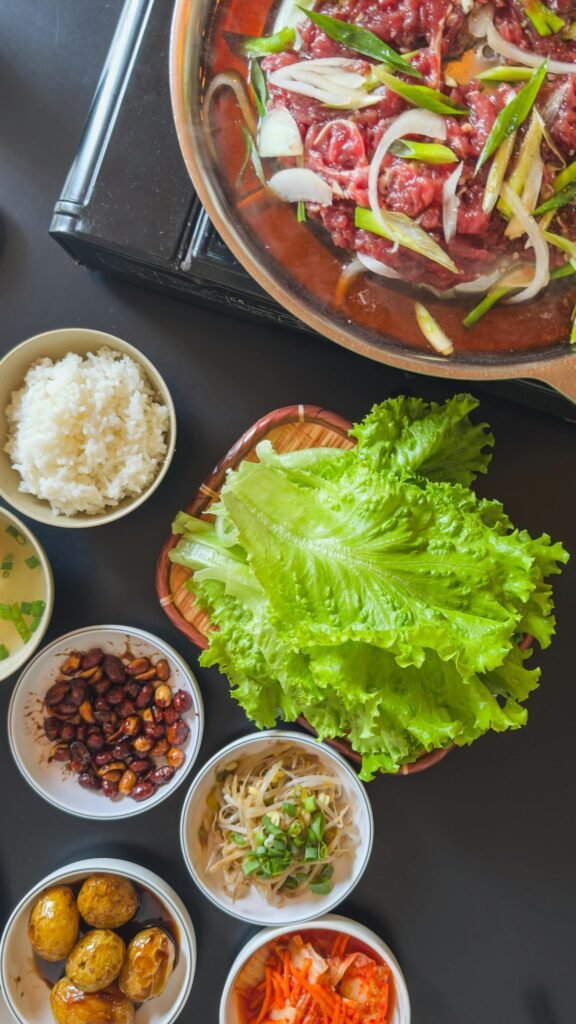
Seoul’s dining scene revolves around communal grilling. Bulgogi (marinated beef), galbi (short ribs), and samgyeopsal (pork belly) are grilled at your table and wrapped in lettuce with various sauces. The chimaek culture pairs crispy Korean fried chicken with cold beer for casual dining — Hongdae and Itaewon are the chimaek districts of choice.
Street Food and Markets
Gwangjang Market offers authentic Korean street food including bindaetteok (mung bean pancakes) and mayak gimbap (mini rice rolls). Myeongdong street stalls serve hotteok (sweet pancakes) and tteokbokki (spicy rice cakes). Dongdaemun and Namdaemun markets provide 24-hour dining options.
Traditional Korean Cuisine
Bibimbap (mixed rice bowl), kimchi jjigae (kimchi stew), and naengmyeon (cold noodles, perfect on hot summer days). Hansik restaurants range from casual to Michelin-starred — Seoul has 12 Michelin-starred restaurants in the 2024 guide, three of them at the rare 3-star level.
Modern Dining Scene
Seoul’s international food scene reflects its cosmopolitan nature. Itaewon offers diverse international cuisines; Gangnam features upscale fusion restaurants. The city’s café culture is among the world’s most developed — themed cafés (cat cafés, raccoon cafés, board-game cafés), artisanal coffee roasters, and dessert specialists fill almost every neighborhood.
Drinking Culture
Soju remains Korea’s national spirit — clear, moderately strong, often paired with anju (drinking snacks). Makgeolli (rice wine, lower-alcohol and slightly sweet) experiences a modern revival in trendy bars. Hongdae and Gangnam offer diverse nightlife from traditional pojangmacha (street tents) to sophisticated cocktail lounges.
Culture & Arts
Museums and Galleries
The National Museum of Korea in Yongsan houses over 100,000 artifacts spanning 5,000 years of Korean history, including the original Bosingak Bell from the Joseon Dynasty. The National Folk Museum behind Gyeongbokgung Palace showcases traditional Korean daily life. The War Memorial of Korea provides powerful insights into the nation’s modern history including the Korean War.
Performing Arts
The National Theater of Korea hosts traditional Korean performances including gayageum (zither) music and talchum (mask dances). The Sejong Cultural Center features a 4,000-seat arena for opera and international productions. Nanta shows combine drumming, comedy, and culinary themes in dedicated theaters throughout the city.
K-Pop and Hallyu
Seoul is the global headquarters for K-Pop. Major agencies — HYBE (formerly Big Hit, home of BTS), JYP, SM, YG Entertainment — are all based here. The city offers K-Pop themed attractions, dance studios, and merchandise shops, particularly in Myeongdong and Hongdae. K-pop concert tickets are notoriously hard to get; the Lotte K-Pop Walk provides an accessible alternative.
Traditional Arts
Insadong preserves traditional Korean arts with galleries, craft shops, and tea houses. The area specializes in hanji (traditional paper), ceramics, and calligraphy. Bukchon Hanok Village showcases traditional architecture in a working residential neighborhood and hosts cultural workshops — please respect that residents actually live here.
Seoul by District: The 23 구 (Gu)
Seoul is divided into 23 districts. The map below shows their official OSM boundaries, colour-coded to match the table — a quick way to orient yourself before zooming in on individual sights.
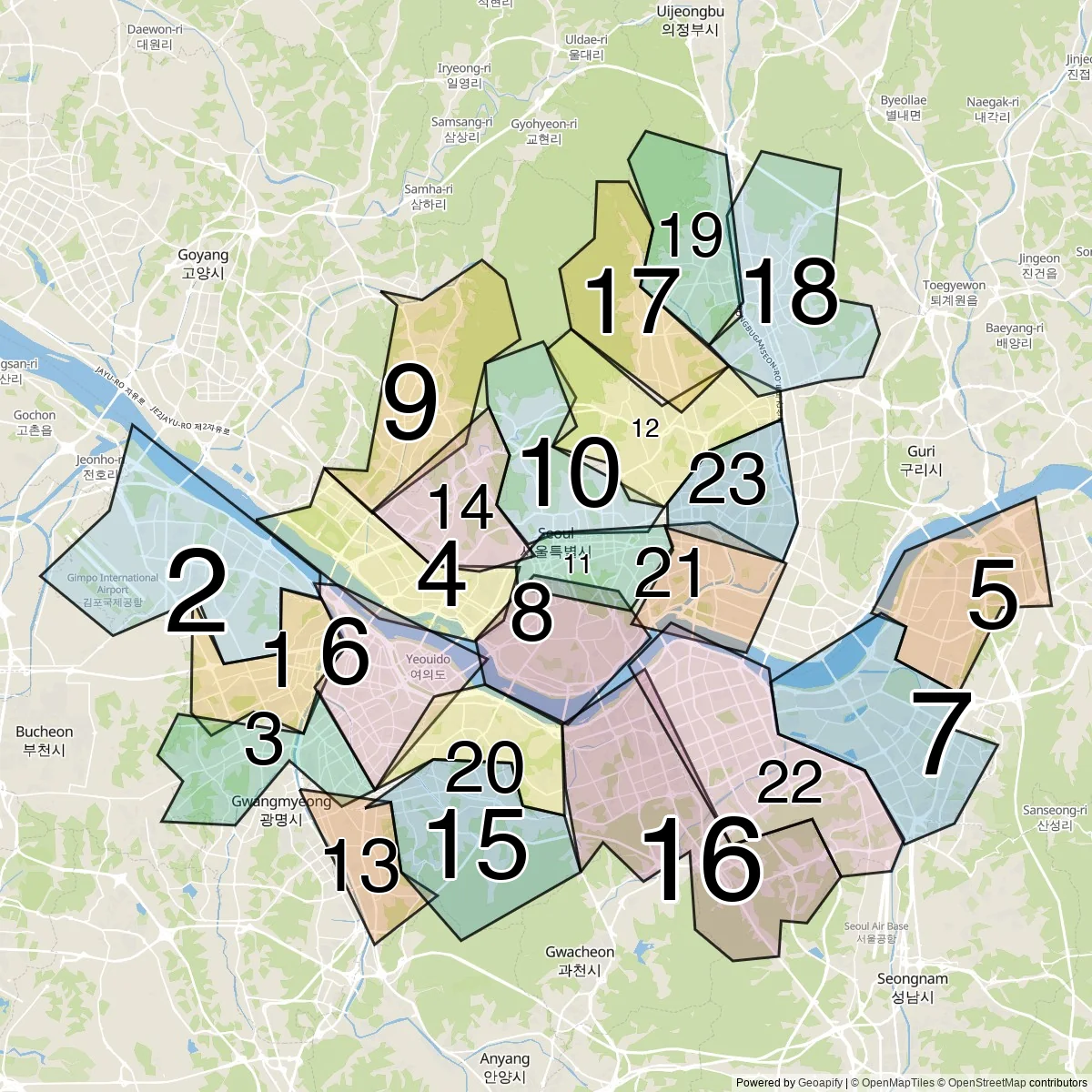
| # | 구 (Gu) |
|---|---|
| 1 | 양천구 · Yangcheon-gu |
| 2 | 강서구 · Gangseo-gu |
| 3 | 구로구 · Guro-gu |
| 4 | 마포구 · Mapo-gu |
| 5 | 강동구 · Gangdong-gu |
| 6 | 영등포구 · Yeongdeungpo-gu |
| 7 | 송파구 · Songpa-gu |
| 8 | 용산구 · Yongsan-gu |
| 9 | 은평구 · Eunpyeong-gu |
| 10 | 종로구 · Jongno-gu |
| 11 | 중구 · Jung-gu |
| 12 | 성북구 · Seongbuk-gu |
| 13 | 금천구 · Geumcheon-gu |
| 14 | 서대문구 · Seodaemun-gu |
| 15 | 관악구 · Gwanak-gu |
| 16 | 서초구 · Seocho-gu |
| 17 | 강북구 · Gangbuk-gu |
| 18 | 노원구 · Nowon-gu |
| 19 | 도봉구 · Dobong-gu |
| 20 | 동작구 · Dongjak-gu |
| 21 | 성동구 · Seongdong-gu |
| 22 | 강남구 · Gangnam-gu |
| 23 | 동대문구 · Dongdaemun-gu |
Frequently Asked Questions About Visiting Seoul
Do I need a visa to visit South Korea?
Many travelers don’t. South Korea grants visa-free entry of 30–180 days to passport holders from over 110 countries — including the US, UK, EU member states, Canada, Australia, and Japan. The exact duration depends on nationality. Visitors from visa-exempt countries must apply for the K-ETA (Korea Electronic Travel Authorization) before travel — currently the requirement applies to most visa-exempt nationalities; some are temporarily waived through 2025. Apply via the official portal at k-eta.go.kr; cost is around KRW 10,000, processing within 72 hours. Always confirm at the Korean Ministry of Foreign Affairs portal before booking.
Is Seoul safe for tourists?
Seoul is one of the safest megacities in the world for visitors. Violent crime is statistically rare, even in nightlife districts late at night. The US State Department rates South Korea at “exercise normal precautions” — its lowest advisory level. Standard urban precautions apply: watch for pickpockets in crowded subway cars and tourist areas, avoid demonstrations, and respect local customs. Drug laws are extraordinarily strict — penalties for even small amounts are severe and apply to acts performed before entering Korea. The North Korea border situation is generally not a daily concern for tourists in Seoul, though tensions occasionally rise.
How many days do I need in Seoul?
Four full days is comfortable; five to seven lets you add the DMZ tour and Suwon day trip. A solid 4-day plan: Day 1 Gyeongbokgung Palace + Bukchon Hanok Village + Insadong; Day 2 Changdeokgung Palace + Secret Garden + Jongmyo Shrine + evening at Cheonggyecheon Stream; Day 3 Myeongdong + N Seoul Tower at sunset + Hongdae nightlife; Day 4 Gangnam + Lotte World Tower + COEX + Han River cycling. Add Day 5 for the DMZ tour (must book through licensed operators), Day 6 for Suwon Hwaseong Fortress, Day 7 for Bukhansan hiking. Seoul rewards a slower pace; the city’s depth comes through in repeat visits to neighborhoods.
What’s the best area to stay in Seoul?
Three solid options. Myeongdong / Jung-gu is the classic tourist base — central location, walking distance to City Hall and the major palaces, dense restaurant scene. Pricey and crowded. Hongdae / Mapo-gu is the trendy younger choice — Hongik University-area energy, cheaper hotels, late-night options, easy AREX access from Incheon. Gangnam-gu is the upscale modern option — luxury hotels, designer shopping, business connectivity; less culturally authentic for first-time visitors. Skip the Itaewon area as a base for now (post-2022 administrative reorganization changed the area’s vibe), though it’s still worth visiting.
How much does it cost to visit the major palaces?
Seoul’s palaces are very affordable by international standards. Gyeongbokgung Palace charges KRW 3,000 (~USD 2.50) — the official portal is royalpalace.go.kr. Changdeokgung Palace is KRW 3,000; the Secret Garden requires a separate KRW 5,000 timed-entry tour and books out fast in spring. Deoksugung is KRW 1,000; Changgyeonggung KRW 1,000; Jongmyo Shrine KRW 1,000. The Royal Palace Pass at KRW 10,000 covers all five for 3 months — pays off if you visit any three. Pro tip: wear traditional hanbok (rentable for KRW 15,000–20,000 around Gyeongbokgung) for free palace entry — a quirk of the cultural-promotion policy that’s been running for years.
Should I drink the tap water in Seoul?
Technically yes — Seoul’s tap water (Arisu) is treated to drinking-water standards and is safe by Korean and WHO measures. The Seoul Metropolitan Government publishes water quality reports continuously. However, the local cultural norm leans heavily toward bottled water — most Korean homes have water purifiers, and most restaurants serve bottled or filtered water rather than tap. The CDC’s South Korea travel health page rates the water as generally safe. Bottled water is sold everywhere at KRW 1,000–2,000 per bottle. For visitors, safest to follow the local norm.
What’s the etiquette in Seoul?
A few specifics worth knowing. Bowing is the standard greeting, with deeper bows reserved for elders or formal contexts; a slight nod accompanies a “thank you” or “excuse me.” Shoes off at temples, traditional restaurants, hanok stays, and any home you’re invited to — this is mandatory. On the subway: speak quietly, give priority seats (pink) to elderly/pregnant/disabled, don’t eat. Pouring drinks: pour for others, never yourself; receive drinks with both hands; if drinking with someone older, turn slightly away when sipping. Tattoos and revealing clothing: increasingly accepted but still draw glances at temples and traditional venues; jjimjilbang (bathhouses) sometimes prohibit tattoos.
Is tipping expected in Seoul?
No — and unlike most other Asian cities, this is genuinely consistent. Korean service culture does not include tipping. Restaurants do not have tip lines on bills; service charges are not added. Round up at most for change, but it’s not expected. Taxis: round up to the nearest KRW 1,000 if you want, but not required. Hotels: tipping at upscale international hotels is now starting to appear, but at Korean-style hotels it’s still not customary. Tour guides: tipping for private guides is appreciated (KRW 30,000–50,000 for half-day) but not socially required. Trying to tip in casual settings can sometimes confuse staff. Save the cash and pay the published price.
Economy & Business
Seoul ranks as the world’s 4th largest metropolitan economy and serves as headquarters for global conglomerates including Samsung, LG, and Hyundai. The city earned the title of World Design Capital in 2010. The Yeouido financial district houses the Korea Stock Exchange and major banks; the Guro Industrial Complex contains over 8,000 businesses. Seoul’s strategic location between China and Japan makes it a crucial Asian business hub, with Incheon International Airport facilitating global connectivity. Tourism contributes significantly — generating around USD 12.3 billion annually with over 10 million international visitors. The service sector dominates employment.
Education
Seoul hosts over 40 universities, with 18 ranking among the world’s top 1,000 institutions. Seoul National University (SNU) leads as South Korea’s most prestigious institution; the “SKY” universities (SNU, Korea University, Yonsei University) form the academic elite. Sungkyunkwan University, founded in 1398, represents Asia’s oldest university; specialized institutions like Dongguk University focus on Buddhist studies. The city’s education system includes 879 kindergartens, 601 elementary schools, and a unique high school lottery system that has ensured fair distribution since 1974. International schools serve the expatriate community, including the Deutsche Schule Seoul for German education standards.
Sports
Seoul’s sporting legacy includes hosting the 1988 Summer Olympics and co-hosting the 2002 FIFA World Cup. The Jamsil Sports Complex features the 100,000-seat Olympic Stadium and continues hosting major events. FC Seoul plays at the architecturally stunning World Cup Stadium in Mapo-gu, designed to resemble traditional Korean sails. Baseball fans can catch the LG Twins and Doosan Bears at Jamsil Baseball Stadium, or the Kiwoom Heroes at the futuristic Gocheok Sky Dome. Seoul pioneered the global eSports industry and remains its capital, with professional gaming tournaments and PC bangs (gaming cafés) throughout the city.
Seoul masterfully balances its 2,000-year history with cutting-edge modernity, creating an urban experience unlike anywhere else in the world. From royal palaces to K-pop studios, traditional markets to high-tech districts, the city rewards every type of traveler. Whether the draw is the cultural heritage, the culinary adventures, or the contemporary innovations, Seoul promises memories that will last long after the trip ends.
AFRIKA
Cairo Hurghada Johannesburg Marrakech
ASIA
Abu Dhabi Agra Antalya Bangkok Batam Beijing Bengaluru Cebu City Chiang Mai Chiba Chennai Da Nang Dammam Delhi Denpasar Dubai Fukuoka Guangzhou Guilin Ha Long Hanoi Ho Chi Minh City Jakarta Jaipur Johor Bahru Kolkata Krabi Kuala Lumpur Kyoto Macau Mecca Medina Mugla Mumbai Osaka Pattaya Penang Phuket Riyadh Seoul Shanghai Shenzhen Singapore Taipei Tokyo Zhuhai
EUROPE
Amsterdam Athens Barcelona Berlin Brussels Budapest Copenhagen Dublin Florence Frankfurt am Main Heraklion Krakow Lisbon London Madrid Milan Munich Nice Paris Porto Prague Rhodes Rome Stockholm Venice Vienna Warsaw
NORTH AMERICA
Cancun Las Vegas Los Angeles Miami New York City Orlando San Francisco Toronto Vancouver
SOUTH AMERICA
Buenos Aires Lima Rio De Janeiro
OCEANIA
Auckland Honolulu Melbourne Sydney