
olmusician, pixabay
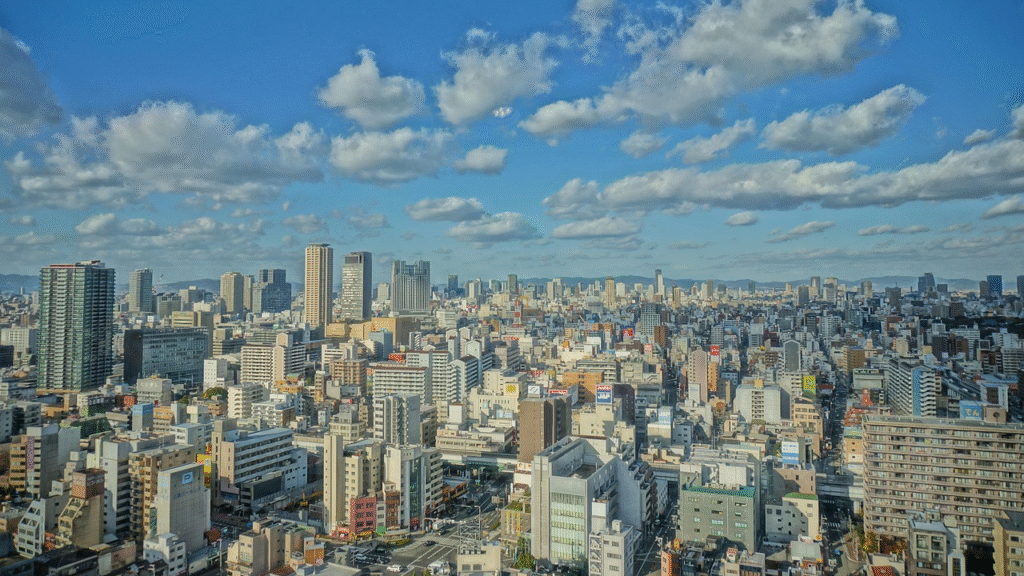
Welcome to Osaka, Japan’s third-largest city and the vibrant heart of the Kansai region. Known as the nation’s “kitchen” for its legendary street food culture, Osaka seamlessly blends ancient traditions with modern innovation. This dynamic metropolis of 2.7 million residents offers visitors an authentic taste of Japanese urban life, from the neon-lit entertainment districts to historic temples and world-class cuisine. Whether you’re exploring the iconic Osaka Castle, sampling takoyaki in bustling Dotonbori, or experiencing the warmth of Osaka’s famously friendly locals, this city promises an unforgettable journey through Japan’s cultural and culinary soul.
Osaka at a Glance: Essential Facts for Travelers
| Location | Kansai region, Honshu Island, Japan |
|---|---|
| Coordinates | 34°41′38″N, 135°30′8″E |
| Population | 2.7 million (city), 17.5 million (metropolitan area) |
| Area | 225.21 km² |
| Elevation | Sea level to low hills |
| Time Zone | Japan Standard Time (JST, UTC+9) |
| Postal Codes | 530-0002 to 559-0034 |
| Known For | Street food, comedy culture, Osaka Castle, Universal Studios Japan |
| Current Mayor | Hideyuki Yokoyama (since 2023) |
| Official Website | www.city.osaka.lg.jp |
| Administrative Divisions | 24 wards (ku) |
| City Symbols | Cherry blossom (flower), Pansy (flower) |
Upcoming Events in Osaka
| Date | Title | Details |
|---|---|---|
| 2026-08-21 to 2026-09-27 | Vermeer’s Girl with a Pearl Earring at Nakanoshima Museum of Art | In a coup for the Nakanoshima Museum of Art, Johannes Vermeer’s Girl with a Pearl Earring returns to Japan for a special exhibition running from 21 August to 27 September 2026. The show presents the beloved seventeenth-century Dutch masterpiece alongside notable paintings of the Dutch Golden Age, drawing art lovers from across the country for a rare chance to meet the enigmatic girl’s gaze in Osaka. Expect timed-entry tickets, sizeable queues and strict viewing arrangements in the final weeks, with prices varying by ticket type. [Source] |
| 2026-09-04 to 2026-11-09 | Halloween at Universal Studios Japan | Universal Studios Japan on Osaka Bay turns to the dark side each autumn for its hugely popular Halloween season. By day, families enjoy costumed characters and lighter fun, while after dark the park unleashes Halloween Horror Nights, with zombie-filled streets, terrifying mazes and scare zones aimed at older thrill-seekers. Seasonal shows, food and decorations run throughout. It is one of the busiest times to visit, so timed entry and Express Passes help beat the queues. Standard park tickets apply, with extra-cost options for the most popular haunted attractions. [Source] |
| 2026-09-15 | Gamba Osaka vs Cong An Ha Noi FC – AFC Champions League Elite | Gamba Osaka open their AFC Champions League Elite campaign at home on Tuesday 15 September 2026, hosting Vietnam’s Cong An Ha Noi FC at Panasonic Stadium Suita with kick-off at 19:00. The continental night gives fans a first look at Asia’s elite club competition in Osaka this season, in one of Japan’s finest football-specific arenas. Tickets are sold through the club at varying prices, and the stadium is easily reached from central Osaka via the Midosuji subway line and monorail. [Source] |
| 2026-09-19 to 2026-09-20 | Kishiwada Danjiri Matsuri | The Kishiwada Danjiri Matsuri, Japan’s most famous festival of speeding wooden floats, thunders through the streets of Kishiwada in southern Osaka Prefecture on 19 and 20 September 2026, the weekend before Respect for the Aged Day. Teams of hundreds haul four-ton carved danjiri at full sprint around tight corners, while daring carpenters dance on the roofs. The spectacle is free to watch from the roadside, with paid seating in some spots. Trains on the Nankai line reach Kishiwada easily; expect thrilling, occasionally hair-raising scenes. [Source] |
| 2026-10-31 to 2027-01-31 | A Profusion of Flowers: Edo Paintings from the British Museum | The Nakanoshima Museum of Art hosts A Profusion of Flowers: Edo Paintings Across the Sea, an exhibition drawn from the British Museum’s Japanese art collection, from 31 October 2026 to 31 January 2027. Masterworks of Edo-period painting that left Japan generations ago return home for a season, tracing flower-and-bird imagery and the collectors who carried it abroad. The show anchors the autumn programme on Osaka’s riverside museum island. Timed tickets are recommended, with prices varying, and the exhibition suits anyone drawn to classical Japanese art. [Source] |
City News in Osaka – last 14 days
| Date | Category | Headline | Details |
|---|---|---|---|
| 2026-09-14 | Business | Expo site redevelopment priced at minimum 92.1 billion yen | Osaka Prefecture and the city of Osaka have announced a minimum sale price of 92.1 billion yen for the redevelopment of the former World Expo site, covering about 42 hectares of the Yumeshima Phase 2 area. The figure sets the floor for bids from developers seeking to transform the artificial island where Expo 2025 was held. The sale is a key step in Yumeshima’s post-Expo future, which already includes the integrated resort planned nearby, and proceeds will flow to the public landowners. [Source] |
| 2026-09-14 | Local affairs | Expo mascot Myaku-Myaku flown by helicopter to mountain village | Myaku-Myaku, the beloved mascot of Expo 2025, has taken to the skies: a large figure of the red-and-blue character was carried by helicopter to a nature park on Mount Kongo, about 1,000 metres up in Chihayaakasaka, the only village in Osaka Prefecture. The airborne move delighted onlookers as the statue floated over the hills to its new home. The relocation gives the mountain village a striking Expo keepsake and is expected to draw curious visitors up the slopes to see it. [Source] |
| 2026-09-14 | Public safety | Deceased teenager referred to prosecutors over Konohana family attack | Osaka prefectural police have referred to prosecutors, posthumously, a boy suspected of injuring a mother and her three children in the city’s Konohana ward. The family of four suffered serious and minor injuries after being attacked with a cutter in their home; the boy, who was 16 at the time, fell to his death from the building immediately afterwards. The referral formally closes the investigative stage of a case that shocked the neighbourhood, though prosecutors cannot charge a deceased suspect, and questions about the motive remain. [Source] |
| 2026-09-14 | Business | Largest Osaka property bankruptcy in a decade as Hatch Out fails | Two companies including real-estate firm Hatch Out have gone bankrupt with total liabilities of 10.89 billion yen, the largest failure of an Osaka property company in the past decade, according to Teikoku Databank. Borrowings of roughly 9 billion yen proved too heavy as cash flow deteriorated, leaving the firms unable to pay pension and social-insurance contributions. The collapse underlines the strain that rising costs and financing burdens are placing on mid-sized developers in the Kansai property market. [Source] |
| 2026-09-14 | Culture | Film on blind Edo scholar Hanawa Hokiichi screened in Osaka | A film about Hanawa Hokiichi, the blind Edo-period scholar of Japanese classics, is being screened in Osaka, bringing renewed attention to a remarkable figure who compiled vast literary collections despite losing his sight in childhood. Coverage of the screening highlights the additive, step-by-step method underpinning his achievements, celebrated as a lesson in perseverance. The screening introduces Osaka audiences to a scholar whose compilation of the Gunsho Ruiju preserved thousands of classical texts for later generations. [Source] |
| 2026-09-14 | Sports | Gamba Osaka sign forward Go Ogashiwa from FC Tokyo | Gamba Osaka have completed the permanent signing of forward Go Ogashiwa from FC Tokyo, both clubs announced. The speedy attacker joins the Suita-based side as it looks to strengthen an attack that has struggled for results early in the new season. Ogashiwa made his name with Consadole Sapporo before moving to the capital, and brings pace and direct running to Gamba’s forward line. The transfer gives supporters a lift in a week that also brings continental football to Panasonic Stadium. [Source] |
| 2026-09-14 | Sports | AFC previews Gamba Osaka’s Champions League Elite opener | The Asian Football Confederation has published its preview of Gamba Osaka’s AFC Champions League Elite opener against Cong An Ha Noi FC of Vietnam, ahead of the matchday-one fixture at Panasonic Stadium Suita on Tuesday evening. The continental competition returns to Osaka with the hosts eager to launch their campaign strongly despite a difficult start to the domestic season, while the visitors, one of Vietnamese football’s rising forces, travel to face the Kansai club in the league phase. [Source] |
| 2026-09-12 | Sports | Gamba supporters hold hour-long talks with executives after winless run | Gamba Osaka supporters stayed behind in the stands for about an hour after the team’s latest setback, holding an unusual early-season meeting with club executives after a run of six matches without a win in the opening seven rounds. Club officials addressed the fans directly, promising to win titles and asking for continued backing. The scene reflects mounting frustration around Panasonic Stadium, but also the close relationship between the club and its support as it seeks to turn results around. [Source] |
| 2026-09-14 | Local affairs | Miracle recovery rice ripens golden in Osaka as children join harvest | Rice grown from the miracle recovery rice, seed stock descended from plants that survived the 2011 tsunami disaster, has ripened golden in Osaka, where local schoolchildren joined the harvest. The project connects Osaka communities with disaster-hit Tohoku, teaching children about recovery and remembrance through the paddy’s annual cycle. Reported by the Fukushima Minyu newspaper, the harvest shows how the symbolic crop continues to spread goodwill far beyond its origins, with each autumn’s golden ears carrying the story forward to a new generation. [Source] |
| 2026-09-13 | Local affairs | Osaka elderly ensure no one faces a lonely farewell | Elderly volunteers in Osaka are working to ensure that no one faces a lonely farewell, Japan Today reports, organising support so that people who die without family or close friends are still seen off with dignity. The initiative responds to Japan’s growing number of solitary deaths among ageing residents in big cities. Participants, many of them seniors themselves, attend funerals and help with arrangements for those who would otherwise be mourned by no one, building a quiet community safety net around the end of life. [Source] |
Osaka Events & City News Archive
Sources: Nakanoshima Museum of Art, Osaka, Universal Studios Japan, Gamba Osaka, AFC, Wikipedia, Nakanoshima Museum of Art, Osaka, Asahi Shimbun, Sankei Shimbun
Weather Forecast for the Next 14 Days in Osaka
| Date | Weather | Max °F | Min °F | Rain mm |
|---|---|---|---|---|
| 2026-09-14 | 🌧️ | 84.3 °F | 73.0 °F | 1.5 mm |
| 2026-09-15 | 🌧️ | 74.1 °F | 69.5 °F | 58.1 mm |
| 2026-09-16 | 🌧️ | 73.9 °F | 68.8 °F | 3.4 mm |
| 2026-09-17 | ☁️ | 84.6 °F | 68.3 °F | 0.1 mm |
| 2026-09-18 | 🌧️ | 87.3 °F | 71.9 °F | 0.6 mm |
| 2026-09-19 | ☁️ | 88.0 °F | 73.7 °F | 0.0 mm |
| 2026-09-20 | 🌧️ | 84.3 °F | 76.3 °F | 0.6 mm |
| 2026-09-21 | ⛈️ | 82.6 °F | 76.8 °F | 12.4 mm |
| 2026-09-22 | 🌧️ | 77.6 °F | 74.6 °F | 71.8 mm |
| 2026-09-23 | 🌧️ | 78.8 °F | 68.0 °F | 6.4 mm |
| 2026-09-24 | ☀️ | 80.2 °F | 65.8 °F | 0.0 mm |
| 2026-09-25 | ☀️ | 81.6 °F | 68.1 °F | 0.0 mm |
| 2026-09-26 | ☁️ | 80.7 °F | 71.1 °F | 0.0 mm |
| 2026-09-27 | ☁️ | 78.7 °F | 66.9 °F | 0.0 mm |
Osaka’s History
Osaka has been Japan’s commercial heart for fourteen centuries — older than Tokyo, older than feudal Kyoto’s golden age, and the only Japanese city that ever earned the nickname “the nation’s kitchen.” It was twice the imperial capital, then for centuries the merchant capital, and is still the place Japanese people go when they want to eat seriously and badly.
Ancient Origins: From Naniwa to Imperial Capital
The original name was Naniwa — “fast waves” — for the spot where the Yodo River empties into Osaka Bay. The position made the area an inevitable trading hub from the prehistoric Yayoi era onward. Twice in the early historical period, Naniwa was Japan’s imperial capital: once under Emperor Kōtoku (645–654 CE), who built Naniwa-no-Miya palace, and again under Emperor Shōmu in 744 CE before the capital moved permanently to Heian-kyō (Kyoto) in 794. Excavated palace foundations remain visible in central Osaka today.
Medieval Fortifications and Religious Power
In 1496, the militant Buddhist sect Jōdo Shinshū built a fortified temple on the high ground east of the river — the Ishiyama Hongan-ji, both a religious headquarters and a military stronghold. When the warlord Oda Nobunaga moved to consolidate Japan in the 1570s, the Hongan-ji’s monks held him off for ten brutal years (1570–1580) — the longest siege in Japanese history. After the fall, Nobunaga’s successor Toyotomi Hideyoshi recognized the site’s strategic dominance and built Osaka Castle (1583–1598) on its ruins. The castle’s vast stone walls, partially original, still anchor the city skyline.
Edo Period: The Merchant’s Paradise
Under the Tokugawa shogunate (1603–1868), the political capital moved to Edo (Tokyo) — but Osaka became the commercial capital. The shogunate designated Osaka as the country’s central rice market; warehouses lined the canals; merchants accumulated fortunes that aristocrats and samurai could only borrow against. The city earned its enduring nickname “tenka no daidokoro” — the kitchen of the realm. The 17th–18th-century merchant culture produced kabuki, bunraku puppet theatre, and the dialect-driven comedy tradition that still defines Osakan humour today.
Modern Transformation and Industrial Growth
The Meiji Restoration (1868) reopened Japan to the West, and Osaka raced to industrialise — textiles first, then steel, chemicals, and shipbuilding. By the 1920s the city was nicknamed “Manchester of the East” for its sprawling factory belt. In 1925 Osaka briefly overtook Tokyo as Japan’s largest city, with over two million residents — the only time Tokyo has been knocked off the top spot since the 16th century. The 1925 city limits, expanded in successive consolidations, define modern Osaka’s 24 wards.
War, Recovery, and Contemporary Era
World War II flattened Osaka. American firebombing raids in March, June, and August 1945 destroyed roughly a third of the city; the population collapsed from 3.3 million to barely a million. Reconstruction was rapid: by 1956 Osaka was one of Japan’s first government-designated seirei shitei toshi (major designated cities). The 1970 World Expo at Senri Hills — Asia’s first World’s Fair, themed “Progress and Harmony for Mankind” — drew 64 million visitors and signalled Japan’s economic re-emergence to the world. Most recently, Expo 2025 Osaka, Kansai ran on the artificial island of Yumeshima from April to October 2025, drawing over 28 million visitors and setting up Yumeshima for ongoing redevelopment as a casino-and-conference precinct.
Geography, Climate & Best Time to Visit Osaka
Osaka sprawls across 225 square kilometres of mostly flat alluvial land where the Yodo, Yamato, and Kanzaki rivers fan into Osaka Bay. The terrain rises gently eastward toward the Ikoma Mountains, which form the border with Nara Prefecture. The metro region (Keihanshin) takes in Kobe to the west, Kyoto to the northeast, and Nara to the east — and is Japan’s second-largest urban area at roughly 19 million people, after Greater Tokyo.
Climate Overview
Osaka’s climate is humid subtropical, with all four seasons clearly delineated. Summers are genuinely hot — and Osaka is consistently the hottest of Japan’s major cities, beating even Tokyo by a degree or two. Winters are mild but sharply colder than Kyushu, with the occasional dusting of snow.
| Season | Temperature Range | Rainfall | Characteristics |
|---|---|---|---|
| Spring (Mar-May) | 13-24°C | 102-139mm | Cherry blossoms, mild weather |
| Summer (Jun-Aug) | 27-33°C | 95-206mm | Hot, humid, rainy season in June |
| Autumn (Sep-Nov) | 17-29°C | 65-172mm | Comfortable temperatures, fall colors |
| Winter (Dec-Feb) | 9-12°C | 34-60mm | Cool and dry, occasional snow |
Best Time to Visit
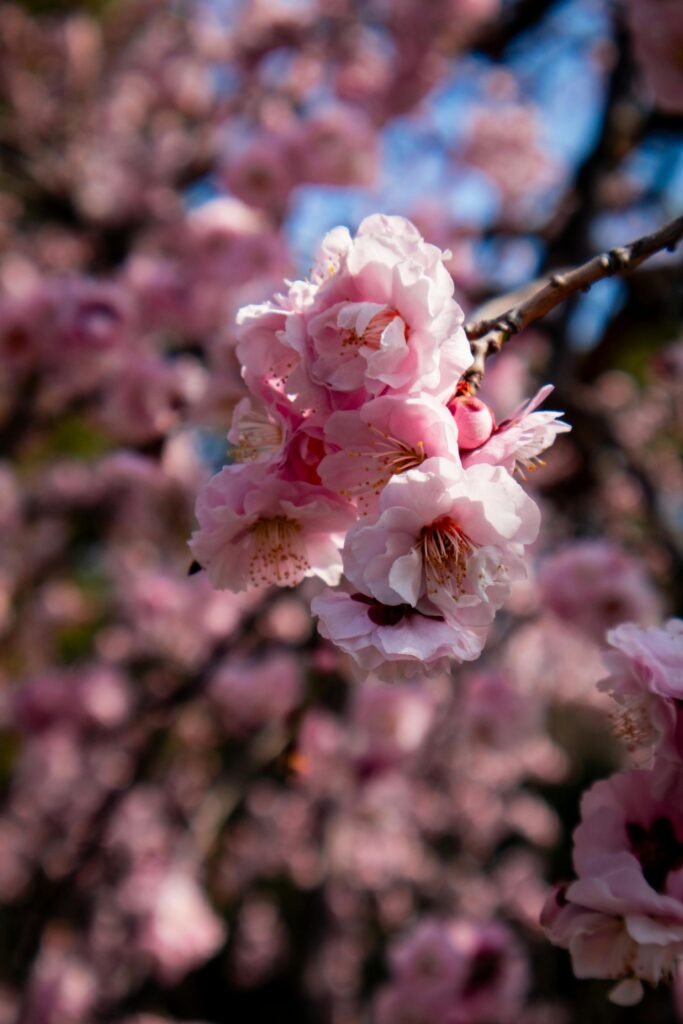
Late March to mid-April brings cherry blossom (sakura) peak — Osaka Castle Park, the Japan Mint walkway, and Kema Sakuranomiya Park are world-class viewing spots. The blossom window is short (7–10 days) and dates shift annually; check forecasts at jnto.go.jp. Late October to late November brings autumn colour (kōyō) and is the second great window — comfortable temperatures, clear skies, light tourist load before the December rush. June is the rainy season (tsuyu) — humid, drizzly, but cheap. July–August is brutal: 35°C+ with 80% humidity, and travel insurance recommended for heat-stress risk. December–February is cold and quiet; winter illuminations at Umeda and Nakanoshima compensate.
Osaka’s Districts & Neighborhoods
Osaka splits into 24 administrative wards (ku), but visitors mostly experience two centres of gravity: Kita (the northern hub around Umeda — corporate, modern, transport-focused) and Minami (the southern hub around Namba and Dōtonbori — neon, food, nightlife). The locals’ rule of thumb: stay in Kita for business, Minami for fun.
Central Districts – Where to Stay
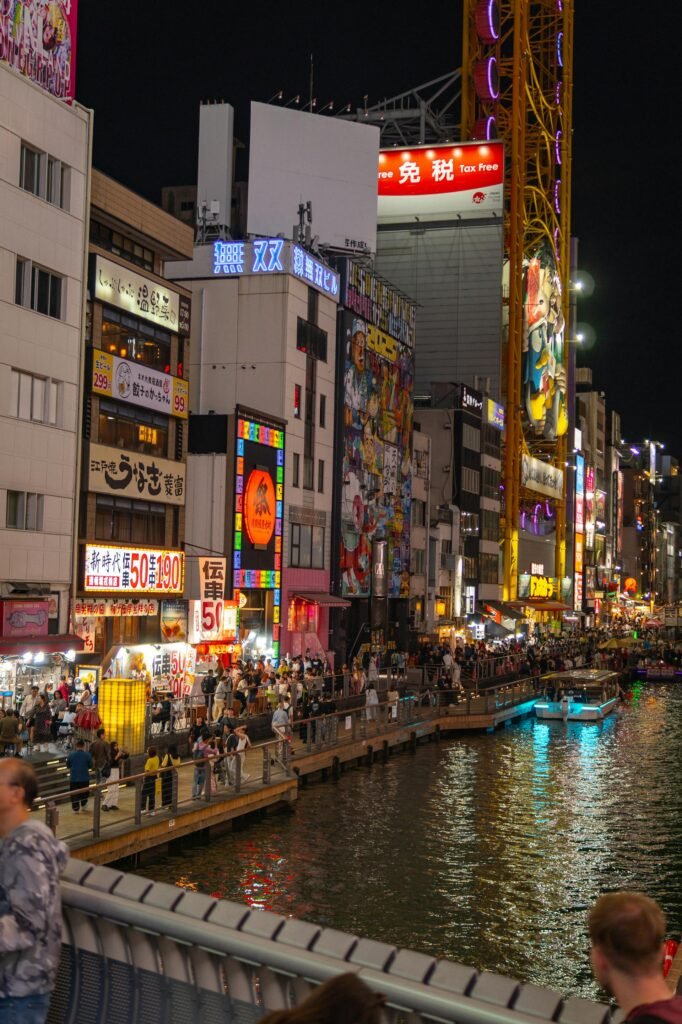
Chūō-ku (Central Ward) — covers Namba, Shinsaibashi, and Dōtonbori, and is the obvious base for first-time visitors. Walking distance to the neon canal, the giant Glico Running Man billboard, kushikatsu alleys, the Shinsaibashi-suji shopping arcade, and seven different metro lines. Pricey for hotels but unbeatable for accessibility.
Kita-ku (North Ward) — anchored by Umeda, Osaka’s main transport hub: JR Osaka Station, Hankyu and Hanshin terminals, and the giant subterranean Umeda underground city. Skyscraper hotels (Hilton, Hyatt, InterContinental), department stores, the photogenic Umeda Sky Building. Best base for travelers using Osaka as a Kansai hub for Kyoto/Kobe/Nara day trips.
Waterfront and Entertainment Areas
Konohana-ku — the Universal Studios Japan ward. Stay here only if USJ is the main reason for the trip; otherwise the metro to Namba is 20 minutes. Family hotels with USJ packages.
Minato-ku — the bayside ward. Tempozan has the giant Ferris wheel, Kaiyukan Aquarium (one of the world’s largest), and ferries to USJ. More relaxed, more open, more breeze.
Traditional and Residential Areas
Tennōji-ku — south-east of Namba, home to Shitennō-ji (one of Japan’s oldest temples, founded 593 CE), the Tennōji Zoo, and the 300-metre Abeno Harukas (Japan’s third-tallest building, with a top-floor observation deck). Hotels here run 25–35% cheaper than central Namba.
Sumiyoshi-ku — south Osaka. Sumiyoshi-Taisha, founded in the 3rd century CE, is one of Japan’s oldest Shinto shrines and the prototype of the Sumiyoshi-zukuri architectural style. Authentic Osaka residential life, weak tourism footprint.
Where to Stay Recommendations
First-time visitors: Namba/Shinsaibashi (Chūō-ku) for proximity to food, shopping, and nightlife. Business travelers / day-trippers to Kyoto/Kobe: Umeda (Kita-ku) — better Shinkansen and bullet-train access. Budget: Tennōji or Nipponbashi — comfortable mid-range hotels for ¥6,000–10,000 per night, vs ¥12,000–20,000 in Namba. Avoid: Nishinari-ku (around Tobita Shinchi) — tourist-safe in daylight, but seedier than visitors usually expect.
Top Things to Do in Osaka
Osaka’s tourist headliners are dense — almost everything is within 30 minutes by subway, and the city makes a lousy day trip and an excellent three-day base. Pace yourself; the food alone needs two days of dedicated grazing.
Historic Landmarks
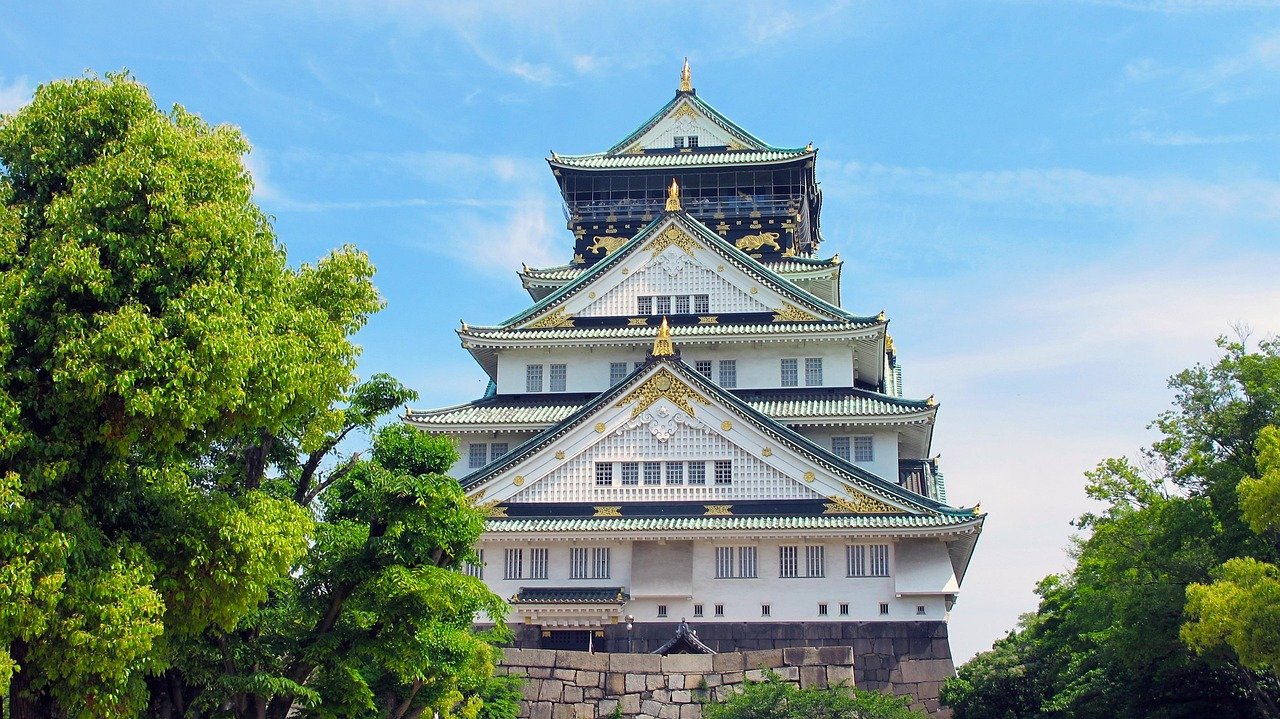
Osaka Castle (Ōsakajō) — the city’s emblem. Originally built by Toyotomi Hideyoshi in 1583, destroyed and rebuilt repeatedly, the current main keep is a 1931 ferro-concrete reconstruction with a museum inside (eight floors of armor, scrolls, and the castle’s history) and an observation deck on top. The original stone bases — some of the largest stones in Japanese castle masonry — are genuine 16th-century work. Park grounds are free; museum admission ¥600. Cherry blossom season here is overwhelming. Tickets at osakacastle.net.
Shitennō-ji — founded by Prince Shōtoku in 593 CE, traditionally Japan’s first Buddhist temple. The current five-story pagoda is reconstructed (the originals burnt down repeatedly), but the layout — pagoda, kondō, and lecture hall in symmetrical alignment — preserves the oldest temple plan in Japan. Free entry to the grounds; ¥300 for the inner precinct.
Sumiyoshi-Taisha — one of Japan’s oldest Shinto shrines and architecturally unique. The four main halls are built in the pre-Buddhist Sumiyoshi-zukuri style, predating Chinese architectural influence on Japanese religious buildings. The arched Sorihashi (“drum bridge”) at the entrance is a famous photo subject.
Modern Attractions and Entertainment
Universal Studios Japan — the country’s most-visited theme park, with sections for Harry Potter (the original Hogsmeade outside Florida), Super Nintendo World (with rideable Mario Kart), Jurassic Park, and Hollywood. Tickets ¥8,600+; Express Passes (skip-the-line) cost extra and sell out months ahead. Buy via usj.co.jp.
Kaiyukan Aquarium — eight stories of marine life arranged around a central tank holding two whale sharks (one of only a handful of aquariums worldwide that exhibit them). The exhibit follows the Pacific Rim, walking visitors top-to-bottom through 15 habitats. Tickets ¥2,700.
Umeda Sky Building — twin 173-metre towers connected at the top by a “floating observatory” with a circular open-air deck. Sunset is the moment; tickets ¥1,500 from skybldg.co.jp. The basement food street recreates a 1920s Showa-era streetscape.
Cultural Districts and Street Life
Dōtonbori — Osaka’s iconic neon canal-side strip. The Glico Running Man billboard (since 1935), the giant mechanical crab at Kani Doraku, and dozens of competing takoyaki and okonomiyaki stalls. Loud, crowded, brilliantly photogenic. Best at night.
Kuromon Ichiba Market — “Osaka’s kitchen” in literal form: 600 metres of covered market with seafood vendors grilling scallops in the shell, A5 wagyu cooked to order, fresh tuna sashimi, fruits at takeaway prices. Open roughly 9 am–6 pm; bring cash.
Shinsekai — “New World,” a 1912-built leisure quarter modelled after Paris and Coney Island, now stuck nostalgically in the 1960s. The Tsūtenkaku Tower is the centrepiece. The neighborhood is the kushikatsu (deep-fried skewer) capital — Daruma is the famous chain.
How to Get to Osaka
Osaka is the western anchor of Japan’s Shinkansen network and the gateway to the Kansai region. Connections by air, train, and road are excellent.
International Arrival
Kansai International Airport (KIX) — the major international gateway, built on an artificial island in Osaka Bay since 1994. Three rail options to central Osaka:
- JR Haruka Express — to Tennōji 30 min, Shin-Osaka 45 min; covered by JR Pass.
- Nankai Rapi:t Express — to Namba 34 min; sleek industrial-design train.
- Airport Limousine Bus — to multiple downtown stops in 50–70 min; cheapest option at ¥1,800.
Live schedules at kansai-airport.or.jp.
Domestic Flights
Osaka International Airport (Itami, ITM) — closer to the city, but domestic-only. Monorail and limousine bus reach central Osaka in 25–35 minutes. Most domestic Japan flights now go to Itami; KIX handles some domestic.
Rail Connections
Shin-Osaka Station is the Shinkansen hub. Tokyo (2h 22min by Nozomi), Kyoto (15 min), Hiroshima (1h 25min), Hakata/Fukuoka (2h 25min), Kanazawa (2h 35min via the new Hokuriku Shinkansen extension). The Japan Rail Pass covers most of these trains except Nozomi/Mizuho — book passes at japanrailpass.net before arrival. The private railways (Hankyū, Hanshin, Keihan, Kintetsu) connect Osaka to Kyoto, Kobe, Nara, and Ise faster and cheaper than JR.
Getting Around Osaka
Osaka’s combined subway, JR loop line, and private railway network is one of the densest in the world. Most of the major sights are within 20 minutes of central Namba or Umeda.
Subway System
Osaka Metro runs 9 colour-coded lines across the city; trains every 2–4 minutes during peak hours, 5:00 am to roughly midnight. Key tourist lines:
- Midōsuji Line (M, red) — Shin-Osaka → Umeda → Namba → Tennōji. The single most useful line.
- Tanimachi Line (T, purple) — runs by Osaka Castle (Tanimachi-yonchōme) and Tennōji.
- Chūō Line (C, green) — connects Osaka Port (Kaiyukan) to the city centre.
Single fares ¥190–280; tap on/off with ICOCA or Suica IC cards (refundable ¥500 deposit). Routes at subway.osakametro.co.jp.
Private Railways and JR
Beyond the metro, the JR Osaka Loop Line circles the city centre and is covered by JR Pass. The Hankyū, Hanshin, Keihan, and Kintetsu private lines reach surrounding cities (Kyoto, Kobe, Nara, Ise) faster than JR.
Buses and Trams
City buses fill gaps the rail network doesn’t reach — useful for the artificial-island ferry terminals. The historic Hankai Tramway (Japan’s last surviving tram in this region) runs from Tennōji south through Sumiyoshi to Sakai — a charming half-hour ride for ¥230.
Transportation Passes
The Osaka Amazing Pass (¥2,800 for 1 day, ¥3,600 for 2 days) covers all metro/bus + free admission to 30+ attractions including Osaka Castle, Umeda Sky Building, and Tsūtenkaku — pays off if you visit three+ paid sites in a day. Buy at airport JR ticket counters or online via osaka-info.jp.
Food & Drink in Osaka
The Osakan philosophy of eating is kuidaore — “to eat oneself bankrupt” — and locals take it seriously. Three of Japan’s most popular street foods (takoyaki, okonomiyaki, kushikatsu) were invented here. Eating well in Osaka is the cheapest pleasure in Japan; the difference between a ¥800 takoyaki stall and a ¥3,000 takoyaki specialist is mostly the queue.
Signature Osaka Dishes
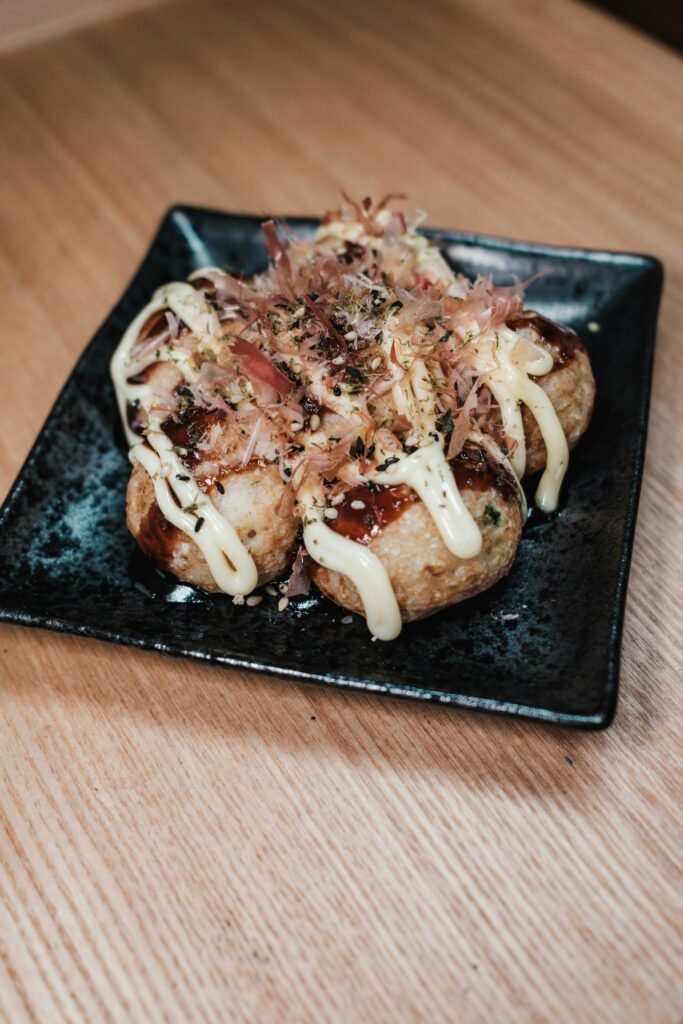
Takoyaki — ball-shaped batter snacks with chunks of octopus, cooked in cast-iron molds, brushed with sweet-savoury sauce, mayo, bonito flakes, and aonori. Invented in Osaka in 1935 by Tomekichi Endo. The classics: Wanaka (Sennichimae), Aizuya (the originator), Kukuru (Dōtonbori).
Okonomiyaki — savoury cabbage pancake mixed with whatever you like (“okonomi”); pork belly, squid, shrimp are standards. Osaka-style mixes everything into the batter; Hiroshima-style layers it (this is a sectional war). Famous spots: Mizuno (Dōtonbori, since 1945), Chibo, Fukutaro.
Kushikatsu — skewered meats, seafood, and vegetables breadcrumbed and deep-fried, dipped in a communal Worcester-style sauce. The double-dip rule is real: dip your skewer once, eat, do not redip. Use the cabbage as a sauce-scoop instead. Daruma in Shinsekai is the institution.
Where to Eat
Dōtonbori — the obvious starting point. Touristy, expensive, brilliantly photogenic. Pick the spots with local queues, skip the ones with English-only menus.
Kuromon Ichiba Market — covered market for breakfast and lunch. Grilled scallops, A5 wagyu cubes, sashimi, fruit. Pay-as-you-go, eat at standing counters.
Hozenji Yokocho — narrow lantern-lit alleys behind Hozenji Temple in Namba, with traditional kappo restaurants and bars. Calmer and more atmospheric than Dōtonbori 100 metres away.
Ura-Namba — “back Namba” — the warren of small alleys behind Namba Walk, where Osaka locals actually go. Cheaper, smaller, more authentic than the tourist canal.
Osaka’s Drinking Culture
The standard Japanese izakaya format dominates — small plates, beer, sake, shōchū, highballs. Osaka’s twist is the tachinomi (standing bar) tradition — cheap (¥300–600 per drink), no seats, talk to your neighbours. The Tenma neighbourhood north of the loop line is a tachinomi hotspot. Local sake breweries like Akishika (Nose) and Kunizakari (Sakai) are worth seeking out — try them at Akishika Asahi in Kita-Shinchi.
Culture & Arts in Osaka
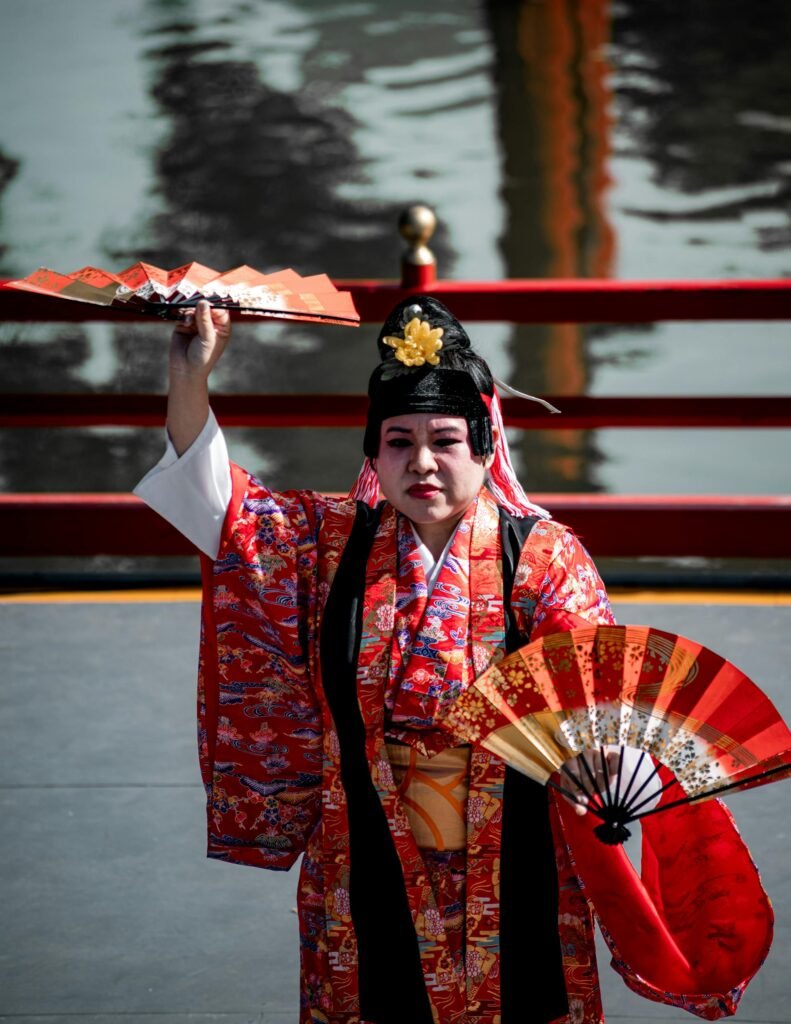
Osaka’s cultural identity is built around merchant-class arts (kabuki, bunraku, manzai comedy) rather than the aristocratic traditions of Kyoto — which gives the city a populist, slightly louder, slightly funnier cultural register.
Comedy and Entertainment
Osaka invented manzai — the two-person stand-up comedy duo format that dominates Japanese television. The dominant production company, Yoshimoto Kogyō, was founded in Osaka in 1912 and still has its training school here. Namba Grand Kagetsu (NGK) on Sennichimae is the city’s premier comedy theater; performances run daily, with English subtitles for some shows. Even if you don’t follow the dialogue, the timing and audience reactions are unmistakable.
Traditional Performing Arts
The National Bunraku Theatre (Nipponbashi) is the world headquarters of bunraku puppet drama — UNESCO Intangible Cultural Heritage since 2008. Three life-sized puppets, three operators each, a tayū chanter, and a shamisen player; performances last 4–5 hours but sell single-act tickets for ¥1,000–2,000. Schedule at ntj.jac.go.jp/english. The Shin Kabuki-za and Ōsaka Nōgaku Kaikan handle kabuki and nō respectively.
Festivals and Celebrations
Tenjin Matsuri (24–25 July) — one of Japan’s three greatest festivals (with Kyoto’s Gion and Tokyo’s Kanda). A 1,000-year-old tradition: river processions of decorated boats, fireworks over the Ōkawa River, costumed parades. Worth planning a trip around.
Aizen Matsuri (30 June – 2 July) — Osaka’s summer festival opener; less crowded than Tenjin.
Midōsuji Illumination (November–early January) — the four-kilometre-long Midōsuji Boulevard lit up by 1.2 million LED lights — among the biggest light shows in Asia.
Museums and Galleries
Osaka Museum of History — built next to the excavated Naniwa palace foundations, with full-scale reconstructions of imperial halls and a viewing window onto the dig site below. National Museum of Art Osaka (Nakanoshima) — Japan’s leading modern art museum outside Tokyo, with strong Yoshihara, Yoko Ono, and post-war Japanese collections. The Kamigata Ukiyo-e Museum in Namba focuses specifically on Osaka-school woodblock prints from the Edo period.
Sports in Osaka
Osaka’s sports scene is dominated by baseball, with steady soccer, sumo, and athletics presence.
Professional Sports Teams
Hanshin Tigers — based across the bay in Nishinomiya (Koshien Stadium) but emotionally Osaka’s team. Pacific League rivals the Yomiuri Giants for Japan’s most famous baseball franchise; their fans are notorious for jumping into the Dōtonbori canal after rare championships. The Orix Buffaloes play at the Kyocera Dome Osaka (Konohana-ku). Cerezo Osaka and Gamba Osaka are the city’s two J-League soccer teams — making Osaka one of the few Japanese cities with a genuine soccer derby.
Major Sporting Events
Osaka Marathon (late February) — major international marathon since 2011, route past Osaka Castle, Umeda, Dōtonbori. Public ballot lottery; entry via osaka-marathon.com. Osaka Women’s Marathon (January) is Japan’s premier elite women’s race. Spring Sumo Tournament (Haru Basho) at Edion Arena Osaka in March is one of six annual grand sumo tournaments — tickets via sumo.or.jp.
Osaka by District: The 23 区 (Ku)
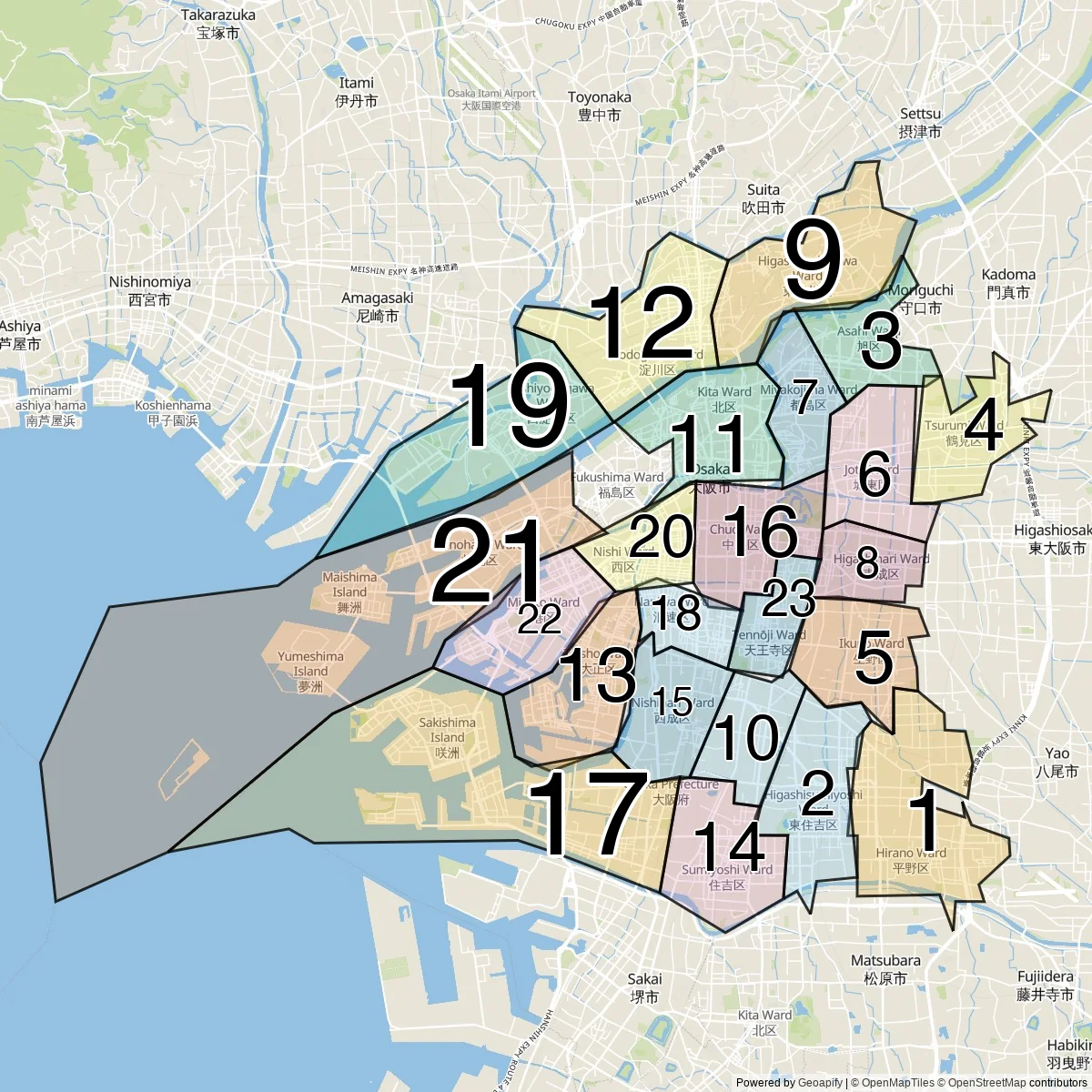
Osaka is divided into 23 wards. The map below shows their official OSM boundaries, colour-coded to match the table — a quick way to orient yourself before zooming in on individual sights.
| # | 区 (Ku) |
|---|---|
| 1 | 平野区 · Hirano Ward |
| 2 | 東住吉区 · Higashisumiyoshi Ward |
| 3 | 旭区 · Asahi Ward |
| 4 | 鶴見区 · Tsurumi Ward |
| 5 | 生野区 · Ikuno Ward |
| 6 | 城東区 · Joto Ward |
| 7 | 都島区 · Miyakojima Ward |
| 8 | 東成区 · Higashinari Ward |
| 9 | 東淀川区 · Higashiyodogawa Ward |
| 10 | 阿倍野区 · Abeno Ward |
| 11 | 北区 · Kita Ward |
| 12 | 淀川区 · Yodogawa Ward |
| 13 | 大正区 · Taisho Ward |
| 14 | 住吉区 · Sumiyoshi Ward |
| 15 | 西成区 · Nishinari Ward |
| 16 | 中央区 · Chūō Ward |
| 17 | 住之江区 · Suminoe Ward |
| 18 | 浪速区 · Naniwa Ward |
| 19 | 西淀川区 · Nishiyodogawa Ward |
| 20 | 西区 · Nishi Ward |
| 21 | 此花区 · Konohana Ward |
| 22 | 港区 · Minato Ward |
| 23 | 天王寺区 · Tennōji Ward |
Frequently Asked Questions About Visiting Osaka
Do I need a visa to visit Osaka?
Most likely no — Japan is generous with short-stay tourist entry. Citizens of 71 countries and territories — including the US, UK, EU member states, Canada, Australia, New Zealand, South Korea, Singapore, Taiwan, Hong Kong, and most of Latin America — enter visa-free for stays of up to 90 days, with the official list at mofa.go.jp. Other nationalities (including India, China, Vietnam, Philippines, Russia) need a tourist visa applied for at the Japanese embassy before travel. Japan introduced an electronic JESTA pre-travel screening for visa-free visitors in 2025–2026; check the latest at mofa.go.jp a few weeks before flying. A passport with at least 6 months remaining validity is required.
Is Osaka safe for tourists?
Osaka is genuinely one of the world’s safest major cities — Japan as a whole has one of the lowest violent crime rates of any developed country. The US State Department rates Japan at “exercise normal precautions.” Walking around at night in central districts is fine even for solo travelers. Standard caution areas: Nishinari (around Tobita Shinchi and Airin) feels rougher than typical Osaka and has Japan’s largest concentration of homeless residents — visit in daylight if at all. Pickpocketing happens at Dōtonbori and major train stations during peak tourist season but is rare by international standards. Earthquake preparedness: Japan has frequent quakes; learn the duck-cover-hold drill, and check jma.go.jp for the official Japan Meteorological Agency warnings during your stay.
How many days do I need in Osaka?
Two full days handles the essential sights; three is comfortable; four lets you use Osaka as a Kansai base for day trips. A solid 2-day plan: Day 1 — Osaka Castle + Shitennō-ji Temple + Dōtonbori evening (takoyaki, neon, Glico Running Man); Day 2 — Kuromon Ichiba Market for breakfast + Umeda Sky Building + Universal Studios Japan or Kaiyukan Aquarium. Day 3: Sumiyoshi-Taisha + Hozenji Yokocho + Nakanoshima museums. Day 4–5 (Kansai mode): day-trip to Kyoto (15 min by Shinkansen), Nara (35 min by Kintetsu), or Himeji Castle (45 min by Shinkansen). Osaka is the best base in Kansai for these trips because hotels are 30–40% cheaper than Kyoto for the same quality.
What’s the best area to stay in Osaka?
Three solid options. Namba / Shinsaibashi (Chūō-ku) — the southern entertainment hub, walking distance to Dōtonbori, kushikatsu and takoyaki spots, multiple metro lines. The obvious first-time-visitor choice; pricey but irreplaceable for nightlife and food. Umeda (Kita-ku) — the northern transport hub; better for travelers using Osaka as a Kansai base for day trips to Kyoto, Kobe, or Nara. Skyscraper hotels (Hilton, Hyatt, InterContinental) and the giant subterranean Umeda underground city. Tennōji — the value option, 25–35% cheaper than central Namba, near Shitennō-ji and Abeno Harukas tower, on the JR Loop Line for easy reach of all major sights. Skip: the area immediately around Shin-Osaka Station unless you only need a Shinkansen layover hotel.
How much does it cost to visit the major sites?
Osaka’s individual entry fees are reasonable, but theme parks are the budget killer. Osaka Castle: ¥600 (museum + observation deck) via osakacastle.net. Umeda Sky Building observatory: ¥1,500. Shitennō-ji: ¥300 inner precinct. Sumiyoshi-Taisha: free. Kaiyukan Aquarium: ¥2,700. Universal Studios Japan: ¥8,600+ (Express Passes ¥7,800–24,000 extra and book months ahead). Tsūtenkaku Tower observation: ¥1,000. Bargain pass: the Osaka Amazing Pass (¥2,800/day, ¥3,600/2-day) covers all metro/bus + 30+ attractions including the castle, Sky Building, Tsūtenkaku — pays off after three sites. Buy at airport JR ticket counters or at osaka-info.jp.
Should I drink the tap water in Osaka?
Yes, absolutely. Tap water across Japan meets some of the strictest quality standards on earth, and Osaka’s distribution network is exemplary. Drink it freely, brush your teeth with it, and use ice without concern. The Osaka Municipal Waterworks Bureau publishes water quality reports and has spent the last two decades upgrading the network — Osaka tap water now wins blind taste tests against bottled water and is sold under the brand “Honjitate.” Restaurants serve free chilled water (ohiya) without asking. Public drinking fountains are common in parks and stations. Bottled water is widely available (¥110–150 per liter at convenience stores) but unnecessary.
Do I need to tip in Osaka?
No — and trying to tip can cause genuine awkwardness. Tipping is not part of Japanese service culture, and excellent service is the baseline expectation, not something to be rewarded. Restaurants: never tip; if you leave money on the table, the staff may chase you down the street to return it. Some Western-style or hotel restaurants add a 10% service charge (sābisuryō) to the bill — that’s the closest thing to a tip and is the only one. Taxis: pay the meter exactly; no tip. Hotel porters at luxury hotels: occasionally a small tip in a sealed envelope is accepted but never expected. Tour guides: a small wrapped gift (omiyage) from your home country is more appropriate than cash. Where Western-style services target international clients (some private guides, high-end concierges), tipping has crept in — but it remains the exception, not the rule.
What’s the dress code in Osaka?
Osakans dress smartly but not stiffly — a notch more casual than Tokyo, but still neater than most Western cities. For sightseeing: comfortable smart-casual; clean fitted clothes, walking shoes (you’ll easily hit 15,000+ steps a day). For temples and shrines: shoulders and knees should be covered; remove shoes before entering temple buildings (look for the shoe shelves at the entrance). For onsen / public baths: nudity is the standard and expected — but most onsen still ban patrons with visible tattoos, including small ones. Look for “tattoo-friendly” onsen or use waterproof skin-tone cover stickers. For high-end restaurants (kaiseki, fine sushi): smart casual at minimum; some kaiseki houses request no jeans or athletic wear. For Universal Studios Japan: comfortable closed-toe shoes are essential, and the park bans full Halloween-style costumes for adults outside Halloween season.
Economy & Business
The Greater Osaka metro area produces a GDP of roughly $700 billion — one of the world’s top-ten urban economies. The “Tokyo gravity” of recent decades pulled many headquarters east, but Osaka remains the corporate base for major Japanese giants including Panasonic, Sharp, Suntory, Itochu, Daikin, Keyence, Daiwa House, and Takeda Pharmaceutical.
Key Industries
Manufacturing remains Osaka’s industrial backbone — heavy industry along the bay (steel, shipbuilding), pharmaceuticals (the city is sometimes called the “pharmaceutical capital of Japan”), electronics, and consumer goods. The Port of Osaka is one of Japan’s top three container ports. Wholesale trade — the historic legacy of “the nation’s kitchen” — continues through specialist markets in Senba, Doshōmachi (pharmaceuticals), and the food districts.
Future Development
The 2025 Osaka-Kansai Expo concluded in October 2025, and the focus has now shifted to Yumeshima‘s post-Expo redevelopment — including Japan’s first integrated resort with casino, scheduled to open in 2030 under MGM-led consortium agreements. The Osaka Metro Chūō Line extension to Yumeshima opened for the Expo and remains operational. New corporate towers in the Umekita Phase 2 district (north of Osaka Station) opened in 2024–2025, creating Osaka’s most modern business precinct since the 1990s.
Osaka rewards visitors who lean into its merchant-city personality: louder than Tokyo, less polished than Kyoto, infinitely more interested in a good lunch than a perfect tea ceremony. Three days lets you do the headline sights properly; four lets you eat without rushing. Wear comfortable shoes — Osaka is a walking city even with the world-class metro.
AFRIKA
Cairo Hurghada Johannesburg Marrakech
ASIA
Abu Dhabi Agra Antalya Bangkok Batam Beijing Bengaluru Cebu City Chiang Mai Chiba Chennai Da Nang Dammam Delhi Denpasar Dubai Fukuoka Guangzhou Guilin Ha Long Hanoi Ho Chi Minh City Jakarta Jaipur Johor Bahru Kolkata Krabi Kuala Lumpur Kyoto Macau Mecca Medina Mugla Mumbai Osaka Pattaya Penang Phuket Riyadh Seoul Shanghai Shenzhen Singapore Taipei Tokyo Zhuhai
EUROPE
Amsterdam Athens Barcelona Berlin Brussels Budapest Copenhagen Dublin Florence Frankfurt am Main Heraklion Krakow Lisbon London Madrid Milan Munich Nice Paris Porto Prague Rhodes Rome Stockholm Venice Vienna Warsaw
NORTH AMERICA
Cancun Las Vegas Los Angeles Miami New York City Orlando San Francisco Toronto Vancouver
SOUTH AMERICA
Buenos Aires Lima Rio De Janeiro
OCEANIA
Auckland Honolulu Melbourne Sydney