
Upcoming Events in Vienna
| Date | Title | Details |
|---|---|---|
| 2026-09-14 to 2026-09-19 | Vienna Fashion Week 2026 | Vienna Fashion Week takes over Halle E and G of the MuseumsQuartier from 14 to 19 September under the motto Glamour goes Wild, bringing runway shows by Austrian and international designers to the heart of the city. Marina, Elisabeth Bauer and Frank Weeneggsinn are among the names on this year’s programme as fashion creators from around the world present their collections. Alongside the catwalks there are talks and showcases celebrating fashion culture. Tickets for individual shows are sold through wien-ticket.at at varying prices, and evening slots are the most sought after. [Source] |
| 2026-09-24 to 2026-10-11 | Wiener Wiesn-Fest 2026 | Vienna’s own Alpine folk festival takes over the Kaiserwiese beside the Prater’s giant Ferris wheel from late September into October, with big beer tents, brass and folk music, dirndls and lederhosen, fairground rides and hearty Austrian food. Billed as a celebration of tradition and Gemuetlichkeit, it offers a homegrown answer to Munich’s Oktoberfest with a distinctly Viennese flavour. Entry to the grounds is generally free, with charges for tent tables and food. A lively, family-friendly autumn outing full of music and cheer. [Source] |
| 2026-09-25 to 2026-10-04 | Vienna Design Week 2026 | Austria’s largest curated design festival returns from 25 September to 4 October, spreading roughly 200 events across the city from a festival headquarters at Hietzinger Kai 101. Vienna Design Week showcases product, graphic, social and experimental design through exhibitions, studio visits, guided tours and installations, often opening up workshops and businesses that are normally closed to the public. Much of the programme is free to attend, making it an easy festival to dip into. A stimulating pick for anyone curious about how design shapes everyday urban life. [Source] |
| 2026-10-03 | ORF Long Night of Museums 2026 | On one evening in early October, more than a hundred museums and galleries across Vienna throw open their doors late into the night for the ORF Long Night of Museums, all accessible with a single combined ticket. From the grand imperial collections to quirky specialist houses, venues lay on tours, talks and family activities, and shuttle services link the participating sites. It is a superb, great-value way to sample the city’s extraordinary museum landscape in a single night. Reduced tickets are available for children. [Source] |
| 2026-10-22 to 2026-11-03 | Viennale 2026 | The Viennale, Vienna’s International Film Festival, is Austria’s most important cinema event, filling historic picture houses across the city each October with a carefully curated selection of feature films, documentaries and short films from around the world. Known for its adventurous, cinephile-friendly programming rather than red-carpet glitz, it draws packed audiences and visiting filmmakers. Tickets go on sale to the public and popular screenings sell out fast. A highlight for serious film lovers and a fixture of Vienna’s rich cultural autumn. [Source] |
| 2026-10-24 to 2026-11-01 | Erste Bank Open 2026 | The Erste Bank Open brings ATP 500 tennis to the Wiener Stadthalle from 24 October to 1 November with a stellar field: defending champion Jannik Sinner returns, joined by Alexander Zverev, Daniil Medvedev, Frances Tiafoe, Lorenzo Musetti, Flavio Cobolli and other top names, with five of the world’s top ten committed. Vienna’s biggest indoor sporting event of the autumn pairs world-class tennis with a lively arena atmosphere. Tickets are sold by session at widely varying prices, weekend and finals sessions sell out fastest, and line-ups remain subject to ATP rules. [Source] |
| 2026-11-25 to 2026-11-29 | Buch Wien 2026 – Vienna Book Fair | Austria’s biggest book fair, Buch Wien, runs from 25 to 29 November at the Messe Wien exhibition grounds, drawing publishers, authors and tens of thousands of readers for five days of presentations, readings and signings. Stages across the halls host Austrian and international writers, and dedicated programmes for children and young readers make it a family-friendly outing as much as a literary marketplace. The fair traditionally coincides with a citywide festival of readings that spills into cafes and theatres. Day tickets are sold online and at the door at moderate prices. [Source] |
City News in Vienna – last 14 days
| Date | Category | Headline | Details |
|---|---|---|---|
| 2026-09-14 | Business | Sales launch for luxury flats at former Leiner site on Mariahilfer Strasse | The luxury residential project rising in place of the former Leiner furniture store on Mariahilfer Strasse, once a flagship scheme of the collapsed Signa group, has started selling its roughly 200 condominium and investment apartments. With the launch of a so-called secret sale phase, prospective buyers can now register their personal interest in the units before full marketing begins. The sales start marks a further step in the reactivation of one of Vienna’s most prominent stalled development sites on the city’s busiest shopping street. [Source] |
| 2026-09-14 | Public transport | Pyjama protest at Hauptbahnhof demands return of Paris Nightjet | Demonstrators in pyjamas gathered at Vienna’s Hauptbahnhof on Sunday evening for another so-called pyjama demo against the discontinuation of the night train between Paris and Vienna, which has been halted since the middle of last December. The protesters also used the rally to call for a night flight ban at Vienna Airport, arguing that comfortable rail alternatives should replace short-haul and overnight flying. The recurring bedtime-themed protests have become a visual trademark of the campaign to save European night train connections. [Source] |
| 2026-09-14 | Sports | Sinner, Zverev and more stars confirmed for Erste Bank Open | Preparations for the Erste Bank Open are entering the home straight, and the tournament announced on Monday that several of tennis’s biggest names will play the Vienna ATP 500 event. Jannik Sinner intends to defend his title from last year at the Wiener Stadthalle, while Alexander Zverev and further top players will be trying to stop him. The strong entry list continues the tournament’s run of attracting elite fields, and ticket demand for the late-October week is expected to be correspondingly high. [Source] |
| 2026-09-14 | Local government | Event industry joins chorus of criticism against planned Kultureuro | Criticism of Vienna’s planned Kultureuro levy is not letting up. After objections from cultural institutions including the State Opera and the federal museums, the Austrian event industry association IGOEV has now spoken out against the charge, which would be added to tickets to help finance culture in the city. The organisers’ association warns of the burden the levy would place on events and audiences, adding commercial promoters to the growing list of voices urging the city to rethink the plan. [Source] |
| 2026-09-14 | Culture | Schubert Theater opens jubilee season for its 20th anniversary | Vienna’s Schubert Theater, celebrated for its inventive puppet theatre, is marking its 20th anniversary with a jubilee season packed with world premieres. The programme features a best-of from the long collaboration between musicians Die Strottern and puppeteer Christoph Bochdansky, as well as a staging of Macbeth by Simon Meusburger. The small Alsergrund house has grown from an insider tip into a fixture of the city’s independent theatre scene, and its anniversary line-up celebrates two decades of imaginative storytelling beyond the mainstream stages. [Source] |
| 2026-09-14 | Public safety | Murder indictment after man strangled friend during dispute | The Vienna public prosecutor’s office has filed a murder indictment against a 36-year-old man accused of strangling a 41-year-old friend during a dispute in the spring. According to the indictment, the suspect then left the victim’s body lying in his apartment for weeks before the crime came to light. The case now heads to court, where the accused faces a jury trial on the murder charge, one of the most serious counts in Austrian criminal law. [Source] |
| 2026-09-14 | Public safety | Two young men wounded in knife attack at Franz-Josefs-Kai | Two young men were the victims of a knife attack at Franz-Josefs-Kai in Vienna’s Innere Stadt in the night from Saturday to Sunday. An as yet unidentified man is said to have gone at the pair with a knife near number 29 of the Danube Canal thoroughfare, injuring both. Police are investigating the circumstances of the attack and are working to identify and locate the assailant, who fled the scene. The canal-side strip is a busy nightlife area on weekend nights. [Source] |
| 2026-09-14 | Local government | Legal opinions pile pressure on Vienna’s Auszeit-WG for young offenders | A legal opinion from the constitutional service in the Federal Chancellery reportedly sees problems with the Auszeit-WG facility recently opened in Vienna for delinquent minors, finding the residential care law unsuited as a basis for holding young people there. Constitutional lawyer Heinz Mayer goes further, speaking of a possible breach of the constitution and suggesting that financial compensation claims through official liability suits are conceivable. The assessments raise pressure on the city over the flagship project in juvenile crime policy. [Source] |
| 2026-09-14 | Education | Margareten again criticises stalled school expansion in Castelligasse | The district leadership of Margareten has renewed its criticism of the stalled school expansion in Castelligasse, for which the City of Vienna bears responsibility. The district reports investments running into millions for the renovation of its schools and kindergartens and says money for projects is available, yet the Castelligasse extension remains on ice. Local politicians are pressing the city to finally move the project forward so that the growing district can keep pace with demand for school places. [Source] |
| 2026-09-14 | Local affairs | Power outage hits large parts of Doebling | A power outage struck large parts of Vienna’s 19th district on Monday afternoon, cutting electricity in neighbourhoods around Heiligenstadt and Grinzing and up toward the Kahlenberg. Households and businesses across the affected areas were left without supply while technicians worked to restore the network. The outage disrupted daily life in the wine-village corners of the district, though power returned progressively as repairs advanced. The cause of the failure was being investigated. [Source] |
| 2026-09-13 | Local affairs | Vienna’s outdoor pools close season after passing two million guests | Vienna’s municipal outdoor pools ended their season on Sunday, and just before closing time the city’s baths cracked the two-million-guest mark for the summer, hitting the milestone on Saturday. The season finale caps a busy swimming year across the city’s open-air facilities. There is good news for swimmers looking ahead: entry prices are to remain unchanged next year, keeping one of the city’s most beloved summer routines affordable as the baths now switch over to indoor operation for the colder months. [Source] |
| 2026-09-13 | Culture | Vienna Fashion Week goes wild at the MuseumsQuartier | Vienna Fashion Week returns to the MuseumsQuartier this coming week under the motto Glamour goes Wild. Fashion designers from all over the world are travelling to the city for the runway programme, among them Marina, Elisabeth Bauer and Frank Weeneggsinn. The annual event turns the MQ’s event halls into the centre of Austria’s fashion scene, mixing established labels with emerging talent and giving audiences a glimpse of the coming season’s looks in a week of shows, presentations and parties. [Source] |
| 2026-09-12 | Public transport | Citybuses mark 50 years with new routes through the Innere Stadt | Vienna’s Citybuses are celebrating their 50th anniversary with revised routings. The 2A and 3A lines are to offer improved connections within the Innere Stadt, and in part beyond the historic centre, as the small buses that thread through the narrow inner-city streets get an updated network. The changes are intended to better link shopping streets, transport hubs and residential pockets of the first district, keeping a half-century-old service matched to how the city centre is used today. [Source] |
Vienna Events & City News Archive
Sources: Vienna Fashion Week, ORF Wien, Wiener Wiesn-Fest, Vienna Design Week, ORF Lange Nacht der Museen, Viennale, Erste Bank Open, Buch Wien
Weather Forecast for the Next 14 Days in Vienna
| Date | Weather | Max °F | Min °F | Rain mm |
|---|---|---|---|---|
| 2026-09-14 | 🌧️ | 66.1 °F | 62.2 °F | 1.7 mm |
| 2026-09-15 | ⛅ | 73.9 °F | 56.6 °F | 0.0 mm |
| 2026-09-16 | ☁️ | 79.7 °F | 56.4 °F | 0.0 mm |
| 2026-09-17 | 🌧️ | 66.3 °F | 56.3 °F | 2.9 mm |
| 2026-09-18 | 🌧️ | 64.6 °F | 51.7 °F | 0.3 mm |
| 2026-09-19 | ☁️ | 69.1 °F | 54.0 °F | 0.6 mm |
| 2026-09-20 | ☁️ | 73.9 °F | 53.8 °F | 0.0 mm |
| 2026-09-21 | 🌧️ | 66.2 °F | 56.6 °F | 1.1 mm |
| 2026-09-22 | ⛅ | 64.9 °F | 51.4 °F | 0.0 mm |
| 2026-09-23 | ⛅ | 64.9 °F | 50.1 °F | 0.0 mm |
| 2026-09-24 | ☁️ | 63.8 °F | 48.8 °F | 0.0 mm |
| 2026-09-25 | 🌧️ | 61.7 °F | 49.0 °F | 1.2 mm |
| 2026-09-26 | 🌧️ | 72.4 °F | 50.6 °F | 0.9 mm |
| 2026-09-27 | 🌧️ | 70.1 °F | 55.5 °F | 0.3 mm |
Vienna (Wien) is the capital of Austria and one of Europe’s great cultural cities — the seat of the Habsburg emperors for more than six centuries, the city of Mozart, Beethoven and Strauss, and a place that turned coffee-drinking, waltzing and cake into high art. Grand baroque palaces, a ring of monumental boulevard architecture, world-class museums and gilded concert halls sit alongside cosy coffee houses, leafy wine taverns and one of the highest qualities of life on the planet — Vienna is regularly ranked the world’s most liveable city. On the Danube where Central Europe meets the East, it is both an imperial time capsule and a relaxed, green, remarkably easy place to visit.
This guide covers Vienna’s history and layout, its palaces, churches and museums, its unmatched musical life, the festival calendar (with a special 2026 highlight below), how to arrive and get around, where to eat, drink coffee and sleep, and the best day trips along the Danube and beyond. Whether you come for the art, the music, the cake or simply the gemütlich pace, here’s how to do it well.
Key Takeaways
- Vienna is Austria’s imperial capital and a UNESCO-listed “City of Music” — think Habsburg palaces, classical concerts, coffee houses and the world’s top liveability rankings.
- Don’t miss St. Stephen’s Cathedral, the Hofburg and Schönbrunn palaces, the Belvedere (home to Klimt’s The Kiss), the grand Ringstraße and the Prater’s giant Ferris wheel.
- 2026 highlight: Vienna hosts the Eurovision Song Contest on 12, 14 and 16 May 2026 — expect a busy, festive city that spring; book early.
- Getting around is superb: the airport reaches the centre in 16 minutes (CAT) or ~23 (S7), and the U-Bahn, trams and buses make the city effortless.
- Plan 3–4 days for the city, plus a day trip to the Wachau wine valley, Bratislava or Salzburg.
Vienna at a Glance
Here are the essentials that frame any visit to the Austrian capital.
| Country | Austria — Vienna is both the national capital and its own federal state |
|---|---|
| Origins | Roman camp Vindobona (1st c. AD); Habsburg residence from the 13th century to 1918 |
| Population | ~2.0 million (city); ~2.9 million in the metro area — Austria’s largest city by far |
| Elevation | ~170 m (560 ft) in the centre, rising into the Vienna Woods |
| Nicknames | “City of Music” and “City of Dreams” (the home of Freud) |
| Airport | Vienna International Airport (VIE), Schwechat, ~18 km southeast |
| Known for | Habsburg palaces, classical music, coffee houses, balls, Schönbrunn & the Ringstraße — and topping “most liveable city” lists |
| Best time to visit | Apr–June and Sept–Oct; December for Christmas markets; Jan–Feb for ball season |
City Profile: Getting Your Bearings
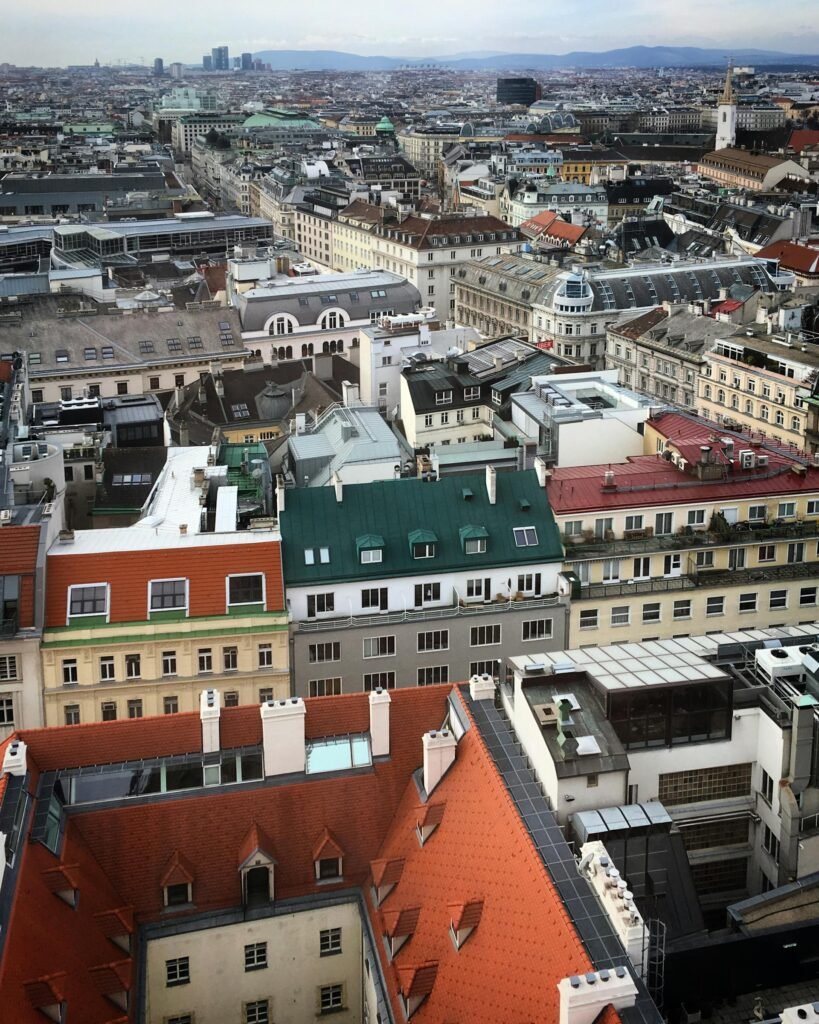
Vienna is laid out like an onion. At its core is the Innere Stadt (1st district), the historic old town crowned by St. Stephen’s Cathedral and packed with palaces, churches and elegant shopping streets. Wrapped around it runs the Ringstraße, the grand 19th-century boulevard built where the city walls once stood, lined with monumental landmarks — the State Opera, the museums, parliament, the city hall and the university. Beyond the Ring spread the inner districts, and further out the city fans into 23 numbered districts in total, reaching the Danube to the northeast and the wooded hills of the Wienerwald to the west.
For visitors, the good news is that almost everything of note sits inside or just beyond the Ring, and the public transport is so good that the outer sights — Schönbrunn to the west, the Prater to the east — are minutes away. Vienna is clean, safe and green (nearly half the city is parks, woods and water), with the Danube and its recreational Danube Island threading through the east. It’s a city that rewards slowing down: lingering in a coffee house is not killing time here, it’s the whole point.
That quality of life is no accident: Vienna tops global “most liveable city” rankings year after year, prized for its safety, clean air, superb public transport, world-famous social housing and Alpine-fresh tap water. It’s also a city of global weight — a seat of the United Nations and OPEC — yet it never feels frantic. The Viennese word for the local mood is gemütlich: a cosy, unhurried contentment best understood over coffee and cake. Combine that with extraordinary culture at every turn, and you have a capital that’s as easy to love as it is to navigate.
A Brief History of Vienna
Vienna began as the Roman frontier garrison of Vindobona on the Danube, guarding the empire’s edge. It grew through the Middle Ages under the Babenberg dukes, but its destiny was sealed in 1278 when the Habsburgs took control — beginning a dynasty that would rule from Vienna for some 640 years and, for long stretches, govern the Holy Roman Empire and a vast multinational realm from here.
Twice the city stood at the gates of history: the Ottoman sieges of 1529 and 1683 were turned back at Vienna’s walls, the second famously breaking the Ottoman advance into Europe (and, legend has it, giving Vienna its love of coffee from captured supplies). The defeat ushered in a baroque golden age — this is when Schönbrunn, the Belvedere and the city’s great churches took shape. In 1815 the Congress of Vienna redrew the map of Europe here after Napoleon.
The 18th century was Vienna’s imperial high point under Empress Maria Theresa, the formidable reformer who bore sixteen children (among them Marie Antoinette), modernised the state, and before whom a six-year-old Mozart famously performed at Schönbrunn. A century later, Emperor Franz Joseph would reign for an astonishing 68 years, his beautiful, restless wife Empress Elisabeth (“Sisi”) becoming the age’s tragic icon — figures you’ll meet again and again in Vienna’s palaces and museums.
The 19th century brought the city’s defining transformation: Emperor Franz Joseph tore down the old walls and built the Ringstraße, ringing the centre with grand public buildings. Around 1900, Vienna became a crucible of modern thought and art — Freud, Klimt, Schiele, Mahler, Wittgenstein and the Secession all flourished in fin-de-siècle “Vienna 1900.” The empire collapsed in 1918; the interwar “Red Vienna” period built pioneering social housing; the dark years of Nazi annexation and war followed. Since 1955 Austria has been a neutral republic, and Vienna a prosperous, green capital and a seat of the United Nations — its imperial past beautifully preserved at its heart.
Top Sights & Attractions in Vienna
Vienna’s headline sights blend imperial grandeur with Gothic and baroque splendour. These are the ones to prioritise.
St. Stephen’s Cathedral (Stephansdom)
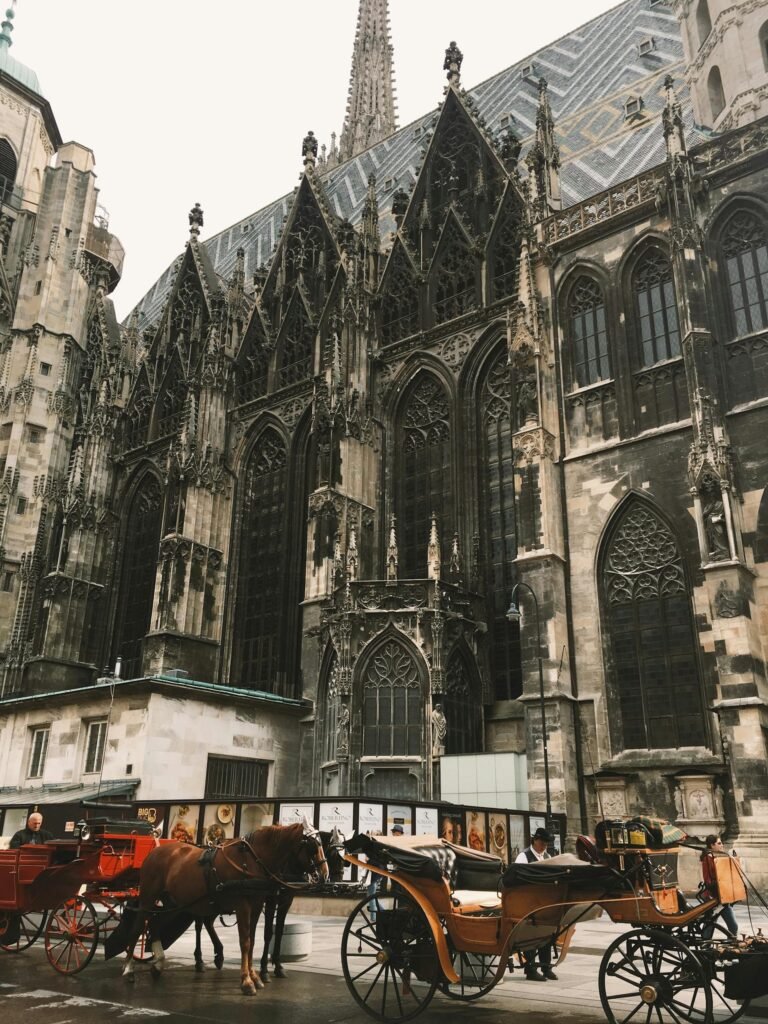
The city’s soul and its geographic centre, this towering Gothic cathedral with its dazzling patterned-tile roof has watched over Vienna since the Middle Ages. Climb the south tower’s 343 steps (or take the lift in the north tower) for rooftop views, and look down into the catacombs below. The square around it, Stephansplatz, is where Vienna gathers — and where the horse-drawn Fiaker carriages wait.
Schönbrunn Palace
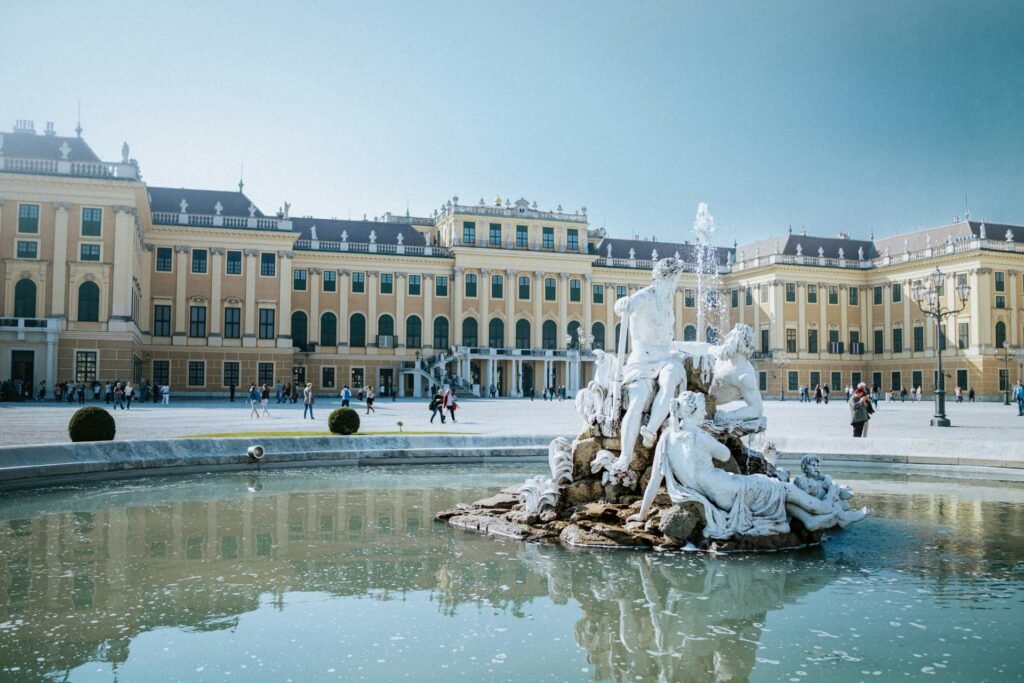
The Habsburgs’ sublime baroque summer residence, with 1,441 rooms (around 40 open to visitors), is Vienna’s most-visited sight. Tour the imperial apartments of Franz Joseph and Empress Sisi, then wander the vast formal gardens up to the Gloriette for a panoramic view back over the palace and city. The grounds also hold the world’s oldest zoo, a maze and a palm house — easily a half-day on their own.
The Hofburg & the Imperial Centre
The sprawling Hofburg was the Habsburgs’ winter palace and the seat of empire; today it holds the Imperial Apartments, the Sisi Museum, the Imperial Treasury (with the crown jewels), the Spanish Riding School with its Lipizzaner horses, and the Austrian National Library’s breathtaking State Hall. Around it cluster the elegant pedestrian streets of the Graben and Kohlmarkt, the Plague Column, and the Albertina museum.
The Belvedere & the Ringstraße
The Belvedere, a pair of baroque palaces set in terraced gardens, houses Austria’s national art collection — above all Gustav Klimt’s golden masterpiece The Kiss. To take in the Ringstraße itself, hop on a tram (lines 1, 2 and D cover much of it) or walk past the Opera, the twin Kunsthistorisches and Naturhistorisches museums, Parliament, the neo-Gothic City Hall (Rathaus) and the Burgtheater in a single grand sweep.
More to See
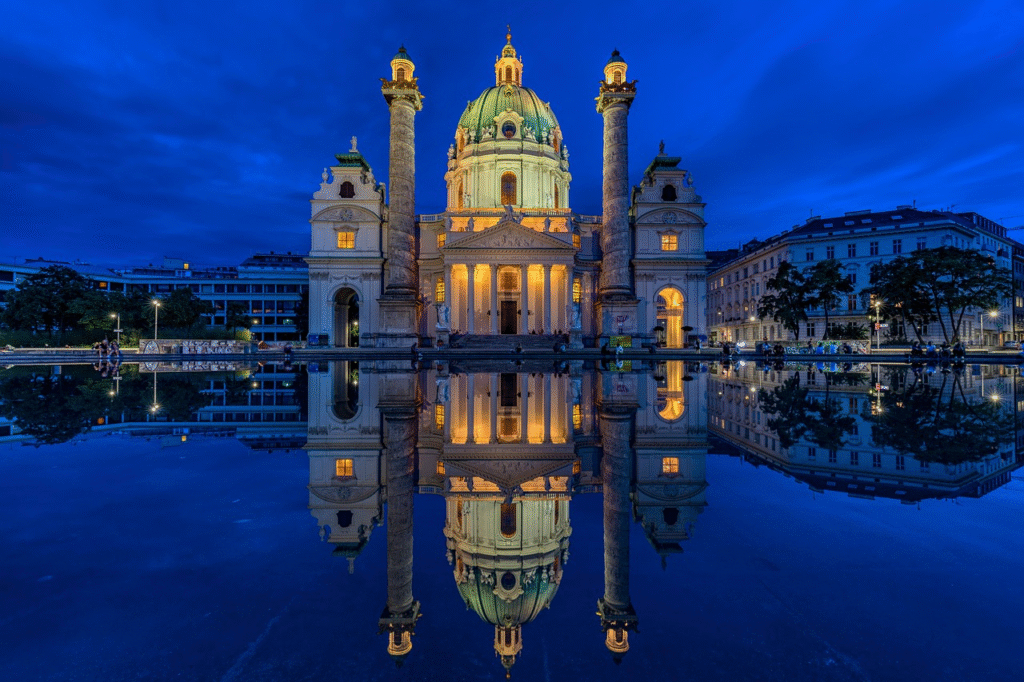
Within a short walk of the Hofburg you’ll find more imperial Vienna: the Albertina, with its master drawings and blockbuster modern shows; the Kapuzinergruft (Imperial Crypt), final resting place of the Habsburgs beneath an unassuming church; the Spanish Riding School, where Lipizzaner stallions perform centuries-old dressage; and the lavish baroque Peterskirche just off the Graben. Round it off with the Karlskirche, whose great green dome and twin columns are among the city’s most photographed sights — and which you can ride a panorama lift inside to view its frescoes up close.
Museums & the MuseumsQuartier
Vienna is a museum heavyweight, with collections built from the spoils of empire and the genius of “Vienna 1900.”
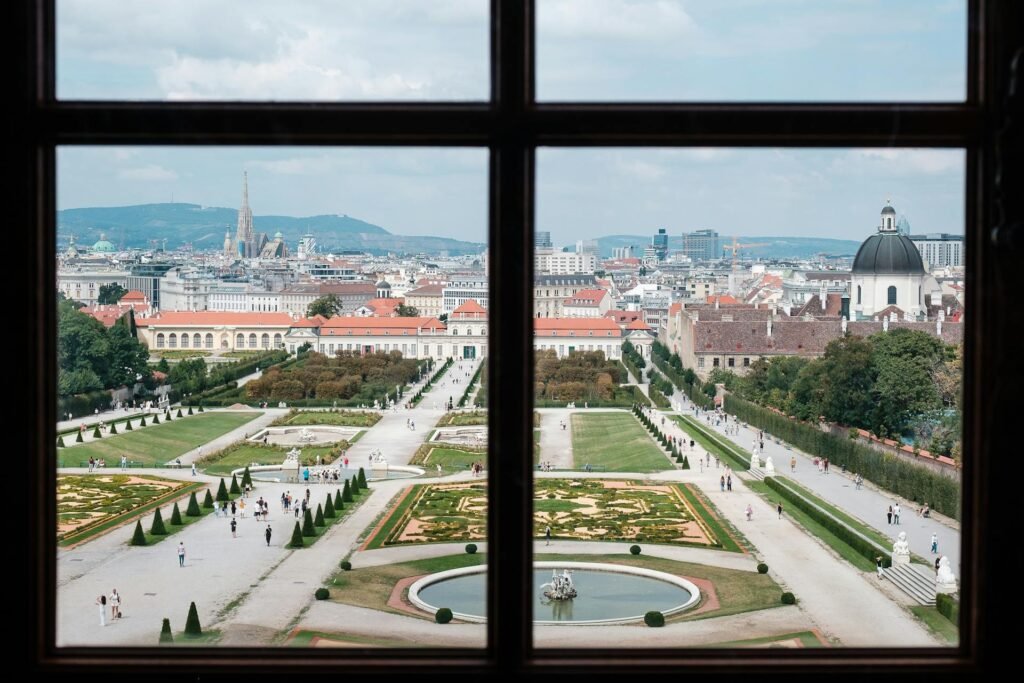
- Kunsthistorisches Museum: One of the world’s great art museums, with Bruegel, Vermeer, Rubens, Velázquez and the Habsburg imperial collection, in a palatial Ringstraße building.
- The Belvedere: Home to the largest Klimt collection on earth, including The Kiss and Judith, plus Schiele and Austrian art across the centuries.
- The MuseumsQuartier (MQ): One of the world’s largest cultural complexes, housing the Leopold Museum (Schiele, Klimt), the contemporary MUMOK, and buzzing courtyard cafés.
- The Albertina: Master drawings and prints (Dürer’s Hare) plus a superb modern collection, in a Habsburg palace overlooking the Opera.
- Naturhistorisches & the Sisi Museum: A grand natural-history museum (home of the ancient Venus of Willendorf) and, in the Hofburg, the museum devoted to the much-mythologised Empress Elisabeth.
With so much on offer, it pays to be selective — pick two or three museums rather than rushing all of them. Entry is free for under-19s at many institutions, and the annual “Long Night of Museums” each autumn opens dozens of collections on a single ticket. The two Ringstraße twins, the Kunsthistorisches and Naturhistorisches museums, face each other across Maria-Theresien-Platz and reward even a quick visit just for their palatial staircases and domed halls.
Architecture: From Baroque to Secession
Vienna is an open-air museum of European architecture. The medieval Gothic of Stephansdom gives way to the exuberant baroque of Karlskirche — its great green dome and twin spiral columns mirrored in a reflecting pool — and the palaces of Schönbrunn and the Belvedere. The 19th-century Ringstraße assembled a deliberate parade of historic styles: neo-Gothic (City Hall), neo-Renaissance (the museums and Opera), neo-Classical (Parliament) and neo-Baroque (Burgtheater).
Then came the rebels. Around 1900 the Secession movement broke away under Klimt and the architects Otto Wagner and Josef Hoffmann, leaving the golden-domed Secession building (housing Klimt’s Beethoven Frieze), Wagner’s elegant Jugendstil metro pavilions and the Postsparkasse. Later, Friedensreich Hundertwasser added his whimsical, undulating Hundertwasserhaus, and modern Vienna rises in the DC Towers and the UNO-City complex across the Danube.
Parks & Green Spaces
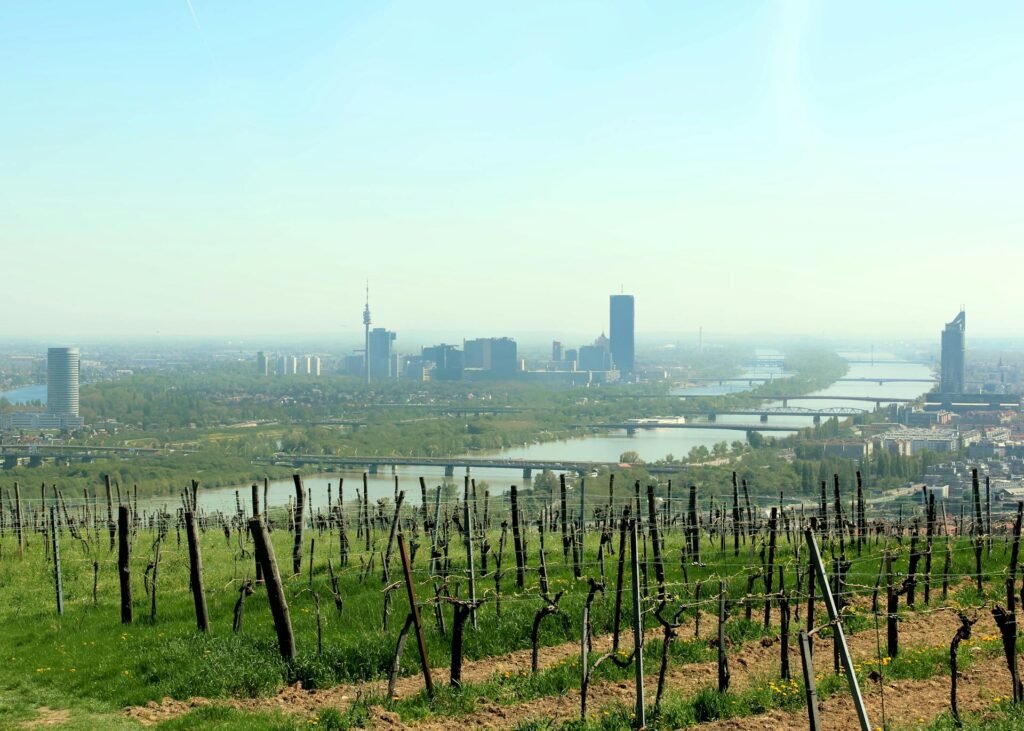
Vienna is one of Europe’s greenest capitals — roughly half the city is parks, gardens, woods and water. The formal grounds of Schönbrunn and the terraced gardens of the Belvedere are destinations in themselves. In the centre, the Stadtpark (with its gilded Johann Strauss statue), the rose-filled Volksgarten and the imperial Burggarten beside the Hofburg make elegant retreats. The Prater spreads as a vast green avenue for walking and cycling, the baroque Augarten hides Vienna’s porcelain manufactory, and the 21-kilometre Donauinsel (Danube Island) is the city’s summer playground for swimming, cycling and festivals. To the west rise the Vienna Woods and the Kahlenberg and Cobenzl hills, where the city’s own vineyards and wine taverns look out over the rooftops.
Music & Culture
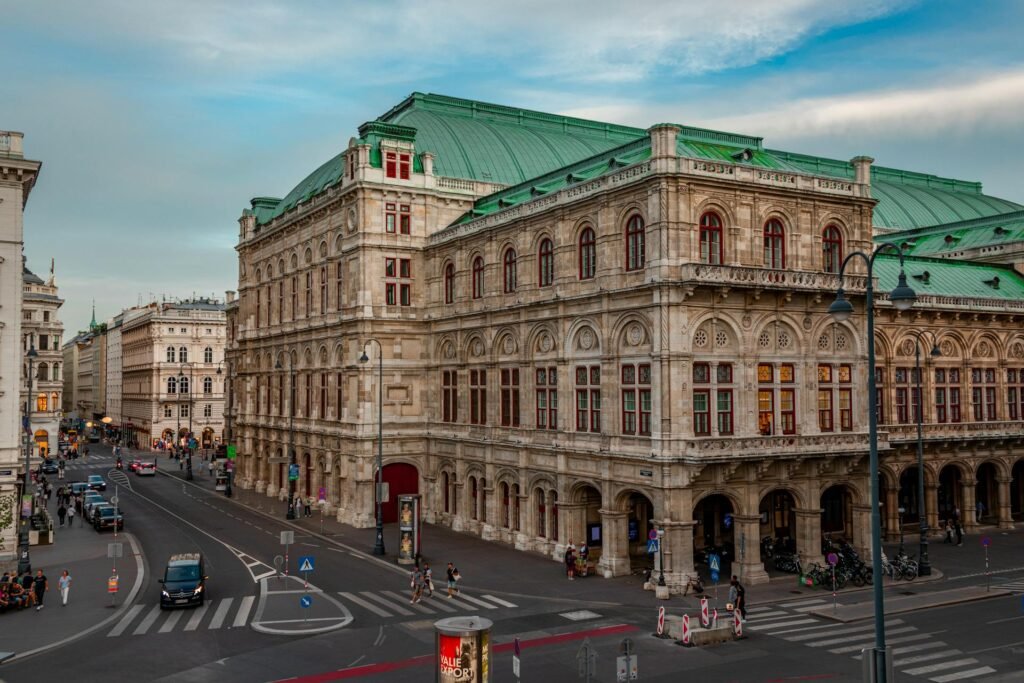
No city wears the title “capital of classical music” more deservedly. Mozart, Beethoven, Schubert, Brahms, Mahler and the Strauss dynasty all worked here, and the tradition is gloriously alive. The Vienna State Opera stages world-class productions almost nightly (with cheap standing-room tickets sold on the day); the Musikverein, with its golden Great Hall, hosts the Vienna Philharmonic and the globally televised New Year’s Concert every 1 January; and the Vienna Boys’ Choir sings Sunday Mass in the Hofburg chapel.
Culture spills beyond the concert hall. Vienna’s famous ball season (January–February) turns the city into a whirl of waltzes, crowned by the glittering Opera Ball. Theatres, the Theater an der Wien, jazz clubs and a lively contemporary scene round out an extraordinarily rich calendar — and you can still hear Mozart and Strauss performed in period costume for visitors most nights of the year.
The city wears its musical past everywhere. Mozart lived and died here (his apartment, the Mozarthaus, survives near the cathedral); Beethoven moved house dozens of times across the city; Schubert was born and buried here; and Johann Strauss II made it the world capital of the waltz. You can trace them through museum apartments, honorary graves and statues — or simply by buying a ticket. Beyond the State Opera and Musikverein, the Konzerthaus, the Theater an der Wien and the Volksoper keep the calendar packed, and visitor-friendly costumed concerts of Mozart and Strauss play nightly in historic halls.
Annual Events & Festivals in Vienna
Vienna’s calendar runs from glittering winter balls to free summer mega-festivals — and 2026 brings an extra-special headline event.
- Eurovision Song Contest (12, 14 & 16 May 2026): Vienna hosts Eurovision for the third time, with the semi-finals and grand final filling the city’s arena and a festive “Eurovision Village” atmosphere across town. Expect huge demand for accommodation that week — book far ahead.
- Ball Season & the Opera Ball (January–February): Some 450 balls and “2,000 hours of dancing,” culminating in the famous Vienna Opera Ball at the State Opera.
- New Year’s Concert (1 January): The Vienna Philharmonic’s Strauss-filled concert at the Musikverein, broadcast to tens of millions worldwide.
- Wiener Festwochen & Genuss-Festival (May–June): A leading festival of theatre and the arts, plus the open-air food festival in the Stadtpark (8–10 May 2026).
- Donauinselfest (late June): One of Europe’s largest open-air music festivals — and entirely free — on the Danube Island.
- Rathausplatz Film Festival (July–August): Free nightly screenings of operas and concerts on a giant screen in front of the City Hall, ringed by food stalls.
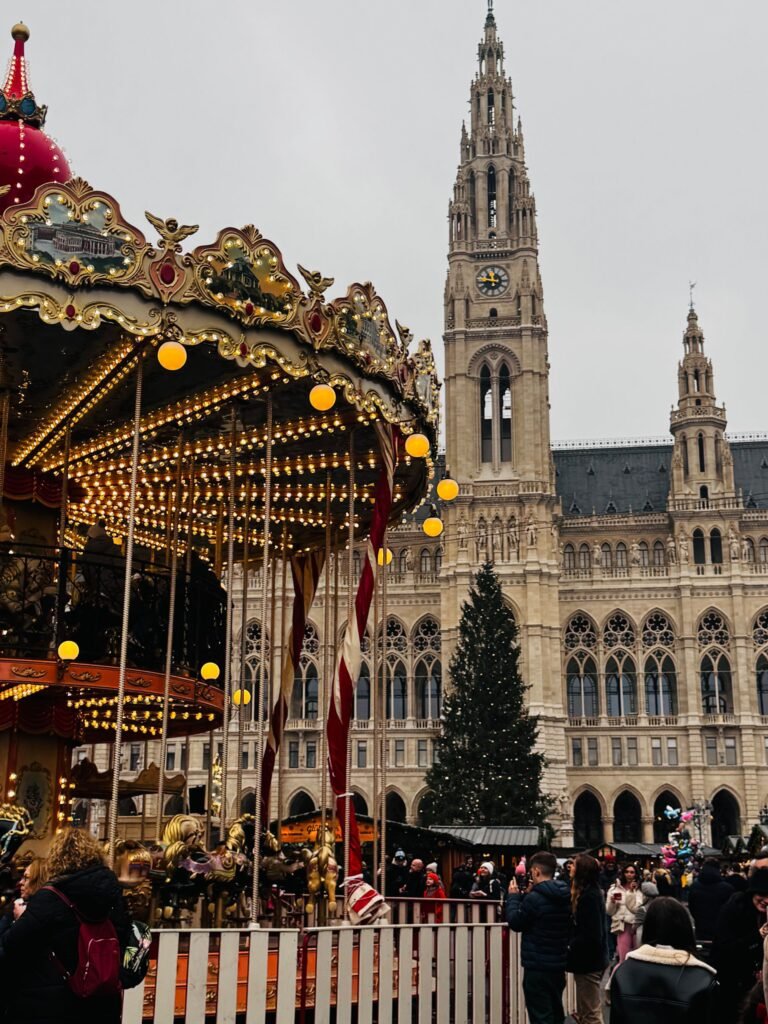
- Christmas Markets (mid-November–24 December): The magical Christkindlmarkt on Rathausplatz (150+ stalls) leads dozens of markets across the city; many turn into New Year stalls until early January.
Getting to & Around Vienna
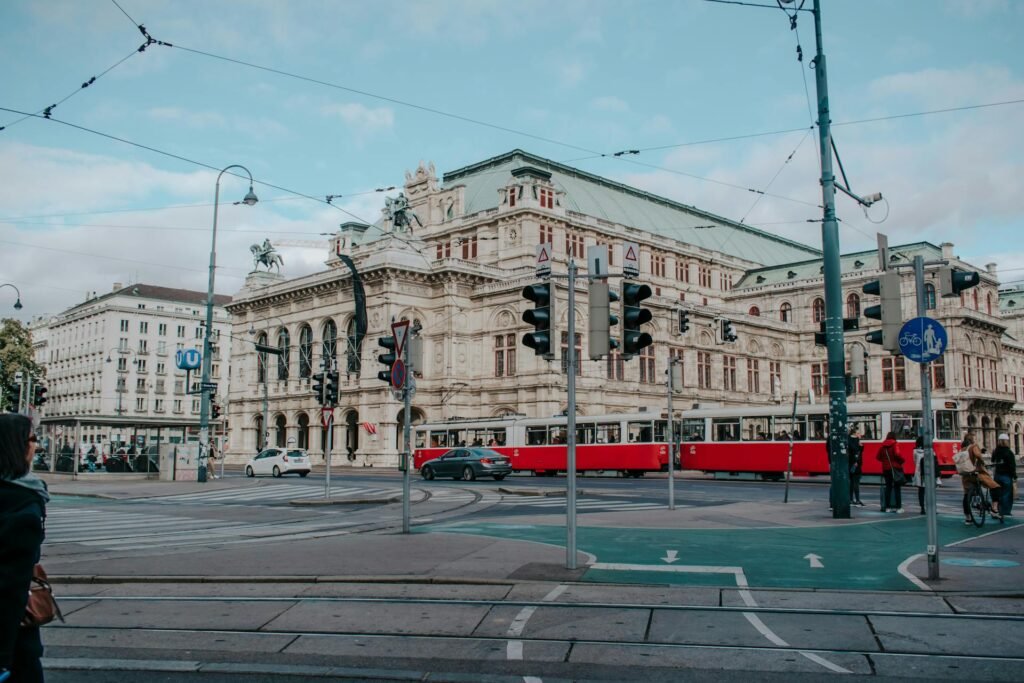
Arriving in Vienna
Vienna International Airport (VIE) at Schwechat lies about 18 km southeast of the centre. The fastest link is the non-stop City Airport Train (CAT), reaching Wien Mitte in 16 minutes (about €14.90 one-way); the budget choice is the S7 suburban train (around €5.40, ~23 minutes) or the OBB Railjet to the main station. The Hauptbahnhof is a modern hub with fast international trains to Salzburg, Munich, Prague, Budapest, Bratislava and beyond — Vienna’s position makes it a superb base for Central Europe.
Public Transport & Tickets
The Wiener Linien network — five U-Bahn lines, an extensive tram system (one of the world’s largest), buses and the S-Bahn — is clean, frequent and easy. From 1 January 2026, a single ticket costs €3.20 (€3.00 if bought digitally), a 24-hour ticket €10.20 and a 7-day ticket €28.90; the Vienna City Card adds sightseeing discounts. Tickets are valid across all modes — just validate before your first ride. Riding the historic trams around the Ringstraße is a sightseeing trip in itself.
On Foot & by Bike
The compact Innere Stadt is best explored on foot, and the whole city is flat and bike-friendly, with the WienMobil Rad bike-share and long riverside cycle paths along the Danube and the Donaukanal. For most visitors, walking plus the odd U-Bahn or tram covers everything with ease.
Vienna keeps moving after dark: the U-Bahn runs all night on Fridays, Saturdays and before public holidays, with a dense NightLine bus network filling the gaps on other nights. E-scooters and taxis are plentiful, and the system is largely step-free and easy with luggage or a pushchair. One charming quirk worth a ride is the old Badner Bahn, a tram-train that trundles from the Opera all the way out to the spa town of Baden.
Where to Eat & Drink in Vienna
Viennese cuisine is rich, refined and steeped in imperial nostalgia — and the city’s drinking culture, from coffee to wine, is a destination in itself.
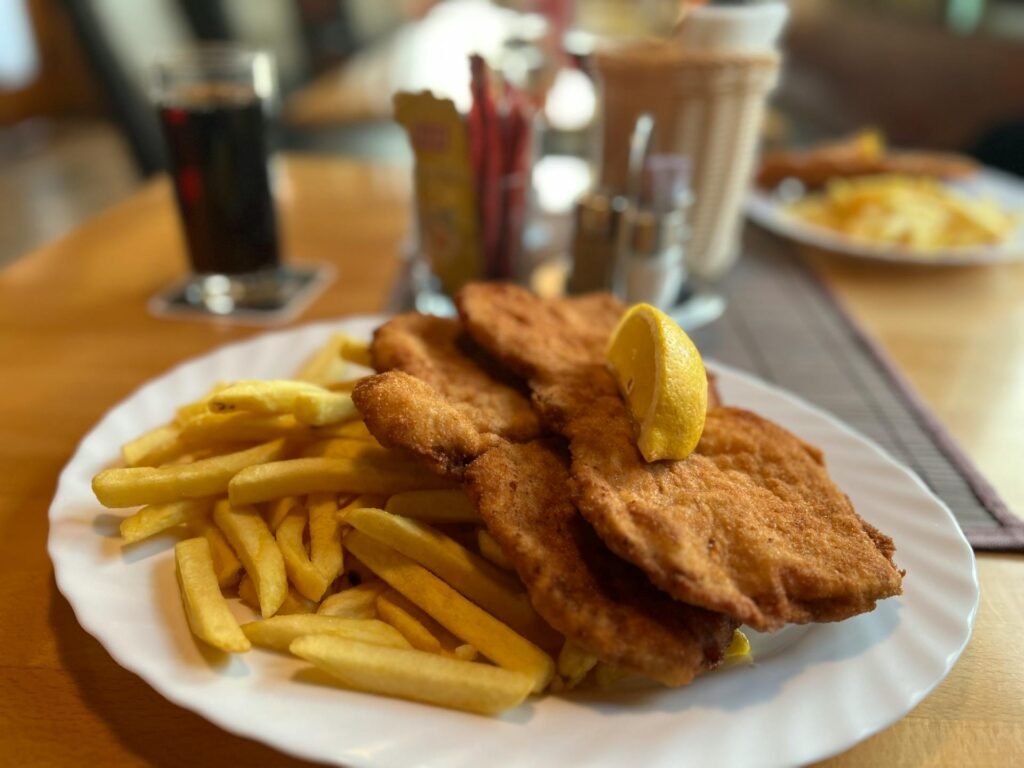
Viennese Classics
Start with the Wiener Schnitzel (a thin, breaded veal cutlet — by law, “Wiener Schnitzel” means veal) and Tafelspitz (boiled beef in broth, Emperor Franz Joseph’s favourite). Save room for the city’s legendary sweets: the chocolate Sachertorte (famously from the Hotel Sacher), warm Apfelstrudel, and fluffy Kaiserschmarrn (shredded pancake). For something quick and local, a Würstelstand sausage stand serves a late-night Käsekrainer with mustard.
Dig deeper and you’ll meet hearty Gulasch, crispy Backhendl (fried chicken), Schweinsbraten with dumplings, and, for the adventurous, Beuschel (a Viennese ragout). Sweet-toothed travellers are spoiled: beyond Sachertorte and strudel, look for Palatschinken (thin pancakes), fluffy Buchteln, and rum-soaked Punschkrapfen. A cosy neighbourhood Beisl (the Viennese bistro-pub) is the best place to try the savoury classics without ceremony.
Coffee House Culture
The Viennese coffee house is so central to the city’s identity that UNESCO lists it as intangible cultural heritage. These grand, unhurried cafés — Café Central, Sperl, Hawelka, Landtmann and more — invite you to nurse a single coffee for hours over a newspaper. Order by name: a Melange (like a cappuccino), a Großer Brauner, or an Einspänner (black coffee with whipped cream) — and a slice of cake on the side. Expect marble-topped tables, bentwood Thonet chairs, a tuxedoed waiter (the Herr Ober), stacks of newspapers on wooden frames, and a glass of water served alongside every cup. And do join Vienna’s friendliest rivalry: the original Sachertorte at Café Sacher versus the imperial confectioner Demel just up the road — try both and pick a side.
Markets, Wine & the Heuriger
The Naschmarkt is Vienna’s famous food market, a long run of stalls and eateries from Austrian produce to Middle Eastern street food. Vienna is also the only world capital with significant winegrowing within its limits: head to the hillside villages of Grinzing, Nussdorf or Neustift for a Heuriger — a rustic wine tavern serving the year’s young wine with a buffet of cold cuts, a beloved local ritual.
Things to Do & Experiences
Beyond the museums and palaces, Vienna is full of distinctive experiences.
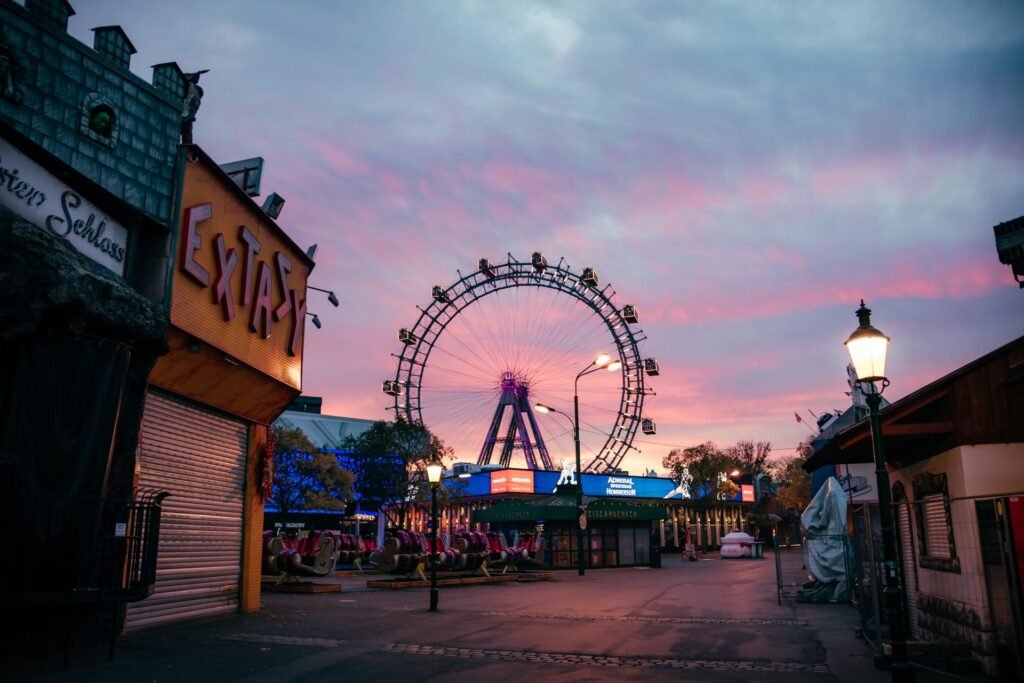
- The Prater & the Riesenrad: Ride the 1897 Giant Ferris Wheel, a Vienna icon, then enjoy the old-fashioned Wurstelprater funfair or a stroll/cycle down the long green park avenue.
- A classical concert or the opera: Hear the Philharmonic at the Musikverein, catch an opera (standing-room tickets are a bargain), or a costumed Mozart-and-Strauss show.
- Ride the Ring tram: Circle the Ringstraße past its monuments — a cheap, scenic introduction to the city.
- Relax by the water: Sunbathe, swim or cycle on the Donauinsel (Danube Island), or stroll the Donaukanal’s bars and street art.
- Climb for the view: Up Stephansdom’s tower, the Donauturm tower, or out to the Kahlenberg hill in the Vienna Woods for a panorama over the city and vineyards.
Shopping in Vienna
Vienna’s grandest shopping threads through the old town: the luxury houses of the Kohlmarkt, the elegant Graben, and the long pedestrian Kärntner Straße linking the Opera to St. Stephen’s. For everyday and high-street shopping, the Mariahilfer Straße is the city’s busiest, while design and antiques lovers head to the Naschmarkt’s Saturday flea market and the venerable Dorotheum auction house. For uniquely Viennese souvenirs, look out for Augarten porcelain, Lobmeyr glass, Manner wafers, Mozartkugeln and Demel or Sacher chocolates. Come December, the Christmas markets become a shopping destination all their own — and remember that regular shops close on Sundays.
Where to Stay in Vienna
Vienna’s districts each have a character, and the centre is small enough that you’re never far from the sights — anywhere inside or just beyond the Ring puts you minutes from the action. One timing note: big events spike prices and fill rooms fast, so book well ahead for the December Christmas-market weeks, the January–February ball season, and especially Eurovision week in May 2026. As a rough guide, first-timers do best in the Innere Stadt, foodies and night owls in Leopoldstadt or around the Naschmarkt, culture-and-design lovers in Neubau, and budget travellers near the Hauptbahnhof.
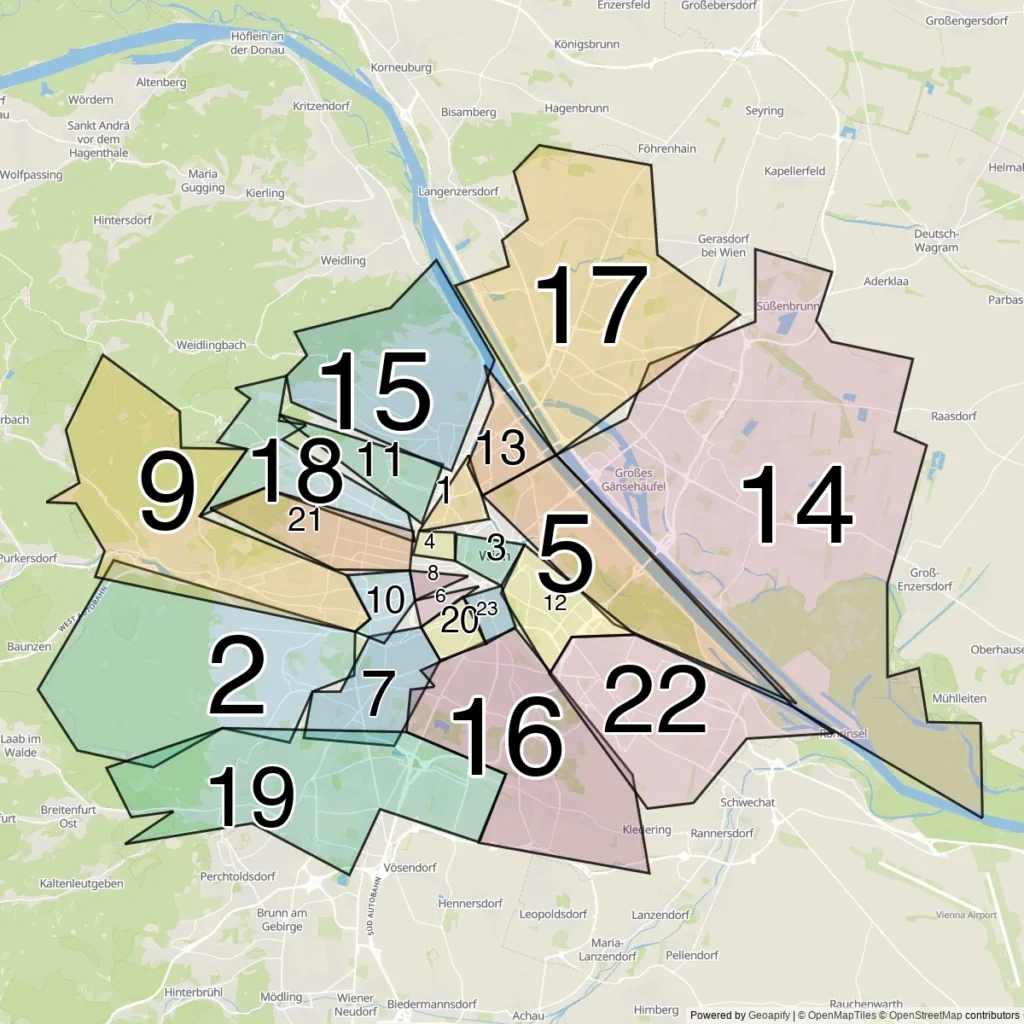
- Innere Stadt (1st district): The historic core — walk to everything, at the highest prices.
- Leopoldstadt (2nd): Across the Danube Canal by the Prater and Augarten, hip and well-connected, with good value and a buzzing food scene.
- Neubau (7th) & the MQ area: Creative and trendy, with boutiques, cafés and the museum quarter on the doorstep.
- Wieden & Mariahilf (4th & 6th): Around the Naschmarkt and the long Mariahilfer Straße shopping street — central, lively and great for eating.
- Landstraße (3rd): Home to the Belvedere and handy for the airport train at Wien Mitte; quieter and elegant.
- Around the Hauptbahnhof (10th): Modern and convenient for transit, with newer, better-value hotels.
Day Trips from Vienna
Vienna’s central location and excellent trains open up a wealth of day trips across the Danube valley and into neighbouring countries.
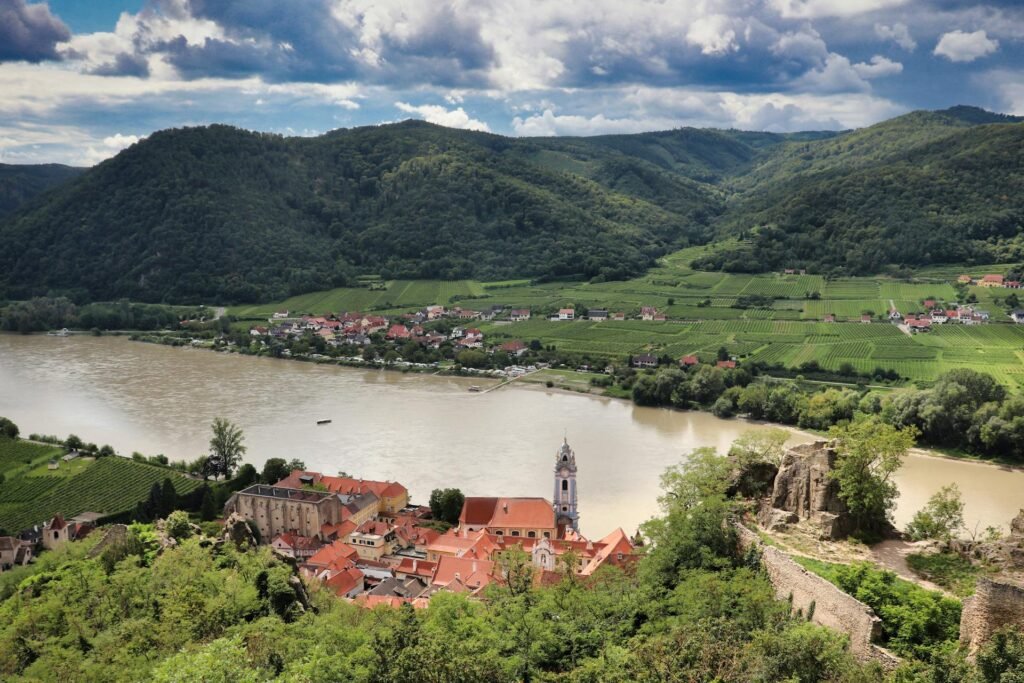
- The Wachau Valley (~1–1.5 hours): A UNESCO-listed stretch of the Danube lined with vineyards, apricot orchards and storybook towns — magnificent Melk Abbey, pretty Dürnstein and the wine town of Krems, best seen by a combination of train and river boat.
- Bratislava (~1 hour): The Slovak capital, reachable by train or a scenic Danube fast boat — a compact old town and castle for an easy international day out.
- Salzburg (~2.5 hours): Mozart’s baroque birthplace and “Sound of Music” country, doable as a long day or an overnight.
- Baden bei Wien & the Vienna Woods (~45 minutes): A genteel spa town reached by an old-fashioned tram, surrounded by the wooded hills and wine villages of the Wienerwald.
- Klosterneuburg & Lake Neusiedl: A grand monastery just outside the city, or the reed-fringed steppe lake to the southeast for birdwatching, cycling and wine.
- The Semmering Railway (~1.5 hours): A UNESCO-listed Alpine mountain railway — a feat of 19th-century engineering through tunnels and viaducts to a string of belle-époque resort towns.
- Graz (~2.5 hours): Austria’s relaxed second city, with a red-roofed UNESCO old town, a quirky modern art museum and a hill-top clock tower.
Hidden Gems & Local Favorites
Beyond the imperial blockbusters, Vienna rewards the curious. The undulating, tree-sprouting Hundertwasserhaus and the nearby Kunst Haus Wien show the city’s playful side, while Otto Wagner’s gleaming white Kirche am Steinhof and his Jugendstil metro pavilions are Art Nouveau treasures. The vast Zentralfriedhof (Central Cemetery) is a strangely beautiful pilgrimage, with the honorary graves of Beethoven, Schubert, Brahms and the Strauss family. For a local afternoon, browse the Karmelitermarkt in trendy Leopoldstadt or the cobbled, boho lanes of the Spittelberg, follow the street art and pop-up beach bars along the Donaukanal, or ride a tram up to the Kahlenberg for a vineyard stroll and a glass of wine with a view over the whole city.
Vienna with Kids
Vienna is wonderfully child-friendly. The Schönbrunn Zoo — the world’s oldest, and repeatedly named Europe’s best — pairs perfectly with the palace gardens, maze and children’s museum. The Prater funfair is a guaranteed hit, the Naturhistorisches Museum has dinosaurs, and the hands-on ZOOM Kindermuseum in the MQ is built for little ones. Add a ride on a historic tram, ice cream on a Danube Island beach in summer, and the free transit for children, and the city all but plans itself for families.
Suggested Itineraries
- One day: St. Stephen’s Cathedral and the Graben, the Hofburg and its museums, a Ring-tram loop past the great landmarks, and an evening concert or opera — with a coffee-house break in between.
- Two days: Add a half-day at Schönbrunn, the Belvedere for Klimt’s The Kiss, and the Naschmarkt or the MuseumsQuartier.
- Three days: Slow down — a museum or two, the Prater and the Danube, and a relaxed evening at a Grinzing wine tavern.
- Four days or more: Take a day trip to the Wachau valley or Bratislava, and dig into Vienna’s quieter corners.
Money, Safety & Practical Info
Vienna is consistently rated among the safest big cities in the world; ordinary big-city care against pickpockets in tourist crowds and on busy U-Bahn lines is all most visitors need. The currency is the euro; cards are widely accepted, though some traditional coffee houses, Würstelstände and Heuriger taverns still prefer cash. Tap water is famously excellent — piped straight from the Alps — and free to drink everywhere. Free Wi-Fi is common, the Europe-wide emergency number is 112, and, as across Austria, most shops close on Sundays (plan around it, but cafés, museums and restaurants stay open).
Sightseeing Passes & Saving Money
If you’ll sightsee hard, two passes can help: the Vienna Pass offers free entry to many top attractions (and a hop-on hop-off bus) on a 1–6 day basis, while the Vienna City Card bundles public transport with smaller discounts. Many museums are free for under-19s, the State Opera sells inexpensive same-day standing-room tickets, and the Ring tram, the Danube Island, the Christmas markets and the city’s parks and churches cost nothing. Buying transit and concert tickets online or via the apps is usually cheaper than at the counter.
Best Time to Visit: Seasons & Weather
- Spring (Apr–June): Mild, blossoming and full of life, with festival season ramping up — and, in 2026, Eurovision in May. A lovely time to visit.
- Summer (July–Aug): Warm and lively, with free open-air festivals, Danube Island beaches and the Rathausplatz film festival; some institutions keep shorter hours.
- Autumn (Sept–Oct): Crisp, golden and less crowded, ideal for sightseeing and for the new-wine season at the Heuriger taverns.
- Winter (Nov–Feb): Cold but magical — Christmas markets in December, then the glittering ball season in January and February.
Language, Etiquette & Local Customs
German is the language, spoken with a soft Viennese lilt, and English is widely understood in the tourist centre. A polite “Grüß Gott” is the standard greeting, and old-fashioned courtesy still counts here — Vienna prizes manners and a certain unhurried formality. In a coffee house, take your time and don’t expect to be rushed; tipping is by rounding up or adding about 5–10%, handed to the server rather than left on the table. Dress a little smarter for the opera or a concert, and remember that Sundays are quiet, shop-free days made for cafés, museums and the Prater.
Tips for Visiting Vienna
- Grab a standing-room opera ticket. The State Opera sells them cheaply on the day for an unbeatable taste of world-class music.
- Embrace the coffee house. Order one coffee, take a cake, and linger — that’s the correct way to “do” Vienna.
- Book early for May 2026. Eurovision week will fill hotels across the city; reserve well ahead if you’re visiting around 12–16 May.
- Ride the Ring tram for a cheap, scenic overview before diving into the sights.
- Carry some cash for traditional cafés, sausage stands and wine taverns.
- Drink the tap water — Vienna’s Alpine supply is among the best in the world.
- Plan around Sundays, when shops close but the city’s cafés and culture carry on.
- Validate your transit ticket before boarding to avoid a fine.
Frequently Asked Questions About Visiting Vienna
What is Vienna best known for?
Vienna is best known as the imperial Habsburg capital and the world’s “City of Music” — for Mozart, Beethoven and Strauss, its opera and concerts, the Schönbrunn and Hofburg palaces, St. Stephen’s Cathedral, its coffee-house and cake culture, and for topping global liveability rankings.
Is Vienna hosting Eurovision in 2026?
Yes — Vienna hosts the Eurovision Song Contest 2026, with shows on 12, 14 and 16 May 2026. It’s the city’s third time hosting, and demand for accommodation that week is very high, so book early.
How many days do you need in Vienna?
Three to four days lets you see the main palaces, museums and the old town at a relaxed Viennese pace, with time for a concert and a coffee house. Add a day for a trip to the Wachau valley, Bratislava or Salzburg.
How do I get from Vienna Airport to the city centre?
The fastest option is the non-stop City Airport Train (CAT) to Wien Mitte in 16 minutes (about €14.90). The cheaper S7 suburban train takes around 23 minutes for roughly €5.40, and ÖBB Railjet trains run to the Hauptbahnhof.
Is Vienna walkable and easy to get around?
Very. The historic centre is compact and pedestrian-friendly, and the Wiener Linien network of U-Bahn, trams and buses is among the best in the world, covering everything on one ticket. The city is also flat and great for cycling.
What food and drink is Vienna famous for?
Vienna is famous for Wiener Schnitzel, Tafelspitz, and sweets like Sachertorte, Apfelstrudel and Kaiserschmarrn — and above all for its UNESCO-listed coffee-house culture and its Heuriger wine taverns serving local wine on the city’s edge.
What are the best day trips from Vienna?
The standout is the Wachau valley on the Danube (Melk Abbey, Dürnstein, Krems), reached by train and river boat. Bratislava is an hour away, Salzburg makes a long day, and Baden and the Vienna Woods are a quick escape into spa-and-wine country.
What is the best time to visit Vienna?
Spring (April–June) and autumn (September–October) offer the best weather and lighter crowds. December brings the Christmas markets, January–February the famous ball season, and in 2026 May adds the buzz of Eurovision.
References
- Vienna Tourist Board (wien.info) — official visitor information.
- City of Vienna — official city portal.
- Wiener Linien — public transport tickets, fares and timetables.
- Eurovision Song Contest — official 2026 dates and tickets.
- ÖBB — Austrian railways for day trips and the Wachau.
- Wikipedia: Vienna — history, geography and statistics.
AFRIKA
Cairo Hurghada Johannesburg Marrakech
ASIA
Abu Dhabi Agra Antalya Bangkok Batam Beijing Bengaluru Cebu City Chiang Mai Chiba Chennai Da Nang Dammam Delhi Denpasar Dubai Fukuoka Guangzhou Guilin Ha Long Hanoi Ho Chi Minh City Jakarta Jaipur Johor Bahru Kolkata Krabi Kuala Lumpur Kyoto Macau Mecca Medina Mugla Mumbai Osaka Pattaya Penang Phuket Riyadh Seoul Shanghai Shenzhen Singapore Taipei Tokyo Zhuhai
EUROPE
Amsterdam Athens Barcelona Berlin Brussels Budapest Copenhagen Dublin Florence Frankfurt am Main Heraklion Krakow Lisbon London Madrid Milan Munich Nice Paris Porto Prague Rhodes Rome Stockholm Venice Vienna Warsaw
NORTH AMERICA
Cancun Las Vegas Los Angeles Miami New York City Orlando San Francisco Toronto Vancouver
SOUTH AMERICA
Buenos Aires Lima Rio De Janeiro
OCEANIA
Auckland Honolulu Melbourne Sydney