
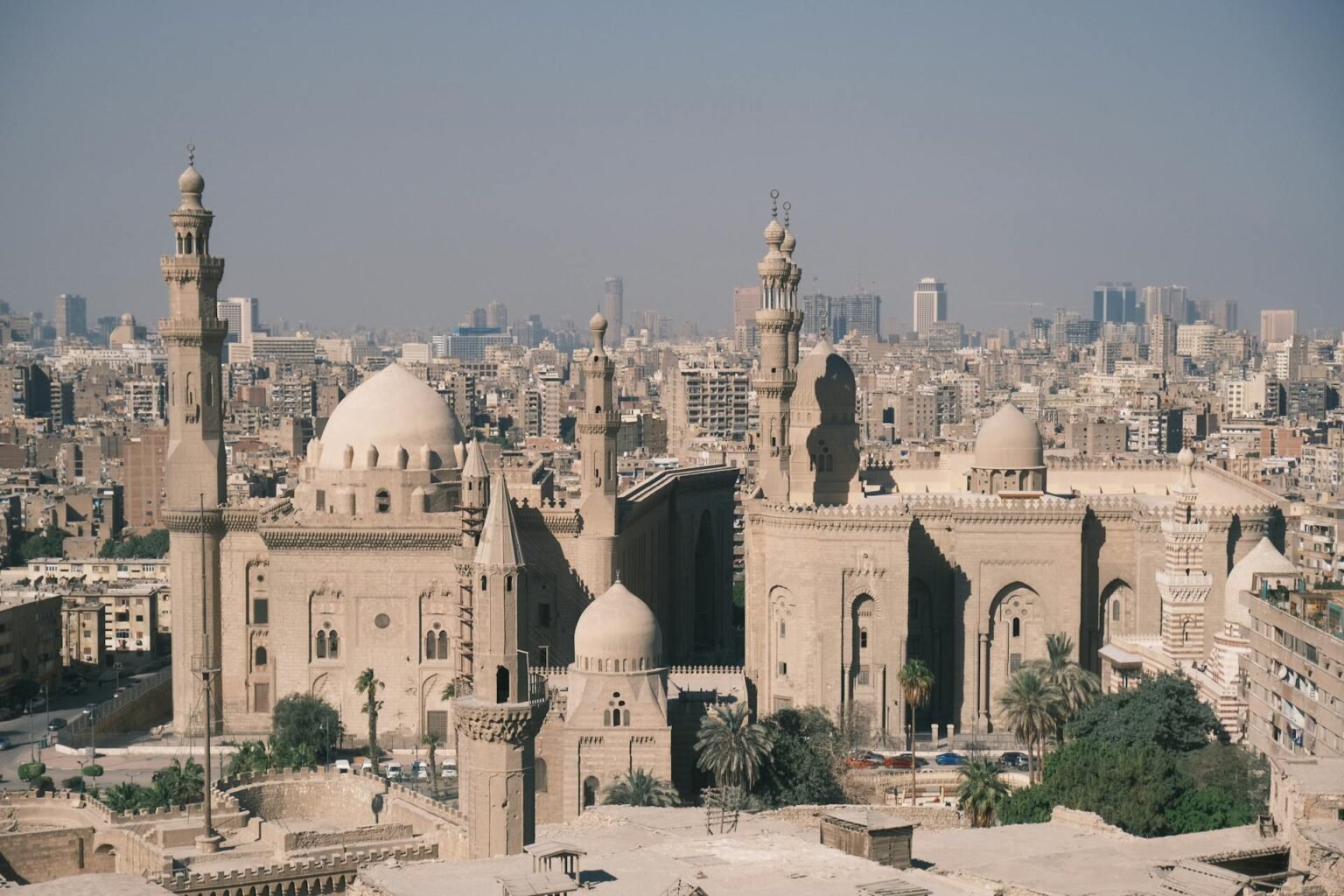
Five thousand years of civilization fit into a single horizon here. From the rooftop of any Islamic Cairo cafe, you can see Pharaonic pyramids on the western desert edge, Ottoman domes in the foreground, and the Nile slipping between them — a river that has watched empires rise, fall, and rebuild for fifty centuries. Cairo is loud, dense, and unapologetic, and that’s exactly why it works. The Arab world’s largest city wears its layers openly: Coptic churches built into Roman walls, Fatimid madrasas next to neon-lit shawarma counters, the Citadel of Saladin watching over a metro system that carries four million people a day. This guide covers what you actually need — districts that reward an unhurried afternoon, the food worth chasing past the tourist menus, the practicalities of getting in and getting around, and the deeper context that turns a checklist tour into a city you understand.
Cairo at a Glance: Essential Facts for Travelers
| Location | Northeast Egypt, along the Nile River |
|---|---|
| Coordinates | 30°03′N, 31°15′E |
| Population | 9.6 million (city), 20.75 million (metro area, 2022) |
| Area | 606 km² (city), 2,010 km² (metro area) |
| Elevation | 68 meters above sea level |
| Time Zone | Egypt Standard Time (UTC+2) |
| Governorate | Al-Qahira (Cairo Governorate) |
| ISO Code | EG-C |
| Known For | Pyramids of Giza, Islamic architecture, Khan el-Khalili bazaar, Egyptian Museum, Al-Azhar University |
| Current Governor | Khaled Abdel Aal (appointed by Egypt’s president) |
| Founded | 969 CE (as al-Qahira by Fatimid general Jawhar al-Siqilli) |
| Climate | Subtropical desert climate, average 21.7°C (71°F) |
Upcoming Events in Cairo
| Date | Title | Details |
|---|---|---|
| 2026-09-22 to 2026-09-24 | SAHARA Expo 2026 (38th International Agriculture Exhibition) | The 38th edition of SAHARA, the international exhibition for agriculture and food for Africa and the Middle East, fills the Egypt International Exhibition Center in New Cairo for three days. Exhibitors present farm machinery, irrigation systems, seeds, fertilisers, greenhouse technology and food-processing equipment to a professional audience of growers, investors and traders from across the region. Running for more than three decades, the fair is a key meeting point for a sector Egypt is betting on as it expands desert reclamation projects. Entry is aimed at trade visitors, with free online registration typically available. [Source] |
| 2026-09-23 to 2026-09-26 | Cityscape Egypt 2026 | Cityscape Egypt is the country’s leading real-estate exhibition, drawing major developers, investors and homebuyers to a large trade-show floor, typically at the Egypt International Exhibition Center in New Cairo. Developers unveil residential and commercial projects, from New Administrative Capital towers to coastal resorts, alongside conferences on the property market and financing. Usually held in the autumn, it is a barometer of a sector central to Egypt’s economy and to Cairo’s relentless expansion into new satellite cities. Entry is generally free for visitors who register. The exact 2026 dates are confirmed by the organisers. [Source] |
| 2026-10-08 to 2026-10-11 | EXIT Festival Starlight at the Pyramids of Giza | The famous Serbian EXIT Festival launches its new Starlight edition in Egypt, staging four nights of electronic music against the backdrop of the Great Pyramids of Giza. Event listings name international headliners including Pete Tong, Adriatique, Vintage Culture and Michael Bibi among the first wave of artists. Dance-music fans can expect spectacular staging on the desert plateau, with the illuminated pyramids rising behind the decks after sunset. Tickets are sold per day and as multi-day passes at varying prices, and strong international demand is expected for this first Egyptian edition of the festival. [Source] |
| 2026-11-04 to 2026-11-28 | Forever Is Now VI – Art D’Egypte at the Giza Plateau | Art D’Egypte’s acclaimed open-air exhibition Forever Is Now returns to the Giza Plateau for its sixth edition, placing monumental contemporary artworks in direct dialogue with the Pyramids. Artists from Egypt, France, the United States, China and beyond create site-specific installations that respond to the monuments’ geometric precision, astronomical alignment and cultural memory. The works stand on the open plateau and are viewable with regular site admission during opening hours, making the show an easy add-on to a pyramid visit. It has become one of the world’s most photographed art events; late-afternoon light is the connoisseur’s moment. [Source] |
| 2026-11-05 | The Joe Dassin Story at the Cairo Opera House | The Cairo Opera House on Zamalek’s Gezira Island hosts The Joe Dassin Story, an evening dedicated to the beloved French-American singer of Les Champs-Elysees and Et si tu n’existais pas, beginning at 19:00. The tribute concert revives Dassin’s golden 1970s repertoire for Cairo’s sizeable francophone community and nostalgic music lovers of all ages. Tickets are sold through the opera’s box office and website at varying prices. The show forms part of the opera’s autumn season, which brings a nightly mix of music, ballet and theatre back to the riverside cultural complex. [Source] |
| 2026-11-07 to 2026-11-10 | Cairo ICT 2026 – AI in Action (30th edition) | Cairo ICT marks its 30th edition under the theme AI in Action, taking over the Egypt International Exhibition Center in New Cairo for four days. The region’s leading technology fair gathers telecom operators, government digitisation programmes, startups and global hardware and software vendors, with conference stages hosting ministers, chief executives and AI researchers. Satellite events cover fintech, defence technology and smart cities, making the week a fixture on the regional tech calendar. Aimed at professionals, students and tech-curious visitors alike, the exhibition typically offers free or low-cost registration online in advance. [Source] |
| 2026-11-11 to 2026-11-20 | 47th Cairo International Film Festival | The Cairo International Film Festival, the Arab world’s oldest and only FIAPF-accredited competitive film festival, returns for its 47th edition over ten November days. Screenings centre on the Cairo Opera House complex, with international premieres, Arab cinema competitions, masterclasses and red-carpet galas drawing stars and filmmakers from around the globe. The festival offers a rare chance to see world cinema on Cairo screens, often with directors in attendance for question-and-answer sessions. Tickets for individual screenings are modestly priced and sold online and at venue box offices, while some galas are by invitation. [Source] |
City News in Cairo – last 14 days
| Date | Category | Headline | Details |
|---|---|---|---|
| 2026-09-13 | Public transport | Metro Line 4 to link with LRT at Capital Airport station | Cairo’s transport planners intend to connect Metro Line 4 with the electric Light Rail Transit network at the Capital Airport station, according to the report. The link would tie the new fourth metro line, now under construction, into the LRT corridor that runs toward the New Administrative Capital, giving commuters a continuous rail journey across the sprawling metropolitan region. The plan reflects the ongoing build-out of greater Cairo’s rail backbone as the government works to shift daily travel from congested roads onto electric mass transit. [Source] |
| 2026-09-13 | Business | Egypt signs EGP 2bn electric battery plant deal with China’s CATL | Prime Minister Mostafa Madbouly witnessed the signing of a contract to establish an electric battery manufacturing plant in Egypt through a partnership between Egyptian battery maker BME and Contemporary Amperex Technology Co. Limited, one of the world’s largest battery producers. The agreement, valued at around two billion Egyptian pounds, was signed by BME chairman Maged Wahib and comes roughly two weeks after Chinese President Xi Jinping’s landmark visit to Cairo, underlining the deepening industrial ties between the two countries and Egypt’s ambitions in electric mobility. [Source] |
| 2026-09-13 | Education | Central Bank launches FinTech Got Talent 2026 for university students | The Central Bank of Egypt has opened the fourth edition of its FinTech Got Talent competition for university students, run under the FinYology initiative and organised by FinTech Egypt. The contest rewards the most innovative student projects and solutions in financial technology and is delivered in collaboration with the Federation of Egyptian Banks and partners across the banking sector. For Cairo’s large student population, the programme offers a route from campus ideas toward the country’s fast-growing digital finance industry, with winning teams gaining visibility among banks and investors. [Source] |
| 2026-09-13 | Culture | National Geographic spotlights the Grand Egyptian Museum’s highlights | National Geographic has published a feature presenting five highlights of the Grand Egyptian Museum, the vast new institution beside the Giza Plateau that houses the complete Tutankhamun collection among more than 100,000 artefacts. The international coverage is the latest sign of the museum’s pull on global cultural attention in its first year of full operation, and a boost for the capital’s tourism sector. For visitors, such guides are shaping itineraries around the colossal statue of Ramses II in the atrium, the grand staircase and the young pharaoh’s treasures. [Source] |
| 2026-09-10 | Local government | Recycling machines dispute drags Cairo’s waste struggle into the open | A dispute over recycling machines has pushed the long-running struggle over how Cairo manages its rubbish into public view, according to the report. Waste collection in the megacity has for decades relied on a complex mix of informal collectors, private contractors and state programmes, and disagreements over new recycling technology have exposed tensions over who controls the valuable materials stream. The episode highlights the governance challenge facing one of the world’s largest urban areas as it tries to modernise waste handling for more than 20 million residents. [Source] |
| 2026-09-09 | Culture | 4,300-year-old tomb of an ancient judge unearthed near Cairo | Archaeologists have uncovered the roughly 4,300-year-old tomb of an ancient Egyptian judge at a site near Cairo, according to the report. The burial dates back to the Old Kingdom, the era of the great pyramid builders, and adds to a remarkable run of discoveries in the necropolises that ring the southern edges of the capital. Finds of this kind continue to sharpen scholars’ picture of the officials who administered justice in early Egypt, and they routinely feed new exhibits and fresh interest in the country’s archaeological sites. [Source] |
| 2026-09-01 | Local affairs | Streets closed across the capital for Xi Jinping’s landmark visit | Major roads across Cairo were closed as Chinese President Xi Jinping arrived for a highly anticipated state visit, his first to Egypt in a decade. Portraits of Xi and President Abdel Fattah al-Sisi and the flags of both nations decorated the streets, signalling both governments’ intention to expand cooperation. The report notes that former officials see Egypt seeking room to advance its own strategic aims during the visit, which set the stage for a wave of follow-on announcements in trade, industry and technology in the weeks that followed. [Source] |
Cairo Events & City News Archive
Sources: Sahara Expo, 10times, Cityscape Egypt, Inside Giza, Art D'Egypte, CairoScene, Cairo Tourism, Cairo ICT
Weather Forecast for the Next 14 Days in Cairo
| Date | Weather | Max °F | Min °F | Rain mm |
|---|---|---|---|---|
| 2026-09-14 | ☁️ | 99.9 °F | 71.5 °F | 0.0 mm |
| 2026-09-15 | ⛅ | 98.4 °F | 73.4 °F | 0.0 mm |
| 2026-09-16 | ☁️ | 99.6 °F | 72.3 °F | 0.0 mm |
| 2026-09-17 | ⛅ | 104.0 °F | 74.9 °F | 0.0 mm |
| 2026-09-18 | ⛅ | 95.9 °F | 75.7 °F | 0.0 mm |
| 2026-09-19 | ☁️ | 90.2 °F | 74.0 °F | 0.0 mm |
| 2026-09-20 | ⛅ | 92.3 °F | 69.6 °F | 0.0 mm |
| 2026-09-21 | ☀️ | 94.7 °F | 71.3 °F | 0.0 mm |
| 2026-09-22 | ☁️ | 96.2 °F | 73.9 °F | 0.0 mm |
| 2026-09-23 | ⛅ | 100.8 °F | 76.5 °F | 0.0 mm |
| 2026-09-24 | 🌧️ | 98.4 °F | 79.4 °F | 0.6 mm |
| 2026-09-25 | ☁️ | 94.3 °F | 76.8 °F | 0.0 mm |
| 2026-09-26 | ☁️ | 93.3 °F | 75.4 °F | 0.0 mm |
| 2026-09-27 | ☀️ | 91.4 °F | 74.5 °F | 0.0 mm |
Cairo’s History
Few cities can compress fifty centuries into a single afternoon walk, but Cairo can. The Pyramids predate the city itself by more than two millennia. Roman walls became Arab gates. A Fatimid military camp turned into a global capital that out-built medieval Europe. To understand what you’re seeing on the ground today, it helps to know how the layers stacked.
Ancient Foundations and Roman Babylon
Long before Cairo existed, this stretch of riverbank carried a different name: Cheri-aha, the legendary battleground of the Egyptian gods Horus and Seth. By the 1st century CE, Roman engineers had recognized the strategic value of the site and built a fortress here, calling it “Babylon in Egypt” — apparently the result of a translation mix-up of the original local name that stuck for centuries. Behind 42 churches and massive defensive walls, the fortress became a thriving center of early Christianity by the 4th century. You can still trace those Roman foundations today: head into the Coptic Quarter and the ancient walls are right under your feet, holding up some of the oldest Christian churches anywhere in the world.
The Arab Conquest and the Birth of Fustat
The pivot came in 641 CE, when Arab forces under Amr ibn al-As took the Roman fortress. Within two years they had founded Fustat just outside its walls — initially a military camp, almost immediately a trading city. The settlement’s anchor was the Amr ibn al-As Mosque, Egypt’s oldest mosque and a building you can still walk through today. Fustat grew fast: a stop on every caravan route, a money-changer’s market for traders moving between the Mediterranean and the Indian Ocean. The 10th-century Arab geographer al-Muqaddasī called it a “glittering jewel of Islam” — bustling markets, fragrant dates, luxurious bathhouses. The vocabulary changed; the river kept flowing.
The Tulunids: Cairo’s First Architectural Boom
The 9th century brought the Tulunid dynasty, who treated Fustat as raw material for ambition. Two of their projects still define Cairo’s skyline: the Ibn Tulun Mosque, with its spiraling minaret built like a geometric puzzle, and the Nilometer on Roda Island — a stone shaft engineers used to measure the river’s flood level and predict the year’s harvest. Fires later reshaped parts of the early city, and the Abbasids continued building along the riverbanks. The stage was set for what came next.
The Fatimid Foundation: “The Victorious City”
Cairo’s true birthday is 969 CE. The Fatimid general Jawhar al-Siqilli laid out a gleaming new military complex northeast of Fustat, and when the Caliph al-Muizz arrived four years later, he elevated it to a royal capital and renamed it al-Qahira al-Muizziya — “The Victorious City of al-Muizz.” That name, shortened, is the one we still use. The Fatimids’ single greatest gift to the world was the Al-Azhar Mosque, founded in 970, which evolved into one of the oldest continuously operating universities anywhere. For the next two centuries, Cairo was the Islamic world’s intellectual capital, and the address you wrote on a letter if you wanted to be taken seriously.
Ayyubid and Mamluk Golden Age
Saladin took over in the 12th century, dragged the city into Sunni orthodoxy, and built the Citadel that still crowns the eastern skyline. After him came the Mamluks (1250–1517), who turned Cairo into a 250-year construction site at imperial scale. Warrior-sultans competed in stone, each one trying to outdo his predecessor with bigger mosques, more elaborate caravanserais, more ornate mausoleums. The 1304 Salar and Sangar al-Gawli complex is one survivor of that arms race. During the Mamluk centuries, Cairo wasn’t a regional capital — it was the beating heart of the Islamic world’s culture and commerce, a city the European cathedrals were busy trying to keep up with.
Ottoman Rule and European Influence
In 1517, the Ottomans absorbed Egypt as a province, and Cairo’s political weight dimmed for nearly three centuries. The next inflection point was Napoleon’s brief occupation in 1798, which scrambled regional politics enough to open space for a new generation of rulers. The 19th century belonged to Khedive Ismail Pasha, who decided Cairo should impress the world arriving for the 1869 Suez Canal opening. He commissioned European-style boulevards, Beaux-Arts buildings, and a downtown that earned the nickname “Paris on the Nile” — the elegance of which is still visible (sometimes a little weather-worn) in central Cairo today. The bill came due fast: foreign debt gave Britain leverage, and after 1882, the country was under effective British control.
Modern Cairo: From Independence to Today
The 20th century cemented Cairo as the Arab world’s cultural capital. Independence came in 1922; the city had two million residents by World War II. The 1952 revolution swept away the monarchy, the Arab League had been founded here in 1945, and through the 1967 and 1973 wars and the eventual peace with Israel, Cairo stayed the regional center of gravity. The city has absorbed earthquakes (1992), terrorism (1990s), and the 2011 Arab Spring, which played out in real time in Tahrir Square. Today it’s Africa’s largest urban area and the cultural powerhouse of the Middle East — louder, denser, and more layered than any other city its size.
Geography, Climate & Best Time to Visit Cairo
Cairo’s geography is the reason for everything else. The Nile narrows here just before fanning out into the Delta, the desert presses in from both sides, and the city has been a chokepoint on the world’s most reliable trade route for as long as there’s been trade. That same setting shapes when you should — and shouldn’t — go.
Geographic Setting
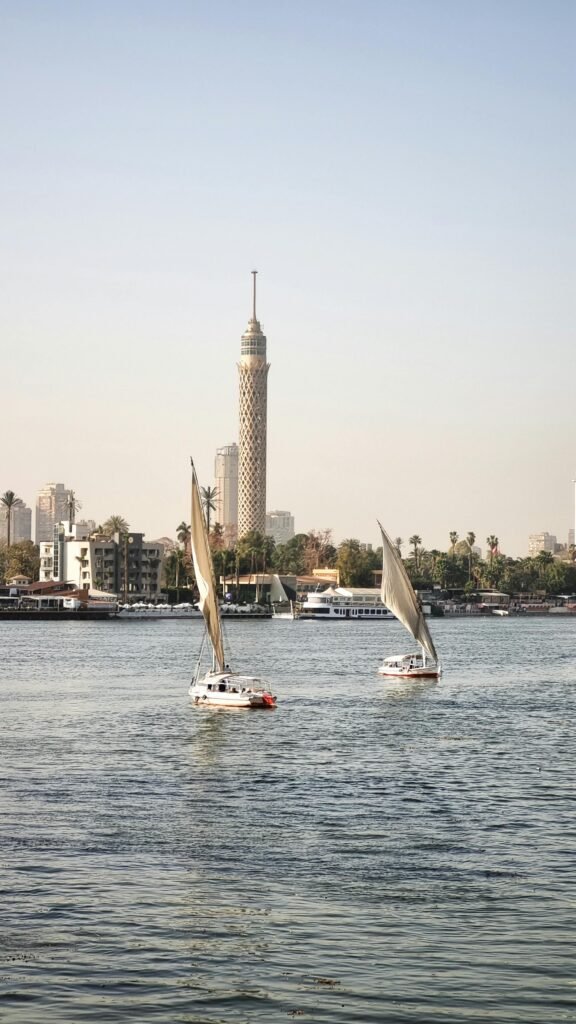
The city spreads across 606 square kilometers along the Nile’s right bank in northeastern Egypt, sitting at about 68 meters above sea level. The river runs through the city like a silver seam, splitting around two iconic islands: Gezira (which holds the chic Zamalek district) and Roda. Cairo sits where the Nile Valley opens into the fertile Delta — the Muqattam hills rise immediately to the east, and the Western Desert stretches off toward the Pyramids of Giza. That position has made Cairo a natural crossroads between Africa, Asia, and the Mediterranean for thousands of years, and you can feel it in the languages, the architecture, and the food.
Climate and Weather Patterns
Cairo’s subtropical desert climate runs on two settings: warm and warmer. The annual average is 21.7°C (71°F), with summers regularly hitting 35°C (95°F) and mild winters around 13.9°C (57°F). Rainfall is essentially a rumor — about 25mm a year, almost all of it falling between November and March. The trade-off is sunshine: 9 to 13 hours of daylight, year-round, perfect for outdoor exploration. Summer brings occasional khamsin sandstorms blowing in from the south, which can turn the sky orange and produce some of the most photogenic sunsets you’ll see anywhere.
Best Time to Visit
October through April is the sweet spot. Daytime temperatures sit in the 20–28°C (68–82°F) range, evenings turn pleasant enough for Nile cruises and rooftop dining, and the heat is manageable even at the Pyramids in midday. December to February runs coolest — daytime around 18–20°C (64–68°F), nights down to about 10°C (50°F) — which is ideal for long walks through Islamic Cairo and full days at the archaeological sites. Summer (May to September) is the contrarian’s choice: harsh heat, but fewer crowds and lower prices, and a cooler escape valve as close as the Mediterranean coast.
Cairo’s Districts & Neighborhoods
Cairo isn’t a city you experience in one place — it’s a stack of overlapping cities. Choosing where to base yourself, and which neighborhoods to walk on which days, makes the difference between feeling overwhelmed and feeling like you finally got it.
Islamic Cairo: The Historic Heart
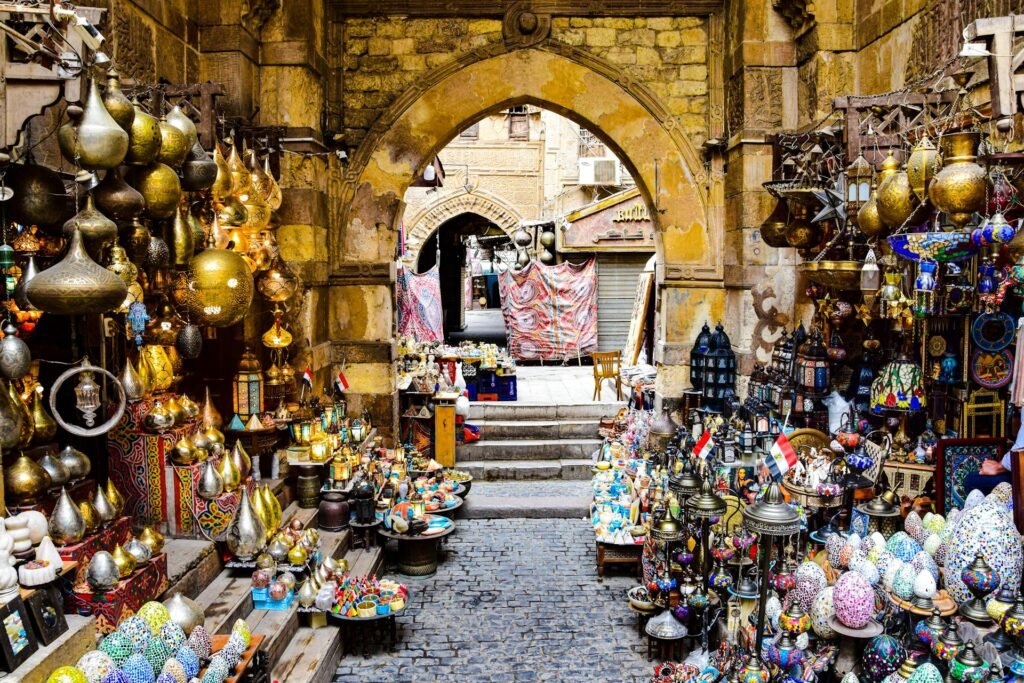
UNESCO put Islamic Cairo on its World Heritage list in 1979, and walking the quarter it’s obvious why: this is one of the largest concentrations of medieval Islamic architecture anywhere on earth. The streets are narrow, the building dates run from the 9th to the 19th century, and almost every alley reveals a mosque, madrasa, or caravanserai you didn’t know existed. Anchor points are the Khan el-Khalili bazaar, the Al-Azhar Mosque, and the Citadel of Saladin. Plan to get lost — that’s the experience. The neighborhoods of Darb el-Ahmar and Sayyida Zeinab repay an unhurried morning, with spice vendors, brass-beaters, and craftsmen working in workshops that have been in the same family for generations.
Downtown Cairo and Tahrir Square
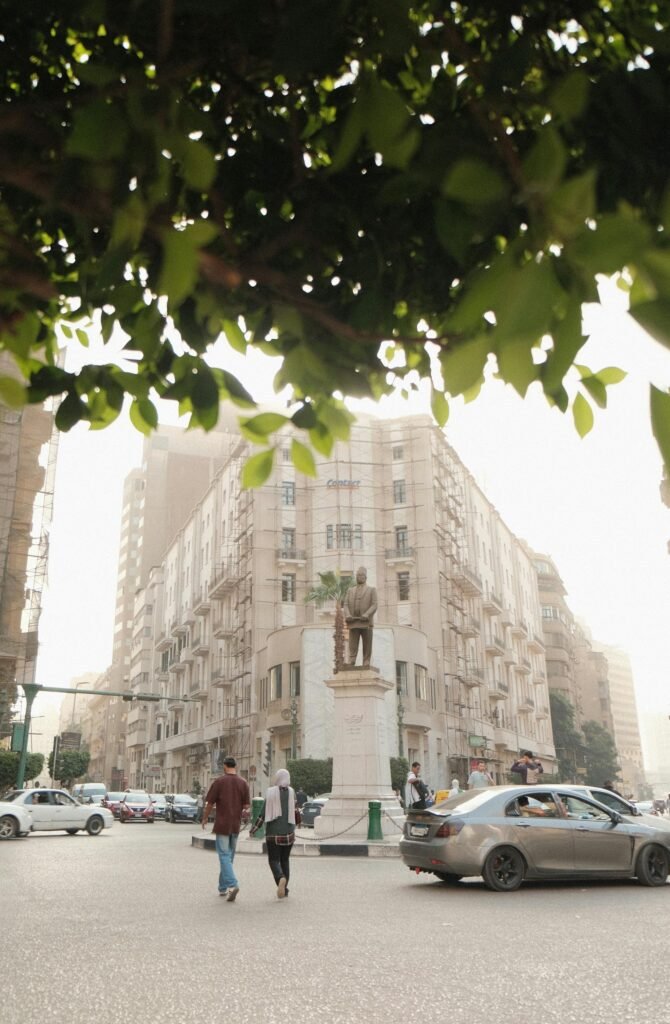
Downtown is the early-20th-century city — the “Paris on the Nile” boulevards, the neoclassical façades, the cafés where Egyptian cinema’s golden age was negotiated over coffee. Tahrir Square sits at the center, with the Egyptian Museum on its northern edge, the imposing Mogamma government complex (now mostly emptied out) on the south. The architecture is grand, the streets are wide enough to walk comfortably, and the energy at street level is pure modern Cairo: vendors, students, traffic, and a café culture worth tapping into.
Zamalek: The Chic Island District
Zamalek occupies most of Gezira Island in the middle of the Nile, and the moment you cross the bridge the volume of the city drops by half. Tree-lined streets, boutique galleries, embassies, and the Cairo Opera House give the neighborhood an unhurried air. It’s where Cairo’s expatriates and affluent professionals live, but it’s also where you’ll find some of the city’s best restaurants, bookshops, and quiet evening walks. Easy to reach, easy to leave — multiple bridges connect back to both banks.
Coptic Cairo (Old Cairo)
South of Islamic Cairo, the Coptic Quarter sits inside (and on top of) the original Roman fortress of Babylon. The Hanging Church takes its name from the way it’s literally suspended over a Roman gatehouse. The Ben Ezra Synagogue, by tradition, marks the spot where the infant Moses was found in the reeds. The lanes are quiet, the walls are old, and the contrast with the noise of central Cairo is the point — this is a different layer of the same city, and one of the few places where Cairo’s religious diversity is legible at street level.
Heliopolis: The Garden City
Heliopolis was a planned suburb when it was built in the early 20th century — palm-lined boulevards, distinctive Islamic-revival architecture, spacious villas — and it has held onto that character despite the city growing around it. It now contains Cairo International Airport, which means most visitors arrive through Heliopolis without ever stopping. Worth a half-day if you have time: the Baron Empain Palace alone justifies the trip.
Maadi: Suburban Tranquility
Maadi sits south of central Cairo and trades buzz for breathing room. Tree-lined streets, gardens, and a slower pace make it a favorite for families and long-stay expatriates. Restaurants and cafés cluster around Road 9, and the riverside Corniche extends down here for evening walks without the central-Cairo crowds.
New Cairo: Modern Desert Metropolis
Launched in 2004, New Cairo is the version of Egypt the government wants the future to look like. The development has turned 120 square kilometers of desert (17–28 km east of downtown) into master-planned neighborhoods: luxury apartment blocks, gated compounds, shopping malls, international schools. It’s where Cairo’s growing middle class is being absorbed, and where most of the new business activity sits. Worth seeing if you want to understand where the city is heading; not the place to base yourself if you’re here for the historic core.
Top Things to Do in Cairo
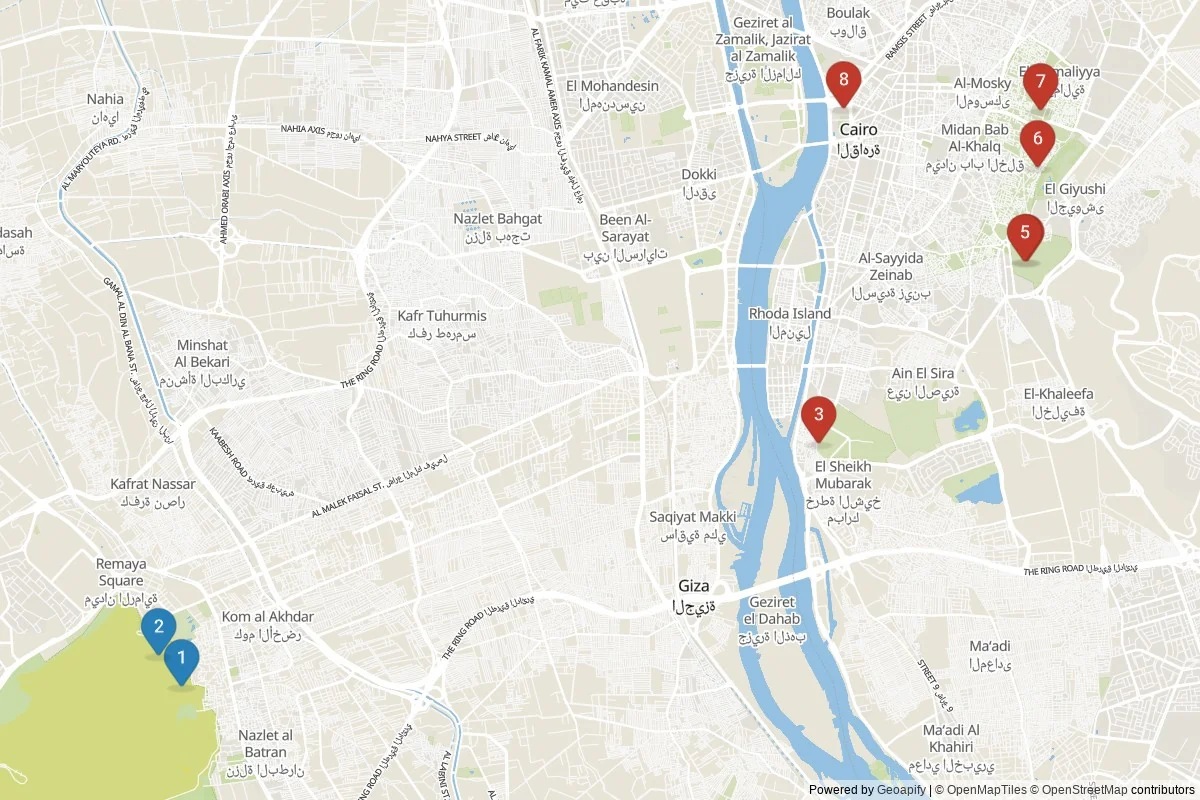
| # | Sight | Cluster | Type | Time | Entry | Best |
|---|---|---|---|---|---|---|
| 1 | Sphinx of Giza | Central | Ancient monument | ~30 min | inc. Pyramids | Morning |
| 2 | Pyramids of Giza | Central | Ancient wonders | ~3 hrs | 540 EGP | Early morning |
| 3 | Coptic Cairo & Hanging Church | Outer | Religious quarter | ~1.5 hrs | Free | Morning |
| 4 | Mosque of Muhammad Ali | Outer | Mosque | ~30 min | inc. Citadel | Morning |
| 5 | Citadel of Saladin | Outer | Medieval fortress | ~2 hrs | 450 EGP | Morning |
| 6 | Al-Azhar Park | Outer | Urban park | ~1 hr | 35 EGP | Sunset |
| 7 | Khan el-Khalili Bazaar | Outer | Old market | ~2 hrs | Free | Evening |
| 8 | Egyptian Museum | Outer | Museum | ~3 hrs | 450 EGP | Morning |
| 🚗 | Day Trip: Saqqara Step Pyramid | Day trip | Day trip | ½ day | 450 EGP | Morning |
You won’t run out of things to see in Cairo. The trick is sequencing — pairing the high-traffic landmarks with the underrated ones, and balancing the open-air sites with the museums so you don’t burn out. The following sections walk through the categories worth budgeting time for.
Ancient Wonders and Archaeological Sites
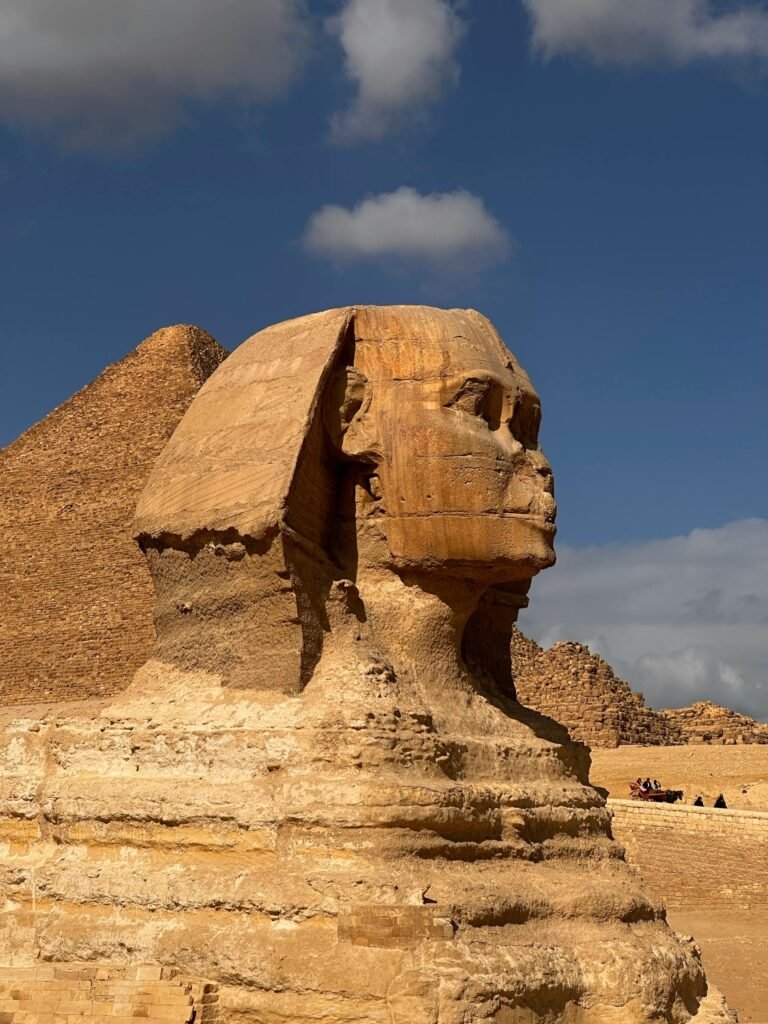
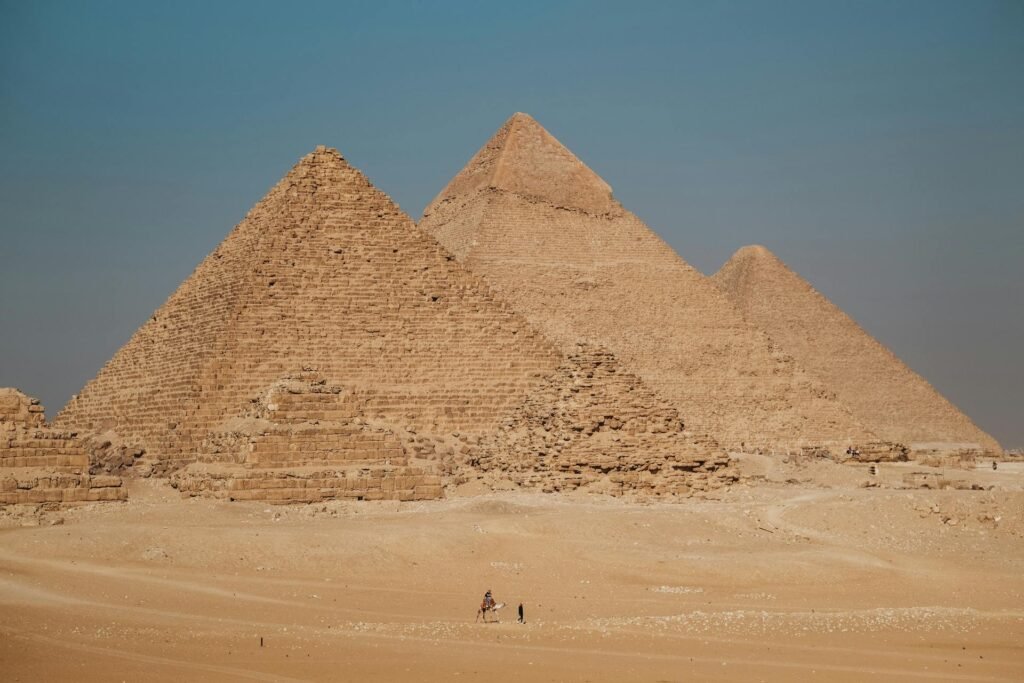
The Pyramids of Giza sit just 15 kilometers from downtown, and they remain the headline act for good reason. Khufu’s Great Pyramid, the Pyramid of Khafre, the smaller Pyramid of Menkaure, and the Sphinx form the core complex; the Solar Boat Museum nearby displays Khufu’s painstakingly reconstructed funeral barge, recovered in pieces from a sealed pit beside the Great Pyramid. Beyond Giza, the older site of Saqqara is the more rewarding archaeological day: the Step Pyramid built by the architect Imhotep is the world’s earliest pyramid, and the surrounding necropolis at Memphis tells the story of how pyramid construction evolved over the centuries that followed.
Islamic Architecture and Mosques
Cairo’s “thousand minarets” are not a marketing slogan — the historic core really does support that many vertical accents on its skyline. Three sites worth prioritizing: the 9th-century Ibn Tulun Mosque with its spiral minaret (one of the rare buildings in the city you can climb for free), the 10th-century Al-Azhar Mosque and University, and the imposing Muhammad Ali Mosque on top of the Citadel, whose Ottoman silhouette dominates the eastern skyline. The medieval gates — Bab al-Futuh, Bab an-Nasr, and Bab Zuweila — are still standing, still passable, and offer a sense of how the fortified city was actually entered.
Museums and Cultural Sites
The Egyptian Museum on Tahrir Square remains the most concentrated collection of ancient Egyptian artifacts in existence, including Tutankhamun’s gold-leaf burial mask and the bulk of his tomb’s contents. The newer National Museum of Egyptian Civilization (NMEC) in Fustat handles the post-pharaonic story and houses 22 royal mummies in climate-controlled galleries — the 2021 transfer ceremony of those mummies, broadcast live, is the most theatrical thing the city has done in a generation. The Museum of Islamic Art, the Coptic Museum, and the Gayer-Anderson Museum (a restored 17th-century house) round out the cultural circuit and are usefully less crowded.
Markets and Shopping
Khan el-Khalili is the bazaar everyone knows, and even with the tourist mark-up it’s worth an evening. Spices, textiles, brass, jewelry, and the El Fishawi café — operating since 1773 — anchor the experience. The Tentmakers’ Bazaar (Sharia al-Khayamiya), just south of Bab Zuweila, is the city’s last working street of hand-stitched appliqué textiles and a quieter, more rewarding place to buy something with a real provenance. For air-conditioned modern shopping, Cairo Festival City and Mall of Egypt cover the international-brand circuit. The fruit and vegetable markets near Midan Urabi are where you go for color, noise, and a sense of how Cairo actually feeds itself.
Nile River Activities
A felucca ride at sunset is the obligatory Cairo cliché, and the cliché is correct — an hour on a wooden sailboat as the city’s lights come on is genuinely worth it, and at around 200–300 EGP per boat it’s also the cheapest waterfront experience anywhere. Dinner cruises run nightly from the Garden City and Zamalek docks, with belly dancing, tanoura performances, and a multi-course menu. For free, the Corniche promenade along both banks is a kilometers-long evening walk with cafés and benches the whole way.
Parks and Green Spaces
Al-Azhar Park is the surprise of the city: 30 hectares of formal gardens, fountains, and panoramic views of historic mosques, all built on top of what had been a 500-year-old garbage dump until the Aga Khan funded the rehabilitation. Gabalaya Park on Gezira features 19th-century grottoes and a small Nile-fish aquarium. Dr. Ragab’s Pharaonic Village, on a Nile island in the south of the city, is more theme park than archaeology — actors in costume, replica temples, traditional crafts demonstrations — but it works surprisingly well for families.
How to Get to Cairo
Cairo is connected to the world by air, by rail, and by a road network that radiates outward like spokes on a wheel. Choosing how to arrive depends mostly on where you’re coming from — and how much of Egypt you want to see along the way.
By Air
Cairo International Airport (CAI) sits 22 kilometers northeast of downtown in Heliopolis and is Egypt’s main international gateway. Direct flights connect from most major hubs in Europe, Asia, Africa, and the Middle East. Egypt Air is the national carrier and runs the most frequent regional service; Lufthansa, Turkish Airlines, Emirates, Qatar Airways, British Airways, and Air France all serve Cairo with daily long-haul flights. The airport has three terminals, modern duty-free, and a range of ground transport from the city — pre-booked rides through Uber or Careem are the simplest option for first-time arrivals.
By Rail
Egypt’s rail network connects Cairo to the rest of the country, and Ramses Station downtown is the central hub. Comfortable air-conditioned trains run to Alexandria (about 3 hours), Luxor (10–12 hours), and Aswan (13–15 hours), with sleeper carriages available for the longer southern routes. Train travel here is one of the quiet pleasures of Egyptian travel — affordable, scenic, and a chance to see the Nile Valley landscape unfolding past the window.
By Road
Cairo sits at the center of Egypt’s highway network. Highway 1 runs northwest to Alexandria via the Nile Delta — slower but more scenic. Highway 11 takes the desert route to Alexandria for speed. Highway 2 runs south along the Nile to Upper Egypt, Highway 3 heads northeast to Port Said, and Highway 33 connects east to Suez and the Sinai. Long-distance buses depart from the Turgoman Bus Terminal near Ramses Station; companies like GoBus and Blue Bus run modern coaches to most regional destinations.
By Sea
Cairo itself is inland, but Mediterranean cruise passengers commonly arrive via Alexandria or Port Said. From Alexandria, the train or a chartered car covers the 220 km in about 2.5 hours; Port Said is a longer transfer at around 200 km. Cruise lines typically offer organized excursions to the major Cairo sites for passengers with one-day port calls.
Getting Around Cairo
Cairo’s traffic is famous, and not in a flattering way. The good news: you don’t have to fight it. The metro is fast and cheap, ride-hailing apps are everywhere, and the most rewarding parts of the historic city are best covered on foot anyway.
Cairo Metro
The Cairo Metro has been running since 1987 and is the most efficient way to move across the city. The three-line system covers 65 kilometers and 61 stations, connecting every district that matters for visitors. Line 1 runs north–south from New El Marg to Helwan; Line 2 crosses east–west from Shubra to Giza, ducking under the Nile in between; Line 3 serves the airport corridor. Trains run from 5:30 AM to midnight, cars are air-conditioned, and dedicated women-only carriages run during peak hours. Single-ride tickets cost a few Egyptian pounds — among the cheapest metro fares anywhere in the world.
Buses and Minibuses
Cairo’s bus network is enormous: 2,600 vehicles, 450 routes, 8,460 kilometers of coverage, and roughly 1.3 billion passengers per year. The main bus hub is at Midan Abdelmunim Riad near the Egyptian Museum. Minibuses fill in the gaps to outer suburbs and nearby cities, departing whenever they fill up. Useful for locals; for visitors, the metro plus ride-hailing usually covers everything you need.
Taxis and Ride-Hailing
The traditional black-and-white taxis are still everywhere, but they require negotiating the fare in advance — and as a visitor, you’ll almost always be quoted a starting price two or three times what locals pay. Uber and Careem operate citywide with transparent pricing and GPS tracking, and they’ve effectively replaced taxis for tourists and most middle-class Cairenes. Both apps work at the airport and across the city. For airport transfers and longer trips, pre-booked private cars from your hotel are reliable and only marginally more expensive.
On Foot Across the Nile
Central Cairo’s historic districts are best explored on foot — Islamic Cairo, the Coptic Quarter, downtown, and Zamalek all reward walking. Ten bridges span the Nile, connecting the east and west banks, and the Corniche promenade runs along the river for kilometers in both directions. Wear comfortable shoes, carry water, and accept that you’ll be stopped occasionally by friendly conversations with shopkeepers — it’s part of the city.
Private Vehicles
Renting a car in Cairo is technically possible and almost always a mistake. The city has more than two million registered vehicles, the lane discipline is aspirational at best, and parking in the historic core is impossible. If you need a private car for the day — for example, a Pyramids trip combined with Saqqara and Memphis — book a driver through your hotel rather than driving yourself.
Food & Drink in Cairo
Cairo eats well. Not in the curated, photogenic way of newer food capitals, but in the deeper sense — recipes that have been refined for a thousand years, ingredients that travel a few kilometers from farm to plate, and a street-food culture that runs from sunrise to past midnight.
Traditional Egyptian Cuisine
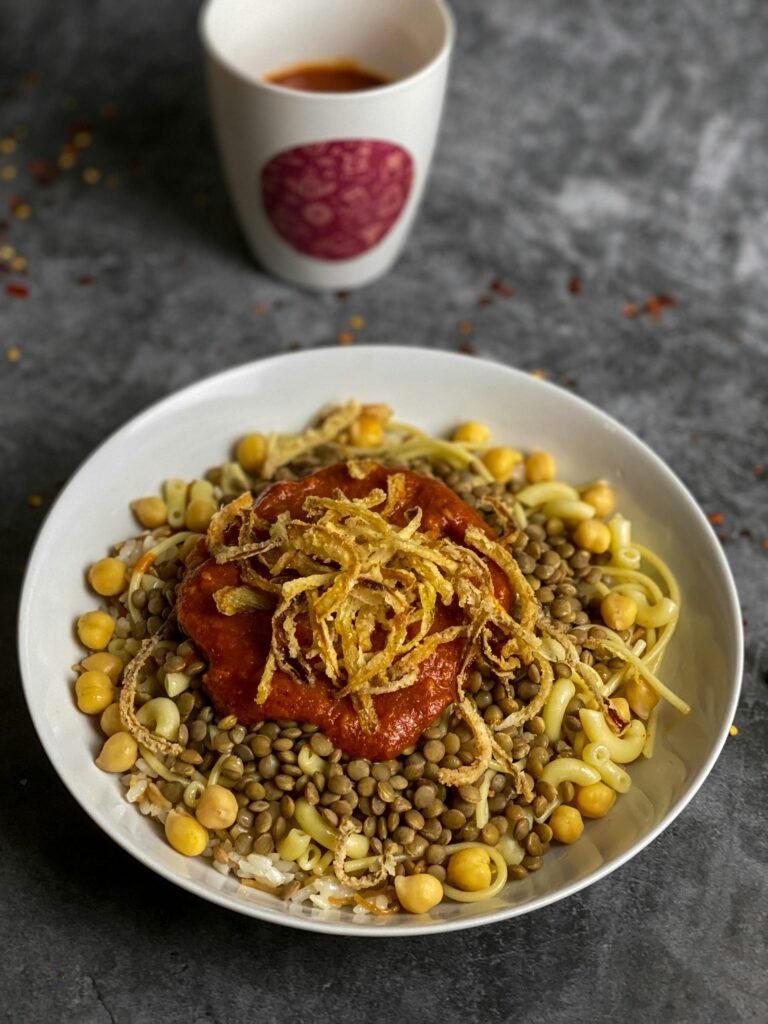
Most Egyptian meals start with mezze: small plates of ful medames (slow-cooked spiced fava beans), tamaya (the Egyptian version of falafel, made with fava beans rather than chickpeas), and tahini. The unofficial national dish is kushari — pasta, rice, lentils, and chickpeas in one bowl, topped with tomato sauce and crispy fried onions, and one of the best things you can eat anywhere for the equivalent of a couple of dollars. Grilled meats — kofta and kebab — are everywhere, served with fresh aish baladi bread that arrives still warm from the oven.
Street Food and Local Specialties
Street food in Cairo is not a tourist concession — it’s the dominant way the city actually eats. Falafel sandwiches at sidewalk windows, grilled corn on the cob from charcoal carts, shawarma counters at every corner, and sweet stalls selling basbousa (semolina cake soaked in syrup) and konafa (shredded-pastry pie with cheese or cream filling). Drinks: Turkish coffee strong enough to walk on its own, sweet mint tea, fresh sugarcane juice from green-painted wooden carts, and karkadeh (cold hibiscus tea) in summer. During Ramadan, iftar tables stretch into the streets and the entire city eats together at sunset.
Dining Venues
The full range is here, from the absolute cheap end to genuinely excellent. The traditional ahwa — a coffeehouse with backgammon, dominoes, shisha, and tea — is the social institution worth experiencing once; El Fishawi in Khan el-Khalili has been operating since 1773 and is still working. For higher-end dining, Zamalek and the upmarket Garden City riverside have international restaurants; Sequoia, Abou El Sid, and the Andrea on Mariotteya are perennial favorites. Floating restaurants moored along the Nile combine dinner with belly dancing, tanoura, and a slow nighttime drift past the lit-up monuments.
Culture & Arts in Cairo
Cairo is the cultural capital of the Arab world by sheer gravity — its film industry, its publishing houses, and its music shaped the soundtrack of half a billion people. Most of that production still happens here, and the institutions are open to visitors.
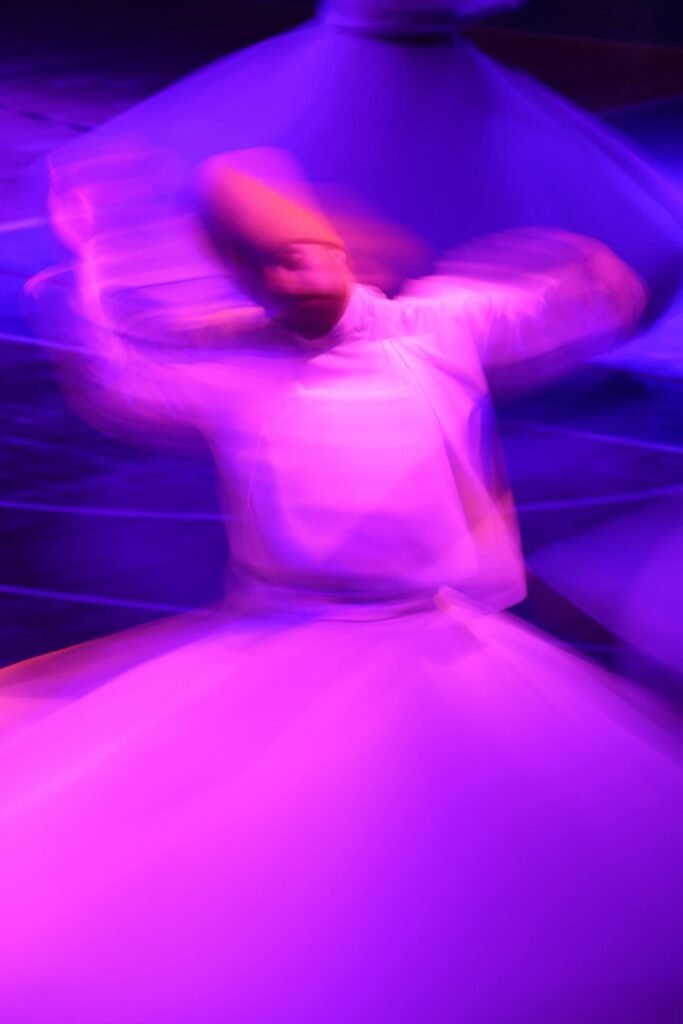
Performing Arts and Entertainment
The Cairo Opera House, which opened in 1988 on Gezira Island, anchors the city’s high-culture calendar — ballet, symphonic concerts, art exhibitions, Arabic classical performances. The Gomhouriya Theater hosts traditional Arabic music and folkloric dance. The Wallace Theater at the American University in Cairo runs English-language productions through the academic year. For something rarer, the Al-Arayes Puppet Theatre still puts on traditional Egyptian puppet shows of stories like Ali Baba and Sinbad — a tradition that nearly went extinct and has been preserved largely through this institution.
Language and Literature
Egyptian Arabic is the de facto lingua franca of the Arabic-speaking world, mostly because Egyptian cinema and television exported it for a century. Cairo has produced literary giants: Naguib Mahfouz, the Arab world’s first Nobel Prize for Literature laureate (1988), set most of his novels in the alleys of Islamic Cairo. Contemporary writers like Alaa Al-Aswany continue the tradition. Al-Azhar University remains a global center of Islamic scholarship and Arabic letters; the surrounding Khan el-Khalili area is full of secondhand bookshops worth an hour of browsing.
Religious Diversity
Cairo is overwhelmingly Muslim, but the religious texture of the city is more layered than that single label suggests. The Coptic Christian community is one of the oldest continuously living Christian populations anywhere, and St. Mark’s Cathedral in Abbasiya is Africa’s second-largest church. The Jewish heritage is diminished but visible — historic synagogues survive, and the vast Bassatine Jewish cemetery between Maadi and downtown is one of the oldest Jewish burial grounds in the world. This diversity shapes architecture, festivals, food, and language in ways you’ll notice if you’re paying attention.
Festivals and Celebrations
Cairo’s calendar runs hot. The Cairo International Film Festival, founded in 1976, is the oldest film festival in the Arab world and brings global cinema to the city every November. The Cairo International Book Fair, held annually since 1969, is one of the largest in the world by attendance. Traditional mulids — religious festivals honoring saints like Sayyidna Hussein and Sayyida Zainab — transform their host neighborhoods with processions, Sufi dancing, sweet stalls, and all-night celebrations that have been running for centuries. The Egyptian International Marathon runs near the Pyramids each February, combining athletics with a starting line that’s hard to top.
Cairo by District: The 8 الأحياء
Cairo is divided into 8 districts. The map below shows their official OSM boundaries, colour-coded to match the table — a quick way to orient yourself before zooming in on individual sights.
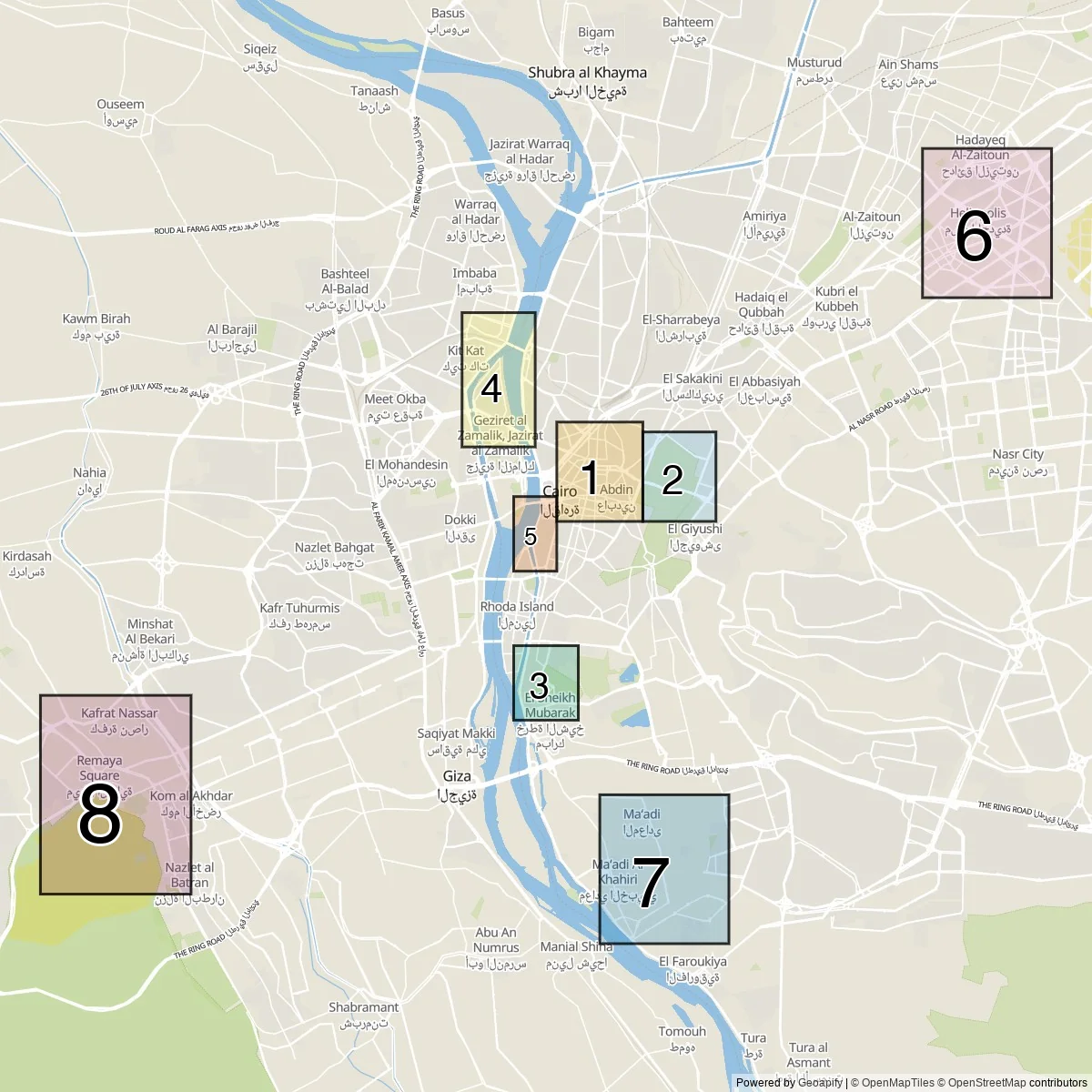
| # | الأحياء |
|---|---|
| 1 | وسط البلد · Downtown (Wast El-Balad) |
| 2 | القاهرة الإسلامية · Islamic Cairo |
| 3 | القاهرة القبطية · Coptic Cairo |
| 4 | الزمالك · Zamalek |
| 5 | جاردن سيتي · Garden City |
| 6 | مصر الجديدة · Heliopolis |
| 7 | المعادي · Maadi |
| 8 | الجيزة · Giza (Pyramids) |
Frequently Asked Questions About Visiting Cairo
Do I need a visa to visit Cairo?
Most travelers need a visa to enter Egypt. The simplest route is the official Egypt e-Visa portal at visa2egypt.gov.eg, which costs USD 25 for a single-entry 30-day tourist visa and processes within about 5–7 business days. Visas on arrival are also available at Cairo International Airport for citizens of most EU countries, the US, UK, Canada, and Australia at the same USD 25 fee, paid in cash. Citizens of GCC states, Lebanon, and Jordan enter visa-free. The eligibility list changes — confirm via the UK Foreign Office Egypt entry requirements page or your country’s Egyptian embassy before booking.
Is Cairo safe for tourists?
Cairo is generally safe for tourists in mainstream districts during daytime, and violent crime against visitors is statistically rare. The everyday risks are scams and aggressive solicitation rather than violence: the Pyramid camel rides, “free” gifts at Khan el-Khalili that come with surprise bills, and fake “you need a guide to enter” pressure at archaeological sites. Western government advisories — including the US State Department and the UK Foreign Office — flag the Western Desert and the northern Sinai as higher-risk, not central Cairo or Giza. Standard precautions apply: avoid demonstrations, watch your bag on the Metro at rush hour, and use Uber or Careem rather than hailed taxis after dark.
How many days do I need in Cairo?
Three full days is the minimum to do the headline sites without rushing; five is more comfortable. A workable three-day plan: Day 1 the Pyramids of Giza, the Sphinx, and the Solar Boat Museum; Day 2 the Egyptian Museum or the National Museum of Egyptian Civilization (NMEC), followed by Islamic Cairo (Khan el-Khalili, Al-Azhar, the Citadel); Day 3 Coptic Cairo plus a half-day at Saqqara and Memphis. Stretch to five days if you want unhurried museum time, an Al-Azhar Park sunset, and a Nile dinner cruise. Avoid trying to combine Cairo with Luxor in fewer than seven total days — both cities deserve more than a transit stop.
What’s the best area to stay in Cairo?
For first-time visitors, Zamalek on Gezira Island is the easy default: leafy streets, restaurants and bars, Nile views, and a 10–15 minute Uber to anywhere central. Downtown puts you within walking distance of the Egyptian Museum but is louder and grittier. Garden City is upscale and quiet, with classic riverside hotels like the Four Seasons and Sofitel. Giza hotels with pyramid views save the morning commute on Pyramid day but mean returning into the city for everything else. Skip Heliopolis unless you’re optimizing for early-morning airport departures, and skip New Cairo entirely for sightseeing — both are too far from the historic core.
How much does it cost to visit the Pyramids of Giza?
General-admission tickets to the Giza Plateau (covering the Sphinx area and the exteriors of all three pyramids) are listed on the official Egyptian Ministry of Tourism and Antiquities ticket portal (egymonuments.gov.eg), where you can also pre-purchase to skip the ticket-window queue. Entering the Great Pyramid of Khufu requires a separately priced ticket; the Pyramid of Khafre and the Solar Boat Museum are also paid-extra. Egypt’s ticket prices have risen at most archaeological sites annually since 2022, so check the official portal for current rates rather than relying on guidebook prints. Bring cash (Egyptian pounds), water, a hat, and sunscreen — the plateau has minimal shade.
Should I drink the tap water in Cairo?
No. Cairo’s municipal tap water meets local standards but contains higher chlorine and mineral concentrations than most Western visitors are accustomed to, and the distribution infrastructure is old. The CDC’s Egypt travel health page recommends bottled or treated water for visitors. Use it for drinking and tooth-brushing, especially during the first several days. Reliable bottled brands (Baraka, Nestlé Pure Life, Aquafina) are sold everywhere for roughly 5–10 EGP per 1.5L bottle. In hotels and reputable restaurants, ice is generally made from filtered water; in street stalls and small ahwas, skip the ice as a precaution.
Do I need to dress conservatively in Cairo?
More conservative than the Red Sea resort towns, more relaxed than Saudi Arabia or Iran. For day-to-day sightseeing, covered shoulders and knees for women and long shorts or pants for men will fit in everywhere. For mosque visits, women must cover hair, arms, and knees (most major mosques provide loaner robes for free or a few EGP); men should wear long pants and avoid sleeveless tops; everyone removes shoes at the entrance. Zamalek, Garden City, and upscale restaurants are casual-Western — jeans, t-shirts, and summer dresses are all common. Avoid: very short shorts, tight athleisure, and beachwear when walking through Islamic Cairo or Coptic Cairo.
What’s the deal with tipping (baksheesh) in Cairo?
Baksheesh — small tips that lubricate daily transactions — is genuinely woven into Egyptian service culture, and a foreign visitor unfamiliar with it will get charged for it anyway. Useful baseline rates: restaurants 10–15% (check whether a service charge is already included); hotel porters 5–10 EGP per bag; taxi drivers 10–20 EGP above the meter or fare; tour guides 50–100 EGP per person per day; rest-room attendants 5 EGP. Carry many small notes (5, 10, 20 EGP) — large bills are hard to break in casual settings. You’re not obligated to tip for every interaction, but at archaeological sites the social pressure to do so is real and fighting it usually isn’t worth the half-EUR you save.
Economy & Business in Cairo
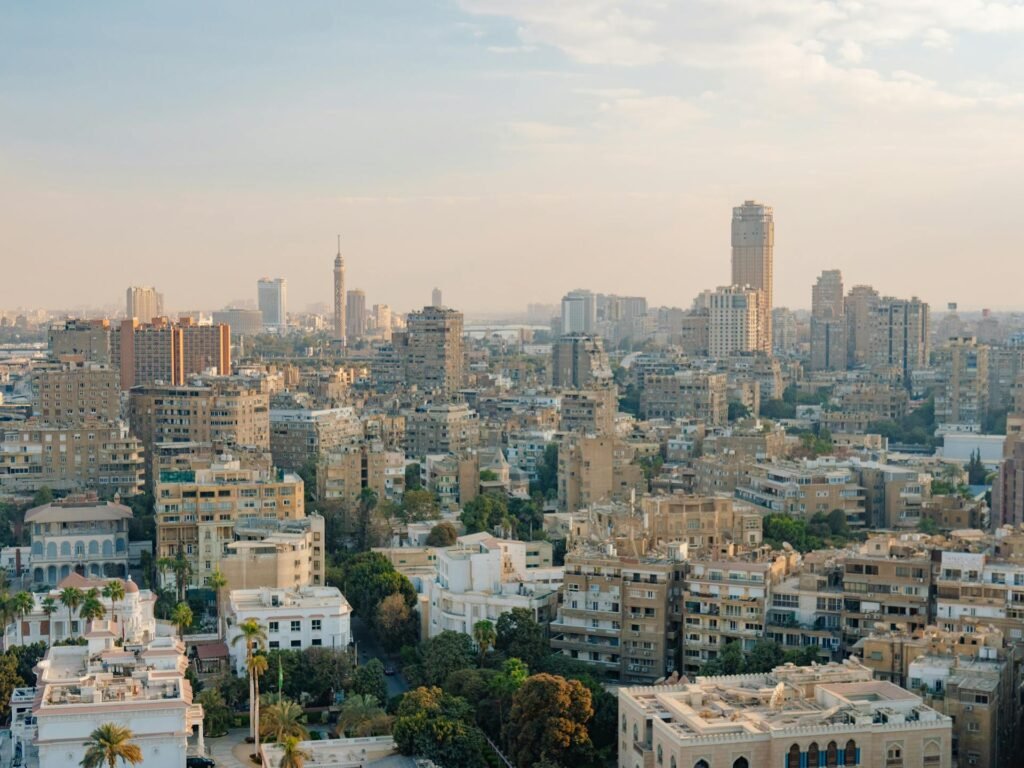
Cairo is Egypt’s economic engine and Africa’s largest urban economy, with a metropolitan GDP of roughly $102.2 billion. About a third of Egypt’s manufacturing happens within the metro area: textiles, furniture, automotive assembly, publishing, and food processing all anchor here. Tourism is a critical pillar — millions arrive each year for the Pyramids, the museums, and the historic core — and the service sector dominates employment overall. The informal economy is significant too: street vendors, family workshops, and small-scale enterprises account for an estimated 25 percent of economic activity. Major multinationals — from Vodafone to Procter & Gamble to Mercedes-Benz — maintain regional headquarters in Cairo, drawing on the city’s strategic location, its skilled workforce, and its position as the Arab world’s largest single market.
Cairo is a city you read in layers: pharaonic at the edge of vision, Roman beneath your feet, Fatimid in the gates, Mamluk in the mosques, Ottoman on the citadel, Beaux-Arts downtown, and modern, contradictory, alive everywhere in between. Whether you spend an afternoon climbing through Saqqara, an evening getting lost in Khan el-Khalili, or a night drifting up the Nile under sail, what you take with you isn’t a checklist — it’s a sense of how a place becomes itself by refusing to throw anything away.
AFRIKA
Cairo Hurghada Johannesburg Marrakech
ASIA
Abu Dhabi Agra Antalya Bangkok Batam Beijing Bengaluru Cebu City Chiang Mai Chiba Chennai Da Nang Dammam Delhi Denpasar Dubai Fukuoka Guangzhou Guilin Ha Long Hanoi Ho Chi Minh City Jakarta Jaipur Johor Bahru Kolkata Krabi Kuala Lumpur Kyoto Macau Mecca Medina Mugla Mumbai Osaka Pattaya Penang Phuket Riyadh Seoul Shanghai Shenzhen Singapore Taipei Tokyo Zhuhai
EUROPE
Amsterdam Athens Barcelona Berlin Brussels Budapest Copenhagen Dublin Florence Frankfurt am Main Heraklion Krakow Lisbon London Madrid Milan Munich Nice Paris Porto Prague Rhodes Rome Stockholm Venice Vienna Warsaw
NORTH AMERICA
Cancun Las Vegas Los Angeles Miami New York City Orlando San Francisco Toronto Vancouver
SOUTH AMERICA
Buenos Aires Lima Rio De Janeiro
OCEANIA
Auckland Honolulu Melbourne Sydney