
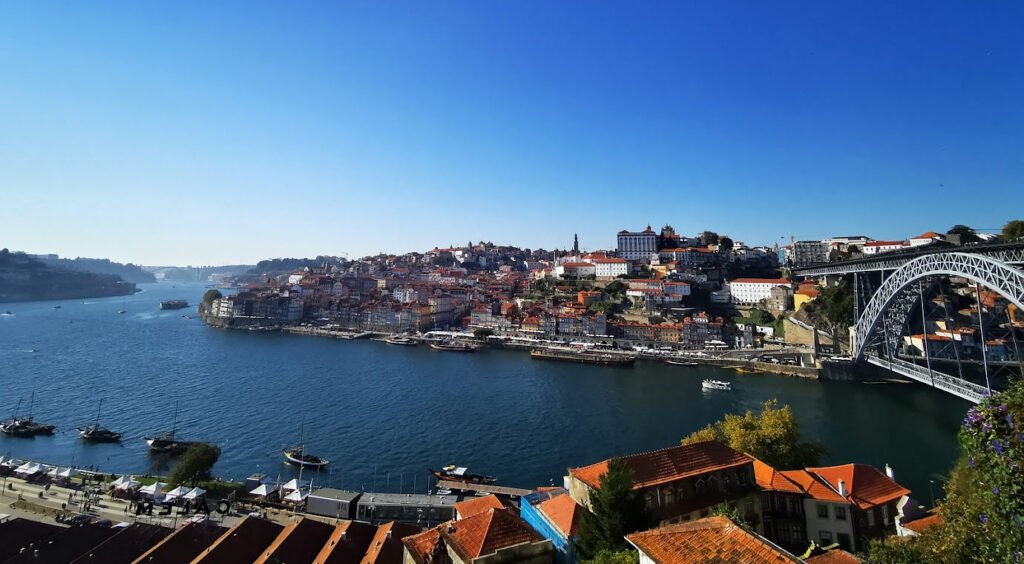
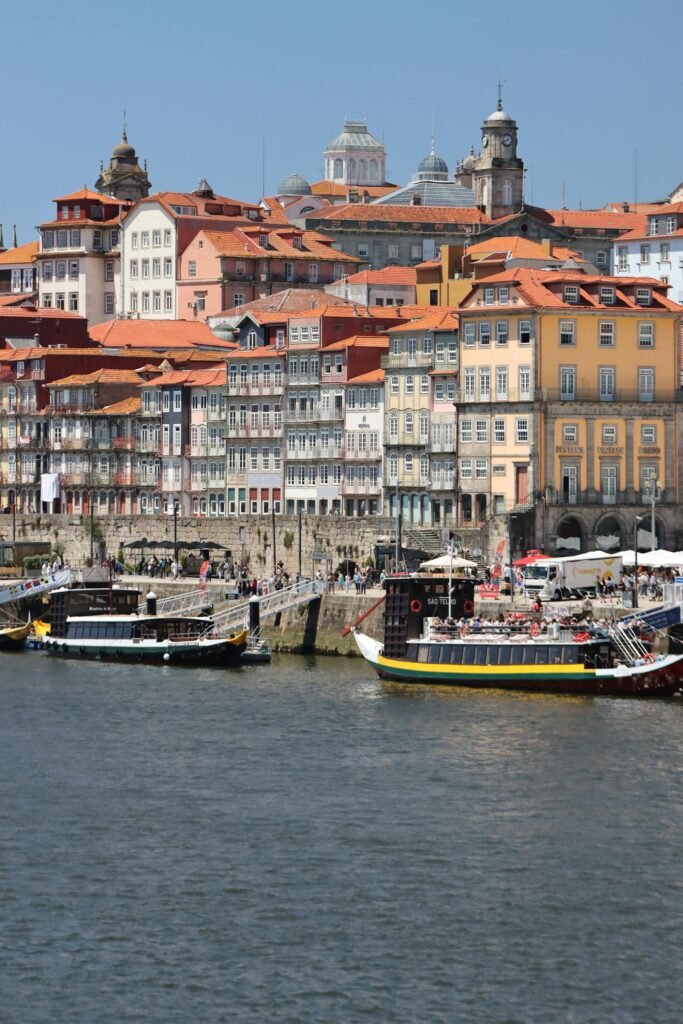
Photo credit: Porto and the Douro River with Dom Luís I Bridge
Porto is Portugal’s second-largest city and arguably its most atmospheric — a working coastal port built dramatically along the steep northern bank of the Douro River, where the river meets the Atlantic Ocean. The historic core (Ribeira, UNESCO World Heritage since 1996) cascades down to the waterfront in tiers of pastel-painted Baroque townhouses, narrow medieval lanes, and the country’s most photographed cluster of azulejo-tiled churches. Across the Douro on the south bank sits Vila Nova de Gaia with the world’s most concentrated collection of Port wine cellars — Sandeman, Graham’s, Taylor’s, Croft, Cockburn’s — where the eponymous fortified wine has been aged in oak barrels for over 300 years. The dramatic double-decker Dom Luís I Bridge (designed in 1881 by Téophile Seyrig, partner of Gustave Eiffel — both worked together on Porto’s earlier Maria Pia Bridge) connects the two banks at upper and lower levels and gives the city its iconic silhouette. The wider region — the Douro Valley (UNESCO 2001 as the world’s oldest demarcated wine region), nearby Braga (Portugal’s religious capital), Guimarães (the birthplace of the nation), and the Atlantic beach towns — makes Porto an exceptional base for northern Portugal. Yet the city itself, with its hipster cafés, restored Belle Époque cafés, contemporary art scene (the Serralves Foundation), and the perpetual mist over the Douro, rewards multiple days of slow exploration.
Porto by District: The 7 Freguesias
Porto is divided into 7 civil parishes. The map below shows their official OSM boundaries, colour-coded to match the table — a quick way to orient yourself before zooming in on individual sights.
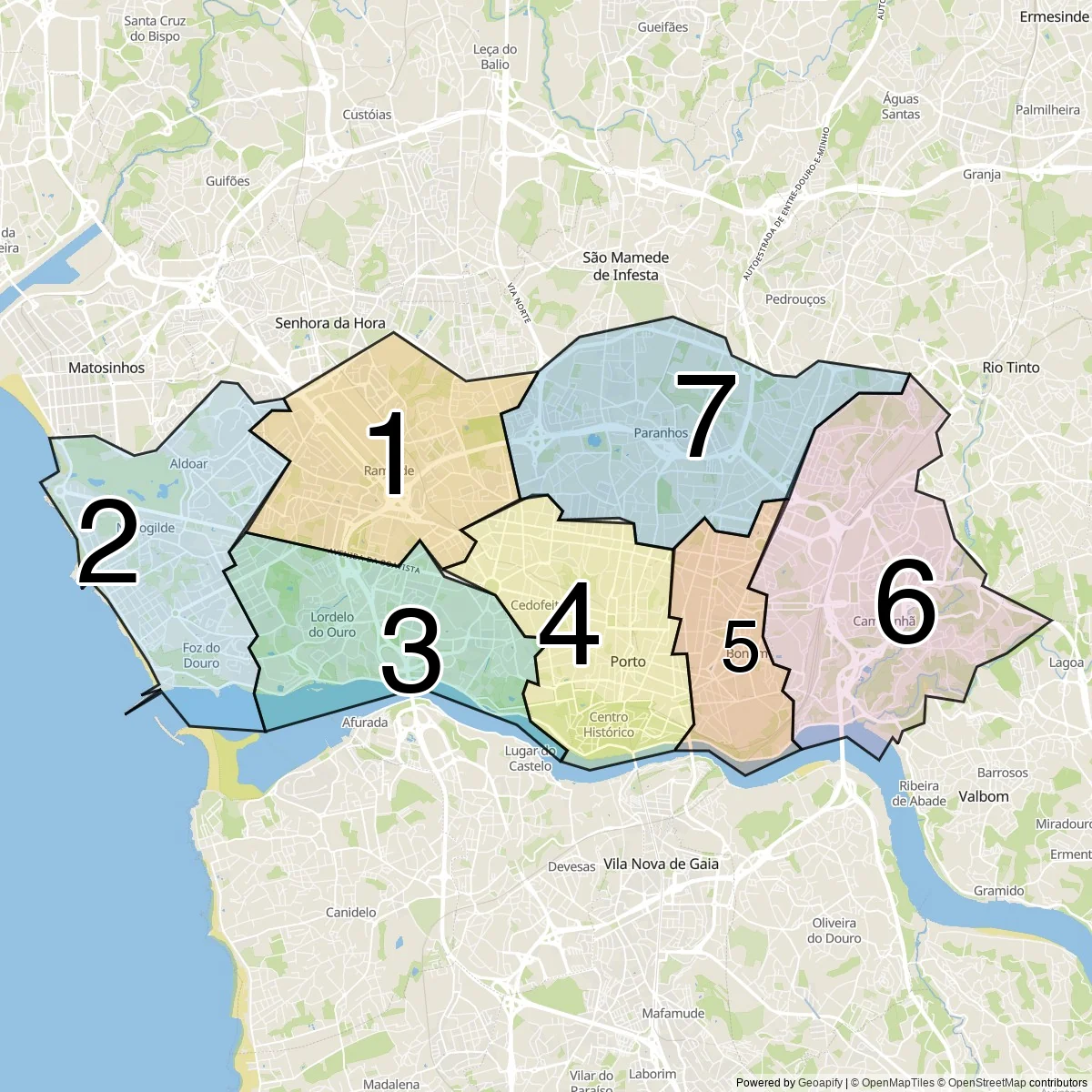
| # | Freguesias |
|---|---|
| 1 | Ramalde |
| 2 | Aldoar, Foz do Douro e Nevogilde |
| 3 | Lordelo do Ouro e Massarelos |
| 4 | Cedofeita, Santo Ildefonso, Sé, Miragaia, São Nicolau e Vitória |
| 5 | Bonfim |
| 6 | Campanhã |
| 7 | Paranhos |
Porto at a Glance: Essential Facts for Travelers
| Location | Porto District, Northern Portugal (Atlantic coast, Douro River mouth) |
|---|---|
| Coordinates | 41.1579°N, 8.6291°W |
| Population | ~232,000 (city proper, 2024); metro area ~1.74 million |
| Area | 41 km² (city proper); 2,089 km² (Greater Porto metro) |
| Elevation | Sea level to ~225 m (the steep Ribeira hill) |
| Time Zone | Western European Time (WET, UTC+0) / Western European Summer Time (WEST, UTC+1) |
| Calling Code | +351 (city code 22) |
| Currency | Euro (EUR €) |
| Languages | Portuguese (official); English widely spoken in tourism and business; significant French-speaking visitor population |
| Climate | Warm-summer Mediterranean — mild rainy winters, warm dry summers |
| Founded | Pre-Roman Celtic settlement; Roman Portus Cale from ~138 BCE (the city that gave Portugal its name) |
| Famous For | Ribeira UNESCO Old Town (1996), Port wine, Dom Luís I Bridge, Livraria Lello bookshop, Douro Valley wine region, francesinha sandwich, FC Porto football |
Upcoming Events in Porto
| Date | Title | Details |
|---|---|---|
| 2026-06-13 to 2026-12-30 | The Century of Gehry at Serralves | Serralves stages The Century of Gehry, a sweeping exhibition devoted to Frank Gehry, presented in the museum’s Alvaro Siza wing – one Pritzker Prize laureate shown inside the architecture of another. Models, drawings and archival material trace the career of the architect behind the Guggenheim Bilbao and Walt Disney Concert Hall. The show runs until 30 December; ticket prices vary, and the surrounding Serralves park and Art Deco villa make the visit a full afternoon for architecture lovers. [Source] |
| 2026-06-18 | Jenny Holzer: Wrong Answers at Serralves | American conceptual artist Jenny Holzer takes over the Serralves Museum with Wrong Answers, a major exhibition of the text-based work that made her famous, from scrolling LED installations to inscriptions in stone. Running since June and continuing into January 2027, it pairs with the museum’s Frank Gehry show to make Serralves the undisputed centre of Porto’s autumn art season. Ticket prices vary; give yourself time, as Holzer’s slow-moving texts reward unhurried viewing. [Source] |
| 2026-09-20 | O Classico: FC Porto vs Benfica at the Estadio do Dragao | Portuguese football’s fiercest fixture comes to the Estadio do Dragao on 20 September, when FC Porto host Benfica in a clash that will decide the early-season league leadership. The buildup has been heated, with both clubs already sparring publicly over refereeing. Expect a sold-out stadium, choreographed tifos and an atmosphere few European grounds match. Tickets are scarce and prices vary enormously on resale; neutral fans can soak up the pre-match buzz around the stadium and city. [Source] |
| 2026-09-28 | Placebo at Super Bock Arena | British alternative-rock veterans Placebo play the Super Bock Arena – Pavilhao Rosa Mota on 28 September. Brian Molko and Stefan Olsdal draw on three decades of brooding anthems, from Every You Every Me to their later, darker records, delivered with the intensity that has kept the band a live favourite. The domed arena sits in the Palacio de Cristal gardens above the Douro, an easy walk from the city centre. Ticket prices vary by section. [Source] |
| 2026-09-30 | Mario Biondi at Casa da Musica | Italian soul singer Mario Biondi, celebrated for a velvet baritone often compared to Barry White, brings his blend of soul, jazz and bossa influences to Casa da Musica on 30 September. The concert puts one of Europe’s smoothest voices inside Rem Koolhaas’s spectacular angular concert hall, itself worth the trip for architecture fans. Ticket prices vary by seating zone, and the venue’s acoustics flatter exactly this kind of warm, band-driven soul evening. [Source] |
| 2026-11-08 | EDP Porto Marathon 2026 | The EDP Porto Marathon holds its 22nd edition on 8 November, starting at 8:00 and organised together with the municipalities of Porto, Matosinhos and Vila Nova de Gaia. Alongside the full 42 km course there are a 10 km race, a 6 km event and a family mini marathon and walk, so runners of every level can join. The late-autumn date usually brings cool, fast conditions. Entry fees vary by distance and close early; spectating along the route is free. [Source] |
City News in Porto – last 14 days
| Date | Category | Headline | Details |
|---|---|---|---|
| 2026-09-14 | Sports | Classico week: refereeing row heats up FC Porto-Benfica | In the week of a classico that will decide the league leadership, FC Porto and Benfica are already trading barbs, with refereeing at the centre of the controversy. Benfica seized on remarks by Porto coach Francesco Farioli to complain about an incident from Sunday’s round, while figures at Porto deny any attempt to influence refereeing appointments. The rivals meet at the Estadio do Dragao on 20 September with first place in the table on the line. [Source] |
| 2026-09-14 | Public safety | Wildfire spreads from Povoa de Lanhoso into Vieira do Minho | A wildfire that began in Povoa de Lanhoso has crossed into neighbouring Vieira do Minho, consuming an area of scrubland in the hills of the Braga district north-east of Porto. Authorities said no houses were at risk and no roads had been cut as crews worked the terrain. The blaze adds to a demanding fire season in northern Portugal, where dry vegetation keeps firefighters on alert well into September. [Source] |
| 2026-09-08 | Sports | Haaland double sinks FC Porto in Champions League opener | Erling Haaland scored twice as Manchester City beat FC Porto at the Estadio do Dragao on the opening night of the Champions League campaign. The Norwegian striker finally found a way past Porto goalkeeper Diogo Costa, who had frustrated him in previous meetings between the sides. The defeat made for a sobering European start for Porto, who must now chase points in the league phase away from home as attention turns back to domestic matters. [Source] |
Porto Events & City News Archive
Sources: Serralves, Wikipedia, Publico, Songkick, Maratona do Porto, Observador, France 24
Weather Forecast for the Next 14 Days in Porto
| Date | Weather | Max °F | Min °F | Rain mm |
|---|---|---|---|---|
| 2026-09-14 | ☁️ | 82.1 °F | 64.8 °F | 0.0 mm |
| 2026-09-15 | ☁️ | 73.7 °F | 61.1 °F | 0.0 mm |
| 2026-09-16 | ☁️ | 78.2 °F | 61.8 °F | 0.0 mm |
| 2026-09-17 | ☁️ | 75.5 °F | 62.0 °F | 0.0 mm |
| 2026-09-18 | ☁️ | 78.8 °F | 60.5 °F | 0.0 mm |
| 2026-09-19 | ⛅ | 84.0 °F | 60.9 °F | 0.0 mm |
| 2026-09-20 | ⛅ | 80.0 °F | 58.7 °F | 0.0 mm |
| 2026-09-21 | ⛅ | 86.9 °F | 59.2 °F | 0.0 mm |
| 2026-09-22 | ☀️ | 84.7 °F | 70.1 °F | 0.0 mm |
| 2026-09-23 | ☁️ | 73.5 °F | 60.8 °F | 0.0 mm |
| 2026-09-24 | ☁️ | 68.3 °F | 55.5 °F | 0.0 mm |
| 2026-09-25 | ☁️ | 69.3 °F | 59.4 °F | 0.0 mm |
| 2026-09-26 | ☁️ | 69.1 °F | 57.5 °F | 0.0 mm |
| 2026-09-27 | ⛅ | 72.4 °F | 54.8 °F | 0.0 mm |
Porto’s History
Porto’s history is the history of Portugal itself — the city’s Roman name Portus Cale (“warm port”) gave the country its name. Founded as a Celtic settlement on the steep northern bank of the Douro, the area was Romanized around 138 BCE; Visigothic, Suevic, and Moorish rule followed. The 1095 charter from King Alfonso VI of León establishing the Countship of Portugal (centered on Porto and Guimarães) marked the beginning of the Portuguese nation; Porto’s role as the founding city is preserved in the modern national flag.
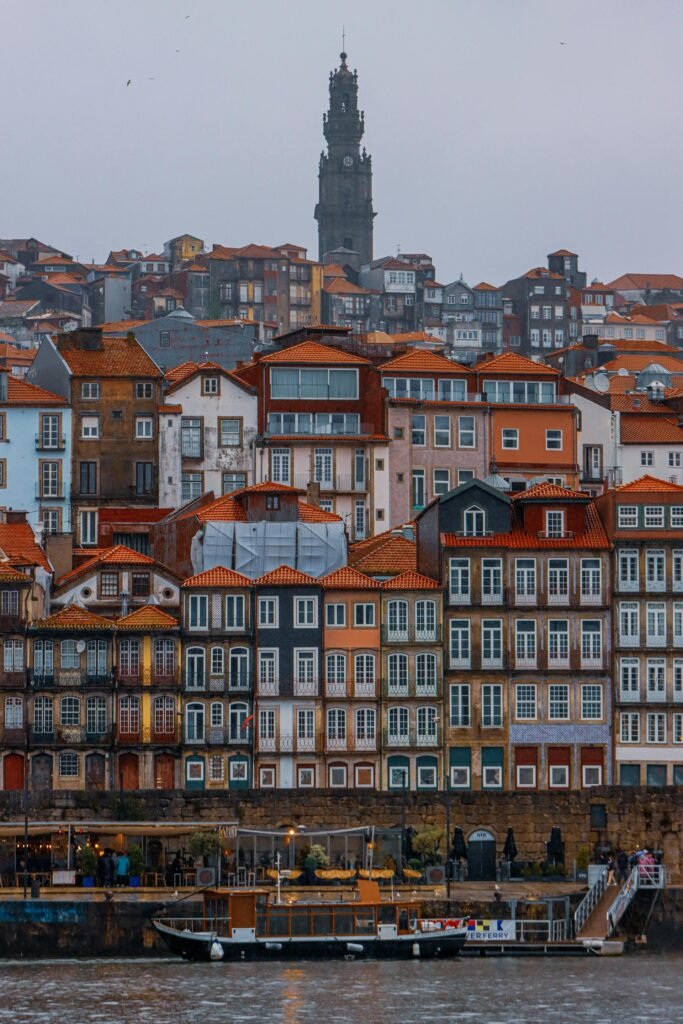
The medieval city was a thriving Atlantic port, with thick stone walls (parts still visible in the Ribeira) and a substantial Jewish quarter (the Judiaria do Olival). The 14th century saw the construction of much of the Ribeira’s surviving medieval fabric. The 15th century brought Portuguese maritime expansion: Prince Henry the Navigator was born in Porto in 1394; the city’s shipyards and merchants funded much of the early exploration of West Africa and the Atlantic islands. The city’s nickname “Cidade Invicta” (“Unvanquished City”) was earned during the Liberal Wars (1828–1834) when Porto resisted a 14-month siege by absolutist forces under King Miguel.
Port wine production began informally in the 17th century when British merchants — blocked from importing French wine during repeated Anglo-French conflicts — turned to Portuguese Douro Valley wines. The fortification of these wines with grape brandy (to preserve them during sea transport to England) created the distinctive sweet, high-alcohol fortified wine we now call Port. The 1703 Methuen Treaty between Britain and Portugal locked in preferential trade and made Port wine a major export. The British Port wine families — Sandeman, Croft, Taylor’s, Cockburn’s, Graham’s, Warre’s, Dow’s — established themselves across the river in Vila Nova de Gaia and remain dominant today.
The 1756 demarcation of the Douro Valley by the Marquês de Pombal made it the world’s first legally demarcated and regulated wine region — a precursor to the French AOC and Italian DOC systems. The Douro Valley itself became UNESCO World Heritage in 2001.
The 19th century brought industrial growth, the construction of the iconic Maria Pia Bridge (1877, designed by Eiffel) and the Dom Luís I Bridge (1881, by Eiffel’s partner Téophile Seyrig), and the Belle Époque expansion north of the historic core. Porto remained an important commercial port through the 20th century, though it suffered economically during the Salazar dictatorship (1933–1974).
The post-1974 democratic period and especially Portugal’s 1986 EU accession reshaped Porto. UNESCO World Heritage inscription in 1996 for the Ribeira historic center brought sustained tourism investment. The 2003 opening of the Casa da Música (Rem Koolhaas-designed concert hall) and the city’s role in the EU Capital of Culture (2001) and EuroBasket 2025 hosting have continued the cultural revival. The post-2015 Lisbon-and-Porto tourism boom, driven by low-cost European flights and Portuguese golden-visa investment programs, has dramatically transformed property prices and the city’s character — for better and worse, depending on perspective.
Geography, Climate & Best Time to Visit Porto
Geographic Setting
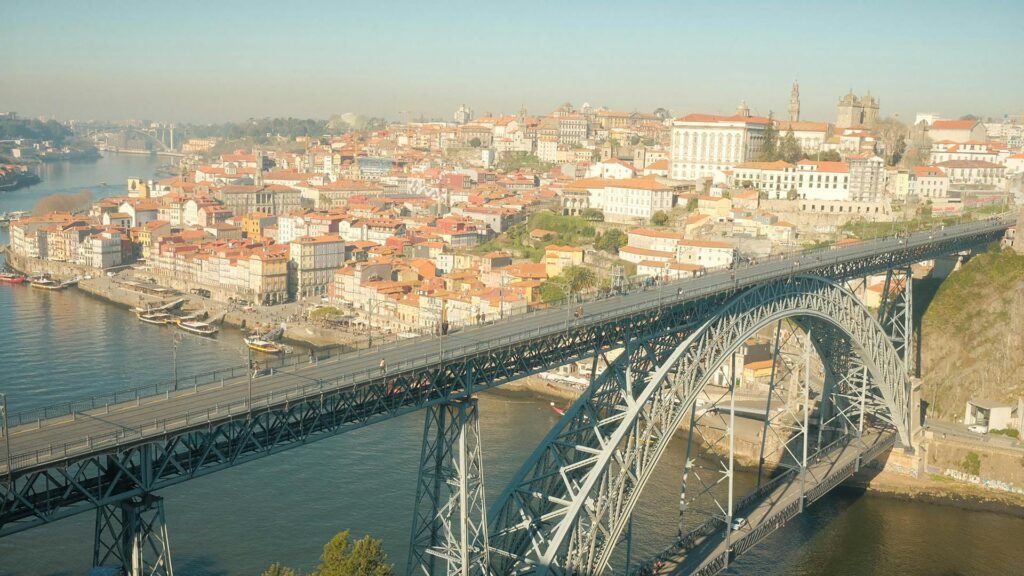
Porto sits on the steep northern bank of the Douro River just before it meets the Atlantic Ocean. The dramatic topography defines the city: the Ribeira historic center cascades down 200+ vertical meters from the upper Sé (Cathedral) plateau to the river embankment. Across the river to the south is Vila Nova de Gaia (technically a separate municipality but functionally part of Greater Porto), where the Port wine cellars line the south bank. The Foz do Douro neighborhood at the river mouth offers the city’s beach access and the dramatic Atlantic-meets-Douro confluence.
The metropolitan area extends north and east along the Atlantic coast (the surf towns of Matosinhos and Vila do Conde) and inland toward Braga and Guimarães. The Douro Valley wine region begins about 90 km upstream and extends 200 km east to the Spanish border.
Climate Overview
Porto has a warm-summer Mediterranean climate (Köppen Csb) with significant Atlantic maritime influence. Summer (June–September): warm to hot (highs 22–28 °C, occasional 35 °C+ heatwaves), generally dry, with reliable sunshine. Winter (December–February): mild but very wet (highs 13–17 °C, the rainiest stretch); Porto receives more rain than most major European cities (~1,200 mm/year, much of it concentrated October–March). Spring and autumn are pleasant and dramatically less rainy than winter.
Best Time to Visit
May to early July and September to early November are the unambiguous best windows — warm pleasant days, lower rainfall than spring or late autumn, lower hotel prices than the July-August peak, and the Douro Valley grape harvest (vindima) in mid-September is uniquely atmospheric. July–August: peak summer tourism — book accommodation 4–6 months ahead; warm weather and generally clear skies but crowded historical sites. São João Festival (June 23–24): Porto’s largest party, the country’s most distinctive urban festival with grilled sardines, garlic-flower-bopping street tradition, and fireworks over the Douro — worth timing a visit around. November–April: cool and rainy but atmospheric; hotel prices at their lowest; perfect for cultural travelers willing to bring an umbrella.
Porto’s Districts & Neighborhoods
Ribeira (Historic Old Town, UNESCO)
The medieval-and-Baroque waterfront district — UNESCO World Heritage since 1996. Steep cobblestone streets, pastel-painted Baroque townhouses, tile-fronted churches, and the iconic Cais da Ribeira riverside promenade with its rabelos (traditional Port wine boats now docked decoratively). The most photographed district in Portugal. Walking is challenging due to the steep gradients but rewarding. Most boutique guesthouses cluster here.
Sé / Cathedral District
The high ground above the Ribeira around the 12th-century Porto Cathedral (Sé) — one of Portugal’s most important Romanesque-Gothic religious buildings. The Bishop’s Palace (now home to the Wine Museum) and the surrounding medieval Jewish quarter. The Funicular dos Guindais links the Cathedral plateau to the Ribeira river level.
Baixa & Aliados
The 19th-century commercial center along Avenida dos Aliados — Porto’s grand Belle Époque boulevard lined with neoclassical and art-nouveau buildings. São Bento Station (the railway station with the famous 20,000-azulejo-tile interior); Praça da Liberdade; the Câmara Municipal (City Hall). The Carmo Church and the dramatic Capela das Almas (almost entirely covered in blue-and-white azulejos).
Cedofeita & Boavista
Western residential and arts districts. Galeria de Paris (the historic Port wine cellar buildings now converted to bars and restaurants); the Casa da Música concert hall (2003 Rem Koolhaas masterwork); Boavista Avenue with the city’s modern hotels and shopping district.
Vila Nova de Gaia
Across the Douro on the south bank — technically a separate municipality but functionally Porto. The world’s most concentrated Port wine cellar district — every major brand offers daily tours and tastings. Sandeman, Graham’s, Taylor’s, Croft, Cálem, Cockburn’s, Ramos Pinto, Ferreira, Offley are walking distance from each other. The Espaço Porto Cruz visitor center provides a multi-brand introduction. The Gaia Cable Car offers panoramic views from the Dom Luís Bridge upper deck down to the riverside cellars.
Foz do Douro
The Atlantic-river mouth district 5 km west of central Porto. The 16th-century Forte de São João Baptista guards the river mouth; the Castle of São João da Foz; the Pergola da Foz seaside promenade; the surf-friendly beach. A residential and dining district favored by Porto’s wealthier locals.
Matosinhos
The Atlantic fishing port 7 km northwest of central Porto — Portugal’s most-visited working-fish-market and the surrounding restaurants serving the day’s catch. The Casa de Música and Serralves Museum are en route. The seafood-grill restaurants of Rua Heróis de França are the canonical Sunday lunch destination.
Foundation Serralves & the Parks
Western Porto’s contemporary art and gardens complex: the Serralves Foundation Museum of Contemporary Art (1999); the Casa de Serralves 1944 art-deco villa; the 18-hectare park gardens. The Parque da Cidade (the country’s largest urban park) extends west toward the coast.
Top Things to Do in Porto
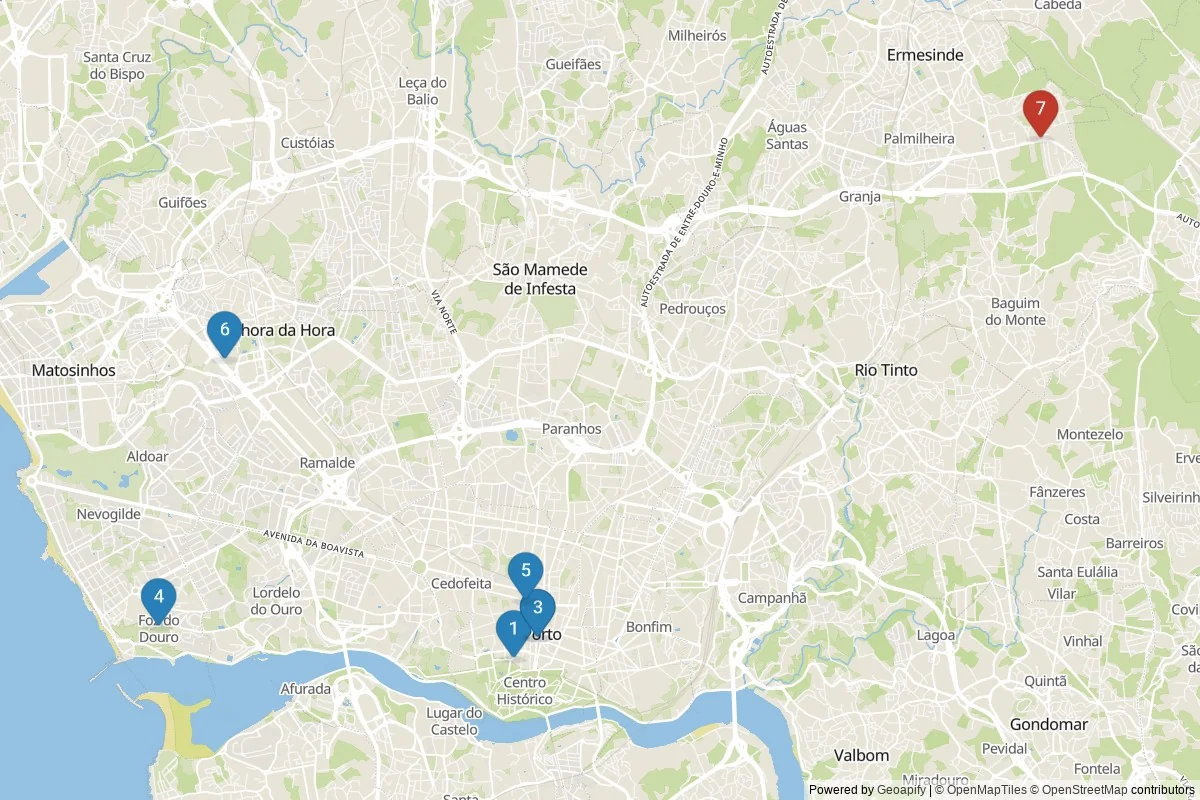
| # | Sight | Cluster | Type | Time | Entry | Best |
|---|---|---|---|---|---|---|
| 1 | the Livraria Lello | Cluster A | — | — | €8 | — |
| 2 | Walk Across the Dom Luís I Bridge | Cluster A | Bridge | — | Free | Sunset |
| 3 | Day Trip to the Douro Valley | Cluster A | — | 2.5 hours | €15 | — |
| 4 | Walk Foz do Douro & the Atlantic Beach Strip | Cluster A | Beach | — | — | Sunset |
| 5 | Sé Cathedral & the Old City Walk | Cluster A | Church | — | Free | — |
| 6 | Matosinhos Seafood Lunch | Cluster A | Market | 25 minutes | €25–60 | — |
| 7 | Port Wine Cellars in Vila Nova de Gaia | Cluster B | Museum | — | €15–30 | — |
1. Walk Across the Dom Luís I Bridge
The defining Porto experience. The double-decker iron bridge (1881–1886, designed by Téophile Seyrig — Eiffel’s business partner) connects Porto and Vila Nova de Gaia at two levels: the lower deck for cars and pedestrians along the riverside, the upper deck for the metro and pedestrians. Cross the upper deck at sunset for the iconic view — the Douro River below, the Ribeira on one side, the Port wine cellars on the other, the Atlantic glow to the west. Free; pedestrians and metro share the upper deck (watch for trains).
2. Tour Port Wine Cellars in Vila Nova de Gaia
The Port wine cellars on the south bank are the city’s defining cultural experience. Most major brands offer 60-minute tours with 2–3 wine tastings. Recommended for first-timers: Graham’s (above-the-cellars panoramic tasting room with bay view); Taylor’s (the historic English-house tour); Sandeman (atmospheric old cellars, the most-visited); Cálem (recently renovated with multimedia presentation). Tour prices €15–30 per person; cellar visits can be combined into a self-guided day. For deep dives: The Yeatman Hotel wine cellar experience or the WOW (World of Wine) integrated museum complex.
3. Visit the Livraria Lello
The 1906 art-nouveau bookshop on Rua das Carmelitas — widely considered one of the world’s most beautiful bookshops, and supposedly an inspiration for J.K. Rowling’s Hogwarts library (Rowling lived in Porto 1991–1993, teaching English). The famous red-staircase, stained-glass-skylight interior is genuinely photogenic. Entry €8 (which is refunded against any book purchase); advance time-slot booking recommended.
4. Sé Cathedral & the Old City Walk
The 12th-century Porto Cathedral with its Romanesque facade, the cloister covered in 18th-century azulejo tile, and the panoramic terrace looking down to the Ribeira. Free entry to the church; €3 for the cloister. Combine with a walking descent through the medieval Sé district streets — Beco do Tijolinho, the steep stone steps and overhanging balconies — to the Ribeira waterfront.
5. Ride the Historic Tram or the Funicular
Porto preserves three working historic tram lines: Line 1 from Infante to Passeio Alegre along the Douro waterfront; Line 18 to the Massarelos tram museum; Line 22 short urban loop. Single ticket €6 (the higher tourist rate). The Funicular dos Guindais (€4 round trip) climbs from the lower Ribeira to the upper Batalha district.
6. Day Trip to the Douro Valley
The vineyards 90 km upstream — UNESCO World Heritage 2001 as the world’s oldest demarcated wine region. Pinhão is the iconic Douro village; Peso da Régua the regional capital. Best done by train: the historic Douro Line from Porto’s São Bento station is one of Europe’s most scenic rail journeys; €15 each way, 2.5 hours to Pinhão. Day cruise from Porto: €60–150 per person, 6–8 hours with vineyard visits and lunch. Overnight at a winery quinta (vineyard guesthouse) is the most rewarding experience: Quinta do Crasto, Quinta Nova de Nossa Senhora do Carmo, Aquapura Douro Valley.
7. Matosinhos Seafood Lunch
Sunday lunch tradition: take the metro to Matosinhos (Linha A, 25 minutes), visit the working fish market (Mercado de Matosinhos, mornings only), then choose a Rua Heróis de França restaurant for grilled fresh fish. The street has 20+ restaurants doing essentially the same thing — visiting cookbooks photographers Mark Bittman and Anthony Bourdain both featured the area. Lunch €25–60 per person; arrive by 12:30 to ensure tables.
8. Walk Foz do Douro & the Atlantic Beach Strip
The Atlantic river mouth district. Walk the Pergola da Foz seaside promenade from the river mouth north along the Atlantic to Foz Velha. The Forte de São João da Foz castle, the Senhor da Areia chapel, and the surf-friendly Praia dos Ingleses beach. Add a sunset drink at O Maracujá or Boa Nova Tea House (Álvaro Siza Vieira-designed modernist tea house). 5 km from central Porto by bus or tram.
How to Get to Porto
By Air
Francisco Sá Carneiro Airport (OPO), 11 km north of central Porto. Direct nonstop routes from most major European cities (London 2.5 hours, Paris 2 hours, Frankfurt 3 hours, Madrid 90 minutes, Barcelona 2 hours, Brussels 3 hours, Amsterdam 3 hours, Rome 3 hours), Brazil (São Paulo 9 hours, Rio de Janeiro 9 hours — the strongest Portuguese-Brazilian air connections), Cape Verde, Morocco, and seasonal North American (New York EWR via TAP Air Portugal). Carriers: TAP Air Portugal, Ryanair, easyJet, Vueling, SATA, Lufthansa, Air France, British Airways.
From the airport: Metro Line E (Violet) Aeroporto-Estádio do Dragão €2.45 (35 minutes to central Aliados); Bus 601 Aeroporto-Sá da Bandeira €2.45; taxi €25–35 to central Porto; Uber/Bolt €18–28.
By Train
The Comboios de Portugal national rail network connects Porto to most Portuguese cities. Alfa Pendular high-speed trains: Porto-Lisbon 2 hours 50 minutes (€32–58); Porto-Coimbra 75 min. Intercity: Porto-Braga 1 hour; Porto-Guimarães 90 min. Historic Douro Line from Porto’s São Bento Station to Pinhão (2.5 hours) is one of Europe’s most scenic rail journeys. International rail connection to Vigo (Spain) via the Celta train.
By Long-Distance Bus
Rede Expressos operates Portugal’s primary intercity bus network. Porto-Lisbon 3.5 hours, €18–30. FlixBus connects Porto to most major European cities — Madrid 9 hours, Paris 18 hours overnight, Barcelona 18 hours.
By Car
Self-drive Portugal is straightforward — modern motorways (A1 to Lisbon, A2 to Algarve, A3 to Braga, A4 to Trás-os-Montes), tolls via the via verde electronic system. Self-drive is the practical default for Douro Valley vineyard touring and Atlantic coast exploration.
Visa Notes
Porto is in Portugal, a Schengen Area member. EU/EEA/Swiss citizens: no documentation required beyond a national ID. Citizens of 60+ countries with Schengen visa-free agreements (US, UK, Canada, Australia, Japan, South Korea, Singapore, Brazil-with-special-Portuguese-agreement-for-90-days etc.) enter visa-free for up to 90 days within any 180-day period. ETIAS launches in late 2025 — €7 pre-travel authorization. Other nationalities apply for a Schengen visa at Portuguese embassies; €90 fee, 2–4 week processing. Portuguese Golden Visa for property investment ended in October 2023; D7 visa for retirees and remote workers remains active. Passport must have 6+ months remaining validity.
Getting Around Porto
Metro
The clean modern 6-line metro system connects the central city, the airport, and major suburbs. Line D (Yellow) is the most useful for visitors — connecting Jardim do Morro (near the Dom Luís Bridge upper deck) to Trindade and central Porto. Line E (Violet): airport-to-central. Single fare €1.80 (zone-based); 24-hour pass €5.40; the Andante Tour rechargeable tourist card.
Trams
Three historic tram lines (1, 18, 22) operate as both transit and tourist attractions; fares €6 single. Useful for the riverside scenic ride.
Buses (STCP)
The bus network fills gaps not served by metro; same €1.80 fare. Useful for reaching Foz do Douro and the suburbs.
Walking
Central Porto is walkable but steep — the elevation difference from the Ribeira waterfront to the upper Sé Cathedral plateau is 100+ vertical meters of cobblestone climbing. Comfortable shoes are essential. The Ribeira-Aliados-São Bento Station triangle is the walkable historic core.
Taxis & Ride-Hailing
Uber and Bolt both operate extensively in Porto with fares typically 20–30% lower than metered taxis. Taxis: €3.25 flagfall + €0.50/km. Free Now is the third option.
Funiculars
The Funicular dos Guindais (€4 round trip) and the Gaia Cable Car (€10 round trip from the south bank) provide the steep-grade alternatives to walking. Both are atmospheric tourist experiences.
Food & Drink in Porto
Portuguese cuisine emphasizes simplicity, salt cod (bacalhau), grilled fresh seafood, the country’s exceptional olive oil and wine, and the post-2010 modern Portuguese fine-dining renaissance. Porto specifically adds the unique francesinha sandwich and the strong cultural connection to Port wine.
What to Try
- Francesinha — Porto’s signature dish: a sandwich of cured ham, sausage (linguiça and chouriço), and steak between slices of bread, covered in melted cheese and a complex tomato-and-beer-and-piri-piri sauce, served with fries. Invented in the 1950s by Daniel da Silva. Cervejaria Brasão, Café Santiago, Café Apolo are the canonical addresses.
- Bacalhau (salt cod) — the national dish in 365+ varieties; Porto specialties include Bacalhau à Brás (with eggs, onions, potatoes), Bacalhau com Natas (with cream), and grilled bacalhau.
- Tripas à Moda do Porto — tripe stewed with white beans, vegetables, and cured meats; the city’s medieval-era staple, which earned Porto residents the affectionate nickname “tripeiros” (tripe-eaters).
- Caldo Verde — kale-and-potato soup with sliced chouriço; the Portuguese winter comfort dish.
- Sardinhas Grelhadas — grilled fresh sardines with olive oil, sea salt, and lemon; the São João Festival (June 23) signature dish.
- Polvo à Lagareiro — octopus roasted with garlic, olive oil, and salt-crusted potatoes.
- Pastel de Nata — the famous Portuguese egg-custard tart; Manteigaria (Cardosas), Nata Lisboa, and the historic Pastelaria do Bolhão are the canonical addresses.
- Bolinhos de Bacalhau — salt-cod fritters; eaten as starter or street snack.
- Port wine — see “Drinks” below; the variety encompassed by the Port category is enormous.
- Douro Valley table wine — increasingly respected internationally; both DOC Douro and the broader Quinta do Crasto, Quinta da Romaneira, Quinta do Vallado output.
Where to Eat
Cervejaria Brasão (three locations): canonical francesinha. Cantina 32: modern Portuguese in the Aliados area. Tapabento at São Bento Station: outstanding modern Portuguese tasting menu. Cantinho do Avillez: José Avillez’s Porto outpost. The Yeatman: Michelin-starred fine-dining with Douro views. Antiqvvm: 2-Michelin-star contemporary Portuguese. O Gaveto (Matosinhos): famed for grilled fresh fish, queue-or-reserve. Casa Aleixo: historic working-class restaurant near Bonfim. Padaria Ribeiro: pastel de nata. Manteigaria: pastel de nata. Café Majestic: the 1920s Belle Époque historic café; touristy but iconic.
Drinks
Port wine: a fortified wine with sugar-and-alcohol stopping fermentation early, producing the characteristic sweet style. Categories: Ruby (young, dark, fruit-forward); Tawny (oak-aged, nutty, caramel notes — 10, 20, 30, 40 year tawnies are the connoisseur’s choice); Vintage (single-year, bottle-aged, the masterpiece category, declared only in exceptional vintage years); LBV (Late Bottled Vintage): ready-to-drink version of vintage Port; White Port: lighter, served chilled, often as aperitif. Production-area regulated by IVDP. Recommended tastings: do at least one Port cellar tour in Vila Nova de Gaia; for sophistication, the Taylor’s tasting room or The Yeatman wine cellar; for budget, Cálem or Sandeman. Douro Valley table wines: the same grape varieties produce non-fortified red and white wines — Quinta do Vallado, Quinta do Crasto, Niepoort table wines are widely available. Vinho Verde from the Minho region just north — slightly fizzy, light, low-alcohol white; perfect summer drinking. Portuguese beer: Super Bock (the Porto brand) and Sagres (the Lisbon brand); craft beer scene growing but small. Ginjinha: cherry liqueur, served in shot glasses, sometimes in a chocolate cup.
A Note on Tap Water
Tap water in Porto is completely safe to drink and meets all EU drinking-water standards. No bottled water needed; refillable bottles are fine; many restaurants serve free tap water (água da torneira) on request. Ice is universally safe. The CDC traveler health page for Portugal rates Portugal as low-risk; standard hygiene precautions apply. Water has slightly high mineral content in the Porto area — many travelers prefer bottled water for taste; the choice is preference rather than safety.
Frequently Asked Questions About Visiting Porto
Do I need a visa to visit Porto?
It depends on your nationality. Porto is in Portugal, a Schengen Area member. EU/EEA/Swiss citizens: no documentation beyond a national ID. Citizens of 60+ visa-free countries (US, UK, Canada, Australia, Japan, South Korea, Singapore, Brazil with special 90-day Portuguese-language agreement, etc.) enter visa-free for 90 days within any 180-day period across all Schengen countries. ETIAS launches in late 2025 — €7 pre-travel authorization. Other nationalities: apply for Schengen visa at Portuguese embassies (€90, 2–4 weeks processing). Portuguese-language Brazilians and citizens of CPLP (Community of Portuguese Language Countries) often have simplified procedures. D7 visa for retirees and remote workers remains active despite the 2023 cancellation of the Portuguese Golden Visa for property investment. Passport must have 6+ months validity. Verify rules with the Portuguese Ministry of Foreign Affairs Vistos portal.
Is Porto safe for tourists?
Porto is among Europe’s safer major tourist cities. The US State Department rates Portugal at “exercise normal precautions” — the most relaxed advisory. Real risks: pickpocketing on the metro (especially Linha D Yellow at peak hours), at São Bento Station, and in tourist crowds around the Sé Cathedral and Livraria Lello — standard urban precautions; steep cobblestone streets — falls and twisted ankles are the most common visitor injuries (wear proper closed-toe shoes); scams at the airport and Ribeira waterfront (unsolicited “guides,” petition scams, drug-dealer approaches in some Ribeira side-streets at night); café-bill rounding — some establishments add cover charges and bread that aren’t mentioned; check the bill; rip currents at the Atlantic beaches west of Porto (Praia dos Ingleses) — obey lifeguard flags; winter rain — Porto receives more rain than most European capitals; slippery cobblestones require care; traffic — narrow medieval lanes mean unexpected vehicles; drug-related petty crime in some Bonfim and Cedofeita sub-blocks at night; medical-cost shock for uninsured visitors — Portuguese healthcare is excellent but private rates can be high. Drug enforcement: Portugal decriminalized personal-use possession in 2001 (a globally cited harm-reduction policy) — small amounts result in administrative referrals, not arrest; trafficking still criminal. LGBTQ+ travelers: Portugal is broadly progressive; same-sex marriage legal since 2010; Porto is welcoming.
How many days do I need in Porto?
Three to four days handles Porto well; combined with the Douro Valley and Braga/Guimarães, 5–7 days makes a satisfying northern Portugal trip. A solid 4-day Porto plan: Day 1 — arrive, Ribeira walking + Dom Luís I Bridge upper deck at sunset + Vila Nova de Gaia Port wine tasting (one cellar) + dinner at Cantina 32. Day 2 — Sé Cathedral morning + walk down to Livraria Lello + lunch at Tapabento + São Bento Station azulejo tile + Aliados/Baixa walking + francesinha dinner at Brasão. Day 3 — Douro Valley day trip (train to Pinhão, return) or rail trip with wine tasting at a quinta. Day 4 — Matosinhos seafood lunch + Foz do Douro promenade + Serralves Foundation contemporary art + farewell dinner. Add Day 5 for Braga (Bom Jesus do Monte) + Guimarães (the birthplace of the nation, UNESCO). Add Days 6–7 for Douro Valley overnight at a winery quinta. 10-day Portugal classic: 3 days Lisbon + 4 days Porto + 2 days Douro Valley + 1 day Coimbra (between the two). Day-trip Porto from Lisbon: feasible via 2h50min Alfa Pendular high-speed train, but Porto rewards much more with an overnight.
What’s the best area to stay in Porto?
For first-time visitors, stay in the central historic core. Ribeira (Old Town) — the most atmospheric but steepest; the boutique converted-merchant-house hotels: 1872 River House, Pestana Vintage Porto Hotel (UNESCO-listed riverside building), The Editory Riverside; €120–500/night. Sé / Cathedral area — quieter than Ribeira, on the upper plateau; Hotel Tipografia do Conto, Maison Albar Hôtels Le Monumental Palace; €150–400/night. Baixa / Aliados — the modern commercial center; international chains (InterContinental Porto Palácio das Cardosas, Sheraton, Pestana Porto-A Brasileira); €120–450/night. Bonfim / Cedofeita — hip neighborhoods 15 minutes east of central; boutique guesthouses and Airbnb apartments; €70–200/night; younger expat-vibe. Boavista — modern shopping/business district; Tiara Park Atlantic Porto, HF Tuela; €100–250/night; less character but easier walking. Vila Nova de Gaia — south bank with views of Porto across the Douro; The Yeatman (5-star luxury, country’s best wine cellar), Holiday Inn Express Porto Gaia; €180–600/night for The Yeatman. Foz do Douro — the river-mouth district; quieter, beach-adjacent; less convenient for the historic center; Boa-Vista Hotel; €120–300/night. Skip: cheap unbranded hotels along the highway approaches outside the historic center.
How much does it cost to visit Porto’s major sights?
Porto is one of Europe’s better-value major cities. Sé Cathedral: free entry; €3 for cloister and treasure. Ribeira walking: free. Dom Luís I Bridge crossing: free pedestrian access (upper and lower decks). Livraria Lello: €8 (refunded against book purchase). Port wine cellar tours: €15–30 standard, €25–60 premium (with vintage tastings); Sandeman €18, Cálem €20, Graham’s €30, Taylor’s €30, WOW combined museum complex €25. Casa da Música tours: €12; concerts €15–60. Serralves Foundation Museum & Gardens: €20 combined. São Bento Station: free. Funicular dos Guindais: €4 return. Gaia Cable Car: €10 return. Historic tram ride: €6 single. Douro Valley day train to Pinhão: €30 return. Douro Valley cruise day trip: €60–150 per person. Local meals: francesinha €10–18; sit-down lunch €15–30 per person; mid-range dinner €25–50 per person; tapas €4–8 per dish; fine-dining €70–250 per person. Port wine glass at a tasting bar: €3–12; vintage Port glass €15–50. Pastel de nata: €1.20–2 each. Metro single ticket: €1.80. Uber across city: €5–10. Overall daily budget: €80 (frugal + walking + cafés), €180 (mid-range), €450+ (luxury + fine dining).
Should I drink the tap water in Porto?
Yes — tap water in Porto is completely safe to drink and meets all EU standards. Many restaurants offer free tap water (água da torneira) on request. Reusable filter bottles are unnecessary; ice is universally safe. Bottled water (Luso, Vitalis, Pedras Salgadas mineral) is widely available at €0.50–2 per liter if preferred for taste. The CDC traveler health page for Portugal rates Portugal as low-risk. The bigger Porto-area health consideration is the steep cobblestone streets — wear proper closed-toe shoes; falls are the most common visitor injury. Also note: significant rainfall makes the cobblestones slippery in winter — extra care needed October-April.
What payment methods work in Porto — credit cards or cash?
Portugal is heavily card-and-contactless. Credit/debit cards (Visa, Mastercard, AmEx, JCB): accepted virtually everywhere — hotels, restaurants, cafés, taxis, supermarkets, museums, the metro, even most market stalls; contactless tap-to-pay is universal. Multibanco is the Portuguese network; ATMs accept foreign cards with daily limits €400–600 and small fees. Euro cash: useful for tips and small market vendors. Digital wallets: Apple Pay, Google Pay, Samsung Pay work everywhere; MB Way is the local Portuguese mobile payment but requires a Portuguese bank account. Currency exchange: airport and city counters offer competitive rates; bank-branch exchanges similar; bring USD or GBP if needed. Tips: not mandatory in Portuguese service culture but appreciated for good service — round up the bill or leave 5–10% in cash; €1 per drink at bars; €1–2 per bag to hotel porters; €1–2 per night for housekeeping; €5–10 per day for tour guides on day trips. VAT: 23% included in displayed prices; non-EU tourists can claim refunds at the airport for purchases over €50 from a single retailer; register at airport tax-refund kiosks before check-in. Couvert (Portuguese restaurant cover charge): bread, olives, cheese, and starters automatically delivered to your table are usually charged €2–8 — politely decline if you don’t want them. Portuguese restaurant hours: lunch typically 12:30–14:30 and dinner from 19:30; budget accordingly.
What about Port wine — how do I actually visit and learn?
Port wine is one of Porto’s defining cultural experiences. Quick orientation: Port is a fortified sweet wine from the Douro Valley grapes (Touriga Nacional, Touriga Franca, and others), where fermentation is stopped early by adding grape brandy — the residual sugar gives the characteristic sweetness; the high alcohol (typically 19–20%) gives the body. Main styles: Ruby (young, fruit-forward, the most affordable); Tawny (oak-aged, nutty caramel notes — 10/20/30/40 year tawnies are the connoisseur’s pick); Vintage (single-year, bottle-aged for 10+ years, declared only in exceptional vintage years — the masterpiece category); LBV (Late Bottled Vintage): ready-to-drink version of vintage Port; White Port: lighter, served chilled with tonic as a popular Portuguese aperitif. Where to tour: the cellars are all in Vila Nova de Gaia across the Douro from Porto historic center; 60-minute tours with 2–3 tastings are the standard format. Recommended for first-timers: Graham’s (panoramic tasting room), Taylor’s (atmospheric historic English cellars), Cálem (recently renovated multimedia), Sandeman (the most-visited brand). For sophistication: The Yeatman Hotel wine experience (over 1,300 Portuguese wines including extensive Port verticals; €40–200 per person for tasting flights). For comprehensive overview: WOW (World of Wine) integrated 6-museum complex in Vila Nova de Gaia (€25 single museum, €65 all-day pass). Best timing: morning tours less crowded than afternoon; book a few days ahead in summer. Pairing: vintage Port traditionally with blue cheese (Stilton or Roquefort); tawny Port with chocolate or nuts; LBV with foie gras or pâté; white Port with appetizers and olives. Buying to bring home: bottle prices €15–80 for everyday styles, €100–500+ for vintage years; the cellars all ship internationally. Pro tip: a 20-year tawny at €40–60 per bottle gives the best price-to-pleasure ratio for most travelers.
Education & Notable People
Porto is the educational center of northern Portugal, anchored by the University of Porto.
Major Universities
- Universidade do Porto (UP) — founded 1911; Portugal’s second-largest research university; ~32,000 students; strong programs in medicine, architecture (the influential Porto School of Architecture, Pritzker laureates Álvaro Siza and Eduardo Souto de Moura graduated here), engineering, and sciences.
- Universidade Católica Portuguesa (Porto campus) — private Catholic university with strong business programs.
- Universidade Lusíada do Porto — private university.
- Escola Superior de Música, Artes e Espectáculo (ESMAE) — music and performing arts.
Notable People
Henry the Navigator (Infante Dom Henrique) (1394–1460) — born in Porto; the patron of Portuguese maritime exploration that launched the Age of Discovery. Vasco da Gama — although born further south at Sines, his exploration was funded substantially from Porto. Álvaro Siza Vieira — Pritzker Prize-winning architect (1992), born in Matosinhos in 1933; designed many of Porto’s most important contemporary buildings. Eduardo Souto de Moura — Pritzker Prize-winning architect (2011), Porto native. Manoel de Oliveira (1908–2015) — celebrated film director, longest-active filmmaker in cinema history. Aurélia de Sousa — celebrated late 19th-century painter. Egas Moniz — Nobel Prize medicine 1949 (for psychosurgery and angiography), educated at Porto. António Lobo Antunes — celebrated novelist. Cristiano Ronaldo — although born in Madeira, the global football superstar made his Portuguese national-team debut at Porto’s Estádio do Dragão. FC Porto: the football club founded 1893 with multiple UEFA Champions League titles.
Sister Cities & International Relations
Porto’s sister-city network reflects the city’s identity as a Portuguese-Atlantic cultural capital.
Porto’s sister and partnership cities include (selection):
- Bristol, England, UK — paired since 1984; the original English Port wine merchant connection.
- Recife, Brazil — paired since 1980; Portuguese-Brazilian cultural cooperation.
- Niterói, Brazil — friendship link.
- Mindelo, Cape Verde — Portuguese-speaking world partnership.
- Macau, China — historic Portuguese trading-post connection.
- Vigo, Spain — the closest Spanish neighbor; Galician-Portuguese cooperation.
- Antwerp, Belgium — port-city partnership.
- Beira, Mozambique — friendship link.
- Nagasaki, Japan — historic Portuguese-Japanese trade connection (Macau-Nagasaki was the 16th-century Portuguese sea route to Japan).
Porto is the regional capital of Norte Portugal and a key partner in the EU Atlantic Arc cooperation framework. The city was European Capital of Culture in 2001, hosted the Estoril Conferences and is preparing major hosting roles in the 2030 FIFA World Cup (Portugal is co-hosting with Spain and Morocco). The Visit Porto and Northern Portugal tourism authority coordinates the city’s international promotion.
AFRIKA
Cairo Hurghada Johannesburg Marrakech
ASIA
Abu Dhabi Agra Antalya Bangkok Batam Beijing Bengaluru Cebu City Chiang Mai Chiba Chennai Da Nang Dammam Delhi Denpasar Dubai Fukuoka Guangzhou Guilin Ha Long Hanoi Ho Chi Minh City Jakarta Jaipur Johor Bahru Kolkata Krabi Kuala Lumpur Kyoto Macau Mecca Medina Mugla Mumbai Osaka Pattaya Penang Phuket Riyadh Seoul Shanghai Shenzhen Singapore Taipei Tokyo Zhuhai
EUROPE
Amsterdam Athens Barcelona Berlin Brussels Budapest Copenhagen Dublin Florence Frankfurt am Main Heraklion Krakow Lisbon London Madrid Milan Munich Nice Paris Porto Prague Rhodes Rome Stockholm Venice Vienna Warsaw
NORTH AMERICA
Cancun Las Vegas Los Angeles Miami New York City Orlando San Francisco Toronto Vancouver
SOUTH AMERICA
Buenos Aires Lima Rio De Janeiro
OCEANIA
Auckland Honolulu Melbourne Sydney