
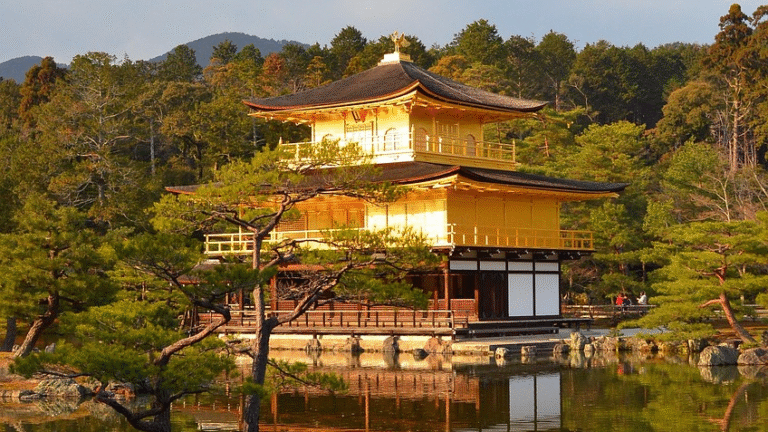
Photo credit: Kinkaku-ji (Golden Pavilion), Kyoto
Kyoto was the imperial capital of Japan from 794 to 1868 — over 1,000 years that produced the most concentrated cultural heritage in East Asia. Where Tokyo represents modern Japanese ambition, Kyoto preserves traditional Japan in concentrated form: 17 UNESCO World Heritage sites within the historic monuments inscription (1994); over 1,600 Buddhist temples and 400 Shinto shrines; the originating centers of tea ceremony, ikebana flower arrangement, Noh and Kabuki theater, zen rock gardens, kaiseki cuisine, and geisha culture. The defining attractions are familiar from every Japan postcard: the Kinkaku-ji (Golden Pavilion) reflecting in its mirror pond; the thousands of red torii gates of Fushimi Inari Shrine; the wooden-veranda Kiyomizu-dera temple overlooking the city; the bamboo grove of Arashiyama; and the geisha district of Gion. Beyond the postcard images, Kyoto offers depth that rewards extended stays — quiet sub-temples in the central wards, traditional machiya townhouses converted to boutique hotels, the country’s most refined kaiseki dining tradition, and the seasonal rhythms (cherry blossoms in April, autumn maple in late November) that define the Japanese aesthetic year.
Kyoto by District: The 11 区 (Ku)
Kyoto is divided into 11 wards. The map below shows their official OSM boundaries, colour-coded to match the table — a quick way to orient yourself before zooming in on individual sights.
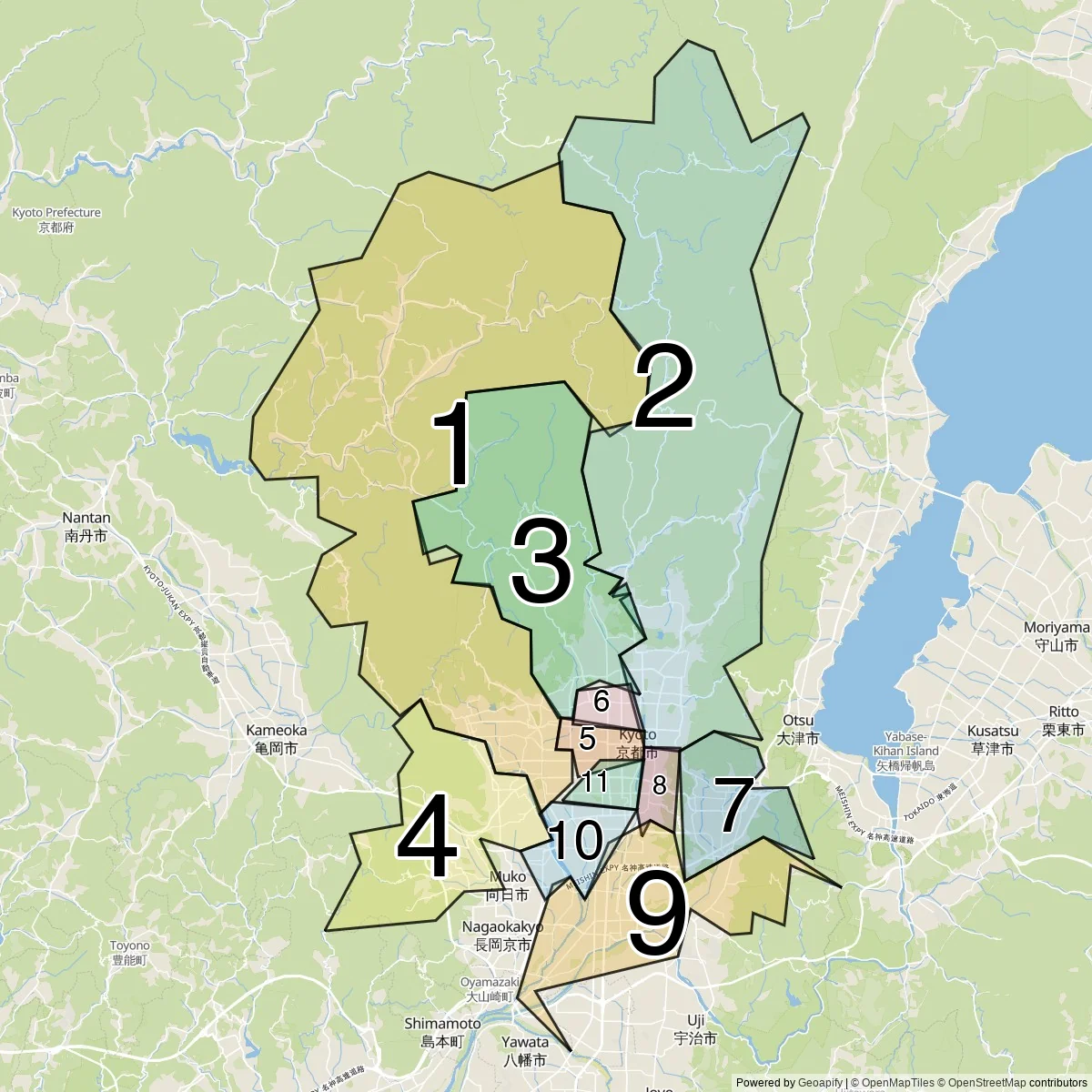
| # | 区 (Ku) |
|---|---|
| 1 | 右京区 · Ukyō Ward |
| 2 | 左京区 · Sakyō Ward |
| 3 | 北区 · Kita Ward |
| 4 | 西京区 · Nishikyo Ward |
| 5 | 中京区 · Nakagyo Ward |
| 6 | 上京区 · Kamigyō Ward |
| 7 | 山科区 · Yamashina Ward |
| 8 | 東山区 · Higashiyama Ward |
| 9 | 伏見区 · Fushimi Ward |
| 10 | 南区 · Minami Ward |
| 11 | 下京区 · Shimogyo Ward |
Kyoto at a Glance: Essential Facts for Travelers
| Location | Kyoto Prefecture, central Kansai region, western Honshu, Japan |
|---|---|
| Coordinates | 35.0116°N, 135.7681°E |
| Population | ~1.46 million (city, 2024); prefecture ~2.55 million |
| Area | 828 km² (city proper) |
| Elevation | ~50 m city center; surrounded by 800-1,000 m mountains |
| Time Zone | Japan Standard Time (JST, UTC+9 — no daylight saving) |
| Calling Code | +81 (city code 075) |
| Currency | Japanese Yen (JPY ¥) |
| Languages | Japanese; English signage on major transit and tourist sites; the local Kyoto dialect (Kyō-ben) is the historic refined “imperial speech” still used by older residents and in traditional arts |
| Climate | Humid subtropical with continental influence — hot humid summers, cool dry winters, distinct four seasons |
| Founded | Imperial capital 794 (as Heian-kyō) until 1868; one of the world’s longest continuously inhabited cities |
| Famous For | 17 UNESCO heritage sites, Kinkaku-ji (Golden Pavilion), Fushimi Inari, Kiyomizu-dera, Arashiyama bamboo grove, Gion geisha district, kaiseki cuisine, tea ceremony, ikebana, Zen rock gardens, cherry blossoms, autumn maple |
Upcoming Events in Kyoto
| Date | Title | Details |
|---|---|---|
| 2026-08-21 to 2026-10-21 | Toji Temple Kobo-ichi flea market | On the 21st of every month, the grounds of Toji, a UNESCO-listed temple with Japan’s tallest wooden pagoda, host the sprawling Kobo-ichi flea market. More than a thousand stalls sell antiques, kimono, ceramics, crafts, plants, street food and bric-a-brac, drawing bargain-hunters, collectors and tourists in their thousands. The atmospheric market, held in memory of the monk Kobo Daishi, is one of the best places to hunt for Japanese treasures and vintage finds. Entry is free, with goods individually priced; arrive early for the best pickings. [Source] |
| 2026-10-01 to 2026-10-25 | Kyoto Experiment performing arts festival | Kyoto Experiment is the city’s international festival of contemporary performing arts, staged each autumn across theatres and unconventional venues. Its programme brings cutting-edge dance, theatre and performance from Japan and around the world, favouring bold, boundary-pushing work alongside talks and encounters between artists and audiences. Running through October, it offers an adventurous counterpoint to Kyoto’s traditional image and draws a curious, international crowd. Tickets vary by production, with passes available, and some fringe events are free, making it accessible to newcomers and enthusiasts alike. [Source] |
| 2026-10-01 to 2026-10-05 | Zuiki Matsuri at Kitano Tenmangu | Kitano Tenmangu shrine holds its annual Zuiki Matsuri harvest festival from 1 to 5 October, one of Kyoto’s oldest thanksgiving rites. Its centrepiece is a portable shrine decorated entirely with vegetables, grains and dried produce, including the taro stems that give the festival its name, carried in procession through the surrounding neighbourhoods with priests and attendants in traditional dress. Watching the processions and visiting the shrine is free. The festival thanks the deities for the autumn harvest and draws generations of local families as well as visitors. [Source] |
| 2026-10-06 to 2026-11-29 | The Tale of Genji: Radiant Culture of the Japanese Imperial Court | The Kyoto National Museum stages a major special exhibition devoted to The Tale of Genji from 6 October to 29 November. The large-scale loan show fills nearly all galleries of the Heisei Chishinkan Wing, tracing the radiant culture of the Japanese imperial court that produced Murasaki Shikibu’s eleventh-century masterpiece through paintings, calligraphy, costumes and courtly artefacts. Ticket prices vary by category, and timed entry can apply on busy autumn weekends. For art and literature lovers visiting during the foliage season, this is Kyoto’s exhibition of the year. [Source] |
| 2026-10-16 to 2026-10-18 | Kiyomizuyaki no Sato Matsuri Pottery Festival | Kyoto’s famous ceramic tradition takes centre stage at the Kiyomizuyaki no Sato Matsuri from 16 to 18 October, a three-day pottery fair held at the Kiyomizuyaki pottery village in the Yamashina district. Dozens of kilns and studios set up stalls selling tea bowls, sake cups, vases and tableware, often at significant discounts on gallery prices, while craftspeople demonstrate throwing and glazing techniques. Entry is free, and the fair is a favourite hunting ground for collectors as well as travellers looking for an authentic, packable souvenir of Kyoto craftsmanship. [Source] |
| 2026-10-22 | Jidai Matsuri (Festival of the Ages) | The Jidai Matsuri, or Festival of the Ages, is one of Kyoto’s three great festivals, held each 22 October to mark the founding of the ancient capital. A procession of some 2,000 participants in meticulously researched historical costumes, spanning more than a thousand years of Japanese history, winds from the Kyoto Imperial Palace to Heian Shrine. The parade is a living pageant of samurai, court nobles, warriors and commoners. Watching along the route is free, while paid grandstand seats offer a closer view of the spectacular costumes. [Source] |
| 2026-10-22 | Kurama Fire Festival (Kurama no Hi Matsuri) | On the night of 22 October, the mountain village of Kurama north of Kyoto stages its dramatic Fire Festival at Yuki Shrine. Villagers carry huge flaming torches, some weighing over 80 kilograms, through the narrow streets in a blazing procession before portable shrines are paraded amid the flames and smoke. The ancient rite, meant to guide spirits and protect the community, is one of Kyoto’s most thrilling and primal festivals. Admission is free, but access by the small Eizan railway is extremely crowded, so an early arrival is essential. [Source] |
City News in Kyoto – last 14 days
| Date | Category | Headline | Details |
|---|---|---|---|
| 2026-09-14 | Public safety | Mass food poisoning at Takebishi Stadium traced to boxed lunches | Kyoto’s public health office confirmed that a mass food poisoning outbreak at Takebishi Stadium was caused by boxed lunches served during an athletics meet, with the number of people affected rising to 38 and staff among those taken to hospital by ambulance. The restaurant that supplied the bento was ordered to suspend operations for three days. City officials held a press conference on the findings, and organisers of stadium events are being reminded to verify the hygiene management of caterers. [Source] |
| 2026-09-14 | Public transport | First helicopter shuttle links Kansai Airport and Kyoto in 25 minutes | A scheduled helicopter service connecting Kansai International Airport with Kyoto began operating, cutting a journey of roughly ninety minutes by land to about 25 minutes in the air. The shared shuttle offers seats at 20,000 yen each, carries up to six passengers per flight and runs four round trips a day, with advance booking online. Passengers are treated to views that include Osaka Castle en route. The service targets affluent travellers and tests demand for premium air links to the ancient capital. [Source] |
| 2026-09-13 | Local affairs | Burst water main floods Fushimi Otesuji shopping street | Water burst from beneath the ground and flooded parts of the Otesuji shopping arcade area in Kyoto’s Fushimi ward, with the road inundated and residents reporting bulging pavement before the eruption. A damaged water main is suspected as the cause, and the city later issued a final report on the leak and the temporary discolouration of tap water in the surrounding Higashiote-cho area. Crews repaired the pipe and restored supply, while shop owners cleaned up and assessed water damage. [Source] |
| 2026-09-14 | Education | City board of education trials camera-detection devices in schools | Following a series of cases in which teachers were caught secretly filming pupils, the Kyoto City Board of Education is introducing camera-detection equipment in schools on a trial basis. The devices are designed to find hidden cameras in changing areas and other sensitive locations, and the board will evaluate their effectiveness before deciding on wider deployment. The move is part of a broader effort to rebuild trust after the voyeurism scandals, alongside stricter staff training and disciplinary measures. [Source] |
| 2026-09-14 | Education | Kyoto City gives job offers to 441 new teachers, half fresh graduates | Kyoto City has issued preliminary employment offers to 441 candidates in its latest teacher recruitment round, with new university graduates making up roughly half of the successful applicants. The intake is intended to secure staffing for the city’s schools amid nationwide competition for teaching talent and concerns about workload driving people away from the profession. Officials hope the strong share of young graduates will rejuvenate school workforces, while mid-career hires bring experience from other prefectures and private-sector backgrounds. [Source] |
| 2026-09-14 | Business | Shangri-La to open ultra-luxury Songtei Kyoto opposite Nijo Castle | Hong Kong-based hotel group Shangri-La is bringing its ultra-luxury Signatures brand to Kyoto with Songtei Kyoto, planned for a historic site opposite Nijo Castle. It is the second signing for the new top-tier brand, which focuses on small, culturally rooted properties in landmark locations. The project underlines Kyoto’s continuing magnetism for high-end hospitality investment despite debates about overtourism, and it will compete with a growing cluster of international luxury hotels that have opened in the city in recent years. [Source] |
| 2026-09-14 | Culture | Memorial service at Daitoku-ji marks first anniversary of tea master Sen Genshitsu’s death | A memorial service was held at Daitoku-ji temple in Kyoto to mark the first anniversary of the death of Sen Genshitsu, the former grand master of the Urasenke school of tea ceremony. Practitioners and dignitaries gathered to honour the centenarian tea master, who spent decades promoting the way of tea as a path to peace around the world. The rites at the Zen temple, long associated with the tea tradition, underscored his enduring influence on Japanese culture. [Source] |
| 2026-09-14 | Sports | Kyoto Sanga face Daejeon Hana Citizen in AFC Champions League Elite | Kyoto Sanga FC travel to South Korea to face Daejeon Hana Citizen in the AFC Champions League Elite, continuing the club’s campaign on Asian football’s biggest club stage. The continental fixture is a milestone for the Kyoto side, which has grown from promotion battles into a team representing Japan internationally. Supporters back home are following the tie closely, and a positive result would boost the club’s standing in the group phase of the elite competition. [Source] |
| 2026-09-14 | Local affairs | Late-summer heat to persist with 32 degrees forecast for Silver Week | Forecasters expect a string of midsummer-like days across the Kinki region during the Silver Week holiday period, with temperatures around 32 degrees Celsius predicted for Kyoto and Osaka. The lingering late-season heat means sightseeing crowds visiting temples and gardens should take precautions against heatstroke, carry water and plan breaks in the shade. The unusually warm September follows a summer of persistent high temperatures, and officials continue to urge the elderly in particular to use air conditioning. [Source] |
| 2026-09-14 | Business | MM6 Maison Margiela opens pop-up store at Kyoto BAL | Fashion label MM6 Maison Margiela is holding a pop-up store at the Kyoto BAL shopping complex on Kawaramachi-dori, bringing the Paris house’s contemporary line to the city’s fashion district. The temporary space showcases seasonal ready-to-wear and accessories in a setting designed around the brand’s conceptual aesthetic. Pop-ups by international designer brands have become a regular feature of Kyoto’s retail scene, which pairs heritage crafts with high fashion for both local shoppers and the city’s many international visitors. [Source] |
| 2026-09-14 | Culture | Pikmin Bloom stages Walk Anytime event in Okazaki district | The mobile game Pikmin Bloom is holding a Walk Anytime community event in Kyoto’s Okazaki district, inviting players to stroll the museum and shrine quarter with the app’s flower-planting characters. The area around Heian Shrine, with its wide avenues, canals and cultural venues, lends itself to the game’s walking-based play. The event reflects how location-based games continue to drive foot traffic to cultural districts, blending casual gaming with sightseeing in one of the city’s most attractive neighbourhoods. [Source] |
| 2026-09-14 | Business | Kitakyushu udon favourite Sukesan opens 24-hour shop in Katsura | Sukesan Udon, the noodle chain beloved as soul food in Kitakyushu, has expanded into Kyoto with a new around-the-clock restaurant in the Katsura area. The shop serves the chain’s signature soft udon in sweet-savoury broth along with oden and rice dishes at budget prices, available at any hour. Its arrival gives students and night workers in the city’s southwest a new late-night option, and marks another step in the chain’s push beyond its Kyushu heartland. [Source] |
Kyoto Events & City News Archive
Sources: Toji Temple, Kyoto Experiment, Discover Kyoto, Kyoto National Museum, Heian Jingu, Kyoto City Tourism, TBS NEWS DIG, Sankei Shimbun
Weather Forecast for the Next 14 Days in Kyoto
| Date | Weather | Max °F | Min °F | Rain mm |
|---|---|---|---|---|
| 2026-09-14 | 🌧️ | 83.7 °F | 73.0 °F | 4.1 mm |
| 2026-09-15 | 🌧️ | 74.3 °F | 68.5 °F | 14.2 mm |
| 2026-09-16 | 🌧️ | 77.5 °F | 67.7 °F | 1.3 mm |
| 2026-09-17 | 🌧️ | 82.8 °F | 66.8 °F | 2.0 mm |
| 2026-09-18 | 🌧️ | 84.7 °F | 68.5 °F | 0.3 mm |
| 2026-09-19 | ☁️ | 86.1 °F | 69.8 °F | 0.0 mm |
| 2026-09-20 | 🌧️ | 80.8 °F | 71.8 °F | 15.3 mm |
| 2026-09-21 | 🌧️ | 80.2 °F | 74.4 °F | 13.6 mm |
| 2026-09-22 | 🌧️ | 75.7 °F | 73.4 °F | 58.2 mm |
| 2026-09-23 | 🌧️ | 76.6 °F | 64.0 °F | 7.4 mm |
| 2026-09-24 | ☀️ | 80.8 °F | 61.5 °F | 0.0 mm |
| 2026-09-25 | 🌧️ | 84.0 °F | 63.9 °F | 0.6 mm |
| 2026-09-26 | 🌧️ | 81.3 °F | 67.0 °F | 0.6 mm |
| 2026-09-27 | ☁️ | 76.5 °F | 61.5 °F | 0.0 mm |
Kyoto’s History
Kyoto’s defining historical moment was the 794 CE establishment of Heian-kyō (“Capital of Peace and Tranquility”) by Emperor Kanmu — a deliberate move from the briefly-used Nagaoka and longer-used Nara capitals to escape the political influence of established Buddhist clergy. The new capital was built on a Chinese-derived grid plan modeled on Chang’an (the Tang dynasty capital of China), with the Imperial Palace at the northern center and the city stretching south in a strict rectangular grid that remains visible in modern Kyoto’s street layout.
The Heian period (794–1185) produced the classical Japanese cultural foundation: the Tale of Genji (written by court lady Murasaki Shikibu around 1010, often called the world’s first novel); the famous Pillow Book of Sei Shōnagon; the aesthetic refinements of mono no aware, ikebana, calligraphy, and the elaborate Heian court culture that still defines “traditional Japan” in the global imagination.
Political power shifted to the warrior class in the late 12th century. The Kamakura shogunate (1185–1333), Muromachi shogunate (1336–1573 — based in Kyoto’s Muromachi district), and Azuchi-Momoyama period (1568–1603) saw Kyoto remain the imperial capital while political power resided variously in Kamakura, Kyoto’s outskirts, and Edo (modern Tokyo). The Muromachi period produced Kinkaku-ji (Golden Pavilion, 1397) and Ginkaku-ji (Silver Pavilion, 1482), the development of Zen rock gardens, the formalization of the tea ceremony by Sen no Rikyū, and most of the iconic Japanese aesthetic categories.
The catastrophic Ōnin War (1467–1477) destroyed most of medieval Kyoto in a decade of street-to-street fighting among rival samurai factions. The subsequent Sengoku period civil wars further damaged the city. Hideyoshi Toyotomi rebuilt much of Kyoto in the late 1500s; the modern street pattern and many surviving temples date to this reconstruction.
The Edo period (1603–1868) saw the Tokugawa shogunate move political power to Edo (Tokyo) while Kyoto retained the imperial capital function. The 265-year peace allowed Kyoto’s traditional culture — kabuki theater, woodblock prints, kaiseki cuisine — to develop without the disruption of war. The Meiji Restoration of 1868 ended this era: Emperor Meiji moved the imperial court to Edo (renamed Tokyo) on November 26, 1868. Kyoto lost its capital status but kept its cultural heritage — a fortunate accident, as the city was selected to be spared from American firebombing during WWII largely because of its cultural importance (the bombing-list final removal was directly attributed to Secretary of War Henry Stimson, who had visited Kyoto on his honeymoon).
Post-war Kyoto preserved more of its pre-modern character than any other major Japanese city. UNESCO World Heritage inscription in 1994 (“Historic Monuments of Ancient Kyoto”) covers 17 properties across Kyoto, Uji, and Ōtsu cities. The 21st century has brought significant overtourism challenges — particularly to Gion, Arashiyama, and Fushimi Inari — which the city has addressed with various visitor-management initiatives since 2018.
Geography, Climate & Best Time to Visit Kyoto
Geographic Setting
Kyoto sits in a natural basin in central Kansai, framed by the Higashiyama (Eastern Mountains), the Kitayama (Northern Mountains), and the Nishiyama (Western Mountains) — a topography that defined the city’s original Chinese-grid layout and continues to channel modern development. The Kamogawa (Duck) River runs north-south through the city center; the Katsura River flows through the western Arashiyama district. The mountain framing produces the city’s distinctive humid summers (the basin traps heat) and cold winters (the same effect inverted).
Central Kyoto is divided into the original Chinese-grid system of “blocks” (most addresses still use the grid coordinates rather than street names) — visitors generally orient themselves by major landmarks: Kyoto Station in the south, Imperial Palace in the center, Gion east of the river, Arashiyama in the far west, Northern Higashiyama temples (Kinkaku-ji, Daitoku-ji) in the northwest.
Climate Overview
Kyoto has a humid subtropical climate with significant continental influence due to the basin geography. Summer (June–September): hot and very humid (highs 30–35 °C, occasional 38 °C+ heatwaves), with the early June “rainy season” (tsuyu) bringing 3–4 weeks of continuous drizzle. Winter (December–February): cool to cold (highs 8–13 °C, lows 0–5 °C with occasional frost), generally dry, with rare but atmospheric snowfall (especially beautiful at the temples). Spring (March–May) and autumn (October–November) are the prime tourism seasons — with cherry blossoms (late March-early April) and autumn maple foliage (mid-November-early December) the calendar peaks.
Best Time to Visit
Late October to early December and late March to early May are the canonical best windows — but extremely crowded. Cherry blossoms (sakura): peak typically March 28-April 5; Philosopher’s Path, Maruyama Park, the Kamogawa banks are the iconic spots; book accommodation 6+ months ahead. Autumn maple (kōyō): peak typically November 18-December 3; Tofuku-ji, Eikan-do, Kiyomizu-dera, Ohara are the canonical spots; same advance-booking advice. Lower-crowd alternatives: January-early March (cool, dry, atmospheric — especially with January snow on the temples); June-July before the rainy season ends; September early autumn. July-August: extreme heat and humidity make outdoor exploration miserable; the Gion Matsuri festival (July 14-17 and 24, the country’s most famous traditional festival) is worth timing despite the heat. Avoid: Golden Week (late April-early May) when domestic Japanese tourism floods the city.
Kyoto’s Districts & Neighborhoods
Higashiyama (Eastern Mountain District)
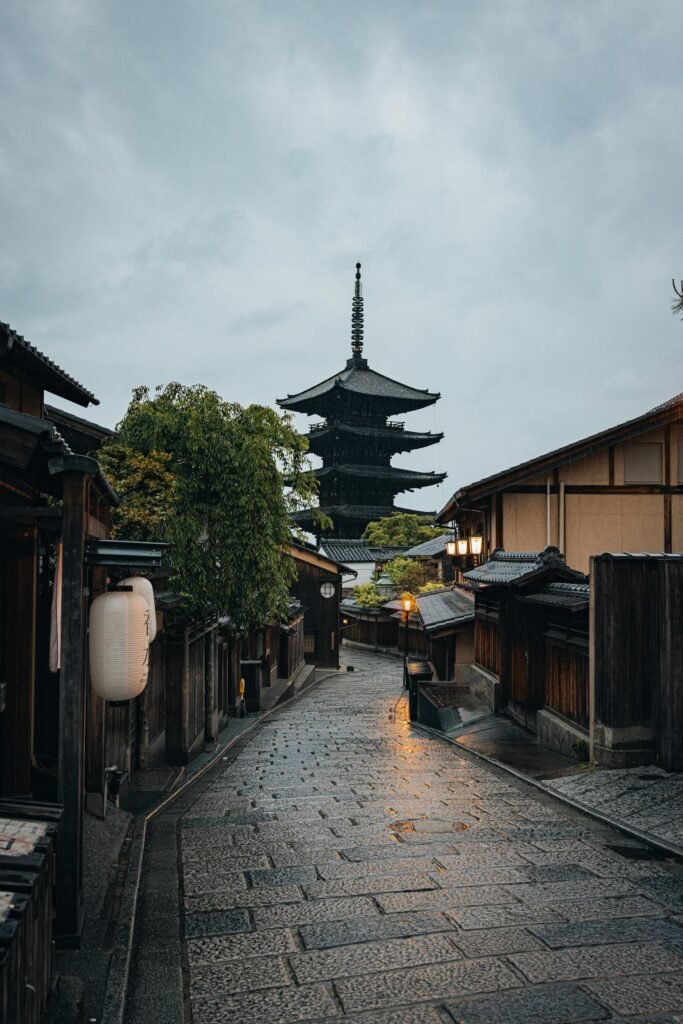
The most-visited historic district — the eastern hill-side neighborhood containing Kiyomizu-dera, Yasaka Shrine, Chion-in, and the famous preserved streets Sannenzaka and Ninenzaka with traditional wooden machiya townhouses. Best in early morning (6–8 am) when the streets are nearly empty.
Gion
The geisha district between Higashiyama and the Kamogawa River. The defining feature is the Hanamikōji wooden machiya street with traditional teahouses. Gion-shijō is the southern entrance; Hanami-kōji-Shijō is the canonical photographic intersection. Important: the city has restricted tourist access to several Gion side streets since 2024 due to harassment of working geisha; obey signage and respect private streets.
Central Kyoto (Karasuma / Shijo)
The modern commercial center along Shijo and Karasuma streets. Department stores (Daimaru, Takashimaya, Fujii Daimaru), the Nishiki Market (the 400-year-old “Kyoto’s Kitchen” covered food market), and the central business district. Kyoto Imperial Palace and the surrounding park immediately north. Pontocho alley (a 500-meter pedestrianized lane along the Kamogawa with restaurants and bars) is the evening dining destination.
Arashiyama
The western district 30 minutes by JR train from Kyoto Station. The Arashiyama Bamboo Grove is the iconic photo spot; the Tenryū-ji Zen temple (UNESCO); the Iwatayama Monkey Park; the Sagano Scenic Railway; the Hozugawa River boat trip. Densely touristed; best very early morning.
Fushimi (Southern Kyoto)
South of central Kyoto. The famous Fushimi Inari Shrine with the thousands of red torii gates winding up the mountain (the most photographed religious site in Japan). The Fushimi sake district with traditional sake breweries (Kizakura, Gekkeikan) offering tours and tastings. Fushimi Inari is best visited at sunrise or after dark (the gates are atmospheric in low light); the climb to the top mountain shrine takes 2 hours round-trip.
Northern Higashiyama / Sakyō Ward
The northeastern district containing Ginkaku-ji (Silver Pavilion), the famous Philosopher’s Path (a 2 km cherry-blossom-lined canal walk from Ginkaku-ji south to Nanzen-ji), Nanzen-ji Zen temple complex, Eikan-dō (the autumn-maple destination), and the Heian Shrine. Less crowded than Higashiyama itself; rewarding for a slow walking day.
Kinkaku-ji & Northwest
The northwestern district with the famous Kinkaku-ji (Golden Pavilion) and the adjacent Ryōan-ji (the famous abstract Zen rock garden, UNESCO). The Ninna-ji Buddhist headquarters and the Myoshin-ji Zen complex. Less compact than Higashiyama; plan transport carefully.
Nishiki Market & the Central Food District
The 400-meter covered market in central Kyoto specializing in food. Pickles, tofu products, traditional sweets, fresh fish, knives, tea utensils, and ready-to-eat snacks. The market dates to ~1310 and remains a working food market alongside its tourist function. Closed Wednesdays in winter; many stalls closed Sundays.
Top Things to Do in Kyoto
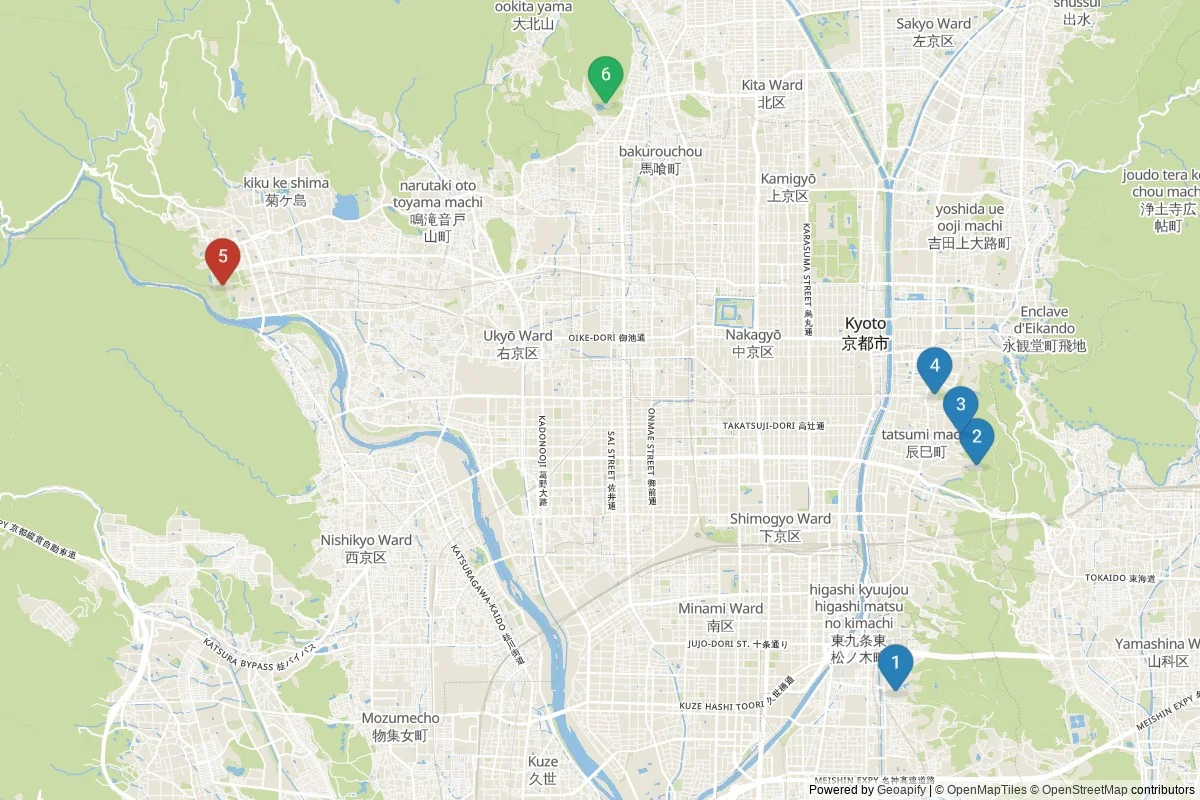
| # | Sight | Cluster | Type | Time | Entry | Best |
|---|---|---|---|---|---|---|
| 1 | Fushimi Inari Shrine | Central | Shinto shrine | ~2 hrs | Free | Early morning |
| 2 | Kiyomizu-dera Temple | Central | Buddhist temple | ~1.5 hrs | ¥500 | Morning |
| 3 | Higashiyama Historic District | Central | Old quarter | ~3 hrs | Free | Afternoon |
| 4 | Gion District | Central | Geisha quarter | ~2 hrs | Free | Evening |
| 5 | Arashiyama Bamboo Grove | Outer | Nature walk | ~1 hr | Free | Early morning |
| 6 | Kinkaku-ji (Golden Pavilion) | Far | Zen temple | ~1 hr | ¥500 | Morning |
| 🚗 | Kaiseki Dinner Experience | Day trip | Culinary | ~2 hrs | ¥10,000+ | Evening |
| 🚗 | Day Trip: Nara & Uji | Day trip | Day trip | Full day | ¥1,000 | Morning |
1. Visit Fushimi Inari Shrine
The most-photographed religious site in Japan — the Shinto shrine dedicated to Inari (the rice deity), with approximately 10,000 vermilion torii gates donated by businesses and individuals winding up the 233-meter Inari Mountain. The full climb takes 2 hours round-trip; many visitors only do the first 30 minutes of gates (Senbon Torii section). Free entry; open 24/7 (visit at sunrise 5–7 am or after 18:00 for atmospheric low-crowd photography). 5 minutes south of Kyoto Station on the JR Nara Line.
2. Kinkaku-ji (Golden Pavilion)
The 14th-century Zen Buddhist temple originally built as a shogun retirement villa, converted to a Zen temple after Yoshimitsu’s death — the upper two floors covered in gold leaf, reflecting dramatically in the surrounding mirror pond (Kyōko-chi). The current building is a 1955 reconstruction (the original was burned down by a deranged monk in 1950, an event fictionalized by Yukio Mishima in his novel). Entry ¥500; allow 45–60 minutes; visit early morning to avoid crowds.
3. Walk the Higashiyama Historic District
The defining walking experience — the preserved streets of Sannenzaka and Ninenzaka lined with traditional wooden machiya, traditional sweets shops, and pottery and craft stores. Start at Kiyomizu-dera (the iconic veranda-temple), descend through Sannenzaka to Ninenzaka, continue to Yasaka Shrine and Maruyama Park. Plan 3–4 hours; visit early morning (6–8 am) before the tour groups arrive.
4. Kiyomizu-dera Temple
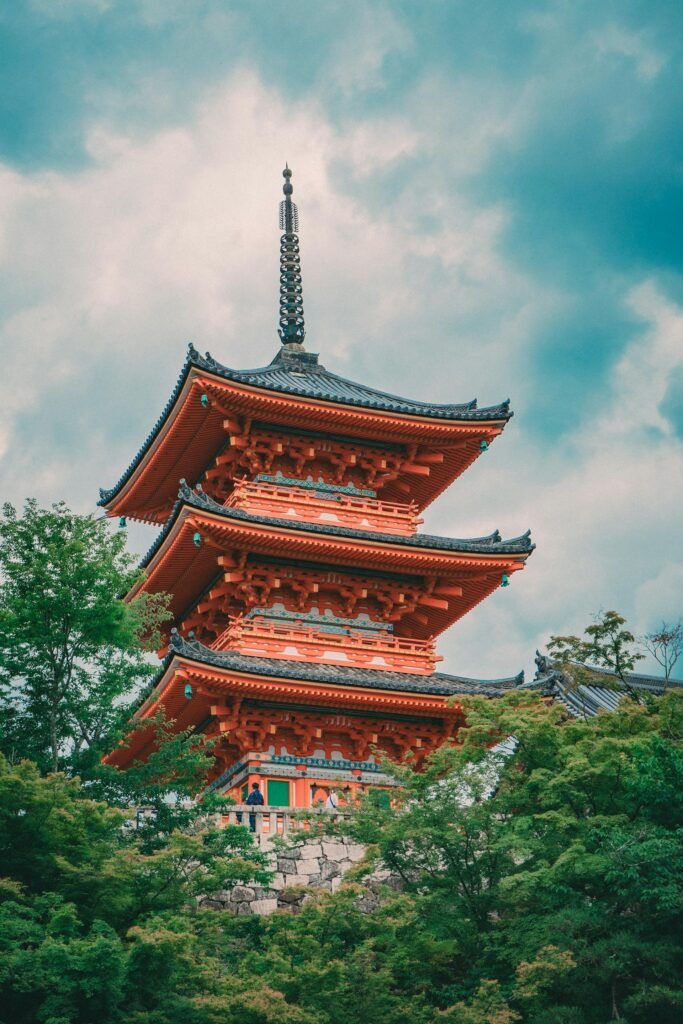
The 8th-century Buddhist temple perched on the eastern Higashiyama hillside — the iconic wooden veranda extends 13 meters out from the cliff face on 139 wooden pillars (the recent restoration in 2020 used traditional techniques). The expression “to jump off the Kiyomizu stage” means “to take a great leap”; the famous Otowa Waterfall under the main hall offers three streams to drink from (longevity, success, love — but legend says don’t drink from all three or risk negating the effects). Entry ¥500.
5. Arashiyama Bamboo Grove
The most-photographed bamboo grove in Japan — a 500-meter pedestrian path through 10,000+ tall bamboo culms. The path is genuinely beautiful but extremely crowded; visit at sunrise (5–7 am) or 1 hour before sunset for the best experience. Combine with Tenryū-ji Zen temple (UNESCO), the Ōkōchi Sansō garden (former film-star residence), and the historic Togetsukyō (Moon-Crossing) Bridge. The Sagano Scenic Railway from Saga-Arashiyama to Kameoka (25 min, ¥880) is a scenic vintage-train option.
6. Explore Gion at Dusk
The atmospheric geisha district between Yasaka Shrine and the Kamogawa. The Hanamikōji wooden machiya street looks particularly beautiful at twilight when the traditional lanterns illuminate. You may spot geiko (Kyoto’s term for geisha) or maiko (apprentice geisha) walking between teahouse appointments around 17:00–19:00 — observe respectfully, do NOT take selfies or block their path, do NOT touch their clothing. The city now restricts tourist access to certain Gion side streets due to past tourist harassment; obey signage.
7. Day Trip to Nara & Uji
Two satellite cultural destinations easily reached by JR train. Nara (45 minutes south by JR Nara Line, the older Japanese capital 710–784, UNESCO heritage): Todai-ji (the giant bronze Buddha), Kasuga Taisha shrine, Nara Park with its 1,200 wandering deer. Uji (15 min south): the Byōdō-in (the temple depicted on the 10-yen coin) and the country’s most important green-tea production area. Combine both as a full day or split.
8. Experience a Kaiseki Dinner or Tea Ceremony
Kyoto invented the kaiseki multi-course traditional Japanese cuisine and the formal tea ceremony; both are accessible to visitors. Kaiseki: dinner at a traditional ryotei restaurant ¥15,000–60,000+ per person depending on level; Kikunoi (3-Michelin-star) is the canonical address. Tea ceremony: introductory tea-ceremony experiences ¥3,000–8,000 per person at venues like Camellia Tea Ceremony, En Garden, or Tea Ceremony Ju-an. Geiko/Maiko dinner: traditional kaiseki dinner with geisha performance — typically ¥40,000–80,000+ per person, requires introduction or specialty booking service.
How to Get to Kyoto
By Air
Kyoto does not have a major commercial airport. The closest options: Osaka Kansai International Airport (KIX) 75 minutes by JR Haruka Express (¥3,440); Osaka Itami Airport (ITM) 50 minutes by airport bus (¥1,340 — primarily domestic flights). Tokyo Haneda (HND) via Shinkansen: 90 min Haneda-Tokyo Station + 2h15min Shinkansen = 3h45min total.
By Shinkansen (High-Speed Rail)
The primary way to reach Kyoto for most international visitors. Tokyo-Kyoto: 2 hours 15 min on Nozomi (¥14,000) or 2h40min on Hikari/Kodama (covered by JR Pass). Osaka-Kyoto: 15 min on Nozomi/Hikari (¥1,420) or 30 min on regular JR Special Rapid (¥570). Hiroshima-Kyoto: 1h45min. Hakata (Fukuoka)-Kyoto: 3h. Kyoto Station is the southern terminus; located in the city’s south but well-connected by metro and bus to all districts.
By Long-Distance Bus
Highway buses connect Kyoto to most major Japanese cities. Tokyo-Kyoto overnight bus 8–9 hours (¥4,000–8,000); cheaper than Shinkansen.
Visa Notes
Japan offers visa-free entry for up to 90 days for citizens of 68 countries, including all EU members, US, UK, Canada, Australia, New Zealand, Singapore, South Korea, Hong Kong (SAR), Taiwan. Chinese mainland passport holders need a visa. Passport must have validity for the duration of stay. Visit Japan Web system streamlines digital immigration. Check rules with the Japanese Ministry of Foreign Affairs.
Getting Around Kyoto
Buses
Kyoto’s bus network is the most useful transit for most temple visits — many major temples are not near train stations. Kyoto City Bus ¥230 single fare; 1-day Bus Pass ¥700 (pay on bus); the bus map is essential. Many buses display only Japanese signage; the Google Maps app with bus directions is the practical default.
Trains (JR & Subway)
The JR Sagano Line connects Kyoto Station to Arashiyama (15 min); the JR Nara Line serves Fushimi Inari and Uji/Nara; the Karasuma Subway Line runs north-south through central Kyoto; the Tōzai Subway Line runs east-west. Single fares ¥220–280; Kyoto City Subway 1-day Pass ¥800.
Taxis
Japanese taxis: spotless, metered, expensive — ¥420 flagfall + ¥80 per 240 m. Useful for evening dining (when bus service reduces) and for traveling between distant temples efficiently.
Bicycle Rentals
The flat central Kyoto basin is genuinely cycling-friendly. Rentals from ¥800/day; popular shops near Kyoto Station (Kyoto Cycling Tour Project, Eirin) and central Kyoto. The Kamogawa River bike path runs the length of the city.
Walking
Many Kyoto neighborhoods are walkable but not all are well-connected — the Higashiyama district itself is walkable end-to-end (a 4 km circuit covers most major sites), but reaching Arashiyama or Kinkaku-ji requires bus or train. Wear walking shoes; the temple steps and uneven cobblestones require sturdy footwear.
Food & Drink in Kyoto
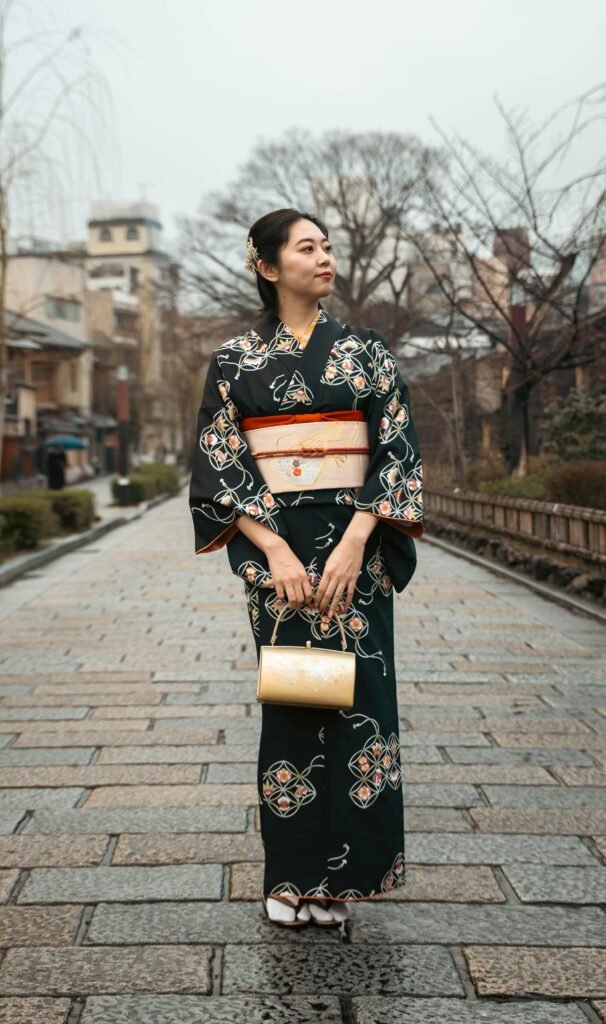
Kyoto cuisine — known as kyō-ryōri or kyō-kaiseki — is the most refined of Japan’s regional culinary traditions, shaped by 1,000 years of imperial-and-Buddhist courtly dining, the absence of nearby ocean (until modern transit), and the city’s strong vegetarian Buddhist heritage.
What to Try
- Kaiseki ryōri — the formal multi-course meal that defines Japanese fine dining; traditionally seasonal, regionally specific to Kyoto’s mountain-and-river ingredients, served in a sequence of small artistic plates. Kikunoi (3-Michelin-star), Hyotei (3-Michelin-star, the country’s oldest restaurant — 450 years), Wakuden, Ryozanpaku are canonical.
- Yudofu (tofu hotpot) — Kyoto’s Buddhist vegetarian specialty; tofu simmered in a clear kombu-dashi broth, served with dipping sauces. Restaurants near Nanzen-ji temple specialize.
- Obanzai — traditional Kyoto home cooking; small dishes of vegetables, fish, and tofu prepared with restraint and seasonal awareness.
- Kyo-yasai — heritage Kyoto vegetables; kamo nasu eggplant, mizuna mustard greens, Manganji peppers, kuwai water chestnuts.
- Matcha (green tea) — Uji-grown green tea powder; the foundation of the tea ceremony; matcha is now globally famous but Uji and Kyoto remain the heritage source. Matcha sweets — wagashi, mochi, ice cream — are everywhere.
- Wagashi (traditional sweets) — the seasonal Japanese confectionery refined in Kyoto; nerikiri (sculpted bean-paste sweets), warabi mochi, namagashi.
- Saba-zushi — pressed mackerel sushi; the Kyoto specialty version of regional pressed-sushi.
- Nishin soba — buckwheat noodles with sweet-simmered herring; the Kyoto-specific winter staple.
- Yuba — tofu skin; the delicate film that forms on heated soy milk; Kyoto’s Buddhist temple cuisine speciality.
- Kyoto craft sake — the Fushimi sake district produces some of Japan’s most refined sake.
Where to Eat
Kikunoi (Higashiyama): the canonical 3-Michelin-star kaiseki. Hyotei (Nanzen-ji area): 450 years old, kaiseki. Nishiki Market: street food and ready-to-eat traditional snacks. Yudofu Sagano (Arashiyama): atmospheric yudofu in restored teahouse. Pontocho alley: dozens of traditional restaurants along the Kamogawa with summer riverside platforms (kawayuka) May-September. Gion Karyo: traditional kaiseki in Gion. Ippudo Kyoto: famous tonkotsu ramen. Daichi-no-Hokoku: Buddhist vegetarian shojin-ryori.
Drinks
Matcha: the ritual green tea; available at temples, traditional cafés, and as modern lattes. Sake: especially Fushimi-area sake (Gekkeikan, Tamano Hikari, Kizakura); brewery tours and tastings available. Craft beer: growing scene with Kyoto Brewing Company, Beer Kobo. Coffee: Kyoto’s third-wave coffee scene is sophisticated; Sentido, Weekenders Coffee, Walden are recommended.
A Note on Tap Water
Tap water in Kyoto is completely safe and excellent quality — sourced from protected mountain catchments and Lake Biwa, treated to high Japanese standards. The water’s notable softness is one reason Kyoto’s tea, sake, and yudofu cuisine all developed locally. No bottled water needed; refillable bottles are fine. Ice universally safe. The CDC traveler health page for Japan rates Japan as the lowest risk.
Frequently Asked Questions About Visiting Kyoto
Do I need a visa to visit Kyoto?
For most foreign passport holders, no — Japan offers visa-free entry for up to 90 days for citizens of 68 countries, including all EU member states, US, UK, Canada, Australia, New Zealand, Singapore, South Korea, Hong Kong (SAR passport), Taiwan, Malaysia, and most other developed-economy nations. Chinese mainland passport holders need a visa applied for in advance at a Japanese consulate. Visa-free travelers must: have a valid passport (Japan does not technically require 6 months remaining, but airlines often do); have an onward/return ticket; have proof of accommodation; have sufficient funds. The Visit Japan Web system streamlines digital immigration and customs declarations — fill in details before arrival. Always verify current rules with the Japanese Ministry of Foreign Affairs.
Is Kyoto safe for tourists?
Kyoto — like Japan — is one of the world’s safest tourist cities. The US State Department rates Japan at “exercise normal precautions.” Violent crime against tourists is statistically negligible. Real risks in Kyoto: summer heat exhaustion July-August (humid 35 °C+); overtourism crowding at Kiyomizu-dera, Fushimi Inari, Arashiyama bamboo grove (visit at sunrise to avoid); scooter and cyclist conflicts on Kyoto sidewalks (locals frequently cycle on sidewalks); respect-for-geiko in Gion — do NOT take selfies with geisha, do NOT touch their clothing, do NOT block their path; the city has banned tourist access to several private Gion side streets since 2024; monkey aggression at Iwatayama Park; earthquake regional risk; medical-cost shock for uninsured visitors. Drug laws: extremely strict; no possession at all. Cultural sensitivities: bow when entering temples; remove shoes at certain temple buildings; no photography during religious ceremonies; quiet voices in shrines.
How many days do I need in Kyoto?
Three to four days handles Kyoto well; with Nara and Osaka day trips, 5–7 days makes a satisfying Kansai trip. A solid 4-day Kyoto plan: Day 1 — Fushimi Inari sunrise + Tofuku-ji + Kiyomizu-dera afternoon + Sannenzaka-Ninenzaka walking + Gion dusk + Pontocho dinner. Day 2 — Kinkaku-ji + Ryōan-ji + Daitoku-ji + lunch in central Kyoto + Nijō-jō Castle + Nishiki Market evening. Day 3 — Arashiyama full day (Tenryū-ji + Bamboo Grove + Sagano Scenic Railway + Iwatayama Monkey Park + Togetsukyō Bridge sunset) + return to Kyoto evening. Day 4 — Northern Higashiyama (Ginkaku-ji + Philosopher’s Path + Nanzen-ji + Eikan-dō) + Imperial Palace + final dinner kaiseki. Add Day 5 for Nara day trip. Add Days 6–7 for Osaka and Himeji Castle. 10-day Japan classic: 4 days Tokyo + 3 days Kyoto + 2 days Hiroshima + 1 day Hakone. Day-trip Kyoto from Tokyo: theoretically feasible (Shinkansen 2.5 hours each way) but completely insufficient.
What’s the best area to stay in Kyoto?
For first-time visitors, central Kyoto offers the best convenience. Central Kyoto (Karasuma / Shijo): walkable to Nishiki Market, restaurants, train and subway connections; The Ritz-Carlton Kyoto, Hyatt Regency Kyoto, Hotel Granvia Kyoto (Kyoto Station), Hotel Kanra Kyoto; ¥18,000–60,000+/night (US$120–400+). Higashiyama / Gion: traditional neighborhood; Park Hyatt Kyoto, Four Seasons Hotel Kyoto, Hotel Mume; ¥30,000–120,000+/night; the atmospheric choice. Arashiyama: peaceful western district; Hoshinoya Kyoto (luxury riverside ryokan), Garrya Nijo Kyoto; ¥40,000–100,000+/night; quieter but distant from central sights. Ryokan (traditional Japanese inn): the cultural experience; Tawaraya (the country’s most famous ryokan since 1709, 18 rooms only); ¥80,000–150,000+/night with two meals; book 6+ months ahead. Machiya townhouse rentals: restored traditional wooden townhouses converted to private rentals; ¥15,000–40,000/night. Skip: budget hotels near Kyoto Station with no neighborhood character; the convenience-but-no-character trade-off is rarely worth it.
How much does it cost to visit Kyoto’s major sights?
Most Kyoto temples charge modest entrance fees. Kinkaku-ji (Golden Pavilion): ¥500. Ginkaku-ji (Silver Pavilion): ¥500. Kiyomizu-dera: ¥500. Fushimi Inari Shrine: free. Tenryū-ji: ¥800. Ryōan-ji: ¥600. Nijō Castle: ¥1,300. Imperial Palace: free with advance reservation. Arashiyama Bamboo Grove: free. Nishiki Market: free entry. Tea ceremony experience: ¥3,000–8,000 per person. Kaiseki dinner: ¥15,000–60,000+ per person depending on level. Hyotei or Kikunoi 3-Michelin-star kaiseki: ¥30,000–80,000+ per person. Geiko/maiko dinner experience: ¥40,000–80,000+ per person. Local meals: udon or soba lunch ¥800–1,500; chain ramen ¥800–1,500; sit-down family restaurant dinner ¥2,000–5,000 per person; matcha cafe sweets ¥600–1,500; yudofu lunch ¥2,500–6,000. Coffee at a café: ¥400–700. Kyoto City Bus 1-day pass: ¥700. Bike rental: ¥800–1,500/day. Shinkansen Kyoto to Tokyo: ¥14,000. Overall daily budget: ¥8,000 (frugal hostel + temples + udon), ¥25,000 (mid-range hotel + restaurants + 1 kaiseki experience), ¥60,000+ (luxury ryokan + Michelin-starred dining).
Should I drink the tap water in Kyoto?
Yes — Kyoto’s tap water is completely safe to drink and known for its excellent quality. The water’s distinctive softness — sourced from Lake Biwa and protected mountain catchments — is one of the reasons Kyoto’s tea ceremony, sake, and yudofu cuisine all developed locally to such refinement. No bottled water needed; ice is universally safe; refillable bottles are encouraged. The CDC traveler health page for Japan rates Japanese food and water as the lowest risk. Food safety: Japan has exceptional food safety standards; raw fish at any reputable restaurant is consistently safe; raw chicken (torisashi) is occasionally served at specialty restaurants and carries non-zero salmonella risk. The bigger summer health concern is heat exhaustion during July-August humid 35 °C+ days; drink 3+ liters of water and plan outdoor temple visits for early morning.
What payment methods work in Kyoto — cards or cash?
Mix of both — Kyoto retains more cash-friendly small businesses than Tokyo. Credit cards (Visa, Mastercard, JCB, AmEx): accepted at hotels, mid-range and upmarket restaurants, major shops, supermarkets, convenience stores (7-Eleven, FamilyMart, Lawson), and at most temples (smaller ones may be cash only); contactless tap-to-pay growing. Suica/PASMO IC cards: useful for the subway and many convenience-store small purchases; Apple Pay supports Suica on iPhone. Japanese yen cash: still essential for many small restaurants, traditional ryokans, temple donations, and most non-tourist-area transactions. Mobile payment: PayPay (Japanese QR-code) growing; many smaller restaurants accept PayPay before credit cards; requires Japanese phone for full registration. ATMs: at 7-Eleven (Seven Bank), Family Mart, Japan Post Bank accept foreign cards with daily limits ¥100,000–300,000 and modest fees. Currency exchange: airport rates are competitive; banks and post offices exchange at similar rates. No tipping culture: Japan does NOT have a tipping tradition. Tipping at restaurants is genuinely unexpected and can cause confusion; the price you see is what you pay; excellent service is included. For traditional ryokan stays, an exception: it’s customary to give the okami-san (innkeeper) a small ¥1,000–3,000 envelope (“kokorozuke”) on arrival as a “please take care of us” gesture; this is optional but appreciated.
What’s the deal with crowds, geisha respect, and the Kyoto cultural etiquette?
Kyoto has become significantly more crowded since 2018, and the cultural-respect expectations are higher than in most tourist cities. Crowds: Kinkaku-ji, Fushimi Inari, Arashiyama, and Higashiyama can be intensely crowded mid-day; visit at sunrise (5–7 am) or after 17:00 for the iconic spots; midweek visits less crowded than weekends. Geisha respect: do NOT chase, touch, or photograph geiko (Kyoto’s geisha) without permission. The city has implemented restrictions on tourist access to certain Gion side streets since 2024 due to harassment. Geisha are professional artists making their way to paid appointments — treat them like you would a doctor going to surgery. Selfies are not appropriate. If you want a geisha experience, book a formal Gion teahouse dinner through your hotel concierge (¥40,000+ per person). Temple etiquette: bow slightly when entering shrine gates (torii); remove shoes at temple buildings with the wooden floors and shoe-shelves; silence in prayer halls; no flash photography at most temples; ofuku-jiro (donation box) coins are appreciated but not mandatory. Photography: at Fushimi Inari, the early morning gates are crowded but everyone respects each other’s photos; at temples, follow signage about which interior rooms permit photography. Dining etiquette: don’t tip; bow slightly when entering and leaving; chopsticks should never be stuck vertically in rice (a funeral ritual symbol); the kaiseki and tea ceremony specifically have elaborate etiquette your host will guide you through. Public quietness: speak quietly on the bus and train; loud foreign tourists are a notable local complaint; phone calls on public transit are taboo. Quick tip: most Kyoto frustrations stem from overtourism; visit major sites at unusual hours, learn 5 basic Japanese phrases (sumimasen — excuse me; arigato gozaimasu — thank you; gochisousama deshita — thank you for the meal), and the city will reward you.
Education & Notable People
Kyoto is the country’s second-largest university city (after Tokyo), anchored by the prestigious Kyoto University.
Major Universities
- Kyoto University — founded 1897 as the second Imperial University; one of Japan’s “Big Two” alongside the University of Tokyo; ~22,000 students; particularly strong in physics, biology, chemistry, and Asian studies. The university has produced 11 Nobel laureates — more than any other Asian university.
- Doshisha University — historic Protestant Christian private university.
- Ritsumeikan University — leading private university, strong international programs.
- Kyoto Institute of Technology — textile-and-design specialty.
- Kyoto Seika University — known for manga and design programs.
Notable People
Emperor Kanmu (737–806) — founded Heian-kyō (Kyoto) in 794. Murasaki Shikibu — author of The Tale of Genji (c. 1010), often called the world’s first novel; Heian-era court lady. Sei Shōnagon — author of The Pillow Book; Murasaki’s contemporary. Sen no Rikyū (1522–1591) — perfected the Japanese tea ceremony (wabi-cha aesthetic); committed seppuku at Hideyoshi’s order in 1591. Sesshū Tōyō — celebrated Muromachi-era ink-wash painter, trained in Kyoto Zen temples. Hideki Yukawa — Kyoto University physicist, Japan’s first Nobel laureate (Physics 1949). Shinya Yamanaka — Kyoto University biologist, Nobel laureate (Physiology 2012) for induced pluripotent stem cells. Kobun Shunryū, Suzuki Roshi — celebrated Zen masters. Yukio Mishima — celebrated 20th-century novelist whose Temple of the Golden Pavilion fictionalized the 1950 Kinkaku-ji arson. Contemporary cultural figures: many ikebana masters, kaiseki chefs, and traditional craft artisans maintain Kyoto practices.
Sister Cities & International Relations
Kyoto’s sister-city network reflects the city’s identity as a global cultural-heritage capital.
Kyoto’s sister and partnership cities include (selection):
- Paris, France — paired since 1958; the original “cultural-capitals” partnership.
- Florence, Italy — paired since 1965; the Renaissance-and-medieval-capital partnership.
- Kyiv, Ukraine — sister city since 1971.
- Boston, Massachusetts, USA — paired since 1959; one of Japan’s longest US sister-relationships.
- Cologne, Germany — friendship city.
- Xi’an, China — paired since 1974; both ancient imperial capitals with Tang-dynasty Chinese influence on Kyoto’s original layout.
- Zagreb, Croatia — friendship city.
- Guadalajara, Mexico — paired since 1980.
- Konya, Türkiye — friendship city.
Kyoto hosted the 1997 UN Climate Change Conference that produced the historic Kyoto Protocol on greenhouse gas reductions. The city is the headquarters of the Kyoto Manga Museum, the international hub for manga research. The Kyoto Prize ($530,000+ in cultural and scientific recognition, founded 1985) is one of Asia’s most prestigious cultural-and-scientific honors. The Kyoto City Tourism Office coordinates the city’s international promotion.
AFRIKA
Cairo Hurghada Johannesburg Marrakech
ASIA
Abu Dhabi Agra Antalya Bangkok Batam Beijing Bengaluru Cebu City Chiang Mai Chiba Chennai Da Nang Dammam Delhi Denpasar Dubai Fukuoka Guangzhou Guilin Ha Long Hanoi Ho Chi Minh City Jakarta Jaipur Johor Bahru Kolkata Krabi Kuala Lumpur Kyoto Macau Mecca Medina Mugla Mumbai Osaka Pattaya Penang Phuket Riyadh Seoul Shanghai Shenzhen Singapore Taipei Tokyo Zhuhai
EUROPE
Amsterdam Athens Barcelona Berlin Brussels Budapest Copenhagen Dublin Florence Frankfurt am Main Heraklion Krakow Lisbon London Madrid Milan Munich Nice Paris Porto Prague Rhodes Rome Stockholm Venice Vienna Warsaw
NORTH AMERICA
Cancun Las Vegas Los Angeles Miami New York City Orlando San Francisco Toronto Vancouver
SOUTH AMERICA
Buenos Aires Lima Rio De Janeiro
OCEANIA
Auckland Honolulu Melbourne Sydney