

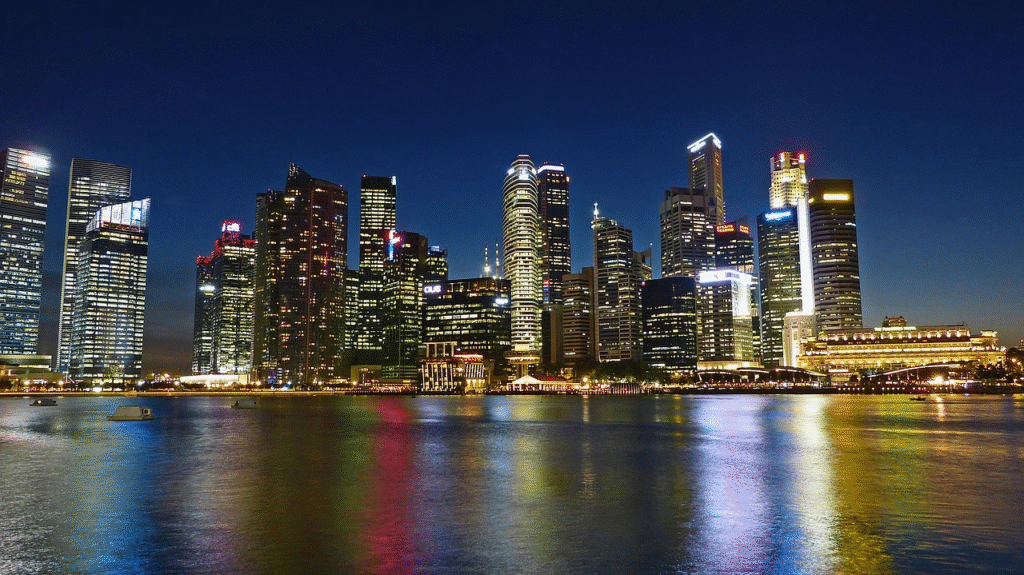
Photo credit: cegoh, Pixabay
Singapore stands as one of Asia’s most remarkable success stories, transforming from a humble trading post into a gleaming global city-state in just decades. This tiny island nation, officially known as the Republic of Singapore, punches far above its weight with its strategic location, multicultural harmony, and relentless pursuit of excellence. From the futuristic Gardens by the Bay to bustling hawker centers serving world-class street food, Singapore offers visitors an unforgettable blend of cutting-edge innovation and rich cultural heritage.
Singapore at a Glance: Essential Facts for Travelers
| Official Name | Republic of Singapore |
| Location | Southeast Asia, southern tip of Malay Peninsula |
| Coordinates | 1°17′N 103°50′E |
| Population | 5.9 million (2023) |
| Area | 728.6 km² (281 sq mi) |
| Highest Point | Bukit Timah Hill (164m) |
| Time Zone | UTC+8 (Singapore Standard Time) |
| Calling Code | +65 |
| Postal Codes | 6-digit system (e.g., 238880) |
| Official Languages | English, Mandarin, Malay, Tamil |
| Currency | Singapore Dollar (SGD) |
| Government | Parliamentary Republic |
| President | Tharman Shanmugaratnam (2023-present) |
| Prime Minister | Lawrence Wong (2024-present) |
| Independence | August 9, 1965 (from Malaysia) |
| GDP per capita | $82,800 (2022) |
| Known For | Marina Bay Sands, Gardens by the Bay, Hawker Food, Changi Airport |
| Official Website | gov.sg |
Current Events in Singapore in March
| Date | Title | Details |
|---|---|---|
| 2026-03-03 | Total Lunar Eclipse | Science Centre Singapore, Jurong East; starts 19:47, ends 21:17; free; family‑friendly; live viewing with high‑powered telescopes provided by Science Centre Singapore. |
| 2026-03-07 – 2026-03-08 | Hitcheed’s Wedding Wonderland | Suntec Convention Hall 403, Suntec Convention; 12:00–20:00 each day; free RSVP for two; consumers and couples; features over 80 wedding professionals offering try‑on gowns and cashback prizes. |
| 2026-03-11 – 2026-03-15 | PAW Patrol Live! “The Great Pirate Adventure” | Sands Theatre, Marina Bay Sands; showtimes vary (evening); ticketed S$58–148; family‑friendly (preschool); live stage show with PAW Patrol characters on pirate rescue adventure. |
| 2026-03-12 – 2026-03-15 | IT Show Singapore 2026 | Suntec Singapore Convention & Exhibition Centre, Suntec; 11:00–21:00; varies; tech consumers; showcases smart home, gaming, mobile and AI tech with show‑only promotions. |
| 2026-03-12 – 2026-03-15 | A Dream of Red Mansions | Esplanade Theatre, Esplanade; times vary; ticketed S$88–388; general audience; ballet by National Ballet of China performing poetic tale of Jia Baoyu and Lin Daiyu. |
| 2026-03-13 – 2026-03-15 | Disney Cruise Line Fireworks | Marina Bay precinct; 20:30 start; free; all ages; 10‑minute fireworks set to Disney music celebrating Asia’s first Disney cruise ship. |
| 2026-03-14 – 2026-03-22 | Disney On Ice: Magic In The Stars | Singapore Indoor Stadium; multiple daily shows (e.g., 11:00, 15:00, 19:00); ticketed (dynamic pricing); family‑friendly; figure‑skating show featuring Disney characters including Raya, Elsa, Anna, Moana. |
| 2026-03-14 – 2026-03-15 | Concerts After Dark at Tanjong Beach Club | Tanjong Beach Club, Sentosa; doors open 15:00 into night; ticketed 18+ only; beachside dance party featuring DJ Claptone (14 Mar) and R3HAB (15 Mar). |
City News in Singapore – last 14 days
| Date | Category | Headline | Details |
|---|---|---|---|
| 2026-02-16 | Infrastructure / Environment | Singapore introduces first sustainable aviation fuel levy | Effective for tickets sold after Apr 1 and flights departing after Oct 1, a levy ranging from S$1 to S$32 per ticket will fund sustainable aviation fuel; cargo charges vary by weight and route; reported by AP News. |
| 2026-02-13 | Public Transport / Infrastructure | Upgrades to NEL power system to improve rail reliability | Government accepted task‑force recommendations; power intake at Sengkang depot to be upgraded and more traction substations added; works begin in 2026 and may require longer service closures; per LTA and operators joint statement. |
| 2026-02-24 – 2026-03-01 | Sports / Event | Singapore hosts international badminton challenge | 2026 Singapore International Challenge held from Feb 24 to Mar 1 with US$30,000 prize money; part of BWF International Challenge circuit; per Wikipedia Chinese page. |
| 2026-02-19 – 2026-03-01 | Sports / Event | WTT Singapore Smash (table tennis) takes place | WTT Singapore Grand Smash held Feb 19–Mar 1 at Kallang, featuring 64 singles and 24 doubles draws; total prize money US$1.55 million; includes wheelchair events; per Wikipedia Chinese page. |
| 2026-02-07 | Public Transport / Event | Shuttle buses advised for Singapore Airshow attendees | Visitors on public days Feb 7–8 urged to use shuttle buses from Expo MRT to avoid crowds; shuttle included in ticket price; organiser advice published Feb 6 by The Straits Times. |
| 2026-02-01 | Government / Administration | Local election delay plans abandoned after legal advice | Government dropped plan to postpone 30 local council elections scheduled for May after receiving legal advice; announced Feb 16 via Yahoo News Singapore. |
| 2026-02-07 | Sport / Domestic | 2026 Women’s National League season kicks off | Women’s National League football season started Feb 7; includes 10 teams, featuring development B teams from Lion City Sailors FC and Still Aerion WFC; promotion/relegation reinstated; per Wikipedia English page. |
Singapore Events & City News Archive
Weather Forecast for the Next 14 Days in Singapore
| Date | Weather | Max °F | Min °F | Rain mm |
|---|---|---|---|---|
| 2026-03-02 | ⛈️ | 87.7 °F | 77.5 °F | 4.8 mm |
| 2026-03-03 | ⛈️ | 89.5 °F | 76.5 °F | 7.5 mm |
| 2026-03-04 | ☁️ | 91.6 °F | 76.9 °F | 0.3 mm |
| 2026-03-05 | ☁️ | 91.8 °F | 76.9 °F | 0.0 mm |
| 2026-03-06 | 🌧️ | 86.7 °F | 76.8 °F | 1.5 mm |
| 2026-03-07 | 🌧️ | 87.6 °F | 76.1 °F | 0.9 mm |
| 2026-03-08 | 🌧️ | 90.4 °F | 76.0 °F | 1.2 mm |
| 2026-03-09 | ⛈️ | 87.7 °F | 77.6 °F | 3.75 mm |
| 2026-03-10 | 🌧️ | 91.4 °F | 75.4 °F | 0.3 mm |
| 2026-03-11 | ☁️ | 90.2 °F | 75.5 °F | 0.0 mm |
| 2026-03-12 | 🌧️ | 87.5 °F | 75.4 °F | 0.9 mm |
| 2026-03-13 | 🌧️ | 86.7 °F | 75.5 °F | 0.3 mm |
| 2026-03-14 | 🌧️ | 89.6 °F | 74.7 °F | 0.9 mm |
| 2026-03-15 | 🌧️ | 89.8 °F | 74.0 °F | 2.4 mm |
Singapore’s History
Singapore’s story begins in the mists of ancient trade routes, when this strategic island was known as Temasek, meaning “Sea Town” in Javanese. Chinese texts from the 3rd century reference this bustling port, which served as a vital link in the maritime Silk Road connecting China to India and beyond.
The Lion City Legend
The name “Singapore” derives from the Sanskrit “Singapura,” meaning “Lion City.” According to the Malay Annals, Prince Sang Nila Utama of Sumatra spotted a mysterious creature while exploring the island in 1299. Mistaking what was likely a tiger for a lion, he took this as an auspicious sign and named his new kingdom accordingly. While lions never actually roamed Singapore’s shores, this legendary encounter gave birth to the island’s enduring symbol.
Colonial Transformation
Singapore’s modern history began on January 29, 1819, when Sir Thomas Stamford Raffles of the British East India Company established a trading post on the island. With a vision and $60,000, Raffles transformed this sleepy settlement of sea nomads into a thriving British port. His urban planning genius created the ethnic quarters that still define Singapore today, with designated areas for Chinese, Malay, Indian, and European communities.
By 1867, Singapore had become the crown jewel of British Malaya, its prime location making it the world’s busiest pit stop for ships sailing between Europe and China. The population exploded as immigrants flocked to this land of opportunity, creating the multicultural foundation that defines Singapore today.
World War II and Japanese Occupation
The darkest chapter in Singapore’s history came during World War II. On February 15, 1942, Japanese forces conquered the island in what Winston Churchill called “the worst disaster and largest capitulation in British history.” For three and a half years, Singapore was renamed Shōnan-tō (“Light of the South”) under brutal Japanese rule. The occupation ended with Japan’s surrender on September 12, 1945, but the experience fundamentally changed Singapore’s relationship with colonial rule.
The Road to Independence
Post-war Singapore embarked on a complex journey to independence. In 1947, women gained voting rights, and by 1959, the island achieved self-governance with Lee Kuan Yew as its first Prime Minister. Singapore briefly joined the Federation of Malaysia in 1963, but ideological differences and ethnic tensions led to an unexpected separation on August 9, 1965. Malaysia became the first nation to recognize Singapore’s sovereignty, marking the birth of National Day celebrations that continue today.
The Miracle Years
Under Lee Kuan Yew’s visionary leadership, Singapore transformed from a developing nation into an economic powerhouse. Starting with limited land, scarce resources, and high unemployment, the new nation implemented pragmatic policies that attracted foreign investment, developed world-class infrastructure, and created one of Asia’s most prosperous societies. By the 1990s, Singapore had achieved “Asian Tiger” status, becoming a model for rapid economic development.
Geography, Climate & Best Time to Visit Singapore
Singapore sits at one of the world’s most strategic locations, positioned at the southern tip of the Malay Peninsula where the Indian Ocean meets the South China Sea. This island nation consists of 64 islands, with the main island of Pulau Ujong connected to Malaysia by two impressive links: the historic Johor-Singapore Causeway (built in the 1920s) and the modern Second Link (completed in 1996).
Geography and Landscape
Despite its compact size of just 728.6 square kilometers, Singapore packs remarkable geographic diversity. The island’s highest point, Bukit Timah Hill, rises 164 meters above sea level and harbors one of the world’s few remaining primary rainforests in an urban setting. Thanks to ambitious land reclamation projects, Singapore has expanded its territory by over 20% since the 1960s, creating space for iconic developments like Marina Bay.
The Singapore Strait separates the island from Indonesia’s Riau Islands to the south, while the Johor Strait forms the northern border with Malaysia. This strategic position along the Strait of Malacca has made Singapore a natural gateway for maritime trade between Asia and the rest of the world.
Tropical Climate Year-Round
Singapore enjoys a tropical rainforest climate with consistent warmth and humidity throughout the year. Temperatures hover between 23°C (73°F) and 32°C (90°F), making it perpetually summer-like for visitors from temperate climates.
The island experiences two main monsoon seasons: the Northeast Monsoon (December to March) brings slightly cooler temperatures and more rainfall, while the Southwest Monsoon (June to September) is generally drier. However, Singapore’s equatorial location means rain can occur any time of year, usually in short, intense bursts that provide welcome relief from the heat.
Best Time to Visit
Singapore is a year-round destination, but certain periods offer distinct advantages:
February to April: The driest months with the most sunshine, perfect for outdoor activities and sightseeing.
May to July: Warm and relatively dry, ideal for exploring Gardens by the Bay and outdoor attractions.
August to October: Great weather with fewer crowds, as it falls between peak tourist seasons.
November to January: The wettest period, but also when Singapore’s shopping districts come alive with holiday decorations and festivals.
Pack light, breathable clothing, a reliable umbrella, and waterproof gear regardless of when you visit. The tropical showers are usually brief but can be intense.
Singapore’s Districts & Neighborhoods
Singapore’s urban planning divides the island into five main regions, each offering distinct experiences for travelers. Understanding these areas helps visitors choose the best base for their stay and exploration.
Central Region
The heart of Singapore encompasses the Colonial District, Marina Bay, and Orchard Road. This is where you’ll find iconic landmarks like Marina Bay Sands, the Merlion, and Gardens by the Bay. The area blends historic colonial architecture with futuristic skyscrapers, creating Singapore’s most photographed skylines.
Where to Stay: Luxury hotels around Marina Bay offer stunning views, while the Colonial District provides heritage charm. Orchard Road is perfect for shopping enthusiasts.
Chinatown & Tanjong Pagar
Singapore’s Chinatown preserves traditional shophouses alongside modern developments. Explore the Buddha Tooth Relic Temple, sample street food at hawker centers, and browse traditional medicine shops. The nearby Tanjong Pagar area has evolved into a trendy dining and nightlife district.
Little India & Kampong Glam
These vibrant ethnic enclaves showcase Singapore’s multicultural heritage. Little India bursts with colorful temples, spice shops, and authentic Indian cuisine, while Kampong Glam features the golden-domed Sultan Mosque, hip cafes, and boutique shopping along Haji Lane.
Sentosa Island
Singapore’s playground island offers beaches, theme parks, luxury resorts, and family attractions. Connected by cable car, monorail, or causeway, Sentosa provides a resort-like escape just minutes from the city center.
Where to Stay: Beach resorts and integrated resorts offer luxury accommodations with entertainment complexes.
East Coast & Katong
The East Coast combines beachfront recreation with Peranakan heritage. East Coast Park stretches for kilometers along the shoreline, while the Katong district showcases colorful shophouses and serves some of Singapore’s best laksa.
Holland Village & Dempsey Hill
These expat-friendly neighborhoods offer international dining, boutique shopping, and a more relaxed pace. Popular with families and young professionals, they provide a taste of residential Singapore life.
Top Things to Do in Singapore
Iconic Landmarks
Marina Bay Sands: Singapore’s most recognizable landmark features the world’s largest rooftop infinity pool, luxury shopping, and panoramic city views from the SkyPark observation deck.
Gardens by the Bay: This 101-hectare nature park showcases futuristic Supertrees, the misty Cloud Forest dome, and the Mediterranean-climate Flower Dome. The evening light show transforms the Supertrees into a magical spectacle.
The Merlion: Singapore’s half-lion, half-fish mascot spouting water into Marina Bay remains the city’s most photographed symbol and a must-visit for first-time visitors.
Singapore Flyer: This 165-meter observation wheel offers breathtaking 360-degree views of the city, harbor, and neighboring countries on clear days.
Cultural Attractions
Raffles Hotel: Home of the Singapore Sling cocktail, this colonial-era grand dame offers a glimpse into Singapore’s elegant past. Even non-guests can visit the Long Bar and hotel museum.
National Gallery Singapore: Housed in two beautifully restored colonial buildings, this world-class museum showcases the world’s largest collection of Southeast Asian art.
Asian Civilisations Museum: Explore the rich heritage of Asia’s diverse cultures through exquisite artifacts, from Chinese ceramics to Islamic calligraphy.
Chinatown Heritage Centre: Step into recreated shophouses to experience the harsh realities and rich traditions of early Chinese immigrants.
Nature and Wildlife
Singapore Botanic Gardens: This UNESCO World Heritage Site spans 163 acres of tropical paradise, featuring over 3,000 orchid species in the National Orchid Garden.
Singapore Zoo: Renowned for its open-concept enclosures and ethical animal care, the zoo houses over 2,800 animals in naturalistic habitats.
Night Safari: The world’s first nocturnal zoo offers tram rides and walking trails to observe over 900 animals in their nighttime element.
Bukit Timah Nature Reserve: Hike through primary rainforest to Singapore’s highest point, where you might spot long-tailed macaques and exotic birds.
Food Experiences
Hawker Centers: Sample Singapore’s incredible street food at Maxwell Food Centre, Lau Pa Sat, or Newton Food Centre. Don’t miss Hainanese chicken rice, chili crab, and laksa.
Michelin-Starred Street Food: Singapore is the only place where you can enjoy Michelin-starred meals for under $5 at hawker stalls like Hill Street Tai Hwa Pork Noodle.
High-End Dining: The city boasts numerous world-class restaurants, from celebrity chef establishments to innovative local concepts pushing culinary boundaries.
How to Get to Singapore
By Air
Changi Airport consistently ranks among the world’s best airports, serving as Singapore’s primary international gateway. Located in the east of the island, Changi features four terminals connected by free Skytrain services and offers direct flights to over 380 cities worldwide.
Major airlines serving Singapore include Singapore Airlines, Scoot, Jetstar Asia, and numerous international carriers. The airport’s efficiency means most connections require minimal layover time, making Singapore an ideal stopover destination.
From Changi Airport to the city center:
– **MRT (Mass Rapid Transit)**: The most economical option, taking 45-60 minutes to reach downtown areas
– **Taxi**: 20-45 minutes depending on traffic and destination, with fixed pricing to major areas
– **Private car/Grab**: Similar to taxi timing with app-based convenience
By Land
Two land connections link Singapore to Malaysia:
Johor-Singapore Causeway: The historic 1920s causeway connects Woodlands in Singapore to Johor Bahru in Malaysia. Travelers can cross by car, bus, or on foot, though immigration queues can be lengthy during peak periods.
Second Link: The modern Tuas Second Link offers an alternative crossing between Tuas and Gelang Patah, often with shorter waiting times.
By Sea
Singapore’s world-class port welcomes cruise ships from around the globe. The Marina Bay Cruise Centre and HarbourFront Centre serve as primary terminals for luxury cruise lines exploring Southeast Asia.
Ferry services connect Singapore to nearby Indonesian islands like Batam and Bintan, popular for weekend getaways and golf trips.
Getting Around Singapore
Singapore’s world-class public transportation system makes getting around efficient, affordable, and convenient for visitors.
Mass Rapid Transit (MRT)
The MRT forms the backbone of Singapore’s public transport, with color-coded lines connecting all major attractions and neighborhoods. Trains run frequently from 5:30 AM to midnight (2:30 AM on weekends), with announcements in English, Mandarin, Malay, and Tamil.
The **EZ-Link card** or **NETS FlashPay card** offers convenient cashless travel across all public transport modes. Tourist passes provide unlimited travel for 1-3 days.
Light Rail Transit (LRT)
The LRT system serves residential areas not covered by MRT lines, operating as feeder services to connect neighborhoods to the main rail network.
Buses
Singapore’s comprehensive bus network complements the rail system, reaching areas not served by MRT/LRT. Most buses are air-conditioned, and digital displays show arrival times at bus stops. Remember to signal buses to stop by extending your hand downward.
Taxis and Ride-Hailing
Taxis are readily available but can be expensive during peak hours, late nights, and rainy weather due to surcharges. **Grab** (Southeast Asia’s equivalent to Uber) offers competitive pricing and convenience through smartphone apps.
Walking and Cycling
Singapore’s compact size and excellent pedestrian infrastructure make walking a pleasant option for short distances. The **Park Connector Network** links parks and nature areas with dedicated cycling and walking paths.
Bike-sharing services like **SG Bike** provide convenient short-term rentals through smartphone apps.
Cable Car
The Singapore Cable Car connects Mount Faber to Sentosa Island via HarbourFront, offering spectacular harbor views. Operating daily from 8:30 AM to 11:00 PM, it’s both transportation and tourist attraction.
Food & Drink in Singapore
Singapore’s food scene represents one of the world’s greatest culinary melting pots, where Chinese, Malay, Indian, and Peranakan influences create a unique gastronomic landscape that has earned the city-state international acclaim.
Hawker Culture
Hawker centers form the heart of Singapore’s food culture, offering affordable, high-quality meals in communal settings. These food courts house dozens of stalls, each specializing in specific dishes passed down through generations. Notable hawker centers include Maxwell Food Centre, Lau Pa Sat, Newton Food Centre, and Chinatown Complex.
Singapore made history when its hawker culture was inscribed on UNESCO’s Representative List of the Intangible Cultural Heritage of Humanity in 2020, recognizing its social and cultural significance.
Must-Try Dishes
Hainanese Chicken Rice: Often called Singapore’s national dish, this deceptively simple meal features poached chicken served with fragrant rice cooked in chicken stock, accompanied by chili sauce and ginger paste.
Chili Crab: Singapore’s signature seafood dish combines fresh mud crabs in a sweet, tangy, and mildly spicy tomato-based sauce. Best enjoyed with mantou (fried Chinese bread) to soak up the sauce.
Laksa: This spicy coconut curry noodle soup comes in two main varieties – Katong laksa (with cut noodles eaten with a spoon) and curry laksa (with longer noodles and chopsticks).
Char Kway Teow: Flat rice noodles stir-fried with dark soy sauce, Chinese sausage, fishcake, bean sprouts, and eggs, often cooked over high heat for that distinctive “wok hei” (breath of the wok) flavor.
Satay: Grilled skewered meat (usually chicken, beef, or mutton) served with peanut sauce, cucumber, and ketupat (compressed rice cakes).
Peranakan Cuisine
The unique Peranakan or Nyonya cuisine blends Chinese cooking techniques with Malay spices and ingredients. Signature dishes include ayam buah keluak (chicken with black nuts), otah (spiced fish cake), and kueh (colorful traditional cakes).
International Dining
Singapore’s cosmopolitan nature has attracted world-renowned chefs and restaurants. The city boasts numerous Michelin-starred establishments, from high-end fine dining to the world’s cheapest Michelin-starred meals at hawker stalls.
Drinks and Beverages
Singapore Sling: The iconic gin-based cocktail was invented at Raffles Hotel’s Long Bar in 1915. While touristy, it remains a must-try experience.
Kopi and Teh: Local coffee and tea culture features unique preparation methods and terminology. “Kopi O” means black coffee with sugar, while “Teh Tarik” is pulled tea with condensed milk.
Fresh Fruit Juices: Singapore’s tropical climate supports an abundance of fresh fruits, from sugar cane juice to exotic options like soursop and dragon fruit.
Culture & Arts in Singapore
Singapore’s cultural landscape reflects its position as a crossroads of civilizations, where traditional Asian arts meet contemporary global influences in a dynamic creative ecosystem.
Multicultural Harmony
Singapore’s success as a multicultural society stems from deliberate policies promoting racial and religious harmony. The government’s approach to “muscular secularism” ensures public spaces remain inclusive while protecting religious freedom. This balance allows Chinese temples, Islamic mosques, Hindu temples, and Christian churches to coexist peacefully, often within walking distance of each other.
Languages and Communication
While English serves as the primary language of business and education, Singapore’s linguistic diversity includes Mandarin, Malay, and Tamil as official languages. **Singlish**, a unique English-based creole incorporating elements from all local languages, serves as the unofficial lingua franca that bonds Singaporeans across ethnic lines.
Arts and Entertainment
Esplanade – Theatres on the Bay: Nicknamed “The Durian” for its distinctive spiky architecture, this world-class performing arts center hosts international productions alongside local talent.
National Gallery Singapore: Housed in the former Supreme Court and City Hall buildings, this museum showcases the world’s largest collection of Southeast Asian art.
Singapore Art Museum: Focuses on contemporary art from Singapore and Southeast Asia, featuring rotating exhibitions and installations.
Festivals and Celebrations
Singapore’s calendar bursts with multicultural celebrations:
Chinese New Year: The most significant celebration features lion dances, fireworks, and elaborate decorations throughout Chinatown.
Hari Raya Puasa: The Muslim celebration marking the end of Ramadan transforms Kampong Glam with lights and festivities.
Deepavali: The Hindu Festival of Lights illuminates Little India with colorful decorations and traditional performances.
Christmas: Despite its tropical location, Singapore embraces Christmas with spectacular light displays along Orchard Road.
Traditional Crafts and Heritage
Singapore preserves traditional crafts through heritage centers and cultural programs. Visitors can observe traditional Chinese calligraphy, Malay batik painting, Indian henna art, and Peranakan beadwork in various cultural districts.
Shopping in Singapore
Singapore ranks among the world’s premier shopping destinations, offering everything from luxury boutiques to bustling street markets in a compact, air-conditioned environment.
Orchard Road
Singapore’s most famous shopping street stretches for 2.2 kilometers and houses over 5,000 retail outlets. Major malls include ION Orchard, Ngee Ann City, and Paragon, featuring international luxury brands, local designers, and everything in between.
Marina Bay Sands
The Shoppes at Marina Bay Sands offers luxury shopping with a unique canal running through the mall, complete with gondola rides. The complex houses flagship stores for major international brands.
Traditional Markets
Chinatown Street Market: Browse traditional Chinese goods, souvenirs, and street food along Pagoda and Temple Streets.
Little India’s Mustafa Centre: This 24-hour shopping complex offers everything from electronics to traditional Indian goods at competitive prices.
Arab Street: Explore textile shops, carpet stores, and Middle Eastern goods in the historic Kampong Glam district.
Electronics and Technology
Sim Lim Square: Singapore’s electronics hub offers competitive prices on cameras, computers, and gadgets, though buyers should be cautious and compare prices.
Funan: A modern tech mall featuring the latest electronics, gaming equipment, and digital lifestyle products.
Singapore offers excellent shopping experiences year-round, with major sales during the Great Singapore Sale (June-August) and year-end holiday periods.
Singapore stands as a testament to what vision, determination, and multicultural harmony can achieve. This remarkable city-state continues to evolve while honoring its diverse heritage, offering visitors an unparalleled blend of tradition and innovation. Whether you’re marveling at the Supertrees in Gardens by the Bay, savoring world-class street food, or exploring historic neighborhoods, Singapore promises experiences that will leave lasting memories and a deep appreciation for this extraordinary nation.
AFRIKA
Cairo Hurghada Johannesburg Marrakech
ASIA
Abu Dhabi Agra Antalya Bangkok Batam Beijing Bengaluru Cebu City Chiang Mai Chiba Chennai Da Nang Dammam Delhi Denpasar Dubai Fukuoka Guangzhou Guilin Ha Long Hanoi Ho Chi Minh City Jakarta Jaipur Johor Bahru Kolkata Krabi Kuala Lumpur Kyoto Macau Mecca Medina Mugla Mumbai Osaka Pattaya Penang Phuket Riyadh Seoul Shanghai Shenzhen Singapore Taipei Tokyo Zhuhai
EUROPE
Amsterdam Athens Barcelona Berlin Brussels Budapest Copenhagen Dublin Florence Frankfurt am Main Heraklion Krakow Lisbon London Madrid Milan Munich Nice Paris Porto Prague Rhodes Rome Stockholm Venice Vienna Warsaw
NORTH AMERICA
Cancun Las Vegas Los Angeles Miami New York City Orlando San Francisco Toronto Vancouver
SOUTH AMERICA
Buenos Aires Lima Rio De Janeiro
OCEANIA
Auckland Honolulu Melbourne Sydney