
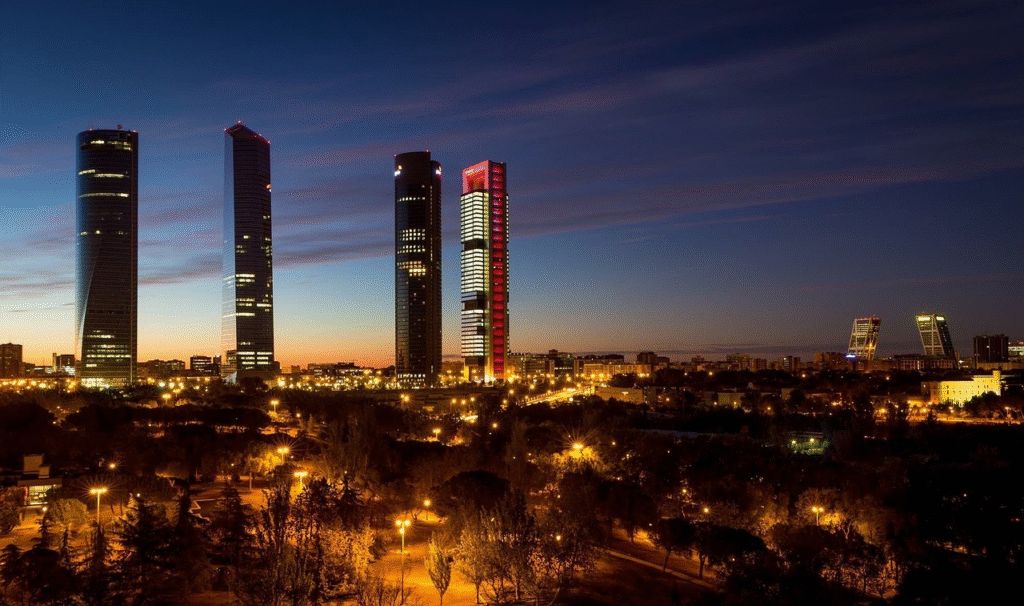
Photo credit: Madrid’s Cuatro Torres business district at night
Madrid is the capital of Spain and the country’s largest city — a high-altitude Castilian-plateau metropolis (656 m above sea level, the highest capital in Europe) that balances Habsburg-and-Bourbon grandeur, Catholic religious tradition, contemporary cosmopolitan energy, and the country’s defining nocturnal culture in a single, intensely walkable city. The Royal Palace of Madrid remains Europe’s largest functioning royal residence by floor space; the Prado Museum houses the world’s most extensive collection of Spanish masters (Velázquez, Goya, El Greco, Murillo) plus an exceptional Flemish and Italian collection; the Reina Sofía Museum displays Picasso’s Guernica; the Thyssen-Bornemisza completes the “Golden Triangle of Art” with one of the world’s finest private collections. Beyond the headline museums, Madrid offers the Retiro Park royal gardens (UNESCO since 2021), the Plaza Mayor central square, the Mercado de San Miguel covered food market, and a tapas-and-bar culture centered on the historic neighborhoods of La Latina, Lavapiés, Malasaña, and Chueca. The post-2010s expansion of cosmopolitan-Spanish dining, the country’s largest LGBTQ+ neighborhood (Chueca), the two-team football rivalry (Real Madrid and Atlético Madrid), and easy day-trip access to the historic cities of Toledo, Segovia, Aranjuez, and El Escorial make Madrid a satisfying multi-day cultural base.
Madrid by District: The 21 Distritos
Madrid is divided into 21 districts. The map below shows their official OSM boundaries, colour-coded to match the table — a quick way to orient yourself before zooming in on individual sights.
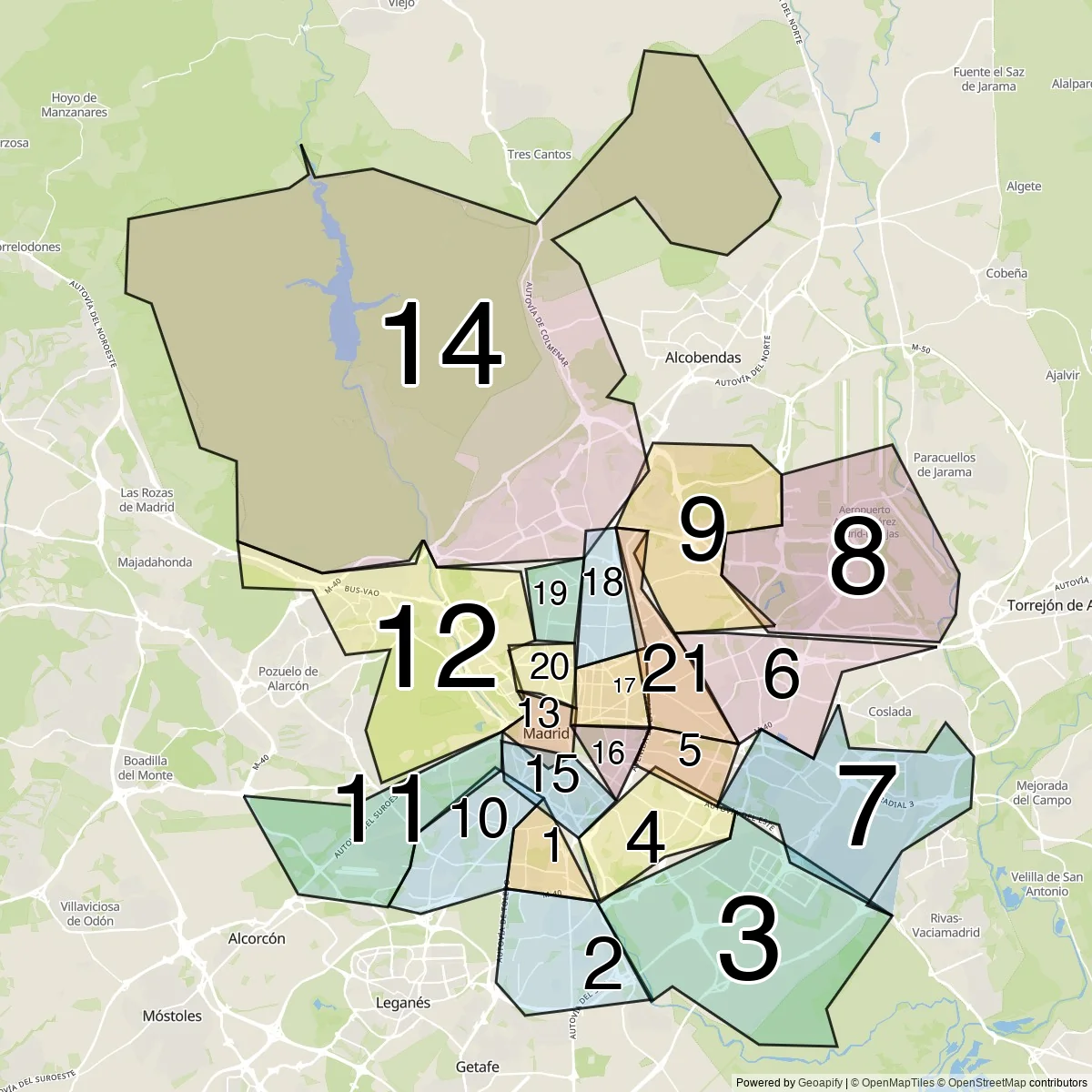
| # | Distritos |
|---|---|
| 1 | Usera |
| 2 | Villaverde |
| 3 | Villa de Vallecas |
| 4 | Puente de Vallecas |
| 5 | Moratalaz |
| 6 | San Blas – Canillejas |
| 7 | Vicálvaro |
| 8 | Barajas |
| 9 | Hortaleza |
| 10 | Carabanchel |
| 11 | Latina |
| 12 | Moncloa-Aravaca |
| 13 | Centro |
| 14 | Fuencarral-El Pardo |
| 15 | Arganzuela |
| 16 | Retiro |
| 17 | Salamanca |
| 18 | Chamartín |
| 19 | Tetuán |
| 20 | Chamberí |
| 21 | Ciudad Lineal |
Madrid at a Glance: Essential Facts for Travelers
| Location | Community of Madrid, central Spain (Castilian Meseta plateau) |
|---|---|
| Coordinates | 40.4168°N, 3.7038°W |
| Population | ~3.34 million (city, 2024); metro area ~6.86 million |
| Area | 604 km² (city); 8,030 km² (Community of Madrid metro) |
| Elevation | ~656 m above sea level (highest capital in Europe) |
| Time Zone | Central European Time (CET, UTC+1) / Central European Summer Time (CEST, UTC+2) |
| Calling Code | +34 (city code 91) |
| Currency | Euro (EUR €) |
| Languages | Spanish (Castilian) official; English widely spoken in business and tourism; significant Latin American Spanish-speaking communities |
| Climate | Hot-summer Mediterranean with continental influence — hot dry summers, cool winters |
| Founded | Pre-Roman settlement; capital of Spain since 1561 under Philip II |
| Famous For | Royal Palace, Prado/Reina Sofía/Thyssen “Golden Triangle of Art”, Plaza Mayor, Retiro Park (UNESCO 2021), tapas-and-bar culture, Real Madrid & Atlético, nocturnal life, gateway to Toledo and Segovia |
Upcoming Events in Madrid
| Date | Title | Details |
|---|---|---|
| 2026-09-11 to 2027-01-07 | Human Universe – The Experience at Espacio Delicias | Human Universe – The Experience, billed as the first immersive exhibition devoted to the human body, opened on 11 September 2026 at Espacio Delicias and runs until 7 January 2027. Large-scale projections and interactive rooms take visitors on a journey through the body’s systems, from the beating heart to the networks of the brain, blending science communication with spectacular visuals. Timed tickets are sold online with prices varying by day and session. Suited to families, school groups and anyone curious about how we work inside. [Source] |
| 2026-09-14 to 2026-09-19 | Mercedes-Benz Fashion Week Madrid | Mercedes-Benz Fashion Week Madrid, Spain’s most important fashion event, stages its September edition at the IFEMA exhibition centre from 14 to 19 September 2026. Leading Spanish designers share the catwalk with fresh-faced newcomers, unveiling their latest collections before buyers, press and industry figures from home and abroad, alongside off-site shows and emerging-talent platforms. Access to most runway shows is for professionals and invited guests, though some associated activities open to the public. A key date for Spanish fashion and for trend-watchers in the capital. [Source] |
| 2026-09-18 to 2026-10-11 | Shakira Residency at Macondo Park | Shakira turns Madrid into the capital of Latin music with a twelve-night residency from 18 September to 11 October 2026, performing Fridays to Sundays at the Iberdrola Music site in Villaverde, transformed for the occasion into Macondo Park. Around the 50,000-capacity Estadio Shakira stage, eight pavilions celebrate Latin culture, food, fashion, art and literature, plus a children’s zone designed by her sons; guests include Amaia, Nathy Peluso and Guitarricadelafuente. Concerts start at 20:30, with the site open from midday. Tickets vary by night and zone. [Source] |
| 2026-09-20 | Madrid Derby: Atletico de Madrid vs Real Madrid | La Liga serves up the Madrid derby on Sunday 20 September 2026, as Atletico de Madrid host Real Madrid at the Riyadh Air Metropolitano stadium. The clash between the city’s two football giants is among the fiercest fixtures in Spanish football, with full stands, huge atmosphere and bragging rights on the line. Tickets are scarce and sell at a premium through the clubs’ official channels, while bars across the city fill with fans watching the match. An unmissable date for football lovers visiting Madrid. [Source] |
| 2026-10-06 to 2026-10-08 | Fruit Attraction 2026 at IFEMA | Fruit Attraction, the international trade fair for the fruit and vegetable industry, fills IFEMA Madrid from 6 to 8 October 2026. One of the world’s leading gatherings for fresh produce, it brings together growers, distributors, retailers and technology providers from dozens of countries across packed exhibition halls, with this edition also connecting to the gastronomy and hospitality sectors. Attendance is aimed at trade professionals, with registration required and passes varying in price. The fair underlines Madrid’s role as a hub for the global food business each autumn. [Source] |
| 2026-10-12 | Fiesta Nacional de Espana Military Parade | Every October 12, Madrid hosts the Fiesta Nacional de Espana, marked by a grand military parade through the centre of the capital. Watched by the King and senior officials, troops from the armed forces march along the Paseo de la Castellana, accompanied by flypasts and displays that draw large crowds. The parade is the centrepiece of Spain’s national day, and spectators gather free of charge along the route from early morning. It is a major civic occasion and a spectacle for visitors. [Source] |
| 2026-11-21 to 2026-11-29 | Feriarte Art and Antiques Fair | Feriarte, Spain’s leading art and antiques fair, returns to IFEMA Madrid from 21 to 29 November 2026. Dozens of specialist dealers and galleries offer museum-quality paintings, furniture, sculpture, jewellery, ceramics and collectables spanning many centuries, all vetted for authenticity. The nine-day fair is a browsing paradise for collectors, interior designers and the simply curious, with works ranging from accessible pieces to major investments. Tickets are sold at the door and online at moderate prices. A refined counterpoint to Madrid’s pre-Christmas bustle. [Source] |
City News in Madrid – last 14 days
| Date | Category | Headline | Details |
|---|---|---|---|
| 2026-09-14 | Sports | Formula 1 passes its first Madrid test with 320,000 spectators | Madrid’s first Formula 1 grand prix in 45 years passed its opening test, with around 320,000 spectators attending across the weekend at the new Madring circuit around IFEMA and Valdebebas without collapsing the city, according to official assessments. Authorities put the economic return at some 400 million euros. The city council and regional government say they are open to self-criticism and will study improvements to access routes, noise management and the disturbance to neighbouring residents before the next editions of the race. [Source] |
| 2026-09-14 | Business | Almeida says Formula 1 left 467 million euros in Madrid | Mayor Jose Luis Martinez-Almeida said the Formula 1 grand prix has left 467 million euros in Madrid, including 82 million euros in taxes, speaking at a Club Siglo XXI breakfast the morning after the race weekend. The mayor argued that no other circuit has achieved such relevance and excellence in its first year, presenting the figures as vindication of the city’s bet on hosting the event. The economic claims will feed the debate over the grand prix’s costs and benefits for the capital. [Source] |
| 2026-09-13 | Public transport | Metro carries more than 124,000 fans to the Madring circuit | Madrid’s Metro exceeded its own expectations during the Formula 1 weekend, carrying more than 124,000 fans to the Madring circuit, the regional government said. The figures confirm that most spectators reached the Valdebebas area by public transport, with Metro and EMT buses reinforced for the occasion, easing fears of gridlock around the venue. Officials presented the operation as proof the network can absorb major events, a capability Madrid has been keen to demonstrate as it hosts an expanding calendar of large-scale gatherings. [Source] |
| 2026-09-14 | Culture | Shakira takes Madrid with twelve concerts at Macondo Park | Shakira begins a twelve-concert residency in Madrid this week, and the city is preparing for a month of Latin music at the Iberdrola Music site in Villaverde, rebranded Macondo Park for the occasion. Shows run on weekends from 18 September to 11 October, starting at 20:30, in a purpose-built complex with eight themed pavilions, a 50,000-capacity stage area and a children’s zone designed by her sons. Guest artists include Amaia, Nathy Peluso and Guitarricadelafuente, and metro lines will be reinforced for the crowds. [Source] |
| 2026-09-14 | Local affairs | Nino Jesus hospital opens unit to advance childhood leukaemia treatment | The Nino Jesus children’s hospital has opened a unit to advance the treatment of childhood leukaemia, creating a clinical database that brings together medical and experimental information on the disease. The initiative aims to improve research into a cancer that affects around 380 children a year in Spain, linking day-to-day clinical care with laboratory findings so treatments can be refined faster. The Madrid hospital is a national reference centre for paediatric oncology, and the new unit strengthens its role in the field. [Source] |
| 2026-09-14 | Public transport | Overnight incident with maintenance vehicle halts Metro Line 9 | Metro de Madrid suspended service on part of Line 9 early on Monday after an overnight incident involving a maintenance vehicle, announcing the interruption for technical reasons in a message posted shortly after 6 am. Trains stopped running between Puerta de Arganda and Sainz de Baranda in both directions while crews worked on the line, forcing commuters onto alternative routes at the start of the working week. The operator provided updates through its social channels as it worked to restore normal circulation. [Source] |
| 2026-09-14 | Public safety | Two teenagers struck by Cercanias train in Galapagar | Two 16-year-olds were struck by a Cercanias commuter train near La Navata station in Galapagar, north-west of Madrid, leaving one of them in a very serious condition. The teenagers were found about 200 metres from the platform, and early indications suggest they were walking beside the tracks when the train hit them. Both were taken to hospital for treatment. The accident has renewed warnings about the dangers of walking along railway lines anywhere on the commuter network. [Source] |
| 2026-09-14 | Public safety | Four injured as fireworks display explodes in Fuenlabrada | Four people were injured in Fuenlabrada when a fireworks display went wrong, with a chain of explosions cutting short what should have been a half-hour pyrotechnic show after about ten minutes. Panic spread among spectators as the blasts went off, and the injured were attended by emergency services. Authorities are examining what caused the malfunction at the display in the southern Madrid suburb. The incident has prompted questions about safety perimeters and controls at municipal fireworks shows. [Source] |
| 2026-09-12 | Culture | Golden Age theatre declared cultural heritage of the Madrid region | The Community of Madrid has declared Golden Age theatre a Bien de Interes Cultural in the category of intangible heritage, formally protecting the theatrical tradition created, produced and staged in Madrid in the sixteenth and seventeenth centuries. The declaration honours the world of Lope de Vega, Calderon and the corrales de comedias that made the capital a stage capital of Europe. The status supports conservation, research and promotion of this heritage, from period performance practice to the surviving playhouses. [Source] |
| 2026-09-12 | Education | Neanderthal Valley digs mark 25 campaigns with a new major find | Excavations at the Valle de los Neandertales site near Madrid are in the final days of their 25th campaign, closing the season with another major discovery, El Mundo reports. Researchers say a quarter-century of digging at the Pinilla del Valle sites has changed how scholars view Neanderthals, with finds they compare in importance to Atapuerca. The valley in the Madrid sierra has yielded hearths, tools and remains that document Neanderthal life, and the anniversary is prompting reflection on how the site rewrites prehistory. [Source] |
| 2026-09-14 | Local government | Cooling asphalt and burying the M-30 top participatory budget wish list | Madrid residents have submitted their wish list for the city’s 2026-2027 participatory budgets, with the most-supported proposals including heat-reducing asphalt, burying part of the M-30 ring road, safer bike lanes, a link between Madrid Rio and Tierno Galvan parks and an astronomical viewpoint in Sahagun park. Neighbourhood projects across the 21 districts focus on improving school environments, shade, playgrounds and run-down facilities. The ideas now face a technical review before residents decide how to allocate 50 million euros of public money. [Source] |
| 2026-09-12 | Business | Airbus workers march in Madrid to demand real negotiation | Airbus workers demonstrated in Madrid to demand what they called real negotiation with the company, in a march organised by the CGT and UTIL unions that ended at the Ministry of Industry. The UGT union did not take part in the protest. The mobilisation reflects tensions over labour conditions at the aerospace group’s Spanish operations, which employ thousands of workers around Madrid at sites such as Getafe, and unions took their demands directly to the government’s door. [Source] |
| 2026-09-12 | Education | Casa Arabe students seek meeting with mayor to stop eviction | Students of Casa Arabe’s language courses have asked for a meeting with Mayor Almeida to halt the eviction of the institution from its Madrid premises. They voiced concern about the possible loss of Arabic courses and the cultural programme the public venue offers the city, from exhibitions to lectures. The building’s future has been in question, and course participants argue the centre’s educational and cultural role should weigh in any decision about the property. [Source] |
| 2026-09-13 | Public safety | Runner very seriously injured in Navalcarnero bull run | A runner was left very seriously injured after being gored during the bull runs in Navalcarnero, a town south-west of Madrid. The man suffered a goring to the left side of his chest and had to undergo emergency surgery in the operating theatre at the local bullring because of the severity of the wound. The encierros form part of the town’s September fiestas, and the incident underlines the risks participants accept in one of the region’s most deeply rooted traditions. [Source] |
Madrid Events & City News Archive
Sources: esMADRID, IFEMA Madrid, 20minutos, esMADRID, 20minutos, ABC, ABC, 20minutos
Weather Forecast for the Next 14 Days in Madrid
| Date | Weather | Max °F | Min °F | Rain mm |
|---|---|---|---|---|
| 2026-09-14 | ☀️ | 92.2 °F | 63.9 °F | 0.0 mm |
| 2026-09-15 | ☀️ | 94.9 °F | 64.2 °F | 0.0 mm |
| 2026-09-16 | ☁️ | 83.2 °F | 65.9 °F | 0.0 mm |
| 2026-09-17 | ☁️ | 77.3 °F | 55.2 °F | 0.0 mm |
| 2026-09-18 | ☁️ | 79.5 °F | 56.7 °F | 0.0 mm |
| 2026-09-19 | ⛅ | 86.0 °F | 59.2 °F | 0.0 mm |
| 2026-09-20 | ☀️ | 90.7 °F | 61.8 °F | 0.0 mm |
| 2026-09-21 | ☀️ | 88.7 °F | 66.5 °F | 0.0 mm |
| 2026-09-22 | ☀️ | 91.3 °F | 67.0 °F | 0.0 mm |
| 2026-09-23 | ⛅ | 89.2 °F | 65.9 °F | 0.0 mm |
| 2026-09-24 | ☁️ | 85.6 °F | 67.2 °F | 0.0 mm |
| 2026-09-25 | ☁️ | 82.1 °F | 69.1 °F | 0.0 mm |
| 2026-09-26 | ☁️ | 83.6 °F | 66.5 °F | 0.0 mm |
| 2026-09-27 | ⛅ | 85.2 °F | 67.5 °F | 0.0 mm |
Madrid’s History
Madrid’s documented history begins with a 9th-century Moorish fortress (Mayrit, “place of abundant water”) on the bluff above the Manzanares River — a strategic outpost of the Emirate of Córdoba. Christian Reconquest reached the area in 1083 under King Alfonso VI of León-Castile; the small town remained a backwater for the next four centuries.
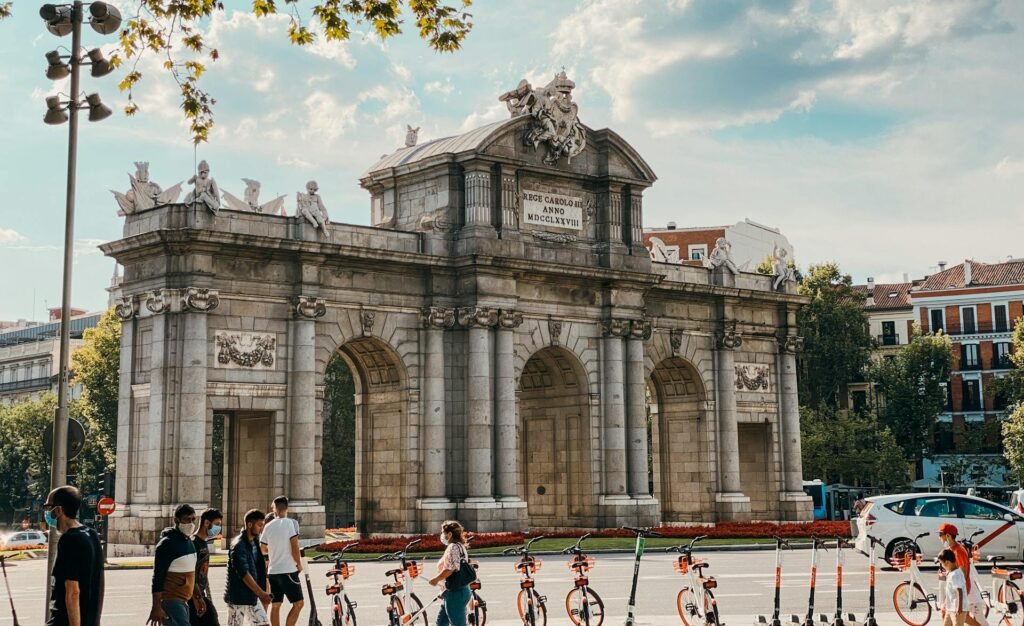
The transformative moment came in 1561, when King Philip II of Spain — already ruler of the most powerful empire in Europe — permanently moved his court from Toledo to Madrid. The choice was deliberate: Madrid sat at the geographic center of the Iberian peninsula, lacked the entrenched ecclesiastical and noble interests of Toledo, and had ample water and forest resources. The city’s population grew from ~12,000 in 1561 to over 100,000 by 1600 — the Habsburg court, its administrative apparatus, and the supplier-and-servant ecosystem flooding in. The Plaza Mayor (1619), the Buen Retiro Palace (1630s, now mostly demolished — the surviving fragments are the Casón del Buen Retiro and Salón de Reinos plus the Retiro Park gardens), and the broader Habsburg Madrid layout of the Old Town date from this Golden Age period.
The Bourbon dynasty arrived in 1700 after the War of Spanish Succession; Felipe V and his successors substantially rebuilt and expanded Madrid. The Royal Palace of Madrid (built 1738–1755 on the site of the old Alcázar, which burned down in 1734) replaced the Habsburg royal residence and remains Europe’s largest functioning royal palace by floor area. Carlos III (r. 1759–1788), often called Madrid’s best mayor, modernized the city with the Paseo del Prado avenue, the Royal Botanical Garden, the Plaza de Cibeles, and the building that became the Prado Museum (originally a natural-sciences cabinet, converted to art museum in 1819).
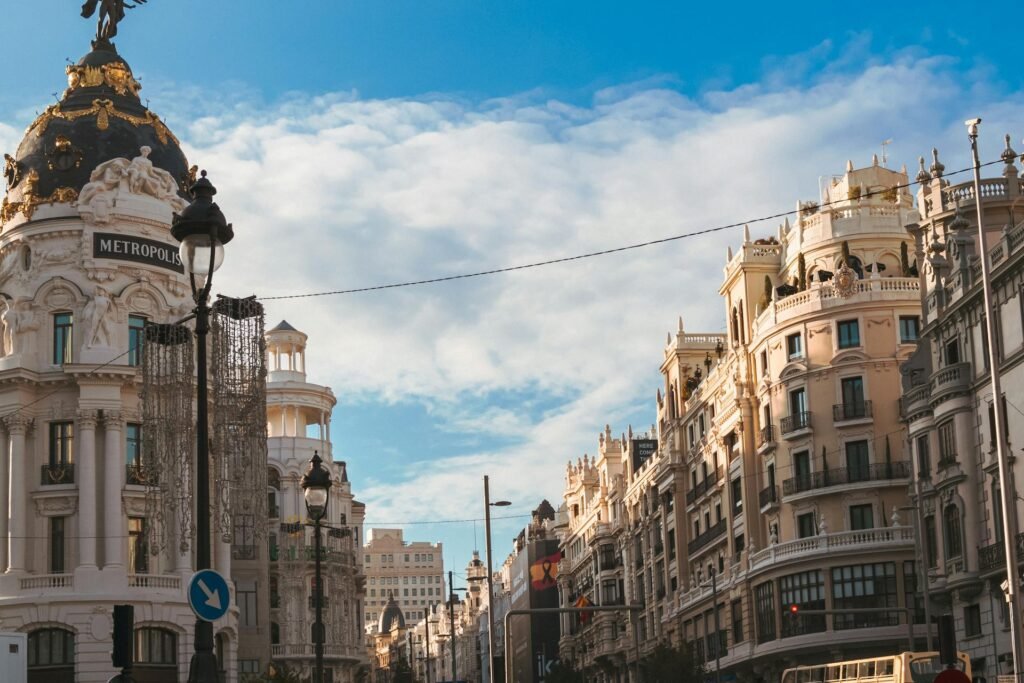
The Napoleonic occupation (1808–1813) and the Dos de Mayo uprising (May 2, 1808 — depicted in Goya’s iconic painting) gave Madrid its modern political identity. The 19th century brought industrialization, the destruction of much of the medieval urban fabric, and the construction of the Gran Vía grand boulevard (begun 1910). The Spanish Civil War (1936–1939) was particularly destructive — Madrid endured a 28-month siege as the Republican capital; the city fell to Franco’s Nationalists on March 28, 1939. Francisco Franco’s dictatorship (1939–1975) kept Madrid the political capital but suppressed regional identities and modernization.
The post-1975 democratic transition transformed Madrid. The “La Movida Madrileña” cultural movement of the 1980s — vibrant nightlife, post-punk music, contemporary visual art — established the city’s modern identity as Europe’s nocturnal capital. Spain’s 1986 EU accession and the 2008 financial crisis defined the more recent boom-and-bust trajectory. The 2021 UNESCO World Heritage inscription of “Paseo del Prado and Buen Retiro, a landscape of Arts and Sciences” recognized the central Madrid cultural-axis.
Geography, Climate & Best Time to Visit Madrid
Geographic Setting
Madrid sits on the Meseta Central (Central Plateau) of the Iberian Peninsula at 656 m elevation — the highest capital in Europe. The city is bordered by the Sierra de Guadarrama mountains 60 km northwest (rising to 2,400 m, snow-capped in winter — visible from the city on clear days) and the rolling Castilian plain in other directions. The small Manzanares River traverses the western edge of the city; the urban form is roughly radial-concentric around the old town with the broad Paseo de la Castellana (and its earlier southern continuations Paseo del Prado and Paseo de Recoletos) running north-south as the modern axis.
The city center divides into distinct historical zones: the Habsburg Madrid Old Town (Plaza Mayor, Palacio Real, Plaza de la Villa, Plaza de Oriente); the Bourbon Madrid (Paseo del Prado axis with the museums); the 19th-century Salamanca district (the upscale Bourbon-Empire grid east of the museums); the 20th-century Cuatro Torres business district (the northern skyscraper cluster); and the surrounding modern neighborhoods.
Climate Overview
Madrid has a hot-summer Mediterranean climate (Köppen Csa) with significant continental influence due to its inland-plateau position. Summer (June–September): hot (highs 30–37 °C, occasional 40 °C+ heatwaves), very dry (humidity often 15–25%), with cool overnight temperatures (16–22 °C) due to the elevation. Winter (December–February): cool to cold (highs 8–14 °C, lows 0–5 °C with occasional frost), generally dry, with rare snow on the city (snow on the Sierra de Guadarrama mountains is reliable). Spring (March–May) and autumn (October–November) are pleasant with comfortable temperatures.
Best Time to Visit
April to June and September to early November are the unambiguous best windows — warm pleasant days, lower crowds than summer peak, the parks at their most beautiful, the cultural calendar in full swing. July–August: brutal summer heat with 40 °C+ heatwaves common; many Madrid residents flee to the coast; restaurants and shops in some neighborhoods reduce hours; book accommodation with AC; this is also peak tourism season. December–February: cool and dry — the city’s most atmospheric stretch; Christmas markets (Plaza Mayor); El Cabalgata de los Reyes (Three Kings Parade, January 5); the post-holiday January sales. Festival timing: San Isidro (May 15, the city’s patron saint, with traditional dancing and the bullfighting season); Veranos de la Villa (summer cultural festival, July–August); Madrid Pride (early July, one of Europe’s largest); Madrid Marathon (April); Reyes Magos (January 5–6, Three Kings).
Madrid’s Districts & Neighborhoods
Sol & Plaza Mayor (Centro)
The geographic and symbolic heart of Spain — Puerta del Sol contains “Kilometer Zero” (the marker from which all Spanish national road distances are measured) and the famous illuminated Tío Pepe sign. The Habsburg-era Plaza Mayor (1619) with its red ochre arcades and the Casa de la Panadería frescos. The Mercado de San Miguel covered tapas market (since 2009) is immediately adjacent. Densely walkable, intensely commercial.
La Latina
Just south of the Royal Palace — the city’s most concentrated tapas-and-bar neighborhood. Cava Baja, Calle Almendro, and Plaza de la Paja form the canonical tapas-crawl triangle. El Rastro Sunday flea market (the country’s largest, since 1740) spreads through the surrounding streets every Sunday morning. The Sunday brunch-into-vermouth tradition is the local ritual.
Lavapiés
The multicultural inner-city neighborhood south of Sol — historically the Jewish quarter, then the working-class Castilian district, now Madrid’s most cosmopolitan area with Pakistani, Bangladeshi, Indian, Senegalese, Filipino, and Latin American immigrant communities. Tabacalera Cultural Center (in a former tobacco factory, free contemporary art exhibitions); the diverse restaurant scene with the city’s best Indian, Senegalese, and Latin American food.
Malasaña
The 1980s Movida Madrileña neighborhood north of Gran Vía. Plaza del Dos de Mayo (the historic uprising site, now a young-people-evening plaza); independent designer boutiques, vintage record shops, third-wave coffee, and the country’s most concentrated late-night bar scene. The 24-year-old’s Madrid.
Chueca
Madrid’s LGBTQ+ neighborhood — Plaza de Chueca and the surrounding streets — and one of Europe’s largest. Madrid Pride (Madrid Pride / WorldPride 2017 host) is the country’s biggest annual event. Year-round trendy restaurants, art galleries, designer boutiques. Gentrified considerably since the 1990s but retains its character.
Salamanca & Recoletos
The 19th-century upscale residential and shopping district east of the museums. Calle Serrano is the country’s most expensive shopping street (Loewe, Bvlgari, Prada, etc.). Calle de Velázquez contains the upmarket restaurants. The Lazaro Galdiano Museum (private collection) is a quiet alternative to the major museums.
Retiro & Prado Museum Quarter
The cultural axis — the Paseo del Prado and adjacent Retiro Park form the country’s most concentrated cultural zone. The three major museums: Prado, Reina Sofía, Thyssen-Bornemisza. The Royal Botanical Garden. The Atocha Train Station with the famous indoor tropical-plant garden.
Argüelles & Moncloa
The university district northwest of central Madrid — the Complutense University main campus, the Air Force Headquarters, and the Templo de Debod (an actual Egyptian temple gifted to Spain in 1968 in gratitude for help saving the Abu Simbel monuments).
Salesas & Almagro
Two adjacent upscale residential neighborhoods between Chueca and Salamanca — Belle Époque mansions, upscale boutique hotels, the city’s most refined dining. Less tourist than Salamanca, more atmospheric than central Sol.
Top Things to Do in Madrid
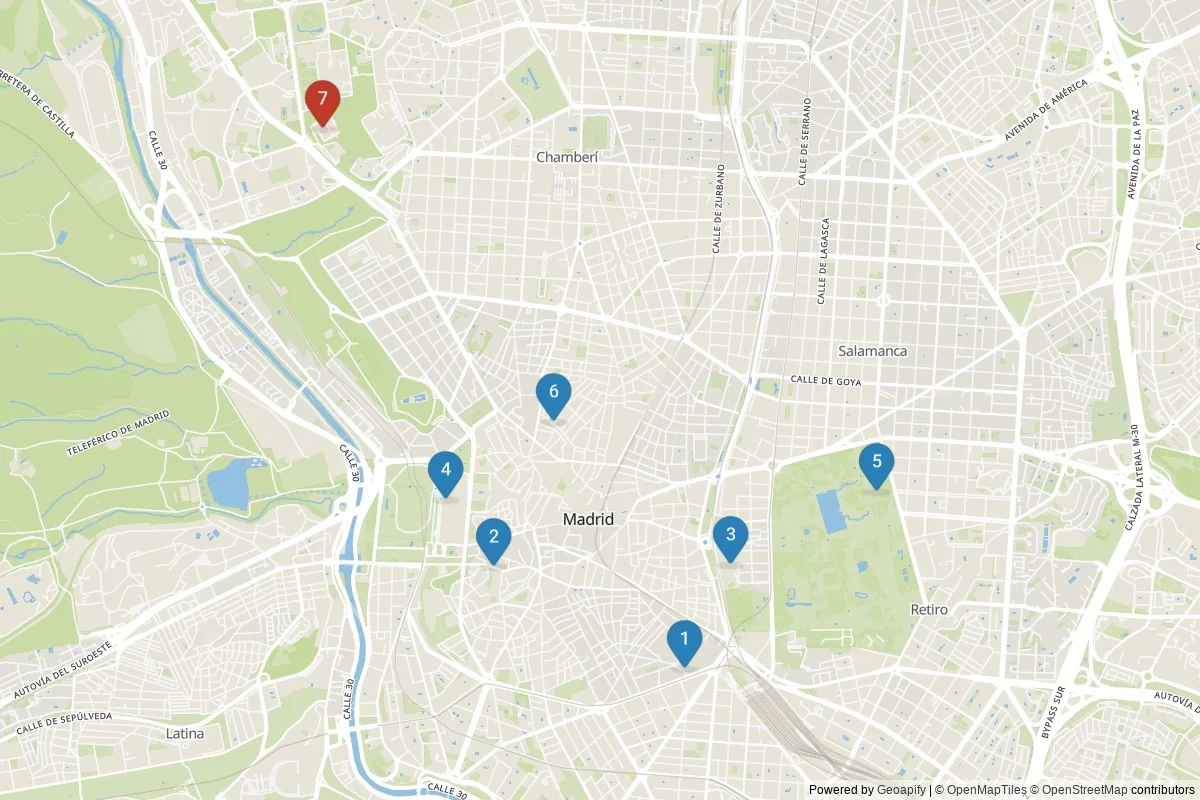
| # | Sight | Cluster | Type | Time | Entry | Best |
|---|---|---|---|---|---|---|
| 1 | Reina Sofía Museum & Guernica | Cluster A | Museum | — | €12 | — |
| 2 | Day Trip to Segovia & Aranjuez | Cluster A | Palace | — | — | — |
| 3 | the Prado Museum | Cluster A | Museum | 4 hours | €15 | — |
| 4 | Royal Palace & Almudena Cathedral | Cluster A | Palace | 3 hours | €14 | — |
| 5 | Walk Through Retiro Park & the Botanical Garden | Cluster A | Park | 4 hours | free | — |
| 6 | Day Trip to Toledo (UNESCO) | Cluster A | Museum | — | — | — |
| 7 | Watch a Real Madrid or Atlético Match | Cluster B | Stadium | — | €40–250 | — |
1. Visit the Prado Museum
The country’s premier art museum and one of the world’s great galleries. Founded 1819, the Prado houses the most comprehensive Spanish art collection: Velázquez’s Las Meninas (the famous self-referential masterpiece), Goya’s Black Paintings and the iconic Maja Desnuda, El Greco’s mannerist religious paintings, Bosch’s Garden of Earthly Delights (the Flemish-school masterpiece displayed here since the Habsburg collection days). Entry €15 standard; free 18:00–20:00 Monday-Saturday and Sunday 17:00–19:00. Plan 3–4 hours minimum; full coverage takes a full day.
2. Reina Sofía Museum & Guernica
The modern and contemporary art museum at the southern end of the Paseo del Prado — primarily known for housing Picasso’s Guernica (the 1937 mural depicting the Nazi bombing of the Basque town during the Spanish Civil War, returned to Spain in 1981). The broader collection covers Spanish 20th-century art: Dalí, Miró, Tàpies, the modern Spanish movements. Entry €12; free 19:00–21:00 Monday-Saturday and Sunday 13:30–19:00. The single most-visited art object in the country is Guernica; allow 90+ minutes for the room alone.
3. Royal Palace & Almudena Cathedral
The 1738–1755 Bourbon royal palace — Europe’s largest royal palace by floor space, with 3,418 rooms (only a small fraction open to visitors). The royal apartments, throne room, royal armory, and royal pharmacy. The adjacent Almudena Cathedral was finally completed in 1993 (consecrated by Pope John Paul II); the dramatic Neo-Gothic interior. Entry €14 standard; combined tickets with the Almudena Cathedral and Royal Armory available. Plan 2–3 hours.
4. Walk Through Retiro Park & the Botanical Garden
The 125-hectare royal pleasure garden — converted to public park 1868 — now UNESCO-listed (2021). The central Estanque del Retiro (rowboat lake), the iconic Crystal Palace (Palacio de Cristal, an 1887 glass-and-iron exhibition pavilion), the Rose Garden, and the Forest of the Departed (commemorating the 2004 Madrid train bombings). The adjacent Royal Botanical Garden (founded 1755) offers another formal-garden experience. Both free; allow 2–4 hours total.
5. Tapas Crawl in La Latina
The defining Madrid eating experience. The bars along Cava Baja, Calle Almendro, and Plaza de la Paja serve tapas (small plates) — patatas bravas, jamón ibérico, croquetas, calamari sandwiches, tortilla española — for €2–6 per dish. The tradition: order a drink (a small beer is caña, wine is vino, vermouth is vermut), get a free or paid tapa, move to the next bar. Recommended addresses: Casa Lucio (the iconic Spanish PM-favored institution); Almendro 13; Casa Lucas; Casa Pueblo; Taberna de la Daniela. Plan 3–4 hours for a proper crawl.
6. Day Trip to Toledo (UNESCO)
The medieval former capital 70 km south of Madrid, UNESCO World Heritage 1986. The historic city blends Christian, Jewish, and Muslim heritage uniquely. The Toledo Cathedral (the country’s primatial cathedral); the Synagogue of Santa María la Blanca; the El Greco House Museum; the famous Toledo steel sword craftsmanship. 35-minute high-speed train from Madrid Atocha; full day worth.
7. Day Trip to Segovia & Aranjuez
Two more day-trippable historic cities. Segovia (90 km north): the 1st-century Roman aqueduct (UNESCO 1985), the Alcázar castle, and the famous cochinillo (roast suckling pig) at Mesón de Cándido. Aranjuez (50 km south): the royal palace and gardens, the world-famous strawberry train (Tren de la Fresa) running on weekends.
8. Watch a Real Madrid or Atlético Match
The two-team rivalry that defines Madrid sports culture. Real Madrid at the Estadio Santiago Bernabéu (recently renovated with a retractable roof and pitch); Atlético Madrid at the Estadio Metropolitano. Tickets €40–250 depending on match and seat; the historic El Derbi madrileño derby is the country’s most intense football fixture. Stadium tours: Bernabéu Tour €30 adult; Metropolitano Tour €25.
How to Get to Madrid
By Air
Madrid-Barajas Adolfo Suárez Airport (MAD), 13 km northeast of central Madrid, is Spain’s busiest airport and a major European hub. Direct nonstop routes from most major global cities (London 2.5 hours, Paris 2 hours, Frankfurt 2.5 hours, New York 8 hours, Buenos Aires 12 hours, Mexico City 11 hours, Bogotá 10 hours, Tokyo 13 hours, etc.). Carriers: Iberia (the Spanish flag carrier), Air Europa, Vueling, Ryanair, easyJet, plus all major international carriers.
From the airport: Metro Line 8 (Pink) €4.50–5 (including airport supplement) — 30 minutes to Nuevos Ministerios with transfers from there; Renfe Cercanías C1 €2.60 (30 minutes); Express Bus 203 €5 (40 minutes); taxi €30 fixed-tariff scheme; Uber/Bolt/Cabify €25–40.
By High-Speed Train (AVE)
Spain’s AVE high-speed rail network is excellent. From Madrid-Atocha or Madrid-Chamartín: Barcelona 2.5 hours (€40–120); Seville 2.5 hours (€40–100); Málaga 2.5 hours; Valencia 1.5 hours; Valladolid 1 hour; Toledo 35 minutes (€14). International: TGV Inoui to Paris via Barcelona (7+ hours). Book via the Renfe official portal; advance booking discounts.
By Long-Distance Bus
ALSA operates the Spanish intercity bus network. Madrid-Lisbon 8 hours; Madrid-Barcelona 8 hours. FlixBus connects Madrid to most major European cities — Paris 16 hours overnight, Frankfurt 18 hours.
By Car
Modern motorway network connects Madrid to all directions; tolls on some roads (via via-T electronic system or cash). Self-drive is practical for the broader central Spain exploration.
Visa Notes
Madrid is in Spain, a Schengen Area member. EU/EEA/Swiss citizens: no documentation beyond a national ID. Citizens of 60+ visa-free countries (US, UK, Canada, Australia, Japan, South Korea, Singapore, Brazil, Argentina, Chile, Mexico, etc.) enter visa-free for 90 days within any 180-day period across all Schengen countries. ETIAS launches in late 2025 — €7 pre-travel authorization. Other nationalities: apply for Schengen visa at Spanish embassies; €90 fee, 2–4 week processing. Spanish-speaking Latin American countries often have simplified procedures and historic preferential treatment. Passport must have 6+ months remaining validity.
Getting Around Madrid
Metro
The 12-line Madrid Metro is one of the world’s largest and most efficient. Lines color-coded and well-signed; trains every 2–5 minutes during the day; clean and air-conditioned. Single ticket €1.50 (Zone A, central Madrid); Tourist Pass €8.40 single day, €14.20 two days, €22 three days; the rechargeable Multi Card €2.50 deposit + recharge for residents and longer-stay visitors.
Buses (EMT)
The bus network covers areas not served by metro; same €1.50 single fare. Useful for the airport (Express Bus 203, 24-hour service) and for reaching specific outer destinations.
Walking
Central Madrid is genuinely walkable — Sol to Plaza Mayor to Royal Palace to Retiro Park covers about 3 km of pedestrianized and traffic-calmed central streets. Most major attractions are walking distance of each other; the Paseo del Prado axis with the three museums is itself a 1.5 km walkable cultural strip.
Taxis & Ride-Hailing
White Madrid taxis with the city coat of arms; metered, regulated. Uber, Cabify, and Bolt all operate; pricing typically 15–25% cheaper than taxis. Free Now is the local Madrid taxi-app.
Cercanías Suburban Train
The Cercanías network covers the wider Madrid region — useful for day trips to Aranjuez (45 min), the Escorial (1 hour), and Alcalá de Henares (35 min). The Renfe Tren de la Fresa (Strawberry Train) seasonal weekend service to Aranjuez is a tourist favorite.
Bike-Share
The BiciMAD electric bike-share has stations across central Madrid; single ride €1.85; useful for the Paseo del Prado axis and the Retiro Park area.
Food & Drink in Madrid
Madrid’s cuisine combines Castilian inland traditions (slow-cooked stews, roast meats, legumes), tapas culture from across Spain, the country’s most diverse regional Spanish dining (since Madrid attracts Spaniards from every region), and a rapidly growing Latin American influence from the post-2000 immigration wave.
What to Try
- Cocido madrileño — the Madrid signature dish: a slow-cooked stew of chickpeas, beef, chorizo, morcilla blood sausage, vegetables, and bone marrow. Served in courses (soup first, then chickpeas-and-vegetables, then the meats). Casa Carola, La Bola, Lhardy are the canonical addresses.
- Bocadillo de calamares — fried calamari sandwich on a baguette; the iconic Plaza Mayor lunch food. Bar La Campana, Café Bar Hermanos Vinagre are the addresses.
- Patatas bravas — fried potato cubes with spicy tomato-paprika sauce; the universal Spanish tapa.
- Jamón Ibérico — the country’s defining cured ham, especially Ibérico de Bellota from pigs fed on acorns; Madrid is a major distribution and consumption hub.
- Croquetas — fried béchamel-coated meat or fish balls; the universal Spanish tapa.
- Tortilla española — potato-and-egg omelette; served at room temperature; the Spanish breakfast/lunch/snack staple.
- Callos a la madrileña — tripe stew with chickpeas and chorizo; the Madrid working-class winter dish.
- Churros con chocolate — fried dough sticks with thick hot chocolate dipping sauce; the breakfast/post-clubbing tradition. Chocolatería San Ginés (since 1894) is the canonical address.
- Madrid late-night menu del día — the affordable 3-course lunch (typically €12–18) widely available at traditional Madrid bars and restaurants.
Where to Eat
La Latina tapas: Cava Baja, Almendro, Plaza de la Paja; Casa Lucio, Almendro 13, Lhardy. Mercado de San Miguel (covered market, 2009): the gourmet tapas market central Madrid. Botín (since 1725): the world’s oldest continuously operating restaurant (per Guinness); roast suckling pig is the canonical order. Sobrino de Botín: same age, similar style. DiverXO: 3-Michelin-star contemporary Spanish (one of the world’s top restaurants). Coque: 2-Michelin-star. Casa Carola: traditional cocido. Chocolatería San Ginés: churros. Mercado de la Cebada: gourmet market. El Casino: traditional Castilian. Fish in Madrid: Sandó, El Pescador.
Drinks
Spanish wine: Rioja (the country’s most famous red region), Ribera del Duero (intense reds), Rías Baixas (Galician Albariño white), Cava (Catalan sparkling), Sherry (Andalusian fortified). Vermut: vermouth is a cultural ritual — the hora del vermut at 12:00 before lunch on Sundays. Sangria: more of a tourist drink in Madrid (Spaniards drink it less than tourists assume). Tinto de verano: red wine and lemon soda — the everyday Madrid summer drink. Cerveza: Mahou is the local Madrid lager; ask for a caña (small draft beer) or doble (larger). Coffee: café con leche (espresso with milk), cortado (with less milk), café solo (espresso). Spanish gin culture: the gin-and-tonic in Spain is treated more like a craft cocktail than in most countries — generously poured with elaborate garnishes; many bars have dedicated gin lists.
A Note on Tap Water
Tap water in Madrid is completely safe to drink and excellent quality — sourced from the protected Sierra de Guadarrama mountains. Many restaurants serve free tap water on request (though it’s less customary than in some other European countries — ask for agua del grifo). Bottled water (agua mineral) is widely available and inexpensive but unnecessary. Ice is universally safe. The CDC traveler health page for Spain rates Spain as low-risk; standard hygiene precautions apply. The bigger summer health risk is heat exhaustion — drink 3+ liters of water daily during July-August.
Frequently Asked Questions About Visiting Madrid
Do I need a visa to visit Madrid?
Schengen rules apply. EU/EEA/Swiss citizens: national ID is sufficient. Citizens of 60+ visa-free countries (US, UK, Canada, Australia, Japan, South Korea, Singapore, Brazil, Argentina, Chile, Mexico, most other Latin American nations) enter for 90 days within any 180 days across the Schengen Area. ETIAS launches in late 2025 — €7 pre-travel authorization. Other nationalities: Schengen visa via Spanish embassies (€90, 2–4 weeks). Spanish-speaking Latin American countries often have historic preferential procedures and faster processing. Passport must have 6+ months remaining validity. Verify rules with the Spanish Ministry of Foreign Affairs. Common mistake: using unofficial third-party visa websites; always use embassy or government portal.
Is Madrid safe for tourists?
Madrid is one of Europe’s safer major capitals. The US State Department rates Spain at “exercise normal precautions” — the most relaxed advisory level. Real risks: pickpocketing on the metro (especially Line 1 to Sol), at Puerta del Sol, at the Mercado de San Miguel, and in Plaza Mayor crowds — keep wallets in front pockets; scams targeting tourists (petitions, friendship-bracelet impositions, rose sellers, fake police “checking documents”); summer heat July–August (40 °C+ heatwaves common; plan outdoor activities for early morning or after 20:00); traffic accidents — Madrid drivers are aggressive at intersections; nightlife district risks (Malasaña, Chueca, Sol late-night drug-deal approaches, occasional spike risk at very busy bars); airport-area taxi scams — use the fixed €30 tariff or Uber. Drug enforcement: Spain has decriminalized small personal-use possession; trafficking remains criminal. LGBTQ+ travelers: Spain has been broadly progressive — same-sex marriage legal since 2005; Madrid hosts one of Europe’s largest Pride parades. Female travelers: standard urban precautions in central Madrid; the city is broadly safe for solo female travel.
How many days do I need in Madrid?
Three to four days for Madrid proper; with Toledo and Segovia day trips, 5–7 days makes a satisfying central Spain trip. A solid 4-day Madrid plan: Day 1 — arrive, Sol/Plaza Mayor walking + Royal Palace afternoon + La Latina tapas crawl. Day 2 — Prado Museum morning + lunch in Retiro Park + Reina Sofía afternoon (Guernica) + Gran Vía and Malasaña evening. Day 3 — Toledo day trip (35 min HSR each way). Day 4 — Thyssen-Bornemisza morning + Retiro Park + Salamanca shopping + Bernabéu stadium tour + farewell dinner at Botín. Add Day 5 for Segovia (the Roman aqueduct + Alcázar + cochinillo at Cándido). Add Day 6–7 for El Escorial monastery and Aranjuez royal palace. 10-day Spain classic: 4 days Madrid + 3 days Barcelona + 2 days Seville + 1 day Granada. Day-trip Madrid from Barcelona or Seville: feasible via 2.5h high-speed train but the city rewards much more with overnight.
What’s the best area to stay in Madrid?
For first-timers, central Madrid is the obvious choice. Sol / Plaza Mayor (Centro): walkable to most major sights; international hotel chains (NH Madrid Centro, ME Madrid, Petit Palace Posada del Peine, Catalonia Plaza Mayor); €150–500/night. Salamanca: upmarket residential and shopping; Villa Magna, Wellington Hotel, Heritage Madrid; €250–800/night; the country’s most upscale district. Retiro / Paseo del Prado: cultural axis; Mandarin Oriental Ritz, Westin Palace, Hotel Único Madrid; €350–1,500/night. Malasaña: hip neighborhood; boutique guesthouses; €100–250/night; young expat-vibe. Chueca: LGBTQ+-friendly central neighborhood; €120–350/night. La Latina: tapas-and-bar centric; boutique hotels; €130–350/night. Chamberí / Salesas: refined residential, less tourist; €150–400/night. Skip: unbranded budget hotels in the Lavapiés side-streets unless specifically recommended.
How much does it cost to visit Madrid’s major sights?
Madrid is moderately priced by European standards. Prado Museum: €15 standard; free 18:00–20:00 Mon–Sat, Sun 17:00–19:00. Reina Sofía: €12; free 19:00–21:00 Mon–Sat, Sun 13:30–19:00. Thyssen-Bornemisza: €14. Royal Palace: €14. Almudena Cathedral: €1 voluntary; museum €7. Retiro Park: free. Botanical Garden: €6. Crystal Palace / Velázquez Palace: free. Templo de Debod: free. Bernabéu Tour: €30. Real Madrid match tickets: €40–250+. Toledo HSR return: €28. Segovia HSR return: €27. Tapas at a single bar: €2–6 per dish + €2–4 drink. Lunch menú del día: €12–22 for 3 courses. Mid-range dinner: €25–50 per person. Fine-dining: €80–300 per person. Café con leche: €1.50–3. Metro single ticket: €1.50 + €2.50 card. Madrid Card (3-day combined ticket including Royal Palace, museums, transit): €77. Overall daily budget: €70 (frugal hostel + tapas + free museum hours), €180 (mid-range), €600+ (luxury hotel + fine dining + matches).
Should I drink the tap water in Madrid?
Yes — Madrid’s tap water is completely safe and excellent. The supply comes from protected Sierra de Guadarrama mountain catchments — naturally filtered, treated to high EU standards, and considered among Spain’s best tap water. Restaurants will serve free tap water (agua del grifo) on request — though it’s less customary than in some other countries; ask explicitly. Bottled water (Solán de Cabras, Lanjarón, Bezoya, Mondariz) widely available €0.50–2 per liter if preferred. Ice is universally safe. The CDC traveler health page for Spain rates Spain as low-risk. The bigger health concerns: summer heat exhaustion (July–August 40 °C+ heatwaves); intense midday UV exposure (elevation makes the sun stronger); the famous Madrid late-night dining culture means evening meals start at 21:00+ which can disrupt sleep schedules.
What payment methods work in Madrid — credit cards or cash?
Heavily card-and-contactless. Credit cards (Visa, Mastercard, AmEx, JCB): accepted at virtually all hotels, restaurants, cafés, supermarkets, museums, the metro, taxis, even most tapas bars; contactless universal. Euros in cash: useful for street performers, small market stalls, and tips. ATMs: extremely abundant; ING, Santander, BBVA, La Caixa, all accept foreign cards with daily limits €600–1,000 and modest fees. Currency exchange: airport and city counters competitive; bank-branch exchanges slightly better; bring USD/GBP if needed. Digital wallets: Apple Pay, Google Pay, Samsung Pay all work universally. Tips: not strongly ingrained — round up restaurant bills 5–10%; €1–2 per bag to hotel porters; €1–3 per night for housekeeping; €0.50–1 per drink at bars; round up taxi fares; €10–30 per day for tour guides. VAT (IVA): 21% standard rate; 10% reduced rate (restaurants, accommodation); included in displayed prices. Non-EU tourists can claim refunds at the airport for purchases over €0 (Spain has no minimum) from VAT-refund retailers; digital DIVA system at the airport. Spanish restaurant hours: lunch 13:30–16:00 and dinner from 21:00 (genuinely later than the rest of Europe); plan accordingly. Sunday closings: many shops and some restaurants close Sundays; tourist-area establishments stay open. August: many family-owned restaurants close for 2–3 weeks of staff vacation; check before counting on a specific restaurant.
What’s the deal with Spanish meal times and the famous Madrid late-night culture?
The Spanish daily rhythm is genuinely different and worth understanding. Breakfast: light (coffee + pastry or churros) typically 8:00–10:00. Mid-morning snack: most Spaniards take a second coffee or small bite at 11:00–12:00. Lunch (almuerzo): the main meal of the day; typically 13:30–16:00; the menú del día at most working restaurants is 3 courses for €12–22 — excellent value. Tapas hour (la tarde): 18:00–21:00 — small drinks-and-bites at bars; this is when most Madrid social life happens. Dinner (cena): late by Northern European standards — kitchens typically open 21:00; busiest 22:00–midnight. Late night: bars stay open until 02:00–03:00; clubs (discotecas) until 06:00 or later; the famous Madrid post-club churros con chocolate at San Ginés at 6 am is a real cultural ritual. What this means for visitors: don’t try to dine at 18:00 — restaurants will be empty (and the food may be reheated tapas); embrace the 21:00 dinner culture; siesta (afternoon nap/closure) is largely a cliché in Madrid itself — central businesses stay open through the day. Festival adjustments: during big festivals (San Isidro in May, Madrid Pride in July, Christmas), schedules adjust dramatically. Sunday cocido: many traditional Madrid restaurants serve their best cocido madrileño Sunday lunch — book ahead. Spanish bar culture: ordering wine or beer often comes with a tapa (small free dish) in working-class bars (especially in La Latina at lunch); in tourist-area bars, tapas are usually paid; the “vermouth hour” Sunday before lunch is the signature pre-meal ritual.
Education & Notable People
Madrid is the country’s largest education center, with multiple major universities and the country’s most concentrated research institutions.
Major Universities
- Universidad Complutense de Madrid (UCM) — founded 1293 (originally at Alcalá de Henares); ~85,000 students; one of Europe’s oldest universities; comprehensive faculties; the main Madrid campus.
- Universidad Autónoma de Madrid (UAM) — founded 1968; strong sciences and law.
- Universidad Politécnica de Madrid (UPM) — the country’s leading engineering university.
- Universidad Carlos III de Madrid — strong economics, law, and humanities.
- IE Business School — private, globally ranked top-10 European business school.
- Universidad Pontificia Comillas (ICADE) — Jesuit private university.
- CEU San Pablo — Catholic private university.
Notable People
Diego Velázquez (1599–1660) — Sevillian-born painter who served as court painter to Philip IV in Madrid for nearly 40 years; Las Meninas at the Prado is his masterpiece. Francisco de Goya (1746–1828) — court painter to multiple kings; his Black Paintings dominate one of the Prado’s wings. Miguel de Cervantes (1547–1616) — author of Don Quixote, born in Alcalá de Henares but spent most of his life in Madrid; buried in the Convent of the Barefoot Trinitarians. Federico García Lorca (1898–1936) — celebrated 20th-century poet and playwright, lived and worked in Madrid; executed by Franco’s forces in 1936. Antonio Banderas, Penélope Cruz, Javier Bardem — Academy-Award-recognized Spanish actors. Pedro Almodóvar — celebrated film director (Talk to Her, All About My Mother); the Madrid neighborhoods of his films defined post-Movida visual culture. Plácido Domingo — celebrated opera tenor. Rafael Nadal — although Mallorcan, his career was centered on Madrid’s Mutua Madrid Open. Real Madrid CF and Atlético Madrid are the country’s most-followed football clubs.
Sister Cities & International Relations
Madrid’s sister-city network reflects the city’s identity as the capital of the Hispanic world.
Madrid’s sister and partnership cities include (selection):
- Mexico City, Mexico — paired since 1979; the longest-standing Spanish-speaking-world relationship.
- Buenos Aires, Argentina — paired since 2000.
- Caracas, Venezuela — friendship city.
- Bogotá, Colombia — paired since 2007.
- Lima, Peru — paired since 2000.
- San José, Costa Rica — friendship link.
- Belgrade, Serbia — Balkans cooperation.
- Beijing, China — sister city since 1985.
- Manila, Philippines — historic Spanish-Philippine partnership.
- New York City, USA — sister city since 1965.
Madrid is the seat of the Spanish national government and the headquarters of the Royal Spanish Academy (RAE) — the principal authority on the Spanish language. The city hosts the World Tourism Organization (UNWTO) headquarters, the Inter-American Development Bank (IDB) European office, and numerous Latin American diplomatic posts. Madrid Pride / WorldPride 2017, the 2008 Davis Cup, the 2010 Champions League final, the UEFA EURO 2020 final-tournament hosting, and the 2030 FIFA World Cup hosting (jointly with Portugal and Morocco) demonstrate the city’s continuing major-event-hosting capacity. The Madrid Tourism (esMADRID) coordinates the city’s international promotion.
AFRIKA
Cairo Hurghada Johannesburg Marrakech
ASIA
Abu Dhabi Agra Antalya Bangkok Batam Beijing Bengaluru Cebu City Chiang Mai Chiba Chennai Da Nang Dammam Delhi Denpasar Dubai Fukuoka Guangzhou Guilin Ha Long Hanoi Ho Chi Minh City Jakarta Jaipur Johor Bahru Kolkata Krabi Kuala Lumpur Kyoto Macau Mecca Medina Mugla Mumbai Osaka Pattaya Penang Phuket Riyadh Seoul Shanghai Shenzhen Singapore Taipei Tokyo Zhuhai
EUROPE
Amsterdam Athens Barcelona Berlin Brussels Budapest Copenhagen Dublin Florence Frankfurt am Main Heraklion Krakow Lisbon London Madrid Milan Munich Nice Paris Porto Prague Rhodes Rome Stockholm Venice Vienna Warsaw
NORTH AMERICA
Cancun Las Vegas Los Angeles Miami New York City Orlando San Francisco Toronto Vancouver
SOUTH AMERICA
Buenos Aires Lima Rio De Janeiro
OCEANIA
Auckland Honolulu Melbourne Sydney