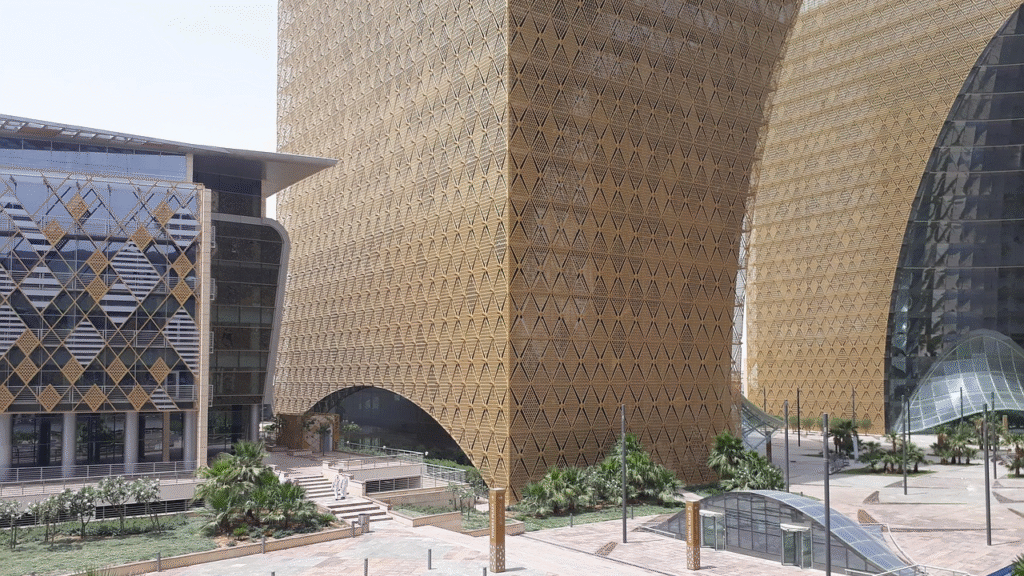
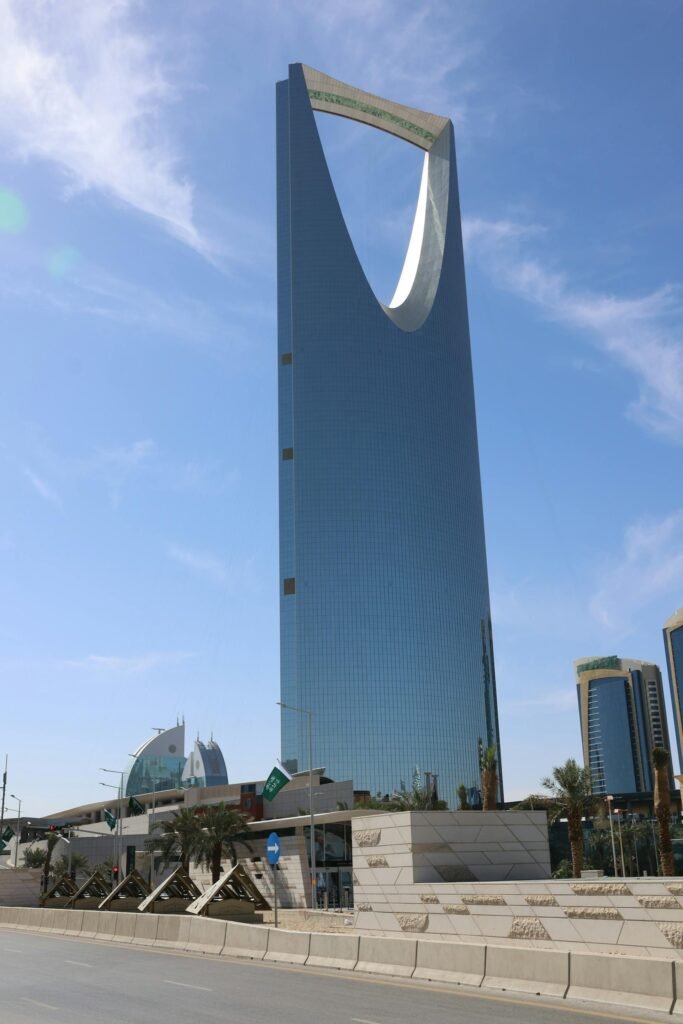
Photo credit: The King Abdullah Financial District towers, central Riyadh
Riyadh is the political, financial, and increasingly cultural capital of the world’s largest Arab country — a city of more than 7 million in the geographic heart of the Arabian Peninsula, undergoing one of the most ambitious deliberate transformations of any major modern city under Crown Prince Mohammed bin Salman‘s Vision 2030 reform program. Where the city was largely closed to non-business tourism a decade ago, today Riyadh hosts F1 races, FIFA Club World Cups, the LIV Golf Invitational, the AFC Asian Cup, world-class concerts, and the world’s largest entertainment season at Riyadh Season — over 23 million visitors in 2024. Al Ad’Diriyah, the original Saudi capital just west of modern Riyadh, has been redeveloped into a UNESCO-listed (2010) restoration of mud-brick historic architecture; the National Museum of Saudi Arabia traces the kingdom’s history from prehistory through the founding of the modern state in 1932; the Kingdom Centre Tower Skybridge offers the city’s most-photographed view. Visit with respect for the country’s ongoing reform process — and Riyadh rewards as one of the most-changing major cities anywhere on the planet.
Riyadh by District: The 14 البلديات
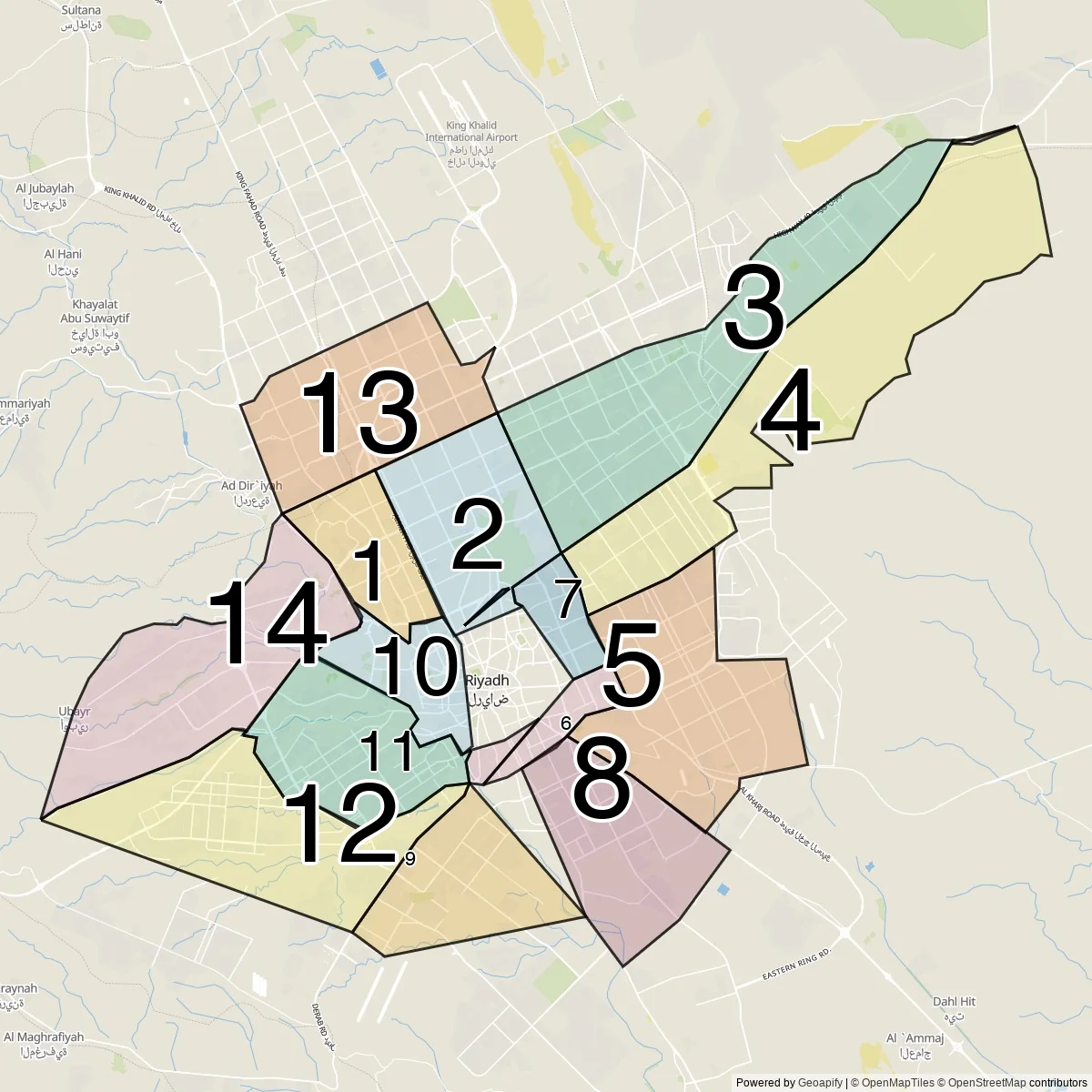
Riyadh is divided into 14 sub-municipalities. The map below shows their official OSM boundaries, colour-coded to match the table — a quick way to orient yourself before zooming in on individual sights.
| # | البلديات |
|---|---|
| 1 | بلدية المعذر · Al Maathar Municipality |
| 2 | بلدية العليا · Municipality of Olaya |
| 3 | بلدية الروضة · Al Rawda Muncipality |
| 4 | بلدية النسيم · Al Naseem Municipality |
| 5 | بلدية السلي · As Sali Municipality |
| 6 | Al Batha Muncipality |
| 7 | بلدية الملز · Al Malaz Municipality |
| 8 | Al Aziziyah Municipality |
| 9 | بلدية الشفا · Municipality of Shifa |
| 10 | بلدية الشميسي · Shmeisi Municipality |
| 11 | بلدية العريجاء · Al-Urayja Municipality |
| 12 | بلدية نمار · Namar Municipality |
| 13 | بلدية الشمال · Municipality of Al Shamal |
| 14 | بلدية عرقة · Municipalty of Irqah |
Riyadh at a Glance: Essential Facts for Travelers
| Location | Riyadh Province, central Saudi Arabia (Najd region of the Arabian Peninsula) |
|---|---|
| Coordinates | 24.7136°N, 46.6753°E |
| Population | ~7.5 million (city, 2024); metro area ~8.4 million |
| Area | 1,973 km² (city) |
| Elevation | ~612 m above sea level (on the Najd Plateau) |
| Time Zone | Arabia Standard Time (AST, UTC+3 — no daylight saving) |
| Calling Code | +966 (city code 11) |
| Currency | Saudi Riyal (SAR ﷼) |
| Languages | Arabic (official); English widely spoken in business, tourism, and international hotels |
| Religion | Predominantly Sunni Muslim; non-Muslim public worship not permitted; non-Muslim communities operate privately |
| Climate | Hot desert — extremely hot dry summers (often 45 °C+), mild winters with occasional rain |
| Founded | 1737 (Al Saud establishment); Saudi capital since 1932 |
| Famous For | Kingdom Centre Tower, Al Faisaliah Tower, Diriyah UNESCO heritage site, National Museum, Vision 2030 transformation, Riyadh Season, gateway to Edge of the World, AlUla |
Upcoming Events in Riyadh
| Date | Title | Details |
|---|---|---|
| 2026-09-14 to 2026-09-16 | Money 20/20 Middle East | Money 20/20 Middle East runs from 14 to 16 September 2026 at the Riyadh International Exhibition Centre, bringing the global payments and fintech conference series to the Saudi capital. The programme gathers banking executives, regulators, investors and startups to debate the future of payments, digital banking and financial infrastructure in a region racing to modernise its money systems. Attendance is aimed at industry professionals, with paid delegate passes and registration required; for Riyadh’s fast-growing fintech scene, led by homegrown champions, it is the networking fixture of the season. [Source] |
| 2026-09-23 | Saudi National Day Celebrations in Riyadh | Saudi Arabia marks its National Day on 23 September, and Riyadh stages some of the Kingdom’s biggest celebrations as the capital turns green for the occasion. In recent years the day has brought fireworks, aerial displays and light shows, with landmarks illuminated, family events across the city’s parks and boulevards, and patriotic performances running into the night. Most public festivities are free to attend, though expect heavy traffic and road closures around the main celebration sites. It is one of the liveliest single days on the capital’s calendar for residents and visitors alike. [Source] |
| 2026-10-11 to 2026-10-15 | WPC Energy Congress 2026 | The WPC Energy Congress, the flagship world petroleum gathering held only once every three years, convenes in Riyadh from 11 to 15 October 2026 at the Riyadh Front Exhibition and Conference Center. Ministers, chief executives and technical experts from the world’s major producing and consuming nations debate energy security and net zero transition strategies, alongside a large industry exhibition. Hosting the congress underscores Saudi Arabia’s central place in global energy. Attendance is professional, with delegate registration and fees required, and hotel demand across the capital spikes during congress week. [Source] |
| 2026-10-15 to 2026-10-31 | Riyadh Season 2026 | Riyadh Season, the kingdom’s flagship entertainment festival, returns for another edition, typically opening in October and running through the winter. Across sprawling zones such as Boulevard City and Boulevard World, it packs in concerts, theatre, comedy, funfairs, immersive attractions, international sports, restaurants and shopping, drawing millions of visitors. Many zones are ticketed, with prices varying by event and area. One of the region’s biggest entertainment showcases, it transforms the capital’s nights and is a major draw for families, young people and tourists as the cooler season begins. [Source] |
| 2026-11-04 to 2026-11-08 | Jewellery Salon Riyadh 2026 | Jewellery Salon returns to The Arena Riyadh from 4 to 8 November 2026, assembling diamond jewellery, fine watches and precious stones from regional and international houses under one roof. Unlike the capital’s trade-only fairs, this luxury exhibition welcomes the public, drawing collectors, gift-buyers and brides-to-be to browse and buy directly from exhibitors over five days. Expect high-end pieces alongside emerging Saudi designers, with security-checked entry and tickets or registration required at the door. For anyone curious about the Gulf’s appetite for fine jewellery, it is a glittering window on the market. [Source] |
| 2026-11-16 to 2026-11-20 | Cityscape Global Saudi 2026 | Cityscape Global, one of the world’s leading real-estate events, takes over the Riyadh International Exhibition Centre from 16 to 20 November 2026. Developers use the show to unveil master plans and launch sales for major projects, while investors, brokers and professionals network across five days of exhibition and conference programming. With Saudi giga-projects and the run-up to Expo 2030 dominating the regional property conversation, this edition is expected to be especially busy. Entry is geared to industry visitors and serious buyers, with registration required and some conference content ticketed separately. [Source] |
City News in Riyadh – last 14 days
| Date | Category | Headline | Details |
|---|---|---|---|
| 2026-09-14 | Business | Expo 2030 Riyadh signs SAR 3.2 billion joint venture to develop Expo Village | Expo 2030 Riyadh has signed its first real-estate partnership, a 3.2 billion riyal joint-venture agreement with Mohammed Al Habib Real Estate Company to develop and deliver Expo Village. The village is a core piece of the infrastructure for the world fair the Saudi capital will host in 2030, intended to accommodate participants during the event and serve the city afterwards. The deal marks a milestone in moving preparations from planning into delivery, and further construction and partnership announcements are expected as the site takes shape. [Source] |
| 2026-09-14 | Local affairs | UNESCO to launch new AI governance tools in Riyadh | UNESCO is preparing to launch new artificial-intelligence governance tools in Riyadh, choosing the Saudi capital as the stage for its latest push on the ethics and oversight of the technology. Local business media framed the gathering as Riyadh bringing the world together to help shape the rules of AI, a coup for a city investing heavily in its credentials as a technology-policy hub. The launch adds to a run of AI-related summits and initiatives hosted in the Kingdom as it courts researchers, companies and international organisations. [Source] |
| 2026-09-14 | Sports | World’s first humanoid robot sports league launches in Riyadh | Riyadh has become home to the world’s first humanoid robot sports league, an initiative that puts machines rather than humans into athletic competition. The launch fits the Kingdom’s pattern of pairing sport with spectacle and emerging technology, following heavy investment in esports, gaming and AI. Organisers are betting that watching bipedal robots compete will draw curious audiences and showcase robotics progress in the process, and the league gives the capital another first-of-its-kind event as it builds an identity around futuristic entertainment. [Source] |
| 2026-09-14 | Business | LG Electronics opens Middle East’s first B2B AI Home showcase in Riyadh | LG Electronics has opened the Middle East’s first business-to-business AI Home showcase in Riyadh, a demonstration space where commercial clients can experience the company’s vision of artificially intelligent living environments. The facility targets developers, hospitality operators and enterprise buyers rather than retail shoppers, displaying connected appliances and home-management systems suited to the Kingdom’s building boom. The investment reflects how global electronics brands are positioning themselves in Saudi Arabia, where massive residential and tourism projects promise a deep pipeline of smart-home deployments. [Source] |
| 2026-09-14 | Local government | Real Estate Authority begins property registry work in Riyadh and three other regions | The Real Estate General Authority has begun work on the national property registry in the Eastern Province, Riyadh, Qassim and Makkah regions, a major step in formalising ownership records across the Kingdom. The registry is designed to document titles definitively, reduce disputes and increase transparency in a property market that is central to Vision 2030’s housing and investment goals. For Riyadh residents and investors, registration promises clearer legal standing for their assets as transaction volumes in the capital continue to climb. [Source] |
| 2026-09-14 | Local government | Ministry signs agreements to develop four housing projects in Riyadh | The Ministry of Municipalities and Housing has signed agreements to develop four residential projects in Riyadh, adding to the pipeline of housing intended to keep pace with the capital’s rapid population growth. The deals bring private developers into schemes aligned with national homeownership targets, which aim to broaden access to affordable, well-serviced neighbourhoods. Riyadh’s property market has tightened markedly as jobs and new residents concentrate in the capital, and officials are counting on steady project launches to relieve pressure on prices and rents. [Source] |
| 2026-09-14 | Business | Saudi fintech Tabby raises $233m to expand financial services | Saudi-based fintech firm Tabby has raised 233 million dollars in equity funding at a valuation of 6.5 billion dollars, capital that will support the next phase of its expansion in financial services. The company, best known for buy-now-pay-later products, has grown into one of the region’s most valuable startups and plans to broaden its offering for shoppers and merchants. The raise underlines investor confidence in Saudi Arabia’s consumer-finance market, and it strengthens Riyadh’s claim to be the Gulf’s emerging fintech capital. [Source] |
| 2026-09-14 | Culture | Kuwaiti children’s play Amirat Qalbi Zain makes a splash in Riyadh | A Kuwaiti children’s theatre production, Amirat Qalbi Zain, is drawing enthusiastic audiences in Riyadh, where its run has become a talking point of the capital’s family entertainment scene. The show brings Gulf-produced children’s theatre to Saudi stages, with colourful staging and songs aimed at young audiences and their parents. Its warm reception reflects both the strong cultural ties between Kuwait and Saudi Arabia and the rapid growth of family-oriented live entertainment in Riyadh, where demand for stage shows has surged in recent years. [Source] |
| 2026-09-14 | Public safety | Five residents arrested for illegally exploiting sediment deposits in Riyadh | Authorities in the Riyadh region have arrested five resident violators accused of illegally exploiting sediment deposits, an enforcement action under the Kingdom’s environmental protection rules. Unlicensed extraction of sediments from valleys and watercourses damages fragile desert hydrology, degrades land and undermines legitimate quarrying operations, and inspectors have been stepping up patrols against such violations. Officials publicise these cases to deter others, and penalties can include fines and confiscation of equipment as the state tightens stewardship of natural resources around the capital. [Source] |
| 2026-09-14 | Business | Saudi Arabia announces find of 110m tonnes of rare earths and uranium ore | Energy Minister Prince Abdulaziz bin Salman announced that Saudi Arabia has discovered an estimated 110 million tonnes of rare earth minerals and uranium-bearing ore in the Madinah region. The announcement, made from Riyadh as part of the Kingdom’s push to develop a mining sector alongside oil, points to potential feedstock for batteries, magnets and nuclear fuel ambitions. Officials have long argued the country’s mineral endowment is vastly underexplored, and the find will feed plans to attract international miners and processing investment under Vision 2030. [Source] |
Riyadh Events & City News Archive
Sources: EventsEye, Visit Saudi, Riyadh Season, The Canadian Press, Digital Watch Observatory, Fast Company Middle East, The Korea Times, Al Riyadh
Weather Forecast for the Next 14 Days in Riyadh
| Date | Weather | Max °F | Min °F | Rain mm |
|---|---|---|---|---|
| 2026-09-14 | ☁️ | 106.4 °F | 82.8 °F | 0.0 mm |
| 2026-09-15 | ☀️ | 104.8 °F | 82.8 °F | 0.0 mm |
| 2026-09-16 | ☀️ | 102.3 °F | 79.9 °F | 0.0 mm |
| 2026-09-17 | ⛅ | 102.0 °F | 76.9 °F | 0.0 mm |
| 2026-09-18 | ☀️ | 103.4 °F | 78.4 °F | 0.0 mm |
| 2026-09-19 | ☀️ | 104.8 °F | 78.9 °F | 0.0 mm |
| 2026-09-20 | ☀️ | 104.1 °F | 80.7 °F | 0.0 mm |
| 2026-09-21 | ☀️ | 102.3 °F | 82.0 °F | 0.0 mm |
| 2026-09-22 | ☀️ | 101.5 °F | 81.3 °F | 0.0 mm |
| 2026-09-23 | ☀️ | 101.4 °F | 80.5 °F | 0.0 mm |
| 2026-09-24 | ☀️ | 102.0 °F | 83.2 °F | 0.0 mm |
| 2026-09-25 | ☀️ | 100.5 °F | 78.9 °F | 0.0 mm |
| 2026-09-26 | ☀️ | 98.5 °F | 76.4 °F | 0.0 mm |
| 2026-09-27 | ☀️ | 100.0 °F | 81.1 °F | 0.0 mm |
Riyadh’s History
Riyadh’s modern history begins in 1737, when Muhammad ibn Saud, ruler of the small Najdi settlement of Diriyah just west of present-day Riyadh, formed an alliance with the Islamic reformer Muhammad ibn Abd al-Wahhab. Their alliance — joining political authority and religious revival — became the founding pact of the First Saudi State (1744–1818). Diriyah grew into a regional power; its forces expanded across central and eastern Arabia, briefly capturing Mecca and Medina. The First Saudi State collapsed in 1818 when Ottoman-Egyptian forces under Ibrahim Pasha destroyed Diriyah and razed its mud-brick fortifications. The site remained largely abandoned for nearly two centuries until its UNESCO restoration in the 2010s.
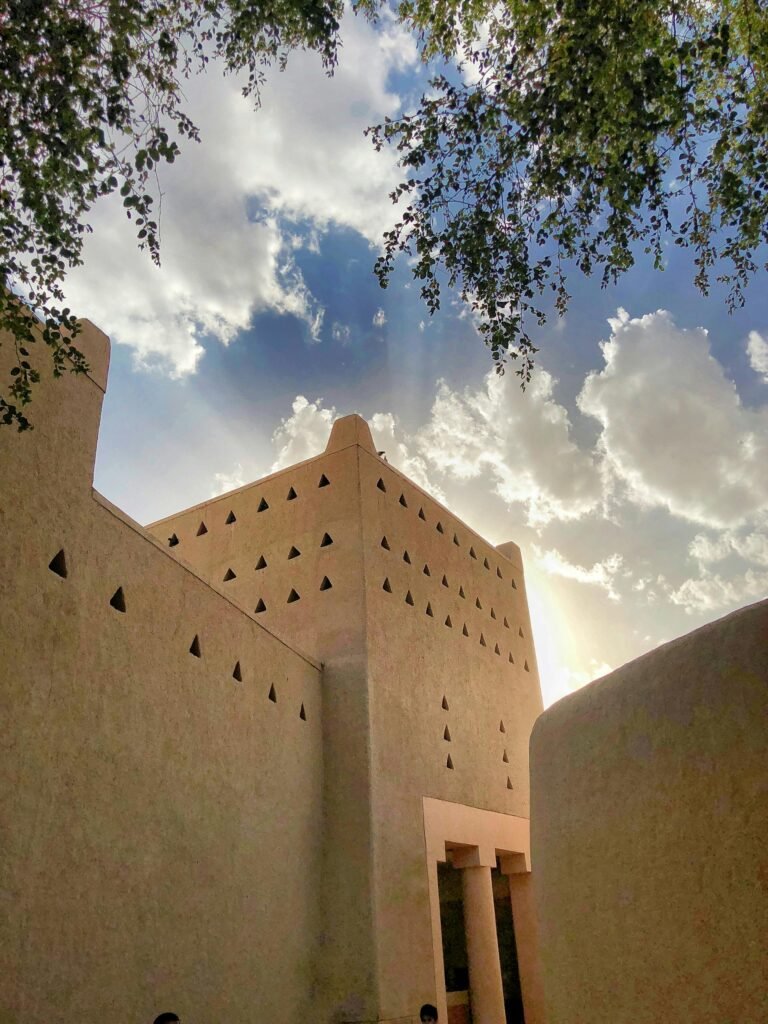
The Second Saudi State (1824–1891) was based at the nearby settlement of Riyadh (Arabic for “gardens” — referring to the oasis date palms that gave the area its name). It was the Second Saudi State that established Riyadh as the family’s traditional power center. The Second Saudi State collapsed to the rival Al-Rashid family of Ha’il in 1891.
The decisive recovery came on the night of January 13, 1902, when 21-year-old Abdulaziz ibn Saud — the future founder of modern Saudi Arabia — led 40 men to scale the walls of the Masmak Fort in Riyadh and kill the Rashidi governor in a celebrated dawn raid. (The dagger embedded in the door is still visible at the Masmak museum.) Abdulaziz spent the next three decades consolidating his control over the Arabian Peninsula. On September 23, 1932, he proclaimed the unified Kingdom of Saudi Arabia with Riyadh as the capital — the date still observed as Saudi National Day.
The 1938 discovery of oil at Dammam (eastern Saudi Arabia) transformed the kingdom’s economy and Riyadh’s destiny. King Faisal (r. 1964–1975) modernized education, abolished slavery (1962), and led the 1973 oil embargo against Western support for Israel. King Abdullah (r. 2005–2015) founded the King Abdullah University of Science and Technology and the King Abdullah Financial District in Riyadh. King Salman (since 2015) and Crown Prince Mohammed bin Salman (MBS) launched the Vision 2030 economic-diversification program in April 2016 — the most ambitious deliberate transformation of any major economy in modern times.
Post-2017 Riyadh has undergone visible social liberalization: women received the right to drive in June 2018; movie theaters reopened in April 2018 after a 35-year ban; entertainment events (concerts, sports, theater) have proliferated; the religious police (mutawa) have been substantially curtailed since 2016. International tourism opened to non-pilgrim visitors in September 2019 with the launch of e-Visa. The city is preparing to host the 2027 AFC Asian Cup, 2029 Asian Winter Games, 2030 Expo, and the 2034 FIFA World Cup as the country’s primary hosting city.
Geography, Climate & Best Time to Visit Riyadh
Geographic Setting
Riyadh sits on the Najd plateau at 612 meters elevation in the geographic center of the Arabian Peninsula. The city is surrounded by the open desert and semi-desert of central Arabia, with the Tuwaiq Escarpment (“Edge of the World”) rising 30 km west as the city’s most-photographed natural landmark. The historic Wadi Hanifah ravine runs through the western part of the city — now developed as a 120 km landscaped urban park — and was the natural water source that supported the original Riyadh and Diriyah oasis settlements.
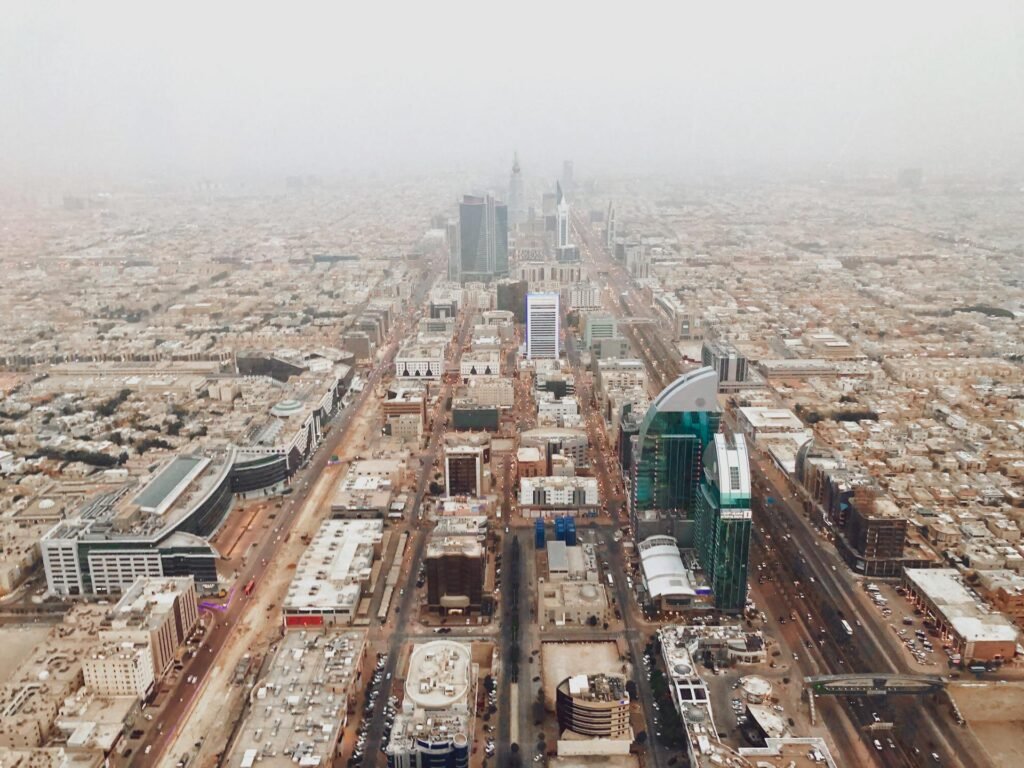
The modern city’s geography splits into three functional zones: the historic central core (Al Bathaa, Masmak, Murabba, old neighborhoods), the modern downtown commercial spine (King Fahd Road, Olaya, the financial district), and the spreading northern and western suburbs with master-planned residential compounds and the King Khalid International Airport zone. The city’s deliberate north-south growth along King Fahd Road has created some of the world’s most-congested major arterial traffic.
Climate Overview
Riyadh has a hot desert climate (Köppen BWh). Summer (June–September): brutal — daytime highs 42–48 °C, occasional 50 °C+ readings, with overnight lows in the high 20s; humidity low (10–30%) which makes the heat tolerable but UV index extreme. Winter (December–February): pleasantly mild — daytime 18–24 °C, overnight lows 5–12 °C, with rare but locally heavy winter rainfall November–April. Annual rainfall just 110 mm. Spring sandstorms (April–May) and the occasional summer dust storm (haboob) can dramatically reduce visibility.
Best Time to Visit
November to March is the only realistic window for most international travelers — pleasant temperatures, the full programming calendar including Riyadh Season (October–March), and outdoor activity comfort. December–January: peak event timing including F1 weekend at Jeddah, MDLBeast Soundstorm festival in Riyadh, and the Diriyah E-Prix Formula E race. April–May: warming up but still tolerable; less crowded than winter. June–September: extreme outdoor conditions; most travel is mall-to-air-conditioning-to-mall; serious outdoor activity requires sunrise/sunset timing. Ramadan (dates shift each year): restaurants close during daylight; tourism volume drops significantly; post-sunset iftar culture is uniquely festive; not the best window for first-time visitors. Check current Ramadan dates with the Saudi Tourism Authority.
Riyadh’s Districts & Neighborhoods
Olaya (Central Business District)
The modern commercial heart of Riyadh, along King Fahd Road. Kingdom Centre Tower (302 m, with the iconic curved-bridge Skybridge observation deck); Al Faisaliah Tower (267 m, the older landmark with the rotating Globe restaurant); Olaya Galleria mall; major international hotel chains (Four Seasons Kingdom Centre, Ritz-Carlton Riyadh, Movenpick, Burj Rafal). Walkable indoors via skybridges but outdoor walks impractical in summer.
King Abdullah Financial District (KAFD)
The newer 1.6 million-square-meter business district 8 km north of Olaya — designed as a Wall Street-style financial-services hub with distinctive interconnected pedestrian-skybridge architecture. PIF, Saudi National Bank, Aramco offices, and the Saudi Stock Exchange. Recently expanded with hotel and entertainment components including the F1 Drive-In Live event venue.
Diplomatic Quarter (DQ)
The northern walled diplomatic district hosting all foreign embassies and consulates, the King Fahd National Library, the Wadi Hanifah Park entry, and a Diplomatic Quarter Walking Circuit. More relaxed atmosphere than central Riyadh; foreign residents and diplomats live here. Visa-pass required for entry.
Diriyah
The historic founding site, 20 km west of modern Riyadh — UNESCO World Heritage since 2010. The original 18th-century mud-brick settlement (the At-Turaif District) has been restored and redeveloped as the Diriyah Gate mega-project: At-Turaif heritage village, Bujairi heritage neighborhood with traditional Najdi-cuisine restaurants, hotels (Bab Samhan a Luxury Collection Hotel, Six Senses Diriyah), and the upcoming entertainment district. The most architecturally significant historic site within Saudi Arabia accessible to tourists.
Al Bathaa & Old Riyadh
The historic original city center around the Masmak Fort, the Murabba Palace, and the Al Bathaa Souq (the traditional gold-and-electronics-and-textile market). Less developed for international tourism; useful for the historic core experience and for budget-tier dining.
King Salman Park (under construction)
The 16 km² “world’s largest urban park” announced in 2019 — four times the size of New York’s Central Park. Currently under construction; planned to include cultural venues, residential and retail, and extensive sport facilities. Already the largest construction site in central Riyadh.
Qiddiya (under construction)
40 km west of central Riyadh — the planned entertainment-and-sports mega-city including a Six Flags theme park, a Formula 1 circuit (replacing Jeddah’s Corniche Circuit), water parks, and cultural venues. Initial sections opening 2025–2027.
Top Things to Do in Riyadh
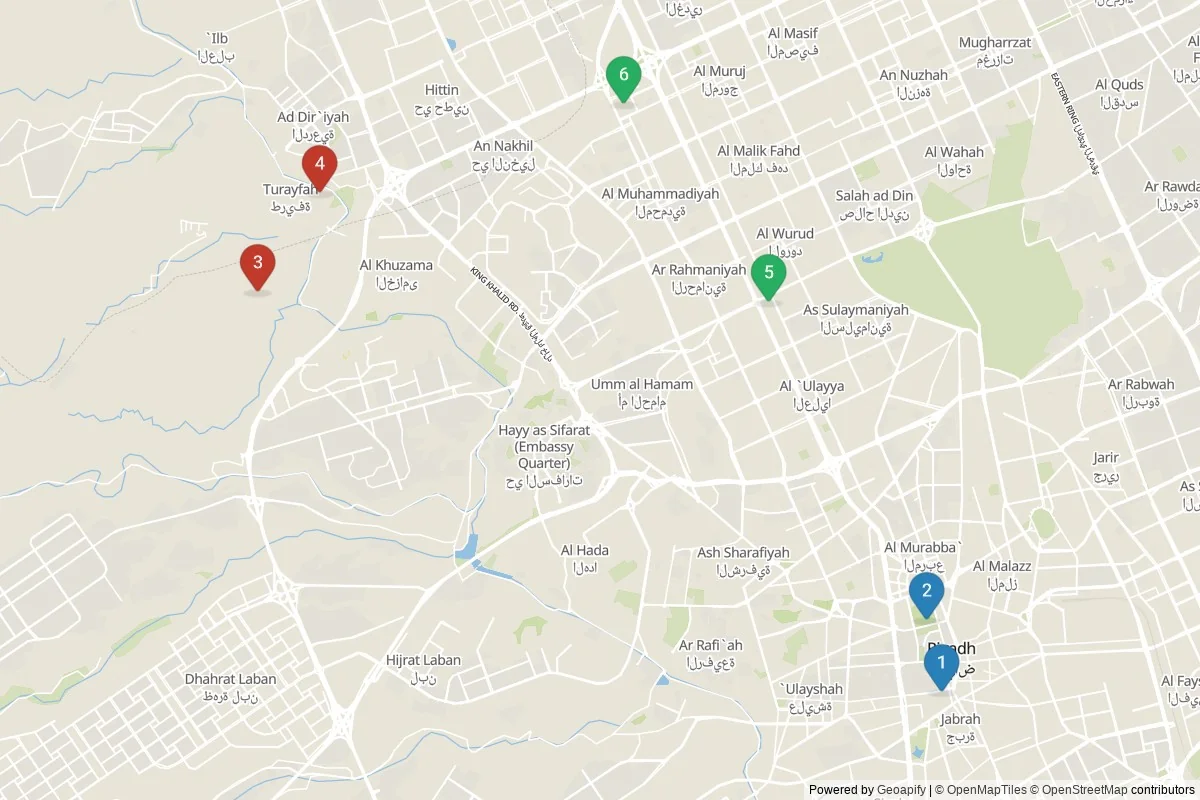
| # | Sight | Cluster | Type | Time | Entry | Best |
|---|---|---|---|---|---|---|
| 1 | Masmak Fortress | Central | Historic fort | ~1 hr | Free | Morning |
| 2 | National Museum of Saudi Arabia | Central | Museum | ~2 hrs | SAR 10 | Morning |
| 3 | Wadi Hanifah Park | Outer | Linear park | ~2 hrs | Free | Sunset |
| 4 | Diriyah At-Turaif (UNESCO) | Outer | UNESCO ruins | ~2 hrs | SAR 30 | Morning |
| 5 | Kingdom Centre Tower & Sky Bridge | Far | Skyscraper | ~1.5 hrs | SAR 69 | Sunset |
| 6 | Boulevard Riyadh City | Far | Entertainment | ~3 hrs | SAR 50 | Evening |
| 🚗 | Day Trip: Edge of the World | Day trip | Cliff trek | Full day | SAR 250 | Sunrise |
| 🚗 | Day Trip: AlUla | Day trip | UNESCO ancient site | Full day | Flight | Morning |
1. Visit At-Turaif & the Diriyah Gate
The restored 18th-century original Saudi capital — UNESCO World Heritage 2010. The mud-brick palaces, baths, mosques, and family residences of the Al Saud and Al-Sheikh families have been carefully restored using traditional techniques. The adjacent Bujairi Terrace includes traditional Najdi-cuisine restaurants (try Najd Village) and modern fine-dining establishments (Hakkasan, Brasserie Boulud, La Cantine). Entry to At-Turaif heritage zone SAR 65 (~US$17); reservations recommended; combine with sunset dinner at Bujairi Terrace.
2. Kingdom Centre Skybridge
The 302-meter Kingdom Centre Tower’s signature curved-bridge observation deck at floors 99-100. The 360° view sweeps central Riyadh, the Al Faisaliah Tower, and on clear days reaches to Diriyah and the desert. Especially spectacular at sunset. SAR 100 (~US$27); reservations via the official Kingdom Centre app.
3. National Museum of Saudi Arabia
The 28-hectare museum complex in the Murabba district — the most comprehensive single venue for Saudi history. Eight galleries cover prehistoric Arabia, Arab tribal life, the Islamic origins, the three Saudi states, modern unification, and contemporary culture. Entry SAR 10 (~US$2.70); allow 3–4 hours.
4. Masmak Fortress
The 1865 mud-brick fortress where Abdulaziz ibn Saud’s 1902 dawn raid recaptured Riyadh from the rival Rashidi family — the founding moment of modern Saudi Arabia. The fortress is now a museum displaying period weapons, documents, and the famous dagger still embedded in the original door. Free entry; in central Old Riyadh adjacent to the Al Bathaa Souq. Allow 90 minutes.
5. Edge of the World (Tuwaiq Escarpment)
The dramatic 300-meter cliff face 90 km northwest of Riyadh — one of the most photographed natural sites in Saudi Arabia. The cliff edge offers a spectacular view across the desert to the horizon. Important: a 4×4 vehicle is required for the final 25 km of unpaved track; organized day tours are the practical option (SAR 250–500 per person including pickup, lunch, and Bedouin-style coffee). Best at sunset; bring warm layers in winter.
6. Explore Wadi Hanifah Park
The 120-km landscaped urban park along the Wadi Hanifah valley — the natural watercourse that supported the original Diriyah and Riyadh oases. Walking and cycling paths, restored wetlands, modern public spaces. The most accessible green-space experience in Riyadh. Free.
7. Riyadh Season (October–March)
The country’s largest entertainment festival, running roughly October to March each year with rotating zones across the city — concerts, theme parks, F1 fan zones, food festivals, ice rinks, fireworks. Boulevard City (the largest entertainment zone), Boulevard Riyadh City, Wonder Garden, the F1 Drive-In Live during the Saudi Grand Prix. Adult tickets vary by zone and event; family-friendly programming is the focus.
8. Day Trip to AlUla (1 hour flight)
The 200,000-year-old Nabataean archaeological site in the northwest, often called “Saudi Arabia’s Petra.” The Hegra (Madain Saleh) rock-cut tombs are the country’s first UNESCO World Heritage Site (2008). One-hour flight from Riyadh; can be done as a long day trip but works much better as a 2–3 night overnight. Many international travelers add AlUla to their Riyadh itinerary as the cultural-heritage highlight of Saudi Arabia.
How to Get to Riyadh
By Air
King Khalid International Airport (RUH), 35 km north of central Riyadh, is Saudi Arabia’s busiest airport after Jeddah. Direct nonstop flights from most major Gulf cities (Dubai, Doha, Abu Dhabi, Kuwait, Muscat), most major European cities (London, Paris, Frankfurt, Munich, Amsterdam, Madrid, Istanbul, Athens), major Asian hubs (Tokyo, Seoul, Bangkok, Singapore, Hong Kong, Kuala Lumpur, Mumbai), and increasingly North American routes (New York, Washington Dulles, Los Angeles, Toronto). Saudi flag carrier Saudia, the new Riyadh Air (launched 2024), flynas (low-cost), plus most international carriers.
From the airport: Taxi SAR 80–150 to central Riyadh; Uber/Careem SAR 70–130; Airport Metro Line 6 (opened 2024) — direct connection to central Riyadh; hotel-arranged limousine service SAR 150–400.
By Train
Saudi Arabian Railway (SAR) connects Riyadh to: Dammam 4 hours (east, Eastern Province coast); Qassim 3 hours (north); Hail 5 hours; AlUla via new line. The high-speed Haramain Express connects Mecca-Medina-Jeddah-King Abdulaziz Airport — not yet extended to Riyadh, but the country is investing heavily in rail expansion. Tickets via the SAR official portal.
By Long-Distance Bus
SAPTCO operates intercity bus service to all major Saudi cities and a few cross-border routes (Kuwait, UAE). Comfortable air-conditioned coaches; significantly cheaper than flights for budget travelers.
By Car
Self-drive Saudi Arabia is feasible with international driving permit + national license. The country’s road network is excellent — major highways connect to Jeddah (8 hours), Dammam (5 hours), Mecca (8 hours), and onward to other Gulf states. Note: women have been legally permitted to drive since June 2018; rental cars are available for women drivers without restrictions.
Visa Notes
Saudi Arabia opened to non-pilgrim tourism in September 2019 — a major shift after decades of restricted access. e-Visa available to citizens of 62 countries including the US, UK, all EU member states, Canada, Australia, New Zealand, Japan, South Korea, Singapore, Brunei, Malaysia, Russia, China, Brazil, Argentina, Mexico, Hong Kong, Macau, Taiwan. Apply via the official Saudi Tourism eVisa portal — SAR 535 (~US$143), processed in 5–15 minutes typically, valid 1 year multiple entry with stays up to 90 days. Visa on arrival available at major airports for the same eligible nationalities. Common mistakes: using unofficial third-party visa sites that overcharge 200–500%; women under 18 need male guardian authorization (the male-guardian rules have been substantially relaxed but check current requirements). Religious visa (Hajj/Umrah): separate process via authorized travel agents only.
Getting Around Riyadh
Riyadh Metro (opened 2024)
The dramatic new addition to Riyadh transit — the Riyadh Metro opened in phases from 2024. Six lines, 176 km, 85 stations, fully automated driverless trains. Lines 1 (Blue), 2 (Red), and 3 (Orange) cover the central commercial corridors; Line 6 connects to the airport. Single fares SAR 4–6; rechargeable smart card.
Uber, Careem, Bolt
Ride-hailing apps work well in Riyadh — Uber and Careem are the dominant brands; Bolt has launched recently. Reliable, transparent pricing, credit cards accepted. Female-only driver options available through Careem.
Taxis
Metered taxis from SAR 5 flagfall + SAR 1.50/km; reasonably abundant in tourist areas. White-and-yellow Riyadh taxis are the regulated fleet. Always insist on the meter or use Uber/Careem for transparent pricing.
Bus Network (SAPTCO)
The new King Abdulaziz Road BRT dedicated bus corridor and various standard bus routes cover central Riyadh. Limited English signage; less practical for short-stay visitors than the metro.
Self-Drive
Car rental from major international brands and Saudi local operators; SAR 100–400/day for an economy car. Important driving notes: speed cameras are abundant and strictly enforced; right-side driving (like Europe and North America); the Saudi traffic culture is aggressive — expect tailgating and last-second lane changes; women have been legally permitted to drive since June 2018 and there are no longer restrictions on female drivers.
Walking
Riyadh is genuinely car-designed — long blocks, wide arterial roads, sparse pedestrian infrastructure. Walkable zones: the Bujairi Terrace area in Diriyah, the King Abdullah Financial District pedestrian skybridges, and selected shopping malls (which serve as the country’s de-facto pedestrian zones, particularly in summer when outdoor walking is impossible).
Food & Drink in Riyadh
Saudi cuisine combines Najdi tradition (the central Arabian dishes of dates, mutton, rice, and dairy), broader Levantine and Egyptian influence, and the international restaurant explosion of the post-2017 Vision 2030 era. Riyadh’s dining scene has transformed dramatically since 2018; nearly every major global luxury brand has opened a Riyadh outpost in the past five years.
What to Try
- Kabsa — the national dish: long-grain basmati rice cooked with whole spices (loomi/dried lime, cinnamon, cardamom, cloves), tomatoes, and a roasted whole chicken or lamb shoulder; served on a communal platter for sharing. The Saudi family meal standard.
- Mandi — similar to kabsa but slow-cooked in an underground earth oven, originally from Hadhramaut (Yemen) but widely beloved in Saudi.
- Mutabbaq — folded pancake stuffed with minced meat, vegetables, or eggs and pan-fried; the street-food staple at every traditional restaurant.
- Mathnoob — the Najdi specialty of slow-cooked lamb shoulder over wood embers.
- Shawarma — vertical-roasted meat in flatbread; the universal Gulf street food.
- Hummus, mutabal, tabouleh, fattoush — the standard Levantine mezze available everywhere.
- Dates — the cultural staple; over 30 varieties grown across Saudi Arabia, with the Madinah Anbara, Khalas, Khudri, and Sukkari varieties widely respected. Premium dates at Bateel and Al-Madina.
- Saudi Champagne / Saudi Cocktail — non-alcoholic festival drink of apple juice, sparkling water, mint, and dates; the country’s celebratory beverage.
- Arabic coffee (gahwa) and dates — the universal greeting/hospitality ritual; bitter cardamom-flavored coffee served in small cups with sweet dates as the chaser.
Where to Eat
Najd Village (Bujairi Terrace, Diriyah and other locations): the canonical traditional Najdi-cuisine restaurant with seating in restored mud-brick rooms. Al Orjouwan at the Ritz-Carlton: high-end fine-dining Saudi. Hakkasan (Bujairi Terrace): Cantonese. La Cantine (Bujairi Terrace): French. Mamo Le Petit Bistro (Boulevard Riyadh City): contemporary French. Globe at Al Faisaliah: rotating restaurant with city panorama. Hashi Basha: traditional Saudi-Arabic fast food, multiple locations. Albaik (the country’s beloved fast-food fried-chicken chain).
Drinks
Important: alcohol is strictly illegal in Saudi Arabia for both citizens and visitors. There are no licensed bars, restaurants, or hotels serving alcohol; private alcohol possession by foreigners is risky (occasional arrests of diplomats and expatriates have been reported). Coffee: Arabic coffee (gahwa) bitter cardamom-flavored, served with dates; modern third-wave coffee culture (Stumptown-style, locally roasted) has exploded in post-2018 Riyadh with hundreds of new cafés. Karak chai — strong sweet milky cardamom tea; the working-Saudi afternoon staple. Fresh juices at Riyadh’s juice bars: sugarcane, pomegranate, mango. “Saudi Champagne” as covered above. Camel milk: available at supermarkets and the Camelicious chain.
A Note on Tap Water
Tap water in Riyadh is not safe to drink for foreign visitors. Saudi water comes primarily from desalination plants on the Red Sea and Persian Gulf coasts and is treated to drinking-water standards at the source, but the long-distance pipeline distribution and older building plumbing introduce taste, sediment, and occasional contamination issues. Bottled water: ubiquitous and inexpensive (SAR 1–5 per liter at any supermarket or kiosk); major brands Nova, Aquafina, Al Ain Water, Berain. Hotel bottled water is universally provided. The CDC traveler health page for Saudi Arabia rates food and water safety as low-risk by Middle East standards. The real summer health concern is heat exhaustion and dehydration — drink 4+ liters of water daily during summer travel.
Frequently Asked Questions About Visiting Riyadh
Do I need a visa to visit Riyadh?
Yes — for most foreign passport holders, but the process became dramatically simpler when Saudi Arabia opened to non-pilgrim tourism in September 2019. Citizens of 62 countries — including the US, UK, all EU member states, Canada, Australia, New Zealand, Japan, South Korea, Singapore, Brunei, Malaysia, Russia, China, Brazil, Mexico, Argentina, Chile, Hong Kong, Macau, Taiwan — can apply for the Saudi Tourism eVisa at the official eVisa portal. Fee SAR 535 (~US$143) total including mandatory medical insurance and processing charges; valid 1 year multiple entry with stays up to 90 days per visit (max 180 days per year). Processing typically 5–15 minutes; visa-on-arrival available at major airports including King Khalid International (RUH) and King Abdulaziz Jeddah for the same eligible nationalities. Passport must have at least 6 months remaining validity. Important: the tourist visa does NOT permit pilgrimage (Hajj or Umrah to Mecca and Medina). Religious visas are processed separately via authorized travel agents. Common mistakes: using unofficial third-party visa sites that overcharge 200–500%; assuming Mecca and Medina are accessible to non-Muslims (they are not — both holy cities are exclusively for Muslim pilgrims and residents); arriving without proof of onward travel and accommodation.
Is Riyadh safe for tourists?
Riyadh is generally safe — Saudi Arabia ranks among the safer Middle East destinations for foreign travelers, with strong security presence and low rates of violent crime. The US State Department rates Saudi Arabia at “exercise increased caution” — primarily for terrorism risks (particularly in the broader region) rather than street-crime concerns. Real risks in Riyadh: extreme heat in summer (45–50 °C is genuinely dangerous; stay hydrated; avoid mid-day outdoor exertion); traffic accidents — Saudi roads have one of the highest fatality rates in the world; aggressive driving, tailgating, speeding; strict legal environment different from Western norms; public dress code for women has relaxed significantly since 2019 (abayas are no longer legally required for visitors, though modest dress is still expected); public displays of affection beyond hand-holding can attract attention; photographing military, government buildings, royal residences, and individuals without permission can attract police; currency-related scams at unofficial exchange shops near tourist areas; fake taxi drivers at the airport offering inflated rates (use Uber/Careem); alcohol-related arrests — alcohol is strictly illegal even for foreign visitors; do not bring, possess, or consume any. Drug enforcement: extremely strict — possession of even trace amounts can result in long prison sentences; trafficking carries the death penalty. LGBTQ+ travelers: same-sex relationships are criminalized in Saudi Arabia; visible same-sex public affection is risky. Honest tip: the country is significantly more diverse and welcoming than its strict legal framework suggests; most tourist visits are uneventful with normal precautions.
How many days do I need in Riyadh?
Three to four days handles Riyadh’s main sights; combined with AlUla (the country’s UNESCO heritage star), 7–10 days makes a satisfying Saudi trip. A solid 4-day Riyadh plan: Day 1 — arrive, settle in Olaya hotels, evening Kingdom Centre Skybridge + dinner at Globe Restaurant or Najd Village. Day 2 — Diriyah full day (At-Turaif UNESCO heritage zone morning + Diriyah Visitor Centre + Bujairi Terrace dinner). Day 3 — National Museum + Masmak Fortress + Al Bathaa souq morning + KAFD afternoon + Boulevard Riyadh City evening. Day 4 — Edge of the World 4×4 day trip (sunset start, 6 hours total) + return to city dinner. Add Days 5–7 for AlUla (1-hour flight from Riyadh; UNESCO Hegra rock-cut tombs, AlUla Old Town, Maraya concert hall, Sharaan Nature Reserve). Add Day 8+ for Jeddah (Red Sea coast city, very different feel from Riyadh) and/or NEOM (when accessible). 10-day Saudi classic: 3 days Riyadh + 4 days AlUla + 2 days Jeddah + 1 day Diriyah. Day-trip Riyadh from another Saudi city: feasible from Jeddah via 90-minute flight but too rushed; recommend overnight.
What’s the best area to stay in Riyadh?
The choice between Olaya central business district and Diriyah heritage area defines the trip character. Olaya / Kingdom Centre area — international hotel chains in the central commercial spine; Four Seasons Kingdom Centre, Ritz-Carlton Riyadh, Mövenpick, Burj Rafal, JW Marriott. Walking distance to Kingdom Centre Skybridge and shopping. SAR 700–3,500/night (US$185–930). Diriyah Bujairi Terrace area — the new luxury destination; Bab Samhan a Luxury Collection Hotel (opened 2024), Six Senses Diriyah (opening planned), Edition Diriyah; SAR 1,800–8,000/night; ideal for cultural-and-historical focus. King Abdullah Financial District (KAFD) — new business district with growing hotel inventory; useful for business travelers. SAR 800–4,000/night. Boulevard Riyadh City area — central entertainment district; useful for Riyadh Season events; SAR 600–2,500/night. Diplomatic Quarter (DQ) — calmer atmosphere; ARAC and similar smaller hotels; SAR 500–1,500/night. Skip: cheap unbranded hotels in old central Bathaa or near the airport — significantly worse facilities than the modern alternatives.
How much does it cost to visit Riyadh’s major sights?
Riyadh is moderately expensive by Middle East standards. National Museum of Saudi Arabia: SAR 10 (~US$2.70). Masmak Fortress: free. Kingdom Centre Skybridge: SAR 100. Al Faisaliah Tower Globe Restaurant: dining; minimum spend roughly SAR 250 per person. At-Turaif UNESCO site: SAR 65; reservations recommended. Diriyah Visitor Centre & Bujairi Terrace: free entry; restaurants and cafes upmarket SAR 100–500 per person. Murabba Palace: free. Riyadh Season tickets: variable SAR 50–500 per event/zone. Edge of the World tour: SAR 250–500 per person organized via tour operator. AlUla flight + experience: SAR 4,000–15,000+ per person for 3–4 day package. Local meals: shawarma SAR 15–30; Saudi traditional meal SAR 80–200 per person; mid-range international restaurant SAR 150–400 per person; fine-dining SAR 500–2,000+ per person. Riyadh Metro: SAR 4–6 per ride. Uber/Careem across the city: SAR 25–50; airport-to-central SAR 70–130. Rental car: SAR 100–400/day. Overall daily budget: SAR 350 (frugal local restaurants + transit + free sights), SAR 1,200 (mid-range hotel + restaurants + 1 paid sight), SAR 5,000+ (luxury hotel + fine dining + AlUla day trips).
Should I drink the tap water in Riyadh?
No — tap water in Riyadh is not recommended for foreign visitors. Saudi water comes from desalination plants and is treated to high standards at the source, but the long-distance pipeline distribution and older building plumbing introduce taste and quality issues. Most Saudi residents drink bottled or filtered water. Bottled water: ubiquitous and inexpensive (SAR 1–5 per liter at any supermarket or kiosk; major brands Nova, Aquafina, Al Ain Water, Berain). Hotels provide bottled water free in rooms. Reusable filter bottles work well; some boutique hotels and major restaurants provide refill stations. Ice is universally safe at any reputable establishment. The CDC traveler health page for Saudi Arabia rates food safety as low-risk by Middle East standards. The real summer health risk is heat exhaustion and dehydration, not waterborne illness — drink 4+ liters of water daily during summer travel; symptoms of heat stroke (confusion, cessation of sweating, body temperature 40 °C+) require immediate medical attention; Saudi pharmacies stock oral rehydration solution (Pedialyte equivalents) for SAR 5–15. Annual hajj pilgrim deaths from heat exhaustion are sadly common; visitor heat-related illness is preventable with hydration and pacing.
What payment methods work in Riyadh — credit cards or cash?
Heavily card- and digital-payment-oriented; cash rarely needed except for tips. Credit/debit cards (Visa, Mastercard, AmEx, Mada-the local Saudi card network): accepted virtually everywhere — hotels, restaurants, taxis, malls, museums, supermarkets, theme parks, even most independent shops; contactless tap-to-pay is universal. Saudi Riyals (SAR): useful for tipping (5–10% in restaurants), occasional small purchases at traditional souqs, and emergencies. ATMs: extremely abundant at malls, hotels, and bank branches (Riyad Bank, Saudi National Bank, Al Rajhi Bank, SABB, ANB all accept foreign cards with daily limits SAR 5,000–10,000 and reasonable fees). Currency exchange: airport rates are competitive; in-city exchange counters and bank-branches offer comparable rates; bring USD or EUR in clean bills. Digital wallets: Apple Pay, Google Pay, Samsung Pay all work; the local Mada Pay mobile is widely accepted. Tips: not strictly required but increasingly expected in tourism — 10–15% at restaurants if no service charge is added (check the bill); SAR 5–20 per bag to hotel porters; SAR 20–50 per day for housekeeping; round up taxi fares; SAR 100–400 per day for tour guides and private drivers; tip in Saudi riyals. VAT: 15% added at most retail purchases; tourists can claim tax-free refunds at the airport for purchases over SAR 1,000 from VAT-refund-eligible retailers — register at the dedicated airport kiosks before check-in. Important: the SAR is pegged to USD at approximately 3.75:1 — currency volatility is minimal.
What about cultural etiquette, dress code, and the post-2019 reforms?
Saudi Arabia is one of the world’s most rapidly liberalizing societies, and visitor experience has transformed dramatically since 2018. Dress code (post-2019): women are no longer legally required to wear an abaya; modest dress is expected (long sleeves, ankle-length pants/skirts, scarves for shoulders) but not the full abaya. Men should not wear shorts in public except at beaches and resorts. Mosques: non-Muslim visitors generally cannot enter active mosques in Saudi Arabia, with a few public-tour exceptions; respect any “Muslims only” signage. Public conduct: no public displays of affection beyond hand-holding for opposite-sex couples; same-sex public affection is risky; obscene language and gestures can result in arrest. Photography: never photograph local women without explicit permission; never photograph military, police, or government installations; mosque photography from outside is generally fine. Prayer times (5 daily, audible adhan): retail establishments traditionally closed for 20–30 minutes during prayer times; this has been substantially relaxed since 2020 and most shops, restaurants, and businesses now stay open throughout the day. Ramadan (varies each year, currently in spring): eating, drinking, smoking in public during daylight hours is technically illegal even for non-Muslims; hotels and designated areas serve food during the day; the post-sunset iftar atmosphere is uniquely festive. Alcohol: strictly illegal — do not bring, possess, or consume; arrests at airports for trace residues on luggage have happened; pack any alcohol-related items (corkscrews, breathalyzers) with extreme care. Honest tip: the post-2019 Saudi tourist experience is dramatically different from the country’s pre-Vision 2030 reputation — most visitors are surprised by how welcoming, modern, and culturally engaged the country has become. Respect the legal framework, particularly around alcohol and drugs, and Riyadh rewards as one of the most-changing major cities anywhere in the world.
Education & Notable People
Riyadh has invested heavily in higher education as part of Vision 2030, with King Saud University as the flagship public institution and several private and specialized universities expanding rapidly.
Major Universities
- King Saud University (KSU) — Saudi Arabia’s largest and oldest public university, founded 1957; ~70,000 students; strong programs in medicine, engineering, and the sciences.
- Princess Nourah bint Abdulrahman University (PNU) — the world’s largest women’s university, with ~50,000 students at its 8 million m² campus in northern Riyadh.
- King Saud bin Abdulaziz University for Health Sciences — medical-and-health-sciences focus.
- King Abdullah University of Science and Technology (KAUST) — research-intensive university near Jeddah (not Riyadh) but central to Saudi higher education.
- Imam Mohammad Ibn Saud Islamic University — religious-and-law focus.
- Prince Sultan University — leading private university.
- Saudi Electronic University — distance-learning innovation.
Notable People
Abdulaziz ibn Saud (1875–1953) — founder of modern Saudi Arabia; the dramatic 1902 recapture of Riyadh marks the founding moment of the kingdom. King Faisal bin Abdulaziz (1906–1975) — celebrated modernizer king; led the 1973 oil embargo. King Salman bin Abdulaziz — current king since 2015; long-time Riyadh governor. Crown Prince Mohammed bin Salman (MBS) — architect of Vision 2030; the most consequential Saudi figure of the 21st century. Mohammed bin Rashid Al Maktoum — although Dubai-based, the UAE Vice President’s Saudi origins from the broader Najd region. Yasser Al-Qahtani — celebrated Saudi football player. Hamoud Al-Mohammadi — celebrated Saudi singer. Mohammed Abdo — legendary Saudi singer. Multiple contemporary entrepreneurs, business figures, and Saudi venture capitalists are reshaping the country’s investment ecosystem under Vision 2030.
Sister Cities & International Relations
Riyadh’s sister-city network reflects the kingdom’s identity as the diplomatic capital of the Arab and Islamic worlds and its growing global investment footprint.
Riyadh’s sister and partnership cities include (selection):
- Cairo, Egypt — Arab-world capital partnership.
- Tunis, Tunisia — Arab regional cooperation.
- Jakarta, Indonesia — Muslim-world friendship.
- Houston, Texas, USA — oil-industry partnership.
- Beijing, China — increasingly significant Belt-and-Road partnership.
- Tokyo, Japan — friendship link.
- Manila, Philippines — Asian regional cooperation.
- Washington, DC, USA — diplomatic-capital friendship.
Riyadh hosts the headquarters of the Gulf Cooperation Council (GCC) and serves as the diplomatic capital of the Arab world for many regional summits. Saudi Arabia joined BRICS+ in January 2024 (alongside the UAE, Egypt, Ethiopia, Iran) as part of the expanded grouping. The kingdom is preparing major international events: 2027 AFC Asian Cup, 2029 Asian Winter Games at NEOM, 2030 Expo, and the 2034 FIFA World Cup — with Riyadh as the primary hosting city for several of these. The Saudi Tourism Authority coordinates international promotion.
AFRIKA
Cairo Hurghada Johannesburg Marrakech
ASIA
Abu Dhabi Agra Antalya Bangkok Batam Beijing Bengaluru Cebu City Chiang Mai Chiba Chennai Da Nang Dammam Delhi Denpasar Dubai Fukuoka Guangzhou Guilin Ha Long Hanoi Ho Chi Minh City Jakarta Jaipur Johor Bahru Kolkata Krabi Kuala Lumpur Kyoto Macau Mecca Medina Mugla Mumbai Osaka Pattaya Penang Phuket Riyadh Seoul Shanghai Shenzhen Singapore Taipei Tokyo Zhuhai
EUROPE
Amsterdam Athens Barcelona Berlin Brussels Budapest Copenhagen Dublin Florence Frankfurt am Main Heraklion Krakow Lisbon London Madrid Milan Munich Nice Paris Porto Prague Rhodes Rome Stockholm Venice Vienna Warsaw
NORTH AMERICA
Cancun Las Vegas Los Angeles Miami New York City Orlando San Francisco Toronto Vancouver
SOUTH AMERICA
Buenos Aires Lima Rio De Janeiro
OCEANIA
Auckland Honolulu Melbourne Sydney